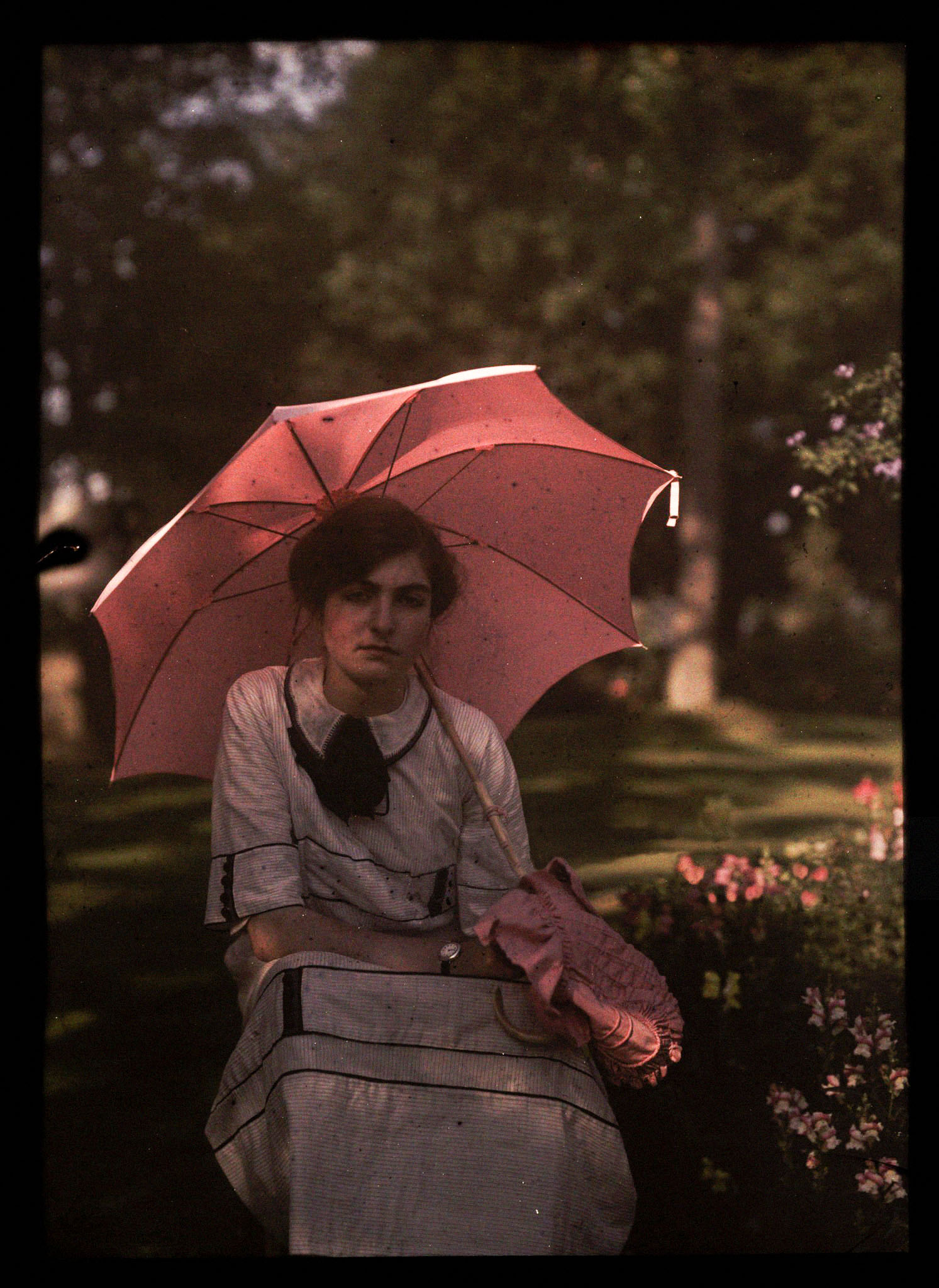
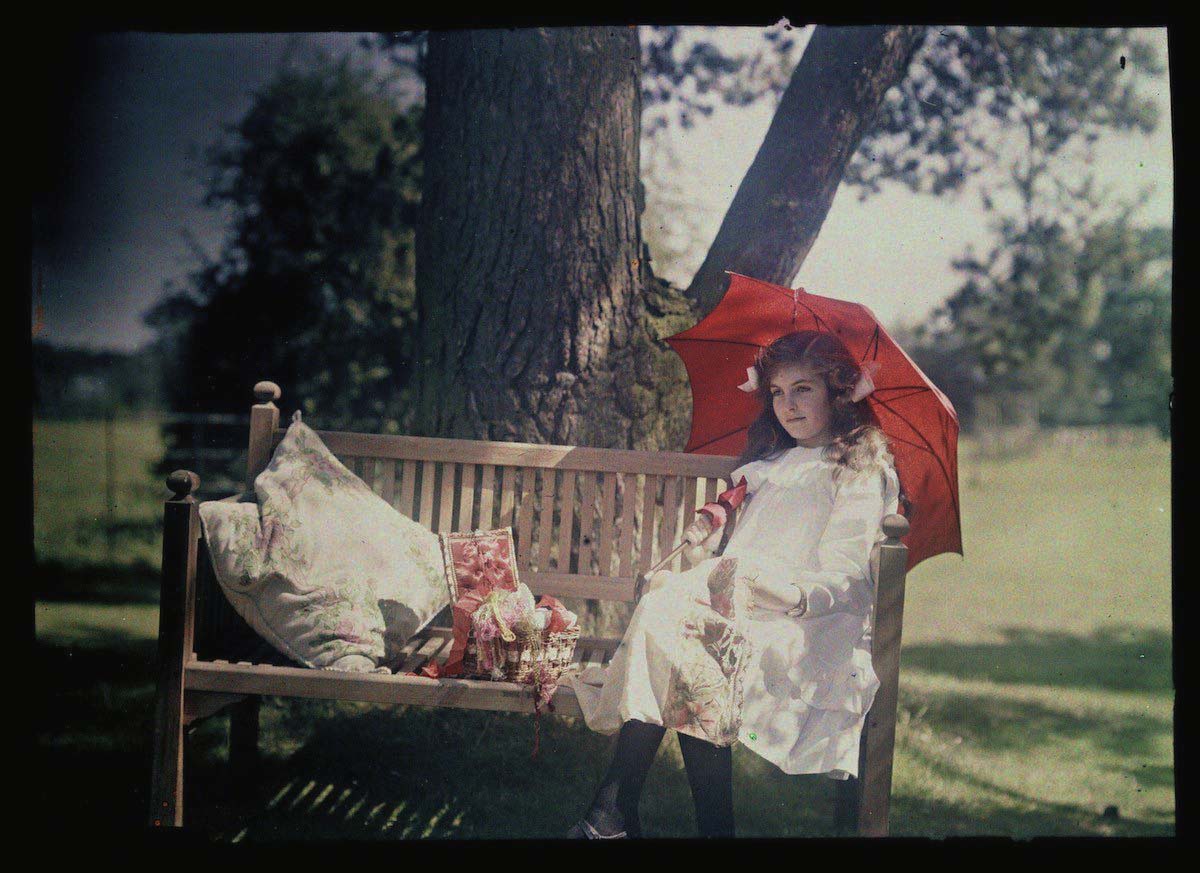
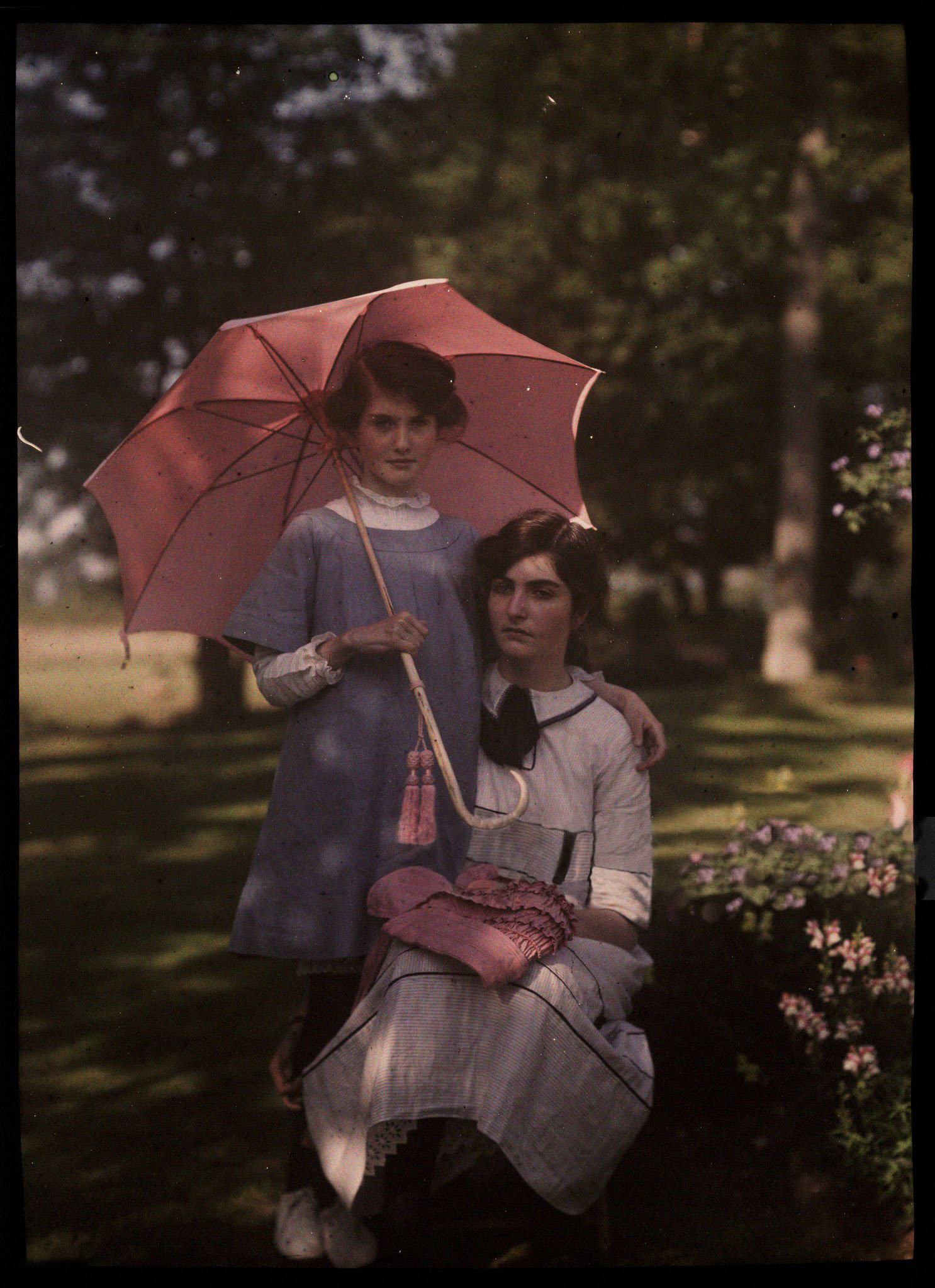
Etheldreda Janet Laing :: A girl, daughter of the photographer [Janet], sitting in the shade in a garden, holding a parasol over her shoulder, taken in the summer of 1908 at the gardens of Bury Knowle House, Oxfordshire. Autochrome. | Getty ImagesEtheldreda Janet Laing :: A girl, one of the daughters of the photographer [Janet] wearing a bonnet, with a parasol by a flower bed, taken in the summer of 1908 at the gardens of Bury Knowle House, Oxfordshire. Autochrome. | Getty ImagesEtheldreda Janet Laing :: A girl, one of Laing’s daughters, Iris, with a parasol, sitting next to a basket of flowers and ribbons at the gardens of Bury Knowle House, Oxfordshire, ca. 1912. Autochrome. | National Science and Media MuseumEtheldreda Janet Laing :: Iris and Janet [daughters of the photographer] with parasol at the gardens of Bury Knowle House, Oxfordshire, between 1908-1914. Autochrome. | Getty Images
Please note that the dates in each Autochrome are not as accurate as they may be. The photos are dated as they were found in the respective sources. Also note that while Getty Images dates all Autochromes by Laing in 1908 the Science and Media Museum dates them between 1910-1914. At least the location seems not to be a matter for debate.
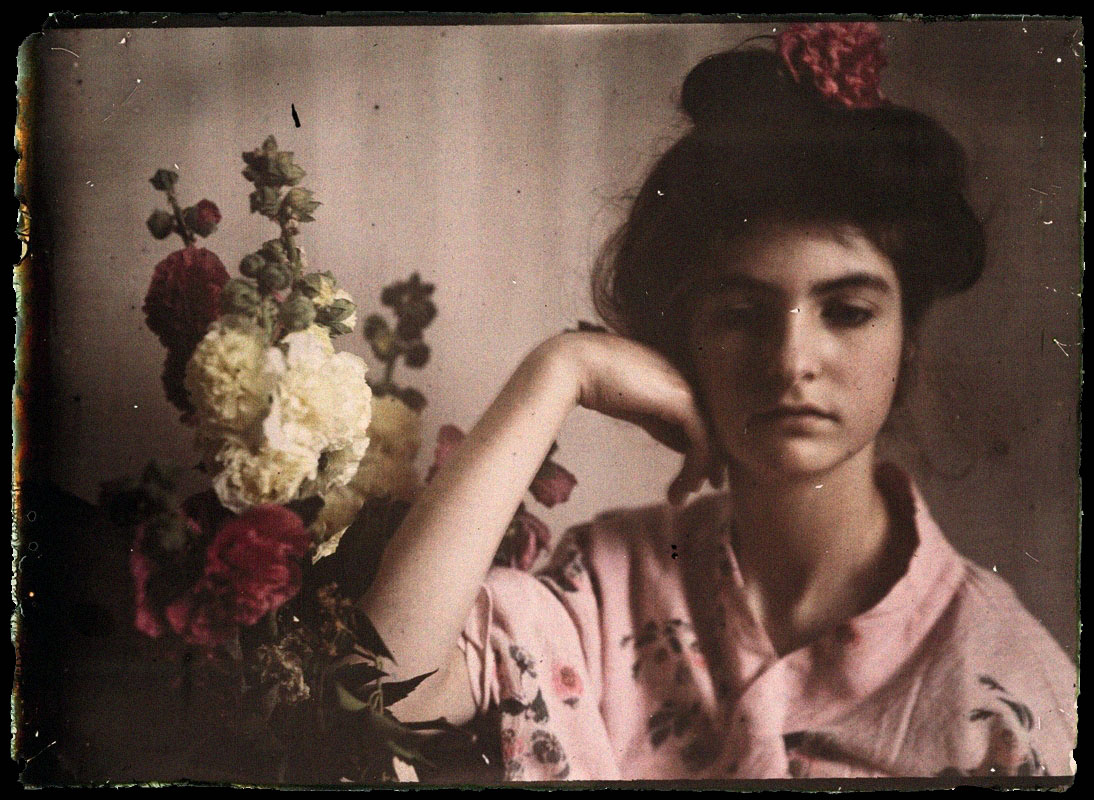
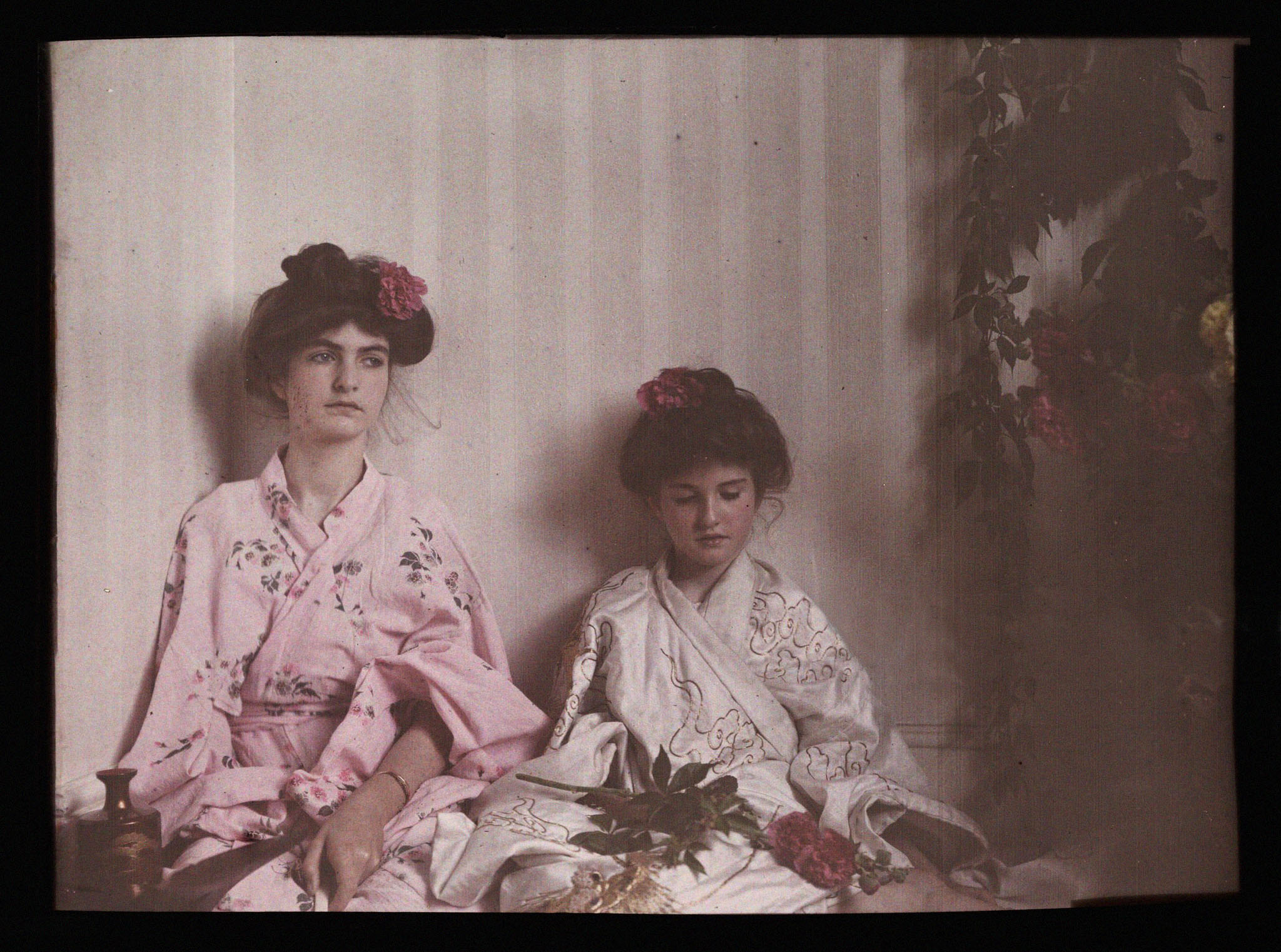
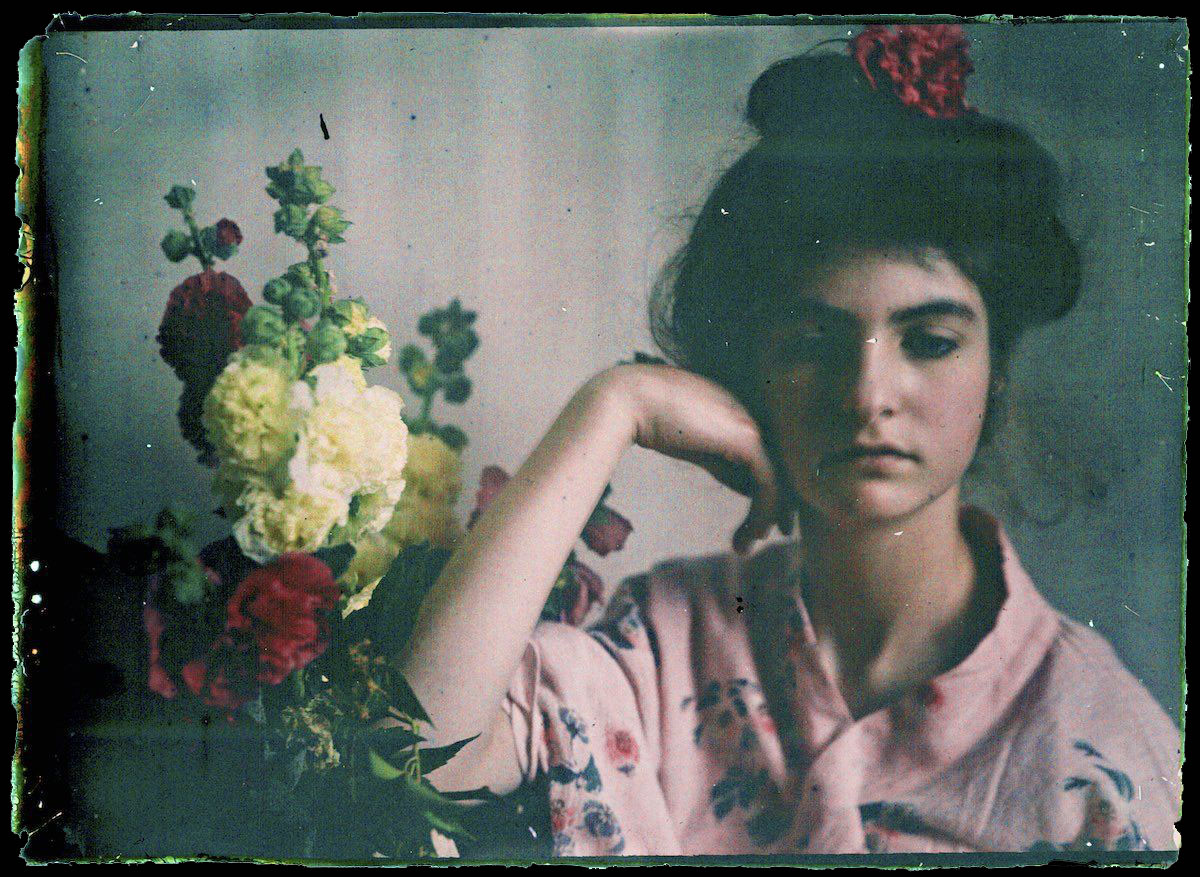
Etheldreda Janet Laing (1872-1960) :: Girl in a Kimono, 1908. An Autochrome portrait of the photographer’s eldest daughter (Janet) dressed in a pink kimono. The design of the kimono is mirrored by the flower arrangement beside her. Japanese style and art became increasingly popular in England at the turn of the twentieth century. | src Getty ImagesGirl in a Kimono, ca. 1908. An autochrome portrait of Janet Laing dressed in a pink kimono, taken by Etheldreda Janet Laing. | Getty ImagesEtheldreda Janet Laing :: Two girls in oriental costume, ca. 1908. An Autochrome of the photographer’s daughters dressed in Japanese-style outfits. They both have flowers in their hair, which is typical in the geisha ‘Shimada’ fashion. | Getty ImagesAutochrome photograph by Etheldreda Janet Laing. Image shows Laing’s daughter Janet in Oriental dress. Taken circa 1912. | src Science and Media Museum
Although these Autochromes are dated in Getty Images 1908 (or ca. 1908), the original source: the National Science and Media Museum date them around 1912.
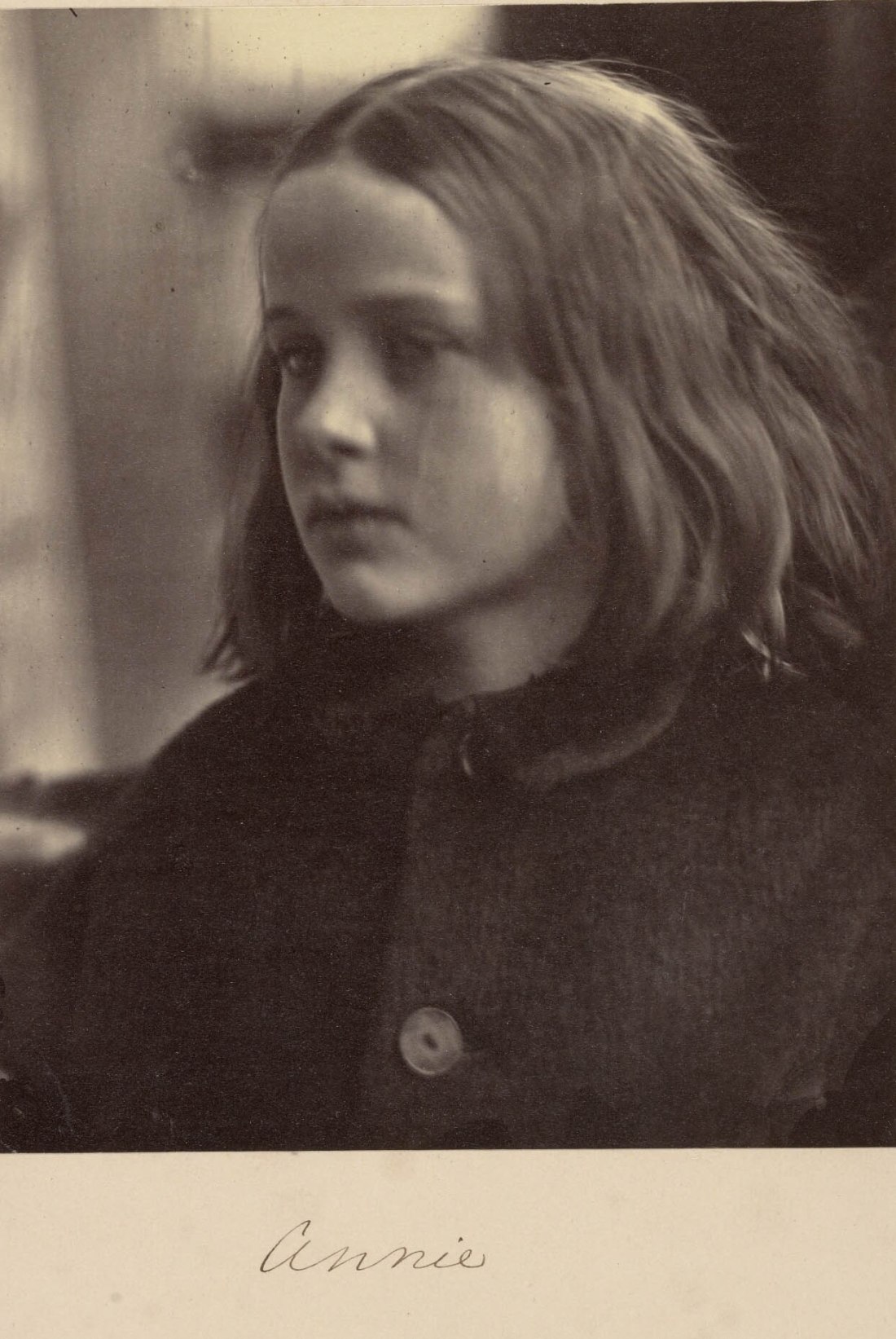
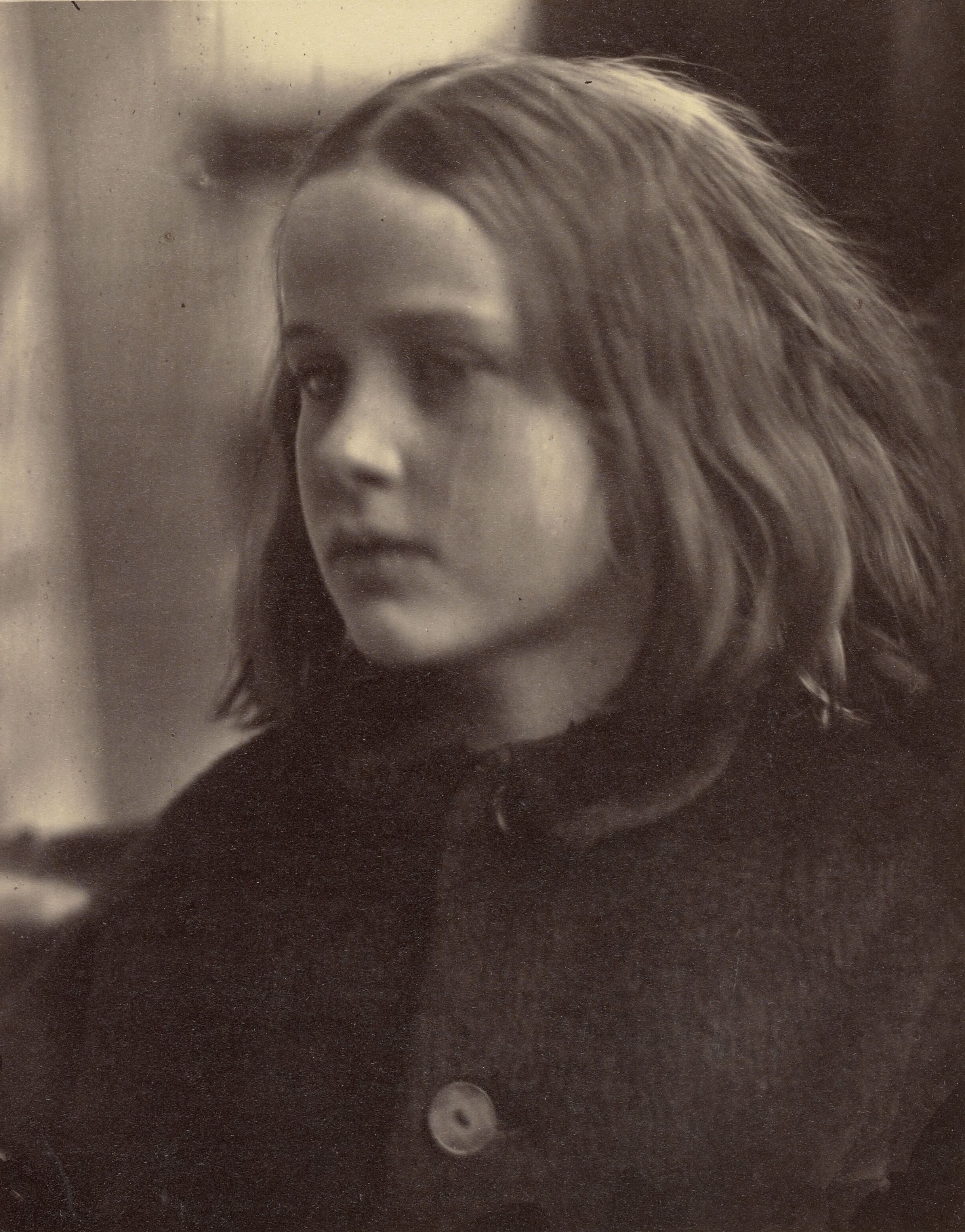
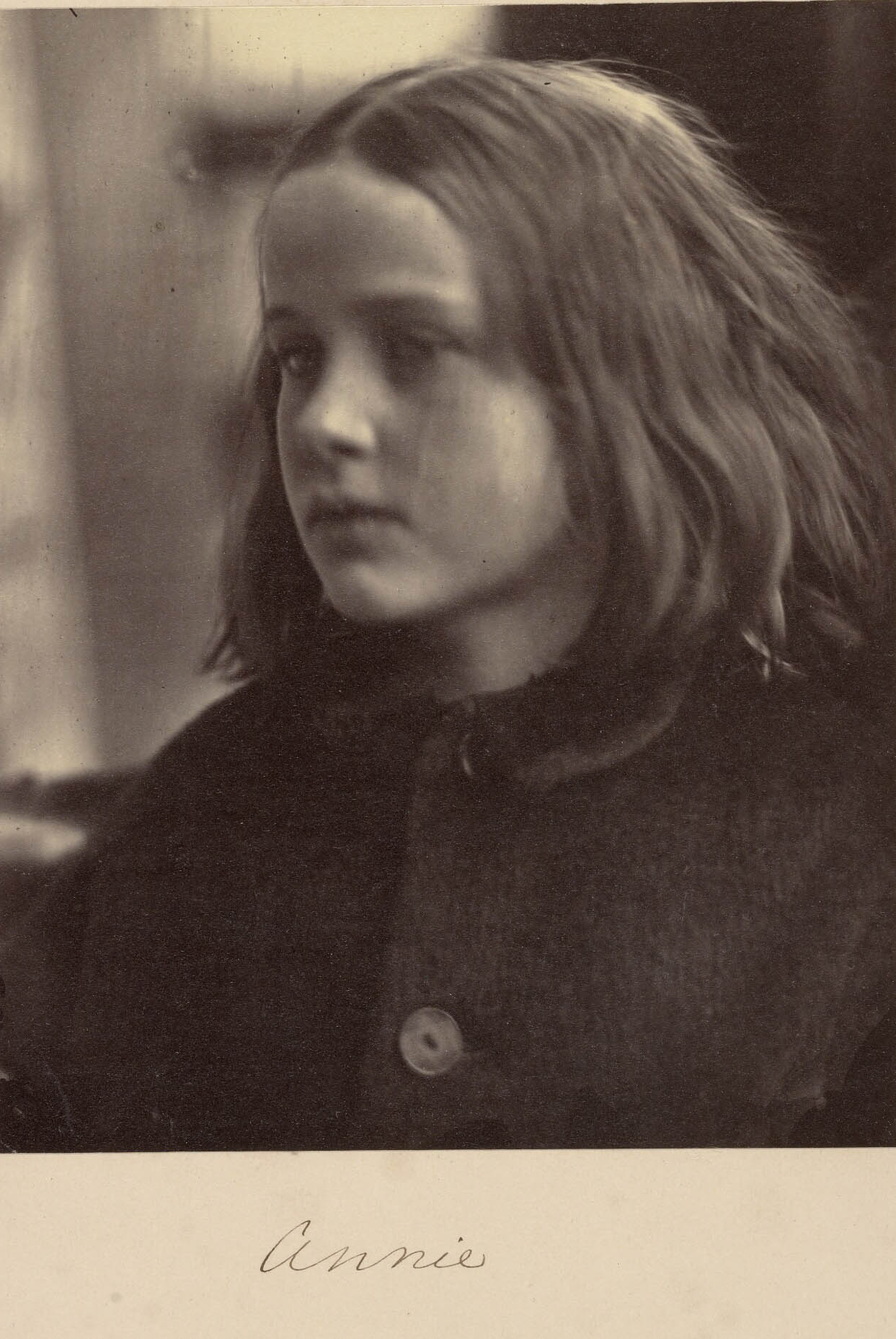
Julia Margaret Cameron :: Annie Philpot (1857-1936), Freshwater, Isle of Wight, England, January 1864. Albumen silver print.Julia Margaret Cameron (British, born India, 1815 – 1879) :: Annie; January 1864. Albumen silver print.Julia Margaret Cameron :: Annie / “My very first success in Photography January 1864”, January 1864. Albumen silver print. Getty Open Content Program
In December 1863 Julia Margaret Cameron received the gift of a wooden box camera from her only daughter, Julia, and her son-in-law Charles Norman. She was forty-eight years old, a woman whose prodigious energies had been centered on raising her six children. Now, with her daughter married and her husband and three eldest sons away on her family coffee estates in Ceylon, she found herself at a transitional moment in her life. Taking up photography at this time, she began, in her own words “to arrest all beauty that came before me.”
Cameron’s retrospective written account of her career in photography, Annals of My Glass House (penned in 1874 and published posthumously in 1889), stresses the solitary nature of her early experiments: “I began with no knowledge of the art. I did not know where to place my dark box, how to focus my sitter, and my first picture I effaced to my consternation by rubbing my hand over the filmy side of the glass.” Despite this proclamation, Cameron may have already learned the basics of camera operation and chemistry from Oscar Gustave Rejlander, with whom she shared many mutual friends, most importantly Alfred Tennyson, her neighbor on the Isle of Wight. Another likely early tutor was her brother-in-law Lord Somers, an accomplished amateur photographer who made portraits of Cameron’s family circle.
After some three weeks of experimentation in the January cold of her studio at her home in Freshwater, Cameron created this portrait of Annie Philpot (1857-1936), the daughter of a local resident. She later recalled the circumstances surrounding its creation in Annals of My Glass House: “I was in transport of delight. I ran all over the house to search for gifts for the child. I felt as if she entirely had made the picture. I printed, toned, fixed and framed it, and presented it to her father that same day.” Cameron carefully trimmed this particular print for presentation in an album given to Lord Overstone in 1865. It is a picture of great simplicity and grace, conspicuously divided in terms of light and dark. The out-of-focus background and deep shadows around the model’s eyes were acceptable to Cameron, indicating that from the outset her criteria for “success” were notably out of step with convention. She proudly inscribed the picture’s mount “My very first success in photography.”
Margrethe Mather :: Semi-nude [Billy Justema wearing a Kimono]; ca. 1923. Center for Creative Photography. University of Arizona, Tucson
When Margrethe Mather (1885 or 1886-1952) met Billy Justema in 1922, she was 36 and he was 17. Through spending time with him, Mather found a way out of her grief over the unexpected suicide of her close friend Florence Deshon. Through their relationship, Justema searched for a state of mind that would allow him to define both his artistic path and his sexuality. Mather photographed him as an enigma, as he was at the time to himself, in the process creating a portfolio to rival that of Alfred Stieglitz’s images of Georgia O’Keeffe. I could point out the sure compositional structure that informs Billy Justema in a Kimono (above), the curves and angles that form a harmonious whole, all things typical of Mather’s work. [quoted from The Blue Lantern on blogspot]


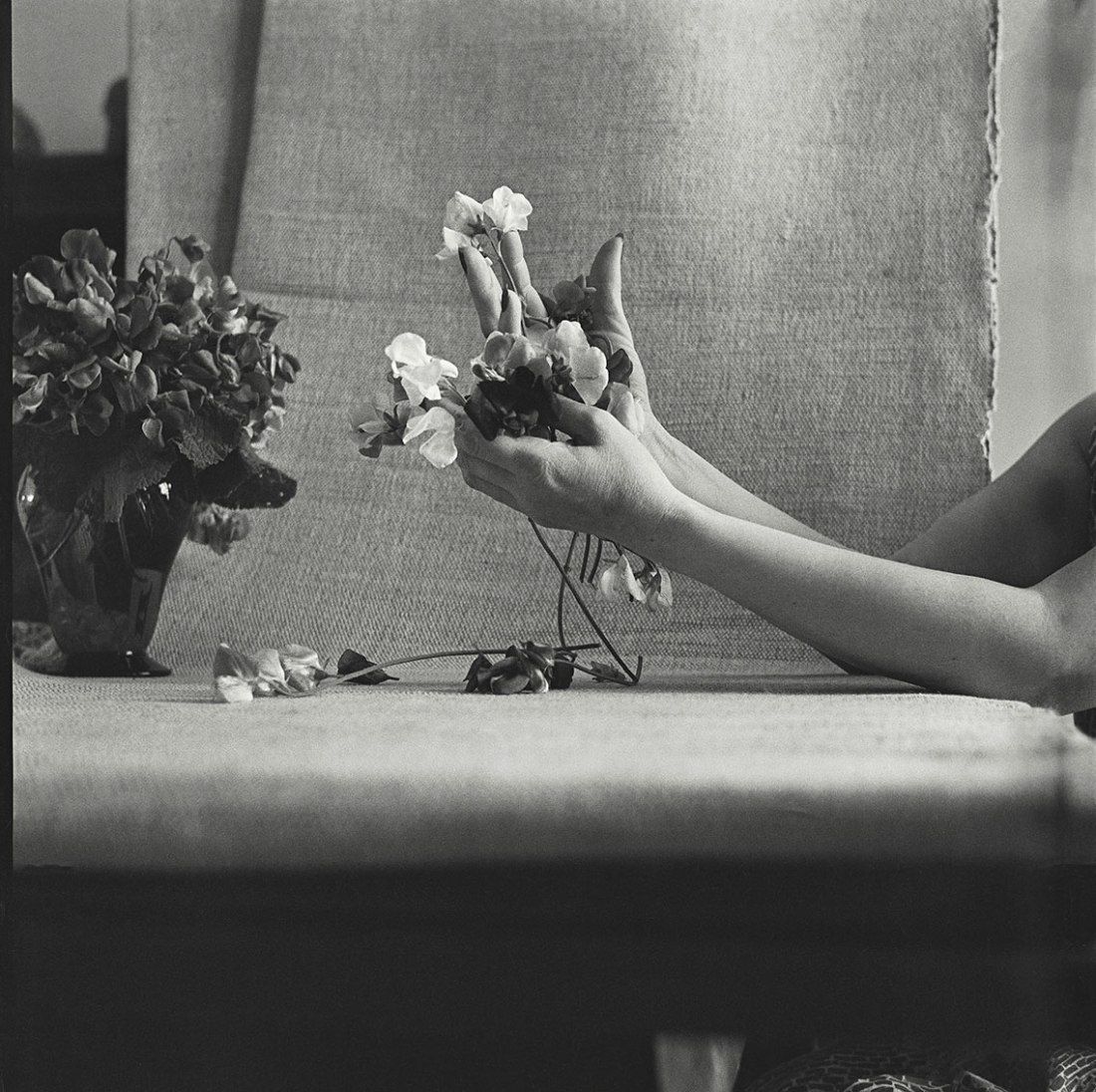
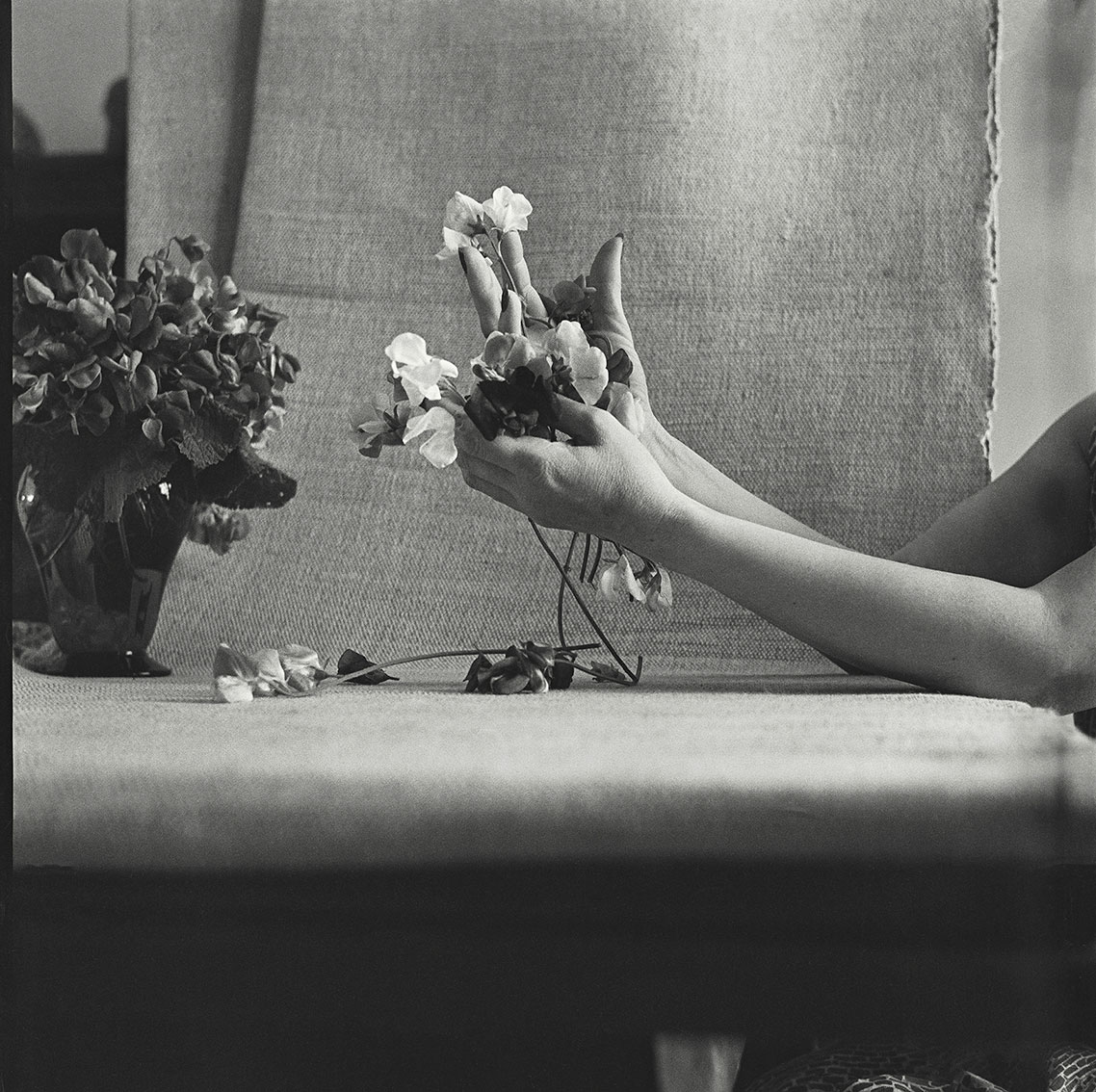
![Laure Albin-Guillot :: Étude de fleurs [with vase], ca. 1930. Vintage fresson print. | src Seagrave Gallery](https://unregardoblique.com/wp-content/uploads/2023/01/seagravegallery-laure-albin-guillot-tude-de-fleurs-with-vase-c.-1930.jpg?w=799)



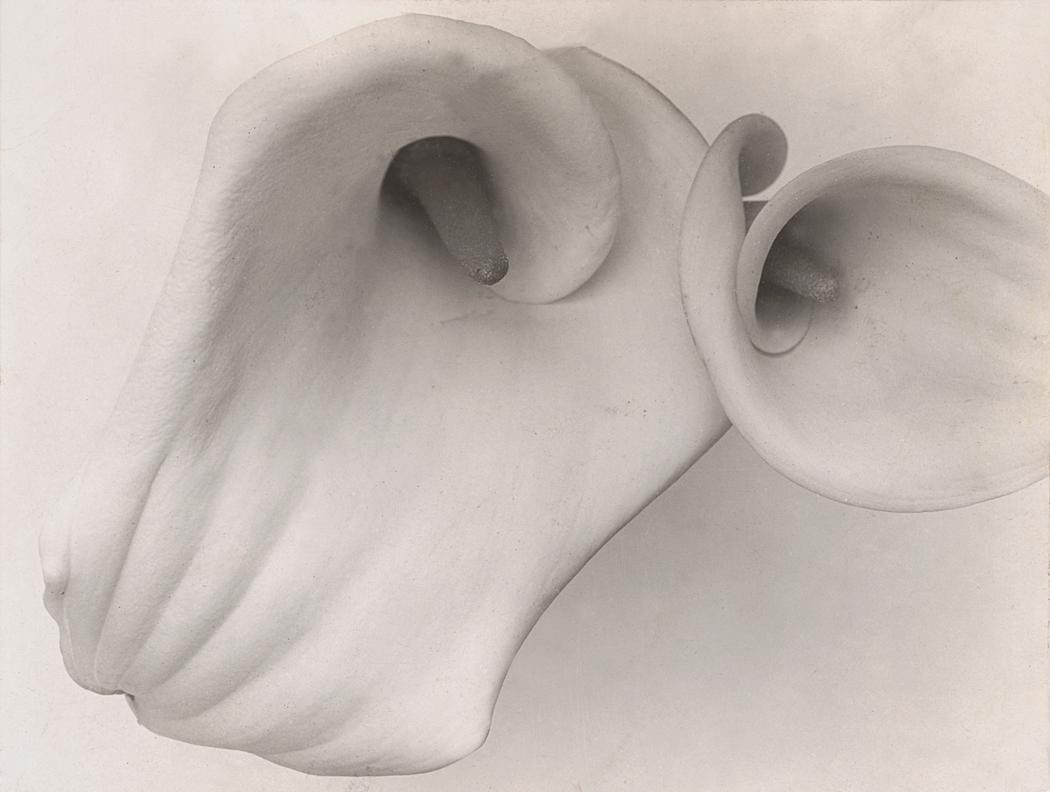
![Margrethe Mather ~ Untitled [calla lilies], ca. 1926. Gelatin silver print | src CCP ~ University of Arizona](https://unregardoblique.com/wp-content/uploads/2022/08/img_0212.jpg)

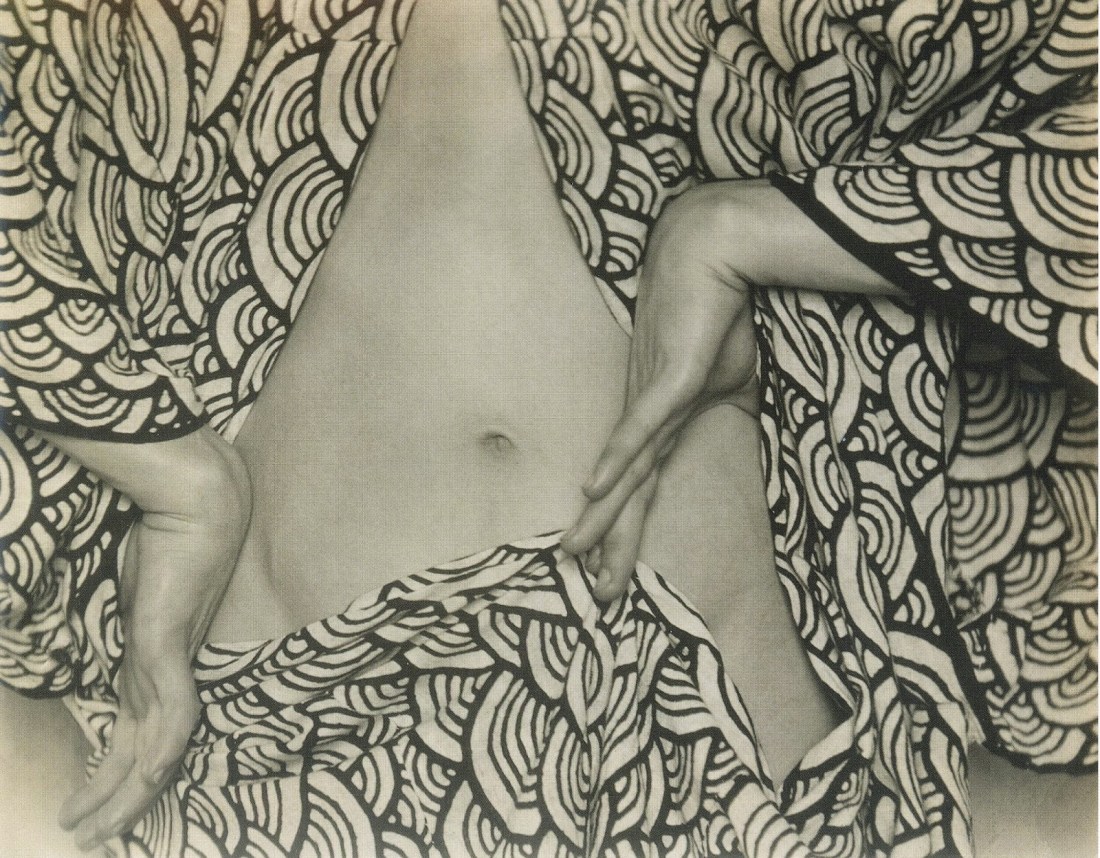
![Margrethe Mather :: Semi-nude [Billy Justema Wearing a Kimono], ca. 1923. Center for Creative Photography. University of Arizona, Tucson](https://unregardoblique.com/wp-content/uploads/2022/07/margrethe-mather-semi-nude-billy-justema-wearing-a-kimono-ca.-1923-center-for-creative-photography-university-of-arizona-tucson.jpg)
 un regard oblique