


images that haunt us




Although not recorded in Simon Toll’s catalogue raisonné on Draper, the present lot can probably be dated to 1892-93, when the artist was working in Rome. There are a number of related studies for the work, one of which, entitled ‘Pompilia’, depicts a girl in a similar crocheted cap (illustrated p.79, no. 33). The work can also be compared with other paintings of this period, such as ‘Love in the Garden of Philetas’ (RA 1892) and ‘The Spirit of the Fountain’ (1893), where flowers and ornamental gardens appear as popular motifs. | quoted from Bonhams London

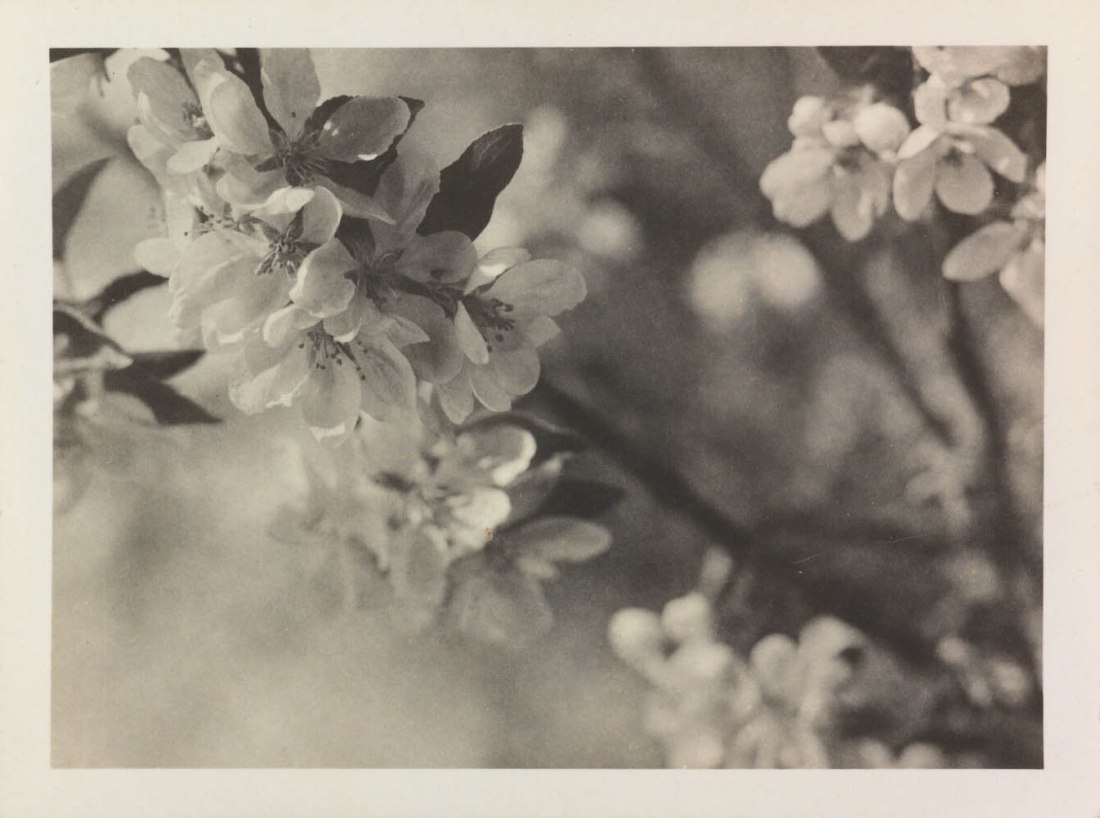
![Carlotta Corpron (1901-1988) :: [Tree blossoms]; ca. 1930s-1940s; Gelatin silver print. | Amon Carter Museum of American Art](https://unregardoblique.com/wp-content/uploads/2022/08/carlotta-corpron-1901-1988-tree-blossoms-1940s-amon-carter-crp.jpg)
![Carlotta Corpron (1901-1988); [Lotus blossoms]; ca. 1930-1940's; Gelatin silver print; Amon Carter Museum of American Art; Fort Worth, Texas; P1988.16.91](https://live.staticflickr.com/65535/52288420343_35f7784786_o.jpg)
![Carlotta M. Corpron (1901-1988); [Lotus blossom]; ca. 1940s; Gelatin silver print; Amon Carter Museum of American Art, Fort Worth, Texas, Bequest of the artist; P1988.16.54](https://live.staticflickr.com/65535/52308183331_76f3f85962_o.jpg)
![Carlotta Corpron (1901-1988); [Magnolia blossoms]; ca. 1930-1940; Gelatin silver print; Amon Carter Museum of American Art; Fort Worth, Texas; P1988.16.52](https://live.staticflickr.com/65535/52288415011_791ac24e22_o.jpg)
![Carlotta Corpron (1901-1988); [Magnolia blossoms]; ca. 1930-1940; Gelatin silver print; Amon Carter Museum of American Art; Fort Worth, Texas; P1988.16.53](https://live.staticflickr.com/65535/52308711980_a0c9e575fb_o.jpg)
![Carlotta Corpron (1901-1988); [Tree blossoms]; ca. 1930's-1940's; Gelatin silver print; Amon Carter Museum of American Art; Fort Worth, Texas; P1988.16.142](https://live.staticflickr.com/65535/52288420378_bb86b19911_o.jpg)
Photographer Carlotta Corpron had a brief but important career as an artist and a decades-long impact as a professor at Texas State College for Women (now Texas Woman’s University). In the 1930s and ‘40s she experimented with light, influenced by the ideals of the Bauhaus and the Institute of Design as brought to Denton, Texas, by László Moholy-Nagy and György Kepes. Her early photographs investigated how light transforms natural objects, but in later projects she took light itself as her subject, capturing its reflection and refraction in abstract compositions that sometimes involved cropping or combining multiple negatives. Corpron bequeathed her archive to the museum, which holds 138 prints, over 800 negatives, and the Carlotta Corpron Papers. [quoted from Amon Carter Museum]

 un regard oblique