For Colored Girls · 1976-77

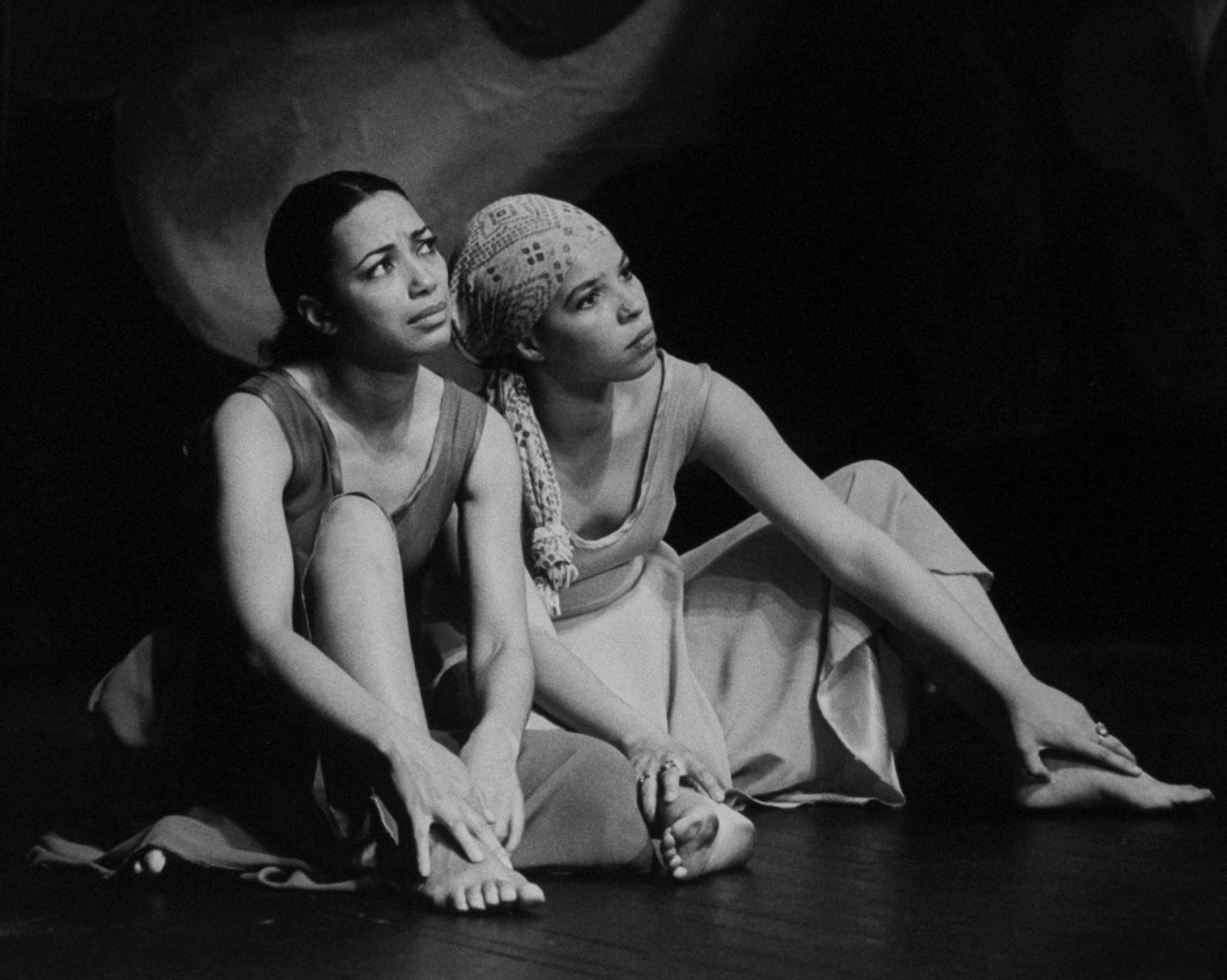
Martha Swope ~ Ntozake Shange (right) in a scene from the Broadway production of her choreopoem: ‘For Colored Girls Who Have Considered Suicide When the Rainbow is Enuf’, 1977 | src NYPL

‘For Colored Girls Who Have Considered Suicide When the Rainbow is Enuf’ is a 1976 work by Ntozake Shange. It consists of a series of poetic monologues to be accompanied by dance movements and music, a form which Shange coined the word choreopoem to describe. It tells the stories of seven women who have suffered oppression in a racist and sexist society.
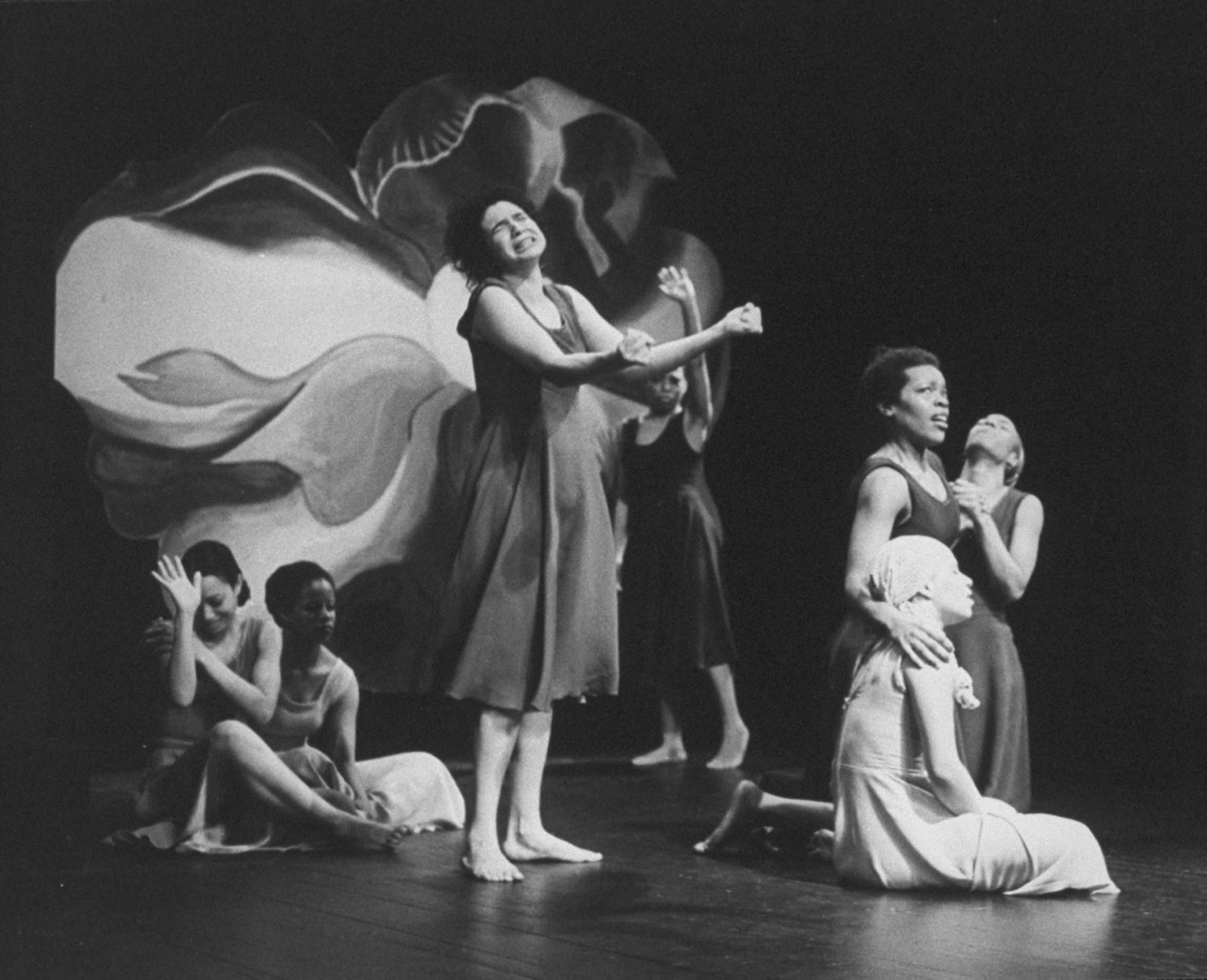
Martha Swope ~ A scene from the Broadway production of the choreopoem by Ntozake Shange: ‘For Colored Girls Who Have Considered Suicide When the Rainbow is Enuf’, 1977 | src NYPL

As a choreopoem, the piece is a series of 20 separate poems choreographed to music that weaves interconnected stories of love, empowerment, struggle and loss into a complex representation of sisterhood. The cast consists of seven nameless African-American women only identified by the colors they are assigned. They are the lady in red, lady in orange, lady in yellow, lady in green, lady in blue, lady in brown, and lady in purple. Subjects from rape, abandonment, abortion and domestic violence are tackled.
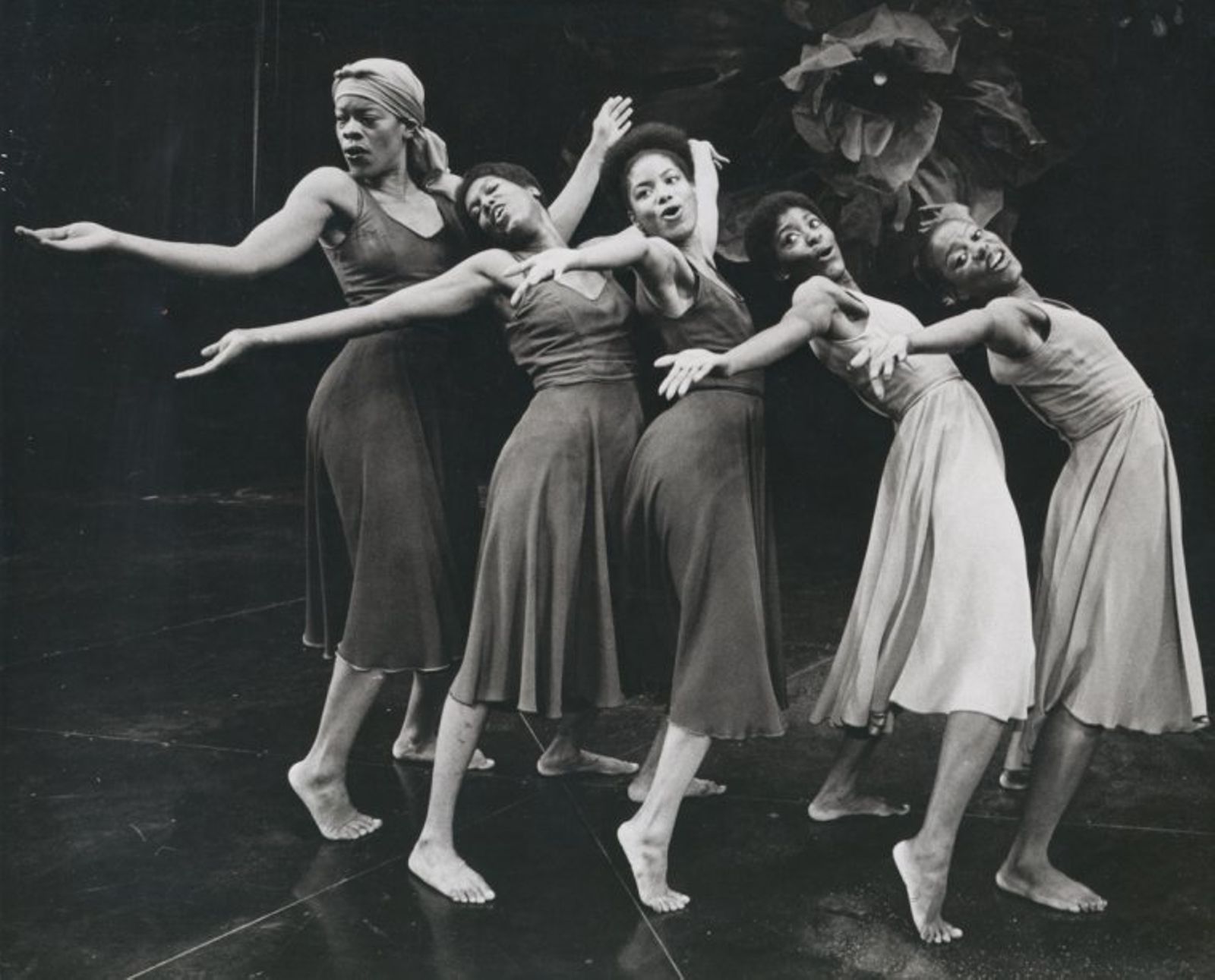
Martha Swope ~ A scene from the Broadway production of the choreopoem by Ntozake Shange: ‘For Colored Girls Who Have Considered Suicide When the Rainbow is Enuf’, 1976 | src NYPL

Shange originally wrote the monologues as separate poems in 1974. Her writing style is idiosyncratic and she often uses vernacular language, unique structure, and unorthodox punctuation to emphasize syncopation. Shange wanted to write ‘For colored girls…‘ in a way that mimicked how real women speak so she could draw her readers’ focus to the experience of reading and listening.

Martha Swope ~ A scene from the Broadway production of the choreopoem by Ntozake Shange: ‘For Colored Girls Who Have Considered Suicide When the Rainbow is Enuf’, 1976 | src NYPL
Martha Swope ~ Actresses (Front L-R) Laurie Carlos, Paula Moss, Aku Kadogo, Trazana Beverly; (Top L-R) Rise Collins, Janet League, Seret Scott in scene from the play ‘For Colored Girls Who Have Condsidered Suicide When the Rainbow is Enuf’ by Ntozake Shange (1976) | src NYPL
The cast of the Broadway show ‘For Colored Girls Who Have Considered Suicide When the Rainbow Is Enuf’ by Ntozake Shange, in the Meatpacking District of New York City, 1977 (Photo by Jill Freedman) | src getty images
A scene from the Broadway production of the choreopoem ‘For Colored Girls Who Have Considered Suicide When the Rainbow is Enuf’, 1976 | src NY Times: Ntozake Shange’s Tales of Black Womanhood

In December 1974, Shange performed the first incarnation of her choreopoem with four other artists at a women’s bar outside Berkeley, California. After moving to New York City, she continued work on for colored girls…, which went on to open at the Booth Theatre in 1976, becoming the second play by a black woman to reach Broadway. quoted from wikipedia entry

Martha Swope ~ A scene from the Broadway production of the choreopoem by Ntozake Shange: ‘For Colored Girls Who Have Considered Suicide When the Rainbow is Enuf’, 1976-77 | src NYPL

For Colored Girls chronicles the experiences of seven black women through monologue and dance, confronting topics of sexism, rape, and domestic violence. The play has long been considered a benchmark for black female writers and inspired a book, film, and Tony Award-nominated Broadway play.

Martha Swope ~ A scene from the Broadway production of the choreopoem by Ntozake Shange: ‘For Colored Girls Who Have Considered Suicide When the Rainbow is Enuf’, 1976-77 | src NYPL

Written for seven characters, For Colored Girls is a group of 20 poems on the power of Black women to survive in the face of despair and pain. The show ran for seven months Off-Broadway in New York City before beginning a two-year run on Broadway. It was subsequently produced throughout the United States, broadcast on television, and in 2010 adapted into a feature film titled For Colored Girls. [text: Britannica]

A scene from the Broadway production of the choreopoem ‘For Colored Girls Who Have Considered Suicide When the Rainbow is Enuf’, 1976 | src NY Times: Ntozake Shange’s Tales of Black Womanhood

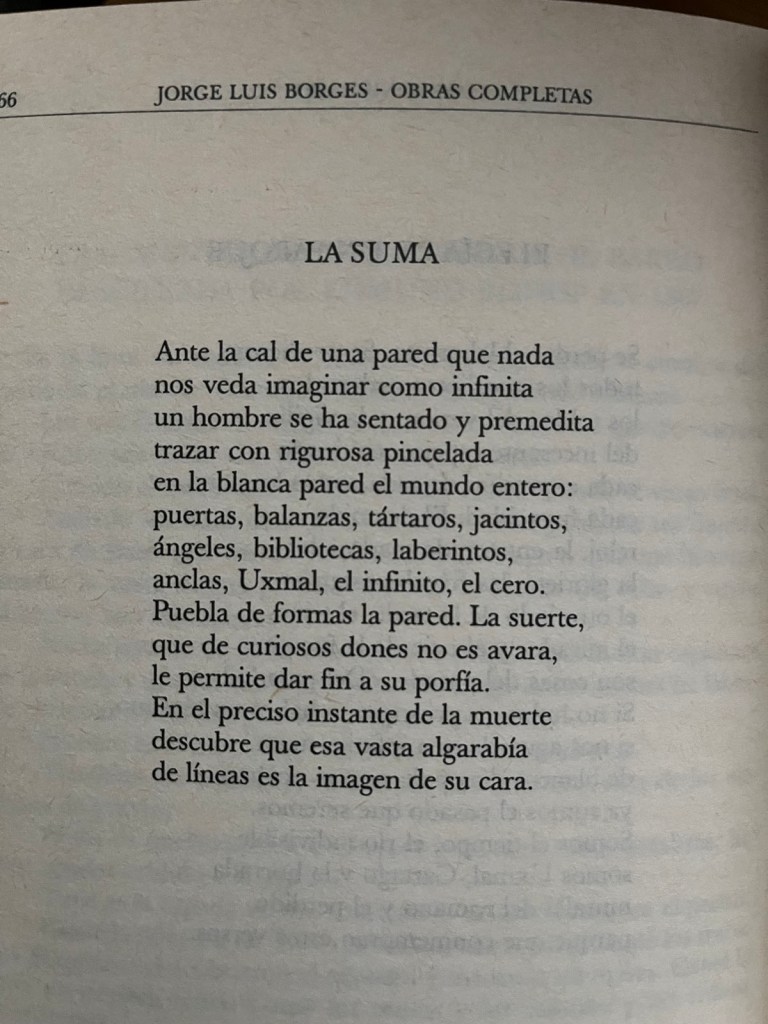
La suma · Borges & Cordier

‘Chemigram 15.9.91 ‘from La Suma of Jorge Luis Borges”, chemigram by Pierre Cordier, 1991 Belgium. Museum no. E.330-2018 | src V&A museum

Ante la cal de una pared que nada
nos veda imaginar como infinita
un hombre se ha sentado y premedita
trazar con rigurosa pincelada
en la blanca pared el mundo entero:
puertas, balanzas, tártaros, jacintos,
ángeles, bibliotecas, laberintos,
anclas, Uxmal, el infinito, el cero.
Puebla de formas la pared. La suerte,
que de curiosos dones no es avara,
le permite dar fin a su porfía.
En el preciso instante de la muerte
descubre que esa vasta algarabía
de líneas es la imagen de su cara.

Jorge Luis Borges : La suma, Obras completas

Jorge Luis Borges : La suma, From : Obras completas. Emecé Editores, 1996
Chemigram 20.3.92 from ‘La Suma of Jorge Luis Borges’, chemigram by Pierre Cordier, 1992, Belgium. Museum no. E.859-2010 | src V&A museum

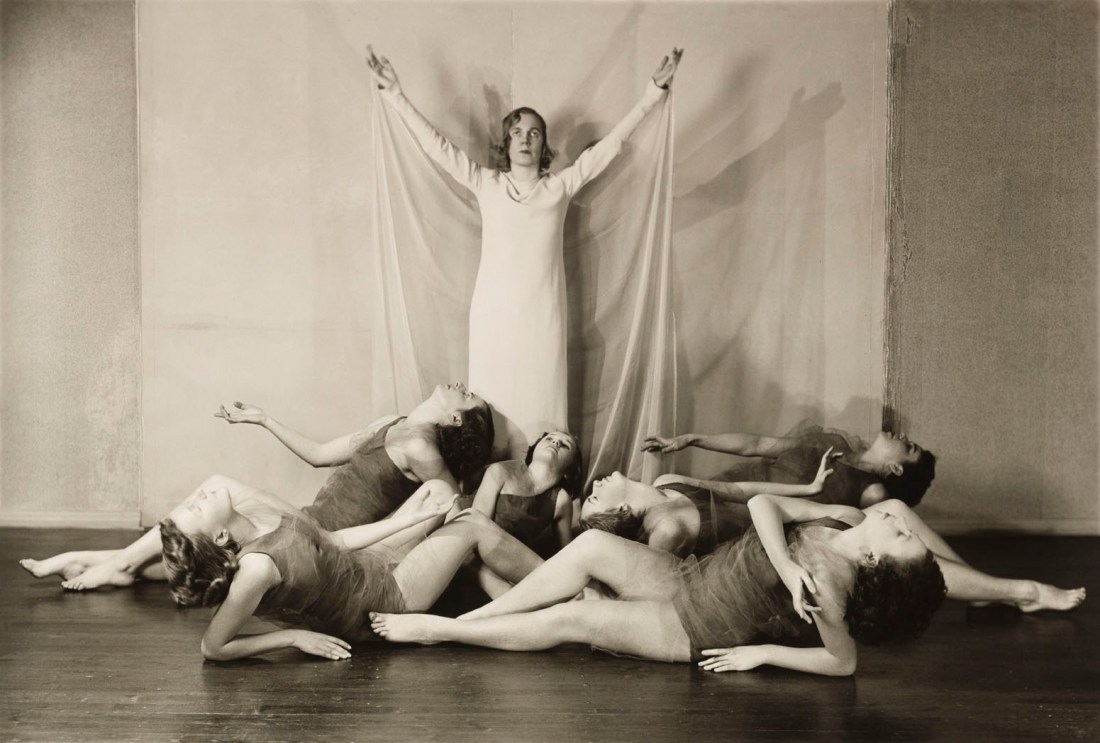
Martta Bröyer, 1930s

Martta Bröyer created dance performances based on the collection of Finnish folk poems, Kanteletar, among other works, that suited her style based on dance without music, only accompanied by poetry recitation. The Finnish series was presented at the National Theater in 1931. | src Helsinki City Museum ~ Helsingin kaupunginmuseo
Studio Helander :: Finnish dance artist Martta Bröyer in Helsinki 1933. | src Finnish Heritage Agency
Unknown. Martta Bröyer performing her Finnish series in 1931 at the National Theater.
Studio Helander :: Finnish dance artist Martta Bröyer in Helsinki in 1933 (04.11.1933). | src Finnish Heritage Agency & Europeana
Martta Bröyer created dance performances based on the collection of Finnish folk poems, Kanteletar, among other works, that suited her style based on dance without music, only accompanied by poetry recitation. The Finnish series was presented at the National Theater in 1931. | src Helsinki City Museum ~ Helsingin kaupunginmuseo
Martta Bröyer created dance performances based on the collection of Finnish folk poems, Kanteletar, among other works, that suited her style based on dance without music, only accompanied by poetry recitation. The Finnish series was presented at the National Theater in 1931. | src Helsinki City Museum on Fb ~ Helsingin kaupunginmuseo

Bröyerismin paluu – unohdettu runotanssi jälleen näyttämölle

Bröyerism Returns – The forgotten art of ‘poetry dance’ returns on stage

The colourful life and diverse career of dance artist Martta Bröyer (1897–1979) has recently been showcased in the museum’s book about the Burgher’s House, the oldest wooden residential building in central Helsinki. Martta Bröyer inherited the house from her mother, renovated and preserved it, and finally sold it to the City for it to be used as a museum. During the book project, Bröyer’s extensive archives were studied in detail for the first time, and plenty of new information was discovered about her life events. ⁣

A pioneer of modern dance in Finland, Bröyer created her own controversial style, bröyerism, that combined dance with poetry recitation in the 1920s and 1930s. She drew inspiration from Germany, from the school of world-famous Mary Wigman, and developed her own style in the 1920s and 30s based on Wigman’s ideas. Bröyer started to teach the style in her own institute. A dancer and choreographer, Bröyer herself found that her most important career was that of a dance pedagogue. ⁣

The Bröyer style, bröyerism, was based on dance without music, only accompanied by poetry recitation. Reflecting the spirit of her time, Bröyer combined modern dance with national romanticism and created dance performances based on the collection of Finnish folk poems, Kanteletar, among other works. Her contemporaries’ reactions varied: the new style received both praise and harsh, even crushing criticism. Despite this, Bröyer determinedly continued with her style until the 1960s. She received the Pro Finlandia medal for her life’s work in 1956. ⁣

text source: Helsinki City Museum ~ Helsingin kaupunginmuseo

Women and Roses, 1900s-1910s

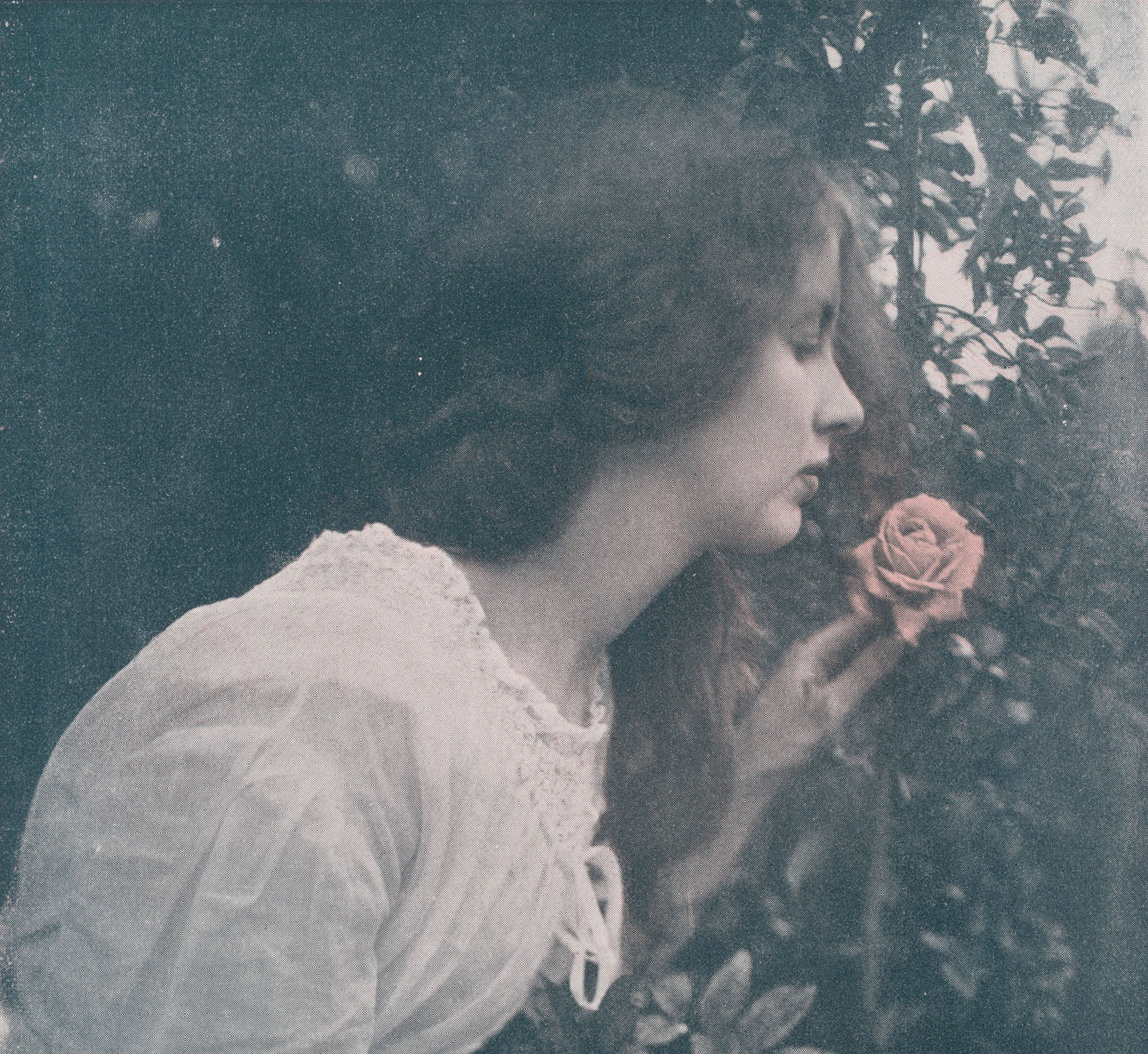
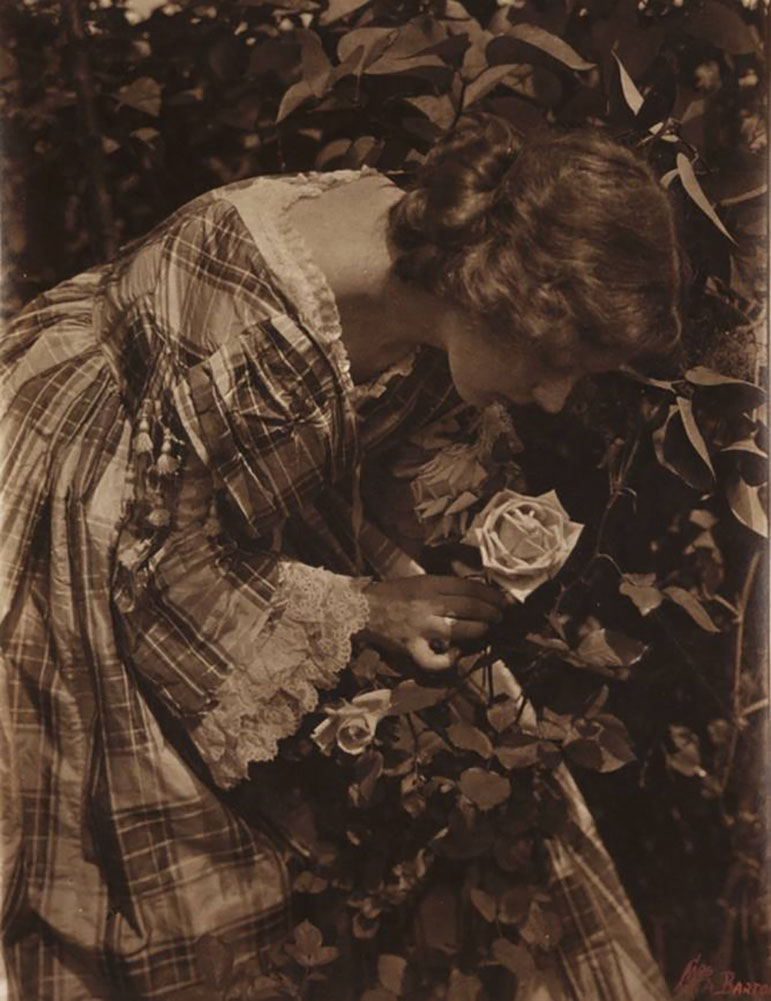
Emma Barton (Mrs. G.A. Barton) :: The Gardener’s Daughter, before or on 1911. (DETAIL)

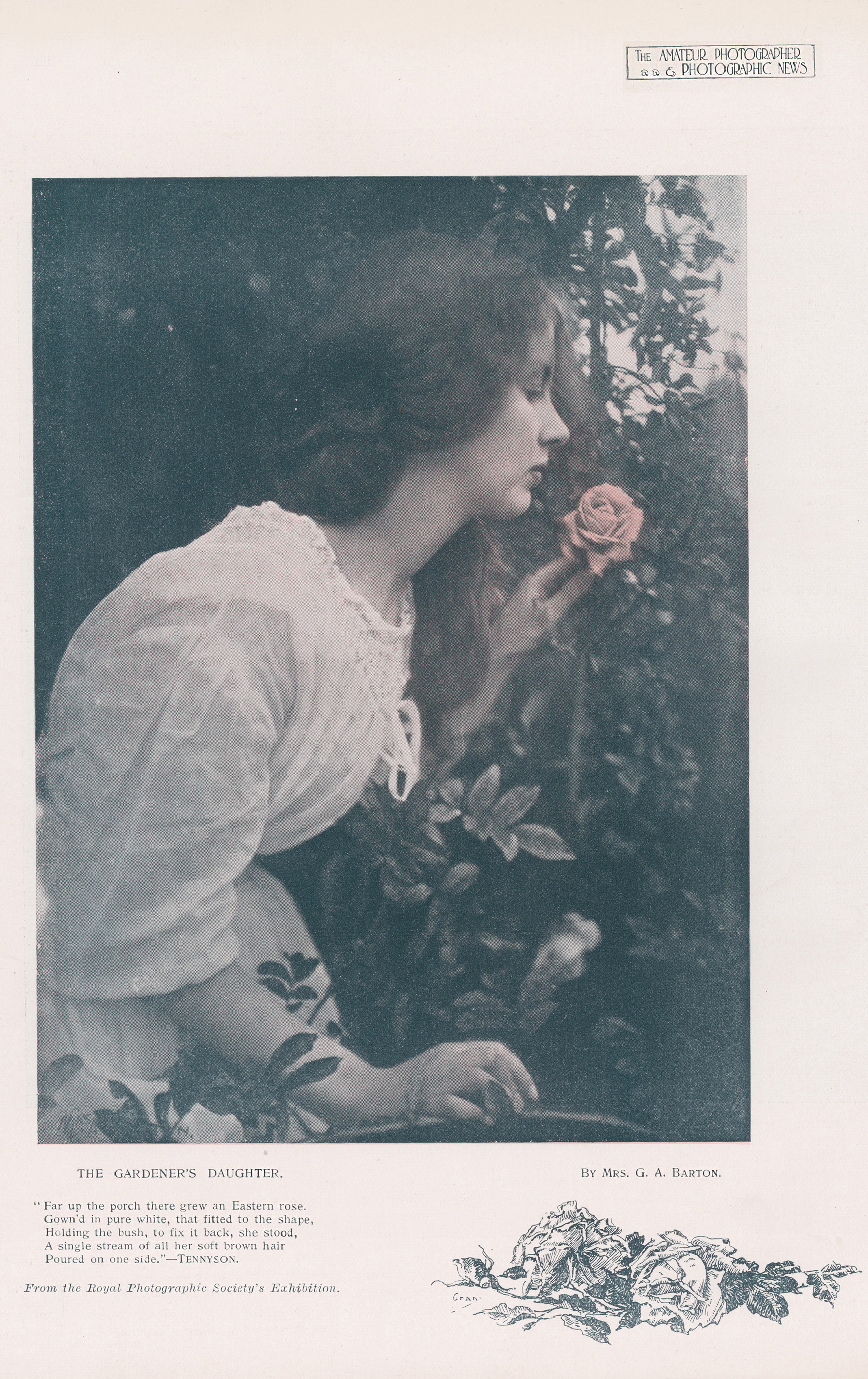
Far up the porch there grew an Eastern rose,
Gown’d in pure white, that fitted to the shape,
Holding the bush, to fix it back, she stood,
A single steam of all her soft brown hair
Poured on one side. (Tennyson)

Emma Barton (Mrs. G.A. Barton) :: The Gardener’s Daughter. Published in The Amateur Photographer & Photographic News, vol. LIV, 1398, p. 66 (1911). From The Royal Photographic Society’s Annual Exhibition. | src Musée Nicéphore Niépce
Emma Barton (née Rayson) :: The Soul of the Rose, ca. 1905. Carbon print. The Royal Photographic Society at Science & Media Museum, now V&A

La Septième face du dé, 1936

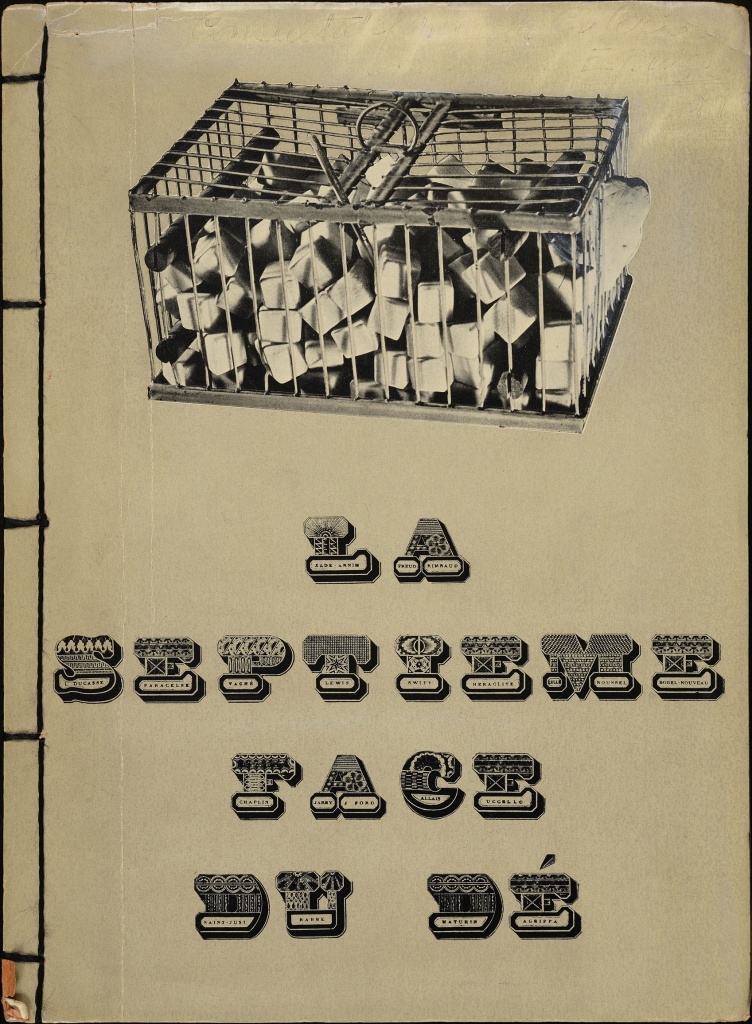
Georges Hugnet – Marcel Duchamp :: La Septième face du dé. Poèmes – découpages. Paris: éditions Jeanne Bucher, 1936. 20 collages de Georges Hugnet reproduits en couleur. Broché, couverture cousue à la japonaise et ornée d’après un collage de Marcel Duchamp. | src Jeanne Bucher Jaeger

Skies (Ciels), 1944

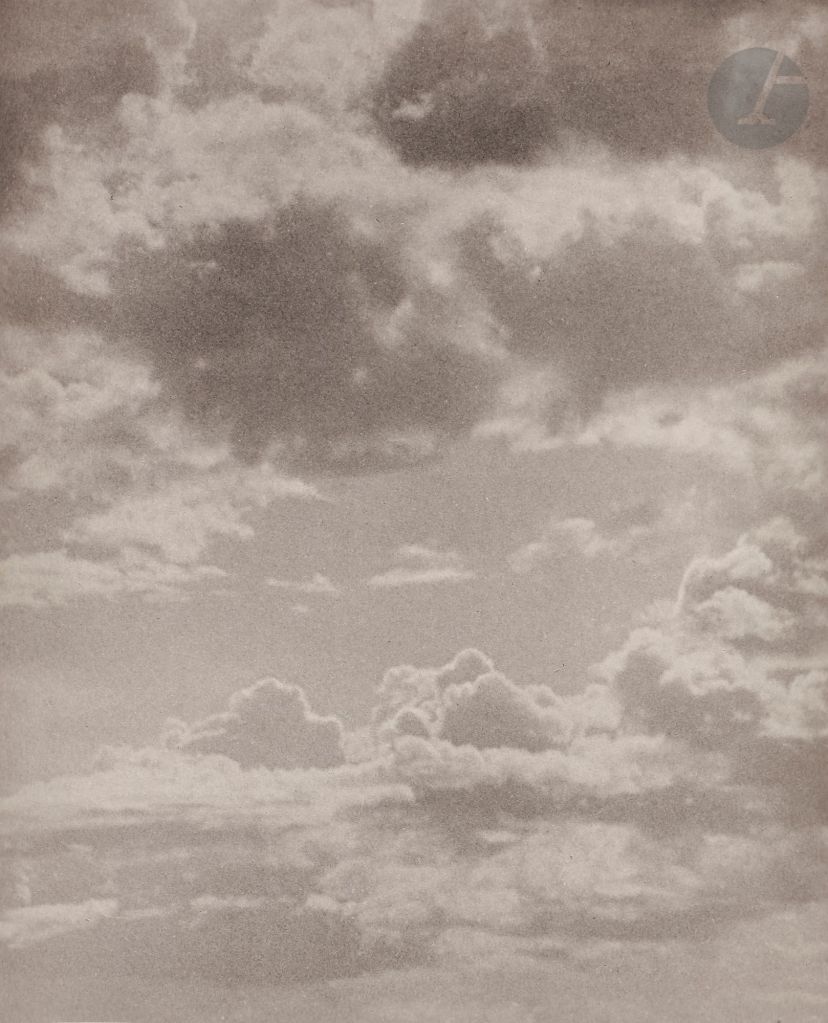
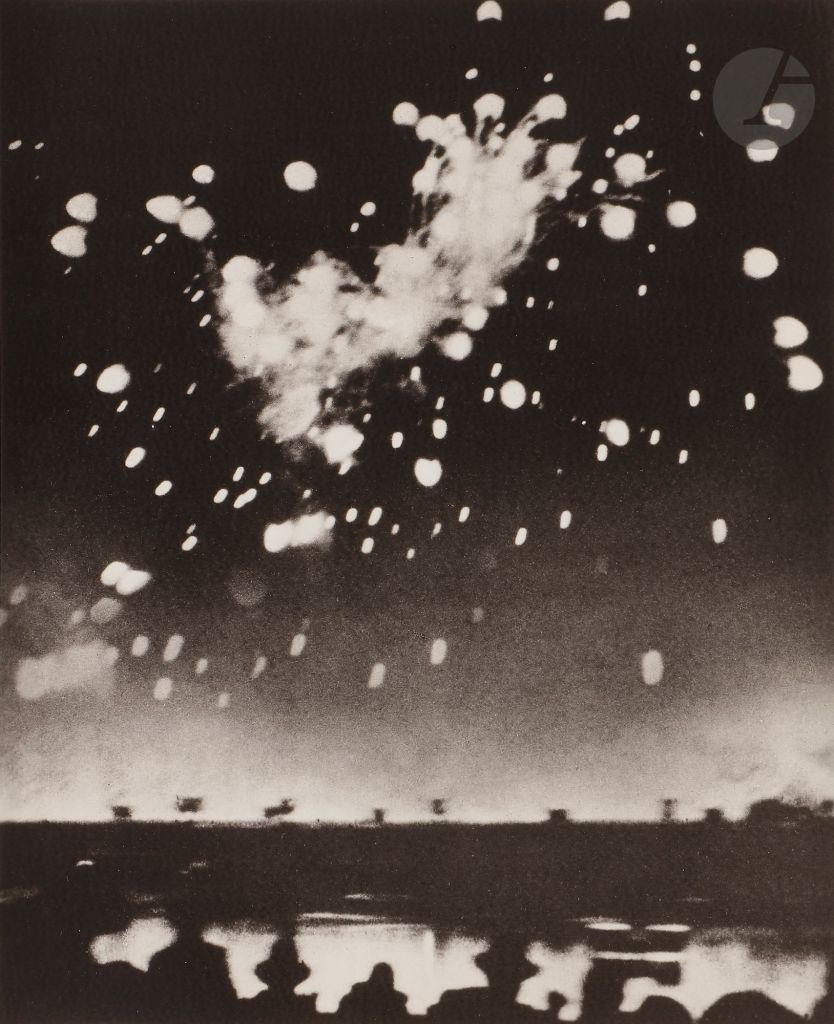
Laure Albin Guillot :: Ciels. Seize images photographiques de Laure Albin-Guillot. Henri Colas, Paris. Rousseau Frères, Bordeaux, 1944.
Texte de Marcelle Maurette. Edition originale, imprimée pour l’artiste André Martin, composée de 16 chemises titrées. Chaque chemise reproduit un poème illustré d’une héliogravure hors-texte, toutes signées par la photographe. | Laure Albin Guillot :: Skies. Sixteen photographic images by Laure Albin-Guillot. Henri Colas, Paris. Rousseau Frères, Bordeaux, 1944. Text by Marcelle Maurette. First edition, printed for the artist André Martin, composed of 16 titled shirts. Each shirt reproduces a poem illustrated with an inset heliogravure, all signed by the photographer. | src interencheres

Ciels (skies), 1944

Laure Albin Guillot :: Ciels. Seize images photographiques de Laure Albin-Guillot. Henri Colas, Paris. Rousseau Frères, Bordeaux, 1944.
Texte de Marcelle Maurette. Edition originale, imprimée pour l’artiste André Martin, composée de 16 chemises titrées. Chaque chemise reproduit un poème illustré d’une héliogravure hors-texte, toutes signées par la photographe. | Laure Albin Guillot :: Skies. Sixteen photographic images by Laure Albin-Guillot. Henri Colas, Paris. Rousseau Frères, Bordeaux, 1944. Text by Marcelle Maurette. First edition, printed for the artist André Martin, composed of 16 titled shirts. Each shirt reproduces a poem illustrated with an inset heliogravure, all signed by the photographer. | src interencheres

Houston Magnolia, ca. 1996

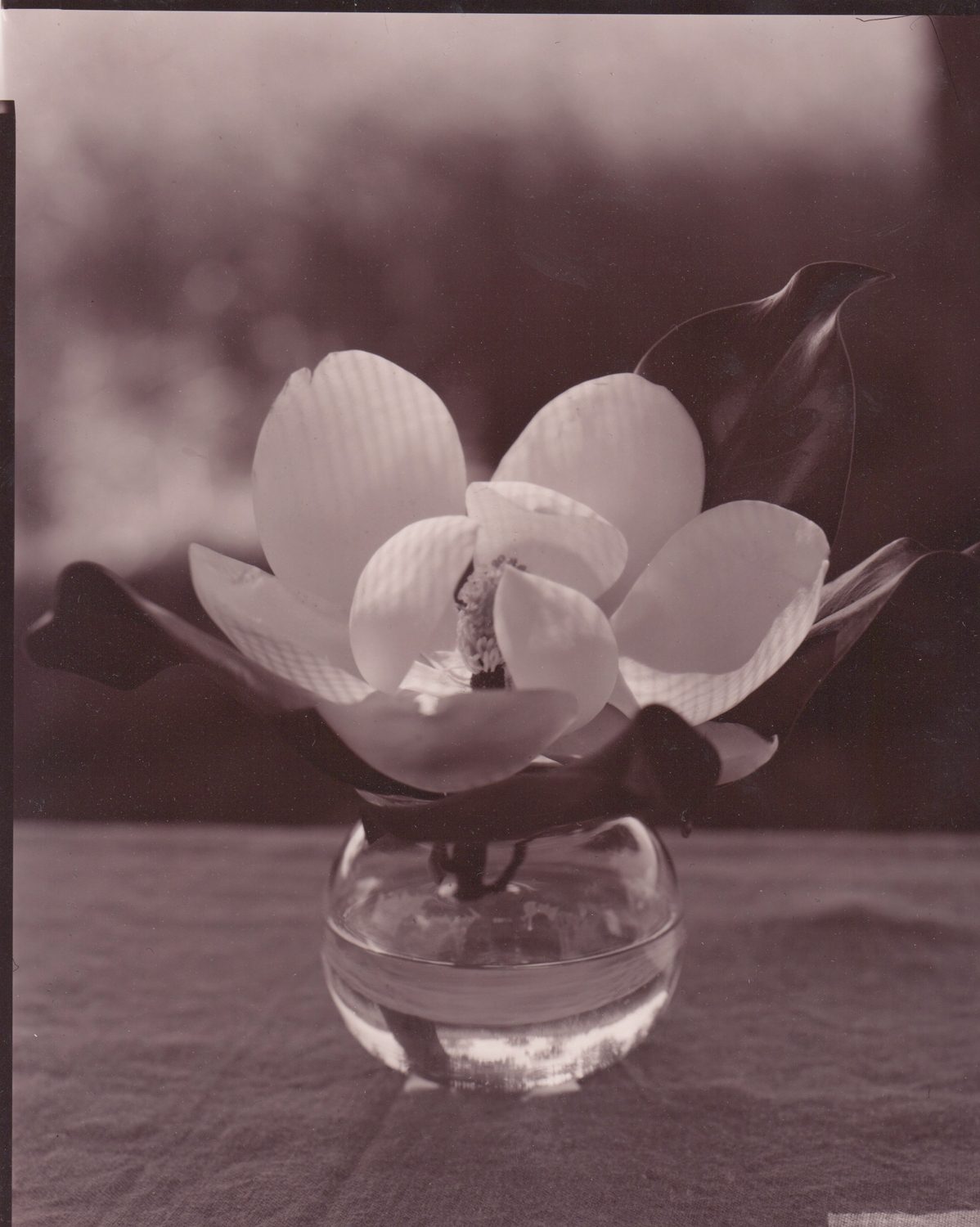
John Dugdale :: Houston Magnolia, ca. 1996 (Printed 2010)
John Dugdale :: Houston Magnolia, ca. 1996 (Printed 2010) + Emily Dickinson poem | src Holden Luntz Gallery and John Dugdale Studio
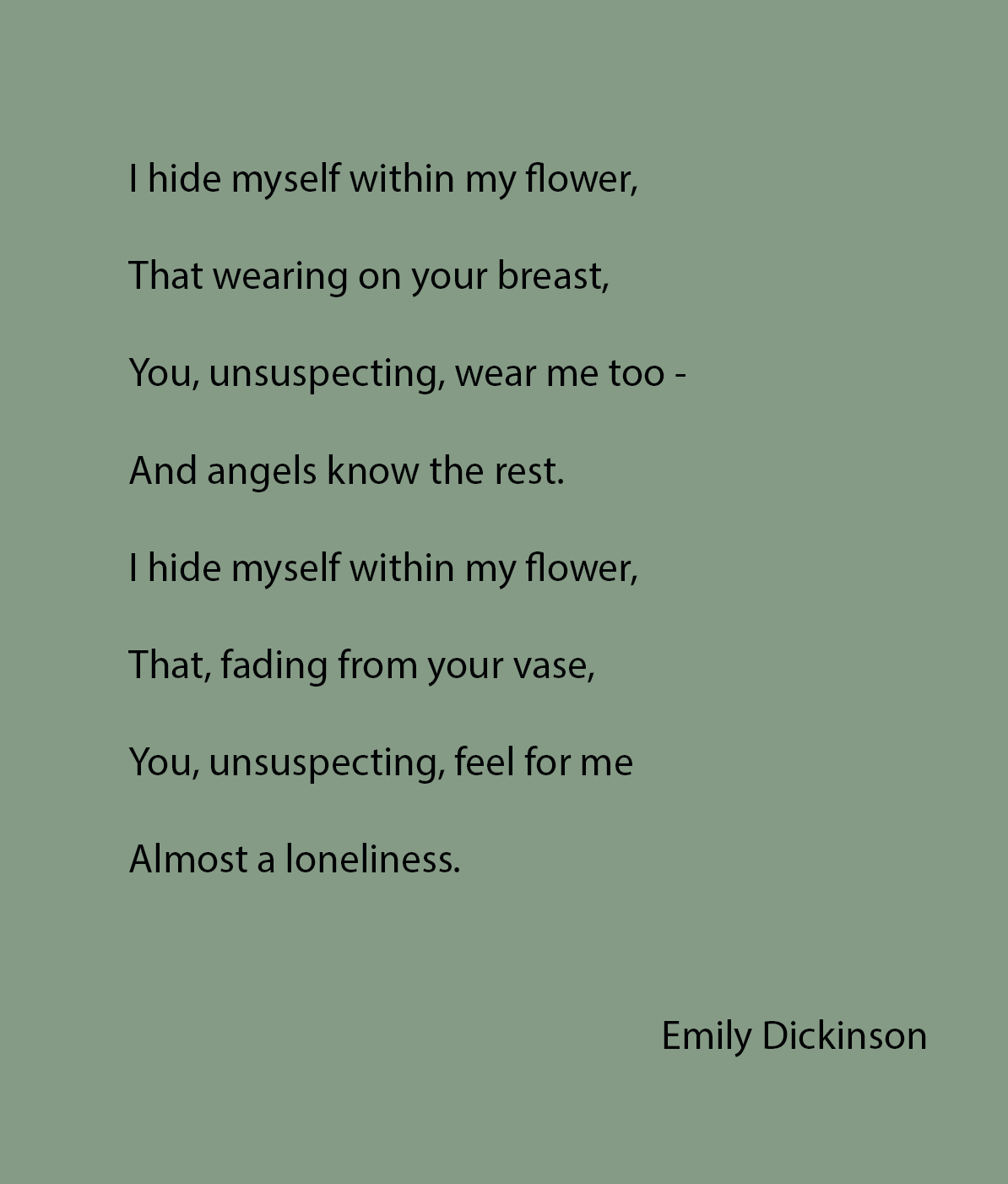
Emily Dickinson poem

I hide myself within my flower,
That wearing on your breast,
You, unsuspecting, wear me too –
And angels know the rest.
I hide myself within my flower,
That, fading from your vase,
You, unsuspecting, feel for me
Almost a loneliness.

(Emily Dickinson)