Surrealism and ecstasy (1933)

Le phénomène de l’extase, photomontage de Dalí, Brassaï, Breton et Éluard (1933); publié dans Minotaure, n° 3-4, décembre 1933

The Phenomenon of Ecstasy, is a photomontage built in a spiral: it is made up of 32 photos organized in a labyrinth of photos which wind up, drawing the eye in a hypnotic way towards the central photo, a portrait of a woman by Brassaï. This photo was part of a series of «femmes en jouissance onirique» (women in dreamlike enjoyment), taken in 1932.

Dalí saw in the convolutions of Art Nouveau a form of madness or intoxication. Brassaï’s portrait of the “overthrown” woman fit perfectly with his point. It therefore logically lands at the heart of a system which functions like a puzzle.

The historian Michel Poivert in his analysis of «Le phénomène de l’extase» ou le portrait du surréalisme même (1997) first lists the elements that make up the image: “most of them show a woman’s face that the title invites us to consider in ecstasy. In addition to these female faces, there are three male heads, four sculptures, two objects (a chair, a pin) as well as sixteen ears. These ear photos were taken by Alphonse Bertillon who was a criminologist. More precisely, he was the creator of judicial anthropometry: in 1882 he founded the first criminal identification laboratory in France.

Michel Poivert explains: “The iconography of criminal anthropology makes an incursion here at the very moment when the group seeks to define a revolutionary identity.” The surrealists were very interested in the grammar of repression. Dalí, in particular, was passionate about the journal La Nature, a popular science journal which published at least three articles by Bertillon, illustrated with forensic photographs. The photographic fragments used by Dalí are in fact extracted from synoptic tables or tabbed directories by Bertillon. Bertillon’s ambition was to draw up an atlas of human morphology. What modern police was developing is therefore the transformation of the human body into a territory of surveillance and control. Bertillon reduces the body to a set of records.

Michel Poivert underlines that the repetition of the motif of the ear acts in the manner of a «stéréotypie», that is to say of a gesture reproduced in a loop or of a word reiterated without end: the symptom of a mental disorder. What’s closer to ecstasy than a morbid or hysterical fixation? From this point of view, certainly, the judicial photos of ears have their place perfectly in this photomontage, “which precisely mixes devotion and the disciplinary in the pathological figure of ecstasy,” suggests Michel Poivert: Dali’s passion for hysteria inevitably guides us towards Jean-Martin Charcot. Indeed, at the time when Dalí was concerned about a representation of ecstasy, the definition of the phenomenon by theologians was entirely constructed in reaction against the popularization of hysterical ecstasy.

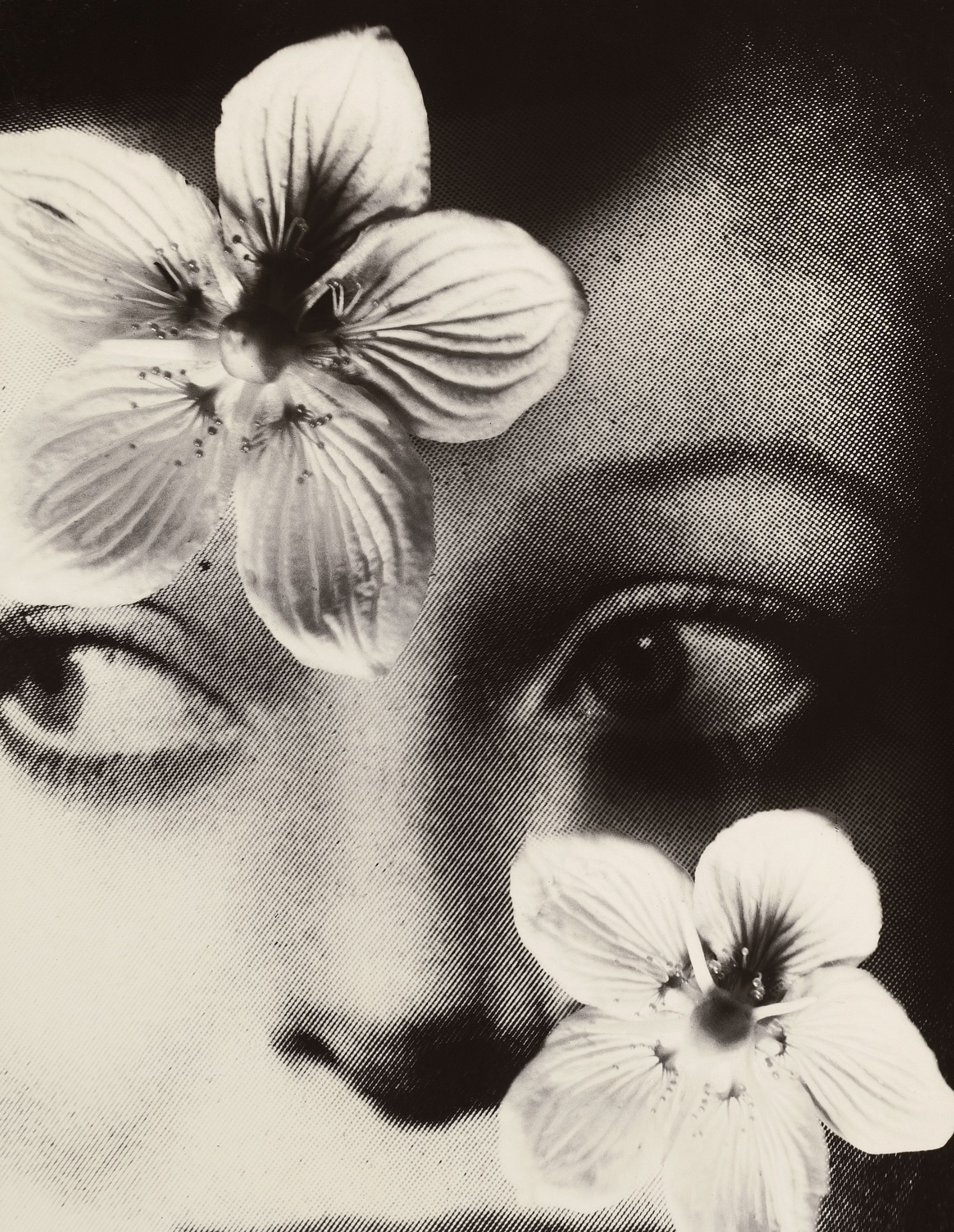
Brassaï ~ The Phenomenon of Ecstasy; from the series «femmes en jouissance onirique» (women in dreamlike enjoyment) (1932)

In the text entitled “The Phenomenon of Ecstasy” (published in Le Minotaure, 1933), Dalí himself explains in covert terms the reason for this choice: the ears are “always in ecstasy” he says, probably in allusion to their coiled shape. The ears are shaped like a fractal or vortex. They lead the eye through a whirlwind to their central point, the black orifice of the ear canal… But the photomontage is itself constructed in the manner of an ear, guiding the eye to the portrait of the woman in ecstasy.
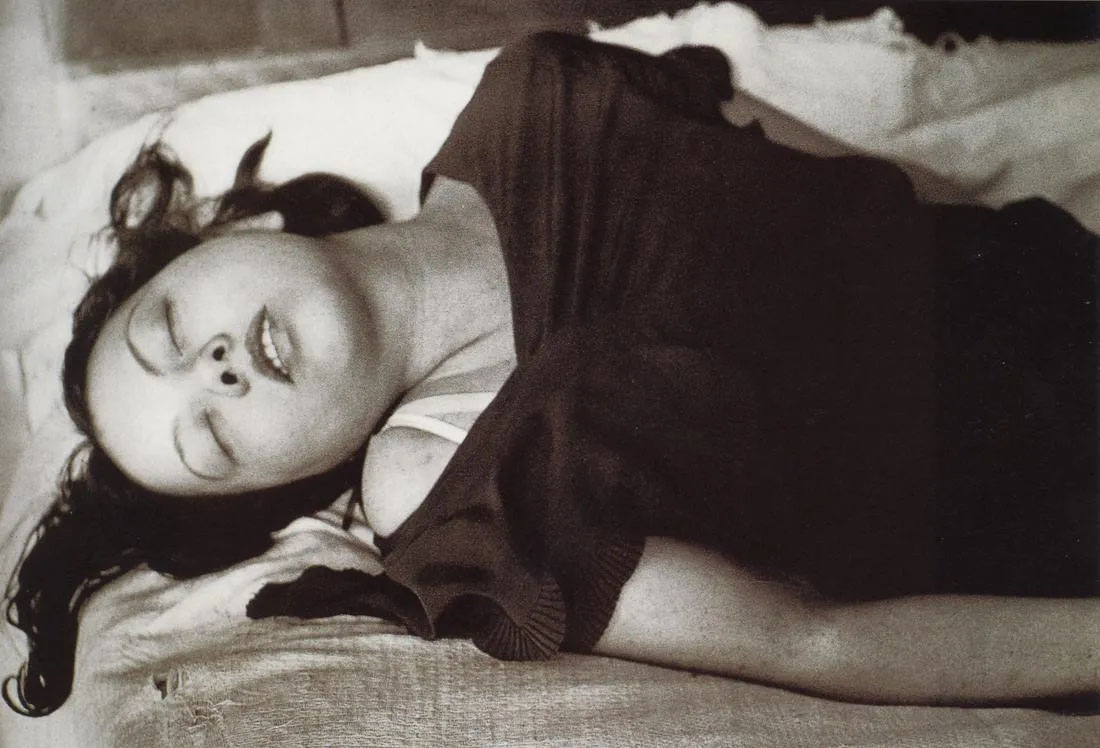
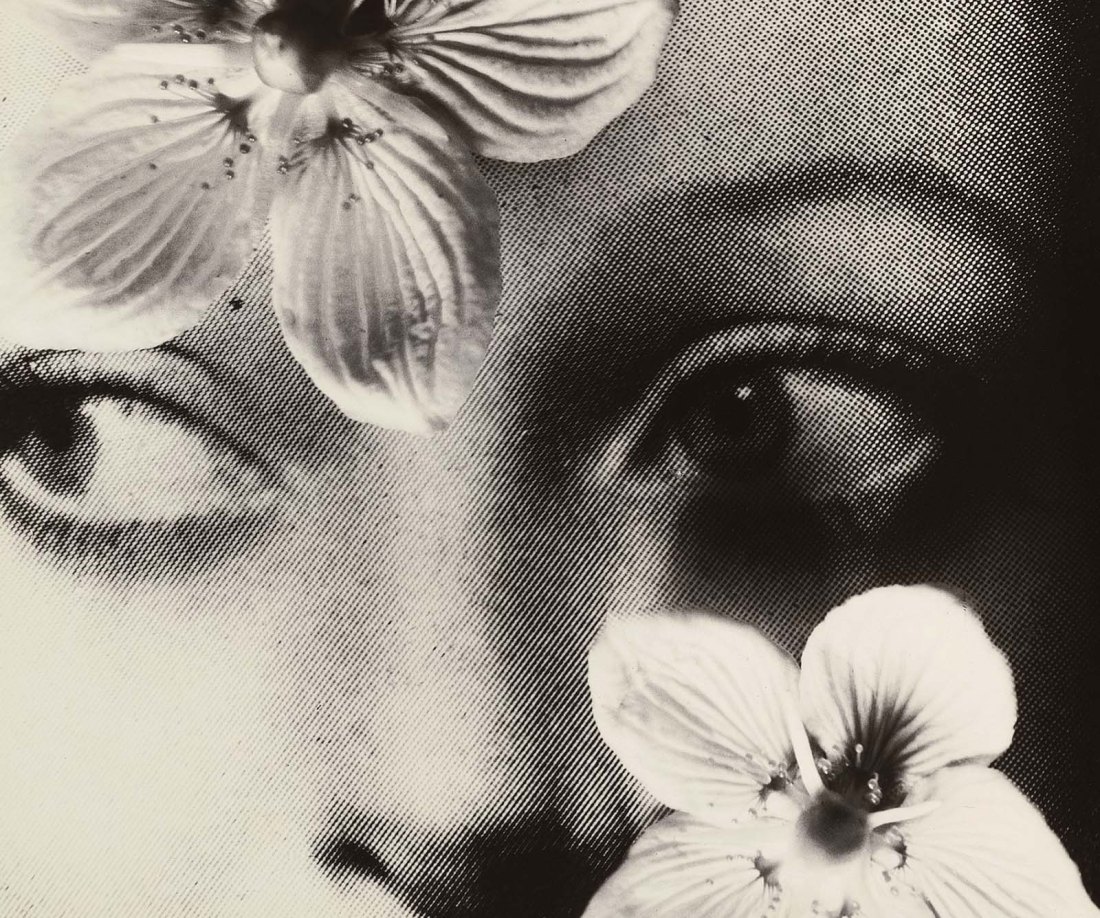
Brassaï (1899-1984) ~ Le phénomène de l’extase, vers 1933 | src liveauctioneers

The Phenomenon of Ecstasy shows a woman at the heart of the photomontage; she offers the ambiguous spectacle of a being carried away by an emotion of mixed suffering and joy; between the devotional universe of grace and the clinical one of madness. What passion is she devoted to? Terrestrial or celestial?

Dalé expressed it in these terms: “During ecstasy, at the approach of desire, pleasure, anxiety, all opinions, all judgments (moral, aesthetic, etc.) change dramatically. Every image, likewise, changes sensationally. One would believe that through ecstasy we have access to a world as far from reality as that of dreams. The repugnant can be transformed into desirable, affection into cruelty, the ugly into beauty, defects into qualities, qualities into black misery. (The Phenomenon of Ecstasy, 1933).

sources of the text: Libération & open edition journals
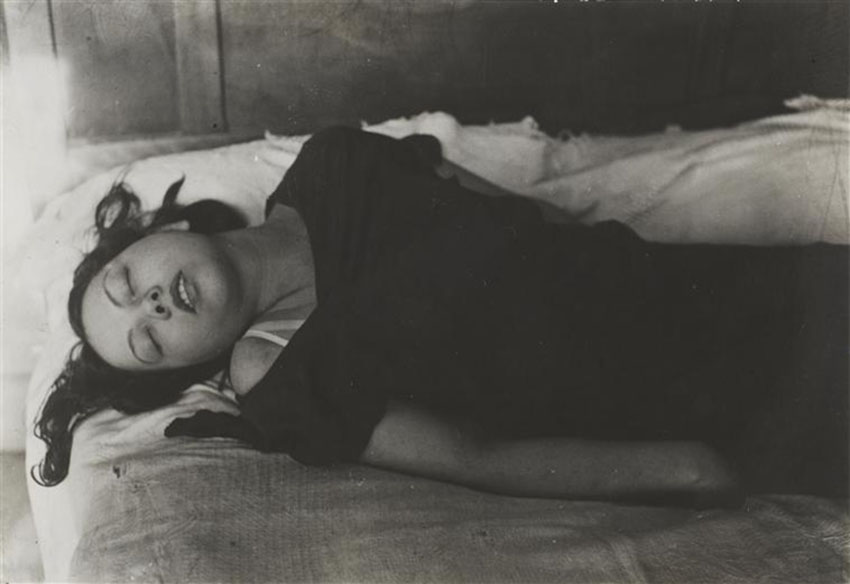
Brassaï (1899-1984) ~ Le phénomène de l’extase, vers 1933 | src RMN

le ciel et la mer par Steiner

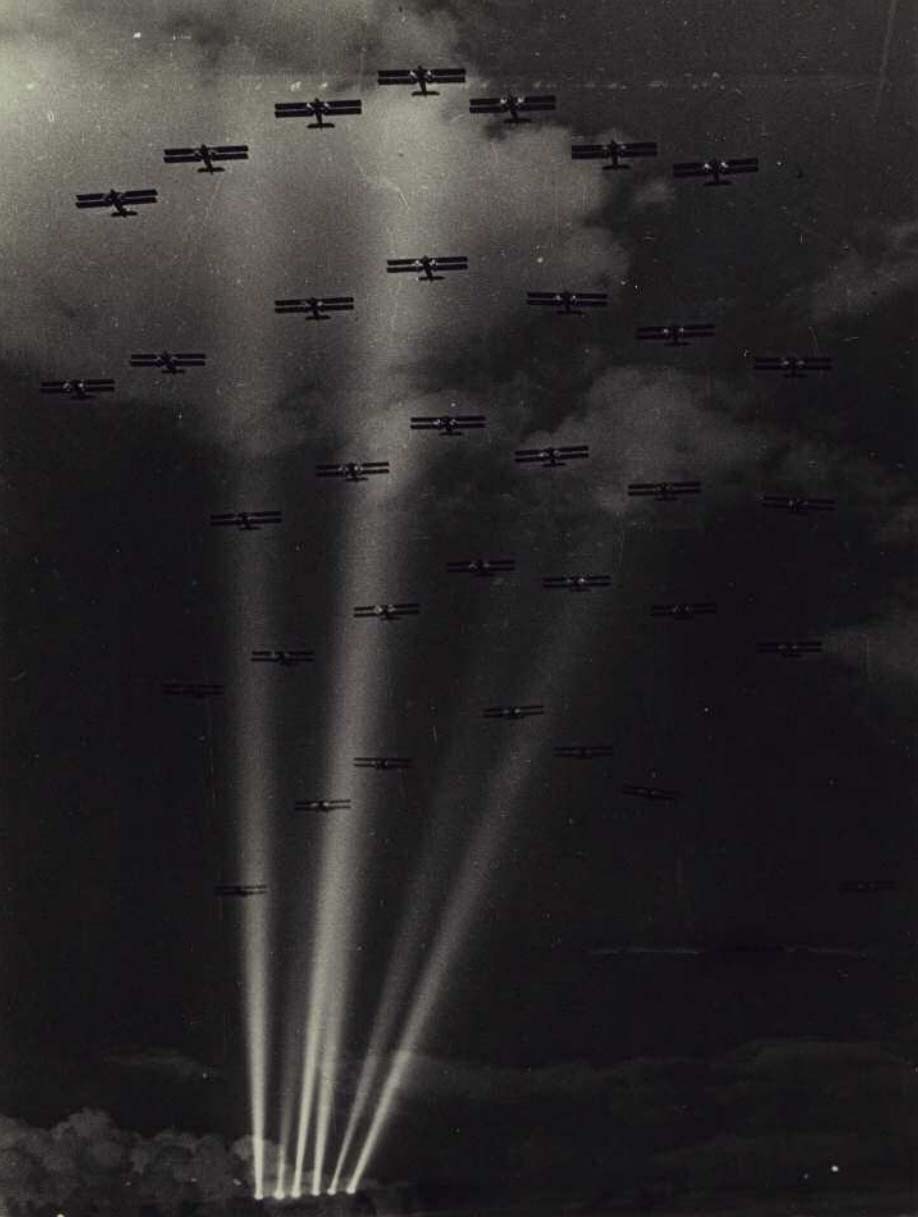
André Steiner :: Photomontage, Une nuée d'avion s'élève dans le ciel illuminé par les projecteurs, 1933.
André Steiner :: Photomontage, Une nuée d’avion s’élève dans le ciel illuminé par les projecteurs, 1933. | src Giquello et Associés
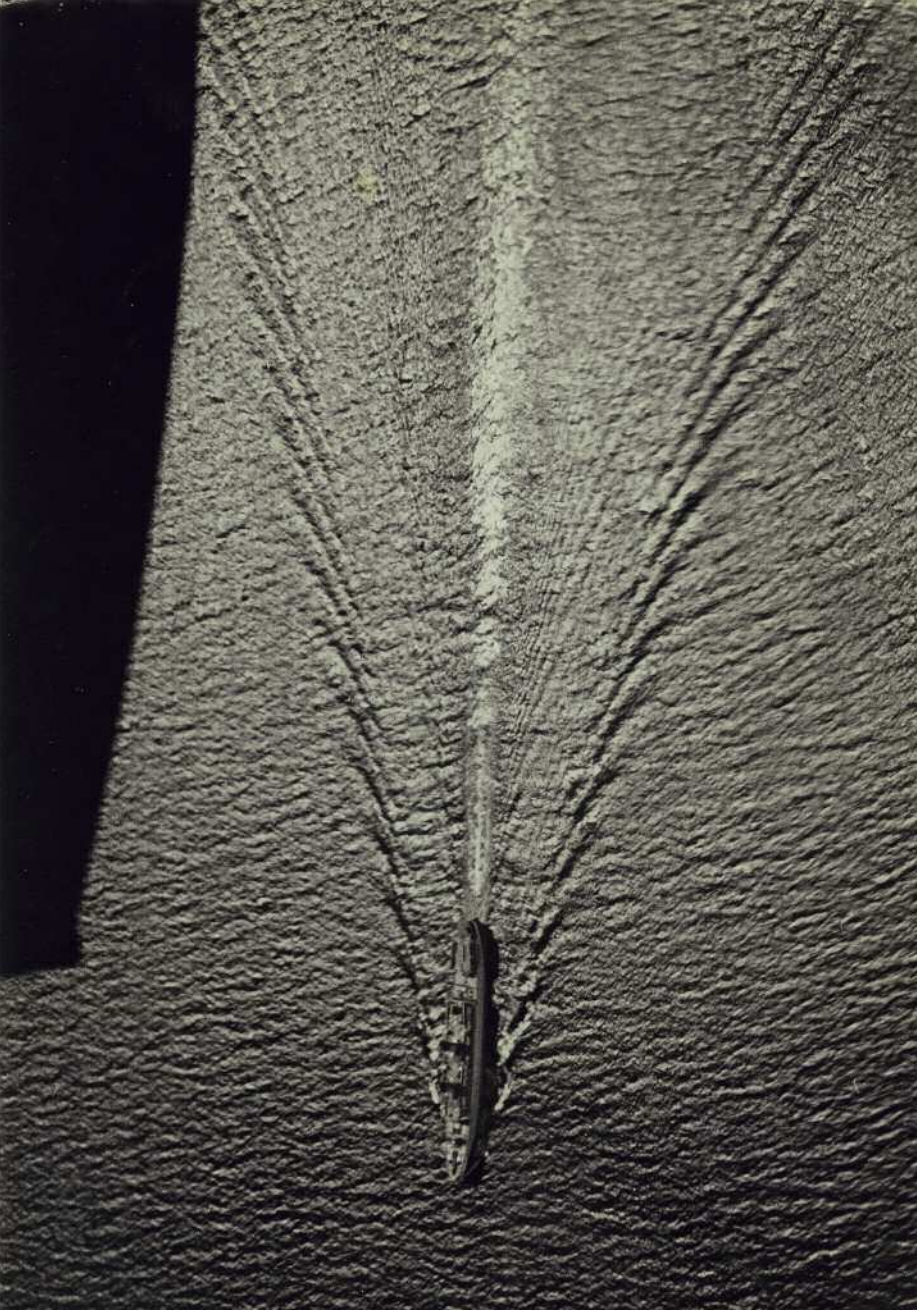
André Steiner (Andor Steiner) :: Vue aérienne, Maroc, 1933, tirage argentique.
André Steiner (Andor Steiner) :: Vue aérienne, Maroc, 1933, tirage argentique. | src Giquello et Associés

Abeceda by Karel Teige (1926)

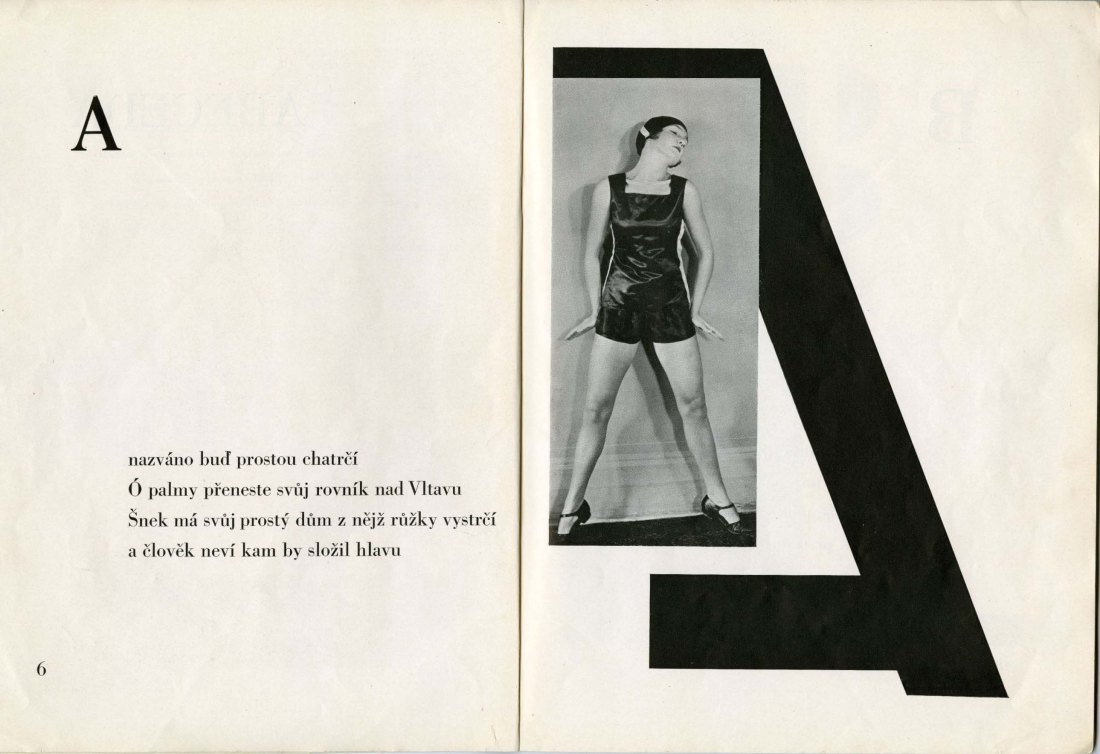
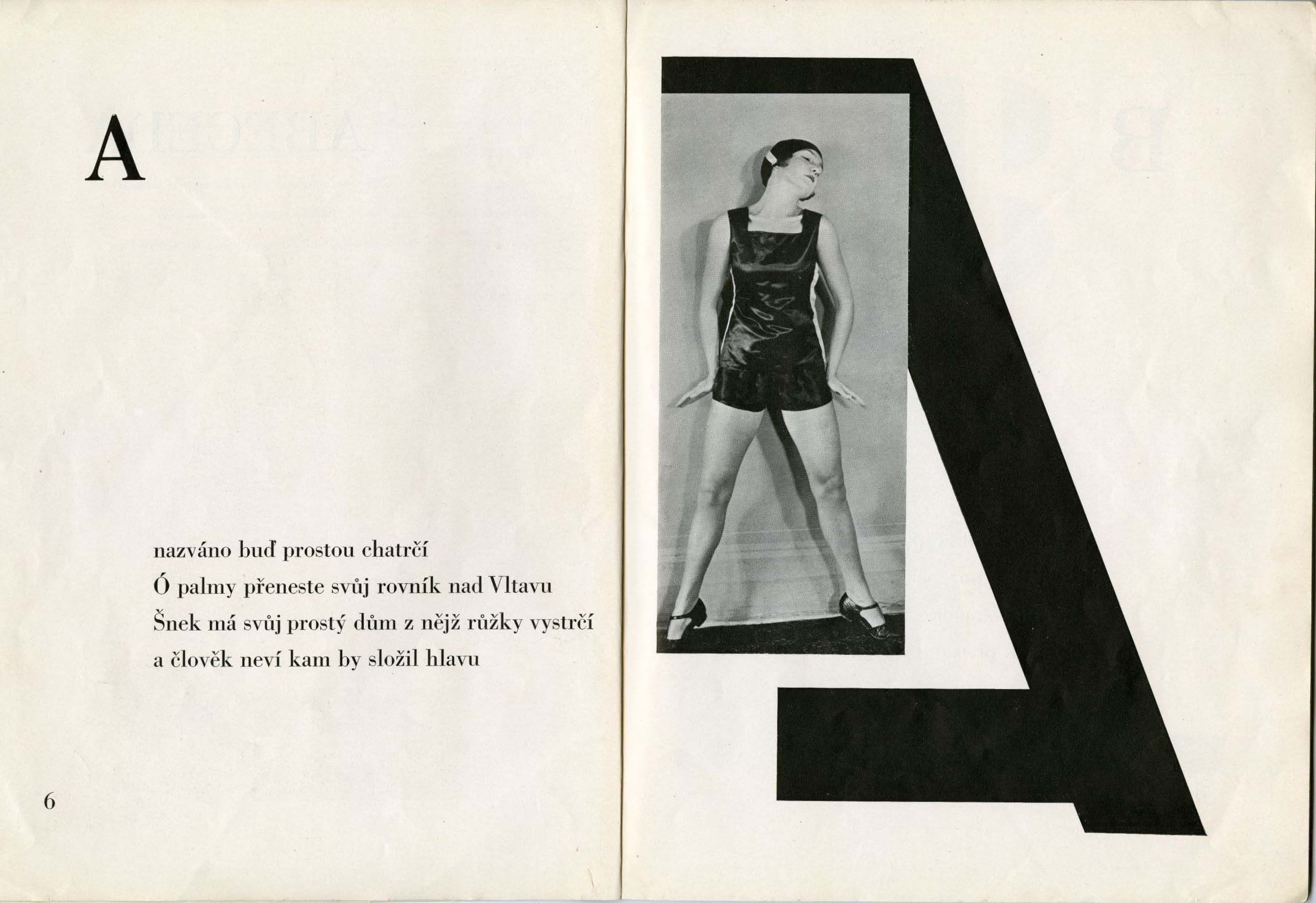
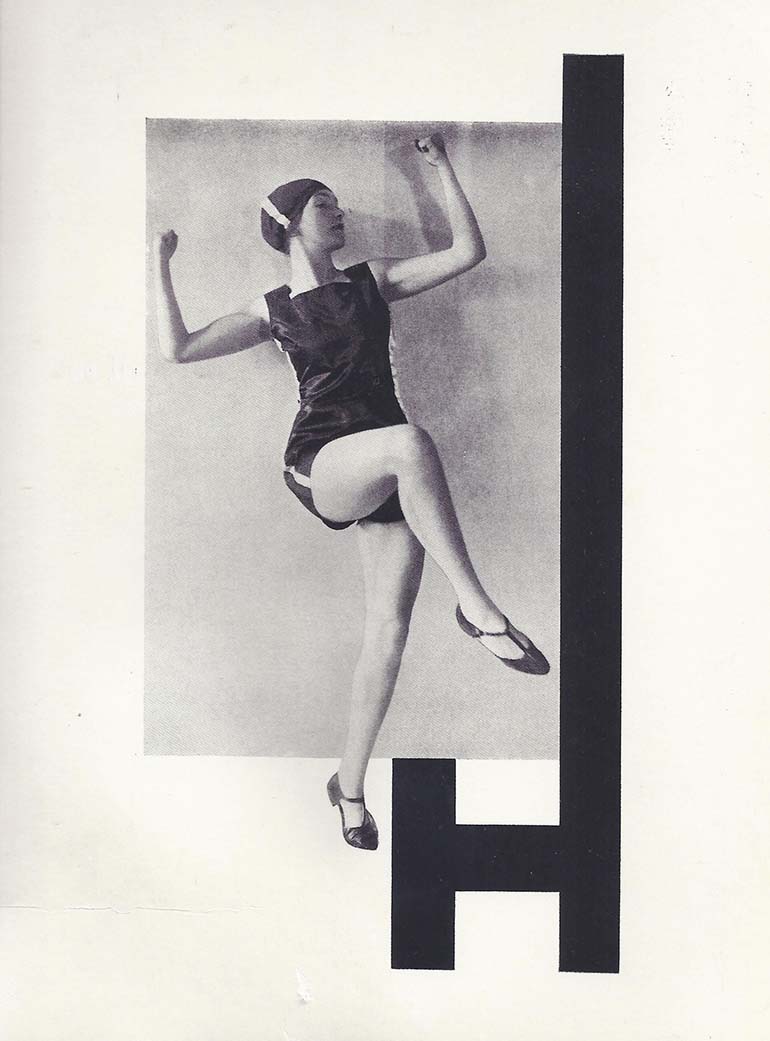
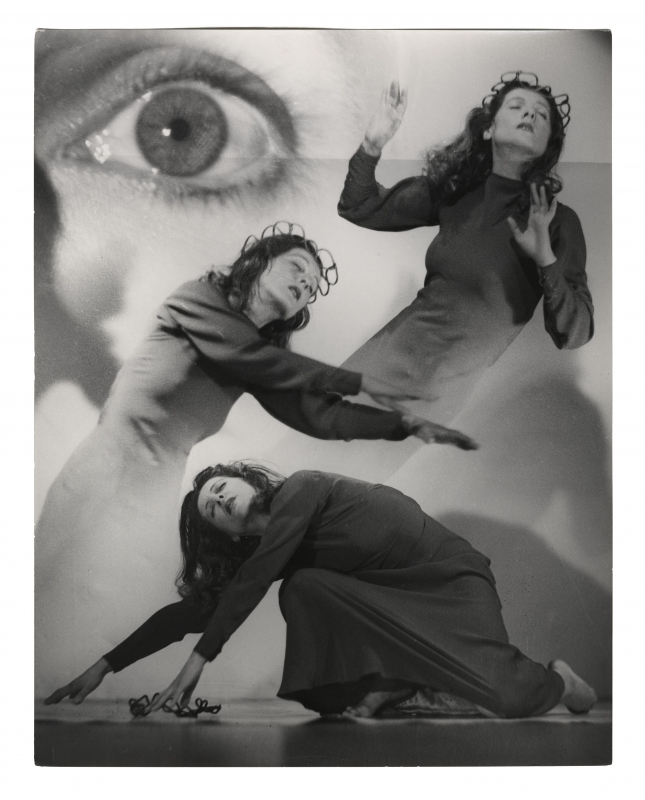
A page for Abeceda [The Alphabet], 1926
Poetry by Vitezslav Nezval (Czech, 1900–1958)
Design, typography, and photomontage by Karel Teige (Czech, 1900–1951)
Choreography by Milča Mayerová (Czech, 1901–1977)
src Listování. Moderní knižní kultura ze sbírek Muzea umění Olomouc | Západočeská galerie v Plzni
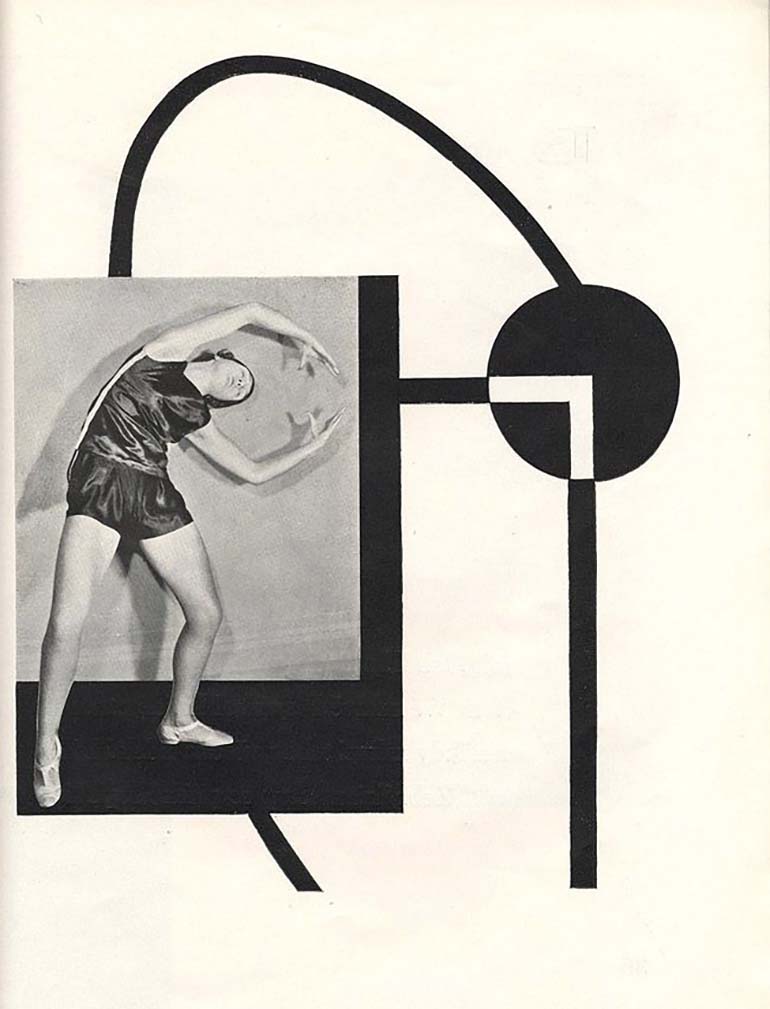
O page for Abeceda [The Alphabet], 1926

« In Nezval’s Abeceda, a cycle of rhymes based on the shapes of letters, I tried to create a ‹ typofoto › of a purely abstract and poetic nature, setting into graphic poetry what Nezval set into verbal poetry in his verse, both being poems evoking the magic signs of the alphabet. » –Karel Teige, quoted from Abeceda – Index Grafik

H page for Abeceda [The Alphabet], 1926

In 1926 the Czech dancer Milca Mayerová choreographed the alphabet as a photo-ballet. Each move in the dance is made to the visual counterpoint of Karel Teige’s typographic music. Teige was a constructivist and a surrealist, a poet, collagist, photographer, typographer and architectural theorist, and his 1926 photomontage designs for the alphabet are a uniquely elegant and witty invention, and one of the enduring masterpieces of Czech modernism. –Quoted from The Guardian

Mandello · Artist portraits

Jeanne Mandello self-portrait, circa 1942-1943 | src Jewish Women’s Archive [JWA]

»Destiny Emigration« reconstructs the stories of two Jewish photographers, Gerti Deutsch and Jeanne Mandello. Each left her country when the Nazis took power. | Das verborgene Museum

Nathalie von Reuter :: Portrait of Jeanne Mandello, 1930 | src Das verborgene Museum

On July 15th, 1941 exiled German photographer Jeanne Mandello arrives in Uruguay

Among the people disembarking in Montevideo from the ship Cabo de Buena Esperanza (Cape of Good Hope) in July of 1941 was German-born photographer Jeanne Mandello, who had managed to escape from France. The two-month journey had been strenuous: hundreds of refugees fleeing Nazi Europe were on board, and individual berths had been sold several times each. On arrival in Montevideo, Jeanne Mandello weighed only 40 kilos (88 pounds). But Good Hope proved to be an auspicious name for Mandello’s transport from Europe, for Uruguay would become the country that saved her life.

Jeanne Mandello was born Johanna Mandello on October 18, 1907 in Frankfurt am Main, Germany. She studied photography at the Lette-Haus in Berlin, an institution dedicated to the professional training of women, and started working with a Leica camera in the late 1920s. She also trained for a year with Paul Wolff, the “Leica pioneer” who later became involved with the Nazi regime. She then opened her own photography studio in Frankfurt and from 1932 started working with her future husband Arno Grünebaum, who, under her direction, also became a photographer.

Fully aware of the dangers they faced, Jeanne and Arno left Nazi Germany for France in early 1934 and began a new life and career in Paris. The artistic avant-garde of the Weimar Republic and the Bauhaus school had inspired Mandello, and she became engaged by the Paris art scene where photographers like Man Ray and Brassaï redefined modern photography. Mandello started exploring new techniques, unusual angles, framings, and lighting. Like fellow exiled photographers Erwin Blumenfeld and Hermann Landshoff, the couple established themselves as fashion photographers, opened a photography studio. They worked for fashion labels such as Balenciaga and Guerlain and the magazines Vogue, Harper’s Bazaar and Fémina. Johanna changed her name to the French “Jeanne,” and on October 28, 1940 the Third Reich revoked her German citizenship.

With the outbreak of the Second World War, Jeanne and Arno had to leave Paris. First threatened by the French Republic as “foreign enemies,” Jeanne was sent to the village of Dognen, near the camp of Gurs. She had to leave everything behind and lost her equipment and her entire body of work. Realizing they were in great danger in Vichy France, the couple managed to get exit permits from France, visas for Uruguay, and ship passage from Bilbao to Montevideo. (*)

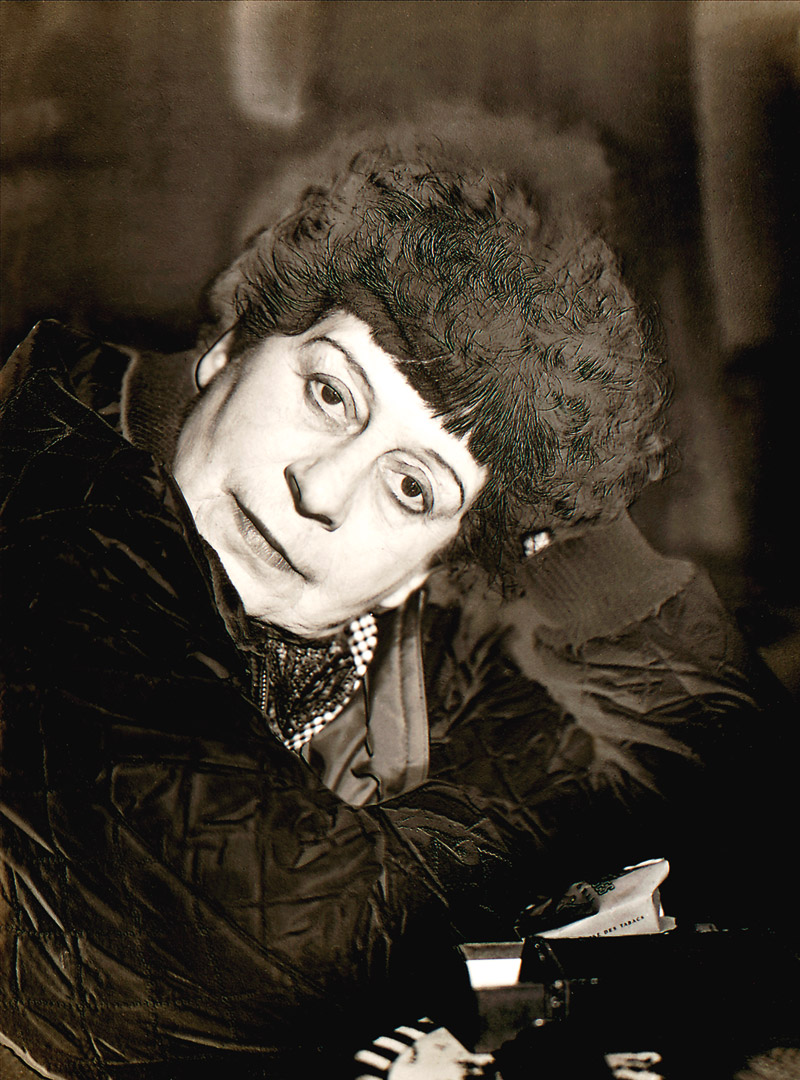
Jeanne Mandello :: Portrait of Hilde Köster (H. Koester), Ascona, ca. 1933 | src Das verborgene Museum

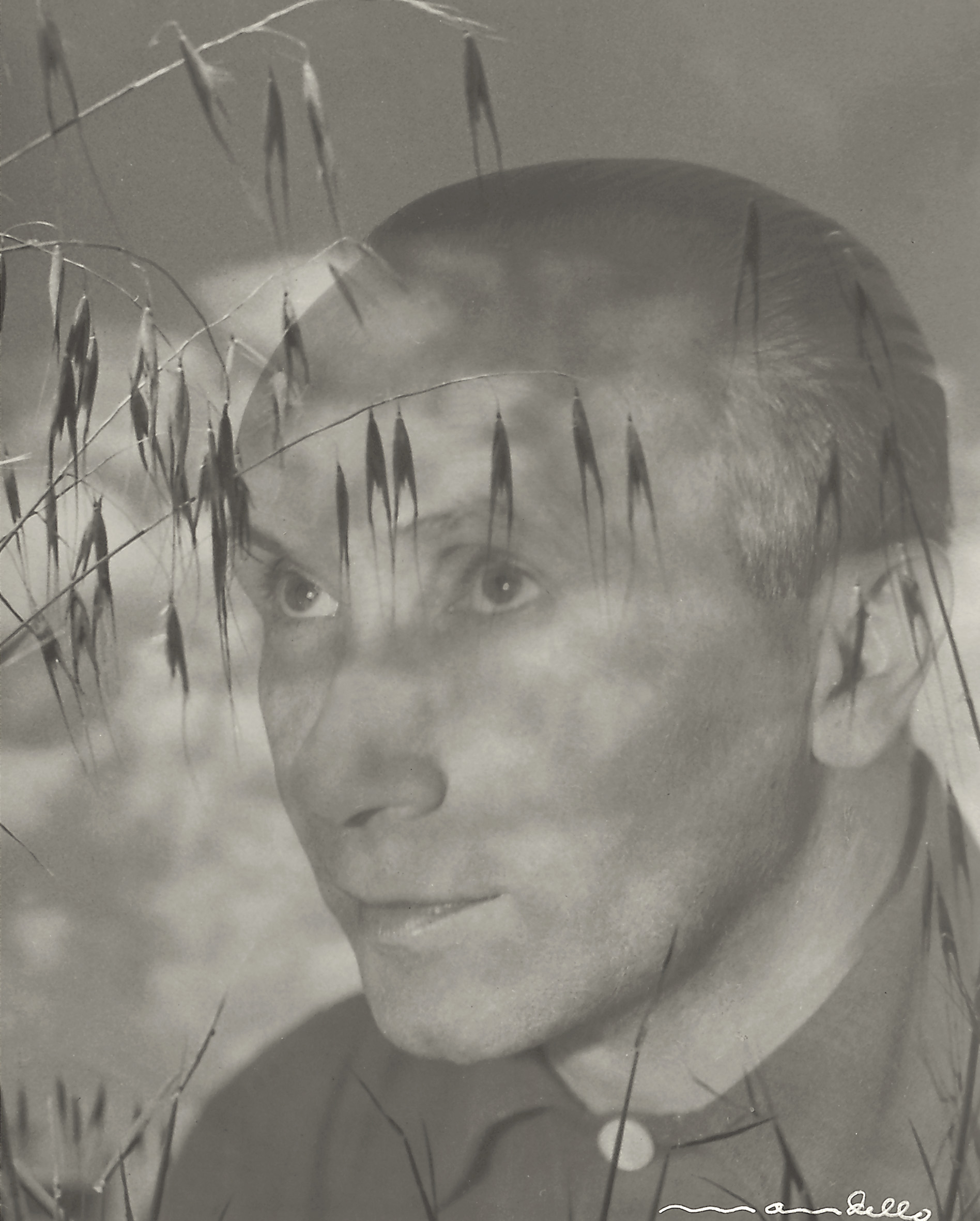
Jeanne and Arno immediately fell in love with Uruguay. With just three million inhabitants, the country took in approximately 10,000 German-speaking émigrés during the Second World War, most of them Jewish. Jeanne commented later, “I have never met such kind and obliging people as the people in Uruguay … Everybody helped us.” She quickly made contacts and established herself as a successful photographer. From 1943, she regularly exhibited her work: portraits, landscapes, architecture shots, solarisations (photographs with very strong overexposure), and photograms (the direct exposure of photosensitive surfaces without using a camera). Her South American photography is a perfect example of the mutual influence and cultural exchange between the Old World and the New which contributed to the modernization of South American cultural life. Jeanne was in close contact with Uruguayan artists and intellectuals as well as with other exiles from Europe in Montevideo and Punta del Este. They included painter Joaquín Torres García, poets Rafael Alberti and Jules Supervielle, photographer Florence Henri, sculptor Eduardo Yepes, art critic Julio Payró, and journalist J. Hellmuth Freund, who published an article on the Mandellos in Susana Soca’s art magazine Entregas de la Licorna. Jeanne’s eclectic work was in tune with the progressive and modernist urban and artistic developments emerging at that moment in Uruguay, and she became one of the country’s precursors of modern photography, similar to Grete Stern in Argentina. In 1952, Jeanne’s work was exhibited at Rio de Janeiro’s Museum of Modern Art.

In 1954 Jeanne and Arno separated, and she left Uruguay for Brazil to join her future second husband, journalist Lothar Bauer, an old acquaintance from Frankfurt. At the end of the 1950s, the couple moved to Barcelona, where Jeanne would live until the end of her life. In 1970, she adopted a daughter, Isabel. She kept working until the end of her life, documenting the city of Barcelona and never tiring of her favorite motif of woods and trees. Jeanne Mandello died in Barcelona on December 17, 2001. (*)

Jeanne Mandello :: Florence Henri, 1942. | src Destiny Emigration Exhibit at Das verborgene Museum

Most of Jeanne Mandello’s early work has been lost. Her Paris studio was emptied and pillaged by the National Socialist Dienststelle Westen in 1942, its negatives and archives probably destroyed.

In 1997, an exhibition of her work was held in Barcelona, and the exhibit Jeanne Mandello: Imágenes de una fotógrafa exiliada (Images of an Exiled Photographer) toured through several cities in Uruguay and Argentina in 2012 and 2013.

Jeanne Mandello was forced by circumstance to become a cosmopolitan artist and had to re-invent herself and her photography many times. Trained in Germany and influenced by the French avant-garde movements of the 1930s, she brought the geometry of the Bauhaus and the surrealist fantasy of pre-war Paris to her new homes in Uruguay, Brazil, and Spain. Forgotten for nearly 50 years because of the historical circumstances surrounding her life, she is today rediscovered as an avant-garde female artist and a pioneer in the field of modern photography. (*)

(*) quoted from Jewish Women’s Archive [JWA]

Jeanne Mandello :: Poet Rafael Alberti, Punta del Este, 1947. Isabel Mandello Collection. | src Jewish Women’s Archive [JWA]
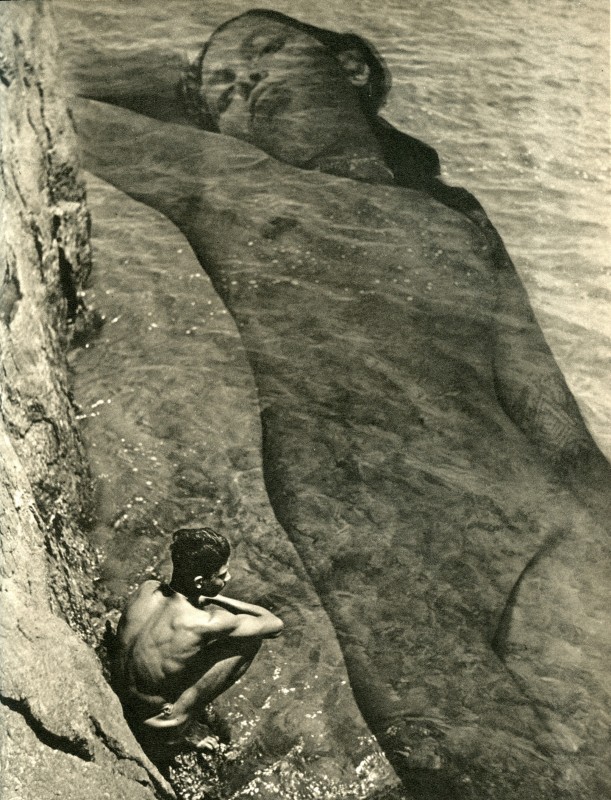
Jeanne Mandello :: “Pombo Fotomontaje, Vaclav Veltcheck,” 1948. Isabel Mandello Collection. | src Jewish Women’s Archive [JWA]

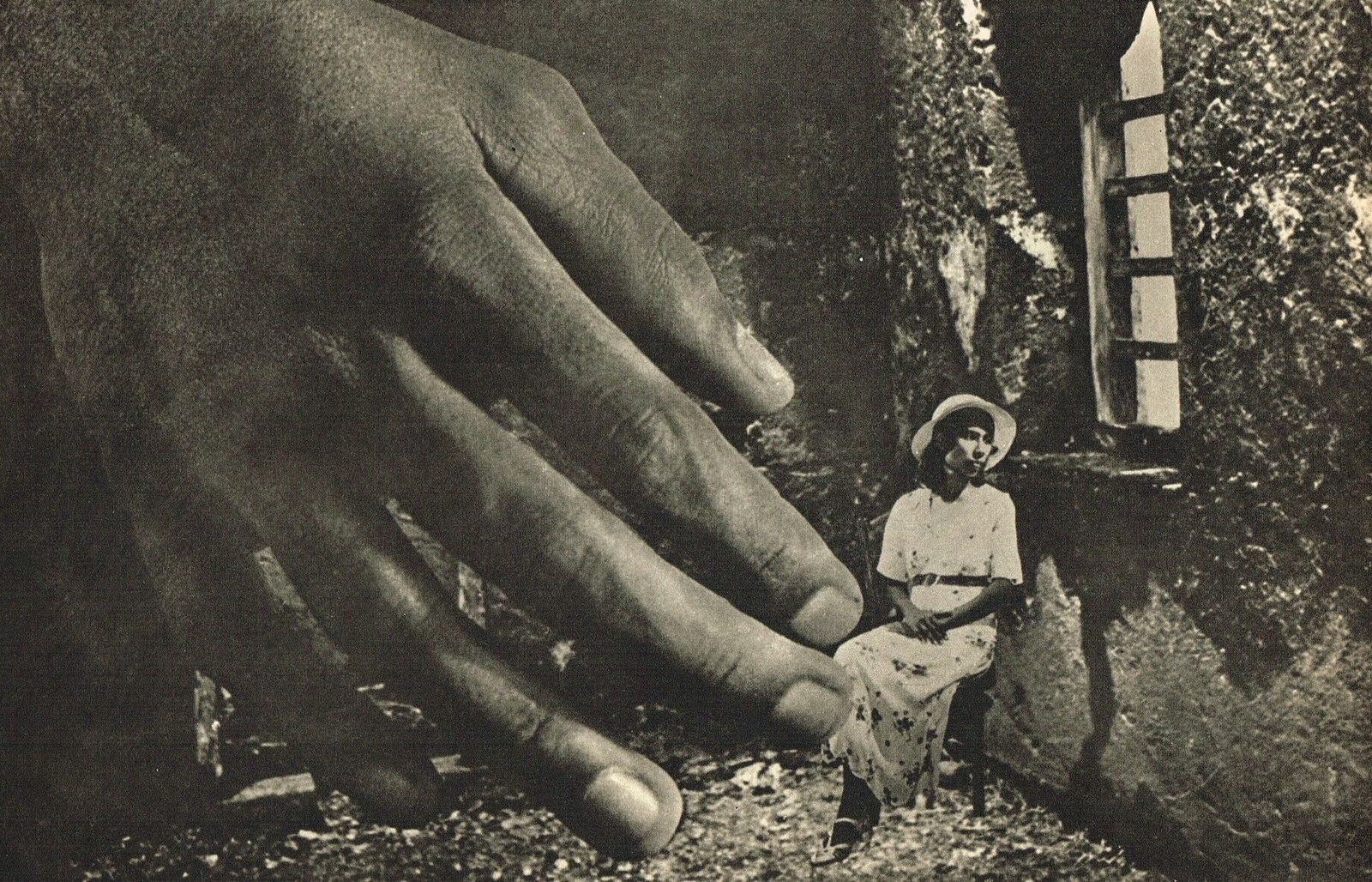
Day Dreaming, 1930s

Lionel Wendt :: Dreaming, 1933–34, photogravure, from Lionel Wendt’s Ceylon (London, Lincolns-Prager Publishers Ltd, 1950). | src British Art Studies
Lionel Wendt :: ‘Day-Dream’, Fonseka, Manel. Exhibition Catalogue Rediscovering Lionel Wendt, Lionel Wendt Memorial Fund, Colombo, 1994, p.4. | src Lionel Wendt Centre for the Arts
Another print, dated 1938, is titled ‘In Silent Places’ (bromide)