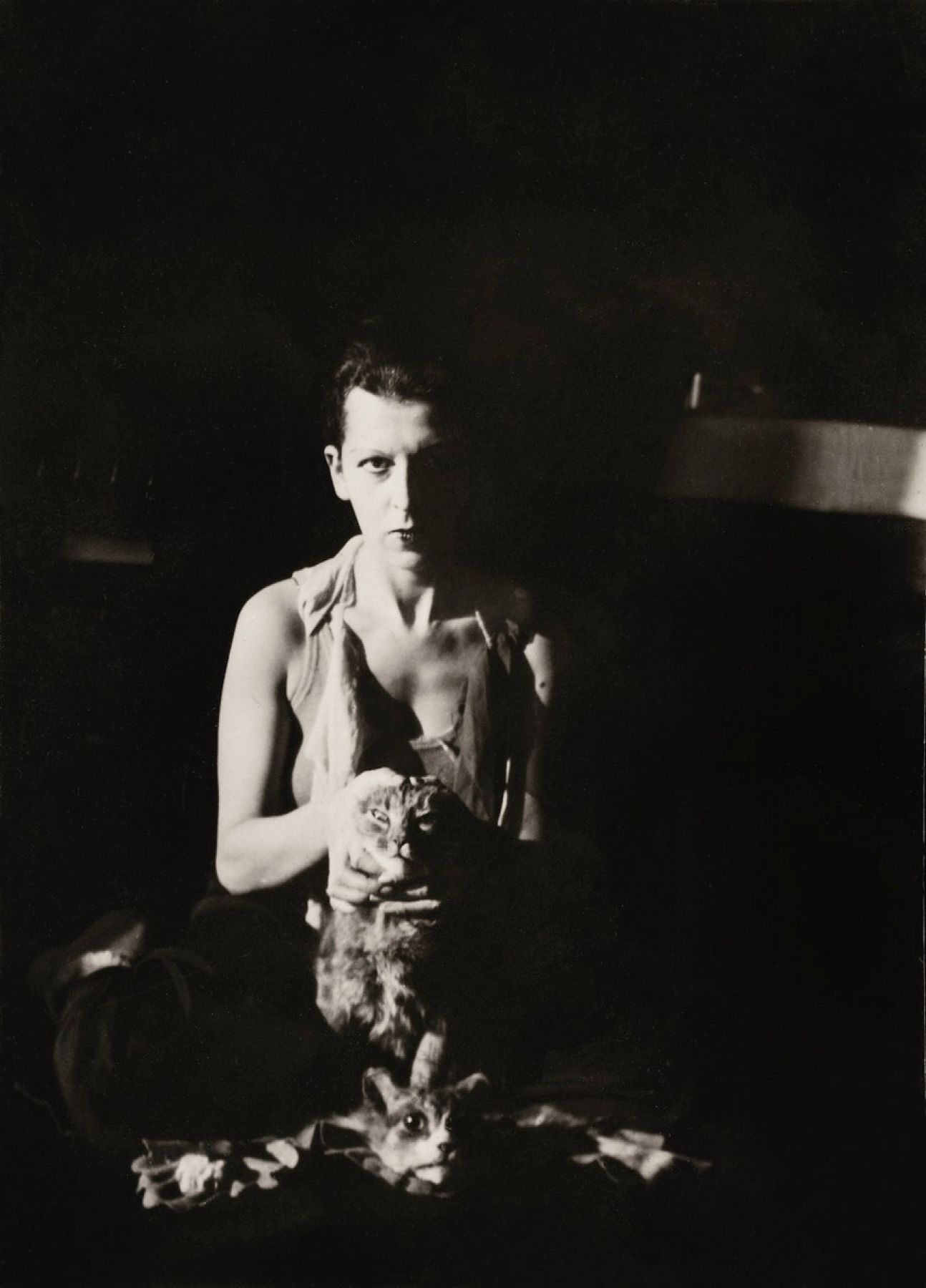
Claude Cahun & Marcel Moore :: Lucie and Kid, Nantes, vers 1926. Tirage argentique. | src Christie’s, also MAM
“Lucy and Kid”. Nantes, ca.1926. Original silver print. This piece seems to close the series of “self-portraits with a glass globe” (1926), which initiates complex manipulations, technical processes that Claude Cahun (along with Marcel Moore) will later use for photomontages (1929-1939). Note the disturbing position of the suspended cat, held above the void against a background reminiscent of the decor of an expressionist film.
Claude Cahun & Marcel Moore :: Autoportrait au Chat, ca. 1927. Tirage argentique sépia. | src Musée d’art de Nantes
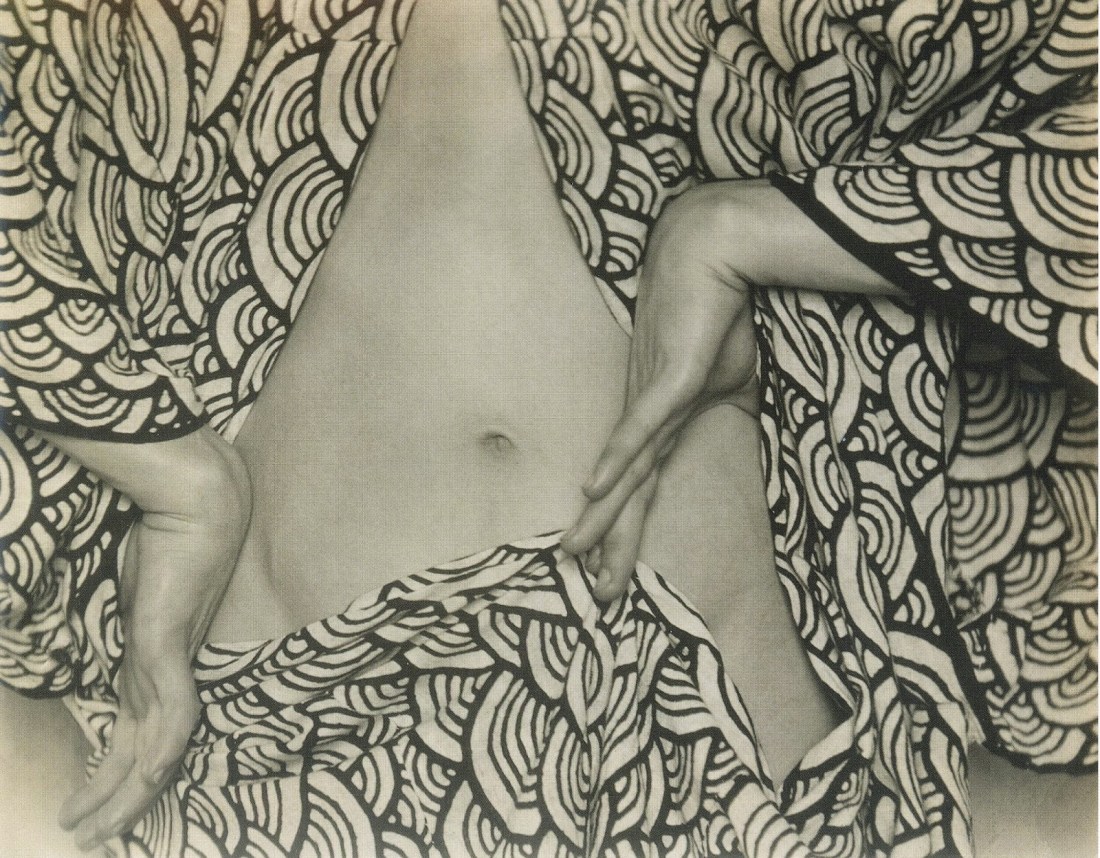
Margrethe Mather :: Semi-nude [Billy Justema wearing a Kimono]; ca. 1923. Center for Creative Photography. University of Arizona, Tucson
When Margrethe Mather (1885 or 1886-1952) met Billy Justema in 1922, she was 36 and he was 17. Through spending time with him, Mather found a way out of her grief over the unexpected suicide of her close friend Florence Deshon. Through their relationship, Justema searched for a state of mind that would allow him to define both his artistic path and his sexuality. Mather photographed him as an enigma, as he was at the time to himself, in the process creating a portfolio to rival that of Alfred Stieglitz’s images of Georgia O’Keeffe. I could point out the sure compositional structure that informs Billy Justema in a Kimono (above), the curves and angles that form a harmonious whole, all things typical of Mather’s work. [quoted from The Blue Lantern on blogspot]
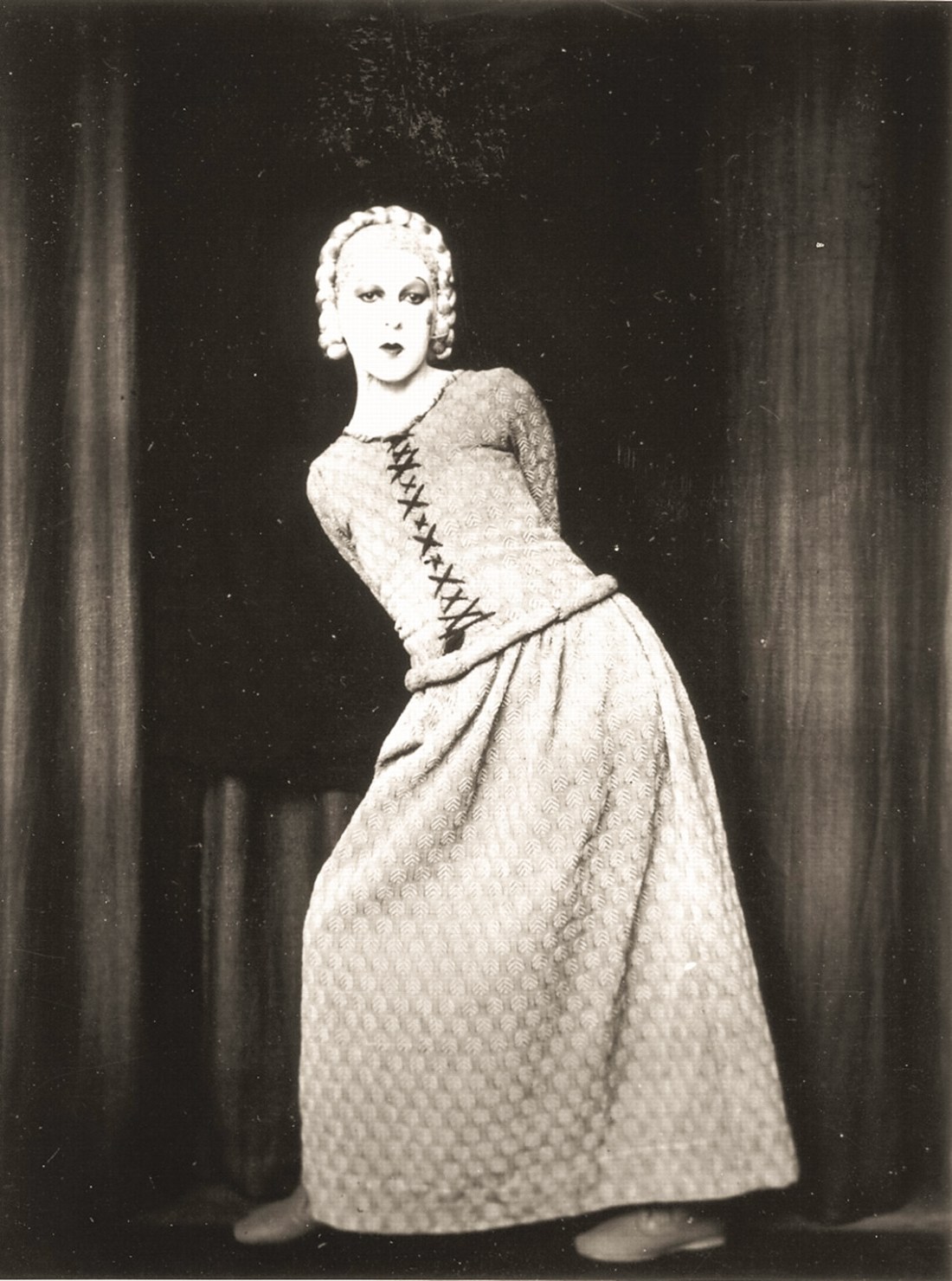
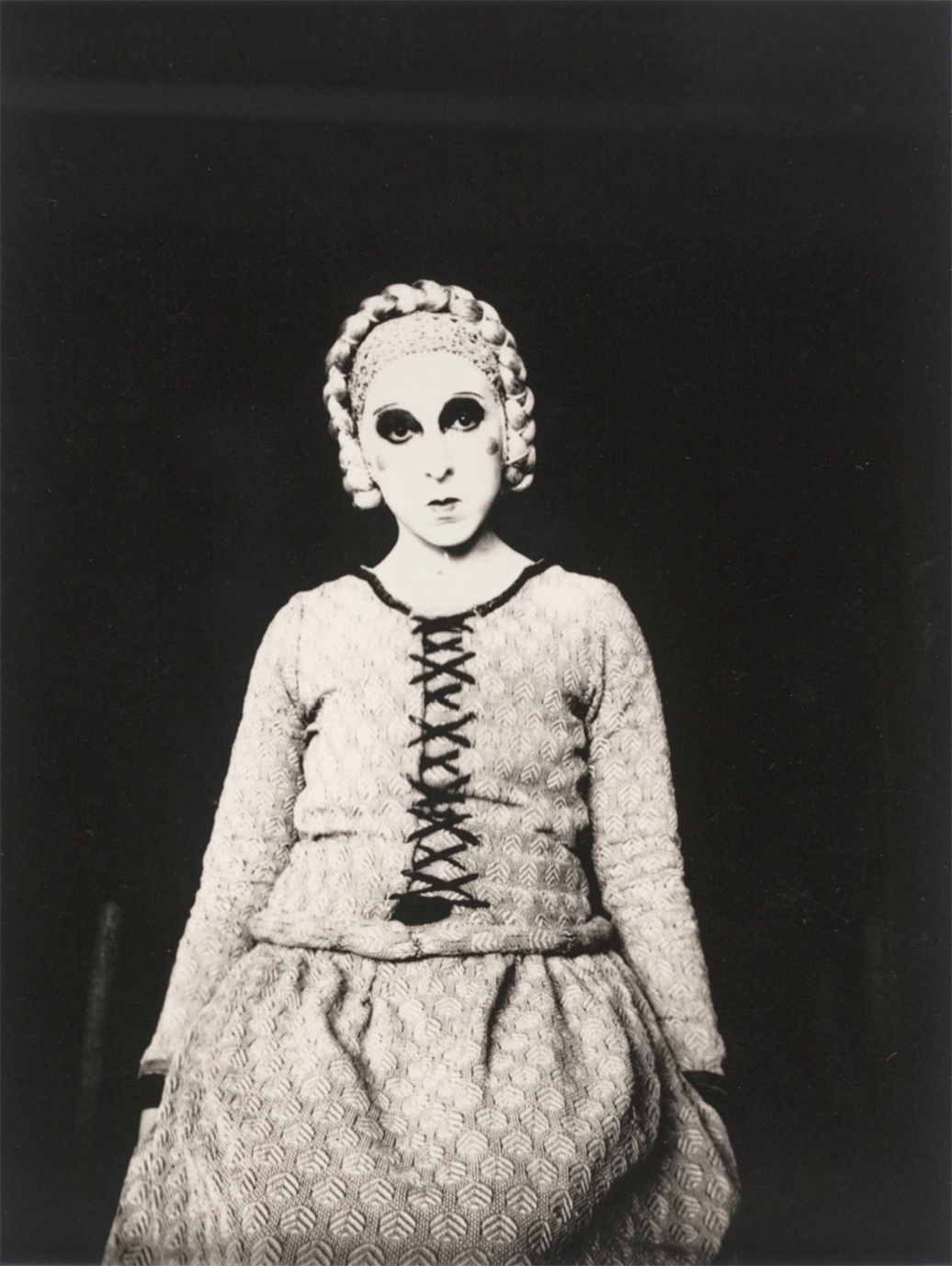
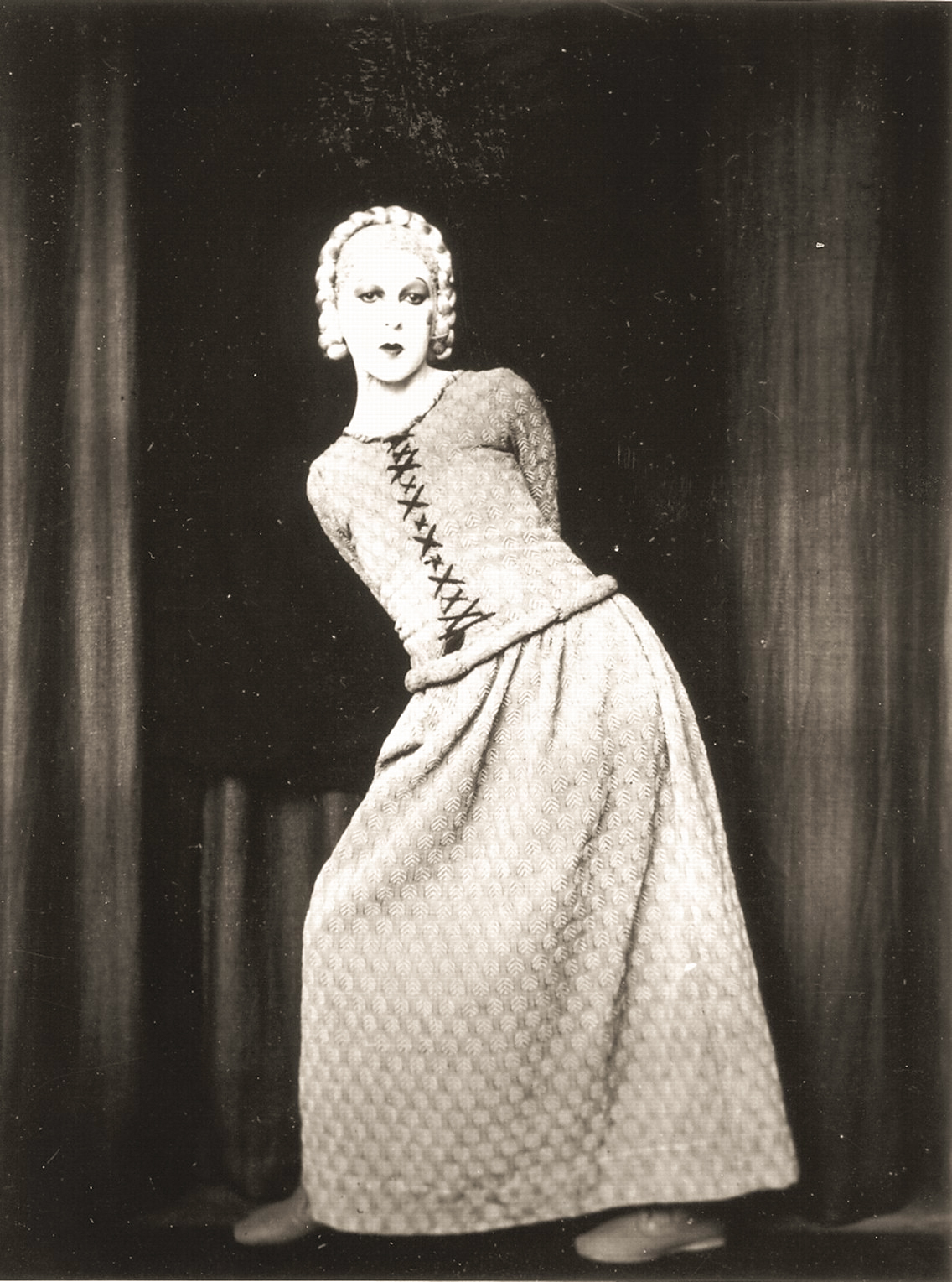
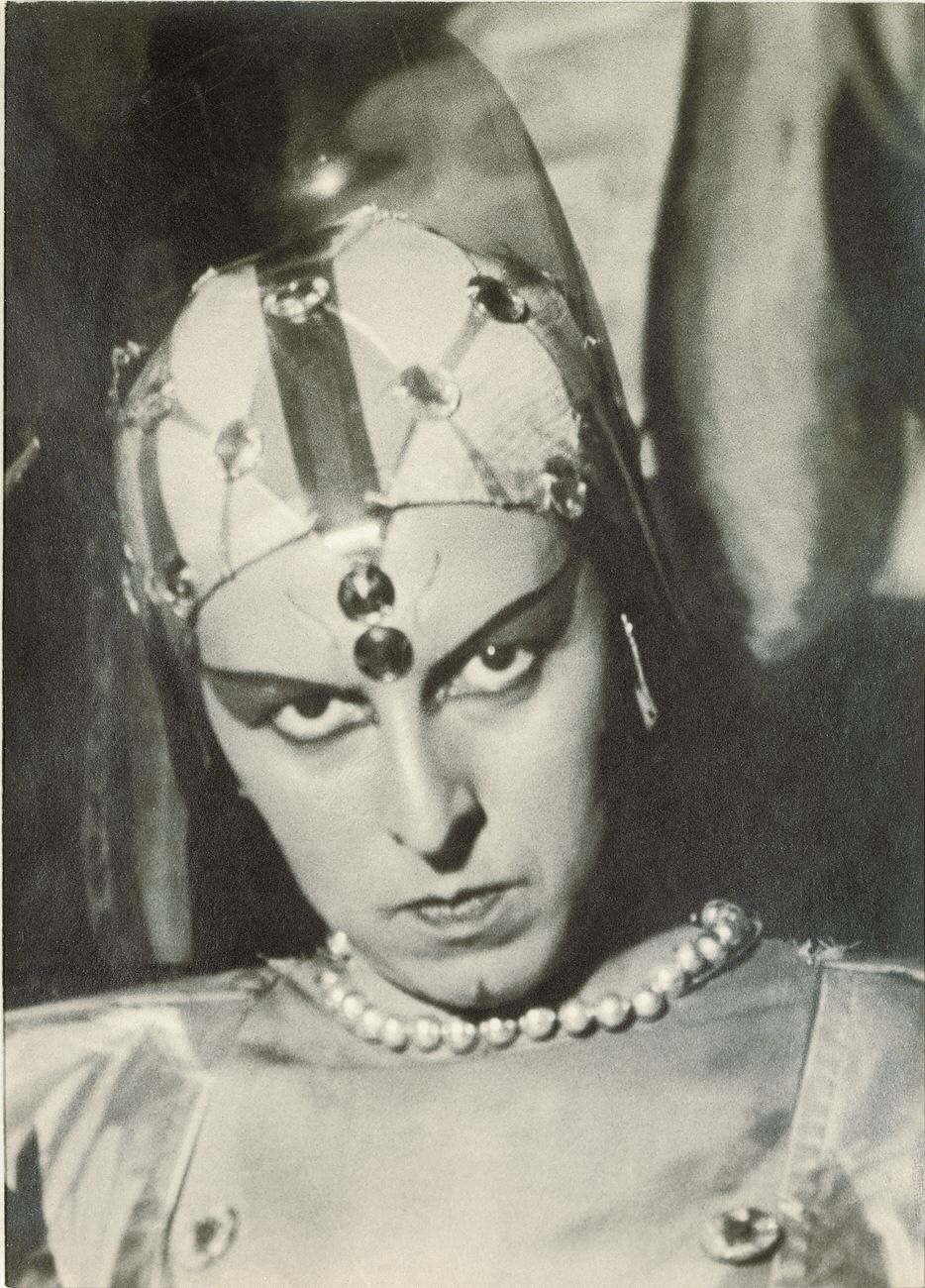
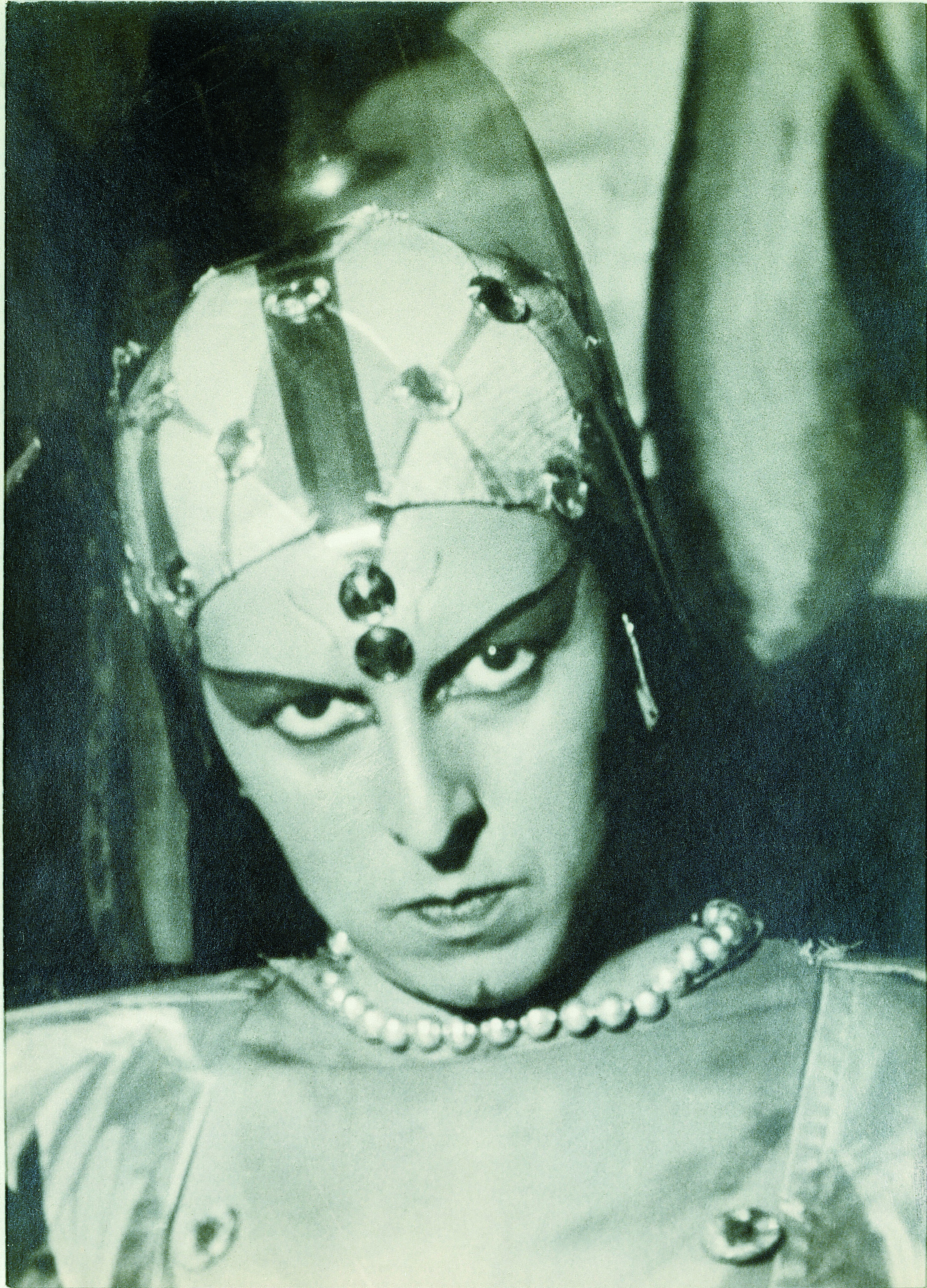
Claude Cahun :: Self-portrait (The Devil), 1929 [ in Le Mystère d’Adam] | src Hauser & Wirth via ocula Claude Cahun :: Self-portrait (The Devil), 1929 [in The Mystery of Adam]. | src Hauser & Wirth via ocula
Claude Cahun was a French photographer and writer known for her surrealist self-portraits. Her performative photographic practice explores themes of identity, gender nonconformity, and self-image. Cahun’s art prefigured the radical feminist photography of artists such as Cindy Sherman, Nan Goldin, and Yasumasa Morimura.
Persistently aiming to undermine authority and actively disavow social and cultural norms, Cahun was highly politicised, both in her art and her everyday life and was active as a resistance worker and propagandist during World War II.
Despite not receiving recognition during her lifetime, Cahun’s artwork has been exhibited widely at major galleries around the world including The Museum of Modern Art and The Metropolitan Museum of Modern Art in New York.
Early Years
Cahun was born in Nantes, France in 1894 to a prominent Jewish family. As a teenager, Cahun experimented with photography and recorded her first self-portrait in 1912. After moving to Paris to study at the Sorbonne University, Cahun immersed herself in the surrealist art scene. She began working alongside artists and intellectuals like Man Ray, André Breton, and Georges Bataille.
In the early 1920s, Cahun—born Lucy Renée Mathilde Schwob—decided to change her name to Claude Cahun. Traditionally in France, the adopted name ‘Claude’ can refer to either a woman or a man, making it gender-neutral.
Although never identifying as openly gay, Cahun’s forward thinking approach to gender-fluidity shaped her artistic practice and has established her as an important figure among artists and members of the LGBTQ community. As she wrote in her surrealist memoir Disavowals in 1930, ‘Masculine? Feminine? It depends on the situation. Neuter is the only gender that always suits me.’
Cahun often collaborated with fellow artist and lifelong romantic partner Suzanne Malherbe, who adopted the pseudonym Marcel Moore. The two artists worked together to create multidisciplinary art including collages and sculptures. Cahun and Moore also published various written works including articles and novels.
Self-Portraits (1925-1930)
Claude Cahun is best known for her portraits capturing the self in a plethora of shifting personalities. Cahun used her photos as a device to present her own image and the overworked characteristics of feminine and masculine identity.
Her self-portraits capture posed performances where Cahun would dress as a man or woman under various guises. She fashioned her hair short, long, or completely shaved, and wore playful makeup that disguised her as anything from dandy to doll, body-builder to vampire.
Her performative portraits feature various surrealist aesthetics. From her expressions and poses, to her backgrounds and use of specific props, Cahun encapsulates the vibrancy of surrealism during its height in the 1920s. Her photographs were strikingly different to her male contemporaries because they focused on self-image as the subject and object of the work.
« Sous ce masque, un autre masque. Je n’en finirai pas de soulever tous ces visages » Claude Cahun
“Beneath this mask is another mask. I’ll never stop removing all those faces” Claude Cahun
Claude Cahun & Marcel Moore :: Self-Observation, Aveux non avenus (planche I), 1929-1930. | src Christie’s
To judge from her literary, poetic and photographic works, it is clear that Claude Cahun was an artist of the avant-garde in many respects. Her surreal and mysterious self-portraits have been an inexhaustible inspiration for many artists of today and her cross-dressing and troubled view of her own identity were and remain a favorite subject for “gender studies”.
A multi-disciplinary artist, in the 1920s Cahun aligned herself with the surrealists, first joining literary circles and then artistic ones.Truly precocious in this time, her insatiable search for herself began then. She shaved her head, constantly wore disguises and questioned her sexuality. Endlessly ambiguous, the artist transformed herself into a man, a Buddha or even a fairy-like creature. It was through cross-dressing that she embarked on her construction process. Les Aveux non Avenus (1930), a work created by four hands (with Suzanne Malherbe known as Moore, her life partner) is a blend of writing and photography somewhere between a search for self and an indecipherable camouflage, as its opening lines demonstrate: “The objective follows the eyes, the mouth, the wrinkles in the skin. The facial expression is violent, sometimes tragic. Finally calm – the conscious, deliberate calm of acrobats. A professional smile – and there it is! The hand-mirror, rouge and eye shadow are back again. For a moment. Full stop. New paragraph. I start again. What a ridiculous little game for those who have not seen – and I haven’t shown anything – the obstacles, the chasm, the steps I’ve climbed”.
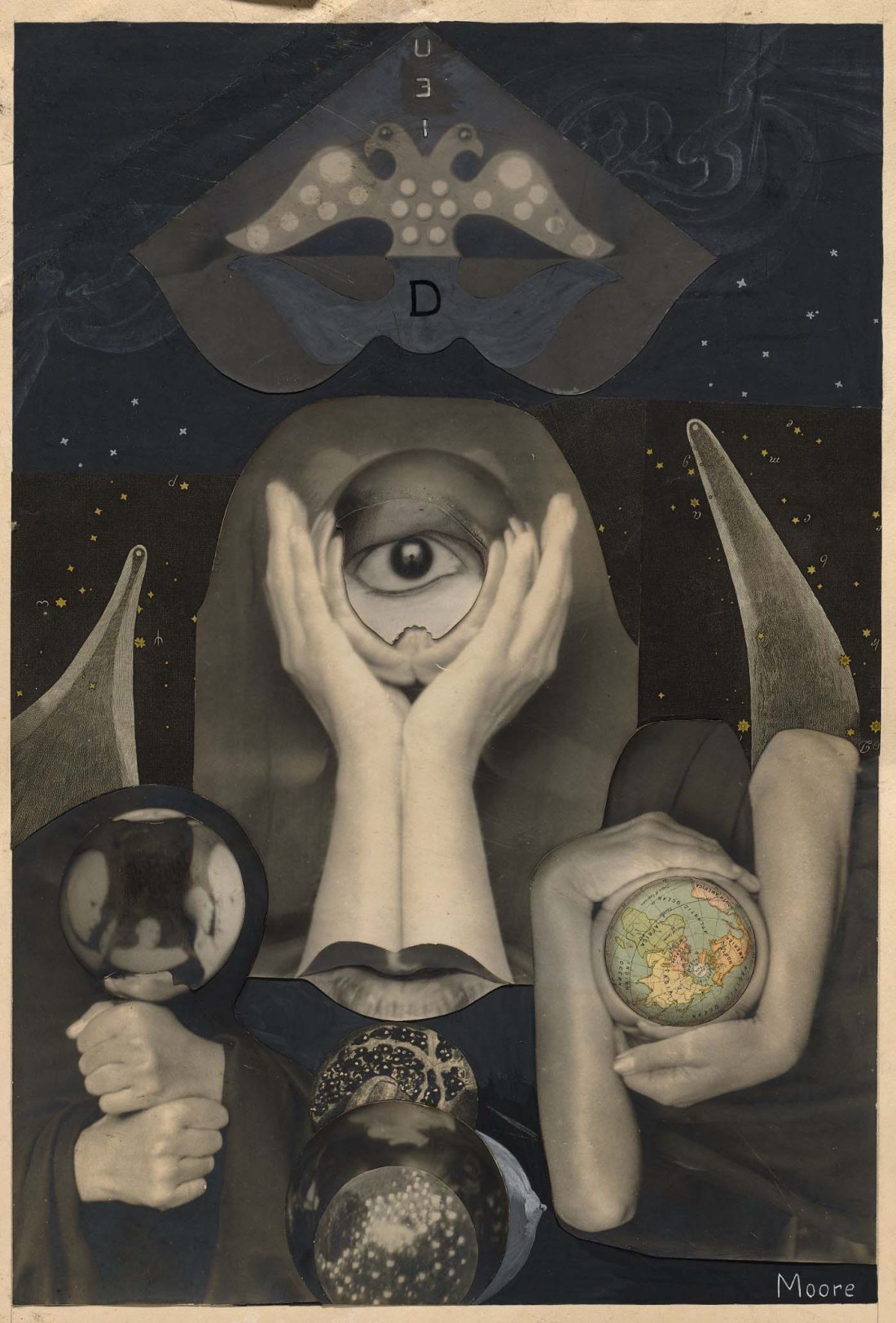
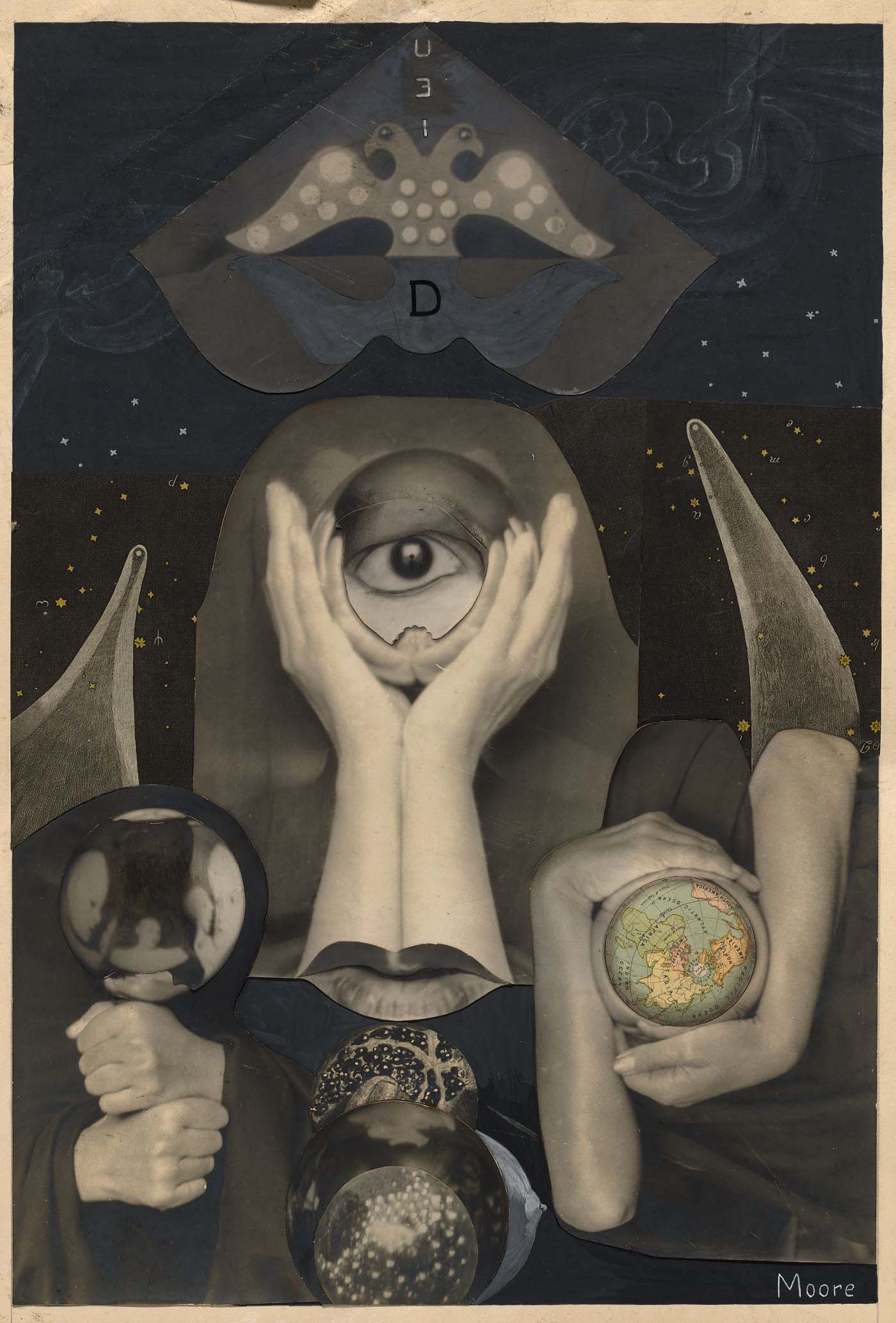
This (…) is the first of the nine illustrations comprising the anthology of Aveux non Avenus. The surrealist photomontage is a true self-portrait. The artist’s eye and mouth are immediately identifiable. Then, in the mirror, we recognize the reflection of her famous double self-portrait Que me veux-tu? [What do you want of me?] created in 1929. The presence of so many arms could be a wink at that collaborative work but it also evokes Kali, the Hindu goddess of creation and destruction. Moreover, the omnipresence of the circle symbolises the finite and the infinite, and hence the perfection of the Creator, those four letters inscribed at the top of the picture, crossed by a two-headed bird, while the pomegranate is a metaphor for fertility. This set of twin symbols refers the viewer to the man-woman dichotomy so as better to deconstruct preconceived ideas about sex.
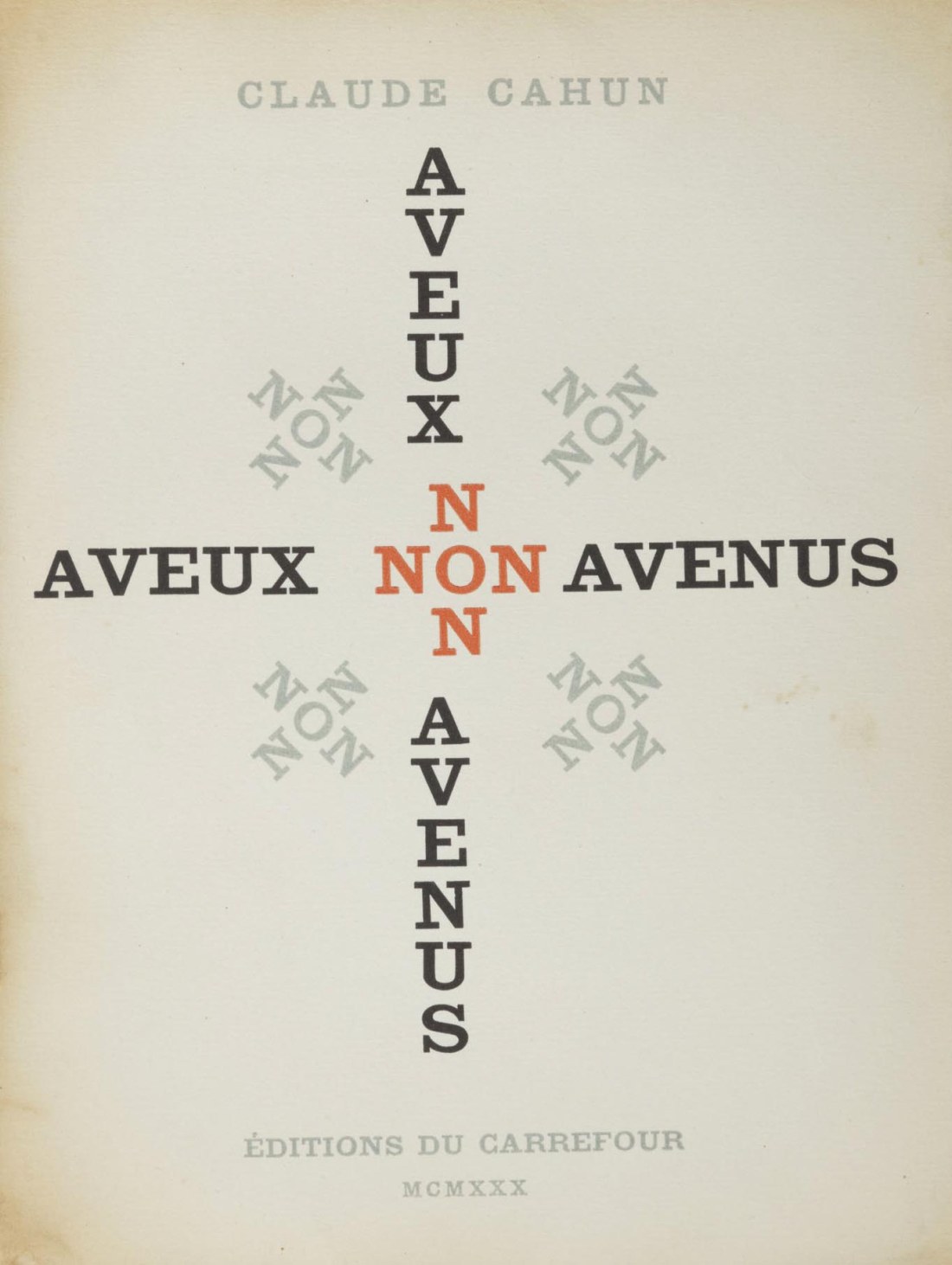
Claude Cahun & Marcel Moore:: Aveux Non Avenus. (Unavowed Confessions). Editions du Carrefour, Paris, 1930. | src National Gallery of Australia / Blog (*)
(*) The only original artwork of the 10 made by Marcel Moore is this one above for the frontispiece of Aveux non Avenusand it is in the National Gallery of Australia in Canberra.
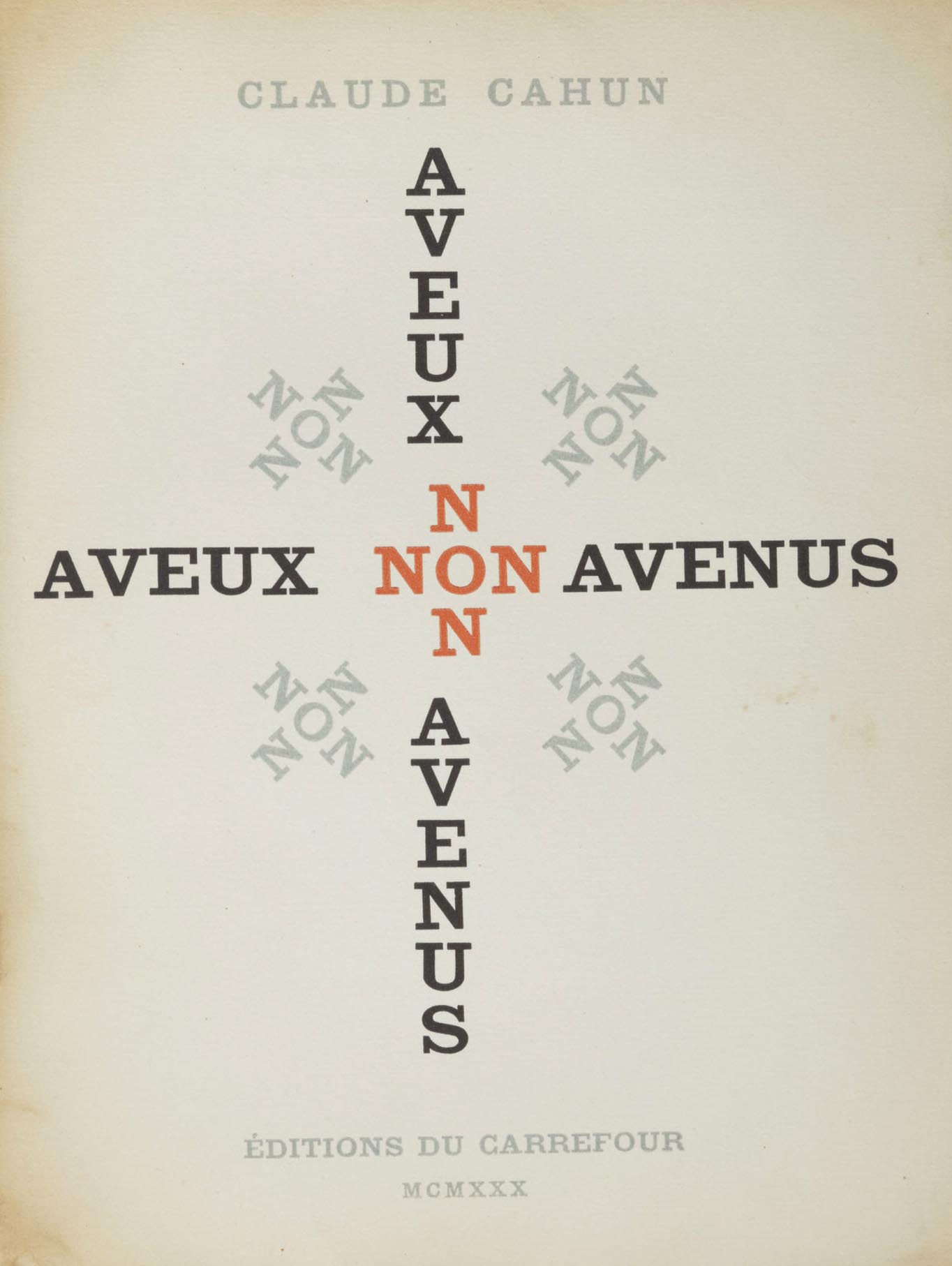
Claude Cahun & Marcel Moore :: Aveux non avenus, 1930, Paris: Éditions du Carrefour. | src Kunstmuseum Moritzburg
« L’objectif suit les yeux, la bouche, les rides à fleur de peau… L’expression du visage est violente, parfois tragique. Enfin calme- du calme conscient, élaboré, des acrobates. Un sourire professionnel – et voilà ! Reparaissent la glace à main, Lerouge, et la poudre aux yeux. Un temps. Un point. Alinéa. Je recommence. Mais quel manège ridicule pour ceux qui n‘ont pas vu – et je n’ai rien montré – les obstacles, les abîmes, et les degrés franchis. »
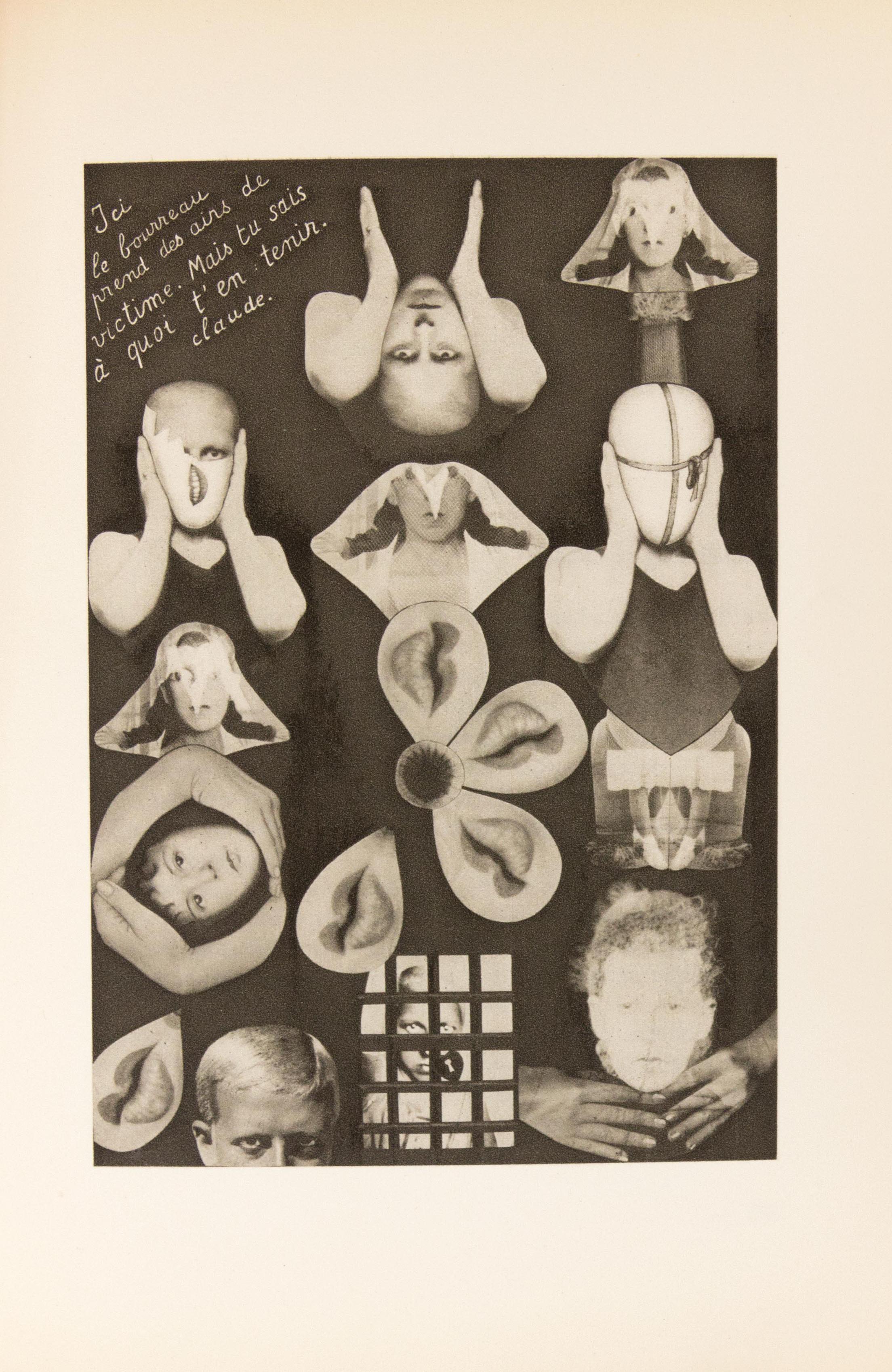
« Ici le bourreau prend des airs de victime. Mais tu sais à quoi t’en tenir Claude » « Here the executioner looks like a victim. But you know what to expect Claude » Full-page photomontage, reproduced in photogravure and composed by Marcel Moore (Suzanne Malherbe) (**)
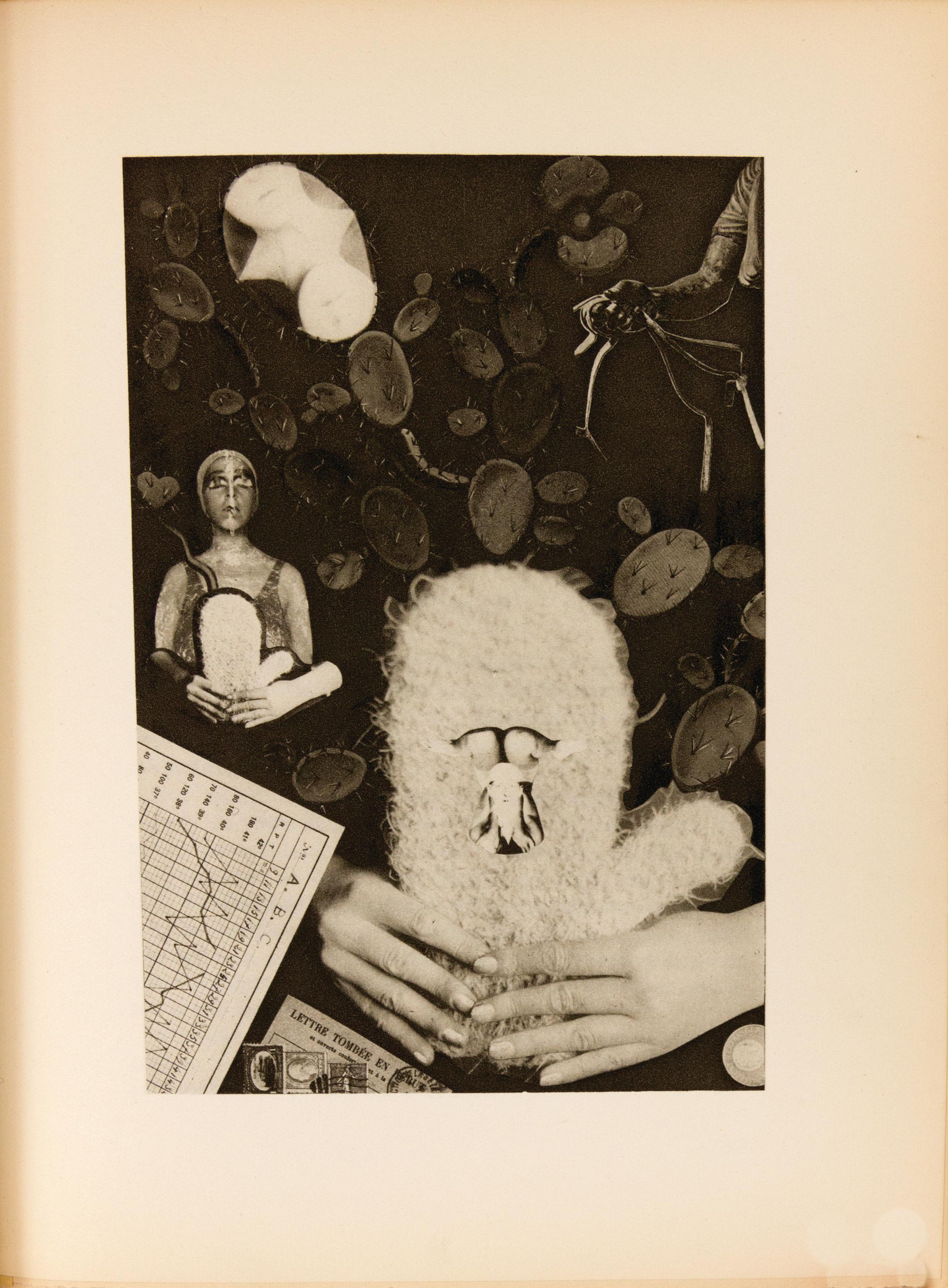
Aveux non avenus (Unavowed Confessions) (1930) is a collection of essays and recorded dreams, justly celebrated for the remarkable collaborative photo-montages of Cahun and Moore. (**)
Full-page photomontage, reproduced in photogravure and composed by Marcel Moore (Suzanne Malherbe). From: Aveux non avenus (Unavowed Confessions), 1930. Illustrated with 10 heliographs executed by Moore after designs by Cahun. | src Ursus Books Ltd via 1st Dibs
Where, for heaven’s sake, did you find the audacity to go against society’s expectations in such spectacular fashion – to look like an androgynous 1980s New Romantic, to cut off your hair, to dye that little buzz cut gold? You said you tried every way to fly under the radar, to be studious and good. Hardly surprising considering the difficult childhood you had – your mother in and out of institutions before disappearing, then you tied to a tree by those beastly school kids for being Jewish at the time of the Dreyfus affair. Children can be horrendously cruel to each other – Lord of the Flies scenarios in a blink of the eye. (*)
Maybe meeting Suzanne when you were young was your ‘rencontre foudroyante’ moment – your lightning encounter. You knew Suzanne/Marcel always had your back, and you found the courage to grow into your authentic self. Something so many of us are unable to do. How lucky you were to have found each other – a relationship that would last until the end of your life. From heady exciting days in Paris through the 1920s and 30s, and all those great friendships with actors, writers and artists. I suspect Marcel might have been a quiet force, the one who grounded you. And of course, you did work in collaboration, probably more than is acknowledged. It is after all Marcel’s name that appears on the bottom of our collage. We are still, despite everything, too much in love with the idea of individual genius to want to acknowledge collaboration. (*)
Claude Cahun & Marcel Moore :: Photomontage for frontispiece for Aveux non avenus (Unavowed Confessions), 1929-1930. Inscribed, recto, l.r., gouache (white), “Moore”. Materials: gelatin silver photographs, offset lithography, gouache, pencil. | src National Gallery of Australia
Alongside a copy of the book, the original artwork for the frontispiece that you and Marcel made for Aveux non Avenus is in a Gallery in Canberra. It’s what? I know. It’s bonkers. Canberra was only a few buildings, paddocks and some grand plans when you were writing the book. It is sadly the only original artwork for the illustrations to that crazy, strange, wonderful book that weren’t destroyed I’m afraid – left behind in Paris perhaps when you fled to Jersey? (If there are other collages in an attic somewhere maybe you could just tell me in a dream or something. Just me. Secret.) They are in a display at the Gallery at the moment – at a strange time when the Gallery is closed to visitors. All the works of art wait patiently to be seen again. It’s a shame because the collage in particular is looking grand – Andrea Wise, one of the paper conservators at the Gallery, has toiled away bringing it back close to how you and Marcel must have seen it when you made it all those years ago. It just shines off the wall – looking so fine, as enigmatic, sophisticated and magical as ever. It might be strange that it has ended up in a gallery all the way across the world. But then if anyone is proof that life is strange, unpredictable, extraordinary and full of surprises, it’s you. (*)
Claude Cahun & Marcel Moore :: Aveux non avenus (Unavowed Confessions). Préface de Pierre Mac Orlan. With 10 heliogravures by Marcel Moore (Suzanne Malherbe) after projects by Cahun. Paris: Éditions du Carrefour, 1930. | src Sotheby’s
Much has been written in recent years about the gender-fluid writer, sculptor, and photographer Claude Cahun (1894–1954) and her companion Marcel Moore (Suzanne Malherbe). This statement from Cahun’s autobiography sheds light on her entire oeuvre: “Masculine? Feminine? It depends on the situation. Neuter is the only gender that always suits me.” Her art and her spirit have been kept alive by a number of well-known devotees. Notable among them was David Bowie, who created a multi-media exhibition of Cahun’s art in the gardens of Manhattan’s General Theological Seminary in 2007. (***)
Grete Stern :: Dream nº 7: Who Will She Be? – Who Is This? 1949 | src MoMA and Museum Folkwang
This is photomontage number 7 of the series “Dreams”, which Grete Stern made as illustrations for the section: Psychoanalysis will help you for the Buenos Aires magazine “Idilio”, which invited readers to send their dreams with the promise of interpreting them. Grete Stern, as the illustrator, made the visual interpretations of one hundred and forty dreams between October 26, 1948 and July 24, 1951. Combining humor and surrealism, Stern manages to convey powerful messages that denounce the female situation in society at the time , through photomontages that the magazine presented under names such as dreams of imprisonment, dreams of confinement, dreams of silence, dreams of rebirths, dreams of the body, dreams of inescapable elections, dreams of splitting, dreams of identity, dreams of triumph and domination or dreams of inhibitions, among others.


![Margrethe Mather :: Semi-nude [Billy Justema Wearing a Kimono], ca. 1923. Center for Creative Photography. University of Arizona, Tucson](https://unregardoblique.com/wp-content/uploads/2022/07/margrethe-mather-semi-nude-billy-justema-wearing-a-kimono-ca.-1923-center-for-creative-photography-university-of-arizona-tucson.jpg)
![Claude Cahun - Marcel Moore :: Untitled [Claude Cahun in Le Mystère d'Adam (The Mystery of Adam)], 1929. Detail. | src SF·MoMA](https://live.staticflickr.com/65535/52571360559_e9567f7a8e_o.jpg)



![Claude Cahun :: Aveux non avenus, 1930, Paris: Éditions du Carrefour. [Index] | src Kunstmuseum Moritzburg](https://live.staticflickr.com/65535/52571523446_00f7cfc88d_o.jpg)

 un regard oblique