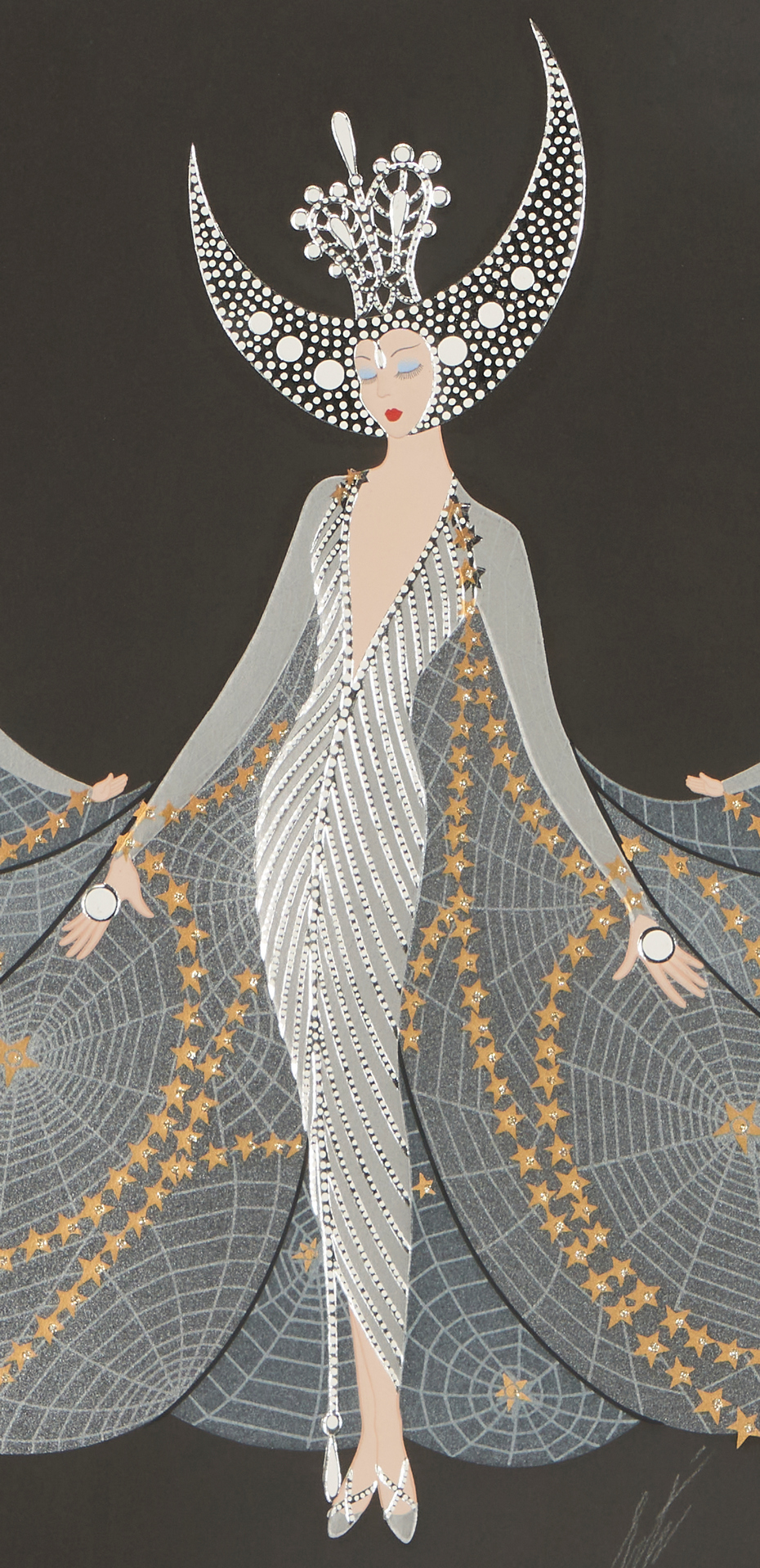
Queen of the Night by Erte

Erté (Romain De Tirtoff, Russian-French, 1892-1990) :: Color serigraph with silver and gold foil embossing titled "Queen of the Night", numbered "PP 1/1", 1985. (DETATIL)
Erté (Romain De Tirtoff) :: “Queen of the Night”, 1985 (detail) | src Case Antique Auctions
Erté (Romain De Tirtoff, Russian-French, 1892-1990) :: Color serigraph with silver and gold foil embossing titled "Queen of the Night", numbered "PP 1/1", 1985.
Erté (Romain De Tirtoff, Russian-French, 1892-1990) :: Color serigraph with silver and gold foil embossing titled “Queen of the Night”, numbered “PP 1/1”, 1985.

This publisher’s proof depicts the Queen of the Night from “The Magic Flute” opera by Wolfgang Amadeus Mozart, with four attendants holding the hem of her elaborate gown against a black background, surrounded on the left, bottom, and right edges by a gold star border. Numbered, in chalk, lower left, signed “Erté”, in chalk, lower right. Merrill Chase, Chicago, IL, gallery label, en verso. Housed under glass in a giltwood frame with a black linen liner with a giltwood fillet. Property of Milligan University, Milligan, Tennessee. source: Case Antique / Case Auctions
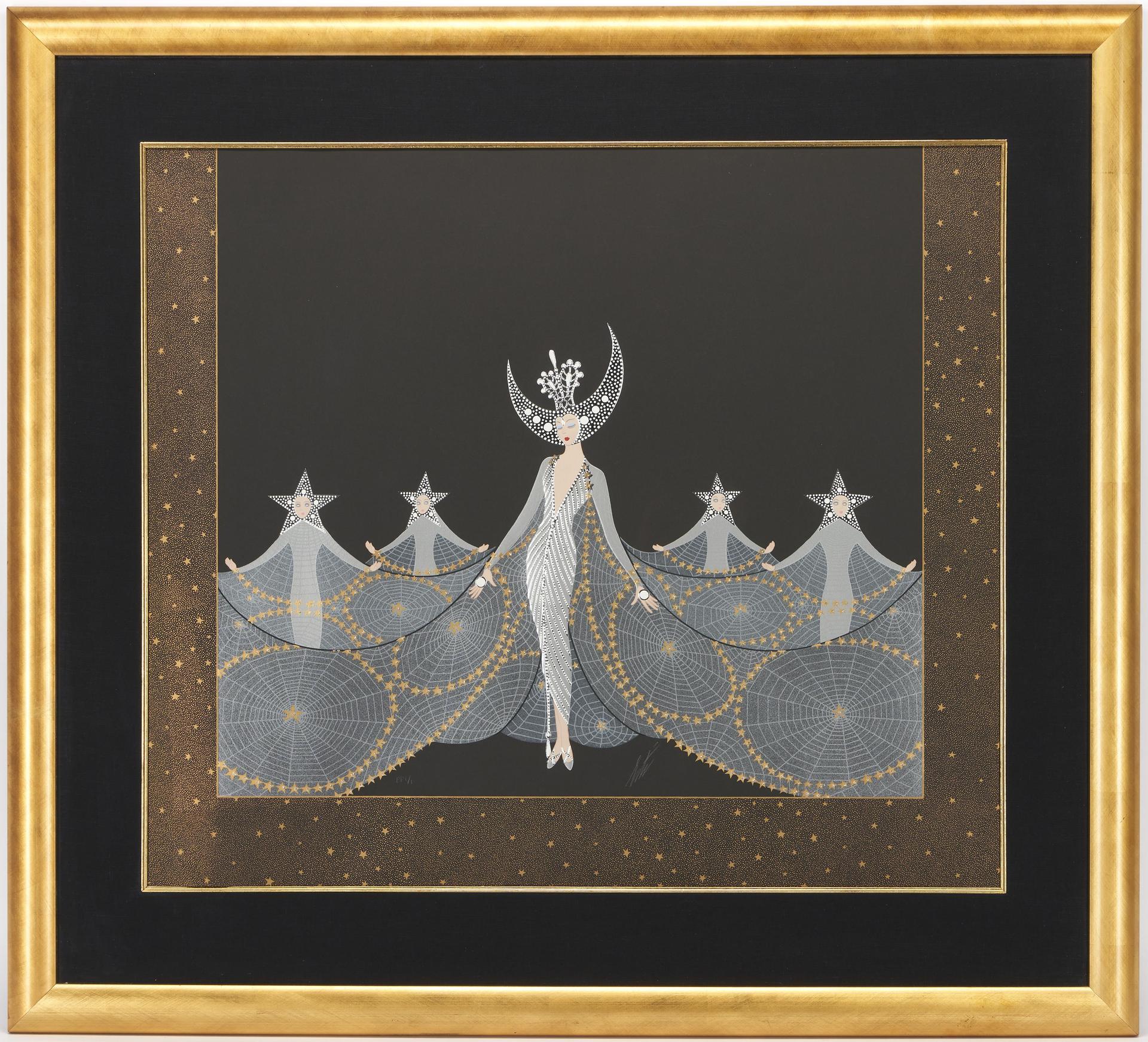
Erté (Romain De Tirtoff, Russian-French, 1892-1990) :: Color serigraph with silver and gold foil embossing titled "Queen of the Night", numbered "PP 1/1", 1985.
Erté (Romain De Tirtoff, Russian-French, 1892-1990) :: Color serigraph with silver and gold foil embossing titled “Queen of the Night”, numbered “PP 1/1”, 1985.

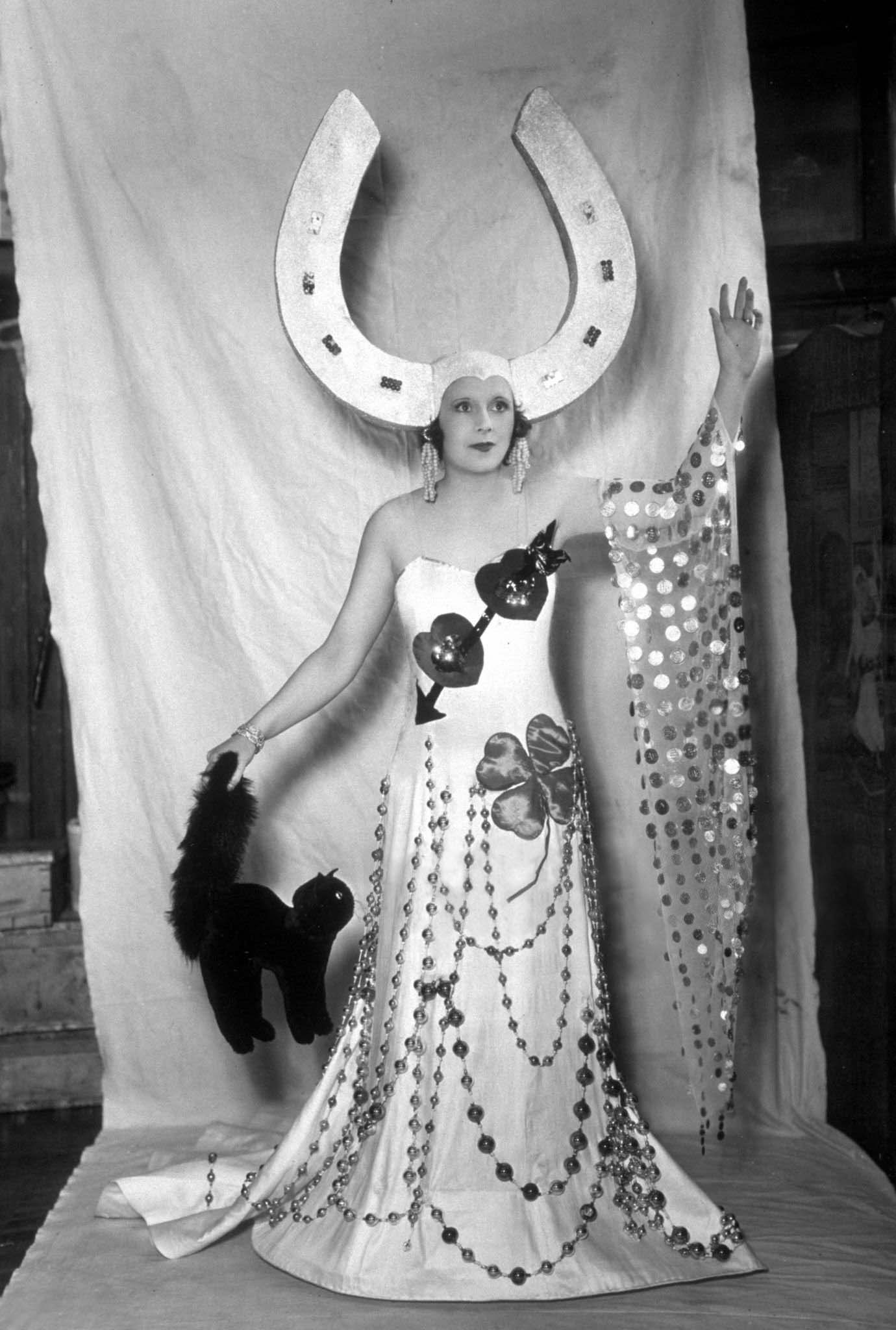
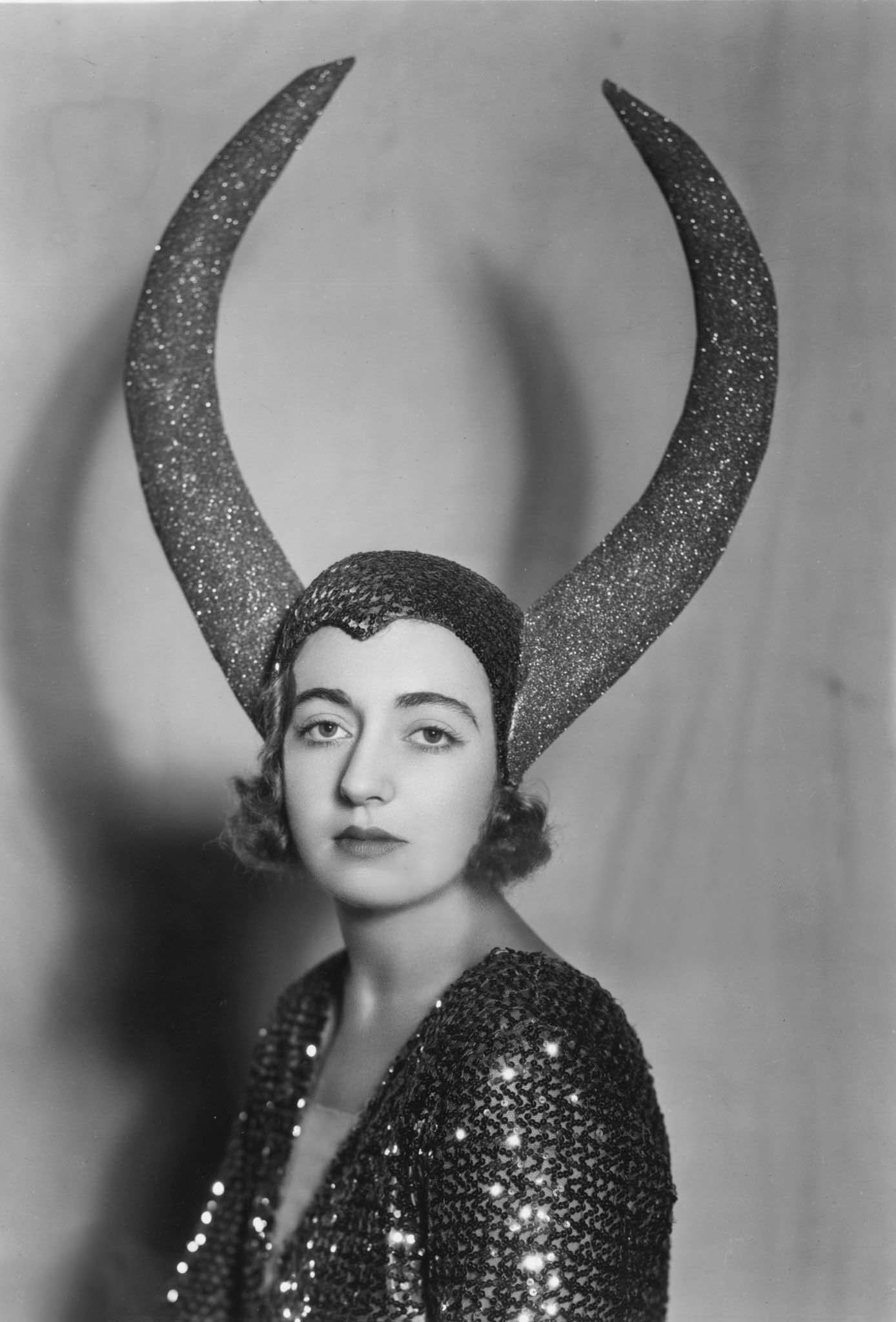
Pageant of the Superstitions 1930

Sasha :: Princess George Imeritinsky wearing a hat with large horns, part of her costume symbolizing 'Green'. She is taking part in the 'Pageant of the Superstitions' at the Haymarket Theatre in aid of the Queen Charlotte Maternity Hospital Maintenance Fund, October 11th, 1930. Costume designed by Barbara Cartland. | src Getty Images
Sasha :: Princess George Imeritinsky wearing a hat with large horns, part of her costume symbolizing ‘Green’. She is taking part in the ‘Pageant of the Superstitions’ at the Haymarket Theatre in aid of the Queen Charlotte Maternity Hospital Maintenance Fund, October 11th, 1930. Costume designed by Barbara Cartland. | src Getty Images
Sasha :: Barbara Cartland (1901-2000) wearing a huge horseshoe on her head as 'Good Luck' in the 'Pageant of the Superstitions' at the Haymarket Theatre, London, October 11th, 1930. | src Getty Images
Sasha :: Barbara Cartland (1901-2000) wearing a huge horseshoe on her head as ‘Good Luck’ in the ‘Pageant of the Superstitions’ at the Haymarket Theatre, London, November 1st, 1930. | src Getty Images
Sasha :: Mrs Roland Cubitt dressed as ‘Three Candles’ in a costume made by L & H Nathan Ltd., for the ‘Pageant of the Superstitions’, a feature of the ‘All Halloween Ball’, and repeated as a matinee at the Haymarket Theatre, in aid of the Queen Charlotte Maternity Hospital Fund, October 11th or November 1st, 1930. | src Getty Images

Natacha Rambova by Karl Struss

Karl Struss (1886-1981); Natacha Rambova [production still]; Gelatin silver print; Amon Carter Museum of American Art, Fort Worth, TX
Karl Struss (1886-1981) :: Natacha Rambova [production still], 1920s. Gelatin silver print. | src Amon Carter Museum
Karl Struss (1886-1981); Natacha Rambova [production still]; Gelatin silver print; Amon Carter Museum of American Art, Fort Worth, TX
Karl Struss (1886-1981) :: Natacha Rambova [production still*], 1920s. Gelatin silver print. | src Amon Carter Museum
Karl Struss (1886-1981); Natacha Rambova [production still]; Gelatin silver print; Amon Carter Museum of American Art, Fort Worth, TX
Karl Struss (1886-1981) :: Natacha Rambova [production still*], 1920s. Gelatin silver print. | src Amon Carter Museum
Karl Struss (1886-1981); Natacha Rambova [production still]; Gelatin silver print; Amon Carter Museum of American Art, Fort Worth, TX
Karl Struss (1886-1981) :: Natacha Rambova [production still*], 1920s. Gelatin silver print. | src Amon Carter Museum

[*] production stills probably from the film Forbidden Fruit (Cecil B. DeMille, 1921). In the film Rambova (b. Winifred Shaughnessy), along with Mitchell Leisen, was the costume designer and Struss the cinematographer.

Actress Alexandra Rebikova

Ребикова, Александра Васильевна. Молоко в спектакле «Синяя птица». | Russian actress Alexandra Vasilievna Rebikova as Milk in the play «The Blue Bird» in costume designed by Vladimir Egorov (?) for Konstanin Stanislavski’s production of Maurice Maeterlinck’s «Oiseau Bleu» at the Moscow Art Theatre, 1908. | src academia.ru
Мей в спектакле «Сверчок на печи». Actress Alexandra Vasilievna Rebikova as May Fielding in the play «Cricket on the Hearth» at the Moscow Art Theatre. Unknown date, probably before 1908.
Мей в спектакле «Сверчок на печи». Actress Alexandra Vasilievna Rebikova as May Fielding in the play «Cricket on the Hearth» at the Moscow Art Theatre. Unknown date, probably before 1908. [Full scan of programme]
Portrait of Alexandra Vasilievna Rebikova. | src academia.ru

In 1915, Alexandra Rebikova began to star in the movies of the film company “A. Khanzhonkov and Co.” [Торгового дома «А. Ханжонков и К°] and very soon became one of the leading silent film actresses.

Alexandra Rebikova with Oleg Frelyh (Frelikh) in 1917 in the film «The Clay God» («Глиняный бог», a silent film by Nikolai Larin, 1918)
Alexandra Rebikova with Gregory Khmara (Chmara) in the film «Symphony of Sorrow» («Симфония горя», 1918) | src academia.ru

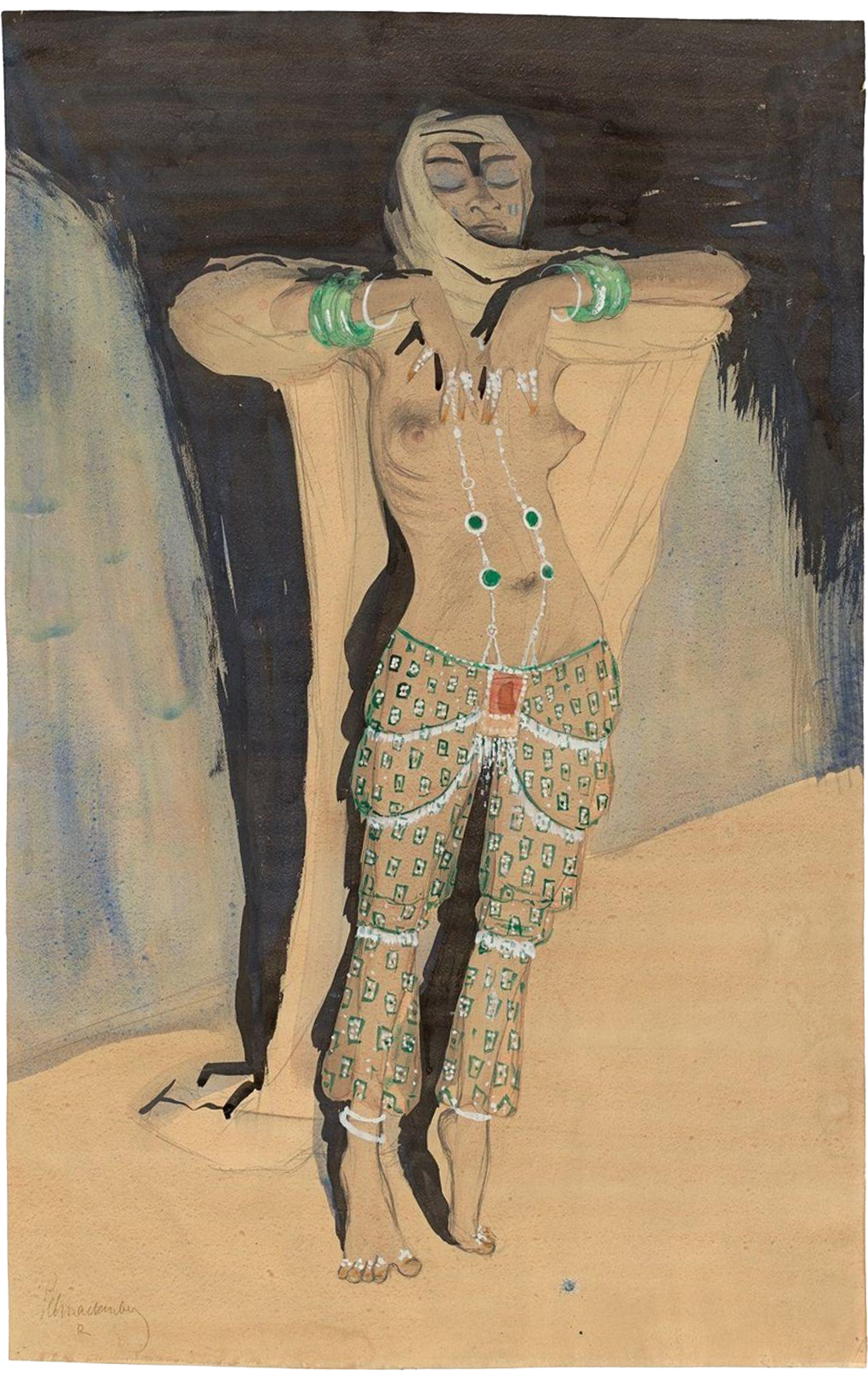
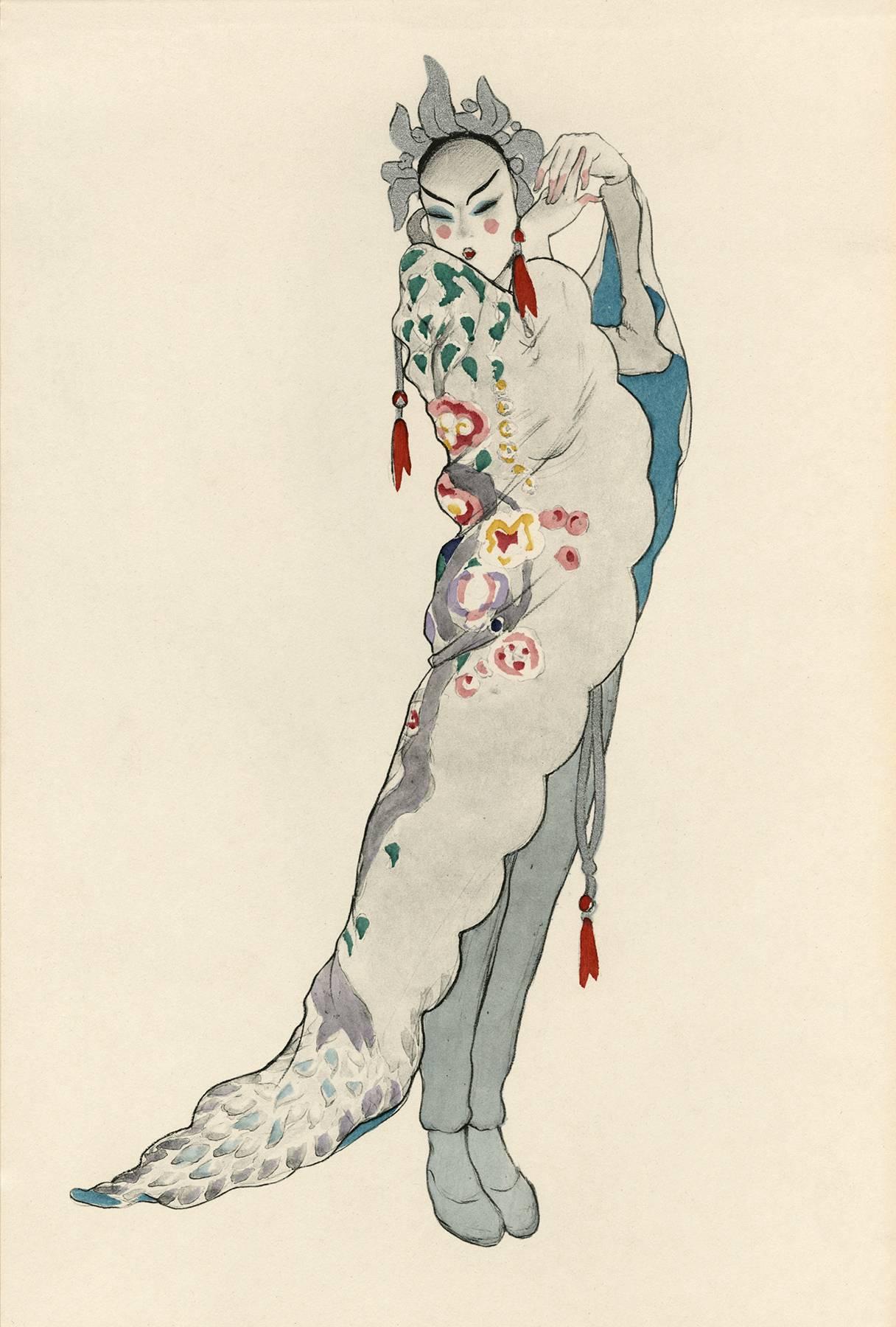
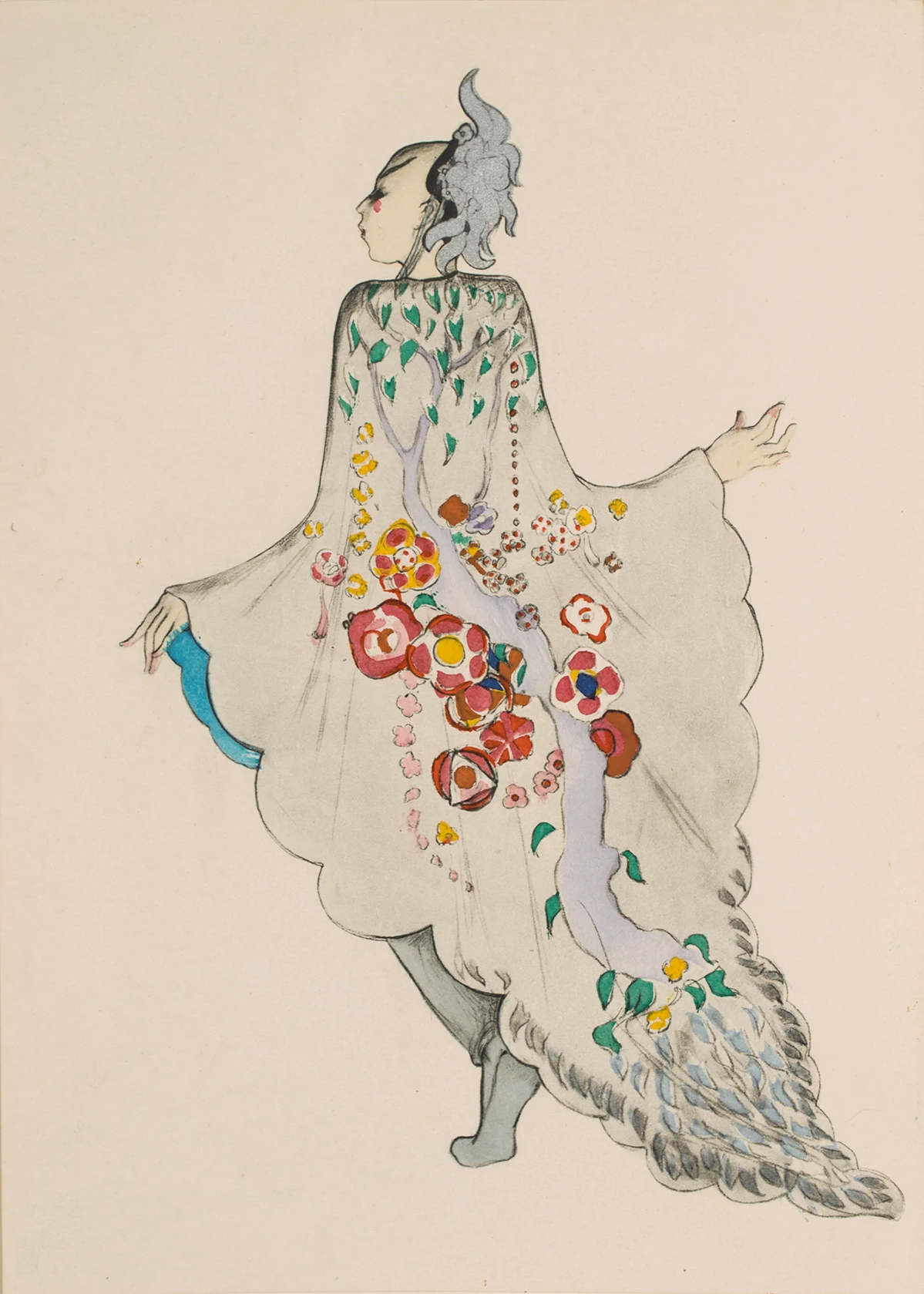
Orientalische Tänzerin, 1920

Walter Schnackenberg :: Ballet und Pantomime “Orientalische Tänzerin” (Oriental Dancer), plate # 18, 1920. | src 1st dibs

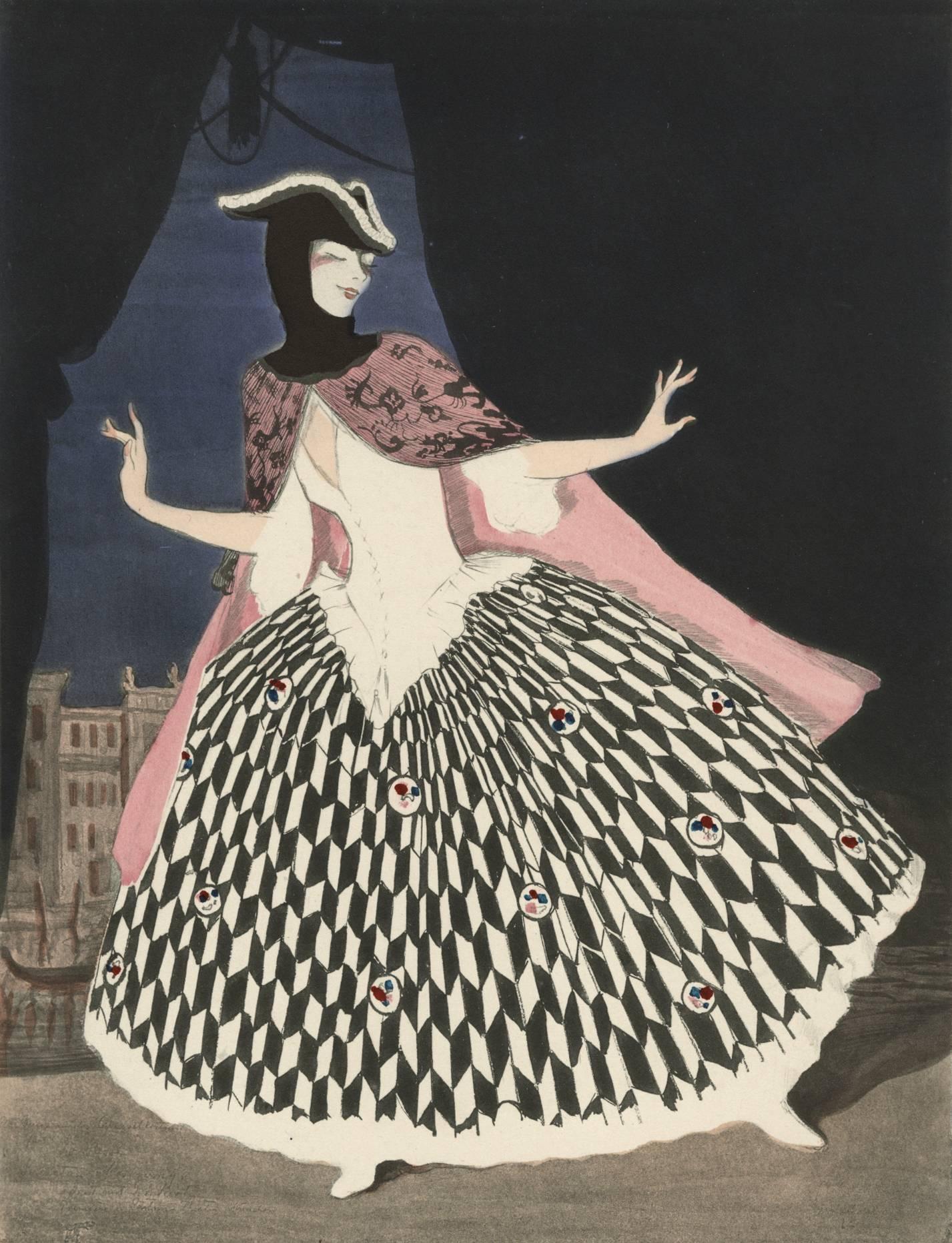
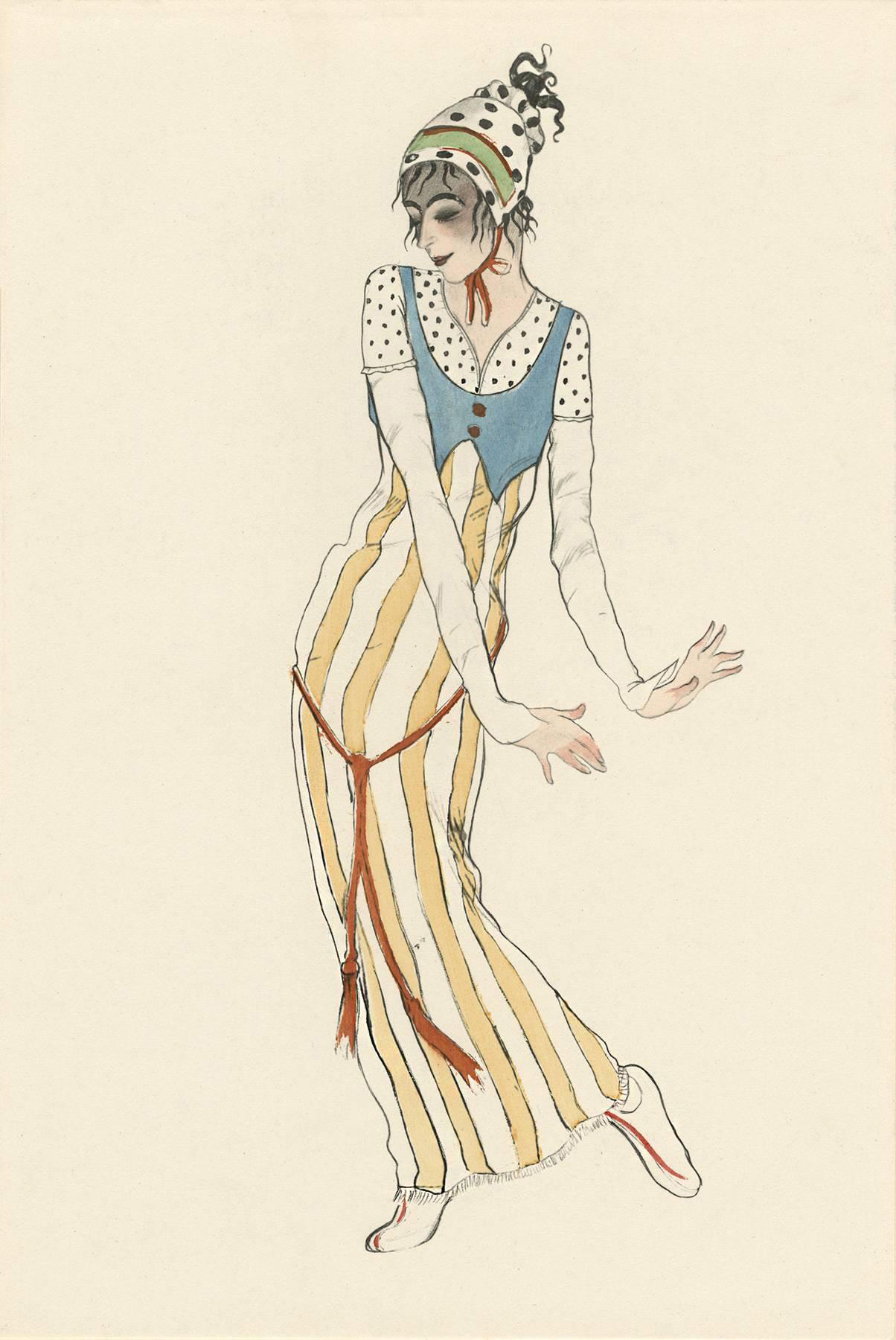
Maskerade (Lo Hesse)

Walter Schnackenberg :: Ballet und Pantomime 'Maskerade' (Lo Hesse), plate # 9, ca. 1920. | src 1st dibs
Walter Schnackenberg :: Ballet und Pantomime ‘Maskerade’ (Lo Hesse), plate # 9, ca. 1920. | src 1st dibs

Carmen Tortola Valencia, 1912

Walter Schnackenberg :: The dancer Carmen Tortola Valencia, 1912. Watercolour, brush and India ink and opaque white over pencil on paper. | src Grisebach Autumn Auctions 2020

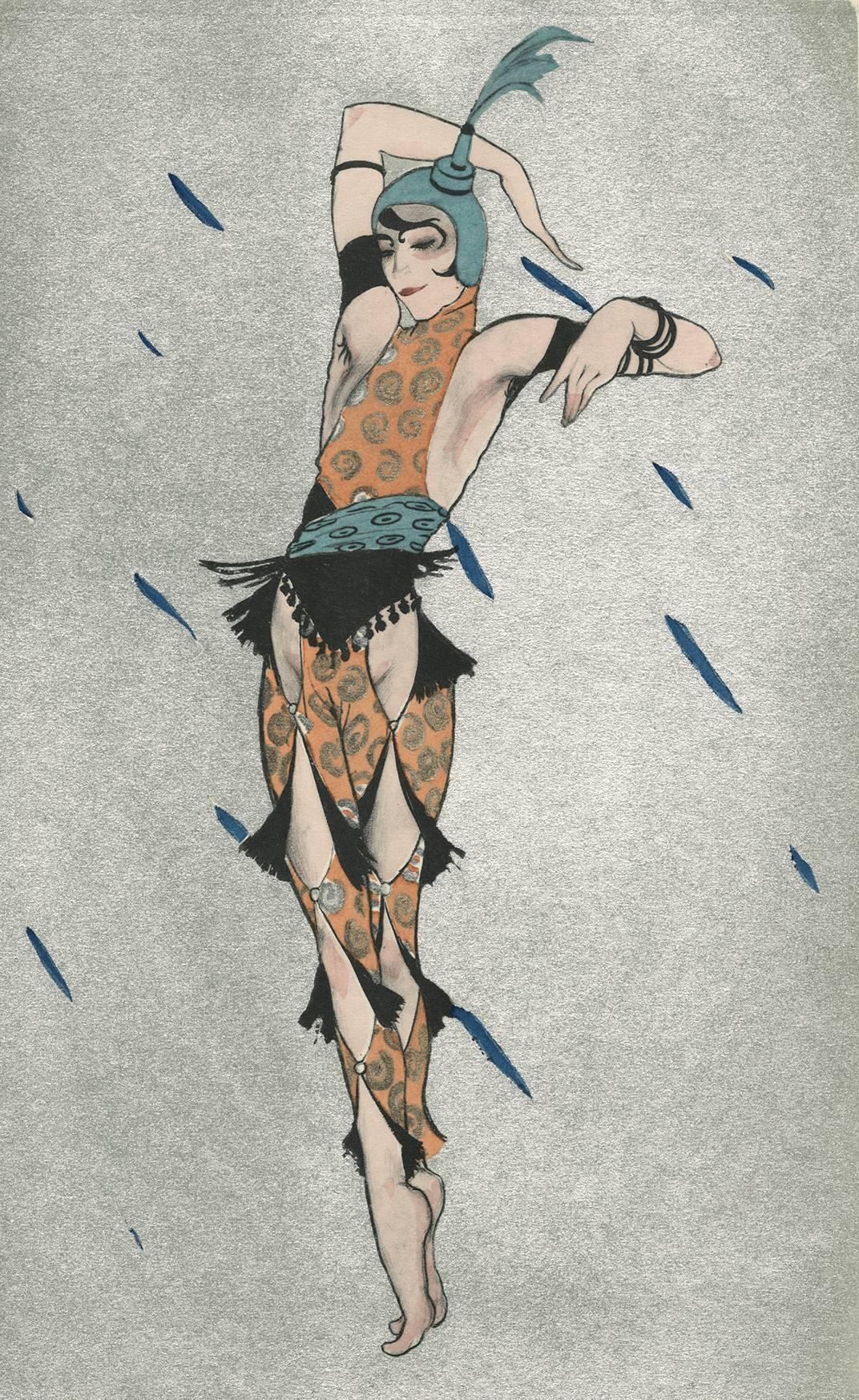
Tschaikiun, Lo Hesse (1920)

Walter Schnackenberg :: Ballet und Pantomime 'Tschaikiun' I, print # 3 (Lo Hesse), 1920. | src 1st dibs
Walter Schnackenberg :: Ballet und Pantomime ‘Tschaikiun’ I, print # 3 (Lo Hesse), 1920. | src 1st dibs
Walter Schnackenberg :: 'Tschaikiun' II, plate # 17 (Lo Hesse), ca. 1920. | src Colletti Gallery
Walter Schnackenberg :: ‘Tschaikiun’ II, plate # 17 (Lo Hesse), ca. 1920. | src Colletti Gallery

‘Primula Vera’ (Lo Hesse), 1920

Walter Schnackenberg :: Ballet und Pantomime 'Primula Vera' (Lo Hesse), plate # 7, 1920. | src 1st dibs
Walter Schnackenberg :: Ballet und Pantomime ‘Primula Vera’ (Lo Hesse), plate # 7, 1920. | src 1st dibs

“Schnackenberg was a regular contributor to the German magazines Jugend and Simplicissimus before devoting himself to the design of stage scenery and costumes. In the artist’s theatrical work, his mastery of form, ornamentation, and Orientalism became increasingly evident. He excelled at combining fluid Art Nouveau outlines, with spiky Expressionist passages, and the postures and patterns of the mysterious East.” (quoted from source)

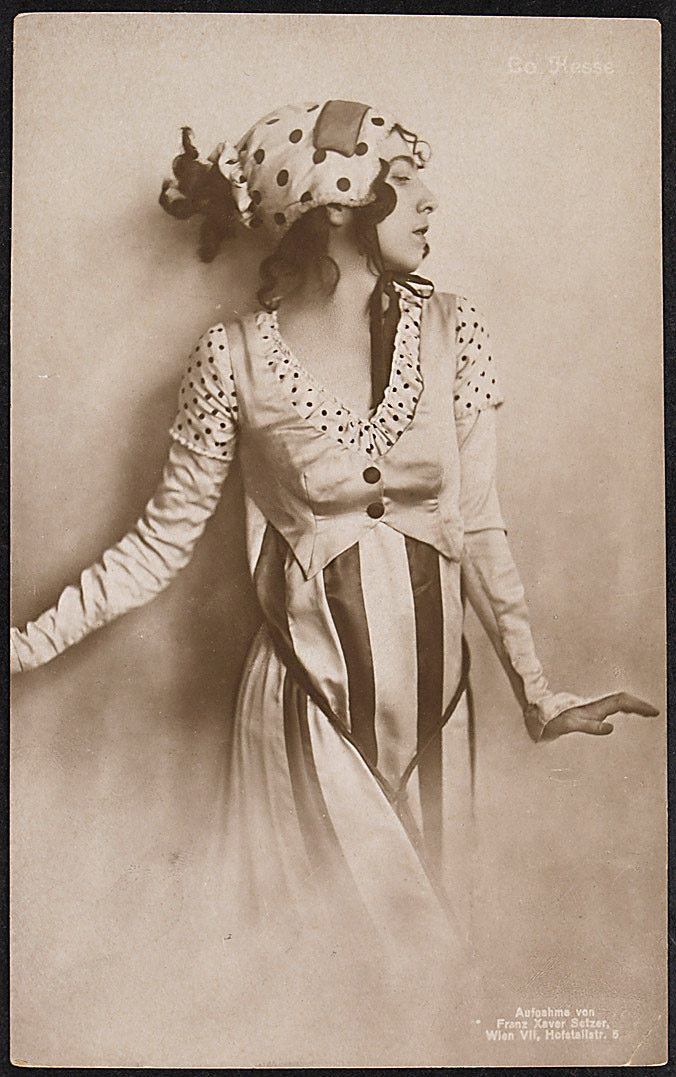
Lo Hesse, Rollenporträt

Franz Xaver Setzer :: Lo Hesse, Rollenporträt | Role portrait, undated. (Primula Vera) | src Theatermuseum Wien

German dancer and model Lo Hesse was the muse of German Avant-garde designer Walter Schnackenberg in the 1910s. She was known for her extravagantly costumed performances with famed dancer Joachim von Seewitz.

Walter Schnackenberg :: Ballet und Pantomime 'Primula Vera' (Lo Hesse), plate # 7, 1920. | src 1st dibs
Walter Schnackenberg :: Ballet und Pantomime ‘Primula Vera’ (Lo Hesse), plate # 7, 1920. | src 1st dibs

“Schnackenberg was a regular contributor to the German magazines Jugend and Simplicissimus before devoting himself to the design of stage scenery and costumes. In the artist’s theatrical work, his mastery of form, ornamentation, and Orientalism became increasingly evident. He excelled at combining fluid Art Nouveau outlines, with spiky Expressionist passages, and the postures and patterns of the mysterious East.”