Perriand’s Léger inspired necklace

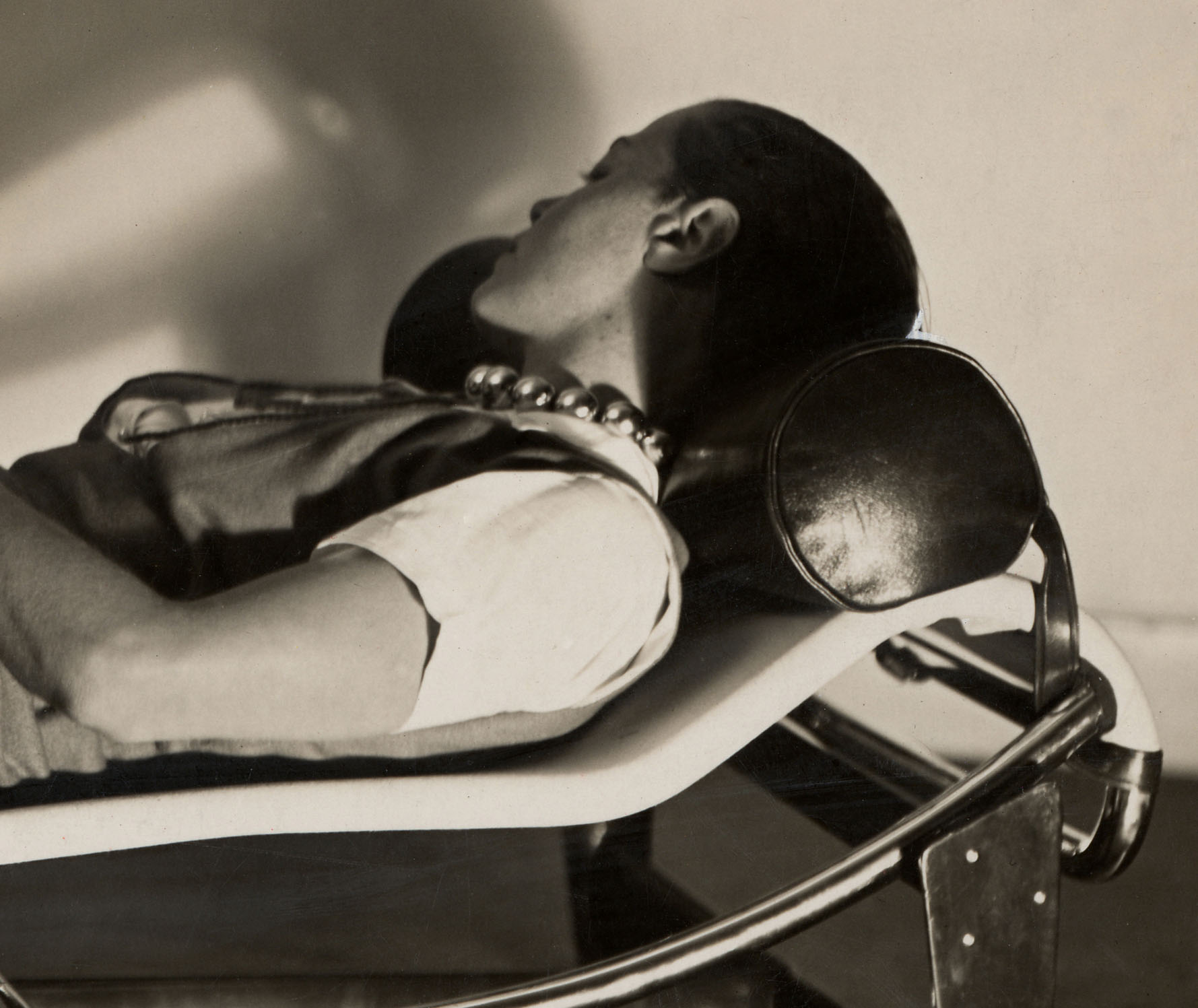
Detail of the image below. Note the silver choker, known as Collier roulement à billes chromées that Perriand wears.
Charlotte Perriand in the Chaise longue basculante, B306 (1928, Le Corbusier, P. Jeanneret, C. Perriand) Photo: Courtesy of Louis Vuitton Foundation, ph. by Pierre Jeanneret. | src Architectural Digest
Charlotte Perriand's ball-bearings necklace (Collier roulement à billes chromées - 1927)
Charlotte Perriand’s ball-bearings necklace (Collier roulement à billes chromées – 1927) | src Semantic Scholar
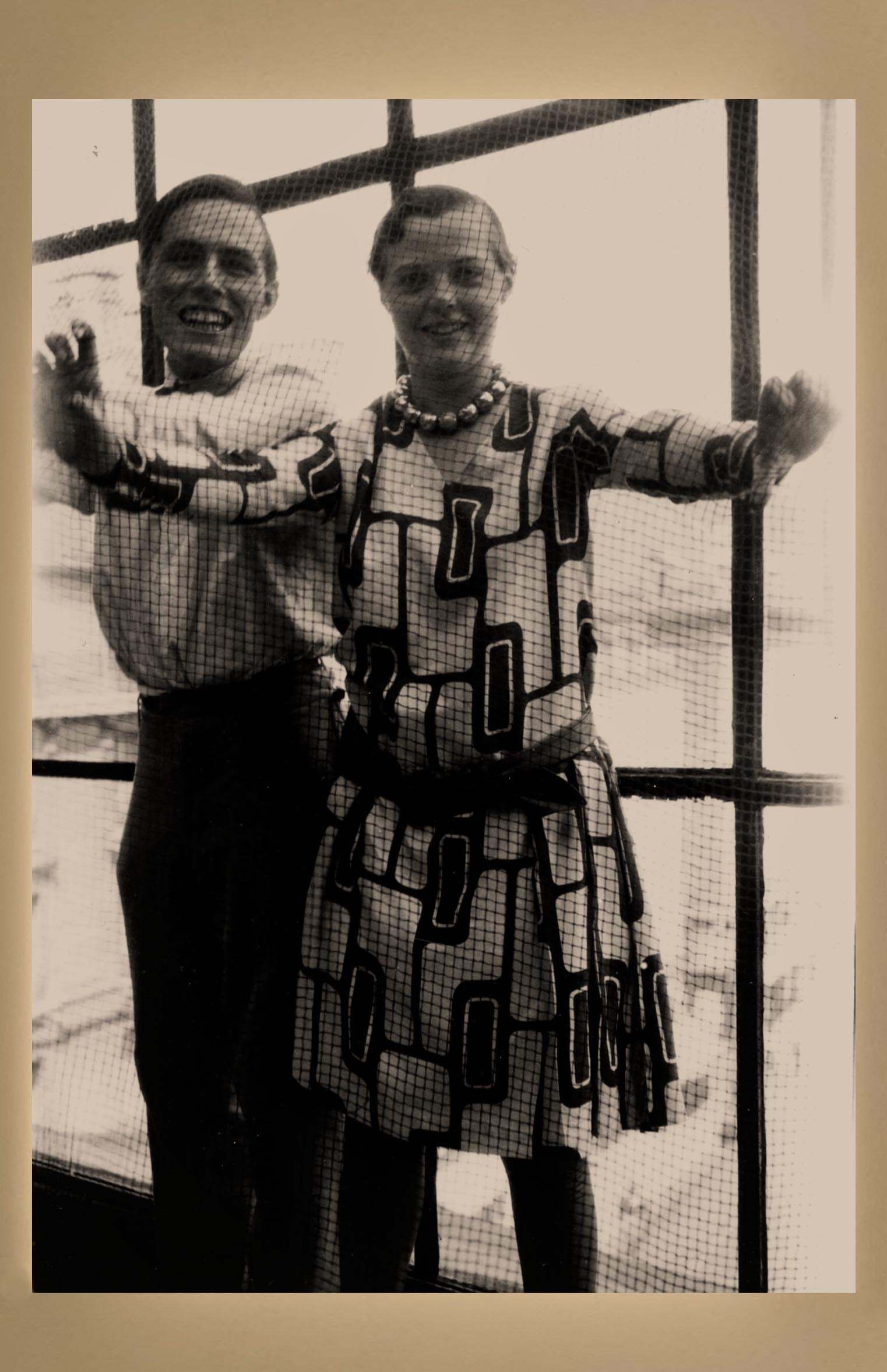
Charlotte Perriand (wearing her iconic choker) with Alfred Roth in Place Saint-Sulpice apartment-studio, Paris, 1928 
Courtesy: © ADAGP, Paris and DACS, London 2021 / © AChP / src it art bag
Charlotte Perriand (wearing her iconic choker) with Alfred Roth in Place Saint-Sulpice apartment-studio, Paris, 1928
Courtesy: © ADAGP, Paris and DACS, London 2021 / © AChP / src it art bag

Charlotte Perriand’s ball-bearings necklace was exhibited in 2009 at the exhibition “Bijoux Art Deco et Avant Garde” at the Musee Des Arts Decoratifs in Paris and, in 2011, in the show “Charlotte Perriand 1903-99: From Photography to Interior Design” at the Petit Palais. The necklace became, for a short period, synonymous with Perriand and with her championing of the machine aesthetic in the late 1920s and has subsequently attained the status of a mythical object and symbol of the machine age. This essay considers the necklace as an object and symbol in the context of modernist aesthetics. It also discusses its role in the formation of Perriand’s identity in the late 1920s, when she was working with Le Corbusier, and aspects of gender and politics in the context of the wider modern movement. [more on Semantic Scholar]

Fernand Léger :: Still life, Le Mouvement à billes (1926). Gouache and ink on paper. Signed with initials and dated 26.

 “I had a street urchin’s haircut and wore a necklace I made out of cheap chromed copper balls. I called it my ball-bearings necklace, a symbol of my adherence to the twentieth-century machine age. I was proud that my jewelry didn’t rival that of the Queen of England.”

Perriand had asked an artisan with a workshop in the Faubourg Saint-Antoine to make the piece out of lightweight chrome steel balls strung together on a cord. The piece was inspired by Fernand Léger’s still life “Le Mouvement à billes” (1926).

The necklace became a symbol of Perriand’s passion for the mechanical age […] (see also: Charlotte Perriand’s “Ball Bearings” Necklace on Irenebrination)

Fernand Léger :: Étude pour “Le Movement à billes”
Signed with initials F.L. and dated 26 (lower right). Gouache and ink on paper. | src Sotheby’s

“Art is in everything,” insisted Charlotte Perriand. […] When you see Charlotte’s chaise longue, chair, and tables in front of that immense Léger, you cannot imagine the design without the art—it is a global vision.

On an adjacent wall, Collier roulement à billes chromées (1927)—a silver choker made from automotive ball bearings that Perriand not only designed but wore—is placed next to a Léger painting, Nature morte (Le mouvement à billes) (Still life [Movement of ball bearings], 1926). [quoted from William Middleton review of the exhibition Charlotte Perriand: Inventing a New World, on Gagosian]
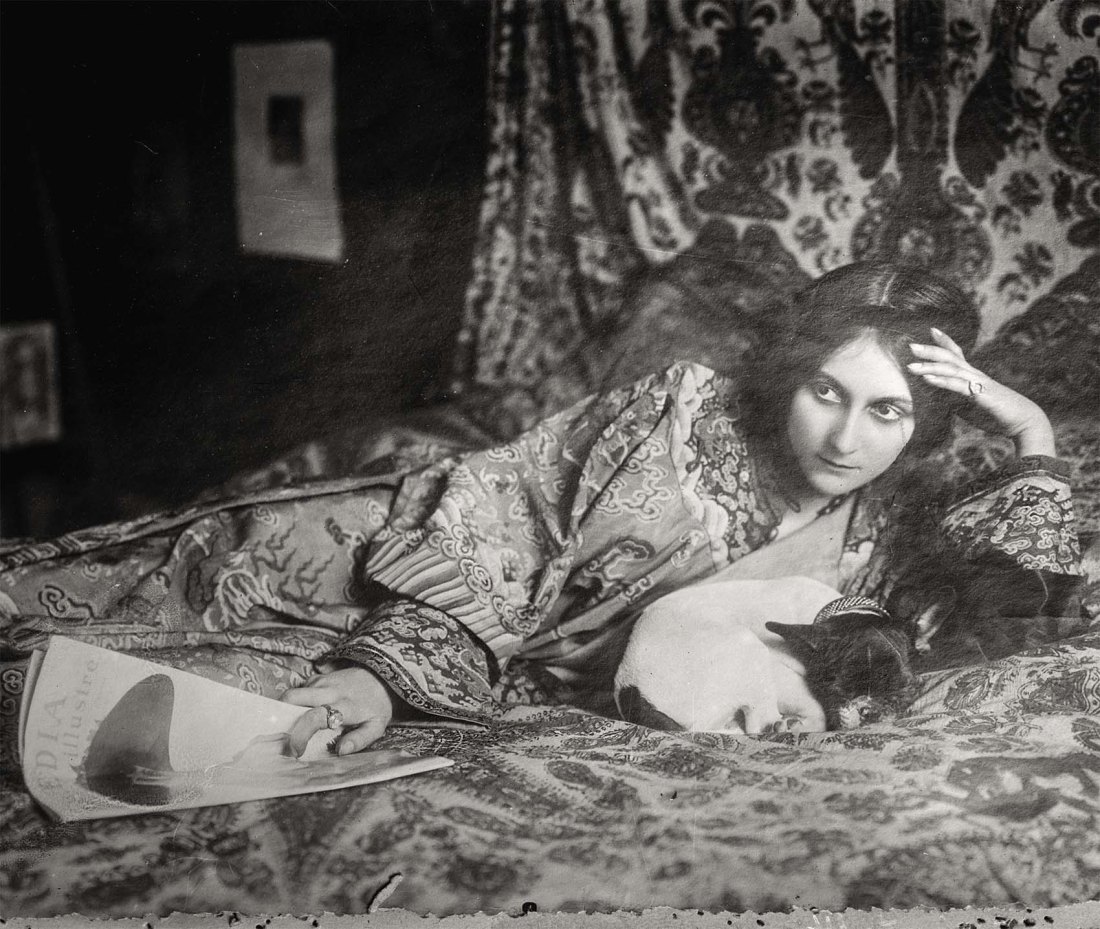
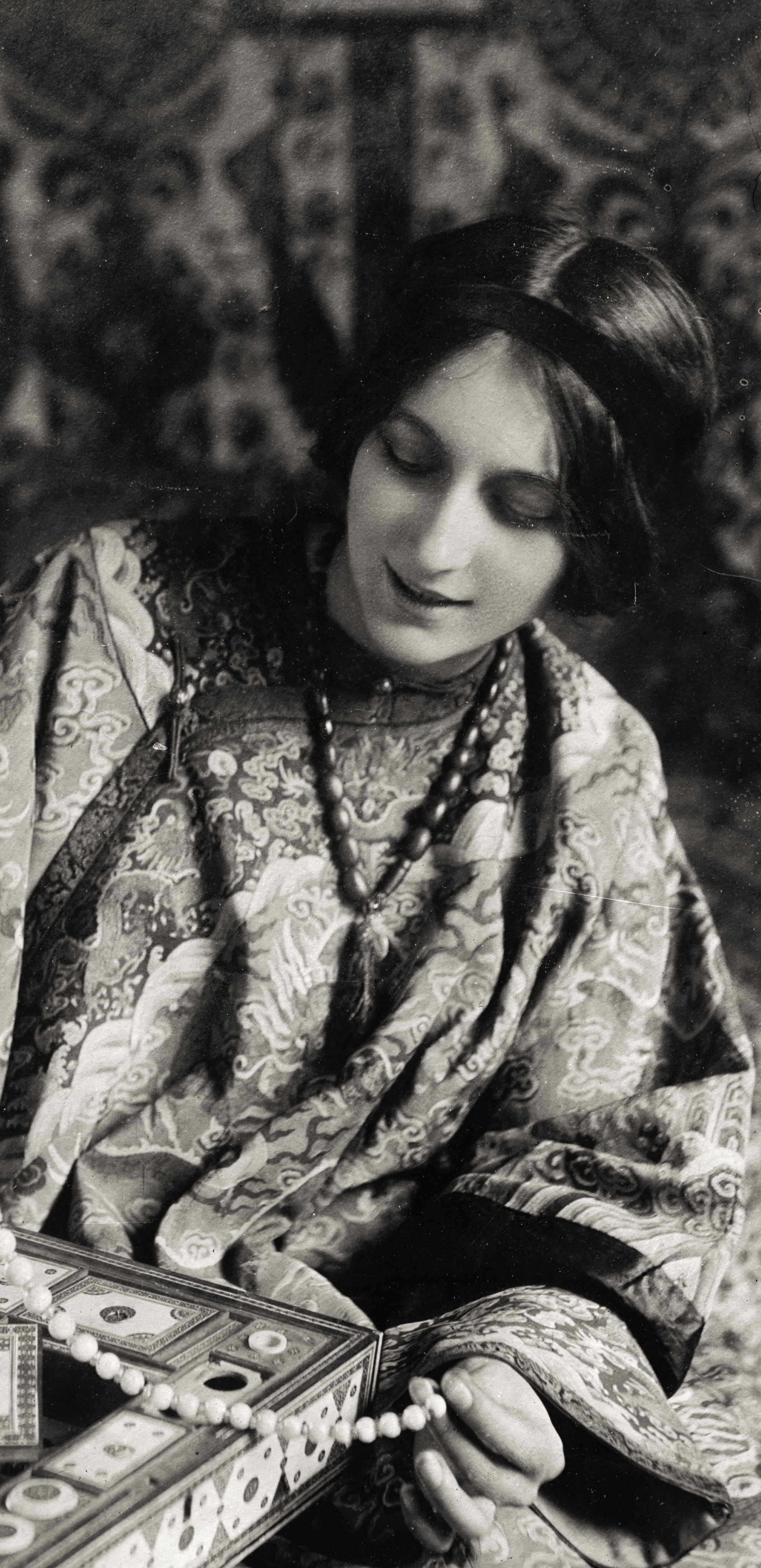
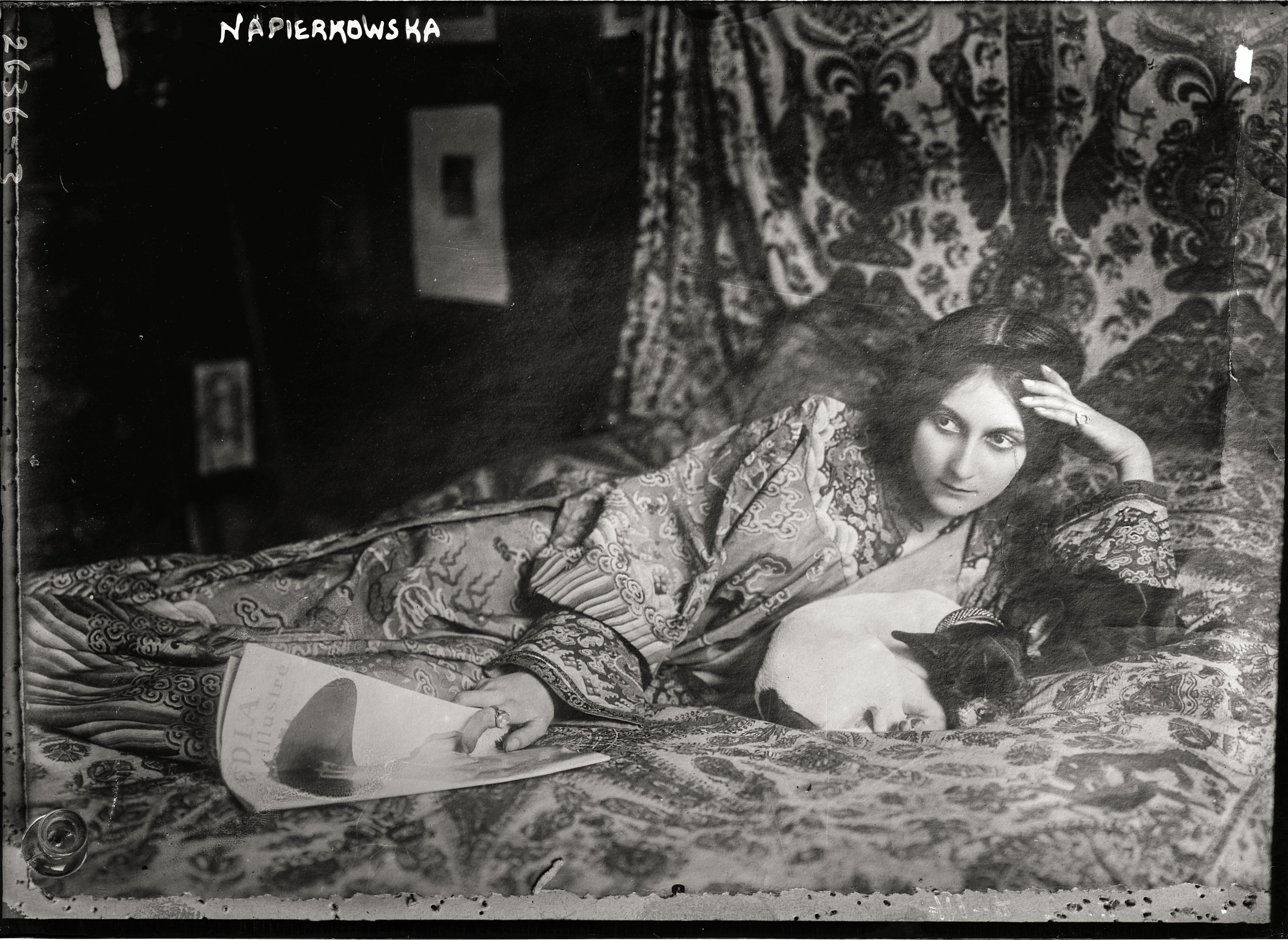
Stacia Napierkowska, 1910s

French actress, dancer, and silent film star Stacia Napierkowska, [between ca. 1910 and ca. 1915]. Bain News Service (publisher). Glass negative. [cropped]
French actress, dancer, and silent film star Stacia Napierkowska, [between ca. 1910 and ca. 1915]. Bain News Service (publisher). Glass negative. | src George Grantham Bain Collection (Library of Congress)
French actress, dancer, and silent film star Stacia Napierkowska lying on bed with pet dog and holding a Comœdia Illustré issue on right hand, [between ca. 1910 and ca. 1915]. Bain News Service (publisher). [cropped]
French actress, dancer, and silent film star Stacia Napierkowska, [between ca. 1910 and ca. 1915]. Bain News Service (publisher). Glass negative. | src George Grantham Bain Collection (Library of Congress)

Jenny Hasselqvist, ca. 1915

Henry Buergel Goodwin :: Jenny Hasselqvist, n.d. (1915?) Private collection of Björn Andersson 
 LL/31845  | src Luminous Lint
Henry Buergel Goodwin :: Jenny Hasselqvist, n.d. (1915?) Private collection of Björn Andersson. LL/31845 | src Luminous Lint

Fritzi Massary, 1920s

Freiherr Wolff von Gudenberg :: Fritzi Massary, published by Ross-Verlag (nº 6329/1). Matte bromide postcard print, 1920s. | src NPG ~ Music Hall, Theatre and Film Stars 1890s-1940s

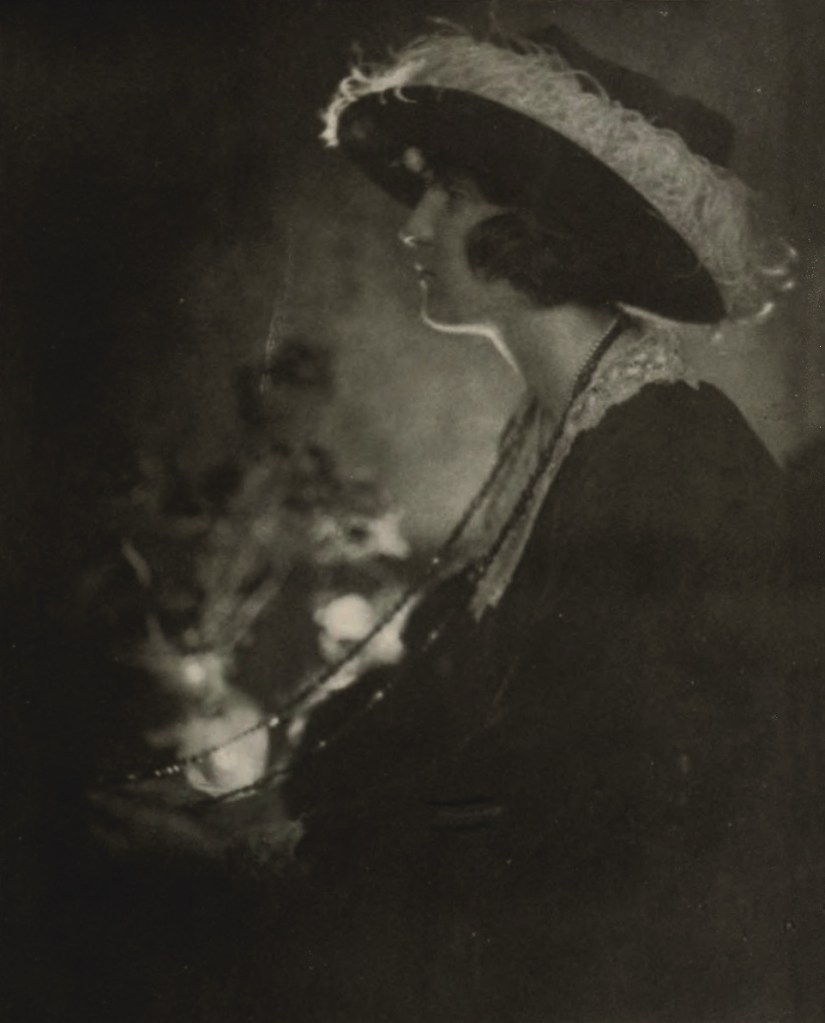
A Study in Lighting, 1919

Walter MacKenzie :: A Study in Lighting. Photograms of the Year. The annual review of the world’s pictorial photographic work, 1919 issue (plate III). Edited by F. J. Mortimer. | src archive.org

Carmel Myers, 1923

Nickolas Muray :: Carmel Myers, 1923. Published in Photoplay Magazine, May 1923 issue. Caption reads: ‘It is a matter of screen history that Carmel Myers made her film debut in a tiny role of D.W. Griffith’s Intolerance. Once since she ran away to play in musical comedy. Now, however, she is safely back on the silversheet again.’ | src internet archive