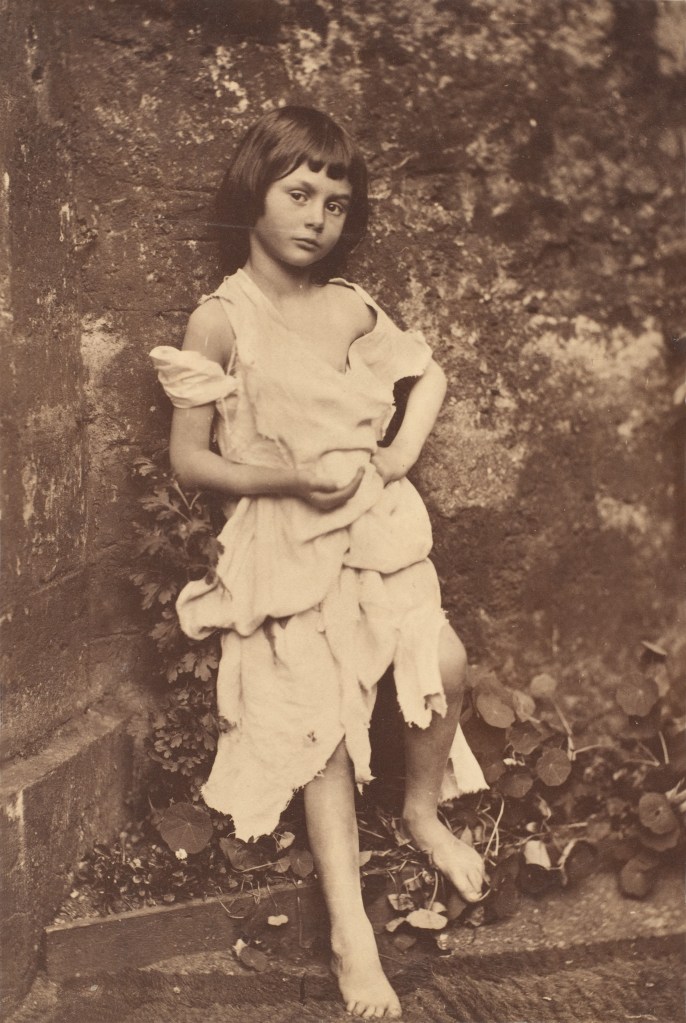
Lewis Carroll (Rev. Charles Lutwidge Dodgson) :: Alice Liddell (aged 7 or 8) as «The Beggar Maid», 1858. Albumen silver print from glass negative. | src and hi-res The Metropolitan Museum of Art «For Carroll, Alice was more than a favorite model; she was his “ideal child-friend,” and a photograph of her, aged seven, adorned the last page of the manuscript he gave her of “Alice’s Adventures Underground.” The present image of Alice was most likely inspired by “The Beggar Maid,” a poem written by Carroll’s favorite living poet, Alfred, Lord Tennyson, in 1842. If Carroll’s images define childhood as a fragile state of innocent grace threatened by the experience of growing up and the demands of adults, they also reveal to the contemporary viewer the photographer’s erotic imagination.» (quoted from source) related post
The first known photograph of a comet. Donati’s Comet, taken at Harvard College Observatory in 1858.
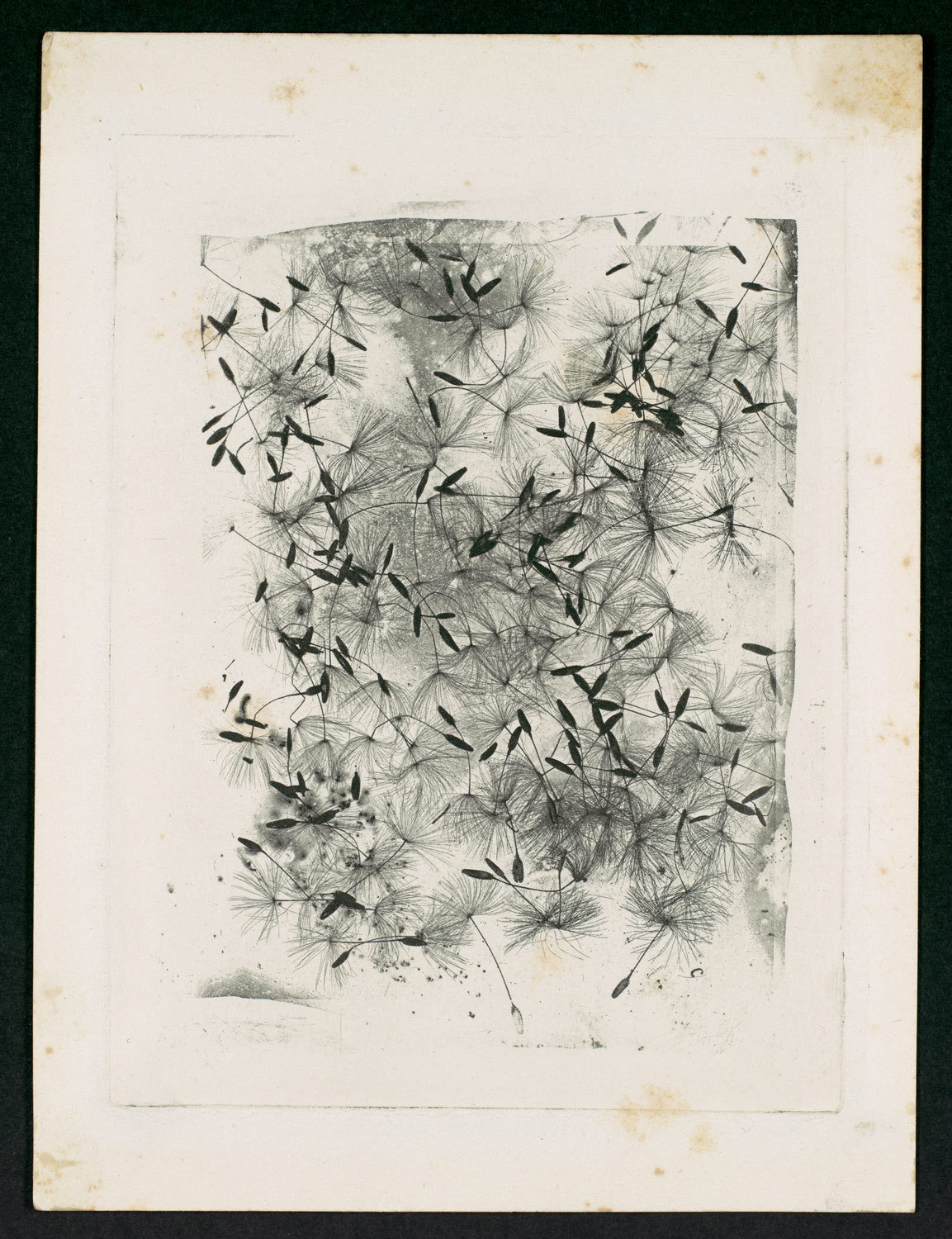
William Henry Fox Talbot :: Dandelion Seeds, 1858 or later. Photogravure (photoglyphic engraving from a copper plate). | source The Metropolitan Museum of Art
This experimental proof is a fine example of the capacity of Talbot’s “photoglyphic engraving” to produce photographic results that could be printed on a press, using printer’s ink-a more permanent process than photographs made with light and chemicals. Like Talbot’s earliest photographic examples, the image here was photographically transferred to the copper engraving plate by laying the seeds directly on the photosensitized plate and exposing it to light, without the aid of a camera. Equally reminiscent of Talbot’s early experiments, this image is part of Talbot’s lifelong effort to apply his various photographic inventions to the field of botany. In a letter tipped into the Bertoloni Album, Talbot wrote, “Je crois que ce nouvel art de mon invention sera d’un grand secours aux Botanistes” (“I think that my newly invented art will be a great help to botanists”). Such uses were still prominent in Talbot’s thinking years later when developing his photogravure process; he noted in 1863 that “if this art [of photoglyphic engraving] had been invented a hundred years ago, it would have been very useful during the infancy of botany.” Had early botanists been able to print fifty copies of each engraving, he continued, and had they sent them to distant colleagues, “it would have greatly aided modern botanists in determining the plants intended by those authors, whose descriptions are frequently so incorrect that they are like so many enigmas, and have proved a hindrance and not an advantage to science.” [quoted from The Met]
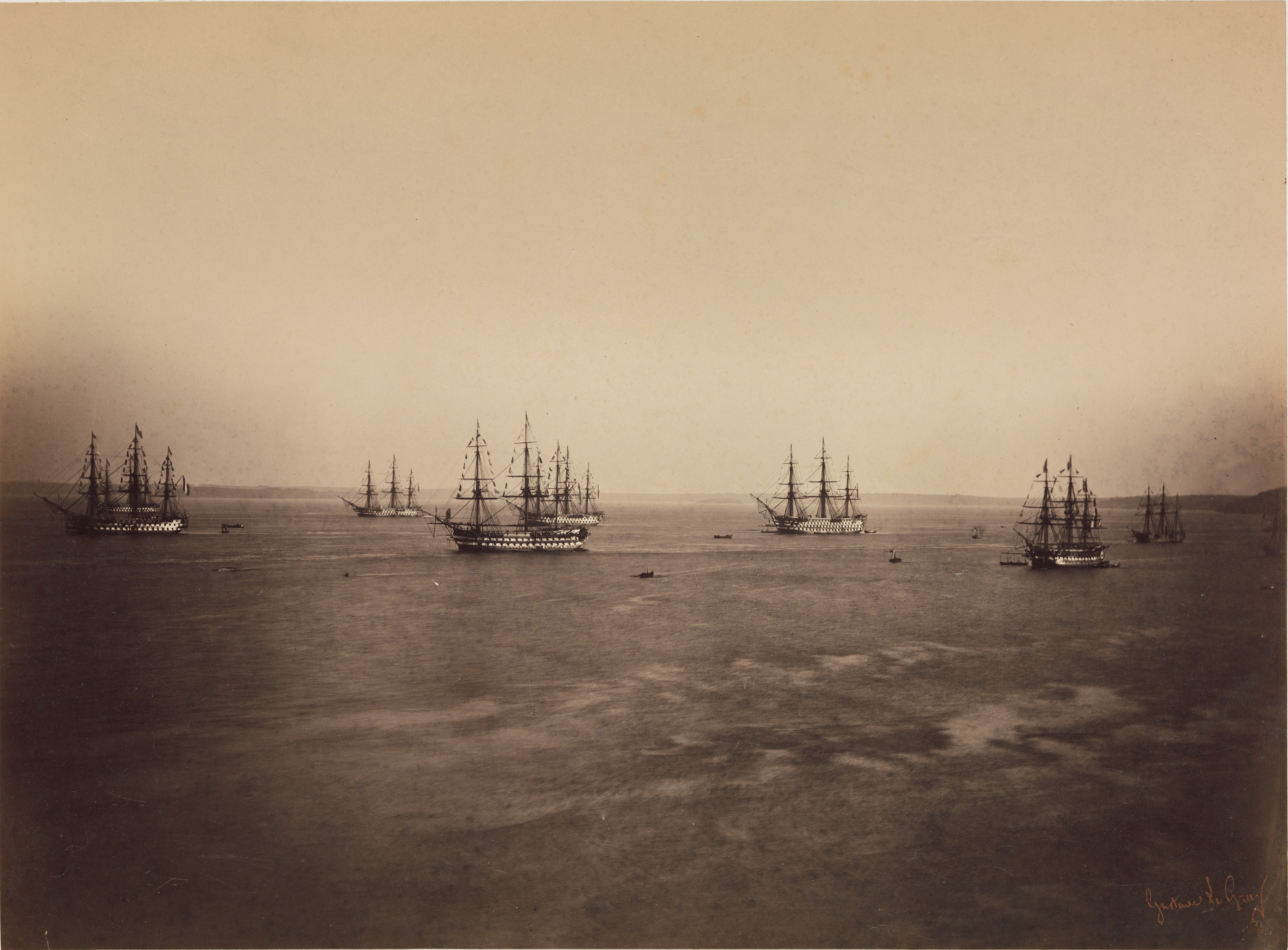
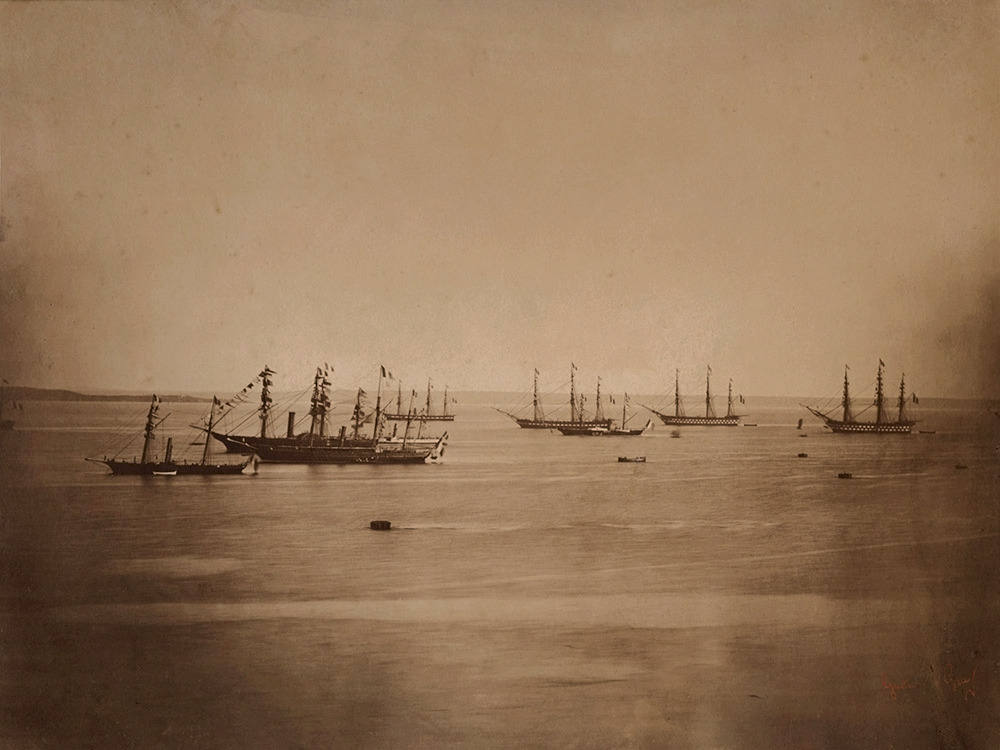
Gustave Le Gray (French, 1820–1884) :: The French and English Fleets, Cherbourg, August 1858. Albumen silver print from glass negative. Bequest of Maurice Sendak, 2013. | src The Metropolitan Museum of ArtGustave Le Gray :: Flotte Franco-Anglais en Rade de Cherbourg, 1858. Albumen print from wet plate negative. | src VW
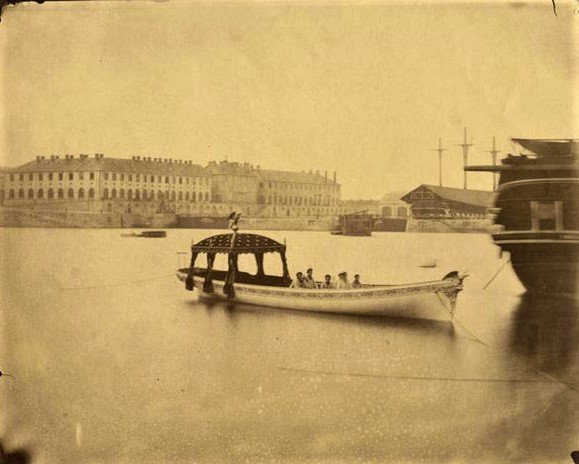
Charles Paul Furne :: Boats in the port of Cherbourg, 1858

 un regard oblique