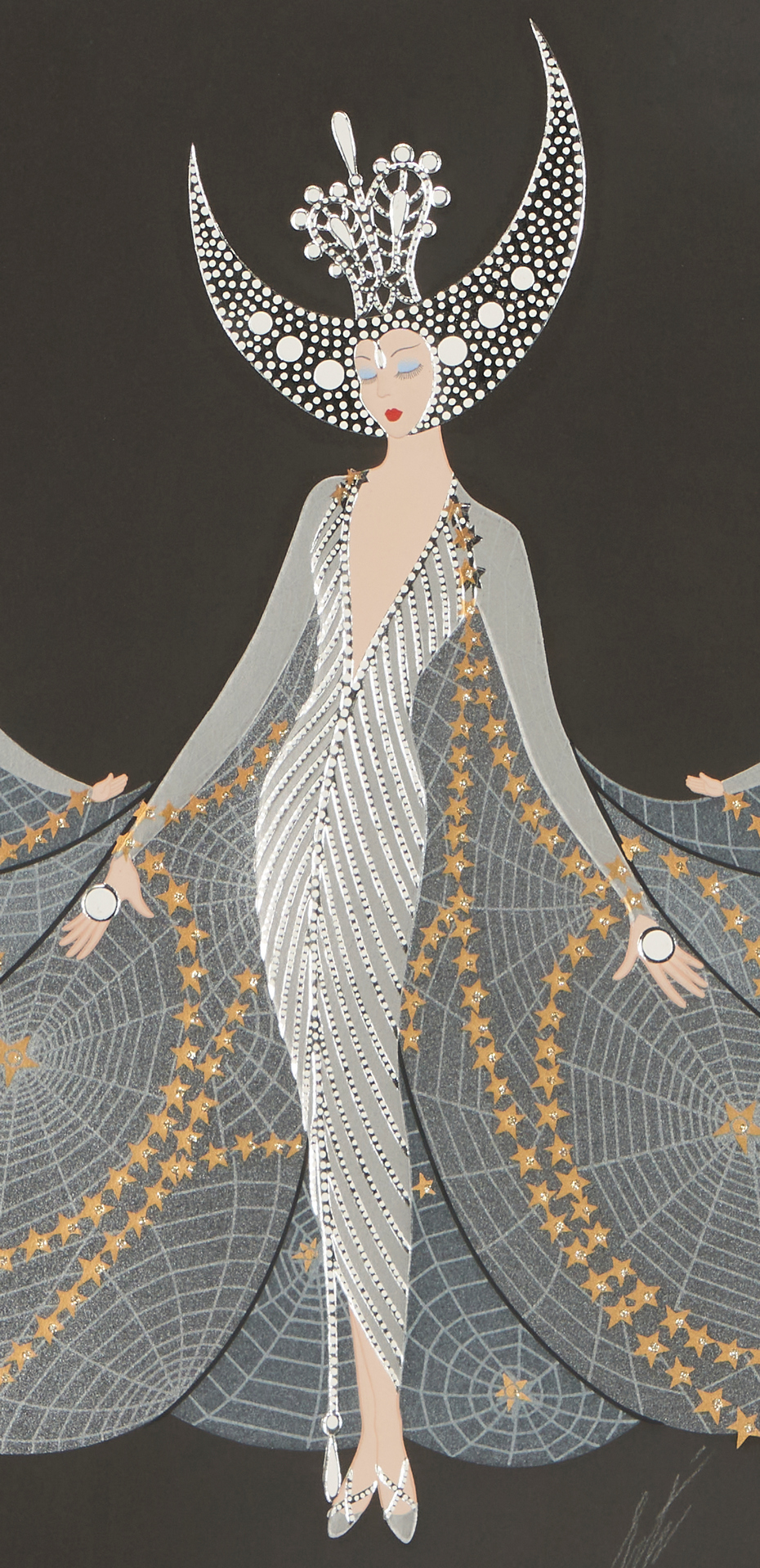
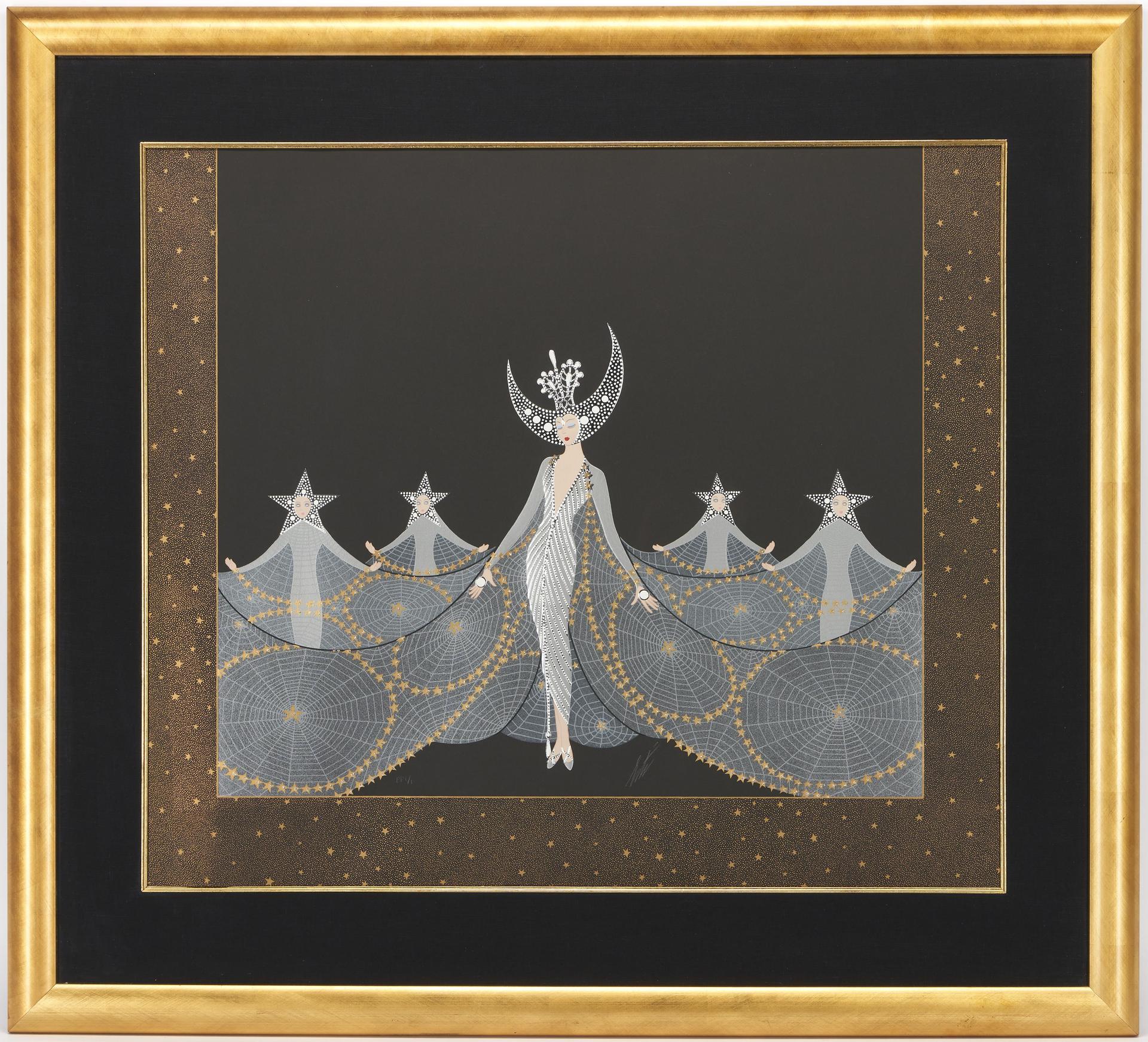
Erté (Romain De Tirtoff) :: “Queen of the Night”, 1985 (detail) | src Case Antique AuctionsErté (Romain De Tirtoff, Russian-French, 1892-1990) :: Color serigraph with silver and gold foil embossing titled “Queen of the Night”, numbered “PP 1/1”, 1985.
This publisher’s proof depicts the Queen of the Night from “The Magic Flute” opera by Wolfgang Amadeus Mozart, with four attendants holding the hem of her elaborate gown against a black background, surrounded on the left, bottom, and right edges by a gold star border. Numbered, in chalk, lower left, signed “Erté”, in chalk, lower right. Merrill Chase, Chicago, IL, gallery label, en verso. Housed under glass in a giltwood frame with a black linen liner with a giltwood fillet. Property of Milligan University, Milligan, Tennessee. source: Case Antique / Case Auctions
Erté (Romain De Tirtoff, Russian-French, 1892-1990) :: Color serigraph with silver and gold foil embossing titled “Queen of the Night”, numbered “PP 1/1”, 1985.
Bluebird Photo-Plays began advertising in Moving Picture World, January 8, 1916. Burton Rice created the advertisements for Bluebird Photo-Plays that appeared in Moving Picture World beginning April 15, 1916. On December 23th, 1916 MPW published a short article on Burton Rice and his plans of moving to Europe. He left the US, moved to Paris and mailed his artwork to Bluebird Photo-Plays in New York City. In 1917 Rice produced fewer works for Bluebird Photo-Plays. Ethel Rundquist was hired to fill-in for Rice and eventually replaced him.
In the second half of the 1920s, Rice began using the pen name, Dynevor Rhys. From 1930 to 1935 Rice, as Rhys, was credited with almost three dozen covers for The Delineator. He contributed drawings to Harper’s Bazaar.
In the second half of the 1920s, Rice began using the pen name, Dynevor Rhys. From 1930 to 1935 Rice, as Rhys, was credited with almost three dozen covers for The Delineator. He contributed drawings to Harper’s Bazaar.
Bluebird Photo-Plays began advertising in Moving Picture World, January 8, 1916. Burton Rice created the advertisements for Bluebird Photo-Plays that appeared in Moving Picture World beginning April 15, 1916. On December 23th, 1916 MPW published a short article on Burton Rice and his plans of moving to Europe. He left the US, moved to Paris and mailed his artwork to Bluebird Photo-Plays in New York City. In 1917 Rice produced fewer works for Bluebird Photo-Plays. Ethel Rundquist was hired to fill-in for Rice and eventually replaced him.
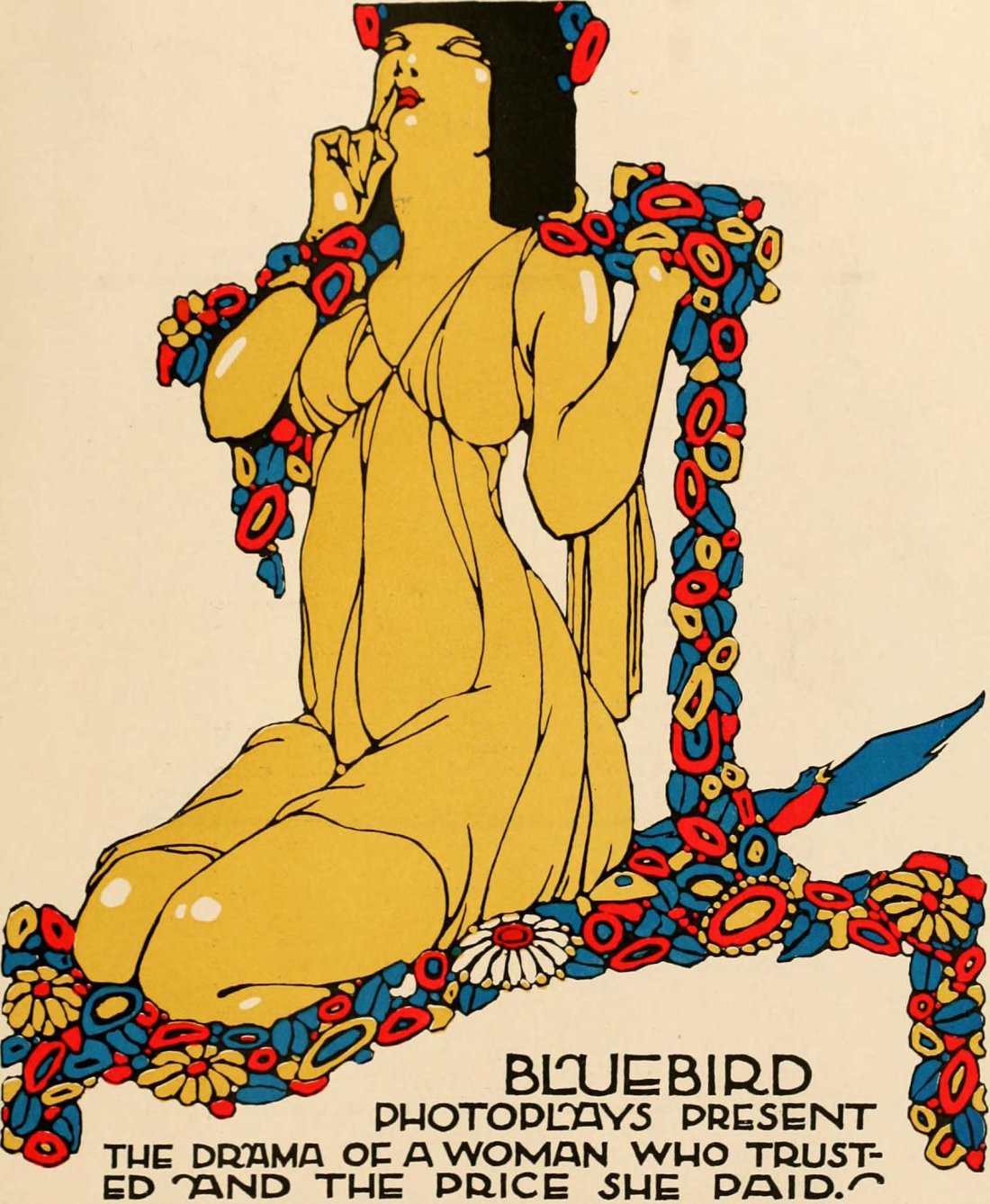
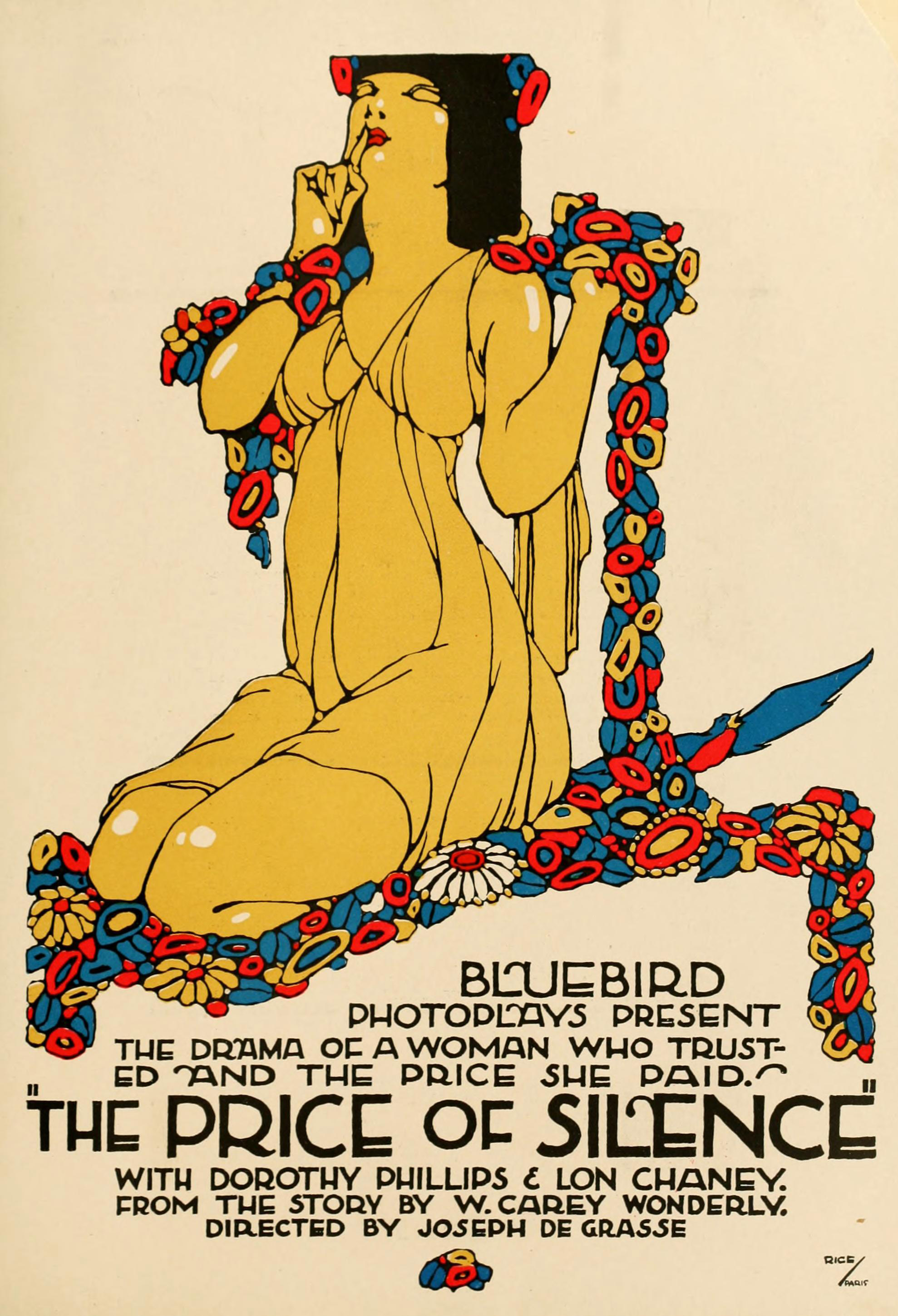
Advertisement for The Price of Silence (1916). Signed: Rice / ParisThe drama of a woman who trusted and the price she paid. “The Price of Silence”, with Dorothy Phillips & Lon Chaney. From the story by W. Carey Wonderly. Directed by Joseph De Grasse. | Moving Picture World, December 1916
Bluebird Photo-Plays began advertising in Moving Picture World on January 8, 1916. Burton Rice created the advertisements for Bluebird Photo-Plays that appeared in Moving Picture World beginning April 15, 1916. On December 23th, 1916 MPW published a short article on Burton Rice and his plans of moving to Europe. He left the US, moved to Paris and mailed his artwork to Bluebird Photo-Plays in New York City. In 1917 Rice produced fewer works for Bluebird Photo-Plays. Ethel Rundquist was hired to fill-in for Rice and eventually replaced him.
In the second half of the 1920s, Rice began using the pen name, Dynevor Rhys. From 1930 to 1935 Rice, as Rhys, was credited with almost three dozen covers for The Delineator. He also contributed drawings to Harper’s Bazaar.
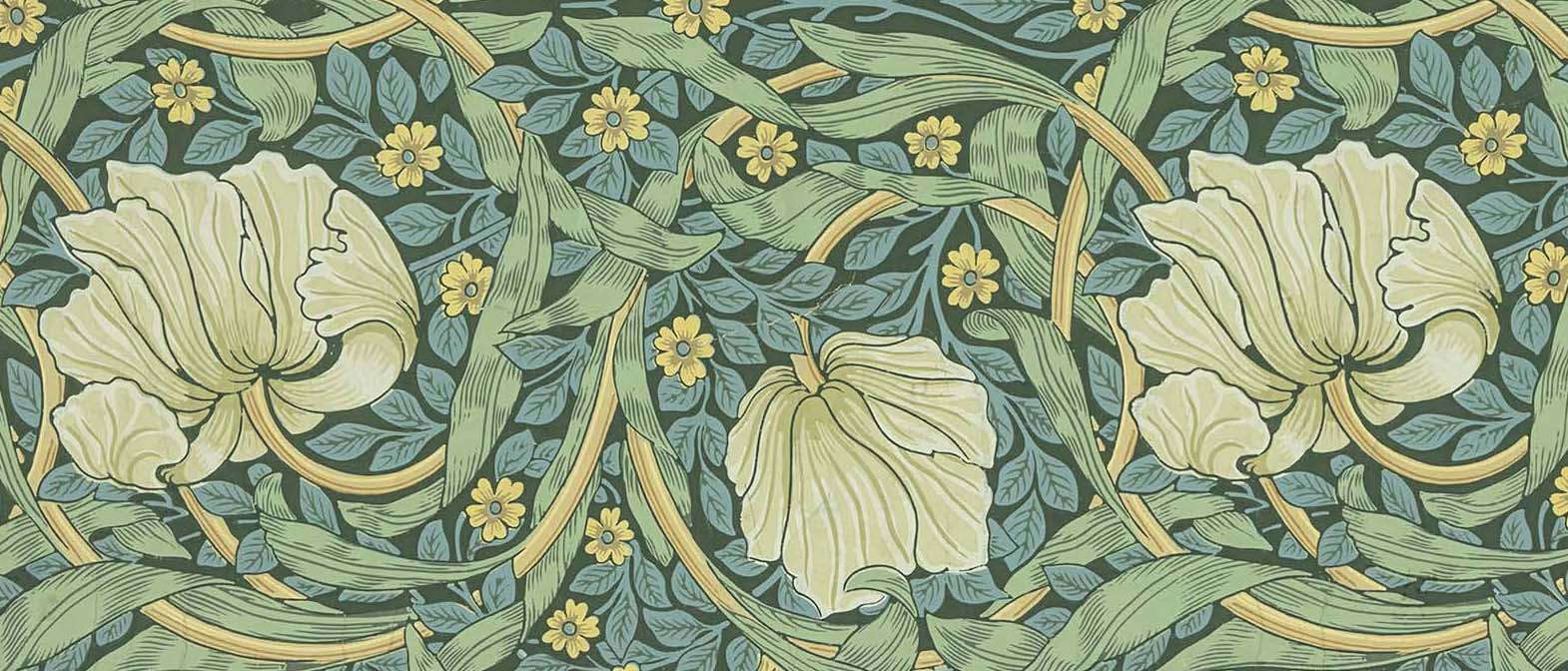
William Morris :: Pimpernel, 1876. Designed by William Morris. Produced by Morris & Co., London. | src AICWilliam Morris :: Pimpernel, 1876 (detail). | Morris and Company: The Business of Beauty at Chicago Art Institute
Morris and Company: The Business of Beauty
Artist, designer, and writer William Morris (1834–1896) founded Morris & Co. in 1861. The company quickly became regarded for the objects it designed and made for home interiors—handmade wallpapers, textiles, and furniture—and its style became synonymous with the British Arts and Crafts movement of the late 19th century. Morris was both an avid student of art history and devotee of the natural world, and his and his company’s works were characterized by a design vocabulary drawn from both European and Middle Eastern historical fabric designs and featured, and were titled after, flowers and plants.
Morris and his collaborators—which included his wife Jane Burden Morris, younger daughter May Morris, artisan and designer John Henry Dearle, as well as artists such as Edward Burne-Jones and Dante Gabriel Rosetti—considered themselves design reformers. They were on a mission to bring beauty back into the lives of their consumers through thoughtful design and production that foregrounded the agency of artisans and anti-industrial techniques. Accordingly, they experimented with dye recipes based on natural materials, revived hand-printing methods for fabrics and wallpapers, and reintroduced hand weaving for woven wool and silk textiles as well as pictorial tapestries. [quoted from AIC]
Specimen of ‘Pimpernel’ wallpaper, an almost symmetrical pattern of entwined pale-green foliage and pimpernel plants with small yellow flowers; Block-printed in distemper colours, by hand, on paper. Designed by William Morris; Design registered 1876; Printed by Jeffery & Co. for Morris & Co.; Part of ‘Volume 1’, a pattern book containing 25 Morris & Co. patterns from 1862-81 | src V&A
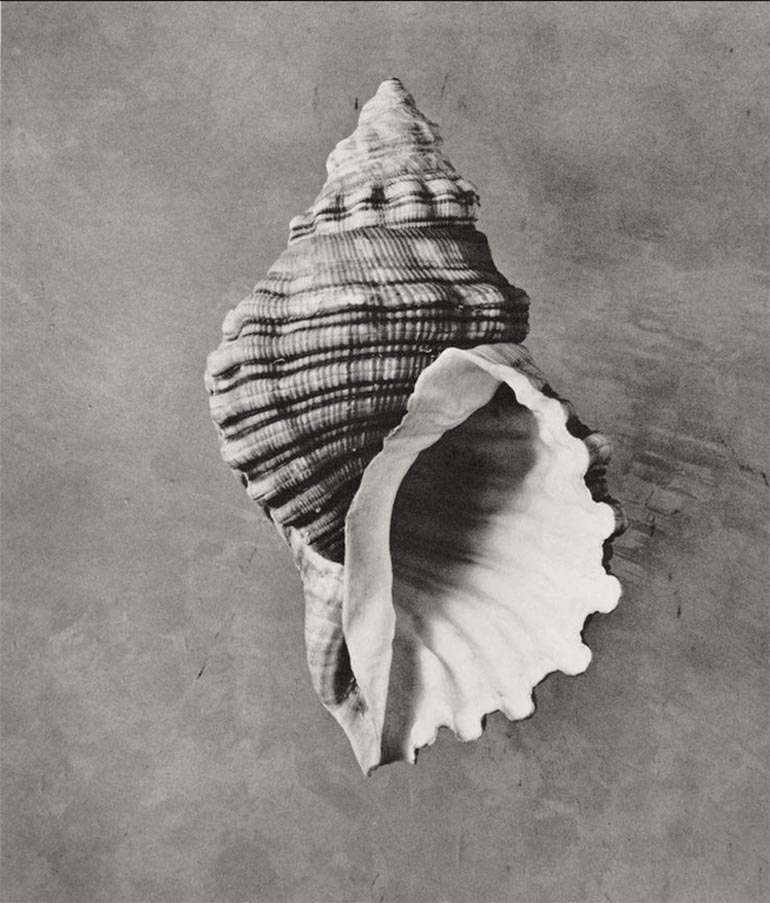
Karel Vaca (1919-1989) :: Dívka s Mušlí (Girl with a shell), 1980. Vintage movie poster, offset print. Movie directed by Jiří Svoboda. | src ZezulaCymatium spengleri Perry. From “The shell: five hundred million years of inspired design” by Hugh Stix and Marguerite Stix, 1979. | src equator on IG
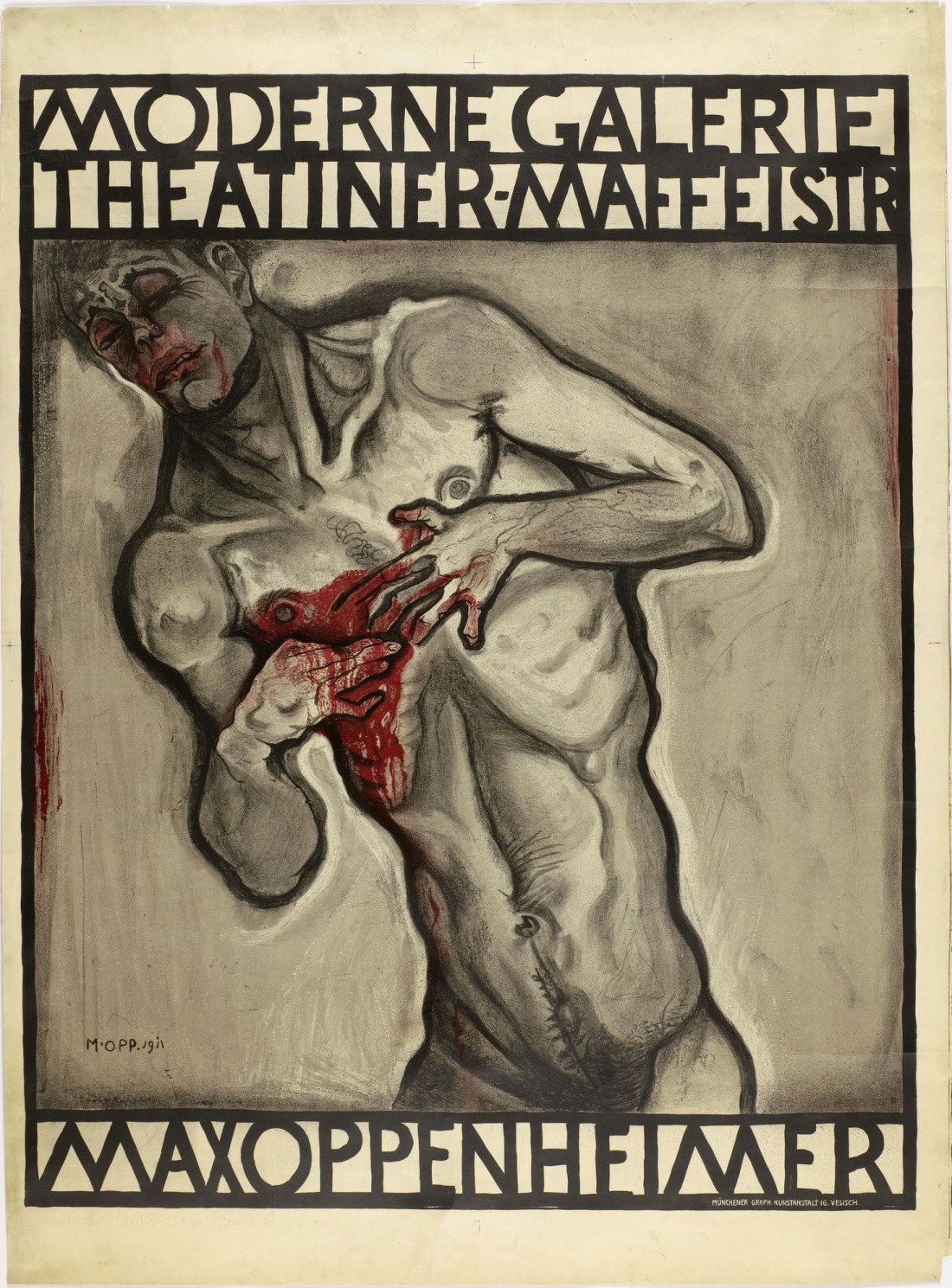
Max Oppenheimer (MOPP) (1885–1954) :: Moderne Galerie Theatiner-Maffeistr. Max Oppenheimer (Exhibition Poster), 1911 MoMA
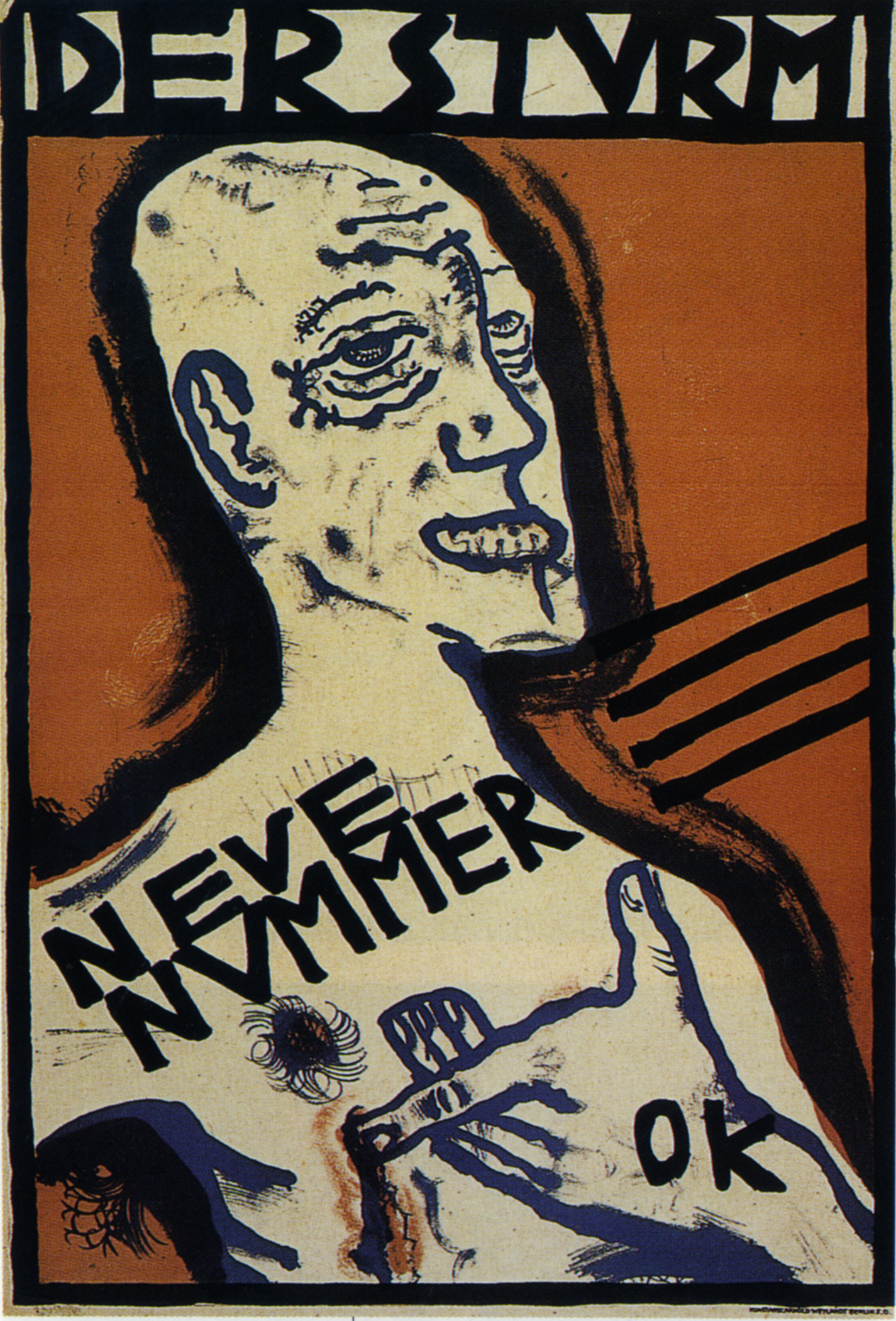
Oppenheimer, who had begun signing works MOPP by 1911, was initially friendly with both (Oskar) Kokoschka and (Egon) Schiele. But this poster, which he designed for his first Munich exhibition, brought accusations of plagiarism from Kokoschka, who found its subject—a gaunt, naked self-portrait figure bleeding from a chest wound—too close to his own agonized poster of a year earlier (images below). | quoted from MoMA


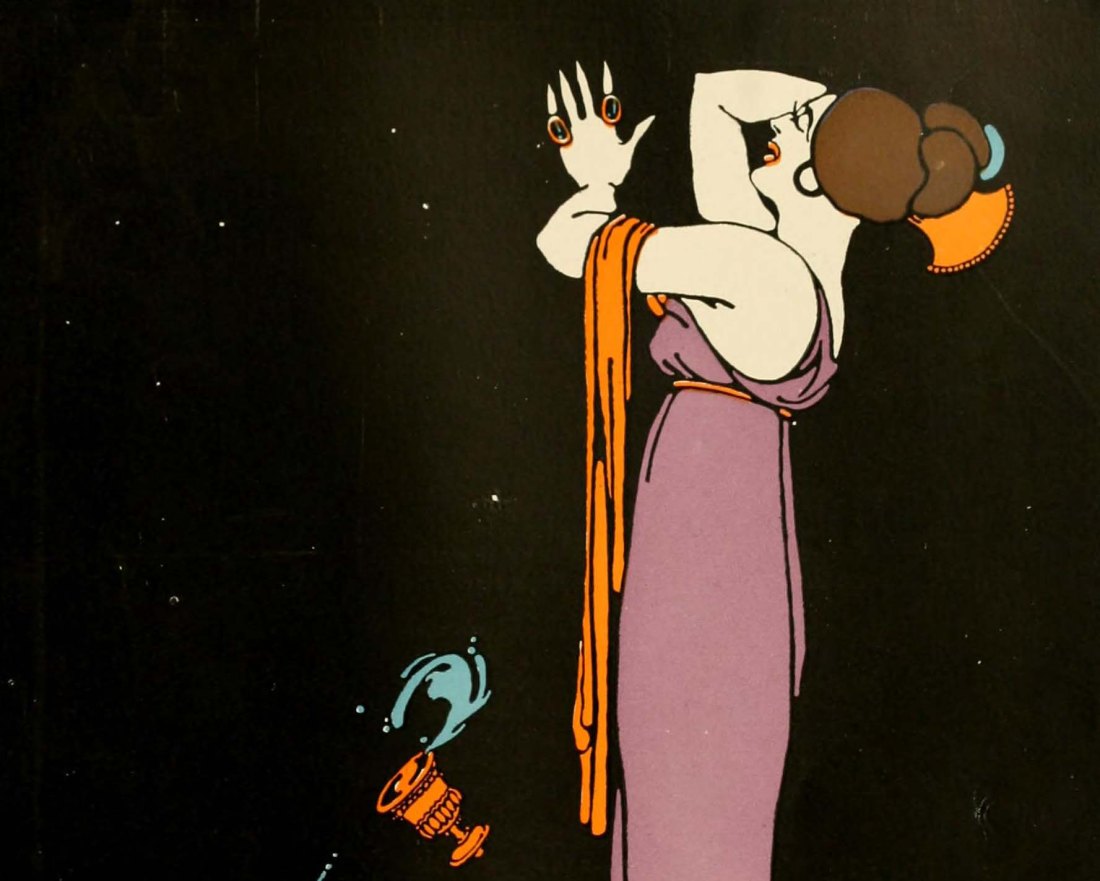
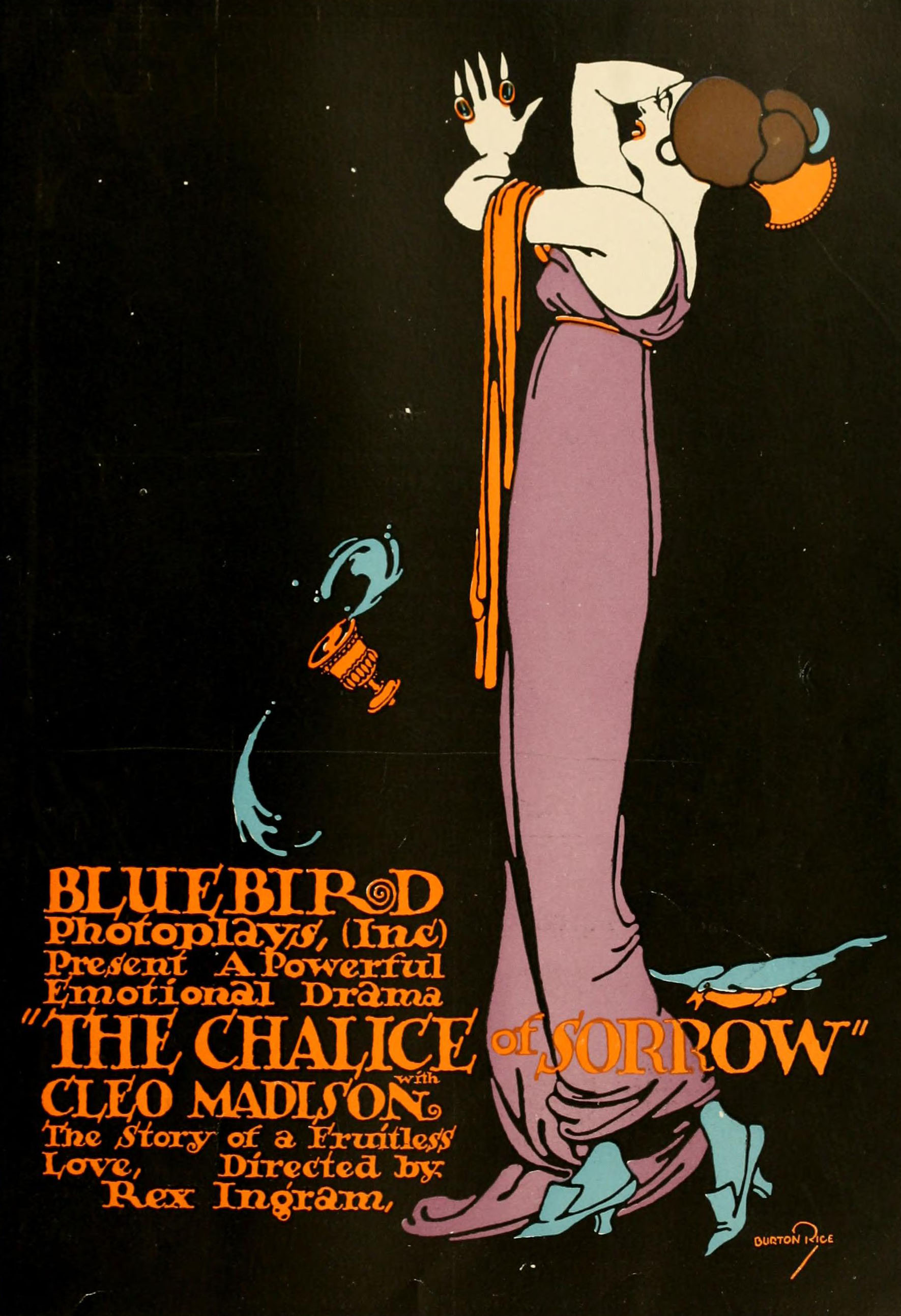
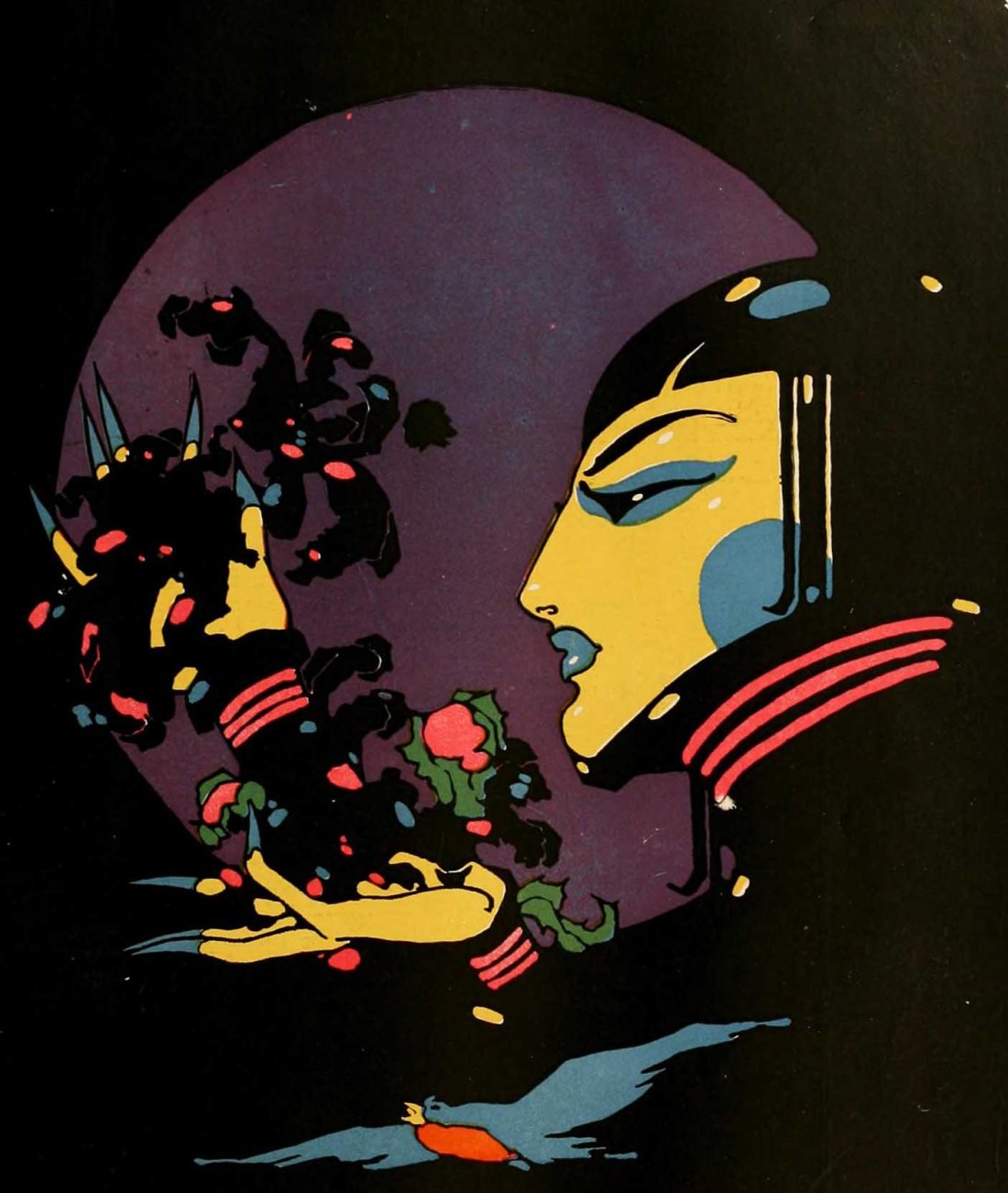
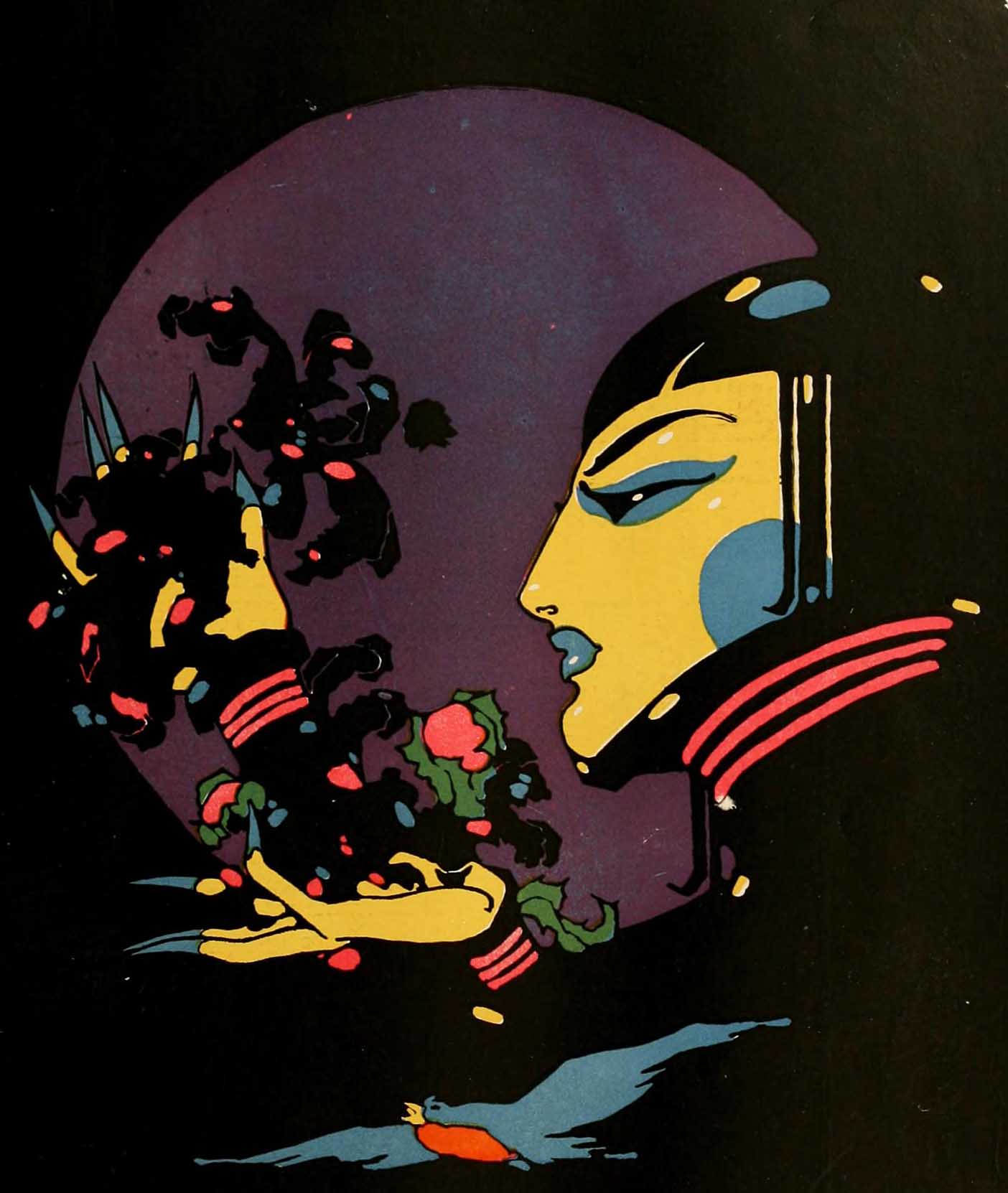
![A powerful emotional drama "The Chalice of Sorrow" [aka, The Fatal Promise] with Cleo Madison. The Story of a Fruitless Love, directed by Rex Ingram. Moving Picture World, November 1916](https://live.staticflickr.com/65535/52473387712_b2b97b635c_o.jpg)







 un regard oblique