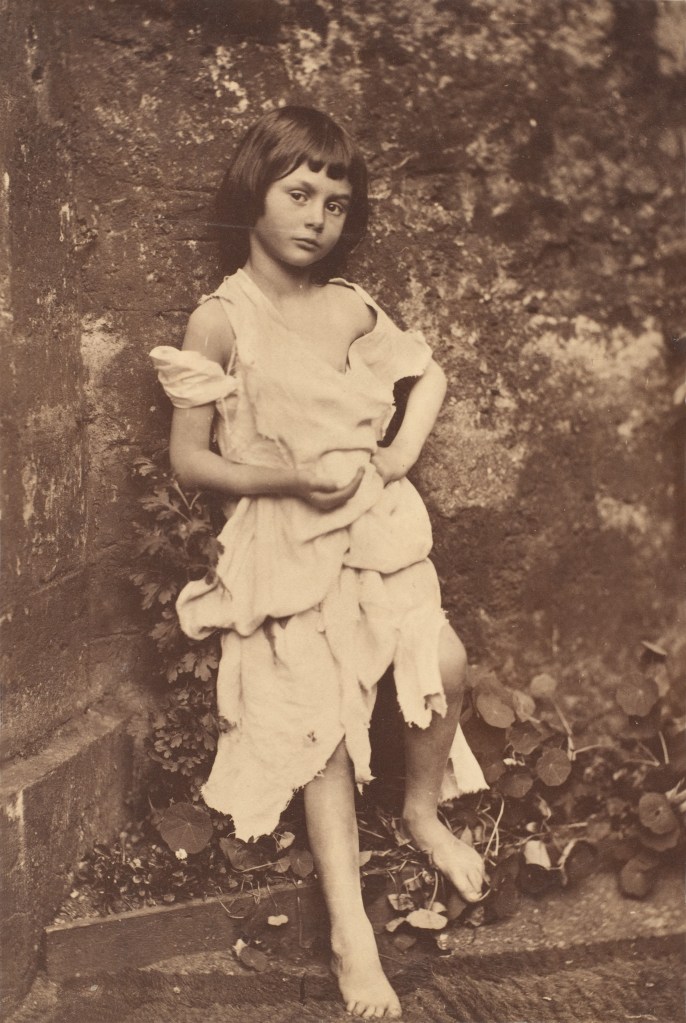
Lewis Carroll (Rev. Charles Lutwidge Dodgson) :: Alice Liddell (aged 7 or 8) as «The Beggar Maid», 1858. Albumen silver print from glass negative. | src and hi-res The Metropolitan Museum of Art «For Carroll, Alice was more than a favorite model; she was his “ideal child-friend,” and a photograph of her, aged seven, adorned the last page of the manuscript he gave her of “Alice’s Adventures Underground.” The present image of Alice was most likely inspired by “The Beggar Maid,” a poem written by Carroll’s favorite living poet, Alfred, Lord Tennyson, in 1842. If Carroll’s images define childhood as a fragile state of innocent grace threatened by the experience of growing up and the demands of adults, they also reveal to the contemporary viewer the photographer’s erotic imagination.» (quoted from source) related post
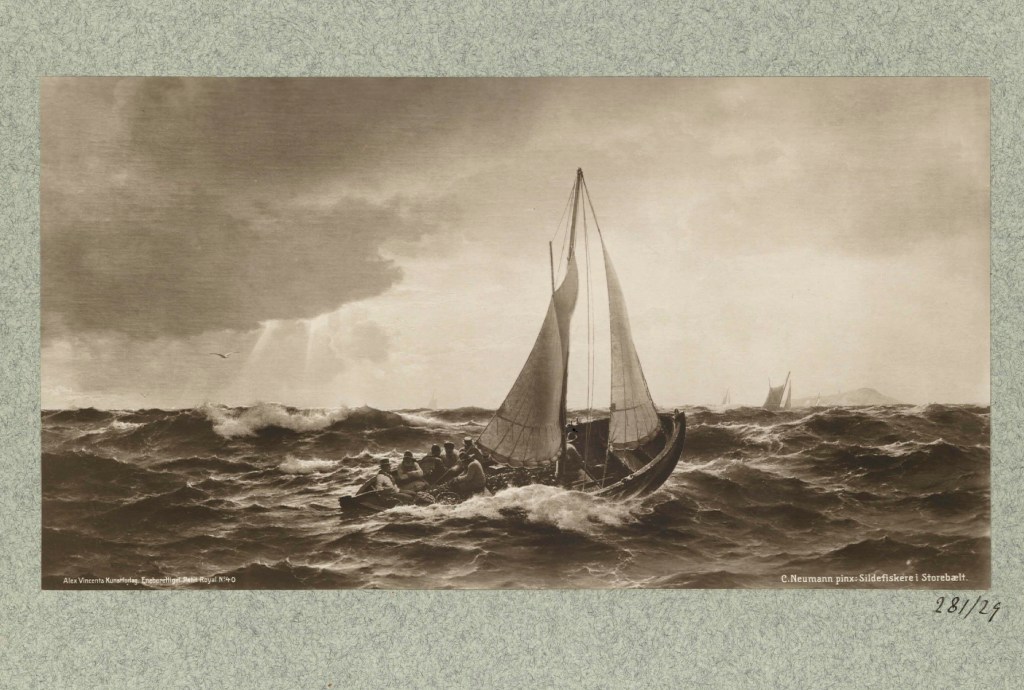
Carl Neumann (painter, 1833-1891) :: Sildefiskere i Storebælt | Herring fishermen in Storebaelt. Dokumentariske fotografier af dansk billedkunst. Stammer fra Kunsthistorisk Billedarkiv. | src Det Kgl. Bibliotek
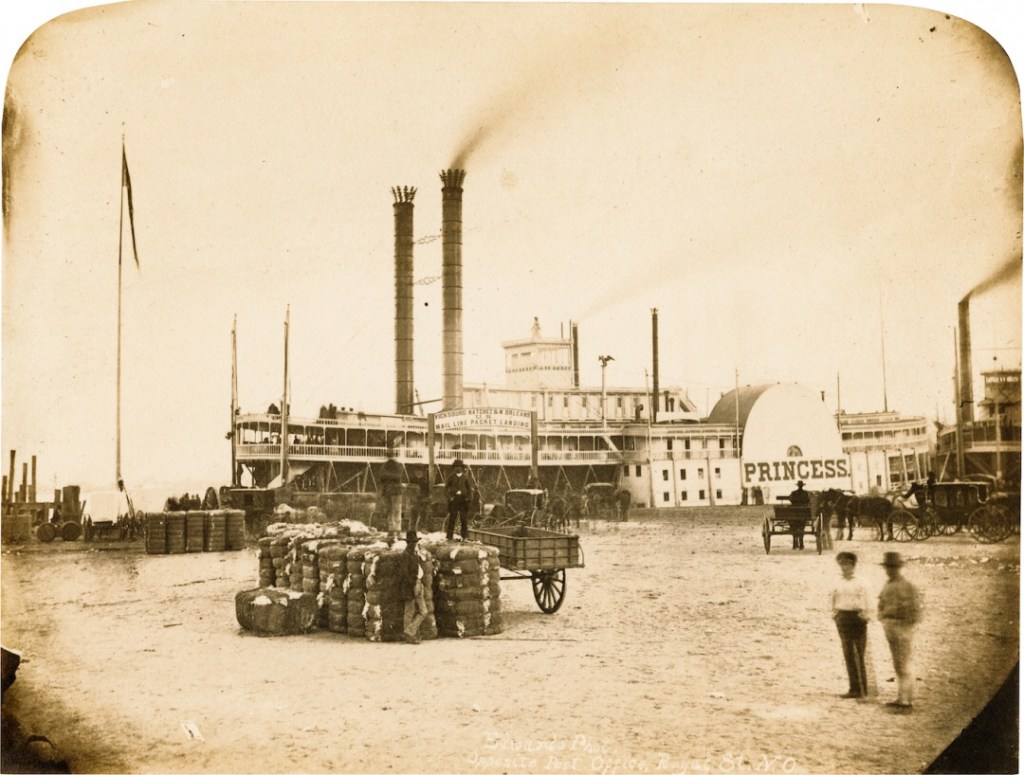
Jay Dearborn Edwards :: Steamer Princess, 1858-1859, salted paper print, 6 1/4 x 8 1/8 inches (courtesy the Historic New Orleans Collection) | src 19th century landscape photography
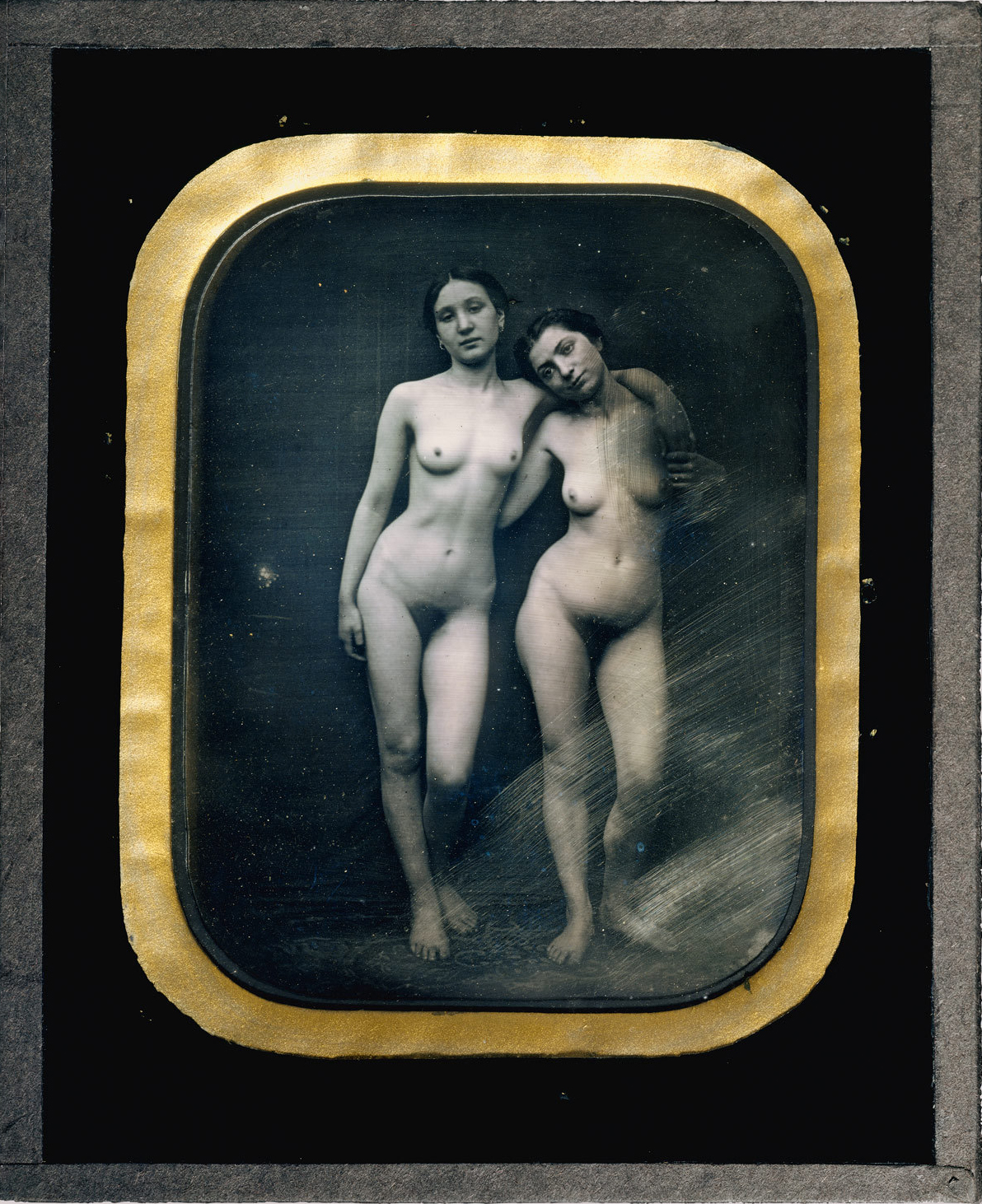
Félix-Jacques-Antoine Moulin ~ Two Standing Female Nudes, ca. 1850. Daguerreotype. | src The Rubel Collection (at The Met)
Although Moulin was sentenced in 1851 to a month in jail for producing images that, according to court papers, were “so obscene that even to pronounce the titles . . . would be to commit an indecency,” this daguerreotype seems more allied to art than to erotica. Instead of the boudoir props and provocative poses typical of hand-colored pornographic daguerreotypes, Moulin depicted these two young women utterly at ease, as unselfconscious in their nudity as Botticelli’s Venus. [quoted from The Met]
Félix-Jacques Moulin ~ Two Standing Female Nudes, ca. 1850. Daguerreotype
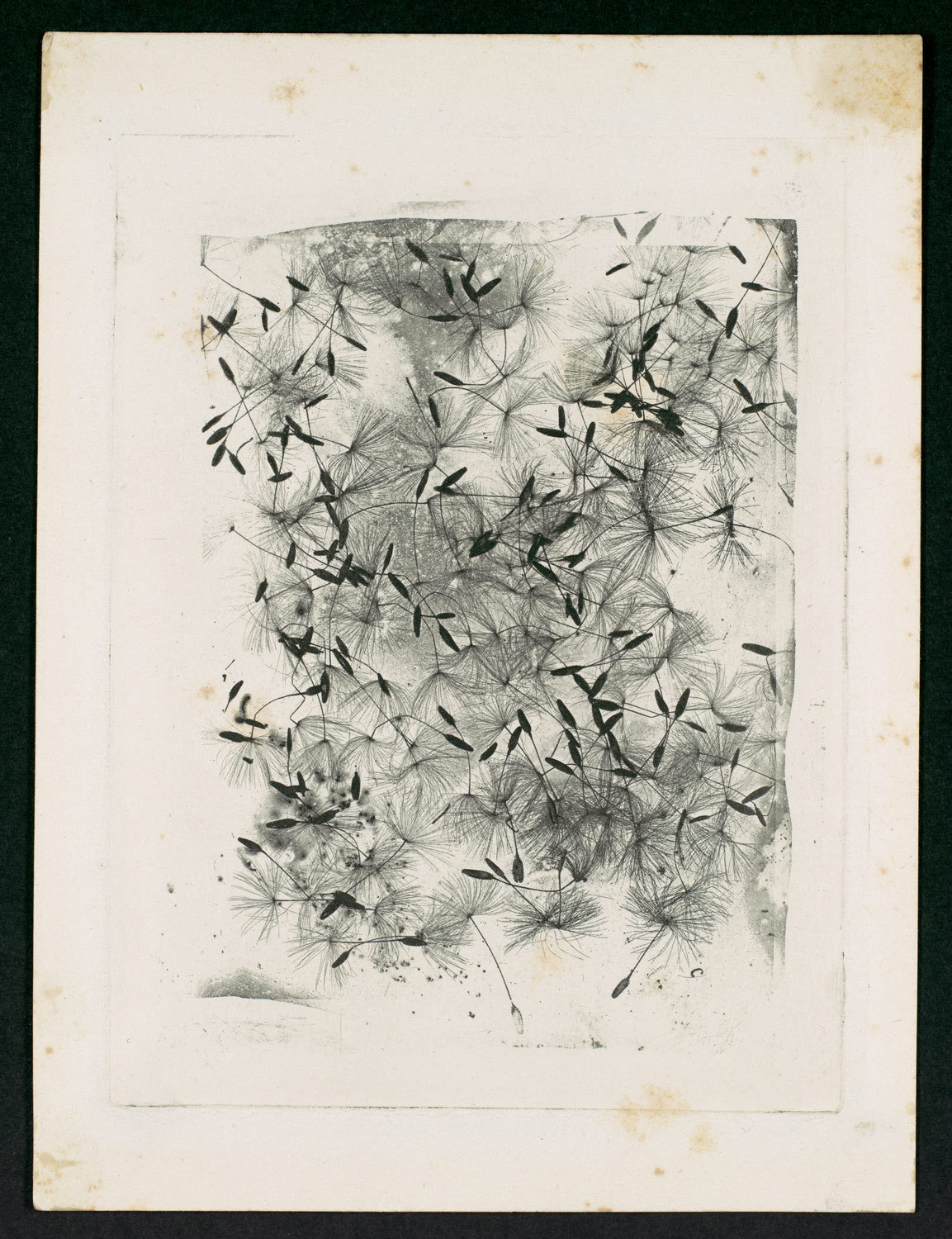
William Henry Fox Talbot :: Dandelion Seeds, 1858 or later. Photogravure (photoglyphic engraving from a copper plate). | source The Metropolitan Museum of Art
This experimental proof is a fine example of the capacity of Talbot’s “photoglyphic engraving” to produce photographic results that could be printed on a press, using printer’s ink-a more permanent process than photographs made with light and chemicals. Like Talbot’s earliest photographic examples, the image here was photographically transferred to the copper engraving plate by laying the seeds directly on the photosensitized plate and exposing it to light, without the aid of a camera. Equally reminiscent of Talbot’s early experiments, this image is part of Talbot’s lifelong effort to apply his various photographic inventions to the field of botany. In a letter tipped into the Bertoloni Album, Talbot wrote, “Je crois que ce nouvel art de mon invention sera d’un grand secours aux Botanistes” (“I think that my newly invented art will be a great help to botanists”). Such uses were still prominent in Talbot’s thinking years later when developing his photogravure process; he noted in 1863 that “if this art [of photoglyphic engraving] had been invented a hundred years ago, it would have been very useful during the infancy of botany.” Had early botanists been able to print fifty copies of each engraving, he continued, and had they sent them to distant colleagues, “it would have greatly aided modern botanists in determining the plants intended by those authors, whose descriptions are frequently so incorrect that they are like so many enigmas, and have proved a hindrance and not an advantage to science.” [quoted from The Met]
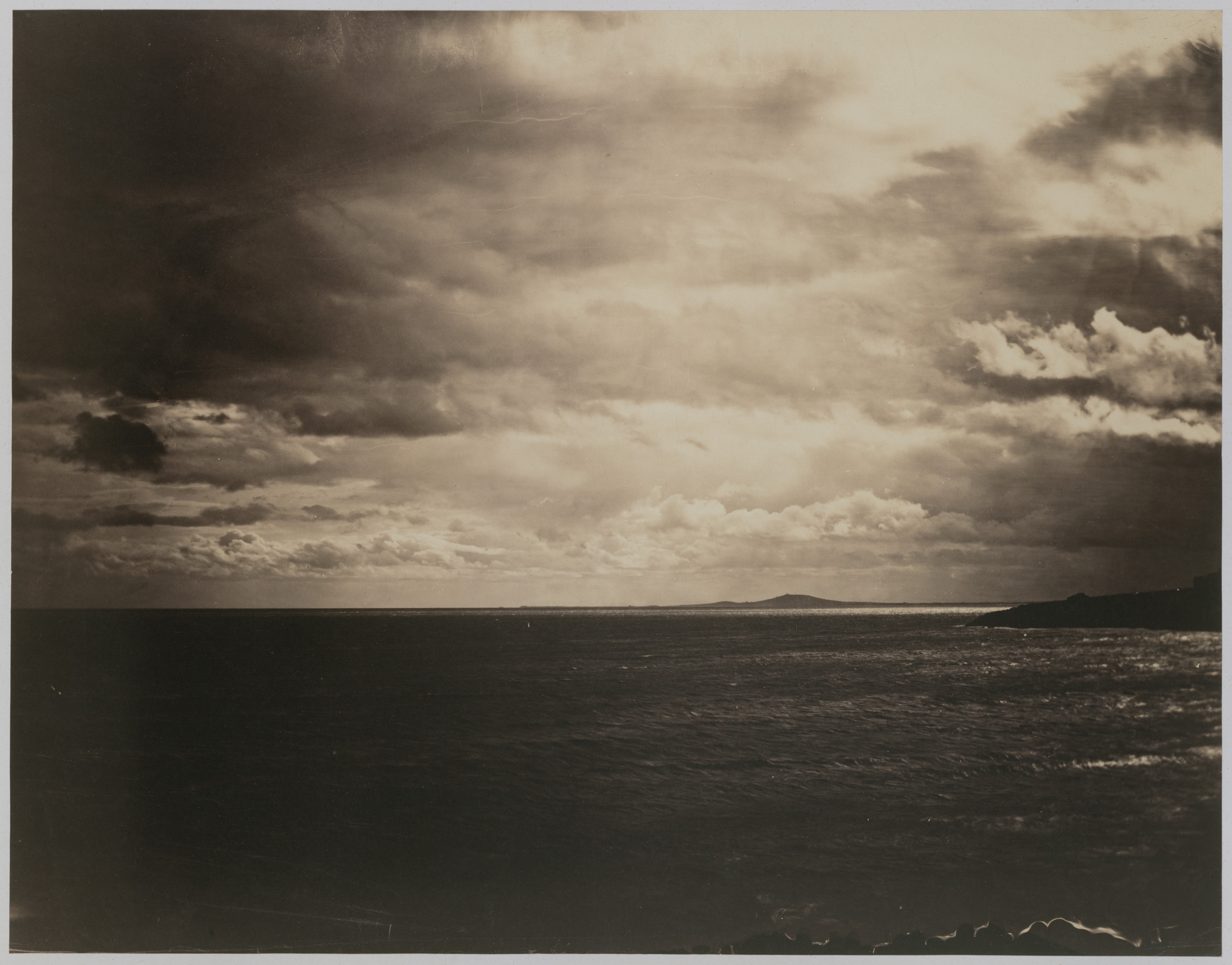
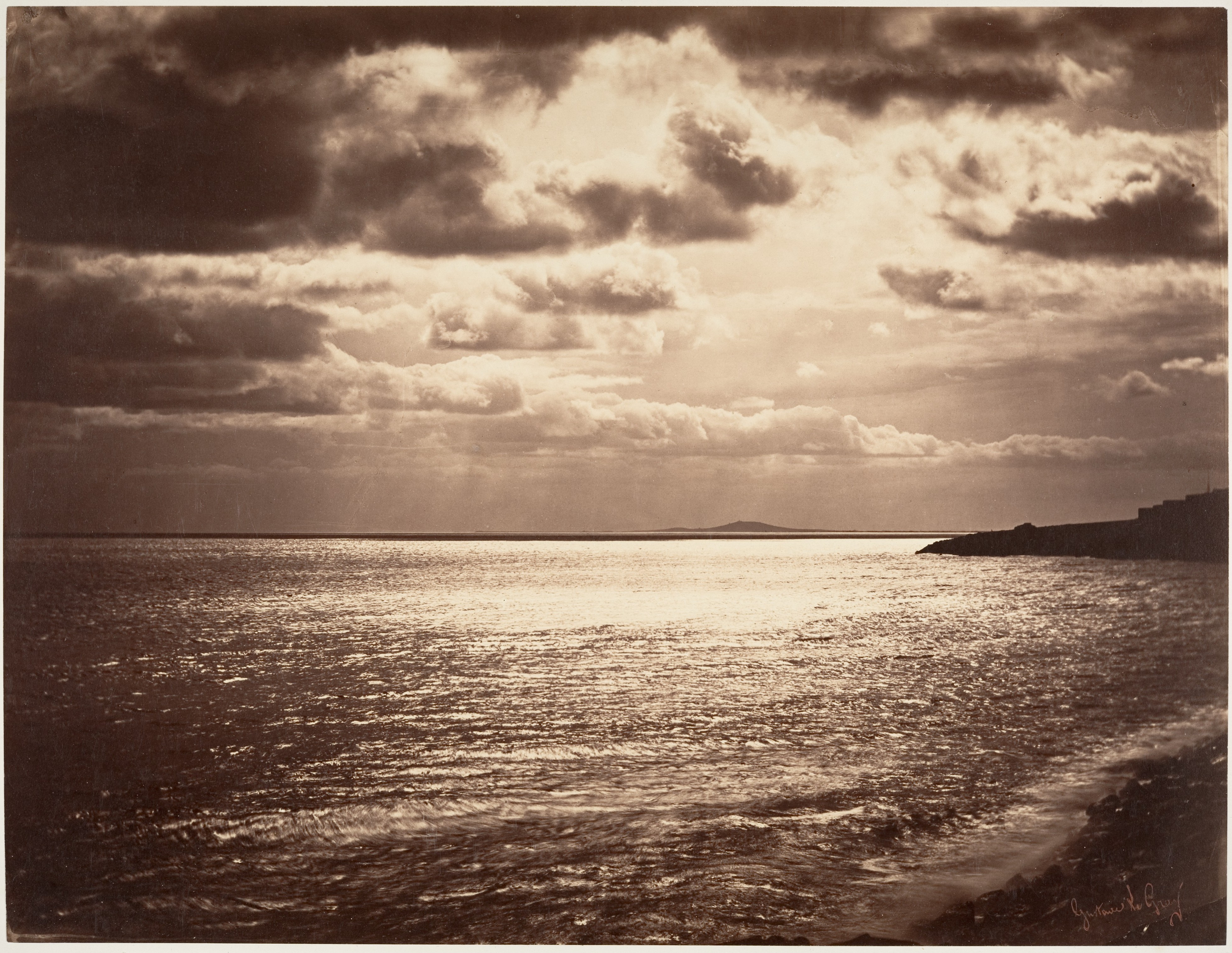
Gustave Le Gray ::Mediterranean with Mount Agde, 1857. Albumen silver print from two glass negatives. | src The MetGustave Le Gray :: Mer Méditerranée – Sète, 1857. Albumen silver print from two glass negatives. | src The Met
The dramatic effects of sunlight, clouds, and water in Gustave Le Gray’s Mediterranean and Channel coast seascapes stunned his contemporaries and immediately brought him international recognition. At a time when photographic emulsions were not equally sensitive to all colors of the spectrum, most photographers found it impossible to achieve proper exposure of both landscape and sky in a single picture; often the mottled sky of a negative was painted over, yielding a blank white field instead of light and atmosphere. In many of his most theatrical seascapes, Le Gray printed two negatives on a single sheet of paper–one exposed for the sea, the other for the sky, sometimes made on separate occasions or at different locations. Although the relationship of sunlight to reflection in this example was carefully considered and the two negatives skillfully printed, one can still see the joining of the two negatives at the horizon. Le Gray’s marine pictures caused a sensation not only because their simultaneous depiction of sea and heavens represented a technical tour de force, but because the resulting poetic effect was without precedent in photography. / quoted from The Met
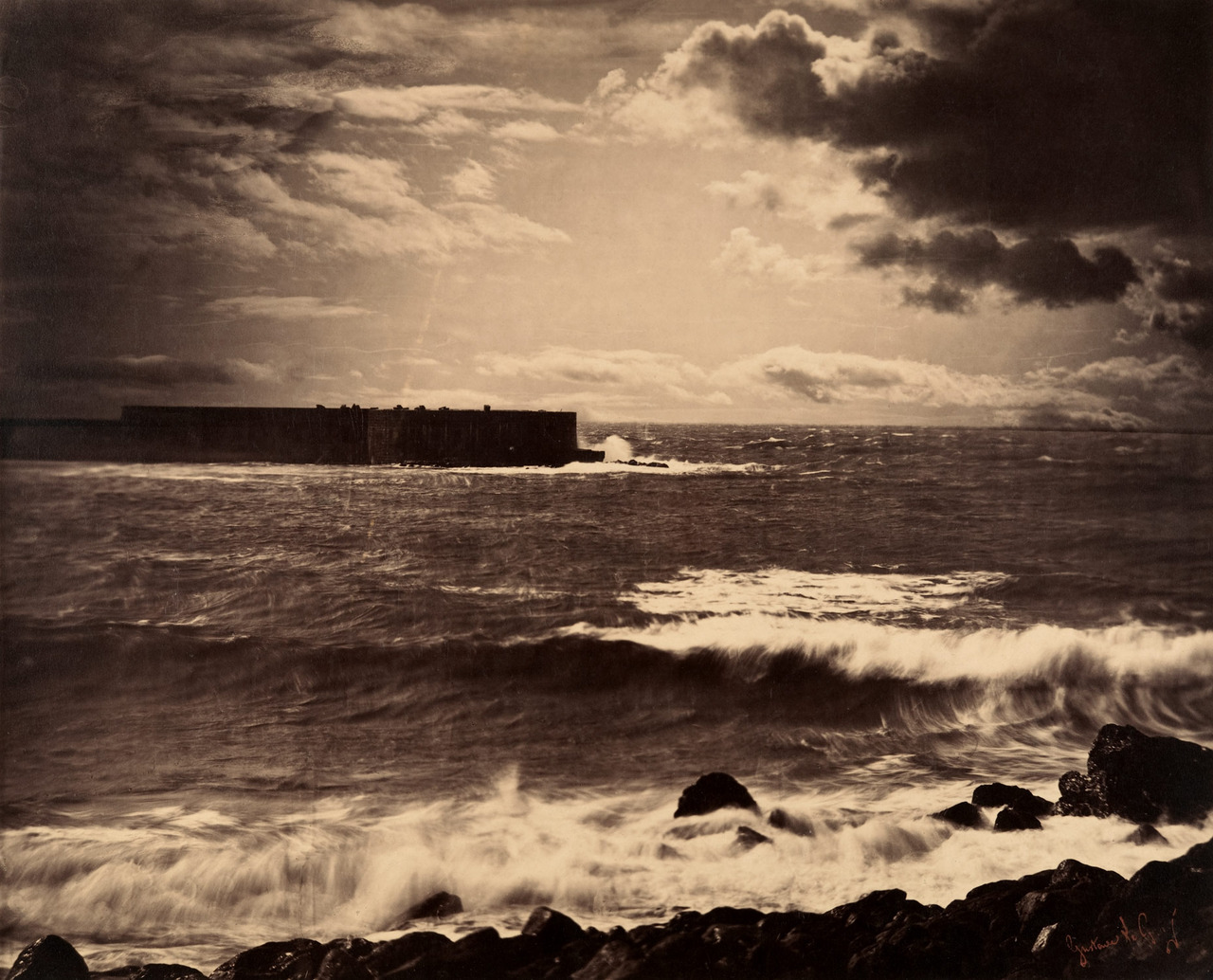
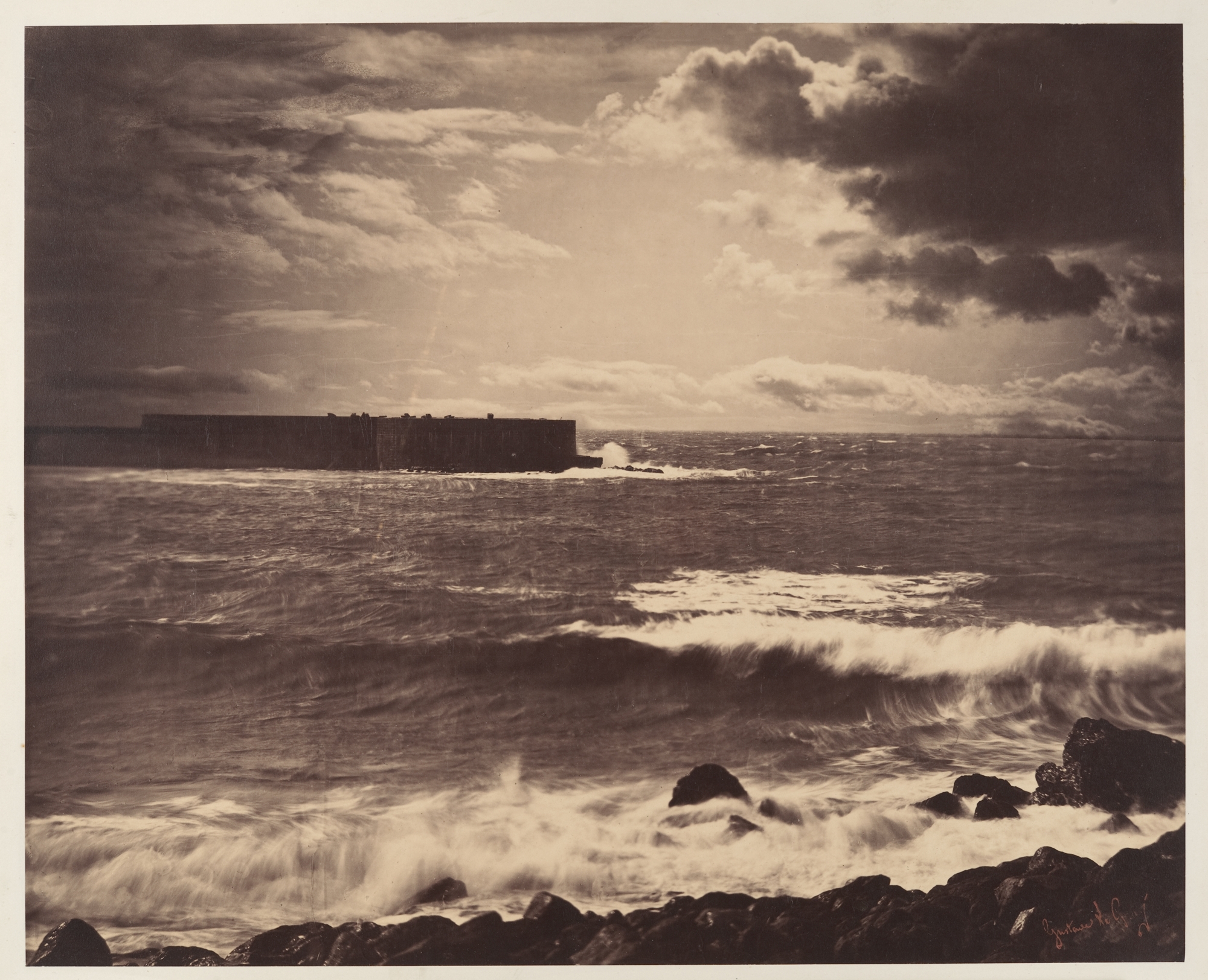
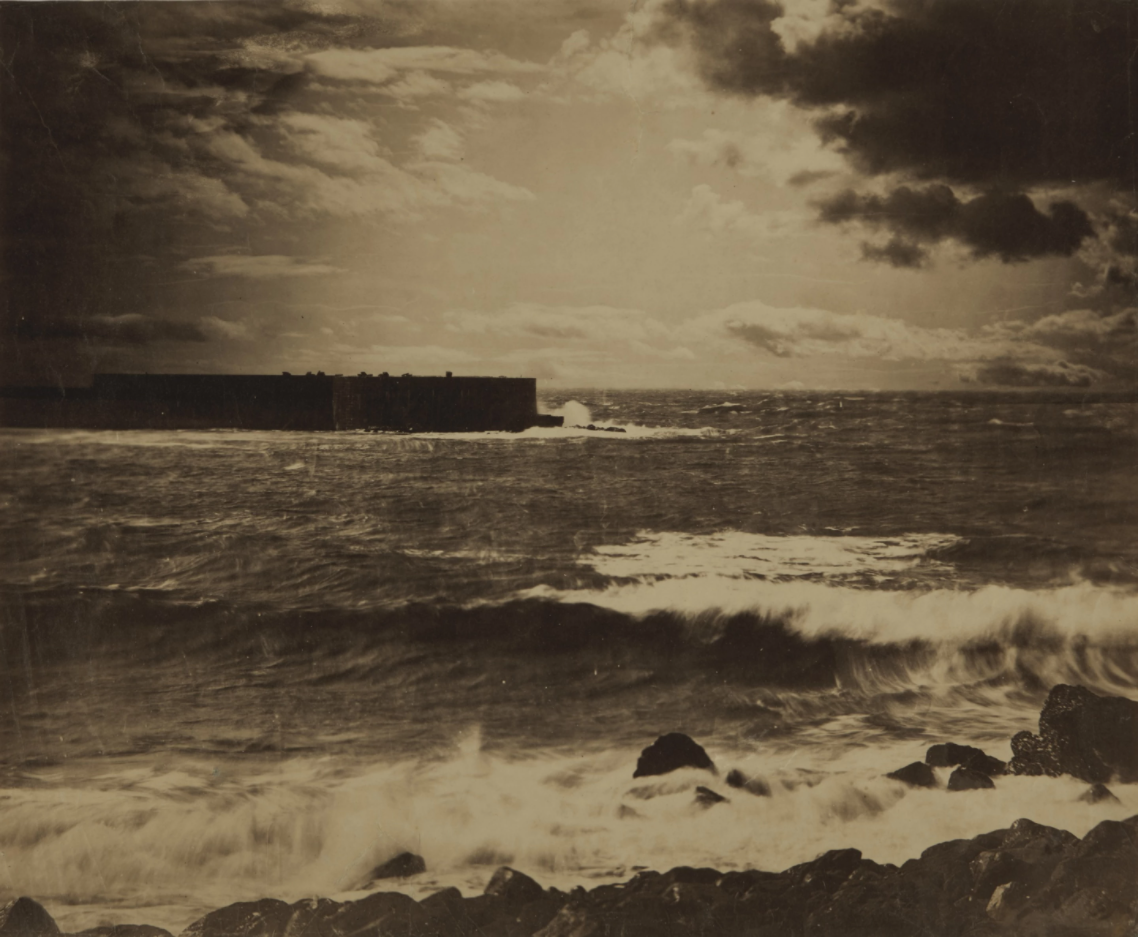
Gustave Le Gray :: The Great Wave, Sète, 1857. Albumen silver print from glass negative. | src The MetGustave Le Gray :: The Great Wave, Sète, 1857. Albumen silver print from glass negative. | src The Met
The dramatic effects of sunlight, clouds, and water in Le Gray’s seascapes stunned his contemporaries and immediately brought him international recognition. At a time when photographic emulsions were not equally sensitive to all colors of the spectrum, most photographers found it impossible to achieve proper exposure of both landscape and sky in a single picture. Le Gray solved this problem by printing two negatives on a single sheet of paper: one exposed for the sea, the other for the sky, and sometimes made on separate occasions or in different locations. Le Gray’s marine pictures caused a sensation not only because their simultaneous depiction of sea and heavens represented a technical tour de force, but also because the resulting poetic effect was without precedent in photography. / quoted from The Metropolitan Museum of Art.
Gustave Le Gray :: Grande vague. (The Great Wave, Sète), albumen print, numbered ‘14,918’ in black ink on the reverse, 1857. | src Sotheby’s


 un regard oblique