“Japs, hiding in a barge with rifles and grenades, took the lives of
these three American fighters who were mopping up on the last day of the
Buna Gona battle in New Guinea, last January. Beach and barge action
was the bloodiest and most fierce of any Buna action, and these boys are
among those who lost their lives but helped win the battle.” Published
Sept 13, 1943 for release on September 17, 1943. [LIFE Magazine] src: here
The photo, taken by George Stock in January 1943, was controversial
because it depicted the bodies of American GIs. It took nine months to
get the War Department to approve publishing the image. The decision
finally went all the way to President Roosevelt, who authorized its
publication because he was concerned that the American public was
growing complacent about the war and its terrible cost on human life. It
was the first image in World War II to depict American troops who had
died in combat without the bodies being draped, in coffins, or otherwise
covered.
The photo by George Strock for LIFE magazine is now acknowledged as a war classic. /
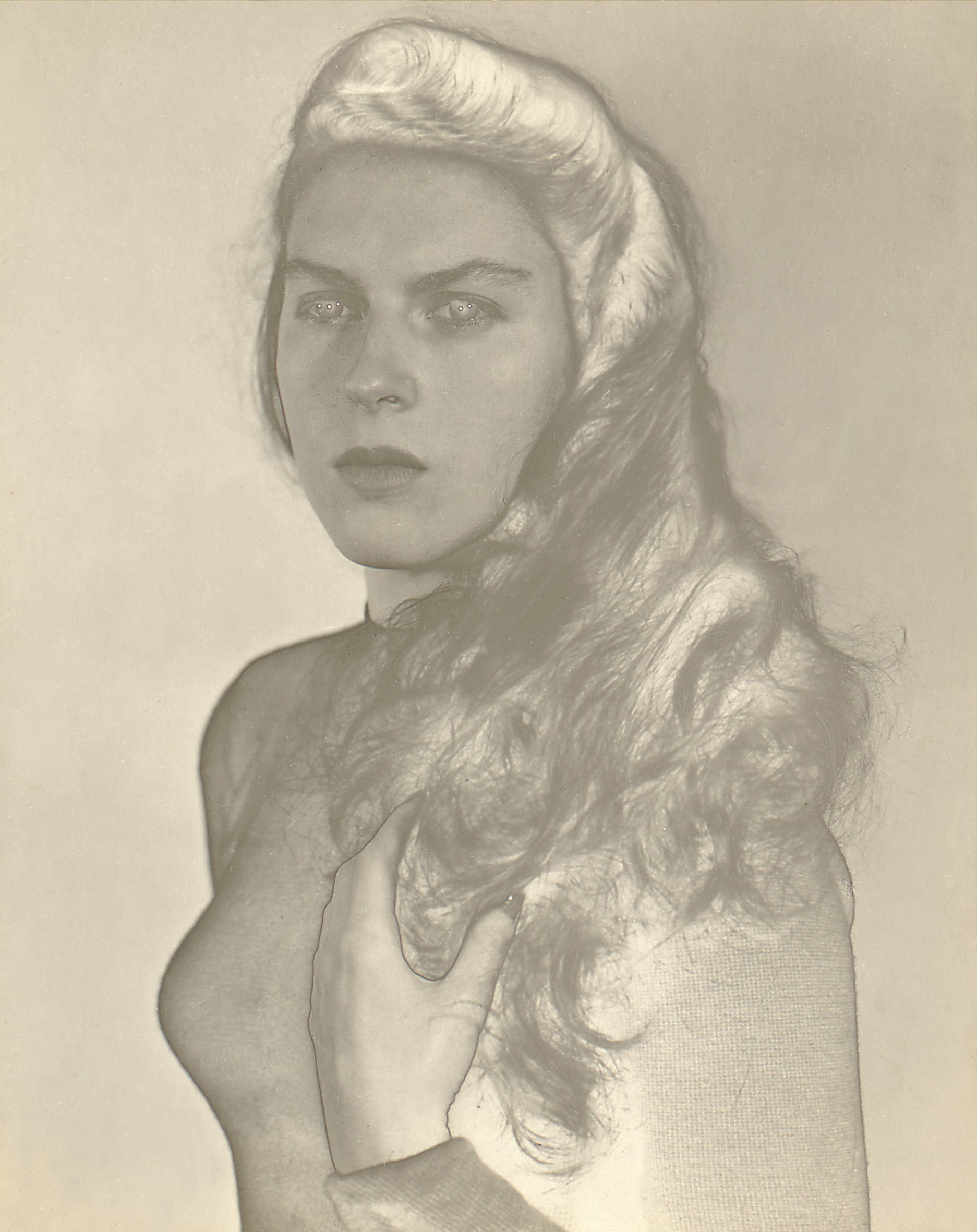
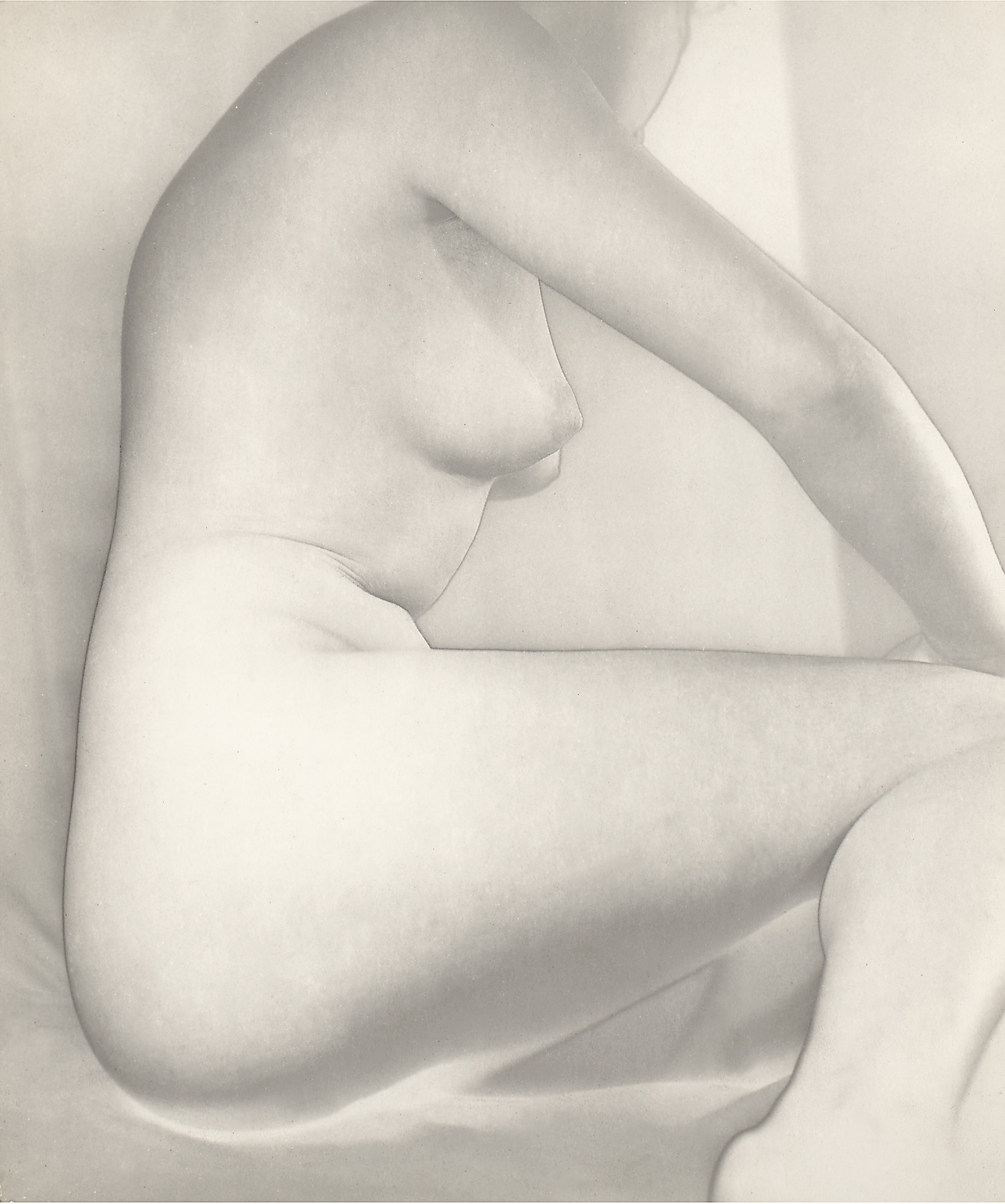
»Destiny Emigration« reconstructs the stories of two Jewish photographers, Gerti Deutsch and Jeanne Mandello. Each left her country when the Nazis took power.
Jeanne Mandello (Frankfurt/Main 1907 – 2001 Barcelona) fled Frankfurt in 1934, heading first for Paris and then for Montevideo in Uruguay.
She had not yet turned 19 when she left home for Berlin in 1926 to train for two years at the Photographische Lehranstalt/Lette-Verein. She obtained her Chamber of Trade certificate with a mark of “very good”. Work experience with Dr Paul Wolff, the Leica pioneer, brought a practical initiation into photojournalism. In 1929 she opened her first studio in Frankfurt, acquired portrait commissions, took pictures for the press, and met the young Arno Grünebaum, who had taken an interest in photography. They married, but aware of the threat posed by Nazi attacks on Jewish institutions, they fled to Paris in January 1934. Here Mandello enjoyed a career she could scarcely have imagined as a fashion photographer, with commissions from companies like Balanciaga, Mainbocher, Maggy Rouff and Chanel, to name but a few.
Her career ended overnight when the Nazis invaded France. Like all German women, she was temporarily interned at the camp in Gurs after the National Socialists occupied Paris in 1940, after which she and her husband managed to escape via Spain and emigrate to Uruguay. Yet again she found the energy for a new beginning: she borrowed a Rolleiflex, and was soon successful with her portraits of artists and pictures for tourist guides. In 1953 Jeanne Mandello separated from Arno Grünebaum, settling in Barcelona in 1959.
The lives of both women photographers were coloured by their fate as refugees and emigrées, while Jeanne Mandello suffered the additional blow of losing almost all her work.
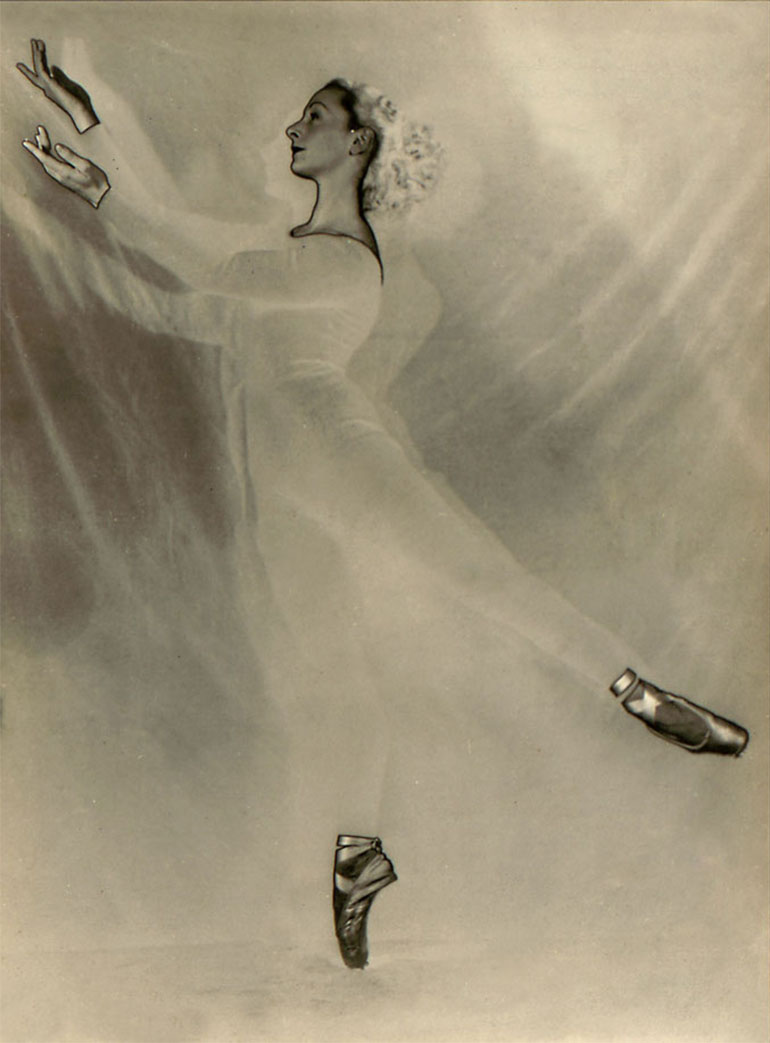
Sunny Lorinczi was born in Uruguay in 1930 to a family of Hungarian origin. A ballet dancer from her early teenage years, she goes on to interpret the starring roles of classical ballet’s repertoire, such as “Giselle”, throughout South America. She becomes the Montevideo’s Sodre’s prima ballerina in 1951, under the direction of Vaclav Veltchek. In 1961, she moves to France with her French husband and son and sets up her own ballet school. | src Jeanne Mandello
Frank Scherschel :: Parisians crouching in the street under fire from collaborationists, 1944 – gelatin silver print / src: howardgreenberg



 un regard oblique