Learning to fly · Kids at War

A ‘taube’ is spotted; a French 75 is immediately put into battery while ‘Pépéte’, the aviator, prepares to give chase. Paris, 19 September 1915.
The aviator ‘Pépéte’ has just shot down a ‘taube’ with his machine gun. Paris, 19 September 1915.
Léon Gimpel  (1873-1948) :: The aviator ‘Pépéte’ has just shot down a ‘taube’ with his machine gun. Paris, 19 September 1915.
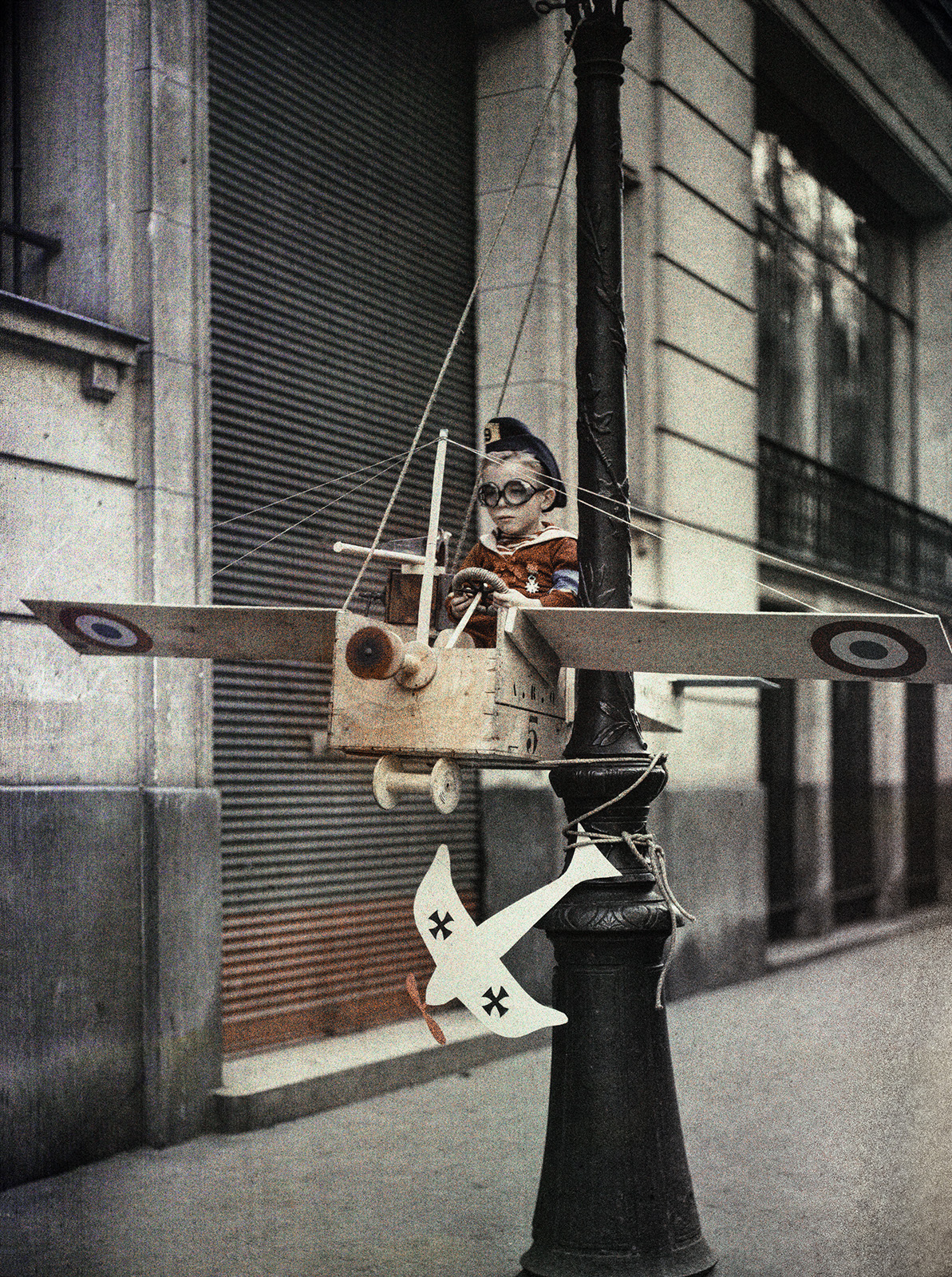
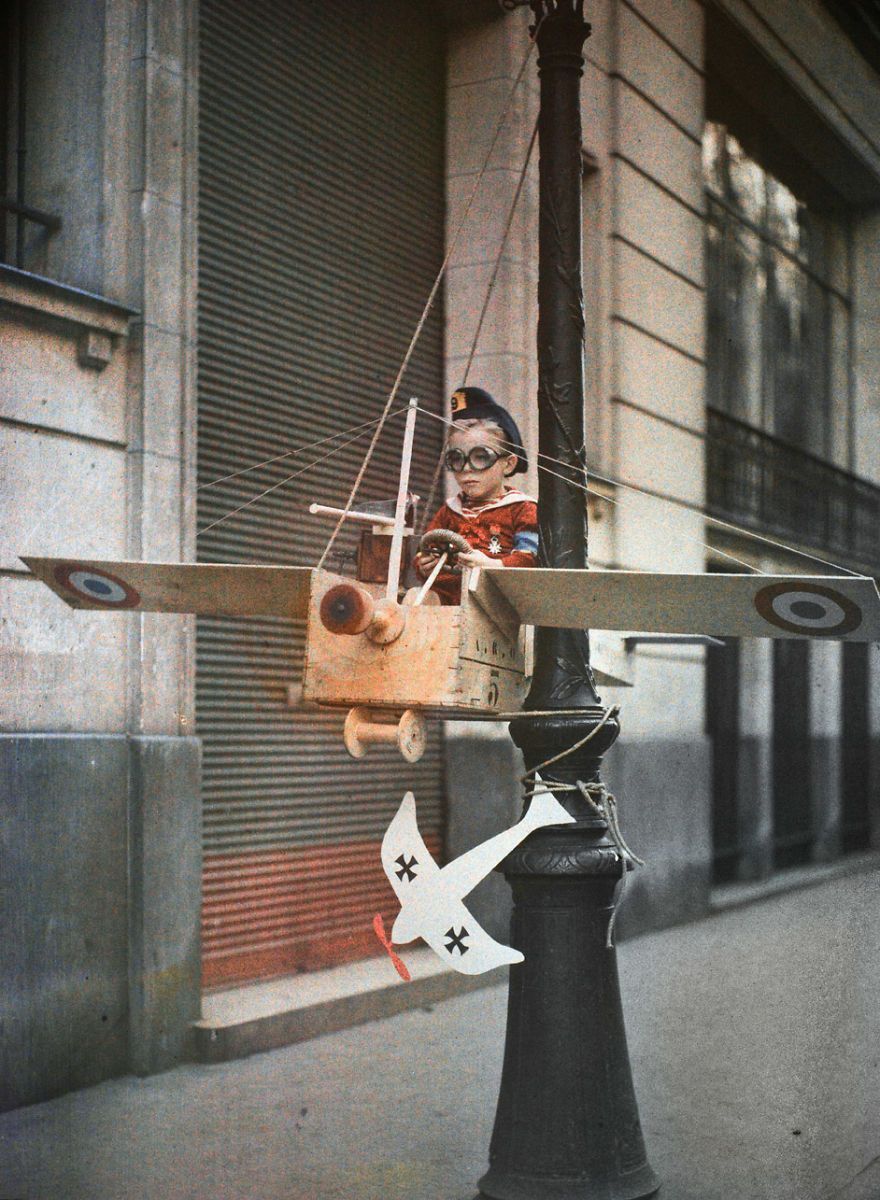
Léon Gimpel :: Boy playing in model airplane attached to a lamppost. France, 1915. Autochrome. | src Aktuallne Magazin
Léon Gimpel  (1873-1948) :: Boy playing in model airplane attached to a lamppost. France, 1915. Autochrome. | src SFP
L’aviateir «Pépete» vient d’abattre un «Taube» à coups de mitralleuse. Paris, 19 septembre 1915.

In 1915 Gimpel befriended a group of children from the Grenata Street neighborhood in Paris who had established their own “army”. He began to visit them regularly on Sundays, helping them to build their arsenal from whatever was to hand, providing direction in “casting”, and recording with his camera the army’s triumphs over the evil enemy, the Boche.
 
Gimpel was charmed by these children and came to know each of them well: the “chief”, the eldest in the garrison; his friend, who was conscripted to play the unenviable role of the Boche; and Pépète, who was “small, slightly misshaped, rather scrofulous, looking somewhat like a gnome” but who nonetheless played the part of an ace aviator. At the end of each session, Gimpel would reward the troops with barley sugar, causing all to shout with one voice, “Long live the photograph!”

quoted from Luminous-Lint online exhibition : Autochromes and Autochromists of WWI

Léon Gimpel (1873-1948)
The famous aviator ‘Pépéte’ triumphs in front of his victim. Paris, 19 September 1915. Autochrome | src SFP
Léon Gimpel (1873-1948) · The famous aviator ‘Pépéte’ triumphs in front of his victim. Paris, 19 September 1915. Autochrome | src SFP

From : La guerre de gosses, Léon GIMPEL, Paris, 1915

More images at Images en ligne de la Société française de photographie (SFP)
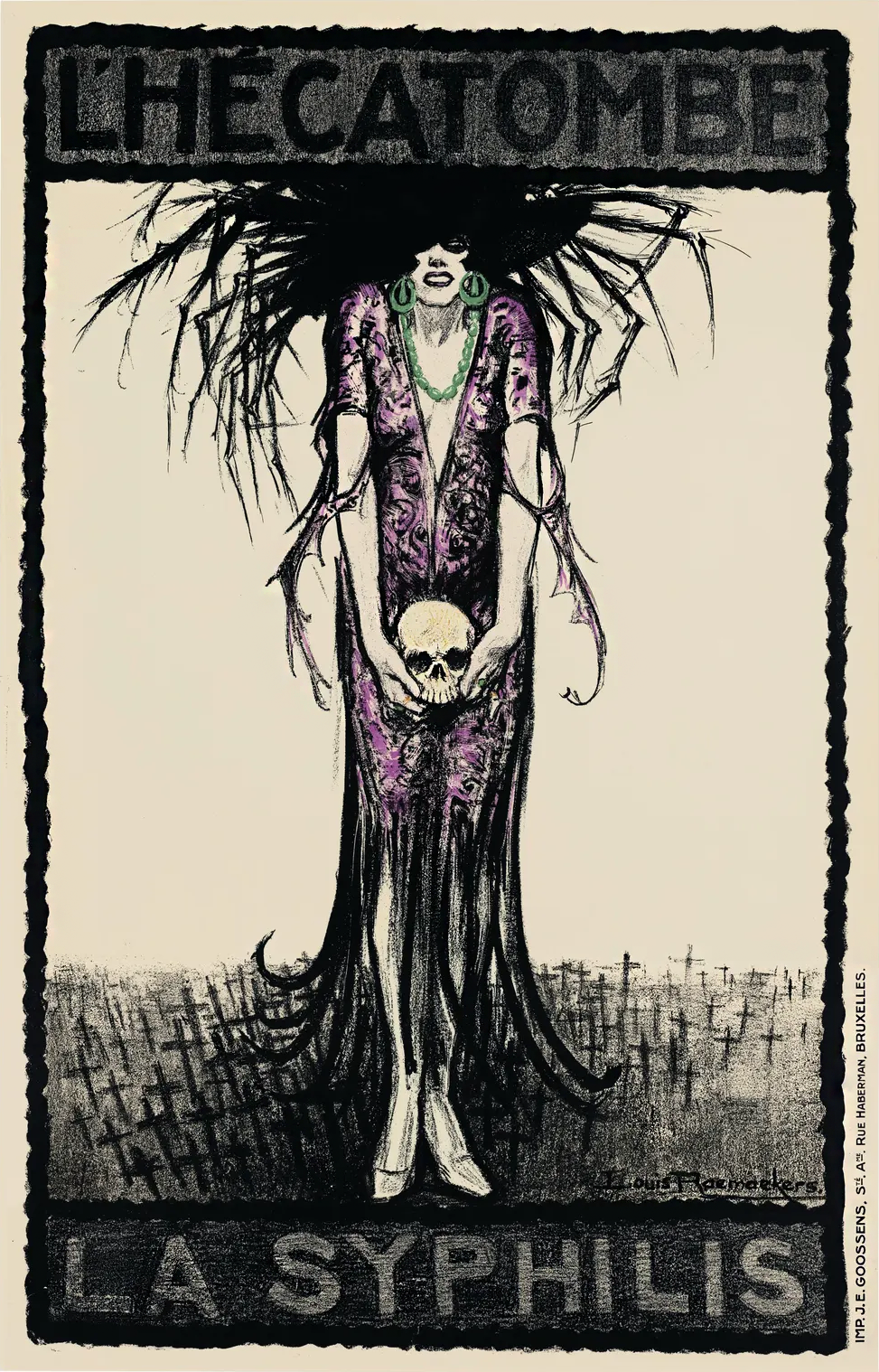
La Syphilis (1910s)

Louis Raemaekers :: L’Hecatombe. La Syphilis. “An image meant to warn Belgian soldiers returning from the front of the dangers of ‘The French Pox’. It depicts a dangerous woman standing both seductively and menacingly in front of a field of graves.” | src The Guardian

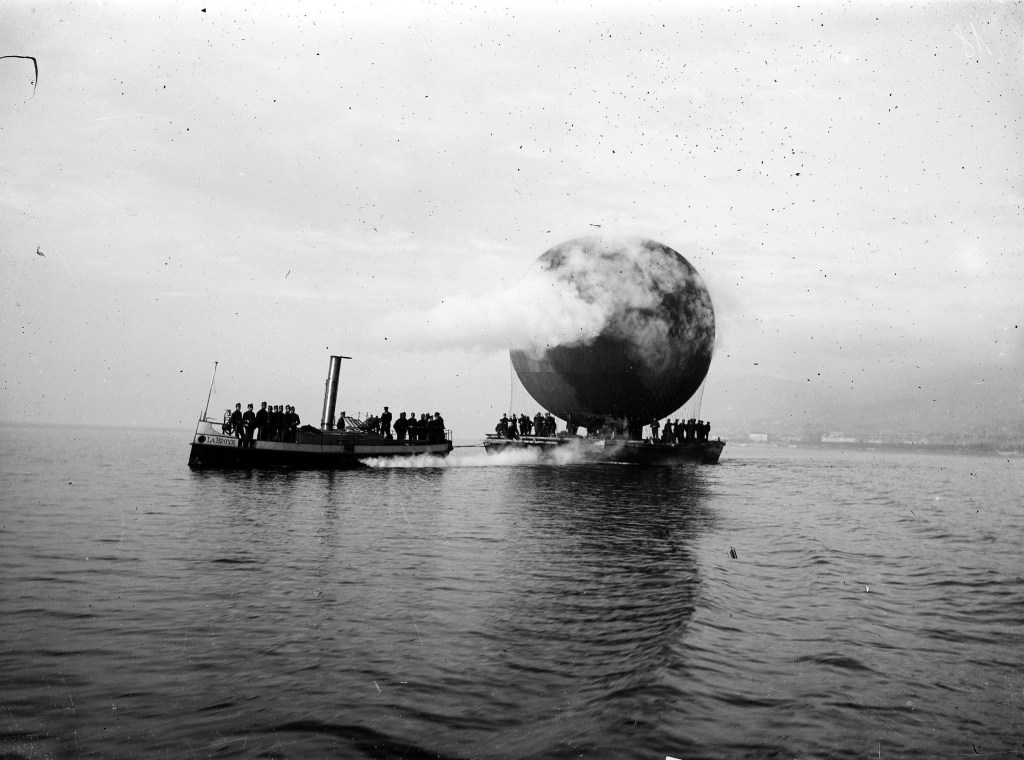
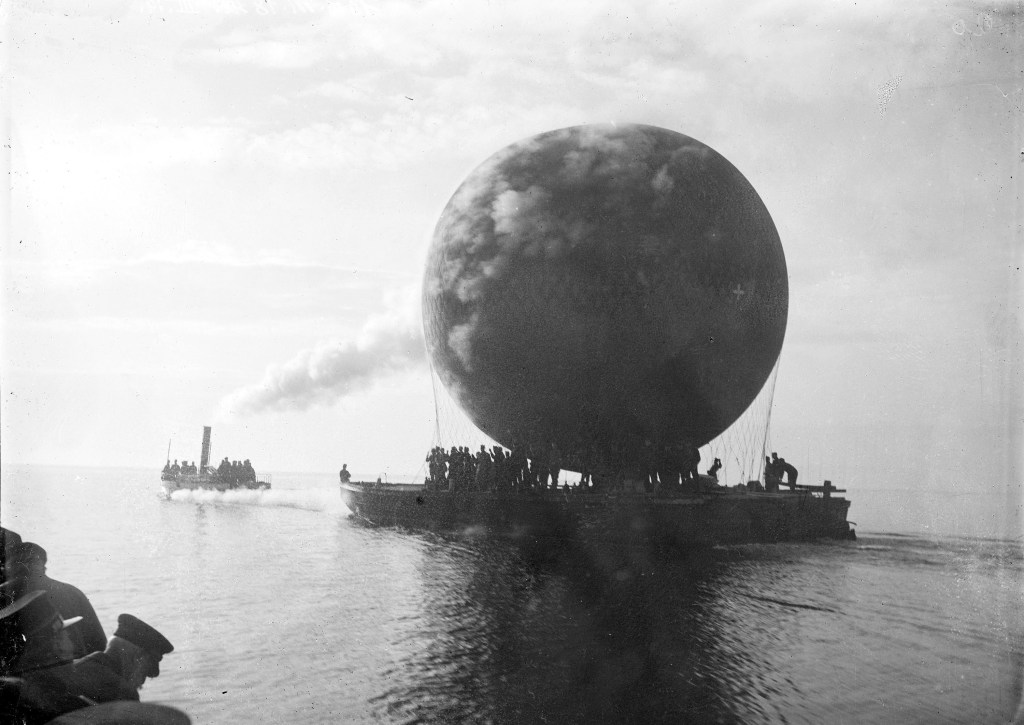
Balloon on barge, 1914-1918

A small steam boat pulls the barges over Lake Biel with the captive balloon inside: Balloon experimental company, 1914-1918
Original: Glass plate negative; silverbromide.
Maker / photographer: Santschi
Original caption: A small steam boat pulls the barges over Lake Biel with the captive balloon inside: Balloon experimental company, 1914-1918
Original: Glass plate negative.
Maker / photographer: Santschi

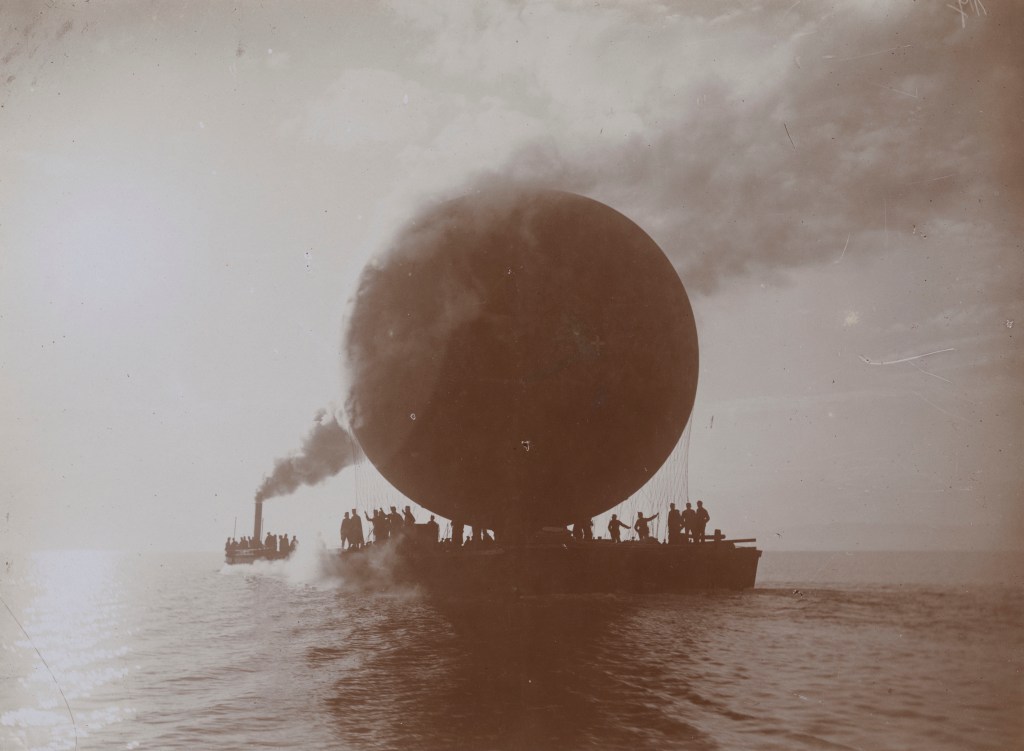
Balloon being carried on barge during World War I

With the outbreak of the first world war Switzerland was faced with confusing events – and therefore used captive balloons for clarification. Here on Lake Biel. Image: Swiss Photo Foundation
From: Switzerland and the great war “14/18 – Switzerland and the Great War” in the Zurich State Museum. | src Tages Anzeiger: https://www.tagesanzeiger.ch/kultur/Zerruettung-des-verschonten-Landes-/story/17621214