Jeanne Mammen (1890–1976) II

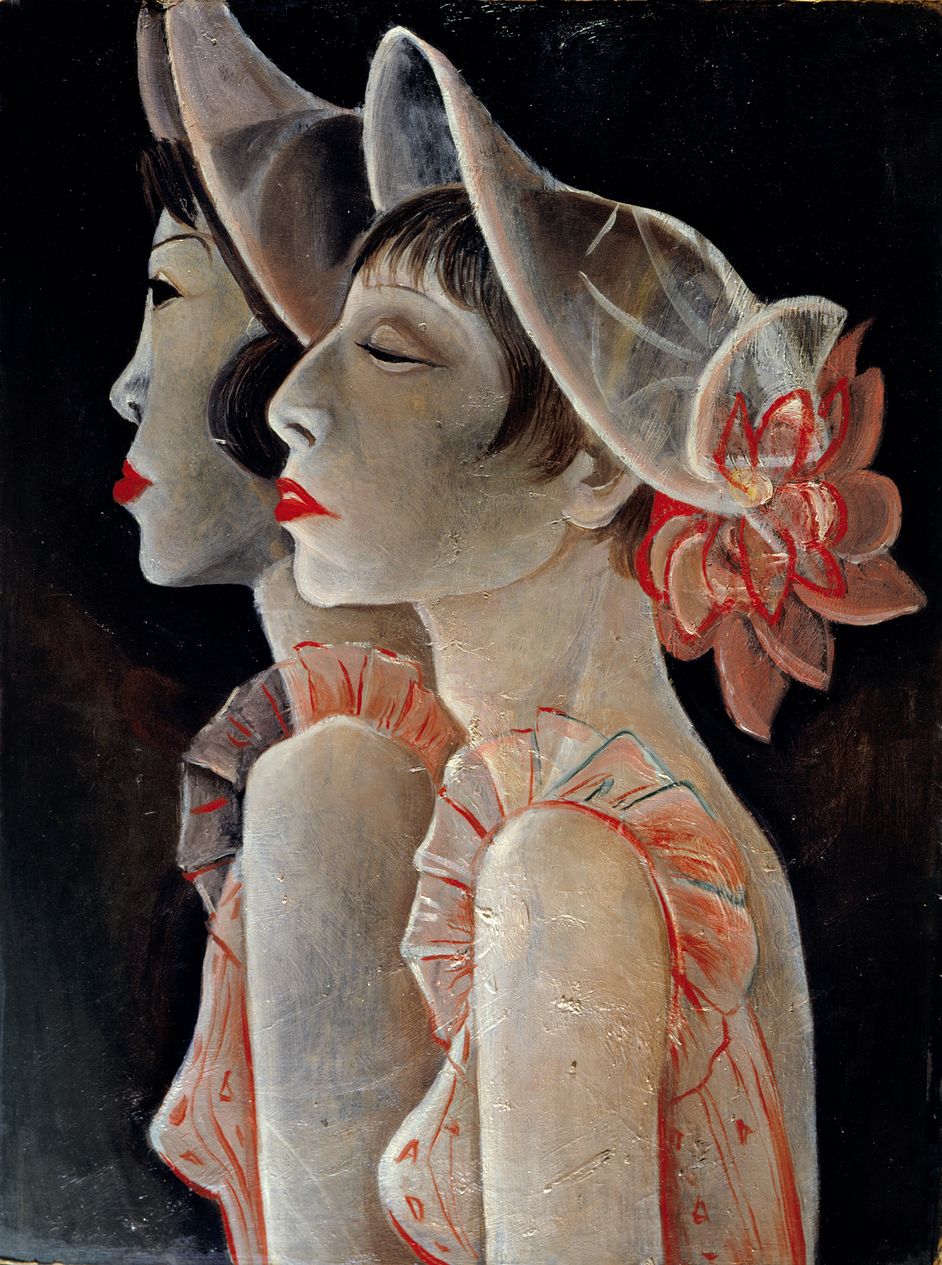
Jeanne Mammen :: Kabarett-Mädchen | Chorus girls – Revuegirls, 1928-29. Oil on cardboard. | src Berlinische Galerie

In the pleasure-hungry Berlin of the 1920s, theatres vied for attention with spectacular variety shows. Chorus girls in scanty costumes provided an erotic touch. As links in the chain of swinging legs, they were usually depicted as a type, not as individuals. But the two women in “Chorus Girls” by Jeanne Mammen (1890–1976) could hardly be more different. The artist centres on their weary faces, sallow skin and garish lipstick. The real attraction – the dancers’ long-limbed bodies – are only visible down to the breast. They pause for breath, no trace of glamour here.

Mammen, a free-lance artist and a prototype of the emancipated “New Woman”, often highlighted female clichés of the day. The chorus girl in front has the facial features of the artist. The figure behind resembles her sister Mimi. [quoted from Berlinische Galerie]

Jeanne Mammen :: Josephine Baker, ca. 1926. [Revue Neger]. Barbican Centre | src Flickr

Weimar Clubs and cabarets – German cities, 1920s

After the collapse of its Empire and the defeat of the First World War, Germany became a democracy, the Weimar republic. In the early 1920s, people yearned for excitement, there was a sense of liberation and the economy started to recover. Night clubs appeared which fused cabaret, literature, art, music, theatre and satire in multi-sensory experiences. American jazz and dance crazes including the foxtrot, tango, one-step and Charleston became popular and exotic dances by Anita Berber, Valeska Gert and famously Josephine Baker were performed.

Fantasy spaces were created such as the dance-casino called Scala where the ceiling was sculpted into jagged structures that hung down like crystalline stalactites. The pulsating energy of such clubs and bars was captured by artists including Otto Dix, Jeanne Mammen and Elfriede Lohse-Wächtler.

[Barbican Centre] From Into the Night: Cabarets & Clubs in Modern Art (October 2019 to January 2020)
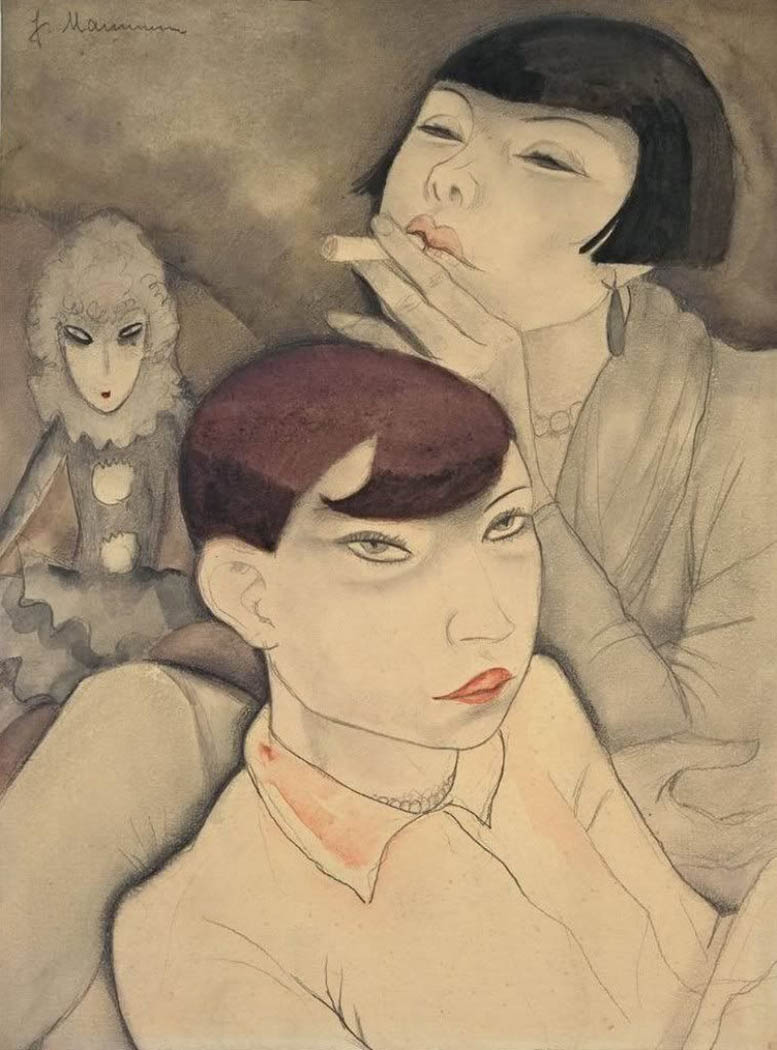
Jeanne Mammen :: Langweilige Puppen | Boring Dolls, 1929. Watercolour and pencil on slightly nacreous wove paper, mounted on cardboard by the artist. | src Die George Economou Kollektion
Jeanne Mammen :: Brüderstrasse [Freies Zimmer | Free Room], 1930. The George Economou Collection © DACS, 2018. | src Apollo magazine

Visions of a dark world in the art of Weimar Germany [Apollo magazine]

Review on the exhibition Magic Realism: Art in Weimar Germany 1919-33 (Tate Modern, 2018-19)

[…] towards the end of the exhibition, a small cluster of drawings introduces the work of Jeanne Mammen. Mammen’s drawings – gauzy depictions of women in watercolour, pen and ink – illustrated fashion magazines and poetry publications throughout the 1920s, until the Nazis shut down the journals she worked for and she went into inner exile, refusing to show her work. Here, they fill an important gap in describing women’s experiences of city life. Mammen observed women on the streets of Berlin and in nightclubs, and often depicted them in conversation, smoking, or playing cards. In Brüderstrasse (Free Room) (1930), the women are intimate and aloof; in Boring Dolls (1929), they’re defiant, out for their own pleasure.

[…] The exhibition doesn’t quite tease out the paradoxes between trauma and humour, leaving both to loiter in the murkiness of Dix’s circus tent. What we’re given is a vision of a world that hinges on reality yet twists from view. It’s a distortion of the truth, full of landscapes littered with war debris and nightclub corners filled with smoke. It’s the same world, but darker than before.

quoted from the review by Harriet Backer for Apollo magazine
Anita Berber as a poetess

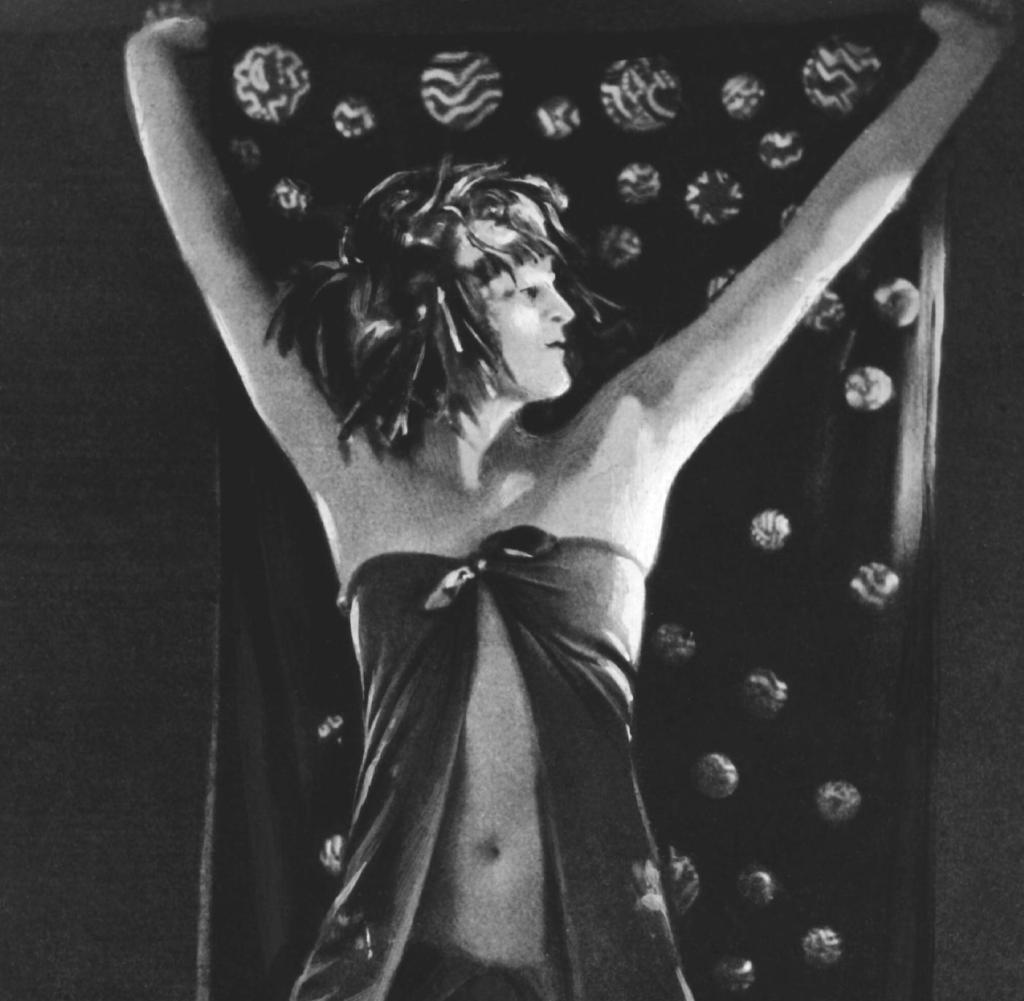
Tänzerin und Schauspielerin Anita Berber, Rollenporträt, undtiert. (Photo © Ullstein Bild | src Getty Images
Tänzerin und Schauspielerin Anita Berber, Rollenporträt, undtiert. | src Welt.de

Anita Berber Dichterin: Die offen bisexuelle Anita Berber tanzte und provozierte nicht nur, sondern betätigte sich auch als Lyrikerin. In ihrem Gedicht “Orchideen” etwa heißt es: “Ich küsste und kostete jede bis zum Schluss / Alle alle starben an meinen roten Lippen / An meinen Händen / An meiner Geschlechtslosigkeit / Die doch alle Geschlechter in sich hat / Ich bin blass wie Mondsilber.”

Anita Berber as a poetess: The openly bisexual Anita Berber not only danced and provoked, but also was as a poet. In her poem “Orchids”, for example, it says: “I kissed and tasted each one to the end / All died on my red lips / On my hands / On my genderlessness / Which has all genders in it / I am pale as moon silver.”

quoted from Der Spiegel: Anita Berber – die Hohepriesterin des Lasters

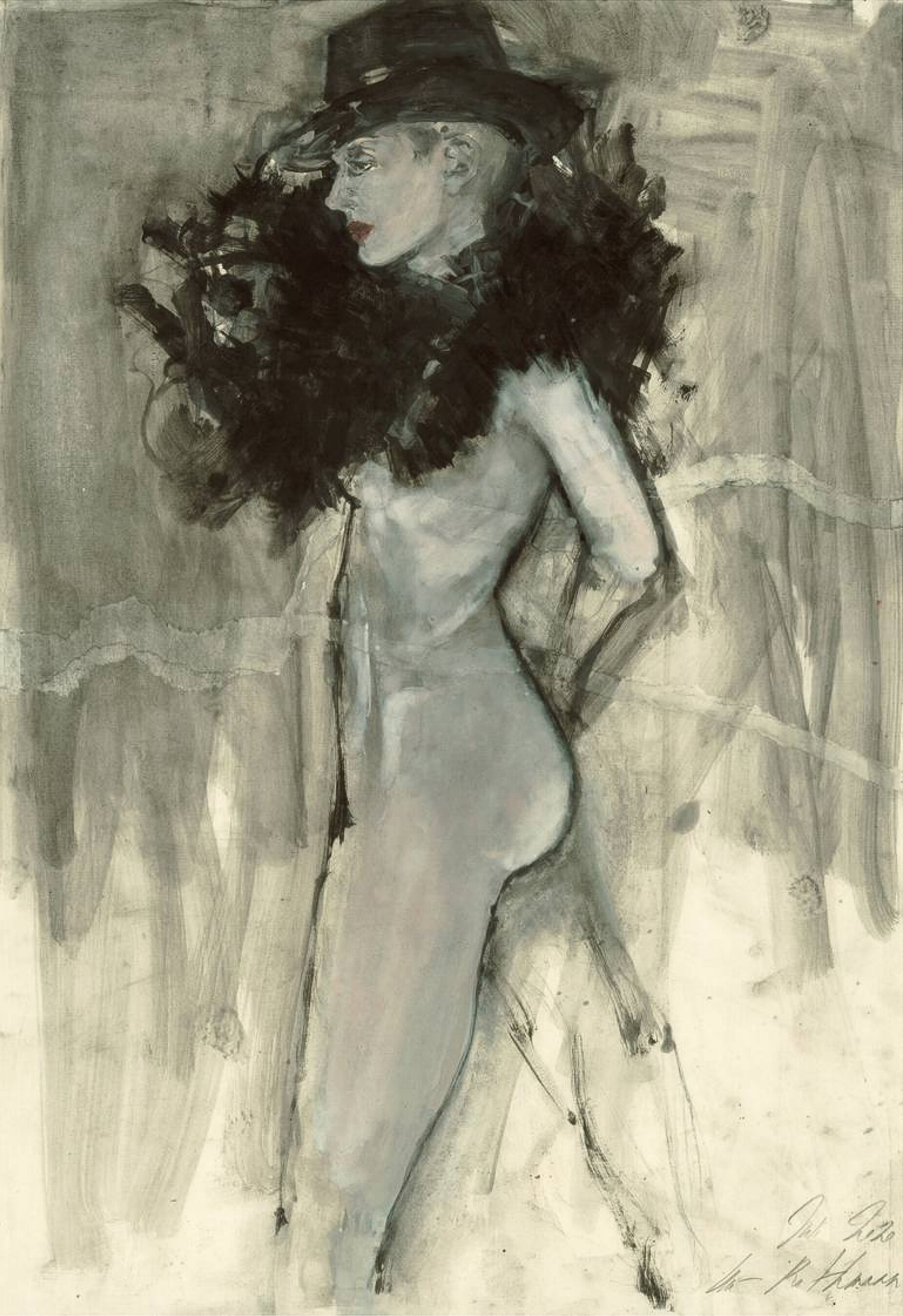
Hommage à Jeanne Mammen

Ute Rathmann :: Hommage à Jeanne Mammen; graphite pencil, charcoal, watercolors, pastels and gouache on paper with collage, July 2020. | src Saatchi Gallery

Maya Deren by A. Hammid (1940s)

Alexander (Hammid) Hackenschmied :: Maya Deren, n.d. | src Flickr
Alexander Hackenschmied (1907 – 2004) :: Maya s vlajícími vlasy [Maya with hair fluttering], 1942, vintage gelatin silver print | sign. vzadu Alexander Hammid 1942 | src Prague Auctions
Alexander Hackenschmied (1907 – 2004) :: Hair, 1942.; gelatin silver print | sign. vzadu A. Hammid 1942. | src Prague auctions

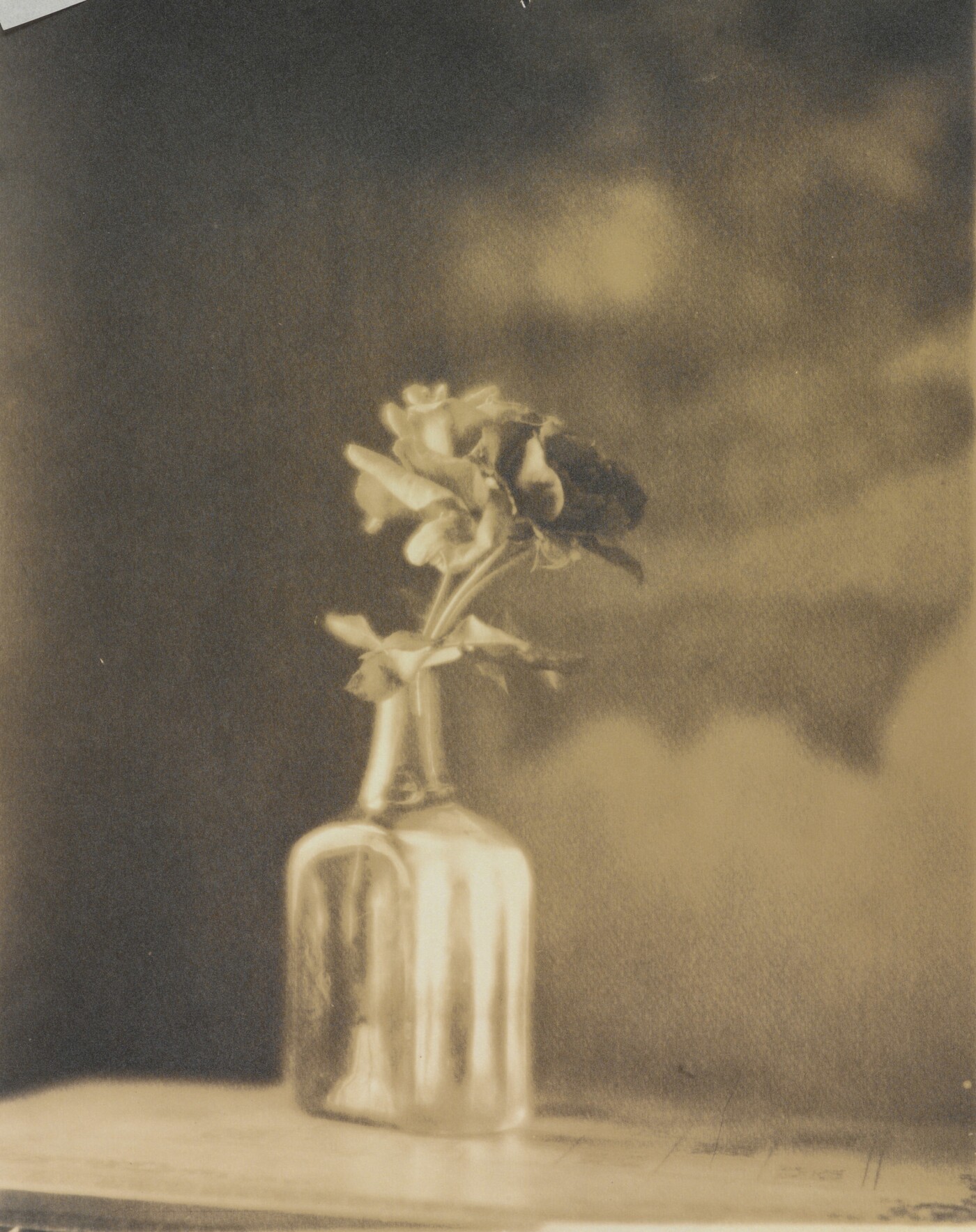
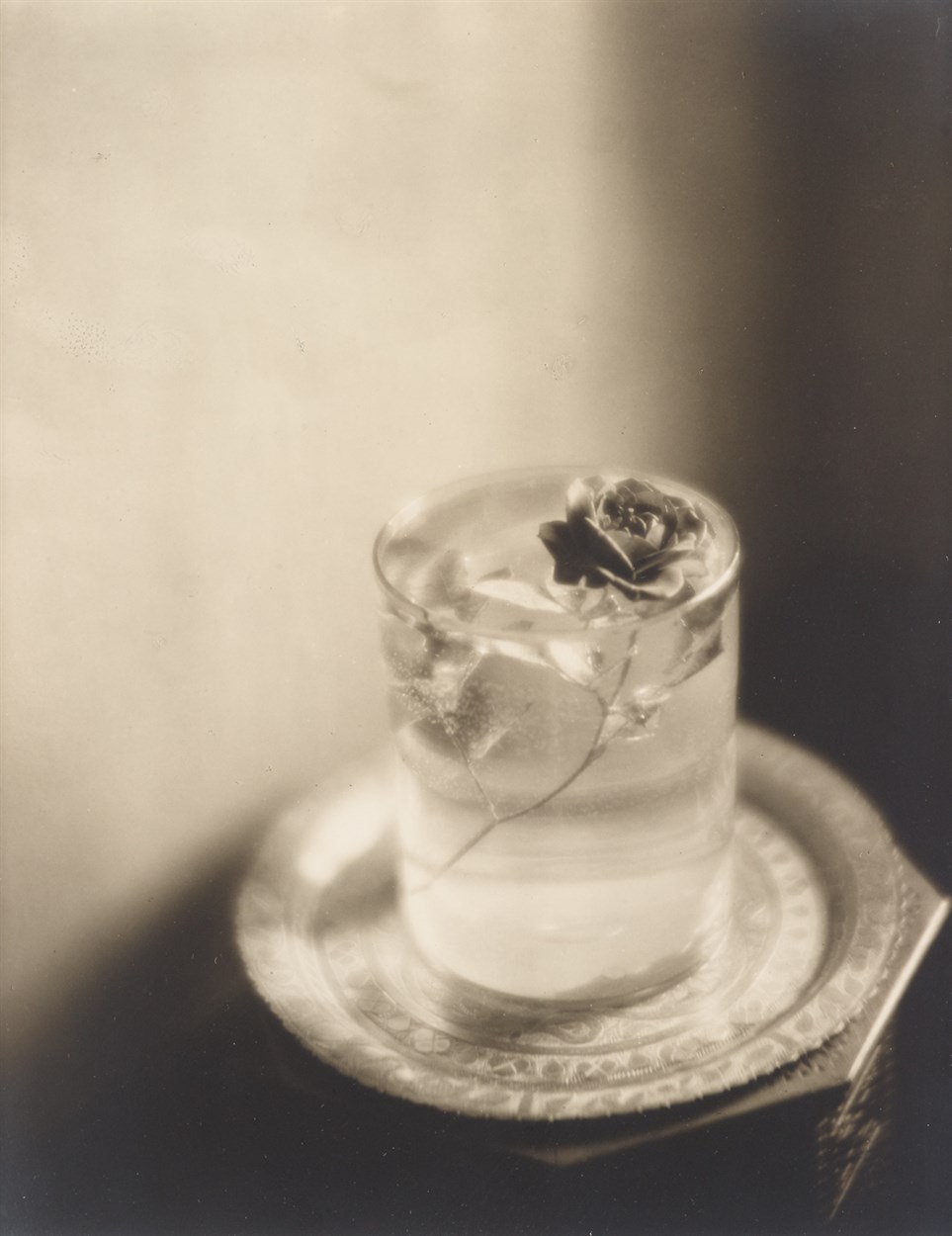
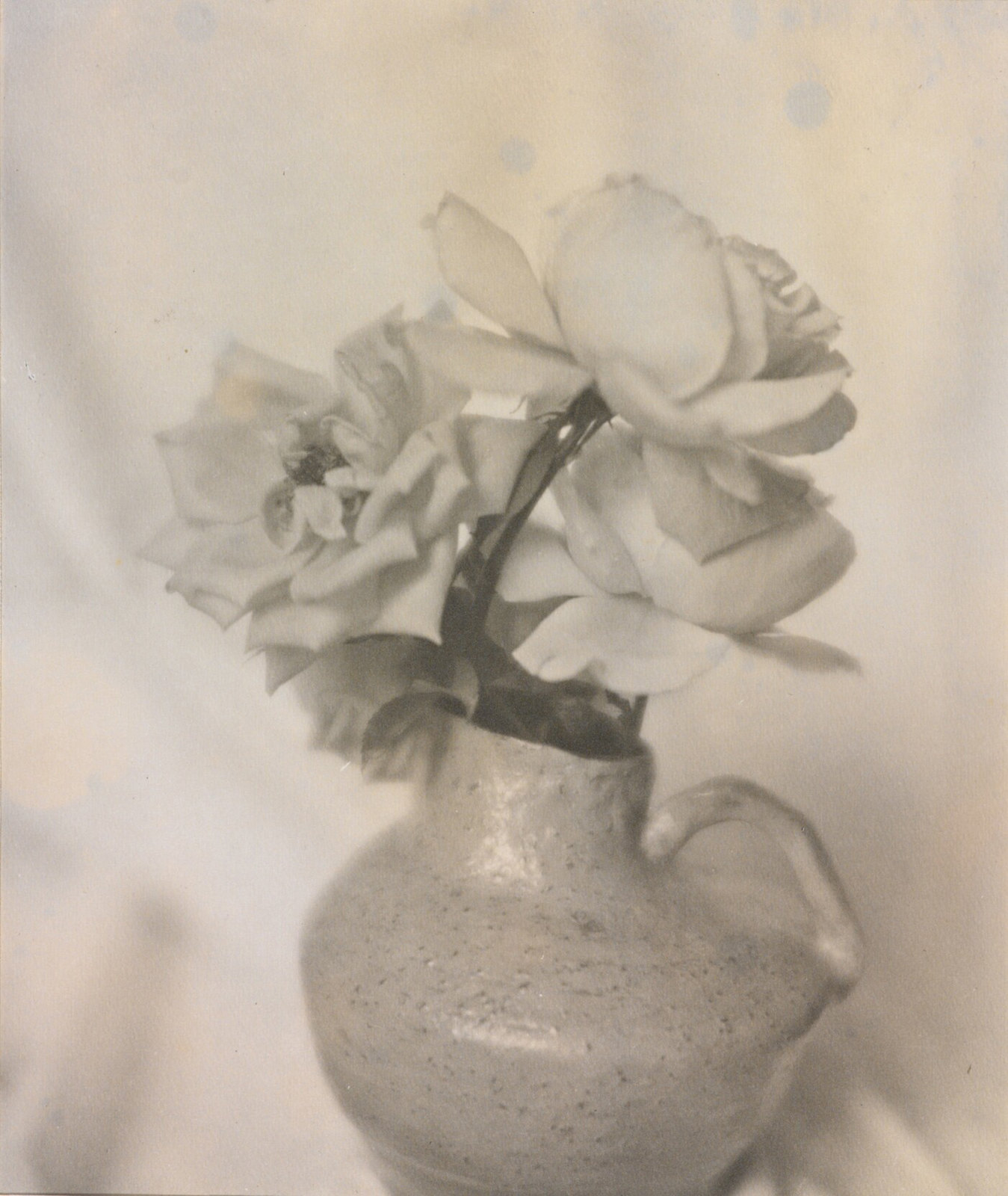
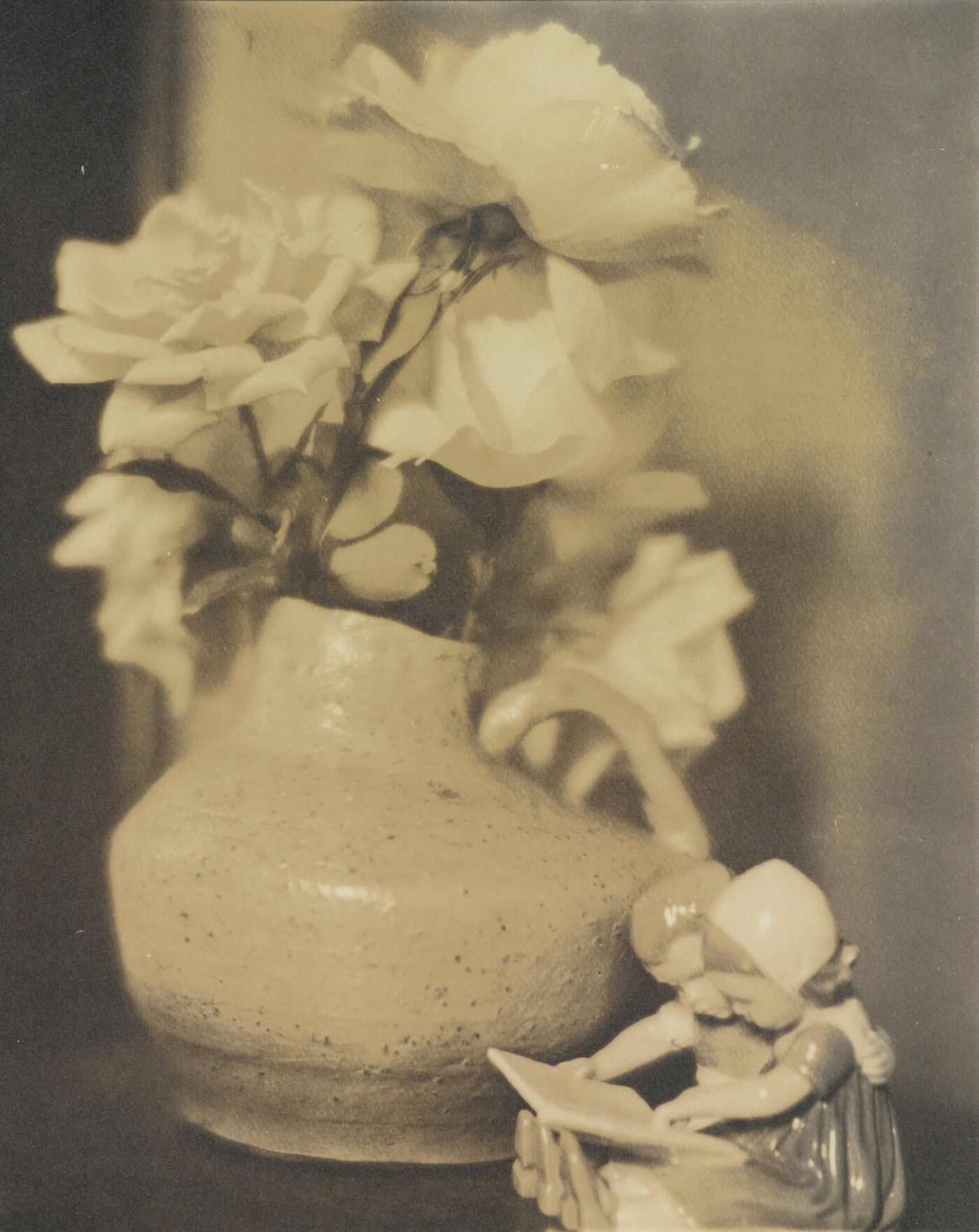
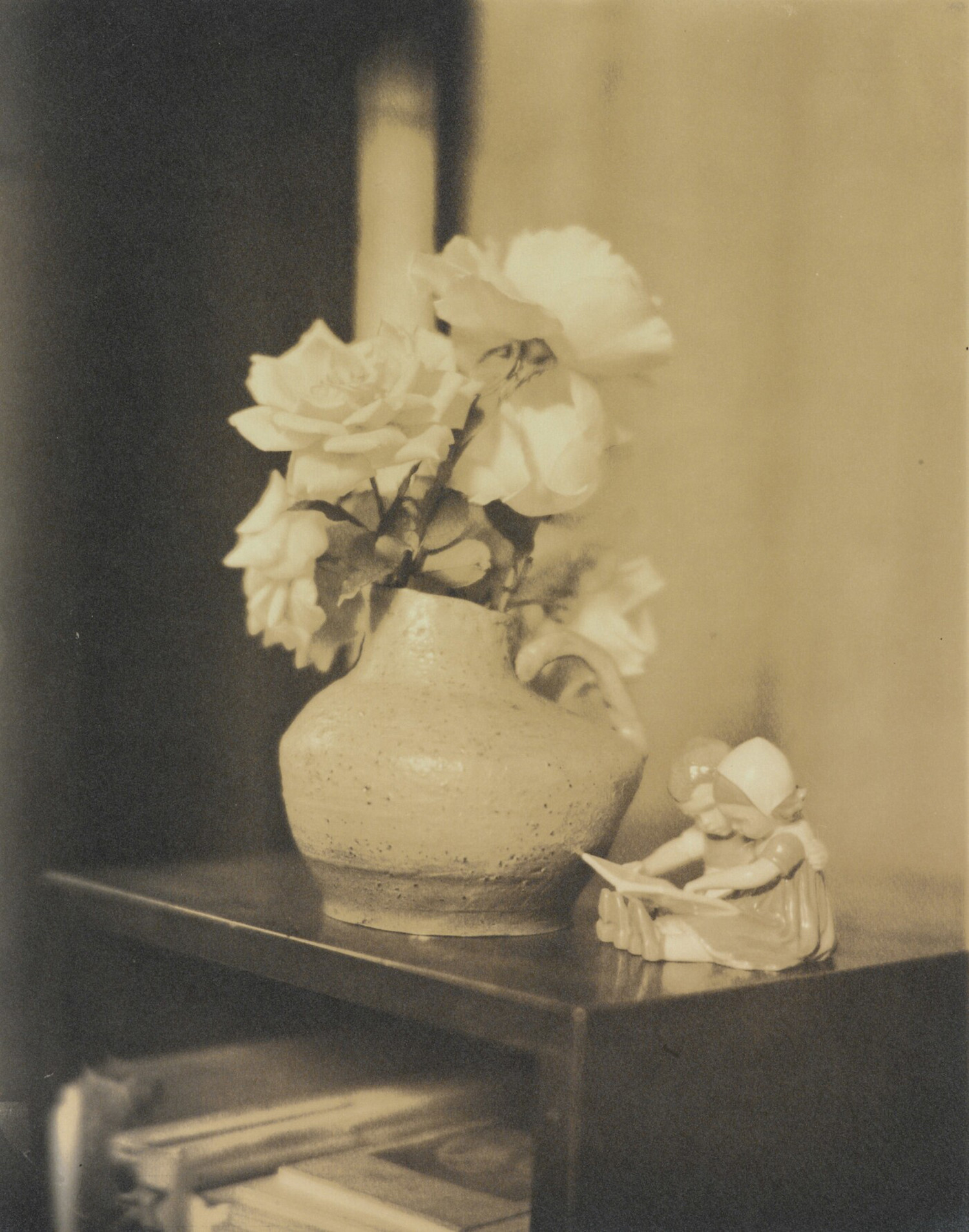
Roses by Clara Sipprell, 1920s

Clara Sipprell (1885-1975) :: [Rose in glass bottle], ca. 1922. Gelatin silver print. | src Amon Carter Museum of American Art
Clara E. Sipprell (1885-1975) :: Floating Rose, ca. 1920. Gelatin silver print. | src Freeman’s Auction # 4692
Clara Sipprell (1885-1975) :: Phyllis’s Roses, 1925. Gelatin silver print. | src Amon Carter Museum of American Art
Clara Sipprell (1885-1975) :: [Rose and figurines], ca. 1922. Gelatin silver print. | src Amon Carter Museum of American Art

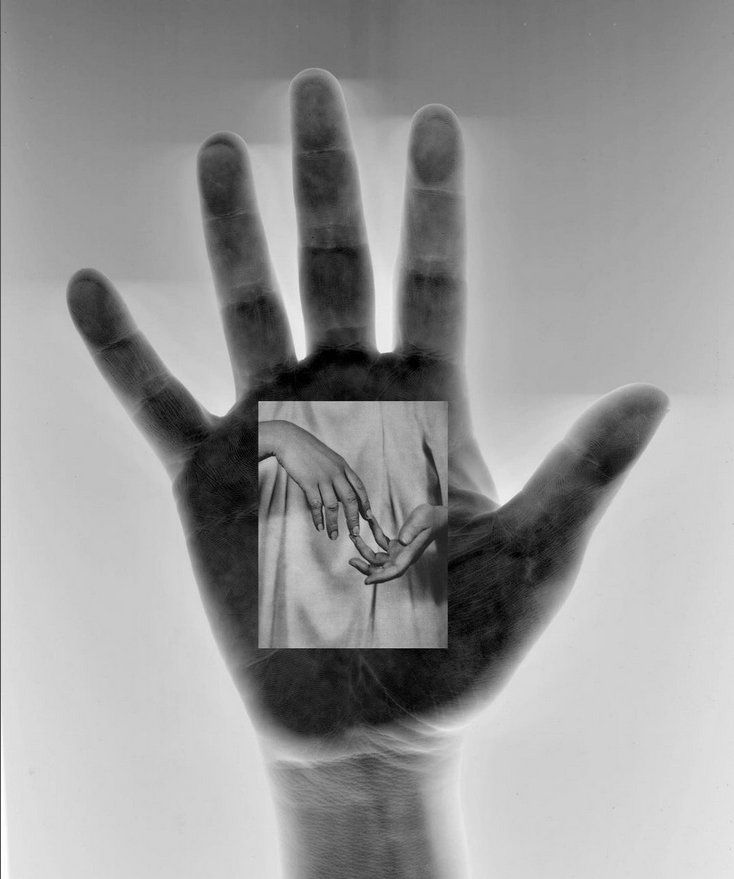
Dialogues: Mary Wigman Hands

Albert Renger-Patzsch :: Hands Study, dancer and choreographer Mary Wigman, 1920s | src Flickr
Ronit Porat :: Untitled, 2015 from Kinesphere. | src Ronit Porat • IG

The Devil, self-portrait, 1929

autoportrait, selfportrait, role portrait, 1920s
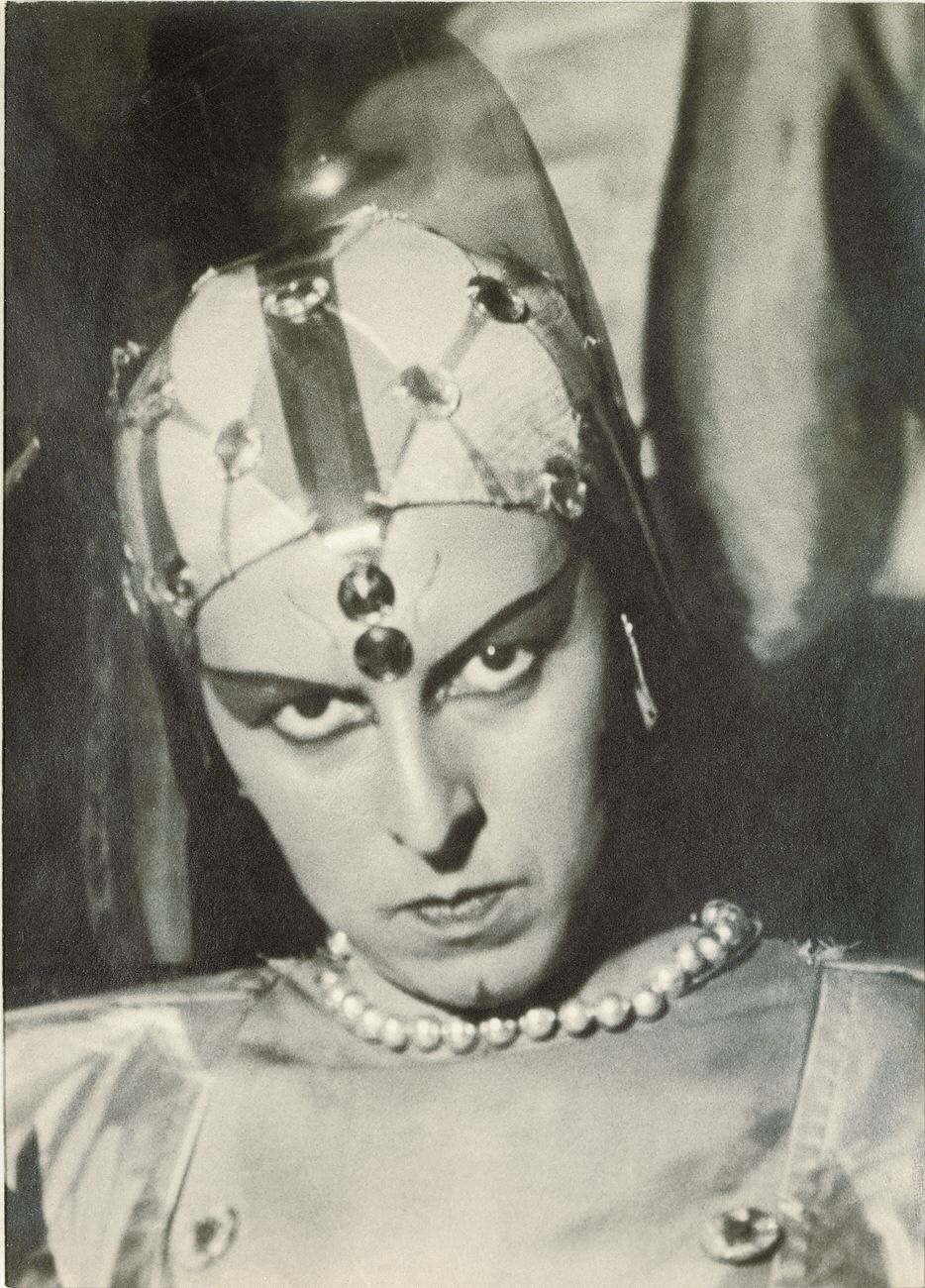
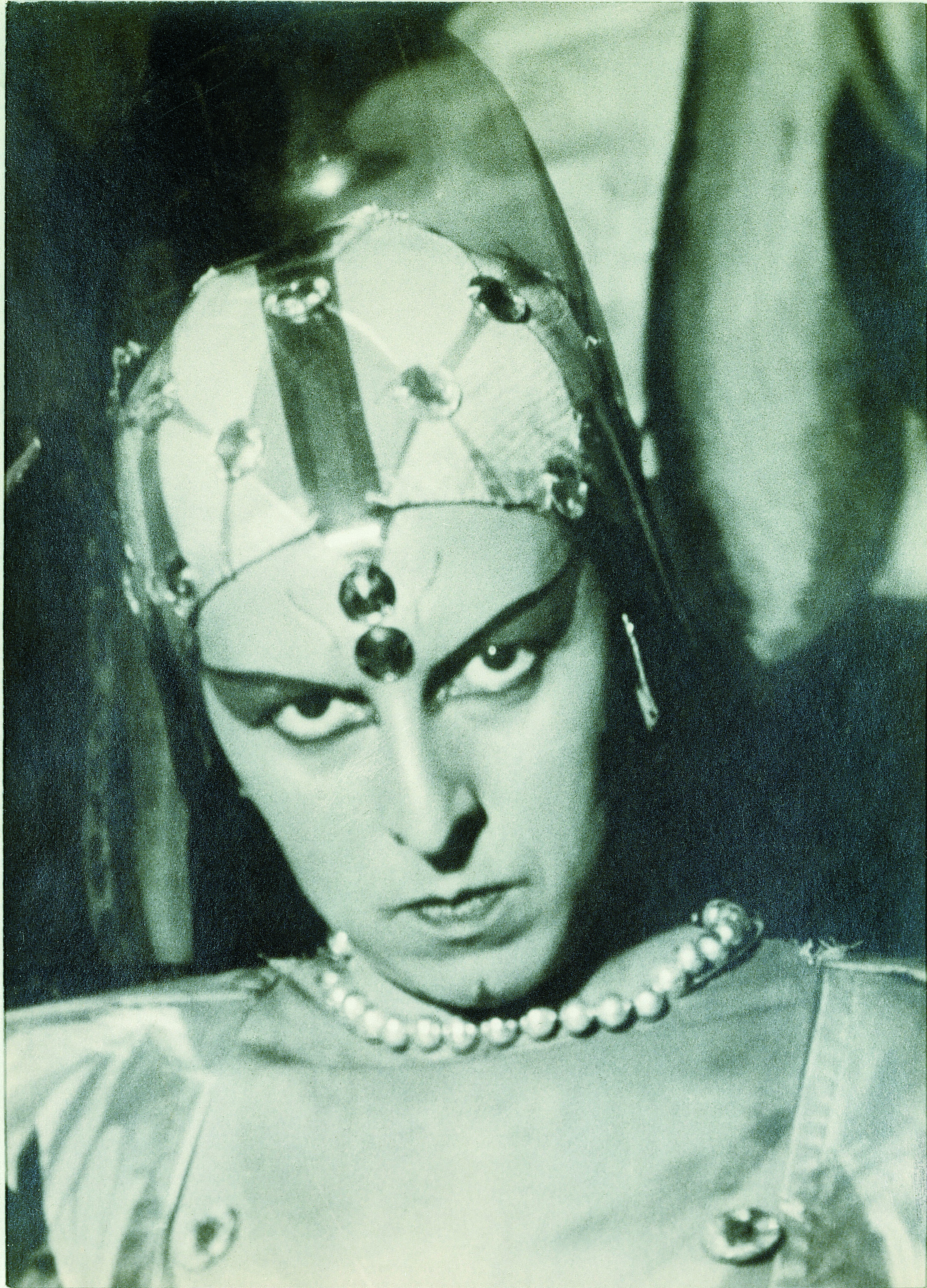
Claude Cahun :: Self-portrait (The Devil), 1929 [ in Le Mystère d’Adam] | src Hauser & Wirth via ocula
Claude Cahun :: Self-portrait (The Devil), 1929 [in The Mystery of Adam]. | src Hauser & Wirth via ocula

Claude Cahun was a French photographer and writer known for her surrealist self-portraits. Her performative photographic practice explores themes of identity, gender nonconformity, and self-image. Cahun’s art prefigured the radical feminist photography of artists such as Cindy Sherman, Nan Goldin, and Yasumasa Morimura.

Persistently aiming to undermine authority and actively disavow social and cultural norms, Cahun was highly politicised, both in her art and her everyday life and was active as a resistance worker and propagandist during World War II.

Despite not receiving recognition during her lifetime, Cahun’s artwork has been exhibited widely at major galleries around the world including The Museum of Modern Art and The Metropolitan Museum of Modern Art in New York.

Early Years

Cahun was born in Nantes, France in 1894 to a prominent Jewish family. As a teenager, Cahun experimented with photography and recorded her first self-portrait in 1912. After moving to Paris to study at the Sorbonne University, Cahun immersed herself in the surrealist art scene. She began working alongside artists and intellectuals like Man Ray, André Breton, and Georges Bataille.

In the early 1920s, Cahun—born Lucy Renée Mathilde Schwob—decided to change her name to Claude Cahun. Traditionally in France, the adopted name ‘Claude’ can refer to either a woman or a man, making it gender-neutral.

Although never identifying as openly gay, Cahun’s forward thinking approach to gender-fluidity shaped her artistic practice and has established her as an important figure among artists and members of the LGBTQ community. As she wrote in her surrealist memoir Disavowals in 1930, ‘Masculine? Feminine? It depends on the situation. Neuter is the only gender that always suits me.’

Cahun often collaborated with fellow artist and lifelong romantic partner Suzanne Malherbe, who adopted the pseudonym Marcel Moore. The two artists worked together to create multidisciplinary art including collages and sculptures. Cahun and Moore also published various written works including articles and novels.

Self-Portraits (1925-1930)

Claude Cahun is best known for her portraits capturing the self in a plethora of shifting personalities. Cahun used her photos as a device to present her own image and the overworked characteristics of feminine and masculine identity.

Her self-portraits capture posed performances where Cahun would dress as a man or woman under various guises. She fashioned her hair short, long, or completely shaved, and wore playful makeup that disguised her as anything from dandy to doll, body-builder to vampire.

Her performative portraits feature various surrealist aesthetics. From her expressions and poses, to her backgrounds and use of specific props, Cahun encapsulates the vibrancy of surrealism during its height in the 1920s. Her photographs were strikingly different to her male contemporaries because they focused on self-image as the subject and object of the work.

quoted from Ocula Limited

Claude Cahun - Marcel Moore :: Untitled [Claude Cahun in Le Mystère d'Adam (The Mystery of Adam)], 1929. Detail. | src SF·MoMA
Claude Cahun – Marcel Moore :: Untitled [Claude Cahun in Le Mystère d’Adam (The Mystery of Adam)], 1929. | src SF·MoMA

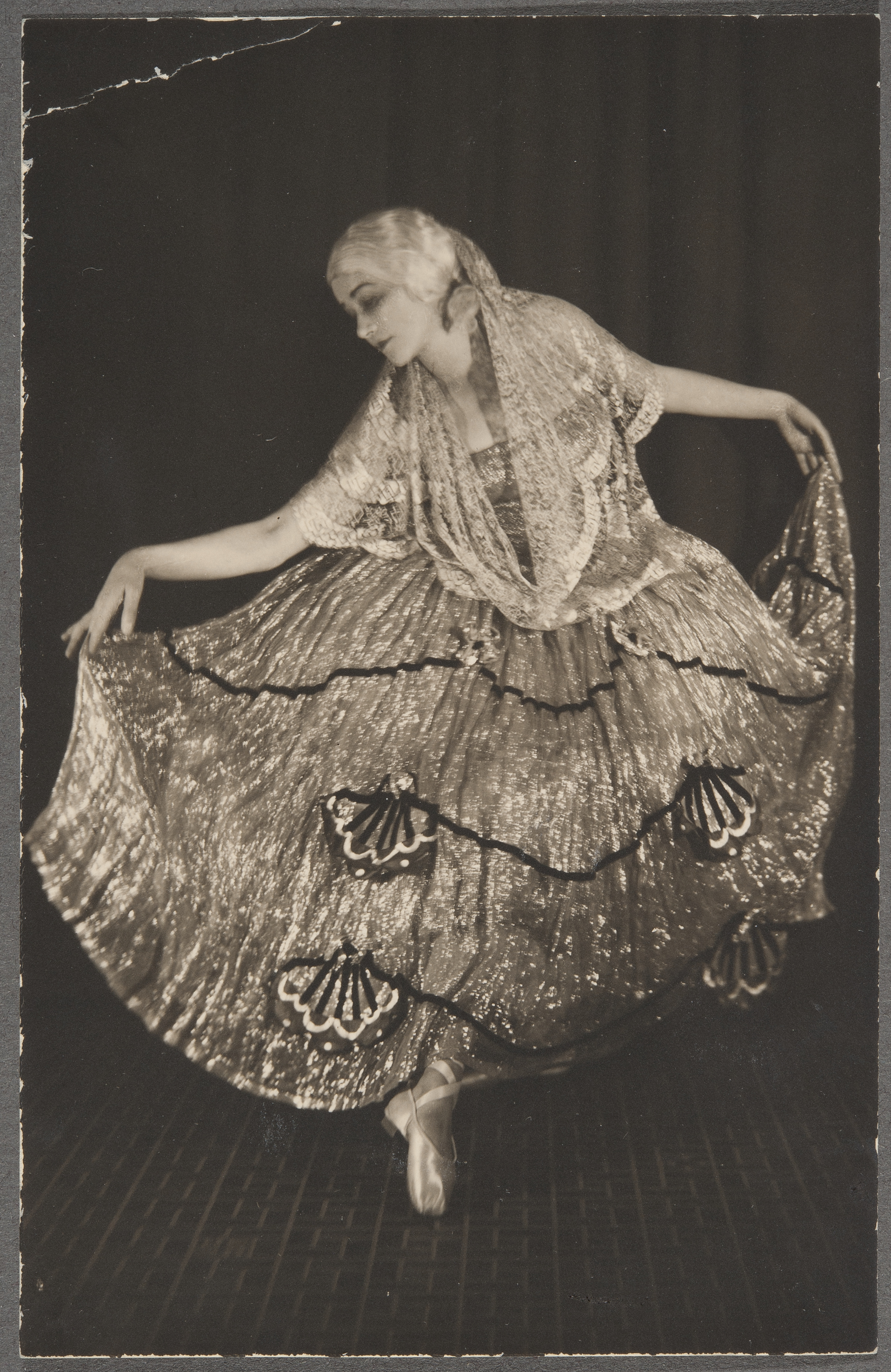
Edith von Bonsdorff, 1920s-1930s

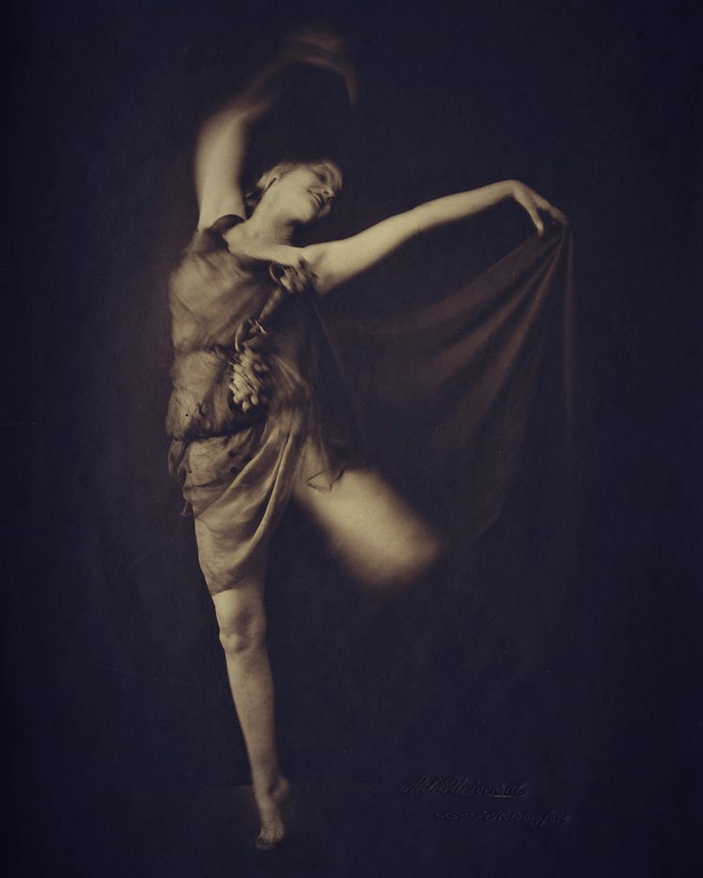
Tanssitaiteilija (dance artist) Edith von Bonsdorff, Helsinki, Suomi (Finland), 1926-1927. | src Finnish Heritage Agency
Edith von Bonsdorff, foto: Atelier Universal, Helsingfors, 1924. | src Dansmuseet • IG
Tanssitaiteilija, tanssija ja koreografi Edith von Bonsdorff, Helsinki, Suomi (Finland), 1920s. | src FHA ~ Museovirasto
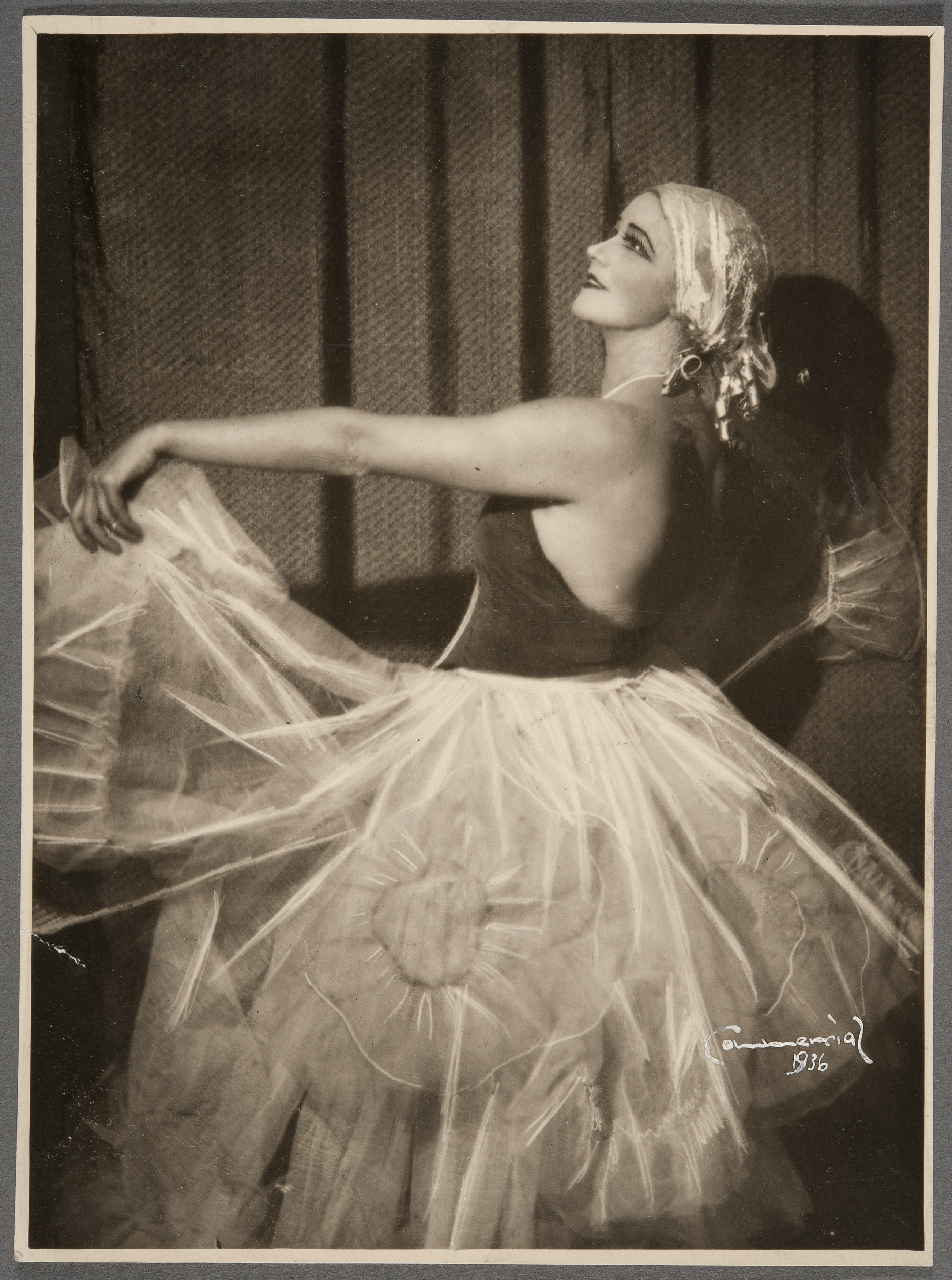
Foto Comercial :: tanssija ja koreografi Edith von Bonsdorff, 1936. | src FHA ~ Museovirasto