Emil Pirchan · Tunkpapiere

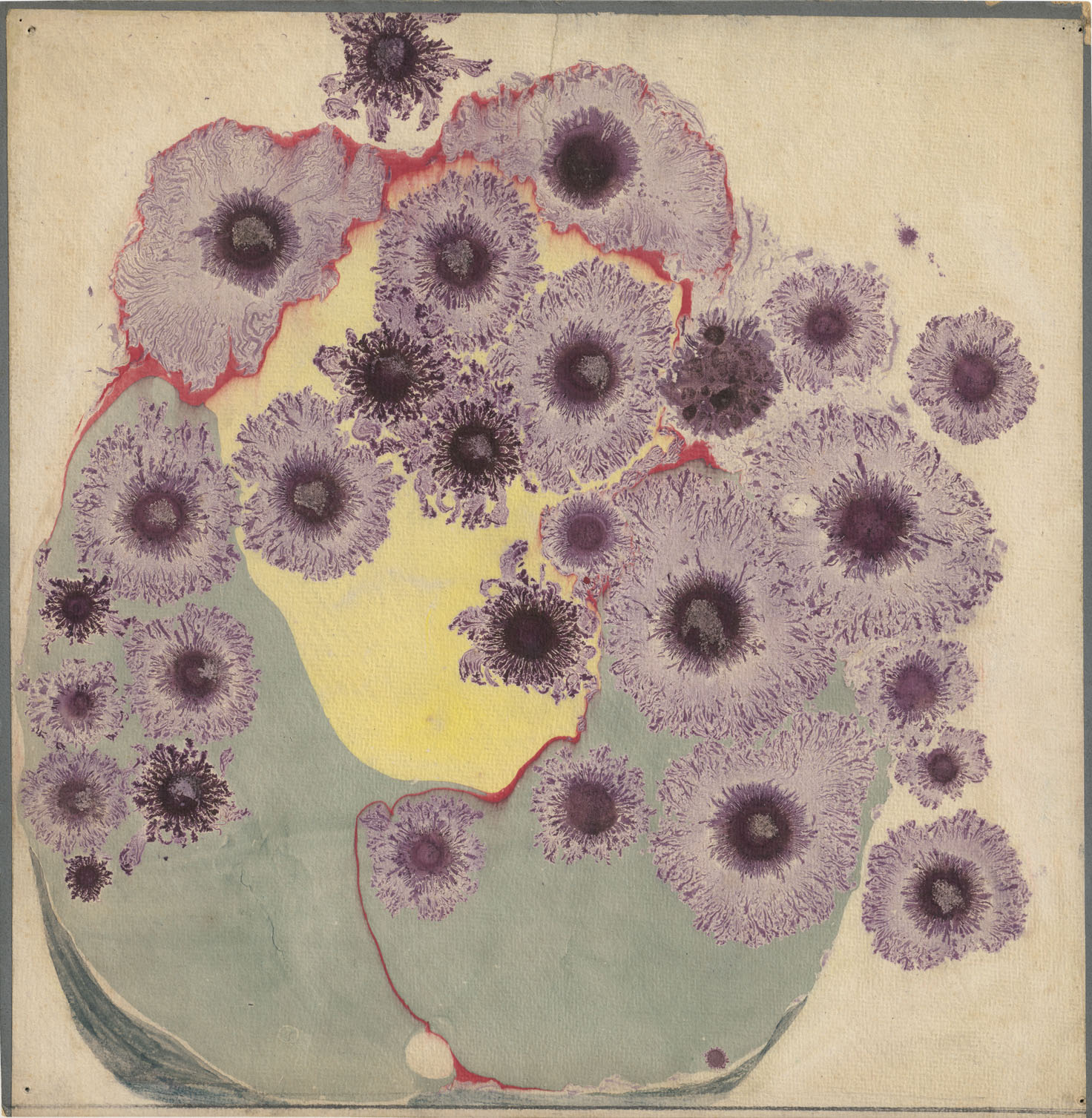
Emil Pirchan ~ Komposition in Violett, Blau, Grau und Orange; um 1906-07
Wasserfarben aufgebracht im Tunkpapierverfahren auf Bütten | src Bassenge Auktion 121 Los 6874

This work, which Emil Pirchan developed using a special ink paper technique, impresses with its singular beauty. Emil Pirchan, who came from Brno and grew up in a well-off artist household, came to Vienna in 1903. The metropolis, which was currently experiencing one of its heydays, was a magnet for many artists from near and far. Back then, Pirchan studied architecture in Otto Wagner’s master class at the Academy of Fine Arts, and in the evenings he was a regular guest at the Café Museum, which was then a meeting place for the progressive artists of the Vienna Secession. Gustav Klimt, Josef Hoffmann, Koloman Moser, Josef Olbrich and also his teacher Otto Wagner met here and debated about art. Pirchan later vividly remembered the “exuberance of the feeling of belonging to a liberated new art” (Bau und Bild, Bühne und Buch. Erinnerungen an mich, Vienna 1941, unpublished manuscript).

At that time, Josef Hoffmann, Koloman Moser and Leopold Stolba, members of the Secession, were experimenting with the production of dipped paper (Tunkpapiere). They modified the process originally developed in the Orient and created poetic compositions in which birds, amphibians, fish and plants suddenly appear in recurring wave patterns. The Museum of Applied Arts in Vienna keeps an excellent collection of these paper works from the years 1903 to 1906. These works must have been a source of inspiration for the young student Emil Pirchan, who evidently immediately recognized the potential of the technique and developed it further. In the marbling technique, a sheet of paper records an “image” that was created with colors on the surface of the water in the marbling bath. While the historical marbled papers were ornamental and could be cut to size for different purposes, the sheets of the Vienna Secession were designed as images, with a specific format and a defined image area. Pirchan’s dipped papers are also designed as images, but he breaks away from representationalism. He lets the colors sometimes glide gently onto the surface, sometimes drips them into the water bath from above, perhaps with the help of a pipette. Blurred areas of color compete with circular dots of color, which expand explosively due to additional violet drops of color in their center, creating the impression of a brilliant firework display. The monotypes created in this way are therefore largely determined by chance, by the unforeseen flowing movements of the pigments. Pirchan’s abstract compositions unfold an unexpected magic and are far ahead of their time. It was only years later that Wassily Kandinsky brilliantly shattered the representational into colorful shapes and lines. / from : Bassenge Auktion 121
Emil Pirchan ~ Komposition in Mauve, Grün, Orange und Gelb; um 1906-07 | src Bassenge Auktion 121
Wasserfarben aufgebracht im Tunkpapierverfahren, grauer Stift, auf Papier, original auf Karton kaschiert.

The painter, commercial artist, architect, stage designer and writer Emil Pirchan was rediscovered in 2019 at the Museum Folkwang, Essen through an exhibition that was afterwards shown at the Leopold Museum in Vienna. The artist’s ink papers (Tunkpapiere) were a special surprise at the exhibition. They are closely linked to “Vienna around 1900”, where the artist, who was born in Brno, became a master student of the famous architect Otto Wagner in 1903. He is also closely connected to the vibrant art scene in the heart of the Austro-Hungarian monarchy through his great-cousin Josef Hoffmann, who rose to fame in 1903 as one of the co-founders of the legendary Wiener Werkstätte. Pirchan’s ink papers are unthinkable without the Vienna Secession and its willingness to experiment.

The present work, together with other inked papers by Pirchan, adorned the hall in his house in Brno. A historical photograph from 1907 shows the interior, for which Pirchan designed the entire furnishings, from the furniture to the flower vase, in the spirit of an overall concept (see exhibition catalogue Emil Pirchan. A universal artist of the 20th century, Wädenswil 2018, fig. p. 158-159, our work hangs in the top row, left). The compositions presented there in white, square frames show an effortless oscillation between closeness to nature and abstraction, a gliding and flowing of the motifs, which are sometimes reminiscent of exotic flowers and then again surprise with completely abstract, non-representational structures. Emil Pirchan’s inked papers are autonomous works that stand in their own right and are in no way inferior to Koloman Moser’s best experiments with color and form. And they give an idea of ​​how Max Ernst created his oscillating universe with curved and branched lines. / Bassenge Auktion 121

Bassenge Auktion 121 Zeichnungen des 16. bis 19. Jahrhunderts

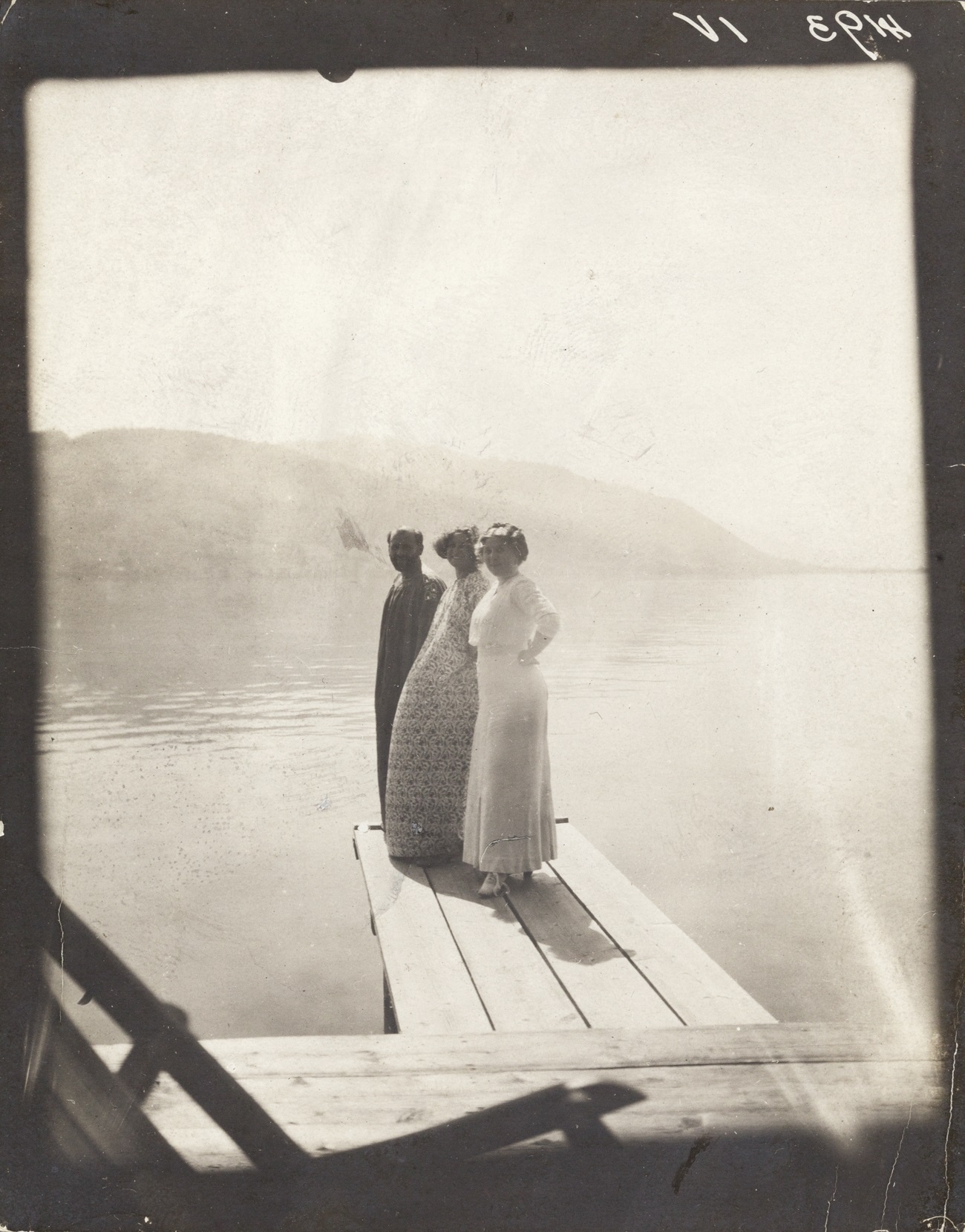
Klimt and Flöge sisters in 1906

Anonymous. Gustav Klimt, Emilie und Helene Flöge, Litzlberg at Attersee, Austria, 1906 | src Ostlicht

Emilie Flöge spent many summers with Gustav Klimt at Lake Attersee from the 1890s on. Her sisters Pauline and Helene, with whom she opened the “Schwestern Flöge” fashion salon at Mariahilfer Strasse 1b in 1904, were often also part of the party. The salon, designed by Josef Hoffmann as a “Gesamtkunstwerk”, employed up to 80 seamstresses at the time of its greatest success and catered to the upper bourgeoisie. Helene Flöge was married to Ernst Klimt, the younger brother of Gustav Klimt, with whom he worked in a studio partnership.

This private photograph is captivating because of the contrast between the different silhouettes of the three figures, which reveals the emancipatory radicalism of the reform dress – in contrast to the usual dresses worn over a corset. Implicitly, as one might say, this also “quotes” the design element of repeated curved lines, as found in many of Gustav Klimt’s compositions. This is the only known print of this photograph [Negative number “4/93 IV” in the upper margin, handwritten annotated “Gustav Klimt Emilie Helene” in ink on the reverse.] | src Ostlicht

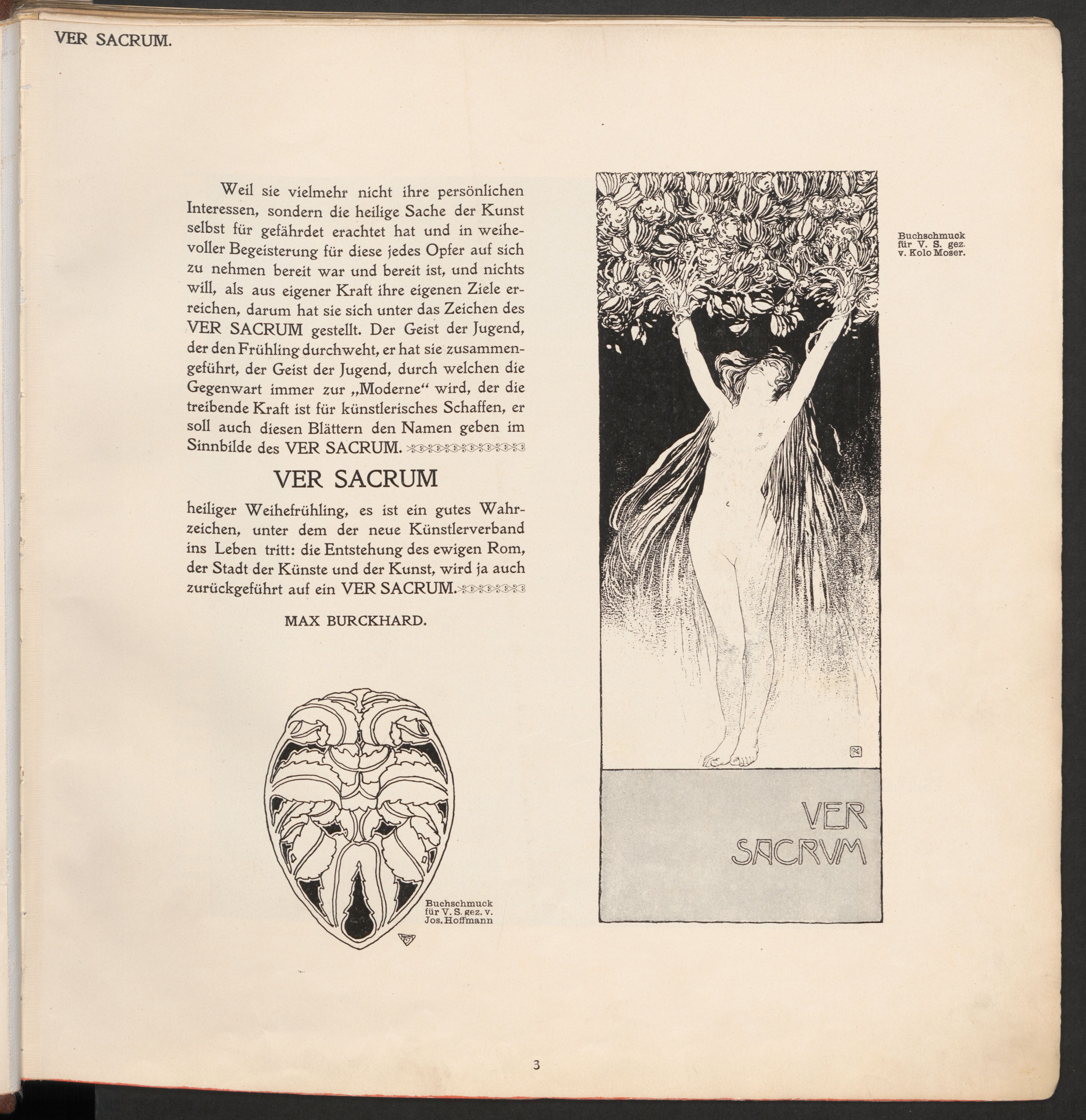
Allegorie von Kolo Moser

 „Ver Sacrum“ H. 1/1, 1898. Tinte, Tusche und Aquarell und weiße Deckfarbe auf Papier. | src Wikimedia, scanned from unspecified artbook
Koloman Moser :: Allegorie (1897) „Ver Sacrum“ H. 1/1, 1898. Tinte, Tusche und Aquarell und weiße Deckfarbe auf Papier. | src Wikimedia, scanned from unspecified artbook
Koloman Moser :: Ver Sacrum, 1898, Heft1. | src ÖNB

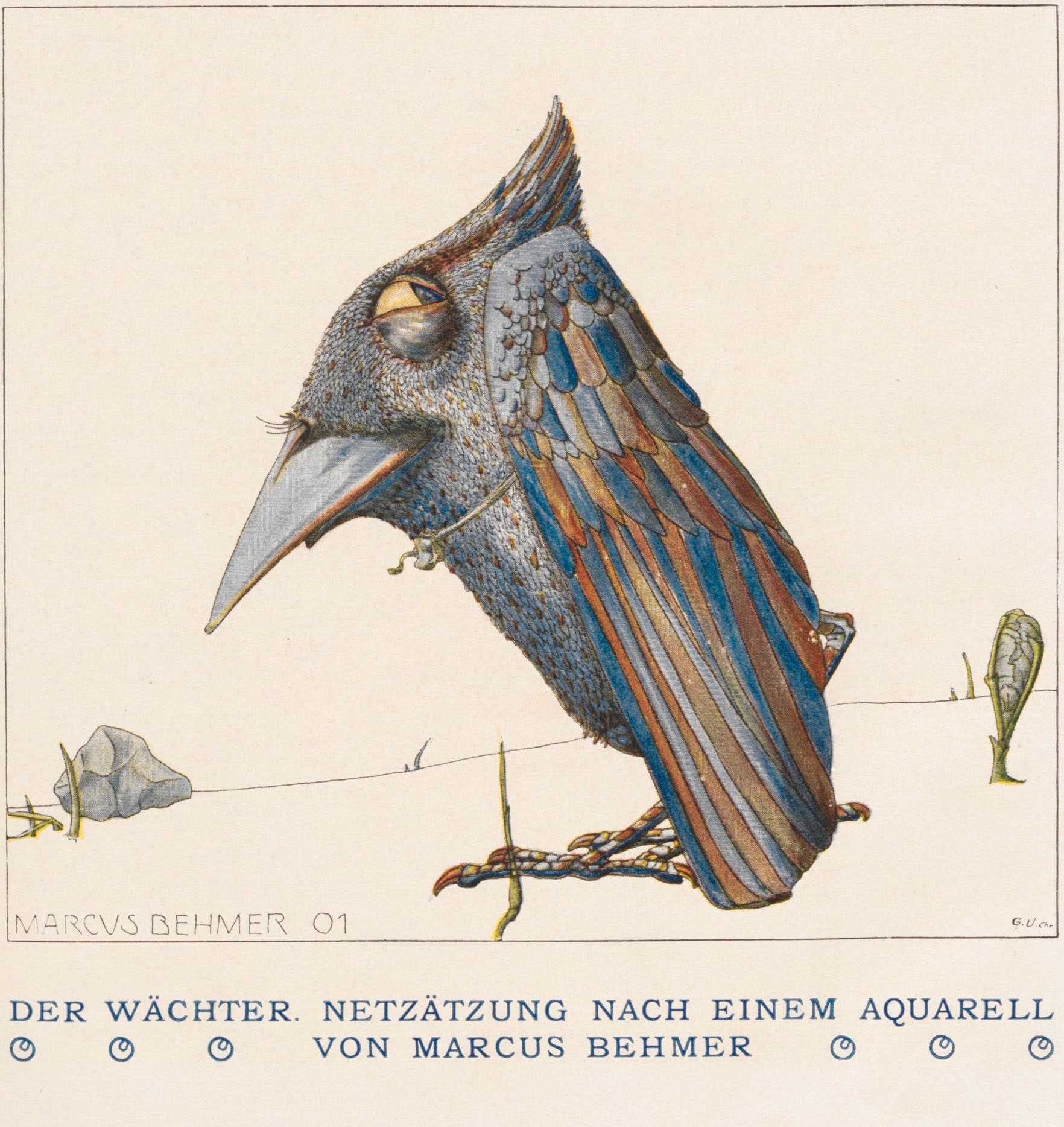
Der Wächter von Marcus Behner

Marcus Behner ~ Der Wächter. Netzätzung nach einem aquarell von Marcus Behmer. Ver Sacrum, 1903. | src ÖNB
Marcus Behner ~ The Guardian, 1901. Etching after a watercolor by Marcus Behmer. Ver Sacrum, 1903. | src ÖNB
Marcus Behner ~ Der Wächter. Netzätzung nach einem aquarell von Marcus Behmer. Ver Sacrum, 1903. | src ÖNB
Marcus Behner ~ Der Wächter, 1901. Netzätzung nach einem aquarell von Marcus Behmer. Ver Sacrum, 1903. | src ÖNB

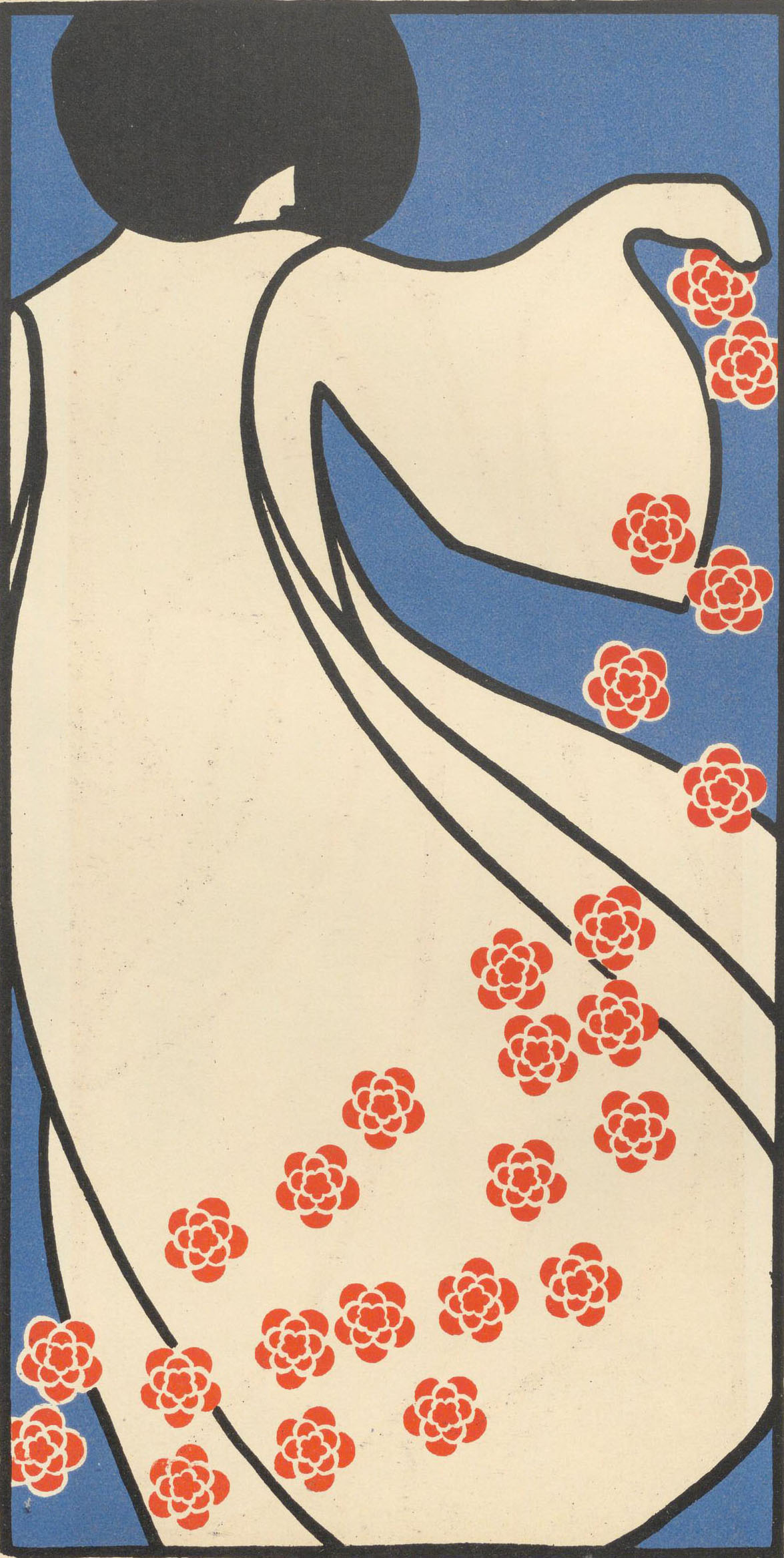
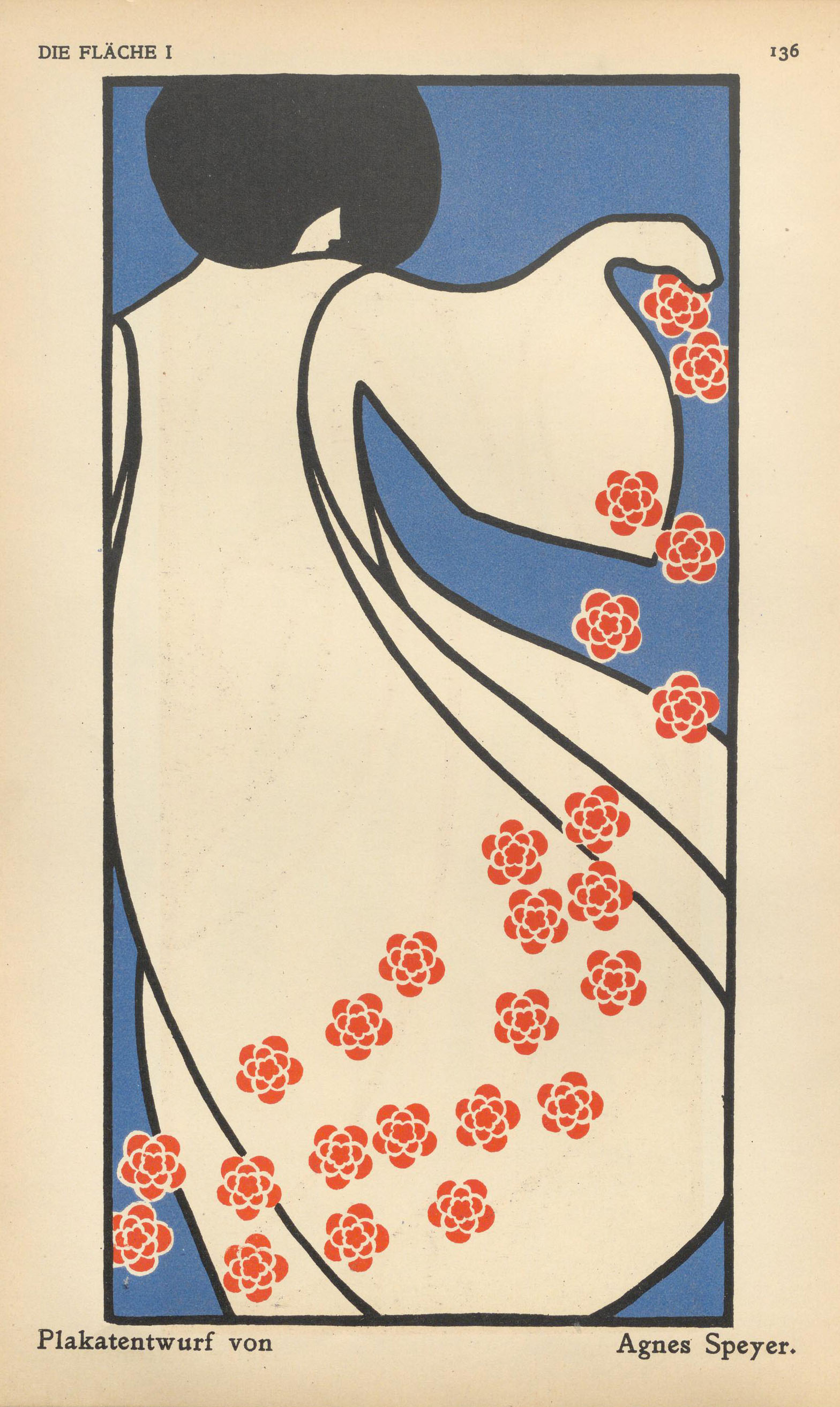
Plakatentwurf von Agnes Speyer

Plakatentwurf von Agnes Speyer
Die Fläche Entwürfe für decorative Malerei, Placate, Buch- und Druckausstattung | src ÖNB
Plakatentwurf von Agnes Speyer
Die Fläche Entwürfe für decorative Malerei, Placate, Buch- und Druckausstattung | src ÖNB

Die Fläche · Nelly Marmorek

Plakatentwourf von Nelly Marmorek (1877 - 1944) Cornelia Nelly Marmorek (née Schwarz)
Die Fläche : Entwürfe für decorative Malerei, Placate, Buch- und Druckausstattung
Plakatentwurf von Nelly Marmorek (1877 – 1944) Cornelia Nelly Marmorek (née Schwarz)
Die Fläche : Entwürfe für decorative Malerei, Placate, Buch- und Druckausstattung(1903) | ÖNB
Plakatentwourf von Nelly Marmorek (1877 - 1944) Cornelia Nelly Marmorek (née Schwarz)
Die Fläche : Entwürfe für decorative Malerei, Placate, Buch- und Druckausstattung
Plakatentwurf von Nelly Marmorek (1877 – 1944) Cornelia Nelly Marmorek (née Schwarz)
Die Fläche : Entwürfe für decorative Malerei, Placate, Buch- und Druckausstattung (1903) | ÖNB

For a long time it was Nelly Marmorek’s fate that she was only known as the wife of the successful architect and committed Zionist Oskar Marmorek and as the daughter of the well-known banker Julius Schwarz. But even the few works of her that have survived show that she should be honored as an independent creative personality.

Nelly Marmorek was born Cornelia Schwarz on May 13, 1877 in Vienna and came from a very wealthy family of bankers on her father’s side. Apparently her mother, who was a sister of the well-known and successful composer Ignaz Brüll, brought in her musical talent. Nelly, as she was called, soon showed a talent for drawing and – supported by her art-loving family home, in which composers such as Gustav Mahler and Johannes Brahms and writers such as Arthur Schnitzler and Hugo von Hofmannsthal frequented – sought an artistic education.

In 1901 she began studying at the Vienna School of Applied Arts, where she was a student of Alfred Roller and Carl Otto Czeschka, among others. Her fellow students included Hilde Exner, Emma Schlangenhausen, Moriz Jung and Rudolf Kalvach. The fact that there is an original woodcut of hers in “Ver sacrum” and that she was able to publish four works in the portfolio “Die Fläche” shows that Marmorek was counted among the best of her year by her teachers.

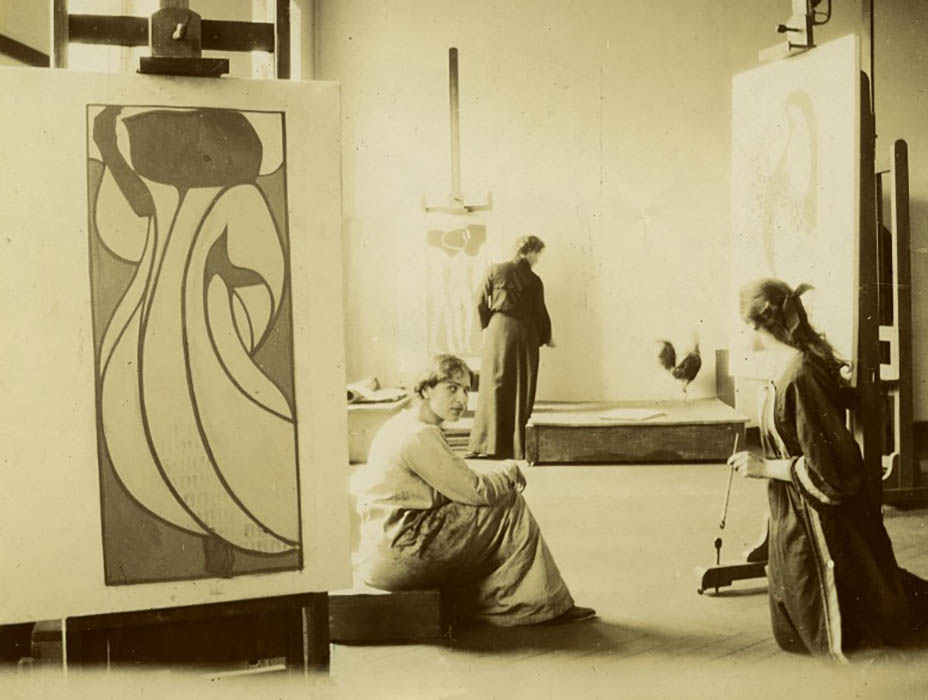
A photograph from the Roller class has been preserved in the archive of the University of Applied Arts in Vienna, in which both of the poster designs by Nelly Marmorek depicted in “Die Fläche” can be seen. The picture, which most likely shows the artist herself at work, also documents that the poster designs were not just small sketches, but were worked out in the original size.

Alfred Rollers Atelier mit den zwei Plakatentwürfen von Nelly Marmorek, um 1903. (Universität für angewandte Kunst Wien, Kunstsammlung und Archiv, Inv.Nr. 18.474/F), Ausschnitt

After Oskar Marmorek, to whom she had been married since 1897, committed suicide in 1909, Nelly Marmorek moved back to her parents’ apartment at Berggasse 13, where she was officially registered until 1928. However, she spent most of her time in France, where she studied painting with Henri Matisse and also took part in exhibitions.

Nelly Marmorek lived in Cannes during World War II. In 1942, southern France was occupied by German troops and now the Jews living here or who had fled here, like Nelly Marmorek, were exposed to the terror of the National Socialist rulers. Marmorek was no longer able to travel to the USA, and she died in Cannes on March 11, 1944.

After basic research, Ingrid Erb wrote in her study of Nelly Marmorek: “Nelly’s death certificate states the address Villa Baron, Avenue Isola Bella, Cannes. A cause of death is not noted. The Villa Baron was confiscated by the German troops during World War II and used by the Nazi occupying power as a headquarters. On March 14, 1944, Nelly Marmorek was buried in the Cimetière Le Grand Jas as a native on common ground with a five-year concession.”

quoted from: Austrian Posters / Nelly Marmorek

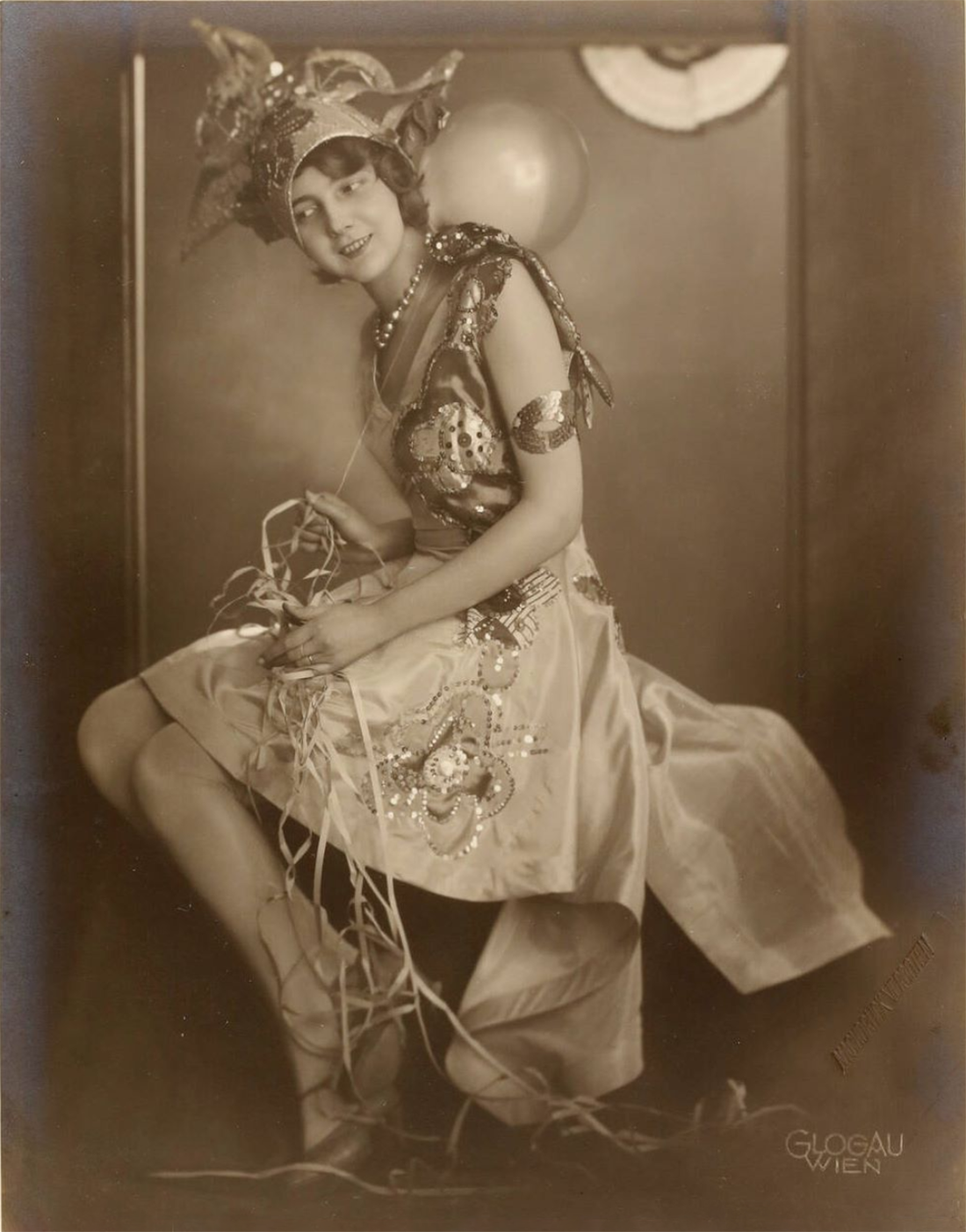
Kostüm der Wiener Werkstätte

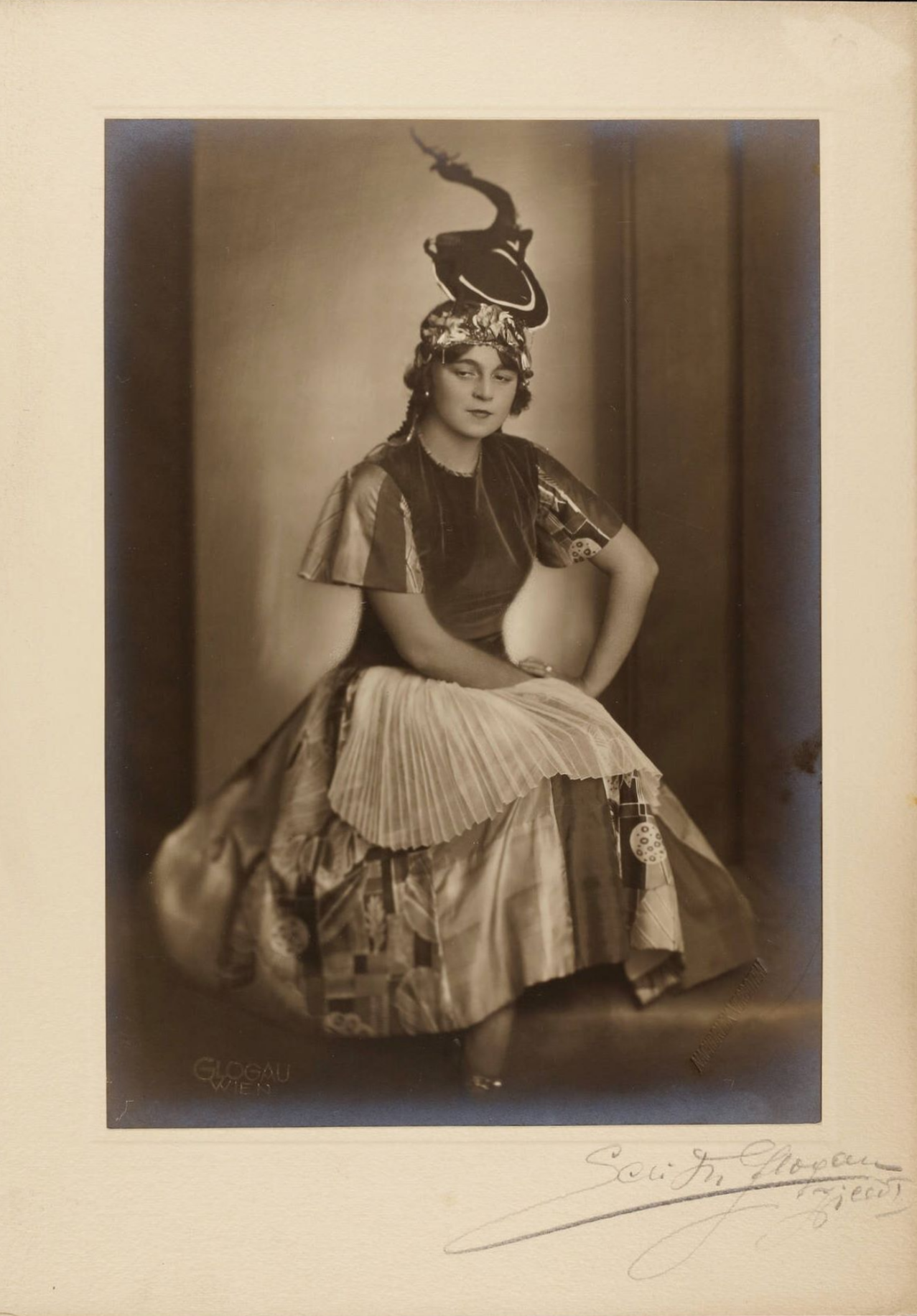
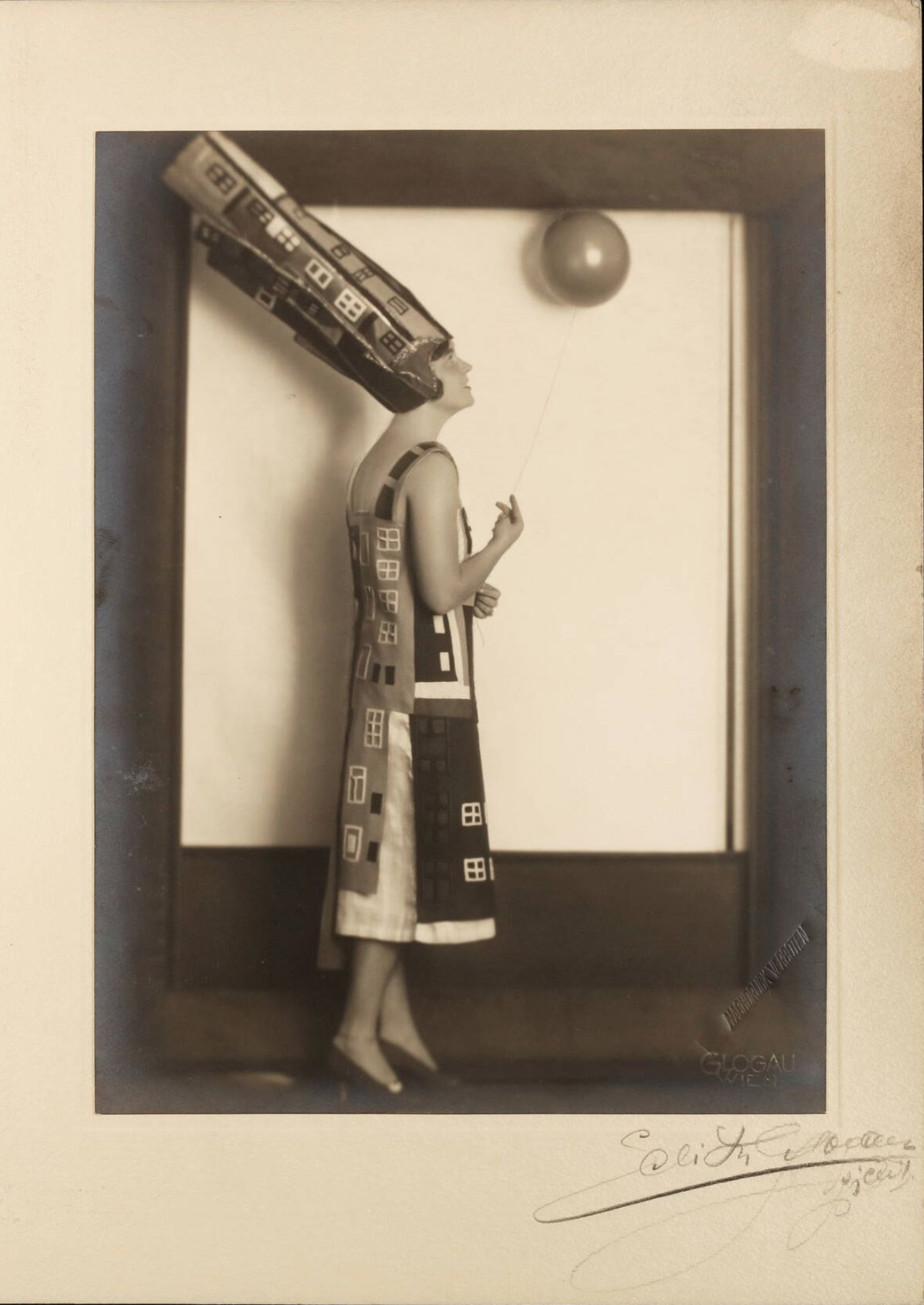
Edith Glogau :: Unbekannt Dame in einem Faschingskostüm der Wiener Werkstätte, Wien, vor 1929 | src MAK

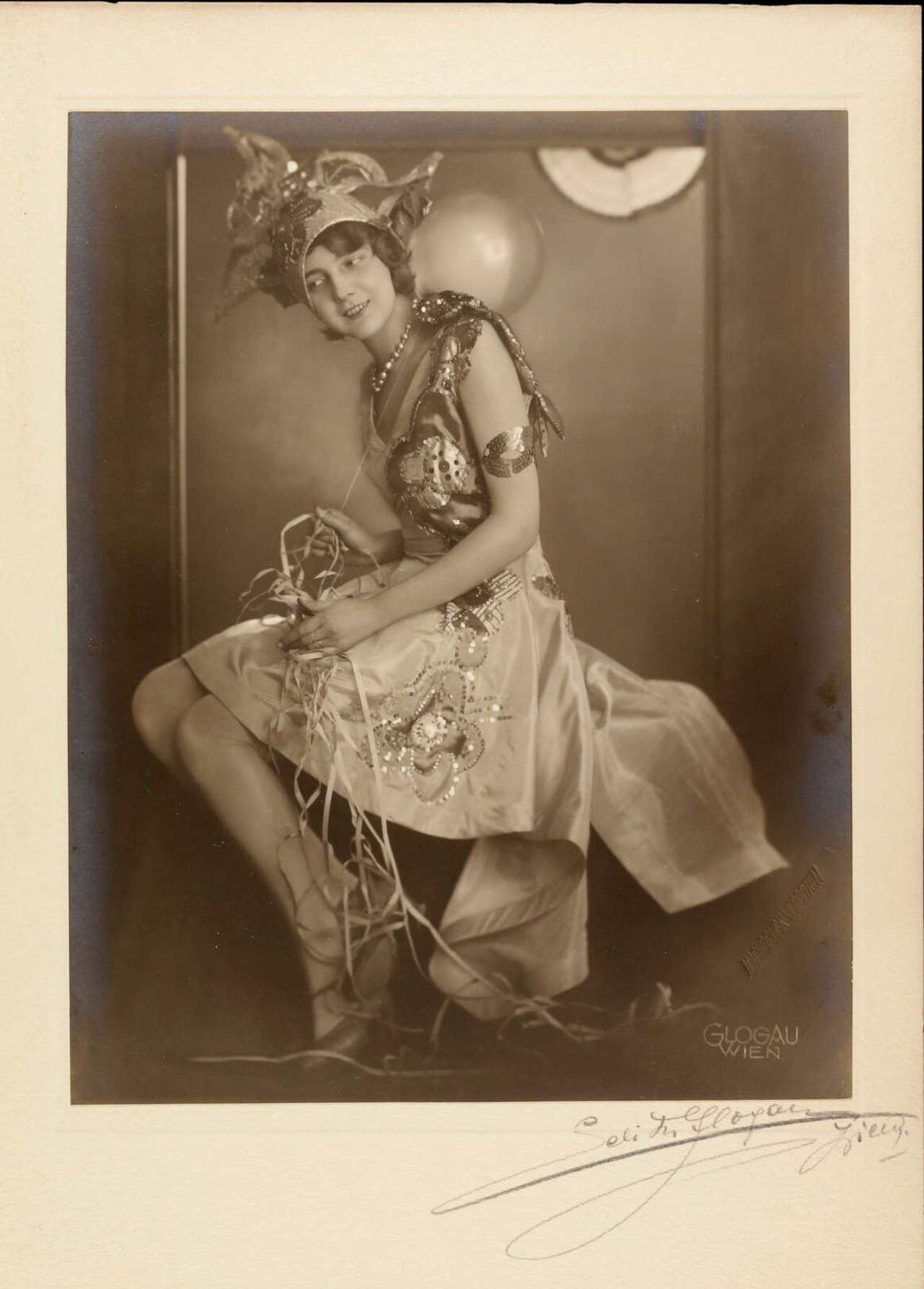
Köstum der Wiener Werkstätte

Edith Glogau :: (Unbekannt) Dame in einem Faschingskostüm der Wiener Werkstätte, Wien, vor 1929 | src MAK

Mileva Roller, um 1910

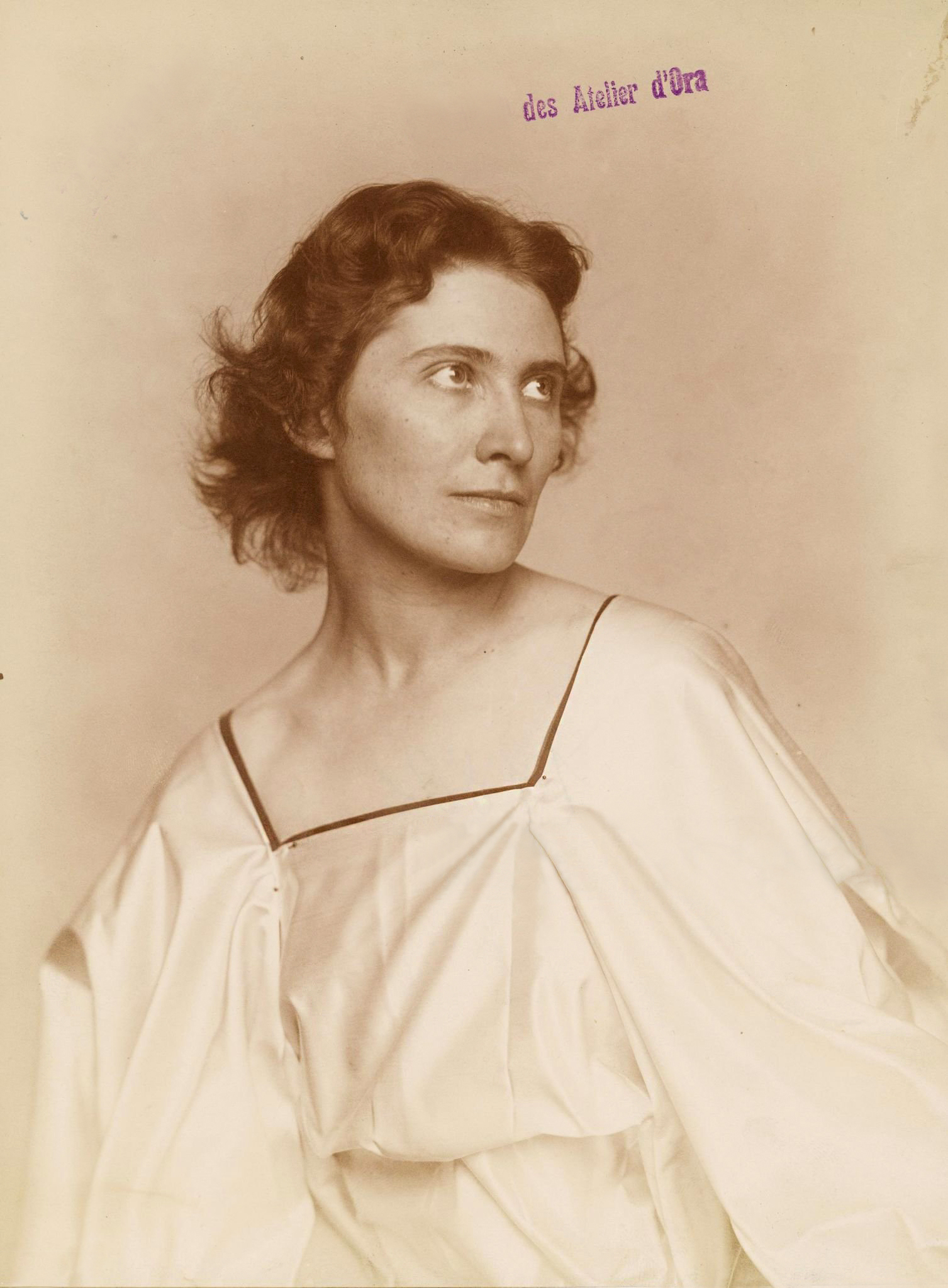
Atelier d’Ora :: Austrian artist Mileva Roller (Mileva Stojsavljevic), wife of Alfred Roller, ca. 1910. [Mileva Roller, Ehefrau von Alfred Roller, um 1910]. | src Getty Images

Mileva Stoisavlievic’s women

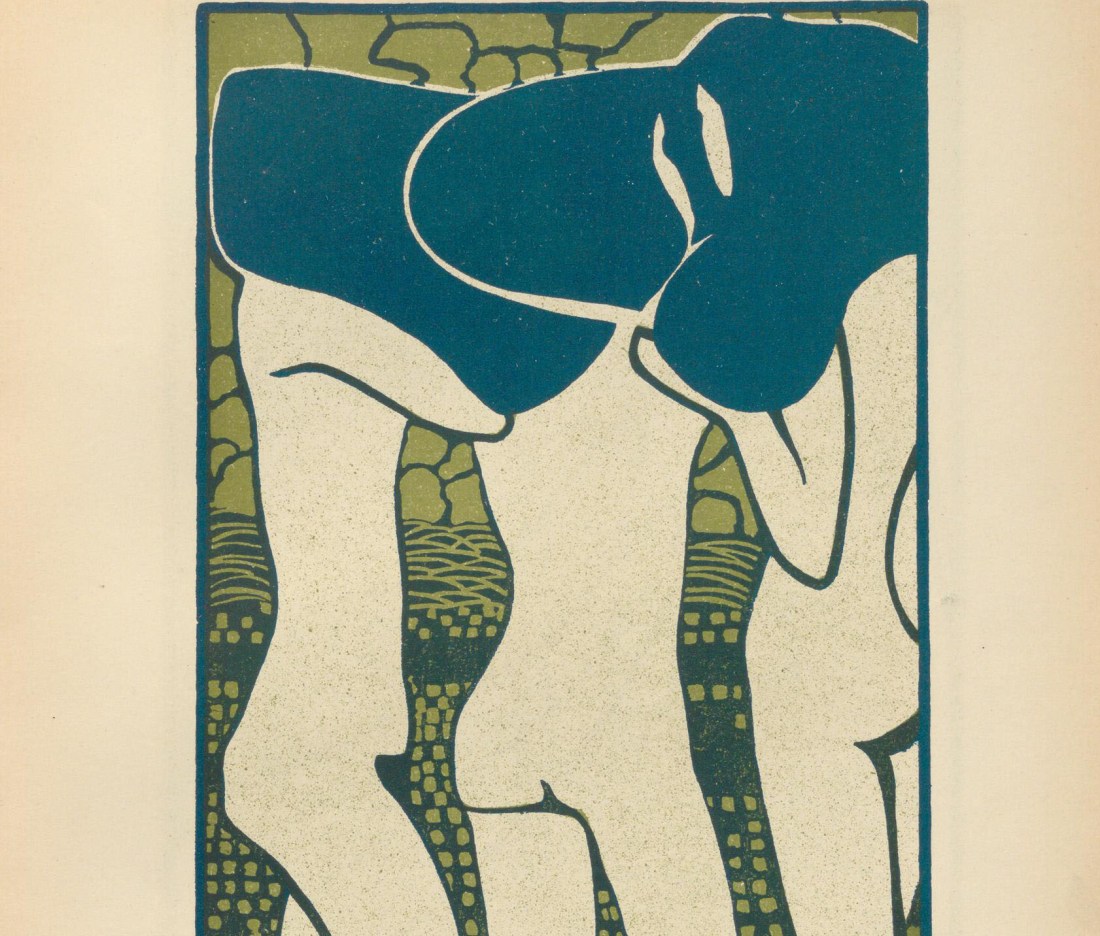
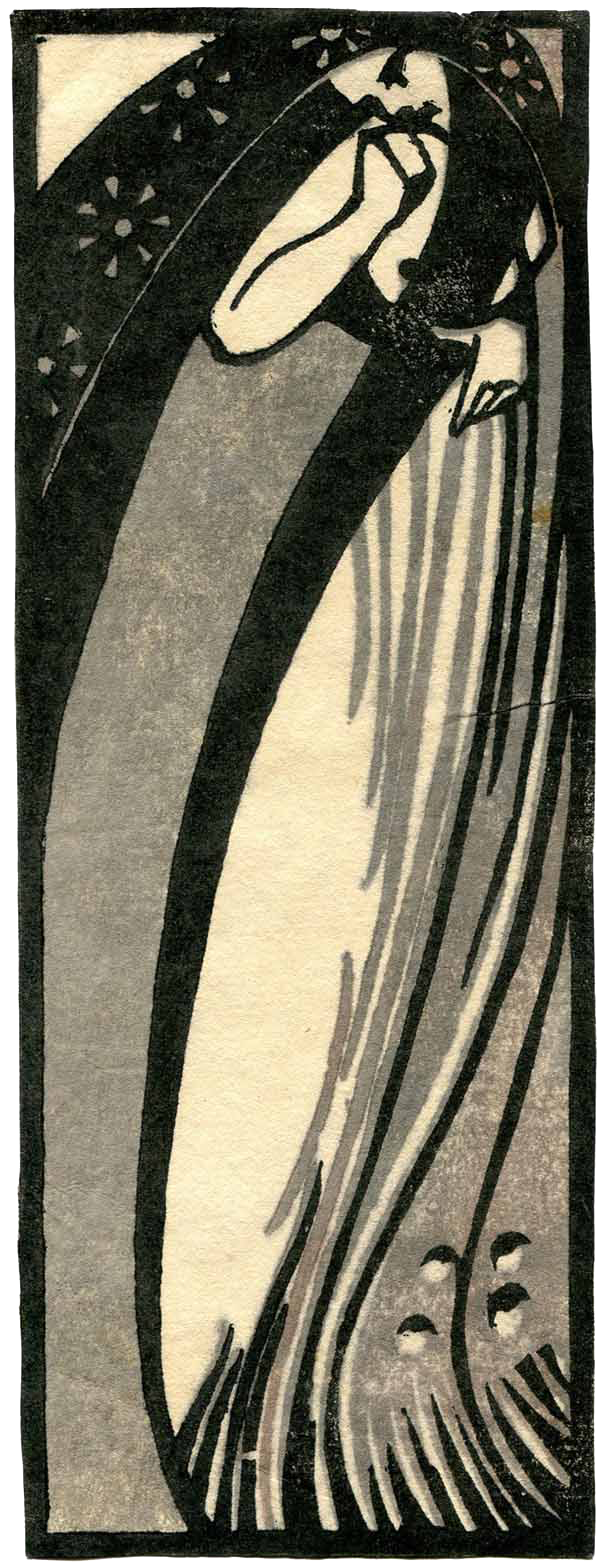
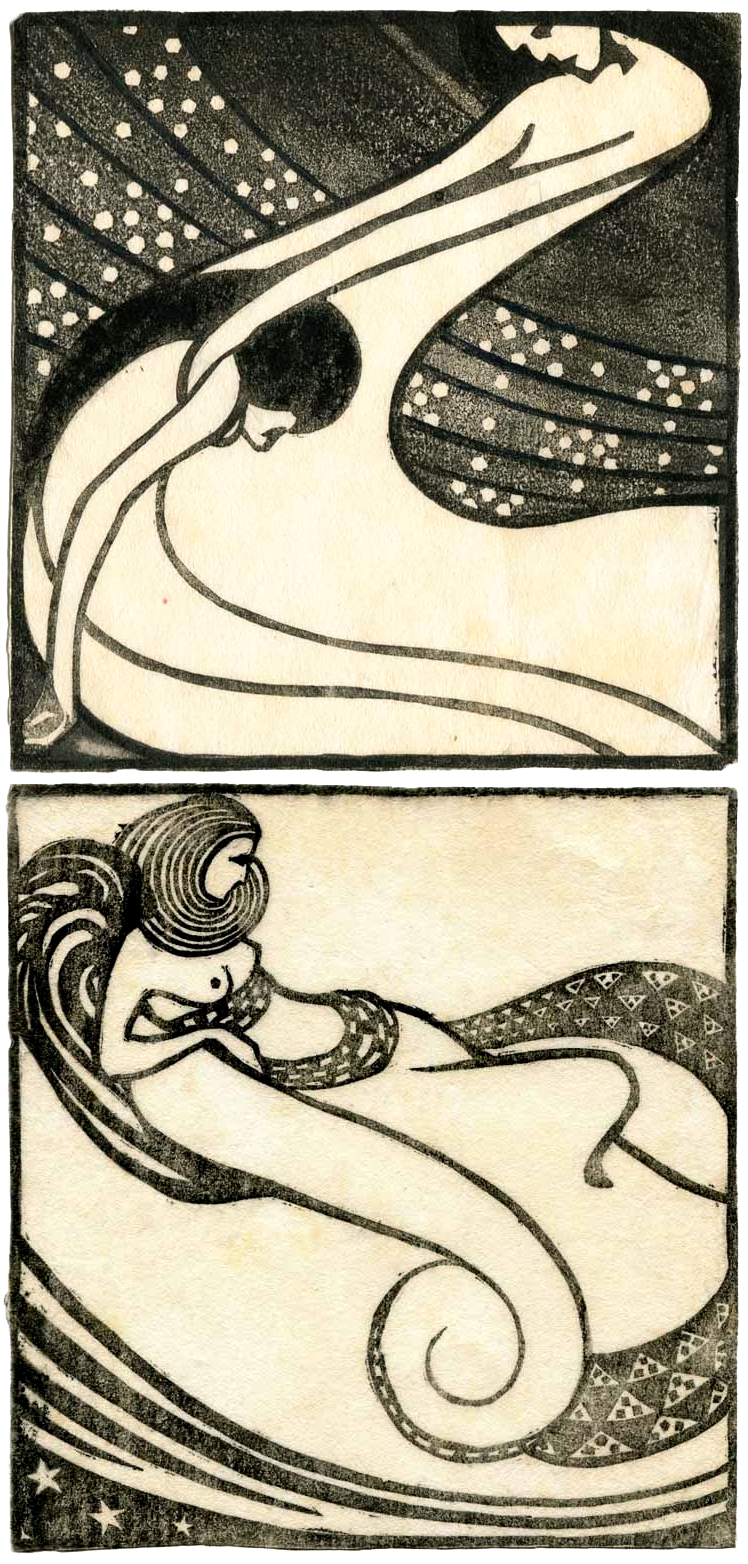
Mileva Roller (Mileva Stoisavlievic: 1886 – 1949) :: Standing Woman. Woodcut on lightweight off-white Japan paper. No watermark. | src Shepherd Gallery
Mileva Stoisavlievic :: Two Intertwined Female Figures. Woodcut on lightweight off-white Japan paper. | src Shepherd Gallery
Mileva Stoisavlievic :: Reclining Woman. Woodcut on lightweight off-white Japan paper. No watermark. | src Shepherd Gallery