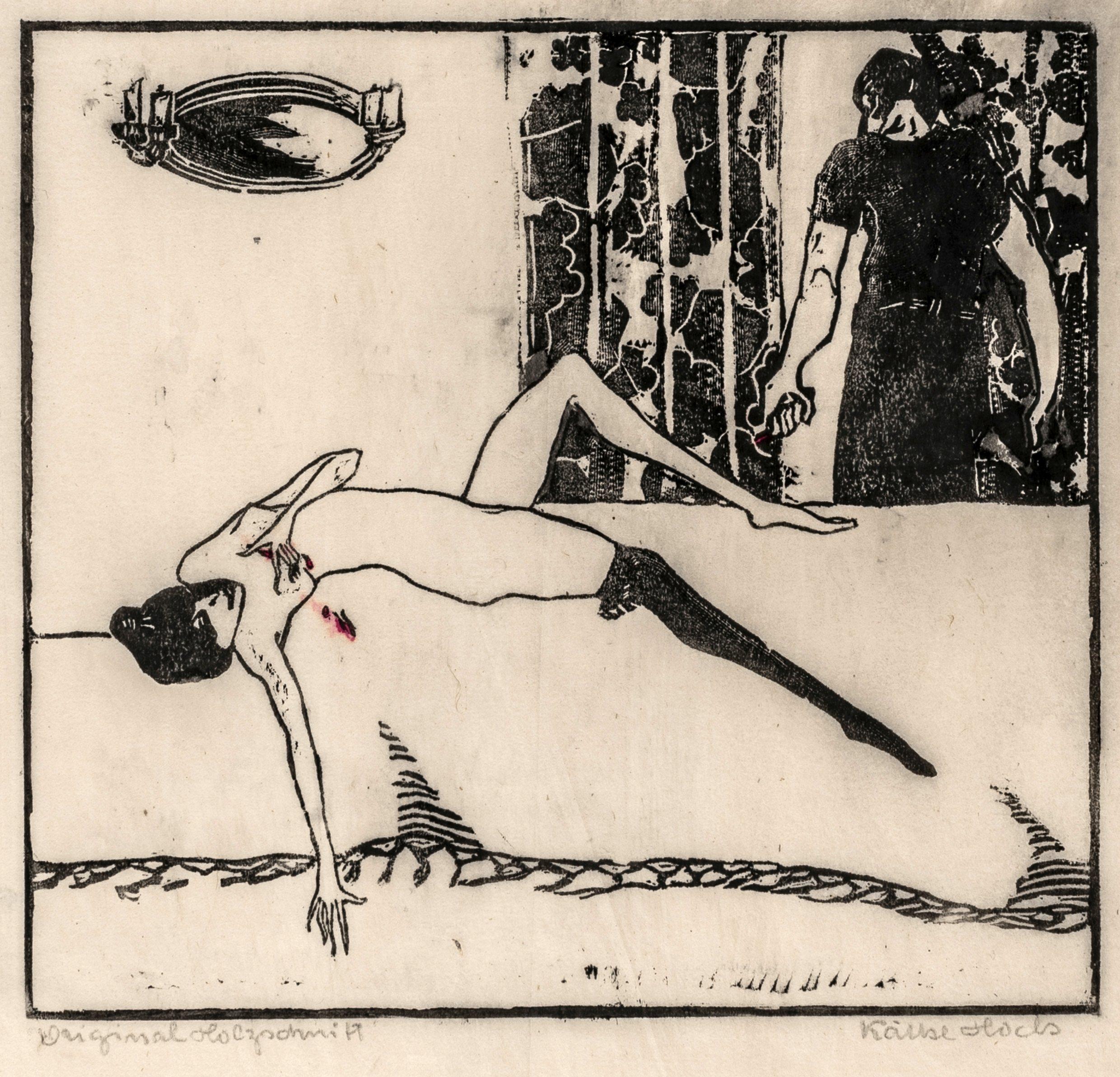
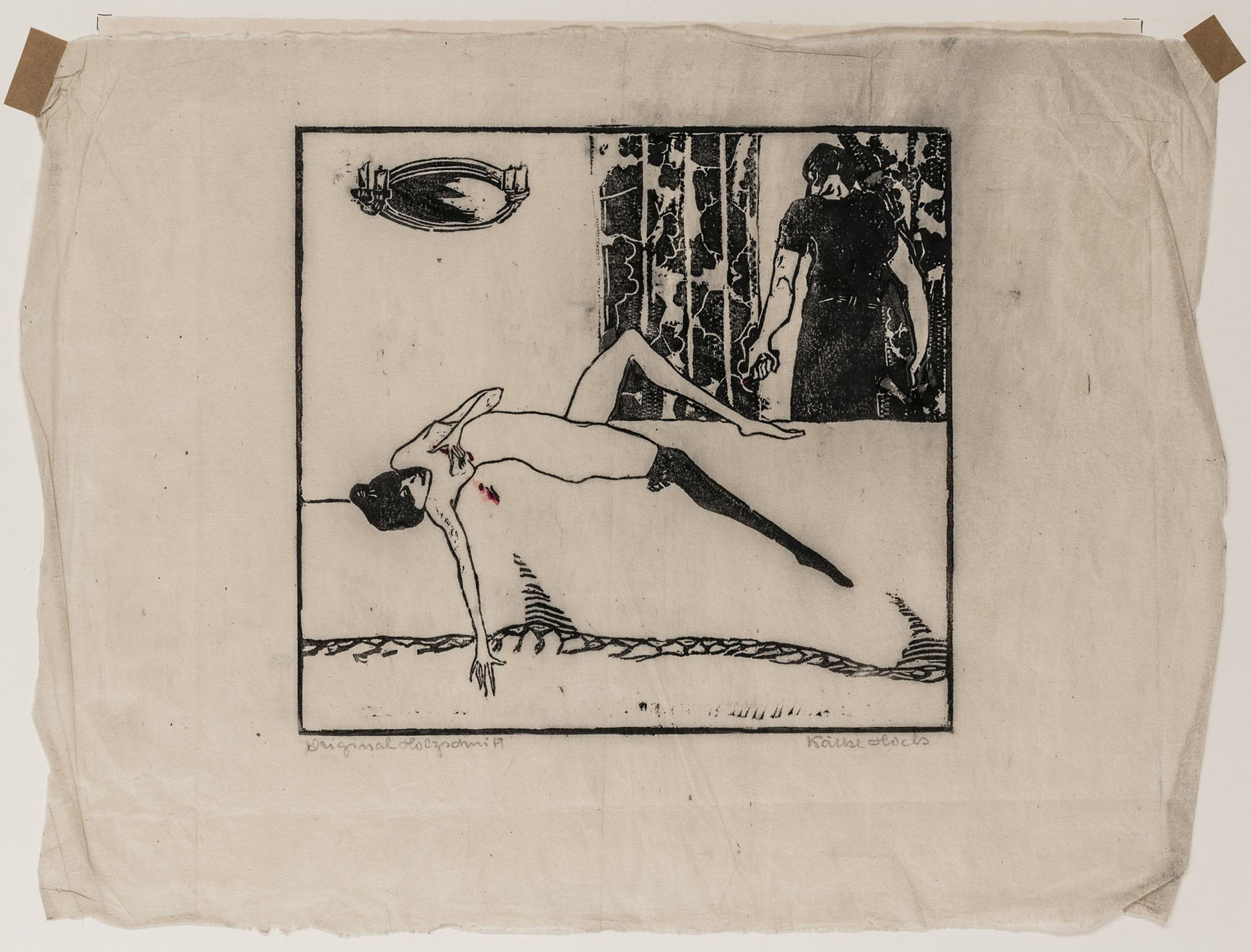
Käte Hoch (1873-1933) ~ Untitled (Reclining female nude), ca. 1910. Woodcut on thin Japan paper, with red coloring, probably added later. Inscribed “original woodcut” at the bottom left | src Nosbüsch & StuckeKäte Hoch (1873-1933) ~ Ohne Titel (Liegender weiblicher Akt). Holzschnitt auf dünnem Japan, mit punktuellem, wohl später hinzugefügtem roten Kolorit, um 1910 | src Nosbüsch & Stucke
Die deutsche Malerin Käte Hoch (1873-1933) studierte von 1891-1894 an der Münchner Damenakademie. Ab 1906 betrieb sie eine eigene Mal- und Zeichenschule in München und nahm u.a. an Ausstellungen der Münchner Secession und des Kunstvereins München teil. 1933 stürmte ein SA-Trupp ihre Wohnung und ihr Atelier in Schwabing, wobei der Großteil ihrer Werke zerstört wurde.
The German painter Käte Hoch (1873-1933) studied at the Munich Women’s Academy from 1891-1894. From 1906 she ran her own painting and drawing school in Munich and took part in exhibitions at the Munich Secession and the Munich Art Association, among others. In 1933, an SA troop stormed her apartment and studio in Schwabing, destroying most of her work.
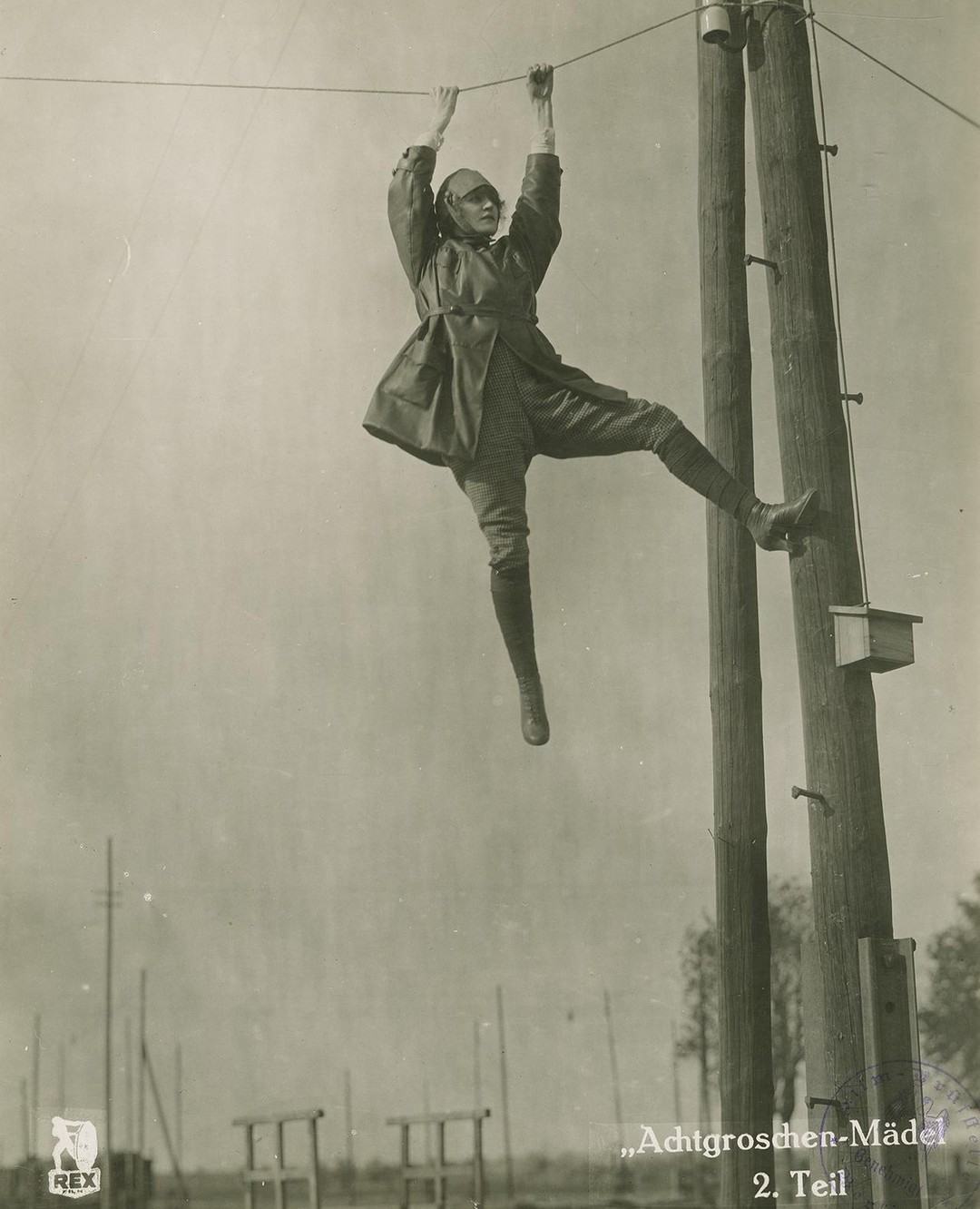
Edith Posca als Detektivin Miss Madge Henway – Drehbuch: Jane Bess Das Achtgroschenmädel. Jagd auf Schurken. 2. Teil (D 1921, Regie: Wolfgang Neff)⠀ Quelle : Deutsche Kinemathek – Fotoarchiv
Edith Posca as detective Miss Madge Henway – Screenplay: Jane Bess The Eight Penny Girl. Hunting Villains. 2nd part (D 1921, director: Wolfgang Neff) Source : Deutsche Kinemathek – photo archive
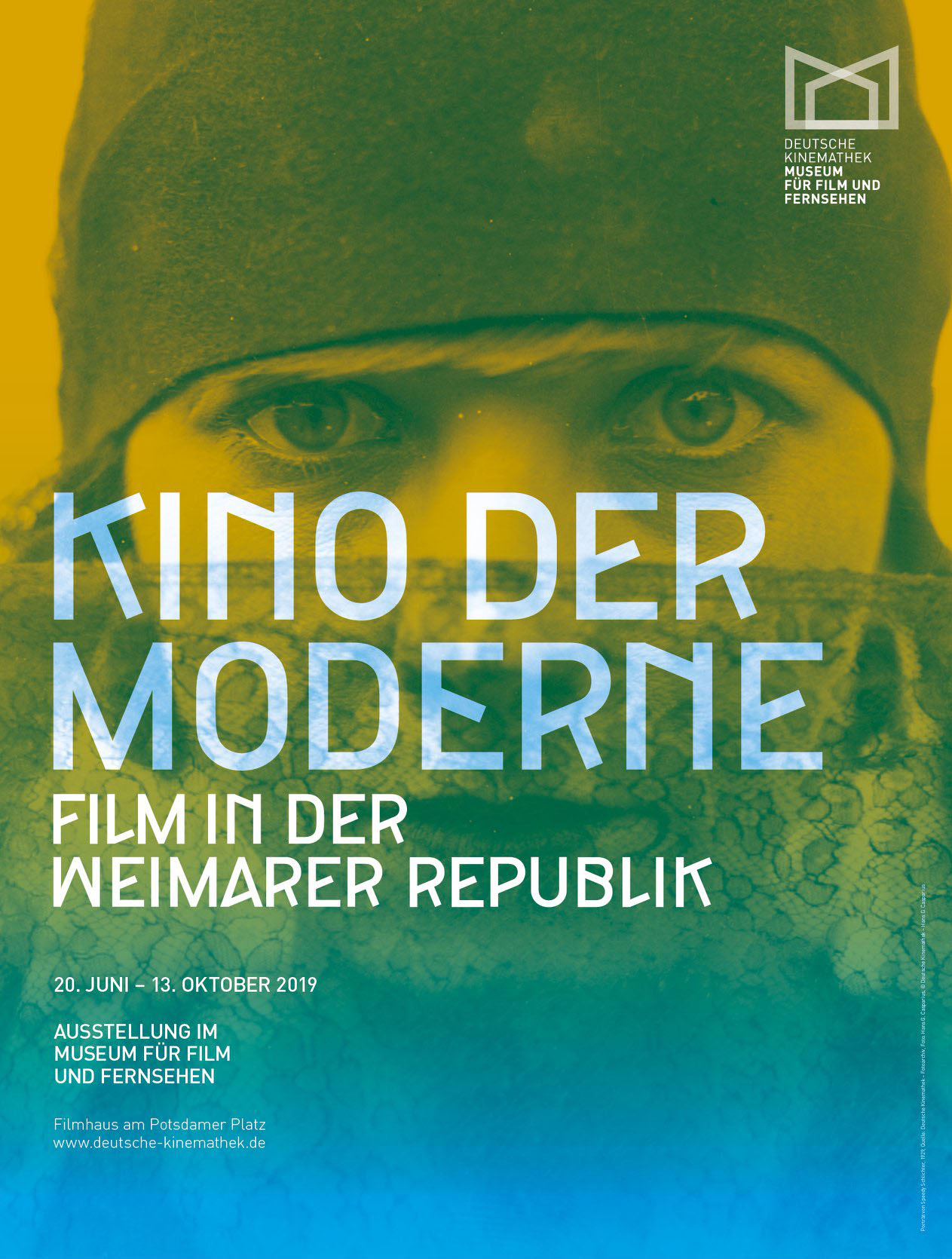
Kino der Moderne — Film in der Weimarer Republik (20.6.2019 – 13.10.2019)⠀ Wie keine andere Kunstform spiegelte das Kino den Zeitgeist der Moderne. Mode und Sport, Mobilität und urbanes Leben, Genderfragen und Psychoanalyse prägen die Filme einer Stilepoche, die auf die Filmästhetik der ganzen Welt Einfluss nahm.⠀ ⠀ Modern Cinema — Film in the Weimar Republic (6/20/2019 – 10/13/2019)⠀⠀ Like no other art form, cinema reflected the spirit of the modern era: fashion and sports, mobility and urban life, gender issues and the emergence of psychoanalysis characterize the films of the period, which would have a profound influence on international film aesthetics.⠀
Speedy Schlichter (b. Elfriede Elisabeth Koehler) – 1920s | src Deutsche KinemathekPlakat „Kino der Moderne“ Berlin 2019 – Speedy Schlichter (Elfriede Elisabeth Koehler) | Deutsche Kinemathek
100 Jahre Weimarer Republik, 100 Jahre Kino der Moderne: Wir blicken zurück auf das Kino der ersten deutschen Republik, beleuchten das Verhältnis von Film und Alltagskultur, die künstlerischen und technischen Erfindungen der Zeit und das Entstehen von Filmkritik und -theorie.
Wie keine andere Kunstform spiegelte das Kino den Zeitgeist der Moderne. Mode und Sport, Mobilität und urbanes Leben, Genderfragen und Psychoanalyse prägen die Filme einer Stilepoche, die auf die Filmästhetik der ganzen Welt Einfluss nahm.
Zahlreiche Drehbücher, Plakate, Requisiten und Kameras zeigen, wie der Film auf Literatur, Kunst, Architektur und gesellschaftliche Entwicklungen reagierte. Außerdem rücken wir das Wirken von Frauen hinter der Kamera in den Fokus und stellen 21 weibliche Filmschaffende vor.
In 23 Themenschwerpunkten führt die Ausstellung durch das Kino der »wilden 20er« – von den ersten Kinopalästen mitten hinein ins Babylon Berlin und bis zum jähen Ende der Kunstfreiheit unter den Nationalsozialisten.
100 years of Weimar Republic, 100 years of modern cinema – we look back at the relationship between cinema and everyday culture, the innovations of the film trade and the emergence of film criticism and theory in the 1920s.
Like no other art form, cinema reflected the spirit of the modern era: fashion and sports, mobility and urban life, gender issues and the emergence of psychoanalysis characterize the films of the period, which would have a profound influence on international film aesthetics.
Screenplays, posters, props and cameras highlight film’s references to literature, arts, architecture and social developments. The exhibition also sheds light on the work of women behind the camera. It presents 21 women professionals within the film industry who played decisive roles as producers, directors, screenwriters, or set designers.
Along 23 main topics, we lead you through the “roaring 20s” – from the first cinema palaces right into the heart of Babylon Berlin and to the sudden end of artistic freedom under the National Socialists.
Otto Dix :: »Kupplerin«, 1923. Farbige Lithographie auf Maschinenbütten. Signiert unten rechts. Herausgegeben von Karl Nierendorf. | src Karl and Faber Kunstauktionen
Im Jahr 1921 zieht Otto Dix für vier Jahre nach Düsseldorf, wo er sich in druckgraphischen Techniken weiterbildet. Er liebt die Großstadt, die Typen und Randgruppen, die er vor allem während der Nacht auf den Straßen und in den Lokalen trifft: Matrosen oder Artisten, Kriegsversehrte und Kriegsgewinnler, ebenso wie Prostituierte und ihre Kunden. Die „goldenen“ Zwanziger zwischen allumfassender Traumatisierung, Vergnügungssucht und frühem Konsumismus, zwischen schillernder Oberfläche und abgestorbenem Innersten reizt ihn zu grotesk-enthüllenden Bildsujets. In seinen Werken – wie auch in der vorliegenden Lithographie „Kupplerin“ – führt Dix dem Betrachter schonungslos den körperlichen Zerfall, die Defizite und Eigenarten seiner Modelle vor Augen. Sein neuartiger Realismus, für den die Zeitgenossen den Begriff „Verismus“ prägen, macht Dix – zusammen mit Max Beckmann und George Grosz – nicht nur zum Hauptvertreter dieser Kunstströmung in Deutschland, sondern auch zu einem der bedeutendsten Realisten in der Geschichte der Kunst überhaupt.
In 1921, Otto Dix moved to Düsseldorf for four years, where he continued his education in printmaking techniques. He loves the big city, the characters and marginal groups he meets on the streets and in bars, especially at night: sailors or artists, war invalids and war profiteers, as well as prostitutes and their customers. The “golden” twenties between comprehensive traumatization, pleasure-seeking and early consumerism, between shimmering surfaces and dead innermost parts provoked him to grotesquely revealing pictorial subjects. In his works – as well as in the present lithograph “Kupplerin” – Dix ruthlessly shows the viewer the physical decay, the deficits and the peculiarities of his models. His new type of realism, for which his contemporaries coined the term “Verism”, made Dix – together with Max Beckmann and George Grosz – not only the main representative of this art movement in Germany, but also one of the most important realists in the history of art in general. (Roughly translated by us from source)
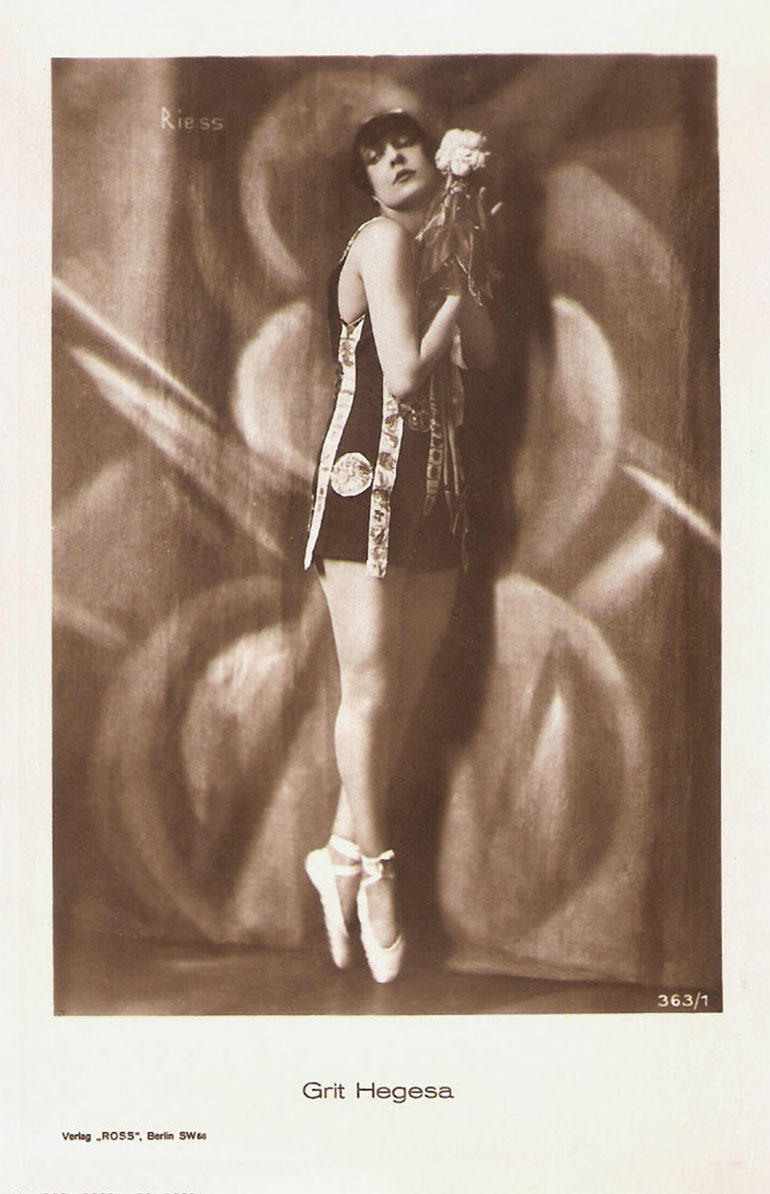
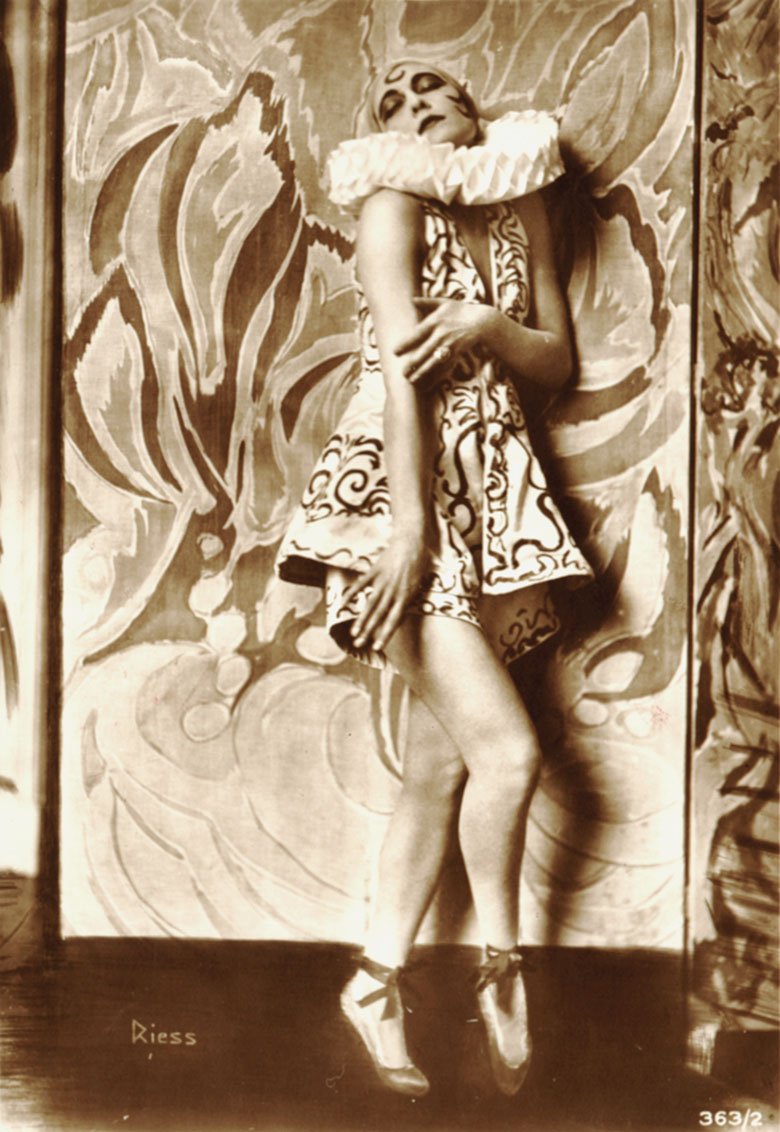
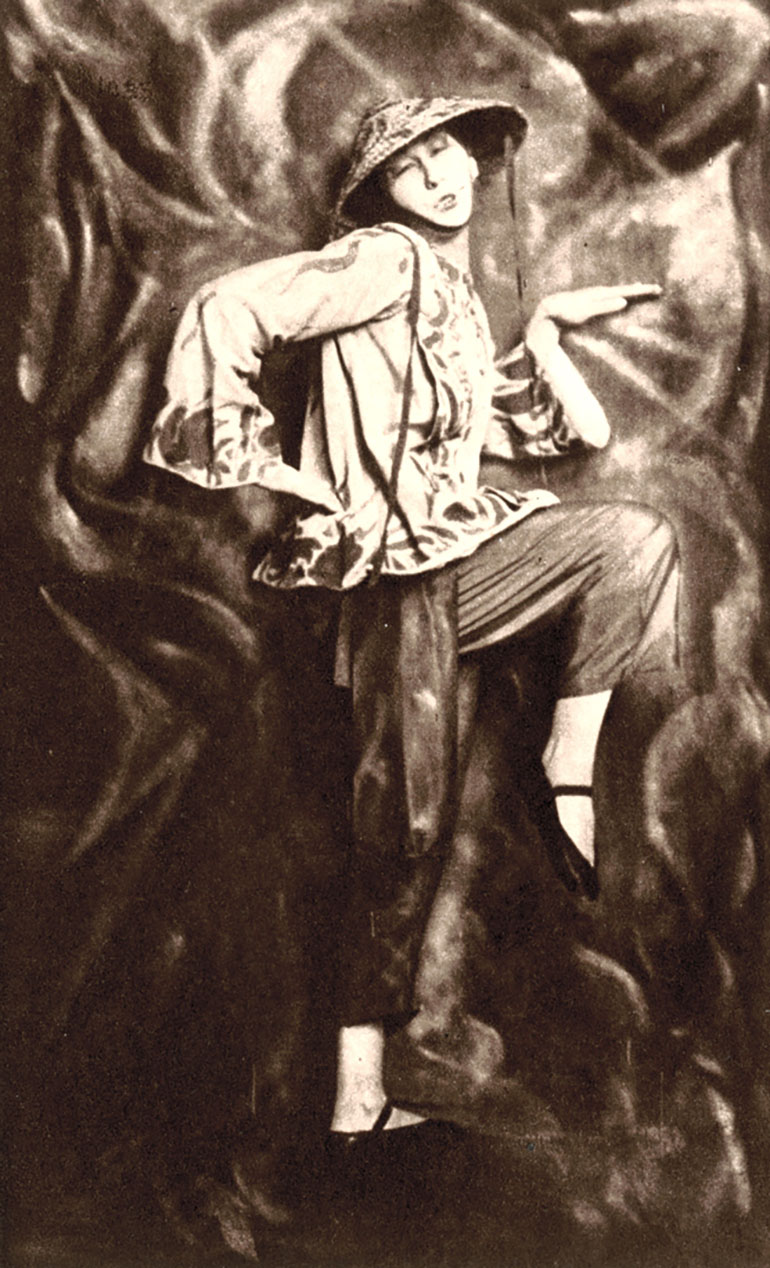
Frieda Gertrud Rieß ~ Grit Hegesa in the role of Harlequin, late 1910s | src getty imagesGrit Hegesa. German postcard by Ross Verlag, no. 363/1, 1919-1924. Photo: Frieda Riess | src flickrFrieda Gertrud Riess ~ Die Tänzerin Grit Hegesa, um 1920. | src Die Riess exhibit at Das Verborgene MuseumGrit Hegesa. German postcard by Ross Verlag, no. 363/1, ca. 1920. Photo: Frieda Riess | src alamyFrieda Gertrud Riess ~ Die Tänzerin Grit Hegesa, um 1920. | src Die Riess exhibit at Das Verborgene Museum
Otto Dix (1891-1969) ~ Bildnis der Journalistin Sylvia von Harden, 1926. Oil and tempera on wood | src Centre Pompidou
Journaliste à Berlin dans les années 1920, Sylvia von Harden (1894-1963) s’affiche en intellectuelle émancipée par une pose nonchalante. Otto Dix contrarie son arrogance par le détail d’un bas défait. Sa robe-sac à gros carreaux rouges détonne avec l’environnement rose, typique de l’art nouveau. Le style réaliste, froid et satirique est caractéristique du mouvement de la Nouvelle Objectivité [Neue Sachlichkeit] auquel appartient le peintre. Il s’inspire des maîtres allemands du début du 16e siècle (Grünewald, Cranach et Holbein), par la technique de la tempera sur bois et l’exhibition d’une intéressante laideur. | src Centre Pompidou
Sylvia von Harden (1894-1963) was a journalist in Berlin in the 1920s. Her nonchalant stance is a statement of her emancipated intellectual role. Otto Dix undermines her arrogance with the detail of a loose stocking and her rather awkward pose. Her red-checkered sack dress contrast with the pink environment, typically Art Nouveau. The cold, satirical realism typifies the New Objectivity [Neue Sachlichkeit] movement to which the painter belonged. lnspired by early 16th-century German masters (Grünewald, Cranach and Holbein), he embraced the tempera on wood panel technique as well as the choice to exhibit the ugliness. | src Centre Pompidou
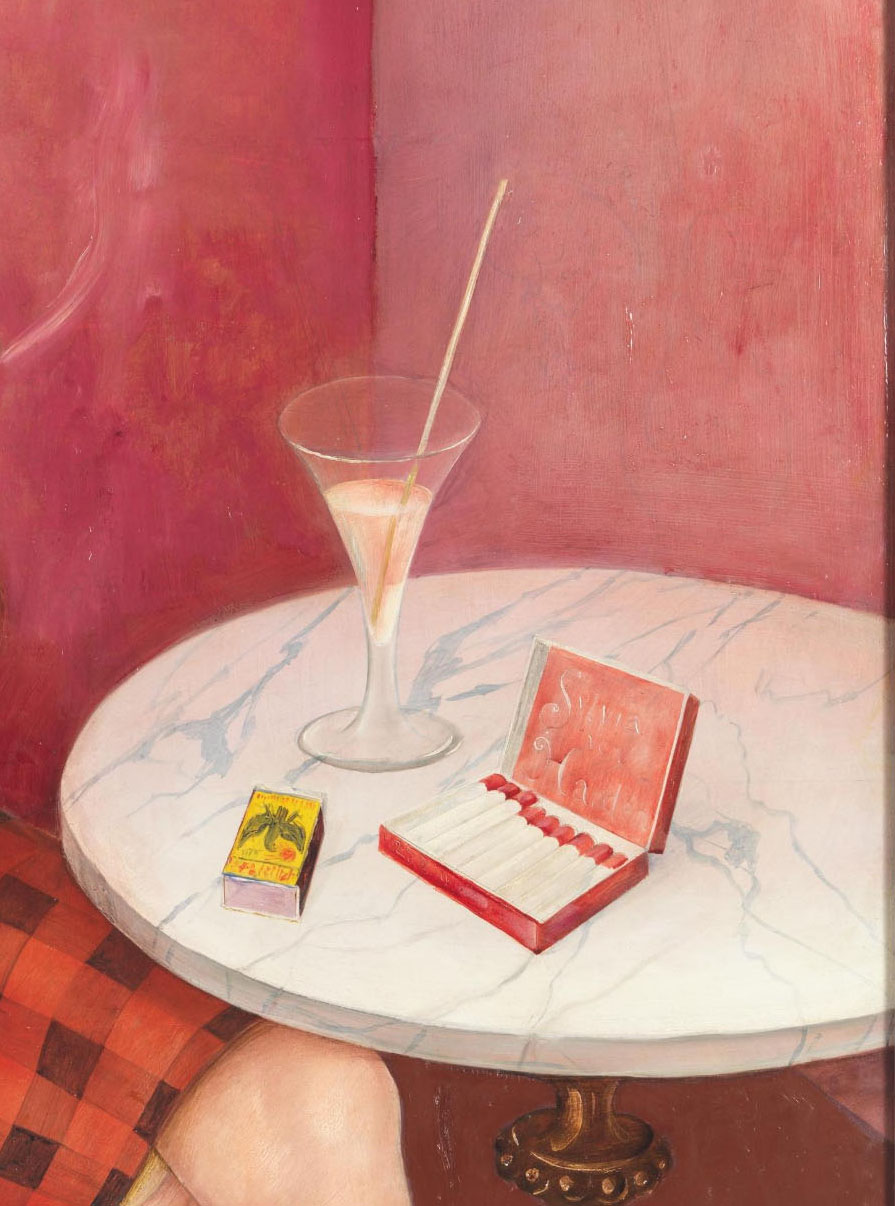
Note the inscription of her aristocratic name “Sylvia von Harden” on the inner cover of the cigarette box Detail from: Otto Dix ~ Bildnis der Journalistin Sylvia von Harden, 1926. Huile et tempera sur boisAugust Sander (1876-1964) ~ Secretary at the Westdeutscher Rundfunk in Cologne [Sylvia von Harden], 1931 | src Tate GalleryAugust Sander (1876-1964) ~ Sekretärin beim Westdeutscher Rundfunk in Köln [Sylvia von Harden], 1931 | src Centre PompidouOtto Dix (1891-1969) ~ Bildnis der Journalistin Sylvia von Harden, 1926 (scan)
Installé à Berlin entre 1925 et 1927, Dix peint une série de portraits remarquables. Maintes fois reproduit et exposé, celui de la journaliste Sylvia von Harden, de son vrai nom Sylvia Lehr (1894-1963), est l’un des plus fascinants. Il offre une véritable synthèse d’une recherche picturale qui s’inscrit dans ce que le critique Gustav Hartlaub désigne comme « l’aile gauche vériste » de la Neue Sachlichkeit [Nouvelle objectivité]. La représentation sans complaisance d’un type humain à travers ses attributs s’exprime dans le choix d’une intellectuelle émancipée des années 1920, aux allures masculines, fumant et buvant seule dans un café. […] L’image de la journaliste, que Dix a rencontrée au Romanische Café, haut-lieu berlinois du monde littéraire et artistique, reste pourtant ambiguë. Si dans ses souvenirs publiés à la fin des années 1950, la journaliste émigrée à Londres affirme que Dix l’a choisie pour son allure, représentative de cette époque, il semble que l’artiste la montre aussi en porte-à-faux par rapport à un type et un rôle dans lesquels elle paraît mal à l’aise. Sa pose nonchalante, mais peu naturelle, paraît trop ostentatoire ; son arrogance intellectuelle est contrariée par l’image de son bas défait ; et sa robe-sac à gros carreaux rouges l’oppose à l’environnement rose Art nouveau. Cette mise à nu semble avoir échappé au modèle. | src Centre Pompidou
Living in Berlin between 1925 and 1927, Dix painted a series of remarkable portraits. Reproduced and exhibited many times, that of the journalist Sylvia von Harden, whose real name was Sylvia Lehr (1894-1963), is one of the most fascinating. It offers a true synthesis of pictorial research which is part of what the critic Gustav Hartlaub designates as the “verist left wing” of the Neue Sachlichkeit [New Objectivity]. The uncompromising representation of a human type through its attributes is expressed in the choice of an emancipated intellectual from the 1920s, with masculine appearance, smoking and drinking alone in a café. […] The image of the journalist, whom Dix met at the Romanische Café, a Berlin hotspot for the literary and artistic world, nevertheless remains ambiguous. In her memories published at the end of the 1950s, the journalist who emigrated to London affirms that Dix chose her for her appearance, representative of that era, but it seems that the artist also shows her cantilevered from to a type and a role in which she seems uncomfortable. Her nonchalant, but unnatural pose seems too ostentatious; her intellectual arrogance is thwarted by the image of her undone stockings; and her large red check sack dress contrasts with the pink Art Nouveau environment. This exposure seems to have escaped the model.
Angela Lampe. Extrait du catalogue Collection art moderne – La collection du Centre Pompidou, Musée national d’art moderne , Paris, Centre Pompidou, 2007
Mia May in Die Herrin der Welt, Teil 5: Ophir, die Stadt der Vergangenheit / ‘Mistress of the World part 5’: Ophir, the City of the Past, a UFA production directed Uwe Jens Krafft. Artistic direction and executive production: Joseph (Joe) May
Immediately after the First World War and the founding of the Weimar Republic, Joe May set up a gigantic project in his “Filmstadt” in Woltersdorf. Following the example of American and Italian monumental films and serials à la The Count of Monte Cristo, he brought out a series of eight consecutive, largely self-contained feature films at the end of 1919. His wife, the former operetta diva Mia May, played the leading role of the world traveler Maud Gregaard, who wants to take revenge on her father’s murderer and experiences all sorts of love and other adventures about it. The 5th part, in which Maud and her companion find the mysterious city of Ophir in the heart of Africa, is an adventure film that was staged with great effort – and May’s colleague Fritz Lang may have had to thank her for a few suggestions for Metropolis. [Deutsches Historisches Museum]
The large-scale film series about the adventuress Maud Gregaard, who becomes a modern »Countess of Monte Cristo« in eight parts, was produced in May 1919 and screened at weekly intervals at the end of the year. In Part 5, Maud, having just escaped from the natives of the Makombe tribe with her companion Madsen, ends up in the mysterious city of Ophir in Central Africa. There they mistake the high priests for the goddess Astarte, while Madsen is thrown to the slaves. With the help of the engineer Stanley, who is also enslaved, the trio finally finds the legendary treasure of the Queen of Sheba – and prepare their breakneck escape … A few kilometers outside of Berlin, in a gigantic studio recordings: Joe May’s “Filmstadt”, almost 30,000 people participated. [Film Archiv Austria]
German postcard by Ross Verlag, Nr. 634/6. Photo: May Film. Mia May in Die Herrin der Welt / Mistress of the World (Joe May and others, 1919) | src Flickr
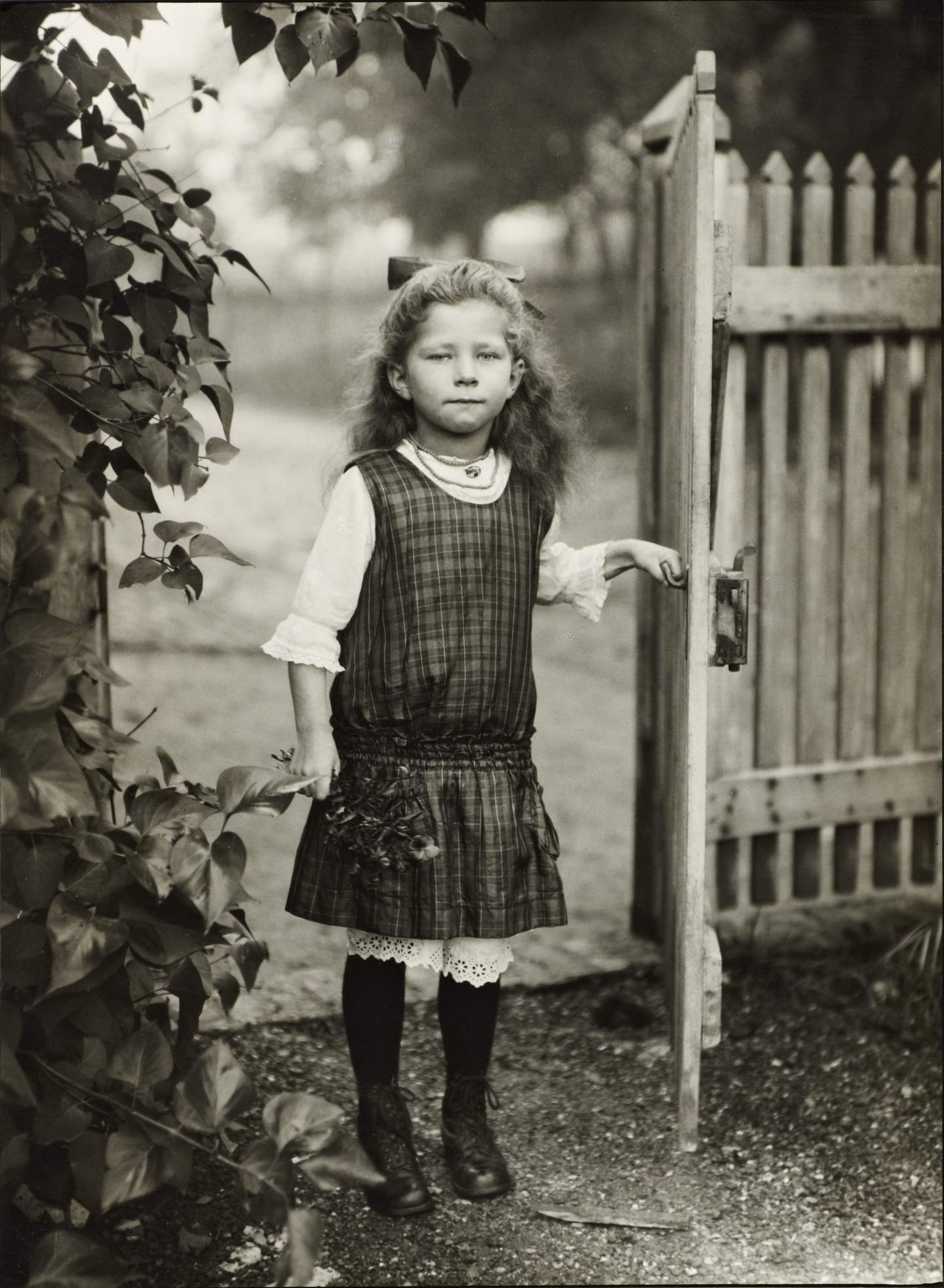
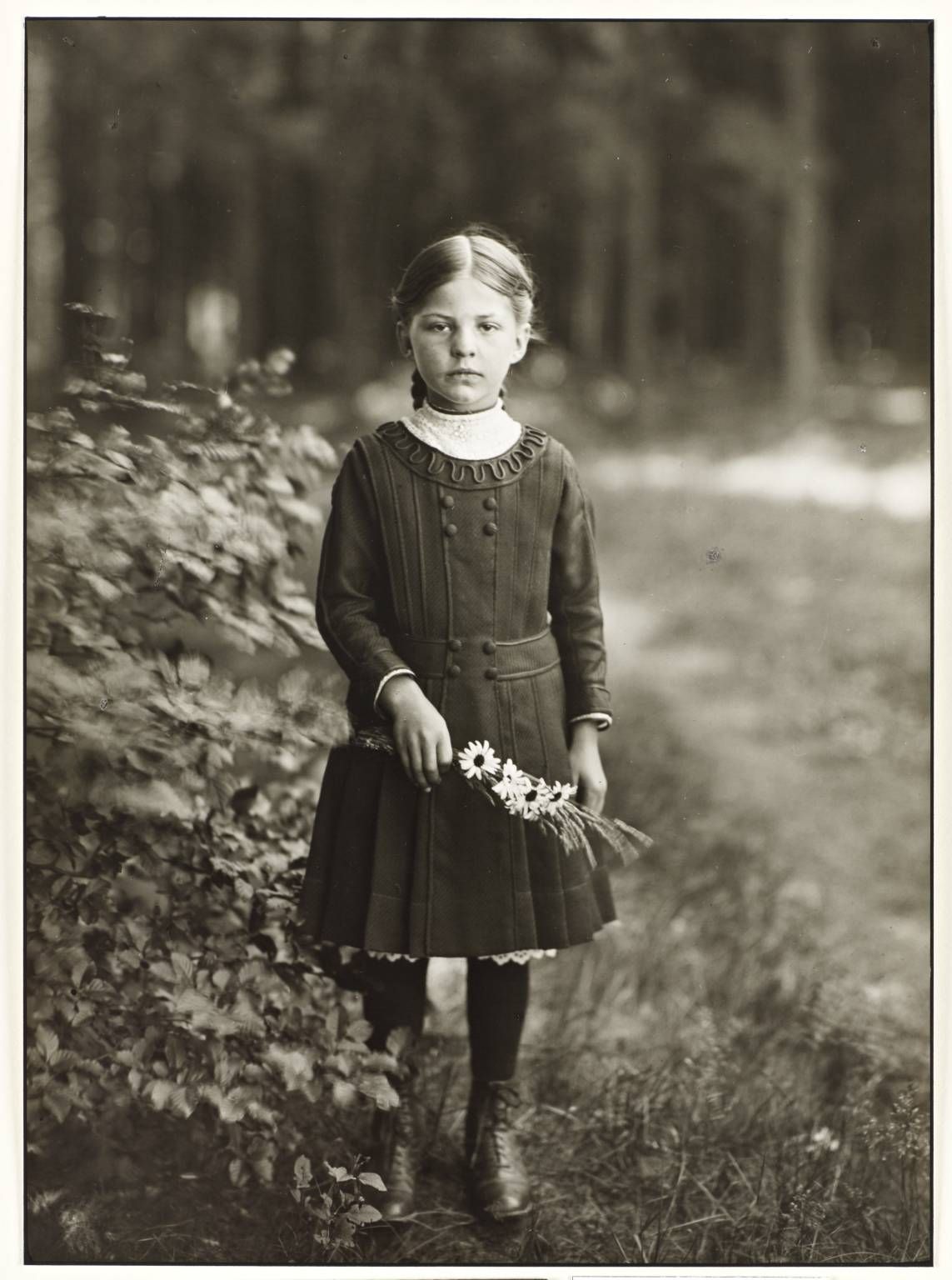
August Sander (1876-1964) ~ Farmer’s Child, 1919, printed 1990. Die Photographische Sammlung / SK Stiftung Kultur / August Sander Archiv, Cologne | src Tate Liverpool: Portraying a NationAugust Sander (1876-1964) ~ Farm Girl, ca. 1910, printed 1990 | src Tate and National Galleries of Scotland
Portraying a Nation, which exhibits Dix and Sander as a pair for the first time, reflects a pivotal point in Germany’s history, as it introduced democratic rule in the aftermath of the First World War. The period was one of experimentation and innovation across the visual arts, during which both artists were concerned with representing the extremes of society, from the flourishing cabaret culture to intense poverty and civilian rebellions.
Featuring more than 300 paintings, drawings, prints and photographs, Portraying a Nation unites two complementary exhibitions. Otto Dix: The Evil Eye explores Dix’s harshly realistic depictions of German society and the brutality of war, while ARTIST ROOMS: August Sander presents photographs from Sander’s best known series People of the Twentieth Century, from the ARTIST ROOMS collection of international modern and contemporary art.
The exhibition focusses on the evolution of Dix’s work during his years in Düsseldorf, from 1922 to 1925, when he became one of the foremost New Objectivity painters, a movement exploring a new style of artistic representation following the First World War. Dix’s paintings are vitriolic reflections on German society, commenting on the country’s stark divisions. His work represents the people who made up these contradictions in society with highlights including Portrait of the Photographer Hugo Erfurth with Dog 1923, Self-Portrait with Easel 1926, as well as a large group of lesser known watercolours. Dix’s The War 1924 will also form a key element of the exhibition, a series of 50 etchings made as a reaction to and representation of the profound effect of his personal experiences of fighting in the First World War.
Sander’s photographs also observe a cross-section of society to present a collective portrait of a nation. Sander commenced his major photographic project People of the Twentieth Century in 1910, an ambitious task that occupied him until the 1950s. The project resulted in more than 600 images in which people were categorised into what he described as ‘types’, including artists, musicians, circus workers, farmers and, in the late 1930s, images of Nazi officers. More than 140 photographs from the ARTIST ROOMS collection will be displayed to create a large-scale timeline of Weimar Germany, placing individual subjects against a backdrop of the era’s tumultuous cultural and political history.
Text quoted from Tate gallery Liverpool: Portraying a Nation: Germany 1919-1933







 un regard oblique