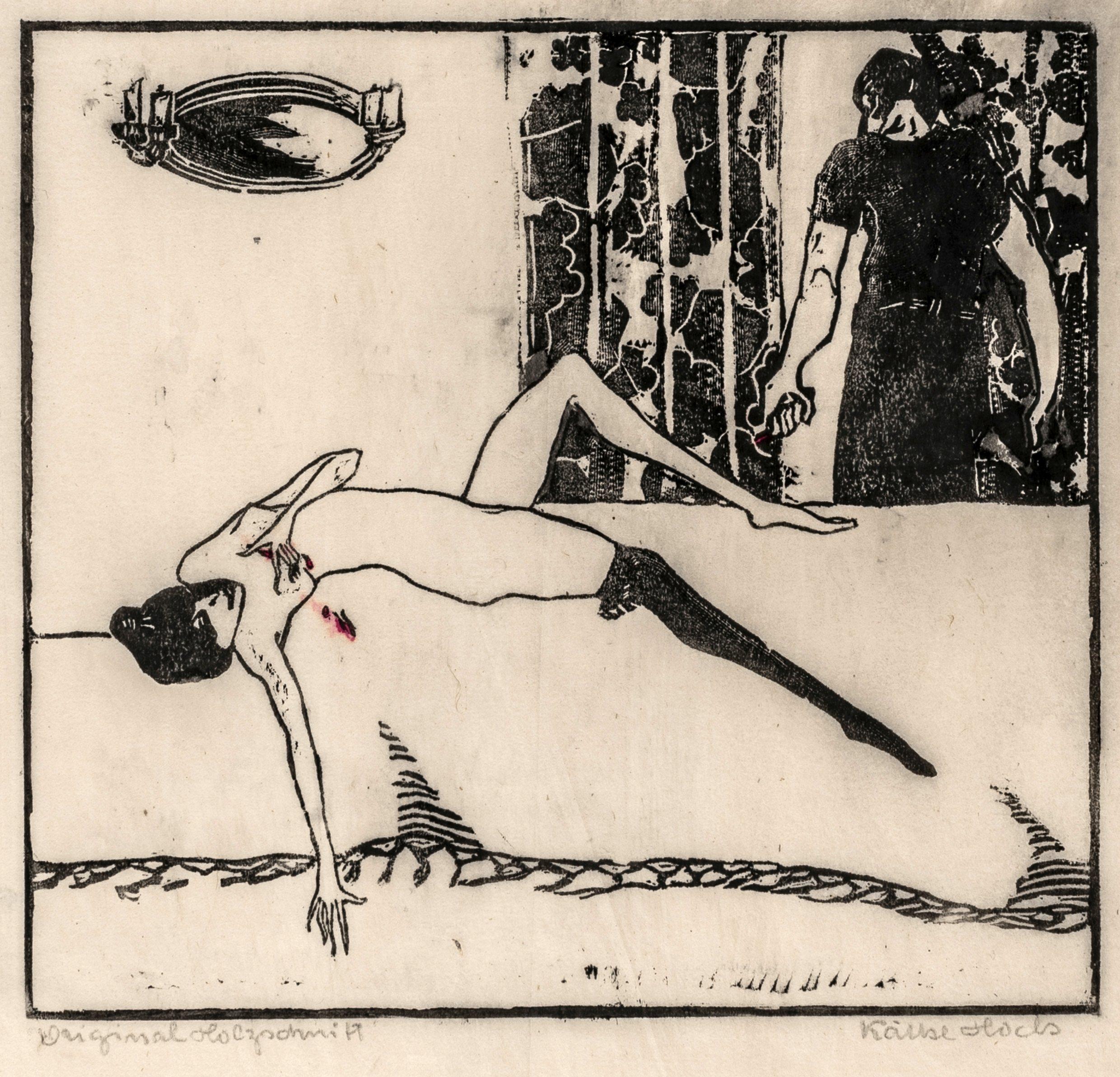
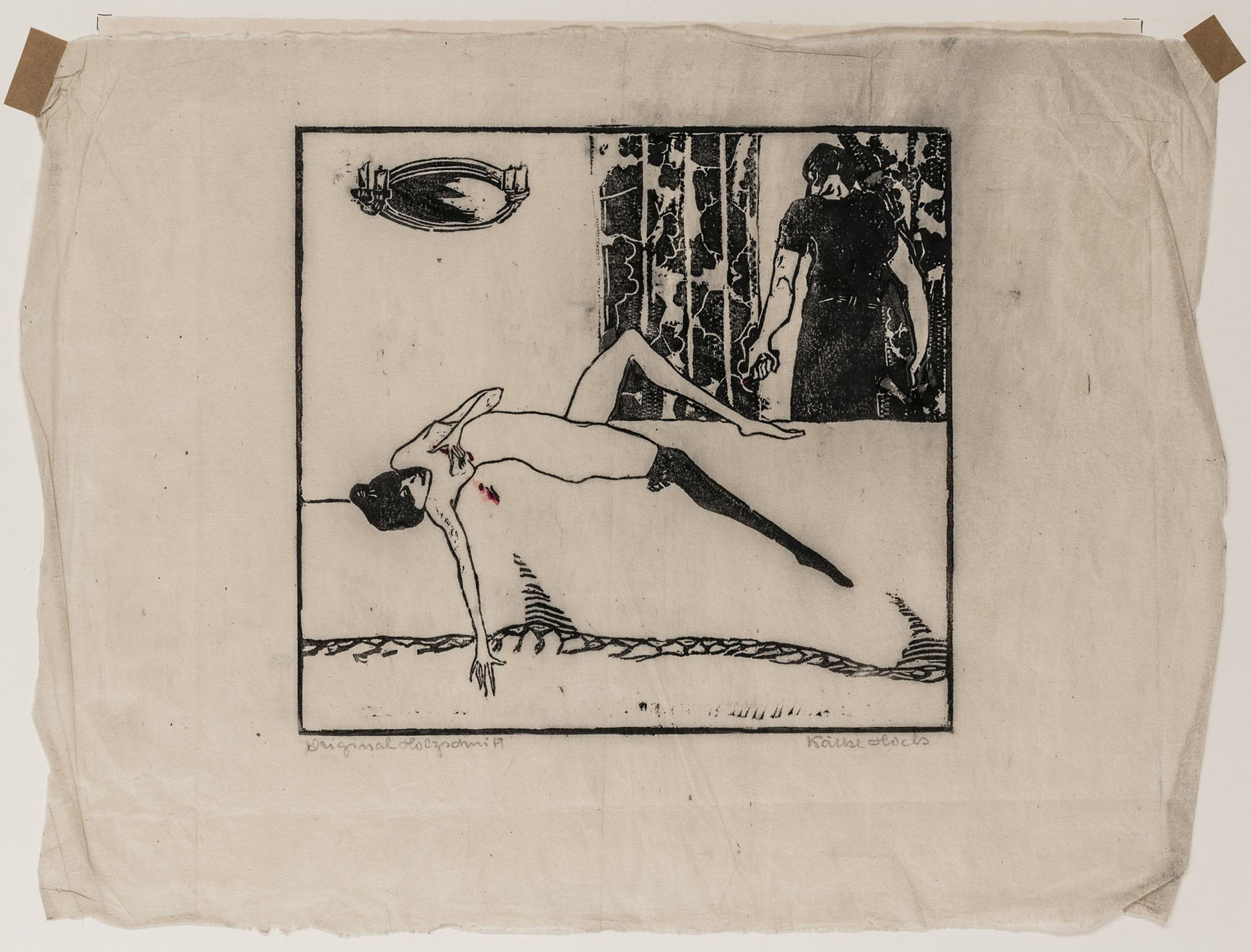
Käte Hoch (1873-1933) ~ Untitled (Reclining female nude), ca. 1910. Woodcut on thin Japan paper, with red coloring, probably added later. Inscribed “original woodcut” at the bottom left | src Nosbüsch & StuckeKäte Hoch (1873-1933) ~ Ohne Titel (Liegender weiblicher Akt). Holzschnitt auf dünnem Japan, mit punktuellem, wohl später hinzugefügtem roten Kolorit, um 1910 | src Nosbüsch & Stucke
Die deutsche Malerin Käte Hoch (1873-1933) studierte von 1891-1894 an der Münchner Damenakademie. Ab 1906 betrieb sie eine eigene Mal- und Zeichenschule in München und nahm u.a. an Ausstellungen der Münchner Secession und des Kunstvereins München teil. 1933 stürmte ein SA-Trupp ihre Wohnung und ihr Atelier in Schwabing, wobei der Großteil ihrer Werke zerstört wurde.
The German painter Käte Hoch (1873-1933) studied at the Munich Women’s Academy from 1891-1894. From 1906 she ran her own painting and drawing school in Munich and took part in exhibitions at the Munich Secession and the Munich Art Association, among others. In 1933, an SA troop stormed her apartment and studio in Schwabing, destroying most of her work.
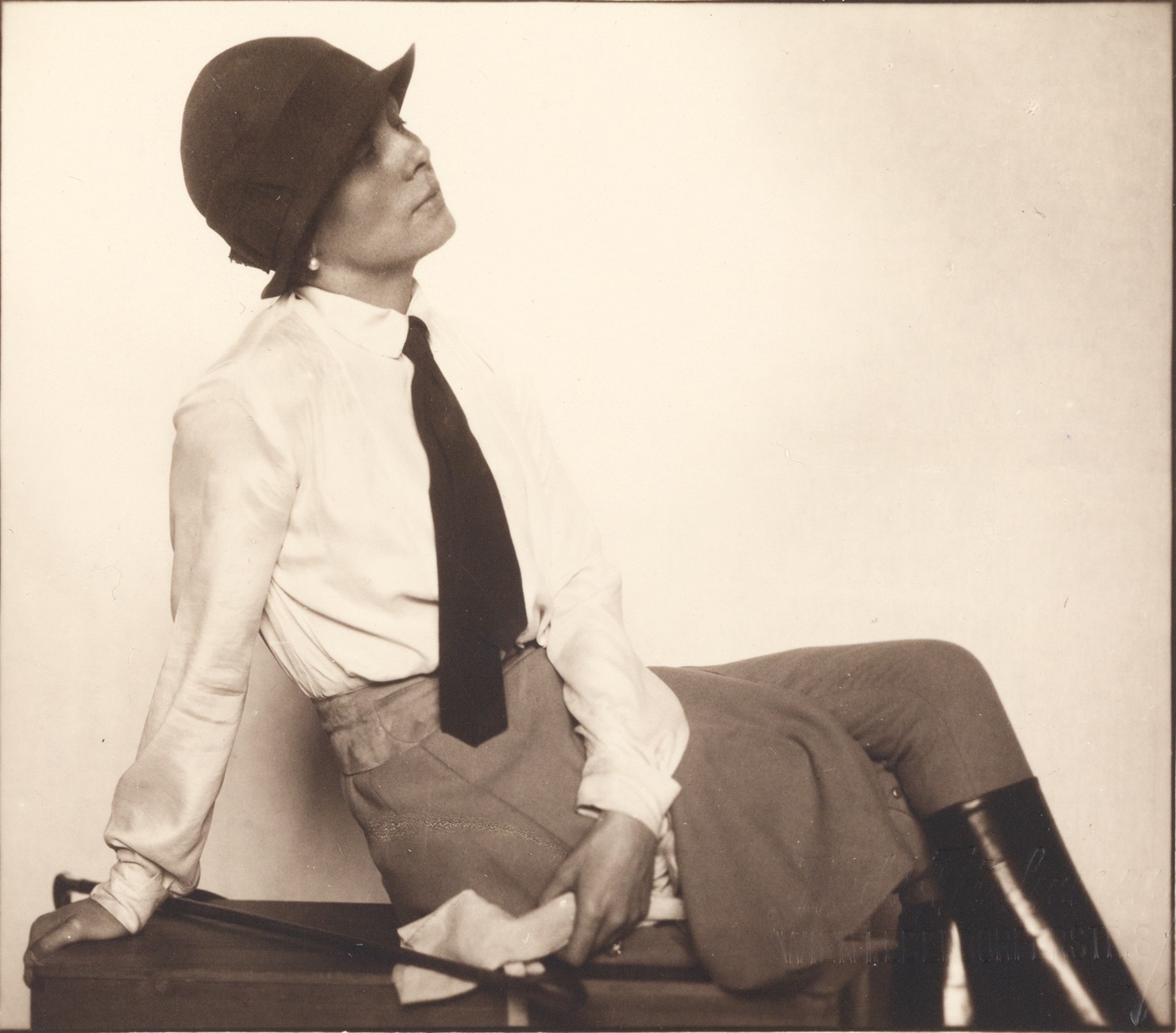
Trude Fleischmann (1895–1990) ~ Helene Thimig in riding outfit, Vienna, 1929. Vintage silver print, sepia-toned, on postcard paper | src OstlichtTrude Fleischmann (1895–1990) ~ Helene Thimig in riding outfit, Vienna, 1929. Vintage silver print, sepia-toned, on postcard paper
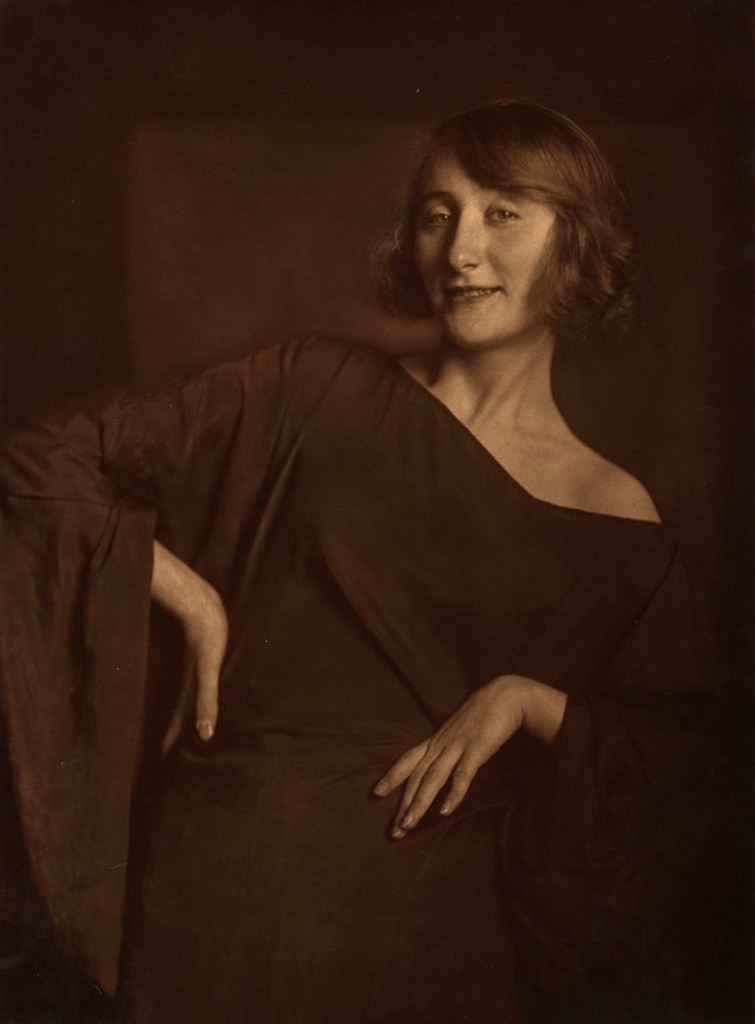
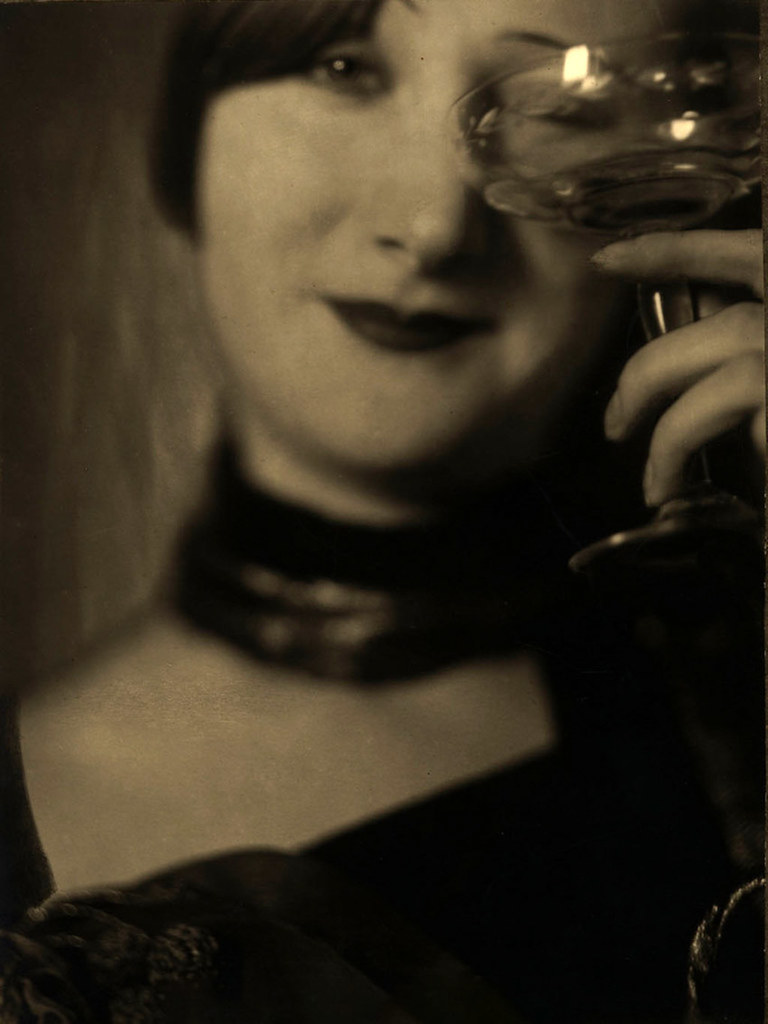
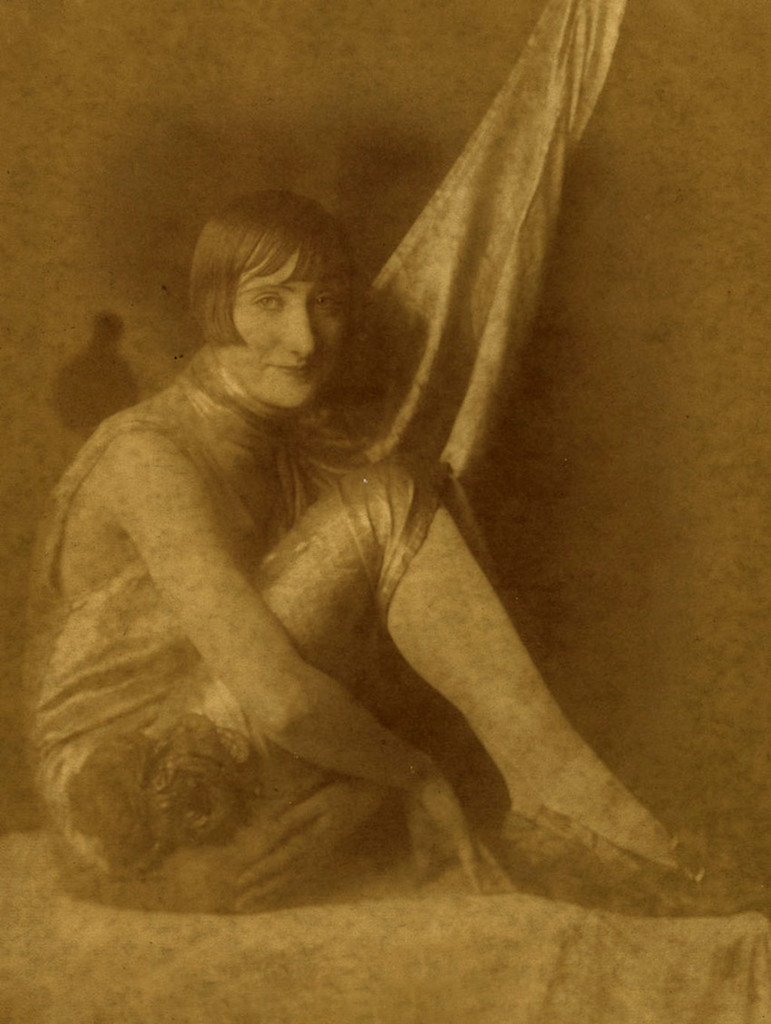
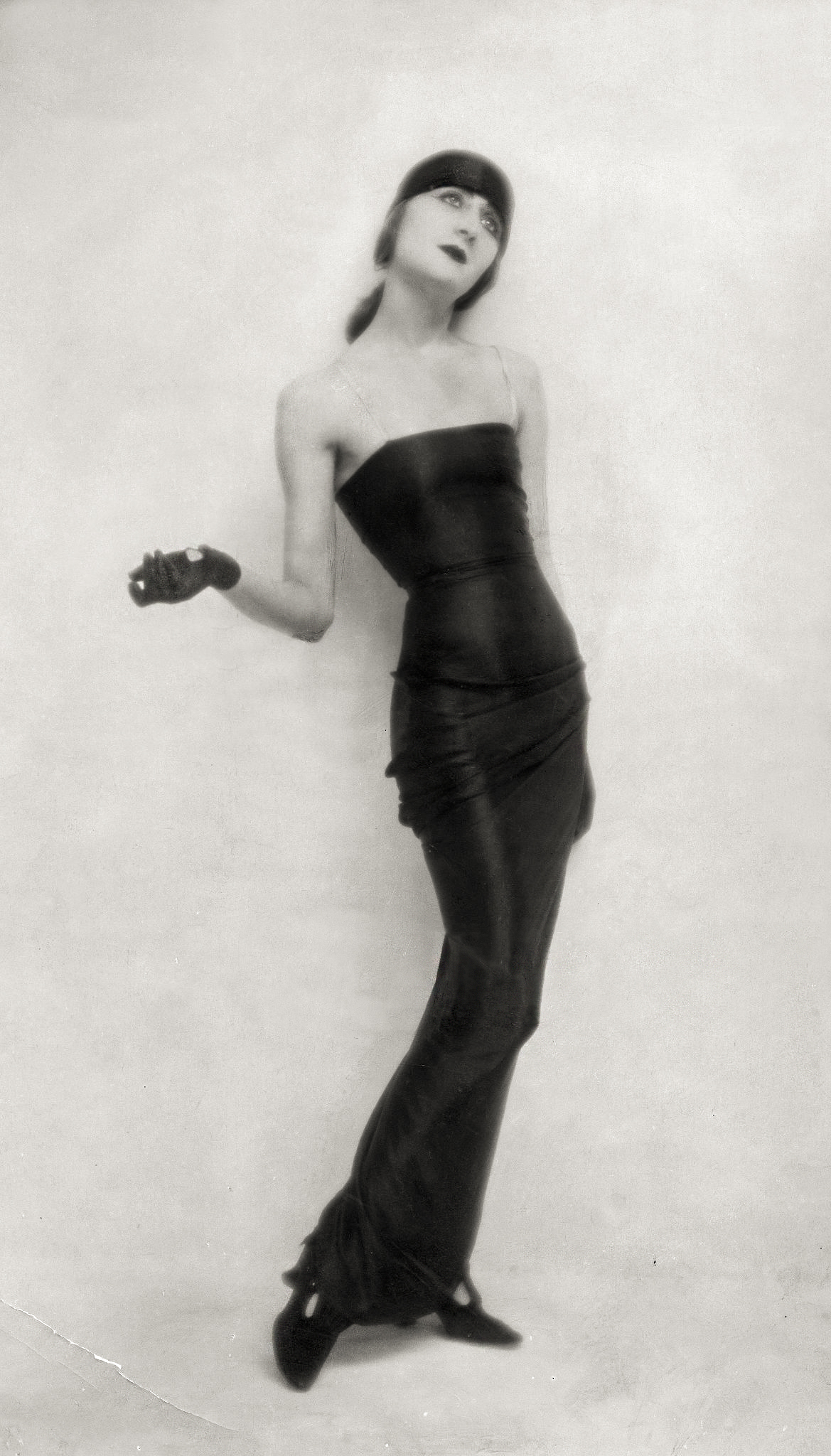
Privatfoto von Margo Lion, from a Fotoalbum (1920-1932). From Marcellus Schiffer und Margo Lion Archiv at Akademie der KünstePrivatfoto von Margo Lion, from a Fotoalbum (1920-1932). From Marcellus Schiffer und Margo Lion Archiv at Akademie der KünsteRolf Mahrenholz ~ Margo Lion in den “Hetärengesprächen”(Dialogue of the Courtesans). Der Querschnitt B.7, H.8, August 1927 | src arthistoricumPrivatfoto von Margo Lion, from a Fotoalbum (1920-1932). From Marcellus Schiffer und Margo Lion Archiv at Akademie der KünsteAtelier Willinger :: Porträtfoto von Margo Lion, signiert (Seitenprofil). | src Akademie der Künste, BerlinPrivatfoto von Margo Lion, from a Fotoalbum (1920-1932). From Marcellus Schiffer und Margo Lion Archiv at Akademie der KünstePorträt und Atelierfoto von Margo Lion. Postkarte, signiert. | src Marcellus Schiffer und Margo Lion Archiv at Akademie der Künste
Privatfoto von Margo Lion, from a Fotoalbum (1920-1932). From Marcellus Schiffer und Margo Lion Archiv at Akademie der Künste, BerlinPrivatfoto von Margo Lion, from a Fotoalbum (1920-1932). From Marcellus Schiffer und Margo Lion Archiv at Akademie der Künste, BerlinPrivatfoto von Margo Lion, from a Fotoalbum (1920-1932). From Marcellus Schiffer und Margo Lion Archiv at Akademie der Künste, BerlinPrivatfoto von Margo Lion, from a Fotoalbum (1920-1932). From Marcellus Schiffer und Margo Lion Archiv at Akademie der Künste, BerlinPrivatfoto von Margo Lion, from a Fotoalbum (1920-1932). From Marcellus Schiffer und Margo Lion Archiv at Akademie der Künst, BerlinPrivatfoto von Margo Lion, from a Fotoalbum (1920-1932). From Marcellus Schiffer und Margo Lion Archiv at Akademie der Künste, BerlinPrivatfoto von Margo Lion, from a Fotoalbum (1920-1932). From Marcellus Schiffer und Margo Lion Archiv at Akademie der Künste, BerlinPrivatfoto von Margo Lion, from a Fotoalbum (1920-1932). From Marcellus Schiffer und Margo Lion Archiv at Akademie der Künste, Berlin
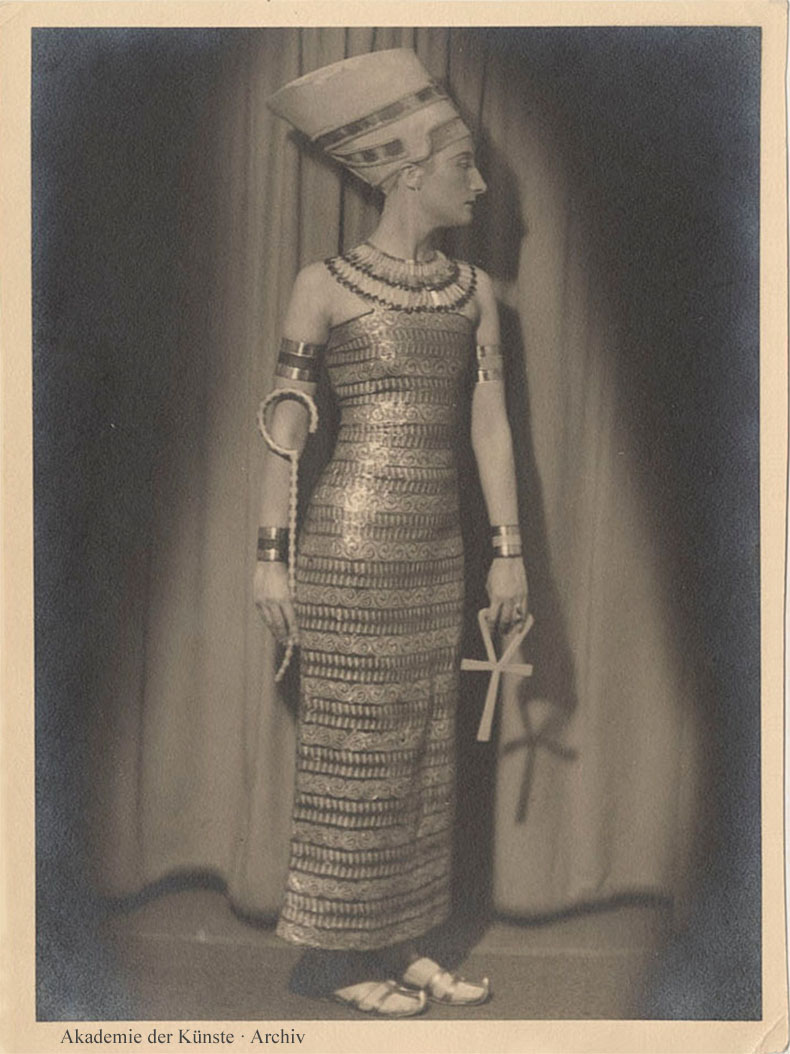
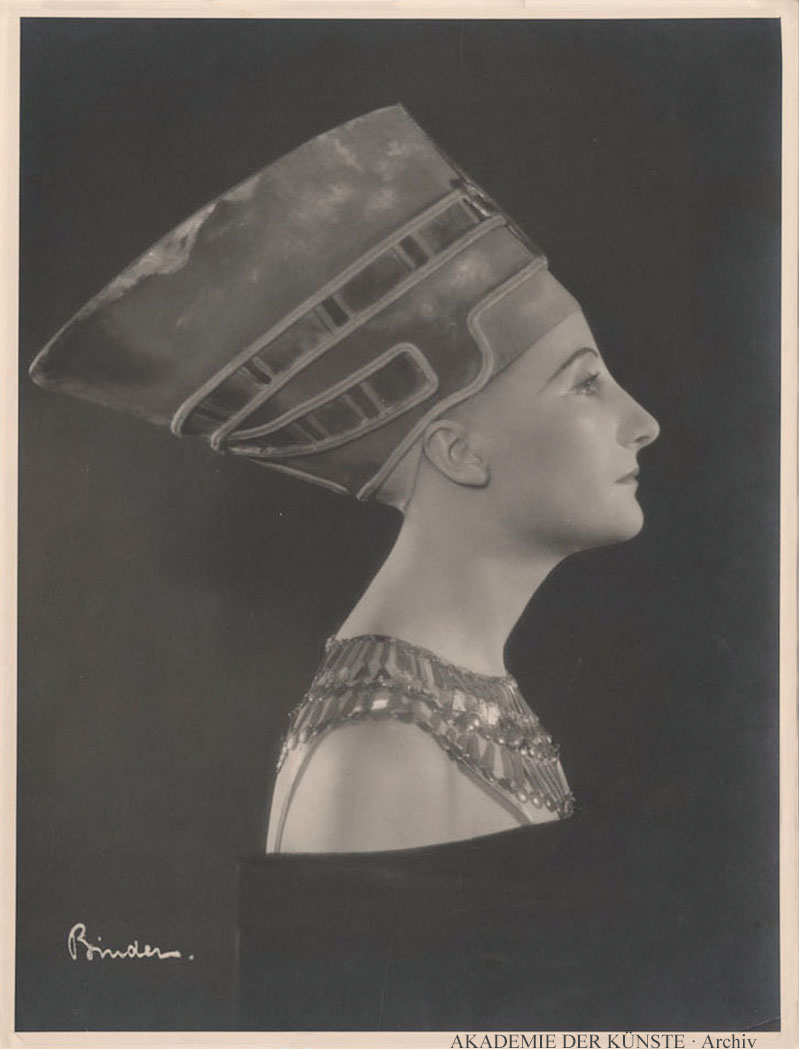
Margo Lion, cabaret artist, chansonniere, actress (1899-1989). Portrait in the role of Nefertiti in the revue ‘Quick’ by Rudolf Nelson. Music by Friedrich Hollaender. Text: Marcellus Schiffer; ca. 1930. Photographer: Mundphoto, F. Grimm. Published in ‘Berliner Morgenpost’; 20-09-1930 | src Getty ImagesMargo Lion als Nofretete in der Revue von Friedrich Hollaender Quick, 19.9.1930. Fotograf: Mundophot src Akademie der Künste ArchivAtelier Binder ~ Margo Lion als Nofretete in der Revue von Friedrich Hollaender Quick, Pr 19.9.1930 | src Akademie der Künste Archiv
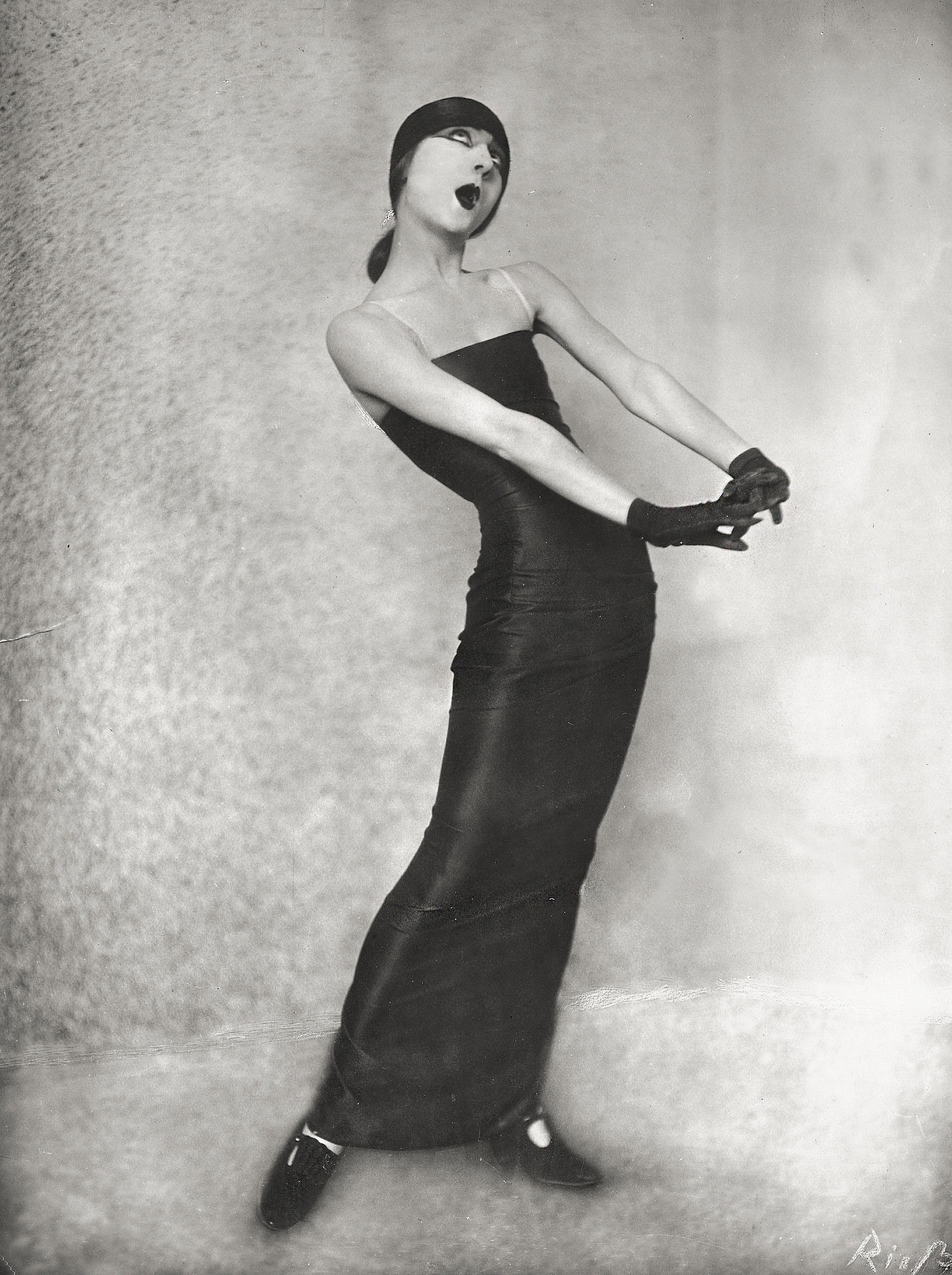
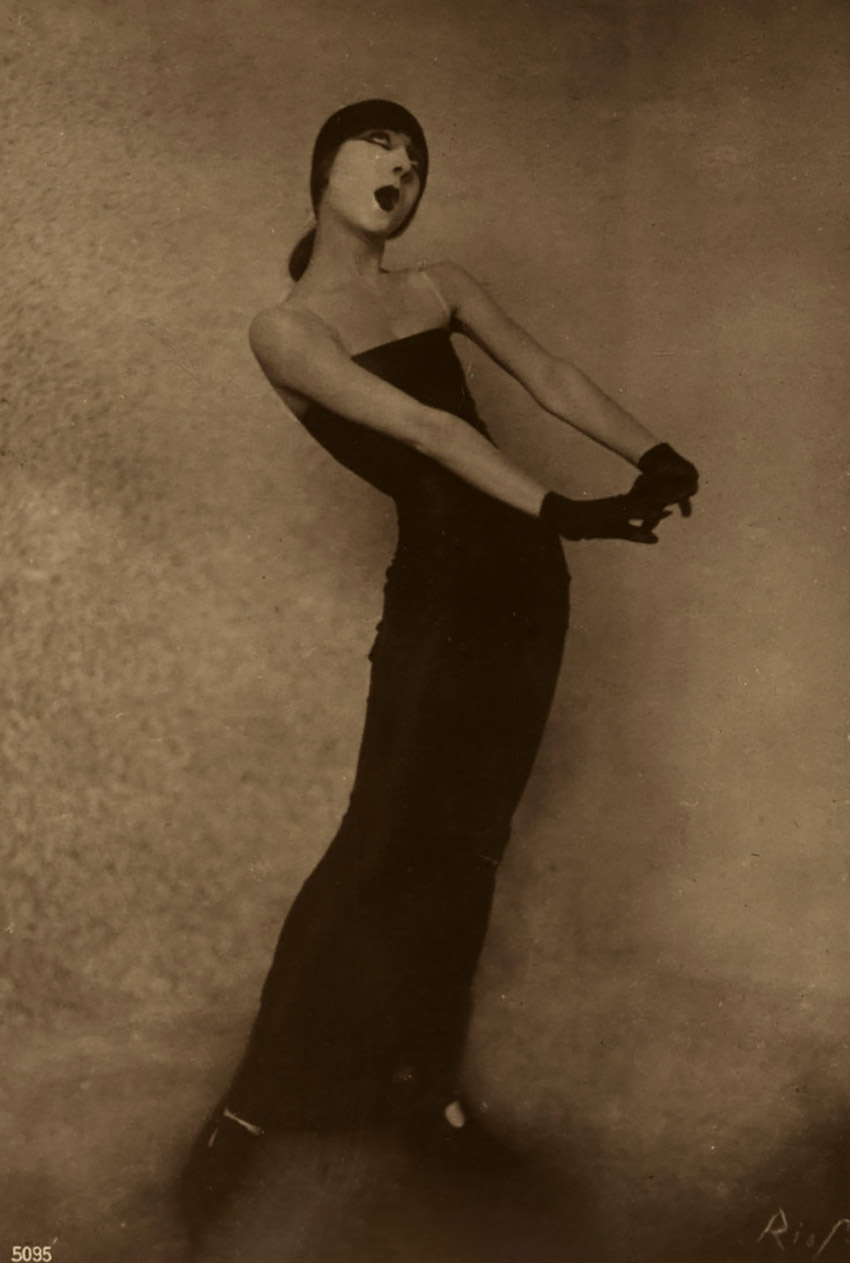
Frieda Riess :: Portrait of cabaret artist Margo Lion singing the couplet ‘Die Linie der Mode’ in the Wilde Bühne in Berlin, 1924. Music by Mischa Spoliansky, Text: Marcellus Schiffer | src Getty ImagesFrieda Rieß:: Margo Lion singing the couplet ‘Die Linie der Mode’ in the Wilde Bühne, Berlin, 1924. Music by Mischa Spoliansky, Text: Marcellus Schiffer | src Marcellus Schiffer und Margo Lion Archiv at Akademie der Künste, BerlinAtelier Eberth :: Margo Lion, cabaret artist and actress (1899-1989). Portrait singing the couplet ‘Die Linie der Mode’ in the Wilde Bühne in Berlin. Published in Berliner Illustrirte Zeitung BIZ 44/1923. | src Getty Images
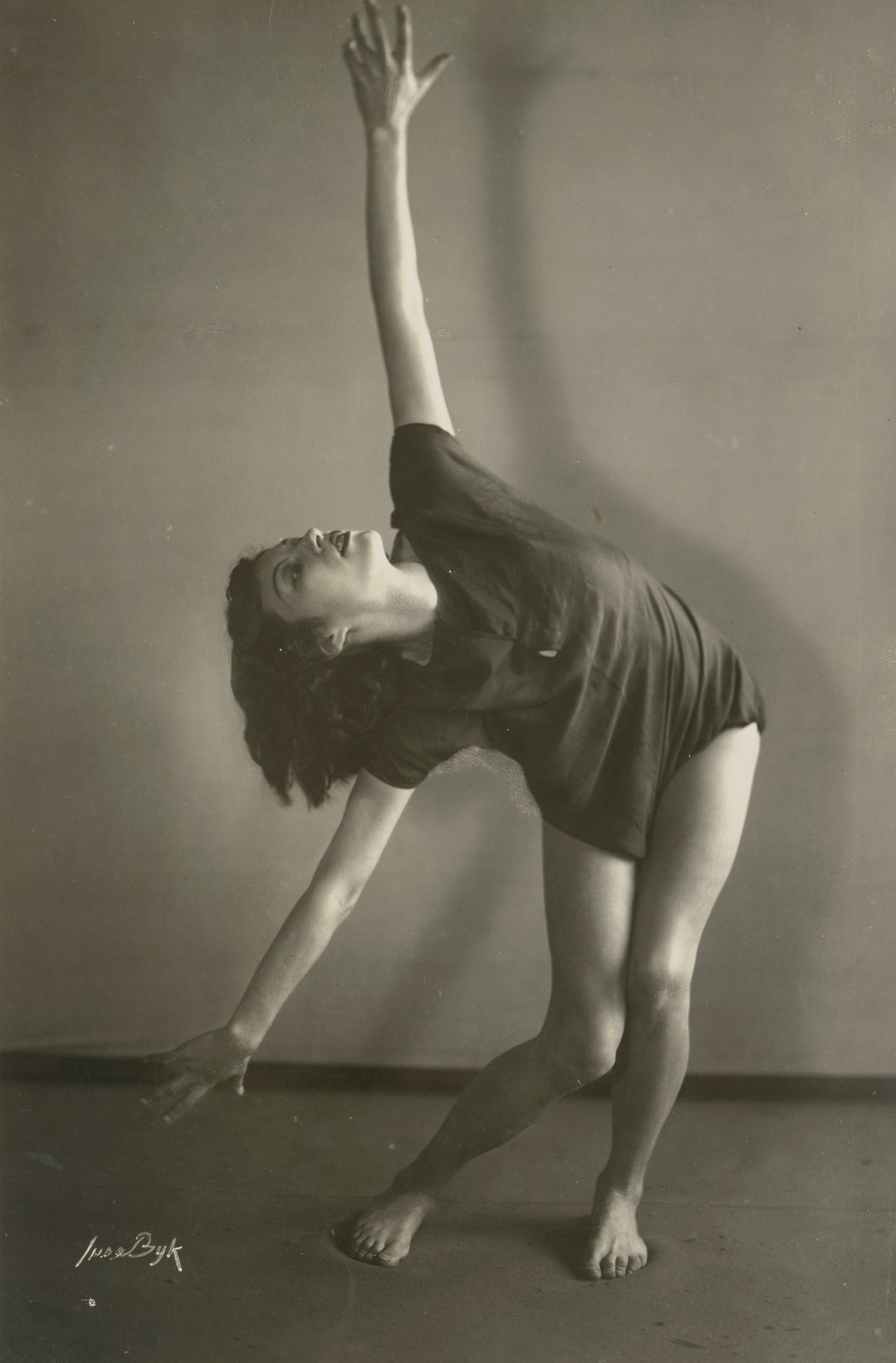
“Vera Skoronel hatte ein System entworfen, um dem freien Tanz ein festes Gerüst zu geben: da kurbelten, kreisten, wirbelten wir die Gliedmaßen ungeachtet der normalen Körpergesetze wild durcheinander; bekämpften Schwerkraft und Gleichgewicht, warfen unzählige Sprünge in die Luft oder stießen sie in die Erde; zwangen Muskeln, sich in anderen Dimensionen zu bewegen. […] Erst wenn der Körper frei ist von jeglichen Hemmungen, zeigt sich der beseelte Ausdruck im Tanz.” Mit diesen Worten beschrieb die Skoronel-Schülerin Ilse Meuthner den Eindruck, den ihre Lehrerin in den 1920er-Jahren auf sie machte. Das atemberaubende Tanzgeschehen, das vor einhundert Jahren in Berlin stattfand, ist Thema unserer aktuellen Ausstellung ‚Der absolute Tanz. Tänzerinnen der Weimarer Republik.‘
“Vera Skoronel designed a system to give free dance a solid framework: we cranked, gyrated, whirled our limbs wildly, regardless of the normal laws of the body; we fought gravity and balance, threw countless jumps in the air or pushed them into the ground; forced muscles to move in other dimensions. […] Only when the body is free of any inhibitions does the soulful expression appear in the dance.” With these words, the Skoronel student Ilse Meuthner described the impression her teacher made on her in the 1920s. The breathtaking dance that took place in Berlin a hundred years ago is the subject of our current exhibition ‘Absolute Dance. Dancers of the Weimar Republic.’
Mit expressiven Bewegungen, extravaganten Erscheinungsbildern und expliziten Vorstellungen von der eigenen Rolle in der Welt sprengten Tänzerinnen wie Vera Skoronel, Claire Bauroff, Tatjana Barbakoff und Anita Berber die Konventionen und Klischees ihrer Zeit. Es waren die Weimarer Jahre, ein Gefühl von Aufbruch lag in der Luft. Am 30. November 1918, also heute vor 102 Jahren, war das Frauenwahlrecht in Kraft getreten, bald darauf wurden erstmals weibliche Sportlerinnen zur Olympiade zugelassen. Während immer mehr Bürgerinnen von den Möglichkeiten Gebrauch machten, die vorangegangenen Generationen von Frauen verwehrt geblieben waren, wurden vor allem die Tänzerinnen dieser Ära zu Ikonen eines modernen Körper- und Selbstbewusstseins, das neben der Gesellschaft im Großen und Ganzen auch die bildende Kunst prägen sollte. Im Berlin der 1920er-Jahre belebte das neue Lebensgefühl auch die fruchtbare Verbindung von Tanz und Skulptur, welche auch Kolbe so wichtig war. Unsere neue Ausstellung „Der absolute Tanz – Tänzerinnen der Weimarer Republik“, die im Februar beginnt, spürt den radikalen Neuerungen und symbiotischen Wechselwirkungen nach, denen wir so vieles verdanken.
With expressive movements, extravagant appearances and explicit ideas of their own role in the world, dancers such as Vera Skoronel, Claire Bauroff, Tatjana Barbakoff and Anita Berber broke the conventions and clichés of their time. It was the Weimar years, and a sense of breakthrough was in the air. On November 30, 1918, 102 years ago today, women’s suffrage came into force, and soon afterwards female athletes were admitted to the Olympics for the first time. While more and more women made use of the opportunities that previous generations of women had been denied, the dancers of this era in particular became icons of a modern body and self-confidence that was to shape society as a whole as well as the fine arts. In Berlin in the 1920s, the new attitude towards life also enlivened the fruitful connection between dance and sculpture, which was also so important to Kolbe. Our new exhibition “Absolute Dance – Dancers of the Weimar Republic”, which begins in February, traces the radical innovations and symbiotic interactions to which we owe so much.
Otto Dix (1891-1969) ~ Bildnis der Journalistin Sylvia von Harden, 1926. Oil and tempera on wood | src Centre Pompidou
Journaliste à Berlin dans les années 1920, Sylvia von Harden (1894-1963) s’affiche en intellectuelle émancipée par une pose nonchalante. Otto Dix contrarie son arrogance par le détail d’un bas défait. Sa robe-sac à gros carreaux rouges détonne avec l’environnement rose, typique de l’art nouveau. Le style réaliste, froid et satirique est caractéristique du mouvement de la Nouvelle Objectivité [Neue Sachlichkeit] auquel appartient le peintre. Il s’inspire des maîtres allemands du début du 16e siècle (Grünewald, Cranach et Holbein), par la technique de la tempera sur bois et l’exhibition d’une intéressante laideur. | src Centre Pompidou
Sylvia von Harden (1894-1963) was a journalist in Berlin in the 1920s. Her nonchalant stance is a statement of her emancipated intellectual role. Otto Dix undermines her arrogance with the detail of a loose stocking and her rather awkward pose. Her red-checkered sack dress contrast with the pink environment, typically Art Nouveau. The cold, satirical realism typifies the New Objectivity [Neue Sachlichkeit] movement to which the painter belonged. lnspired by early 16th-century German masters (Grünewald, Cranach and Holbein), he embraced the tempera on wood panel technique as well as the choice to exhibit the ugliness. | src Centre Pompidou
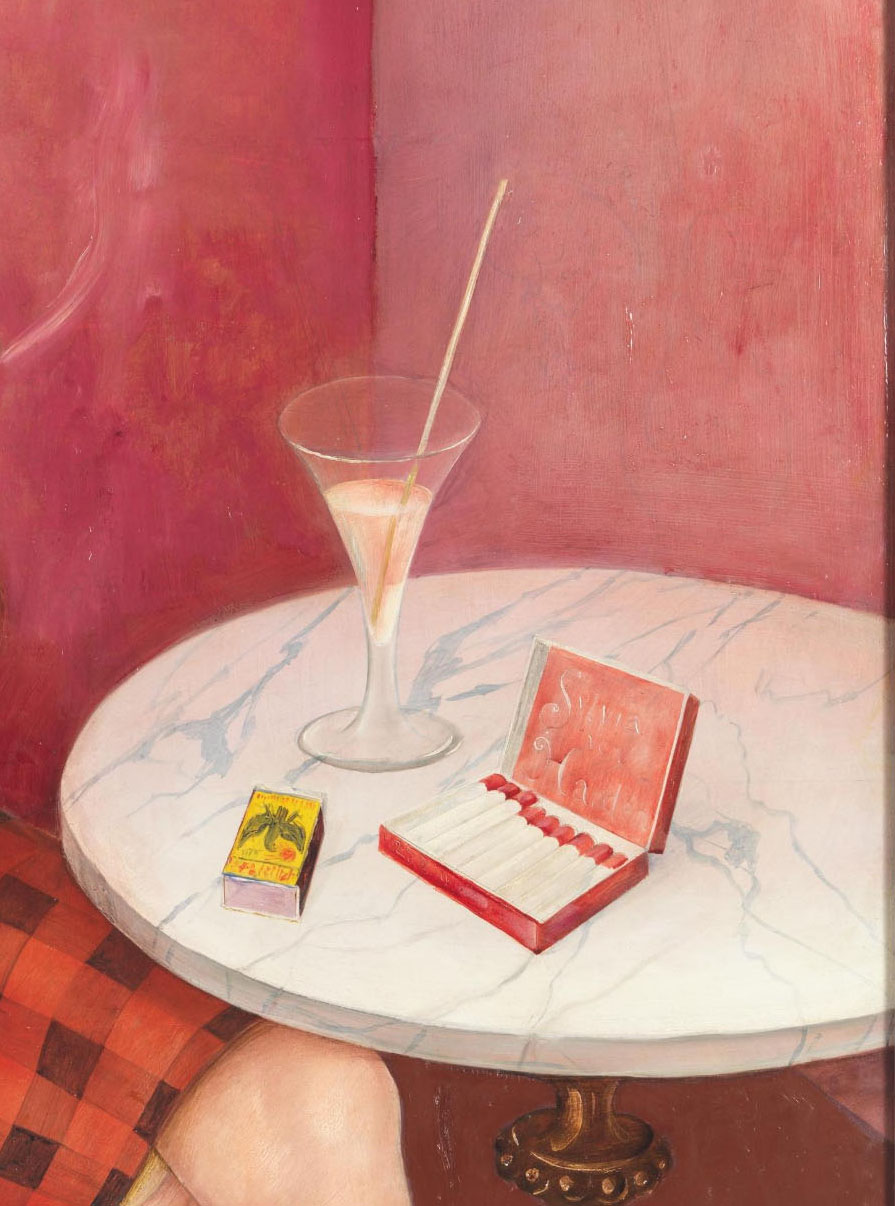
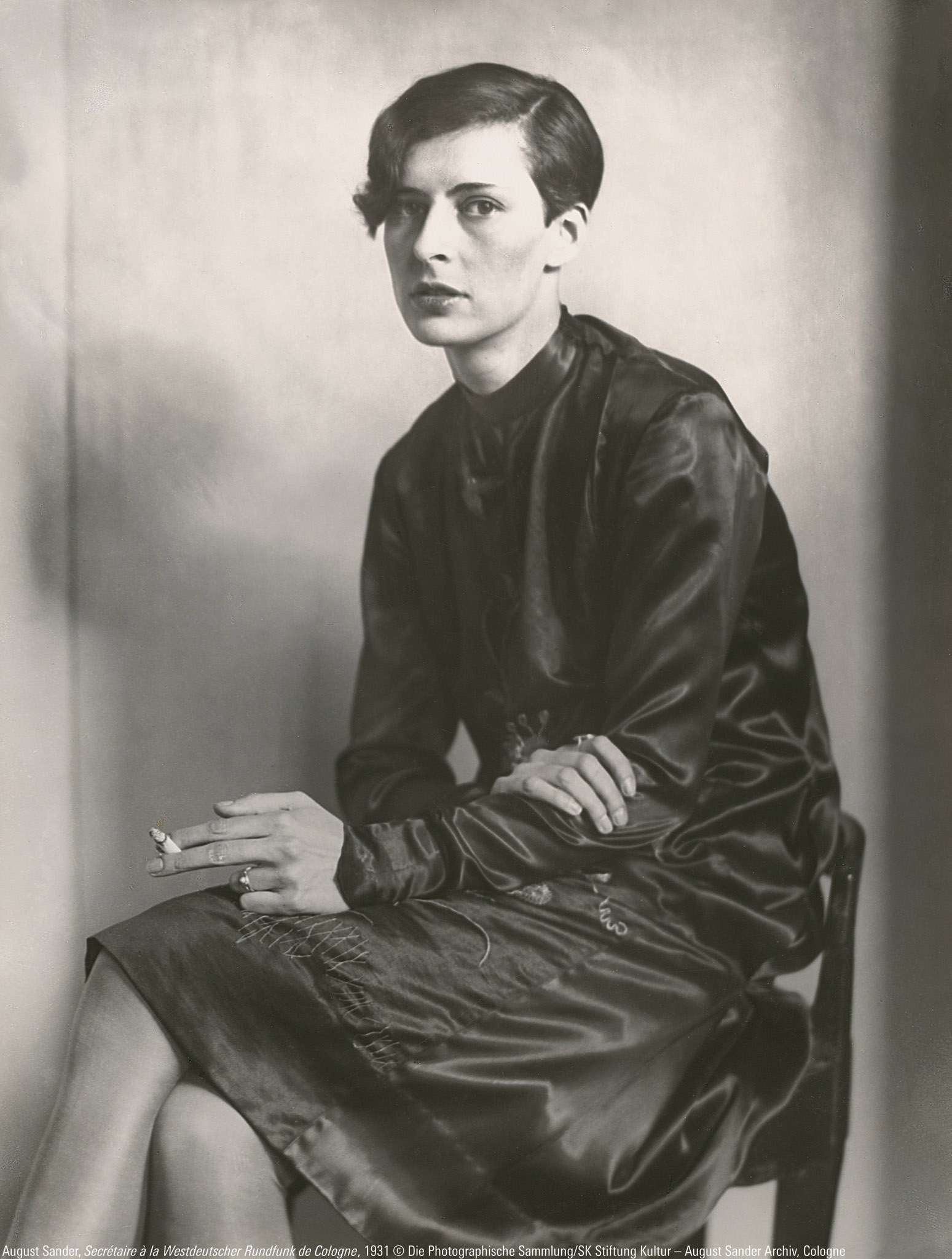
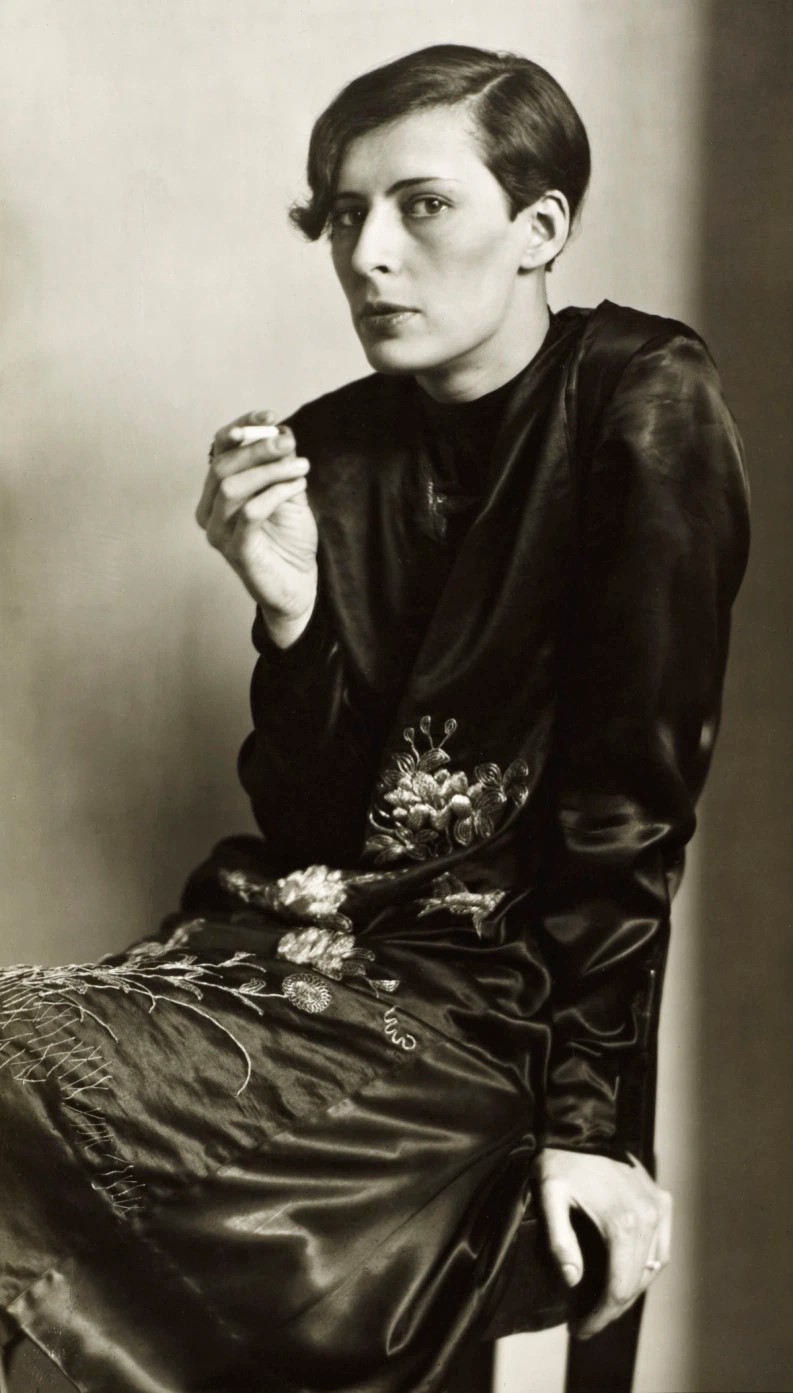
Note the inscription of her aristocratic name “Sylvia von Harden” on the inner cover of the cigarette box Detail from: Otto Dix ~ Bildnis der Journalistin Sylvia von Harden, 1926. Huile et tempera sur boisAugust Sander (1876-1964) ~ Secretary at the Westdeutscher Rundfunk in Cologne [Sylvia von Harden], 1931 | src Tate GalleryAugust Sander (1876-1964) ~ Sekretärin beim Westdeutscher Rundfunk in Köln [Sylvia von Harden], 1931 | src Centre PompidouOtto Dix (1891-1969) ~ Bildnis der Journalistin Sylvia von Harden, 1926 (scan)
Installé à Berlin entre 1925 et 1927, Dix peint une série de portraits remarquables. Maintes fois reproduit et exposé, celui de la journaliste Sylvia von Harden, de son vrai nom Sylvia Lehr (1894-1963), est l’un des plus fascinants. Il offre une véritable synthèse d’une recherche picturale qui s’inscrit dans ce que le critique Gustav Hartlaub désigne comme « l’aile gauche vériste » de la Neue Sachlichkeit [Nouvelle objectivité]. La représentation sans complaisance d’un type humain à travers ses attributs s’exprime dans le choix d’une intellectuelle émancipée des années 1920, aux allures masculines, fumant et buvant seule dans un café. […] L’image de la journaliste, que Dix a rencontrée au Romanische Café, haut-lieu berlinois du monde littéraire et artistique, reste pourtant ambiguë. Si dans ses souvenirs publiés à la fin des années 1950, la journaliste émigrée à Londres affirme que Dix l’a choisie pour son allure, représentative de cette époque, il semble que l’artiste la montre aussi en porte-à-faux par rapport à un type et un rôle dans lesquels elle paraît mal à l’aise. Sa pose nonchalante, mais peu naturelle, paraît trop ostentatoire ; son arrogance intellectuelle est contrariée par l’image de son bas défait ; et sa robe-sac à gros carreaux rouges l’oppose à l’environnement rose Art nouveau. Cette mise à nu semble avoir échappé au modèle. | src Centre Pompidou
Living in Berlin between 1925 and 1927, Dix painted a series of remarkable portraits. Reproduced and exhibited many times, that of the journalist Sylvia von Harden, whose real name was Sylvia Lehr (1894-1963), is one of the most fascinating. It offers a true synthesis of pictorial research which is part of what the critic Gustav Hartlaub designates as the “verist left wing” of the Neue Sachlichkeit [New Objectivity]. The uncompromising representation of a human type through its attributes is expressed in the choice of an emancipated intellectual from the 1920s, with masculine appearance, smoking and drinking alone in a café. […] The image of the journalist, whom Dix met at the Romanische Café, a Berlin hotspot for the literary and artistic world, nevertheless remains ambiguous. In her memories published at the end of the 1950s, the journalist who emigrated to London affirms that Dix chose her for her appearance, representative of that era, but it seems that the artist also shows her cantilevered from to a type and a role in which she seems uncomfortable. Her nonchalant, but unnatural pose seems too ostentatious; her intellectual arrogance is thwarted by the image of her undone stockings; and her large red check sack dress contrasts with the pink Art Nouveau environment. This exposure seems to have escaped the model.
Angela Lampe. Extrait du catalogue Collection art moderne – La collection du Centre Pompidou, Musée national d’art moderne , Paris, Centre Pompidou, 2007
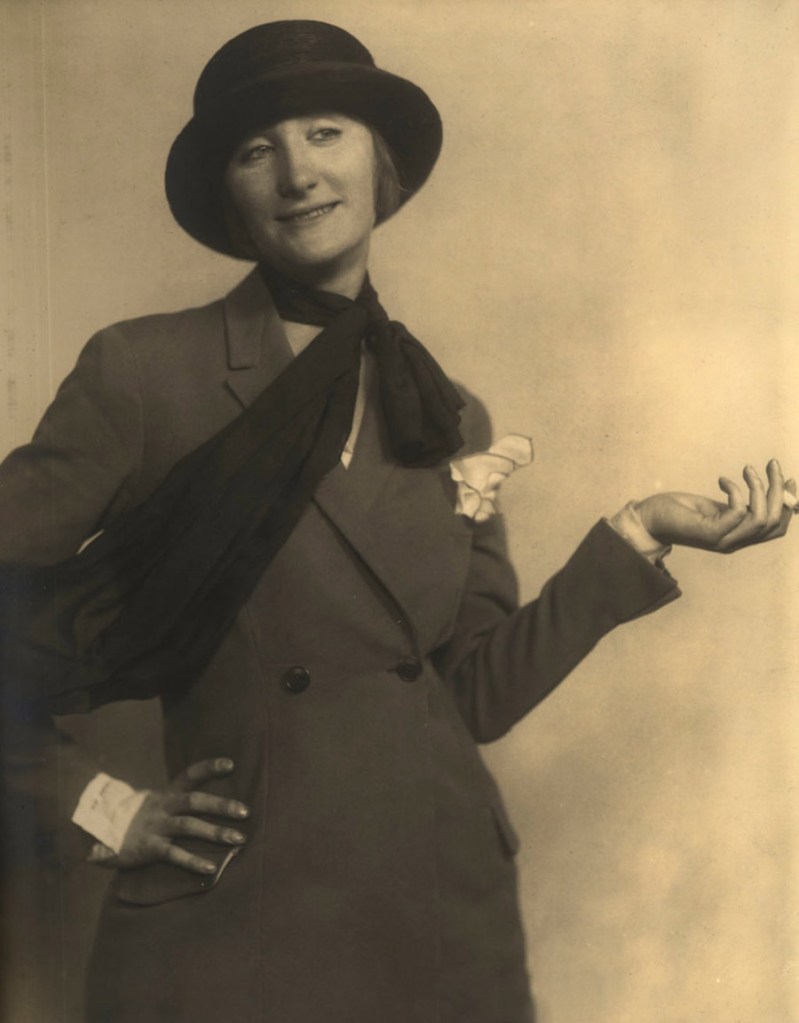
August Sander (1876-1964) ~ Secrétaire à la Westdeutscher Rundfunk de Cologne [Sylvia von Harden], 1931 | src Centre PompidouAugust Sander (1876-1964) ~ Sekretärin beim Westdeutscher Rundfunk in Köln [Sylvia von Harden], 1931 | src Centre PompidouAugust Sander (1876-1964) ~ Sekretärin beim Westdeutscher Rundfunk in Köln [Sylvia von Harden], 1931 | src Centre PompidouAugust Sander (1876-1964) ~ Secretary at West German Radio in Cologne [Sylvia von Harden], 1931, printed 1992 | src Tate Gallery













 un regard oblique