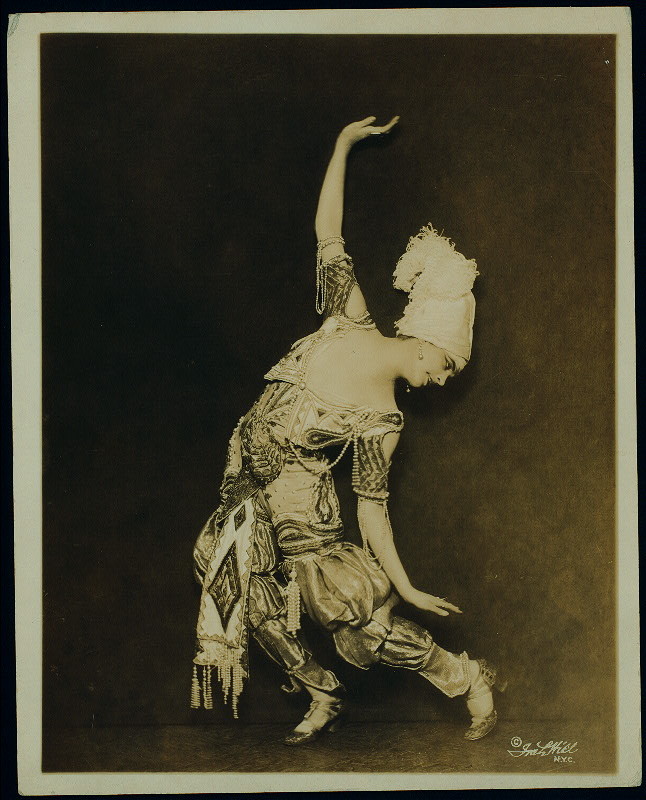
Ira Lawrence Hill :: Dancer Ruth St Denis in the Vaudeville version of the Dance of the Flower Arrangement, 1913 / src: NYPL
more [+] by this photographer / more [+] Ruth St. Denis posts
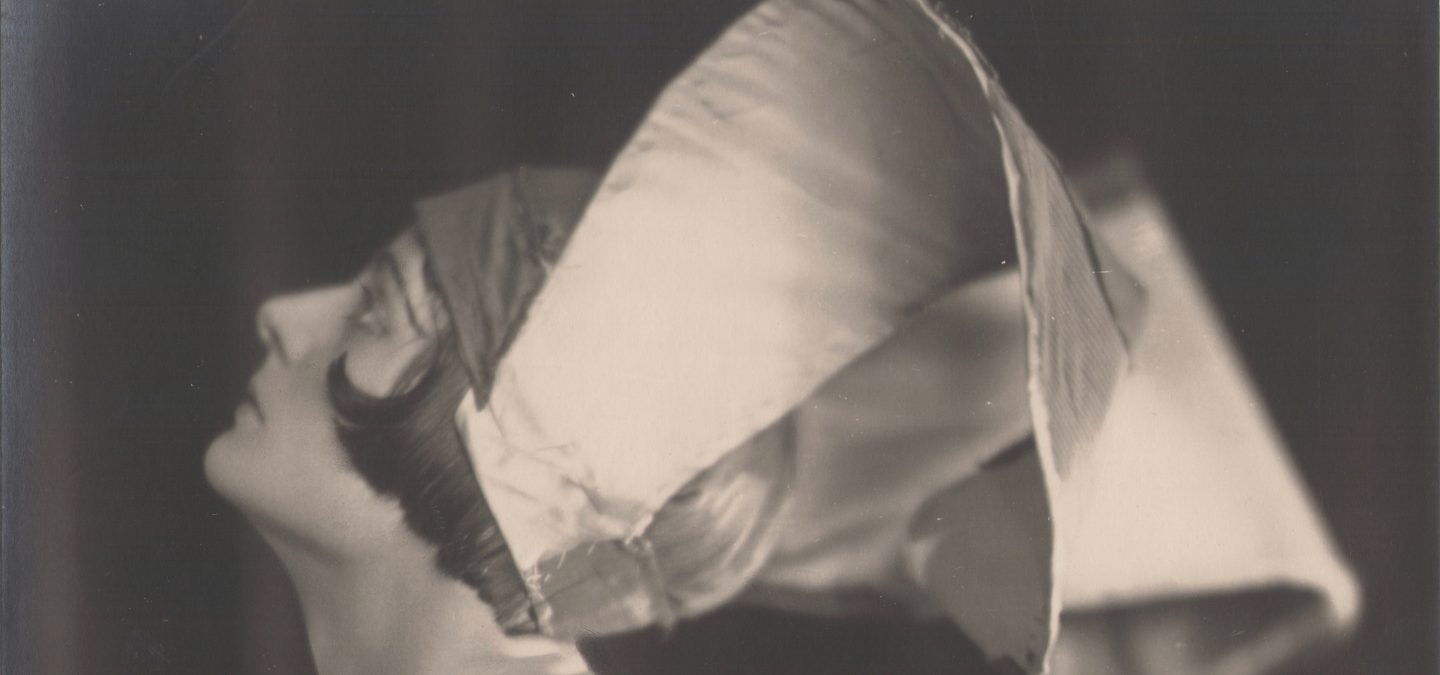
images that haunt us
 https://embedr.flickr.com/assets/client-code.js
A Geisha biting a Tenugui, 1920′s
“[She] rises to one knee and puts one end of her [tenugui] hand towel in her teeth, pulling on it with her right hand. This is a typical Kabuki gesture for a female character in the throes of a deep emotion.” According to “The Art of Kabuki” edited by Samuel L. Leiter, first published in 1979, page 114. / src: Blue Ruin
 https://embedr.flickr.com/assets/client-code.js
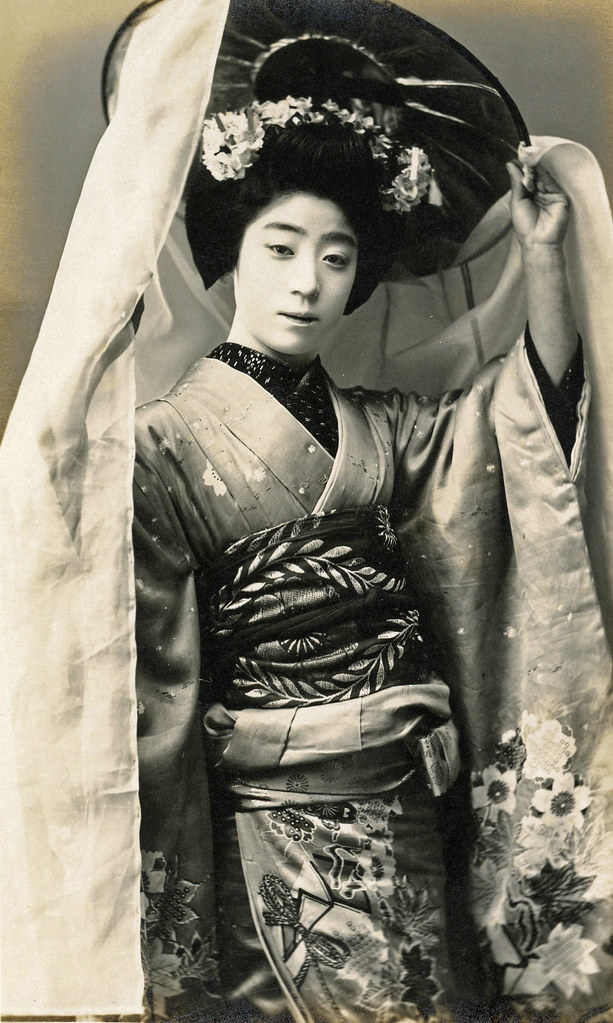
Geiko Yachiyo with a Heian Period Hat, 1910′s
Yachiyo dressed for the Ashibe odori (Ashibe public dance), holding a travelling hat from the Heian Period.
Yachiyo (1887-1924) was a famous geiko (geisha) from Osaka, known for her elegance and her lovely personality. People were said to weep with joy at the sight of her dancing. She became a maiko (apprentice geisha) at the age of thirteen and left the profession to marry the artist Suga Tatehiko at the age of twenty-nine. / src: Blue Ruin
 https://embedr.flickr.com/assets/client-code.js
Kichiya-musubi, 1905
A Geisha dressed in the Genroku style, fashionable among Tokyo Geisha around 1905-1908. She is showing her obi, tied in the Kichiya-musubi style, a knot named after Kamimura Kichiya (or Uemura Kichiya I) who was a popular Kabuki Actor during the Genroku period (1680′s).
The Kichiya-musubi was in fact a particularly famous and popular knot, mentioned specifically in a number of poems. The knot is a relatively simple one, but with small lead weights hidden in the obi, weighing down the ends of the bow, so they drooped “like the ears of a … Chinese lion-dog.” / src: Blue Ruin
 https://embedr.flickr.com/assets/client-code.js
Geiko Tomeko, sometime around the 1930′s / source: Blue Ruin
 https://embedr.flickr.com/assets/client-code.js
Geiko Tomigiku reading a Newspaper, 1921. The supremely stylish Tomigiku, dated 28/12/1921 on the reverse./ source: Blue Ruin
 https://embedr.flickr.com/assets/client-code.js
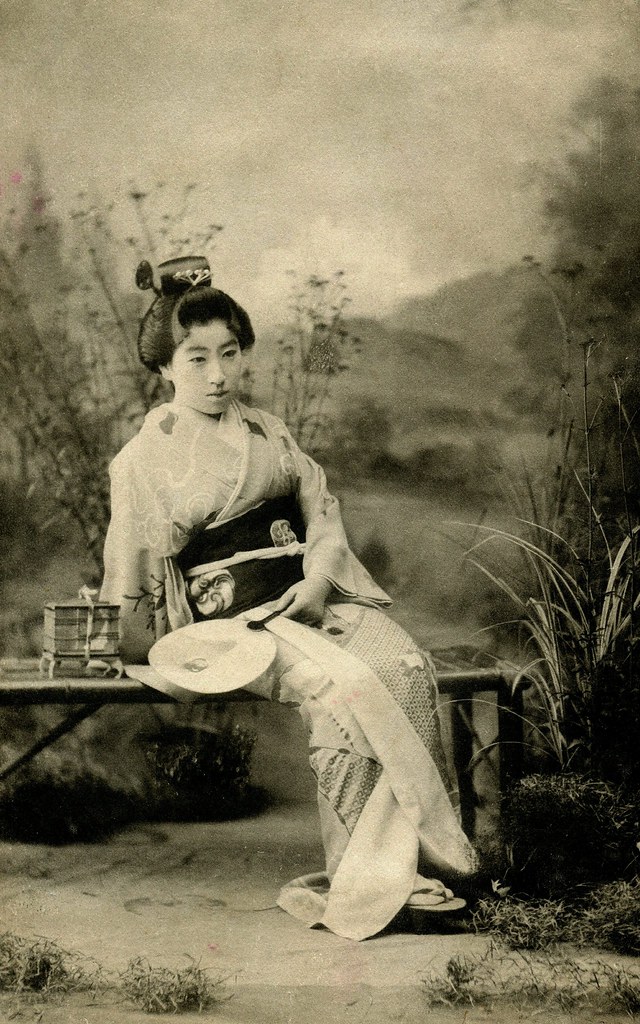
Shinbashi Geisha with a Cricket Cage, 1905. Insects as pets. / source: Blue Ruin