
images that haunt us
![Laure Albin-Guillot :: Étude de fleurs [with vase], ca. 1930. Vintage fresson print. | src Seagrave Gallery](https://unregardoblique.com/wp-content/uploads/2023/01/seagravegallery-laure-albin-guillot-tude-de-fleurs-with-vase-c.-1930.jpg?w=799)

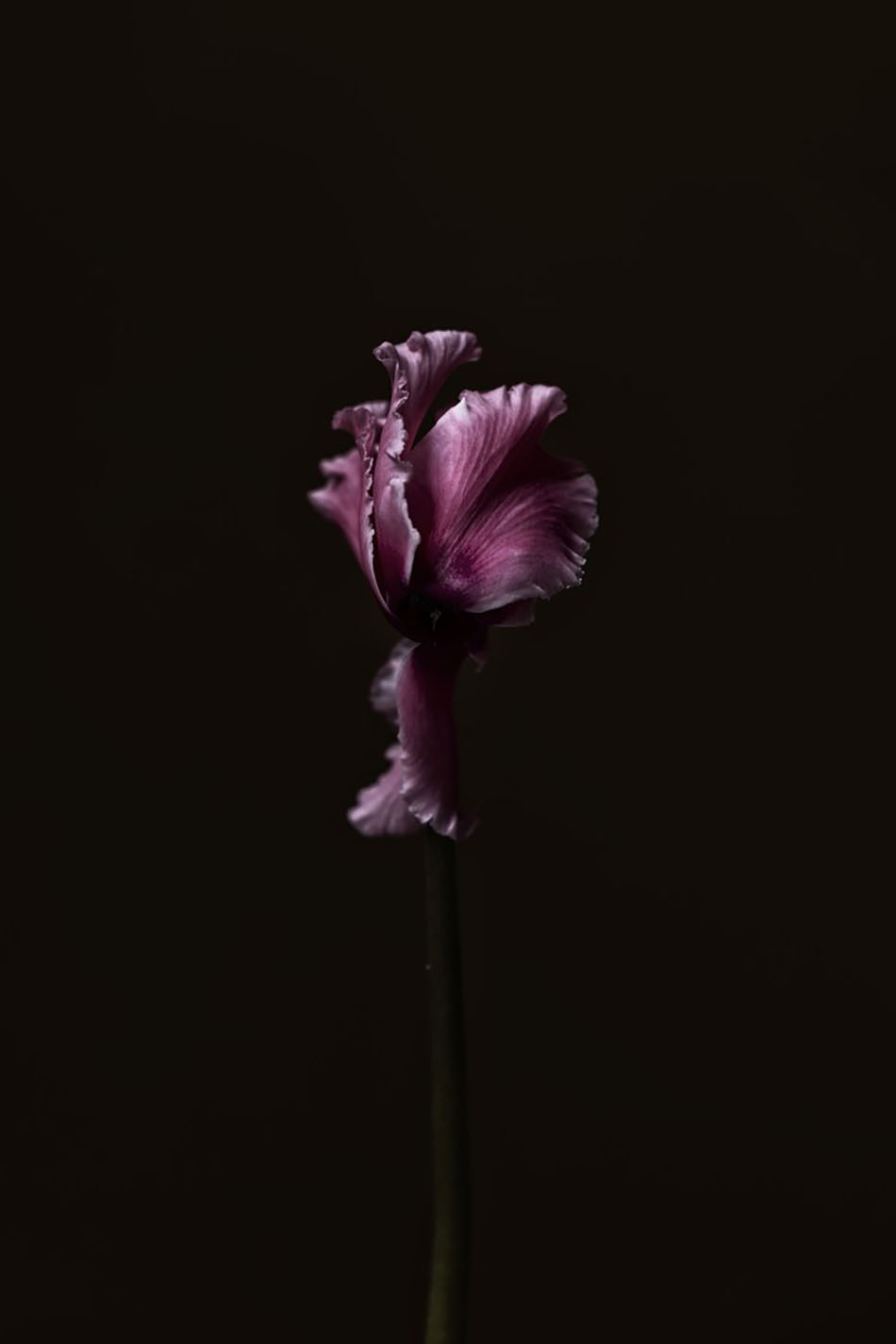

All images: Archival Pigment Prints on Hahnemuhle Fine Art Paper
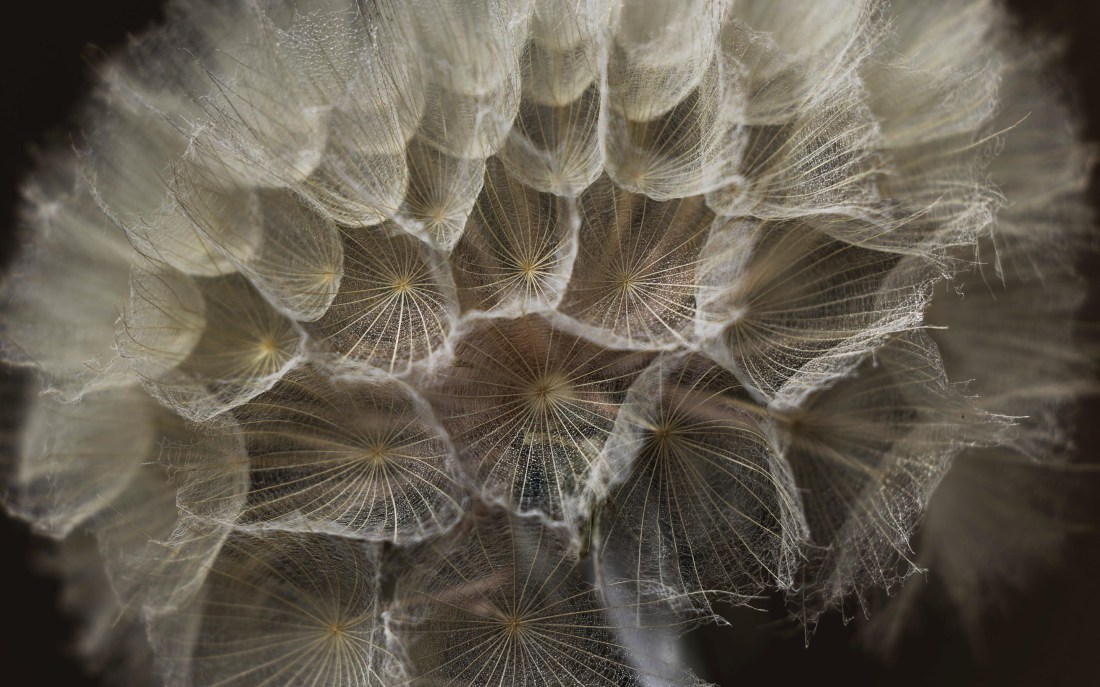

This series celebrates flowers – capturing their different phases and the variety of shapes and colours – each telling their own story. In beautiful detail it depicts how the light emphasises the elegance of the stem, or how it catches the leaf, or how it allows us to catch a glimpse of the brittle petals and the burst of colours when in full bloom. The viewer is invited to look closer and sometimes even take a step back, because in that instant – hidden aspects emerge – like a choreography, a fabulous dance.
‘A Declaration of Love, flowers in Dutch light’ is a series that symbolises life.
Flowers naturally bloom in all their strength, vulnerability and beauty – with elegance and grace – poetically captured in that single moment in time, never to be repeated again.
It is a serenade to life and love! [quoted from Stella Gommans website]


All images: Archival Pigment Prints on Hahnemuhle Fine Art Paper
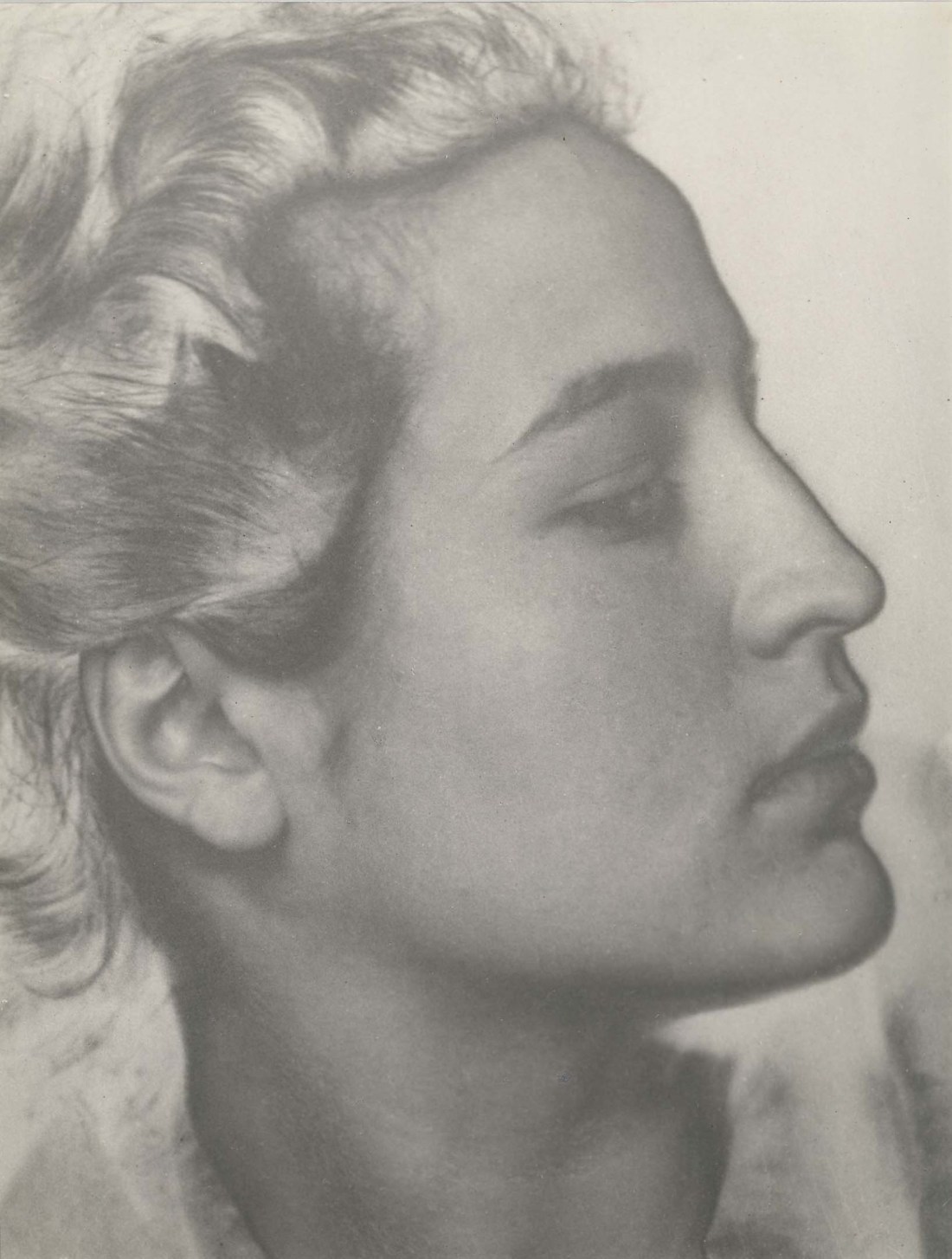
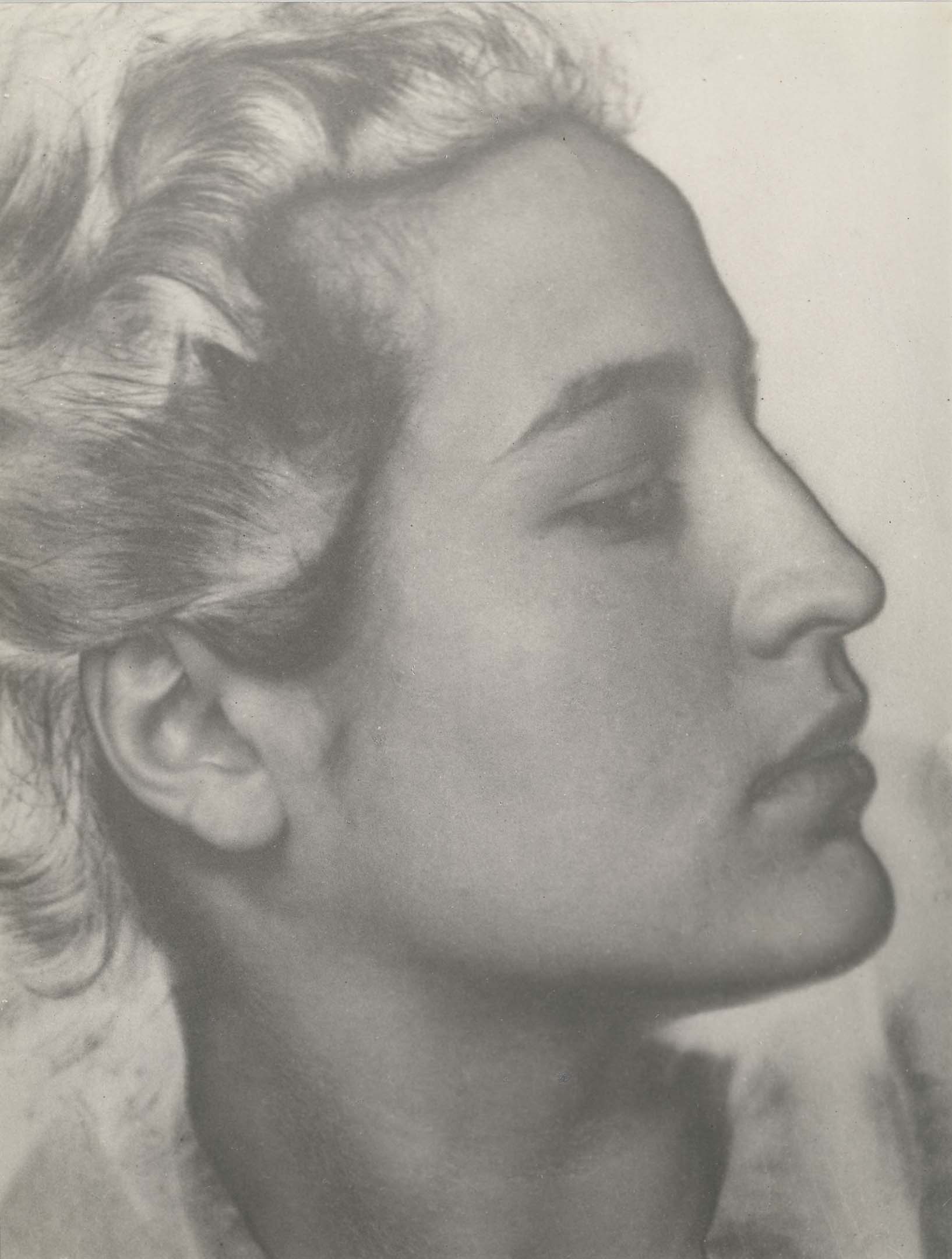

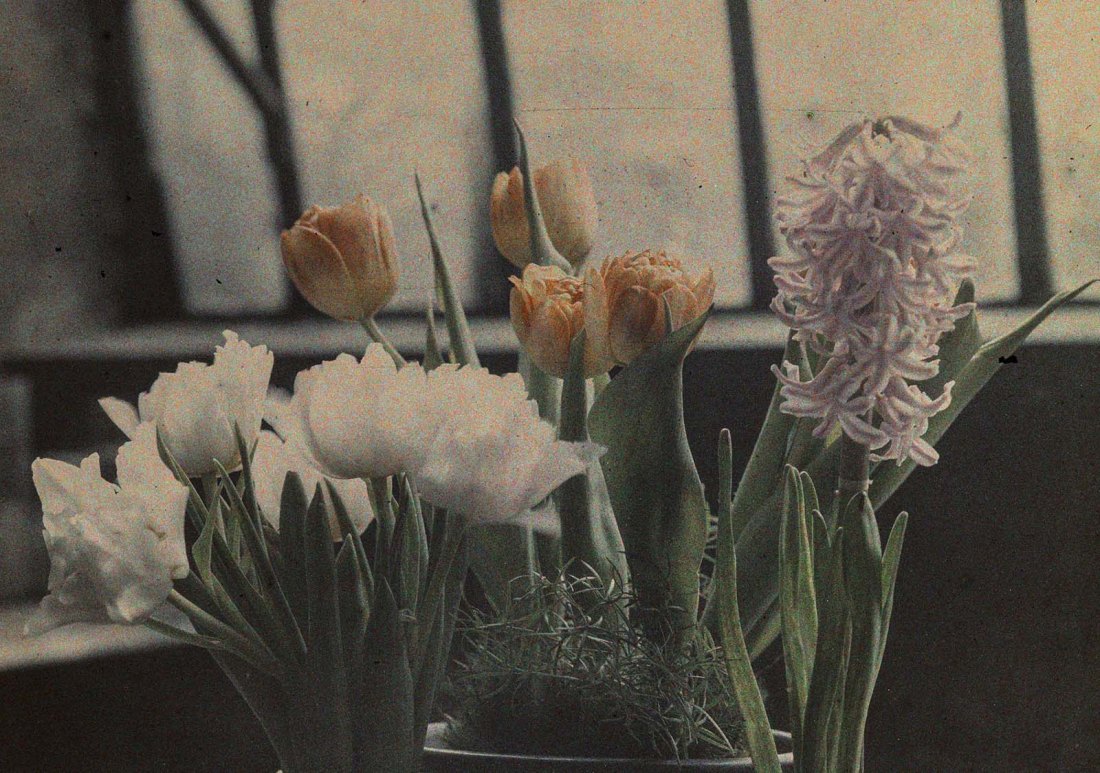
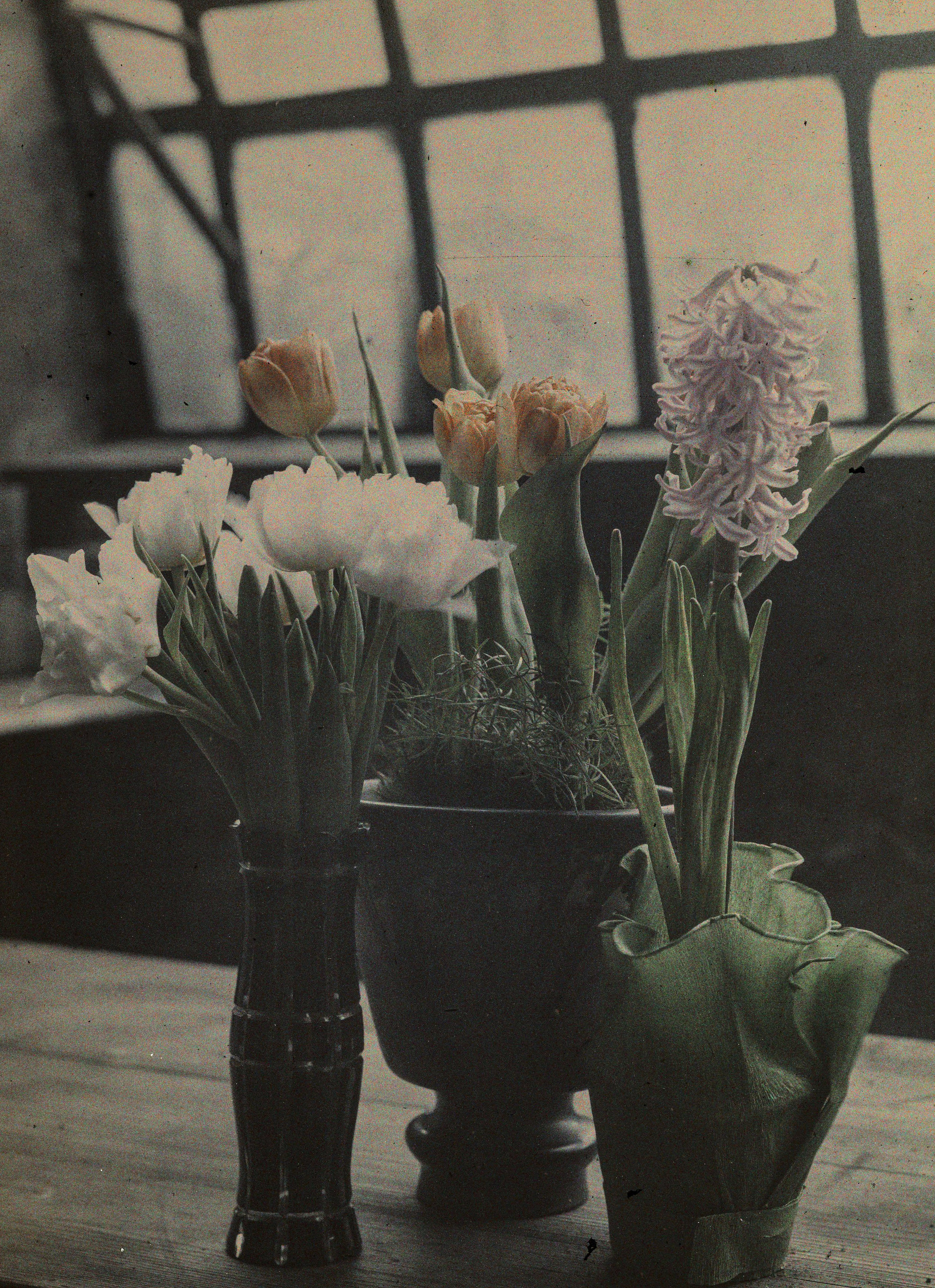
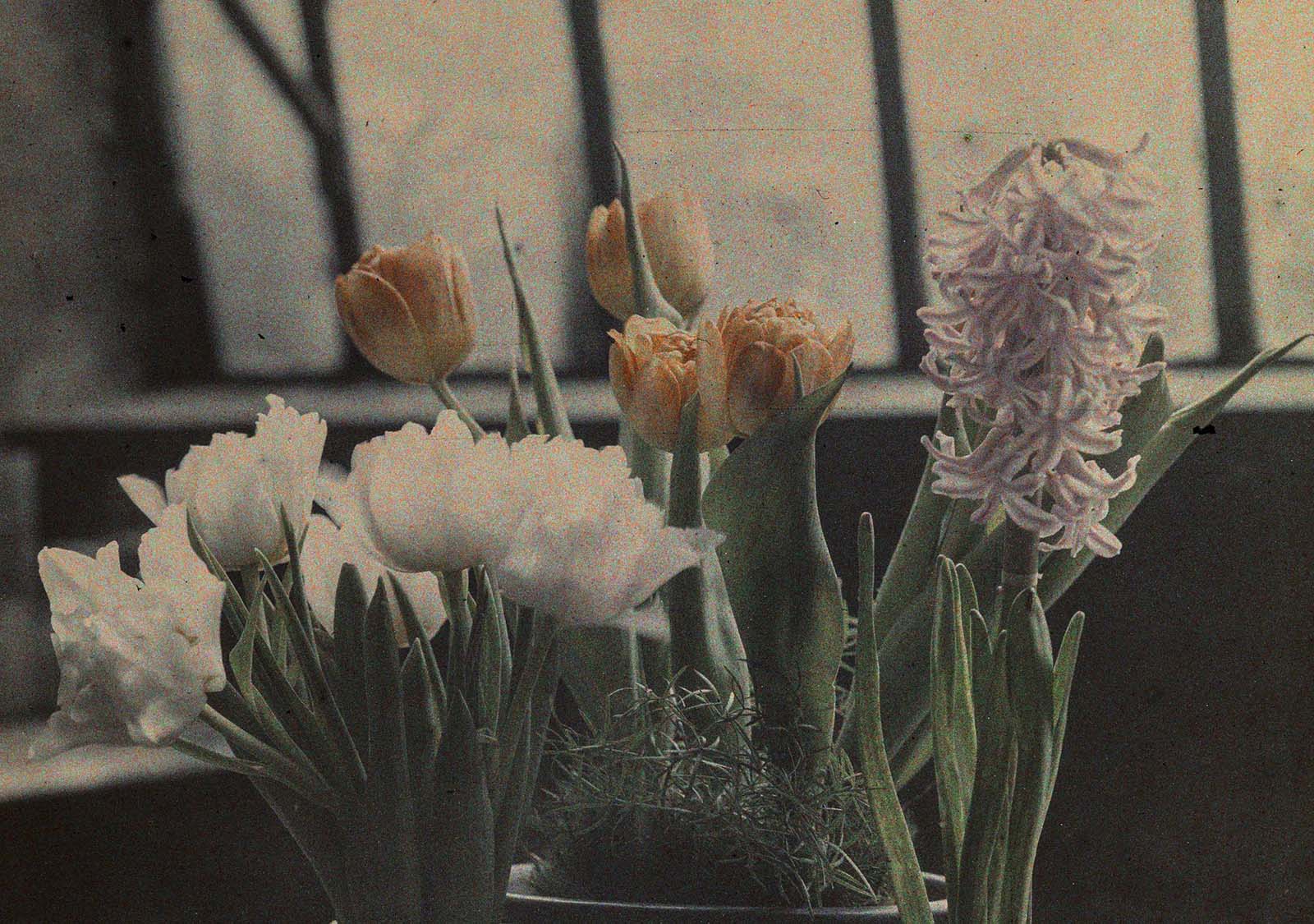
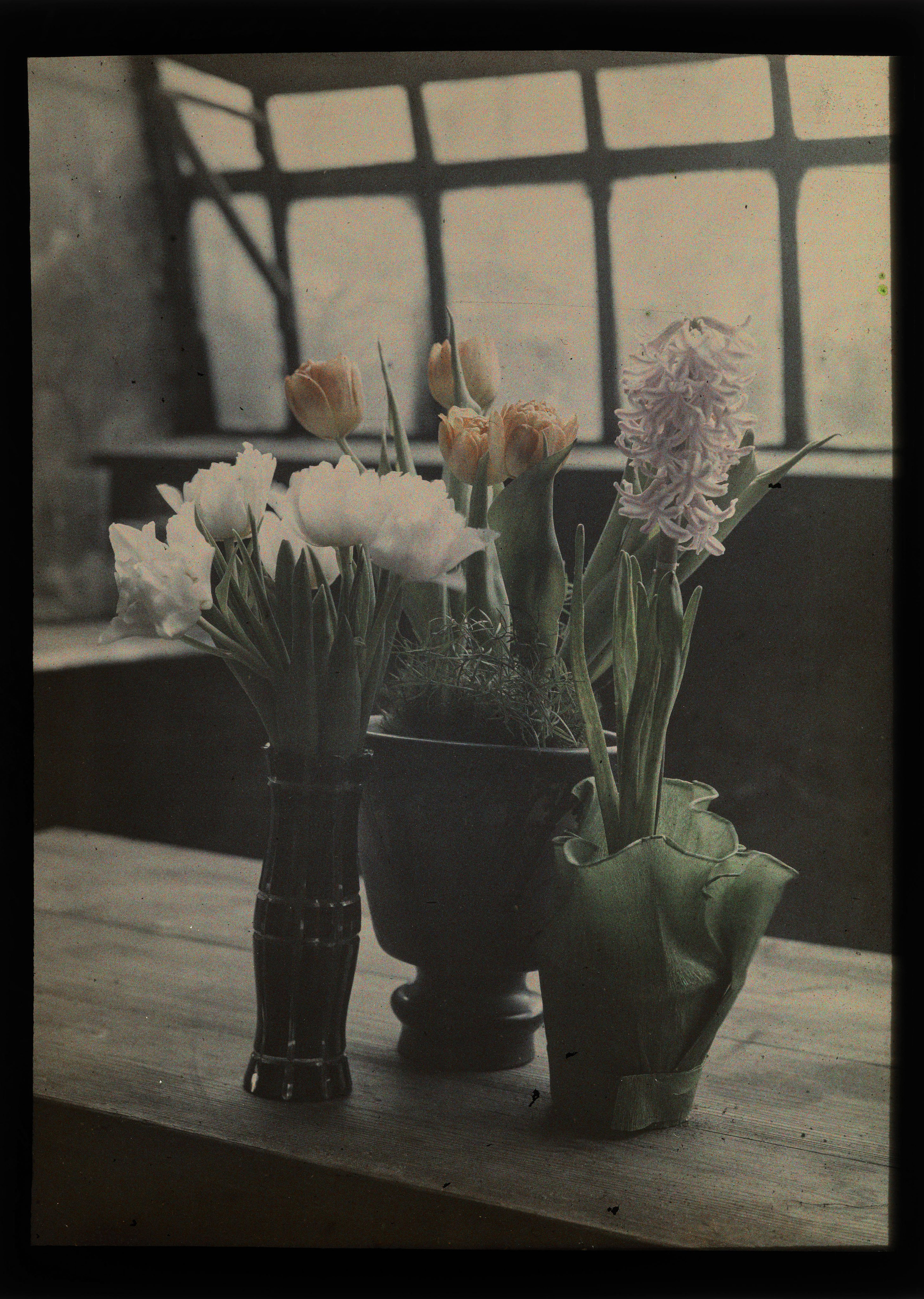
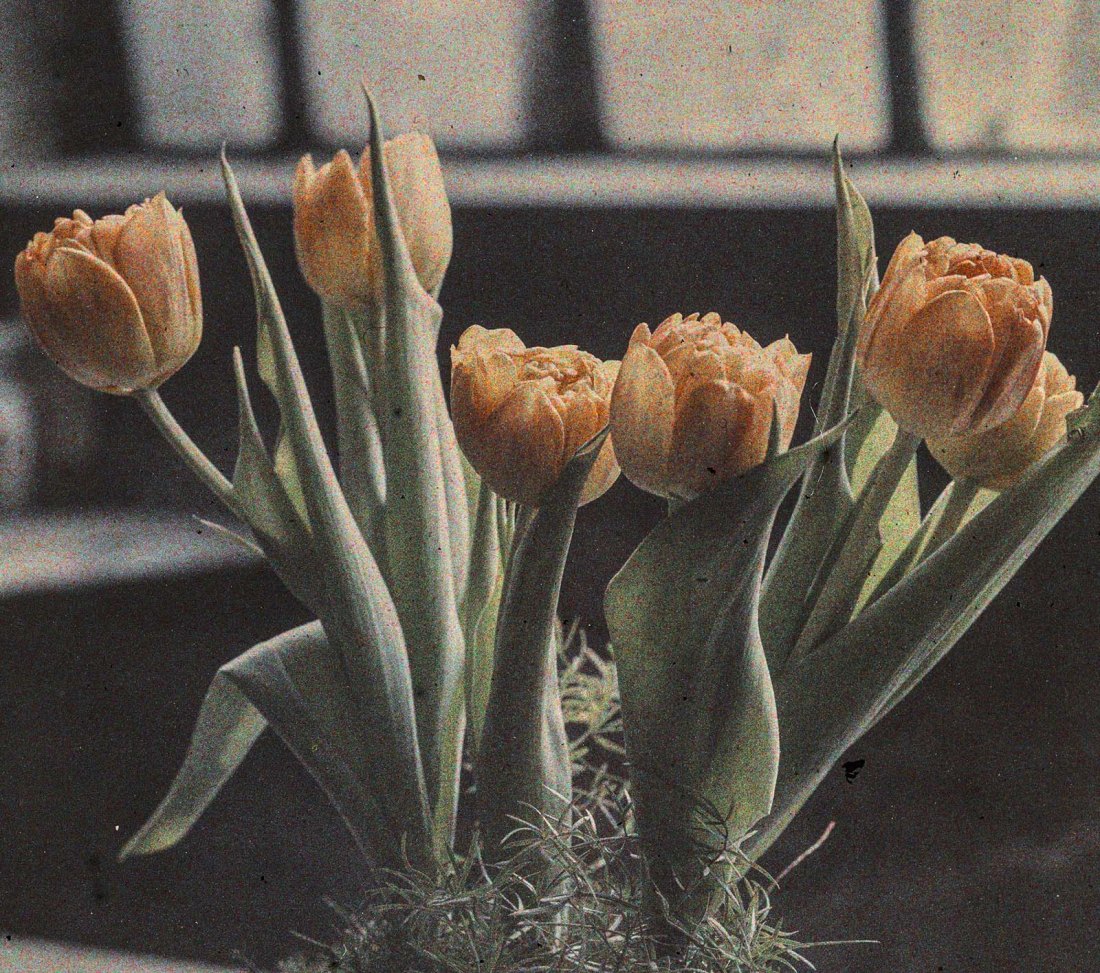

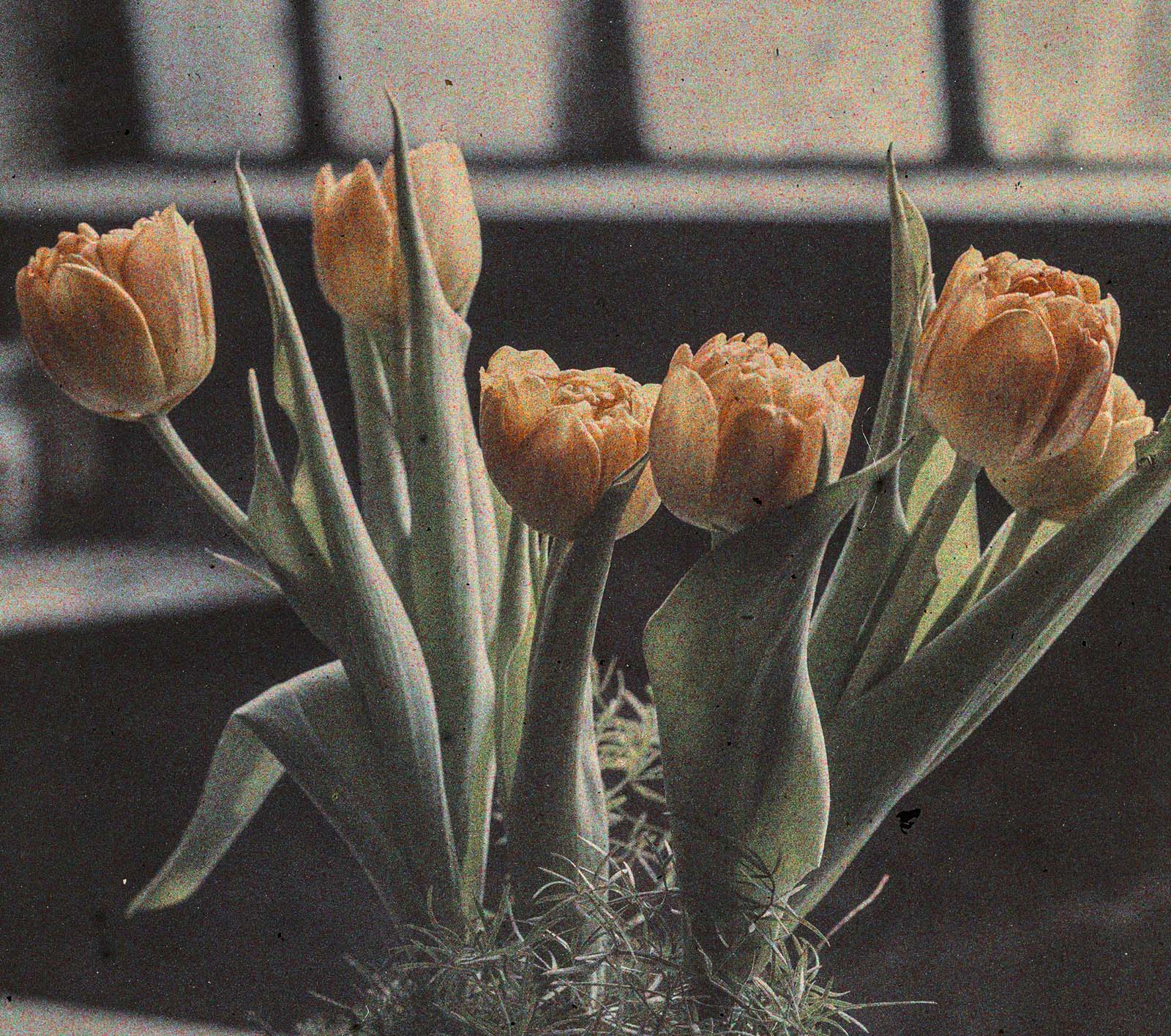

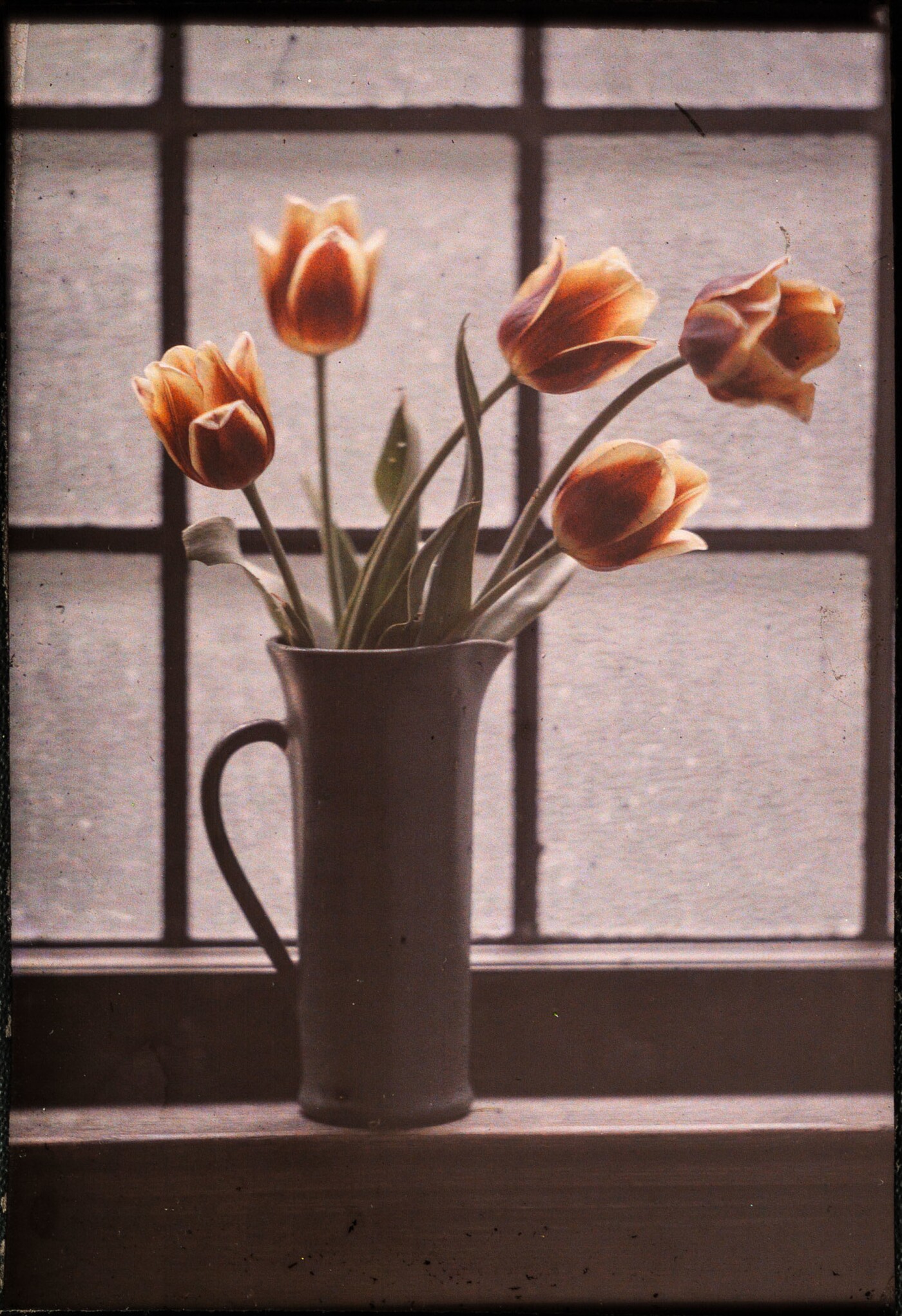

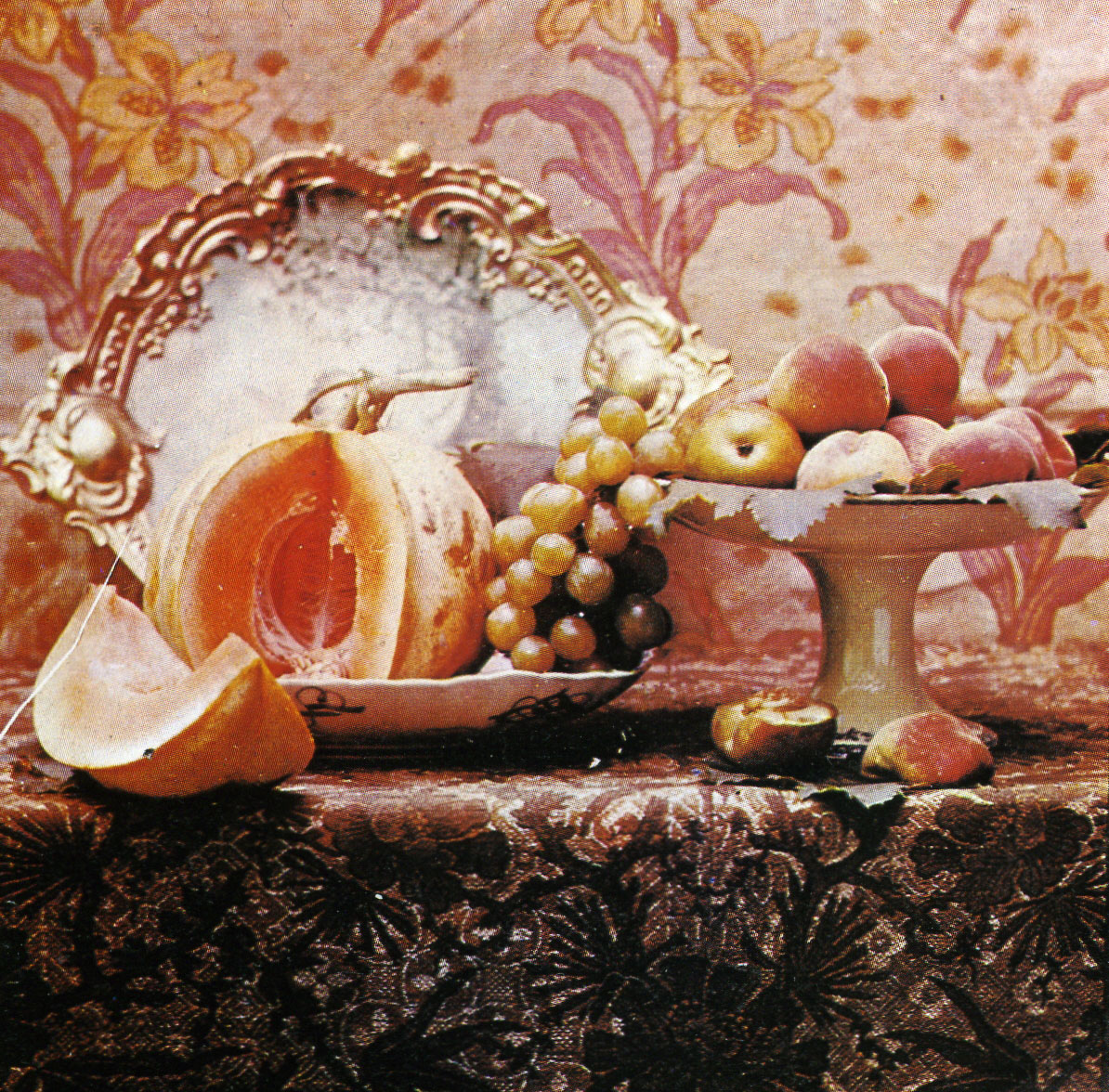
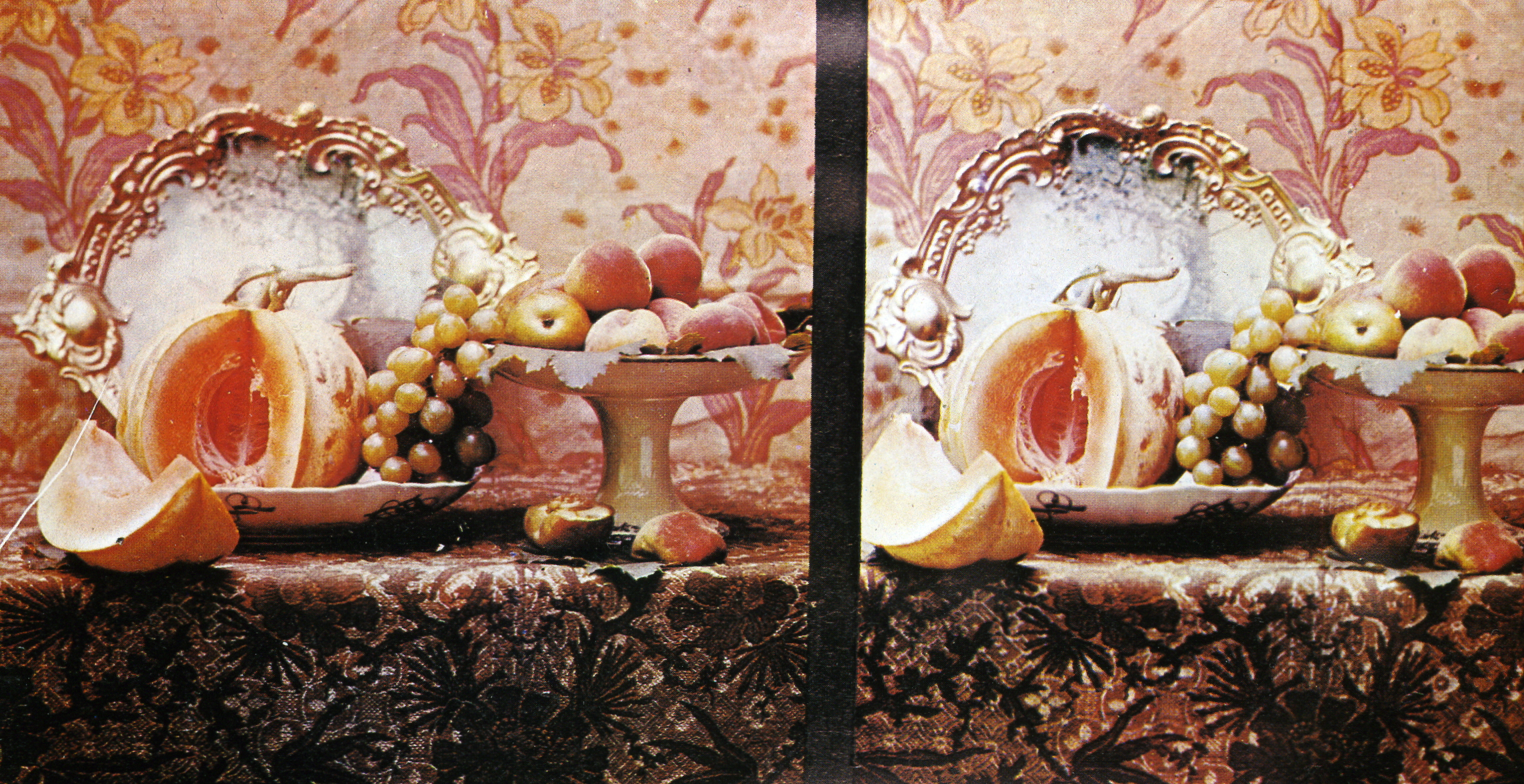
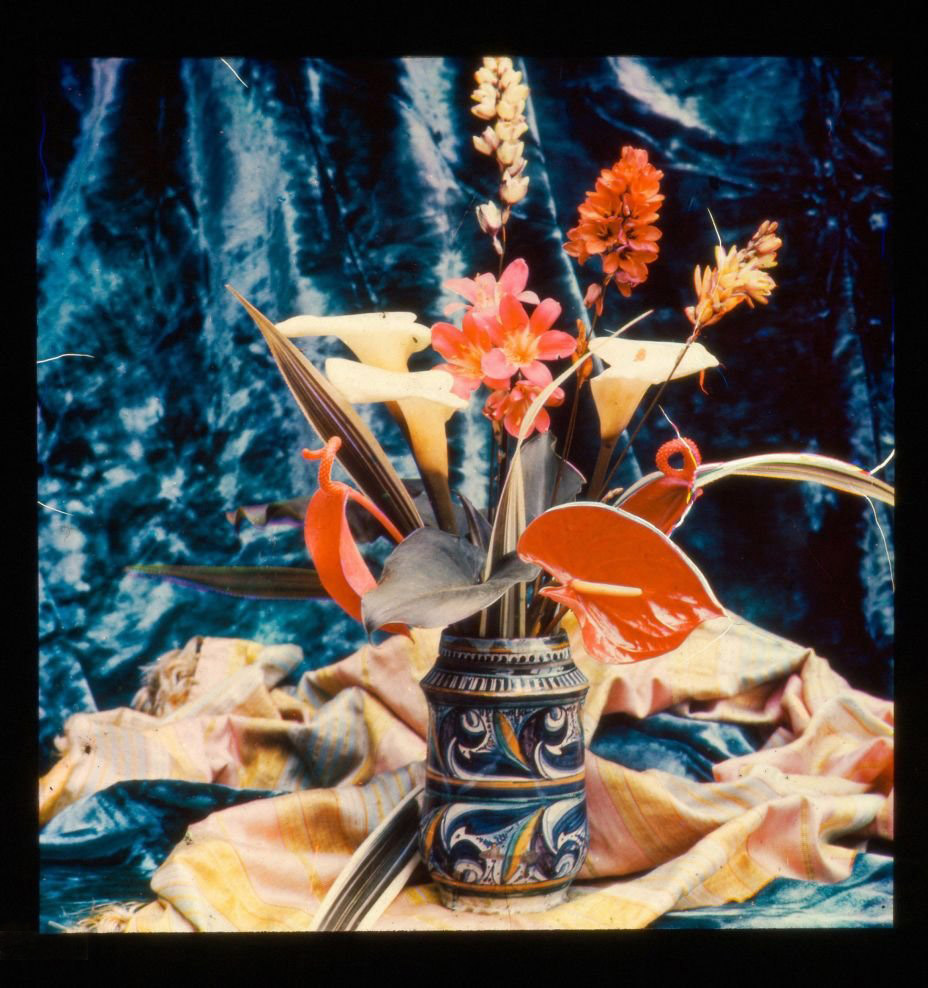
(*) Additive Color Screen Plate or Screen Plate were known commonly by the product name: Autochrome, Filmcolor, Lumicolor, Alticolor. Used mainly between 1907 and 1935. Initially it has a glass support; later products on film supports. This process was the first fully practical single-plate color process. The Autochrome plate or Screen plate could record both saturated and subtle colors with fidelity, and since the screen and the image were combined, there were no registration problems. Nonetheless, it had its drawbacks: the exposure times were long, and the processed plates were very dense, transmitting only less than the 10% of the light reaching them.
The result is a soft, subdued, dreamy colored image. And grainy. Although the starch grain filters were microscopically small their random distribution meant that inevitably there would be clumping of grains of the same color.

 un regard oblique