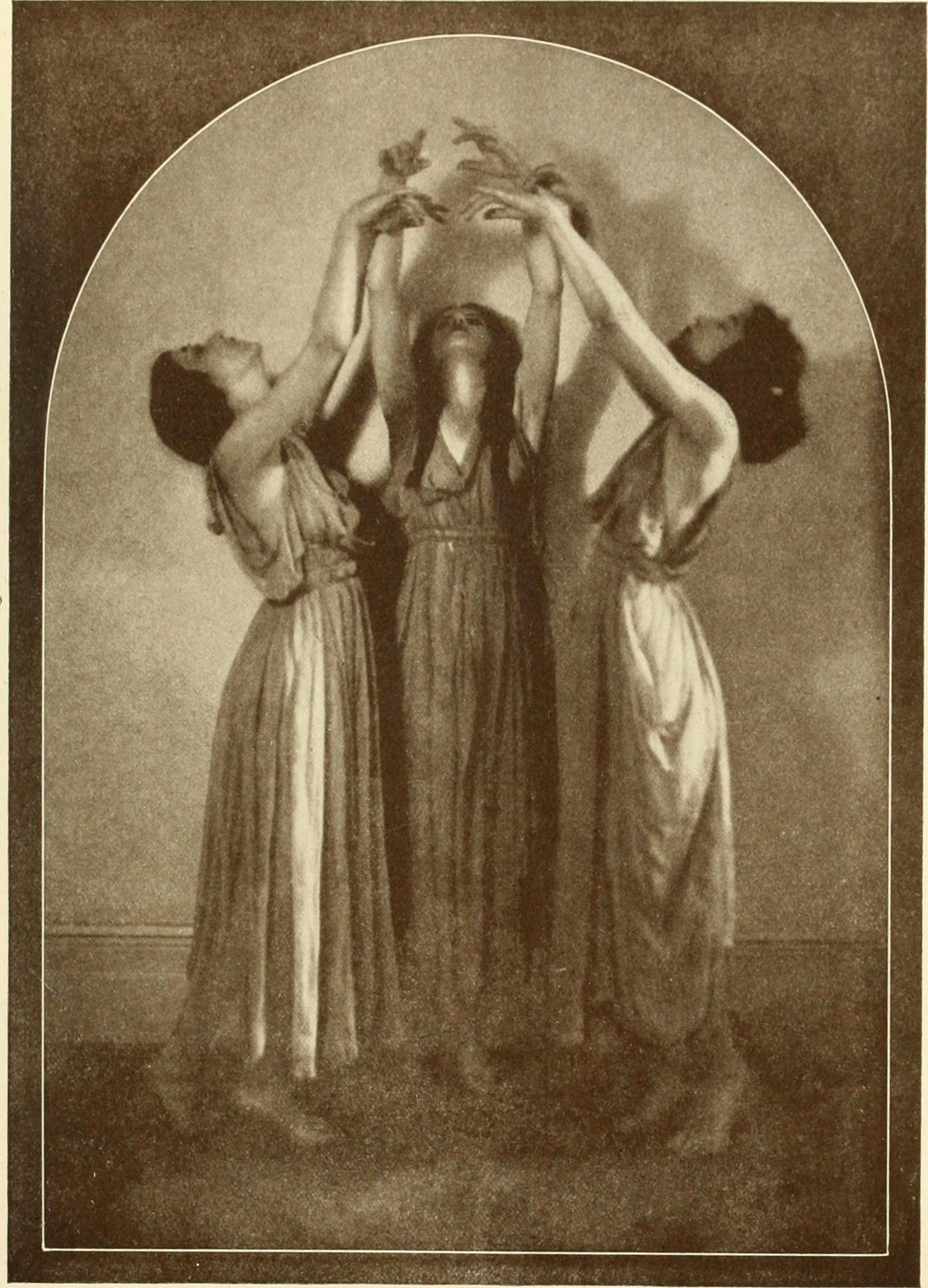
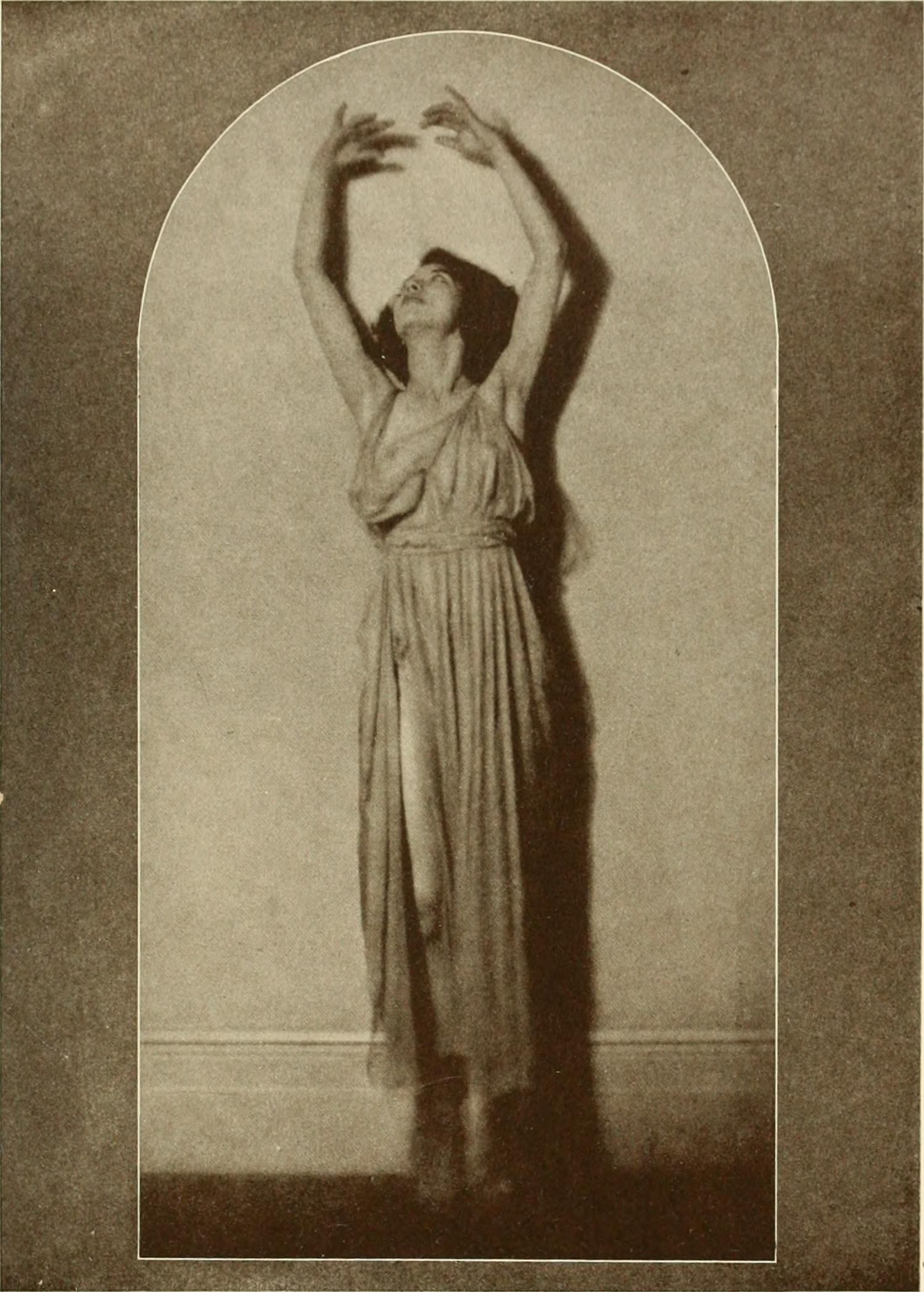
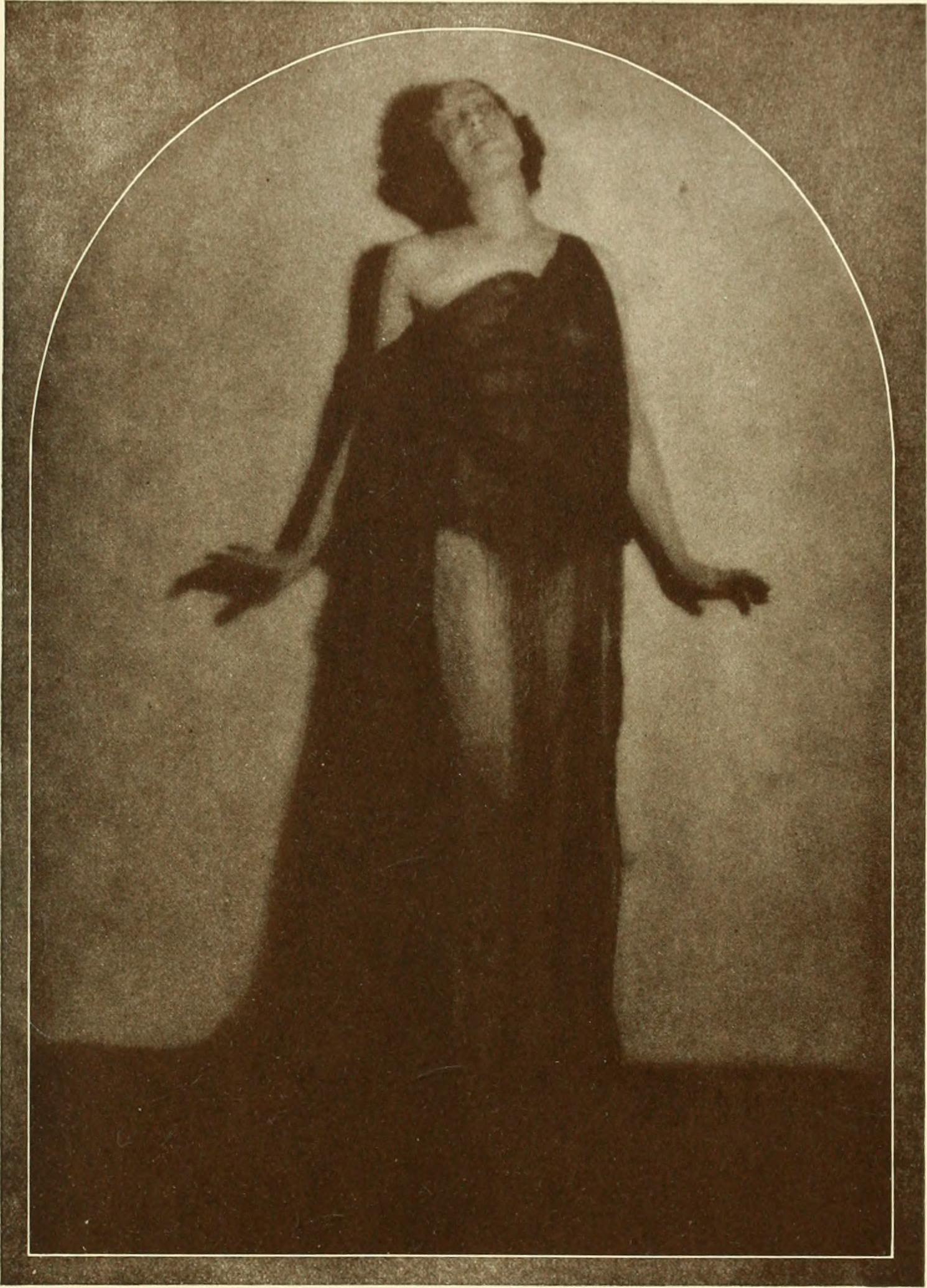
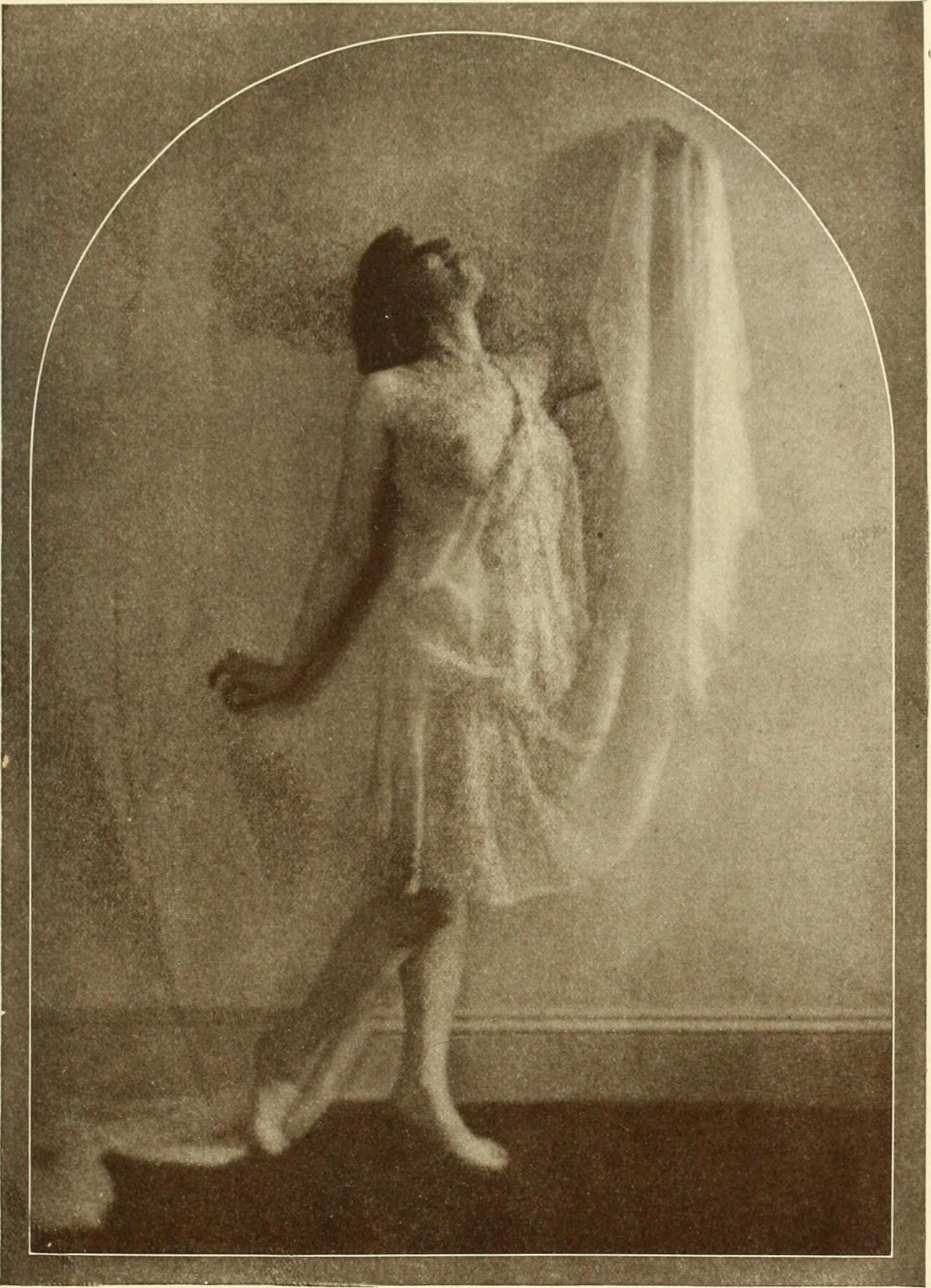
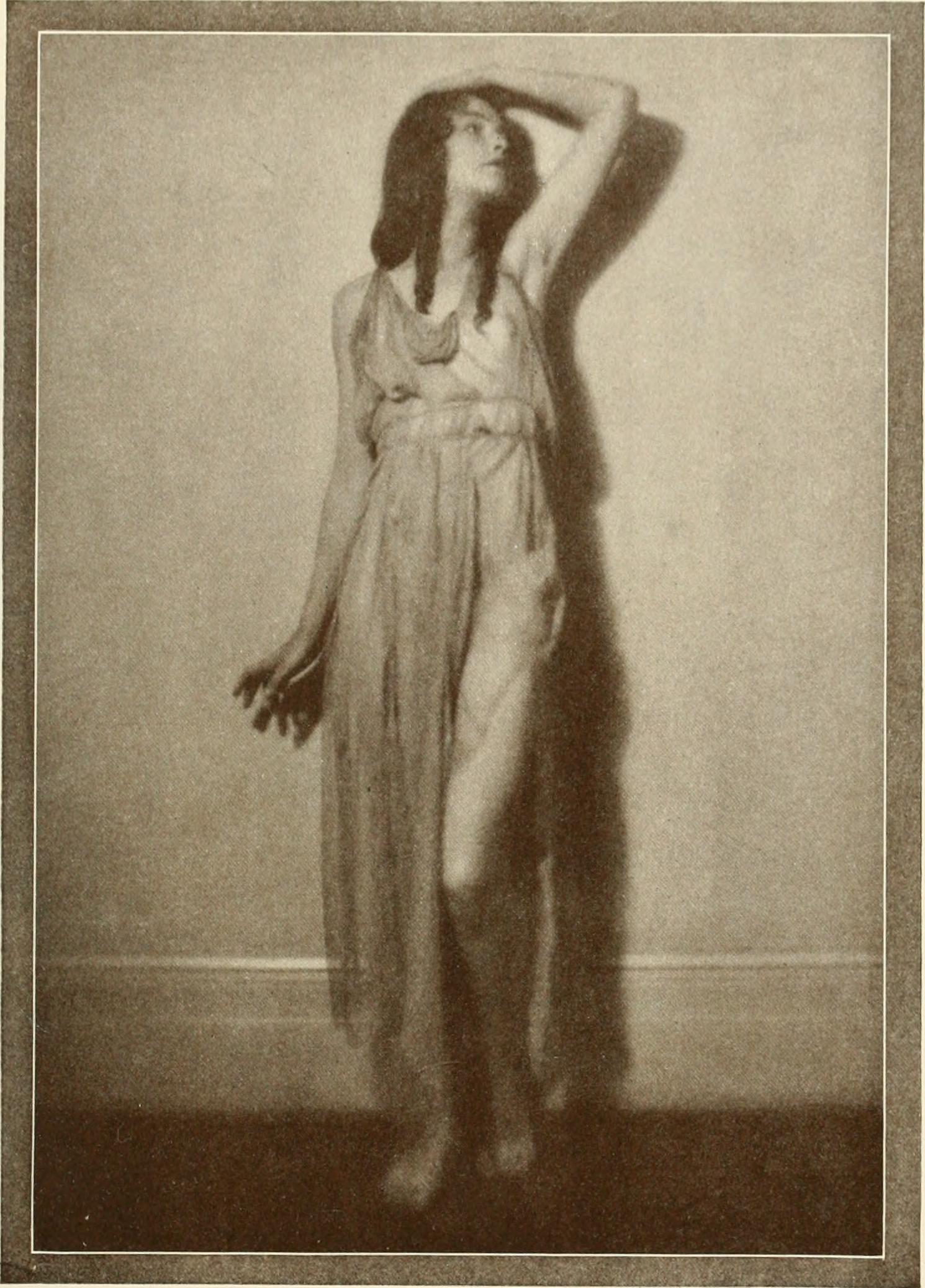
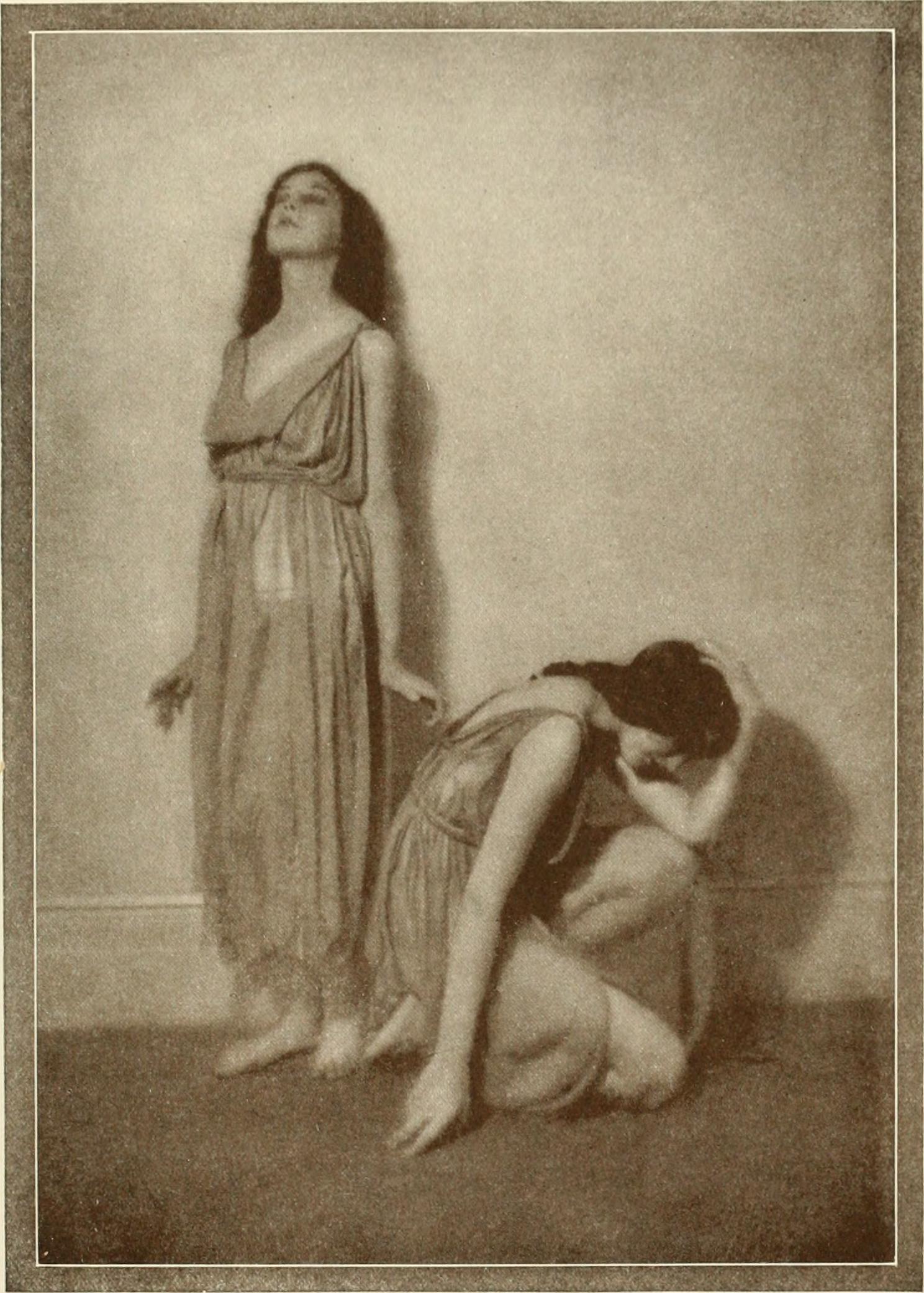
“Unfolding, as though giving or about to receive — an idea of petals opening to exchange the flower’s perfume for the warmth of the sun’s rays.” From ‘Dancing with Helen Moller’, 1918. Page 26. University of California Libraries. | src internet archive“A gentle and pleasantly expectant expression of aspiration — the lines of the entire body, arms, neck and head, having an upward tendency.” From ‘Dancing with Helen Moller’, 1918. Page 94. University of California Libraries. | src internet archive“An expression of pleasurable relaxation pervading the entire body— a complete reaction to influences that are pervasive in their sweetness and charm.” From ‘Dancing with Helen Moller’, 1918. Page 94. University of California Libraries. | src internet archive“The graceful management of draperies is an important requisite in Greek dancing. When the robe is voluminous, as in this instance, its manipulation demands considerable skill.” From ‘Dancing with Helen Moller’, 1918. Page 44. University of California Libraries. | src internet archive“Classic perfection of repose, with one limb bearing the body’s weight while the other, with the knee flexed, preserves balance, is one of the Greek dancer’s earliest achievements.” From ‘Dancing with Helen Moller’, 1918. Page 44. University of California Libraries. | src internet archive“Different individual reactions to the same sense of calamity -one erect as though petrified, the other crushed by despair; neither imitative, but each creative.” Helen Moller and Curtis Dunham :: From ‘Dancing with Helen Moller; her own statement of her philosophy and practice and teaching formed upon the classic Greek model, and adapted to meet the aesthetic and hygienic needs of to-day’, 1918. Page 40. University of California Libraries. | src internet archive
ACKNOWLEDGMENT: Many of the photographs reproduced in this book were taken by the author herself. For the privilege of reproducing other fine examples of the photographer’s art, she desires to express her grateful acknowledgments to Moody, to Maurice Goldberg, to Charles Albin and to Underwood and Underwood; also to Arnold Genthe for the plate on Page 36; and to Jeremiah Crowley for his admirable arrangement of the entire series of illustrative art plates. [quoted from source]
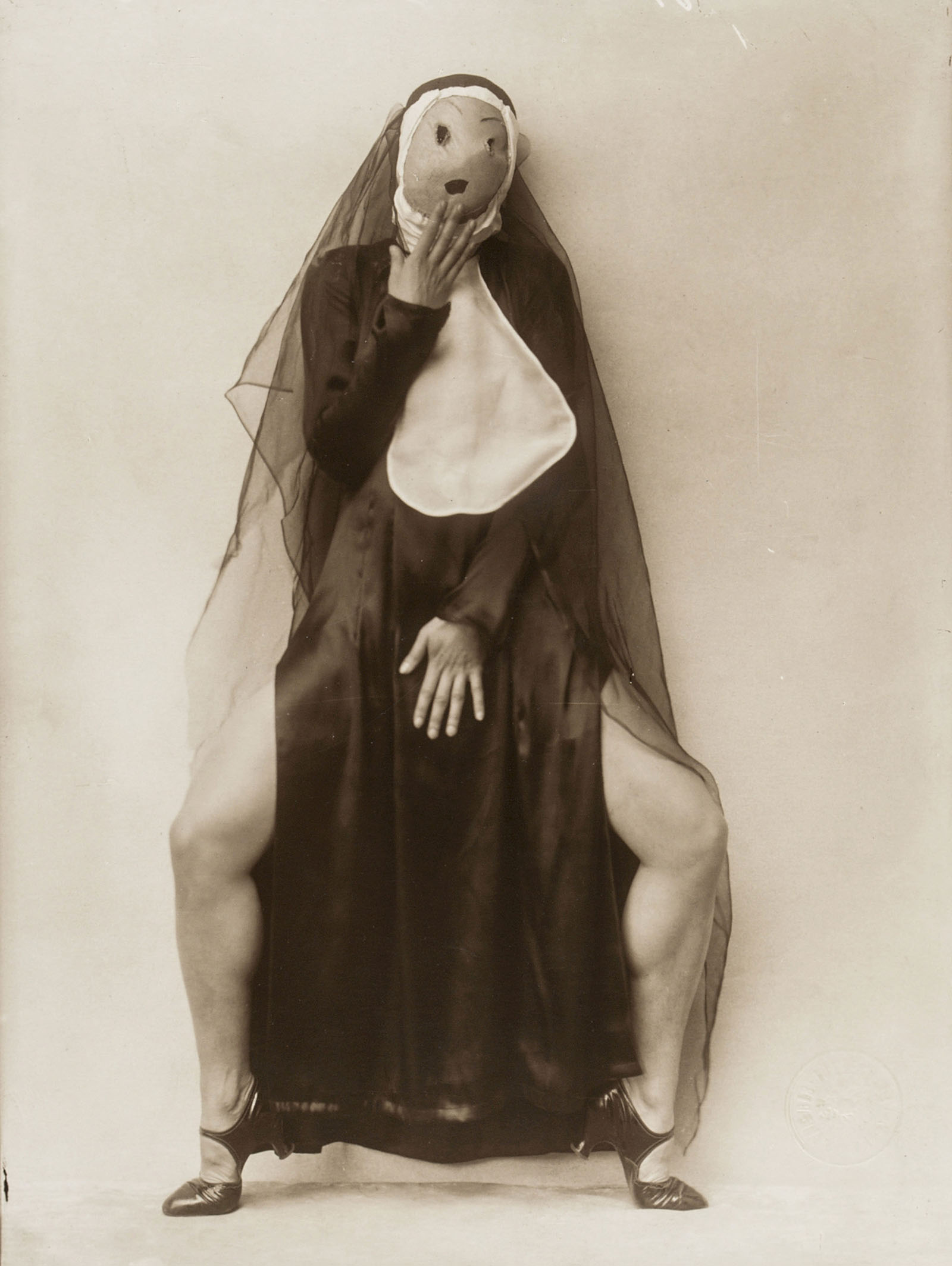
Role models. Many female dancers dealt with given role structures and criticized gender specific role attributions. The nun is seen as embodiment of a nonsexual woman who dedicates her life to God. Hence the play with the nun’s costume is a game with female physicality and sexuality. Here we meet Mura Ziperowitsch, who by wearing a nun similar costume refers to the female corporality.
source Vienna Pride at Kunsthistorisches Museum Wien
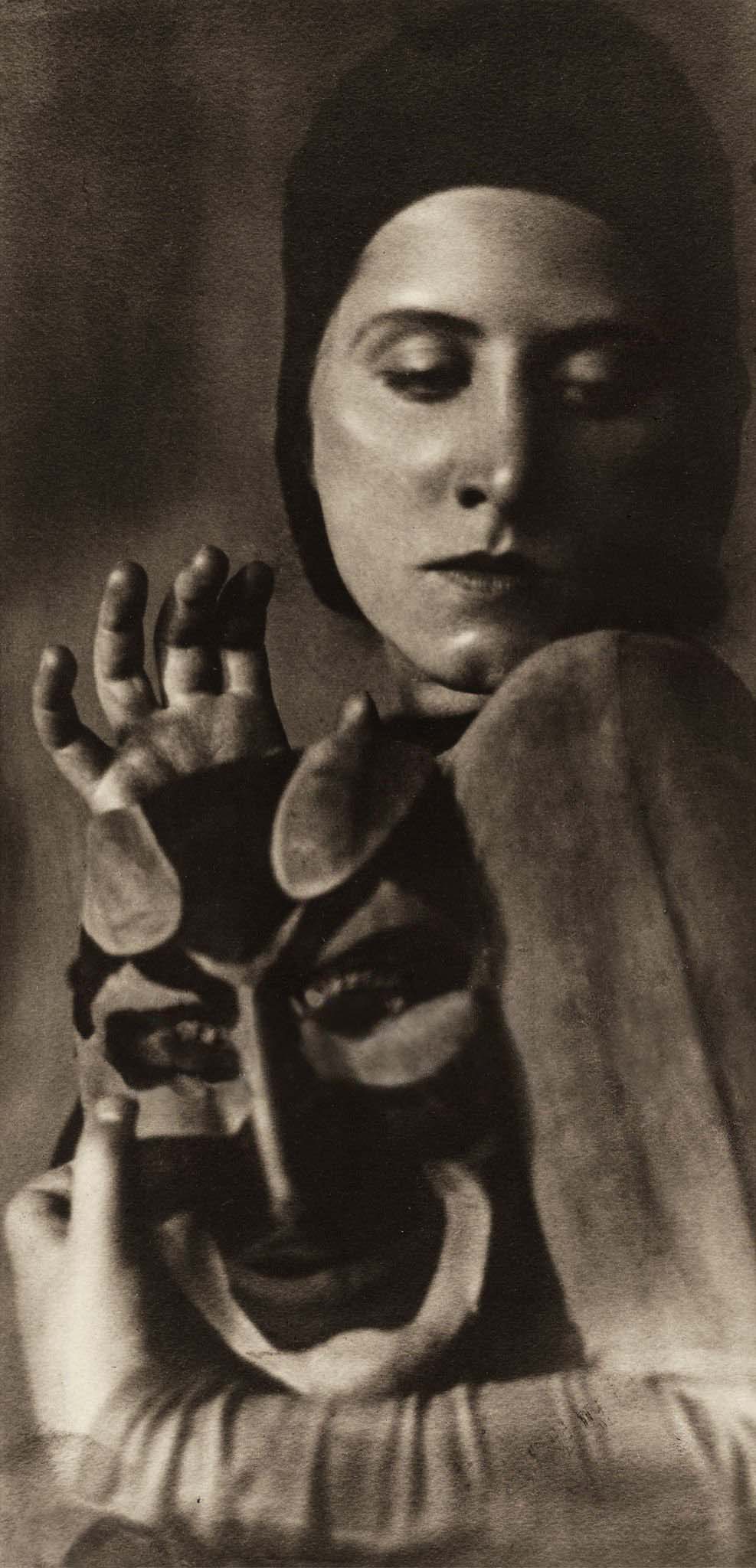
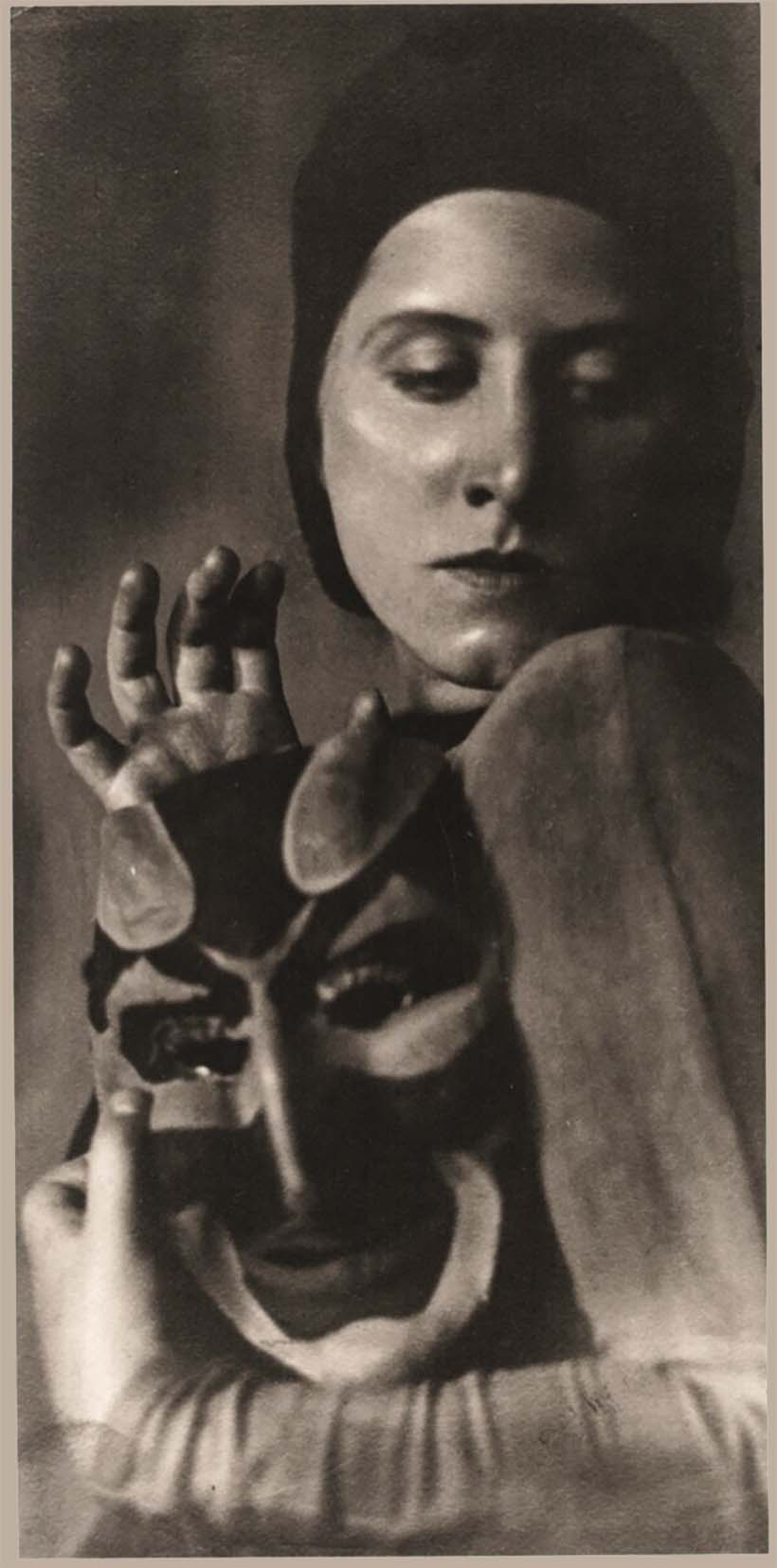
Anton Josef Trčka (1893 – 1940) :: Portrait of the Dancer Hilde Holger (1905-2001), 1925. | src Getty ImagesAnton Josef Trčka (1893 – 1940) :: Die Tänzerin Hilde Holger mit Maske, 1925. Bromsilbergelatinepapier, auf Untersatzkarton. | src Albertina Museum
Charlotte Rudolph :: Mary Wigman Tranzgruppe / Mary Wigman dance group, ca. 1927/ src kronartmuseum.org



 un regard oblique