The Russian Art of Movement

Nicoletta Misler: The Russian Art of Movement 1920-1930 Umberto Allemandi & Co. (January 2018)
One of the many mages from the book that represent the role of movement in dance, in gymnastics, in Russian Avant-garde. The book is the result of research that began in the late 1970s and culminated in the 2011 publication in Moscow of V Natsjale Bilo Telo (In the Beginning was the Body), on the 1920s experiments in movement in the Soviet Union. | src Allemandi
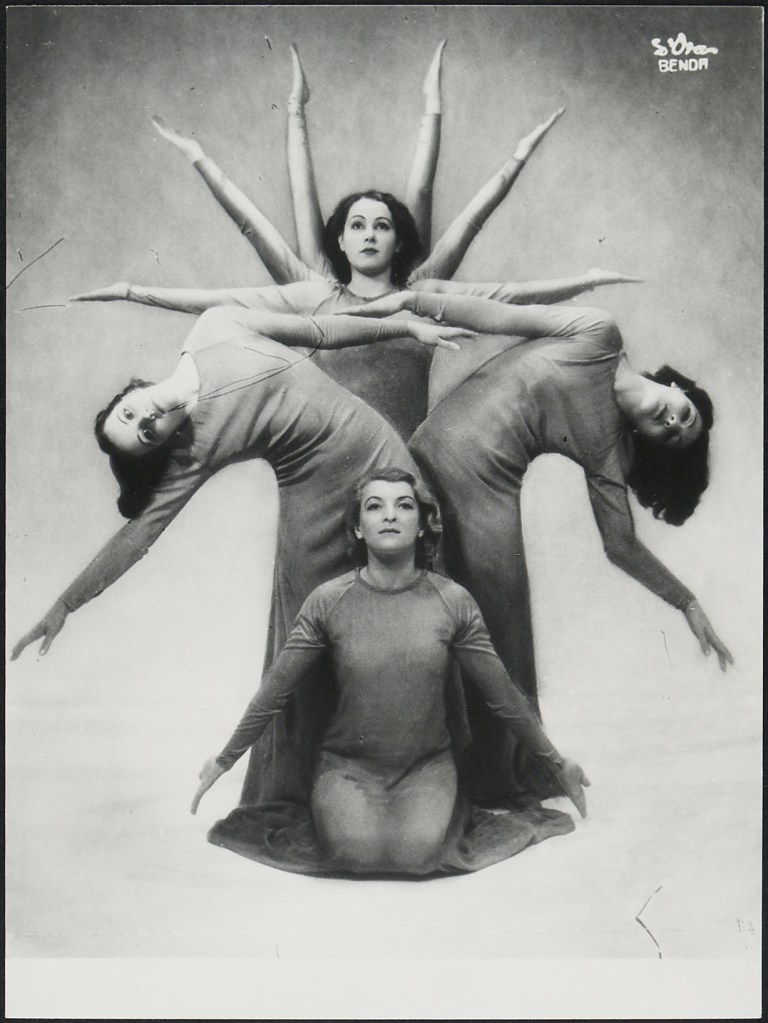
“Dämon Maschine”, 1936

Atelier dʼOra-Benda :: Tänzerinnen des Ensembles Gertrud Bodenwieser in "Dämon Maschine", 1936. | Dancers of Gertrud Bodenwieser's ensemble in "Demon Machine", 1936. | src Theatermuseum © KHM-Museumsverband
Atelier dʼOra-Benda :: Tänzerinnen des Ensembles Gertrud Bodenwieser in “Dämon Maschine”, 1936. | Dancers of Gertrud Bodenwieser’s ensemble in “Demon Machine”, 1936. | src Theatermuseum Wien © KHM-Museumsverband
Atelier dʼOra-Benda :: Poses from The Demon Machine, 1936 | src National Library of Australia
Atelier d’Ora – Benda :: Gertrud Bodenwieser. Dance scene: “Demon Machine”, 11.05.1936. | src and © Theatermuseum, Wien

Three nude dancers ca. 1927

Paul Jsenfels :: Dancers, Stuttgart Dance School, printed 1927. Photoengraving. | src liveauctioneers