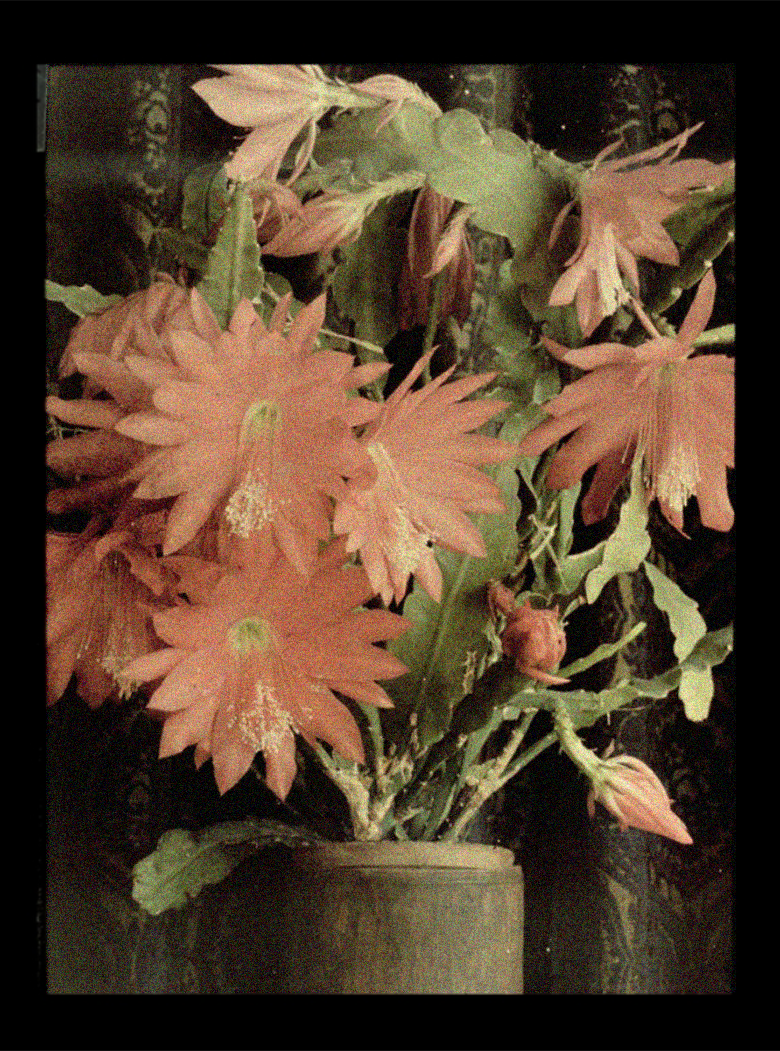
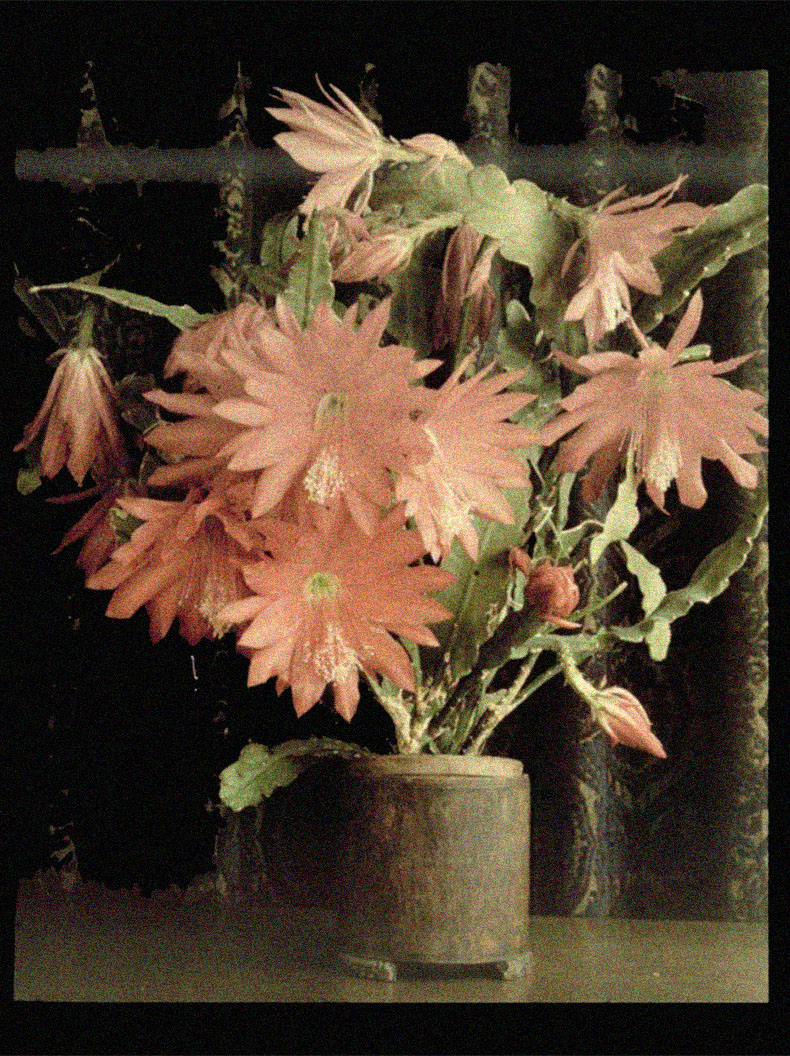
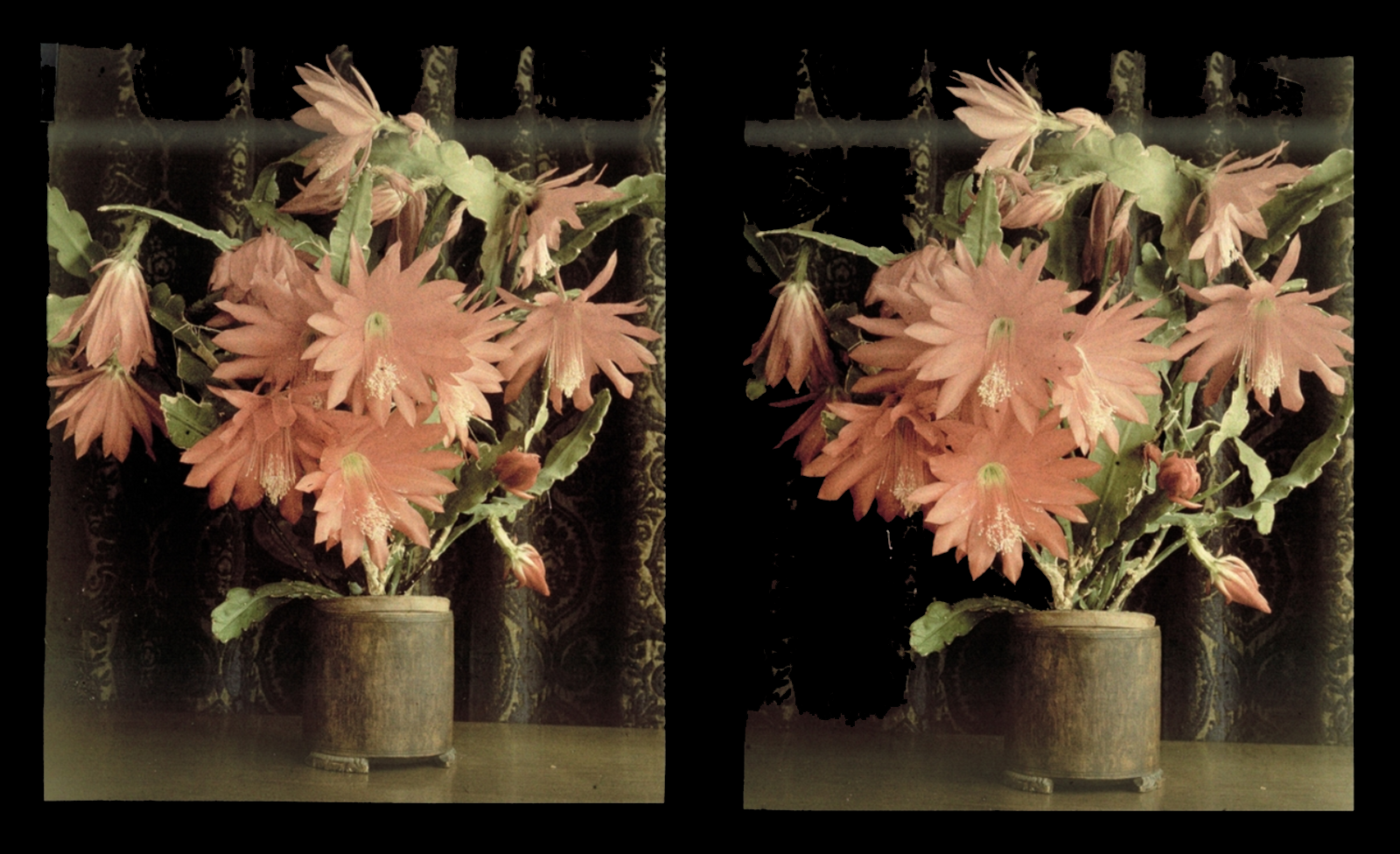
Blossoming cactus 1930s

Hans Grendahl (1877-1962) ~ Cactus flowers. Close-up, June, 1937. Autochrome. Stereo. | src Preus museum
Hans Grendahl (1877-1962) ~ Kaktusblomster. Nærbilde, June, 1937. Autochrome. Stereo. | src Preus museum
Hans Grendahl (1877-1962) ~ Blossoming cactus, July, 1934. Autochrome. Stereo photograph. | src Preus museum
Hans Grendahl (1877-1962) ~ Blomstrende kaktus, July, 1934. Autochrome. Stereo photograph. | src Preus museum
Hans Grendahl (1877-1962) ~ Blossoming cactus, July, 1937. Autochrome. Stereo photograph. | src Preus museum
Hans Grendahl (1877-1962) ~ Blomstrende kaktus, July, 1937. Autochrome. Stereo photograph. | src Preus museum

About Hans Grendahl (1877 – 1962)

Born in Rennebu. Son of farmer Ole Knudsen Grendahl and Ane Hansdatter, born Aas. He graduated in architecture with architect Solberg, Trondheim, in 1902, after which he went to Germany and studied architecture at the university in Karlsruhe. After completing his education, Grendahl was employed, among others in the company Jacob Digre in Ålesund, later he became an assistant teacher in building subjects, construction and freehand drawing at Trondhjem’s technical training institute. In 1916 he was employed as a teacher at NTH. In the 1920s and 30s took a number of photographs in color (Autochromes), i.a. interiors and exteriors of churches in Trøndelag, Gudbrandsdalen, Østerdalen, Møre and Romsdal and Telemark, as well as pictures from the Trøndelag exhibition in 1930 and the Drammen exhibition in the same year. The oldest color photo taken in his collection is from 1922. Grendahl left a unique archive of stereo images, about half of which are in colour, to his daughter Adelheide (Ada) Grue, in Stjørdal. The picture collection was bought by the Preus Fotomuseum in 1989 and digitalized in December 2021. It consists of 1017 photographs on glass plates in the format 90×140 mm. With a few exceptions, the images are stereo images.

quoted from Preus Fotomuseum
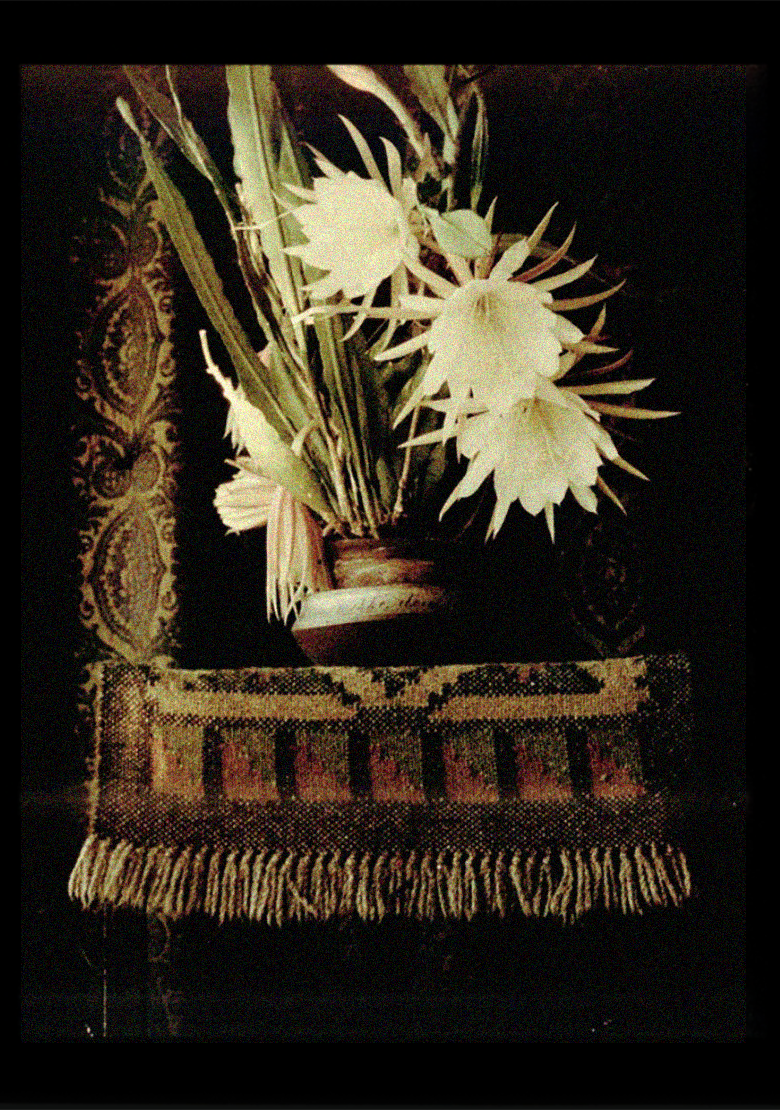
Hans Grendahl (1877-1957) ~ White cactus, July, 1935. Autochrome. Stereo photograph. | src Preus museum
Hans Grendahl (1877-1957) ~ Hvit kaktus, July, 1935. Autochrome. Stereo photograph. | src Preus museum

Stereo views of landscapes

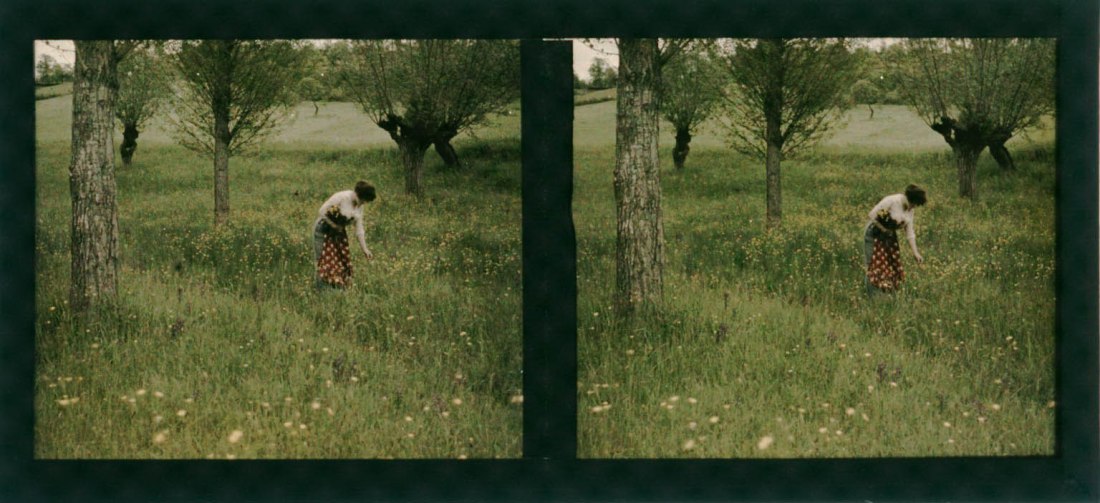
Etienne Descargues :: [Femme cueillant des fleurs dans une prairie], 1892-1914. Vue stéréoscopique. | BnF ~ Gallica
Etienne Descargues :: [Femme cueillant des fleurs dans une prairie], 1892-1914. Vue stéréoscopique. (half view) | BnF ~ Gallica
Etienne Descargues :: [Femme cueillant des fleurs dans une prairie], 1892-1914. Vue stéréoscopique. | BnF ~ Gallica
Etienne Descargues :: [Femme cueillant des fleurs dans une prairie], 1892-1914. Vue stéréoscopique. (Detail) | BnF ~ Gallica
Etienne Descargues :: [Plan d’eau la nuit], 1892-1914. Vue stéréoscopique. | BnF ~ Gallica
Etienne Descargues :: [Arbres au printemps, prairie, maisons rurales], 1890-1914. Vue stéréoscopique. | BnF ~ Gallica
Etienne Descargues :: [Arbres au printemps, prairie, maisons rurales], 1892-1914. Vue stéréoscopique. | BnF ~ Gallica
Etienne Descargues :: [Arbres au printemps, prairie, maisons rurales], 1890-1914. Vue stéréoscopique. | BnF ~ Gallica
Etienne Descargues :: [Arbres au printemps, prairie, maisons rurales], 1892-1914. Vue stéréoscopique. | BnF ~ Gallica

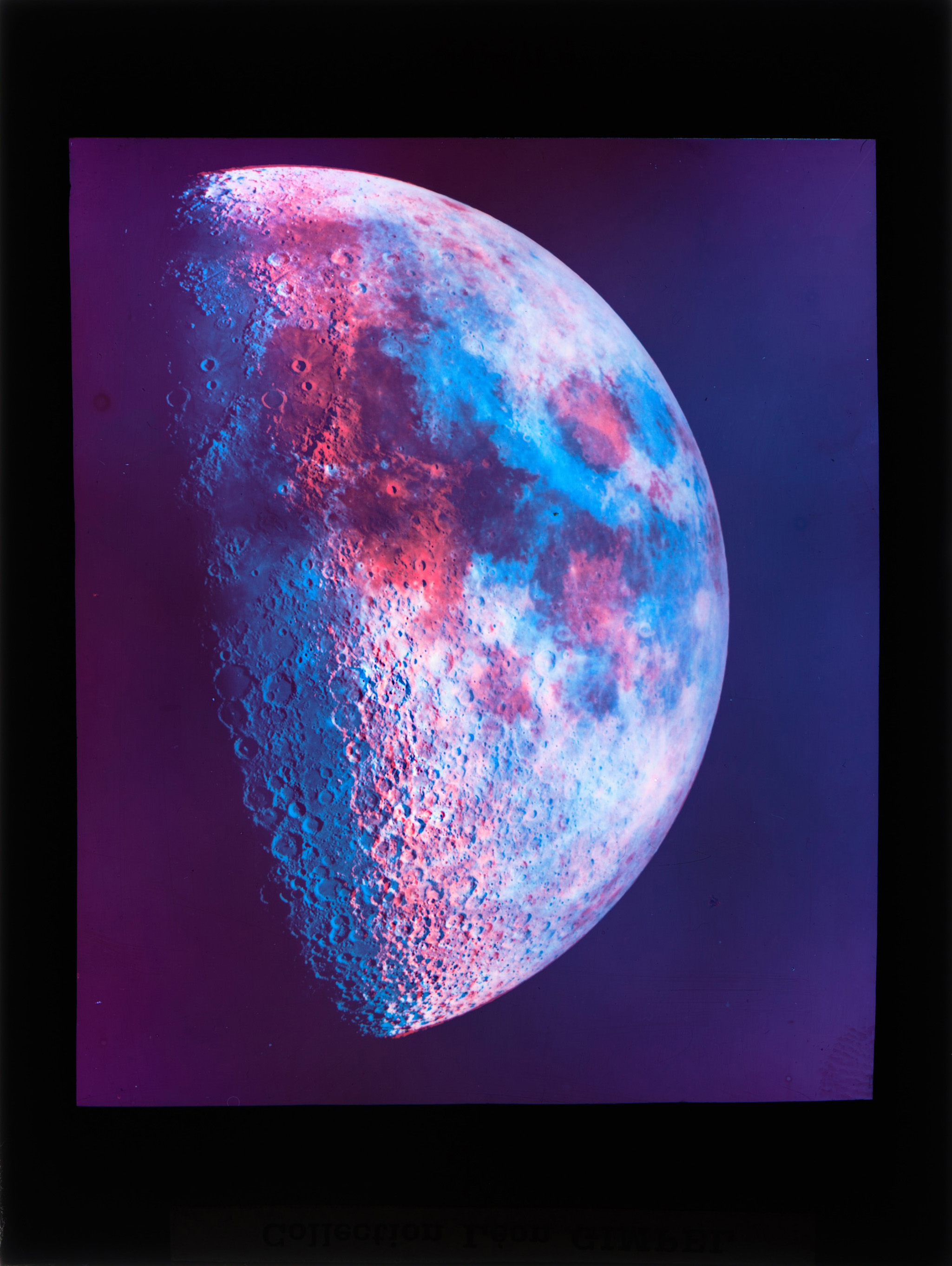
Anaglyph of the moon, 1923

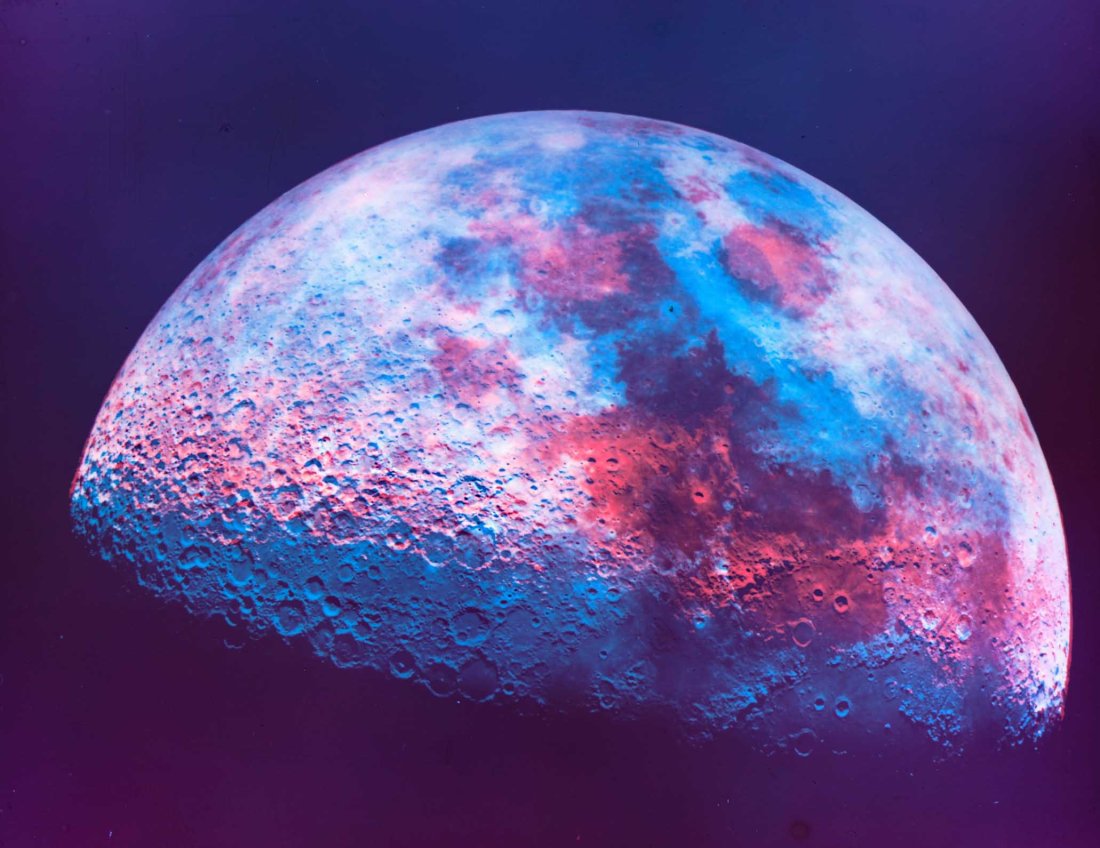
Leon Gimpel :: Anaglyph vom Mond, 1923. Handkolorierte Silbergelatine-Glasplatte. | src Kunstmuseum Basel
León Gimpel :: Anaglyph of the moon, 1923. Hand-colored silver gelatin glass plate. | src Kunstmuseum Basel

There are many different ways of creating and viewing stereoscopic 3D images but they all rely on independently presenting different images to the left and right eye.

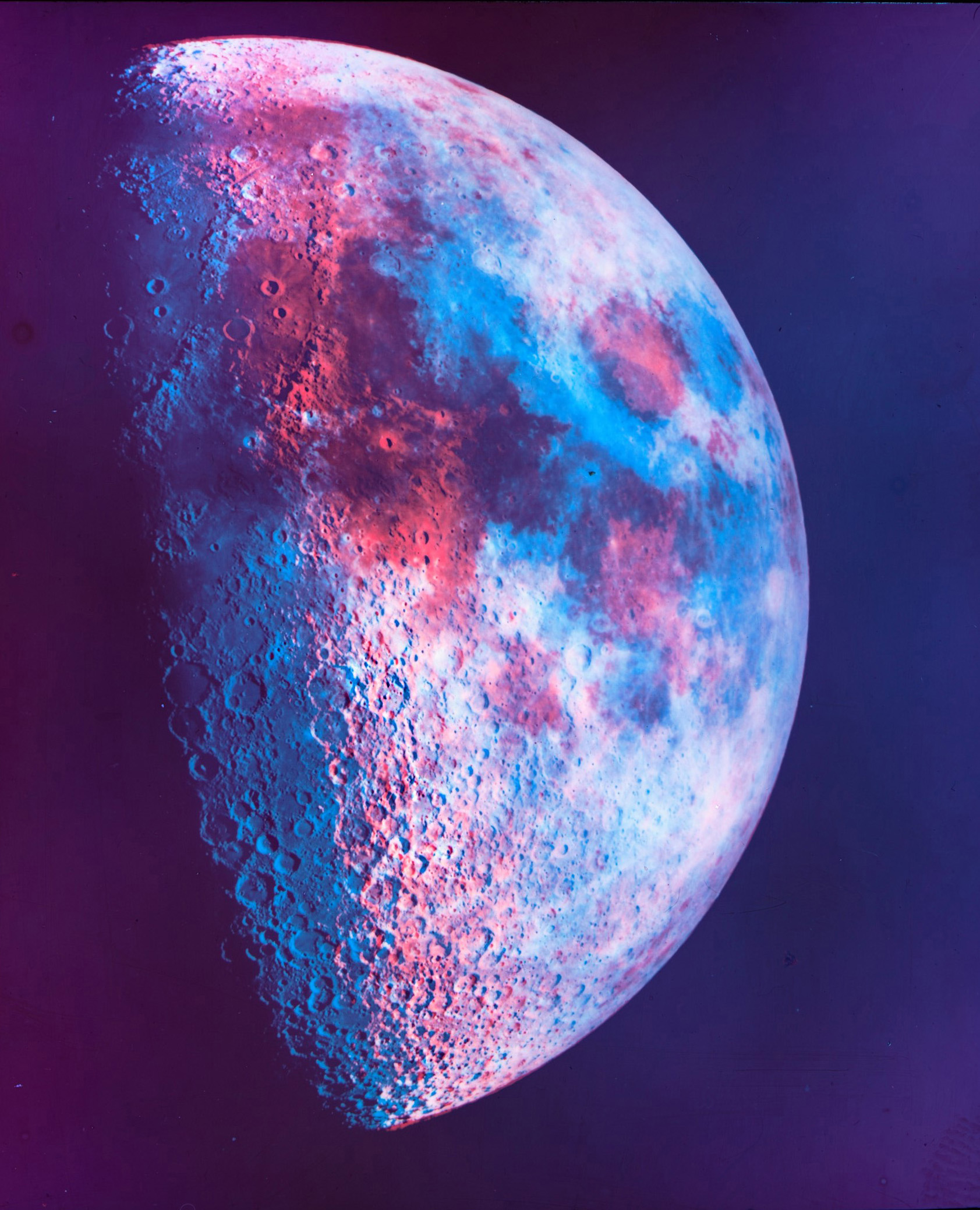
León Gimpel :: Anaglyph of the moon, 1923. Hand-colored silver gelatin glass plate. | src Kunstmuseum Basel

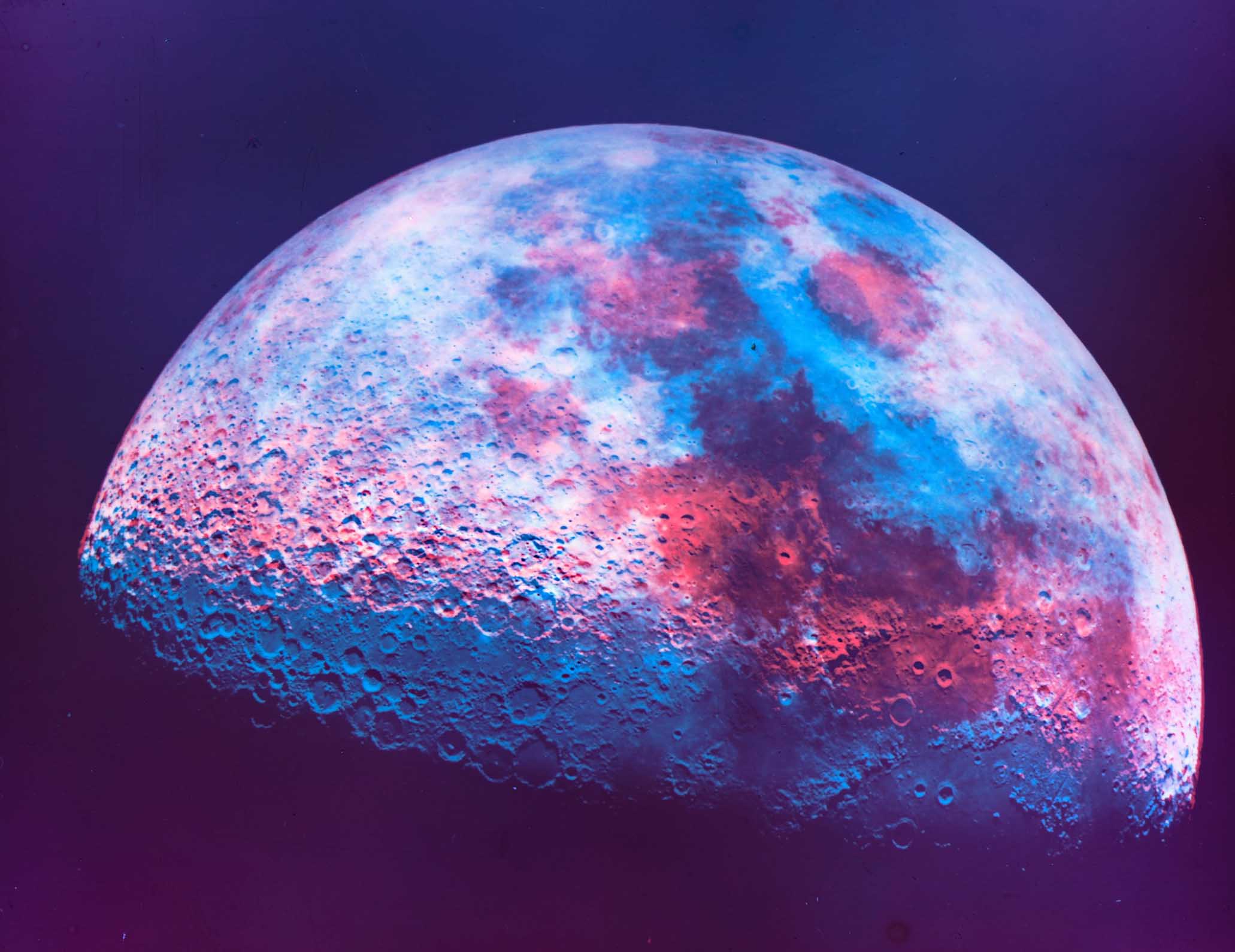
Anaglyphs are a straightforward way of presenting stereo pair images is the stereoscopic 3D effect achieved by means of encoding each eye’s image using filters of different (usually chromatically opposite) colors, typically red and cyan. Anaglyph 3D images contain two differently filtered colored images, one for each eye. When viewed through the “color-coded” “anaglyph glasses”, each of the two images reaches the eye it’s intended for, revealing an integrated stereoscopic image. The visual cortex of the brain fuses this into the perception of a three-dimensional scene or composition.

There are three types of anaglyph glasses in common use: red-blue, red-cyan, and red-green.

Leon Gimpel :: Anaglyph vom Mond, 1923. Handkolorierte Silbergelatine-Glasplatte. | src Kunstmuseum Basel