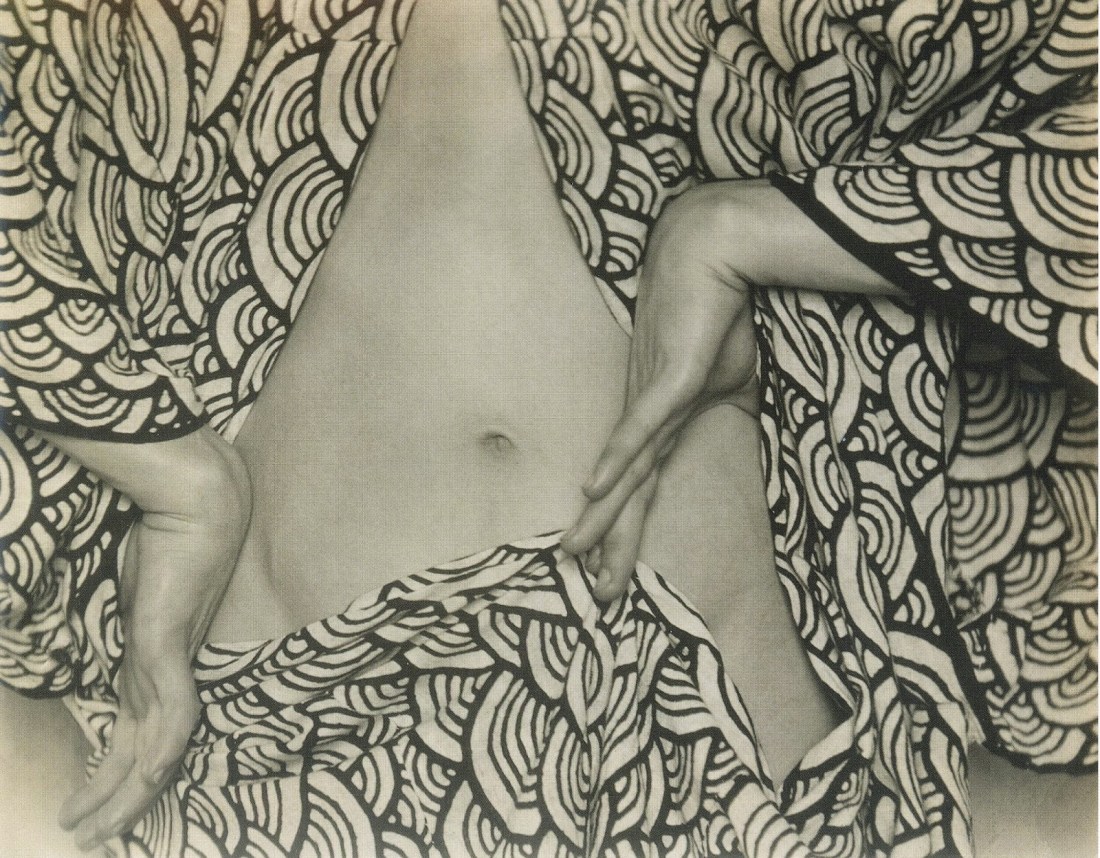
Margrethe Mather :: Semi-nude [Billy Justema wearing a Kimono]; ca. 1923. Center for Creative Photography. University of Arizona, Tucson
When Margrethe Mather (1885 or 1886-1952) met Billy Justema in 1922, she was 36 and he was 17. Through spending time with him, Mather found a way out of her grief over the unexpected suicide of her close friend Florence Deshon. Through their relationship, Justema searched for a state of mind that would allow him to define both his artistic path and his sexuality. Mather photographed him as an enigma, as he was at the time to himself, in the process creating a portfolio to rival that of Alfred Stieglitz’s images of Georgia O’Keeffe. I could point out the sure compositional structure that informs Billy Justema in a Kimono (above), the curves and angles that form a harmonious whole, all things typical of Mather’s work. [quoted from The Blue Lantern on blogspot]
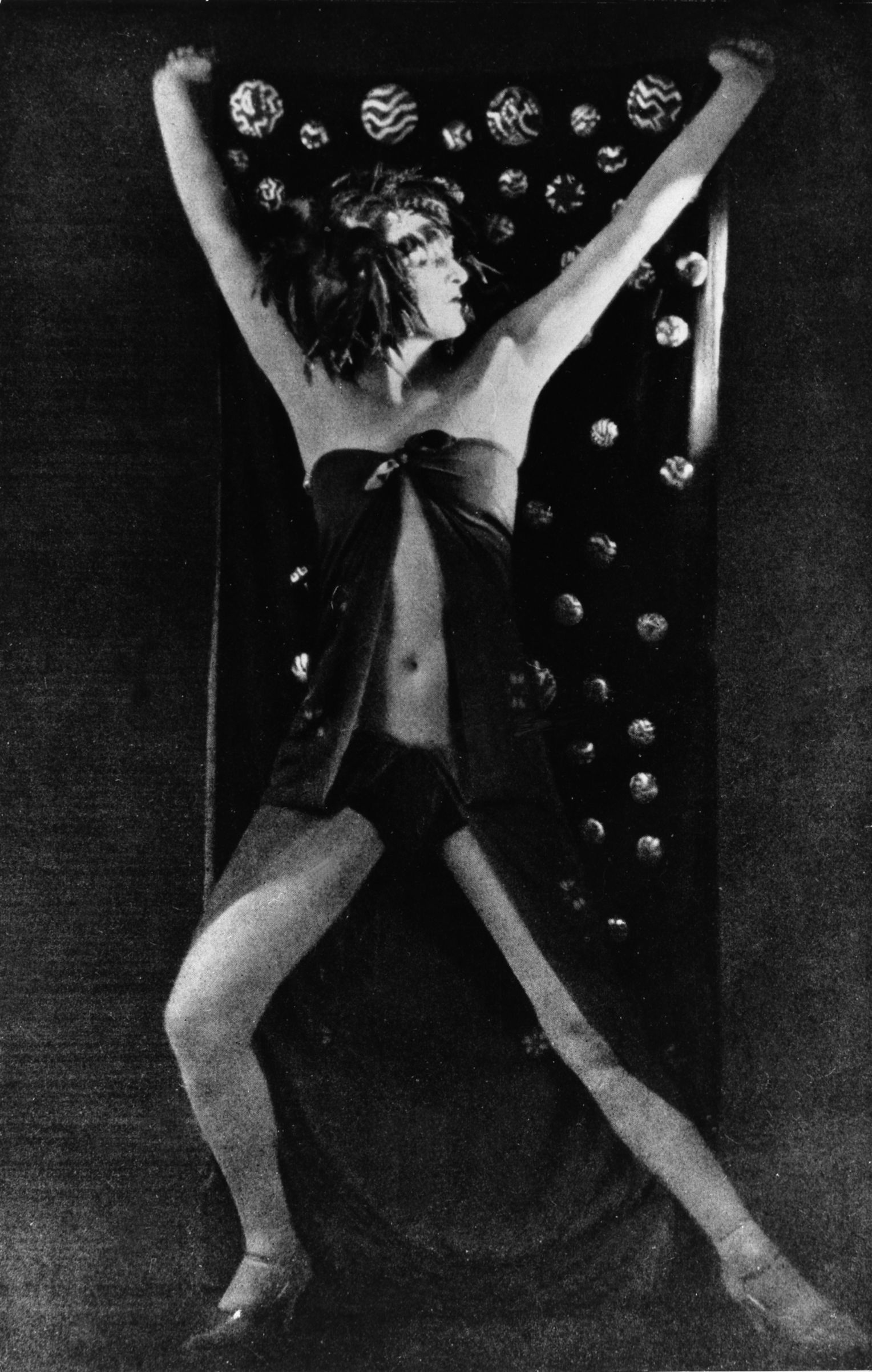
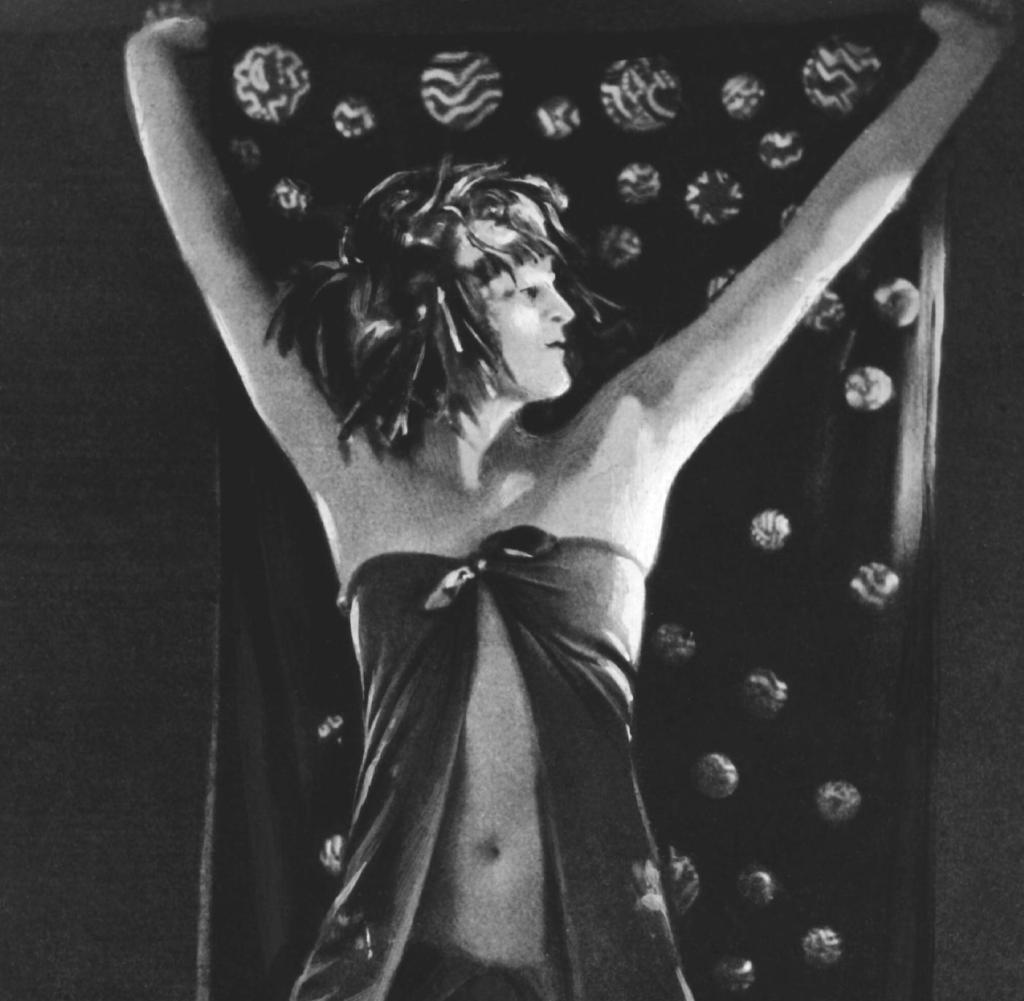
Anita Berber Dichterin: Die offen bisexuelle Anita Berber tanzte und provozierte nicht nur, sondern betätigte sich auch als Lyrikerin. In ihrem Gedicht “Orchideen” etwa heißt es: “Ich küsste und kostete jede bis zum Schluss / Alle alle starben an meinen roten Lippen / An meinen Händen / An meiner Geschlechtslosigkeit / Die doch alle Geschlechter in sich hat / Ich bin blass wie Mondsilber.”
Anita Berber as a poetess: The openly bisexual Anita Berber not only danced and provoked, but also was as a poet. In her poem “Orchids”, for example, it says: “I kissed and tasted each one to the end / All died on my red lips / On my hands / On my genderlessness / Which has all genders in it / I am pale as moon silver.”
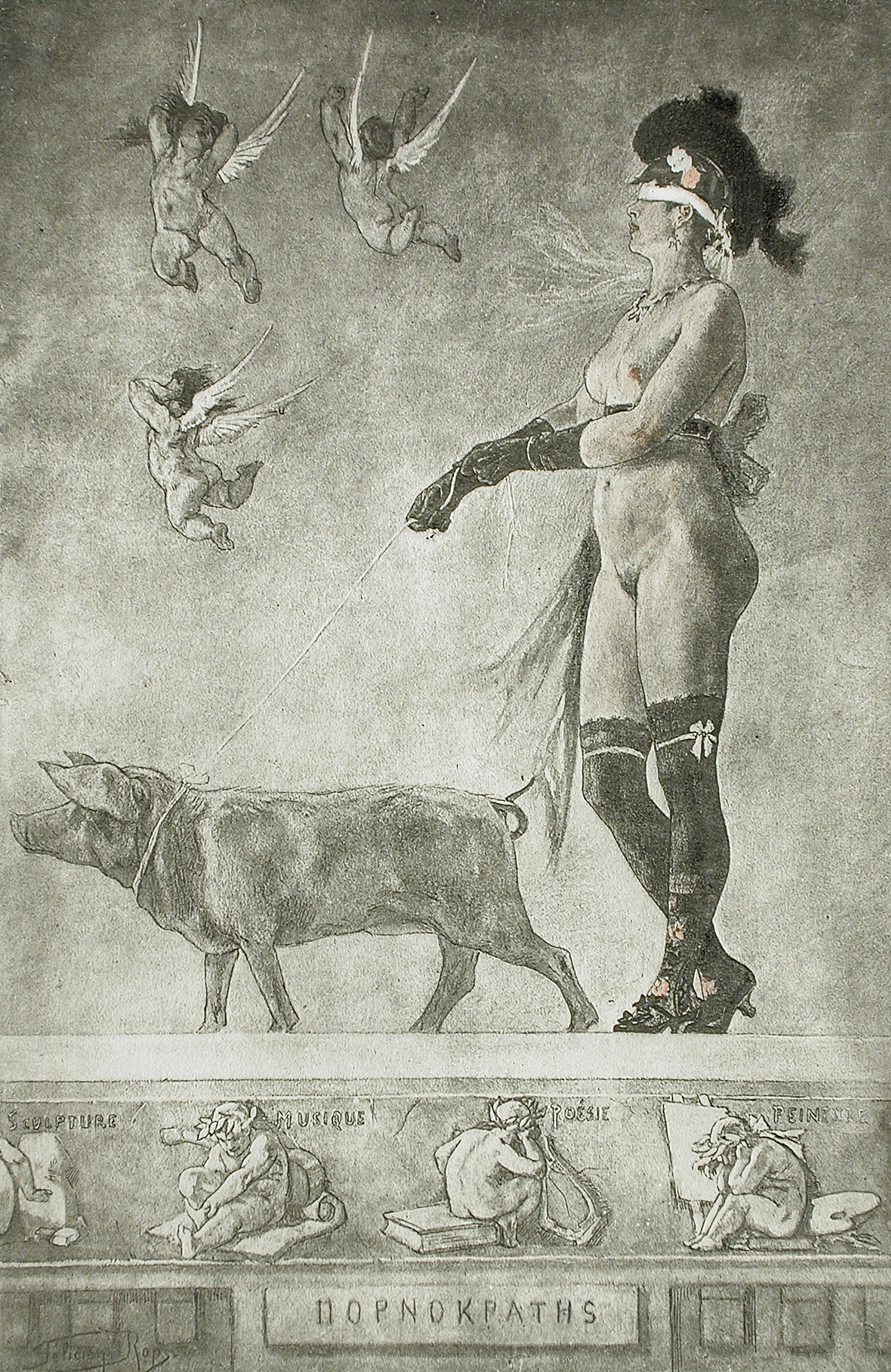
Félicien Victor Joseph Rops :: Pornokrates (or La Dame au Cochon), 1879. Signed Felicien Rops and dated 1879 lower left. Pastel, chalk, pencil and watercolour on paper. | src Sotheby’s
Pornokrates was the scandalous success of the 1886 Les XX exhibition and solidified Rops’ growing reputation as the creator of sexually-charged, titillating imagery. Although Rops provided it with a Greek title, he changed the figure’s status from that of an ancient muse of love to a modern goddess of sex. ‘Rops presents a provocative vision of modern woman. She is naked rather than nude, realistically rendered rather than demurely sensuous. Love has no place in the modern worlds; even the ancient cupids leave in tears. Blindfolded and located atop a parapet, she haughtily walks a pig, an emblem of filth and temptation. Were it not for her brazen nakedness, she might be mistaken for a proper middle-class woman walking a well-bred dog. Adorned with the accoutrements of her trade, she parades not on the boulevards that were the street walker’s domain, but above the weeping personification of the arts – suggesting that the modern prostitute is truly the new muse of the arts.’ (Sura Levine, Les XX and the Belgian avant-garde, Kansas, 1992, p. 329). Quoted from source
Félicien Rops :: Pornocratès (Pornokrates) ou La Dame au cochon, 1878, aquarelle, pastel et rehauts de gouache, 75 x 48 cm. Fédération Wallonie-Bruxelles en dépôt au musée Félicien Rops
Pornocratès (1878) : “Le dessin représente une grande femme nue, quart nature, se détachant sur un ciel bleu foncé parsemé d’étoiles et où des amours – 3 amours ! volent en s’enfuyant, à tire d’aîles, la femme, les yeux bandés est conduite en aveugle par un cochon. C’est intitulé – Pornocratie – Sous la frise les petits génies des beaux Arts courbent – en gémissant !! la tête !! La femme est chaussée & gantée de noir”1, décrit l’artiste. Pornocratès, La Dame au cochon ou Pornocratie, trois titres pour nommer ce dessin majeur de Rops qui illustre aujourd’hui encore l’esprit décalé et impertinent de l’art belge. La femme moderne piétine les arts anciens, figés dans la pierre. Elle se laisse guider par ses instincts, symbolisés par le cochon. C’est donc un dessin qui représente une double profession de foi pour l’artiste : en art, un refus virulent pour l’académisme et dans la société, une dénonciation de l’hypocrisie bourgeoise qui cache une certaine liberté de moeurs.
1. Lettre de Rops à Maurice Bonvoisin, Paris, 20 février 1879. http://www.ropslettres.be, n° d’édition 475
Félicien Victor Joseph Rops :: Pornokrates or La Dame au cochon, Belgium, 1896. Soft-ground etching. Gift of Michael G. Wilson. Plate: 38.58 x 27.94 cm; image: 27.94 x 18.1 cm. | src LACMA ~ Los Angeles County Museum of Art
![Margrethe Mather :: Semi-nude [Billy Justema Wearing a Kimono], ca. 1923. Center for Creative Photography. University of Arizona, Tucson](https://unregardoblique.com/wp-content/uploads/2022/07/margrethe-mather-semi-nude-billy-justema-wearing-a-kimono-ca.-1923-center-for-creative-photography-university-of-arizona-tucson.jpg)


 un regard oblique