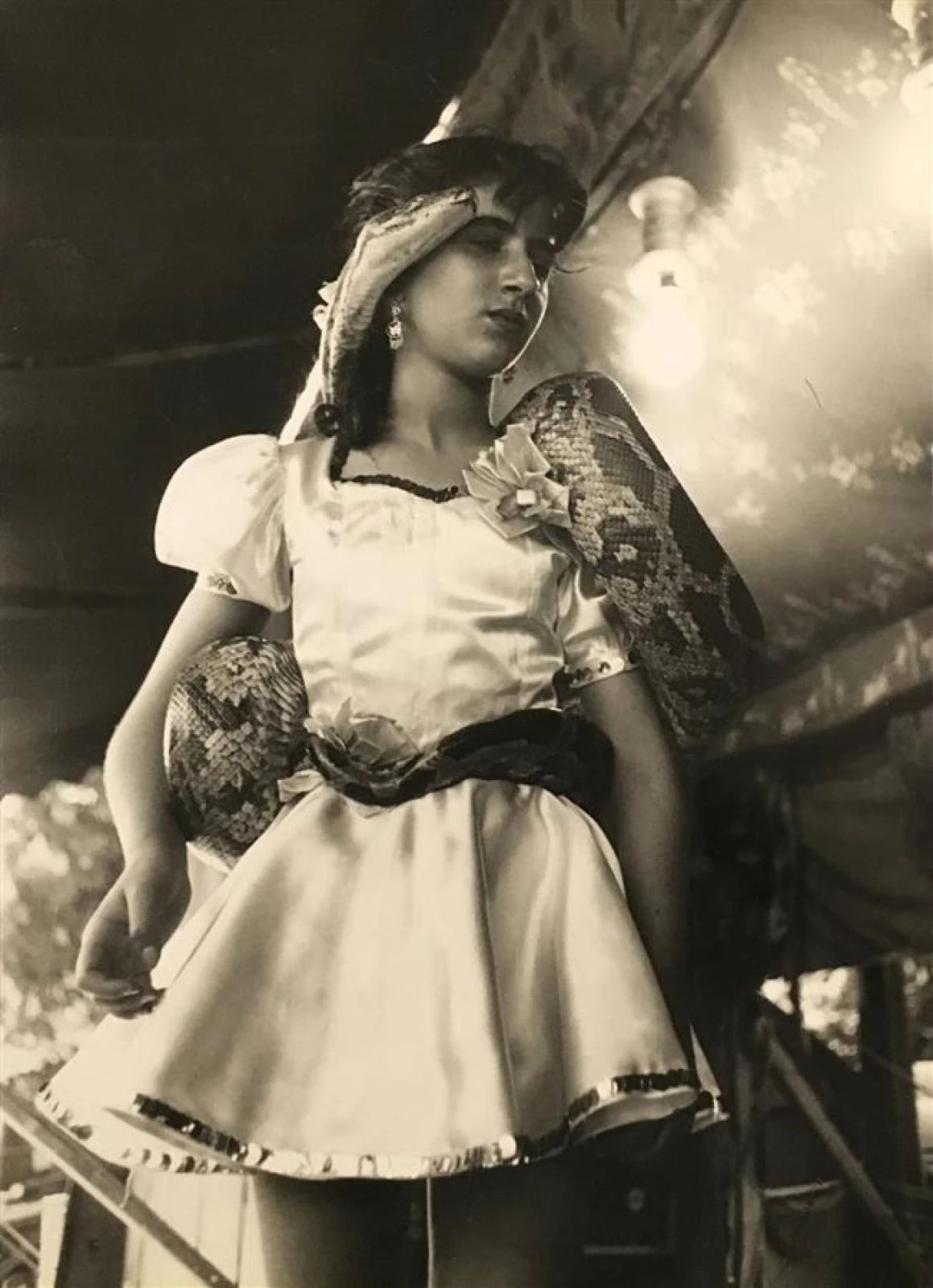
Izis · fête foraine · 1956
images that haunt us
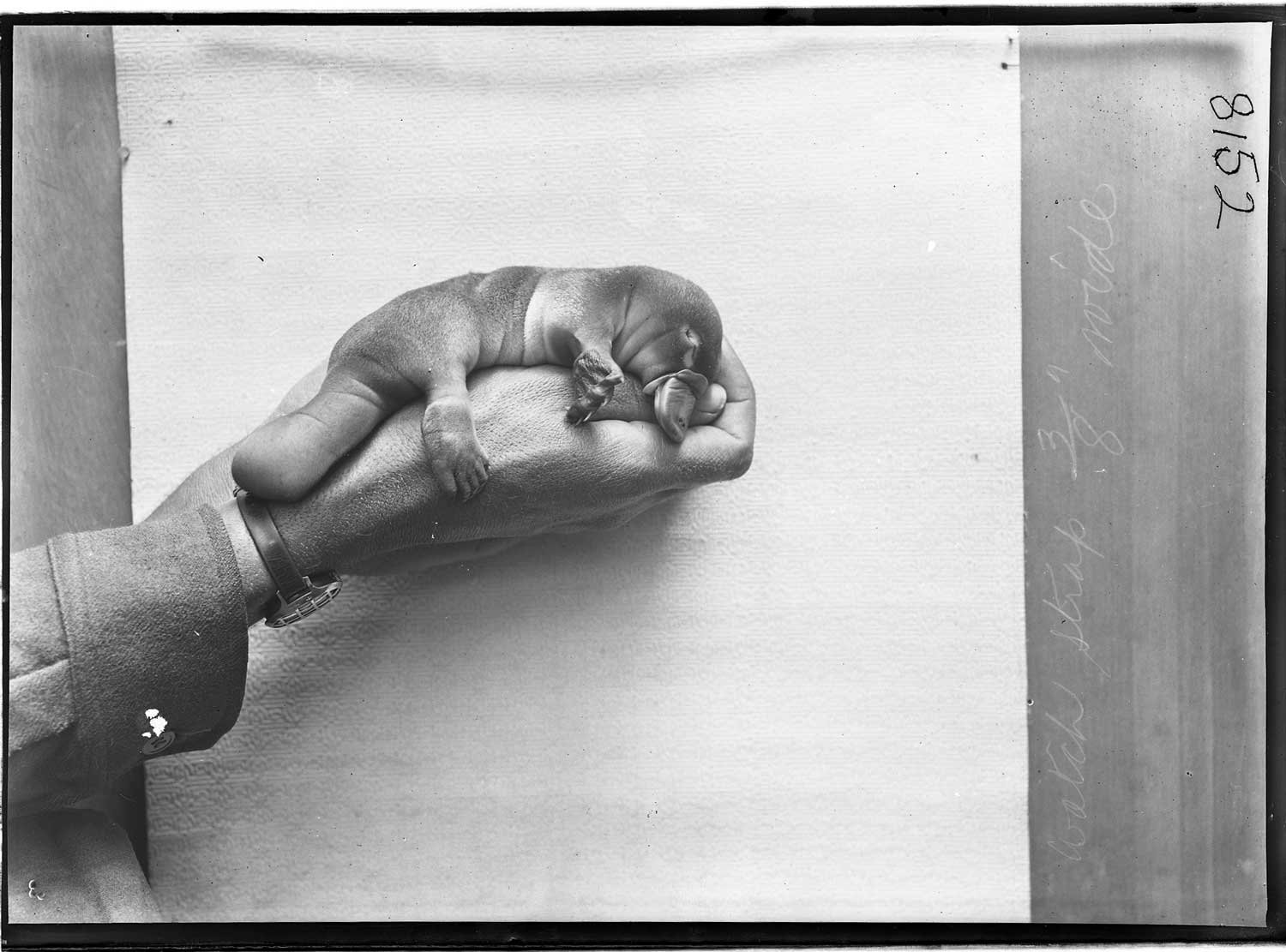
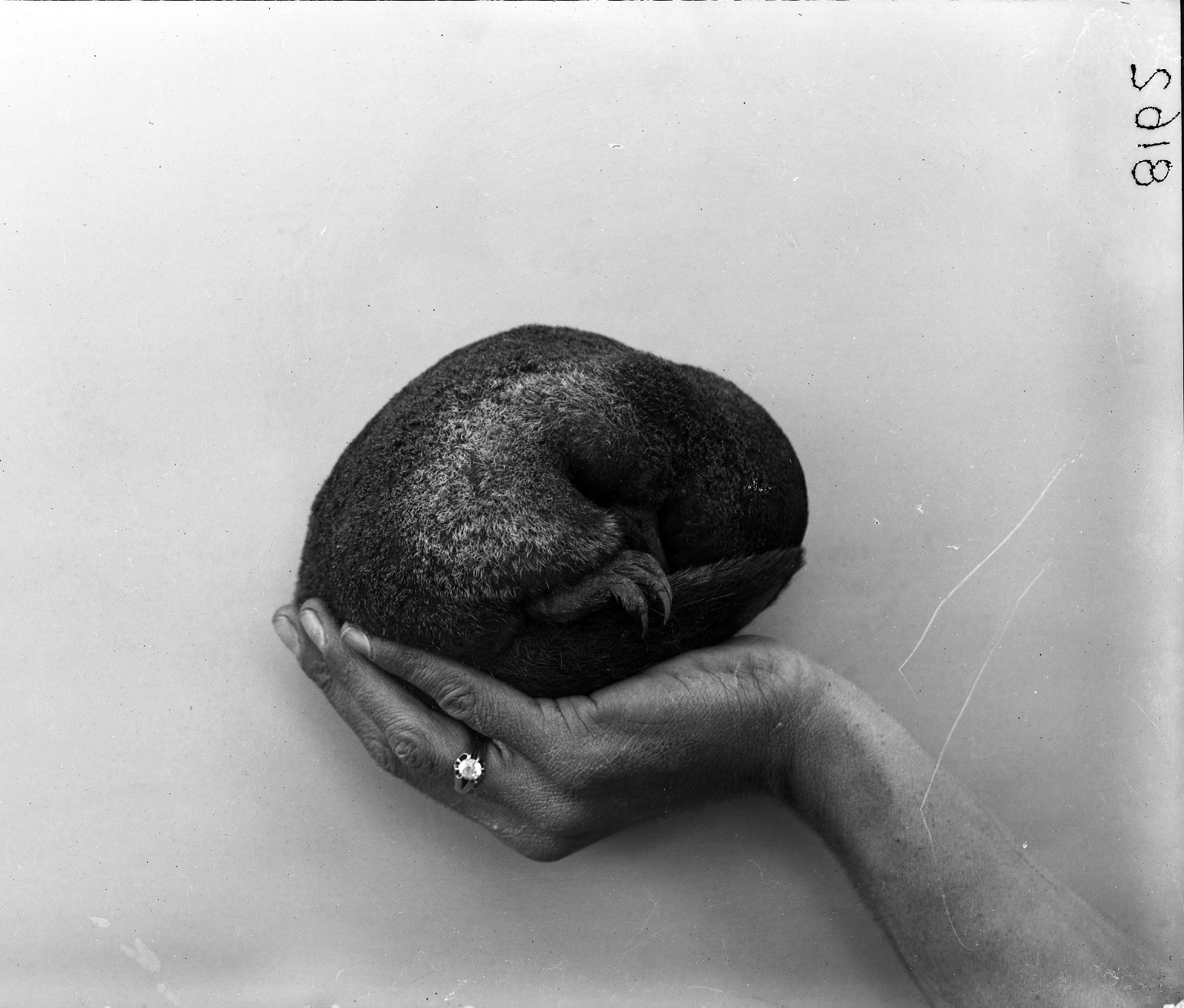
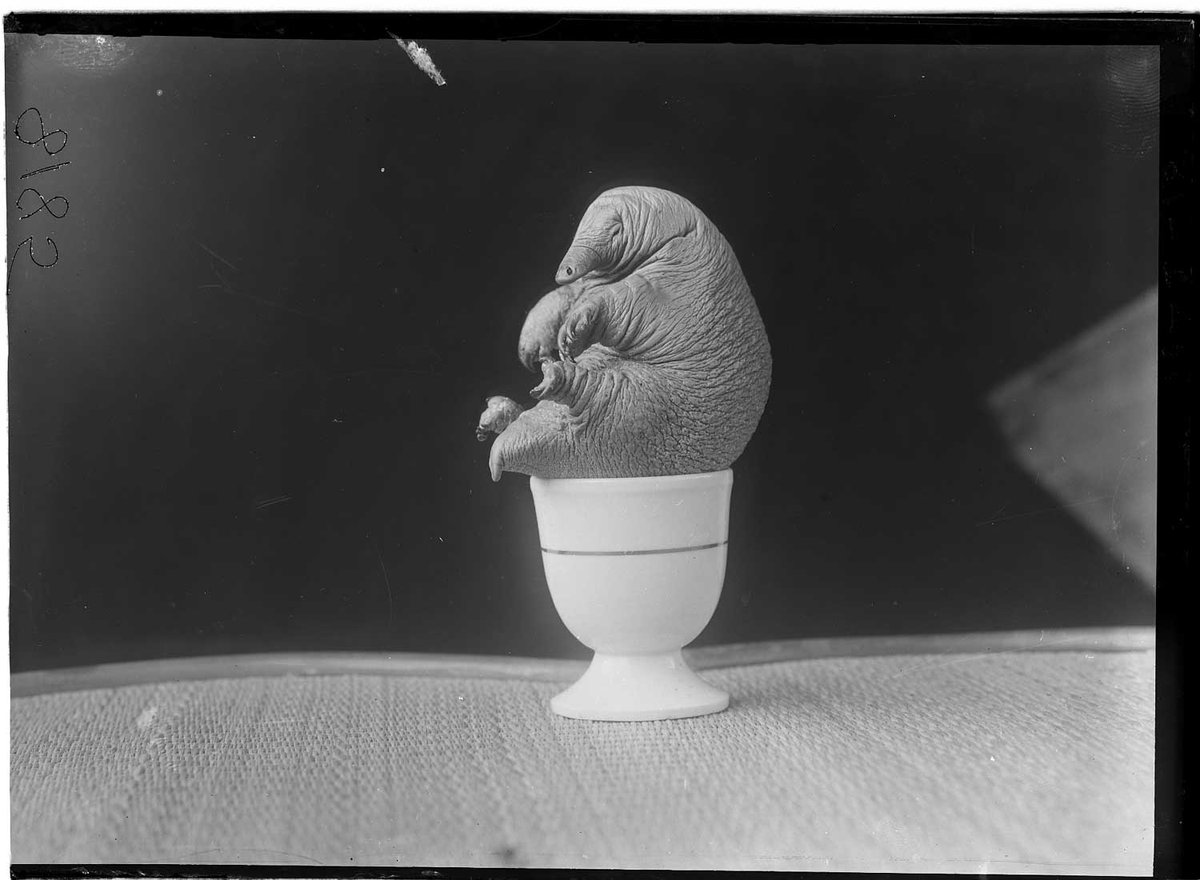
Harry J. Burrell developed an interest in natural history after he settled in Manilla, northern NSW with his wife Susan Emily Naegueli in 1901. As a naturalist, Burrell is most famous for being the first person to successfully keep platypuses in captivity. To do this he invented the ‘platypusary’, a storage tank which enabled him to both study and exhibit live platypuses. The platypusary was used for the first time in 1910 to show live platypuses at the Moore Park Zoo in Sydney. In 1922 he assisted Ellis Stanley Joseph with successfully transporting the first ever live platypus beyond Australian shores. The sole surviving platypus of the original 5 platypuses’ arduous journey died within a few weeks of being exhibited at the Bronx Zoo, New York.


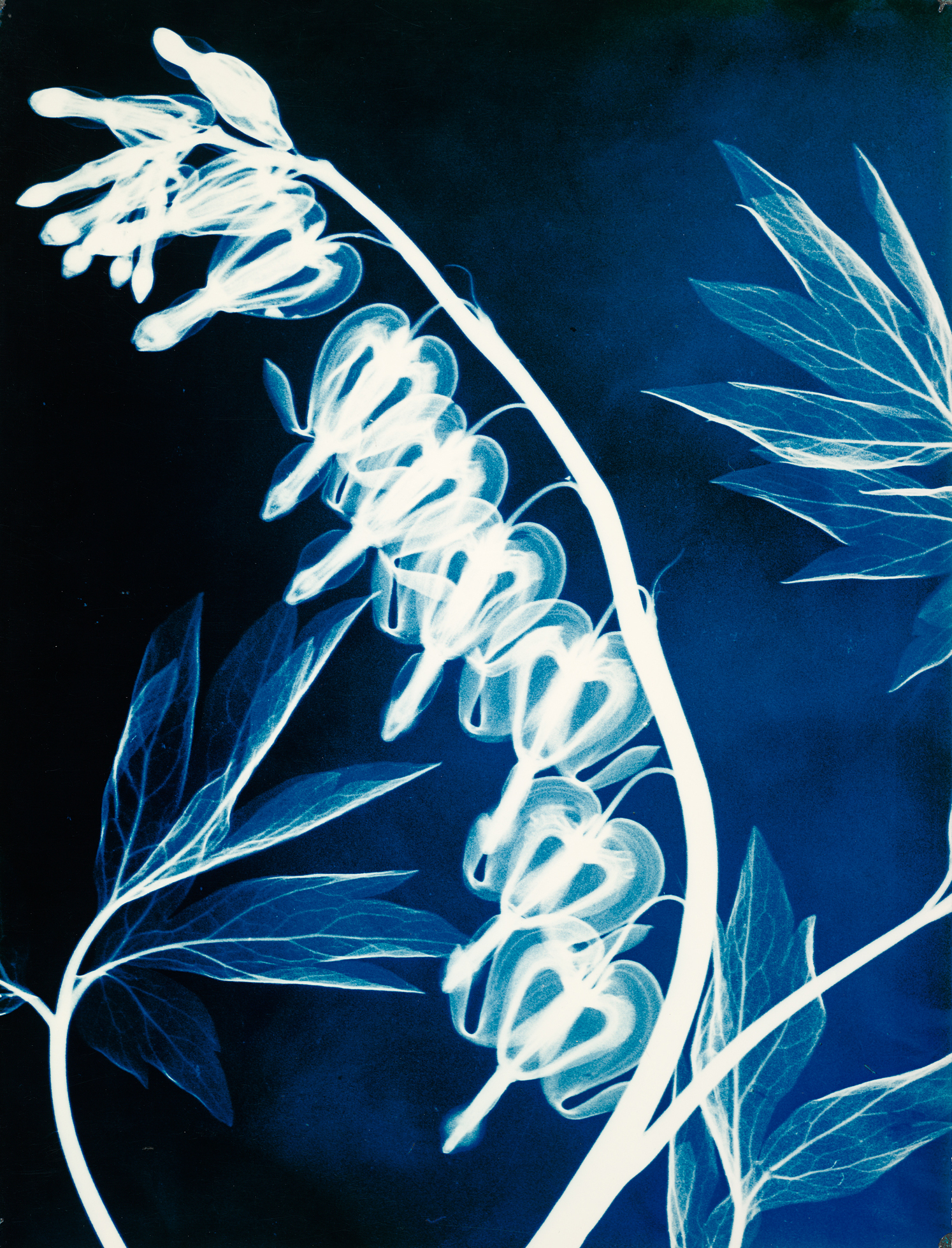

Hilja Raviniemi (née Nieminen, 1915–1973) dedicated her life to art photography at a time when it was still a niche phenomenon in Finland. The art photography scenes consisted of amateur photographers’ clubs’ regional and international exhibitions. Letters from international exhibitions addressed to “Mr. Hilja Raviniemi” show that photographers were assumed to be men. Hard work helped “Hili” rise to the top of the male-dominated world of amateur photographers’ clubs. She was the first woman to become chair of the Association of Finnish Camera Clubs, and she was awarded the international honEFIAP title, which was only allowed to be simultaneously carried by a select few photographers in the world.
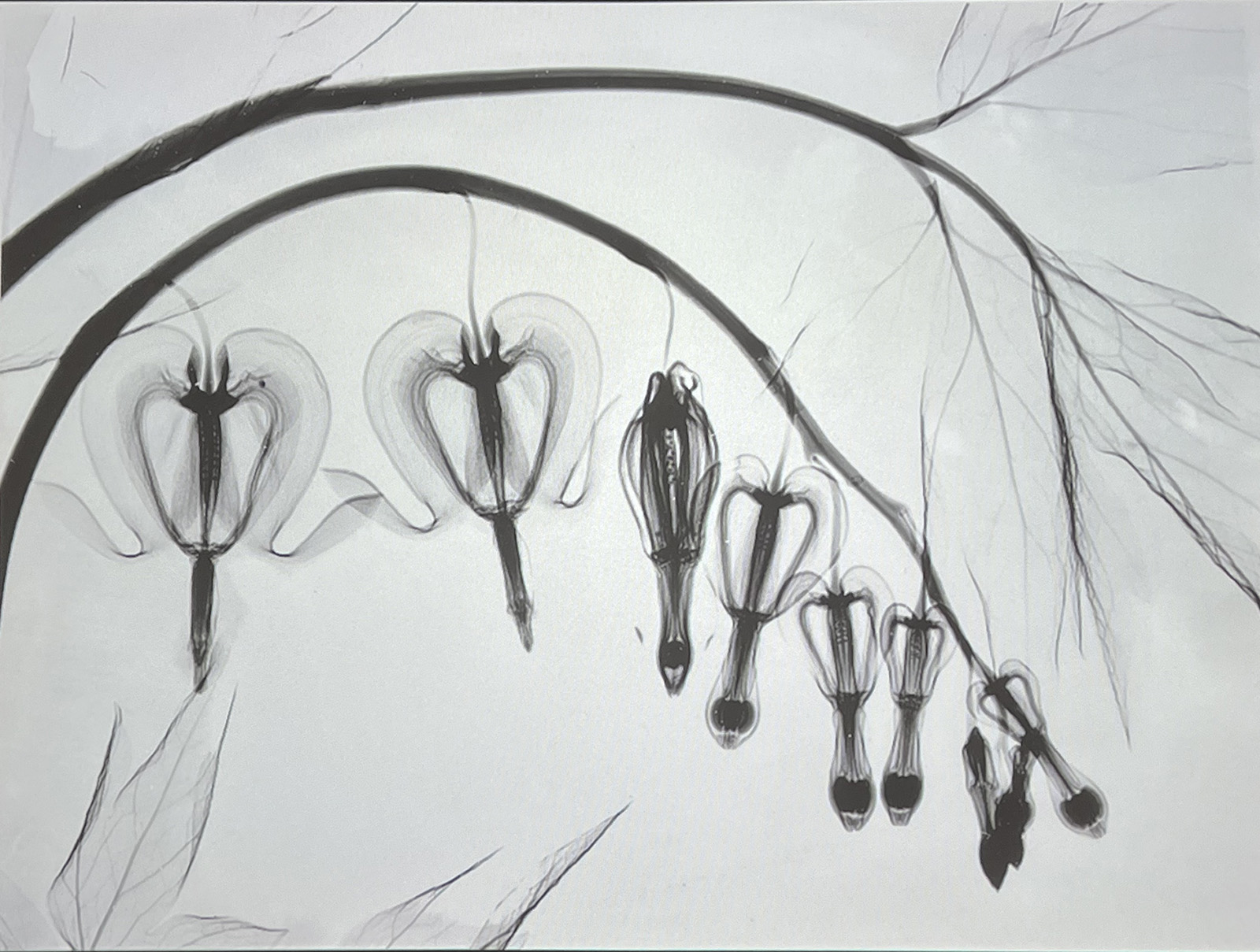
After her more traditional early work, Raviniemi explored the infinite creative possibilities offered by the darkroom, especially in the 1960s. Her recognizable blue era, which differed from the stark black-and-white art photography of the time, began in the late 1960s. Chemist by profession, Raviniemi was an ingenious artist in the darkroom. In addition to blue-tinted prints, she also created completely abstract photographic artworks using different techniques. Raviniemi’s workplace at the University of Helsinki photography department laboratory also allowed her to make the first artistic radiographic images in Finland. Hundreds of Raviniemi’s radiographic works have been preserved and make up an exceptional ensemble of works in the history of Finnish art photography. In the current exhibition, carefully constructed exhibition prints are accompanied by experimental material that grants us a glimpse of Raviniemi’s curious personality and sense of humor, along with eccentric pictures of cats.
Hilja’s husband, chemist Eero Raviniemi (1911–1996) was also an accomplished photographer and pioneer of color photography in Finland. After Eero’s death, the Raviniemi family’s photography collection was donated to the Finnish Museum of Photography.
quoted from: Hilja Raviniemi: Sinisen kosketus (A Touch of Blue). Fall 2023 exhibition at the Finnish Museum of Photography (link)
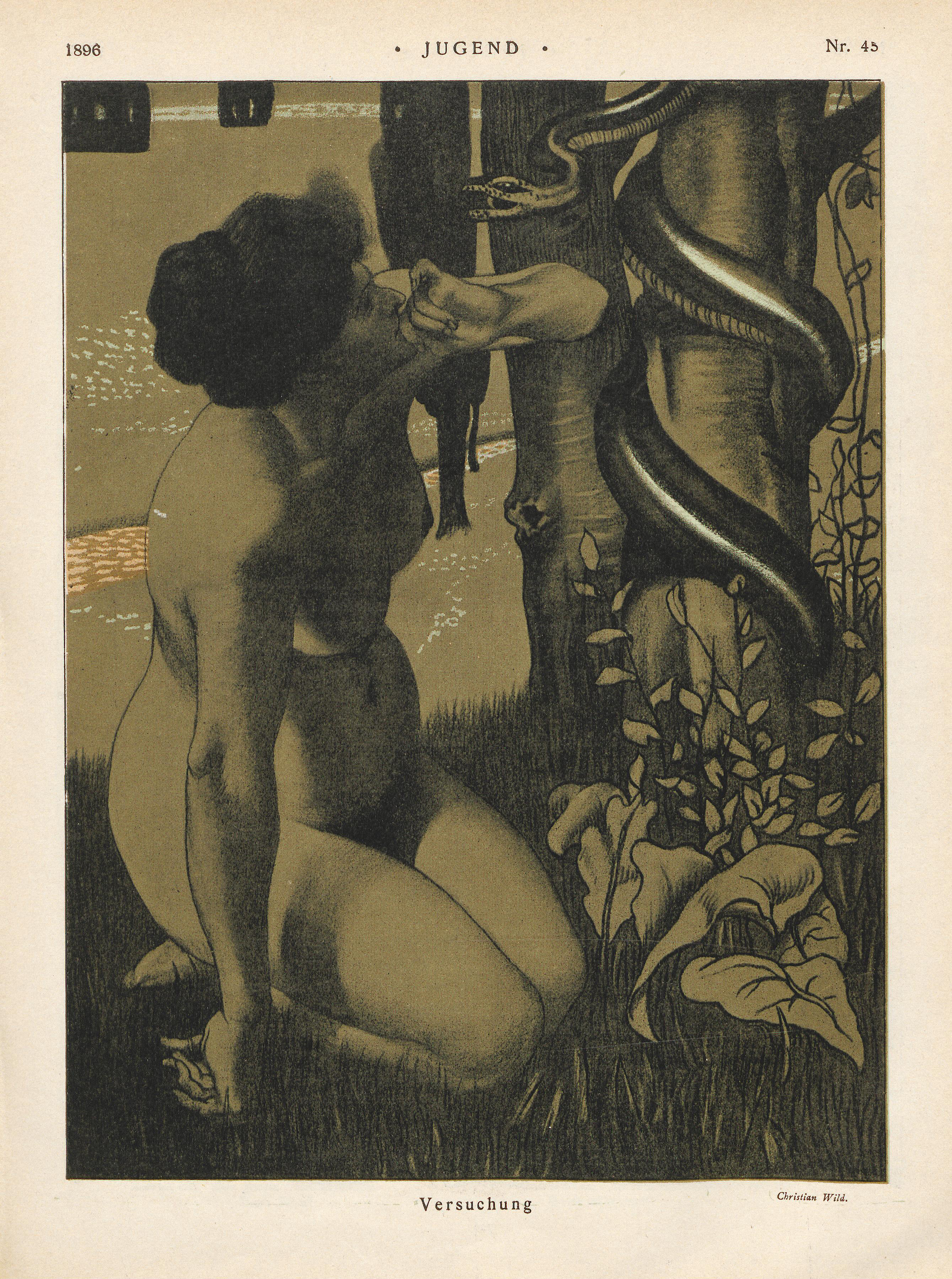
![Christian Wild :: Versuchung ~ Temptation. Jugend Magazin, Nov. 1896. Nr. 45. [detail] | src Universitätsbibliothek Heidelberg](https://unregardoblique.com/wp-content/uploads/2022/09/jugend1896_2_0291-crp.jpg?w=1100)
![Christian Wild :: Versuchung ~ Temptation. Jugend Magazin, Nov. 1896. Nr. 45. [detail] | src Universitätsbibliothek Heidelberg](https://unregardoblique.com/wp-content/uploads/2022/09/jugend1896_2_0291-crp.jpg)

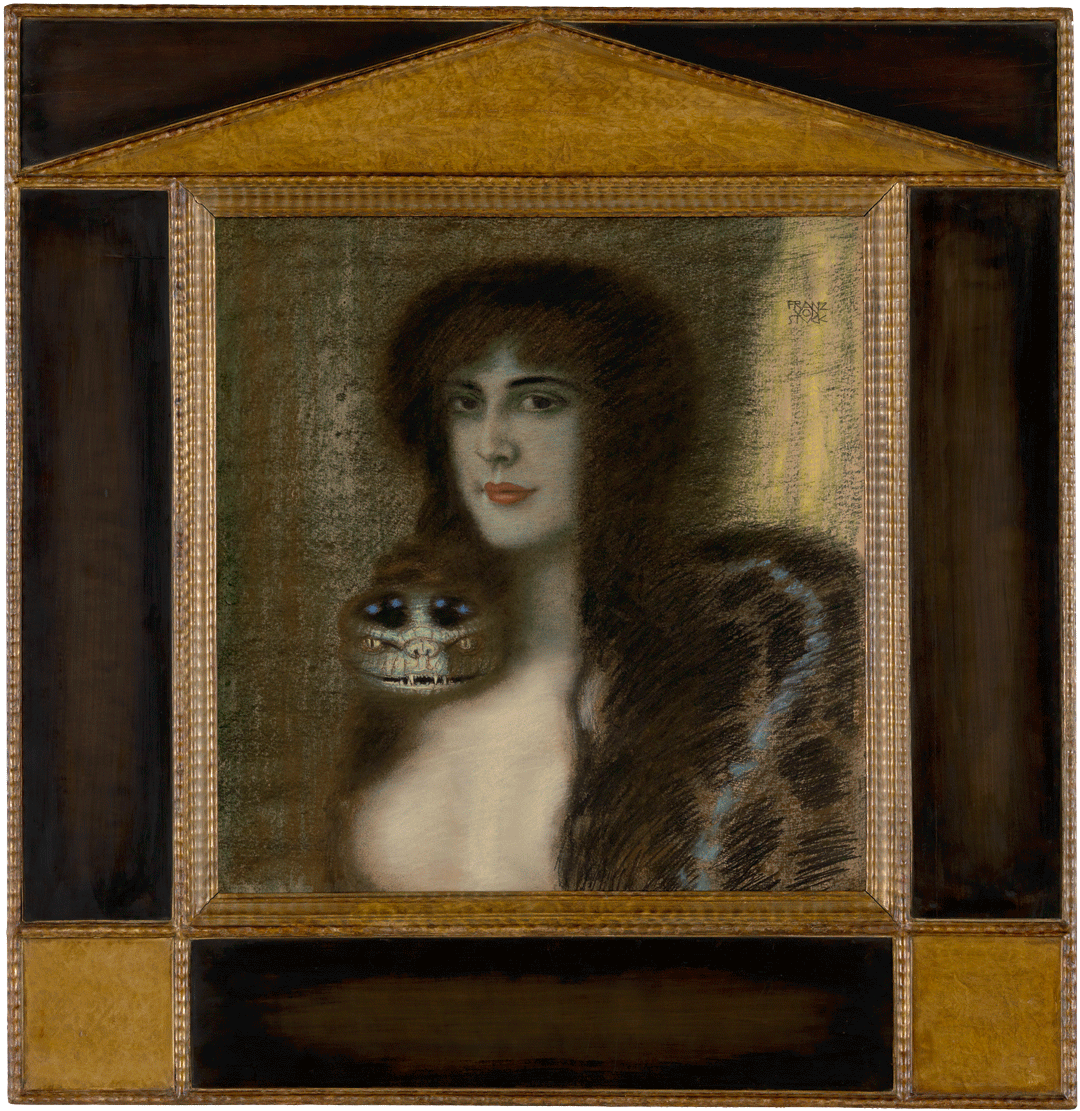
Heute sind insgesamt 13 Ausführungen dieses Werkes bekannt. Eine Version davon, bisher noch unbekannt, bereichert seit kurzem als Dauerleihgabe die Sammlung der Villa Stuck. | Today a total of 13 versions of this work are known. A version of it, as yet unknown, has recently been added to the Villa Stuck collection as a permanent loan.
Der Münchner Künstler Franz von Stuck (1863 – 1928) entwickelte schon früh ein eigenes Rahmenkonzept für seine Werke, das er immer unterschiedlich, je nach Intention, variierte. Bild und Rahmen, Malerei und Kunsthandwerk betrachtete er als ästhetische Einheit, als gleichberechtigte Teile eines Gesamtkunstwerkes.
Meist entwarf der Mitbegründer der Münchner Secession flache Plattenrahmen in unterschiedlichen Ausführungen: z.B. mit vergoldeten, handgeschnitzten Schmuckstäben, vergoldeten Wellenleisten, flachen Ornamenten oder mit aufgemalten, architektonischen Formen. Stuck ließ die Rahmen nach seinen Entwürfen von Kunstschreiner*innen und Rahmenmacher*innen ausführen. Viele von ihnen wurden neben Hans Irlbacher von der Kunst- Rahmen- & Malbrettertischlerei Georg Oberndorfer in München angefertigt.
Für eines seiner berühmtesten Werke, Die Sünde (1893), entwarf er einen vergoldeten Ädikularahmen nach dem Vorbild dorischer Portale. Die plastischen Elemente des Tempelrahmens wie Säulen und Sockel wurden direkt auf die Grundplatte aufgebaut. Während der ersten Ausstellung der Münchner Secession 1893 lösten Bild und Rahmen einen Skandal aus, die Menschen strömten damals scharenweise in die Pinakothek. Franz von Stuck wurde als Star der neuen Künstlergruppe gefeiert, Die Sünde avancierte zum Kultbild des Fin de siècle.
Heute sind insgesamt 13 Ausführungen dieses Werkes bekannt. Eine Version davon, bisher noch unbekannt, bereichert seit kurzem als Dauerleihgabe die Sammlung der VILLA STUCK. Das Pastell auf Karton (nach 1905) ist in einem zweidimensionalen Originalrahmen der Tischlerei Georg Oberndorfer eingefasst: natürlich nach einem Entwurf des Künstlers selbst. Bemalung und Konstruktion verweisen auf einen antiken Dreiecksgiebel. Franz von Stuck gab seinen Werken ein Zuhause, baute ihnen Tempel.
Text source W-M-R blog
 un regard oblique