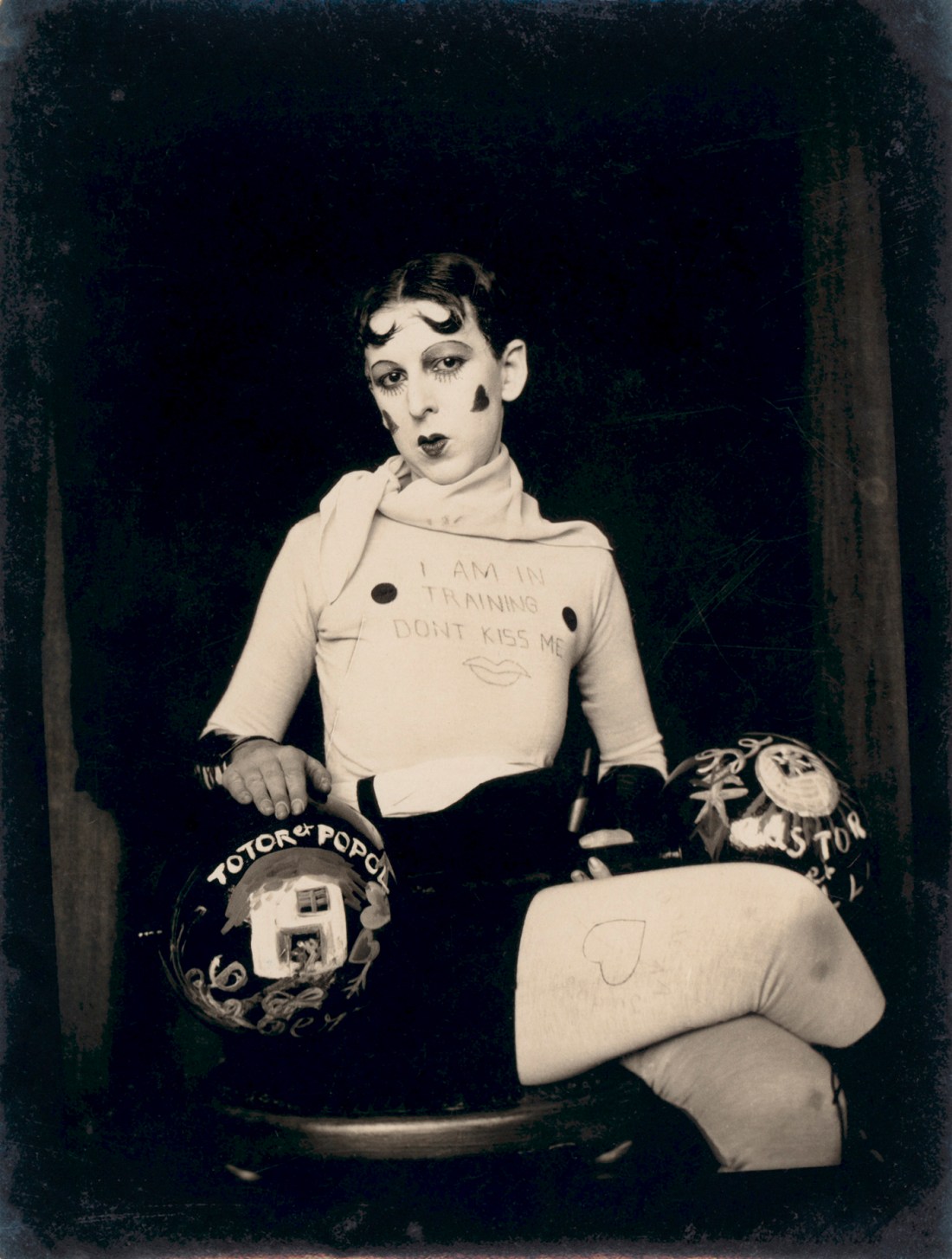
I am in training don’t kiss me

claude cahun, marcel moore
Claude Cahun and Marcel Moore  :: Untitled. "I am in training don't kiss me", 1927-1929. | src SF • MoMA
Claude Cahun and Marcel Moore :: Untitled. “I am in training don’t kiss me”, 1927-1929. | src SF • MoMA

“Les autoportraits ont beaucoup contribué à la reconnaissance puis à l’engouement posthumes dont l’œuvre de Claude Cahun [et marcel Moore] fut l’objet. Dans un décor généralement réduit au minimum (un fond de mur, de tissu, un coin de jardin, l’angle d’une porte), avec peu d’accessoire, mais choisis pour leur qualité symbolique (…), Claude Cahun va multiplier les poses, les travestissements, les rôles, les mises à nu, pour aboutir à une sorte de chorégraphie immobile de mouvement sériel, où transparaît  son attention pour la danse, la danse qui semble combiner et sublimer tous les genres. Elle ne se borne pas à questionner une identité problématique, elle la force, elle la produit. L’appareil photographique est véritablement placé dans la position d’un « miroir magique », que l’on scrute et interpelle, d’un instrument qui, paradoxalement, doit induire une transformation.”

(Catalogue exposition Claude Cahun, Jeu de Paume, Paris, Hazan, 2011, p. 64)
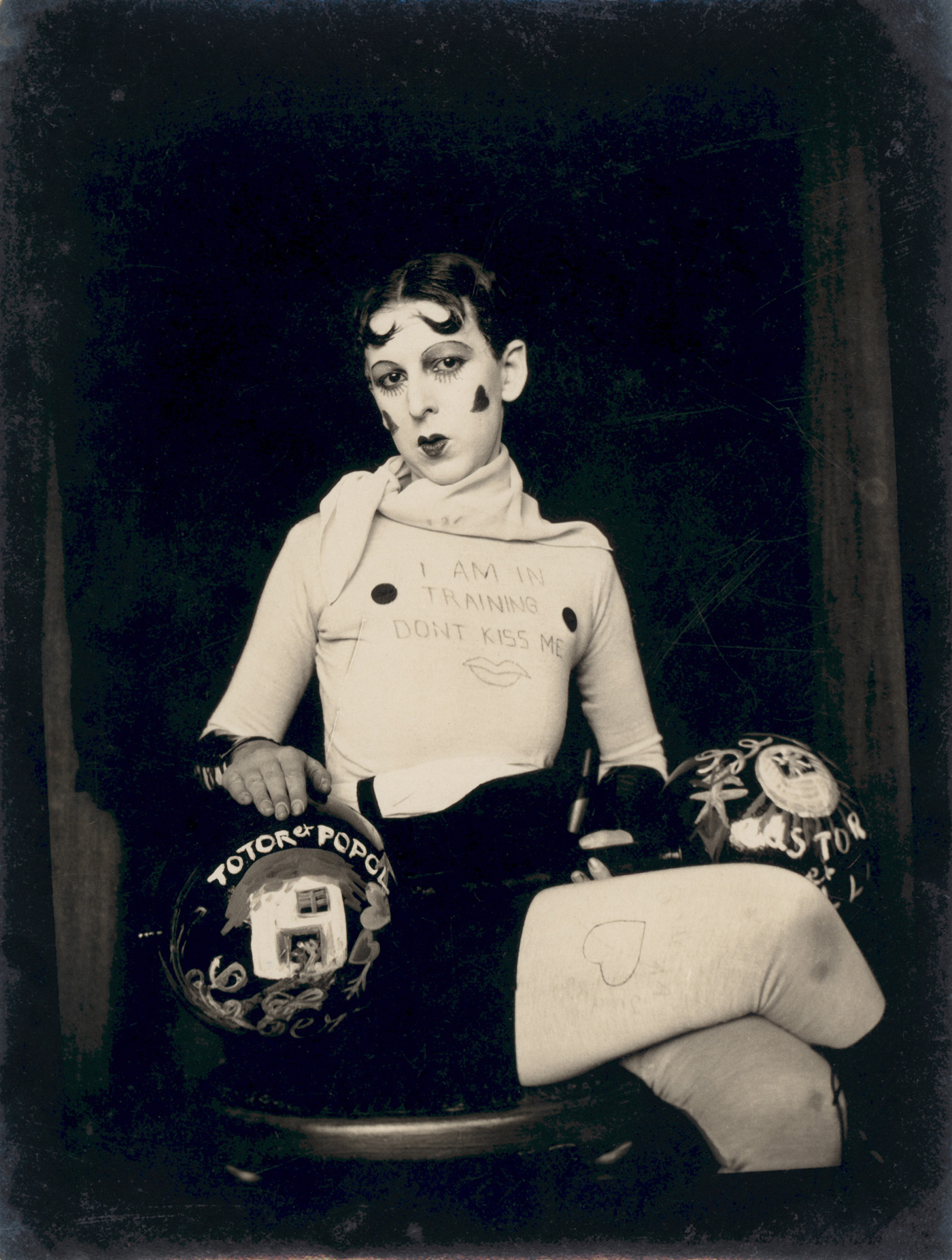
Claude Cahun and Marcel Moore :: Untitled. "I am in training don't kiss me", ca. 1927. | src Jersey Heritage Collection
Claude Cahun and Marcel Moore :: Untitled. “I am in training don’t kiss me”, ca. 1927. | src Jersey Heritage Collection

“The Self-portraits have contributed a great deal to the recognition and then to the posthumous enthusiasm for Claude Cahun’s [and Marcel Moore’s] work. In a decor generally kept to a minimum (a wall background, fabric, a corner of the garden, the angle of a door), with few accessories, chosen for their symbolic quality (…), Claude Cahun will multiply the poses, the disguises, the roles, the stripping, to end up with a kind of motionless choreography of serial movements, where the emphasis on dance shines through, the dance that seems to combine and sublimate all genres. They do not limit themselves to questioning a problematic identity, they force it, they produce it. The camera is truly placed in the position of a « miroir magique », which one scrutinizes and questions, an instrument which, paradoxically, must induce a transformation.” (*)

(Catalogue of the exposition Claude Cahun at Jeu de Paume, Paris, Hazan, 2011, p. 64)

(*) The modification of pronouns is completely our choice

Claude Cahun et Marcel Moore :: Autoportrait, vers 1927. Tirage argentique d'époque. Monté sous passe-partout. | src Sotheby’s
Claude Cahun et Marcel Moore :: Autoportrait, vers 1927. Tirage argentique d’époque. Monté sous passe-partout. | src Sotheby’s

Zaida Ben-Yusuf

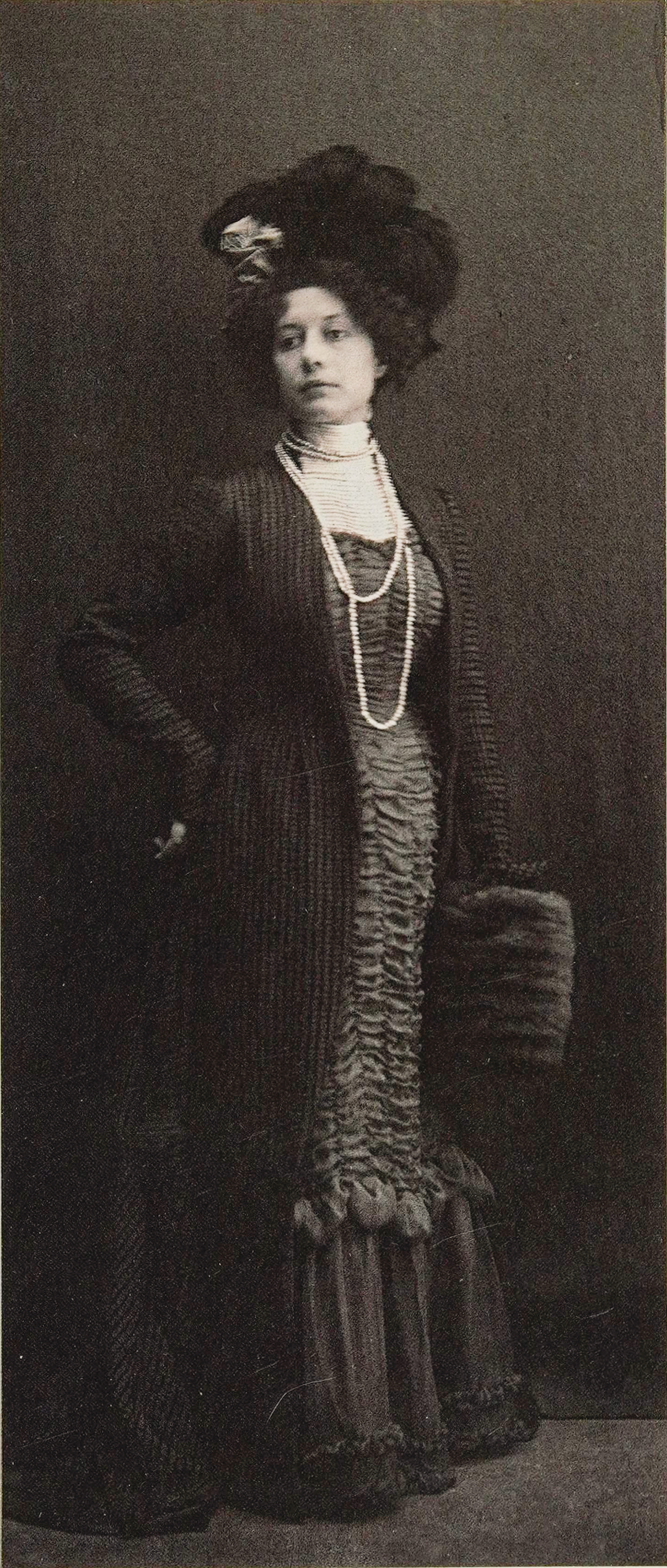
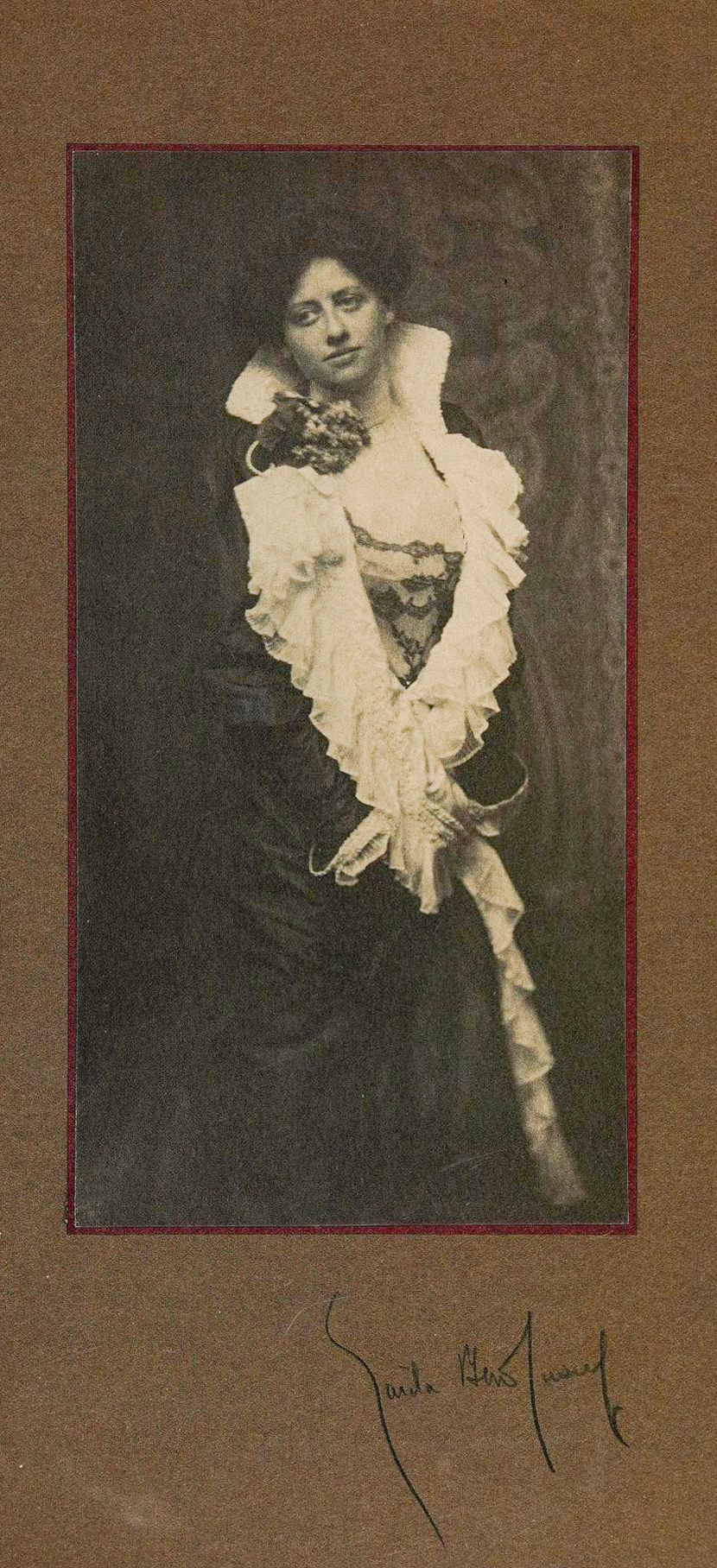
Zaida Ben-Yusuf :: Selfportrait, 1899 | src NPG · Smithsonian Institution

Zaida Ben-Yusuf (1869-1933) was a leader in the art of photographic portraiture in turn-of-the-century New York. She operated – for ten years beginning in 1897 – arguably the most fashionable portrait studio on Fifth Avenue, while at the same time contributing work to numerous publications and the period’s most important photography exhibitions. As a testament to her renown, she served as a spokesperson for the Eastman Kodak Company and was regularly profiled in newspapers and magazines. Yet the memory of her achievement as a photographer has largely vanished.

Born in London, Ben-Yusuf settled in New York in 1895. There she took up photography, first as a hobby and then two years later as a profession. Rather than falling back on traditional portrait conventions – painted backdrops and contrived poses – she sought inspiration from the leading artists and pictorial photographers of the period. Despite her young age and her recent arrival in America, she attracted to her studio many of the era’s most prominent artistic, literary, theatrical, and political figures. Seen together, these individuals represent a remarkable cross-section of a place that was rapidly becoming America’s first modern city. Yet, like many professional women, she encountered personal and economic difficulties that ultimately compelled her to abandon photography. Although she later pursued with equal ambition a career in the fashion trade, it is her photographic work – and the men and women she portrayed – that we aim to recover in this exhibition.

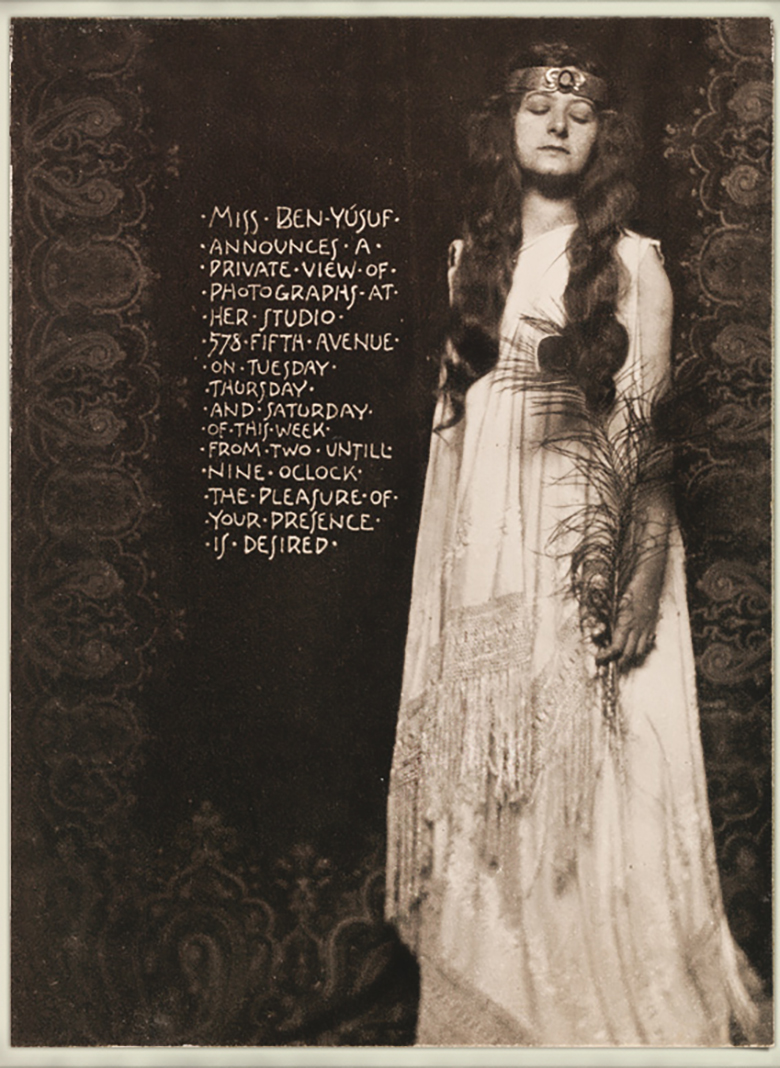
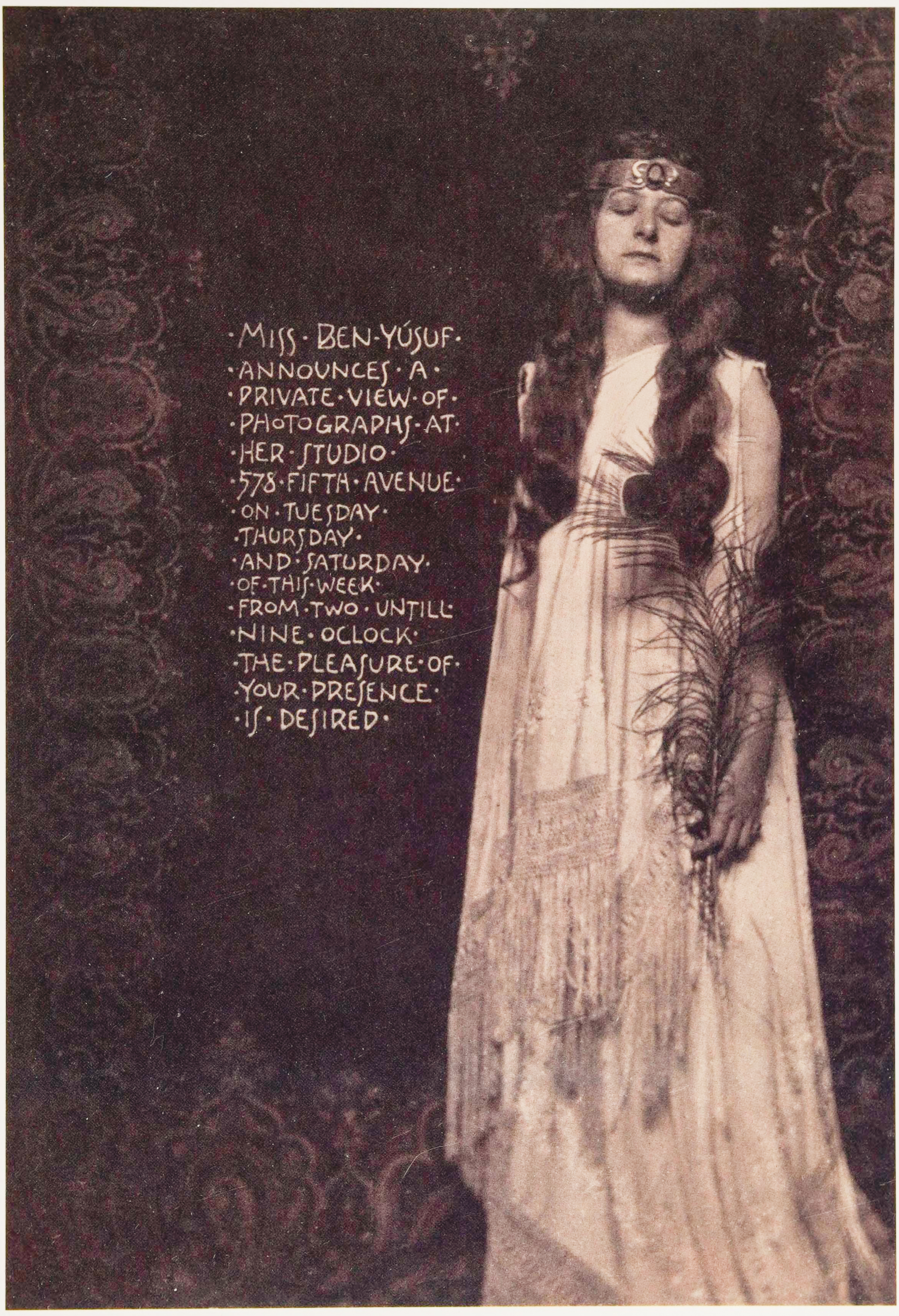
Miss Ben-Yusuf Announces a Private View of Photographs by Zaida Ben-Yusuf.  Platinum print, 1899. The Museum of Modern Art, New York | src internet archive
Miss Ben-Yusuf Announces a Private View of Photographs by Zaida Ben-Yusuf. Platinum print, 1899. The Museum of Modern Art, New York | src internet archive
Portrait of Miss Ben-Yusuf. Zaida Ben-Yusuf. Platinum print,1898. NMAH, Behring Center, Smithsonian Institution via IA
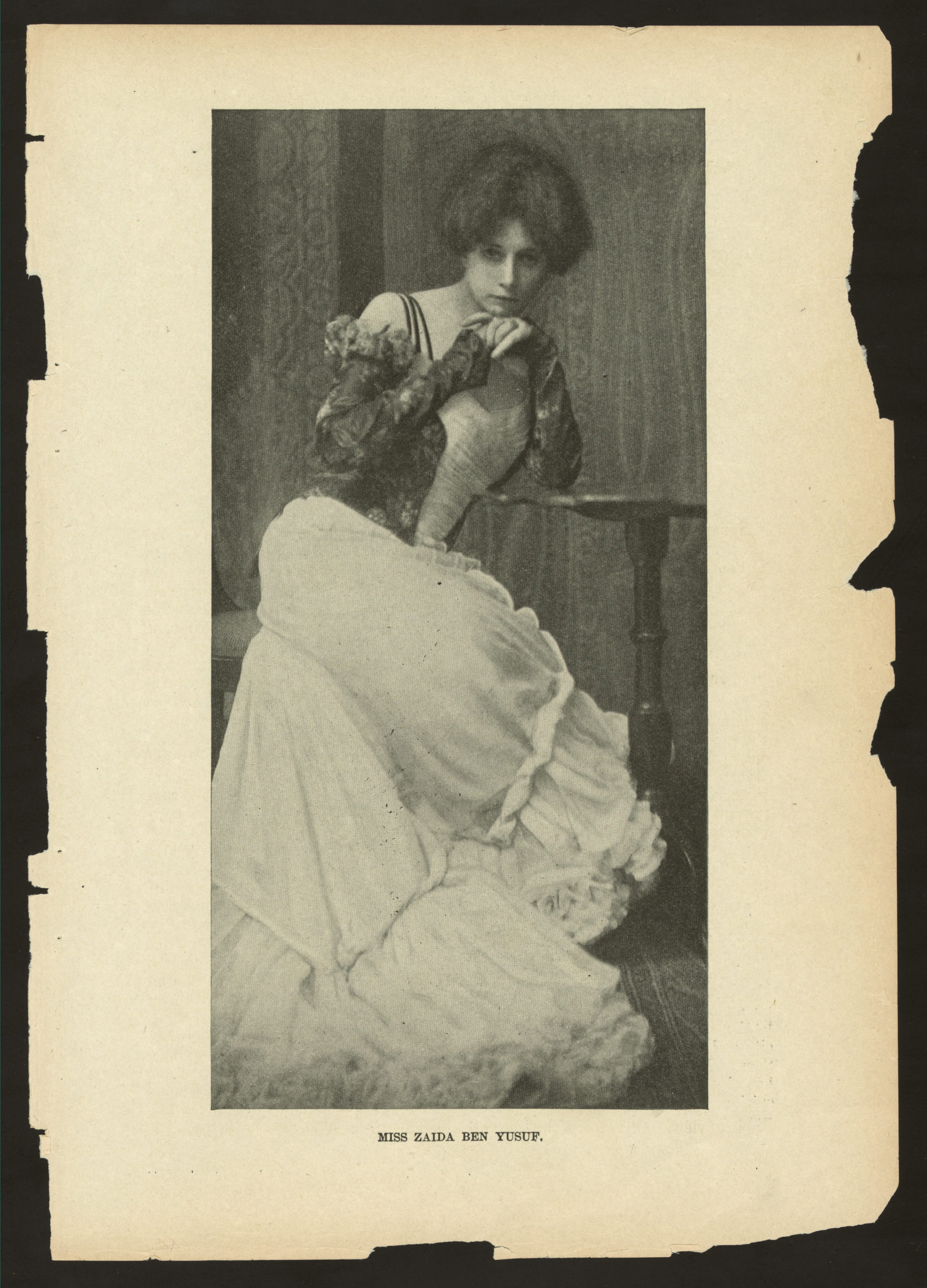
Zaida Ben-Yusuf :: Self-portrait, undated, published 1901. | src Library of Congress

Although Zaida Ben-Yusuf was principally a commercial photographer who depended on customers to make ends meet, the subject she photographed most often was herself. As a young woman with aspirations of artistic fame and professional success, Ben-Yusuf found that creating self-portraits provided an opportunity to experiment with both the art of portraiture and her own feminine persona. Rendered in a narrow vertical format, this early self-portrait (3) is striking for the costume she wears and the pose she adopts. Few photographers during this period – male or female – devoted such energy to their self-representation. Such images also gave the newly arrived Ben-Yusuf a much-needed identity—one that would lesson her sense of displacement and would attract attention to her art. Ben-Yusuf was pleased with this self-portrait, for it became the likeness of her that was most often reproduced and exhibited during her career.

Illustration showing a self-portrait of the photographer accompanying her article "The New Photography-What it has done and is doing for Modern Portraiture." Published in: Metropolitan Magazine, Vol. XIV, no. III (Sept, 1901), p. 391. Halftone print.
Illustration showing a self-portrait of the photographer accompanying her article “The New Photography-What it has done and is doing for Modern Portraiture.” Published in: Metropolitan Magazine, Vol. XIV, no. III (Sept, 1901), p. 391. Halftone print.
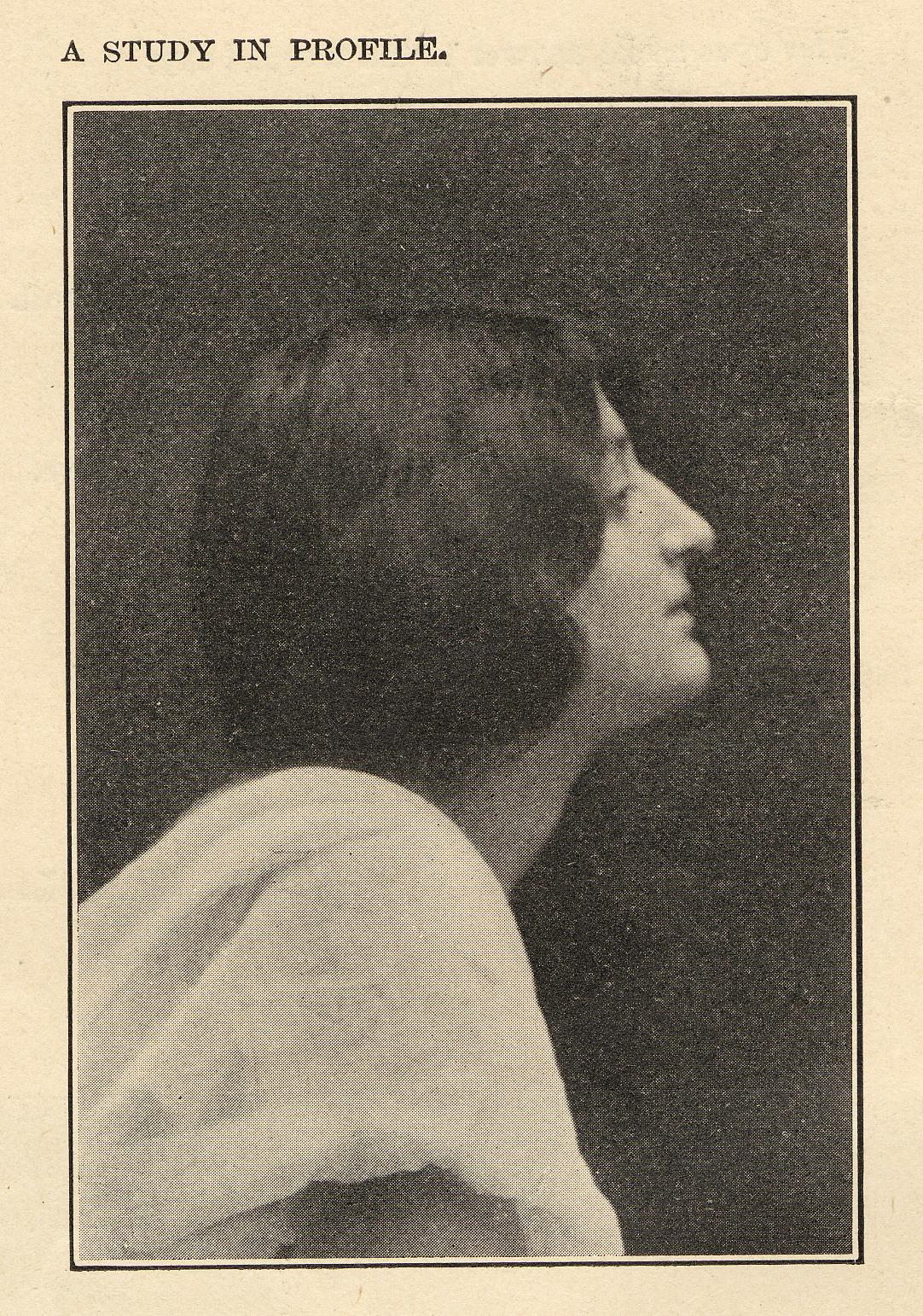
A Study in Profile. Illustration showing a head and shoulders profile portrait photograph of a woman accompanying the photograher's article "The New Photography-What it has done and is doing for Modern Portraiture." Published in: Metropolitan Magazine, Sept, 1901.
A Study in Profile. Illustration showing a head and shoulders profile portrait photograph of a woman accompanying the photograher’s article “The New Photography-What it has done and is doing for Modern Portraiture.” Published in: Metropolitan Magazine, Sept, 1901.
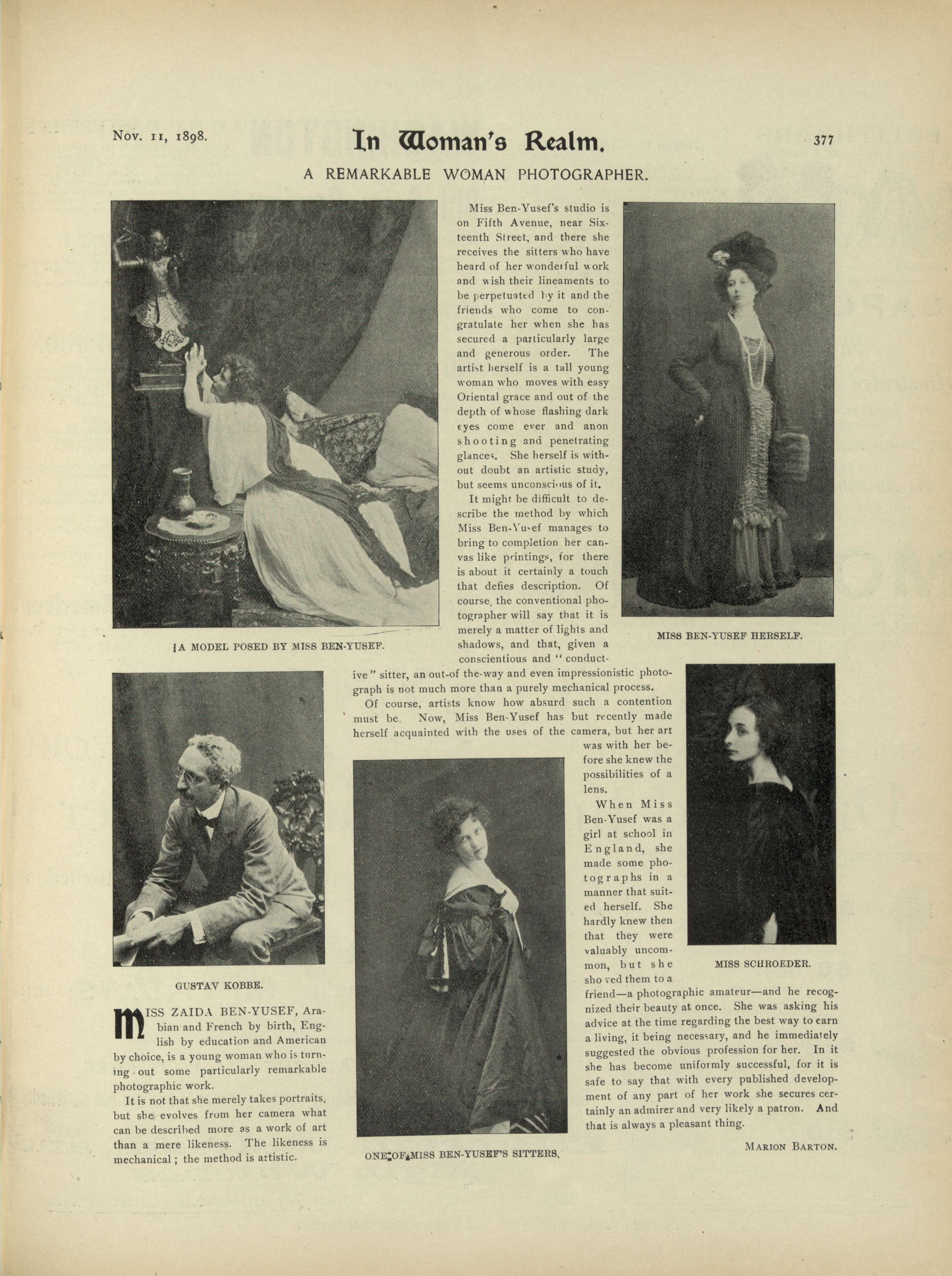
Illustrations for article entitled "In Woman's Realm: a remarkable woman photographer," by Marion Barton, show five photographs taken by Zaida Ben-Yusuf. Left to right, from top left: A Model posed by Miss Ben-Yusef - Miss Ben-Yusef herself - Miss Schroeder-One of Miss Ben-Yusef's sitters - Gustav Kobbe. Published in Illustrated American, v. 24, no. 19 (1898 Nov. 11), p. 377. | src L. of C
Illustrations for article entitled “In Woman’s Realm: a remarkable woman photographer,” by Marion Barton, show five photographs taken by Zaida Ben-Yusuf. Left to right, from top left: A Model posed by Miss Ben-Yusef – Miss Ben-Yusef herself – Miss Schroeder-One of Miss Ben-Yusef’s sitters – Gustav Kobbe. Published in Illustrated American, v. 24, no. 19 (1898 Nov. 11), p. 377. | src Library of Congress

The New Woman

Ben-Yusuf was the epitome of the “New Woman” – a class of predominantly younger women who at the century’s end sought to challenge prevailing gender norms. It was not simply her bohemian appearance; what differentiated Ben-Yusuf from the majority of women during this period was her desire for an independent life within the public arena. As a single woman who needed to earn an income, she embraced portrait photography as a career. This work opened up a host of opportunities – to write, to travel, to meet new people. Yet the growingindependence of women also elicited criticism at times and led figures like Ben-Yusuf to scrutinize their own sense of identity. The photographs in this first section are less representative of the commercial portraiture that sustained her financially. Instead, they speak to her artistic ambitions and her experiences as a “New Woman.”

Illustration showing a portrait photograph of a young woman (actress Florence Kahn), which forms a part of a portfolio in the magazine called "Some Types of the Summer Girl." Published in Metropolitan Magazine, Vol. XIV, no. II (August, 1901) p. 160. | src LofC
Illustration showing a portrait photograph of a young woman (actress Florence Kahn), which forms a part of a portfolio in the magazine called “Some Types of the Summer Girl.” Published in Metropolitan Magazine, Vol. XIV, no. II (August, 1901) p. 160. | src LofC
Zaida Ben Yusuf :: Portrait of Miss S., ca. 1899-1900. Platinum Print. | src internet archive
Zaida Ben Yusuf :: Mrs. Fiske, "Love finds the way" / Photograph shows actress Minnie Madden Fiske, three-quarter length portrait, seated, facing front, 1896. | src Library of Congress
Zaida Ben Yusuf :: Mrs. Fiske, “Love finds the way” / Photograph shows actress Minnie Madden Fiske, three-quarter length portrait, seated, facing front, 1896. | src Library of Congress
Zaida Ben Yusuf :: Mrs. Fiske, "Love finds the way" / Photograph shows actress Minnie Madden Fiske, full-length portrait, seated, facing front, 1896. | src LofC
Zaida Ben Yusuf :: Mrs. Fiske, “Love finds the way” / Photograph shows actress Minnie Madden Fiske, full-length portrait, seated, facing front, 1896. | src Library of Congress

The New York Stage

In 1900 New York supported no less than thirty reputable theaters, making it far and away the leading city for the dramatic arts in America. This period was marked by important changes within the theater industry. Electricity’s introduction at the Lyceum Theater in 1885 ushered in a new era, as did innovations in set design and methods of acting. Also important to the theater’s growth was the revolution then unfolding in the larger world of celebrity culture. Big-name stars had long dominated the New York stage; however, the proliferation of illustrated publications only heightened their profile further. Ben-Yusuf was among those who took advantage of the demand for portraits, and reproductions of her images appeared regularly in newspapers and magazines. Yet, unlike many commercial photographers, Ben-Yusuf created likenesses that captured a subject’s individuality in a style that was modern, not melodramatic.

Zaida Ben-Yusuf :: Mrs. Fiske, ca. 1896. Photograph shows actress Minnie Madden Fiske, three-quarter length portrait, wearing coat and hat, facing front. | src Library of Congress
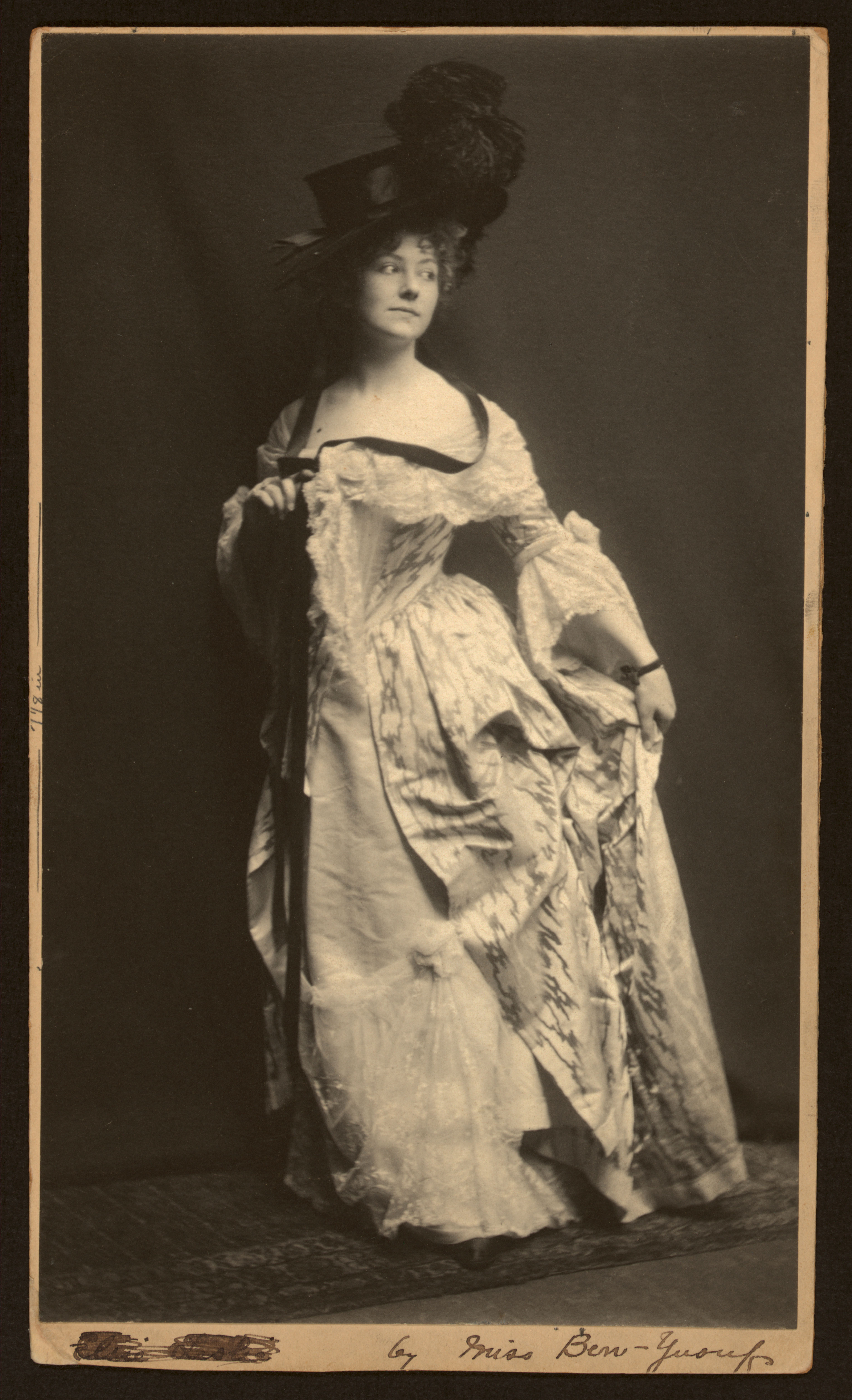
Zaida Ben-Yusuf :: Full-length portrait of actress Elsie Leslie in costume as Lydia Languish in Richard Sheridan's play The Rivals, 1899. Platinum print. Exhibited in: "The life and portrait photography of Zaida Ben-Yusuf" at the National Portrait Gallery, Washington, D.C., 2008.
Zaida Ben-Yusuf :: Full-length portrait of actress Elsie Leslie in costume as Lydia Languish in Richard Sheridan’s play The Rivals, 1899. Platinum print. [Library of Congress] Exhibited in: “The life and portrait photography of Zaida Ben-Yusuf” at the National Portrait Gallery, Washington, D.C., 2008.
Zaida Ben-Yusuf :: Portrait of Miss. K. [Half-length portrait of actress Florence Kahn, seated, looking front.], ca. 1900. Gum bicromate print. Digital file from color film copy transparency. | src Library of Congress
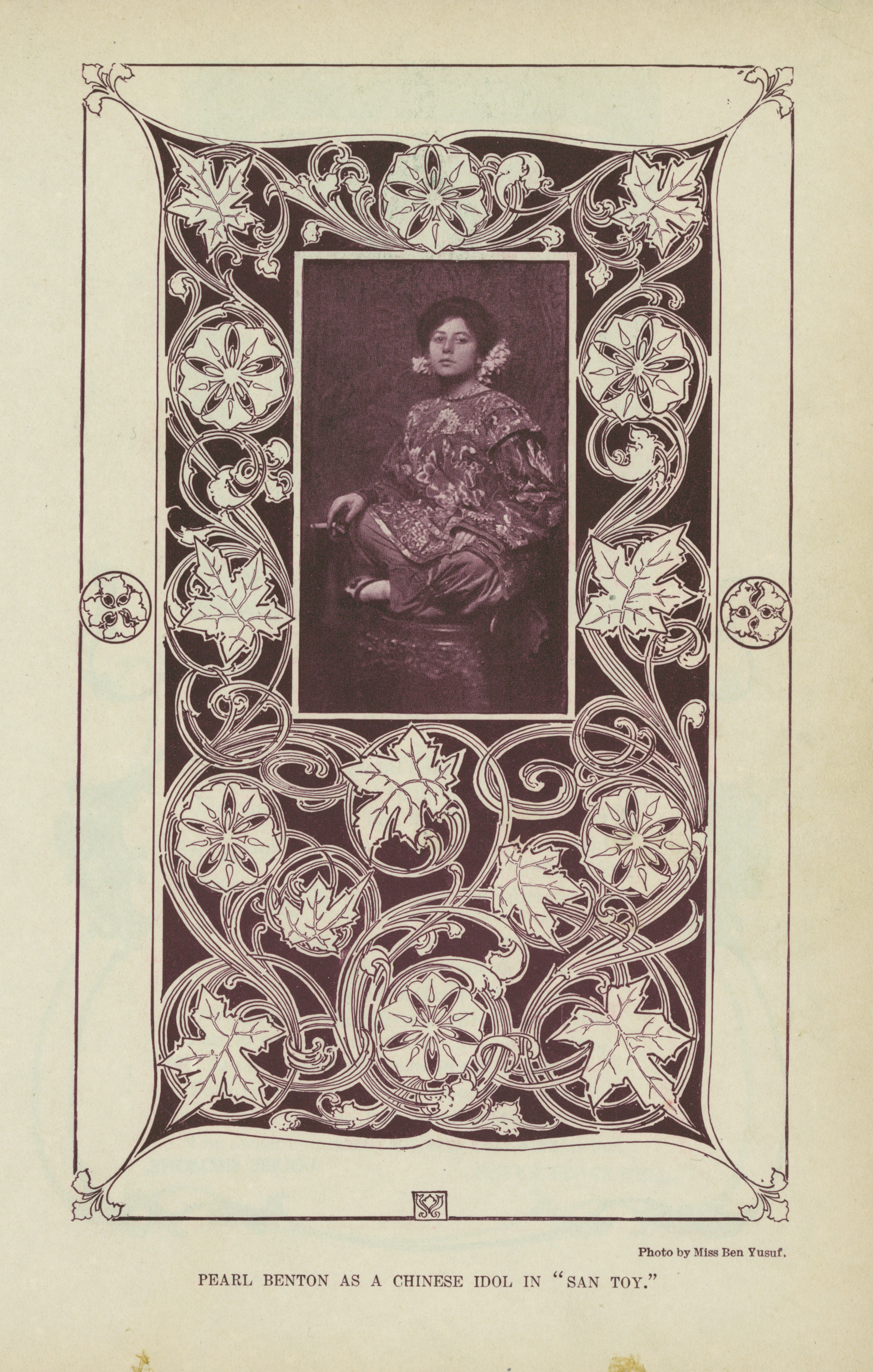
Pearl Benton as a Chinese idol in "San Toy". Photo by Miss Ben Yusuf. Halftone print. Illustration showing a portrait of Pearl Benton dressed in an Asian costume portraying a character in the musical "San Toy." The photograph is surrounded by a decorative "frame" and forms a part of a portfolio called "A Mosaic of Femininity & Verse." Metropolitan Magazine, Vol. 13, no. 3 (March, 1901) p. 295. | src Library of Congress
Pearl Benton as a Chinese idol in “San Toy”. Photo by Miss Ben Yusuf. Halftone print. Illustration showing a portrait of Pearl Benton dressed in an Asian costume portraying a character in the musical “San Toy.” The photograph is surrounded by a decorative “frame” and forms a part of a portfolio called “A Mosaic of Femininity & Verse.” Metropolitan Magazine, Vol. 13, no. 3 (March, 1901) p. 295. | src Library of Congress

Quotes from “Zaida Ben-Yusuf: New York Portrait Photographer” at NPG, Smithsonian Institution

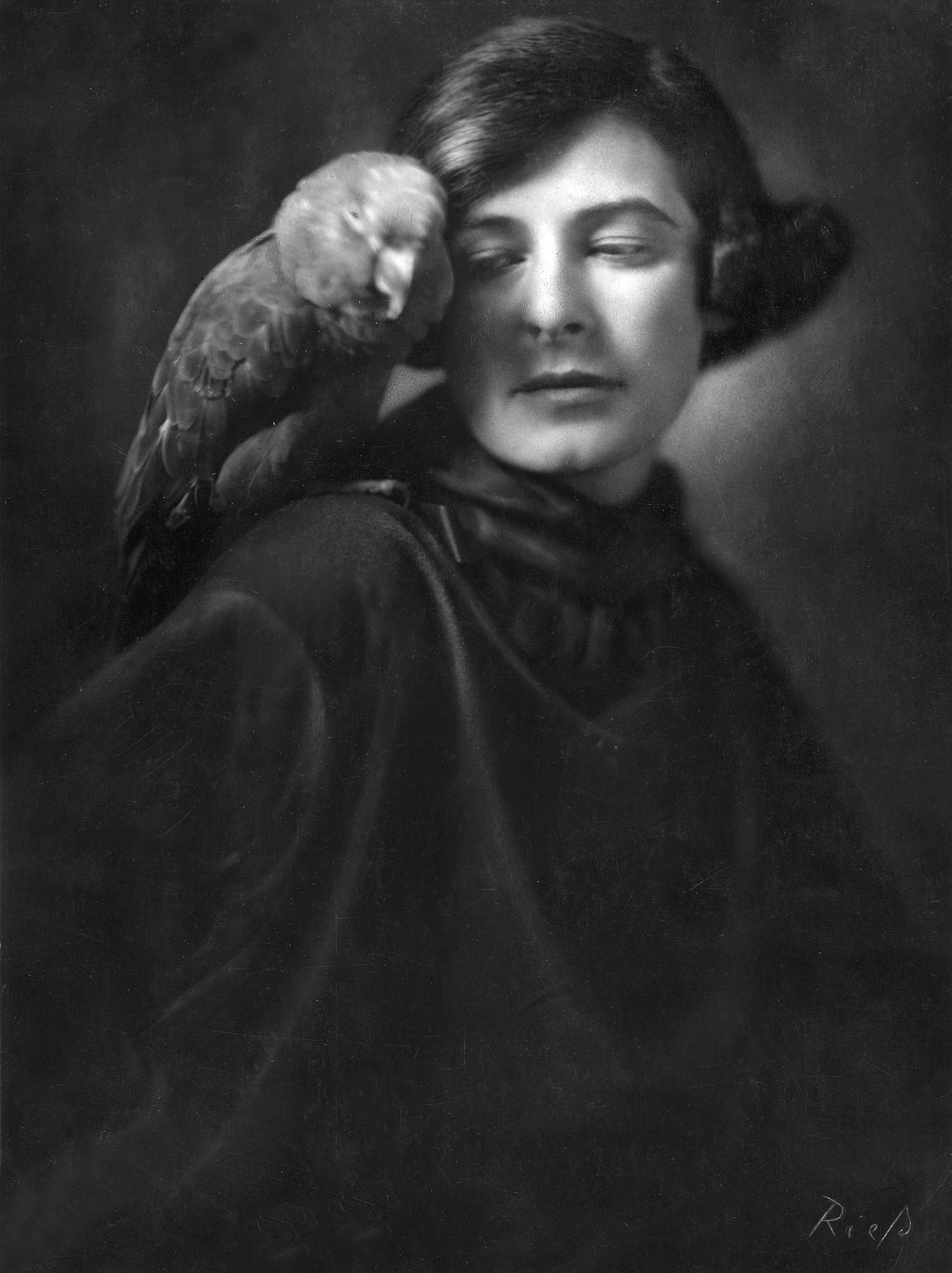
Frieda Riess (selfportrait), 1922

Frieda Gertrud Riess :: Selbstbildnis | Selbstporträt mit Papagei - Aufnahme: Atelier Riess, veröffentlicht in: Die Dame, Heft 5. 50.Jg., 1922, S. 5. | src MoMA and Das Verborgene Museum
Frieda Gertrud Riess :: Selbstbildnis | Selbstporträt mit Papagei – Aufnahme: Atelier Riess, veröffentlicht in: Die Dame, Heft 5. 50.Jg., 1922, S. 5. | src MoMA and Das Verborgene Museum
DIE RIESS | Publikation zur Ausstellung Fotografisches Atelier und Salon in Berlin 1918-1932. Hrsg. Marion Beckers, Elisabeth Moortgat für Das Verborgene Museum (2008) | Publication for the exhibition Photographic Studio and Salon in Berlin 1918-1932. Edited by Marion Beckers, Elisabeth Moortgat for Das Verborgene Museum

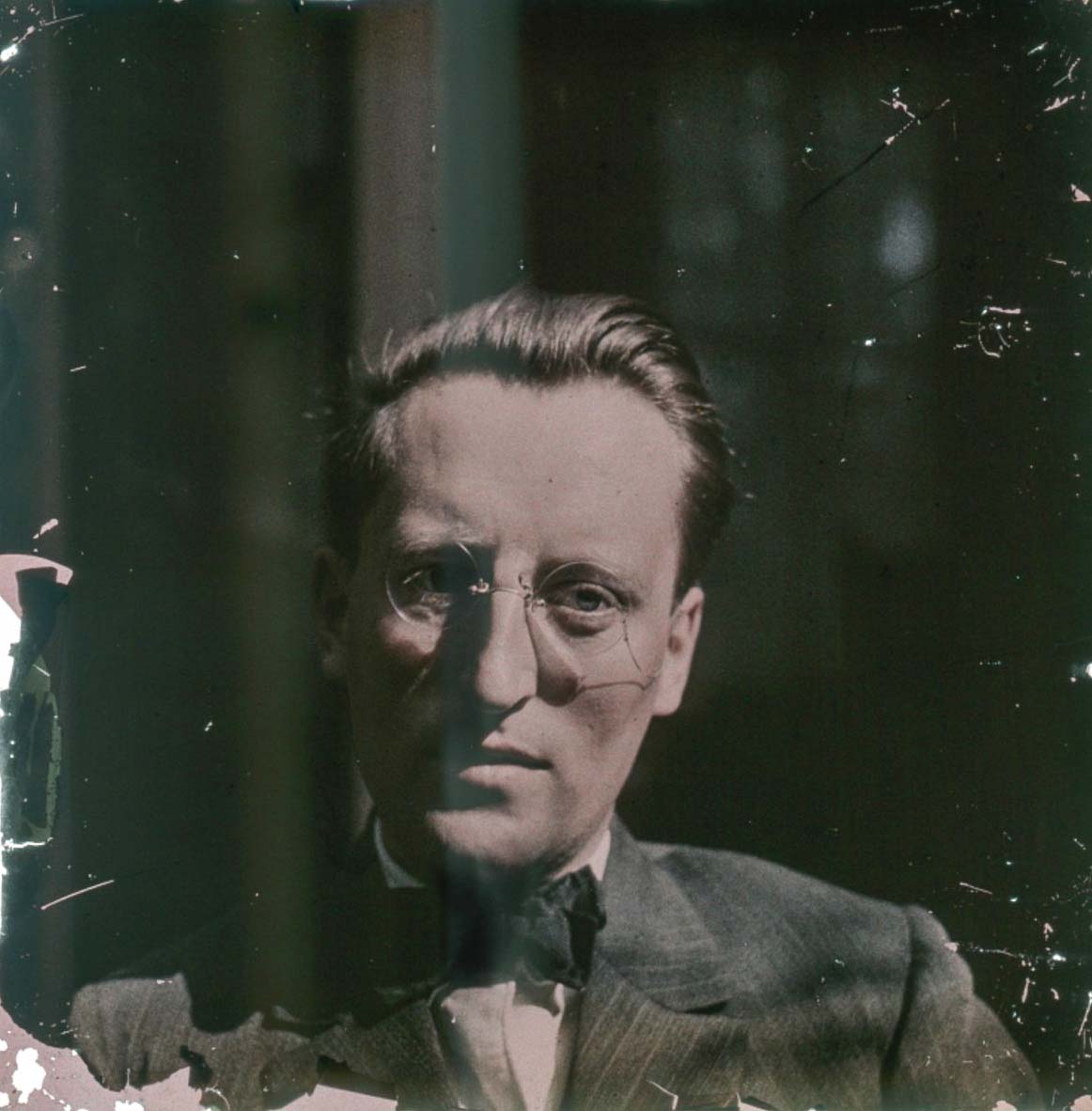
Blok’s Selfportrait, 1930s

Leendert Blok :: Zelfportret Leendert Blok, omstreeks 1930-1935. Autochrome. Courtesy Galerie Dudok de Groot. | src Het Parool
Leendert Blok's early color flower portraits compiled in Silent Beauties (2015) | src Het Parool and Hatje Cantz
Leendert Blok’s early color flower portraits compiled in Silent Beauties (2015) | src Het Parool & Hatje Cantz

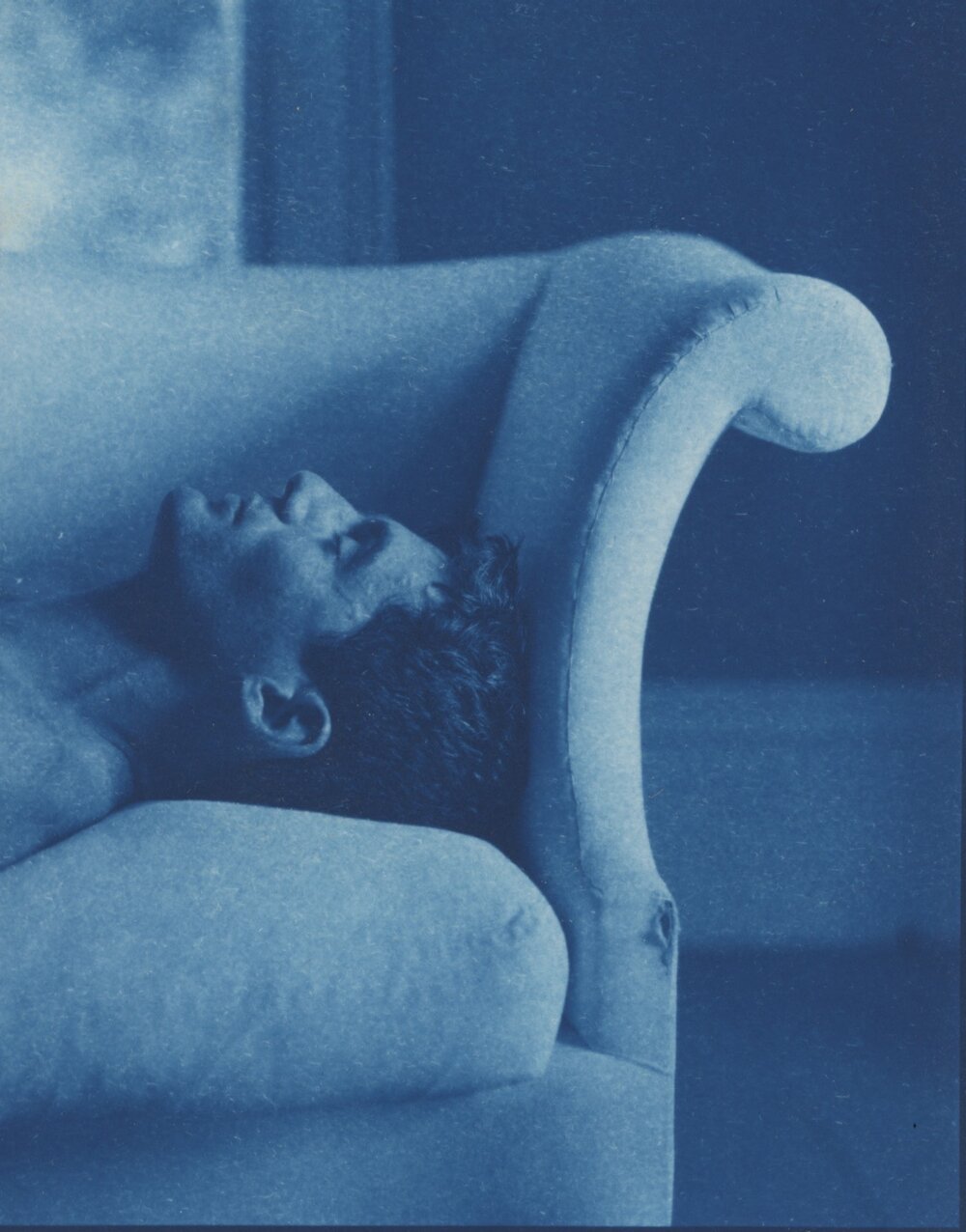
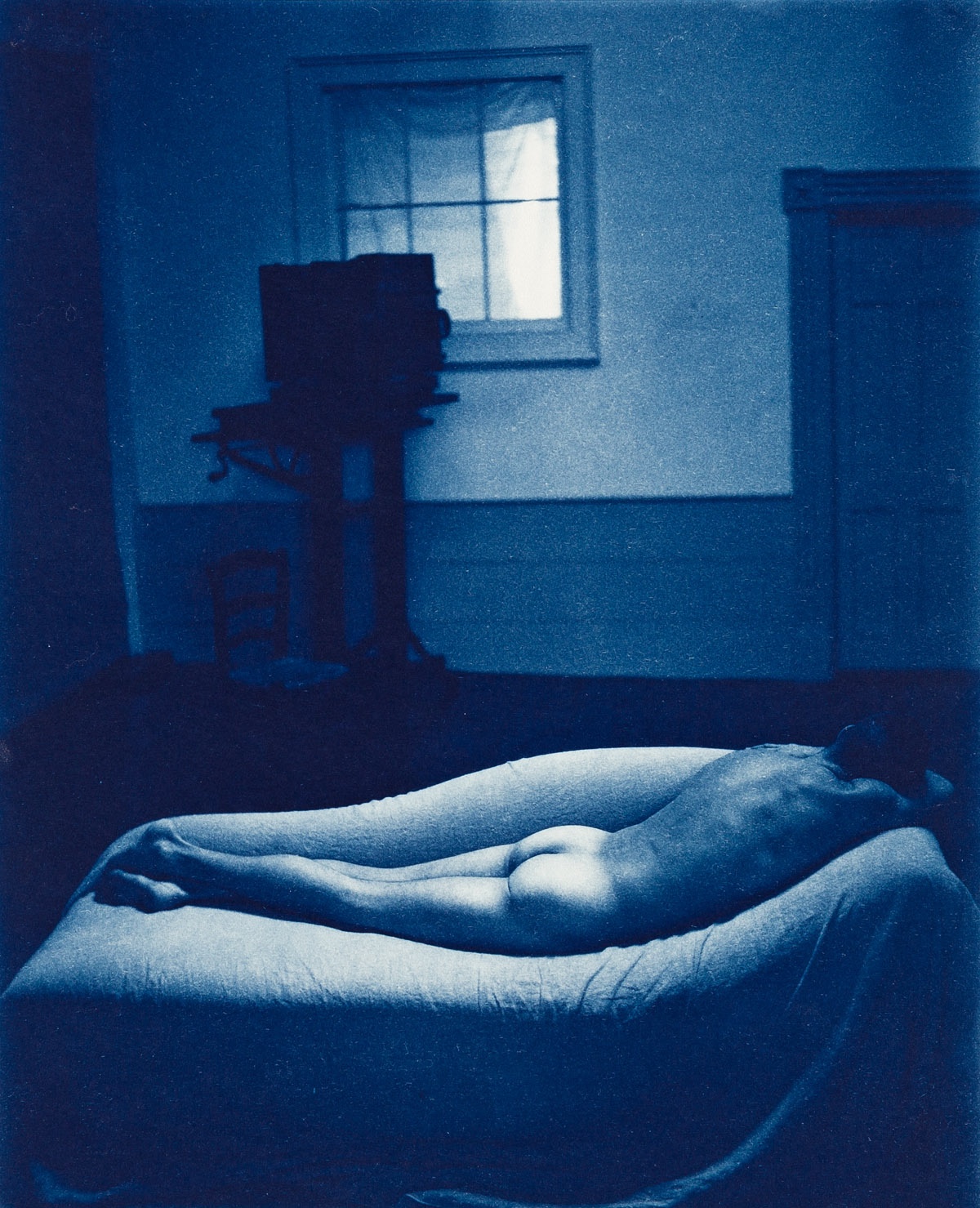
A Turbulent Dream, 1996

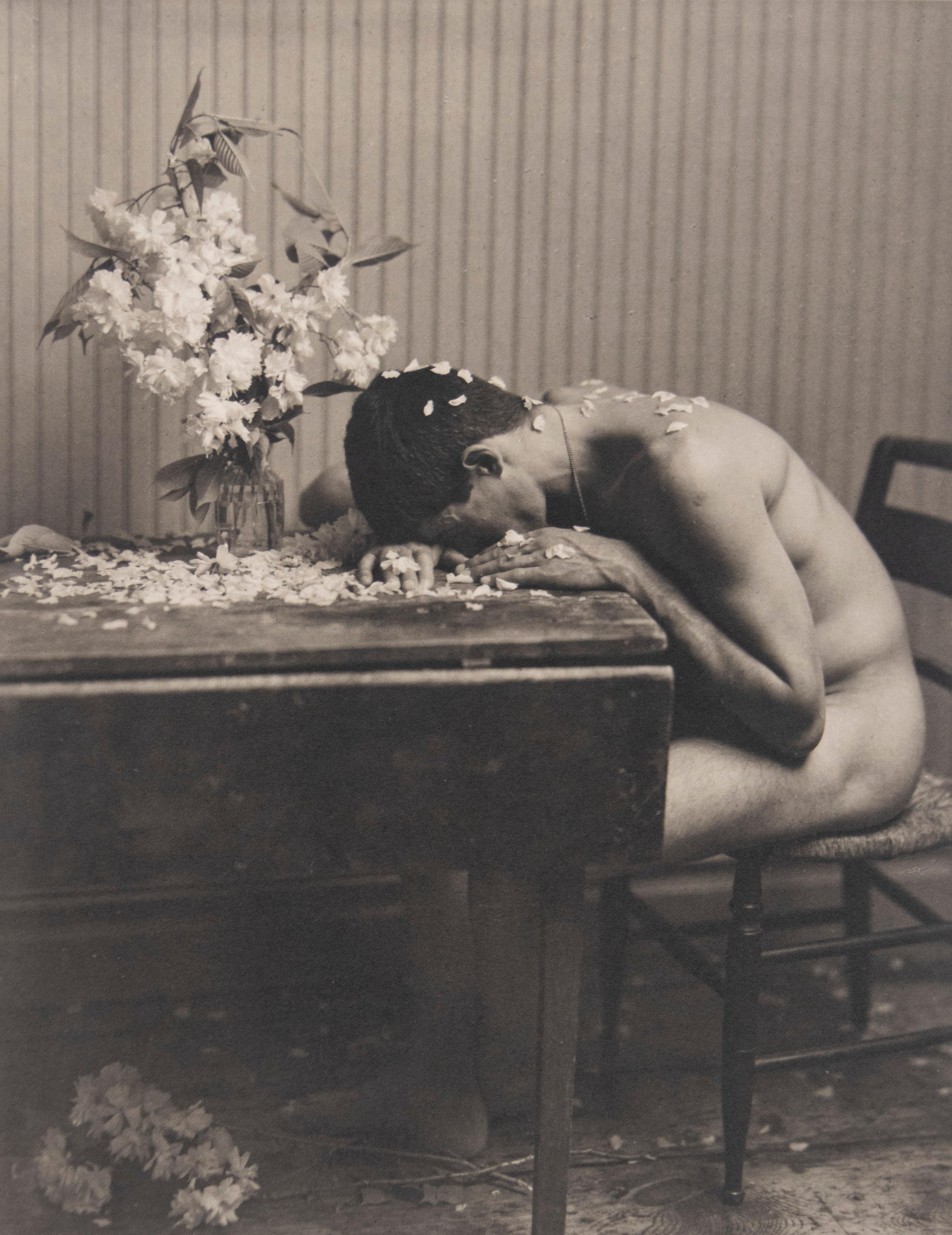
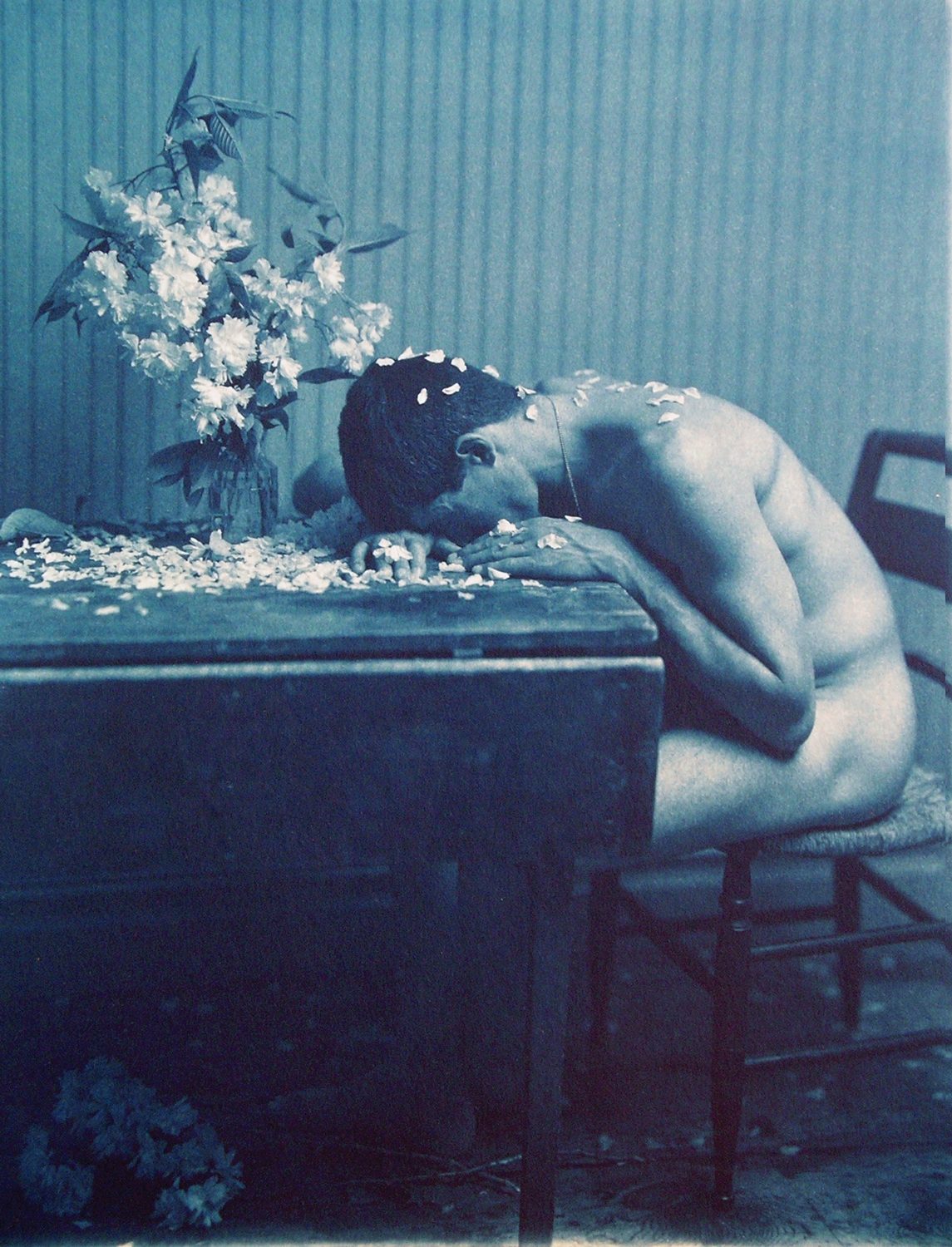
John Dugdale :: A Turbulent Dream, 1996. Cyanotype. | src don’t take pictures website
John Dugdale :: A Turbulent Dream, 1996-1998. Platinum palladium print. | via NNN on IG
John Dugdale :: A Turbulent Dream, 1996. Cyanotype photograph. | src Holden Luntz Gallery

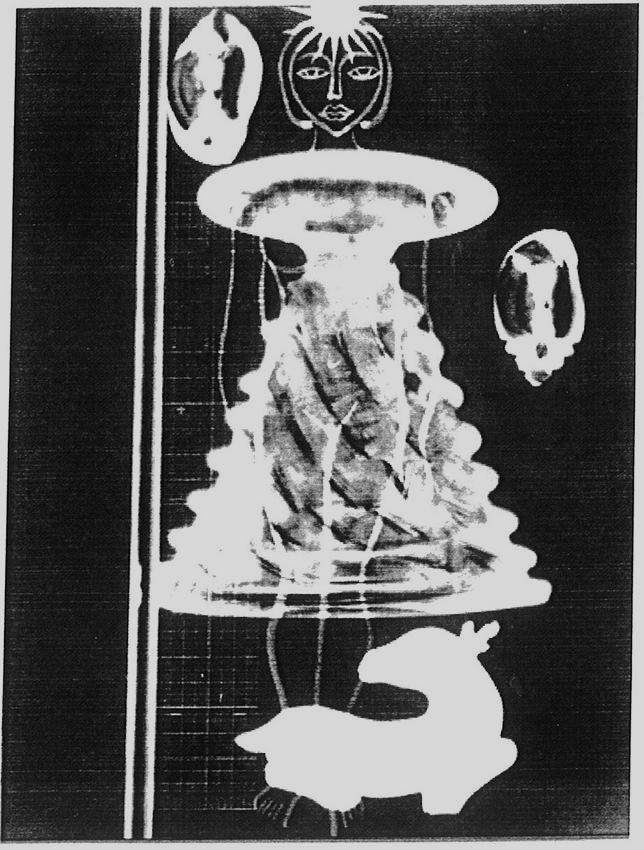
Drawing photogram, 1920s

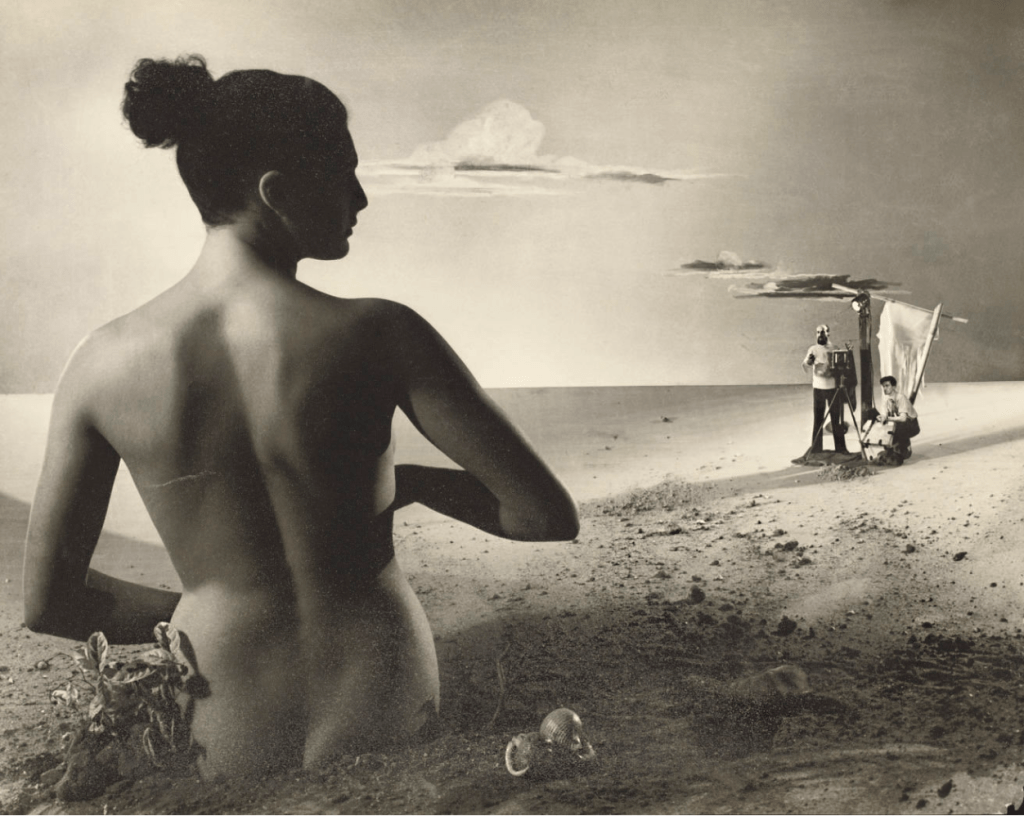
Rosa Rolanda :: Drawing Photogram, late 1920s | src Surrealism and Women Artists

Nude figure of a young woman covered by an inverted glass, which becomes her garment. The translucent glass allows the curves of her figure to be seen, but it still provides a modest covering. The shape of the glass is reminiscent of dress styles of the mid-1800s, with a wide hooped skirt and narrow waistline. Rosa Rolanda painted self-portraits from 1945 and 1952 depict the same somber persona. The simple style of her features is similar to those found on folkloric images of the sun reproduced in ceramics, wood, and textiles. Here, crowned by the sun, she is surrounded by shells, a deer, and a ruler.