
images that haunt us


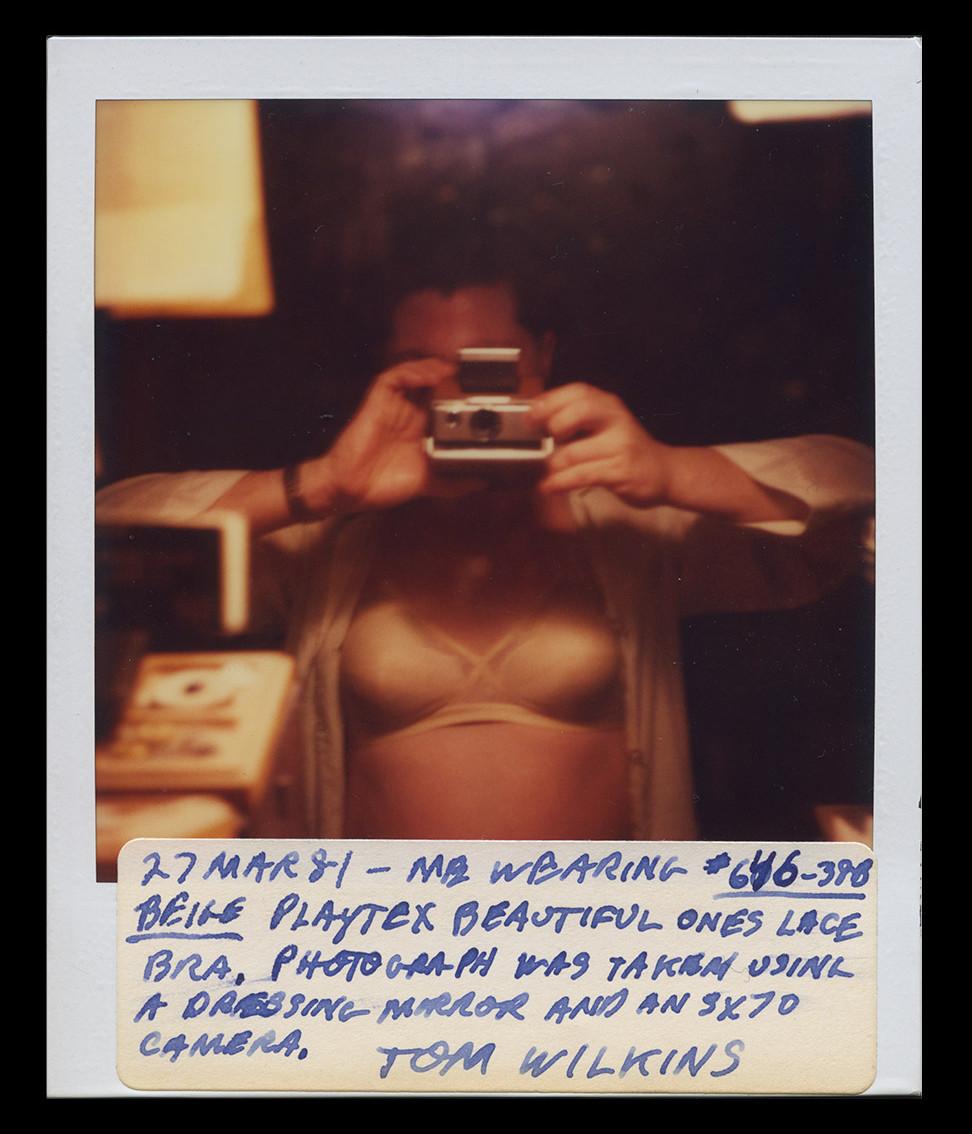
Courtesy Christian Berst Art Brut : Qui est Tom Wilkins ? C’est la question à laquelle Sébastien Girard essaie de répondre depuis 2011, date à laquelle il fait l’acquisition de 900 Polaroïds énigmatiques, édités en 2017 sous le nom My TV Girls. Cette série de captations télévisuelles légendées par son auteur met en scène des femmes et se termine par le seul et unique autoportrait de la série où Tom Wilkins, se représente en femme. | src ODLP ~ l’œil de la photographie


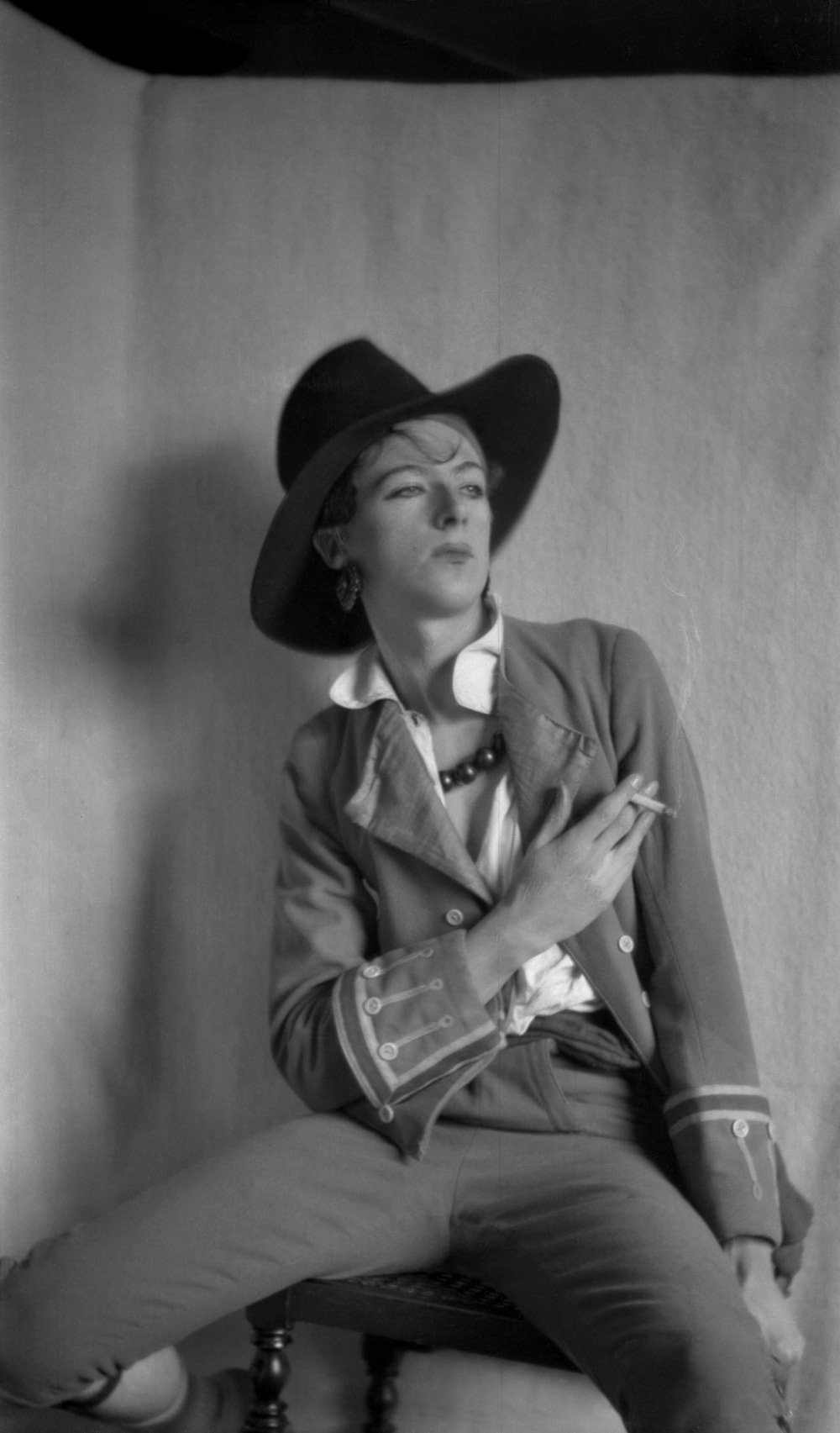
Peter depicts British painter Hannah Gluckstein, heir to a catering empire who adopted the genderless professional name Gluck in the early 1920s. By the time Brooks met her at one of Natalie Barney’s literary salons, Gluckstein had begun using the name Peyter (Peter) Gluck. She unapologetically wore men’s suits and fedoras, clearly asserting the association between androgyny and lesbian identity. Brooks’s carefully nuanced palette and quiet, empty space produced an image of refined and austere modernity. ~ The Art of Romaine Brooks, 2016
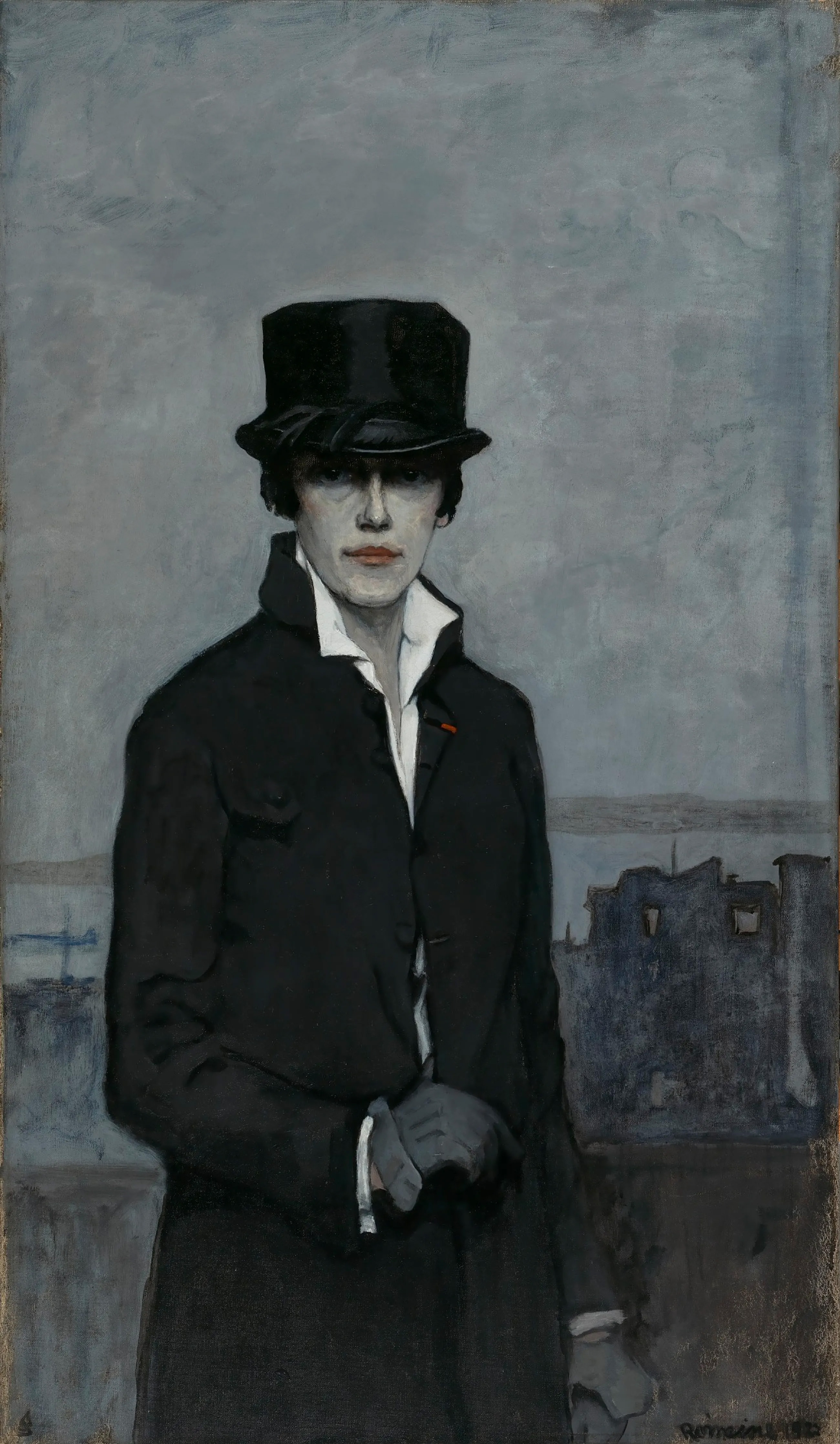
With this self-portrait, Brooks envisioned her modernity as an artist and a person. The modulated shades of gray, stylized forms, and psychological gravity exemplify her deep commitment to aesthetic principles. The shaded, direct gaze conveys a commanding and confident presence, an attitude more typically associated with her male counterparts. The riding hat and coat and masculine tailoring recall conventions of aristocratic portraiture while also evoking a chic androgyny associated with the post–World War I “new woman.” Brooks’s fashion choices also enabled upper-class lesbians to identify and acknowledge one another. ~ The Art of Romaine Brooks, 2016

Una Troubridge was a British aristocrat, literary translator, and the lover of Radclyffe Hall, author of the 1928 pathbreaking lesbian novel, The Well of Loneliness. Troubridge appears with a sense of formality and importance typical of upper-class portraiture, but with the sitter’s prized dachshunds in place of the traditional hunting dog. Troubridge’s impeccably tailored clothing, cravat, and bobbed hair convey the fashionable and daring androgyny associated with the so-called new woman. Her monocle suggested multiple symbolic associations to contemporary British audiences: it alluded to Troubridge’s upper-class status, her Englishness, her sense of rebellion, and possibly her lesbian identity. ~ The Art of Romaine Brooks, 2016
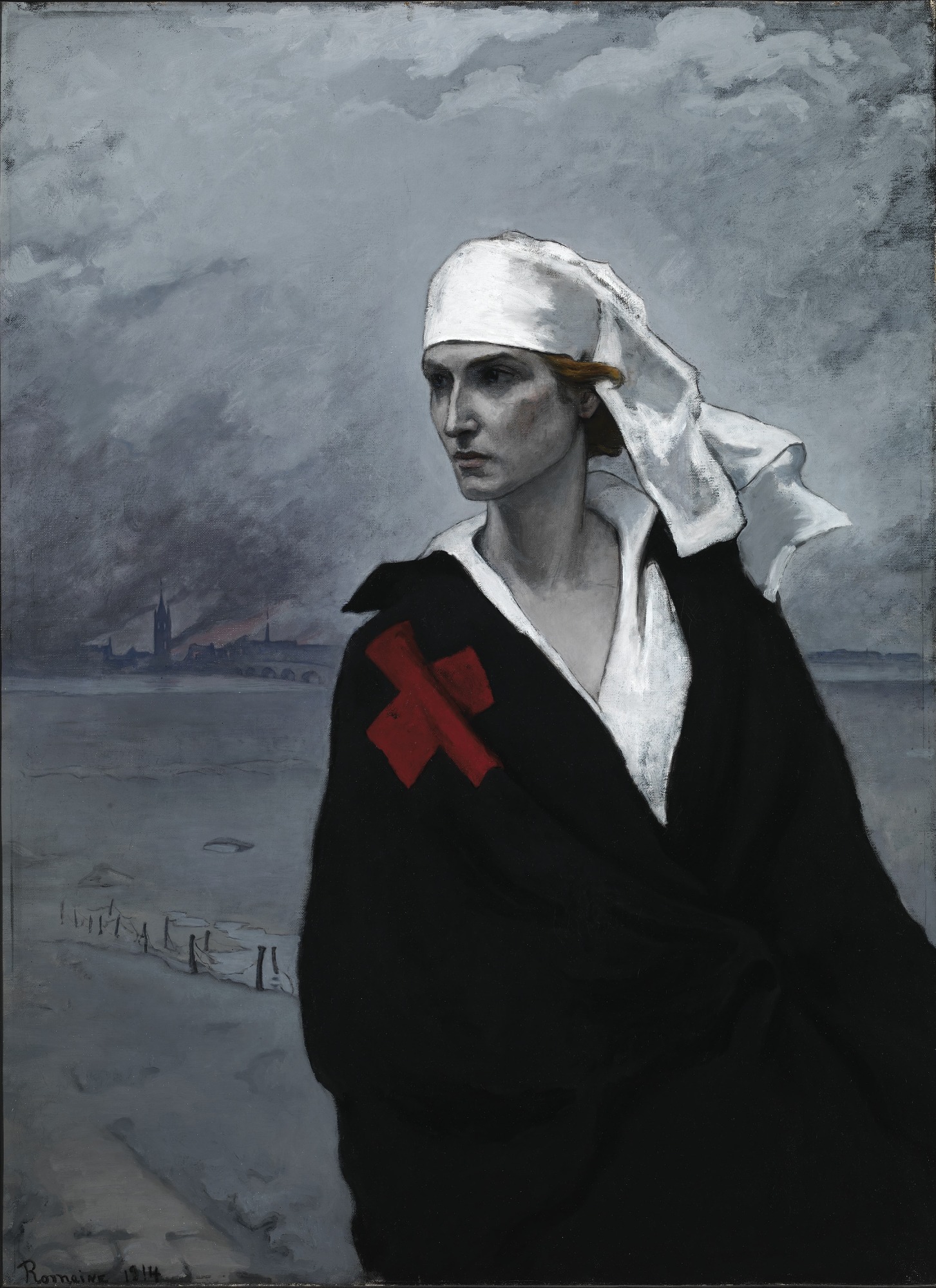
In La France Croisée, Brooks voiced her opposition to World War I and raised money for the Red Cross and French relief organizations. Ida Rubinstein was the model for this heroic figure posed in a nurse’s uniform, with cross emblazoned against her dark cloak, against a windswept landscape outside the burning city of Ypres. This symbolic portrait of a valiant France was exhibited in 1915 at the Bernheim Gallery in Paris, along with four accompanying sonnets written by Gabriele D’Annunzio. The gallery offered reproductions for sale as a benefit to the Red Cross. For her contributions to the war effort, the French government awarded Brooks the Cross of the Legion of Honor in 1920. This award is visible as the bright red spot on Brooks’s lapel in her 1923 Self-Portrait. ~ The Art of Romaine Brooks, 2016

Brooks met Russian dancer and arts patron Ida Rubinstein in Paris after Rubinstein’s first performance as the title character in Gabriele D’Annunzio’s play The Martyrdom of St. Sebastian. Rubinstein was already well known for her refined beauty and expressive gestures; she secured her reputation as a daring performer by starring as the male saint in this boundary-pushing show that combined religious history, androgyny, and erotic narrative. Brooks found her ideal — and her artistic inspiration — in the tall, lithe, sensuous Rubinstein, who modeled for many sketches, paintings, and photographs Brooks produced during their relationship, from 1911 to 1914. In her autobiographical manuscript, “No Pleasant Memories,” Brooks said the inspiration for this portrait came as the two women walked through the Bois de Boulogne on a cold winter morning. ~ The Art of Romaine Brooks, 2016
All quotations and images (except n. 1 & 2) are from the Smithsonian American Art Museum (x)
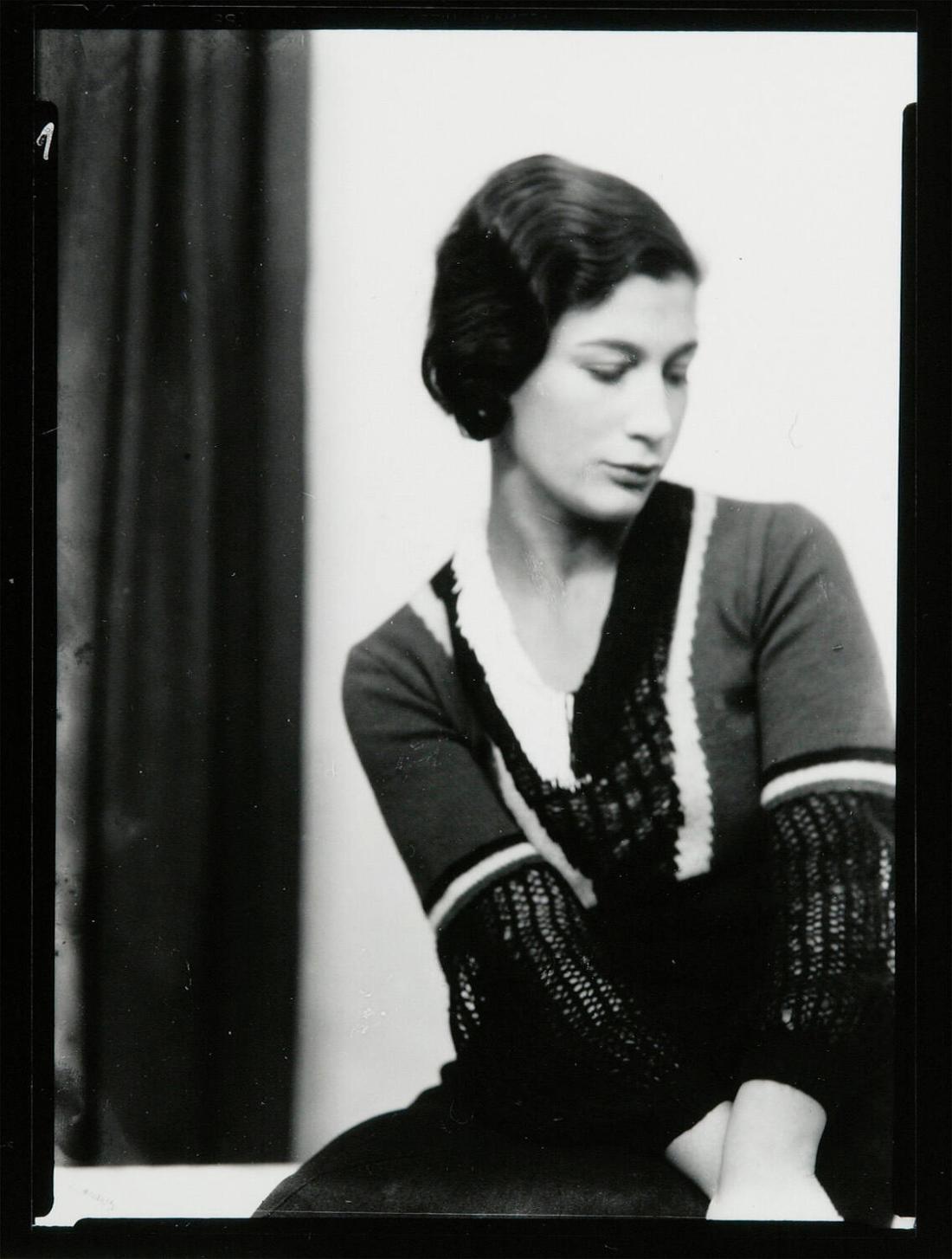
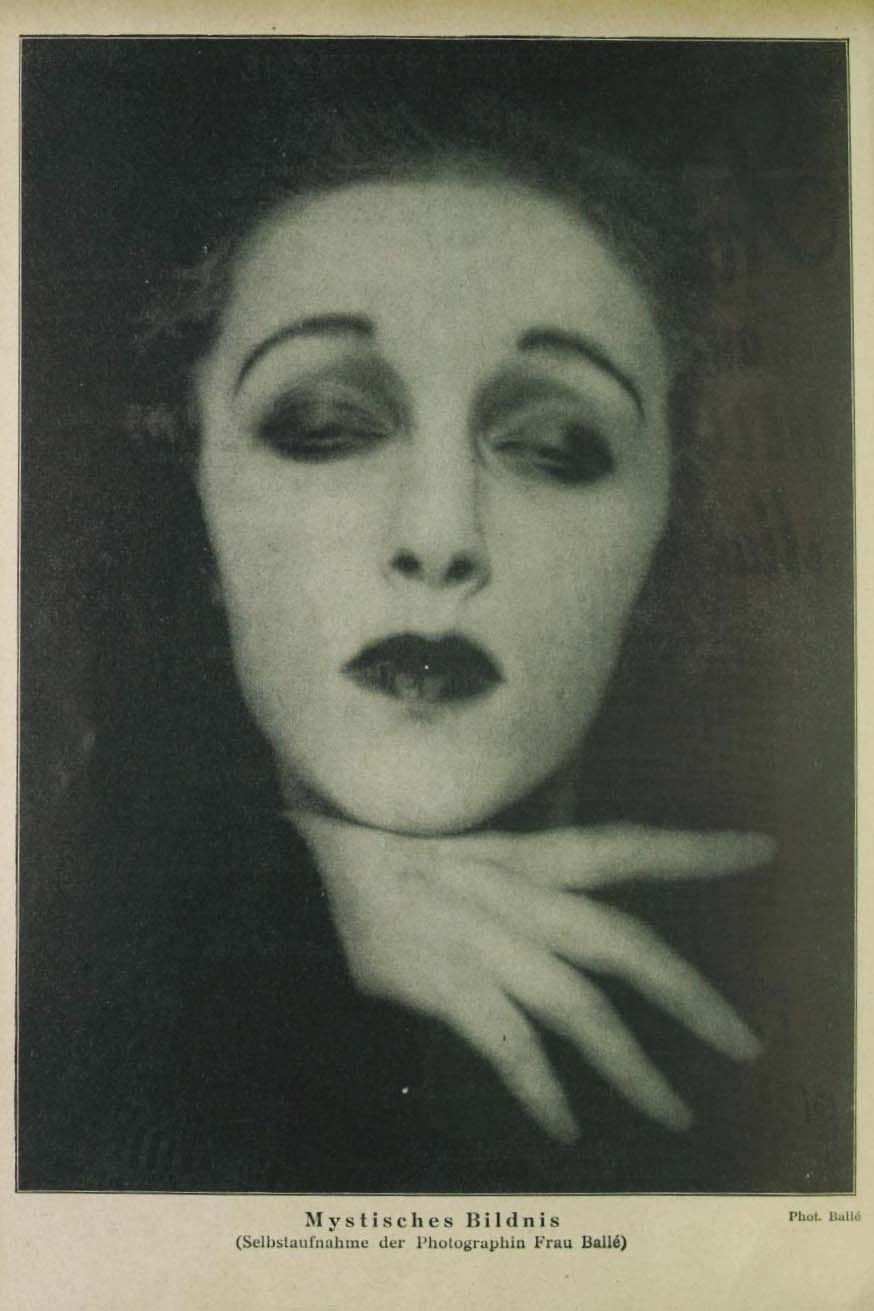
![Anna Riwkin [självporträtt], 1928. Gelatinsilverfotografi. | src Moderna Museet](https://live.staticflickr.com/65535/52604055786_8407e39775_o.jpg)
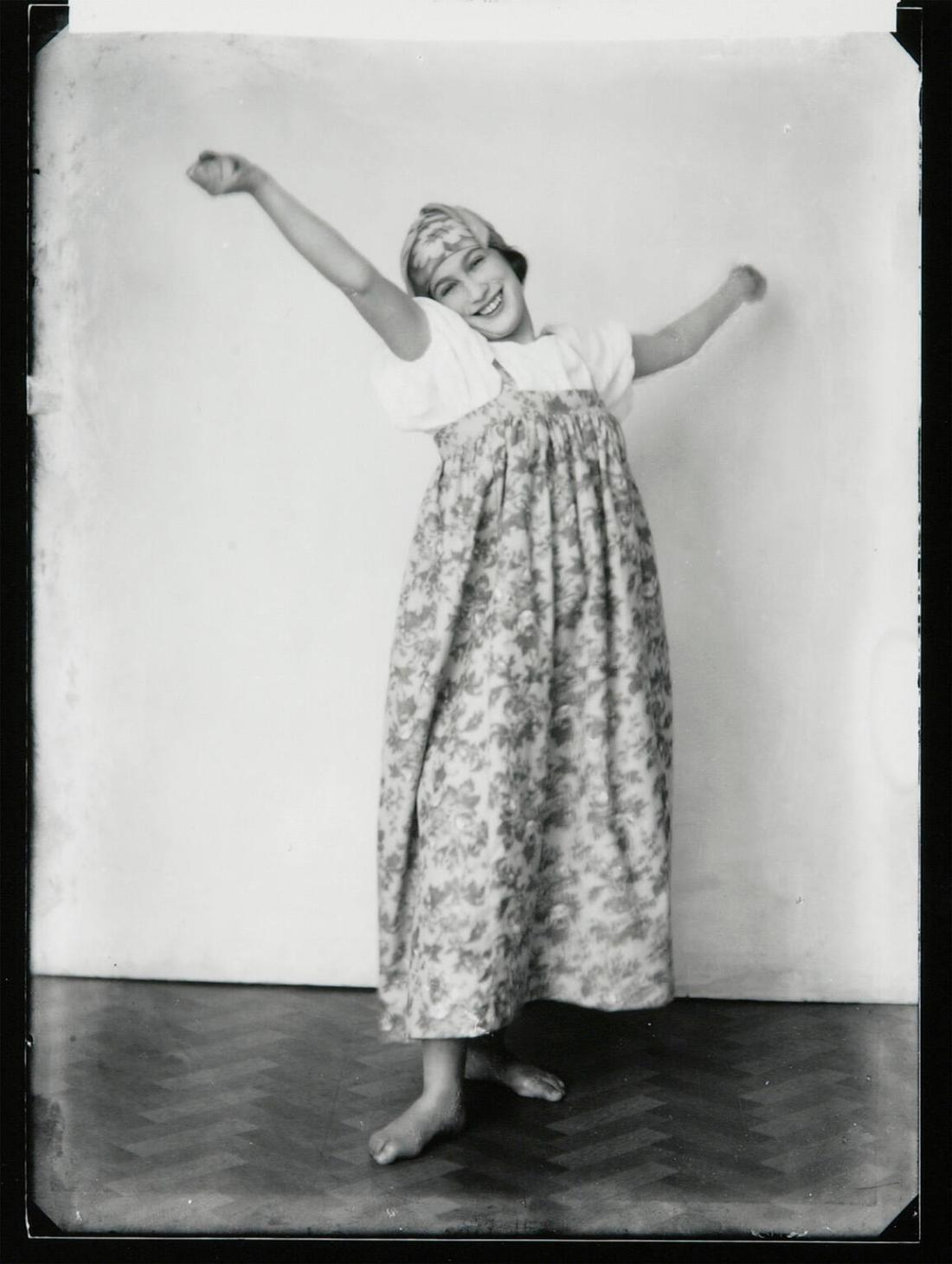
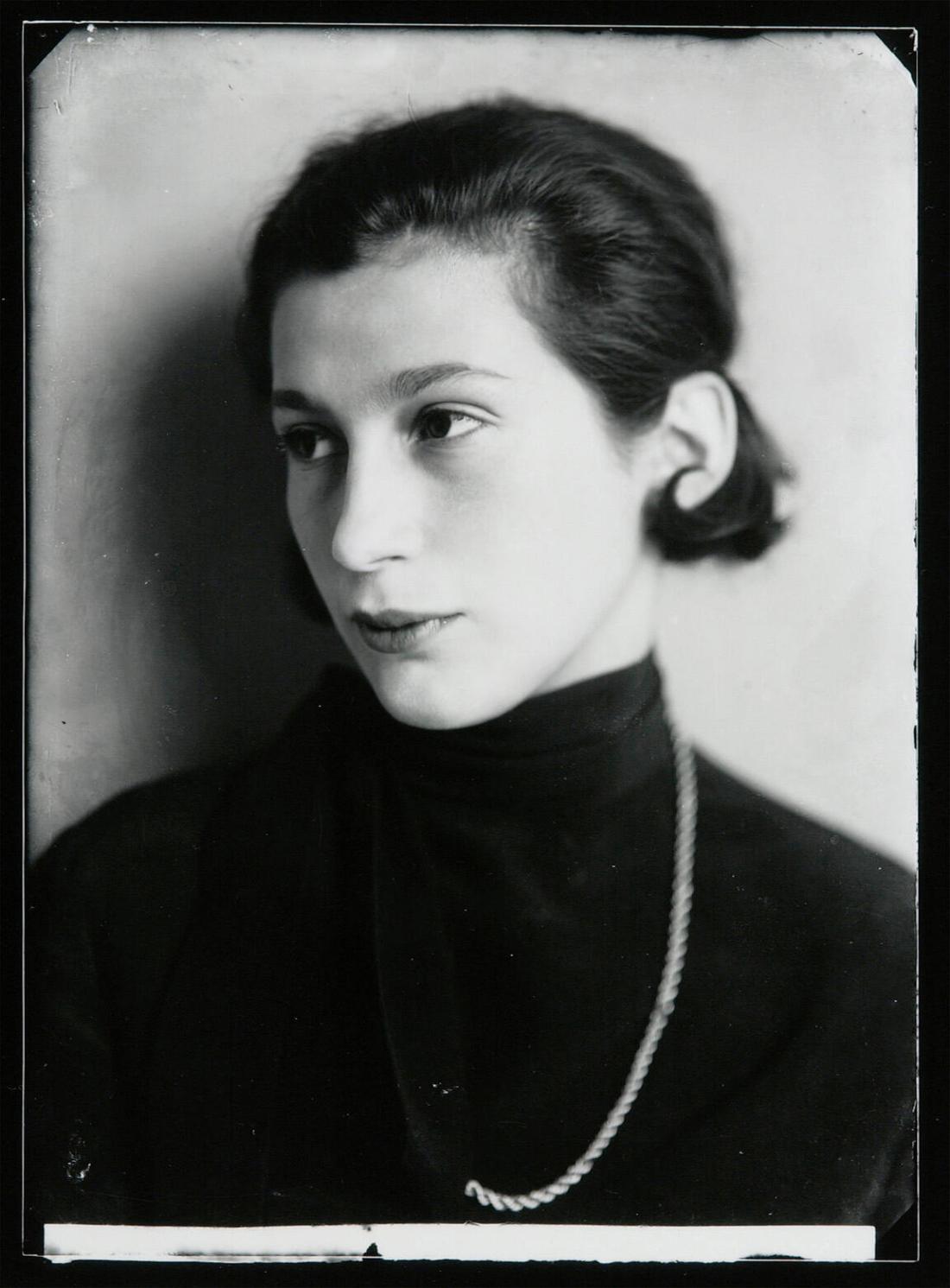


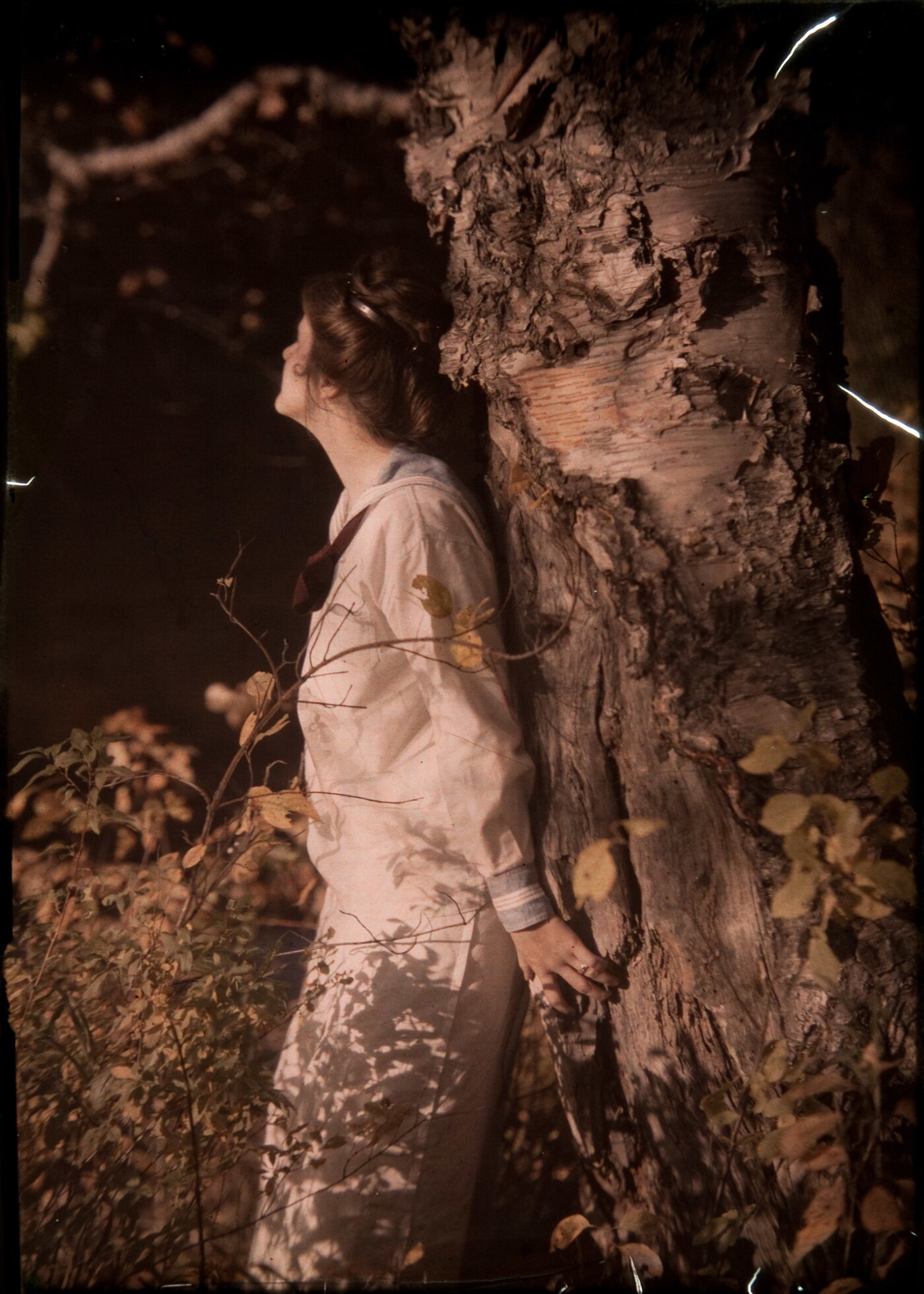
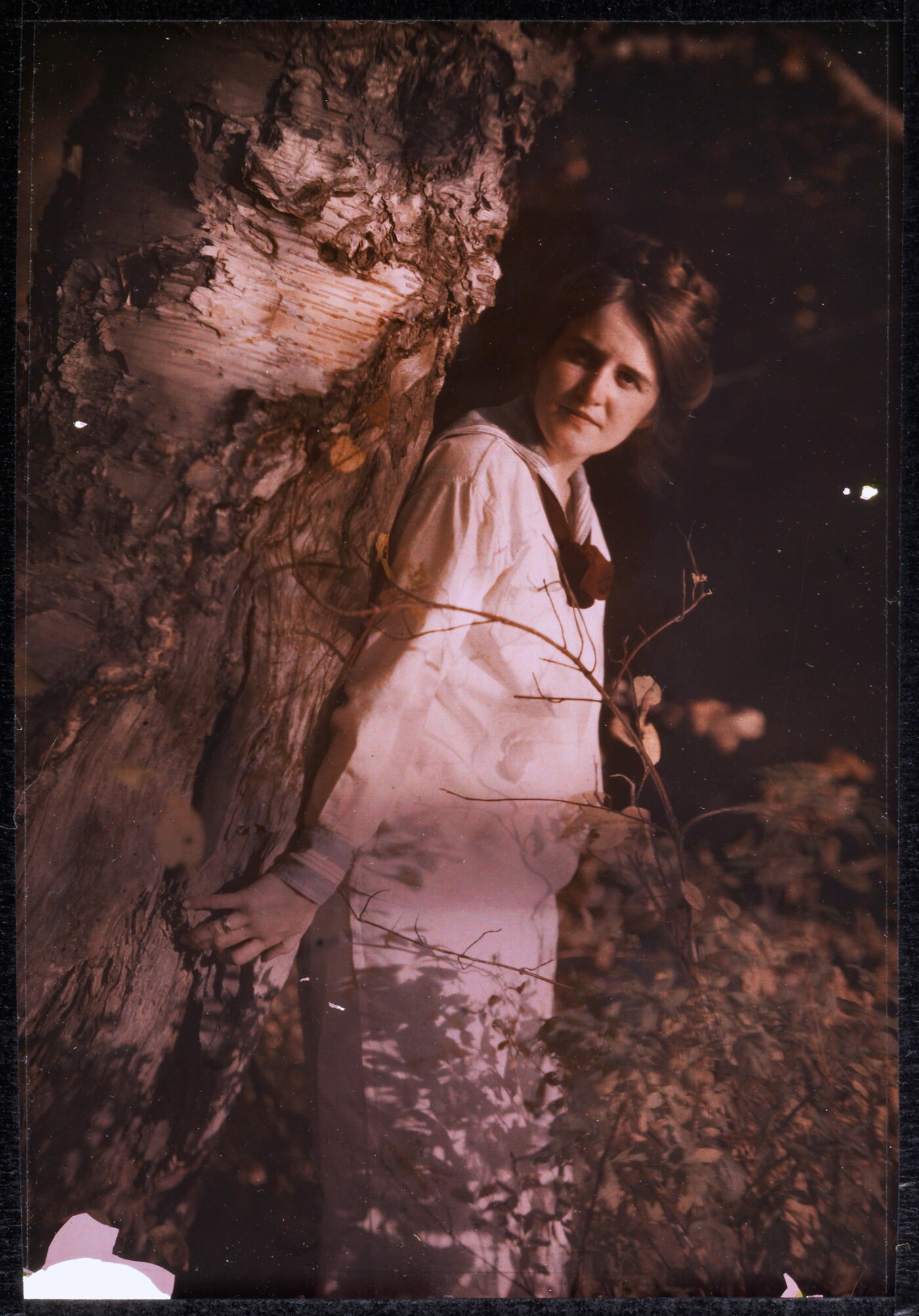
![Clara E. Sipprell (1885-1975) :: [Clara with a rose]; ca. 1910. Additive color screen plate (Autochrome). Amon Carter Museum](https://unregardoblique.com/wp-content/uploads/2022/07/clara-sipprell-clara-with-a-rose-1910s-glass-transparency-additive-color-screen-plate-amon-carter-museum.jpg)

![Jeanne Mammen :: Sie repräsentiert (och Selbstbild), um 1928.[watercolor, pencil] Bild: VG Bild-Kunst, Bonn 2017 | src Svenska.yle (selfportrait; self-representation)](https://unregardoblique.com/wp-content/uploads/2022/05/jeanne-mammen-sie-reprasentiert-um-1928.jpg)
Watercolorist, painter, printmaker. Raised in Paris. Studied art in Paris, Brussels, and Rome from 1906 until 1911. As a German citizen, was forced to flee France with her family at outbreak of World War I; lost all possessions. Impoverished, settled in Berlin in 1916, where she eventually earned a living making illustrations for fashion magazines and posters for Universum-Film AG (UFA), the film distributor.
After 1924 frequently published drawings and watercolors in major satirical periodicals such as Ulk and Simplicissimus, for which she chronicled the experiences of Berlin’s crop-haired, self-reliant “new women” at work and leisure — experiences that mirrored her own. Often showed them in cramped, distorted spaces, some rendered in lurid tones reminiscent of Henri de Toulouse-Lautrec and others in brilliant, orphic colors of the prewar Parisian avant-garde. Enjoyed growing commercial and critical success; in 1930 had first solo exhibition at Galerie Gurlitt in Berlin. At publisher Wolfgang Gurlitt’s behest, made lithographs illustrating a book of erotic Sapphic poetry, Les Chansons de Bilitis, in 1931–32, which was banned by the Nazis.
Under Nazi dictatorship, remained in Germany but lived in a state of “inner emigration”; refused to exhibit or publish. Turned increasingly to painting in Cubist and Expressionist styles out of solidarity with artists who Nazis defamed as degenerate.
quoted from MoMA
![Jeanne Mammen :: Zwei Frauen, tanzend (Two women, dancing), ca. 1928. [Aquarell, Bleistift]. Bild: VG Bild-Kunst, Bonn 2017. | src Svenska.yle](https://live.staticflickr.com/65535/52109345817_2406513c8c_h.jpg)
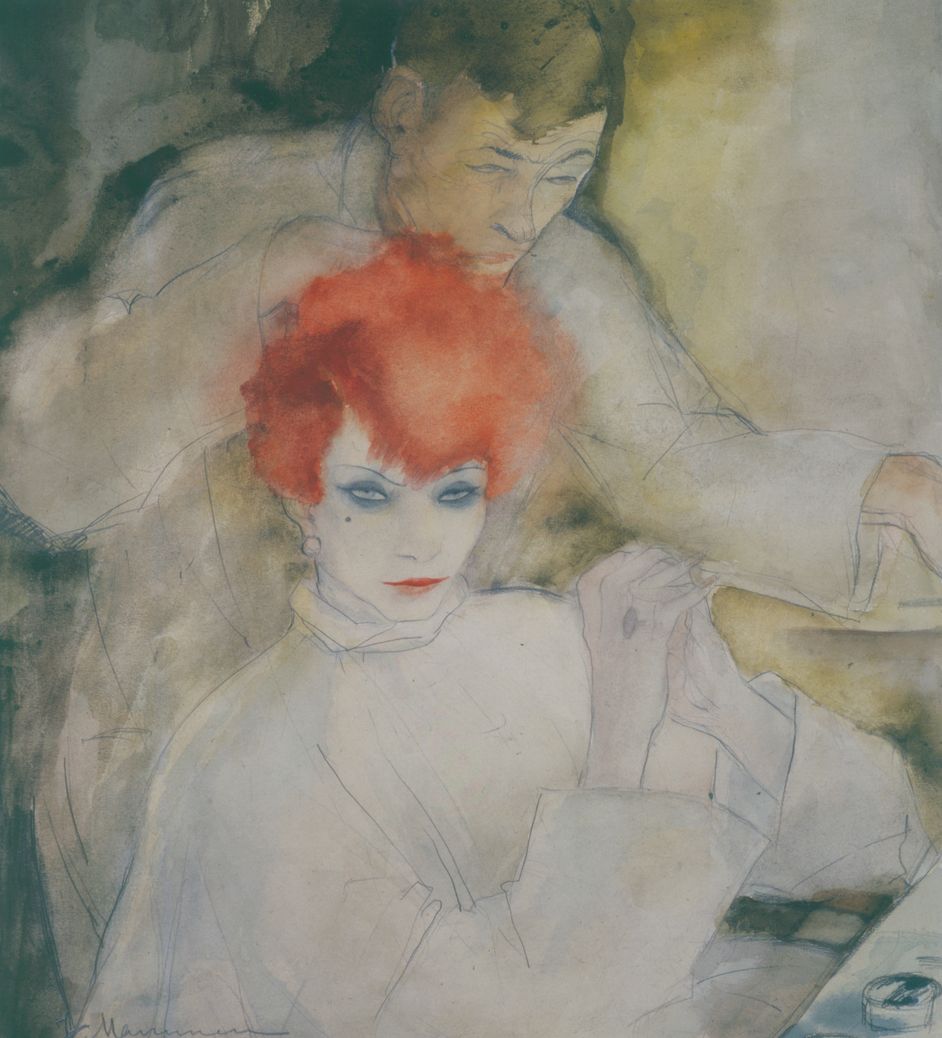
Jeanne Mammen (1890–1976) made her name in the late 1920s with illustrations for magazines like Simplicissimus, Ulk and Jugend. In an enthusiastic review, Kurt Tucholsky wrote that her figures leaped “from the paper with skin and hair”. Mammen’s favourite motif were women in the city: in a café, at a ball, at the bar or in some sleazy joint. “The Redhead”, printed in Ulk in 1928, sits in the hairdresser’s chair. She is lost in thought as she looks towards the viewer: we are her mirror. The hairdresser is just finishing off the job. The look is perfect: the pale smock, the white skin, the brown shades in the background are an ideal background to set off her red hair, her lips and the blue shadow around her catlike eyes. “The Redhead”is a vamp rather than the sassy athletic young lass more typical of the times. This capricious creature exudes an air of cold detachment. Her beauty is not intended to seduce but is sufficient unto itself. [quoted from Berlinische Galerie]


![Jeanne Mammen :: Illustration für die Zeitschrift "Simplicissimus" - Illustration for the magazine Simplicissimus, around 1930. [Aquarell, Bleistift]. | src arthive](https://live.staticflickr.com/65535/52110616704_b9c964b975_k.jpg)

 un regard oblique