Ritratto fotografico della ballerina Vera Savina (Vera Clark) in costume di scena per il balletto Sylphide, 1927. | src Libreria antiquaria Gonelli
Al verso della fotografia timbri della ‘Casa d’Arte Bragaglia’ e della ‘Rivista Popolo d’Italia’, insieme ad una annotazione manoscritta, parzialmente errata, nella quale si legge il nome della Savina.
La celebre ballerina inglese (Vera Clark, in arte Savina) lavorò a Mosca nel corpo di ballo dei Ballets Russes di Diaghilev e sposò Léonide Massine (Myasin), altro grande coreografo russo. È ripresa seduta nell’atto in indossare una scarpetta. L’acconciatura, il costume di scena, il gioiello ed il bracciolo della sedia corrispondono esattamente a quelli con cui la ritrasse il pittore scozzese Herbert James Gunn nel quadro ‘Sylphide‘ (1927 – collezione privata).
On the back of the photograph, stamps of the ‘Casa d’Arte Bragaglia’ and ‘Rivista Popolo d’Italia’, together with a handwritten annotation, partially incorrect, in which the name of Savina can be read.
The famous English dancer (Vera Clark, aka Savina) worked in Moscow in the ballet troupe of Diaghilev’s Ballets Russes and married Léonide Massine (Myasin), another great Russian choreographer. She is shown sitting in the act of wearing a shoe. The hairstyle, the stage costume, the jewel and the armrest of the chair correspond exactly to those with which the Scottish painter Herbert James Gunn portrayed her in the painting ‘Sylphide‘ (1927 – private collection).
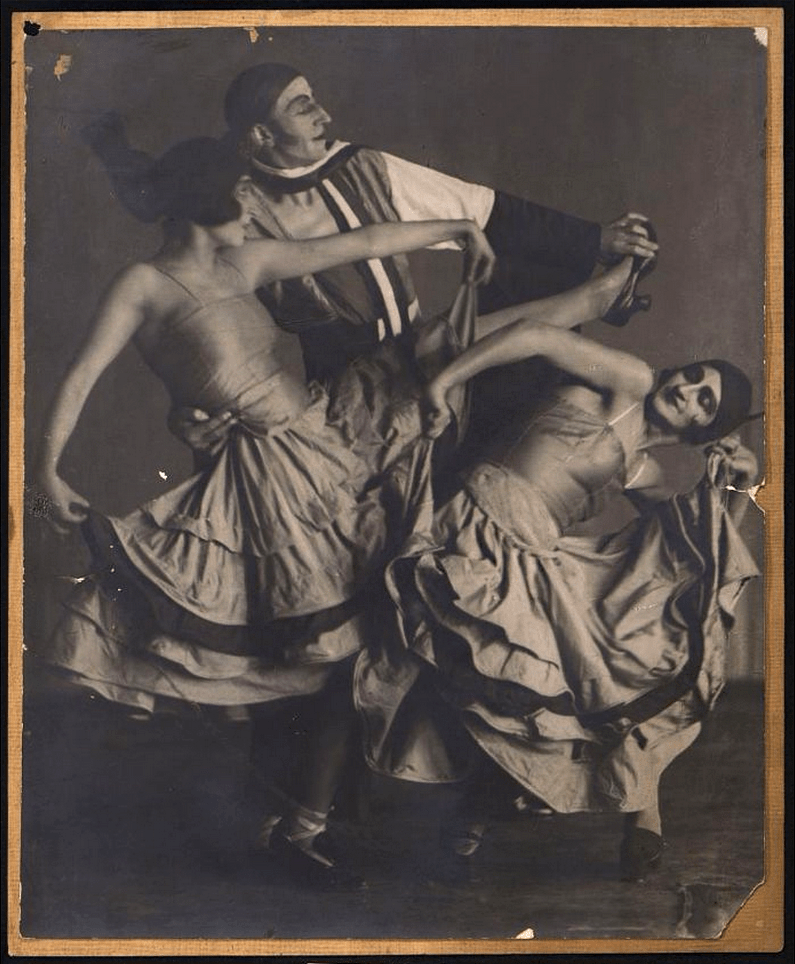
Kassian Golejzovsky, Kasjan’s ballet. Poster, first half of the 1920s. Pencil, collage, white lead on plywood. [K. Golejzovskij, Il balletto di Kasjan K. Golejzovskij, manifesto, metà anni venti. Matita, collage, biacca su compensato]. | src Nicoletta Misler: L’Arte del Movimento in Russia 1920-1930
Болт ~ The Bolt (1931), ballet choreographed by Fyodor Lopukhov. Music by Shostakovich. Following its premiere at the Leningrad Academic Theatre of Opera and Ballet in 1931 it was banned in the Soviet Union. From: Silencing the Avant-Garde: Censorship and Film in the Soviet Union. | src GRAD ~ Gallery for Russian Arts and Design (London)Болт ~ The Bolt (1931), ballet choreographed by Fyodor Lopukhov. Music by Shostakovich.Болт ~ The Bolt (1931), ballet choreographed by Fyodor Lopukhov. Music by Shostakovich. Following its premiere at the Leningrad Academic Theatre of Opera and Ballet in 1931 it was banned in the Soviet Union. From: Silencing the Avant-Garde: Censorship and Film in the Soviet Union
‘The Bolt’, written in 1931, is an unruly satire full of skulduggery and drunken conspiracy, populated by a host of comical characters. Following its premiere at the Leningrad Academic Theatre of Opera and Ballet in 1931, an unfavourable reaction from critics saw ‘The Bolt’ promptly pulled off the programme. Any performance of the ballet was thereafter strictly forbidden, and it was 74 years before it saw the stage again, reconstructed for the Bolshoi Ballet by its director Alexei Ratmansky. GRAD’s exhibition brings the neglected story of this tumultuous production to life through a selection of costume designs and period photographs.
The ballet, which is based on a true story, tells of the exploits of Lyonka Gulba (‘Gulba’ in Russian means ‘idler’), an indolent worker who persuades a young man to throw a bolt into the factory machinery, sabotaging the production of his workplace in revenge for his being sacked. In this industrial production, which featured real hammers and machine-inspired choreography, Shostakovich embellished the story with aerobics and acrobatics, with several passages mimicking the swishing and hammering sounds of modern factory machinery.
GRAD’s display will feature the witty and grotesque costume designs by Tatiana Bruni bringing to life the characters that populate the ballet: from the Sportsman, the Textile-Worker or the Komsomol Girl, to the Drunkard, the Loafer and the pompous Bureaucrat. Featuring striking geometrical colour blocking, Bruni’s designs have been called ‘the apogee of postrevolutionary Russian experiments in stage design’ and were inspired by the aesthetics of agit-theatre and ROSTA windows or artist-designed propaganda posters. Shostakovich’s exceptional blend of proletarian music genres play through the gallery space, catapulting the viewer to early 1930s Russia and evoking Fedor Lopukhov’s daring choreography. Constructivist values and aesthetics are reflected in all of the elements of the ballet, from the costume designs to the score, choreography to set design.
Shostakovich was commissioned by the Moscow Art Theatre to compose the score to a ballet that would serve and support the goals of socialism and communism. Combining circus music, waltzes, marches and tangos together with popular tunes, the composer envisaged the piece to be a celebration of the proletariat. Nonetheless, ‘The Bolt’ was banned by the Soviet authorities amongst suspicions that it was a satirical work.
That ‘The Bolt’ was produced in 1931 is significant. Visual art and literature were on the cusp of monumental change in Soviet Russia, after a series of political and artistic revolutions had changed the course of modernist art and modern history. The critical rejection of the ballet can be understood within the context of a progression toward Socialist Realism, and the suppression of the vanguard imagination, accelerated by the 1932 issue of the ‘Decree on the Reconstruction of Literary and Artistic Organisations’, a measure designed to curtail artistic independence. The satirical characters and acid comedy of ‘The Bolt’ stand as a bastion of an experimental spirit, which demonstrated an extraordinary edge and robustness. (quoted from WSI review on GRAD’s exhibition)
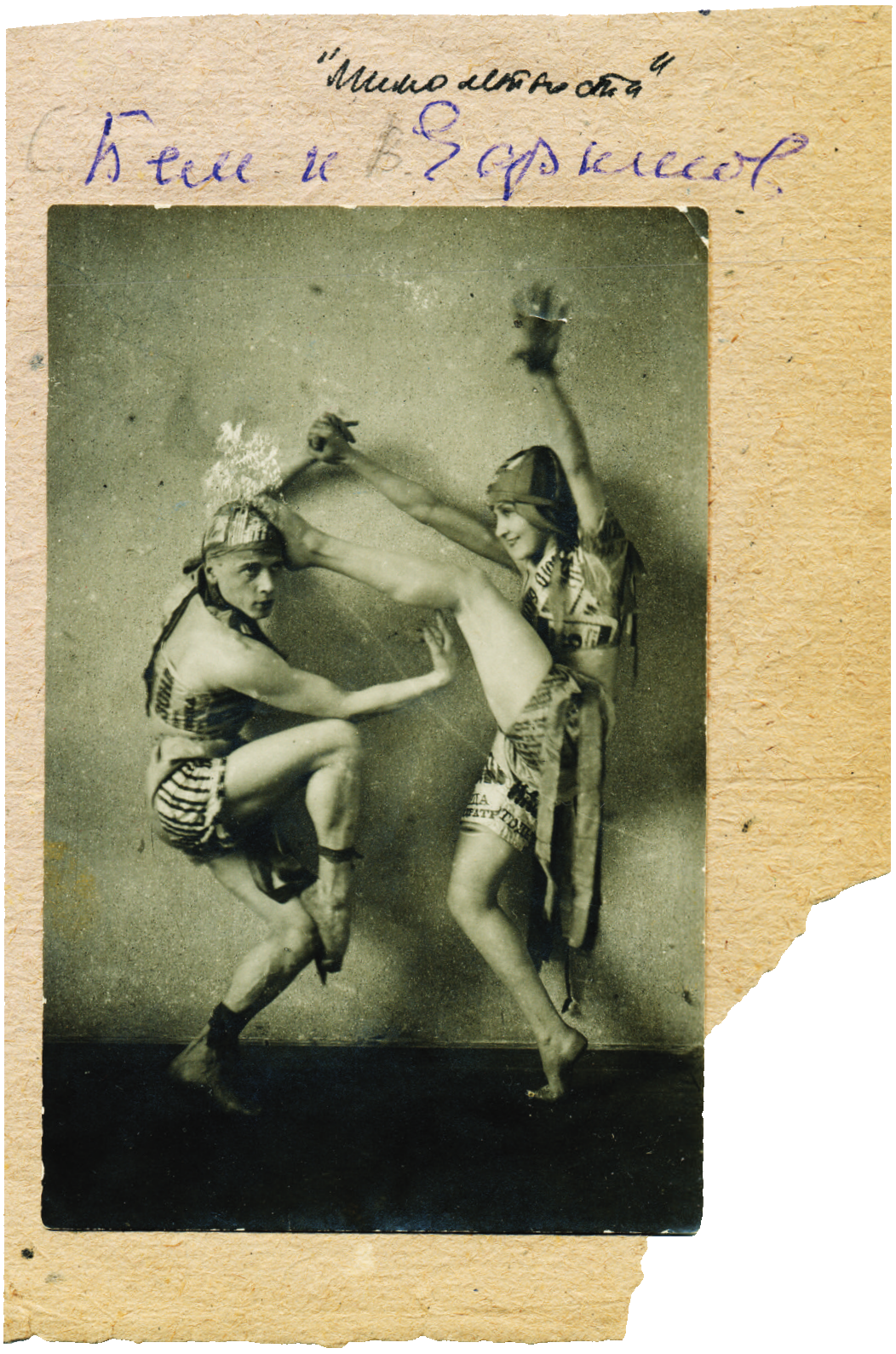
Kasyan Yaroslavich Goleizovsky’s avant-garde choreography of Prokofiev’s Visions fugitives, Nºs 10-11 (Ridicolosamente, Con vivacità) for his own company, the Moscow Chamber Ballet, in 1922. The configuration of the bodies is architectonic, like so much art of the time, and acrobatic. The avant-garde costume design was adapted to the new dispositions of the body. | src The Russian Art of Movement review
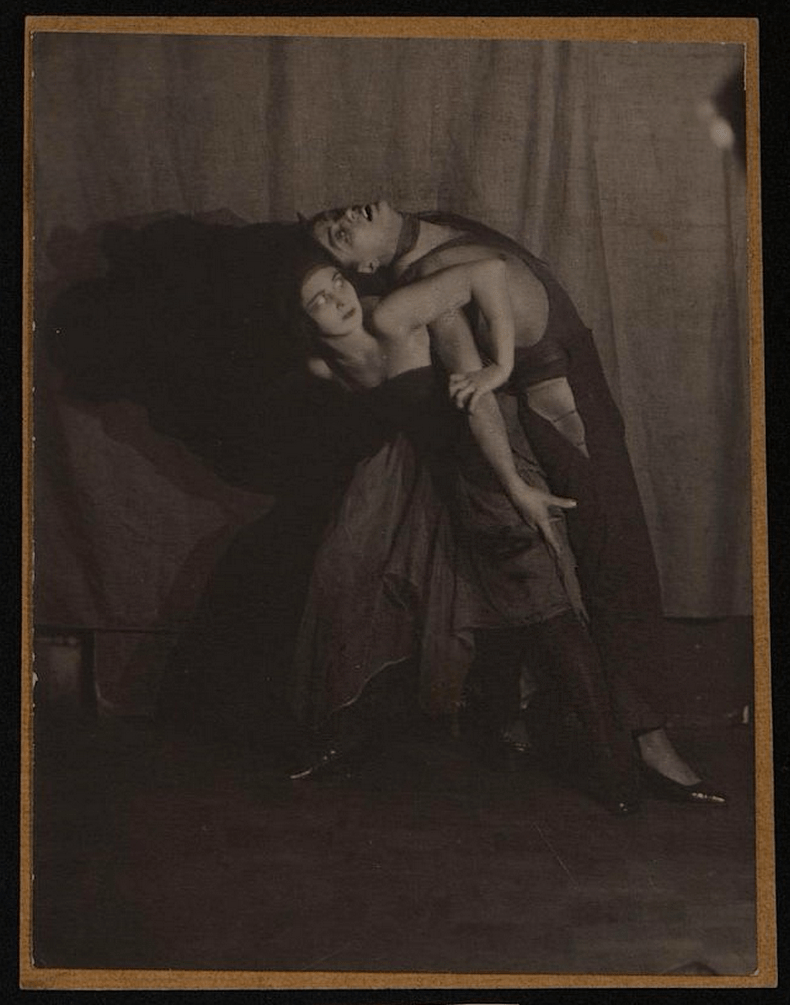
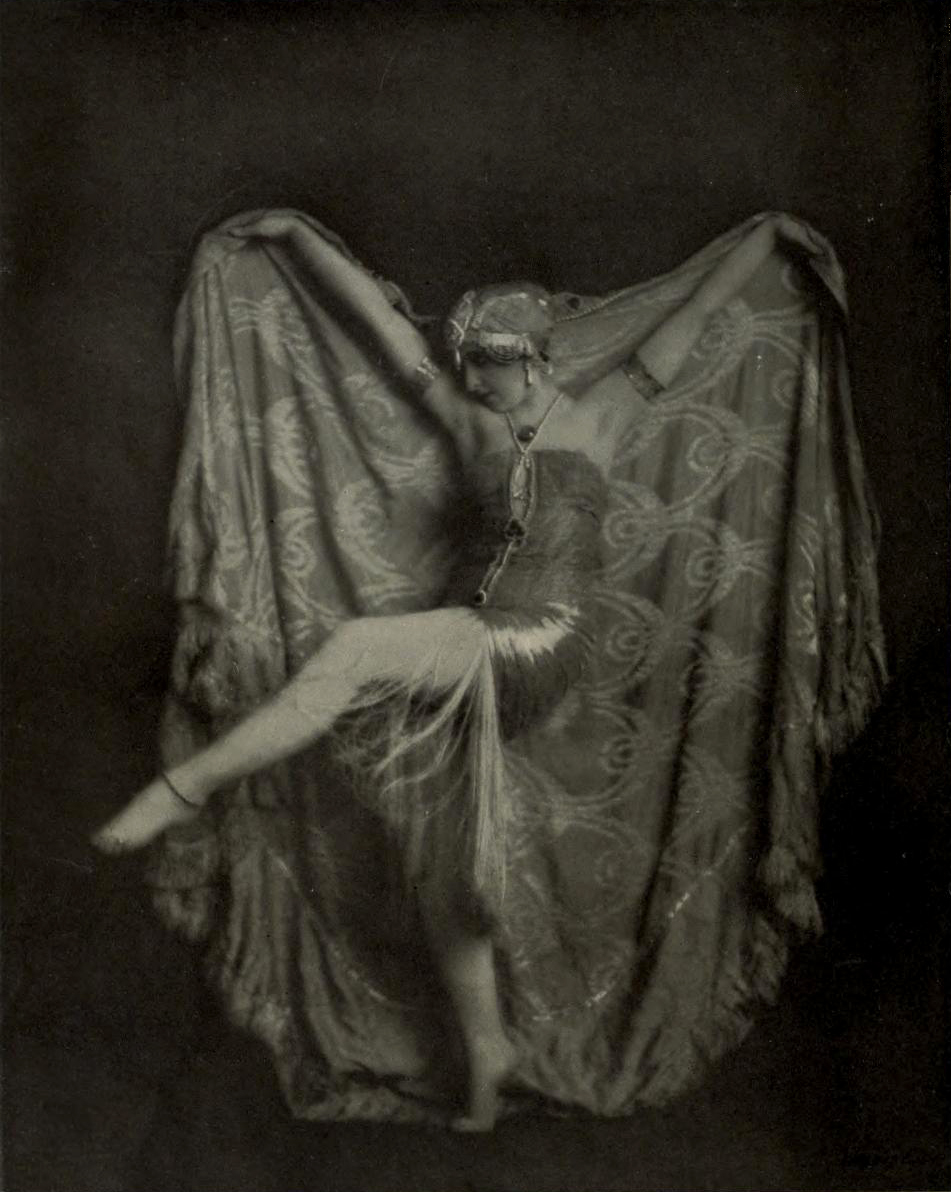
Waldemar Eide :: Salomes dans (Vera Fokina), 1919. Vera Fokina portfolioen. Sølvgelatin. Stavanger kunstmuseum via Norges Fotografforbund
Waldemar Eide is presented in a large exhibition at the Stavanger Art Museum this winter.
Waldemar Eide is presented in a large exhibition at the Stavanger Art Museum this winter. Waldemar Eide was born in Stavanger in 1886 and was one of Norway’s leading portrait photographers in the first half of the 20th century. He was among the first photographers to consider himself a visual artist, and had an active exhibition business in Stanvanger and abroad. He received several awards for his photographs and also regularly wrote about art and photography for trade journals and newspapers.
Eide was a pictorialist and thus placed great emphasis on the painterly qualities, on light and shadow in a picture. This led to his pictures often convey an almost dreamlike sense and this style resonated well with the dancers, actors and musicians of the time.
His studio in Stavanger was a meeting place for visiting artists and personalities who wanted to have their portraits taken, as well as the local population. Composer Sergej Rakhmaninov, historian Macody Lund and opera singer Kaja Eide Norena were among the many he photographed. He is perhaps best known for the pictures of the Russian ballet dancer Vera Fokina, whom he depicted in 1919.
The exhibition is curated by art historian at Stavanger art museum Vibece Salthe and is on display until 19 February 2017. [quoted from Norges Fotografforbund, original text below (*)]
Waldemar Eide:: Dance of Salome (Vera Fokina). Photograms of the Year. The annual review of the world’s pictorial photographic work, 1920 issue (plate LXIV). Edited by F. J. Mortimer. | src archive.orgWaldemar Eide :: Vera Fokina ved den russiske ballett. Dansestudie med kostyme, ca. 1919 | src Norsk Folkemuseum via digitalt museum
[(*) quote in original language] Waldemar Eide presenteres i stor utstilling på Stavanger kunstmuseum denne vinteren.
Waldemar Eide presenteres i stor utstilling på Stavanger kunstmuseum denne vinteren.Waldemar Eide ble født i Stavanger i 1886 og var en av Norges ledende portrettfotografer i første halvdel av 1900-tallet. Han var blant de første fotografene som betraktet seg som billedkunstner, og hadde en aktiv utstillingsvirksomhet i inn- og utland. Han mottok flere priser for sine fotografier og skrev i tillegg jevnlig om kunst og fotografi for fagtidsskrifter og aviser.
Eide var piktorialist og la dermed stor vekt på de maleriske kvalitetene, på lys og skygge i et bilde. Det førte til at bildene hans ofte fikk et nærmest drømmende preg og denne stilen resonnerte godt med tidens dansere, skuespillere og musikere.
Atelieret hans i Stavanger var et møtested for besøkende kunstnere og personligheter som ville la seg portrettere, i tillegg til lokalbefolkningen. Komponisten Sergej Rakhmaninov, historikeren Macody Lund og operasangeren Kaja Eide Norena var blant de mange han fotograferte. Mest kjent er han kanskje for bildene av den russiske ballettdanseren Vera Fokina, som han avbildet i 1919.
Utstillingen er kuratert av kunsthistoriker ved Stavanger kunstmuseum Vibece Salthe og vises til og med 19. februar 2017. | src Norges Fotografforbund
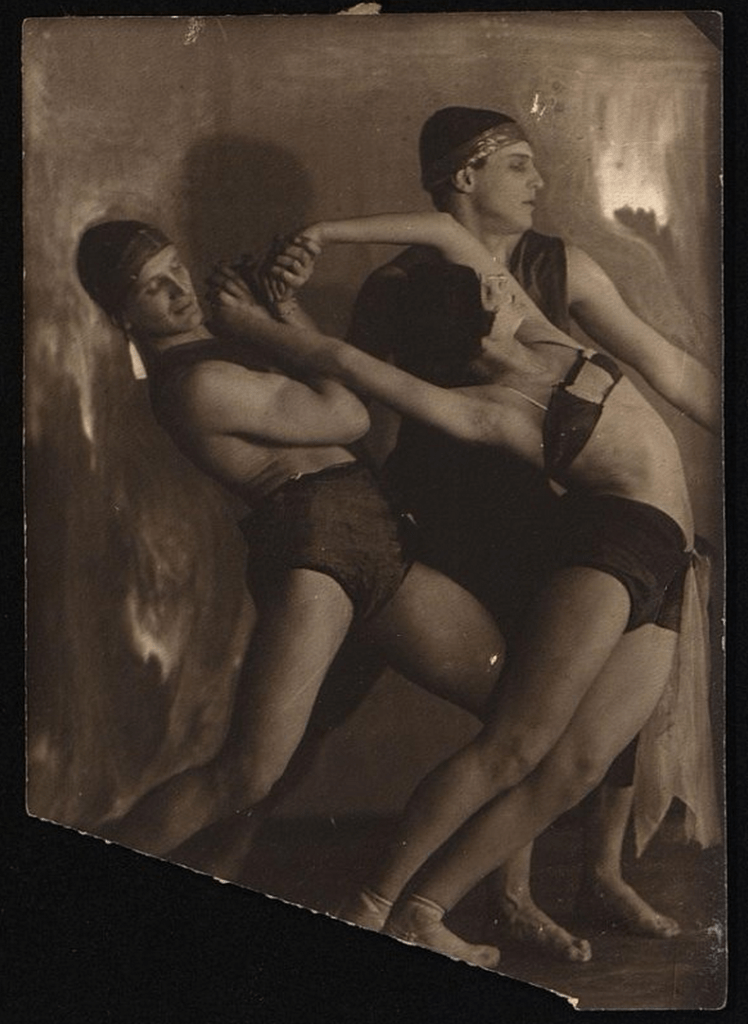
Waldemar Eide :: Dancing Study (Vera Fokina with costume for Salome at the Russian Ballet), 1919. Published in Photograms of the year 1919. Edited by F. J. Mortimer.| src archive.org







 un regard oblique