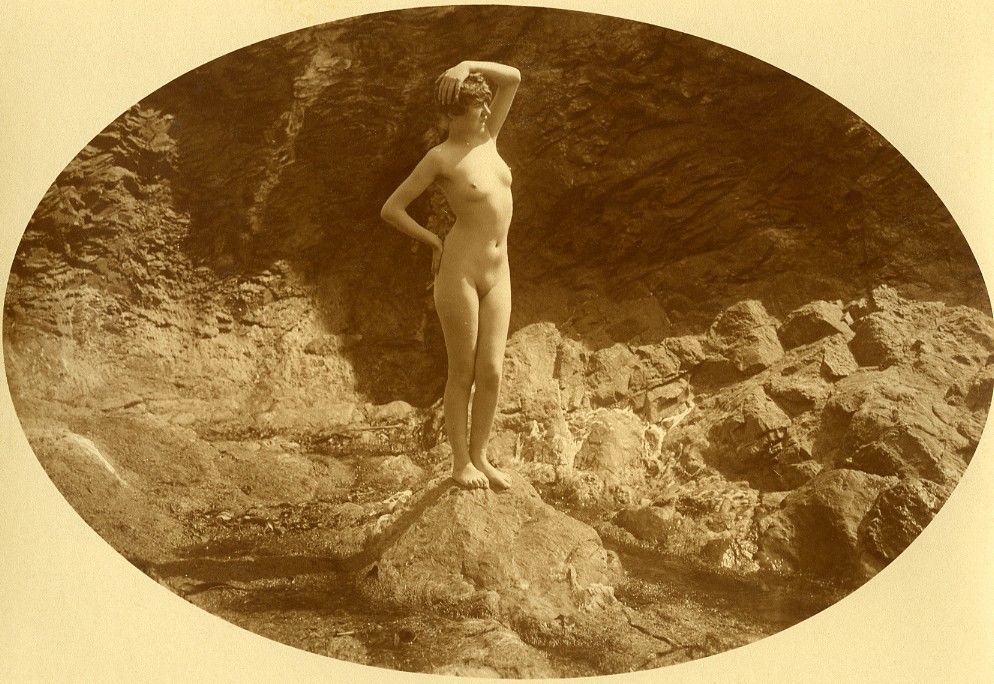
Marcel Meys :: Risque Nude Study of Woman Standing on Rock, Outdoor, France, 1920′s / src: eBay
more [+] by this photographer
images that haunt us

Paul Nadar
[pseudonym of Gaspard-Félix Tournachon]
:: Man hauling a boat on the shore of Amou-Daria. Journey to Russian Turkestan, 1890 / src: photo.rmn.fr
more [+] by this photographer

Fred Williams :: Circle landscape, Upwey (Australia), 1965-66. Landscape of etched marks on aquatint ground, with diagonal line of hillside; circular format, 1965-66. Etching, aquatint and drypoint on stiff wove paper/ src: British Museum
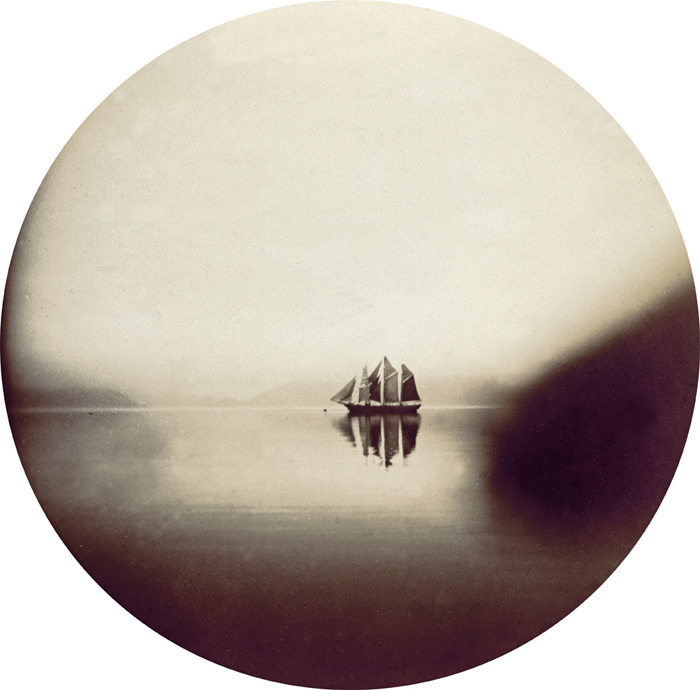
England, ca. 1890 instant Kodak N°2. / src: Lumière des Roses

Israel Ariño :: from the series ‘Images d’un monde flottant’. Silver Gelatin Print, 2008

The Bauhaus weaving workshop, composed primarily of women, was among the school’s most successful and experimental workshops. Influenced by the color and formal theories of Vasily Kandinsky, Paul Klee, and Johannes Itten, the students experimented with traditional and industrial dyeing and weaving techniques. Lotte Beese took no formal classes in photography, but she made a number of photographs during her years in Dessau and is known especially for her Bauhaus portraiture. Uniting her interest in portraying fellow students with her intimate participation in the weaving workshop, where she studied textile design under Gunta Stölzl, Beese’s image of a circular cluster of progressive young women weavers was featured on the cover of the Bauhaus journal in 1928, with a headline beckoning, “Young people, come to the Bauhaus!” Beese likely shot this picture from a ladder or with her camera mounted on an elevated tripod, using a Rollholder that she described as a “rickety second camera.”
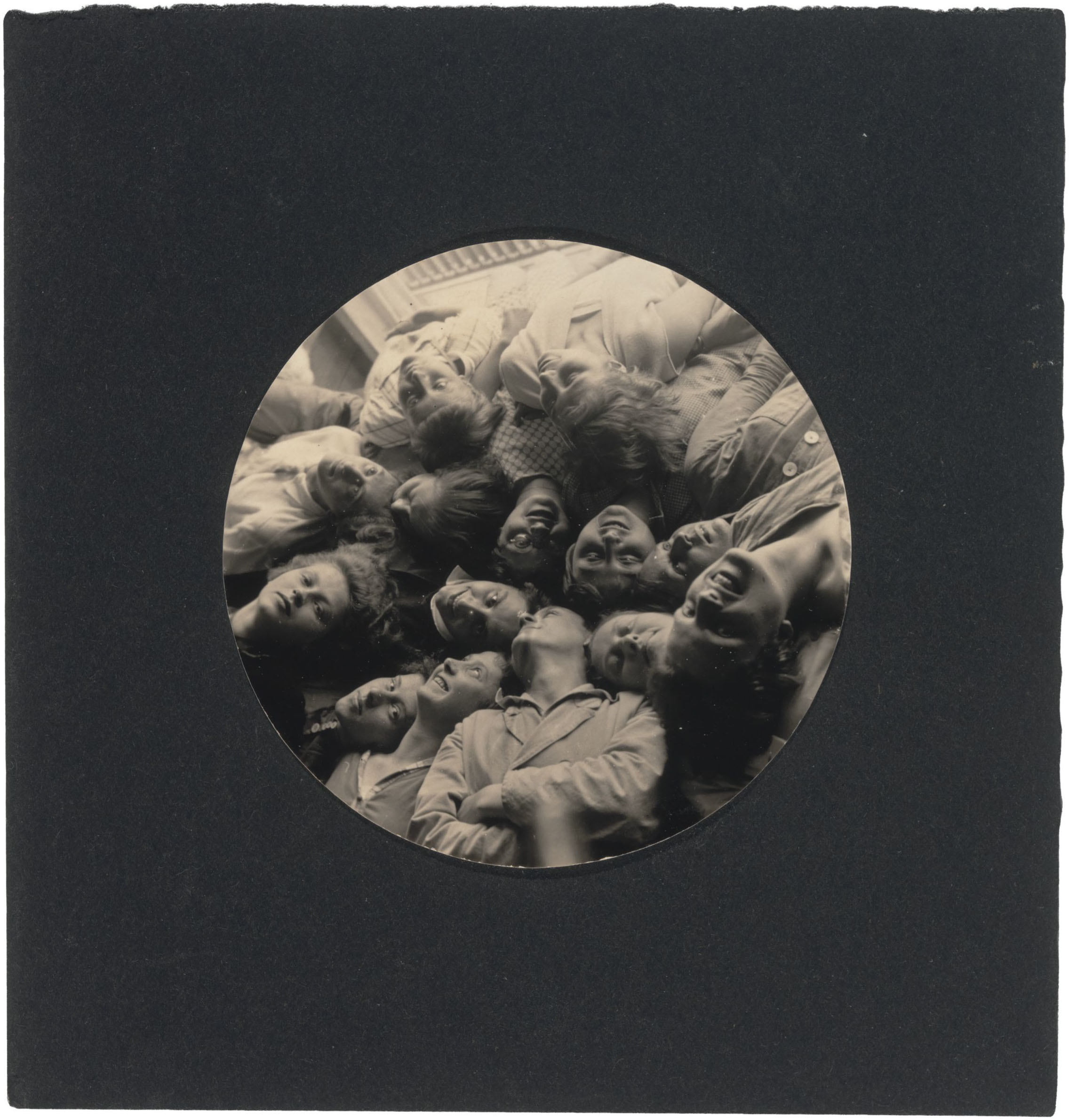
The picture is printed on Velox, a Gaslight Paper known for its warm highlights and light texture. The material was marketed to amateurs because it required no enlarger or darkroom; it could be exposed in the comfort of one’s parlor, just inches from an ordinary gas jet or electric bulb. Bauhaus artists experimented with Velox and other contact papers before a formal photography program was established at the school.
To achieve the picture’s circular format, Beese prepared a masking layer with a round window 8.5 centimeters (3 3/8 inches) in diameter, which she placed over the unexposed photographic paper and the rectangular negative. This stacked construction was then exposed to light and processed, resulting in a circular image in the center of a white sheet of paper. She then carefully trimmed around the image edge and retouched a few white lines and spots. At some point the print was mounted to black paper, whose rough, hand-torn edges and embossed line along one side indicate that it once was part of an album.
—Mitra Abbaspour, Hanako Murata | quoted from MoMA


Magic lantern slide. Victorian children playing near bridge, ca. 1890 / original source: Ebay / via
Thanks to
lasmicrofisuras
Los amantes jamás se encontraban; se
dejaban ver detrás de los cristales, se enviaban retratos y fotografías y
sólo mantenían relaciones epistolares. Cartas sentimentales,
pornográficas, exasperadamente informativas, cartas falsas que
reconstruían vidas inexistentes, cartas de una sinceridad suicida, eran
intercambiadas en silencio por esos hombres y mujeres solitarios y
ardientes.
Ricardo Piglia, “Prisión perpetúa ”
Image credits :
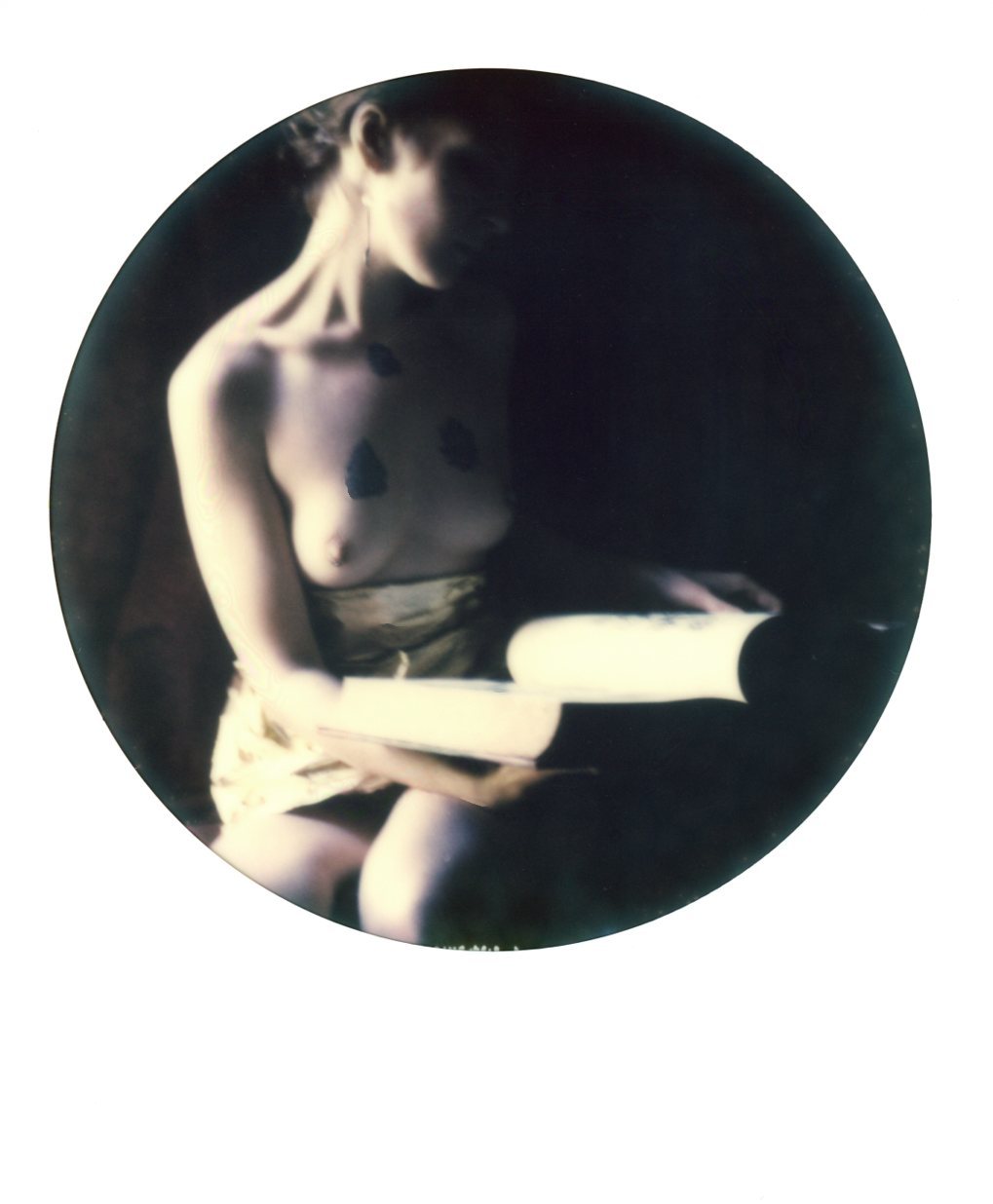
Carmen Palermo
:: The Reader, 2016 (more by Carmen Palermo, here)


 un regard oblique