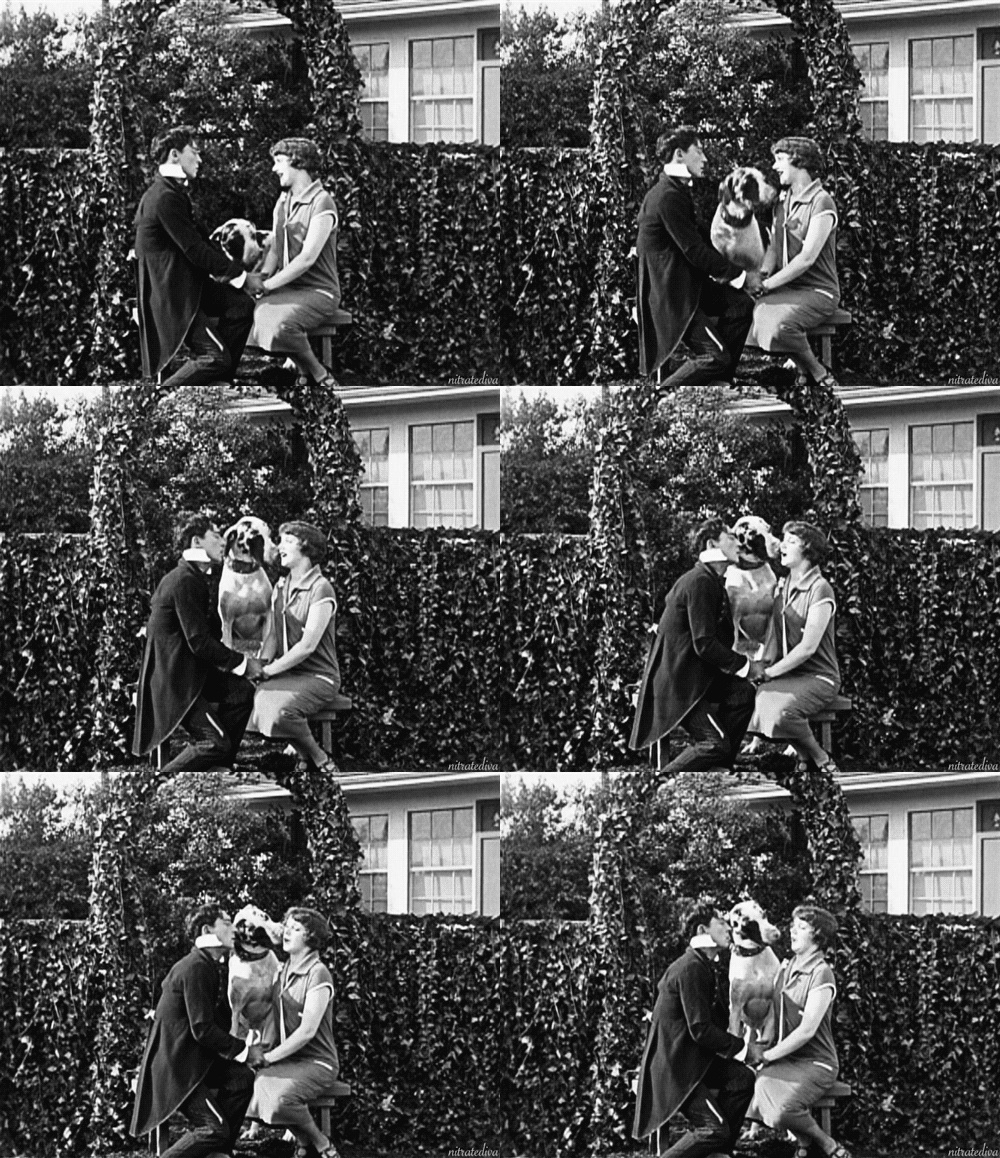
“Tragedy is a close-up; comedy, a long shot.”
Buster Keaton
via mudwerks / more [+] Buster Keaton posts
images that haunt us
“Tragedy is a close-up; comedy, a long shot.”
Buster Keaton
via mudwerks / more [+] Buster Keaton posts
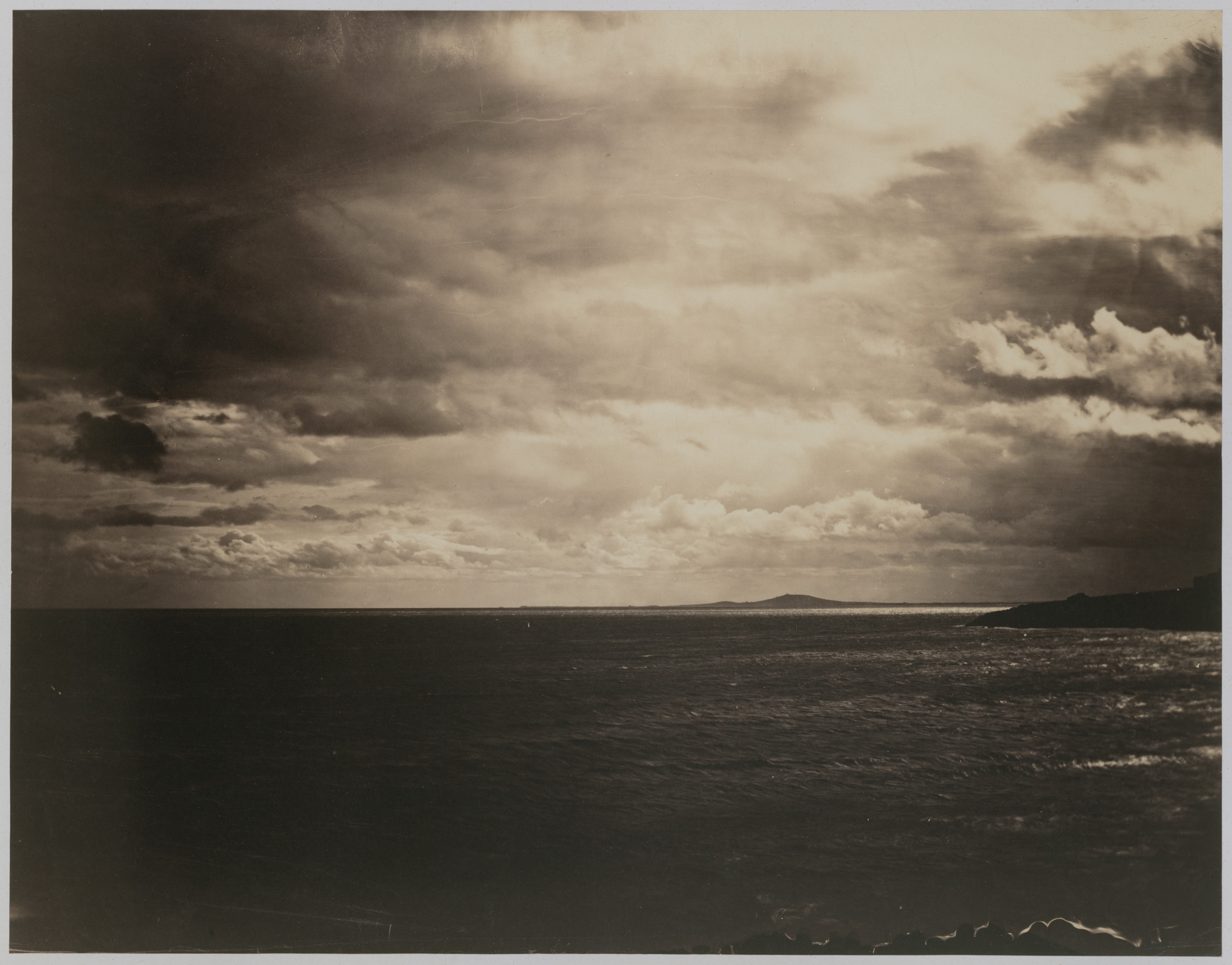
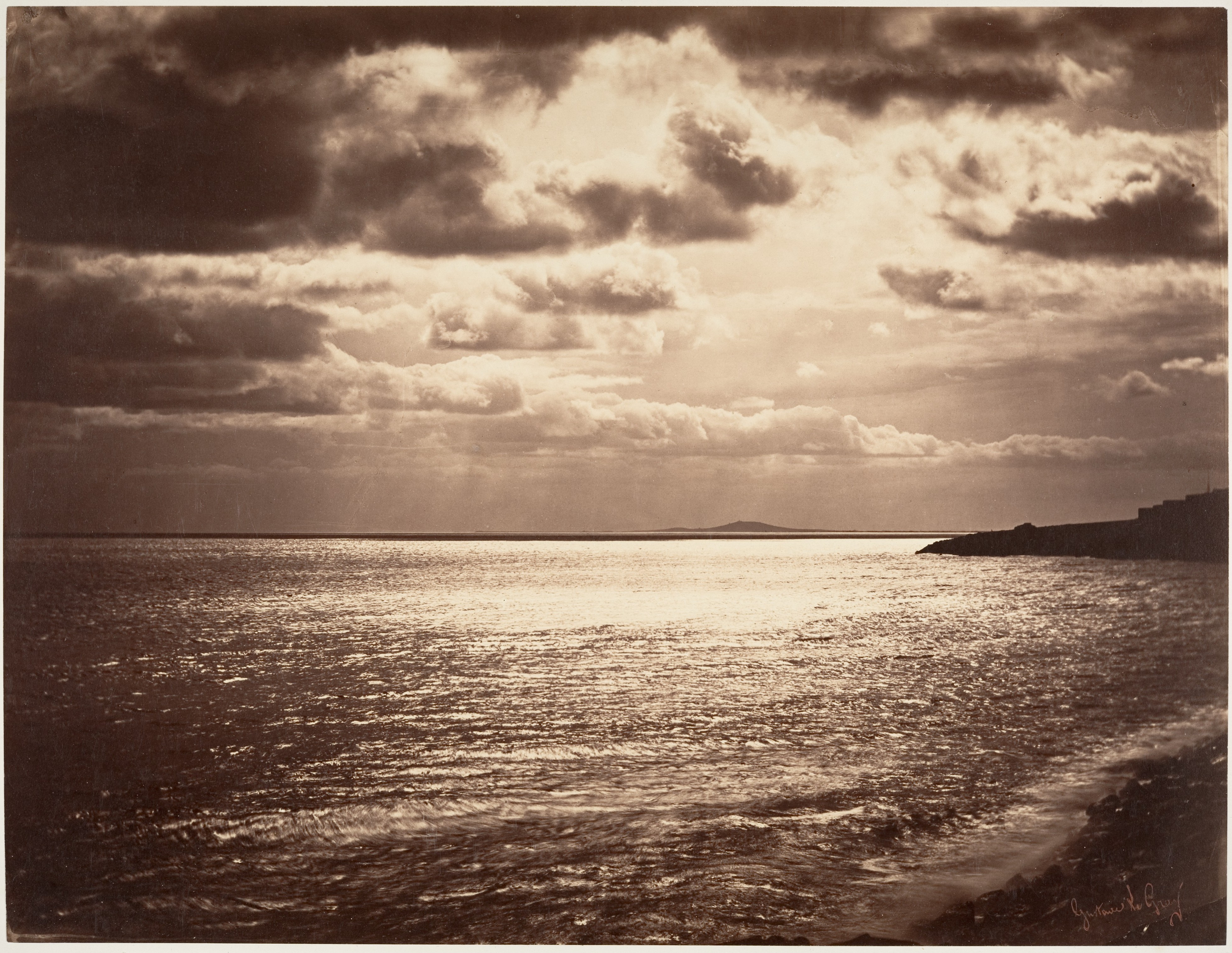
The dramatic effects of sunlight, clouds, and water in Gustave Le Gray’s Mediterranean and Channel coast seascapes stunned his contemporaries and immediately brought him international recognition. At a time when photographic emulsions were not equally sensitive to all colors of the spectrum, most photographers found it impossible to achieve proper exposure of both landscape and sky in a single picture; often the mottled sky of a negative was painted over, yielding a blank white field instead of light and atmosphere.
In many of his most theatrical seascapes, Le Gray printed two negatives on a single sheet of paper–one exposed for the sea, the other for the sky, sometimes made on separate occasions or at different locations. Although the relationship of sunlight to reflection in this example was carefully considered and the two negatives skillfully printed, one can still see the joining of the two negatives at the horizon. Le Gray’s marine pictures caused a sensation not only because their simultaneous depiction of sea and heavens represented a technical tour de force, but because the resulting poetic effect was without precedent in photography. / quoted from The Met

Elwood P. Dowd:
Well, I’ve wrestled with reality for 35 years, Doctor, and I’m happy to state I finally won out over it.
Harvey and James Stewart as Elwood P. Dowd
in Harvey, 1950
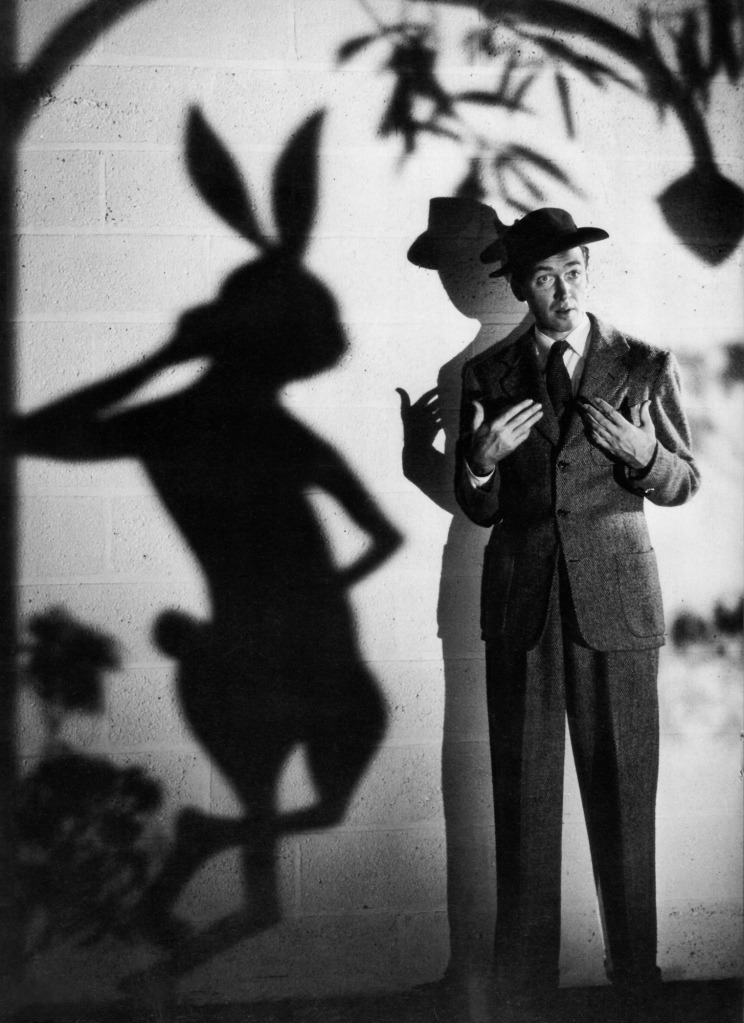
James Stewart in Harvey (Henry Coster, 1950) / source: vickie lester
Wilson: Who’s Harvey?
Miss Kelly: A white rabbit, six feet tall.
Wilson: Six feet?
Elwood P. Dowd: Six feet three and a half inches. Now let’s stick to the facts.
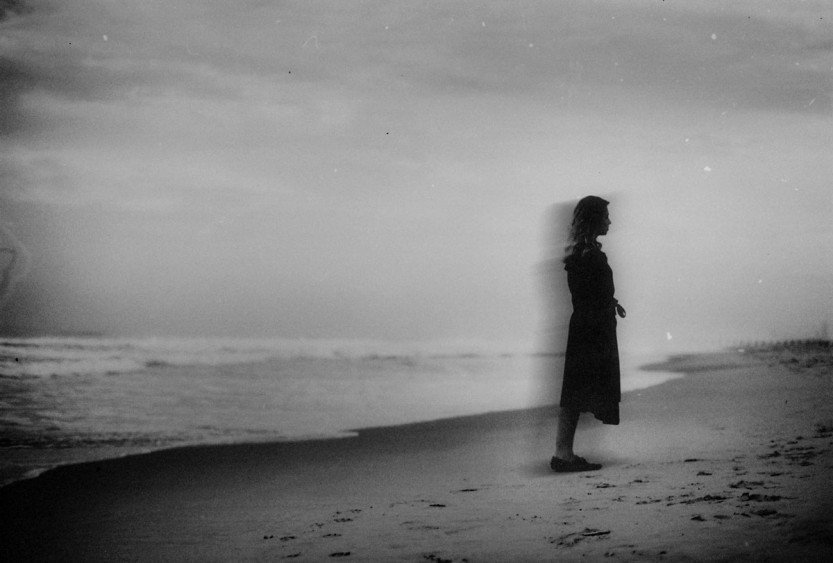
Hadar Ariel Magar :: Let our shadows wither, 2016 / src: Flickr
“For a minute the sky pours into the hole like plasma.
There is no hope, it is given up.”

Yutaka Yamamoto :: Plus pres de toi / Closer to you, no date / via lasmicrofisuras / more [+] by this photographer
“Doing all the little tricky things it takes to grow up, step by step, into an anxious and unsettling world.” Sylvia Plath

Jeanne Moreau, Paris, 1949. Sipa Press/Rex/Shutterstock
/ via
mudwerks / alternative source: The Guardian
“Acting deals with very delicate emotions. It is not putting up a mask. Each time an actor acts he does not hide; he exposes himself.”
more [+] Jeanne Moreau posts
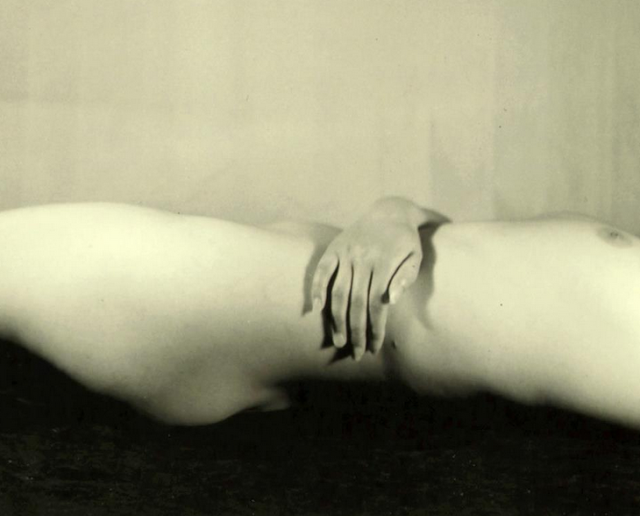
Kansuke Yamamoto :: Nude, 1953 /
via Wolfson Stuart
Ella se desnuda en el paraíso
de su memoria
ella desconoce el feroz destino
de sus visiones
ella tiene miedo de no saber nombrar
lo que no existe. [Alejandra Pizarnik]
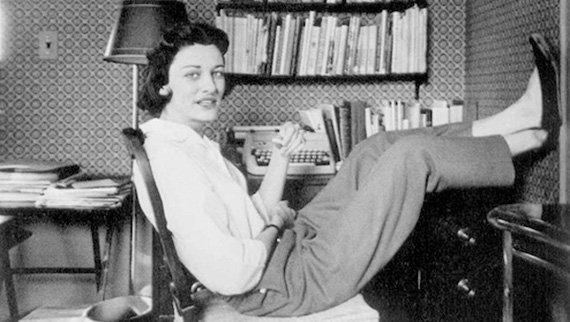
American poetess Anne Sexton (Anne Gray Harvey), probably 1940′s / via
“Give me a report on the condition of my soul.
Give me a complete statement of my actions.
Hand me a jack-in-the-pulpit and let me listen in.
Put me in the stirrups and bring a tour group through.
Number my sins on the grocery list and let me buy.
Did I make you go insane?” excerpt from the poem Anna Who Was Mad
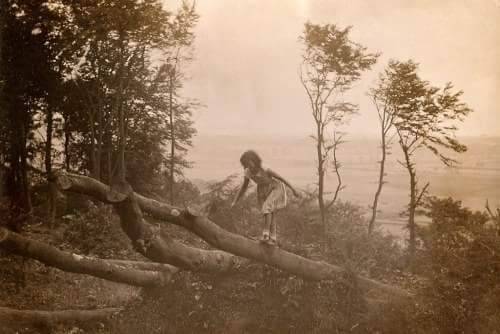
 un regard oblique