Frauenporträt von Antios

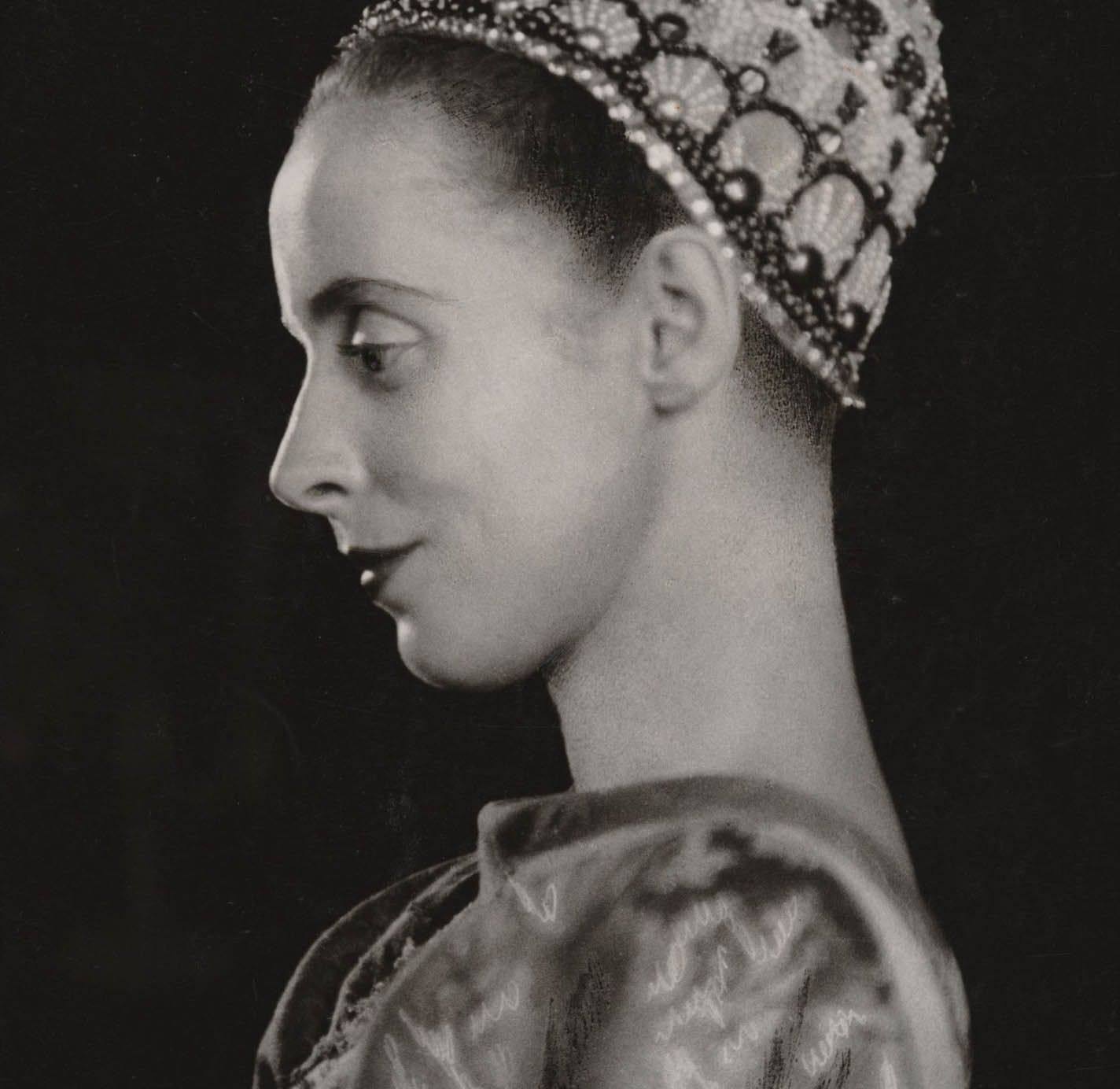
Anton Josef Trčka (1893-1940) ~ Frauenporträt. Portrait of a woman in profile, ca. 1925; palladium print | src Galerie Kicken

ANTIOS – this clearly legible and decorative signet is as much an effective design element of these famous portraits as EGON SCHIELE’s signature. For a long time, it seemed no one was interested in the fact that this legendary Viennese painter and self-portraitist could not have produced such accomplished photographs without the cooperation of a partner who was a master of photographic technique. The way expressive movement blends with the demands of ”classic” portraiture, or the way graphic outline contrasts with the two-dimensional rendering of figures and garments – this cannot have been the work of an amateur.
An amateur he certainly was not, this Anton Josef Trčka, who contracted his own name to form the artistic trademark ANT(on) IOS(ef) during his third year of studies at the “Graphischen Lehr- und Versuchsanstalt” (Institute of Graphic Instruction and Experimentation) in Vienna. This specialized learning institute for photography and reproduction technology, the first of its kind worldwide, was founded in 1888 in the tradition of the commercial arts schools, and combined the demand for technical perfection with solid instruction of an artistic nature. The young Trčka found in Karel Novak (later the co-founder of a similar school in Prague that produced the likes of Sudek or Rössler) a teacher, who not only taught his students how to turn the idea of Pictorialism into professional practice, but also conveyed an understanding of classical portraiture and a love of contemporary painting. The level of Novak’s influence can be seen in the way artists such as Rudolf Koppitz or Trude Fleischmann, along with ANTIOS, remained true their life long to decorative design devices particular to their teacher.
Well before his Schiele and Klimt portraits, ANTIOS had experimented with compositions that were indebted to Jugendstil. The dynamic contours of his figures appear to be inspired by the work of those young dancers who, in the first decades of the 20th century, consciously distanced themselves from classical ballet. By 1924, Trčka had developed close friendships with several dancers, including Hilde Holger and Gertrud Bodenwieser, and these found expression in photographic dance studies, nudes and portraits, and even drawings and poems. During this period, he developed a portrait style that clearly sets him apart from what is generally considered to be the international avant-garde of the 1920’s, yet at the same time is far removed from the great amateur art photographers at the turn of the century. ANTIOS’s imagery – with its wonderfully circular compositions, the painterly reworking by the artist himself, and the integration of the image title and his signature – radiates a deeper melancholy stemming from a determination for perfection that stands diametrically opposed to the photographic goals of the ”Neues Sehen” movement.
As early as his student years, the young Trčka considered himself not only a photographer but also – or mainly! –a painter and poet. And he put these inclinations to use in the service of his intense interest in religion, theosophy and anthroposophy. His admiration for Rudolf Steiner was second only to his admiration for Otokar Brezina, a Czech Poet who at the turn of the last century, created a language based on religion and nature that turned against traditional poetry as well as the hated Austrian domination. Due to this conflict between his Czech roots and the Austrian identity forced (due to economic reasons) on him, and driven with missionary zeal for Anthroposophy, Anton Josef Trcka would be damned to a lifelong existence on the margins. He saw his photographs and paintings exhibited only once in his lifetime, his poetry was made public only through private readings. However, his few friends and admirers, such as Hilde Holger, found in his work something extraordinary that accompanied them in times of escape or emigration. (Text by Monika Faber) ~ quoted from Galerie Kicken Berlin

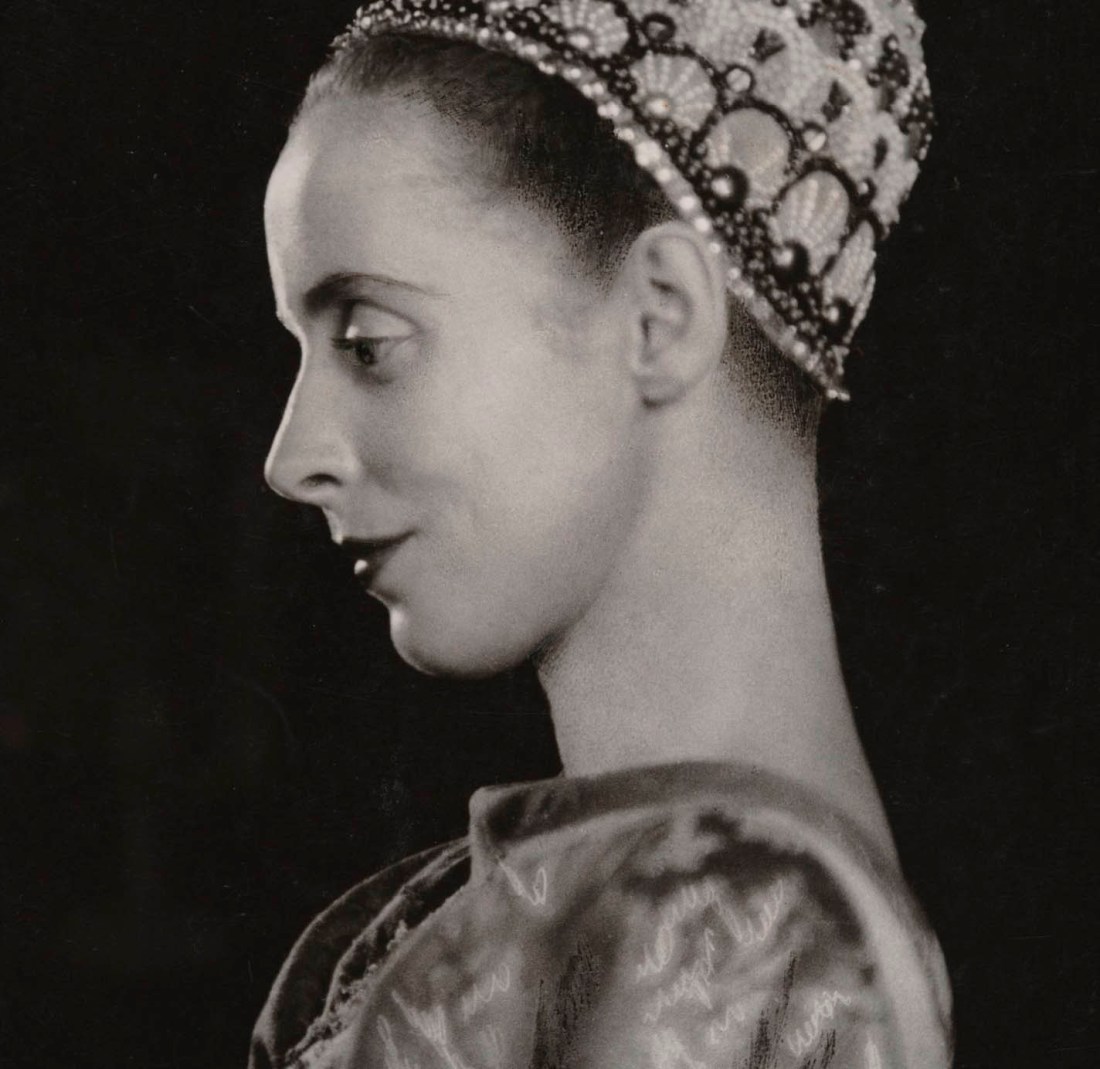
Hanna Berger by Strelow

Liselotte Strelow :: Porträt einer Frau; im Profil; Tänzerin Hanna Berger; um 1943. | src Deutsche Fotothek & LVR LandesMuseum Bonn
Liselotte Strelow :: Portrait of a woman in profile. The dancer Hanna Berger; ca. 1943. | src Deutsche Fotothek & LVR-LandesMuseum Bonn
Liselotte Strelow :: Porträt einer Frau; im Profil; Tänzerin Hanna Berger; um 1943. | src Deutsche Fotothek & LVR LandesMuseum Bonn
Liselotte Strelow :: Porträt einer Frau; im Profil; Tänzerin Hanna Berger; um 1943. | src Deutsche Fotothek & LVR-LandesMuseum Bonn

Nora Gregor as Thaisa by Setzer

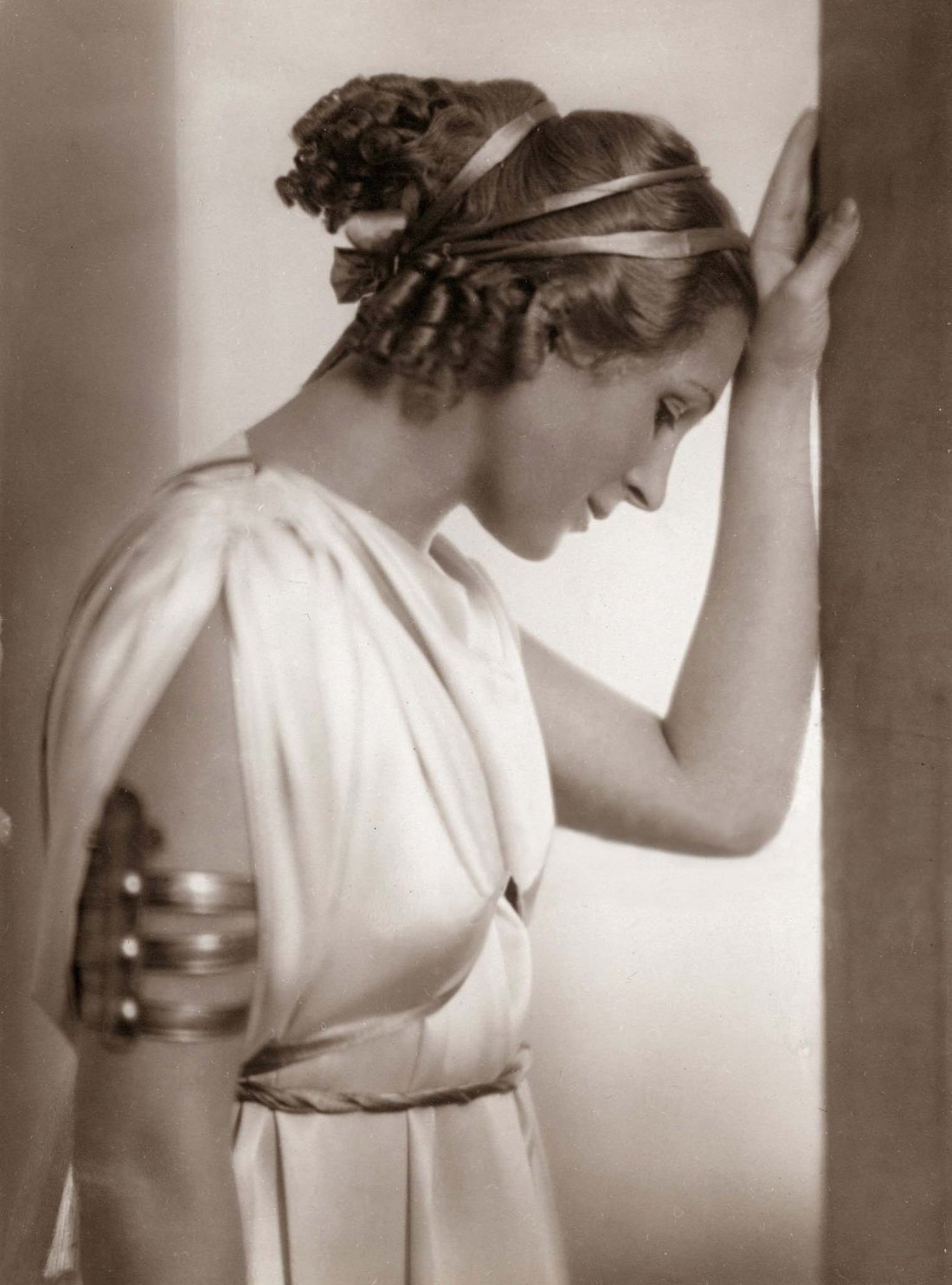
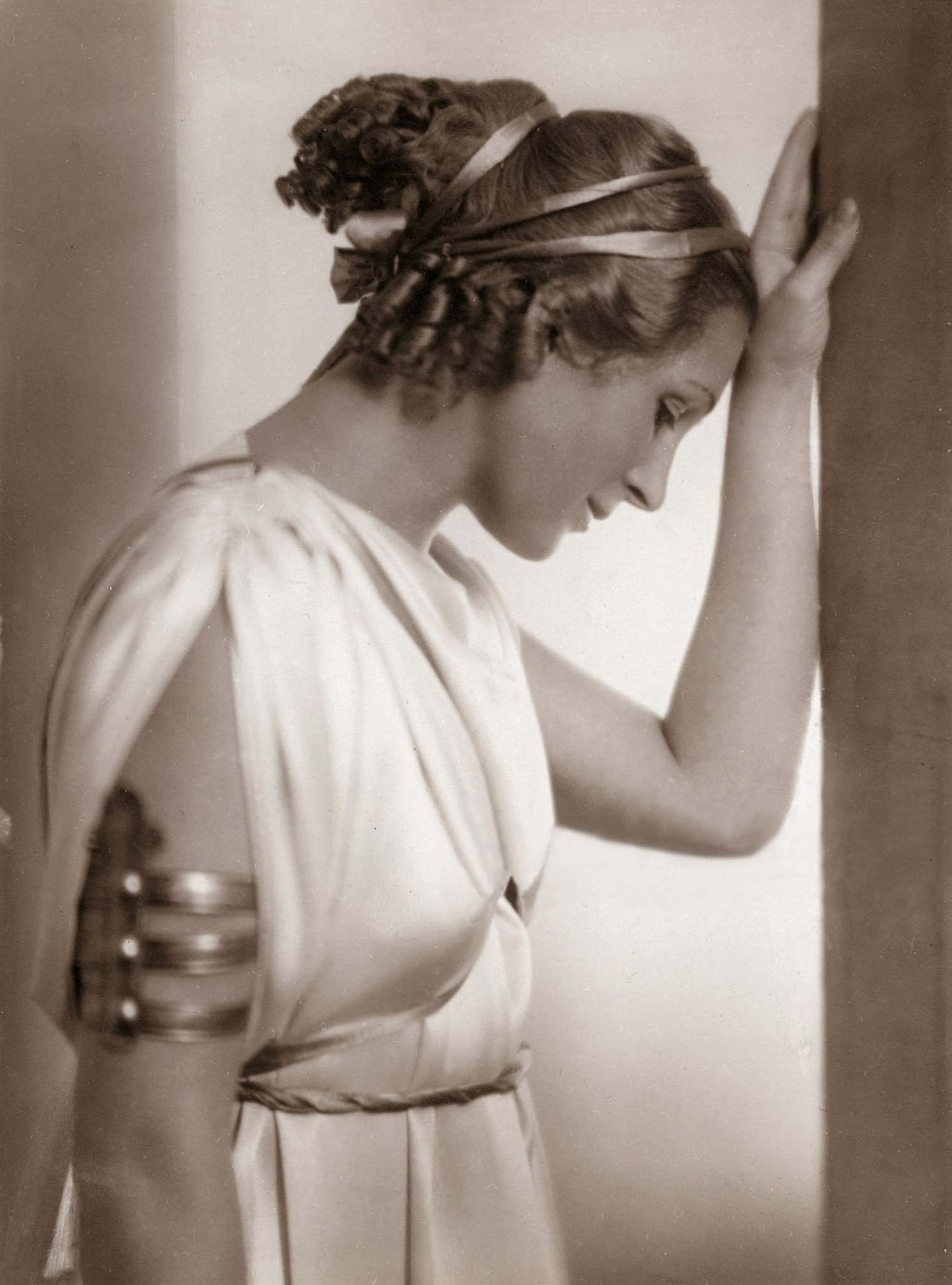
Franz Xaver Setzer :: Austrian actress Nora Gregor as Thaisa in 'Pericles, Prince of Tyre' by William Shakespeare. Burgtheater, Vienna. First night 16th October 1937. | src Getty Images
Franz Xaver Setzer :: Austrian actress Nora Gregor as Thaisa in 'Pericles, Prince of Tyre' by William Shakespeare. Burgtheater, Vienna. First night 16th October 1937.  | src Getty Images
Franz Xaver Setzer :: Austrian actress Nora Gregor as Thaisa in ‘Pericles, Prince of Tyre’ by William Shakespeare. Burgtheater, Vienna. First night 16th October 1937. | src Getty Images

A Lily and a Butterfly, 1905-1910

Eva Watson-Schütze (1867-1935) :: Woman with Lily [Jane McCall Whitehead], 1905. Truth beauty: pictorialism and the photograph as art, 1845-1945 (George Eastman House, 2009) | src Phillips Collection

Photographic pictorialism, an international movement, a philosophy, and a style, developed toward the end of the 19th century. The introduction of the dry-plate process, in the late 1870s, and of the Kodak camera, in 1888, made taking photographs relatively easy, and photography became widely practiced. Pictorialist photographers set themselves apart from the ranks of new hobbyist photographers by demonstrating that photography was capable of far more than literal description of a subject. Through the efforts of pictorialist organizations, publications, and exhibitions, photography came to be recognized as an art form, and the idea of the print as a carefully hand-crafted, unique object equal to a painting gained acceptance.

The forerunners of pictorialism were early photographers like Henry Peach Robinson and Julia Margaret Cameron. Robinson found inspiration in genre painting; Cameron’s fuzzy portraits and allegories were inspired by literature. Like Robinson and Cameron, the pictorialists made photographs that were more like paintings and drawings than the work of commercial portraitists or hobbyists. Pictorialist images were heavily dependent on the craft of nuanced printing. Some photographers, like Frederick H. Evans, a master of the platinum print, presented their work like drawings or watercolors, decorating their mounts with ruled borders filled with watercolor wash, or printing on textured watercolor paper, like Austrian photographer Heinrich Kühn. Kühn achieved painterly effects by using an artist’s brush to manipulate watercolor pigment, instead of silver or platinum, mixed with light-sensitized gum arabic.

The idea that the primary purpose of photography was personal expression lay behind pictorialism’s “Secessionist” movement. Alfred Stieglitz’s “Photo-Secession” was the best-known secessionist group. Stieglitz and his magazine, Camera Work, with its high-quality photogravure illustrations, advocated for the acceptance of photography as a fine art.

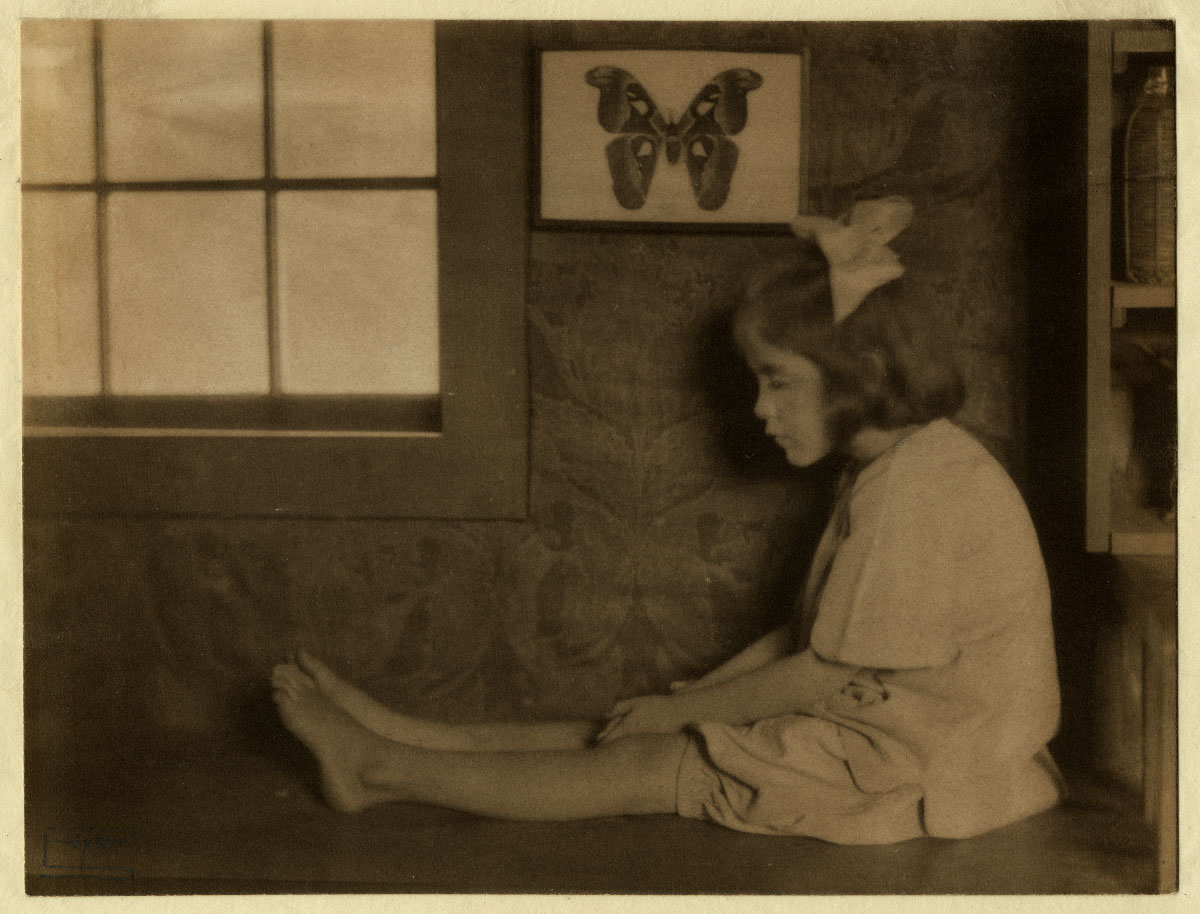
Eva Watson Schütze (American, 1867-1935) :: Young girl seated on bench, ca. 1910. | src Phillips Collection
Eva Watson Schütze (American, 1867-1935) :: Young girl seated on bench, ca. 1910. George Eastman Coll. | src Phillips Collection

Early in the 20th century, pictorialism began losing ground to modernism: in 1911, Camera Work published drawings by Rodin and Picasso, and its final issue, in 1917, featured Paul Strand’s modernist photographs. Nevertheless, pictorialism lived on. A second wave of pictorialists included Clarence H. White, whose students included such photographers as Margaret Bourke-White, Paul Outerbridge, and Dorothy Lange. White’s colleague, Paul Anderson, continued the pictorial tradition until his death in 1956. Five prints of his Vine in Sunlight, 1944, display five different printing techniques, demonstrating how each process subtly shapes the viewer’s response to the image.

Exhibition organized by George Eastman House International Museum of Photography and Film, and Vancouver Art Gallery. [Quoted from source]

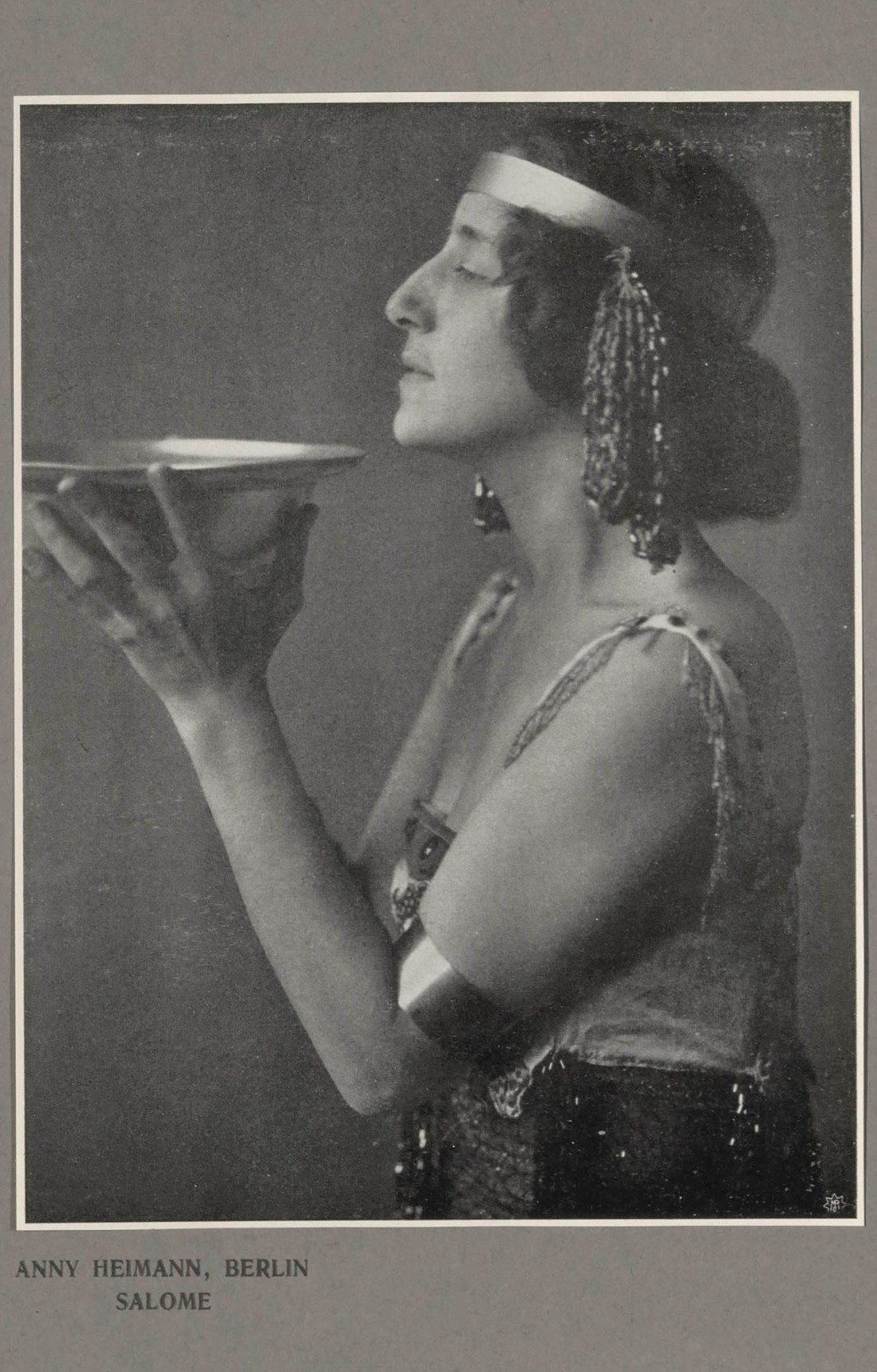
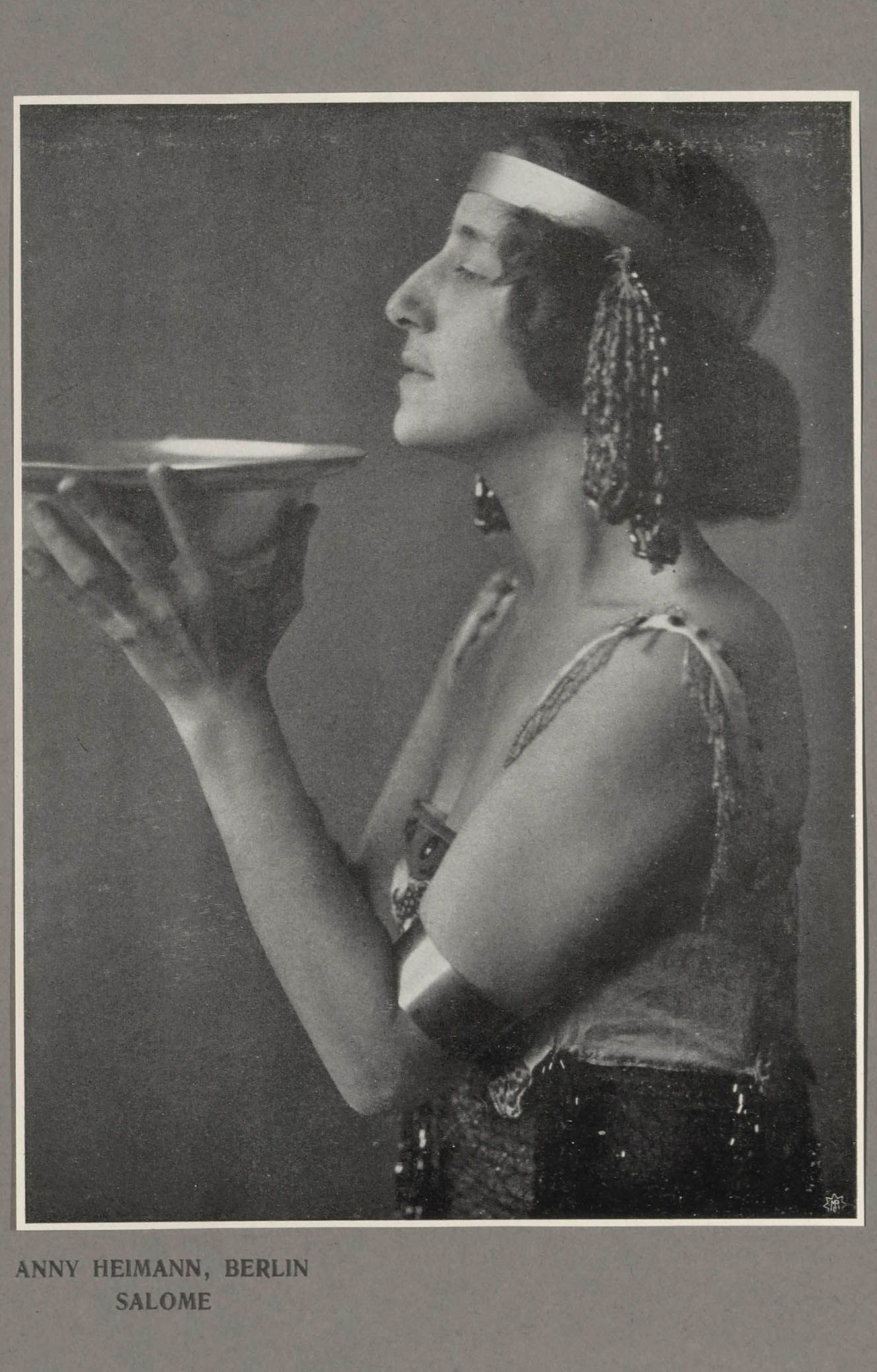
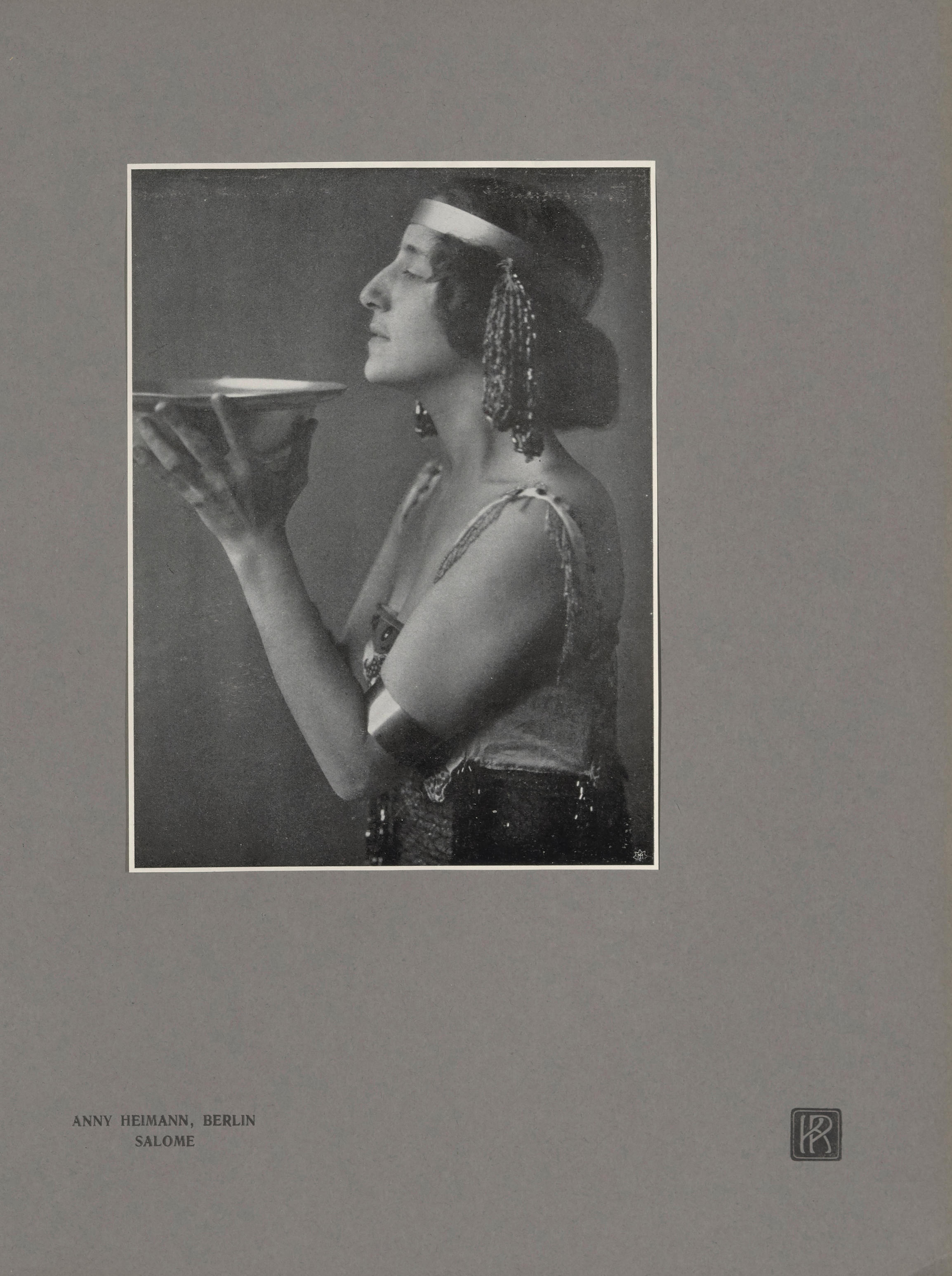
Salome by Anny Heimann

salome, anny heimann, 1900s
Anny Heimann, Berlin :: Salome. From: „Die Kunst in der Photographie", 1908
Anny Heimann, Berlin :: Salome. From: „Die Kunst in der Photographie”, 1908
Anny Heimann, Berlin :: Salome. From: „Die Kunst in der Photographie", 1908
Anny Heimann, Berlin :: Salome. From: „Die Kunst in der Photographie”, 1908

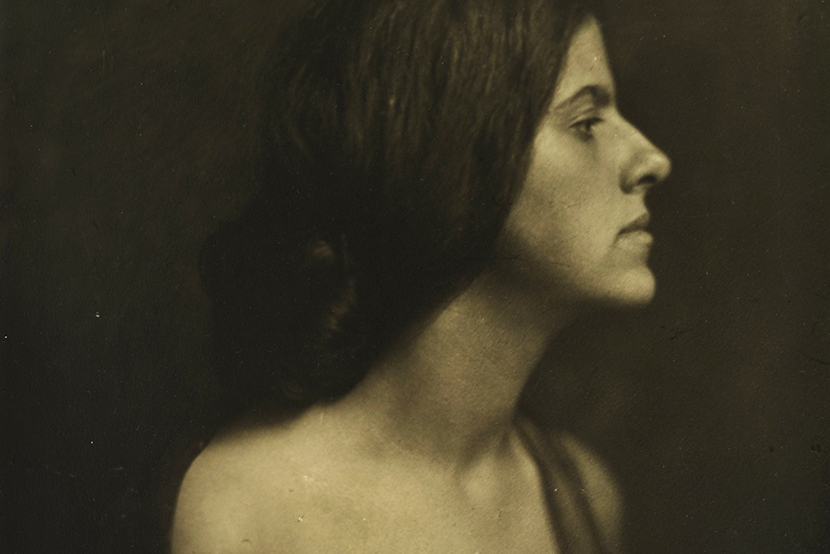
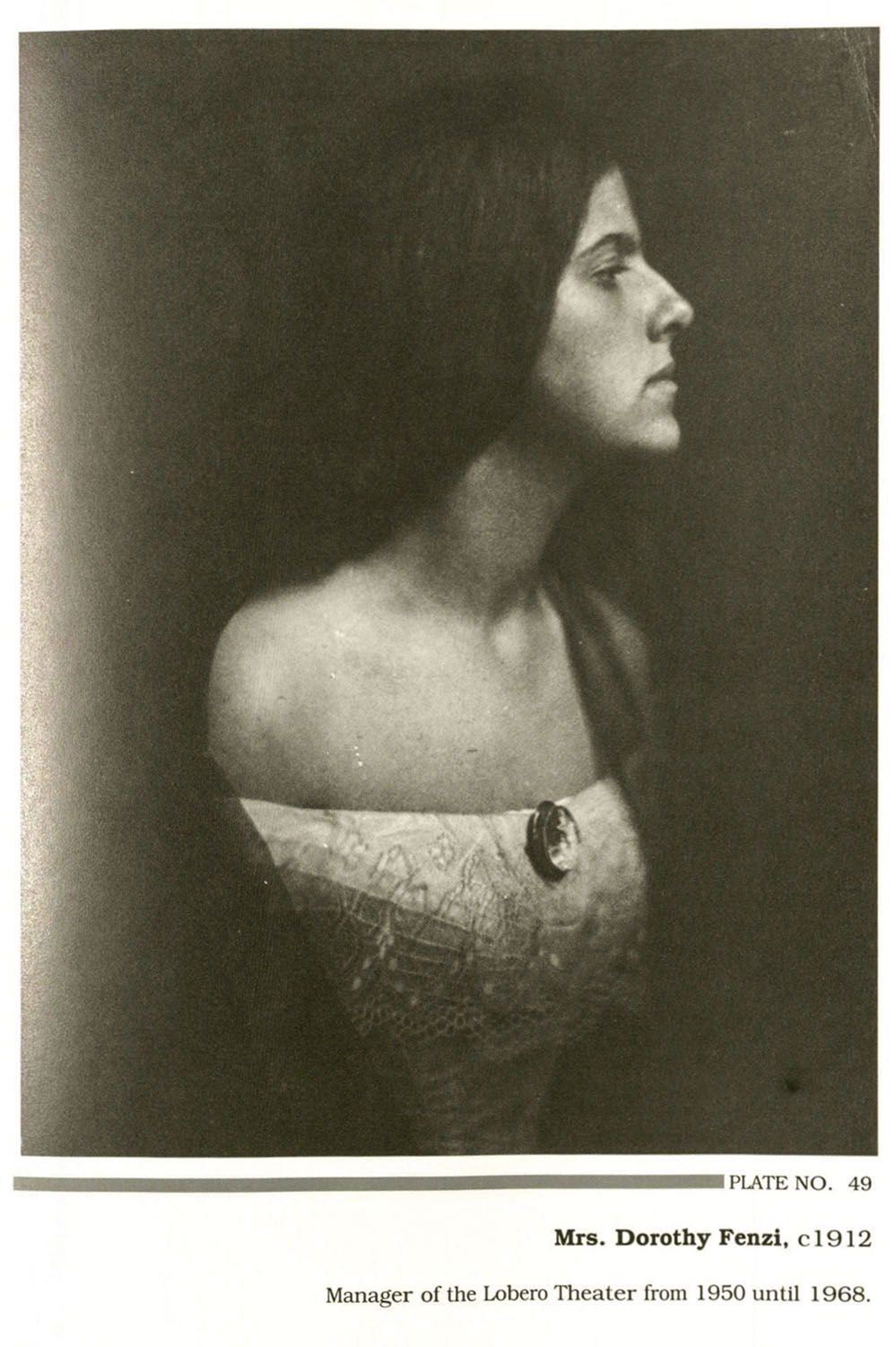
Dorothy Fenzi by the Gledhills

Carolyn & Edwin Gledhill :: Mrs. Dorothy Fenzi, ca. 1912 (detail). From: Before The Selfie: The Gledhill Portrait Collection @ Santa Barbara Museum
Mrs. Dorothy Fenzi (ca. 1912) by Carolyn & Edwin Gledhill. In: The Gledhill Portraits of Santa Barbara (1988); plate 49 @ internet archive

Draped woman by Van Buren

Amelia C. Van Buren :: [Profile portrait of woman draped with a veil]; 1917 (?). Platinum print mounted on black mat. Color film copy transparency of the original. LC-USZC4-9380 | src L. of Congress
Amelia C. Van Buren :: [Profile portrait of woman draped with a veil]; 1917 (?). Platinum print on Rembrandt mount. Color film copy slide of the original. LC-USZC4-9108 | src L. of Congress
Amelia C. Van Buren :: [Profile portrait of woman draped with a veil]; 1917 (?). Platinum print mounted on black mat. Color film copy slide of the original. LC-USZC2-5993 | src L. of Congress

The Library of Congress owns two impressions of this photograph: 1-a (top and bottom) and 1-b (middle). Forms part of: Artistic photographs collected by Frances Benjamin Johnston in the Frances Benjamin Johnston Collection. Gift of Frances Benjamin Johnston; 1948.

Published in: Ambassadors of progress / edited by Bronwyn A.E. Griffith … France : Musée d’Art Américain Giverny … 2001, p. 177.

Exhibited: Ambassadors of progress, 2001-2003

all information is from the Library of Congress

Lil Dagover By A. Binder (1929)

Alexander Binder :: Das edle Profil. Die Filmschauspielerin Lil Dagover. Uhu Magazin, Januar 1929, Band 5, Heft 4.
Alexander Binder :: Das edle Profil. Die Filmschauspielerin Lil Dagover. Uhu Magazin, Januar 1929, Band 5, Heft 4. (full page)