images that haunt us
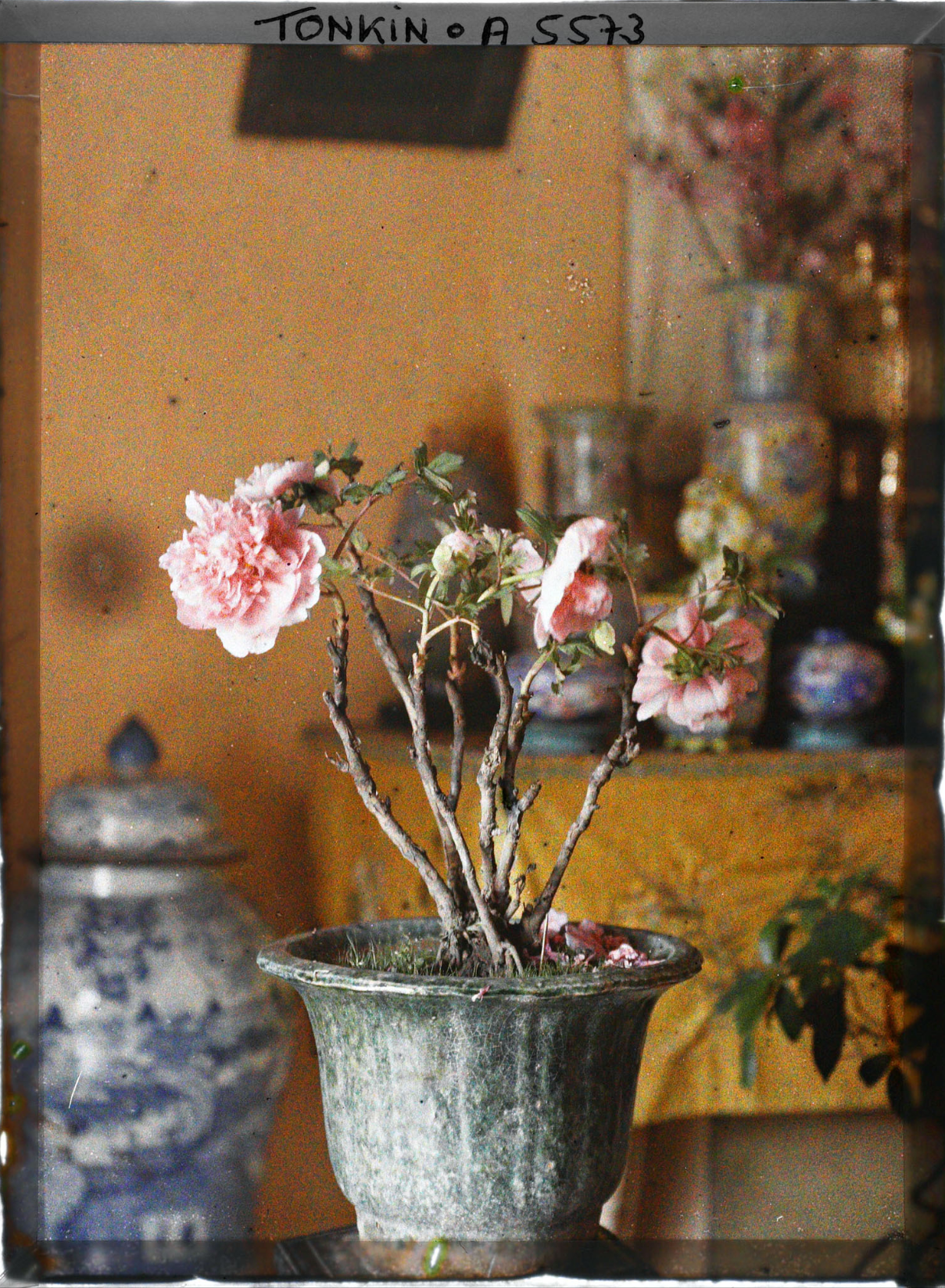
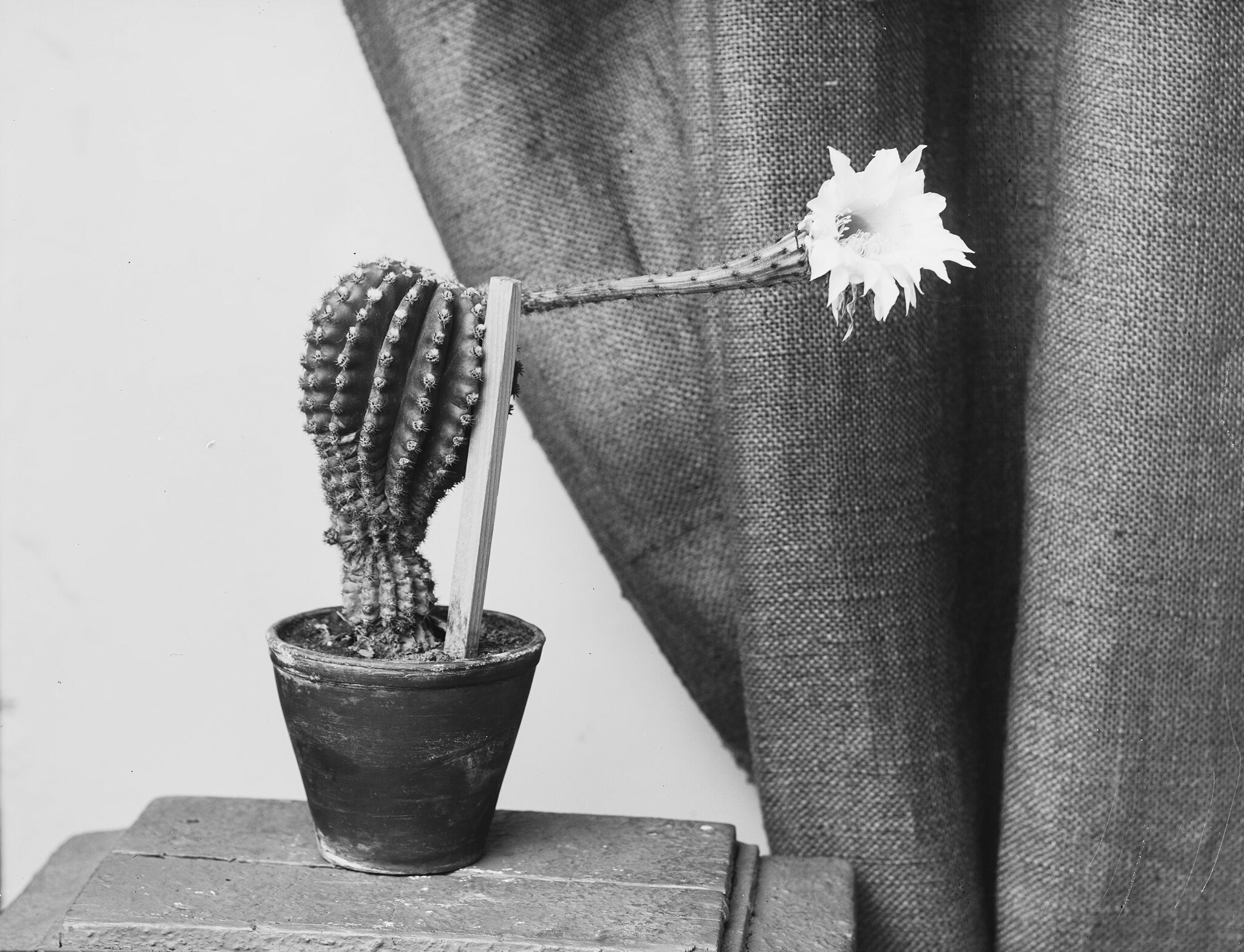
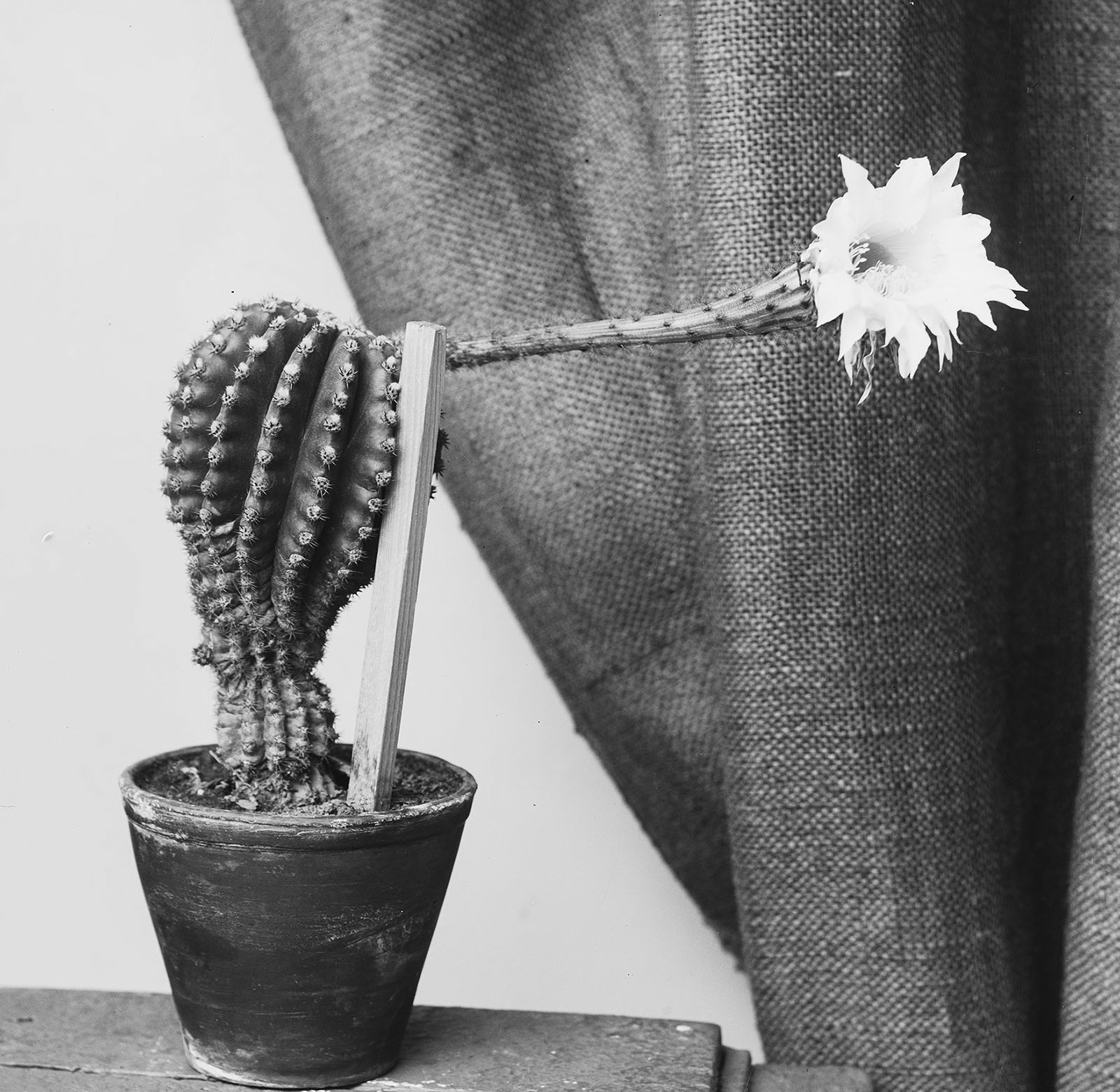
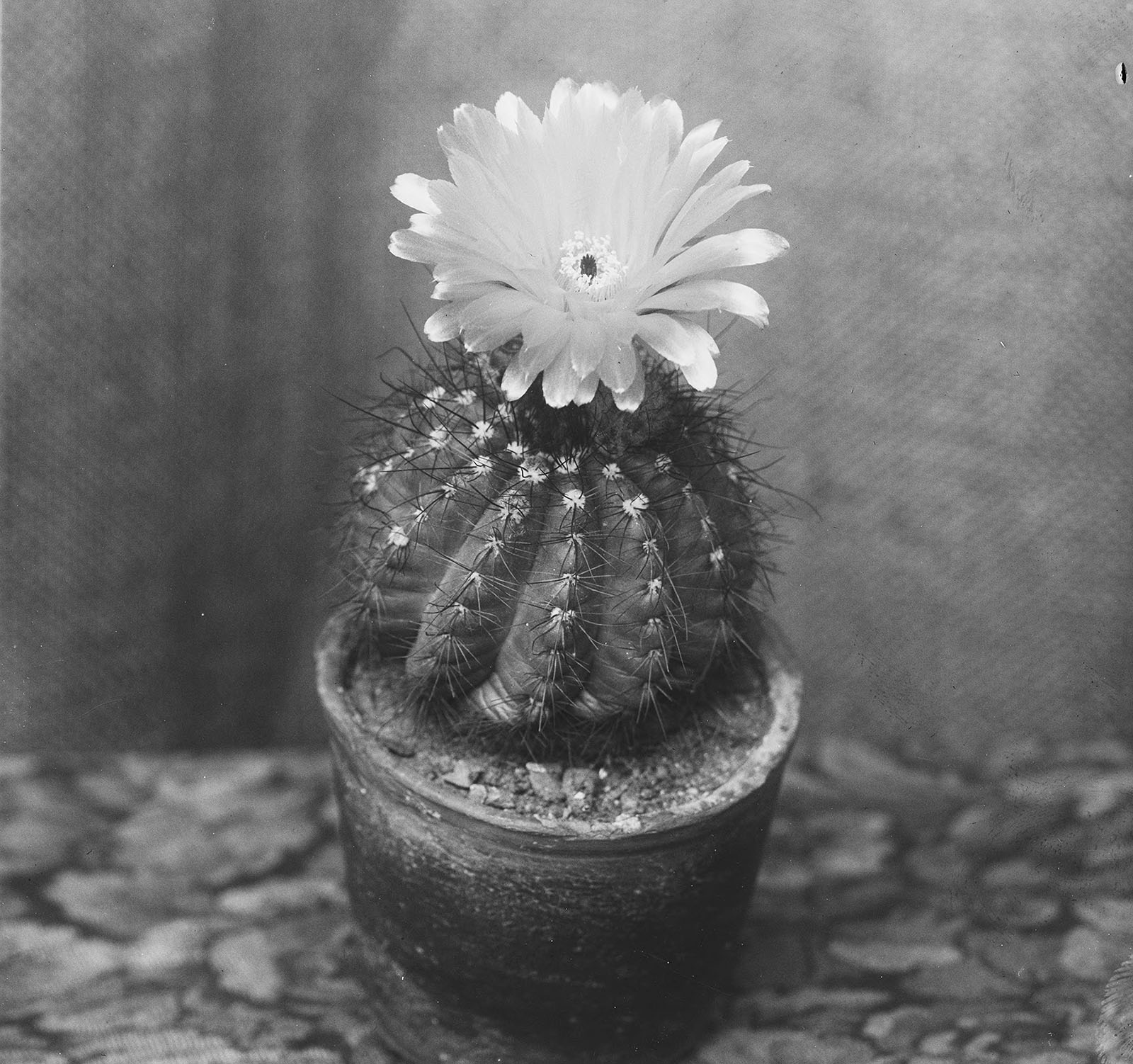
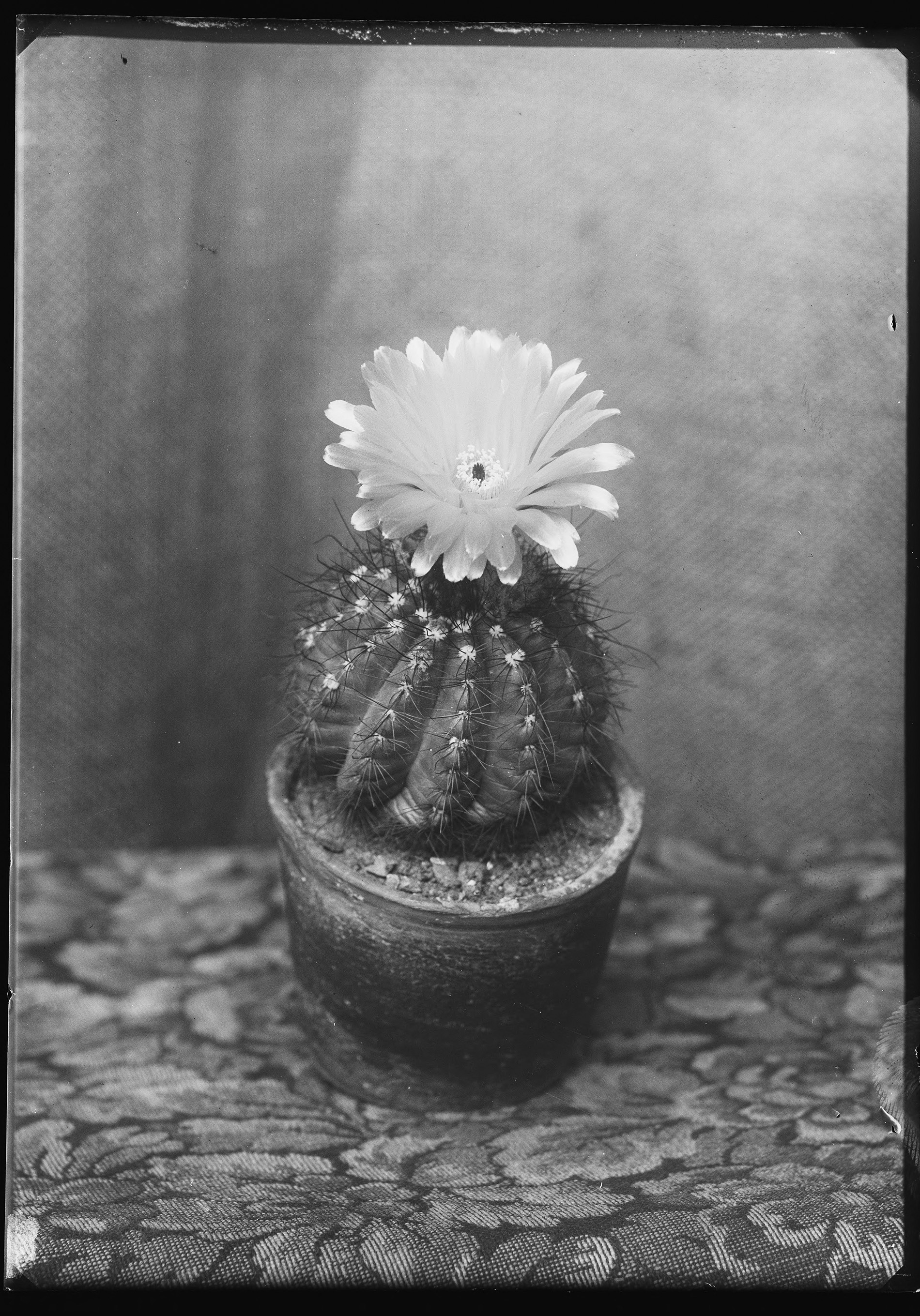
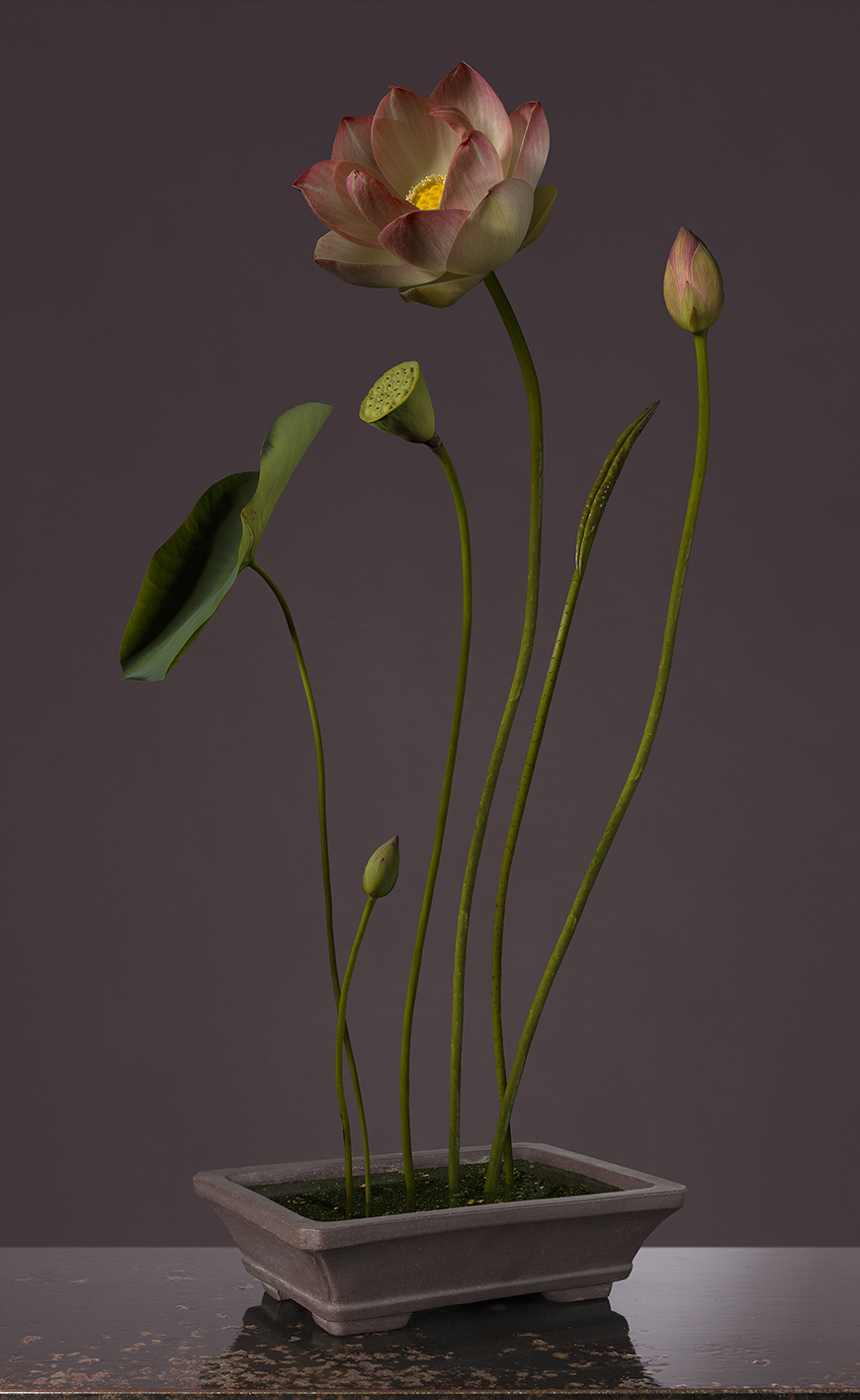
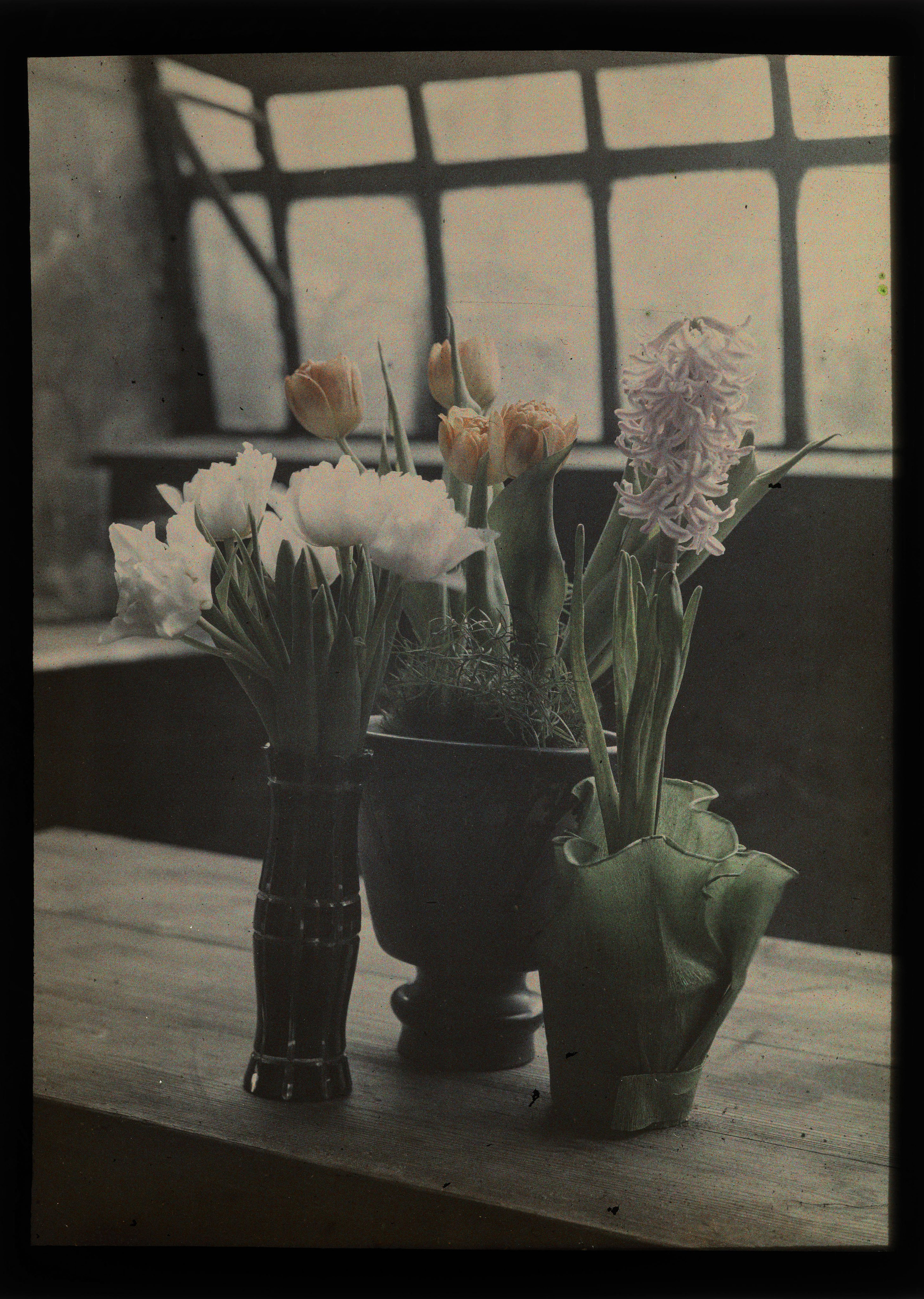
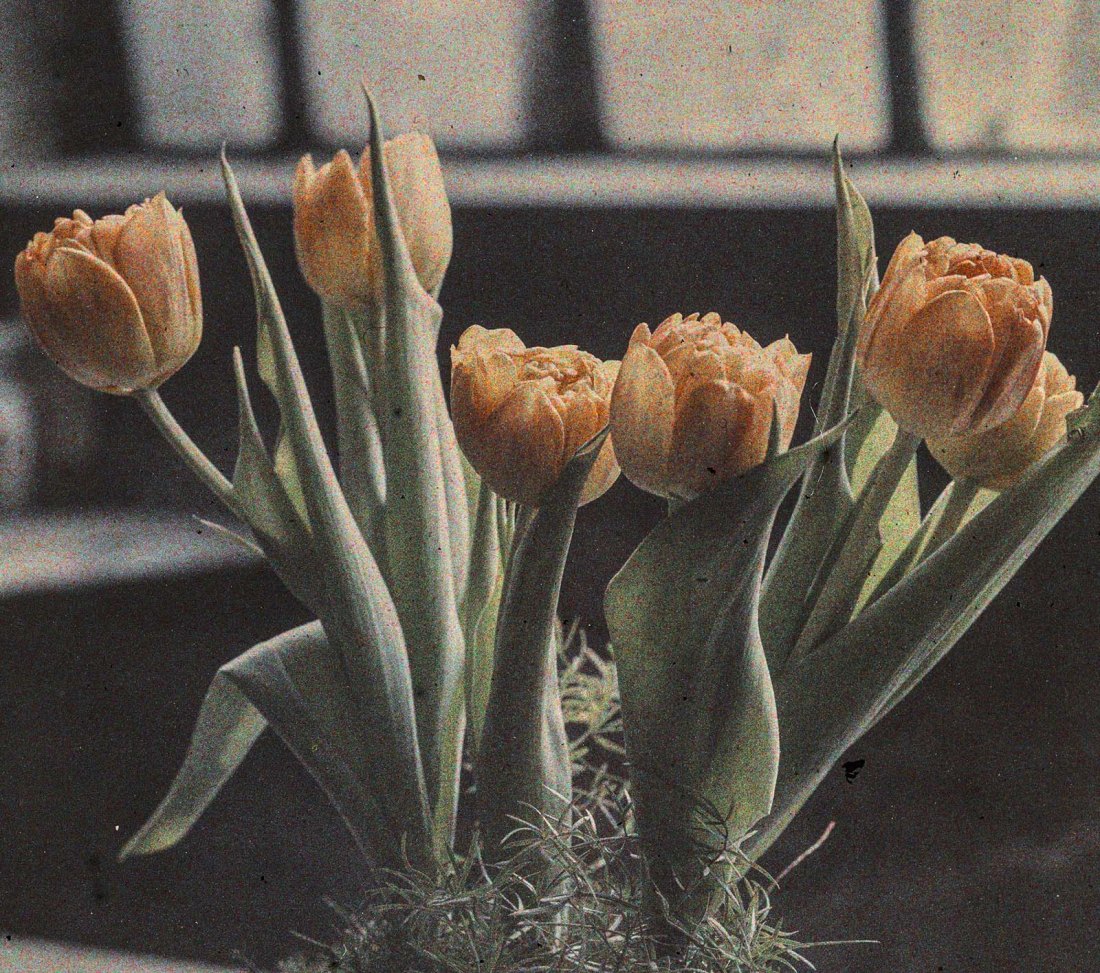
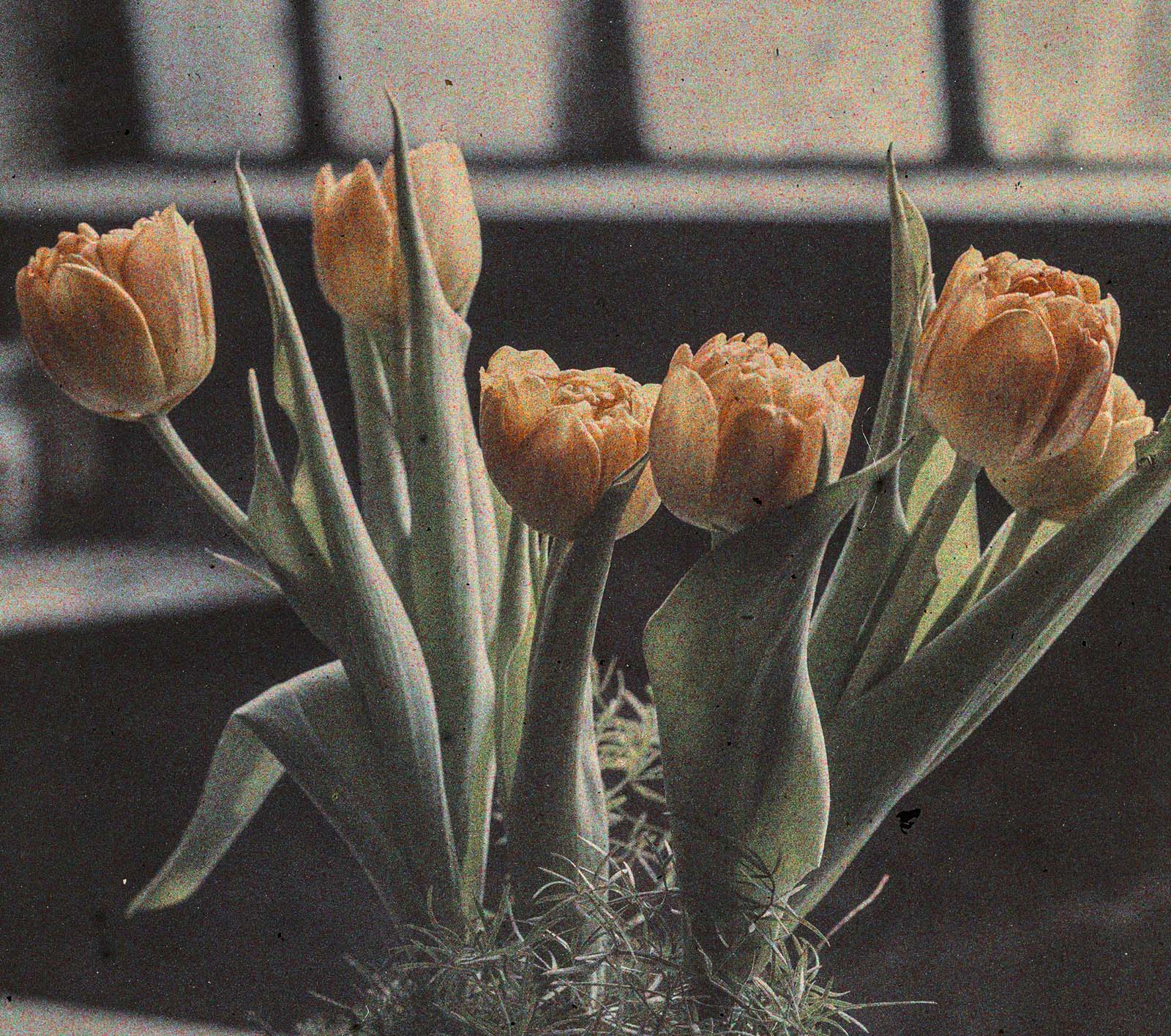
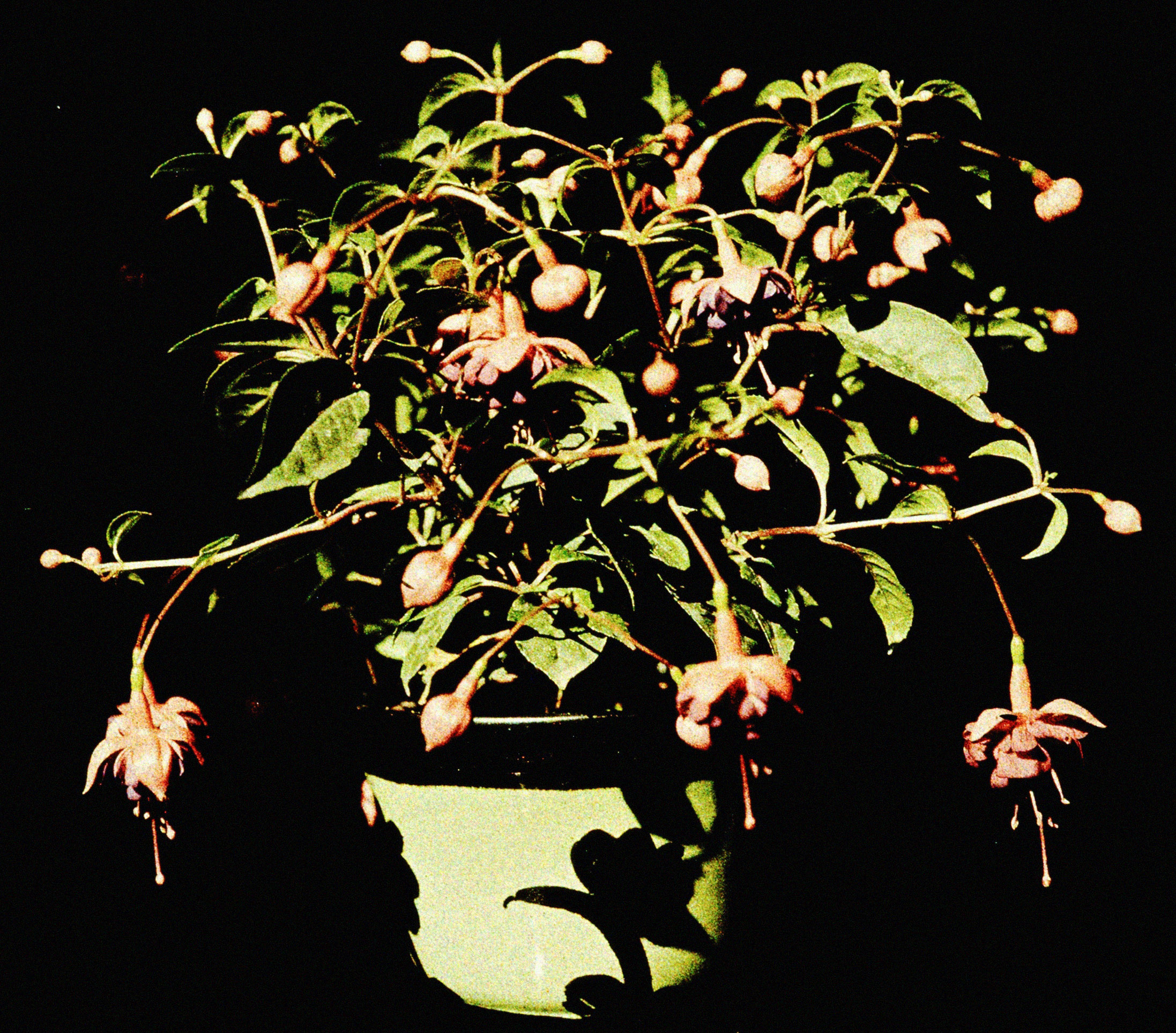
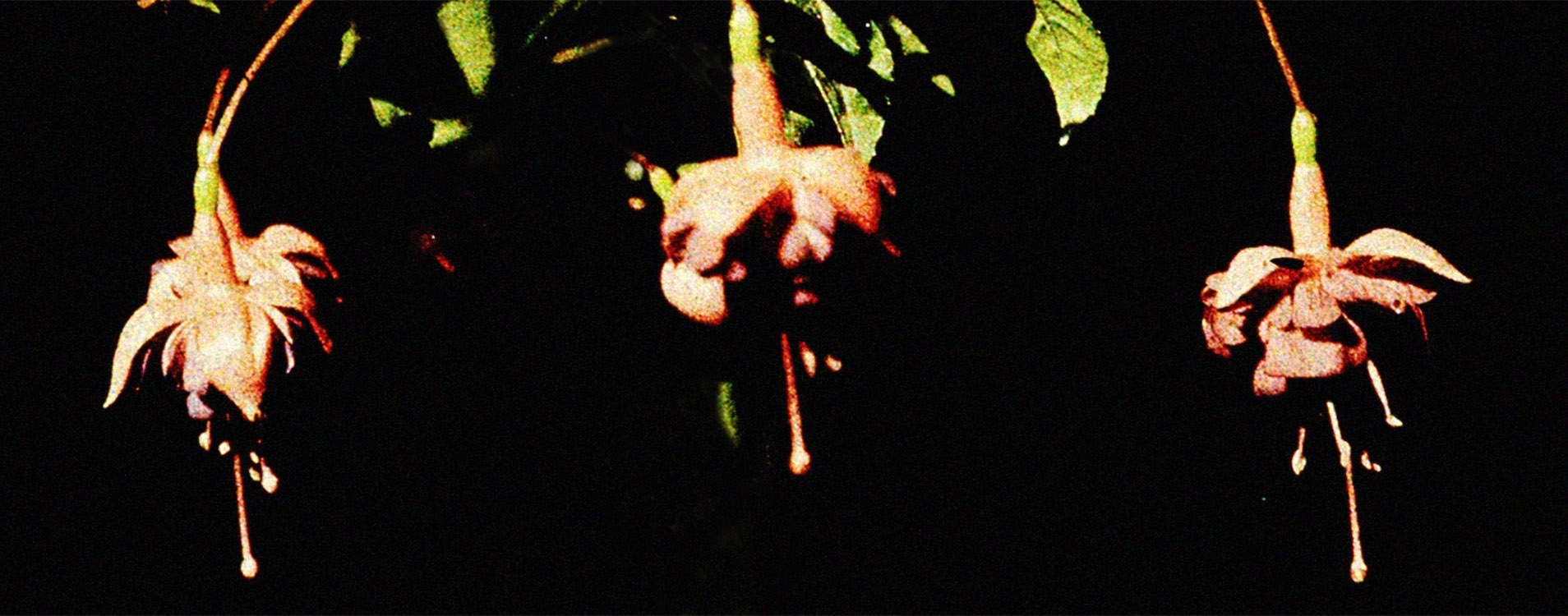
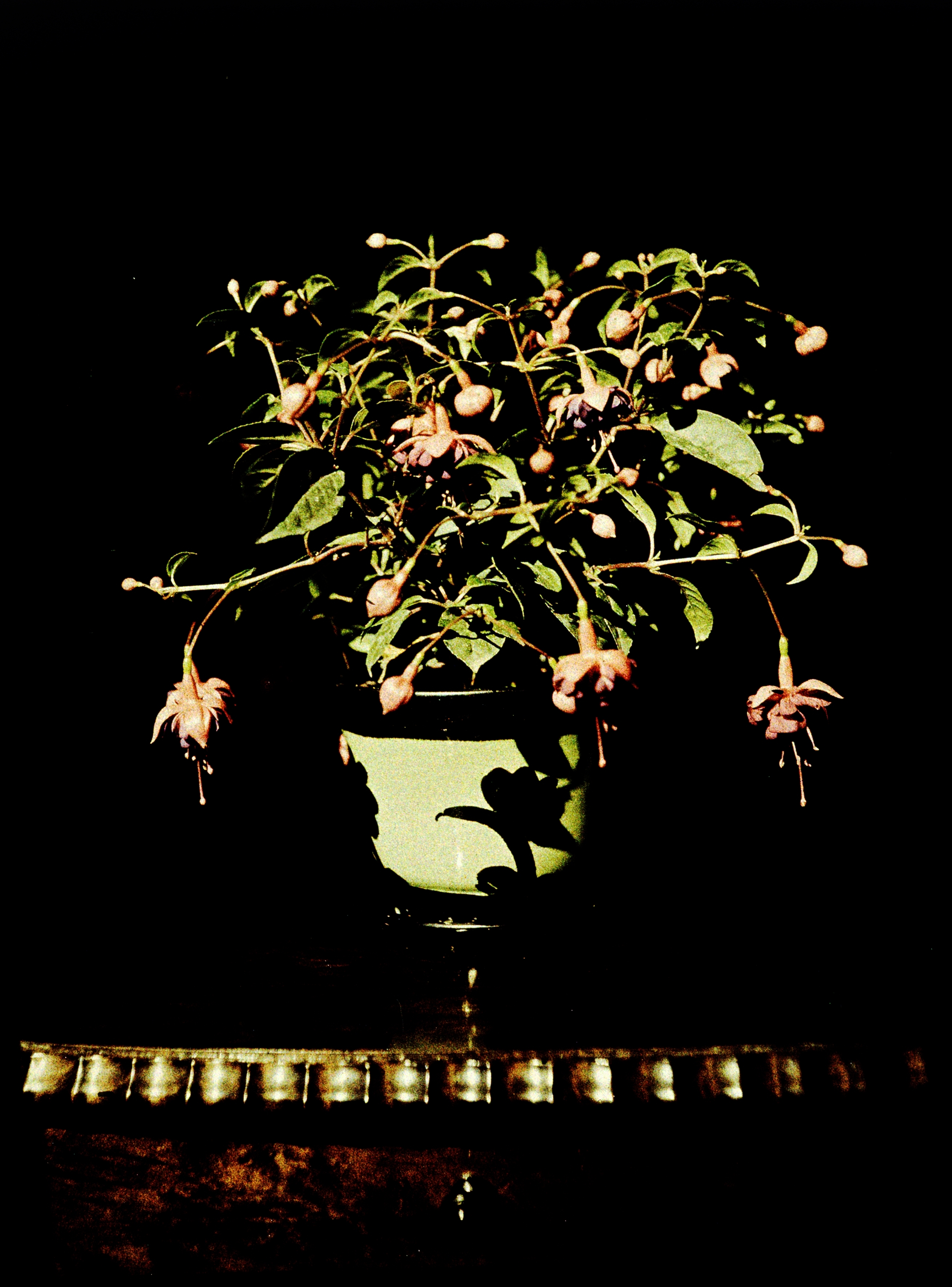
Three views of a Chinese peony blooming at the foot of the altar of the ancestors at the time of the Têt festival, Hà-dông, Tonkin, Indochina, February 1915. Mission : Léon Busy en Indochine
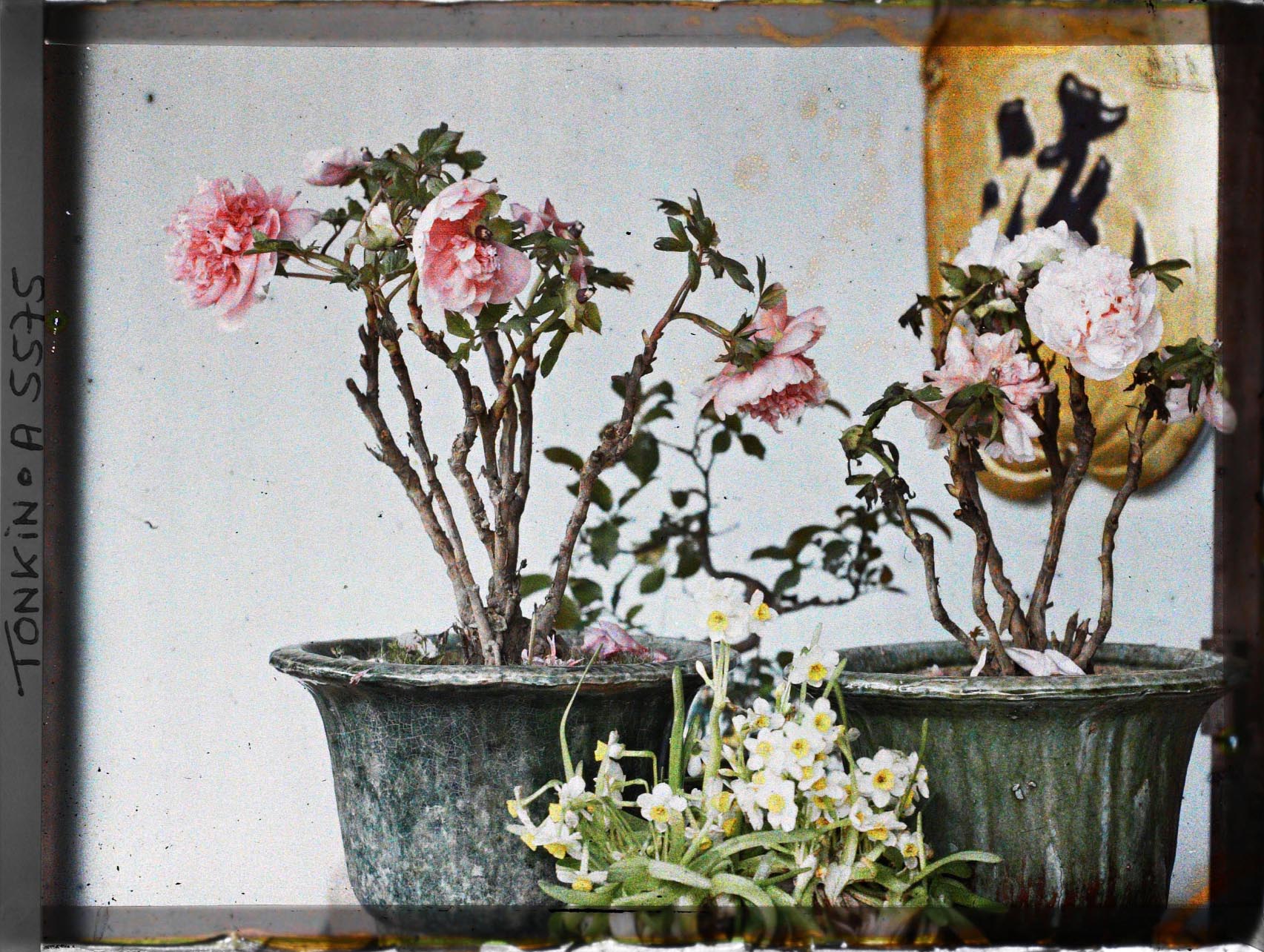

all images from Musée départamental Albert Kahn
![Jaromír Funke ~ Untitled (Hydrangea in blossom in pot), ca. 1920-24 [HGG2-summer 2019]](https://live.staticflickr.com/65535/52008384576_3b52162bf7_o.jpg)
A very rare photograph in a rather pictorialist style among the modern, abstract production by Funke.
![Jaromír Funke ~ Untitled (Hydrangea in blossom in pot), ca. 1920-24 [detail]](https://unregardoblique.com/wp-content/uploads/2023/06/jaromir-funke-untitled-ca.-1920-1924-hgg2summer19-det.jpg)
Jaromír Funke (1896–1945) studied medicine, law and philosophy at Charles University in Prague but did not graduate. Instead he concentrated on becoming a professional freelance photographer. By 1922 he was a leader of the young opposition movement in photography and a founder of the Czech Society of Photography (1924) whose mission was to create photography that would fulfil new social functions. In his work Funke managed to combine some of the leading trends in modernist European photography, uniting constructivism and functionalism with surrealism and social commentary, with traditional Czech aesthetics. His interest in modernist ideas led him to make clearly focused studies of simple objects. As the decade progressed, he turned to the production of carefully arranged still lifes emphasizing abstract form and the play of light and shadow. During this time he also produced several important series of photographs, including two inspired by the images of Eugène Atget: Reflexy (Reflections, 1929) and as trvá (Time Persists, 1930-34).
Funke was also influential as a teacher, first at the School of Arts and Crafts, Bratislava (1931-34/35), which followed a Bauhaus-inspired curriculum, and then at the State School of Graphic Arts, Prague (1935-44). While in Bratislava, he became interested in social documentary photography and joined the leftist group Sociofoto, which was concerned with recording the living conditions of the poor. Throughout his career Funke published articles and critical reviews dealing with photography. From 1939-41 he worked with Josef Ehm to edit the magazine Fotografik obzor (Photographic Horizon).
quoted from HGG ~ Howard Greenberg Gallery / Jaromir Funke
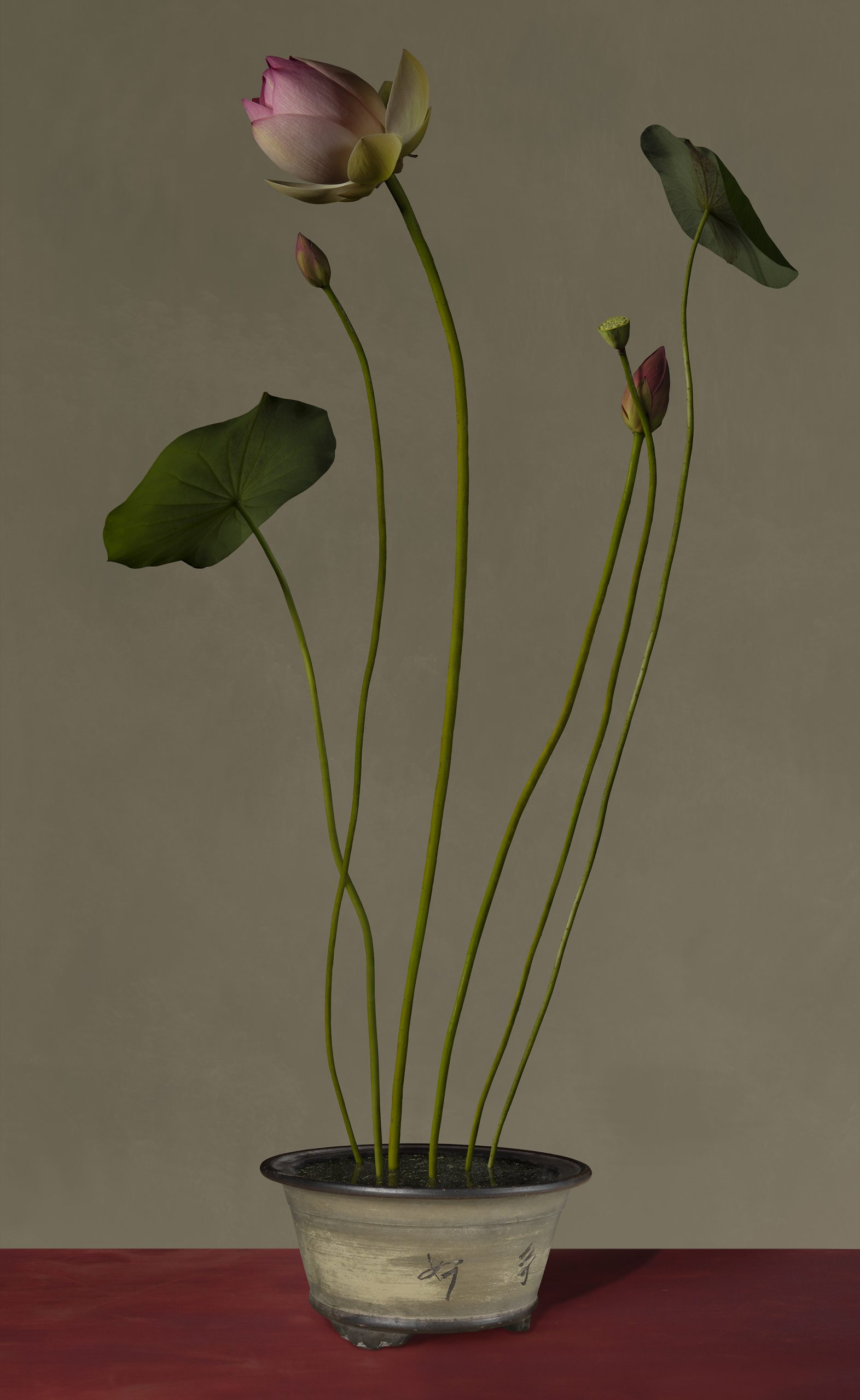
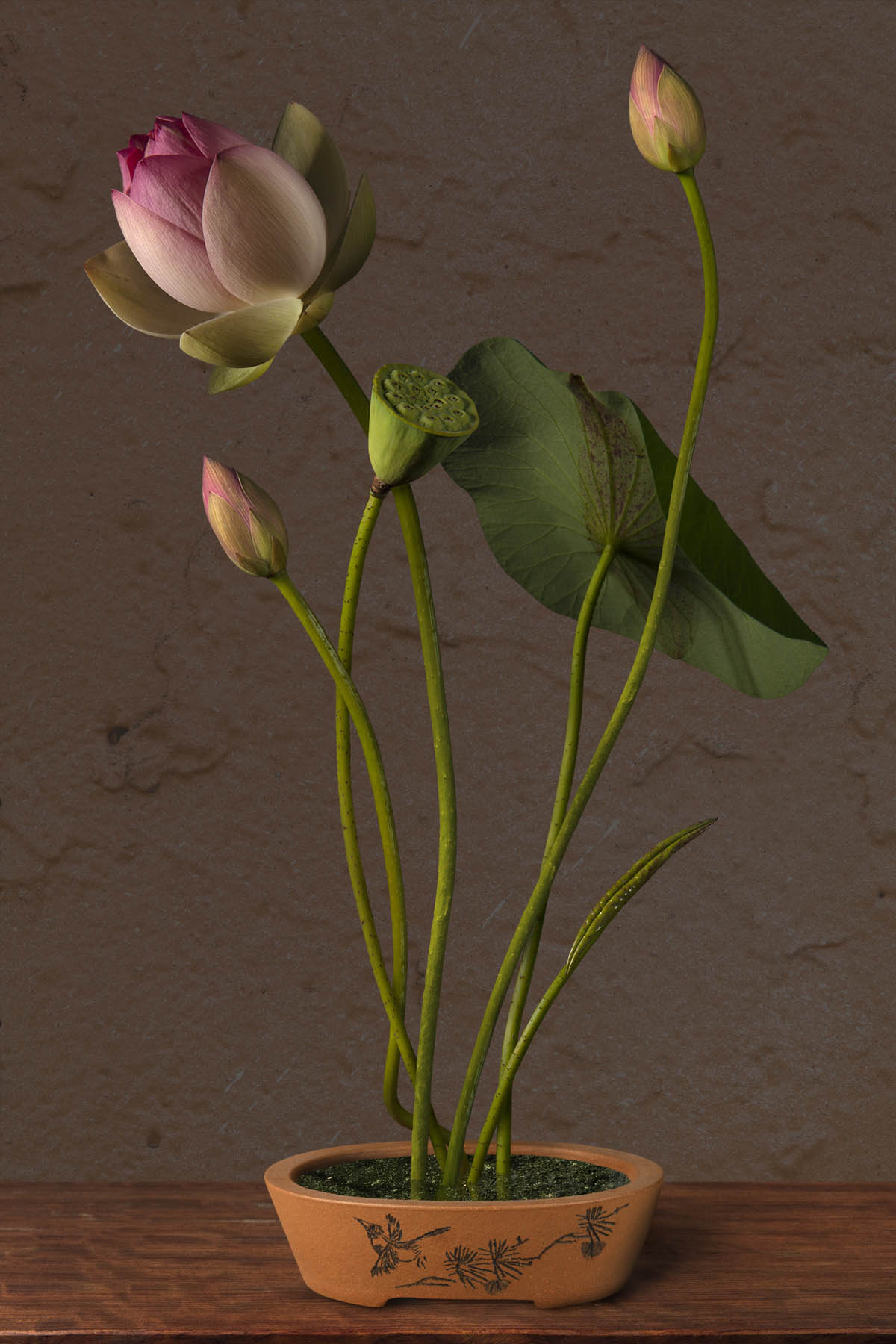
A photographical interpretation of the magical, almost abstract flower paintings by the great Chinese painter Sanyu (1901-1966). The Homage à Sanyu series is inspired by the paintings of the Chinese – French artist Sanyu (or Chang Yu), who lived and worked in Paris in the early 20th century. In works from this series, Meeuws makes a photographic translation of Sanyu’s painting into a modern medium. He wants to translate Sanyu’s paintings photographically without destroying the atmosphere of those paintings.


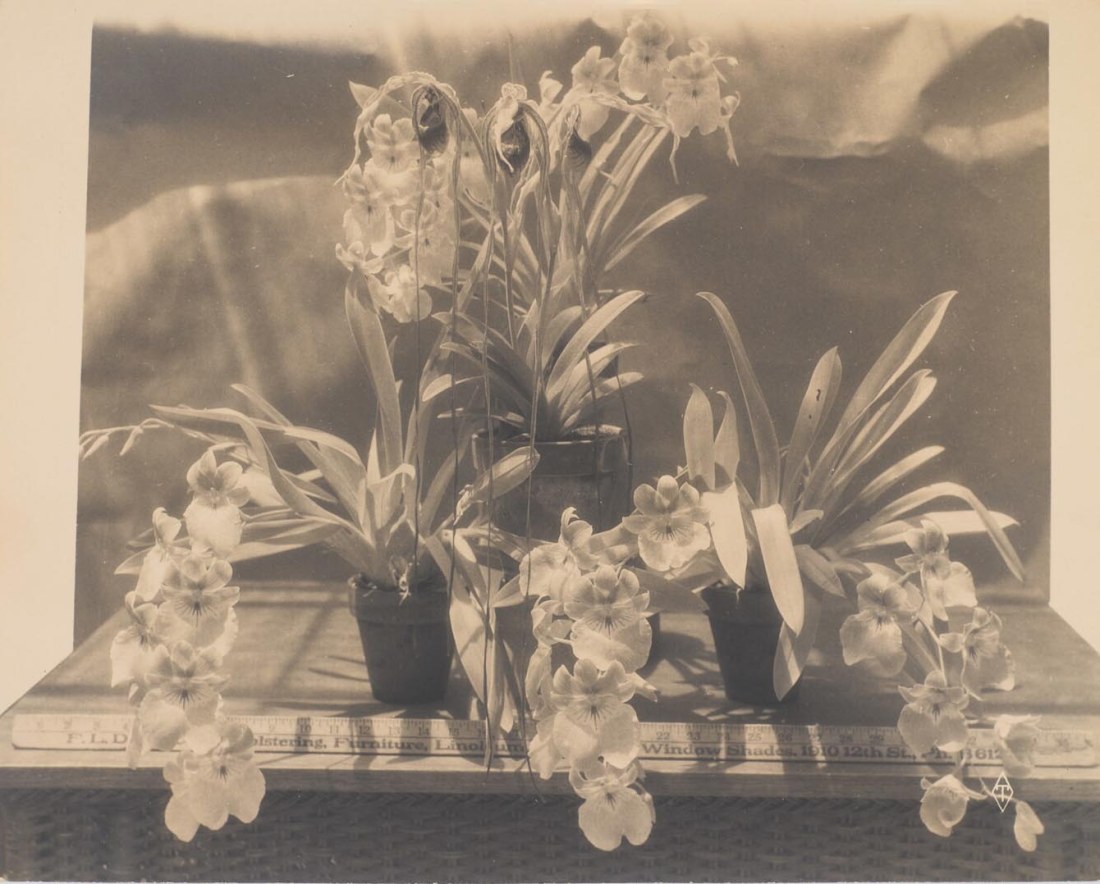
![Ed Tangen (1873-1951); [Orchids in bloom]; ca. 1920's; Gelatin silver print; Amon Carter Museum of American Art, Fort Worth, Texas](https://unregardoblique.com/wp-content/uploads/2022/08/eivind-j.-tangen-1873-1951-orchids-in-bloom-1920s-amon-carter.jpg)
![Eva Watson-Schütze (1867-1935) :: Woman with Lily [Jane McCall Whitehead], 1905. Truth beauty: pictorialism and the photograph as art, 1845-1945 (George Eastman House, 2009) | src Phillips Collection](https://unregardoblique.com/wp-content/uploads/2022/08/eva-watson-schutze-american-1867-1935-woman-with-lily-1905-artb.jpg)
Photographic pictorialism, an international movement, a philosophy, and a style, developed toward the end of the 19th century. The introduction of the dry-plate process, in the late 1870s, and of the Kodak camera, in 1888, made taking photographs relatively easy, and photography became widely practiced. Pictorialist photographers set themselves apart from the ranks of new hobbyist photographers by demonstrating that photography was capable of far more than literal description of a subject. Through the efforts of pictorialist organizations, publications, and exhibitions, photography came to be recognized as an art form, and the idea of the print as a carefully hand-crafted, unique object equal to a painting gained acceptance.
The forerunners of pictorialism were early photographers like Henry Peach Robinson and Julia Margaret Cameron. Robinson found inspiration in genre painting; Cameron’s fuzzy portraits and allegories were inspired by literature. Like Robinson and Cameron, the pictorialists made photographs that were more like paintings and drawings than the work of commercial portraitists or hobbyists. Pictorialist images were heavily dependent on the craft of nuanced printing. Some photographers, like Frederick H. Evans, a master of the platinum print, presented their work like drawings or watercolors, decorating their mounts with ruled borders filled with watercolor wash, or printing on textured watercolor paper, like Austrian photographer Heinrich Kühn. Kühn achieved painterly effects by using an artist’s brush to manipulate watercolor pigment, instead of silver or platinum, mixed with light-sensitized gum arabic.
The idea that the primary purpose of photography was personal expression lay behind pictorialism’s “Secessionist” movement. Alfred Stieglitz’s “Photo-Secession” was the best-known secessionist group. Stieglitz and his magazine, Camera Work, with its high-quality photogravure illustrations, advocated for the acceptance of photography as a fine art.
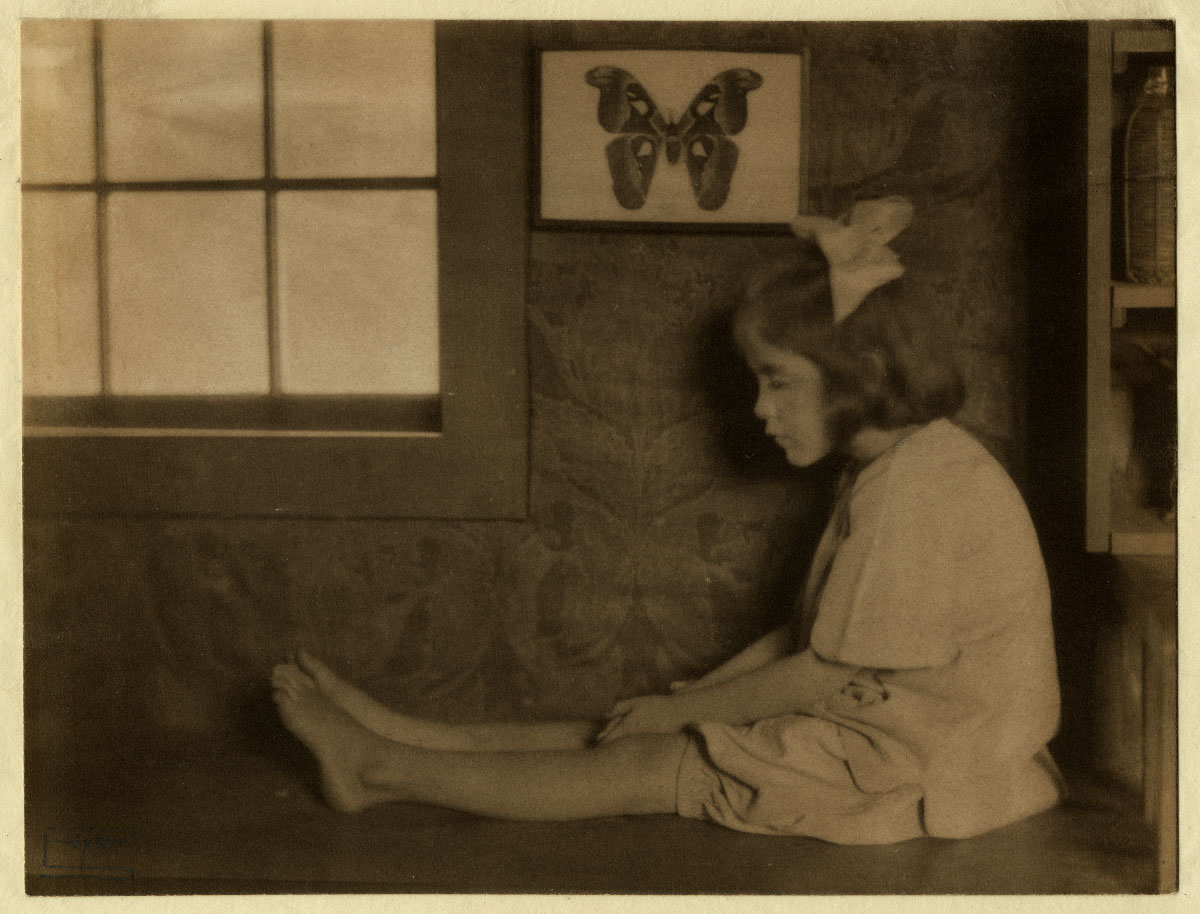
Early in the 20th century, pictorialism began losing ground to modernism: in 1911, Camera Work published drawings by Rodin and Picasso, and its final issue, in 1917, featured Paul Strand’s modernist photographs. Nevertheless, pictorialism lived on. A second wave of pictorialists included Clarence H. White, whose students included such photographers as Margaret Bourke-White, Paul Outerbridge, and Dorothy Lange. White’s colleague, Paul Anderson, continued the pictorial tradition until his death in 1956. Five prints of his Vine in Sunlight, 1944, display five different printing techniques, demonstrating how each process subtly shapes the viewer’s response to the image.
Exhibition organized by George Eastman House International Museum of Photography and Film, and Vancouver Art Gallery. [Quoted from source]
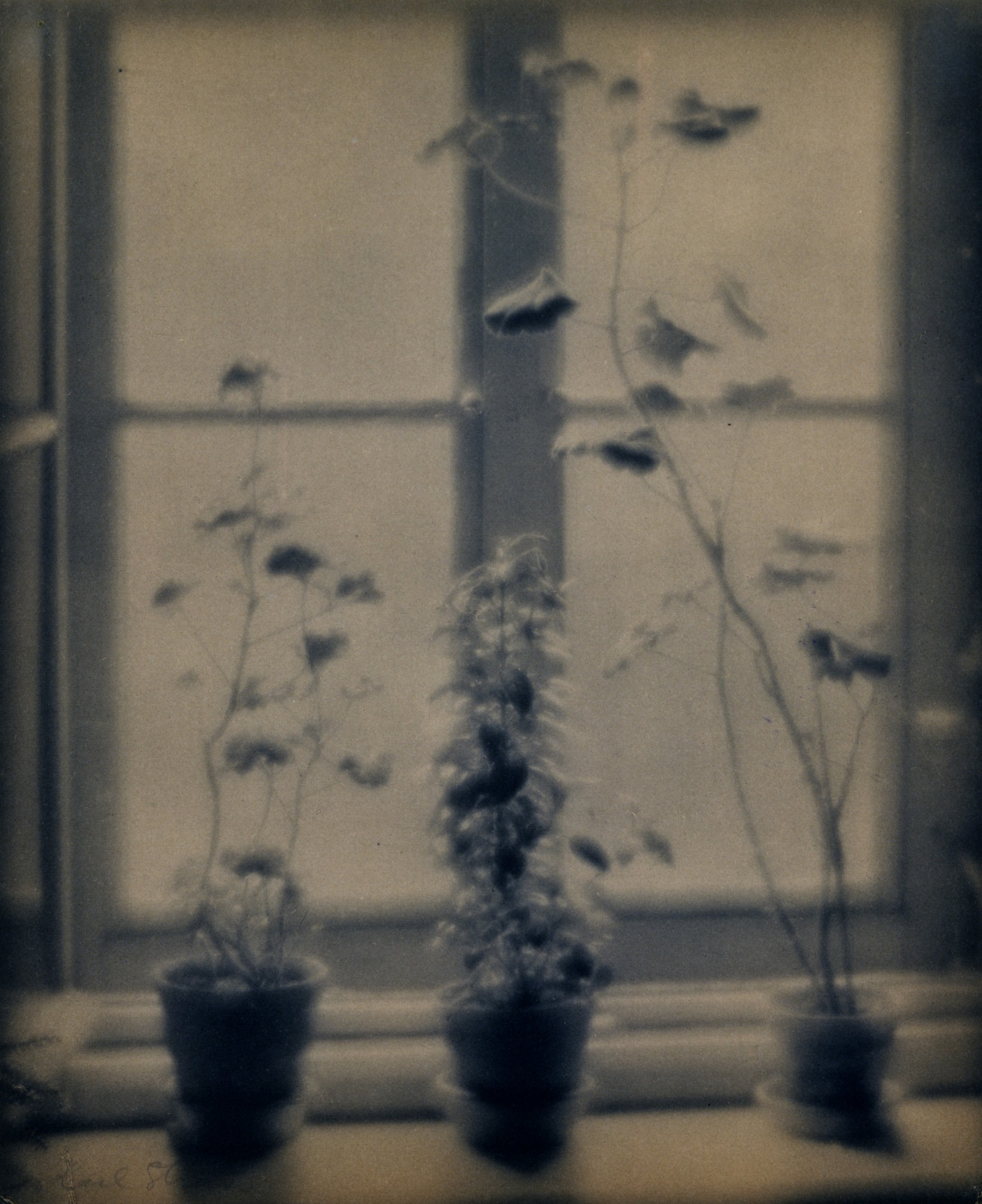
![Karl Struss (1886-1981) :: Three Potted Plants in Window [Chrysanthemums], Willard White NYC, 1911. Platinum print. | src Amon Carter Museum of American Art](https://unregardoblique.com/wp-content/uploads/2022/05/karl-struss-1886-1981-willard-white-n.y.c.-3-potted-plants-in-window-1911-amon-carter-museum.jpg)
![Johan Hagemeyer :: Rex begonia in window of Carmel house. [photographic print] | src OAC · Calisphere](https://live.staticflickr.com/65535/52078632546_0a97511ab0_h.jpg)
![Johan Hagemeyer (1884-1962) :: [Plant.] [negative], n.d. | src OAC · Calisphere](https://unregardoblique.com/wp-content/uploads/2022/05/hagemeyer-plant.-negative-src-oac.jpg)
![Johan Hagemeyer :: [Plants. Unidentified interior] [negative] | src OAC · Calisphere](https://live.staticflickr.com/65535/52078867279_77e8e26059_h.jpg)
 un regard oblique