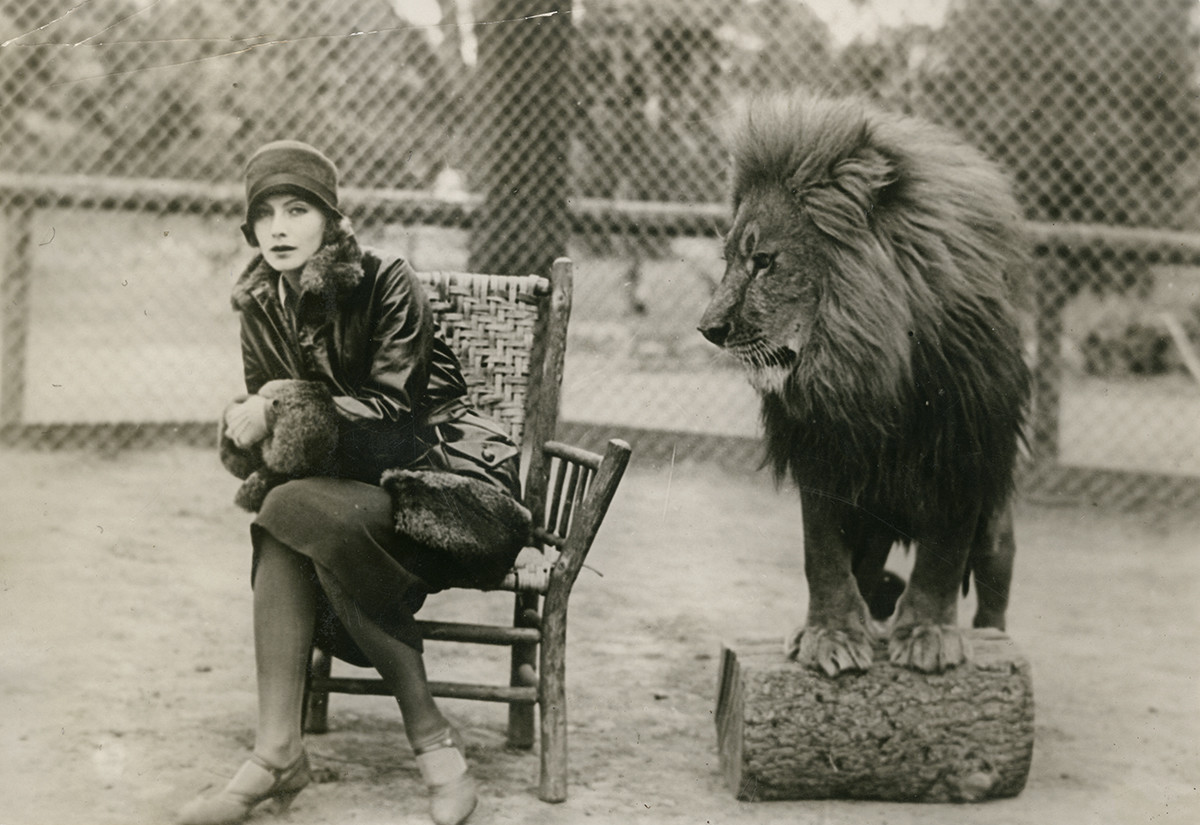
Stars and «pets», 1920s

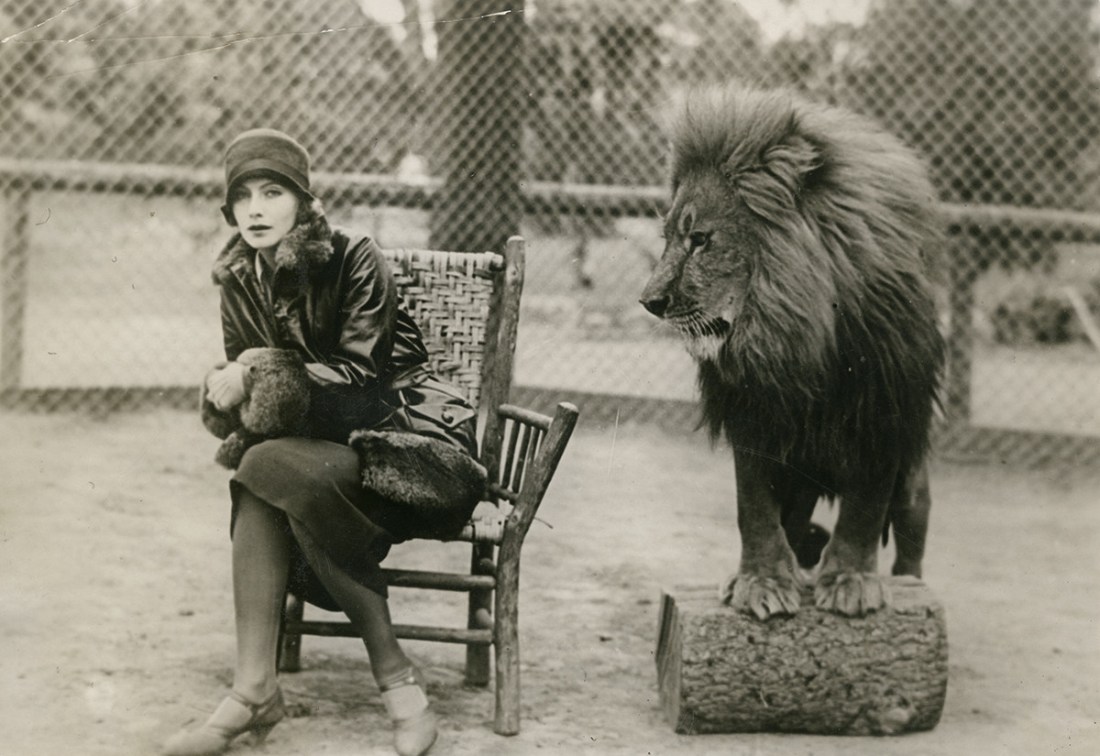
MGM lion and Greta Garbo in a cage, 1920s
Greta Garbo et Léo, le lion emblème de la Metro-Goldwyn-Mayer, 1926. Tirage d'époque. Courtesy Galerie Lumière des roses. | src l'œil de la photographie
Greta Garbo et Léo, le lion emblème de la Metro-Goldwyn-Mayer, 1926. Tirage d’époque. Courtesy Galerie Lumière des roses. | src l’œil de la photographie
Photographe anonyme. L’enfant star Jackie Ott et son lévrier de course « My Charlie » États-Unis, 1927. Tirage argentique d’époque. | src Galerie Lumière des roses • Other Pictures # 17

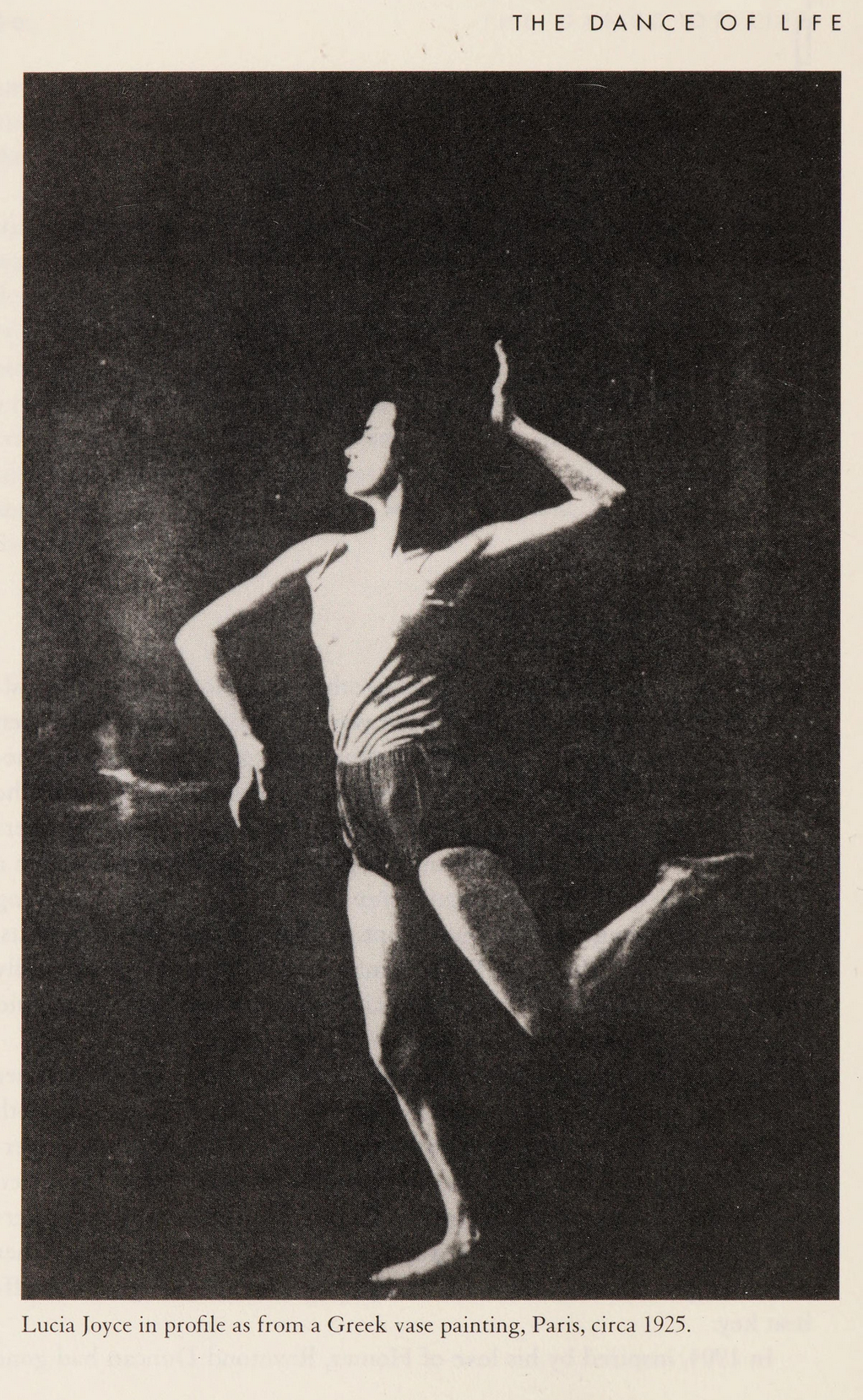
Lucia Joyce in dance pose (1925)

Lucia Joyce in profile as from a Greek vase painting, Paris, circa 1925. From: Carol Loeb Schloss : Lucia Joyce : To Dance in the Wake (2003)

“Most accounts of James Joyce’s family portray Lucia Joyce as the mad daughter of a man of genius, a difficult burden. But in this important new book, Carol Loeb Shloss reveals a different, more dramatic truth: Lucia’s father not only loved her but shared with her a deep creative bond. His daughter, Joyce wrote, had a mind “as clear and as unsparing as the lightning.”” “Born at a pauper’s hospital in Trieste in 1907, educated haphazardly in Italy, Switzerland, and Paris as her penniless father pursued his art, Lucia was determined to strike out on her own. She chose dance as her medium, pursuing her studies in an art form very different from the literary ones celebrated in the Joyce circle and emerging, to Joyce’s amazement, as a harbinger of modern expressive dance in Paris. He described her then as a wild, beautiful, “fantastic being” who spoke to “a curious abbreviated language of her own” that he instinctively understood – for in fact it was his as well. The family’s only reader of Joyce’s work, Lucia was a child of the imaginative realms her father created. Even after emotional turmoil wreaked havoc with her and she was hospitalized in the 1930s, Joyce saw in her a life lived in tandem with his own.” “Though most of the documents about Lucia have been destroyed, Shloss has painstakingly reconstructed the poignant complexities of her life – and with them a vital episode in the early history of psychiatry, for in Joyce’s efforts to help his daughter he sought out Europe’s most advanced doctors, including Jung. Lucia emerges in Shloss’s account as a gifted, if thwarted, artist in her own right, a child who became her father’s tragic muse.”–Jacket, quoted from internet archive

Lucia Joyce in profile as from a Greek vase painting, Paris, circa 1925. From: Carol Loeb Schloss : Lucia Joyce : To Dance in the Wake (2003)
Lucia Joyce, Paris, 1925 Courtesy of the Poetry Collection of the University Libraries, University at Buffalo. One Hundred Years of James Joyce’s Ulysses @ The Morgan Library & Museum

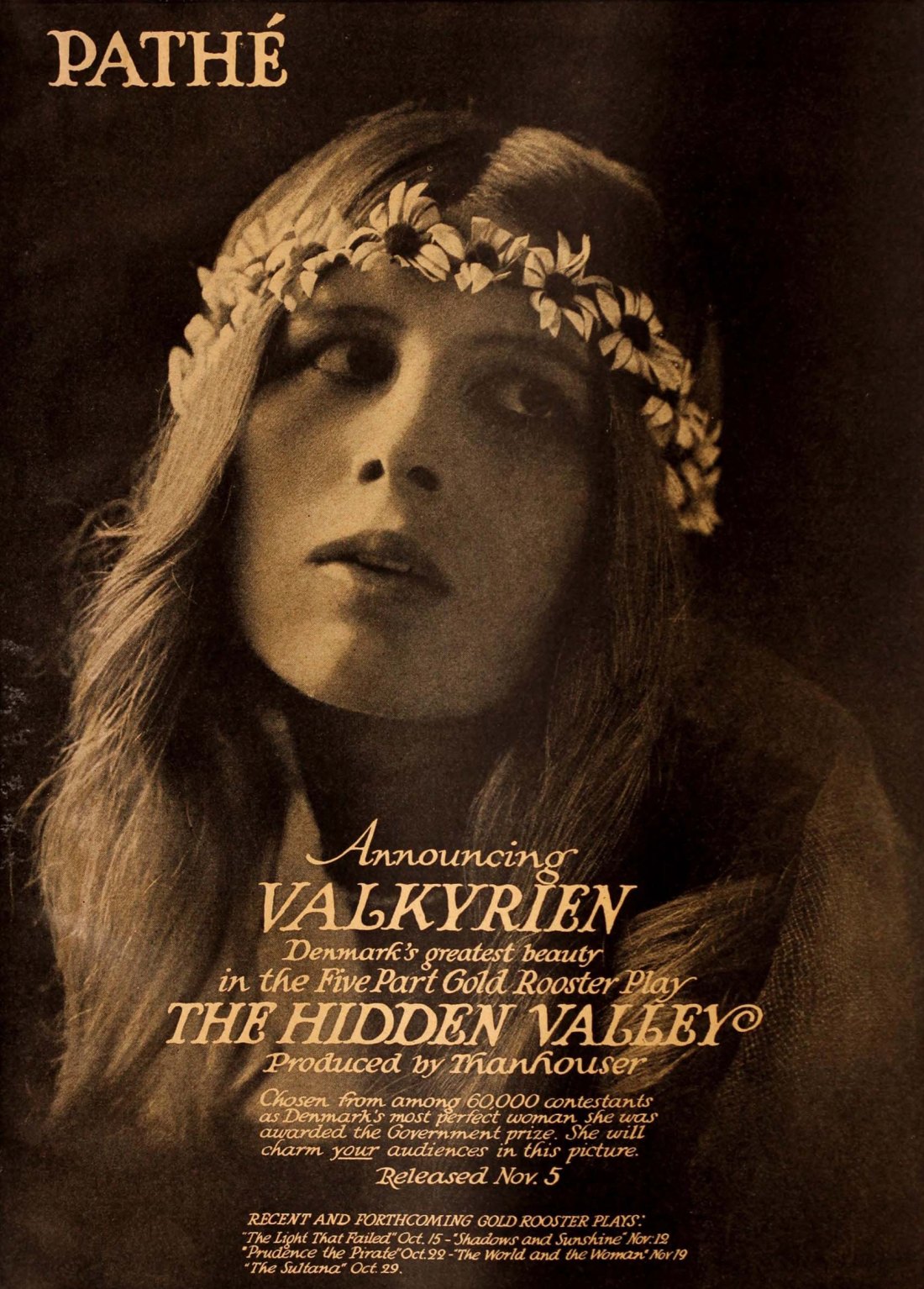
Valkyrien in The Hidden Valley

Valda Valkyrien [Adele Frede, Adele Freed] in the American silent adventure fantasy The Hidden Valley (1916) directed by Ernest Warde.
Advertisement for The Hidden Valley (1916). Motion Picture News (November 1916)
Valda Valkyrien [Adele Frede, Adele Freed] in the American silent adventure fantasy The Hidden Valley (1916) directed by Ernest Warde.
Advertisement for The Hidden Valley (1916). Moving Picture World, November 1906

Betty Compson is Tillie de Vamp

Betty Compson as Tillie de Vamp in an Al Christie’s comedy: Hist! At Six O’clock (1916)
“The Vamp Primes Herself with Poison Gas”. Betty Compson as the vampire in Hist! At Six O’clock”. Motion Picture News, December 1916. | src internet archive
Eddie Barry and Betty Compson in a Christie Comedy of the 1913 vintage.
Betty Compson in in a Christy diversion entitled “Hist at Six o’clock”. December, 1919 issue of Photoplay magazine

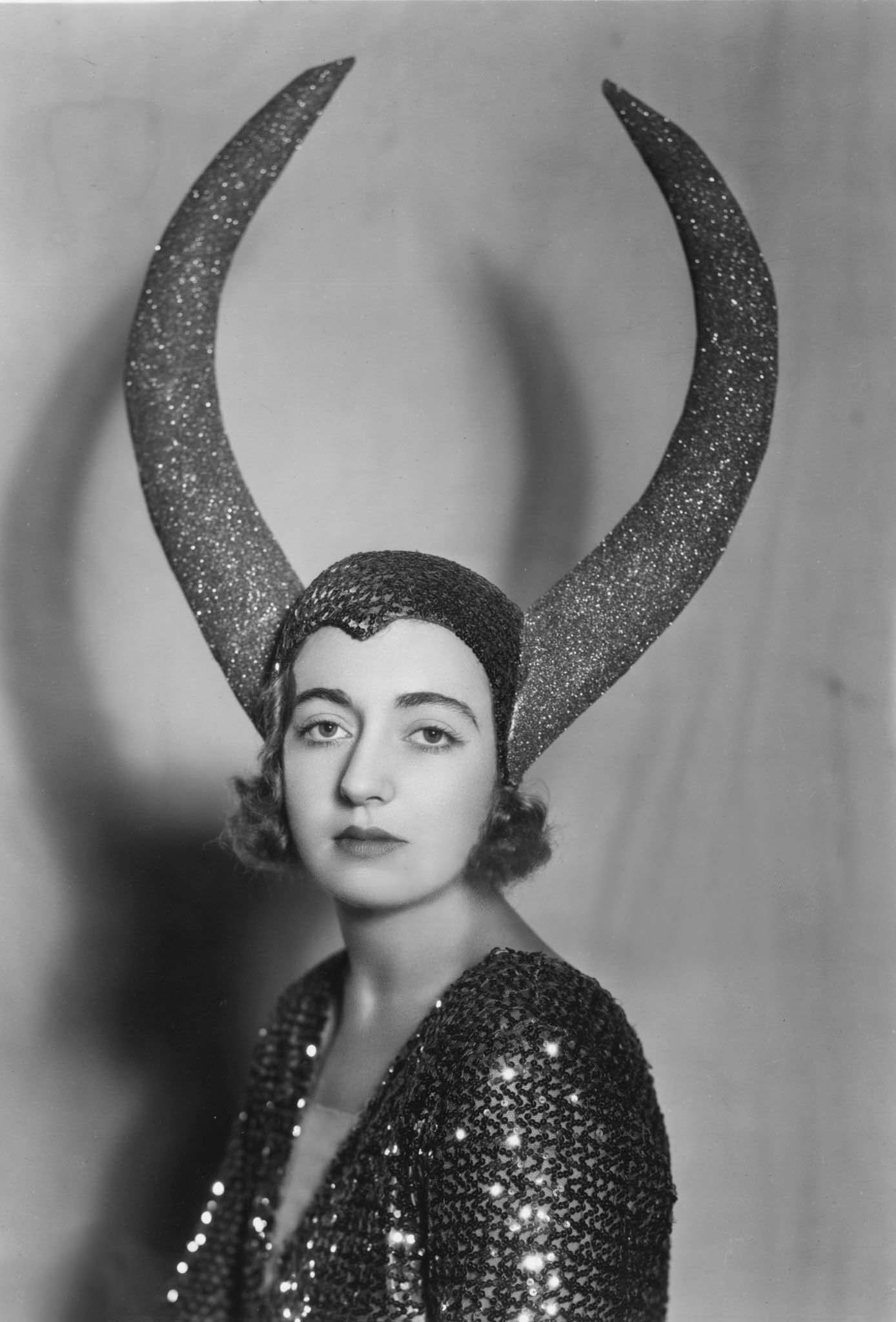
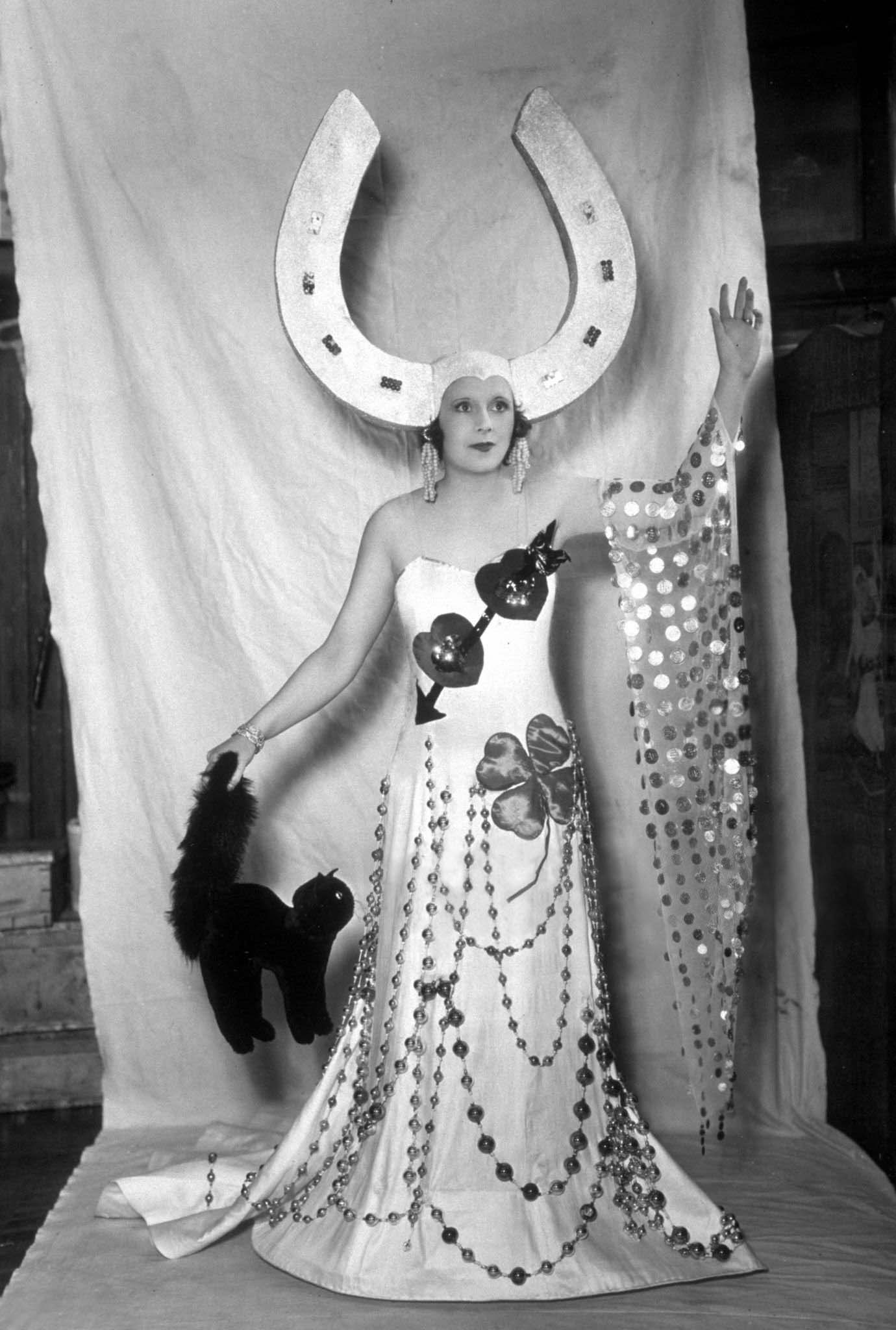
Pageant of the Superstitions 1930

Sasha :: Princess George Imeritinsky wearing a hat with large horns, part of her costume symbolizing 'Green'. She is taking part in the 'Pageant of the Superstitions' at the Haymarket Theatre in aid of the Queen Charlotte Maternity Hospital Maintenance Fund, October 11th, 1930. Costume designed by Barbara Cartland. | src Getty Images
Sasha :: Princess George Imeritinsky wearing a hat with large horns, part of her costume symbolizing ‘Green’. She is taking part in the ‘Pageant of the Superstitions’ at the Haymarket Theatre in aid of the Queen Charlotte Maternity Hospital Maintenance Fund, October 11th, 1930. Costume designed by Barbara Cartland. | src Getty Images
Sasha :: Barbara Cartland (1901-2000) wearing a huge horseshoe on her head as 'Good Luck' in the 'Pageant of the Superstitions' at the Haymarket Theatre, London, October 11th, 1930. | src Getty Images
Sasha :: Barbara Cartland (1901-2000) wearing a huge horseshoe on her head as ‘Good Luck’ in the ‘Pageant of the Superstitions’ at the Haymarket Theatre, London, November 1st, 1930. | src Getty Images
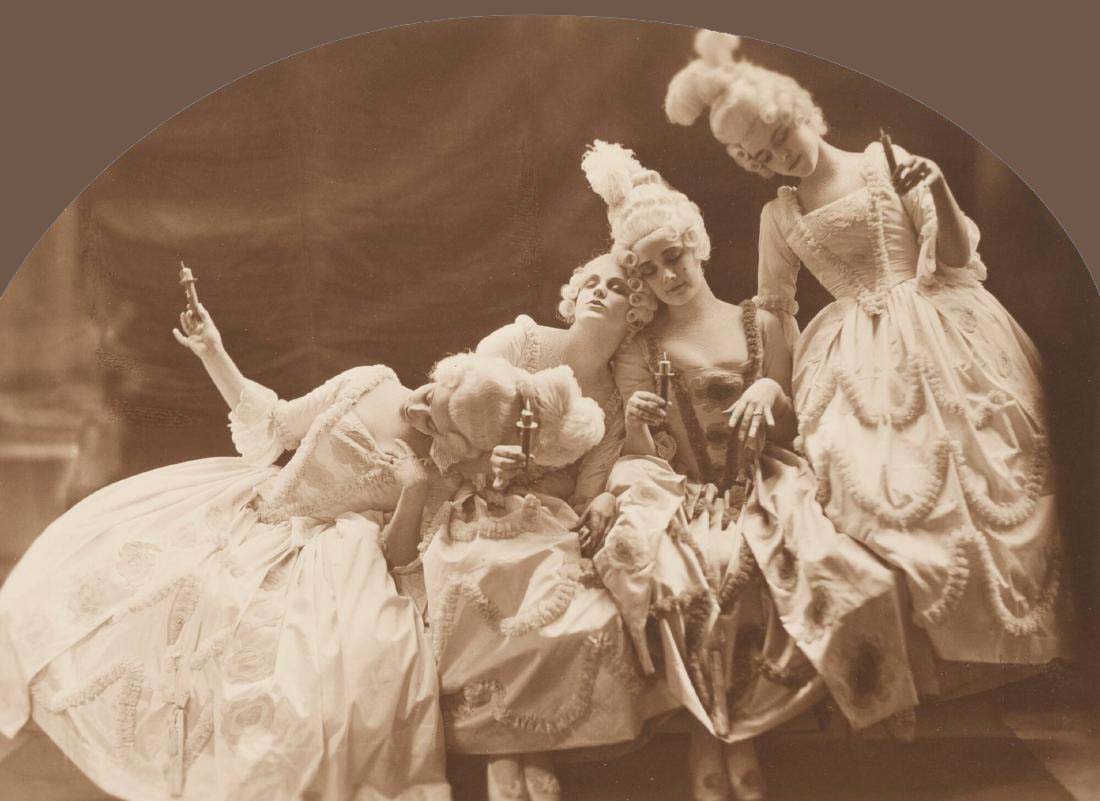
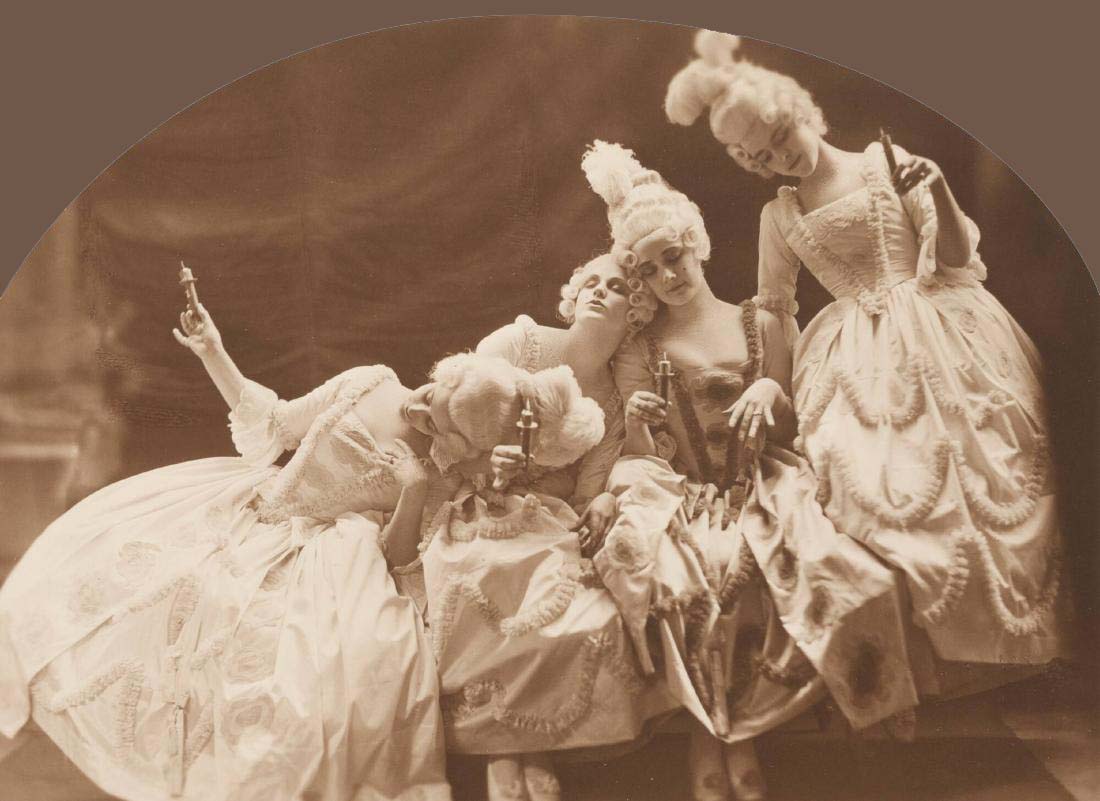
Sasha :: Mrs Roland Cubitt dressed as ‘Three Candles’ in a costume made by L & H Nathan Ltd., for the ‘Pageant of the Superstitions’, a feature of the ‘All Halloween Ball’, and repeated as a matinee at the Haymarket Theatre, in aid of the Queen Charlotte Maternity Hospital Fund, October 11th or November 1st, 1930. | src Getty Images