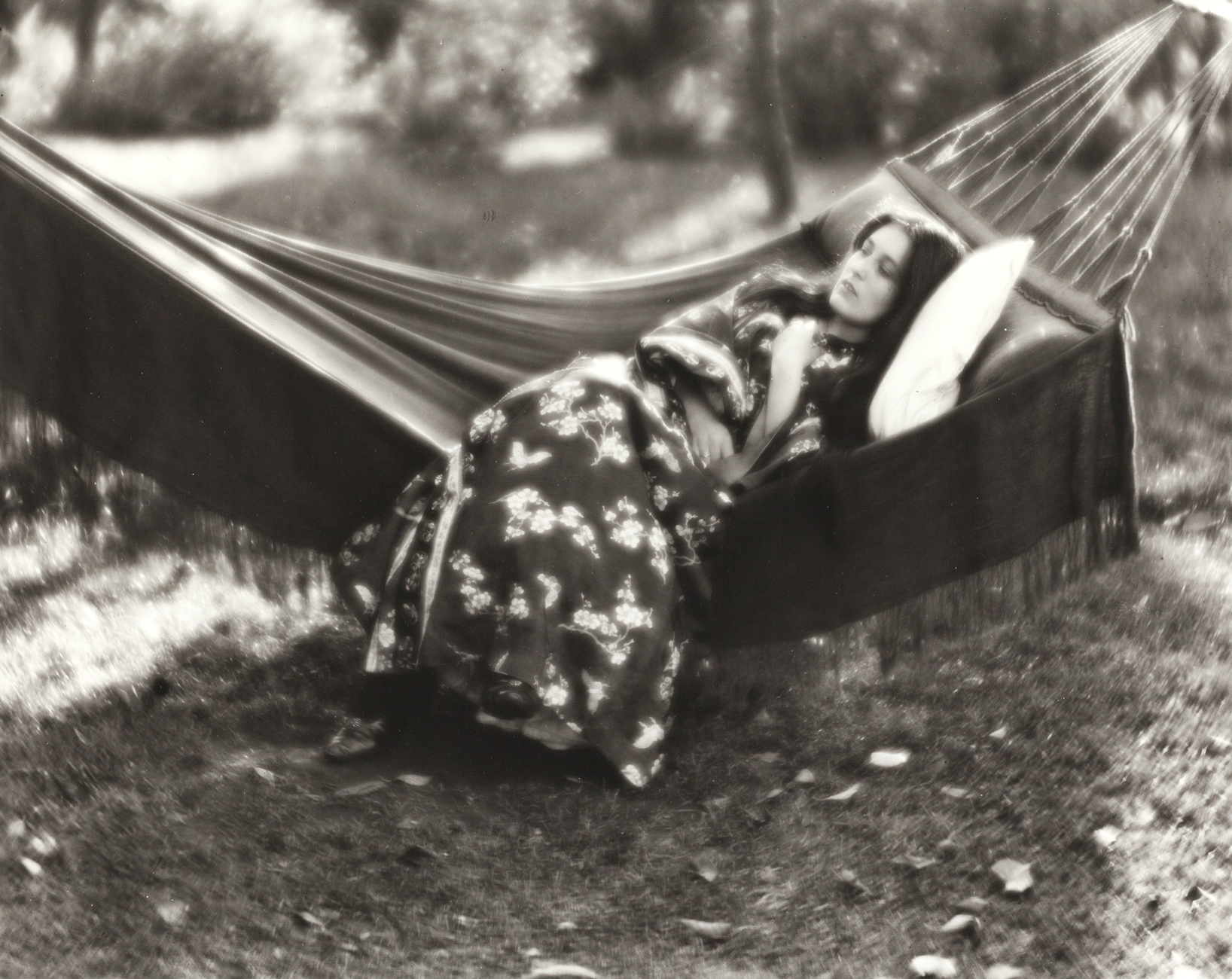
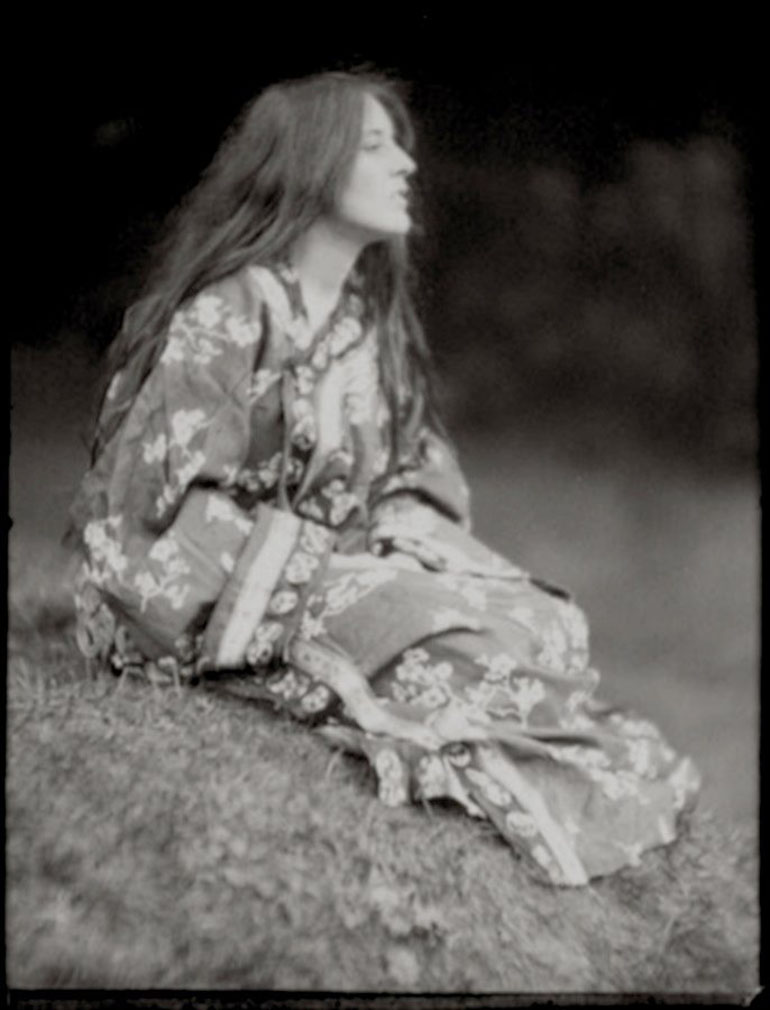
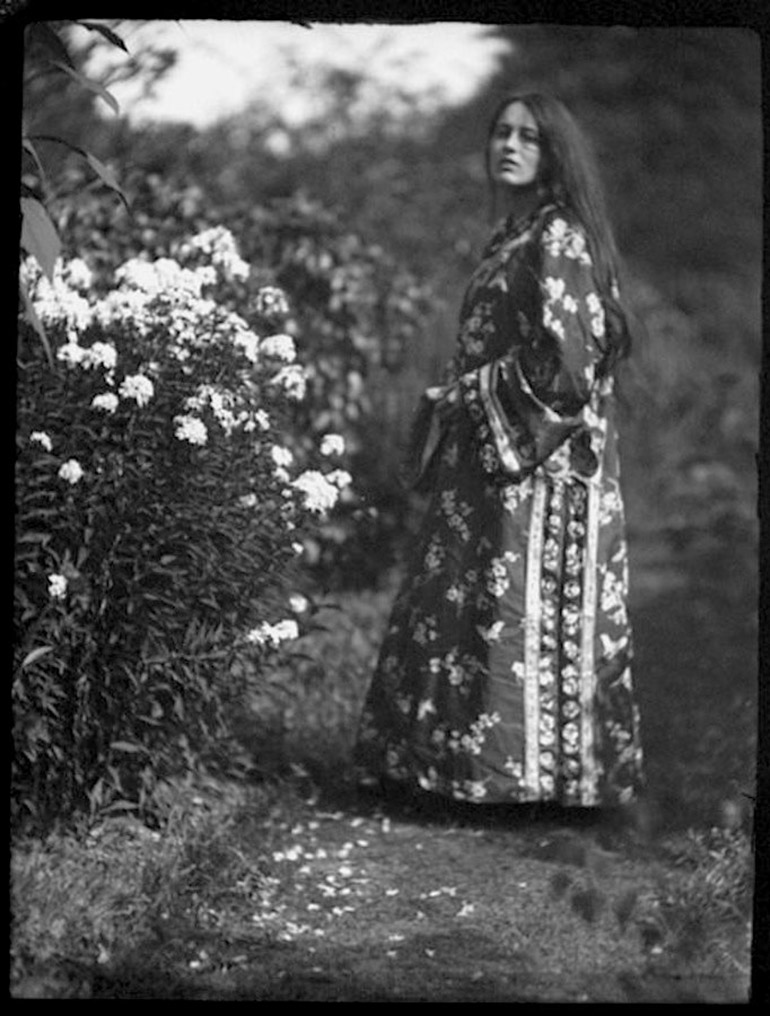
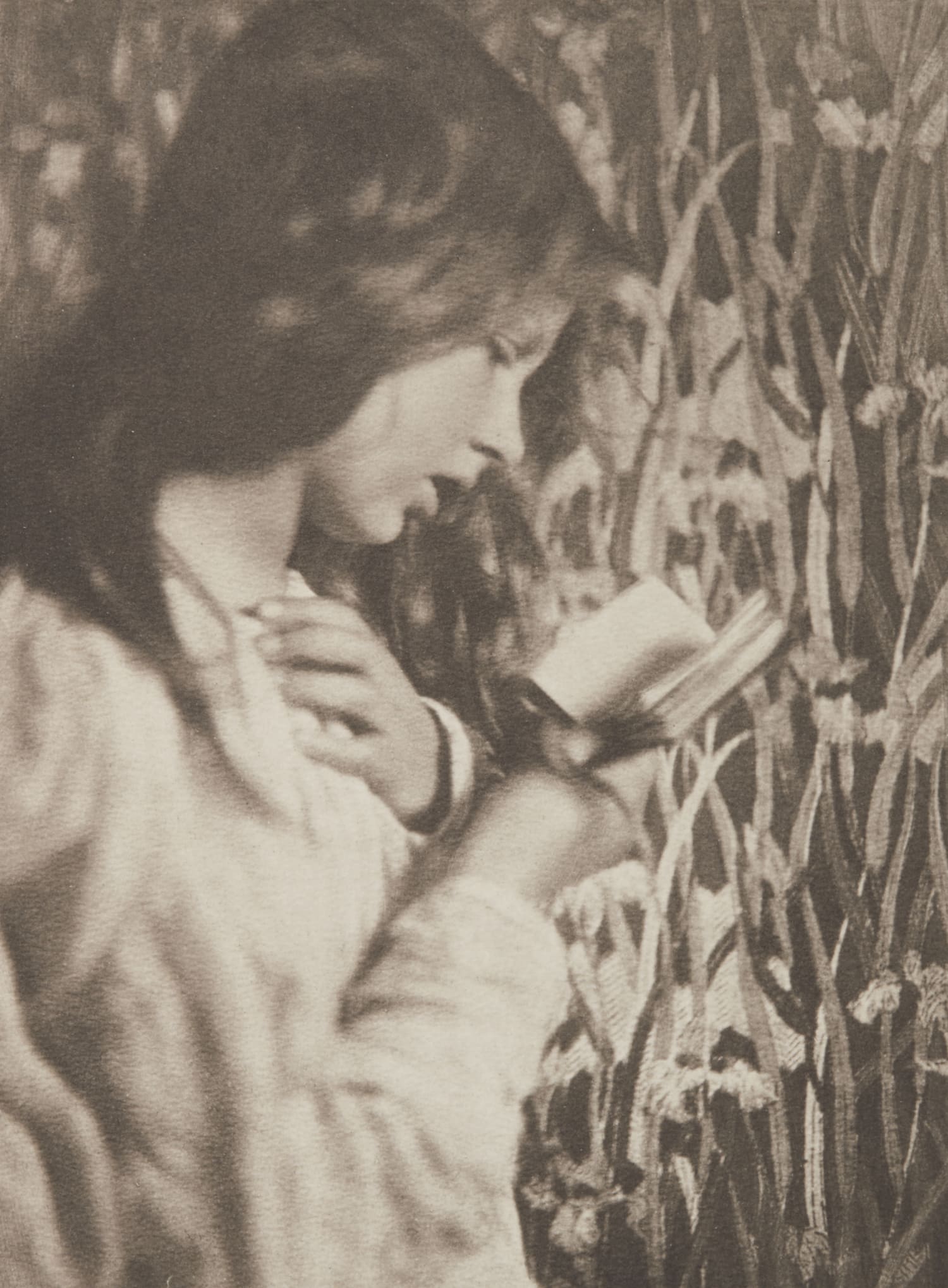
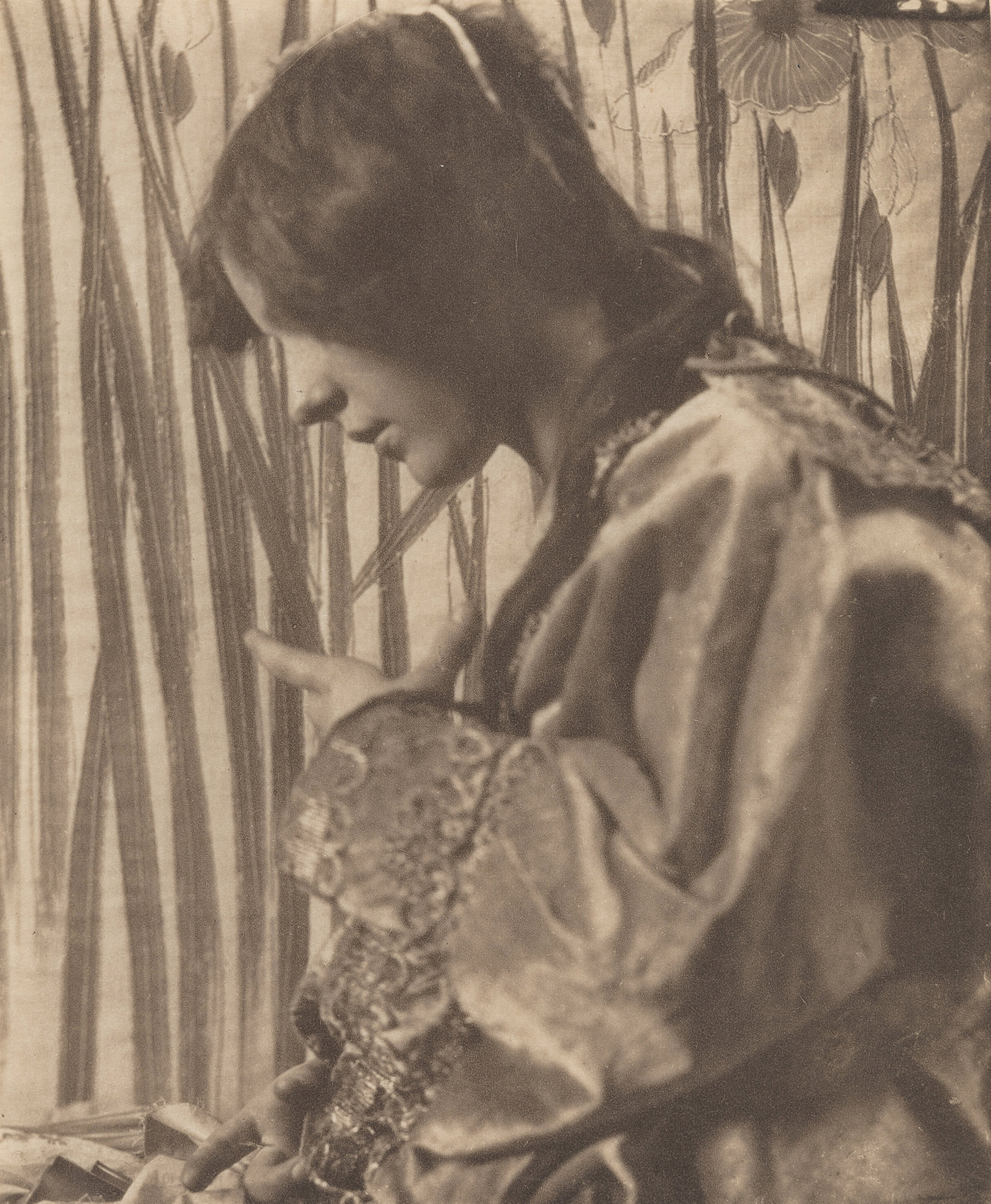
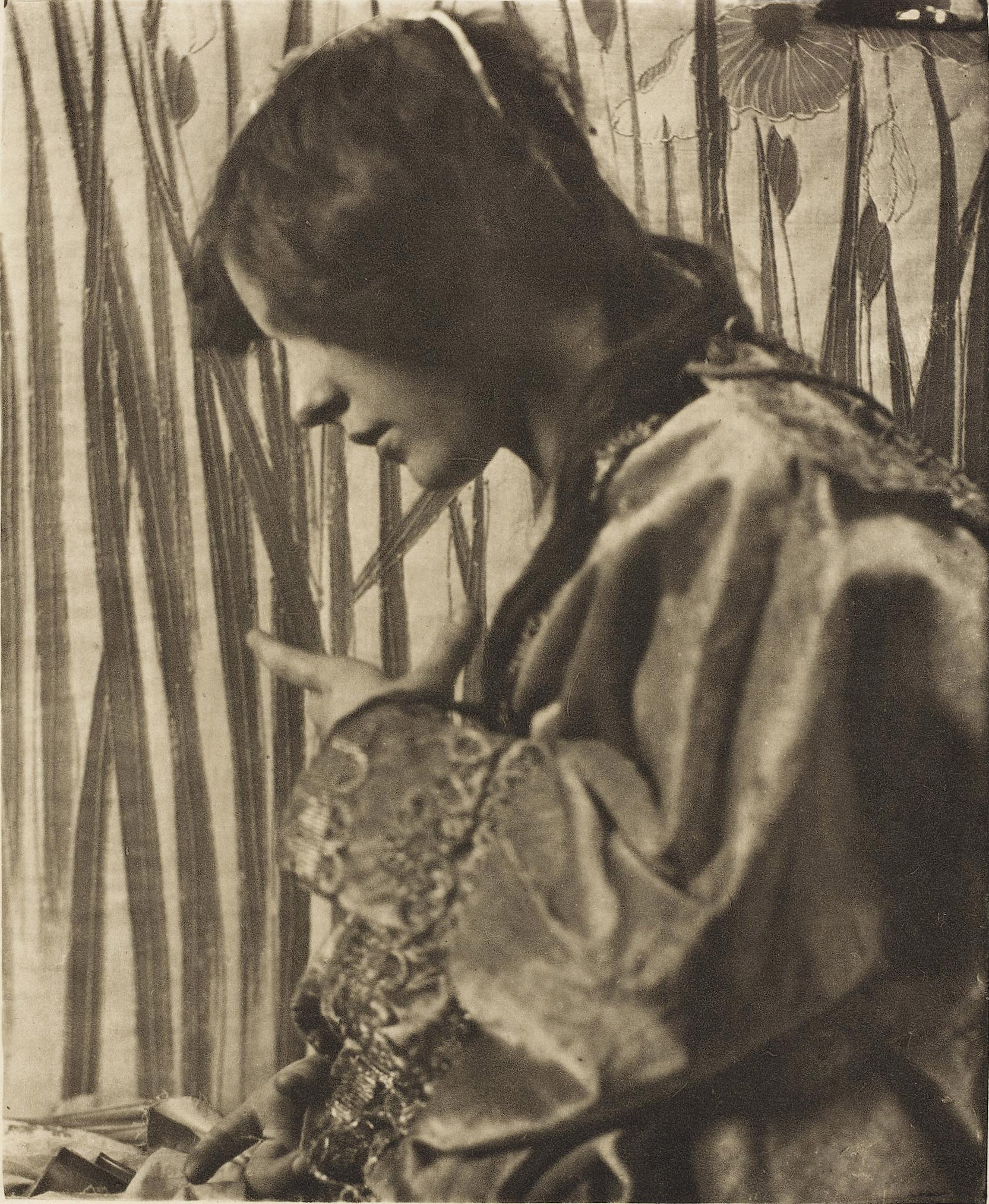
Alvin L. Coburn (1882–1966) :: ‘Toodles (Elsie Thomas)’, ca. 1908. Gelatin silver print, printed in the 1980s | Ostlicht Auktion 2023
Coburn was given his first camera at the age of eight and was introduced to photography by his cousin Fred Holland Day. As early as 1902 he became a member of the New York Photo-Secession initiated by Alfred Stieglitz, and two years later his first pictures appeared in Stieglitz’s magazine “Camera Work”. A vintage print of this beautiful motif is hold at The Museum of Fine Arts, Houston (MFAH), there titled and dated. Coburn also made autochromes of the same model, showing the red colour of her kimono.
Alvin Langdon Coburn (1882–1966) :: ‘Toodles (Elsie Thomas)’, ca. 1908 | Ostlicht Auktion 2023Alvin Langdon Coburn :: Elsie Thomas in an Eastern costume sitting on a hammock, ca.1908. AutochromeAlvin Langdon Coburn :: Elsie Thomas in a red an Eastern costume with sunflower, ca.1908. Autochrome LumièreAlvin Langdon Coburn :: Elsie Thomas (‘Toodles’) in an Eastern costume, ca.1908Alvin Langdon Coburn :: Elsie Thomas wearing an Eastern costume, ca.1908
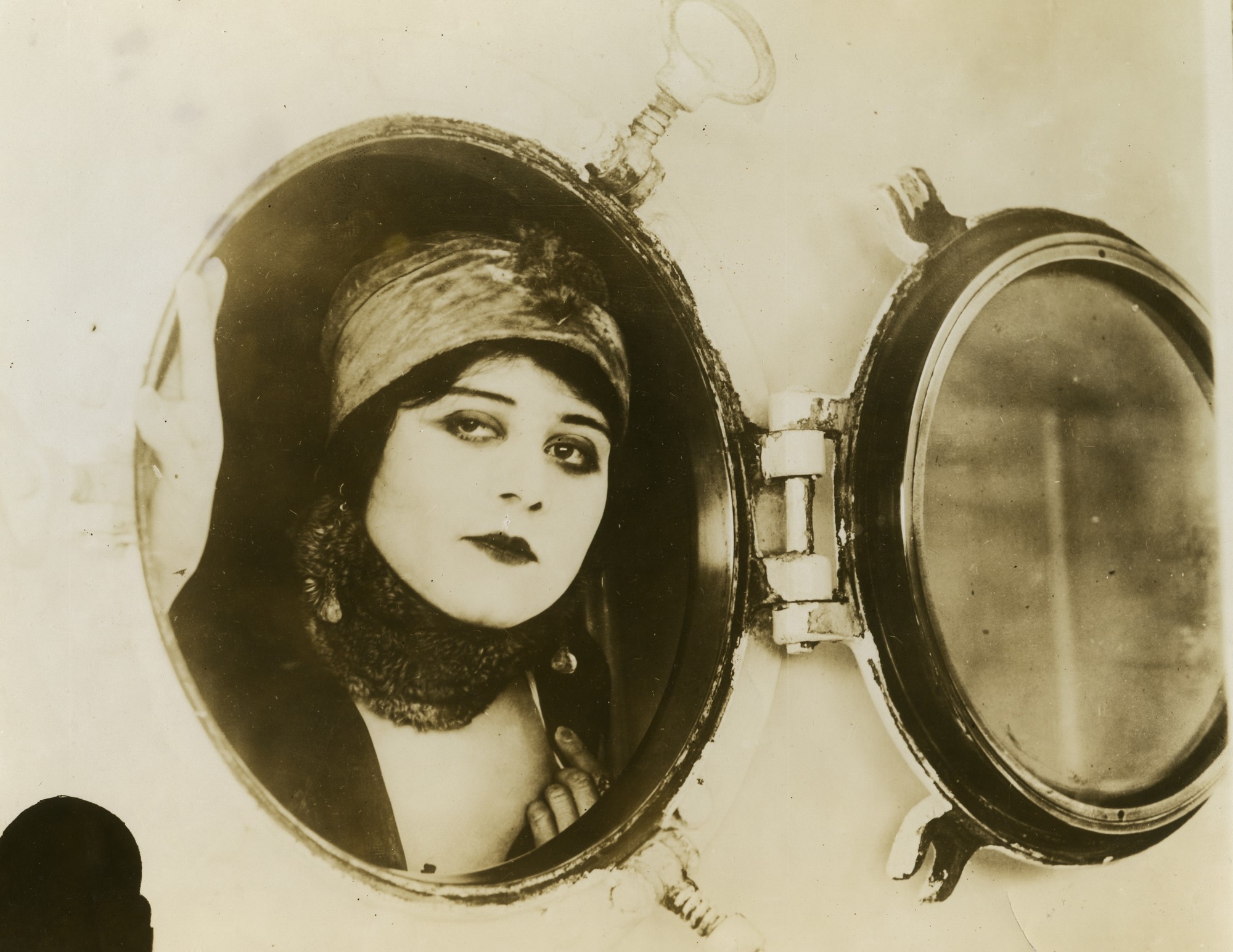
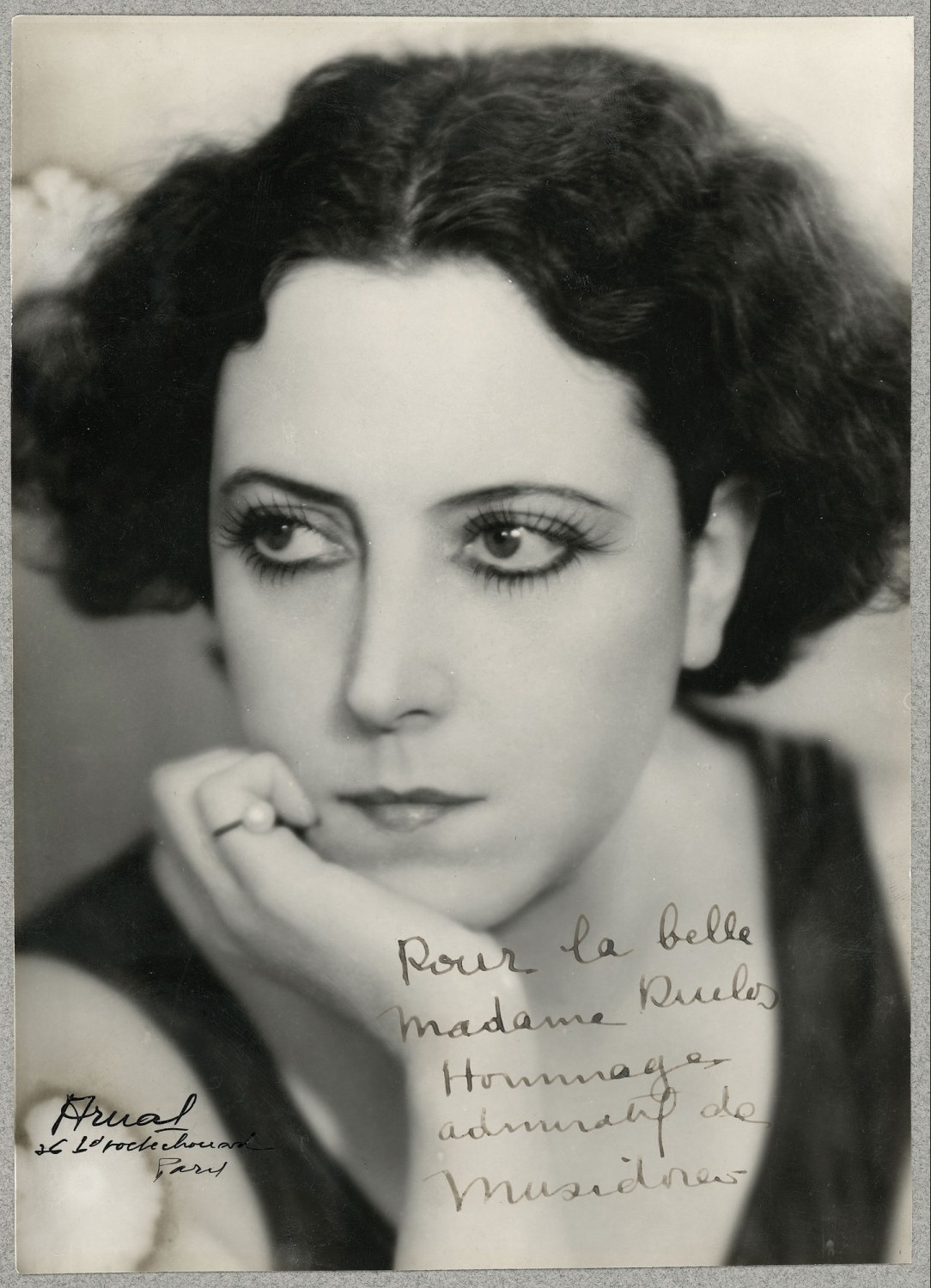
Tirage argentique d’époque représentant Jeanne Roques, dite Musidora, dédicacé à l’encre « Pour la belle Madame Duclos. Hommage admiratif de Musidora ». Signature du photographe Arnal en bas à droite. Circa 1920 | src AuctionArt
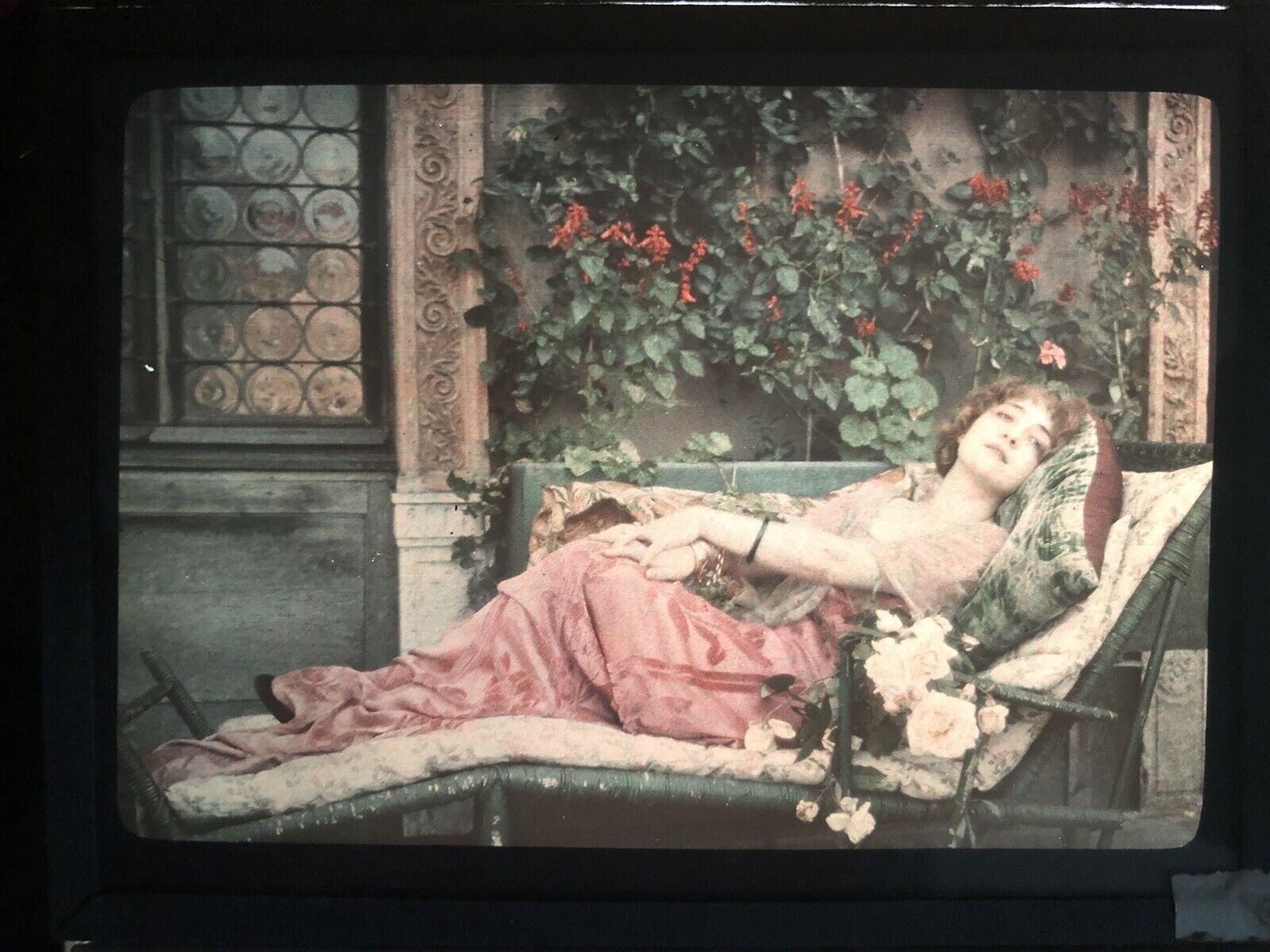
Portrait de dame. Collection Madame (Ernesta) Stern, Paris, 1907, plaque de verre Autochrome. Collection Madame Stern / Maria Star. eBayPortrait de dame. Collection Madame (Ernesta) Stern, Paris, 1907, plaque de verre Autochrome. Collection Madame Stern / Maria Star. eBayPortrait de dame. Collection Madame (Ernesta) Stern, Paris, 1907, plaque de verre Autochrome. Collection Madame Stern / Maria Star. eBayPortrait de dame. Probably Madame (Ernesta) Stern herself, Paris, 1907. Autochrome. Collection Madame Stern / Maria Star. eBayPortrait de dame. Maybe Madame (Ernesta) Stern, Paris, 1907. Autochrome. Collection Madame Stern / Maria Star. eBayPortrait de dame. Collection Madame (Ernesta) Stern, Paris, 1907, plaque de verre Autochrome. Collection Madame Stern / Maria Star. eBayPortrait de dame. Collection Madame (Ernesta) Stern, Paris, 1907, plaque de verre Autochrome. Collection Madame Stern / Maria Star. eBay
According to the seller, Gabriele Bacchiega (eBay profile photo-stereo) all these Autochromes are somehow related to the writer and socialite Ernesta Stern (born Maria Ernesta Hierschel de Minerbi, pen-name Maria Star) (1854 – 1926) or the Salon she held in Paris at 68 rue du Faubourg-Saint-Honoré. Read more about her here
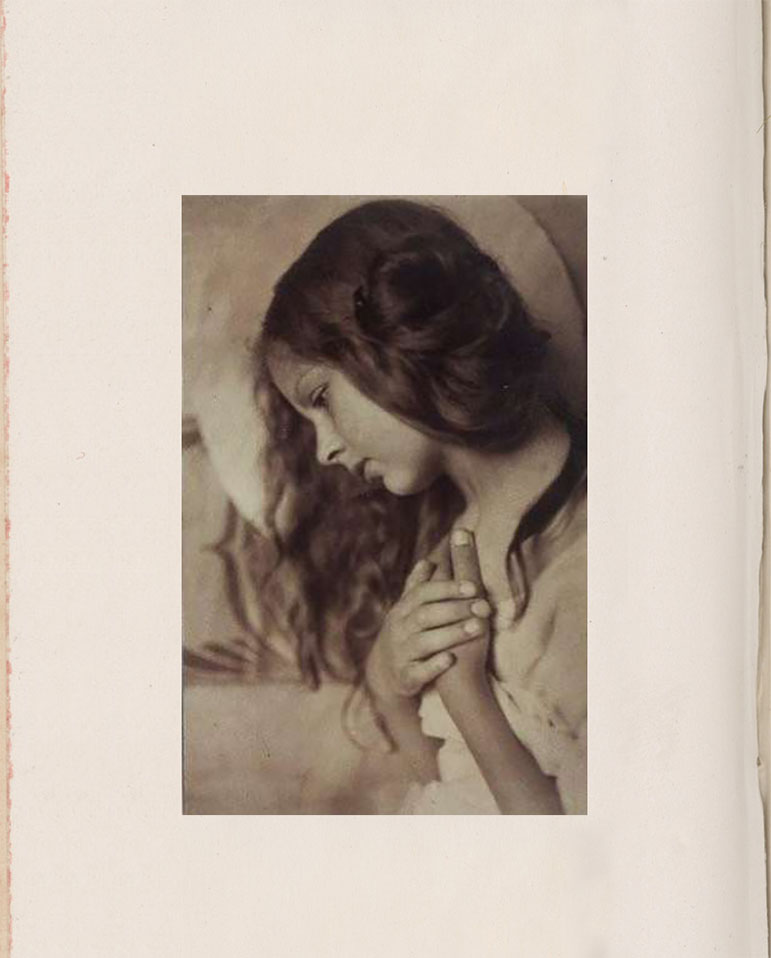
Emma Barton / Mrs G.A. Barton (née Rayson) ~ Ave Maria, ca. 1905. Photogravure. Photographische Mitteilungen 1905 | src PhotoseedEmma Barton (née Rayson) ~ Dorothy Barton, undated. Private collection of Lesley & Cheryl Bousfield. Courtesy Luminous-lint : LL/28323Emma Barton / Mrs G.A. Barton (née Rayson) ~ (untitled on source). Photographische Mitteilungen 1905 | src The Art of PhotogravureEmma Barton / Mrs G.A. Barton (née Rayson) ~ The Song of Ages. Photograms of the year 1904. | internet archive
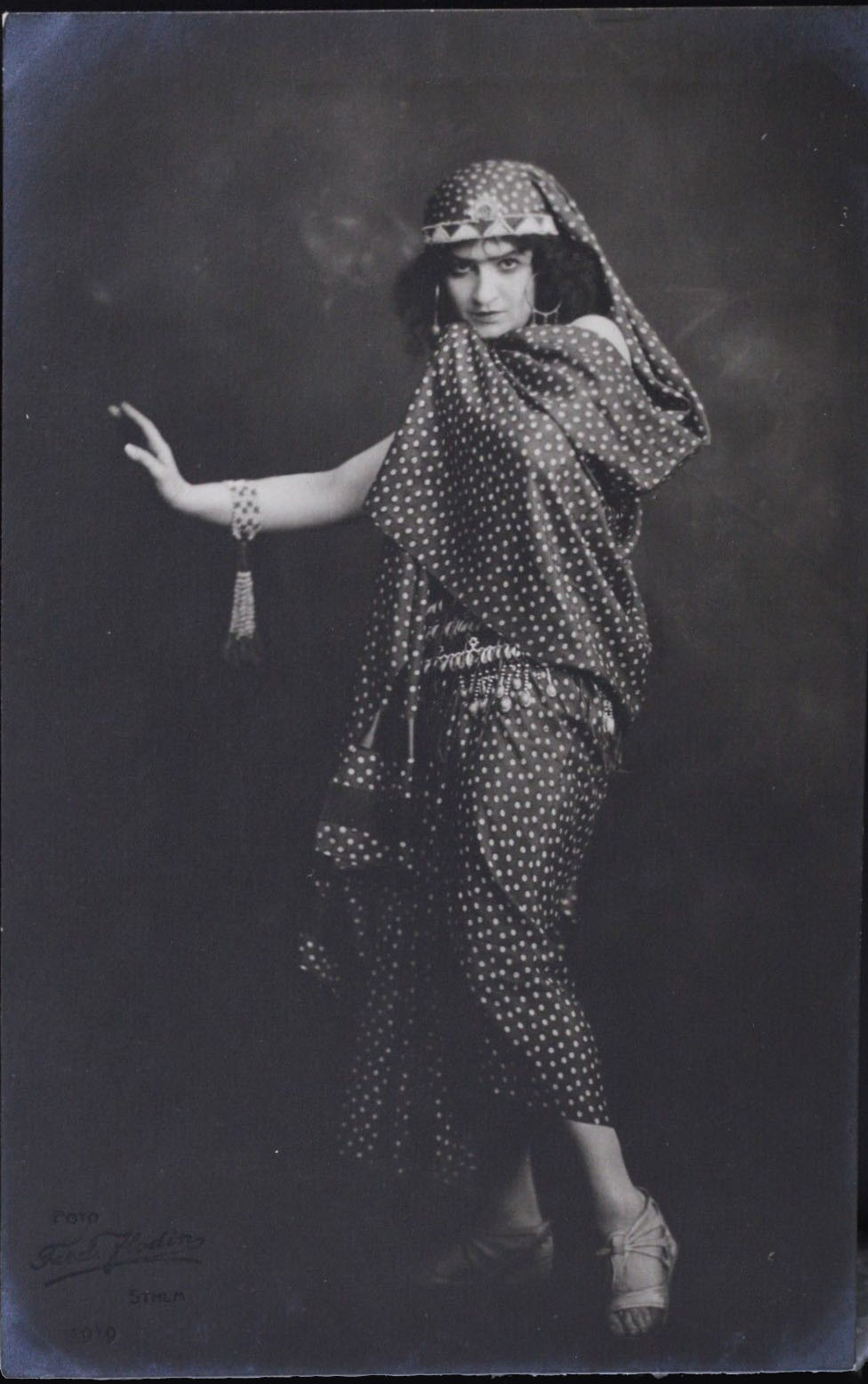
Russian opera singer and dancer Maria Nikolaevna Kuznetsova (1880 – 1966) (Мария Николаевна Кузнецова, also spelled Maria Kuznetsova-Benois) in Aida (opera in four acts by Giuseppe Verdi). Photographed by Ferdinand Flodin in 1919. | src eBaySwedish photo postcard of Maria Kuznetsova-Benois [Ballets Russes] in a Spanish Dance, dated 1919. Photographer stamp : Ferd. Flodin src Swed.Antique
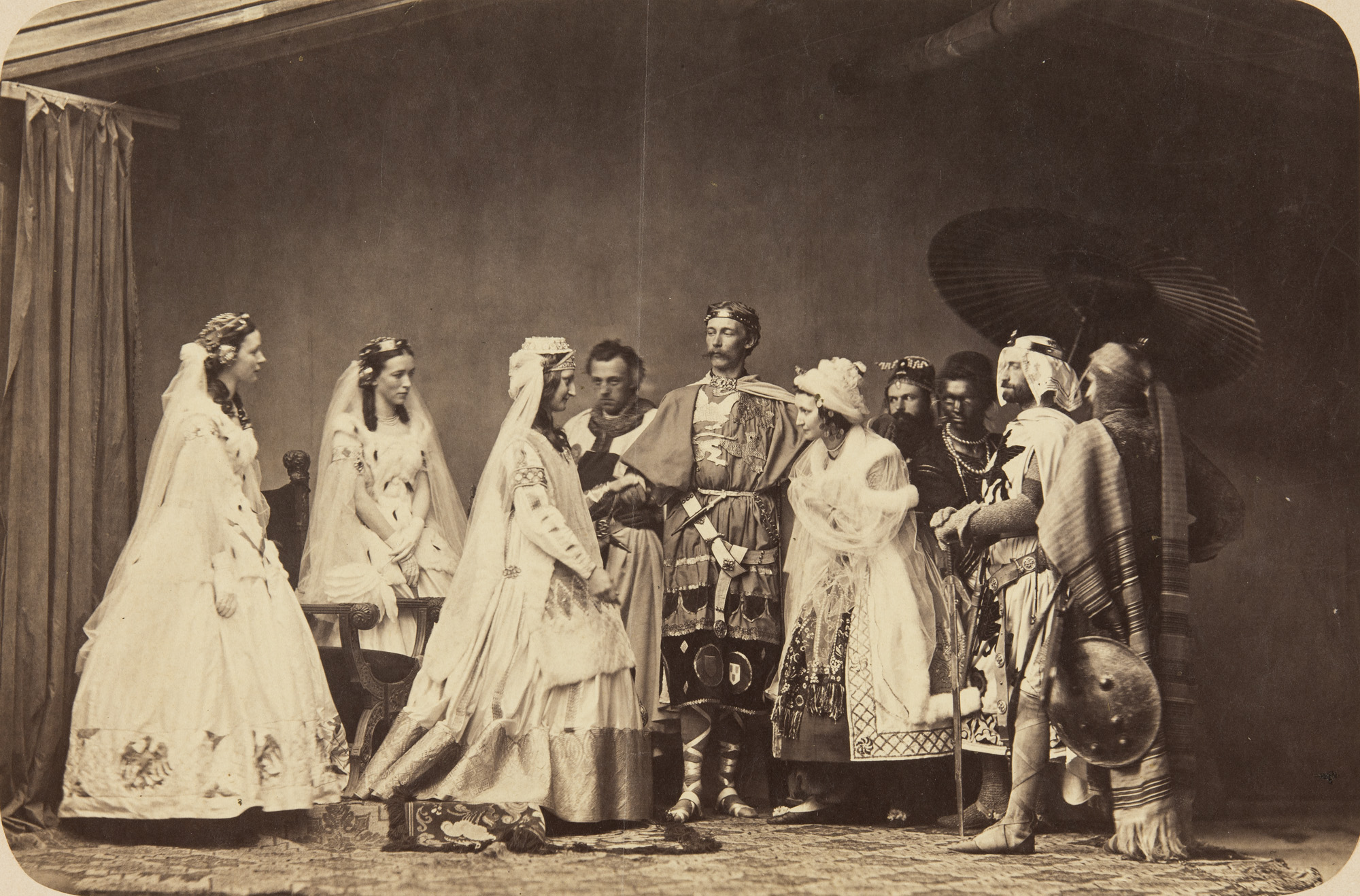
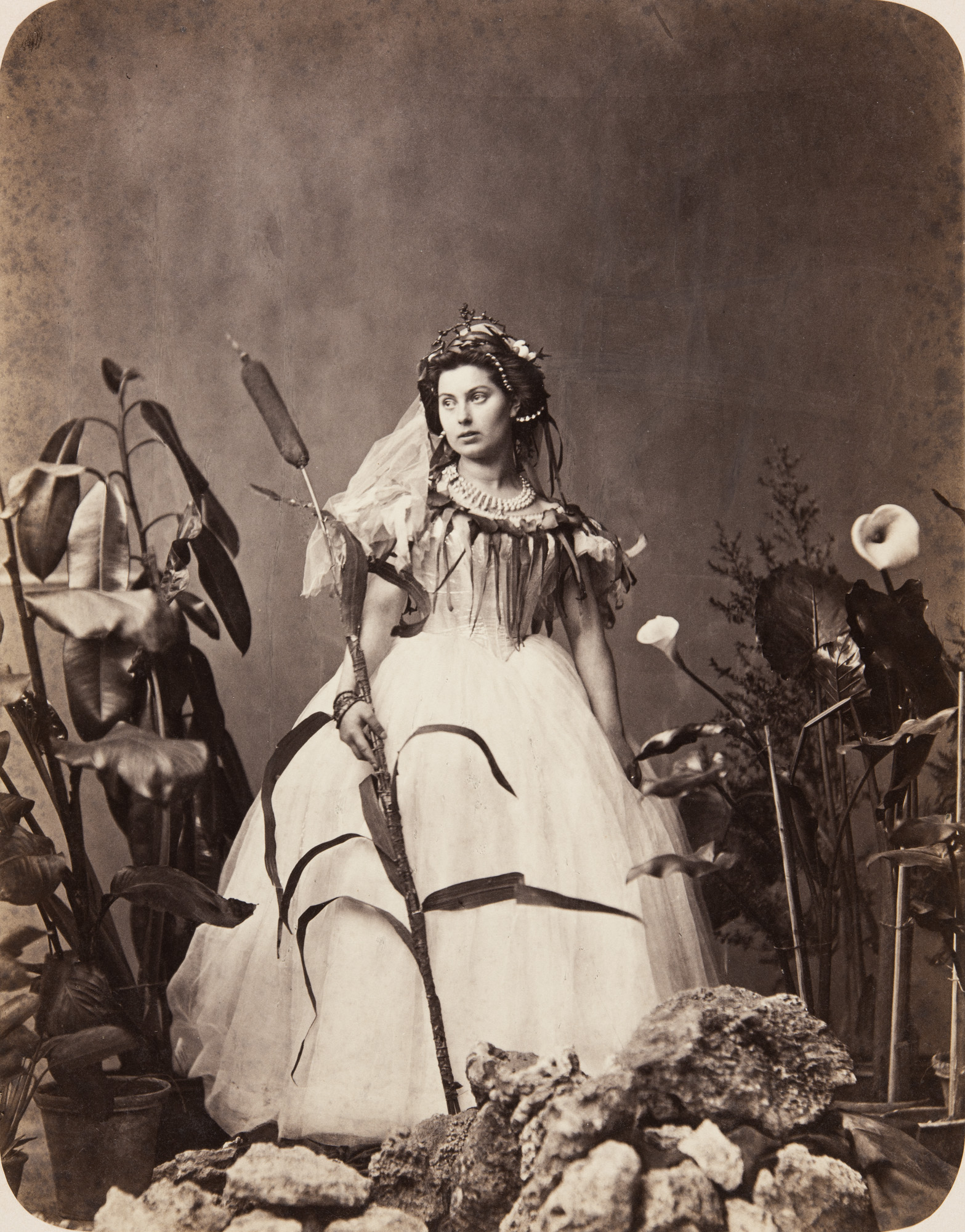
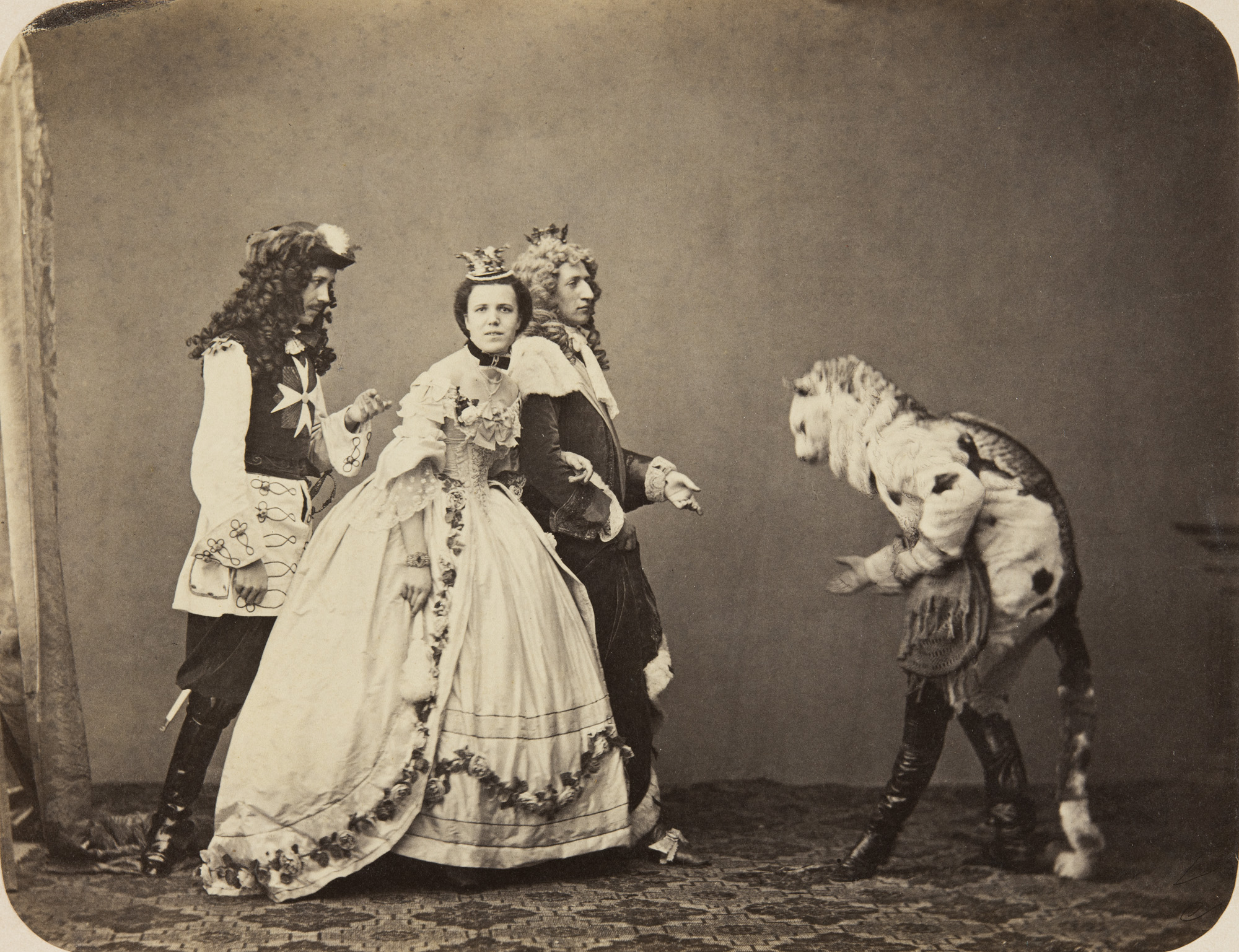
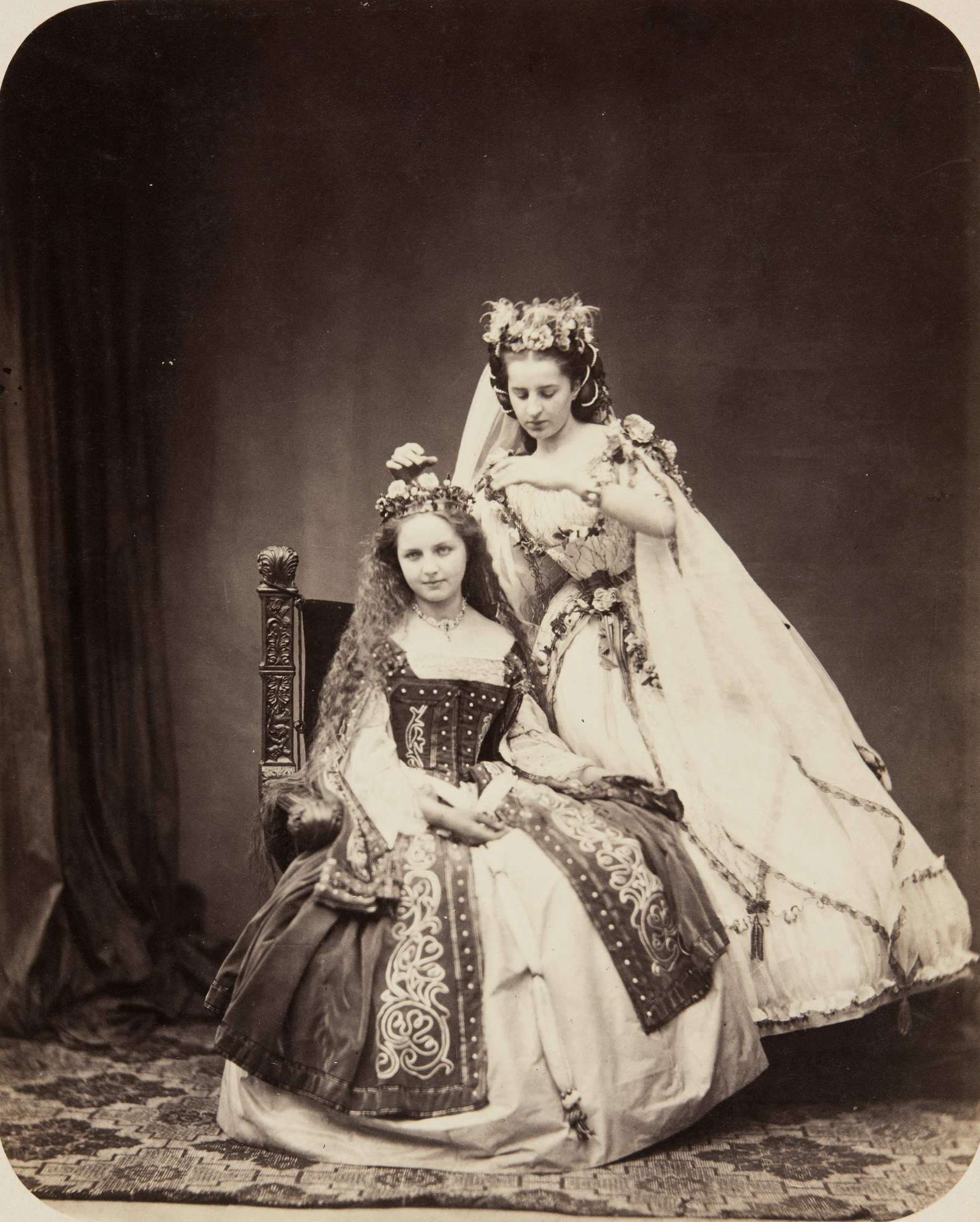
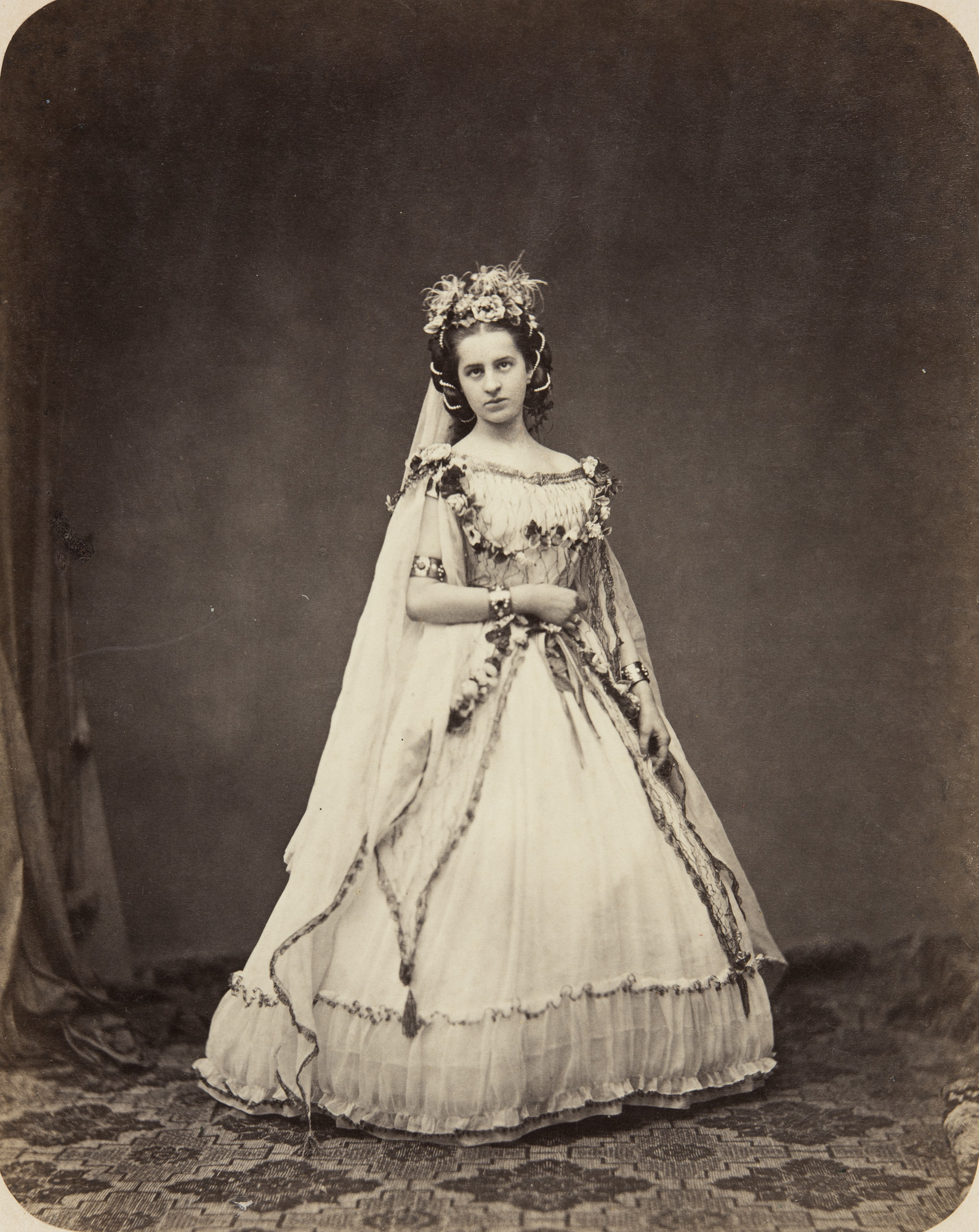
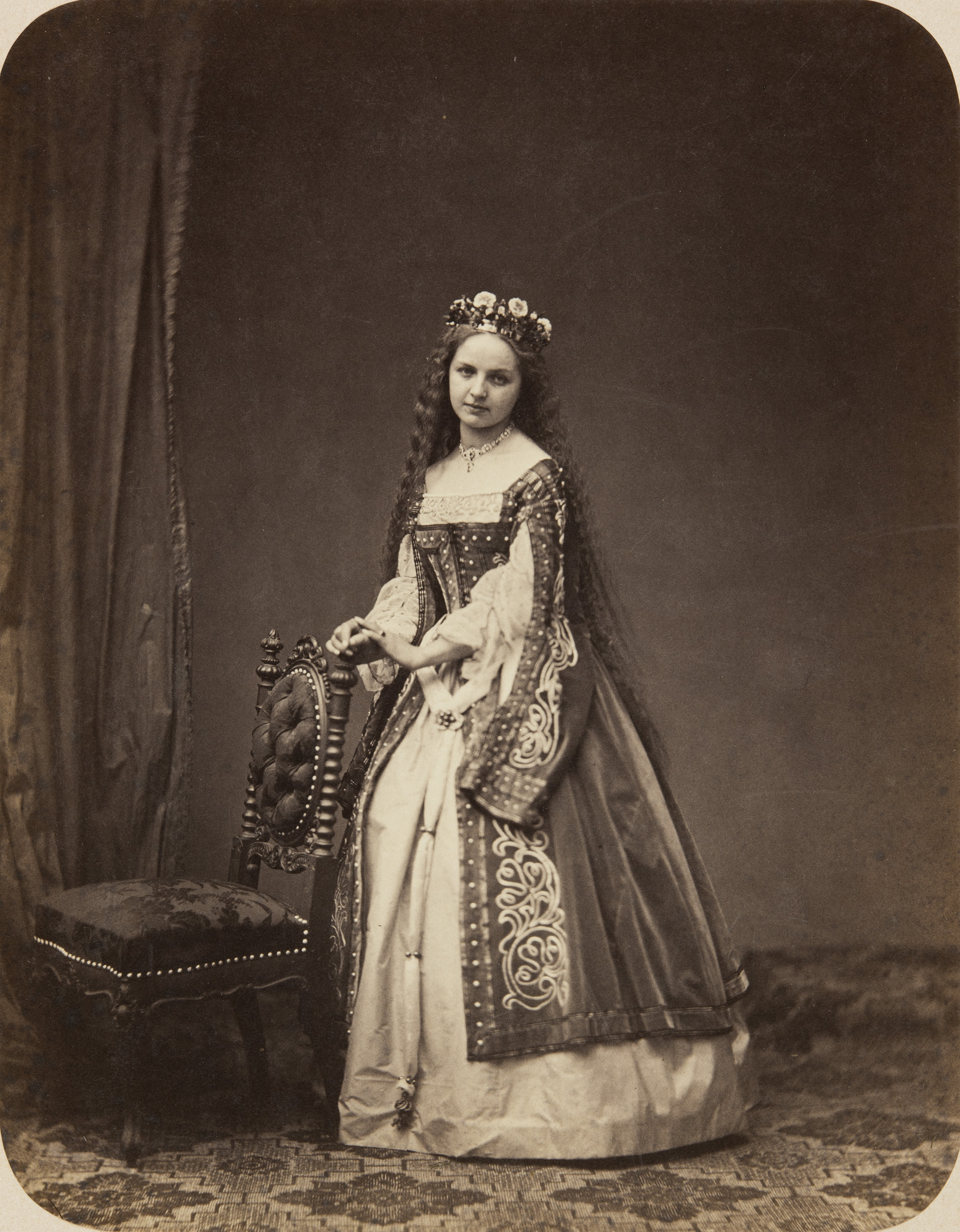
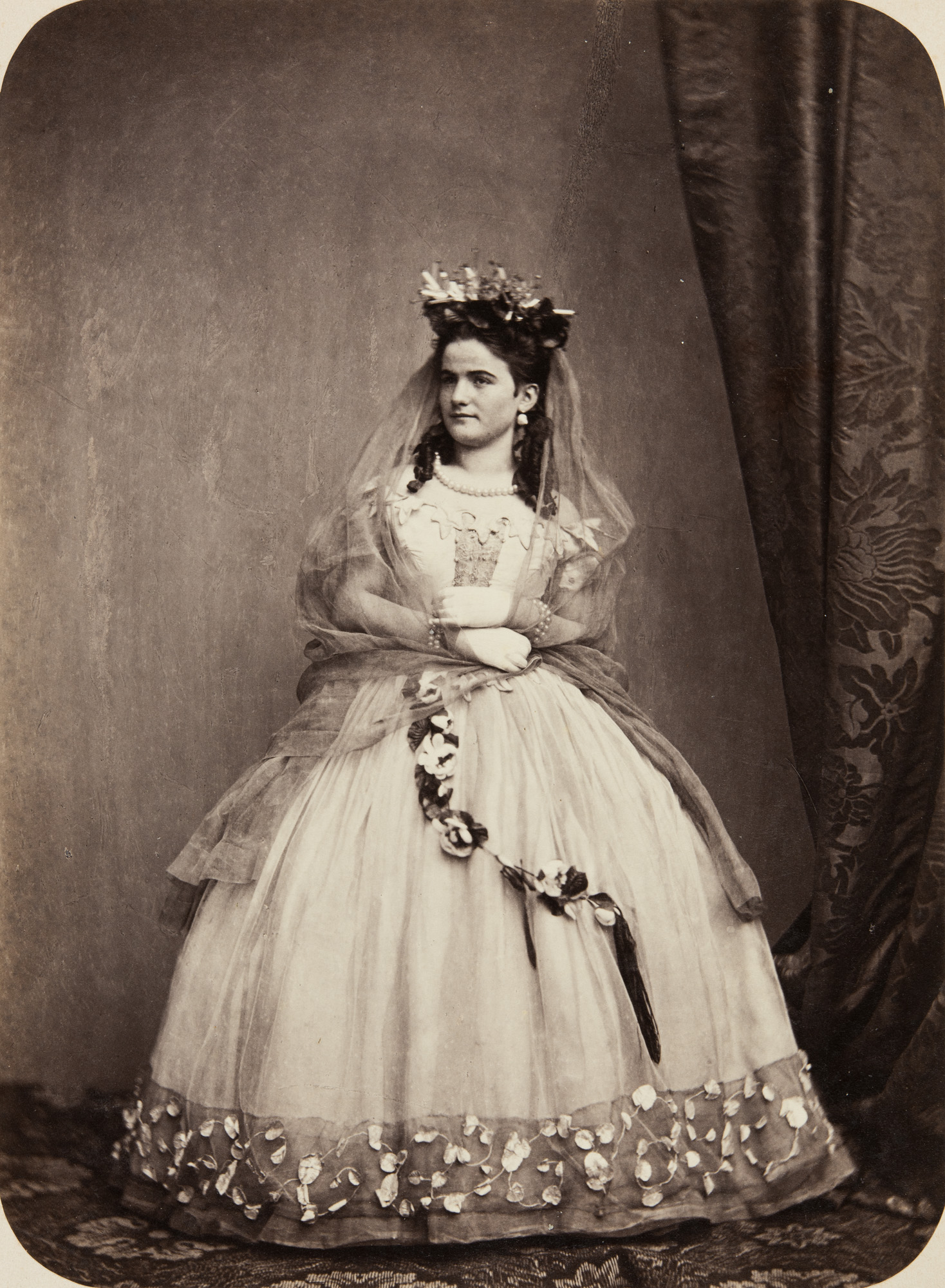
Joseph Albert ~ “Maskenball von ‘Jung-München’ 1862 / Frl. Pfeiffer, Frl. Bischoff, Frl. Pfeiffer, Frl. Bischoff / Aus der Gruppe: ‘Graf v. Gleichen'” (Count of Gleichen), Februar 1862, Albuminpapier / Münchner Stadtmuseum ~ Sammlung Dietmar SiegertJoseph Albert ~ “Maskenball v. ‘Jung-München’ 1862 / Frl. Pfeiffer, Frl. Pfeiffer, Bildhauermeister von Tiesenhausen, Frl. Bischoff, Maler A. Klein und Moosbrugger, Max Stuttgarter, E. Küster / “Maskenball von ‘Jung-München’ 1862 / ‘Gruppe des Grafen von Gleichen'” (Counts of Gleichen), Februar 1862, Albuminpapier Münchner Stadtmuseum ~ Sammlung Dietmar SiegertJoseph Albert ~ “Märchenball von ‘Jung-München’ 1862 / Frau von Passerant, M. v. Liebig, Schlierholz, Frl. Knapp, Frl. Stöger / Gruppe ‘Nixenkönigin'” (Mermaid Queen), Februar 1862, Albuminpapier Münchner Stadtmuseum ~ Sammlung Dietmar SiegertJoseph Albert ~ “Frl. Knapp / Münchener Künstlermaskenfest 1862”, Februar 1862, Albuminpapier Münchner Stadtmuseum ~ Sammlung Dietmar Siegert
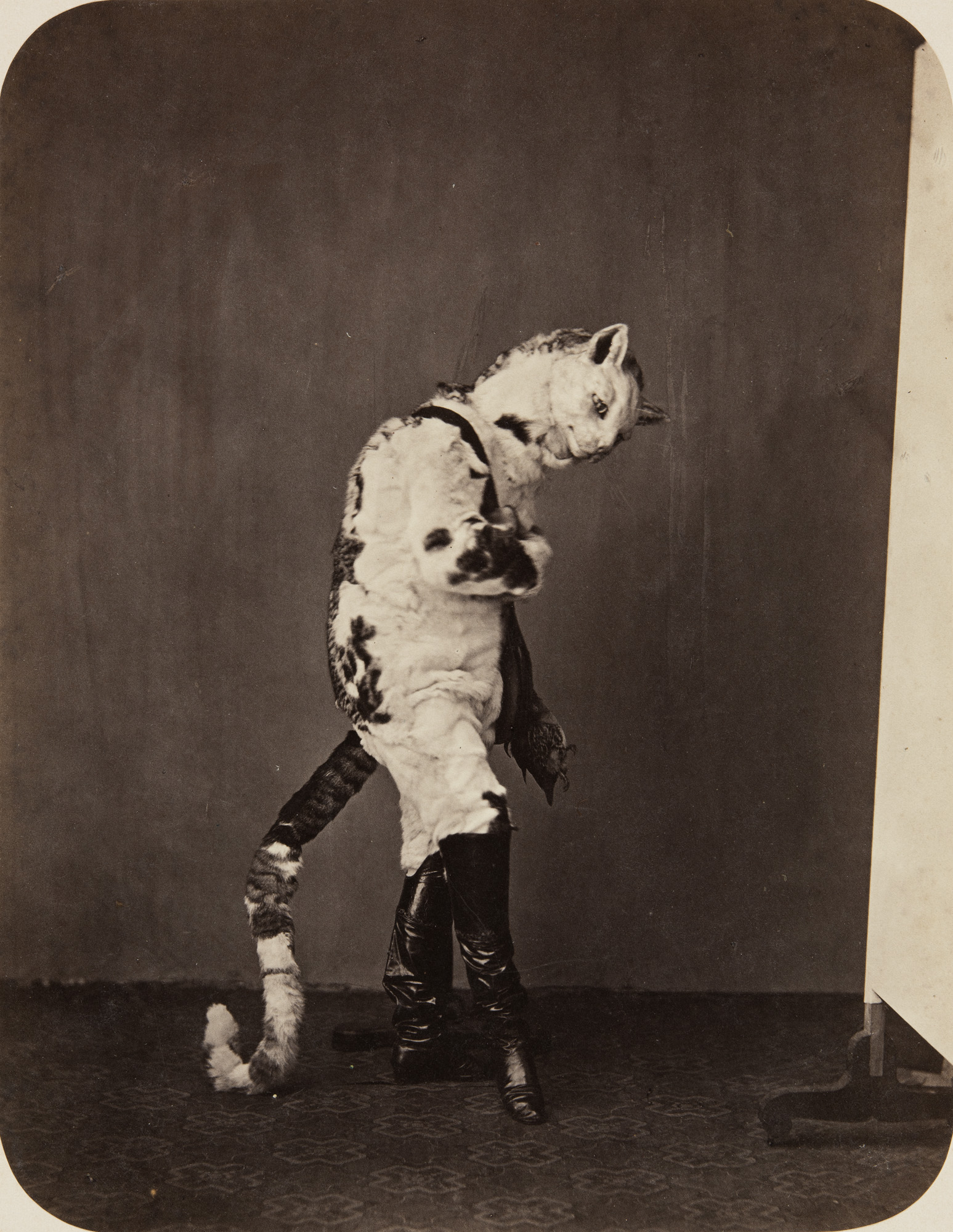
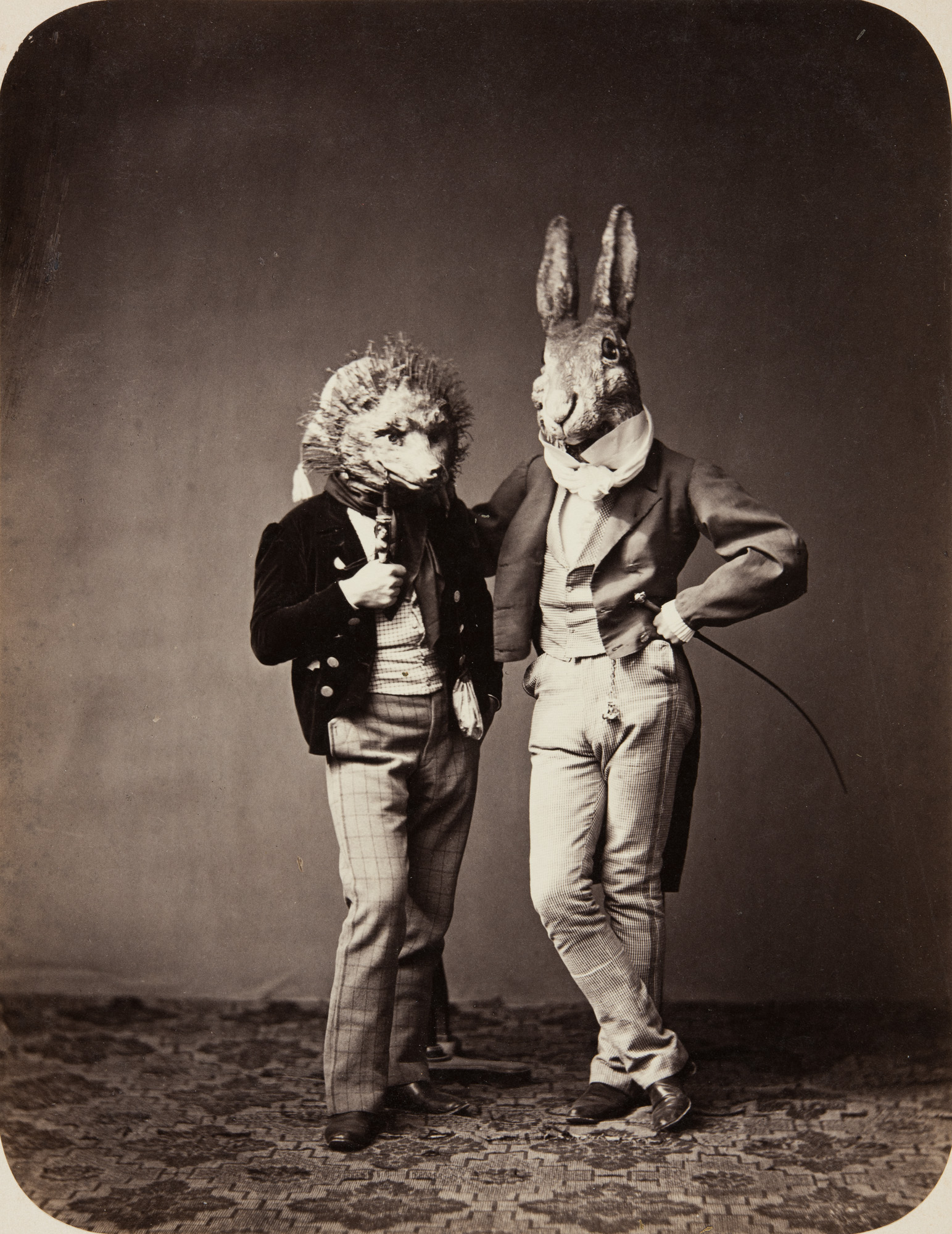
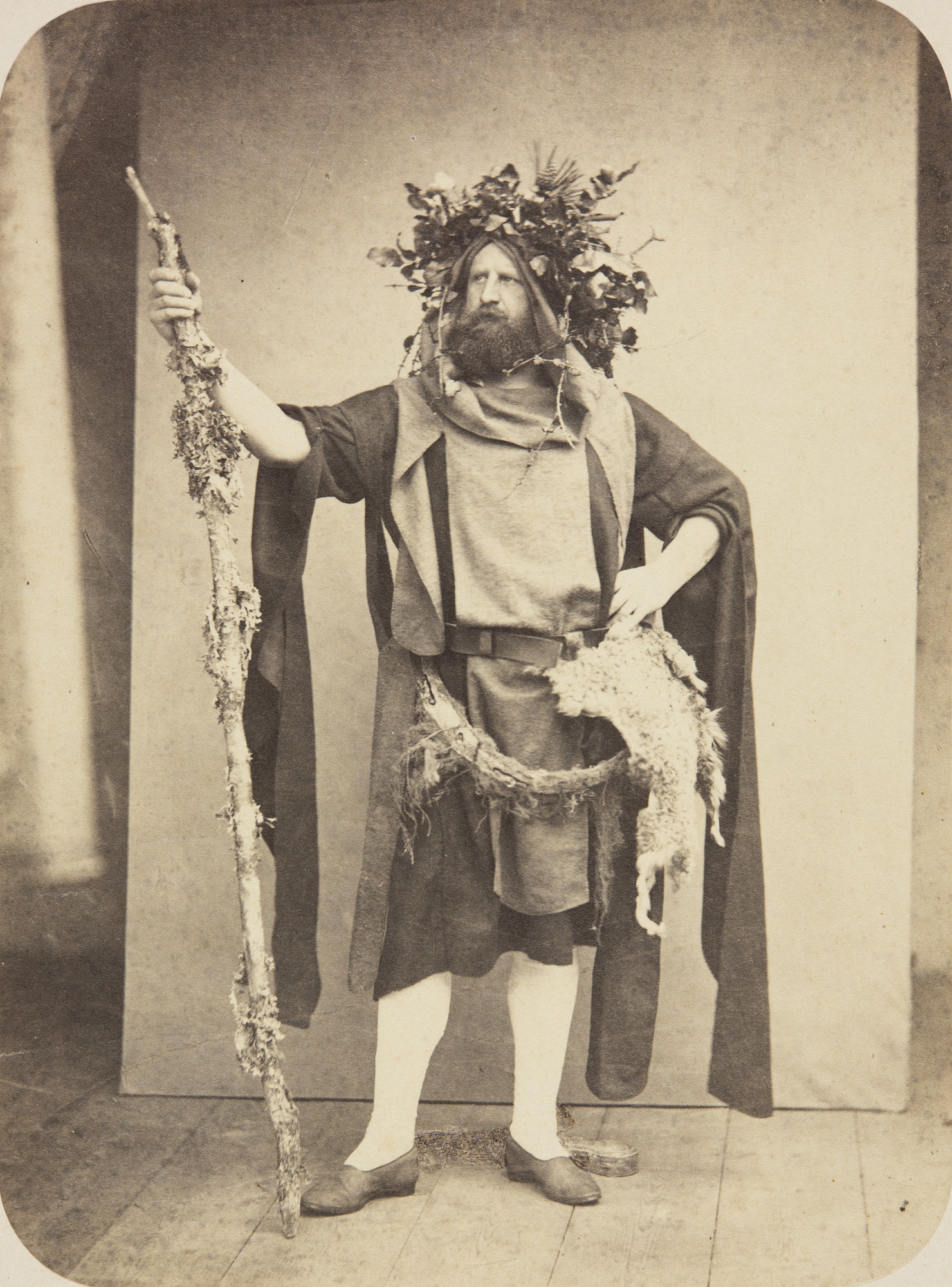
Von Künstlervereinigungen ausgerichtete Maskenfeste waren im 19. Jahrhundert in München überaus populär. Zu den frühen Aufnahmen dieser speziellen Festkultur zählen die fast surreal anmutenden, rund 30 Gruppen- und Einzelporträts, die der Fotograf Joseph Albert (1825–1886) von den Teilnehmenden am Maskenfest “Die Märchen” schuf. Das von der Vereinigung “Jung-München” veranstaltete Fest fand in der Faschingszeit am 15. Februar 1862 statt, geladen wurde in das königliche Odeon, zahlreiche Mitglieder der bayerischen Königsfamilie nahmen daran teil, darunter auch der spätere “Märchenkönig” Ludwig II.
Die Kostüme entsprachen der Vorliebe der Zeit für das mittelalterliche und märchenhafte Genre, das sich auch in der Kunst der Epoche widerspiegelte. Zu den dargestellten Märchen gehörten “Kindermärchen” wie “Hänsel und Gretel”, “Waldmärchen” wie “Rotkäppchen” oder auch “Thiermärchen” wie der “Gestiefelte Kater” oder “Hase und Igel”. Für den Fotografen Albert präsentierten sich die Kostümierten abseits des Geschehens entweder allein in typisch nachempfundener Pose oder zu mehreren für ausgewählte Szenen in der Tradition “lebender Bilder”, den sogenannten “tableaux vivants”. [quoted from : Münchner Stadtmuseum ~ Sammlung Dietmar Siegert]
Joseph Albert ~ “Eduard Lang, Frl. Clara Lang, Seder, Heinrich Lang / Maskenball von ‘Jung-München’ 1862 / Der gestiefelte Kater” (Puss in Boots), Februar 1862, Albuminpapier / Münchner Stadtmuseum ~ Sammlung Dietmar SiegertJoseph Albert ~ “Heinrich Lang / Maskenball von ‘Jung-München’ 1862 / Der gestiefelte Kater” (Puss in Boots), Februar 1862, Albuminpapier. Münchner Stadtmuseum ~ Sammlung Dietmar SiegertJoseph Albert ~ Hermann Oehlmann / Maskenball von ‘Jung-München’ 1862. / Wettlauf des Igels und des Hasen” (Race of the Hedgehog and the Hare), Februar 1862, Albuminpapier / Münchner Stadtmuseum, Sammlung Dietmar Siegert
Mask festivals organized by artists’ associations were extremely popular in Munich in the 19th century. The early photographs of this festival culture include these almost surreal-looking images: around thirty group and individual portraits that the photographer Joseph Albert (1825-1886) created of the participants in the masked festival “The Fairy Tales”, the festival, organized by the “Jung-München” association, took place during the carnival period on February 15, 1862. Among the invited guests were numerous members of the Bavarian royal family, including the later “fairy tale king” Ludwig II.
The costumes corresponded to the period’s penchant for the medieval and fairytale genre, which was also reflected in the art of the period. The fairy tales presented included “children’s fairy tales” such as “Hansel and Gretel”, “forest fairy tales” such as “Little Red Riding Hood” or “animal fairy tales” such as “Puss in Boots” or “Hase and Hedgehog”. The costumed people presented themselves, for the photographer, away from the action either alone in a typically imitated pose or in groups for selected scenes in the tradition of “living pictures”, the so-called “tableaux vivants”.






![Anna Riwkin [självporträtt], 1928. Gelatinsilverfotografi. | src Moderna Museet](https://live.staticflickr.com/65535/52604055786_8407e39775_o.jpg)
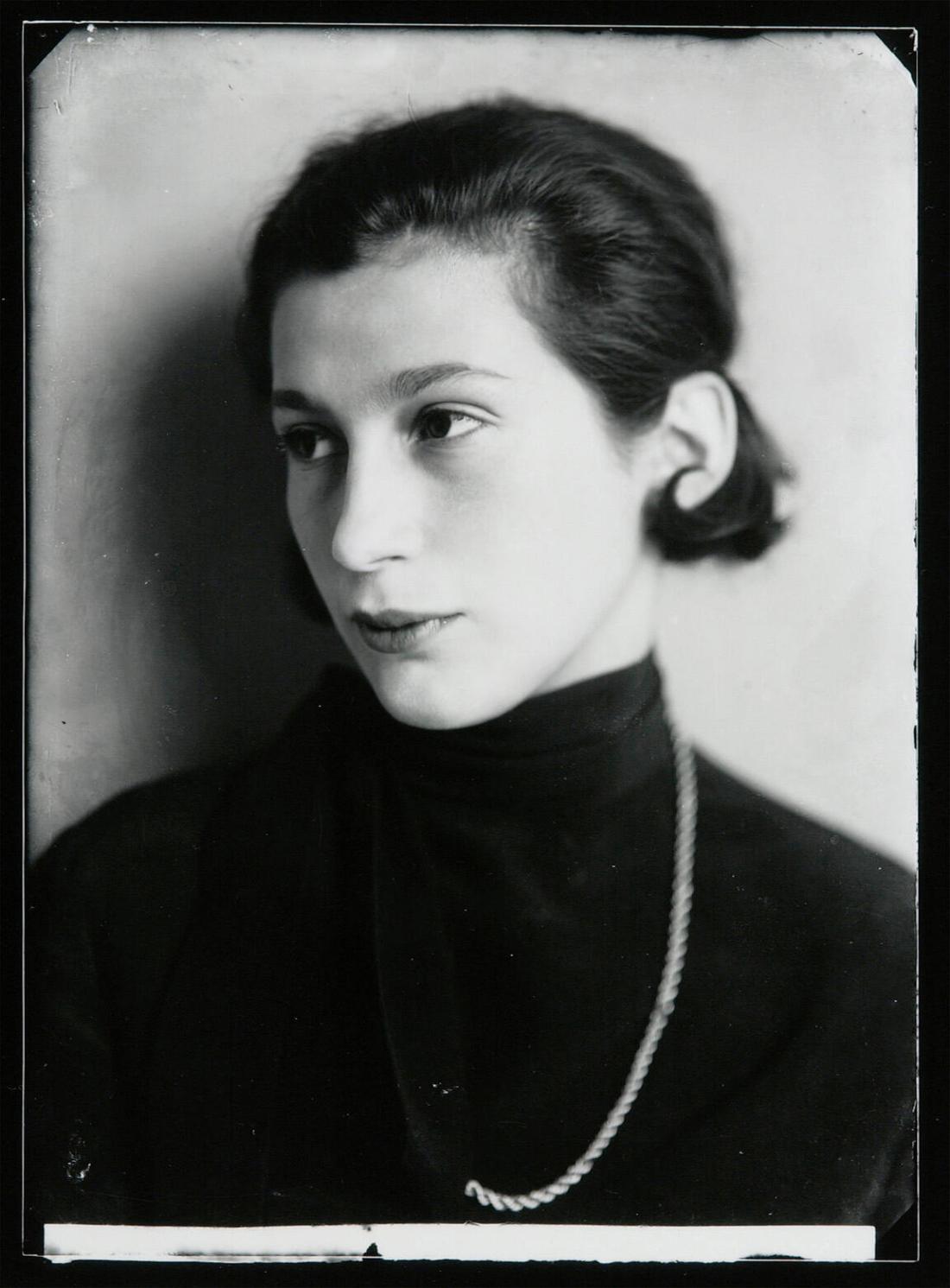



![camera_work1905_12_0087 [F. [Felix] Benedict Herzog, pl. II. Angela, photogravure](https://live.staticflickr.com/65535/52789073200_19514a3e09_o.jpg)



 un regard oblique