Ichiro E. Hori ~ Figure Study. Shadowland magazine, October 1921 | src internet archiveIchiro E. Hori ~ Figure Study. Shadowland magazine, October 1921 (Full page)Ichiro E. Hori ~ Laurent Novikoff in costume for the Ziegfeld Follies. Shadowland magazine, September 1922
Caption reads : Laurent Novikoff / A vivid personality lends much to the interpretative quality of his subtle art
Ichiro E. Hori ~ Laurent Novikoff in costume for the Ziegfeld Follies. Shadowland magazine, September 1922 | src internet archiveIchiro E. Hori ~ Figure Study. Shadowland magazine, January 1922Ichiro E. Hori ~ Figure Study. Shadowland magazine, Januray 1922. Full page | src internet archiveIchiro E. Hori ~ Roshanara. Shadowland magazine, October 1921 | src internet archiveIchiro E. Hori ~ Roshanara. Shadowland magazine, October 1921 (Full page)
Caption reads : Roshanara / The gifted British dancer whose work vibrates with the mysticism and color of India and Burma
Ichiro E. Hori ~ Roshanara. A new camera study. Shadowland magazine, January 1922 | src internet archive
Caption reads : Roshanara / A new camera study of the brilliant young interpreter of native Burmese and Indian dances
Ichiro E. Hori ~ Roshanara. Shadowland magazine, January 1922 | src internet archive
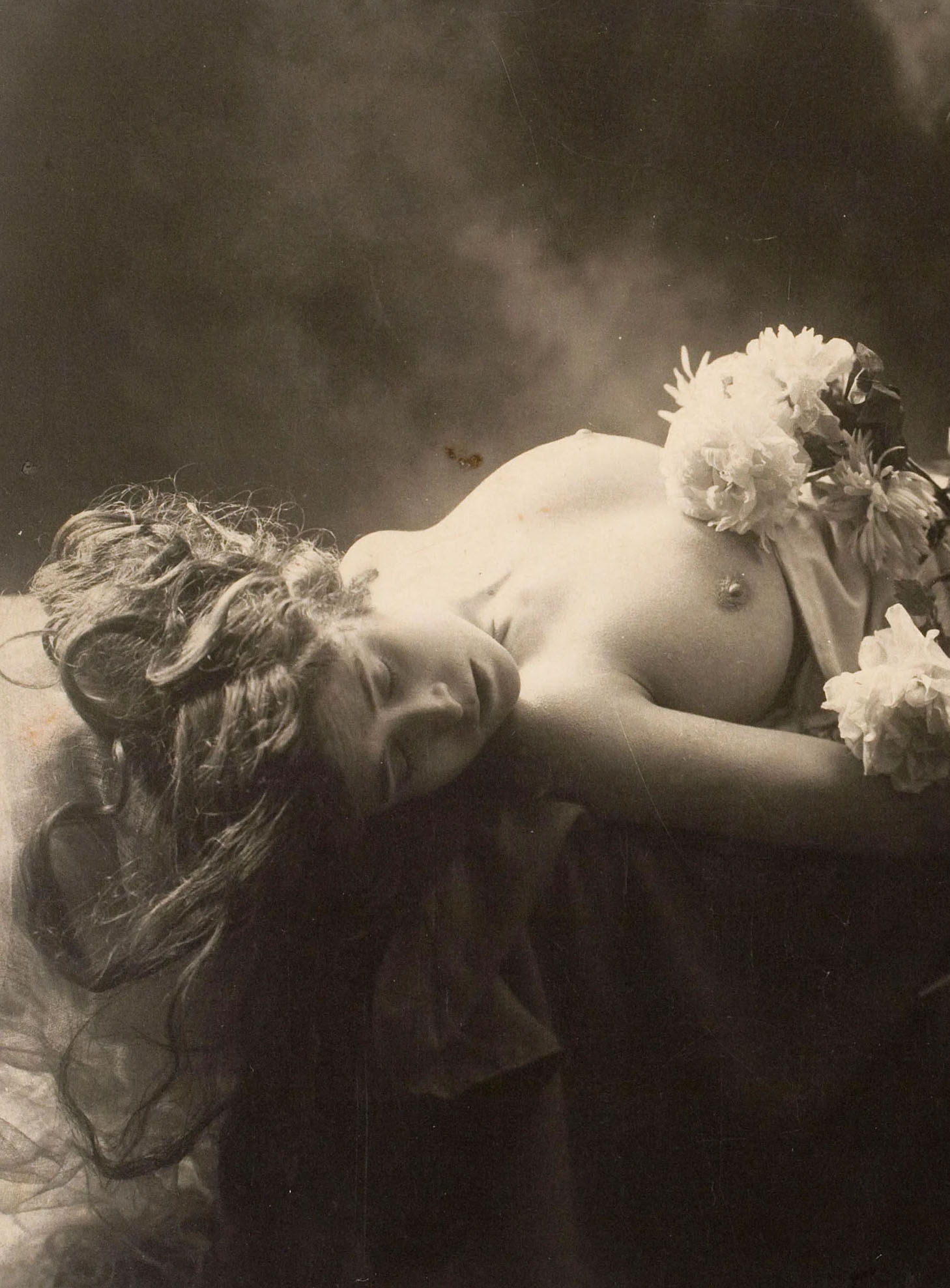
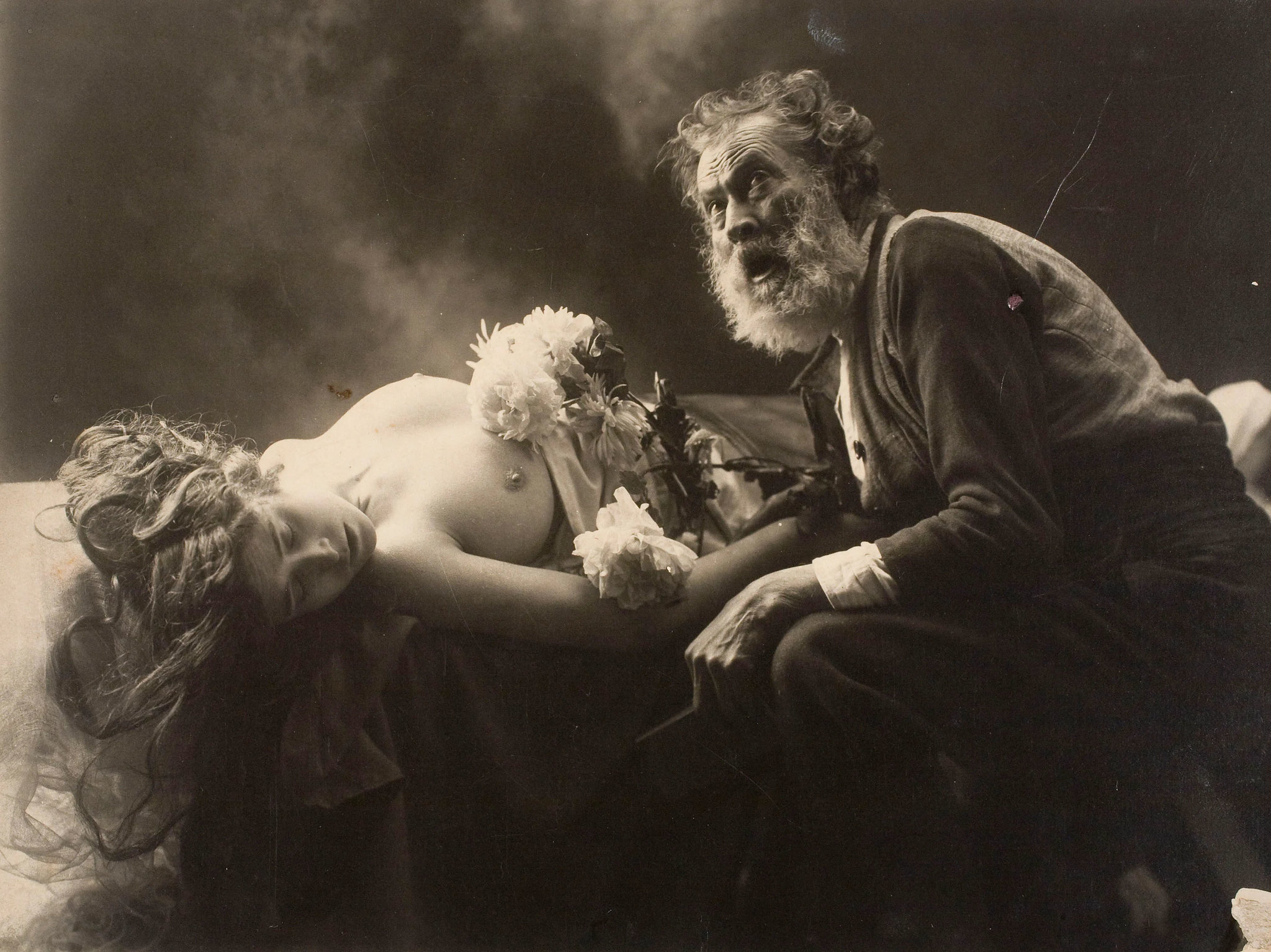
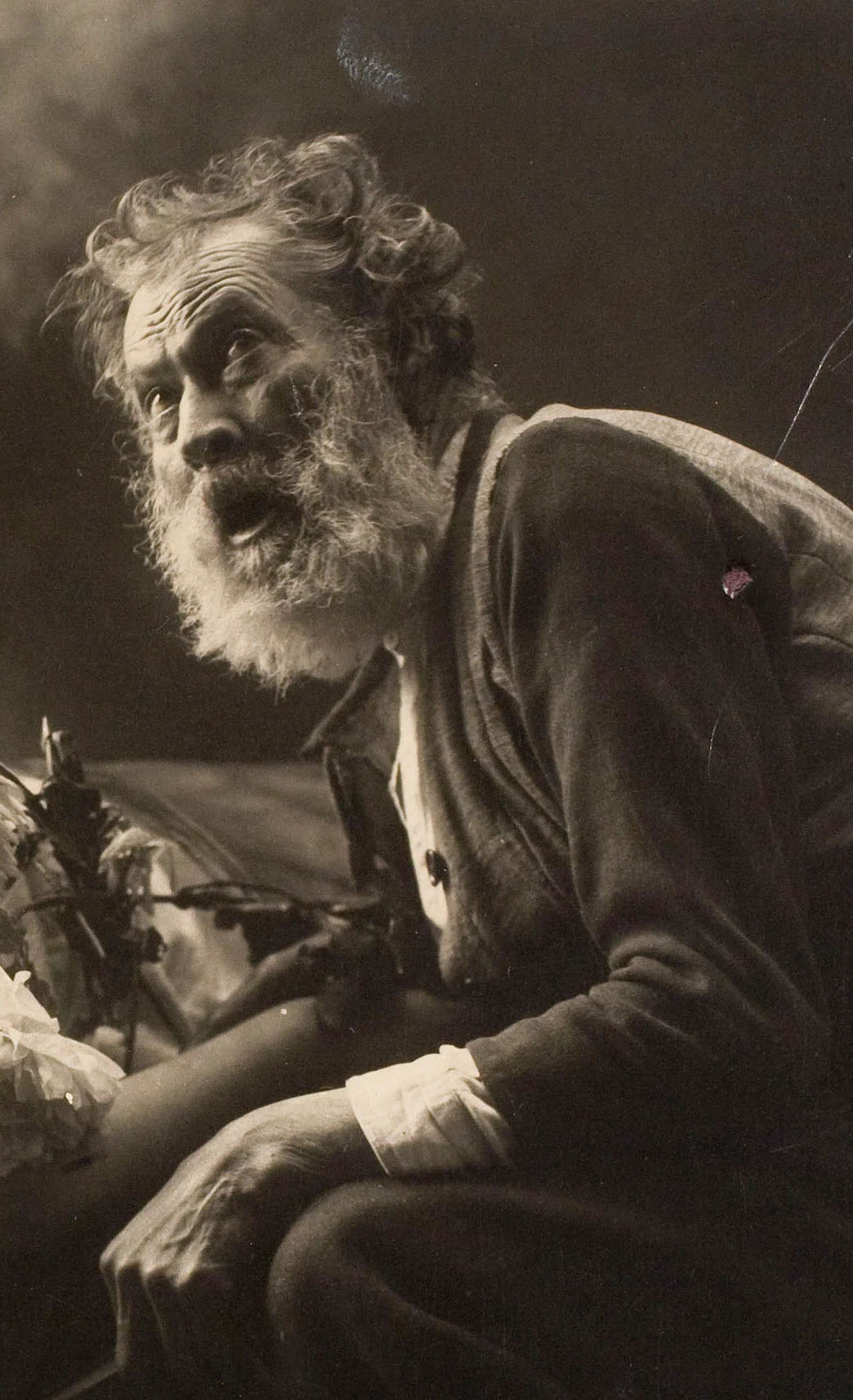
Joan Vilatobà ~ En quin lloc del cel et trobaré? | Where in Heaven Will I Find You? (Detail) | src MNACJoan Vilatobà ~ En quin lloc del cel et trobaré? | Where in Heaven Will I Find You? ca. 1903-1905. Silver gelatin on baryta-coated paper | src MNAC
The massive industrialization of the photography based on the new models of Kodak in 1888, marked the birth of amateurism, and what could be considered its elitist complement and counterpart, Pictorialism, understood to be the first discourse of artistic legitimization of photography.
Faced with technological standardization and documental utilitarianism, Pictorialism proposed the use of pigmentary techniques that evoked the manual work of paintings, as well as their symbolic, picturesque or sublime themes, in accordance with the aesthetic paradigms of the modern art of the 19th century, which was based on the romantic principle of genius. In some way the concept of “creation” was introduced into photographic techniques, vindicating the figure of the photographer as an author and interpreter of reality. Within this framework, Joan Vilatobà created a series of works which moved between symbolic allegory and customs, and photography through topics such as beauty, death, love, etc., of which Where in heaven will I find you? is an example. | quoted from MNAC ~ Museu Nacional d’ Art de Catalunya
Joan Vilatobà ~ En quin lloc del cel et trobaré? | Where in Heaven Will I Find You? (Detail 2) | src MNAC


 un regard oblique