more about Lili Green: Empire of Ecstasy: Nudity and Movement in German Body Culture, 1910-1935 pp. 145 to 154
images that haunt us


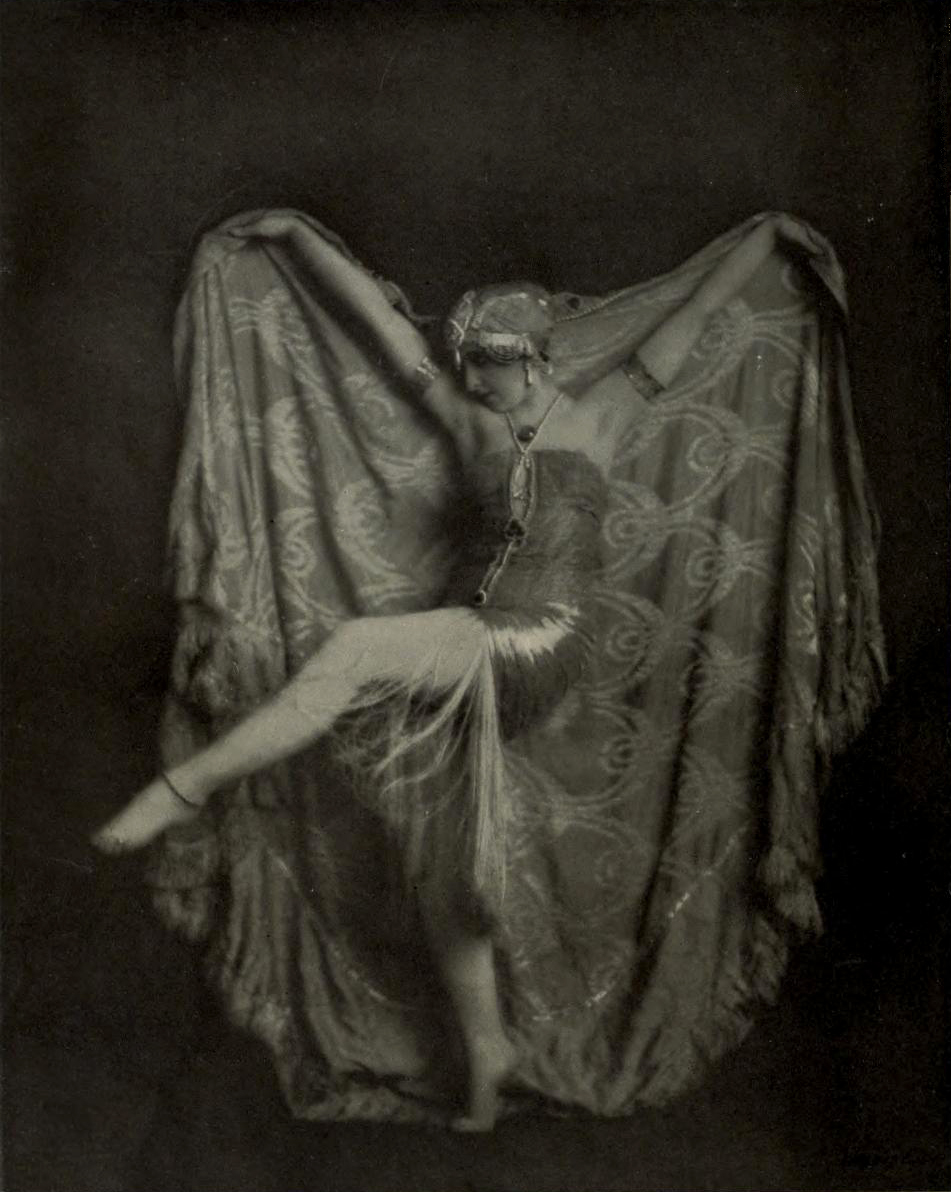
Waldemar Eide is presented in a large exhibition at the Stavanger Art Museum this winter.
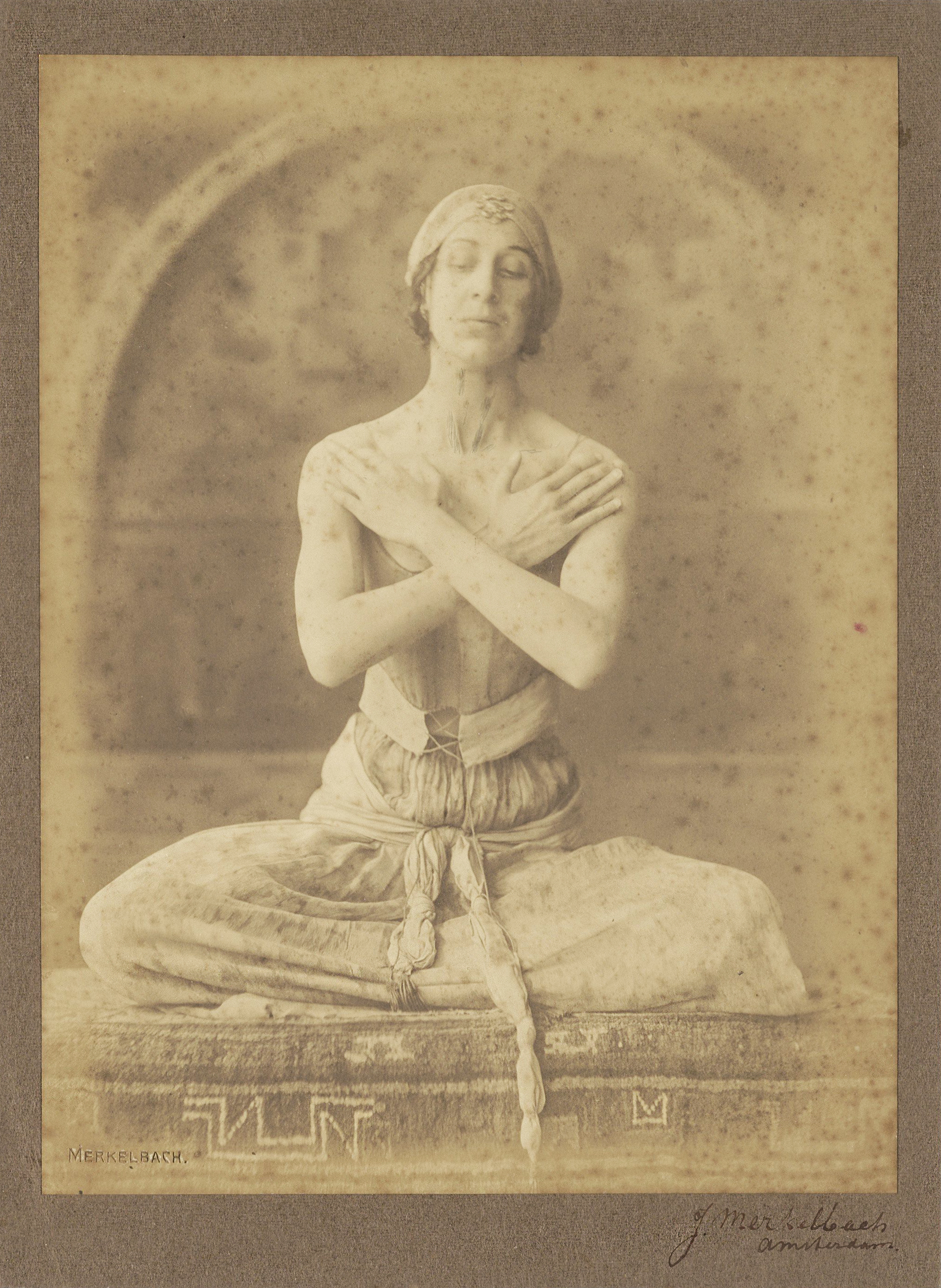
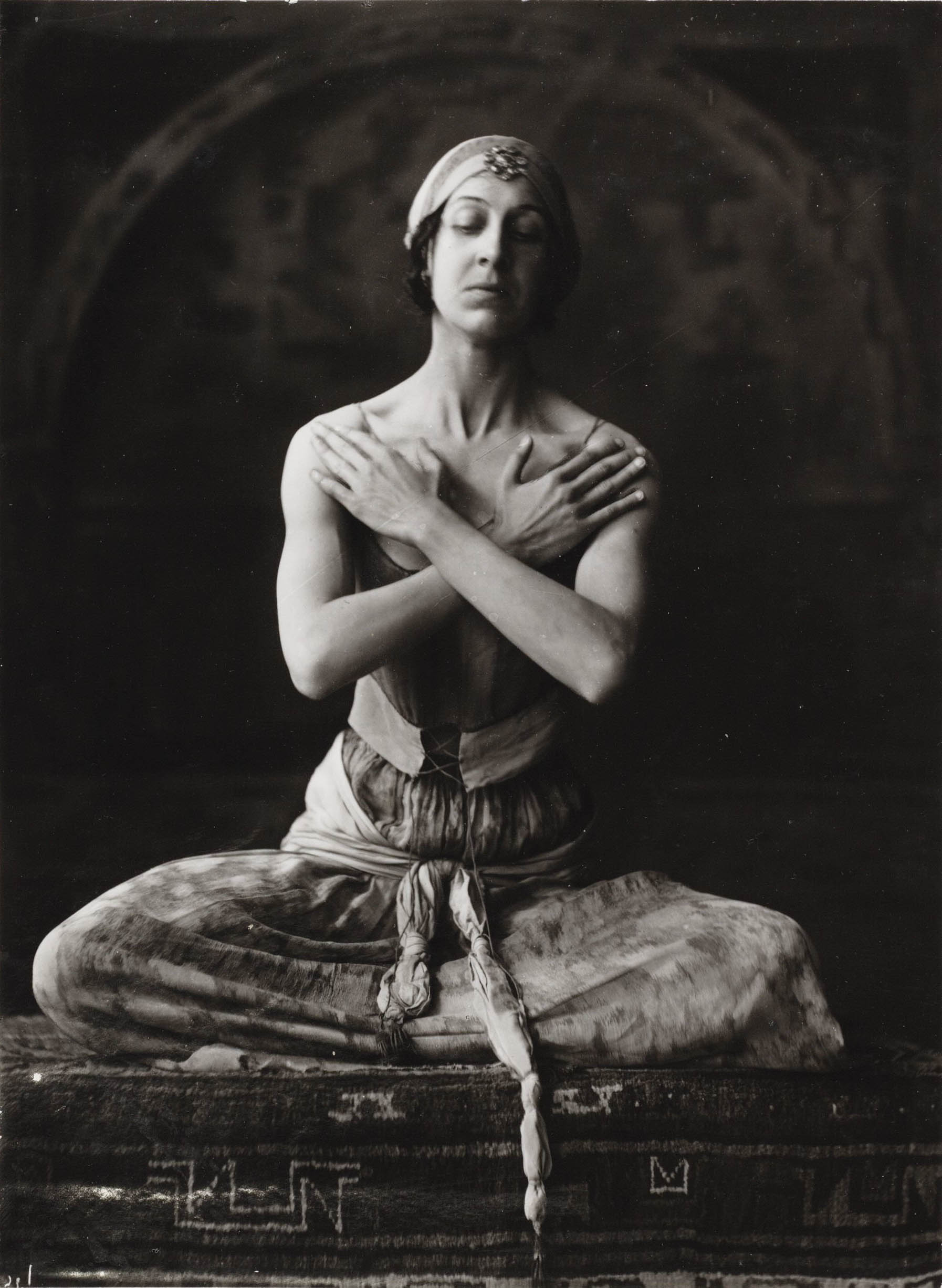
Waldemar Eide is presented in a large exhibition at the Stavanger Art Museum this winter. Waldemar Eide was born in Stavanger in 1886 and was one of Norway’s leading portrait photographers in the first half of the 20th century. He was among the first photographers to consider himself a visual artist, and had an active exhibition business in Stanvanger and abroad. He received several awards for his photographs and also regularly wrote about art and photography for trade journals and newspapers.
Eide was a pictorialist and thus placed great emphasis on the painterly qualities, on light and shadow in a picture. This led to his pictures often convey an almost dreamlike sense and this style resonated well with the dancers, actors and musicians of the time.
His studio in Stavanger was a meeting place for visiting artists and personalities who wanted to have their portraits taken, as well as the local population. Composer Sergej Rakhmaninov, historian Macody Lund and opera singer Kaja Eide Norena were among the many he photographed. He is perhaps best known for the pictures of the Russian ballet dancer Vera Fokina, whom he depicted in 1919.
The exhibition is curated by art historian at Stavanger art museum Vibece Salthe and is on display until 19 February 2017. [quoted from Norges Fotografforbund, original text below (*)]

[(*) quote in original language] Waldemar Eide presenteres i stor utstilling på Stavanger kunstmuseum denne vinteren.
Waldemar Eide presenteres i stor utstilling på Stavanger kunstmuseum denne vinteren.Waldemar Eide ble født i Stavanger i 1886 og var en av Norges ledende portrettfotografer i første halvdel av 1900-tallet. Han var blant de første fotografene som betraktet seg som billedkunstner, og hadde en aktiv utstillingsvirksomhet i inn- og utland. Han mottok flere priser for sine fotografier og skrev i tillegg jevnlig om kunst og fotografi for fagtidsskrifter og aviser.
Eide var piktorialist og la dermed stor vekt på de maleriske kvalitetene, på lys og skygge i et bilde. Det førte til at bildene hans ofte fikk et nærmest drømmende preg og denne stilen resonnerte godt med tidens dansere, skuespillere og musikere.
Atelieret hans i Stavanger var et møtested for besøkende kunstnere og personligheter som ville la seg portrettere, i tillegg til lokalbefolkningen. Komponisten Sergej Rakhmaninov, historikeren Macody Lund og operasangeren Kaja Eide Norena var blant de mange han fotograferte. Mest kjent er han kanskje for bildene av den russiske ballettdanseren Vera Fokina, som han avbildet i 1919.
Utstillingen er kuratert av kunsthistoriker ved Stavanger kunstmuseum Vibece Salthe og vises til og med 19. februar 2017. | src Norges Fotografforbund

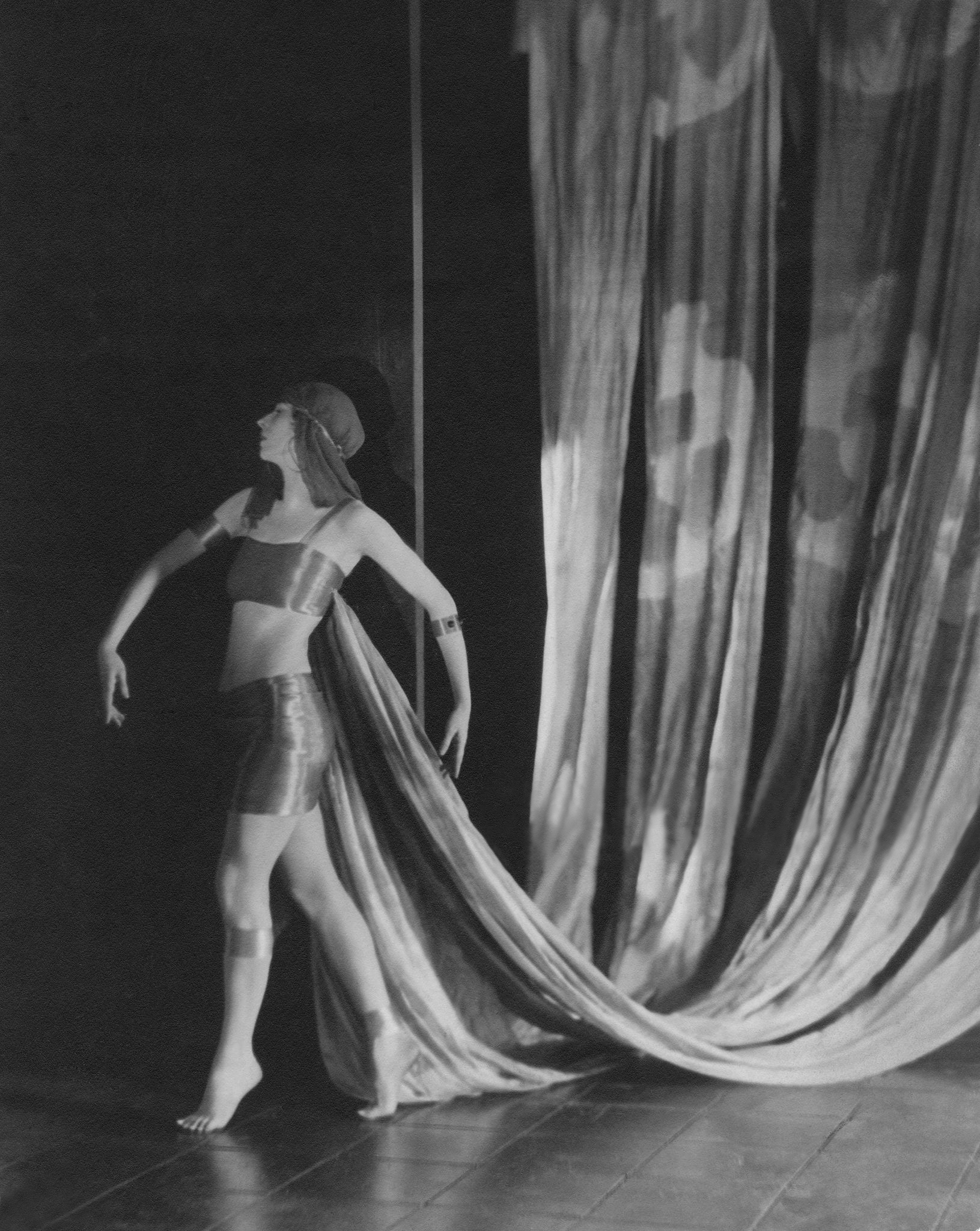
Caption reads : Kyra / The exotic dancer in this season lending a touch of Oriental color to the Winter Garden revue

Alanova, also known as Kyra Alanova and Alice Allan (Seattle, 26 July 1902 – Venice, 21 December 1965 ), was an American dancer, choreographer and actress. Born in the USA to a Russian father who emigrated at the beginning of 1900, she was then the stepdaughter of the choreographer and dancer Adolf Bolm, an important collaborator of Sergei Diaghilev Ballets Russes. She followed her stepfather’s footsteps, from 1918 to 1924 she danced with Diaghilev’s company on the stages of London, Paris and Rome, from 1922 she was engaged as an actress in various Broadway and London productions, under the name of Kyra Alanova.
Active on the Paris theater scene in the 1930s, she was portrayed by Kees van Dongen in several paintings (“Portrait of Miss Alanova”, “Jeune fille aux pieds nus”), in a period when the two were probably lovers.
At the end of the 1930s she arrived in Italy for a tour of the most important theaters and met Count Andrea Di Robilant, screenwriter and director, the two married shortly after and Alanova remained for a few years working in Italy, dividing her time between family and work (mainly in Italian films).
At the end of the war, Alanova resumed her activity as a choreographer, founding her own dance company: the Ballet Russe Alanova or Ballets Alanova (of which Enrico Prampolini would be artistic director and with whom Leonor Fini would collaborate as set and costume designer) with which she toured America and Europe until 1946.
text adapted from the Italian Wikipedia entry for Alanova
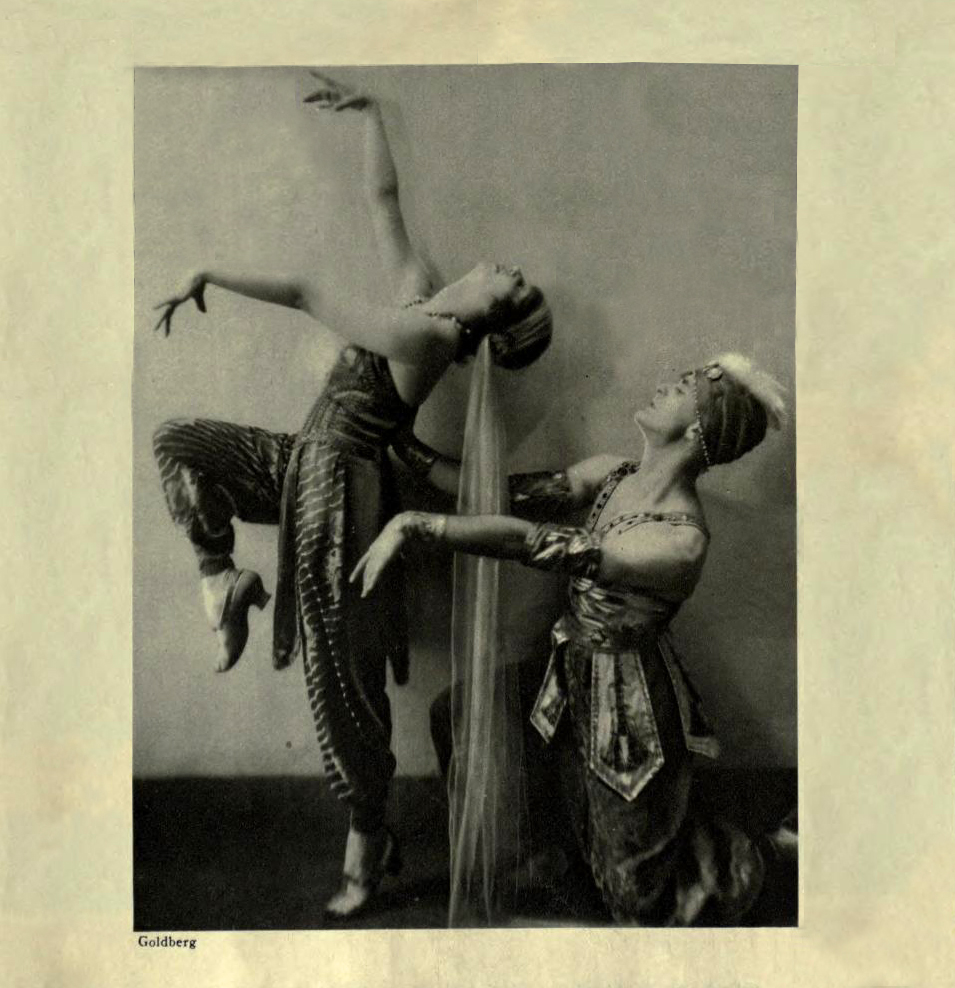


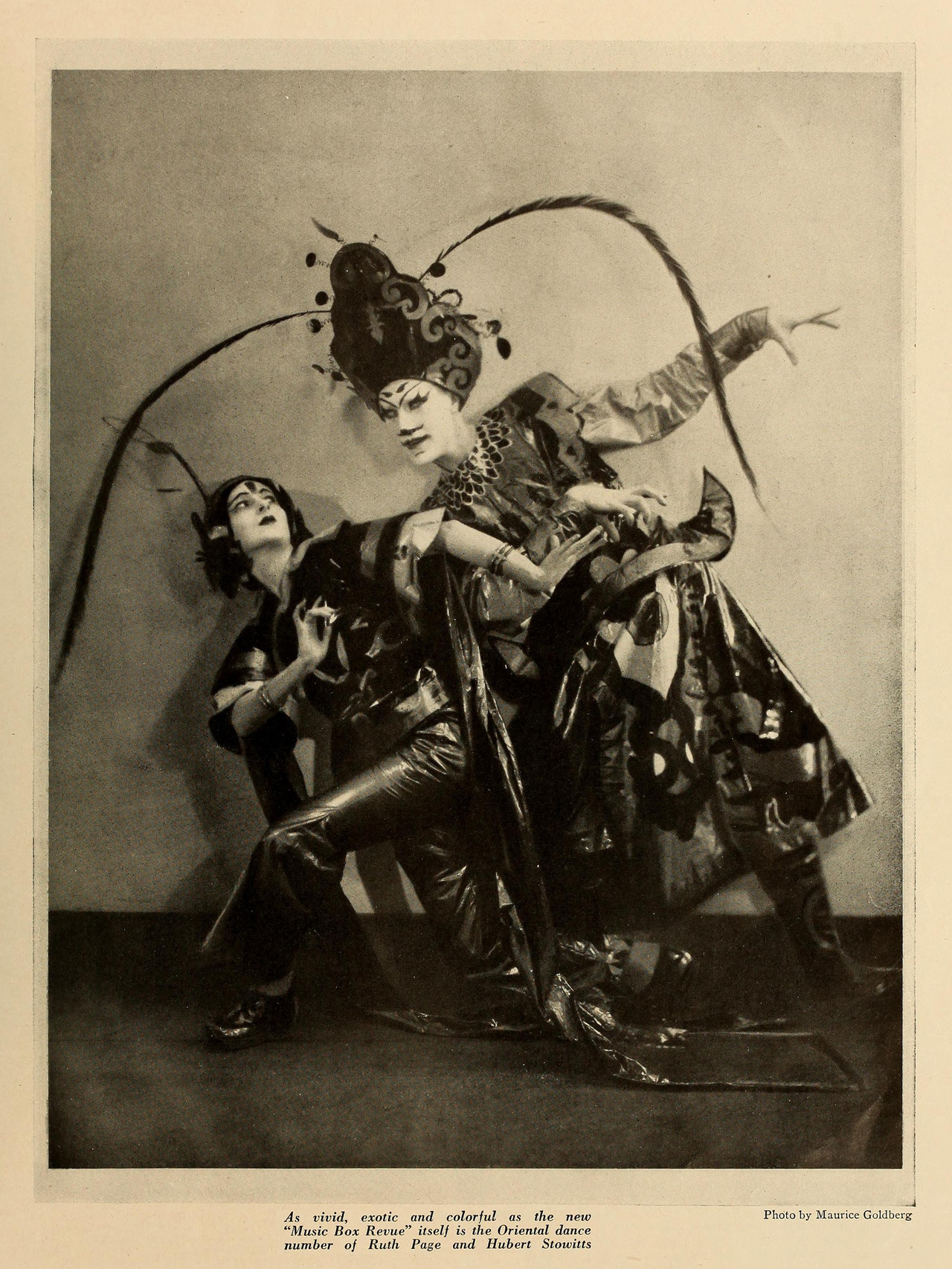
Maurice Goldberg :: Ruth Page and Hubert Stowitts in an Oriental dance number, Music Box Revue, published in Shadowland magazine, January 1923 issue. / source: Library of Congress: Moving Image Section
 un regard oblique