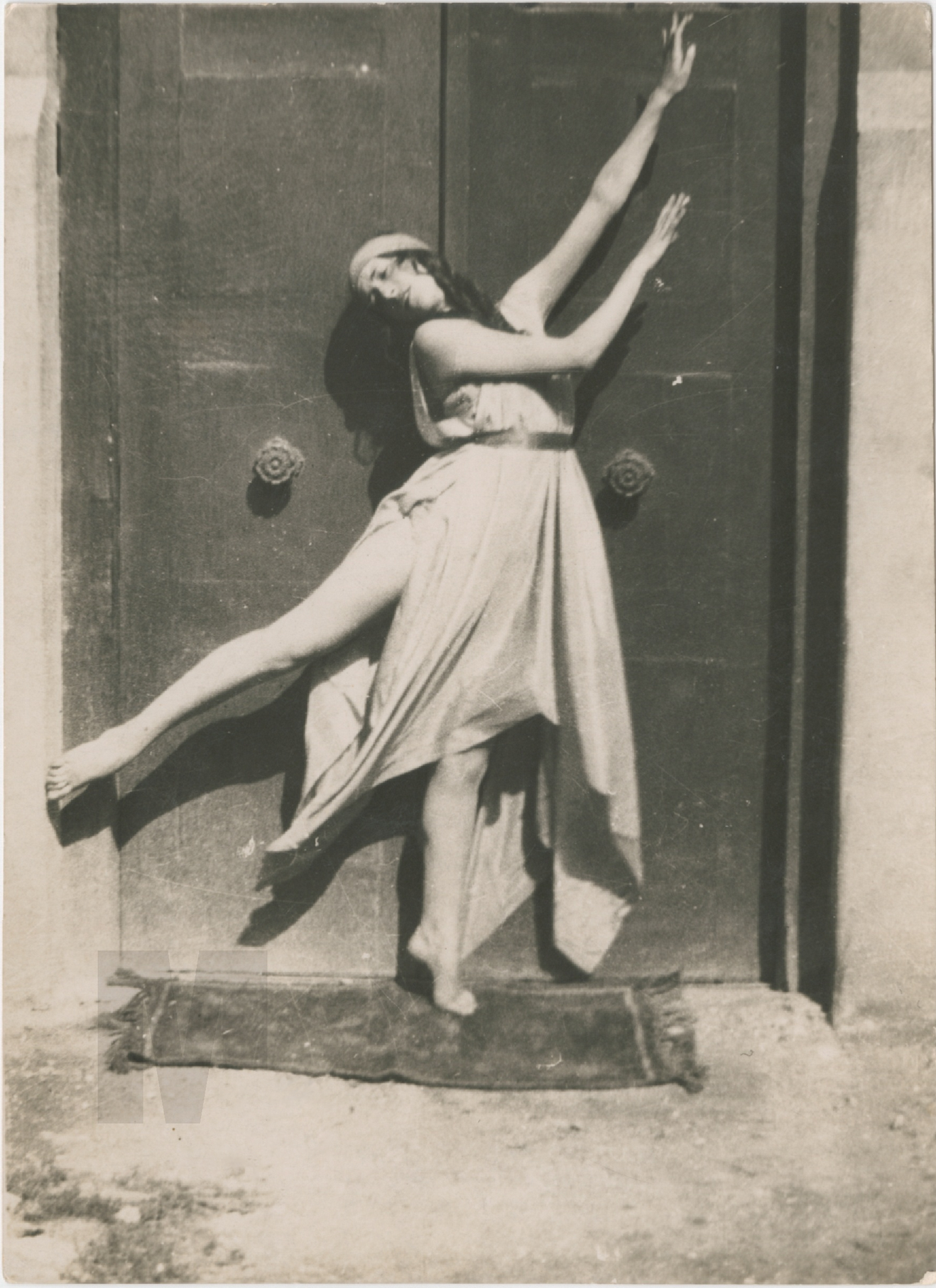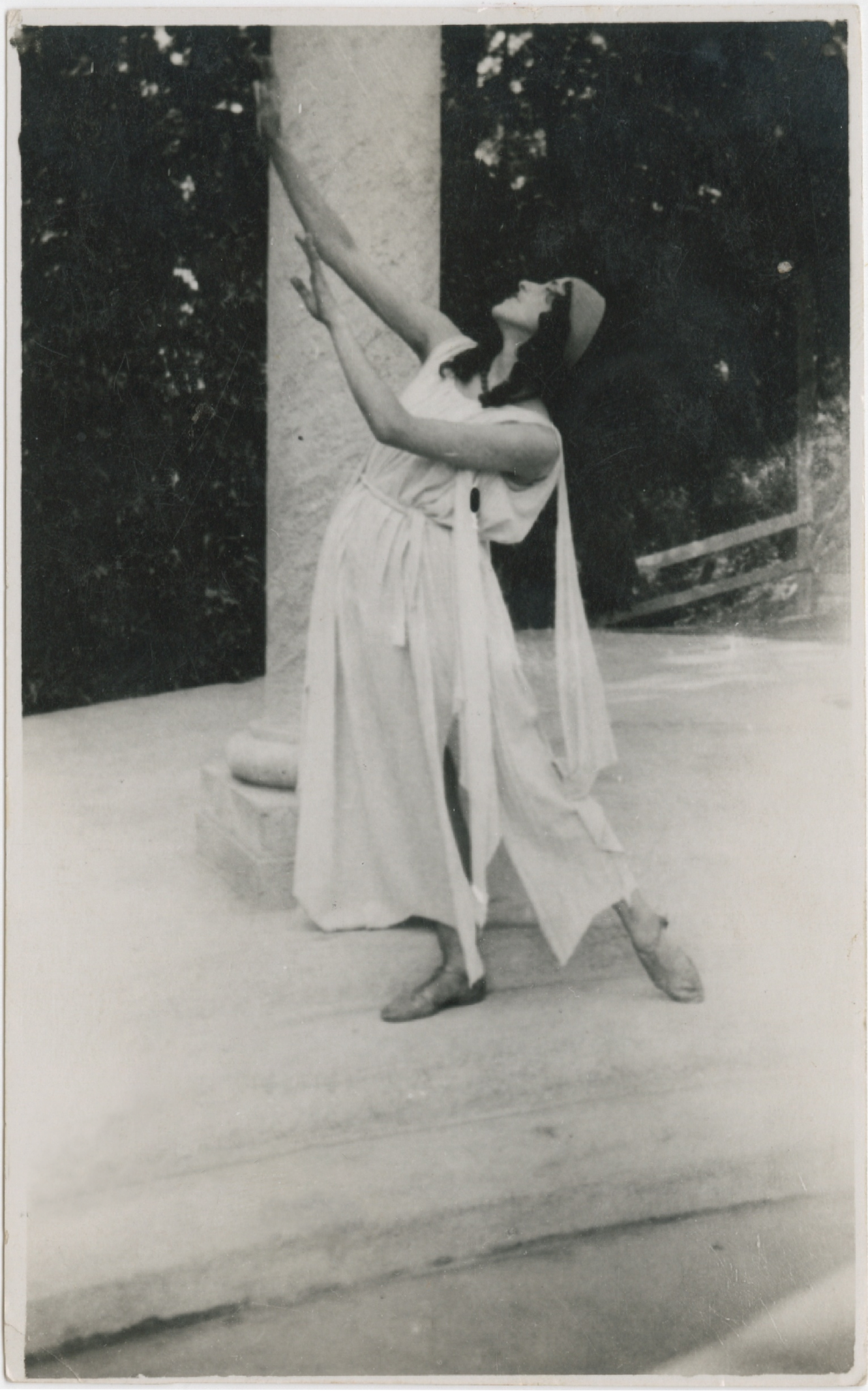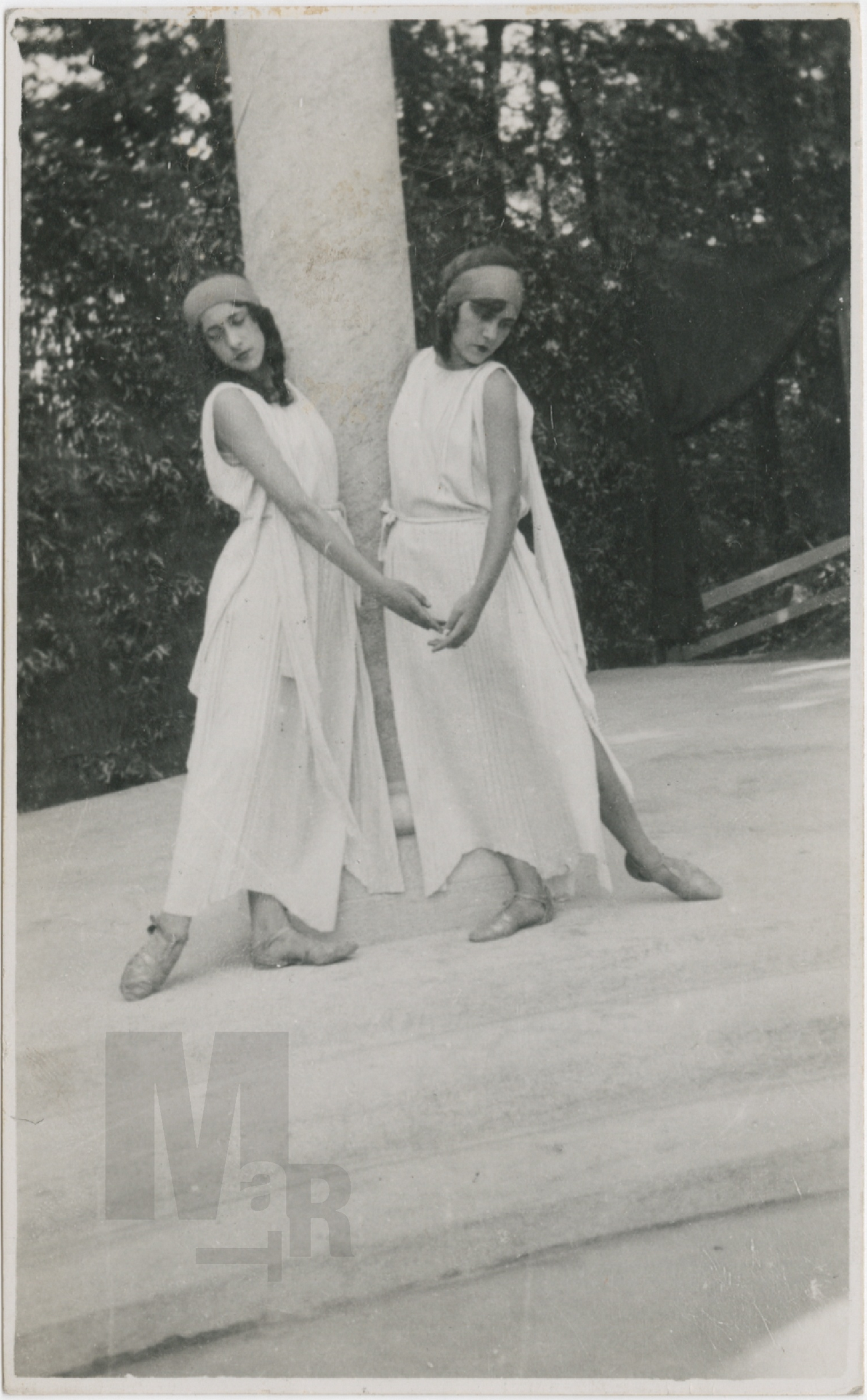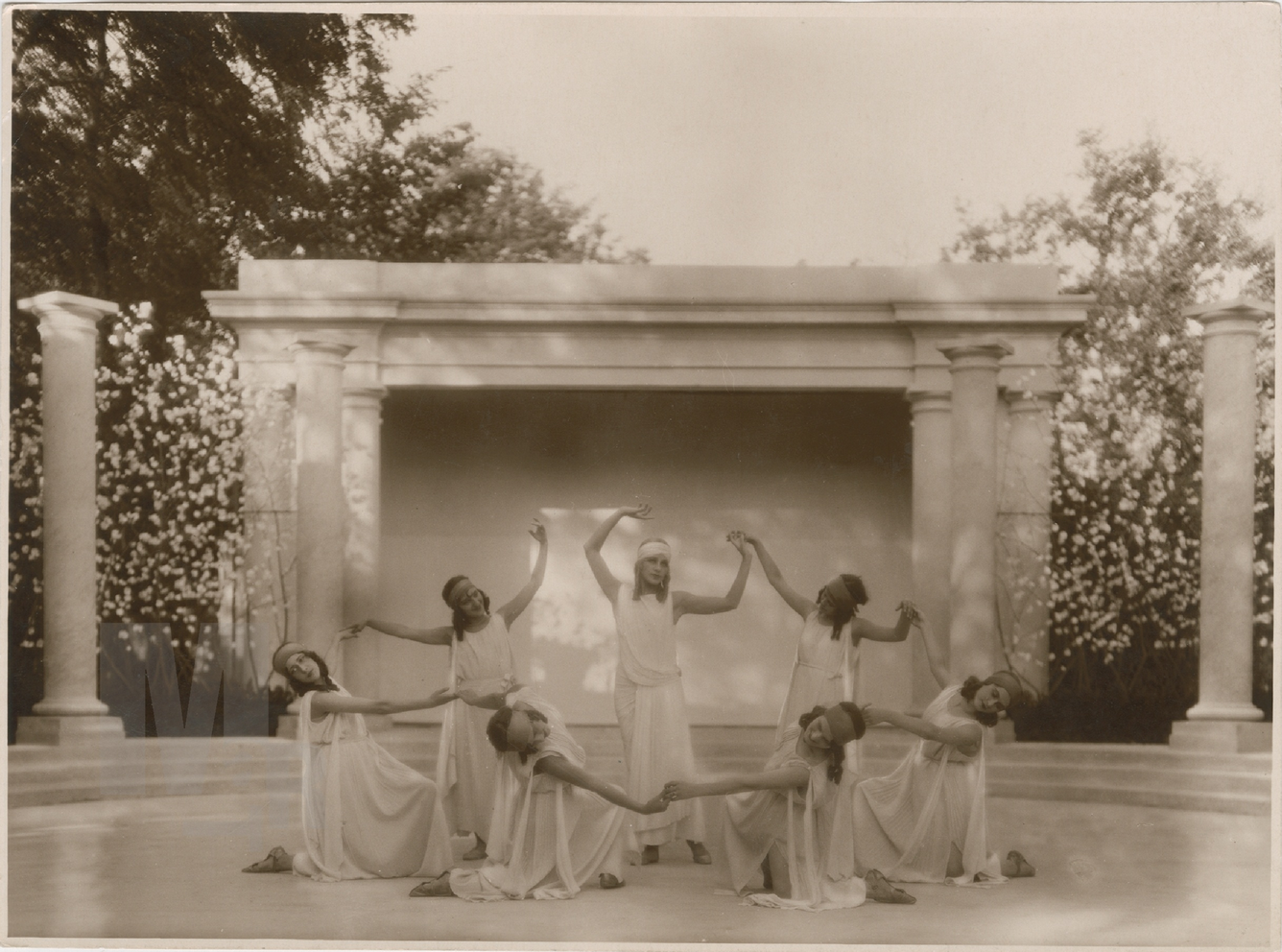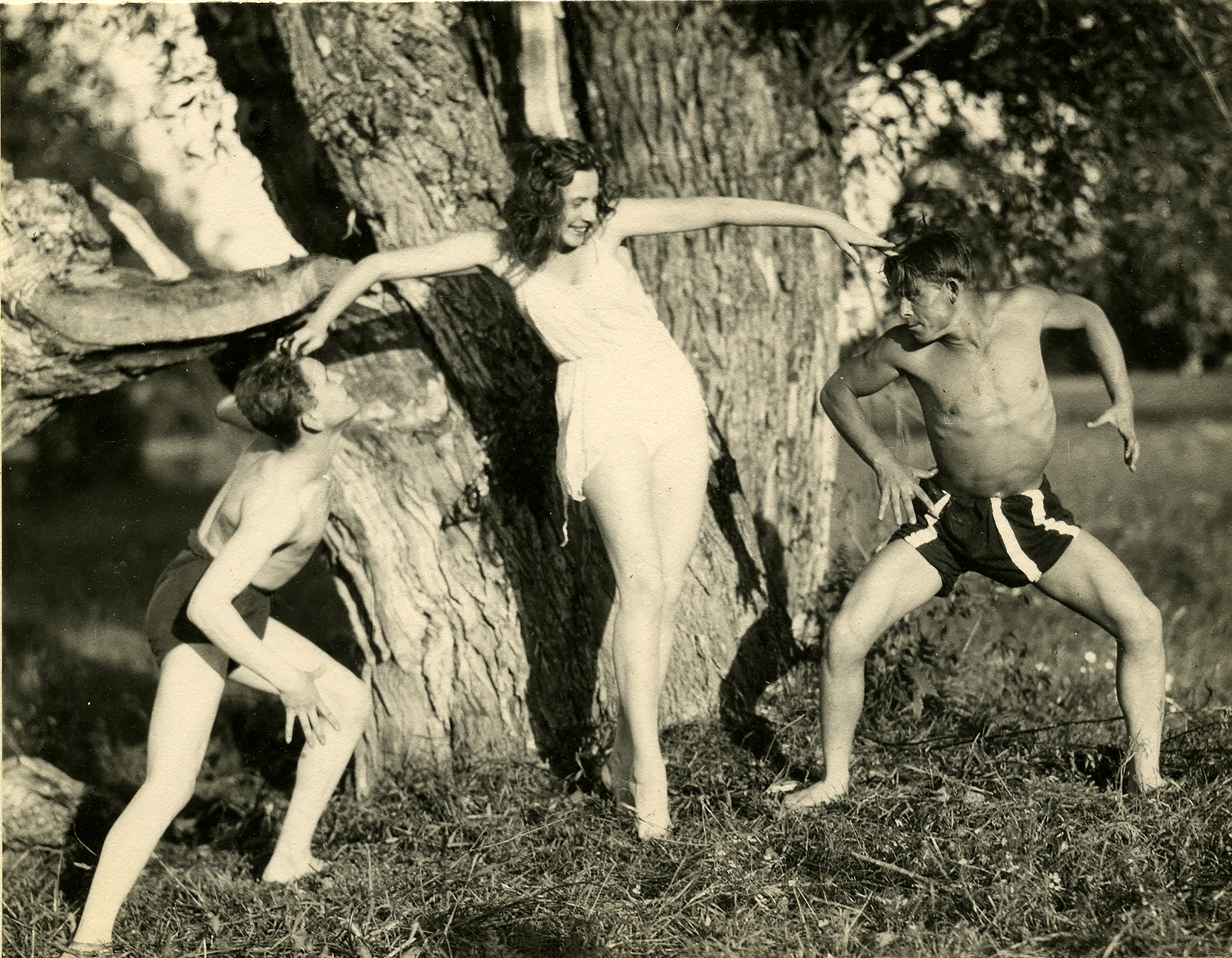
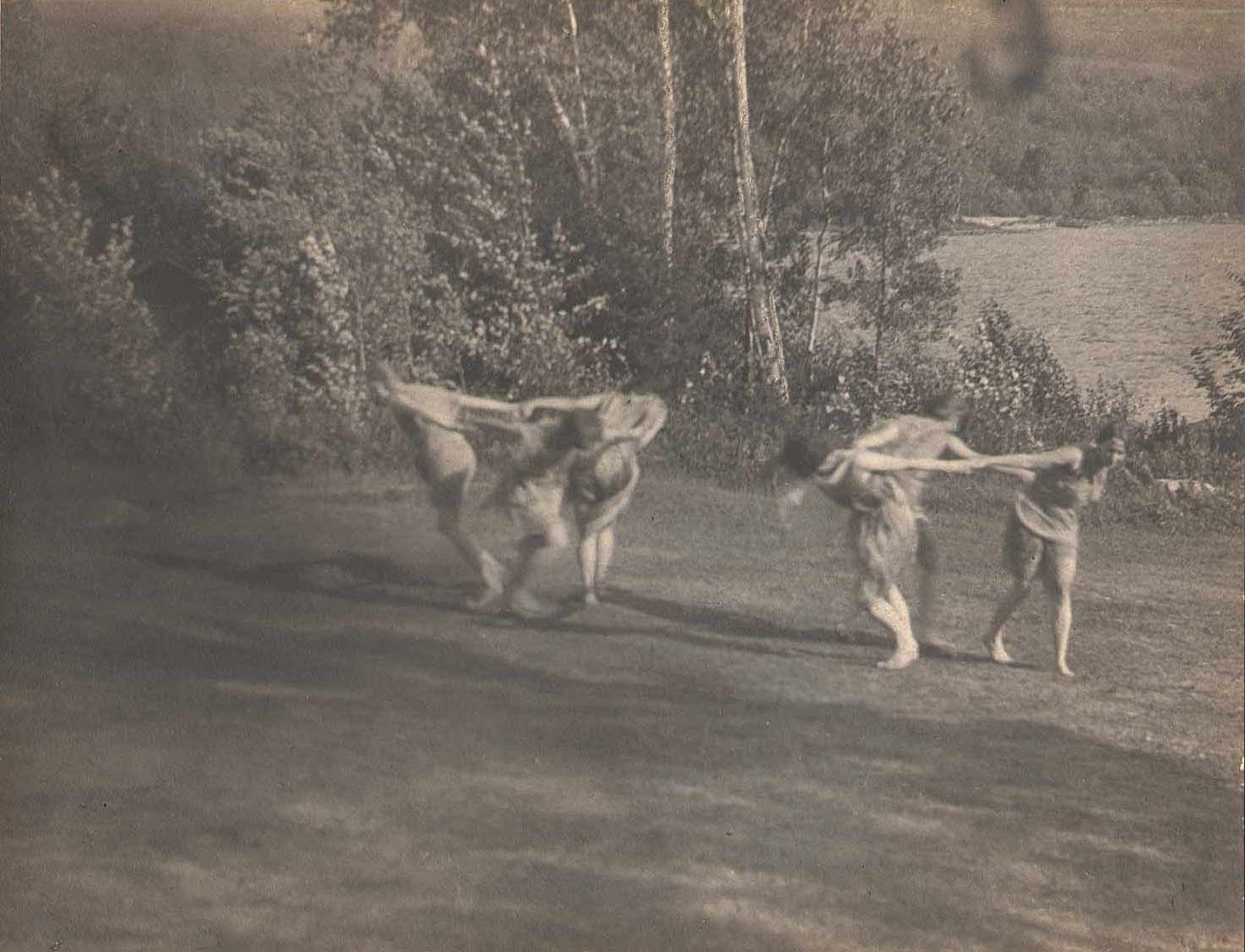
Three dancers by Delight Weston

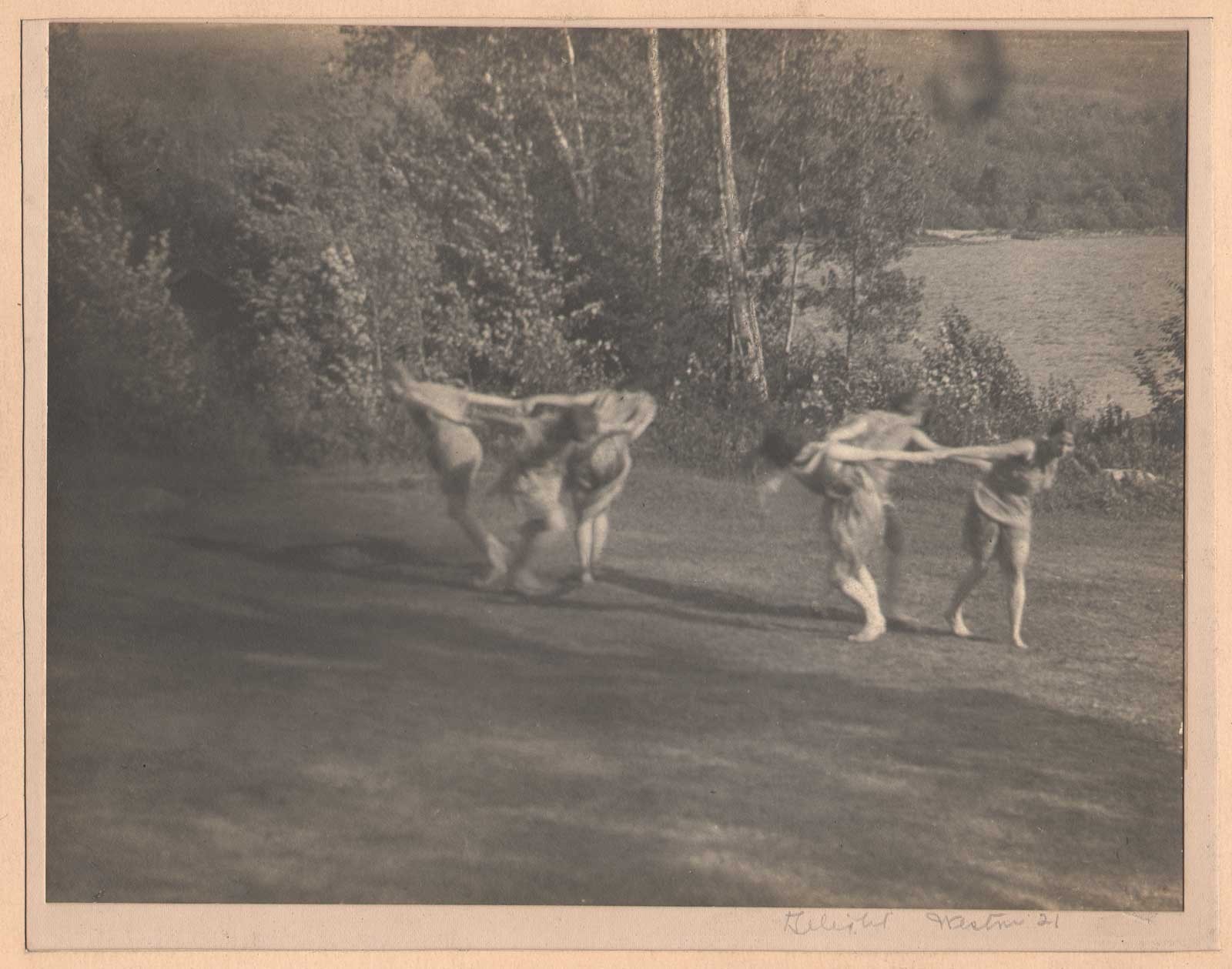
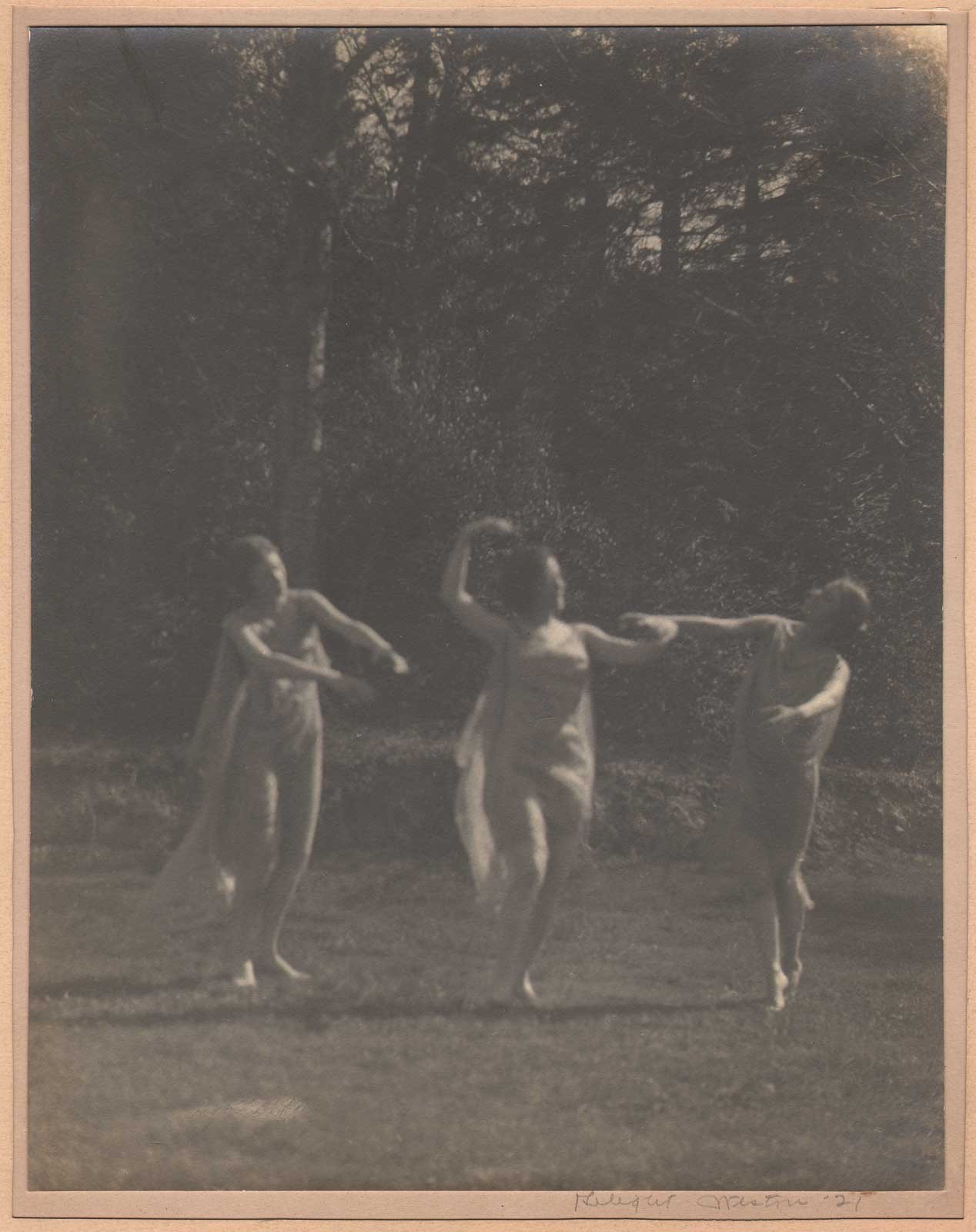
Delight Weston :: Three Dancers: Rhythmic Study, 1921. Bromide print. | src Photoseed

These pictorial studies of three female dancers in motion is believed to have been taken at the former Ruth Doing Camp for Rhythmics in New York state’s Adirondack mountains. In the 1920’s and 30’s, photographer Delight Weston lived with camp founders Ruth Doing (1881-1966) and Gail Gardner (1878-1949) in New York City, along with other women artists, in a building at 139 W. 56th St. near Carnegie Hall. 

Established in 1916, the summer camp was first located on the shores of Upper Chateaugay lake near Lyon Mountain until 1925, (1.) when it moved to Upper St. Regis Lake in Paul Smiths, New York. (2.) Renamed the Gardner-Doing Camp after this time, it was coeducational: besides regular summer camp activities, it specialized in the “rhythmic” style of dancing popularized by famed dancer Isadora Duncan, whom Ruth Doing was a former student of. Doing’s life partner, Michigan native Gail Gardner, had earlier made a name for herself as an accomplished and world-traveling opera singer.

Another important artistic connection with this photograph is to notable American wood sculptor Wharton Esherick. (1887-1970) Beginning in 1920, he and his family spent their summers at this camp, with dance studies similar to this example- possibly by Delight Weston- contained in a family album along with Esherick’s many quick-sketch drawings: evidence that are known to have aided, complemented and influenced his emerging artistic style: 

The Ruth Doing School of Rhythmics was a dance camp run by Ruth Doing, a former dancer and student of Isadora Duncan, with her business and life partner Gail Gardner in the Adirondack Mountains of New York. The Esherick family spent their summers there starting in 1920. In the fall of 1923 Ruth Doing taught dance classes in Philadelphia, assisted by Letty Esherick, Wharton’s wife. Watching and drawing the dancers and their movements heavily influenced Wharton Esherick’s artistic style; his drawings and designs became more free and flowing. At the camp Wharton also was introduced to Austrian philosopher Rudolph Steiner’s “organic functionalist” design theory, which impacted his style. (3.)

Although unidentified and dated one year later, the intriguing possibility exists the dancers in this photograph may be of camp co-founder Ruth Doing and or Doris Canfield (1895-1993) in motion, with surviving plaster sculptures by Wharton Esherick done in 1920 on display in his namesake museum:

Two early plaster sculptures, which now sit in Esherick’s bedroom, depict dancers from the camp, one of Ruth Doing, the other of dancer and actress Doris Canfield. Both done in 1920, these are very academic for Esherick, though the essential design elements (like the spiral) would show up again and again in Esherick’s work in progressively bolder and more modern designs. (4.)

In addition to these sculptures, sketches of dancing figures done as quick studies on paper by Esherick are in the museum’s collection:

As a regular visitor to the Gardner Doing Dance Camp, Esherick observed dancers like Canfield exploring eurythmy, Rhythmic dance, and other modern dance forms. His wife Letty also danced, sometimes holding classes at their home in Paoli. At times, Esherick joined in with the dance. Otherwise, he was sketching away, attempting to capture bodies in motion. (5.)

Delight Weston :: Three Dancers: Rhythmic Study, 1921. Bromide print. | src Photoseed

1. Source: blog post: Early Rhythms: Wharton Esherick and the Gardner Doing Dance Camp (JUNE 26, 2017). At the Wharton Esherick Museum online resource. A surviving brochure held by the museum printed in 1923 puts an emphasis on the dancing curriculum and is titled “The Ruth Doing Camp for Rhythmics”. This is believed to be the first name for the camp until 1925 when it moved to Lake Regis and was renamed the Gardner-Doing Camp.

2. The Gardner-Doing camp operated in the summer months until 1946, when it was sold and renamed Camp Regis. Today it is known as Camp Regis-Applejack.  

3. Source: Finding Aid: NOTABLE FRIENDS AND ASSOCIATIONS: “Wharton had close relationships with several well known people, including actresses, authors, photographers, and others. Many commissioned works from him.” :  Wharton Esherick family papers 1895-1996 [bulk 1920-1970] (Philadelphia Area Archives Research Portal (PAARP) Several similar dance photographs by an unknown artist in the Esherick Family Collection were published in the volume: Wharton Esherick and the Birth of the American Modern. (2010) see “Dance Sketches”, p. 96.

4. Source: ibid: see note #1. Another interesting fact is that the summer camps co-founder, Gail Gardner, was Doris Canfield’s aunt. Doris Canfield’s mother Belle Nye had inherited a fortune after gaining a divorce when her first husband Charles Canfield, a western Michigan lumber baron, deserted her in 1905. See: “Belle Nye, the former Mrs. Canfield” February 11, 2016 in the Manistee News Advocate. Doris Canfield, (1895-1993) was employed as a teacher in the Bronxville, N.Y. school system from 1935-1970 where she taught physical education with an emphasis on Rhythmics.

5. Source: blog post: “Figure Drawing Meets Furniture” by Katie Wynne: August, 2020.

Quoted from Photoseed
Delight Weston :: Two groups of three Dancers: Rhythmic Study, 1921. Bromide print. | src Photoseed
Delight Weston :: Two groups of three dancers: Rhythmic Study, 1921. Bromide print. | src Photoseed
Delight Weston :: Two groups of three Dancers: Rhythmic Study, 1921. Bromide print. | src Photoseed
Delight Weston :: Two groups of three dancers: Rhythmic Study, 1921. Bromide print. | src Photoseed

Women reading, dancing, strolling

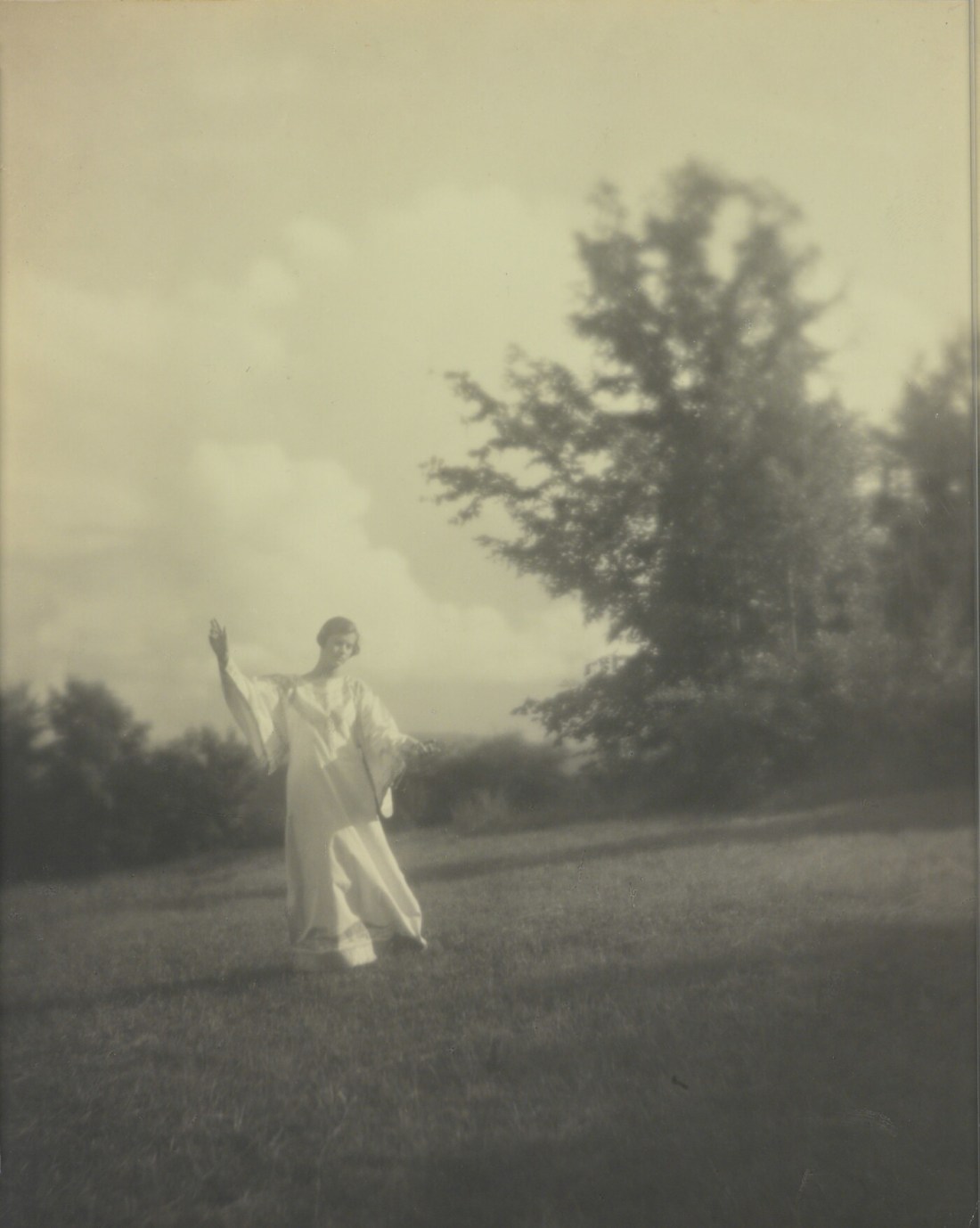
Clara Sipprell (1885-1975) :: [Woman in white dress, dancing outdoors]; 1960. Gelatin silver print. Amon Carter Museum
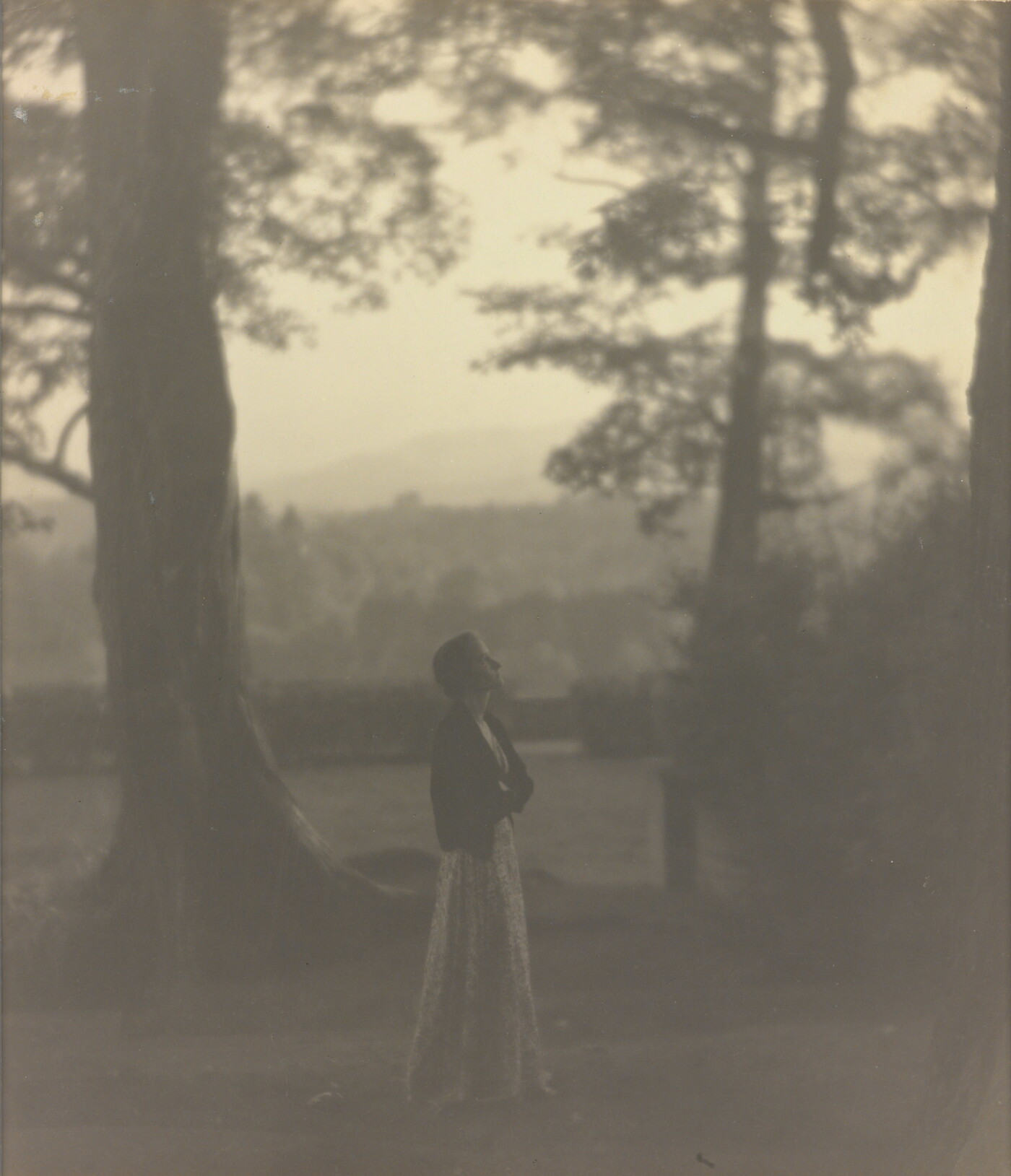
Clara Sipprell (1885-1975) :: [Woman among trees], 1930-1960. Amon Carter Museum of American Art
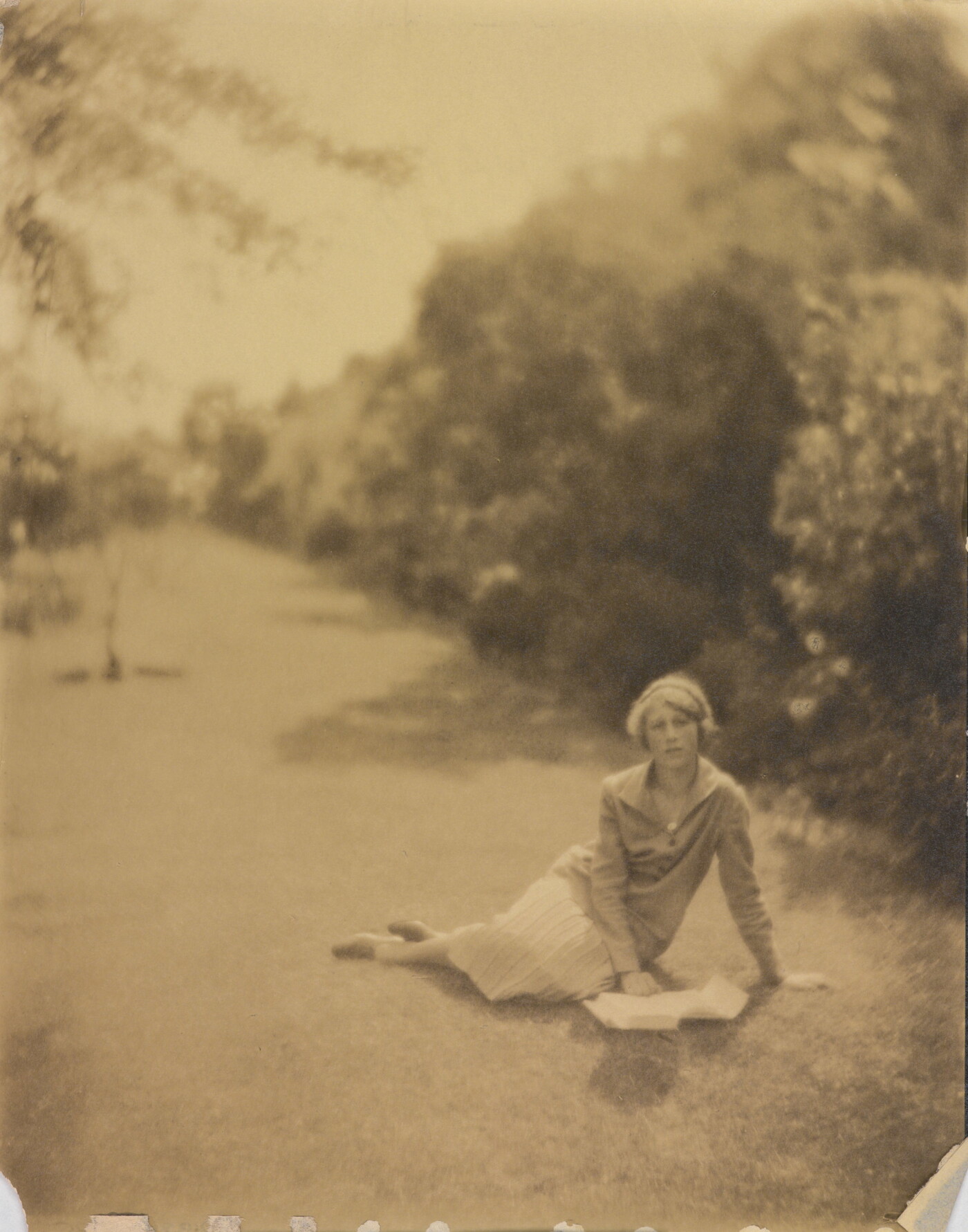
Clara E. Sipprell (1885-1975) :: [Woman reading outdoors], 1930-1960. Amon Carter Museum

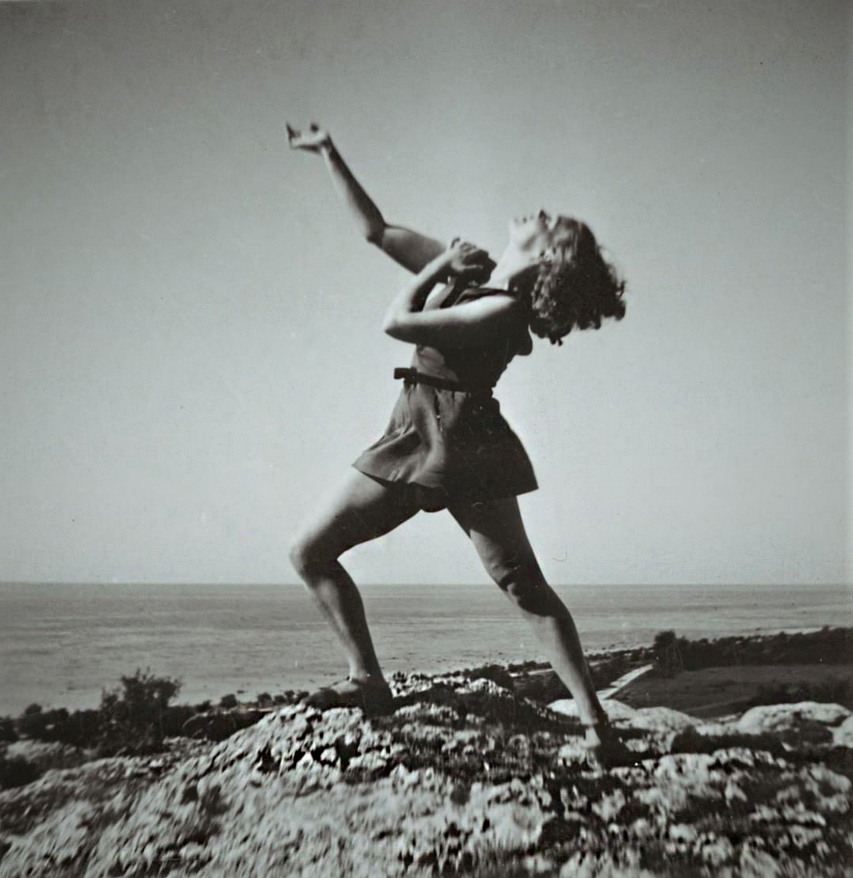
Il mistero di Persefone, 1929

Giannina Censi con il costume di scena di Il mistero di Persefone Teatro Licinium di Erba, 1929. | src Fondo G. Censi ~ Mart (*)
Giannina Censi con il costume di scena di Il mistero di Persefone Teatro Licinium di Erba, 1929. In verso nota ms. "Teatro Licinium. Erba" | src Fondo G. Censi ~ Mart
Giannina Censi con il costume di scena di Il mistero di Persefone Teatro Licinium di Erba, 1929. In verso nota ms. “Teatro Licinium. Erba” | src Fondo G. Censi ~ Mart
Scena tratta da Il mistero di Persefone al Teatro Licinium di Erba, 1929. In verso nota ms. "Il Mistero di Persefone - Teatro Licinium. Erba". | src Fondo G. Censi ~ Mart (**)
Scena tratta da Il mistero di Persefone al Teatro Licinium di Erba, 1929. In verso nota ms. “Il Mistero di Persefone – Teatro Licinium. Erba”. | src Fondo G. Censi ~ Mart (**)
Scena tratta da Il mistero di Persefone al Teatro Licinium di Erba, 1929 di Fot. Camuzzi. Milano. | src Fondo G. Censi ~ Mart (**)

(*) Pubblicata in Vaccarino E., (a cura di) Giannina Censi: danzare il futurismo. Milano: Electa; Museo di arte moderna e contemporanea di Trento e Rovereto, 1998, p. 15

(**) Pubblicata in Vaccarino E., (a cura di) Giannina Censi: danzare il futurismo. Milano: Electa; Museo di arte moderna e contemporanea di Trento e Rovereto, 1998, p. 85

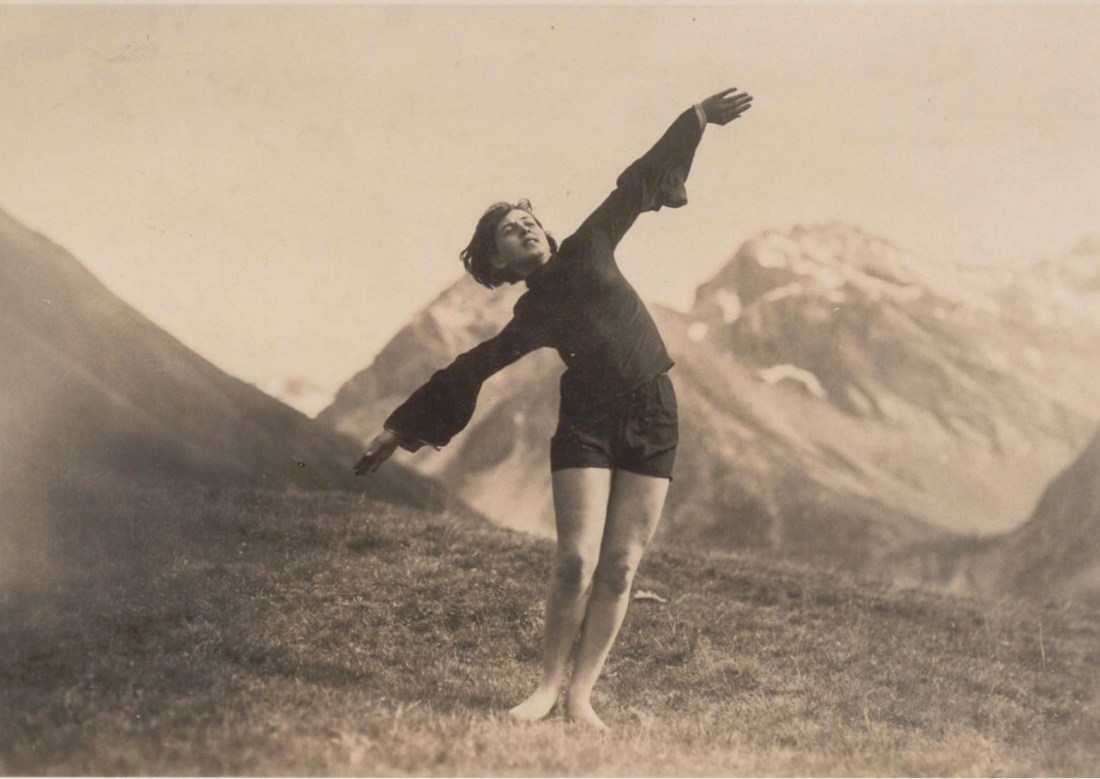
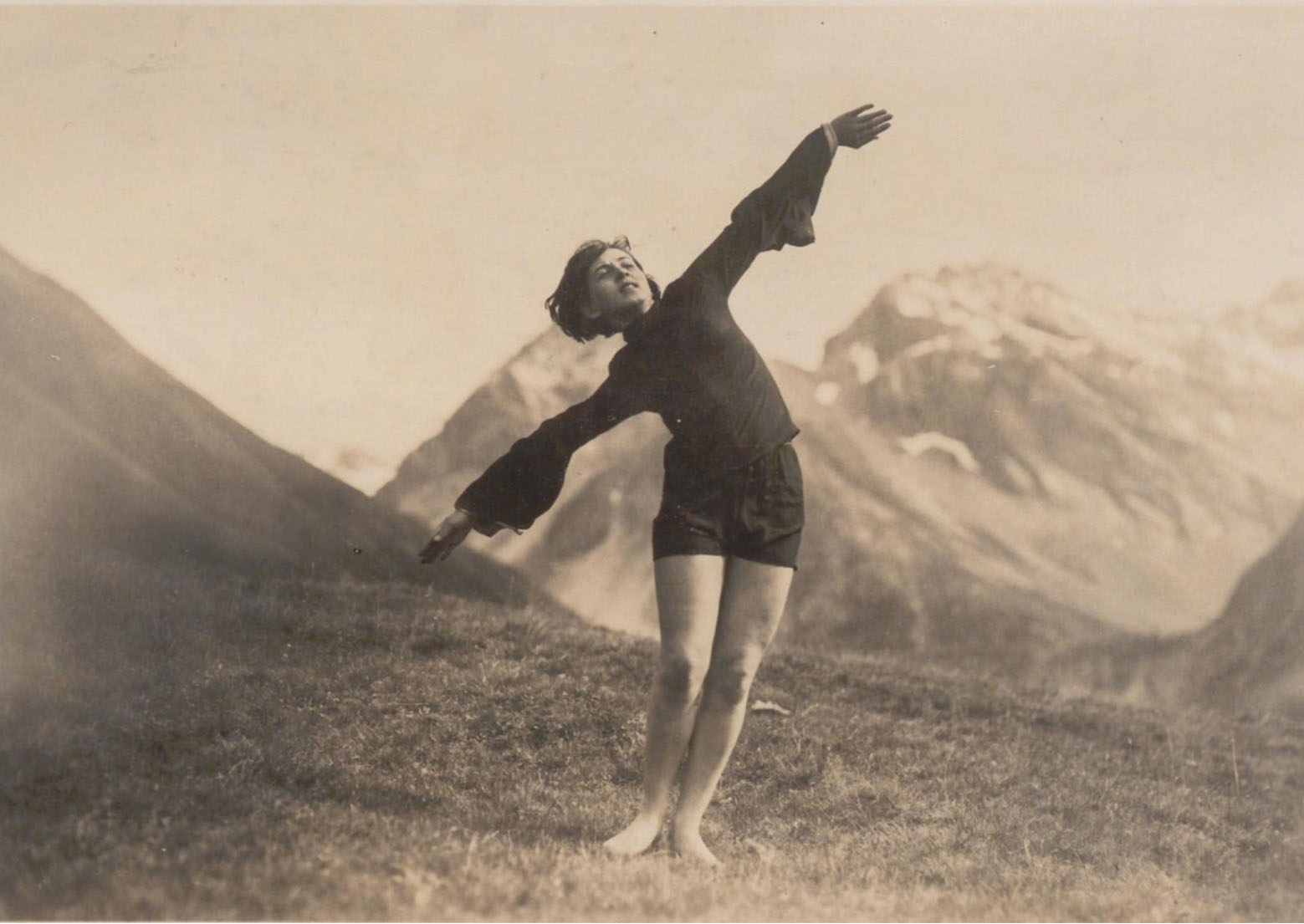
Giannina Censi at 3200m, 1938

Giannina Censi all'aria aperta, Plan Maison a 3200 m., 30 luglio 1938 di [Guido Tovo] (1) | src and © Mart ~ Fondo Giannina Censi
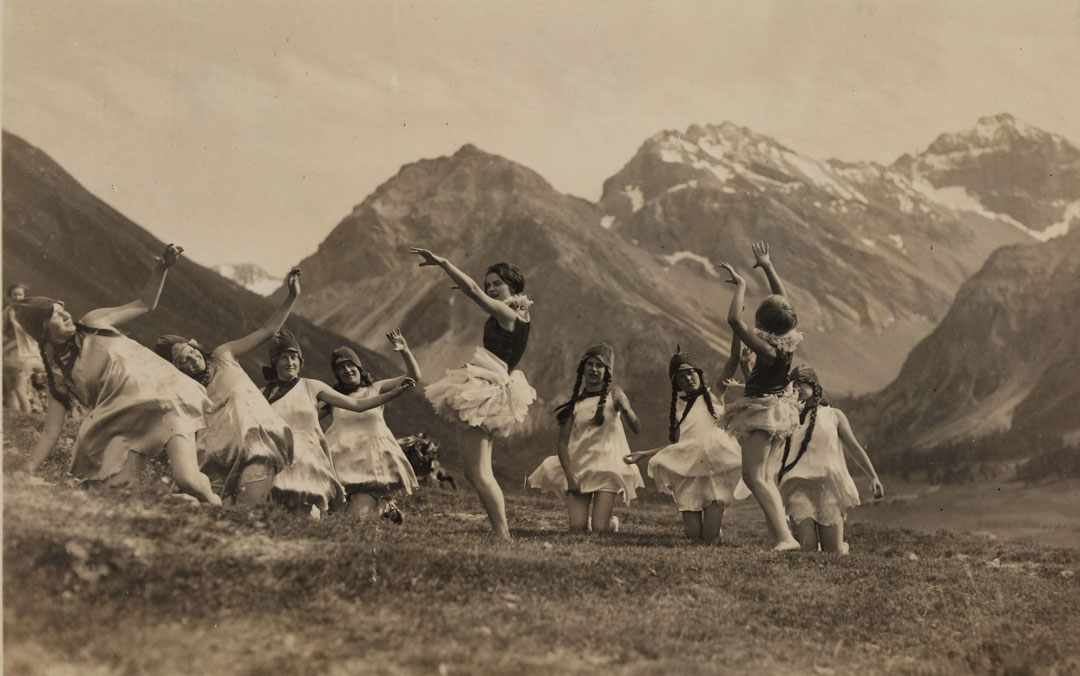
Giannina Censi all’aria aperta, Plan Maison a 3200 m., 30 luglio 1938 di [Guido Tovo] (1) | src and © Mart ~ Fondo Giannina Censi
Giannina Censi all'aria aperta, Plan Maison a 3200 m., 30 luglio 1938 di [Guido Tovo]. In verso nota ms. "Dal Plan Maison 3200 metri, luglio 1938" (2)
Giannina Censi all’aria aperta, Plan Maison a 3200 m., 30 luglio 1938 di [Guido Tovo]. In verso nota ms. “Dal Plan Maison 3200 metri, luglio 1938” (2)
Giannina Censi all'aria aperta, Plan Maison a 3200 m., 30 luglio 1938 di Guido Tovo. In verso nota ms. "Dal Plan Maison verso il Teodulo a circa 3200 metri - foto eseguita da Guido Tovo il 30 luglio 1938" (3) | src and © Mart ~ Fondo Giannina Censi
Giannina Censi all’aria aperta, Plan Maison a 3200 m., 30 luglio 1938 di Guido Tovo. In verso nota ms. “Dal Plan Maison verso il Teodulo a circa 3200 metri – foto eseguita da Guido Tovo il 30 luglio 1938” (3) | src and © Mart ~ Fondo Giannina Censi

(1) e (2) Pubblicata in Vaccarino E., (a cura di) Giannina Censi: danzare il futurismo. Milano: Electa; Museo di arte moderna e contemporanea di Trento e Rovereto, 1998, pp. 50-51

(1) e (3) Pubblicata in Belli G. (a cura di), Sprachen des Futurismus, Berlin: Berliner Festspiele- Martin Gropius Bau, 2009, p. 243

(3) Pubblicata in Bonfanti E., Il corpo intelligente. Torino: il segnalibro, 1995, p. 51

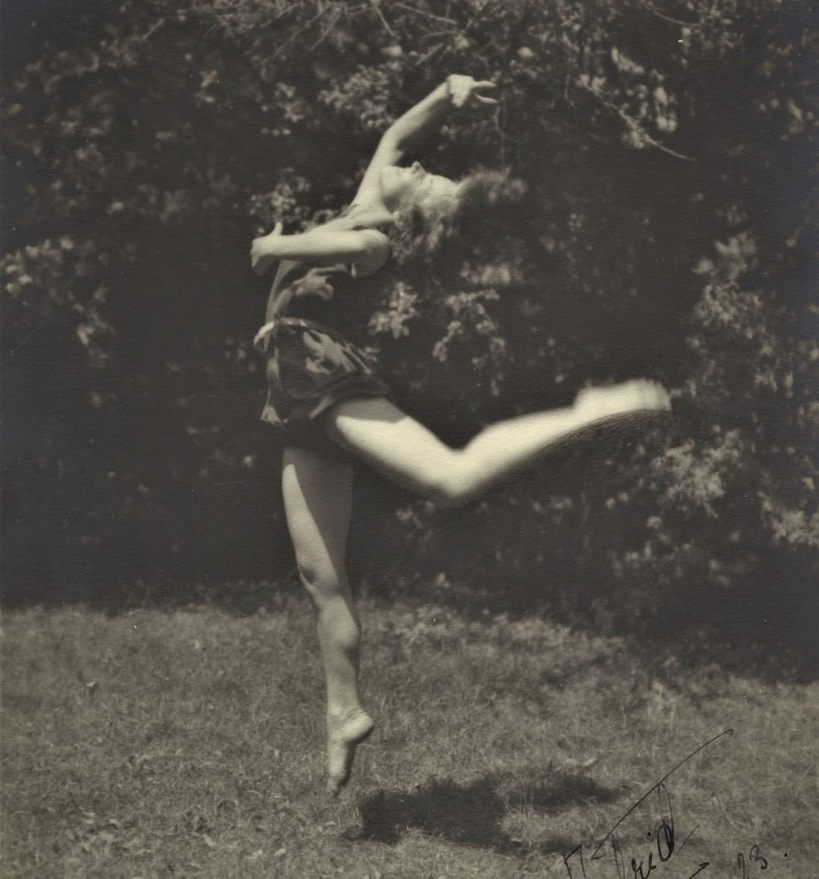
Rose-Marie Bachofen um 1925

From: Rose-Marie Bachofen Fotoalbum 'Jugend' © Münchner Stadtbibliothek, 2020 | src Monacensia in Hildebrandhaus
Rose-Marie Bachofen (Rose-Marie Bonsels), Schweiz, um 1925. from Fotoalbum Jugend © Münchner Stadtbibliothek, 2020 | src Monacensia in Hildebrandhaus

Dancing with Helen Möller, 1918

“The race, adapted from the classic Greek games, is useful in dance interpretations combining grace and swiftness of movement. The silhouettes compare fantastic with natural grace of movement.” From ‘Dancing with Helen Moller’, 1918. Page 106. University of California Libraries. | src internet archive
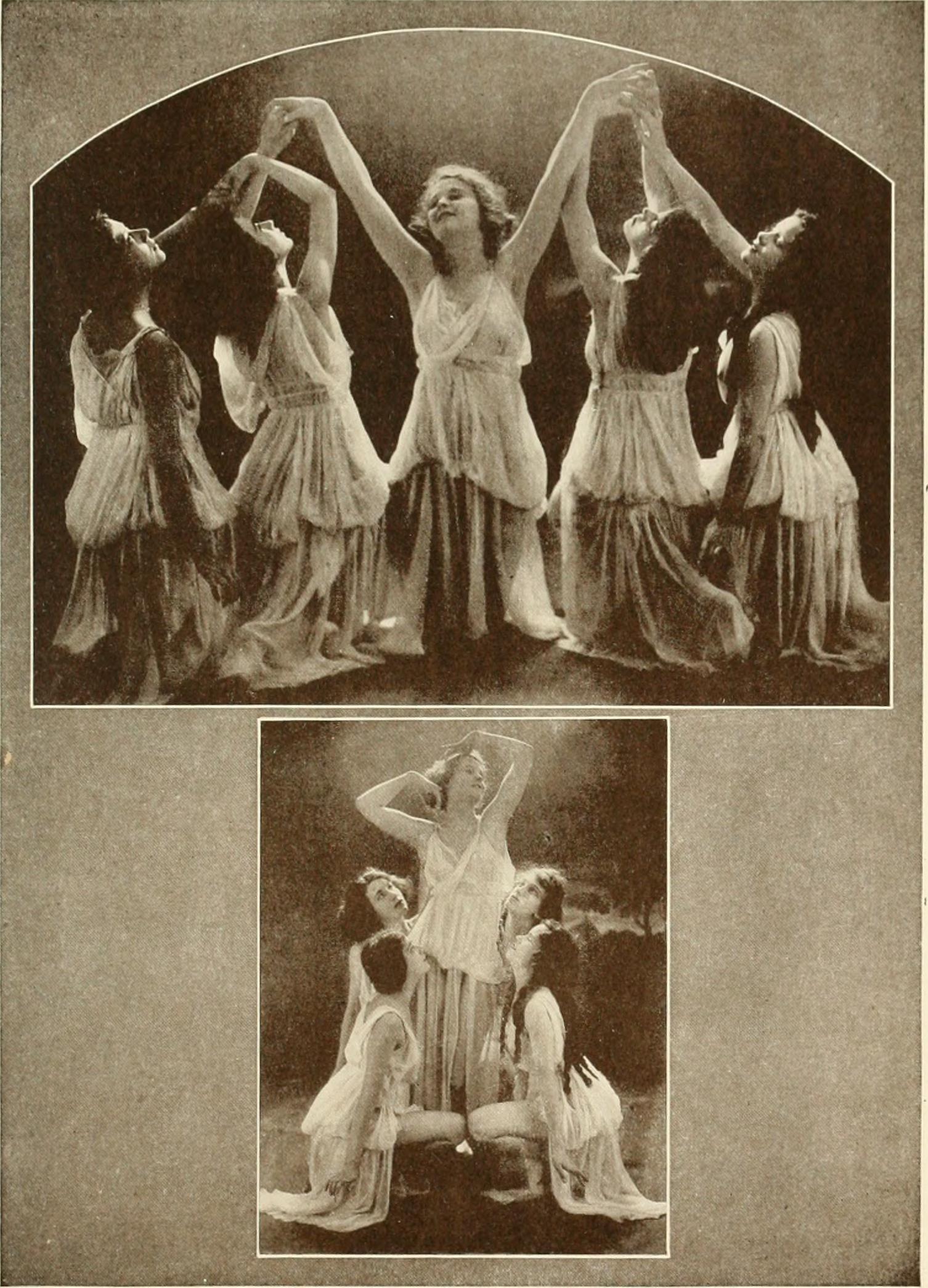
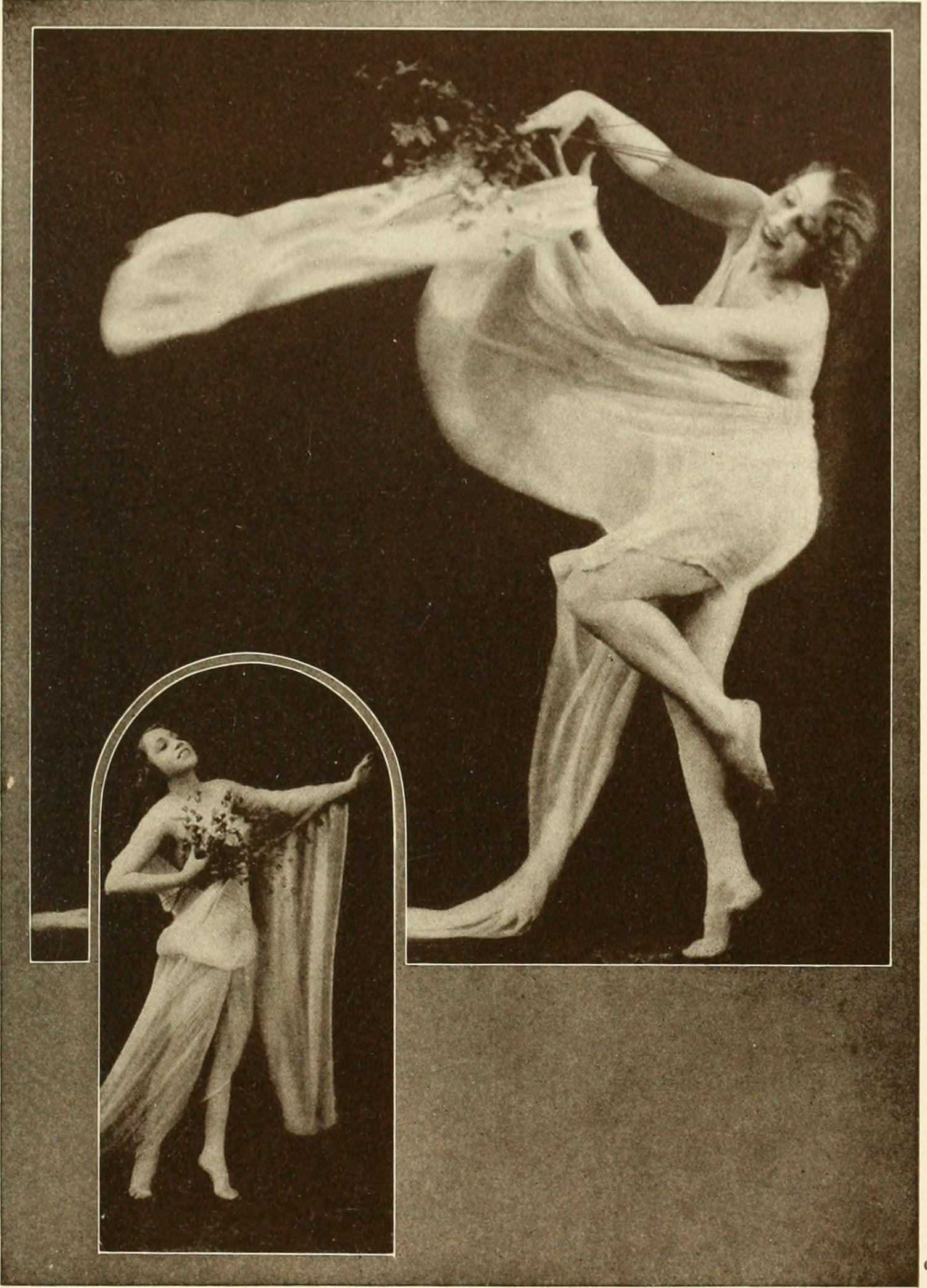
“Drigo’s Serenade — showing how modem music of this character inspires the creation of dance movements and figures adapted from the purest Greek models. The beginning of the interpretation is shown in the small plate.” From ‘Dancing with Helen Moller’, 1918. Page 74. University of California Libraries. | src internet archive
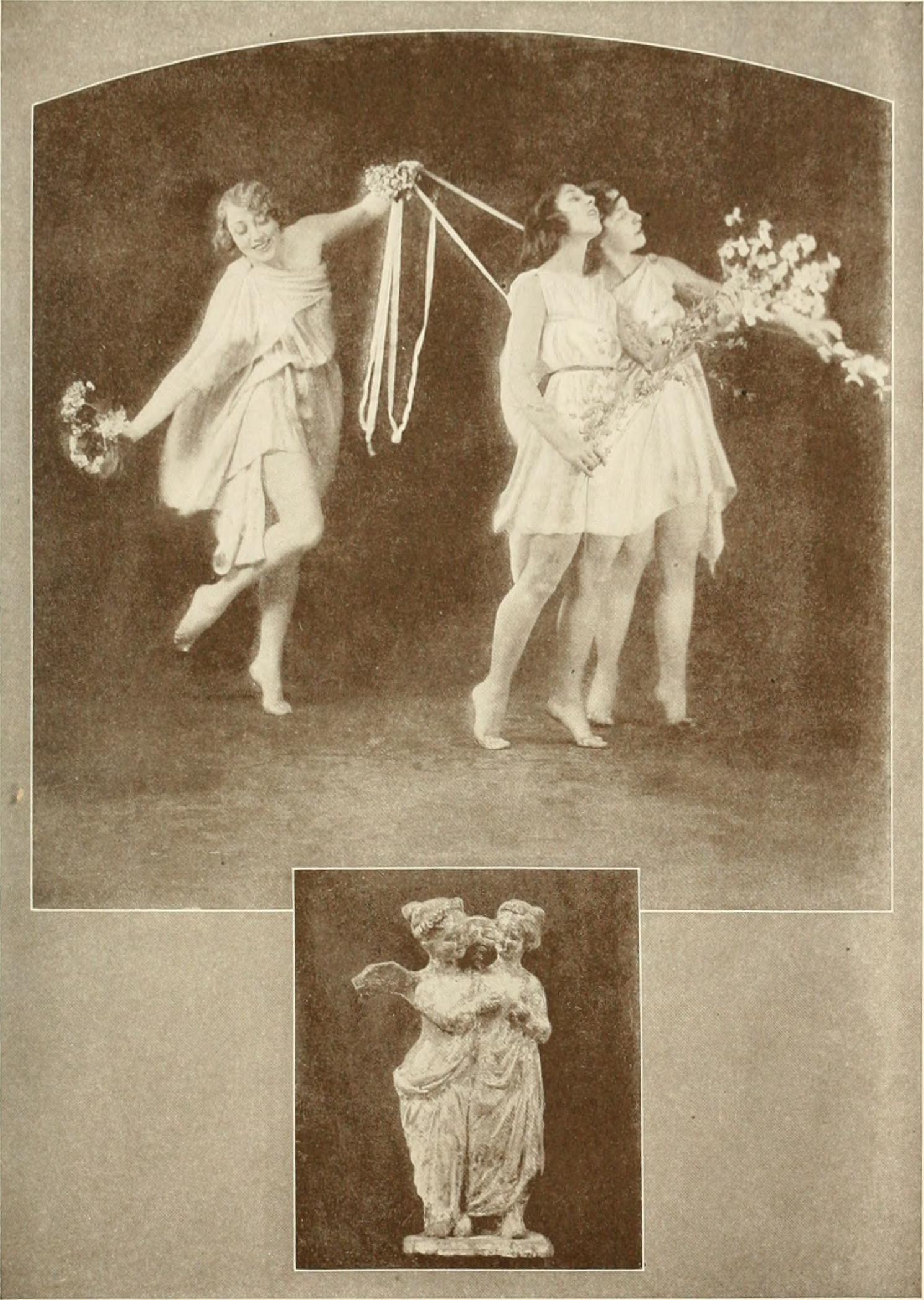
“A playful Spring movement — flowers and ribbons, and lightness of movement which seems almost to defy the force of gravitation. The small Tanagra figures suggest the same spirit.” From ‘Dancing with Helen Moller’, 1918. Page 42. University of California Libraries. | src internet archive
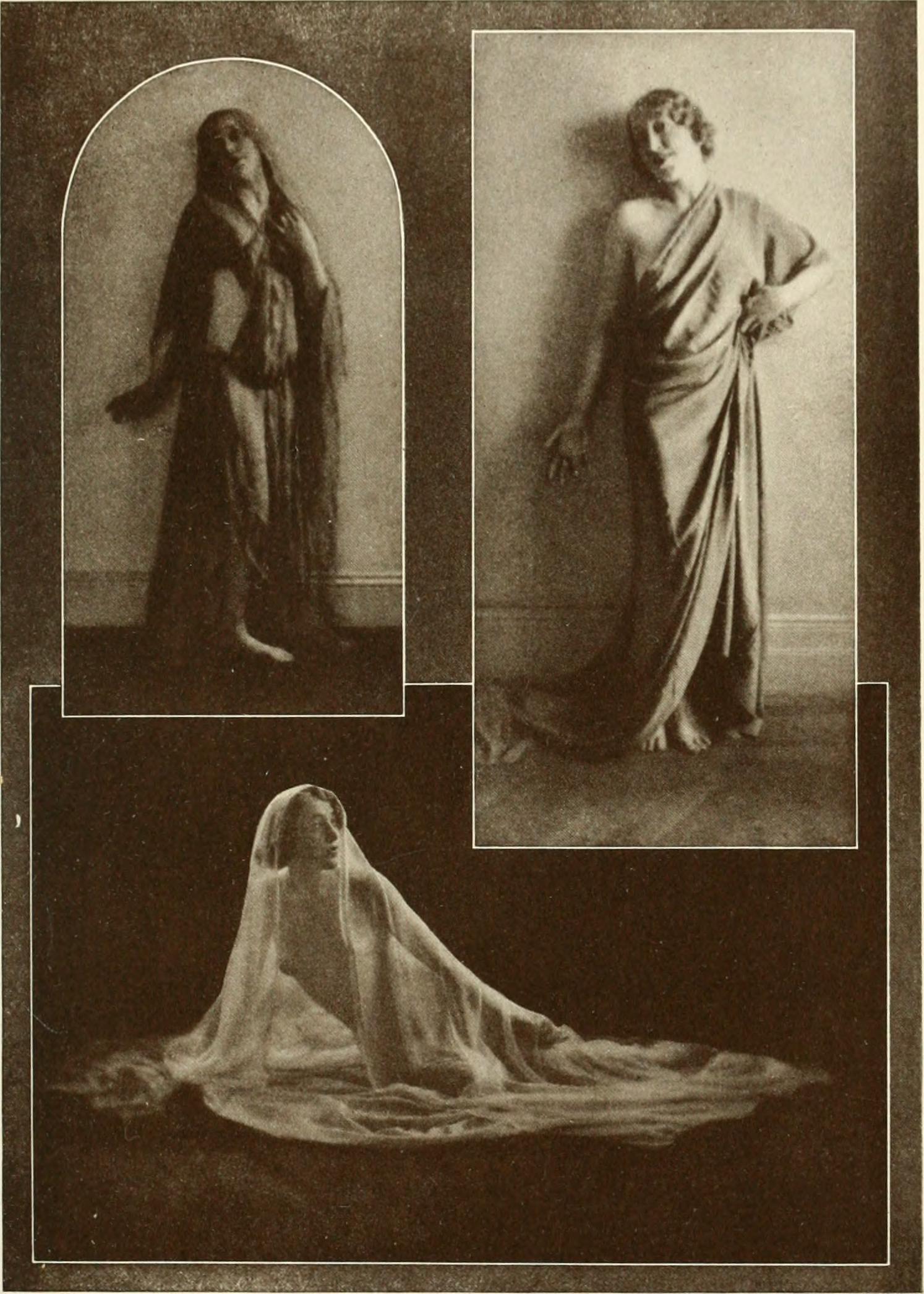
“Here the dancer, erect and recumbent, realizes in living movement the classic sculptor’s sense of the aesthetic value of simple draperies.” From ‘Dancing with Helen Moller’, 1918. Page 48. University of California Libraries. | src internet archive
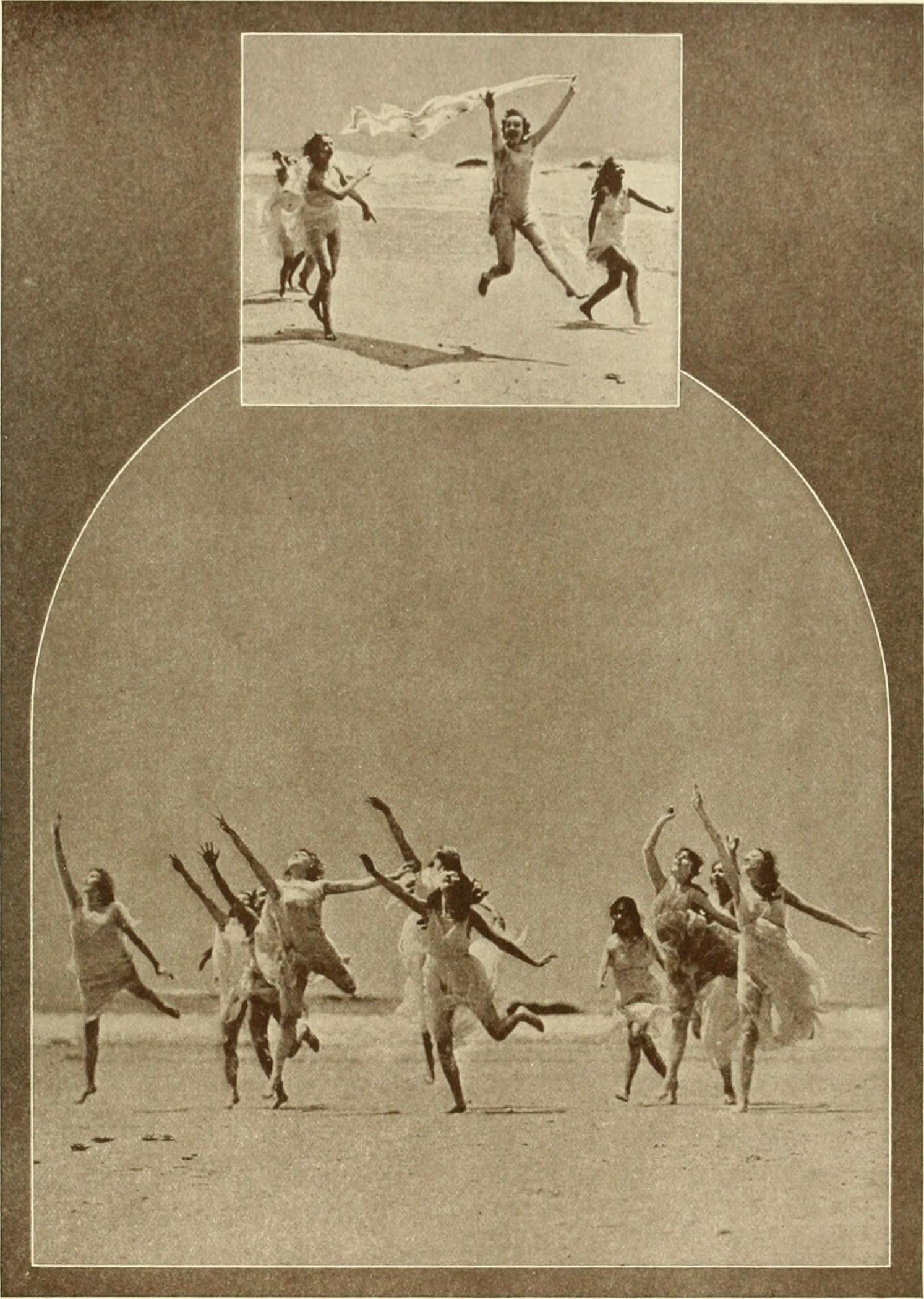
“The ocean beach, upon which the surf rolls rhythmically, or is broken upon half submerged rocks, incites to the most open free and vital dancing expression.” From ‘Dancing with Helen Moller’, 1918. Page 86. University of California Libraries. | src internet archive
“Reacting to the breath of Spring — the most compelling of all impulses to dance, and provocative of the most joyous physical expression.”
Helen Möller and Curtis Dunham :: From ‘Dancing with Helen Moller; her own statement of her philosophy and practice and teaching formed upon the classic Greek model, and adapted to meet the aesthetic and hygienic needs of to-day’, 1918. Page 88. University of California Libraries. | src internet archive

ACKNOWLEDGMENT: Many of the photographs reproduced in this book were taken by the author herself. For the privilege of reproducing other fine examples of the photographer’s art, she desires to express her grateful acknowledgments to Moody, to Maurice Goldberg, to Charles Albin and to Underwood and Underwood; also to Arnold Genthe for the plate [lost plate] on Page 36; and to Jeremiah Crowley for his admirable arrangement of the entire series of illustrative art plates. [quoted from source]