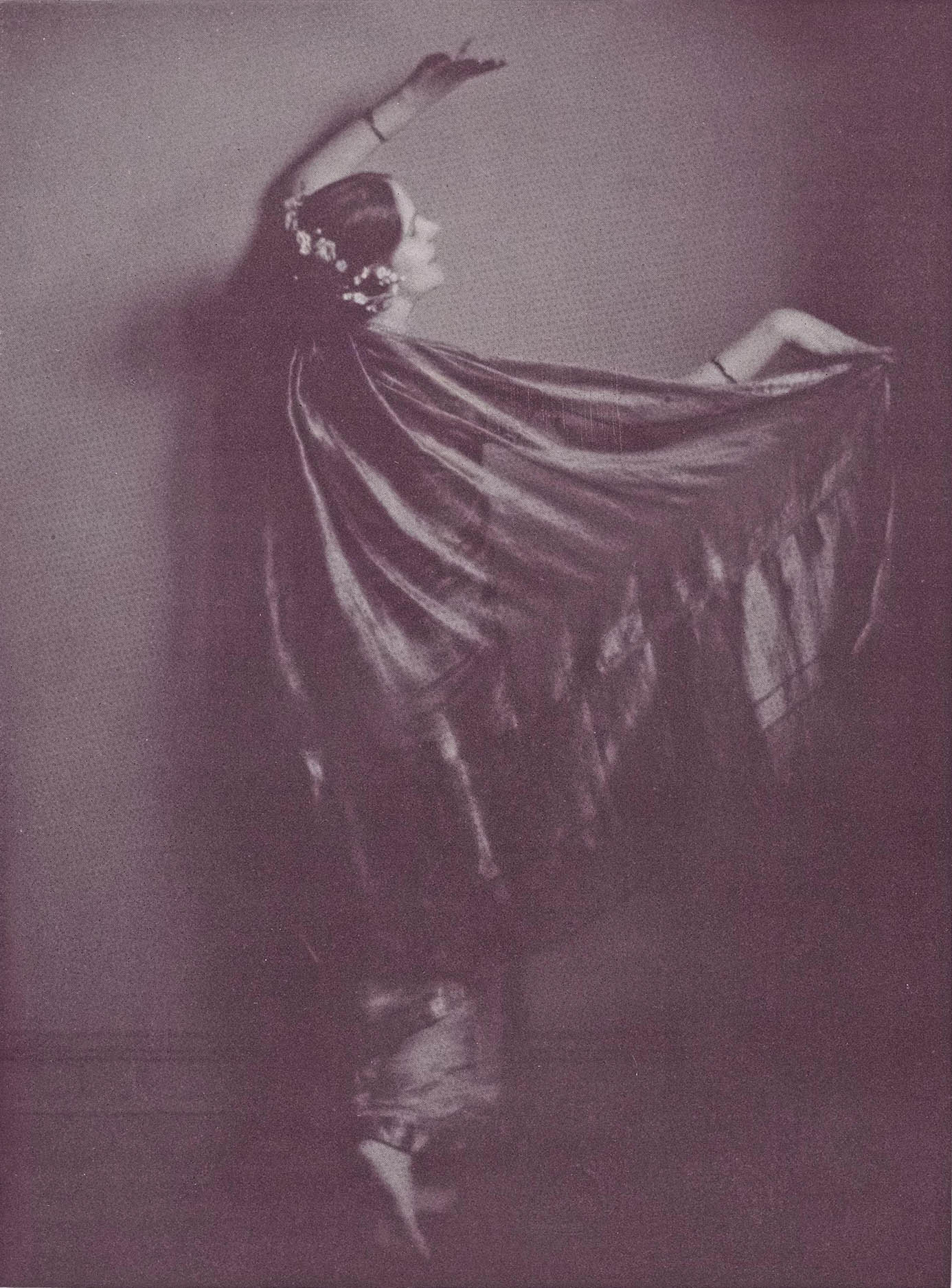
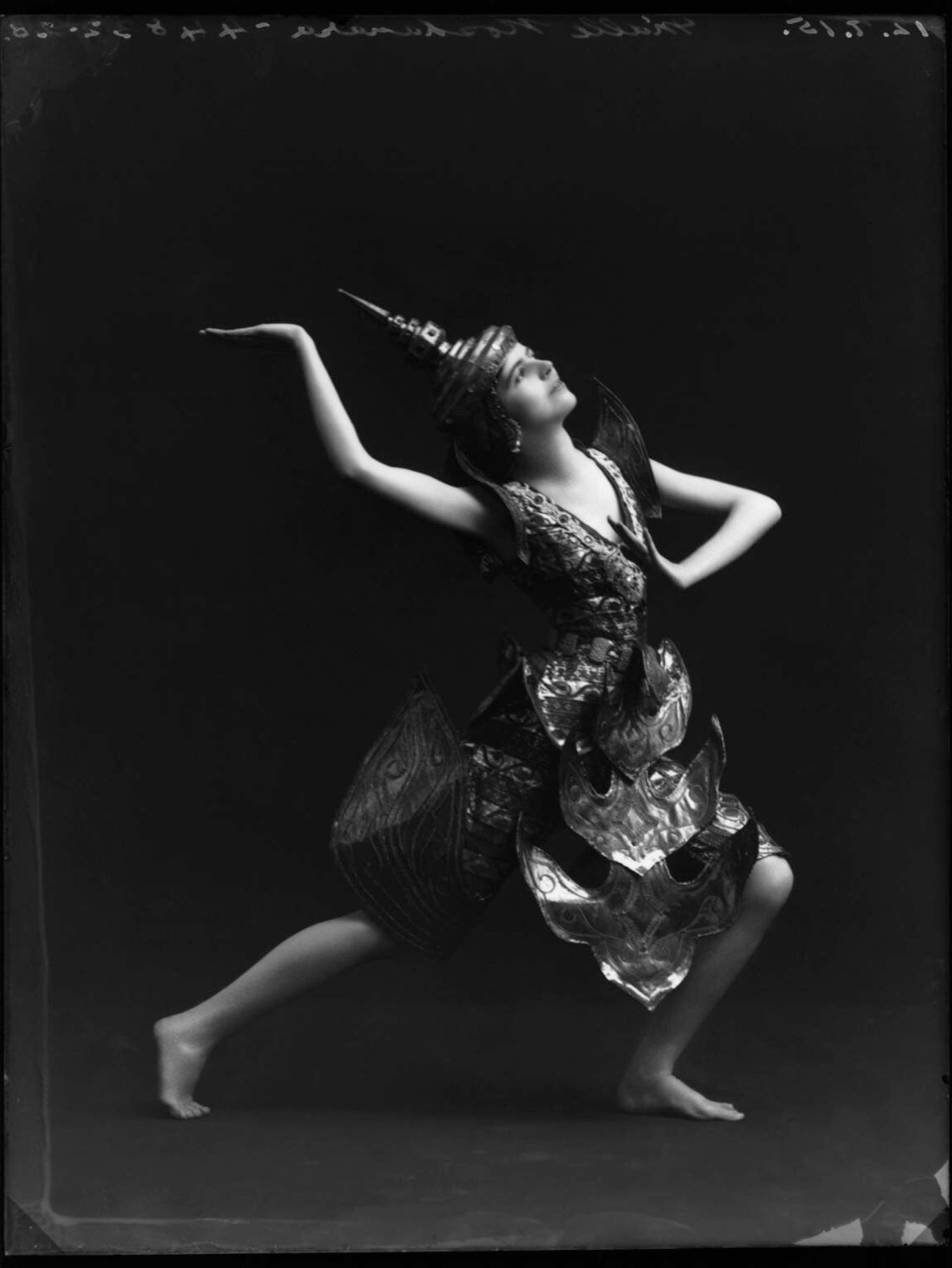
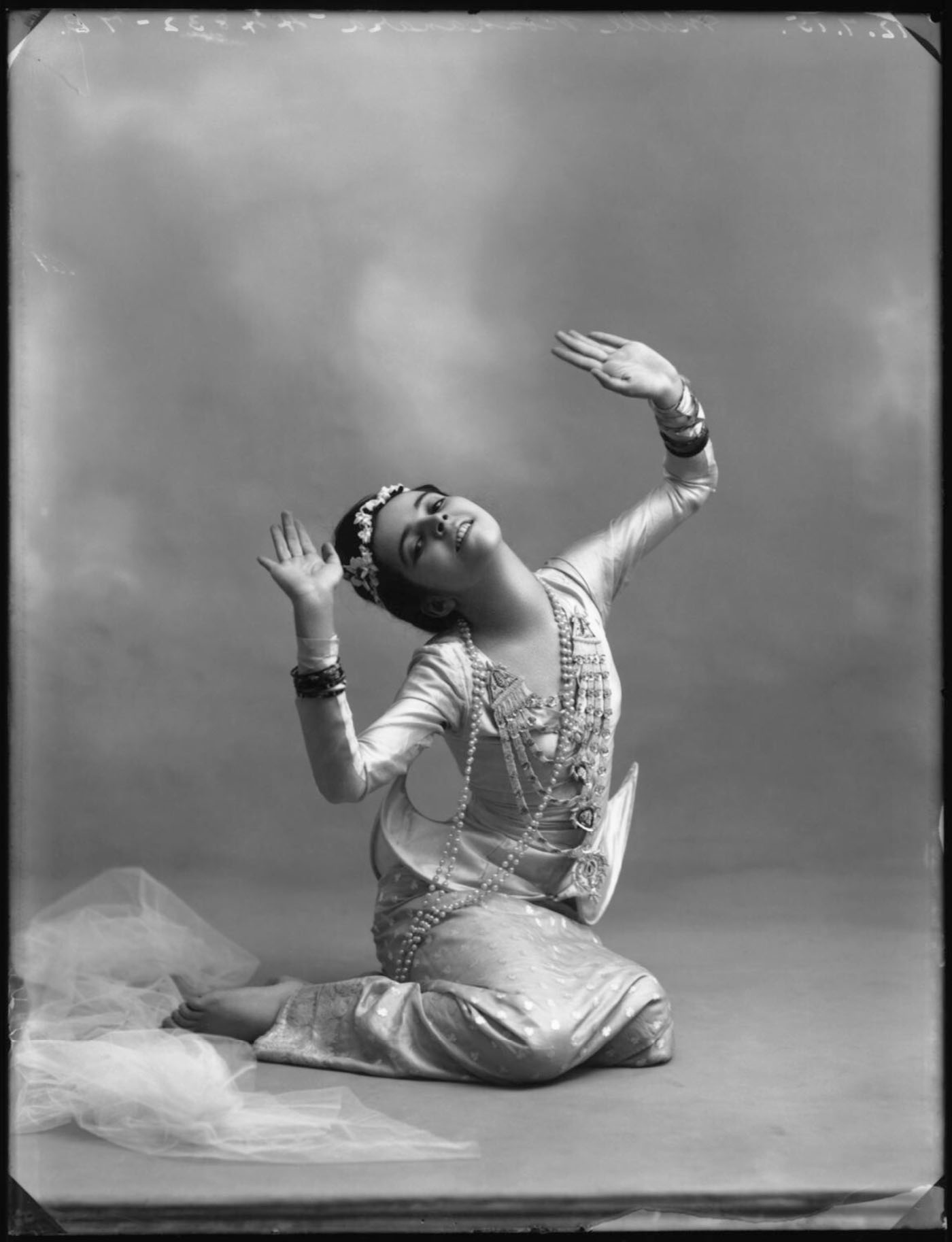
Caption reads : Roshanara / The gifted British dancer whose work vibrates with the mysticism and color of India and Burma


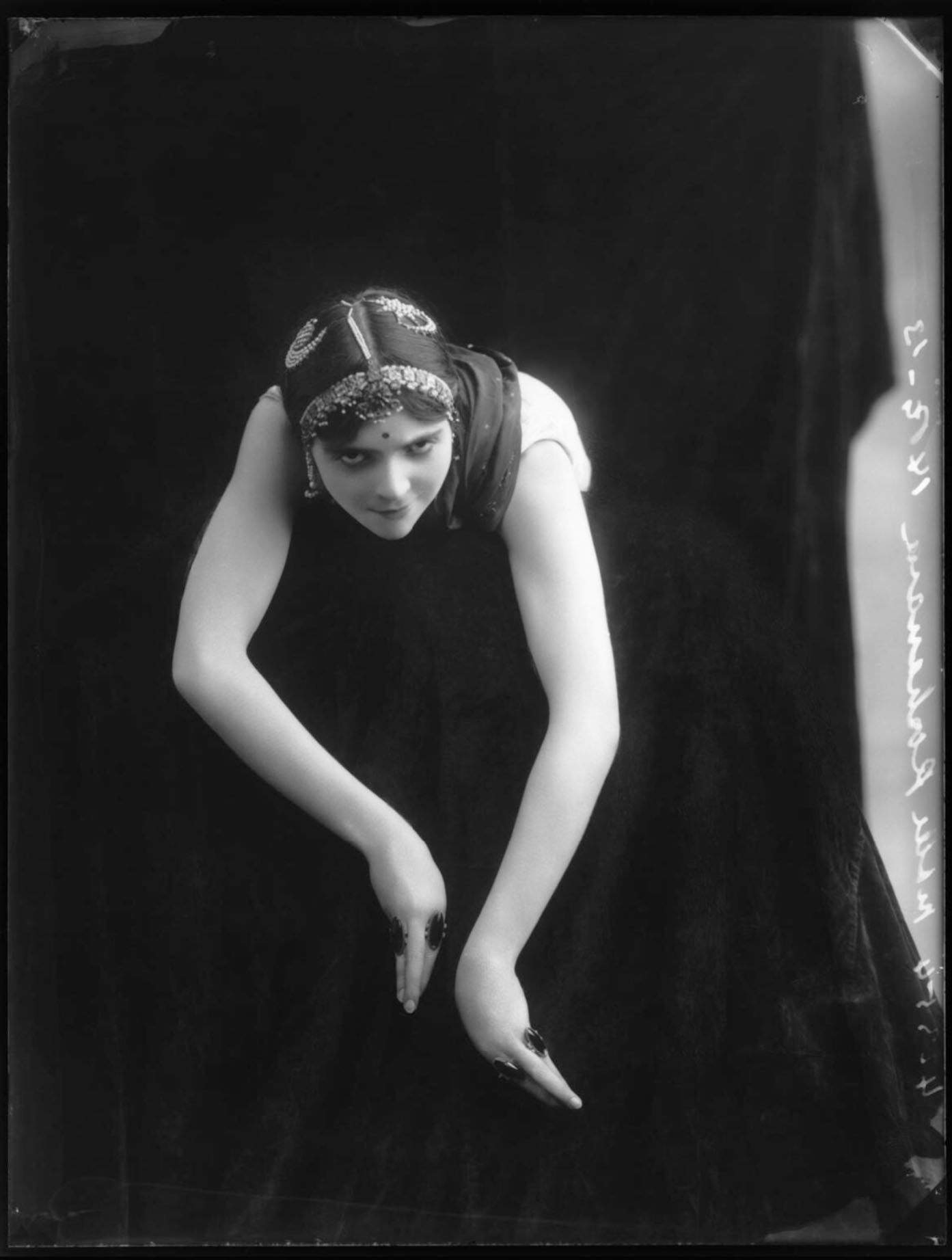
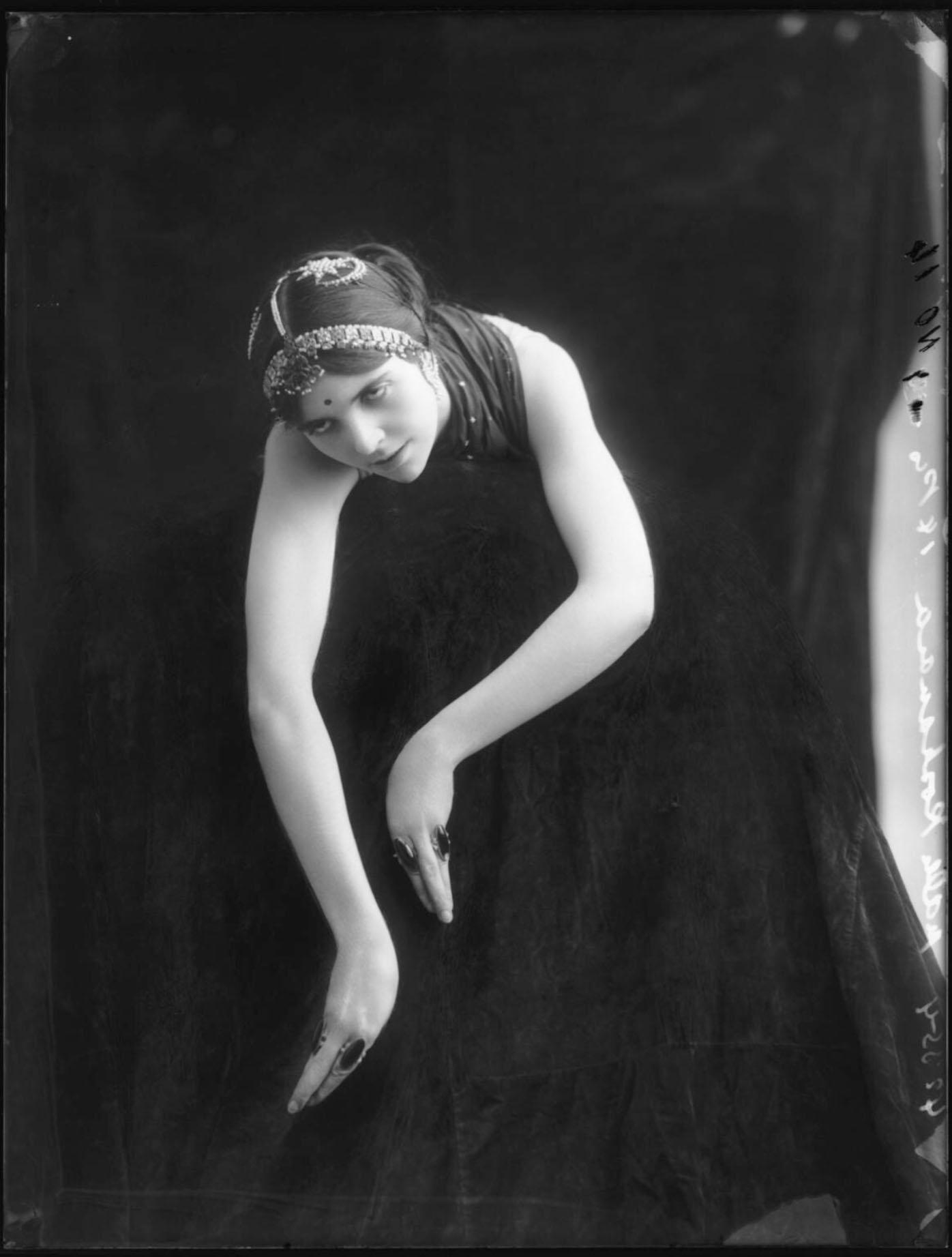
Caption reads : Roshanara / A new camera study of the brilliant young interpreter of native Burmese and Indian dances

images that haunt us
Caption reads : Roshanara / The gifted British dancer whose work vibrates with the mysticism and color of India and Burma
Caption reads : Roshanara / A new camera study of the brilliant young interpreter of native Burmese and Indian dances
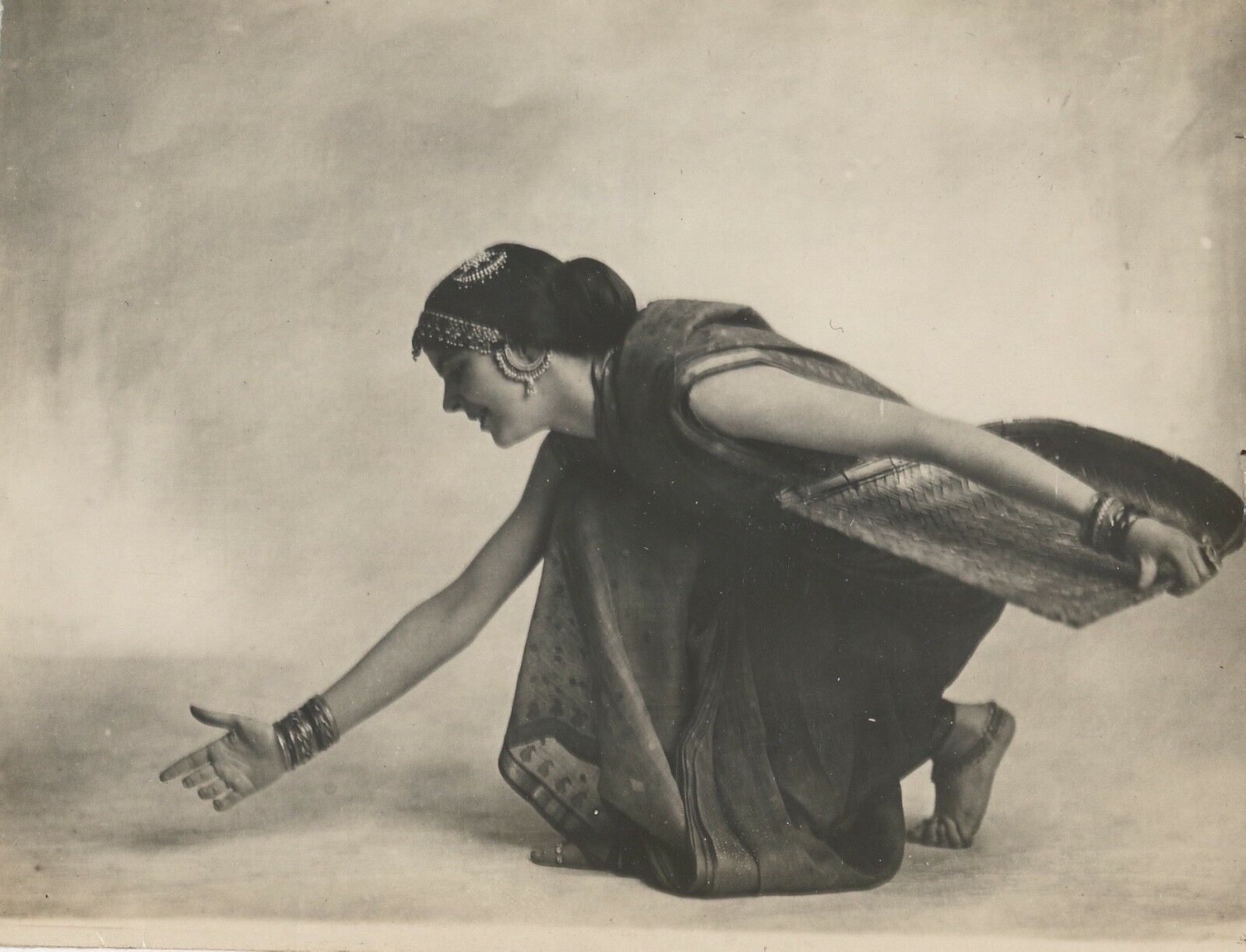


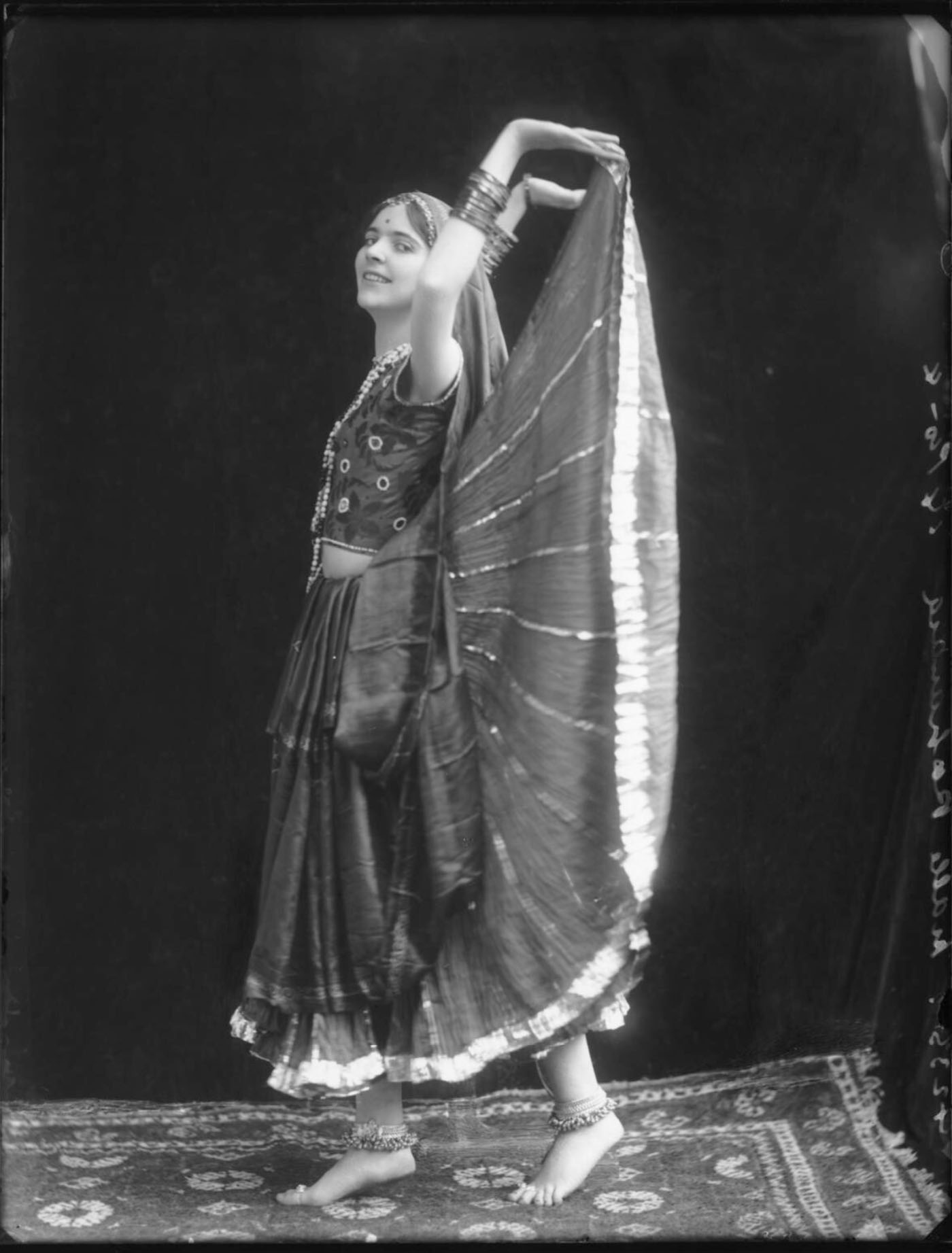
Olive Craddock, an Anglo-Indian born in 1892 in Kolkata, was known for taking the ‘central-Indian’ and ‘oriental’ style of dancing across the world. Born to a British mother and Anglo-Indian father, she was only 17-years-old when she left for Britain to dance professionally. Along with Ruth St. Denis, Craddock is credited for incorporating the ‘Indian dance’ in the world of Western theater.
In 1926, the reviewer Alma Talley wrote in The Dance magazine: ‘Roshanara has brought to the Western World the spirit of Central India as no one else has ever been able to bring… India’s dances were a part of her soul. She devoted her life to perfecting them, as an artist in water colours gives years of study to making his art as nearly perfect as perfection is humanly possible.’ Craddock adopted the name ‘Roshanara’ in 1909, as she left India, after the Mughal princess and Shahjahan’s daughter, which meant ‘Light-Adorning’. This would go on to be her stage name. In 1911, Craddock (now Roshanara) studied under Carmen Tórtola Valencia, the Spanish dancer and choreographer. She also danced with American actress and dancer Loïe Fuller’s company and shortly after, performed in the play Kismet directed by Australian actor and writer Oscar Asche at the Garrick Theater in London. She also starred five times as Zobeide in Schéhérazade for the Ballets Russes at Covent Garden, London.


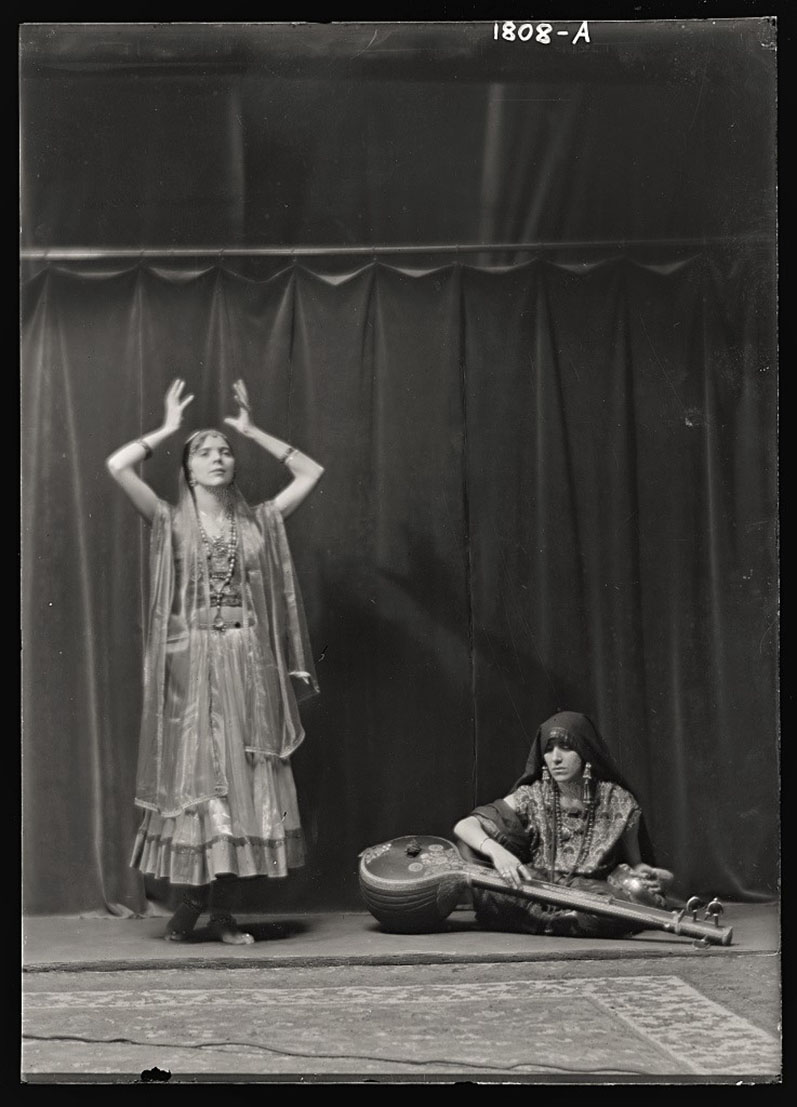








Caption reads : Laurent Novikoff / A vivid personality lends much to the interpretative quality of his subtle art


Caption reads : Roshanara / The gifted British dancer whose work vibrates with the mysticism and color of India and Burma
Caption reads : Roshanara / A new camera study of the brilliant young interpreter of native Burmese and Indian dances
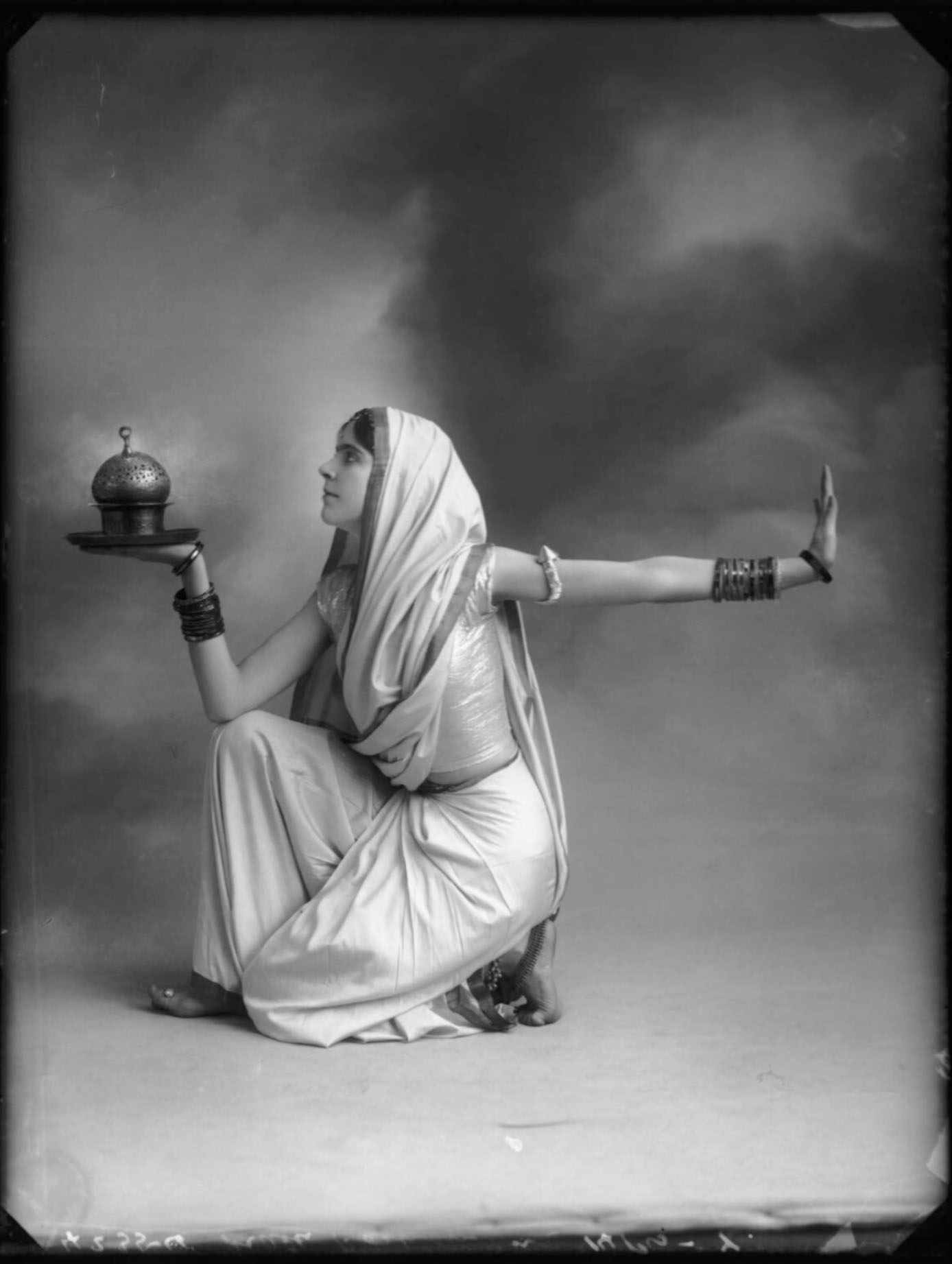

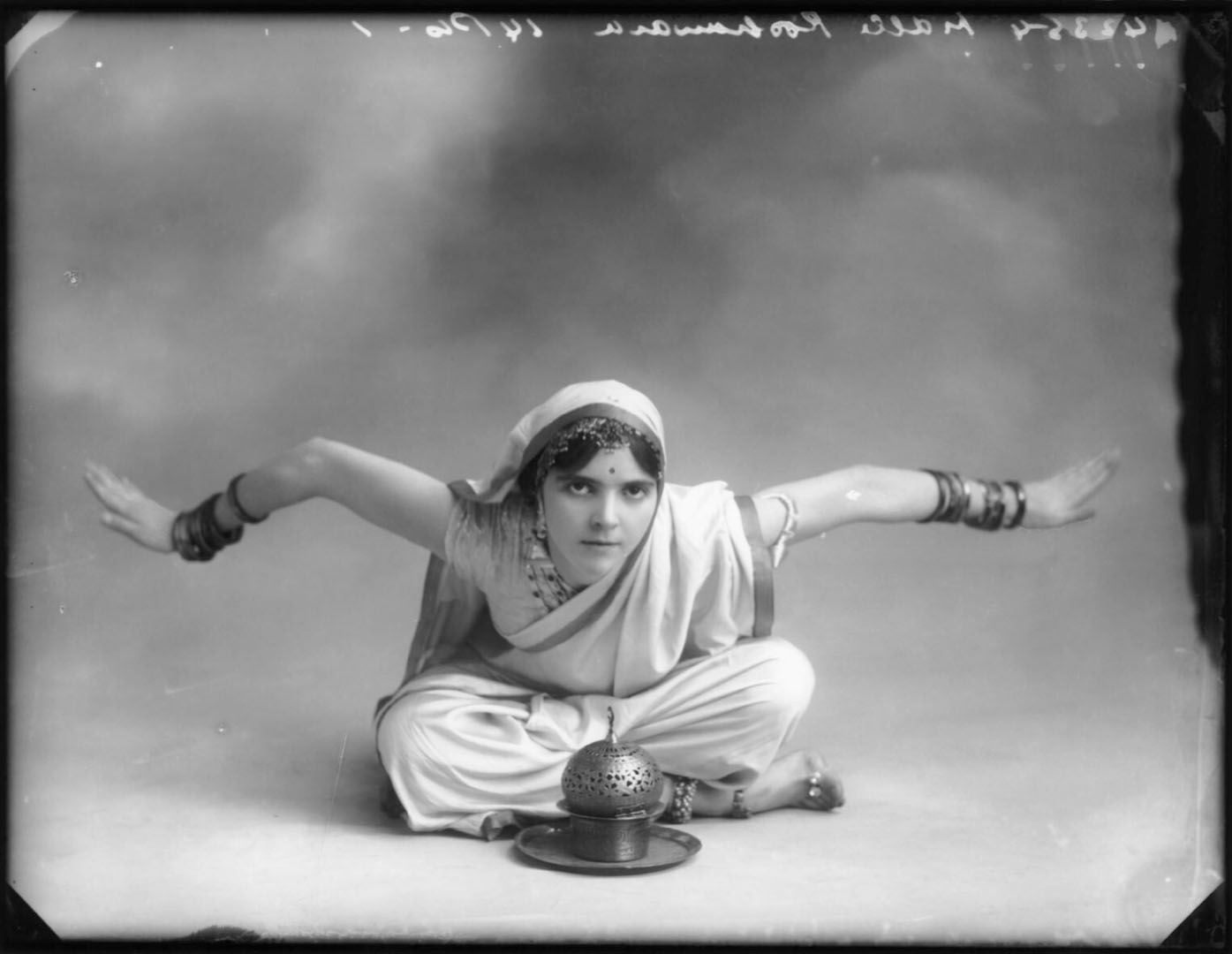
Roshanara occupies a similar position in Britain to that of Ruth St. Denis in the USA, albeit she is far less-widely known. Both aroused an interest in Indian and what was then called oriental dance at a time when there had been little serious study of the art form in Western theatre, although for both theatricality remained more important than authenticity. An important difference from St Denis was that Craddock was born in Calcutta and brought up in India of mixed parentage – an English mother and Anglo-Indian father, of Irish extraction – giving her a serious base rather than fantasy from which to draw her dances. Also, although Roshanara taught, unlike St Denis she never established a formal school to perpetuate her ideas. As Alma Talley wrote in ‘The Story of Roshanara’, The Dance, November 1926, ‘Roshanara has brought to the Western World the spirit of Central India as no one else has ever been able to bring it…India’s dances were a part of her soul. She devoted her life to perfecting them, as an artist in water colors gives years of study to making his art as nearly perfect as perfection is humanly possible’.
Once Craddock had chosen a performing career she adopted the name of a Mughal princess (1617-1671), reputed to have been the first to travel outside her own country. The name means ‘Light-Adorning’. In about 1909 Craddock travelled to Europe with her mother and appears to have worked briefly with Loie Fuller before, in 1911, having studied with Tórtola Valencia, she appeared as the Almah in Kismet at the Garrick Theatre. In 1911 (14, 18, 21, 25m November & 5 December) she appeared five times as Zobeide in Schéhérazade for the Ballets Russes at the Covent Garden, London.
In 1912 Roshanara had a season at the Palace Theatre, London, and in the autumn had a speciality spot on Anna Pavlova’s British regional tour, presenting her Incense, Village and Snake dances. In 1913 Roshanara danced at the Tivoli, London, and in July-August 1914 appeared for two weeks at the London Coliseum. She periodically returned to India to dance. By 1916 she was dancing in the USA where she gave numerous recitals, appeared in productions, danced with Adolph Bolm’s multi-cultural Ballets Intimes and taught. (Bette Davis was for a time one of her pupils). Her life and work are documented in ‘Roshanara “Secrets of Oriental Grace”’, Dance Lovers Magazine, February 1925, pp.35, 36, 66 and substantial obituary articles by Talley: ‘The Story of Roshanara A Short Biography of That Great Englishwoman Who Brought the Art of the Orient to the Eyes of the Western World’, The Dance, November 1926, pp.10-13, 51; and ‘Always a Wanderer, She Brought the Rich Beauty of Oriental Art to Many Lands’, The Dance, December 1926, pp.41, 42, 50. (text : V&A museum)


 un regard oblique