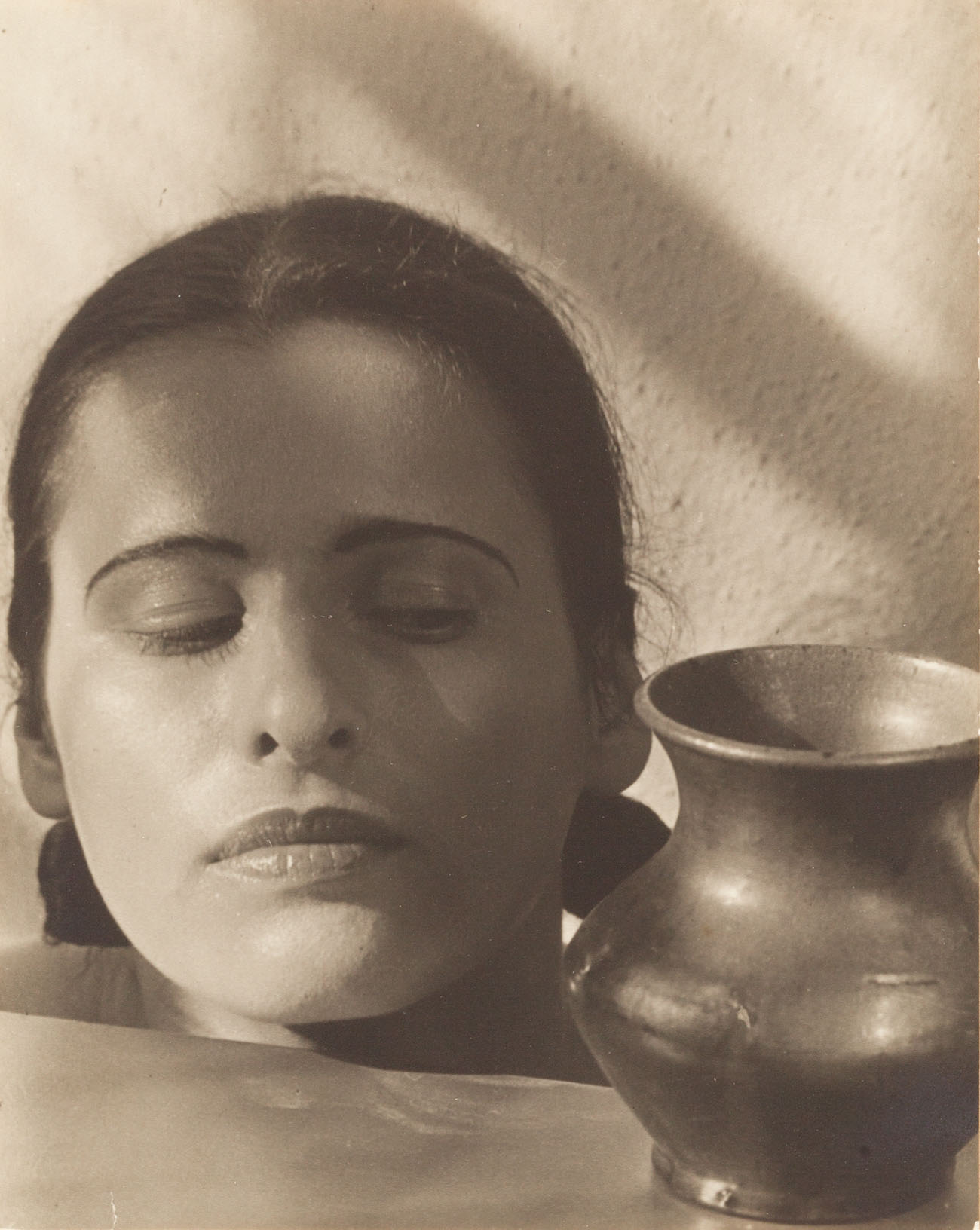
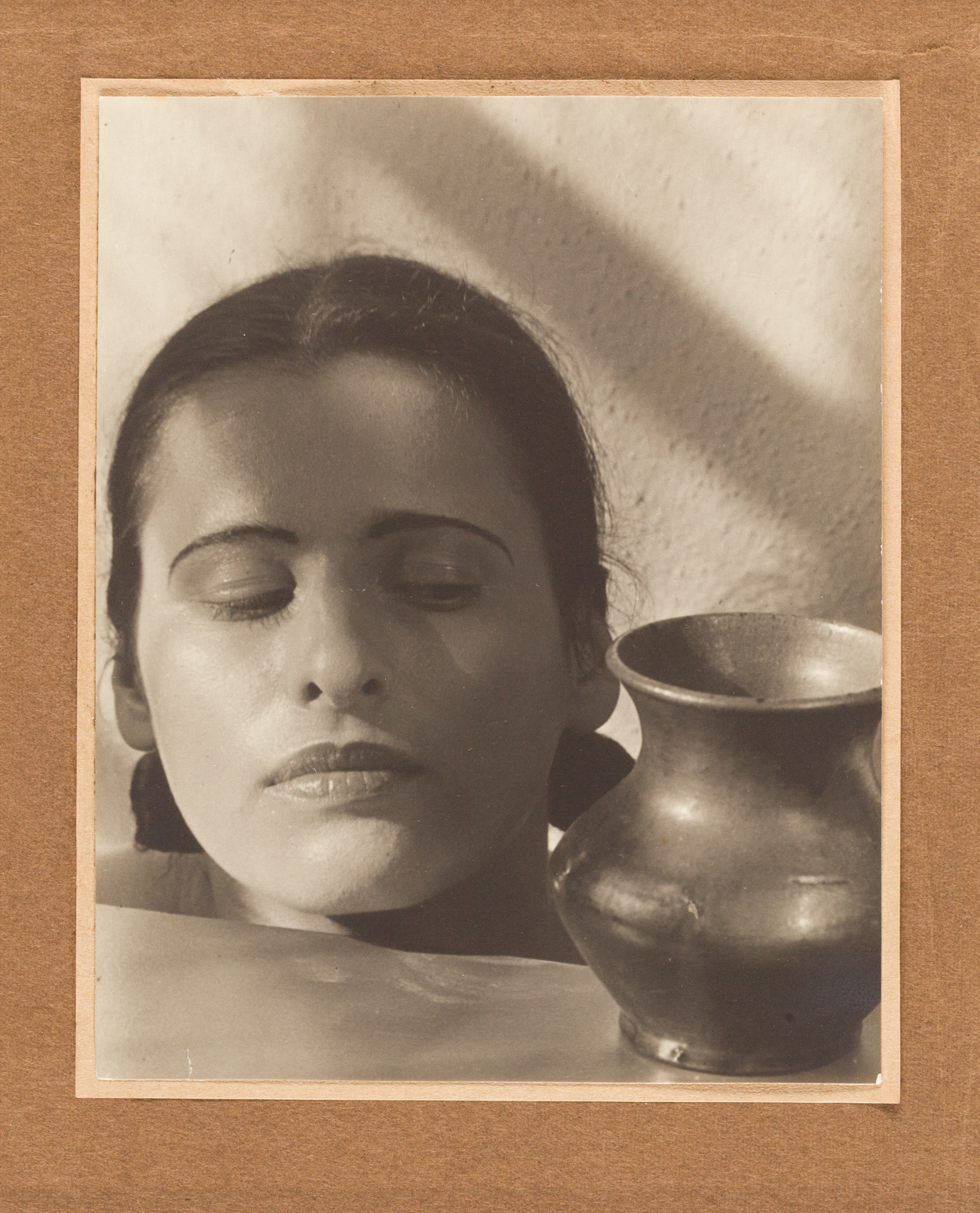
Martin Imboden (1893–1935) ~ Stillleben, Wien, um 1930 | src Ostlicht Auktionen
The Swiss cabinetmaker and talented amateur photographer Martin Imboden received important impulses in 1929 when he visited the legendary ‘FIFO’, the international exhibition of the German Werkbund. He accentuated his pictorial language, which was oriented towards the New Objectivity, with tight cropping and strong contrasts. During his most productive years as a photographer he lived in Vienna, where his photographs appeared in magazines such as ‘Der Kuckuck’ and ‘Die Bühne’. Despite favorable reactions, he did not want to make photography his profession and concentrated on selected photo projects as an amateur.
Martin Imboden (1893–1935) ~ Still life, Vienna, ca. 1930. Vintage silver print | src Ostlicht Auktionen
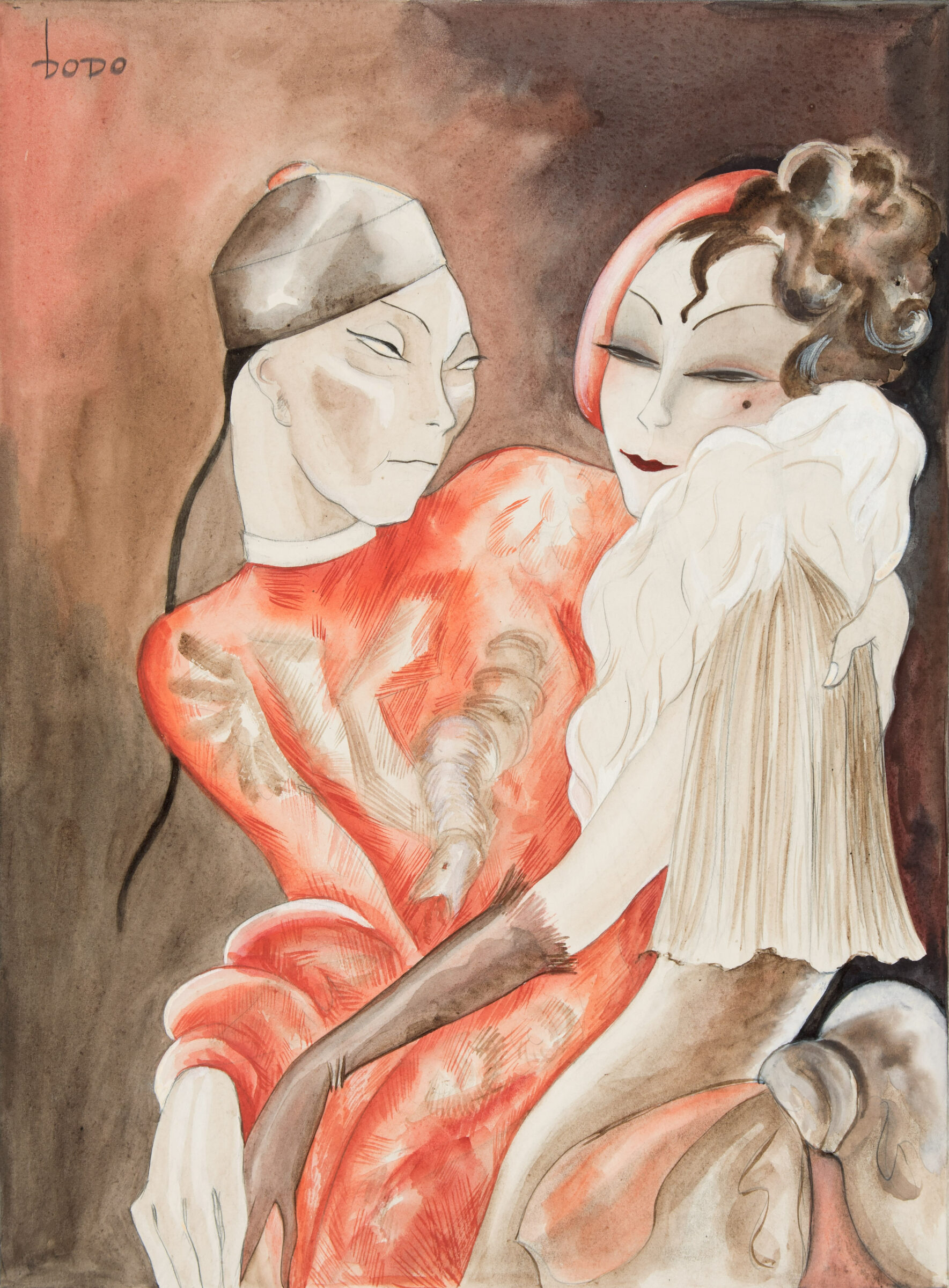
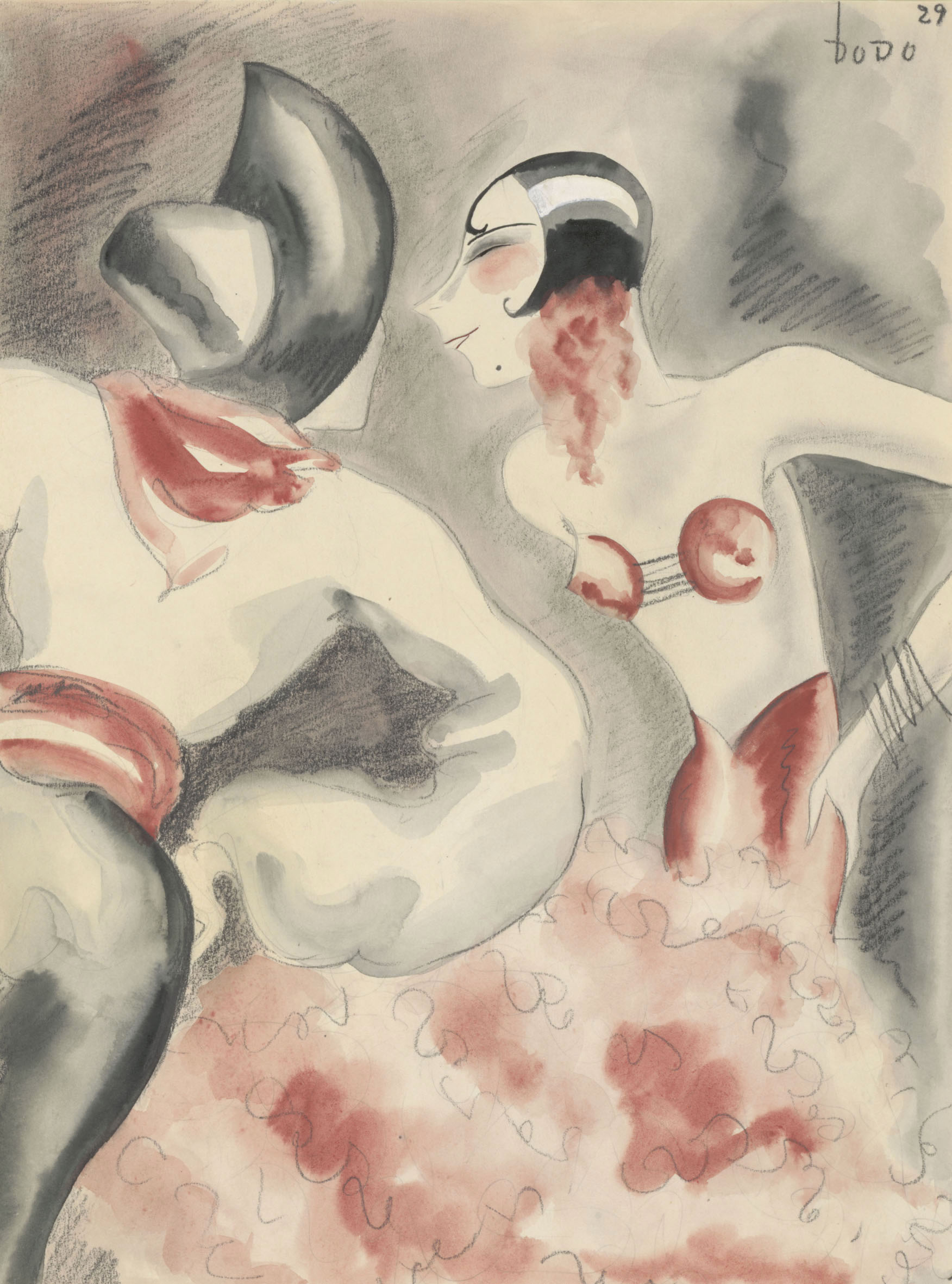
Dodo (Dörte Clara Wolff) (Berlin 1907 – 1998 London) Keine Chance. Aquarell u. Deckweiß über Bleistift auf chamoisfarbenem Karton. 1929. | src Lehr KunstauktionenDodo (Dörte Clara Wolff; 1907 – 1998) :: Revue-Tanzpaar, 1929. Zeichnung. | src Staatlichen Museen zu BerlinDodo (Dörte Clara Wolff) :: Puppy Love, 1929. Gouache über Bleistift auf Karton. | src Kunkel Fine ArtDodo (Dörte Clara Wolff) (Berlin 1907 – 1998 London) Keine Chance. Aquarell u. Deckweiß über Bleistift auf chamoisfarbenem Karton. 1929. | src Lehr Kunstauktionen
Otto Dix :: »Kupplerin«, 1923. Farbige Lithographie auf Maschinenbütten. Signiert unten rechts. Herausgegeben von Karl Nierendorf. | src Karl and Faber Kunstauktionen
Im Jahr 1921 zieht Otto Dix für vier Jahre nach Düsseldorf, wo er sich in druckgraphischen Techniken weiterbildet. Er liebt die Großstadt, die Typen und Randgruppen, die er vor allem während der Nacht auf den Straßen und in den Lokalen trifft: Matrosen oder Artisten, Kriegsversehrte und Kriegsgewinnler, ebenso wie Prostituierte und ihre Kunden. Die „goldenen“ Zwanziger zwischen allumfassender Traumatisierung, Vergnügungssucht und frühem Konsumismus, zwischen schillernder Oberfläche und abgestorbenem Innersten reizt ihn zu grotesk-enthüllenden Bildsujets. In seinen Werken – wie auch in der vorliegenden Lithographie „Kupplerin“ – führt Dix dem Betrachter schonungslos den körperlichen Zerfall, die Defizite und Eigenarten seiner Modelle vor Augen. Sein neuartiger Realismus, für den die Zeitgenossen den Begriff „Verismus“ prägen, macht Dix – zusammen mit Max Beckmann und George Grosz – nicht nur zum Hauptvertreter dieser Kunstströmung in Deutschland, sondern auch zu einem der bedeutendsten Realisten in der Geschichte der Kunst überhaupt.
In 1921, Otto Dix moved to Düsseldorf for four years, where he continued his education in printmaking techniques. He loves the big city, the characters and marginal groups he meets on the streets and in bars, especially at night: sailors or artists, war invalids and war profiteers, as well as prostitutes and their customers. The “golden” twenties between comprehensive traumatization, pleasure-seeking and early consumerism, between shimmering surfaces and dead innermost parts provoked him to grotesquely revealing pictorial subjects. In his works – as well as in the present lithograph “Kupplerin” – Dix ruthlessly shows the viewer the physical decay, the deficits and the peculiarities of his models. His new type of realism, for which his contemporaries coined the term “Verism”, made Dix – together with Max Beckmann and George Grosz – not only the main representative of this art movement in Germany, but also one of the most important realists in the history of art in general. (Roughly translated by us from source)
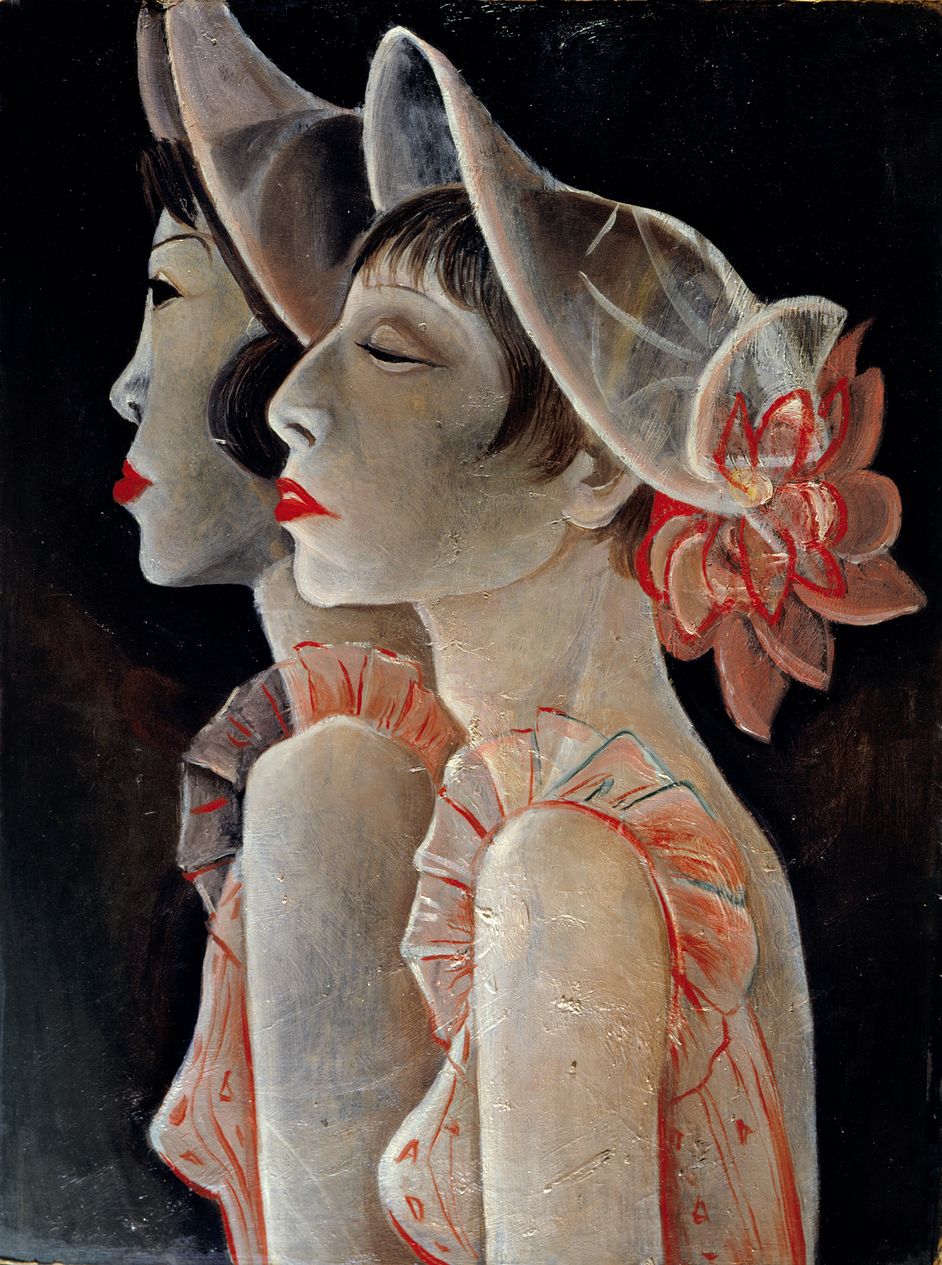
In the pleasure-hungry Berlin of the 1920s, theatres vied for attention with spectacular variety shows. Chorus girls in scanty costumes provided an erotic touch. As links in the chain of swinging legs, they were usually depicted as a type, not as individuals. But the two women in “Chorus Girls” by Jeanne Mammen (1890–1976) could hardly be more different. The artist centres on their weary faces, sallow skin and garish lipstick. The real attraction – the dancers’ long-limbed bodies – are only visible down to the breast. They pause for breath, no trace of glamour here.
Mammen, a free-lance artist and a prototype of the emancipated “New Woman”, often highlighted female clichés of the day. The chorus girl in front has the facial features of the artist. The figure behind resembles her sister Mimi. [quoted from Berlinische Galerie]
Jeanne Mammen :: Josephine Baker, ca. 1926. [Revue Neger]. Barbican Centre | src Flickr
Weimar Clubs and cabarets – German cities, 1920s
After the collapse of its Empire and the defeat of the First World War, Germany became a democracy, the Weimar republic. In the early 1920s, people yearned for excitement, there was a sense of liberation and the economy started to recover. Night clubs appeared which fused cabaret, literature, art, music, theatre and satire in multi-sensory experiences. American jazz and dance crazes including the foxtrot, tango, one-step and Charleston became popular and exotic dances by Anita Berber, Valeska Gert and famously Josephine Baker were performed.
Fantasy spaces were created such as the dance-casino called Scala where the ceiling was sculpted into jagged structures that hung down like crystalline stalactites. The pulsating energy of such clubs and bars was captured by artists including Otto Dix, Jeanne Mammen and Elfriede Lohse-Wächtler.
[Barbican Centre] From Into the Night: Cabarets & Clubs in Modern Art (October 2019 to January 2020)
Visions of a dark world in the art of Weimar Germany [Apollo magazine]
Review on the exhibition Magic Realism: Art in Weimar Germany 1919-33 (Tate Modern, 2018-19)
[…] towards the end of the exhibition, a small cluster of drawings introduces the work of Jeanne Mammen. Mammen’s drawings – gauzy depictions of women in watercolour, pen and ink – illustrated fashion magazines and poetry publications throughout the 1920s, until the Nazis shut down the journals she worked for and she went into inner exile, refusing to show her work. Here, they fill an important gap in describing women’s experiences of city life. Mammen observed women on the streets of Berlin and in nightclubs, and often depicted them in conversation, smoking, or playing cards. In Brüderstrasse (Free Room) (1930), the women are intimate and aloof; in Boring Dolls (1929), they’re defiant, out for their own pleasure.
[…] The exhibition doesn’t quite tease out the paradoxes between trauma and humour, leaving both to loiter in the murkiness of Dix’s circus tent. What we’re given is a vision of a world that hinges on reality yet twists from view. It’s a distortion of the truth, full of landscapes littered with war debris and nightclub corners filled with smoke. It’s the same world, but darker than before.
quoted from the review by Harriet Backer for Apollo magazine
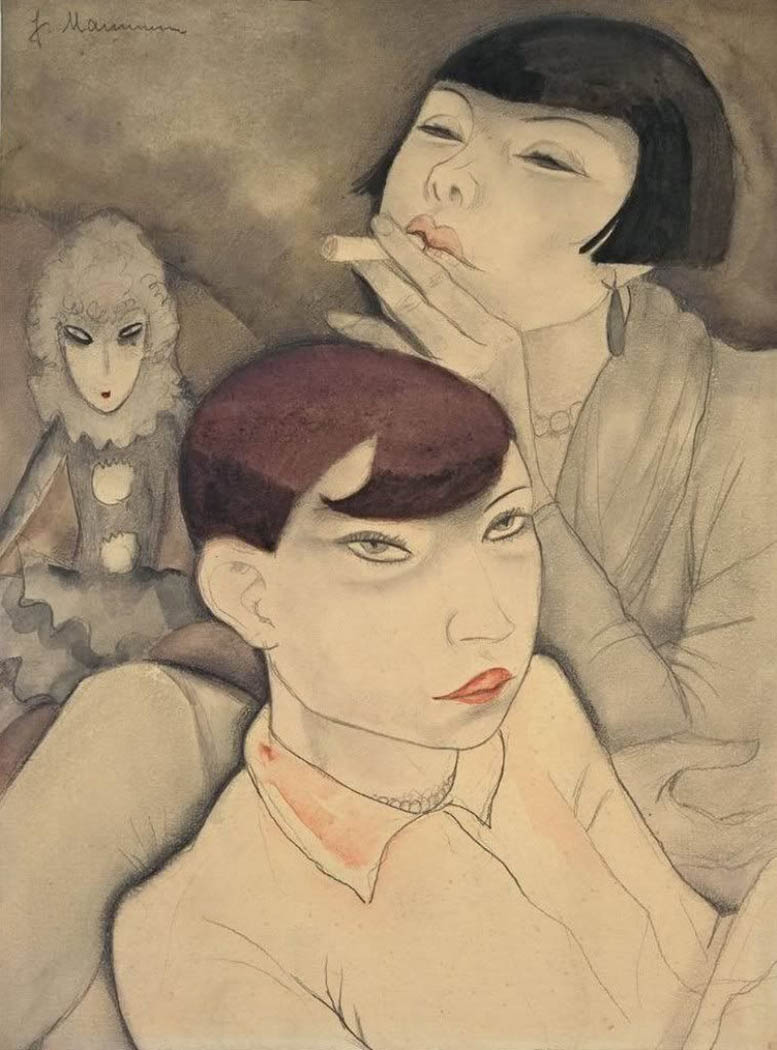
Jeanne Mammen :: Sie repräsentiert (och Selbstbild), um 1928. [watercolor, pencil] Bild: VG Bild-Kunst, Bonn 2017 | src Svenska.yle
Watercolorist, painter, printmaker. Raised in Paris. Studied art in Paris, Brussels, and Rome from 1906 until 1911. As a German citizen, was forced to flee France with her family at outbreak of World War I; lost all possessions. Impoverished, settled in Berlin in 1916, where she eventually earned a living making illustrations for fashion magazines and posters for Universum-Film AG (UFA), the film distributor.
After 1924 frequently published drawings and watercolors in major satirical periodicals such as Ulk and Simplicissimus, for which she chronicled the experiences of Berlin’s crop-haired, self-reliant “new women” at work and leisure — experiences that mirrored her own. Often showed them in cramped, distorted spaces, some rendered in lurid tones reminiscent of Henri de Toulouse-Lautrec and others in brilliant, orphic colors of the prewar Parisian avant-garde. Enjoyed growing commercial and critical success; in 1930 had first solo exhibition at Galerie Gurlitt in Berlin. At publisher Wolfgang Gurlitt’s behest, made lithographs illustrating a book of erotic Sapphic poetry, Les Chansons de Bilitis, in 1931–32, which was banned by the Nazis.
Under Nazi dictatorship, remained in Germany but lived in a state of “inner emigration”; refused to exhibit or publish. Turned increasingly to painting in Cubist and Expressionist styles out of solidarity with artists who Nazis defamed as degenerate.
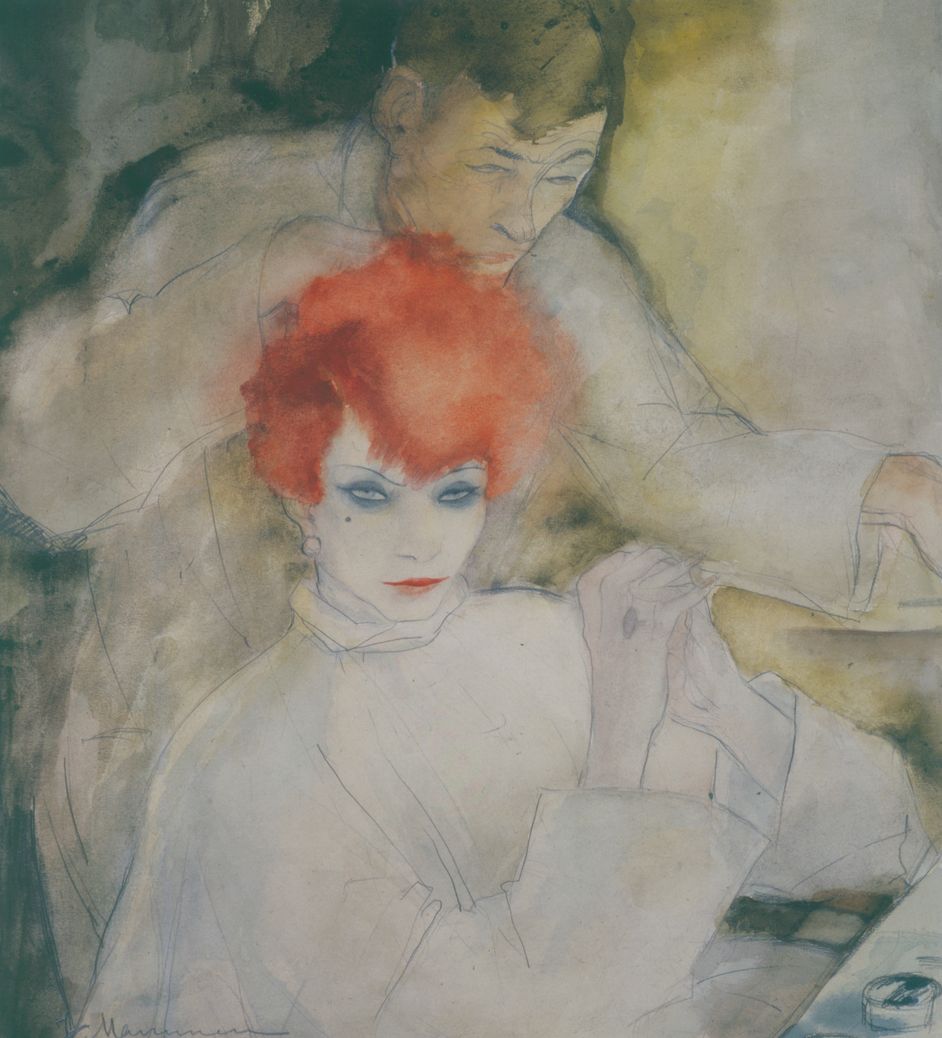
Jeanne Mammen :: Zwei Frauen, tanzend (Two women, dancing), ca. 1928. [Aquarell, Bleistift]. Bild: VG Bild-Kunst, Bonn 2017. | src Svenska.yleJeanne Mammen :: Die Rothaarige | The Redhead (Thoughts at the Hairdresser’s), um 1928. Drawing, watercolour and pencil on paper. | src Berlinische Galerie
Jeanne Mammen (1890–1976) made her name in the late 1920s with illustrations for magazines like Simplicissimus, Ulk and Jugend. In an enthusiastic review, Kurt Tucholsky wrote that her figures leaped “from the paper with skin and hair”. Mammen’s favourite motif were women in the city: in a café, at a ball, at the bar or in some sleazy joint. “The Redhead”, printed in Ulk in 1928, sits in the hairdresser’s chair. She is lost in thought as she looks towards the viewer: we are her mirror. The hairdresser is just finishing off the job. The look is perfect: the pale smock, the white skin, the brown shades in the background are an ideal background to set off her red hair, her lips and the blue shadow around her catlike eyes. “The Redhead”is a vamp rather than the sassy athletic young lass more typical of the times. This capricious creature exudes an air of cold detachment. Her beauty is not intended to seduce but is sufficient unto itself. [quoted from Berlinische Galerie]
Otto Dix (1891-1969) ~ Bildnis der Journalistin Sylvia von Harden, 1926. Oil and tempera on wood | src Centre Pompidou
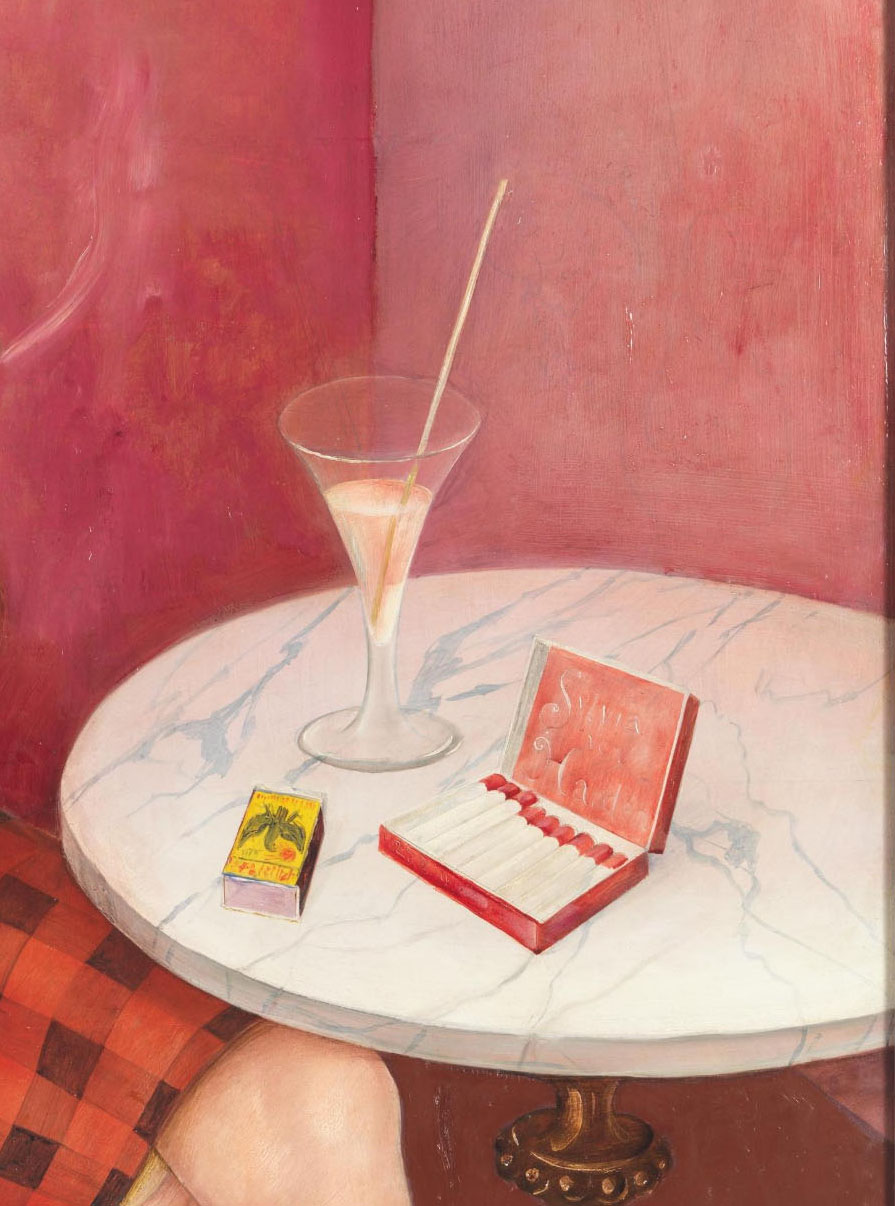
Journaliste à Berlin dans les années 1920, Sylvia von Harden (1894-1963) s’affiche en intellectuelle émancipée par une pose nonchalante. Otto Dix contrarie son arrogance par le détail d’un bas défait. Sa robe-sac à gros carreaux rouges détonne avec l’environnement rose, typique de l’art nouveau. Le style réaliste, froid et satirique est caractéristique du mouvement de la Nouvelle Objectivité [Neue Sachlichkeit] auquel appartient le peintre. Il s’inspire des maîtres allemands du début du 16e siècle (Grünewald, Cranach et Holbein), par la technique de la tempera sur bois et l’exhibition d’une intéressante laideur. | src Centre Pompidou
Sylvia von Harden (1894-1963) was a journalist in Berlin in the 1920s. Her nonchalant stance is a statement of her emancipated intellectual role. Otto Dix undermines her arrogance with the detail of a loose stocking and her rather awkward pose. Her red-checkered sack dress contrast with the pink environment, typically Art Nouveau. The cold, satirical realism typifies the New Objectivity [Neue Sachlichkeit] movement to which the painter belonged. lnspired by early 16th-century German masters (Grünewald, Cranach and Holbein), he embraced the tempera on wood panel technique as well as the choice to exhibit the ugliness. | src Centre Pompidou
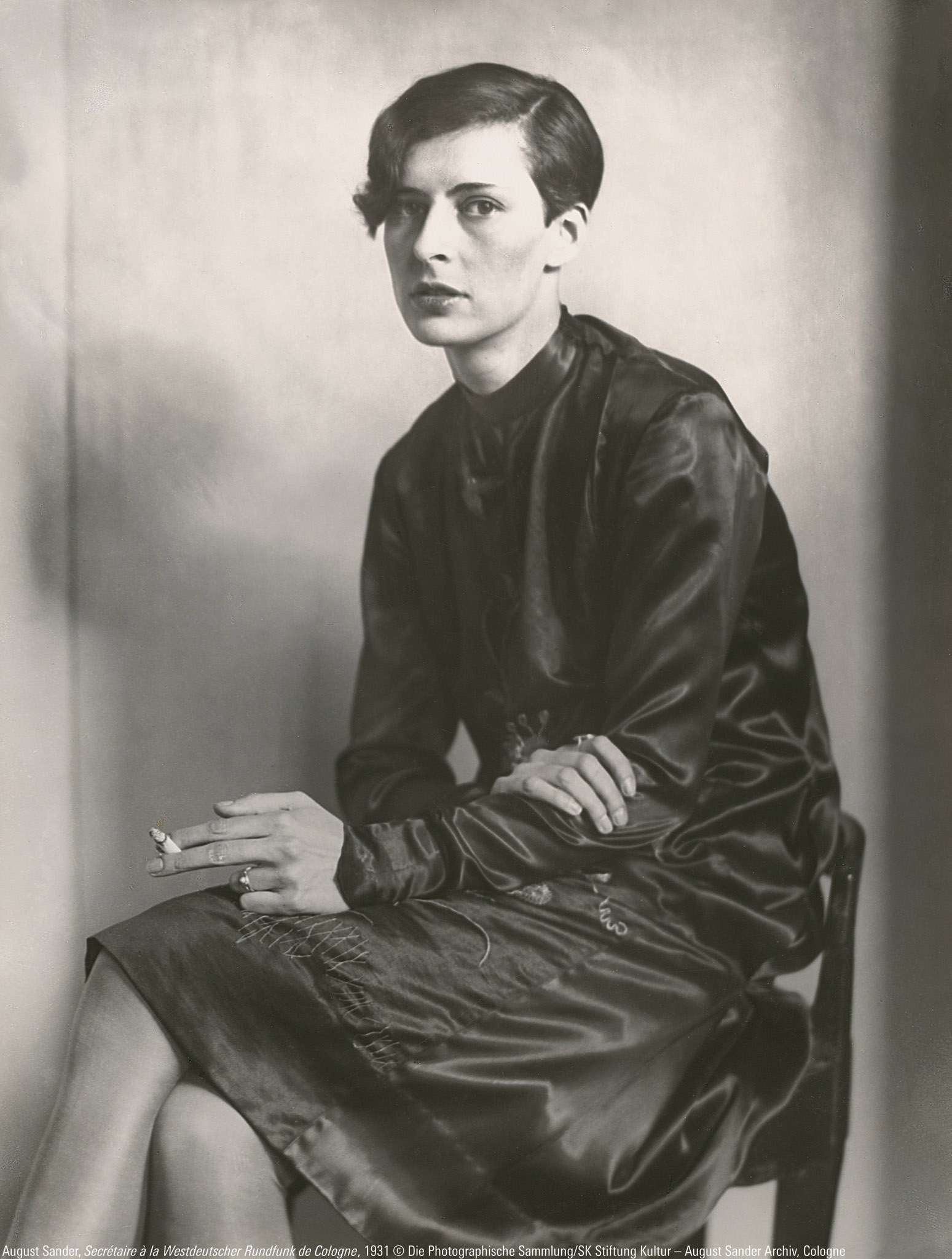
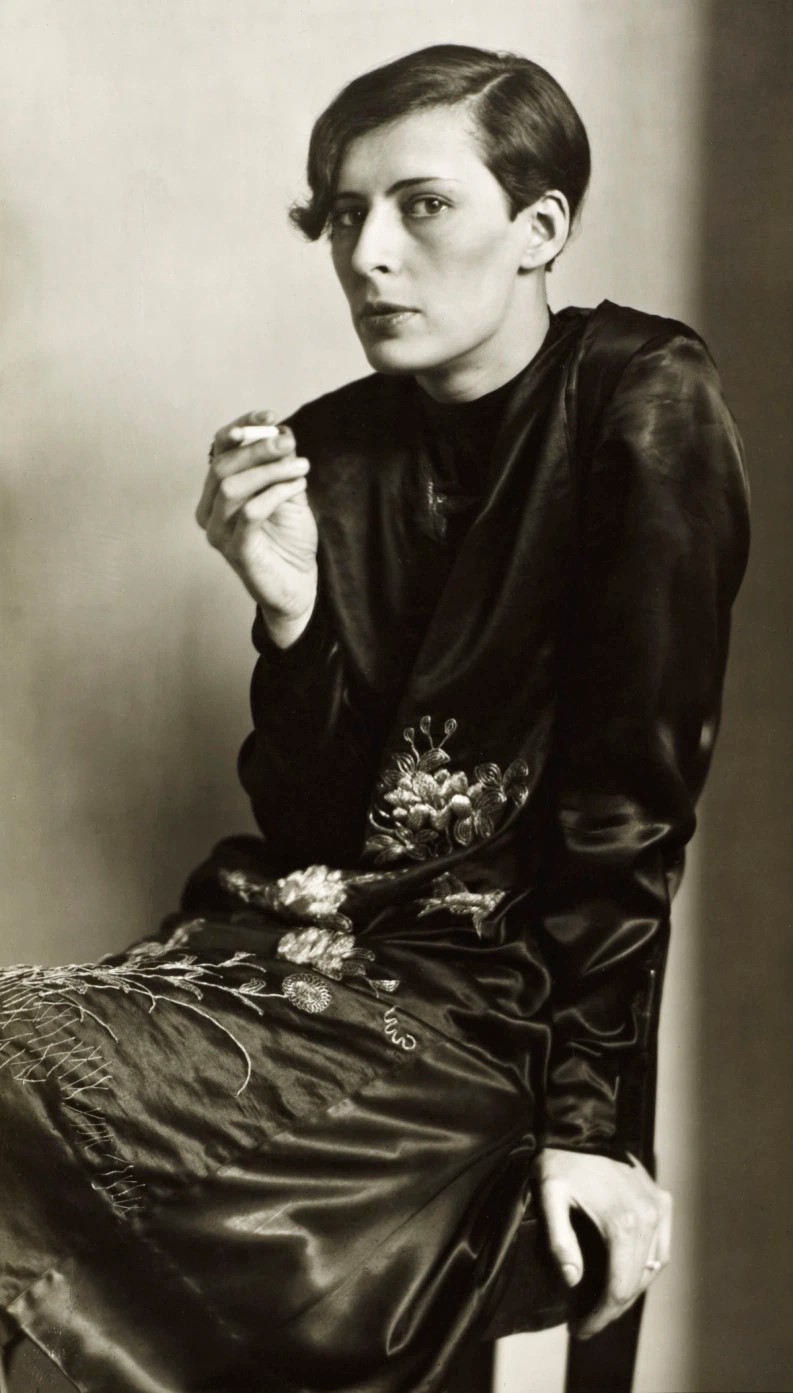
Note the inscription of her aristocratic name “Sylvia von Harden” on the inner cover of the cigarette box Detail from: Otto Dix ~ Bildnis der Journalistin Sylvia von Harden, 1926. Huile et tempera sur boisAugust Sander (1876-1964) ~ Secretary at the Westdeutscher Rundfunk in Cologne [Sylvia von Harden], 1931 | src Tate GalleryAugust Sander (1876-1964) ~ Sekretärin beim Westdeutscher Rundfunk in Köln [Sylvia von Harden], 1931 | src Centre PompidouOtto Dix (1891-1969) ~ Bildnis der Journalistin Sylvia von Harden, 1926 (scan)
Installé à Berlin entre 1925 et 1927, Dix peint une série de portraits remarquables. Maintes fois reproduit et exposé, celui de la journaliste Sylvia von Harden, de son vrai nom Sylvia Lehr (1894-1963), est l’un des plus fascinants. Il offre une véritable synthèse d’une recherche picturale qui s’inscrit dans ce que le critique Gustav Hartlaub désigne comme « l’aile gauche vériste » de la Neue Sachlichkeit [Nouvelle objectivité]. La représentation sans complaisance d’un type humain à travers ses attributs s’exprime dans le choix d’une intellectuelle émancipée des années 1920, aux allures masculines, fumant et buvant seule dans un café. […] L’image de la journaliste, que Dix a rencontrée au Romanische Café, haut-lieu berlinois du monde littéraire et artistique, reste pourtant ambiguë. Si dans ses souvenirs publiés à la fin des années 1950, la journaliste émigrée à Londres affirme que Dix l’a choisie pour son allure, représentative de cette époque, il semble que l’artiste la montre aussi en porte-à-faux par rapport à un type et un rôle dans lesquels elle paraît mal à l’aise. Sa pose nonchalante, mais peu naturelle, paraît trop ostentatoire ; son arrogance intellectuelle est contrariée par l’image de son bas défait ; et sa robe-sac à gros carreaux rouges l’oppose à l’environnement rose Art nouveau. Cette mise à nu semble avoir échappé au modèle. | src Centre Pompidou
Living in Berlin between 1925 and 1927, Dix painted a series of remarkable portraits. Reproduced and exhibited many times, that of the journalist Sylvia von Harden, whose real name was Sylvia Lehr (1894-1963), is one of the most fascinating. It offers a true synthesis of pictorial research which is part of what the critic Gustav Hartlaub designates as the “verist left wing” of the Neue Sachlichkeit [New Objectivity]. The uncompromising representation of a human type through its attributes is expressed in the choice of an emancipated intellectual from the 1920s, with masculine appearance, smoking and drinking alone in a café. […] The image of the journalist, whom Dix met at the Romanische Café, a Berlin hotspot for the literary and artistic world, nevertheless remains ambiguous. In her memories published at the end of the 1950s, the journalist who emigrated to London affirms that Dix chose her for her appearance, representative of that era, but it seems that the artist also shows her cantilevered from to a type and a role in which she seems uncomfortable. Her nonchalant, but unnatural pose seems too ostentatious; her intellectual arrogance is thwarted by the image of her undone stockings; and her large red check sack dress contrasts with the pink Art Nouveau environment. This exposure seems to have escaped the model.
Angela Lampe. Extrait du catalogue Collection art moderne – La collection du Centre Pompidou, Musée national d’art moderne , Paris, Centre Pompidou, 2007
August Sander (1876-1964) ~ Secrétaire à la Westdeutscher Rundfunk de Cologne [Sylvia von Harden], 1931 | src Centre PompidouAugust Sander (1876-1964) ~ Sekretärin beim Westdeutscher Rundfunk in Köln [Sylvia von Harden], 1931 | src Centre PompidouAugust Sander (1876-1964) ~ Sekretärin beim Westdeutscher Rundfunk in Köln [Sylvia von Harden], 1931 | src Centre PompidouAugust Sander (1876-1964) ~ Secretary at West German Radio in Cologne [Sylvia von Harden], 1931, printed 1992 | src Tate Gallery




![Jeanne Mammen :: Sie repräsentiert (och Selbstbild), um 1928.[watercolor, pencil] Bild: VG Bild-Kunst, Bonn 2017 | src Svenska.yle (selfportrait; self-representation)](https://unregardoblique.com/wp-content/uploads/2022/05/jeanne-mammen-sie-reprasentiert-um-1928.jpg)
![Jeanne Mammen :: Zwei Frauen, tanzend (Two women, dancing), ca. 1928. [Aquarell, Bleistift]. Bild: VG Bild-Kunst, Bonn 2017. | src Svenska.yle](https://live.staticflickr.com/65535/52109345817_2406513c8c_h.jpg)


![Jeanne Mammen :: Illustration für die Zeitschrift "Simplicissimus" - Illustration for the magazine Simplicissimus, around 1930. [Aquarell, Bleistift]. | src arthive](https://live.staticflickr.com/65535/52110616704_b9c964b975_k.jpg)



 un regard oblique