


src Focus on Dance ~ Keith de Lellis Gallery, also at The Met

images that haunt us


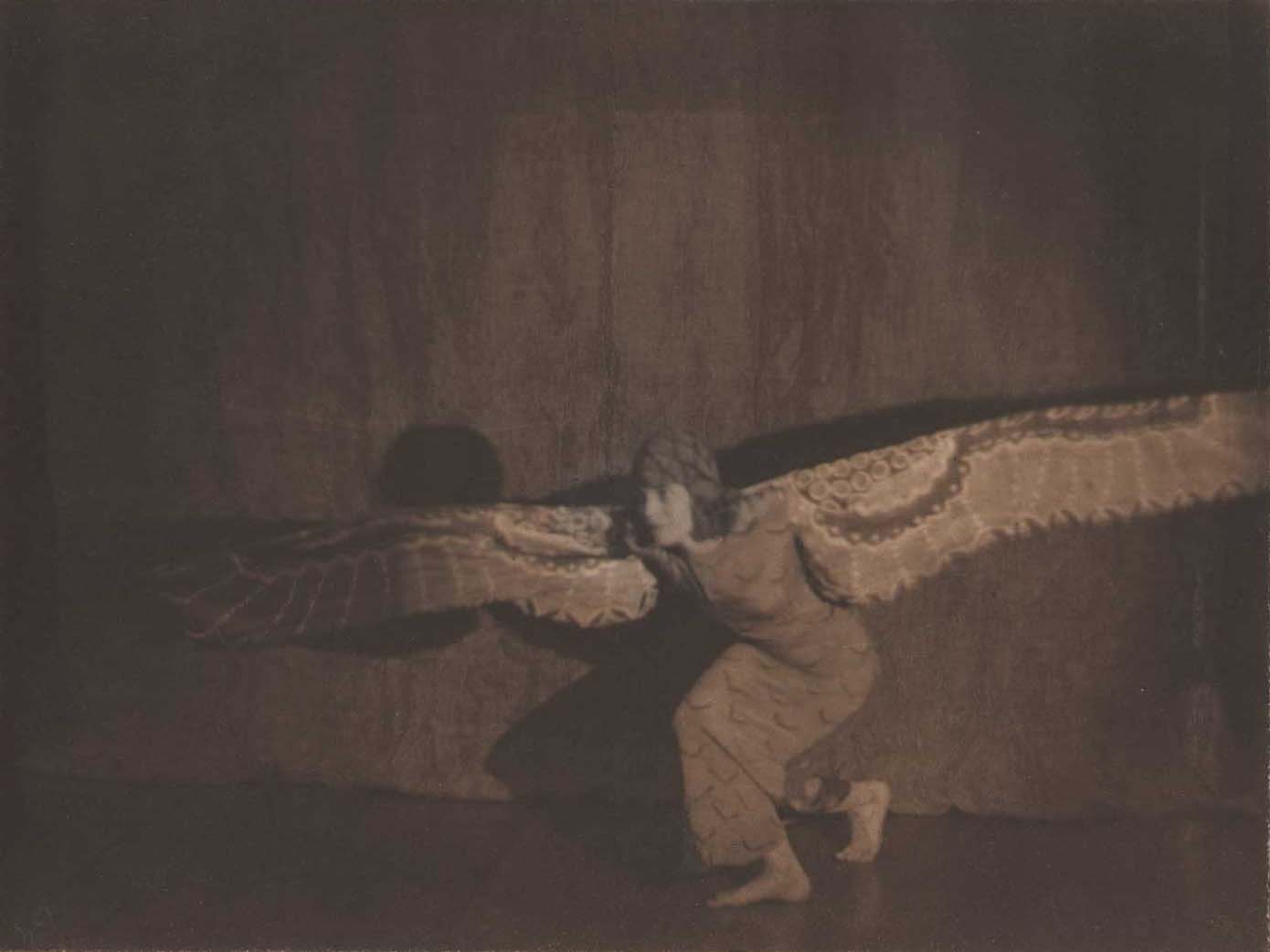
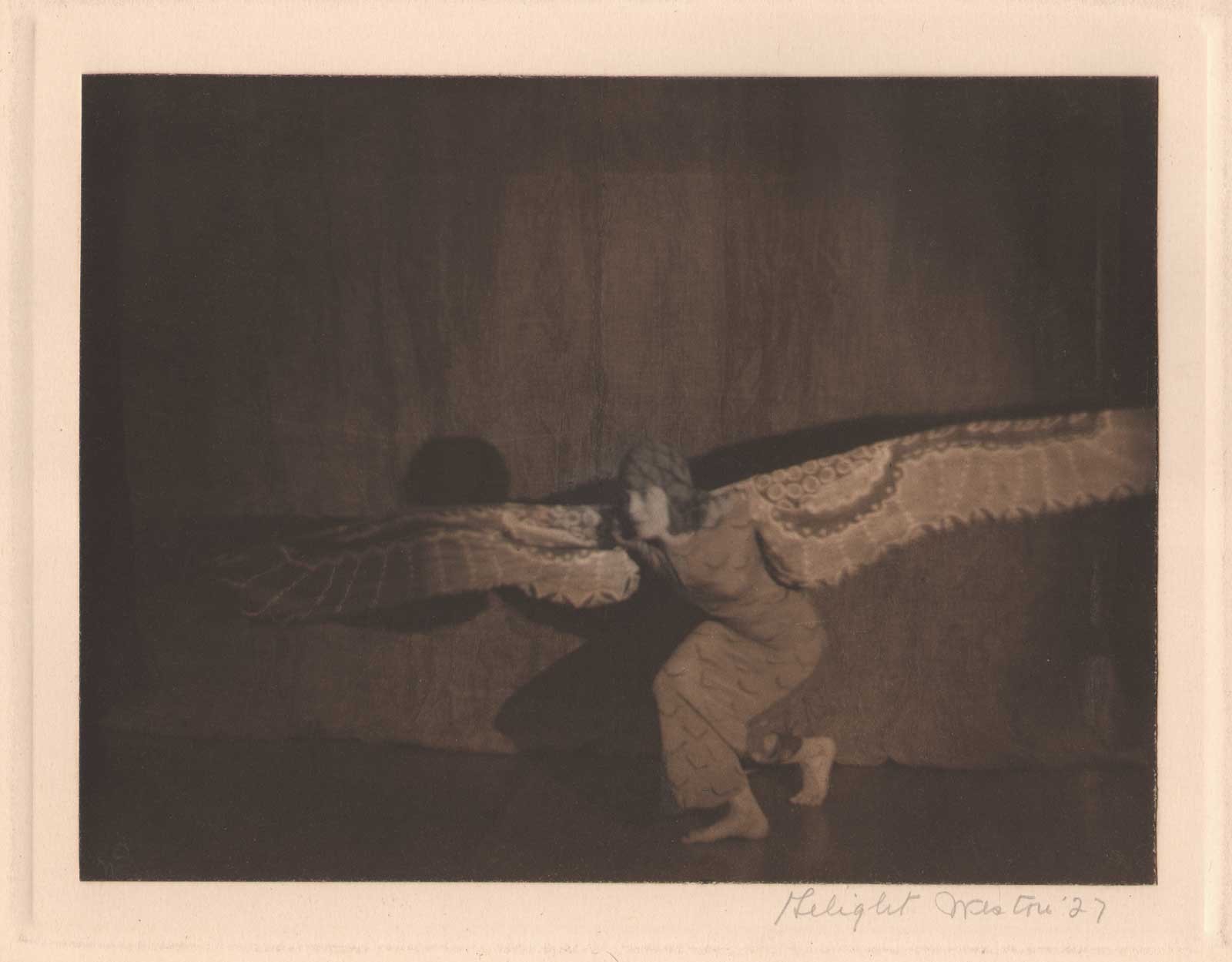
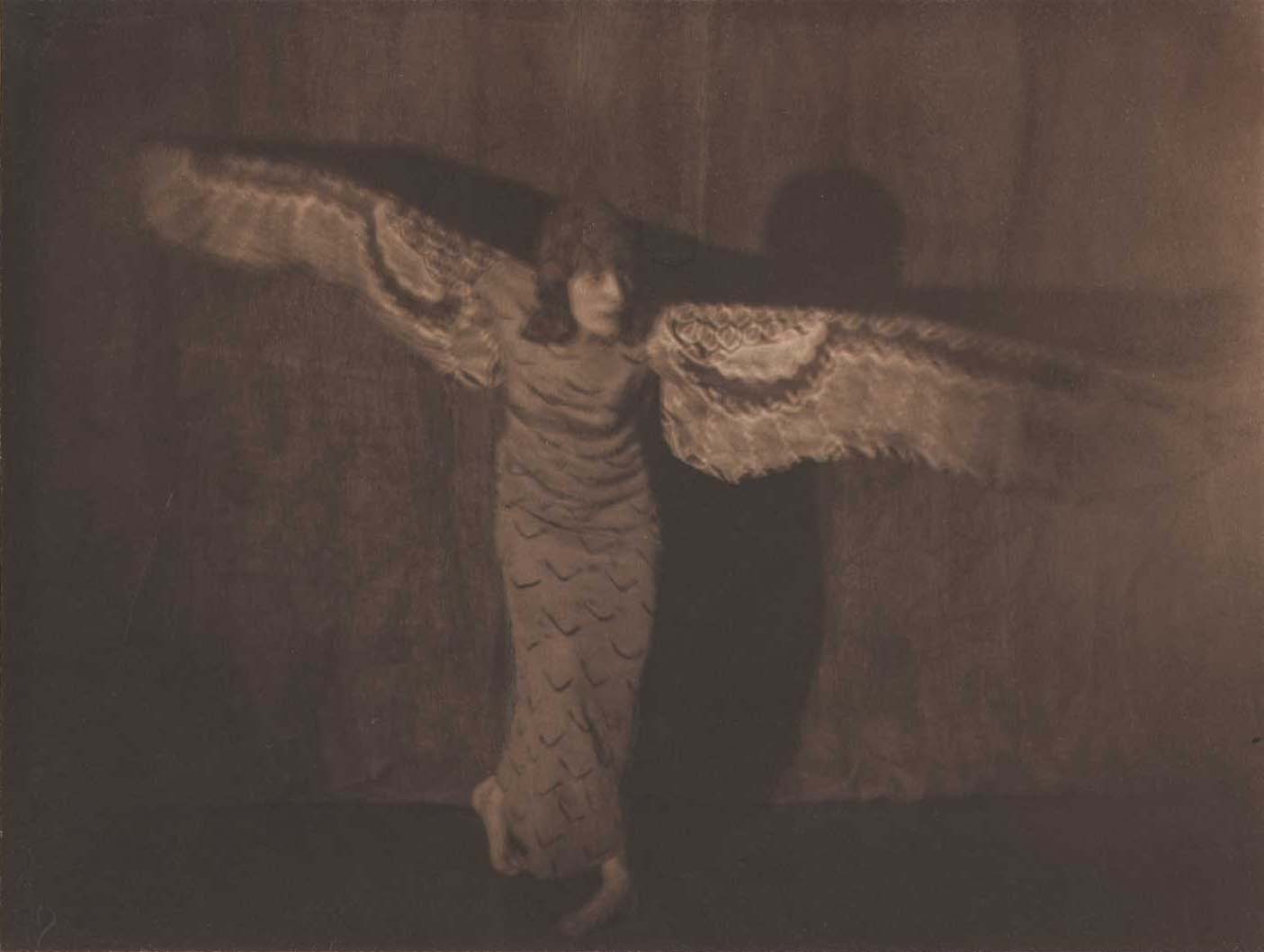

A female dancer wearing a bird-like costume outfitted with wings performs on stage, most likely in New York City. The dancer may have been affiliated with the Ruth Doing School of Rhythmics. Doing was a former dancer and student of Isadora Duncan (1877-1927) who had founded a dance camp along with business and life partner Gail Gardner in the Adirondack Mountains of New York in 1916, and was an active teacher of dance “Rhythmics” at the camp and in the city at least through the early 1930’s.
Another more intriguing possibility exists however as to the identity of the dancer here, with this archive holding six different examples taken by Delight Weston in 1927.
To wit, an argument can be made, based on the time period for boundary-breaking inventiveness in the dance medium as well as this artist’s stature, facial features and hair, that she is none other than pioneering modern American dancer Martha Graham. (1894-1991) One study in particular held by this archive: “Dancer with Long Robe”, bears a striking resemblance to a similar garment worn by Graham as part of her dance “A Study in Lacquer”. This was featured along with others as part of the premiere of the Martha Graham Company in New York in April, 1926. See Richard Burke’s photograph in the magazine The Dance from August, 1926. Of course, this website is happy to amend this theory if further evidence is produced.
Photographer Delight Weston lived with dance school founder Ruth Doing (1881-1966) at the time this photograph was taken, and Doing is known to have had a professional relationship with Martha Graham in the dance community near the Carnegie Hall neighborhood in lending out studio space to her. In the 2005 volume: Bessie Schönberg : Pioneer Dance Educator and Choreographic Mentor, by Cynthia Nazzaro Noble, we learn that in 1929, a very young “Schönberg attended her first dance class with Martha Graham at Ruth Doing’s studio near Carnegie Hall.” (p. 40) Quoted from PhotoSeed
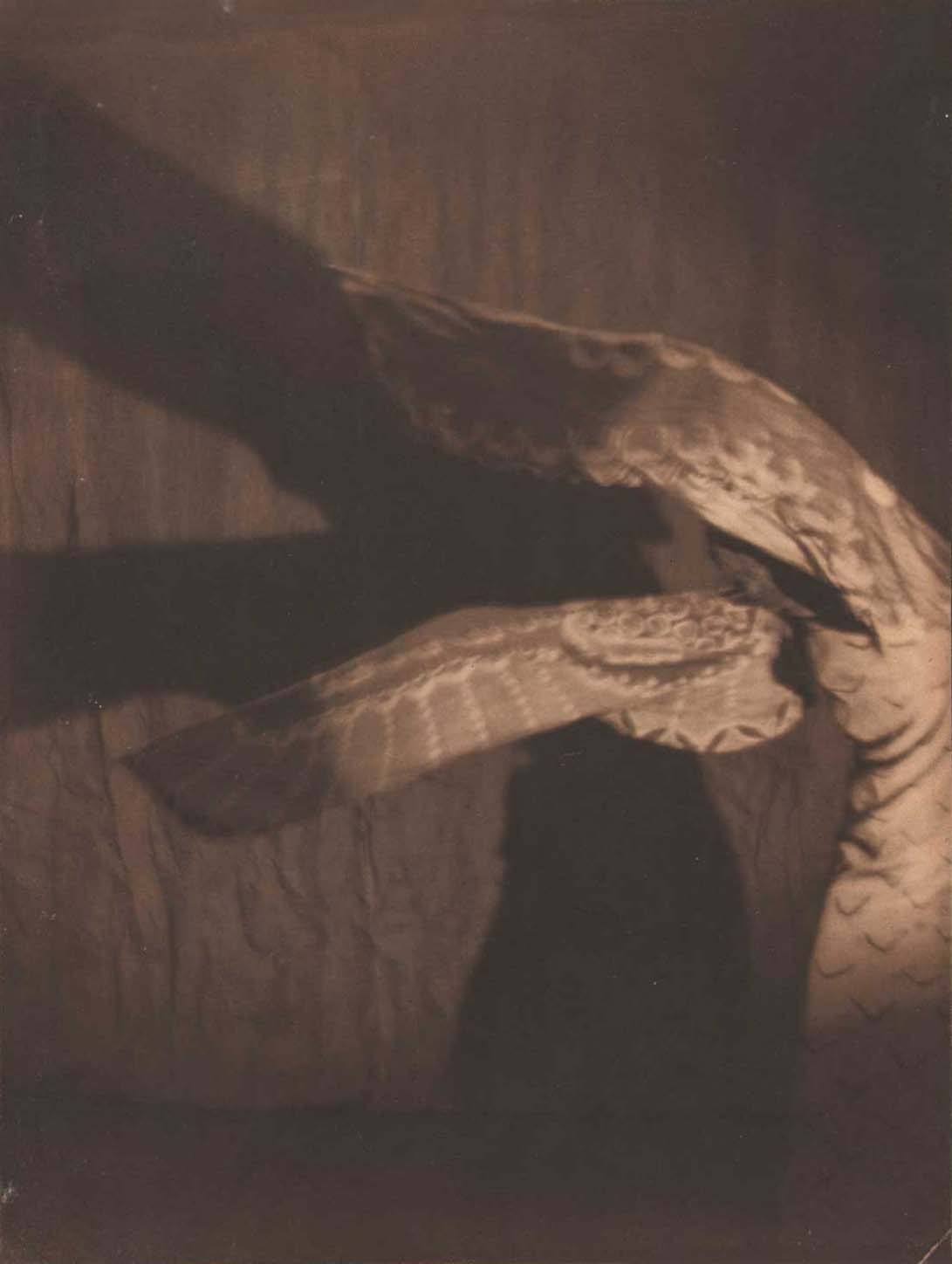

“Wings” worn and held aloft by a female dancer spread out and contrast with their resulting shadow on the curtain backdrop during a performance on stage, most likely in New York City.
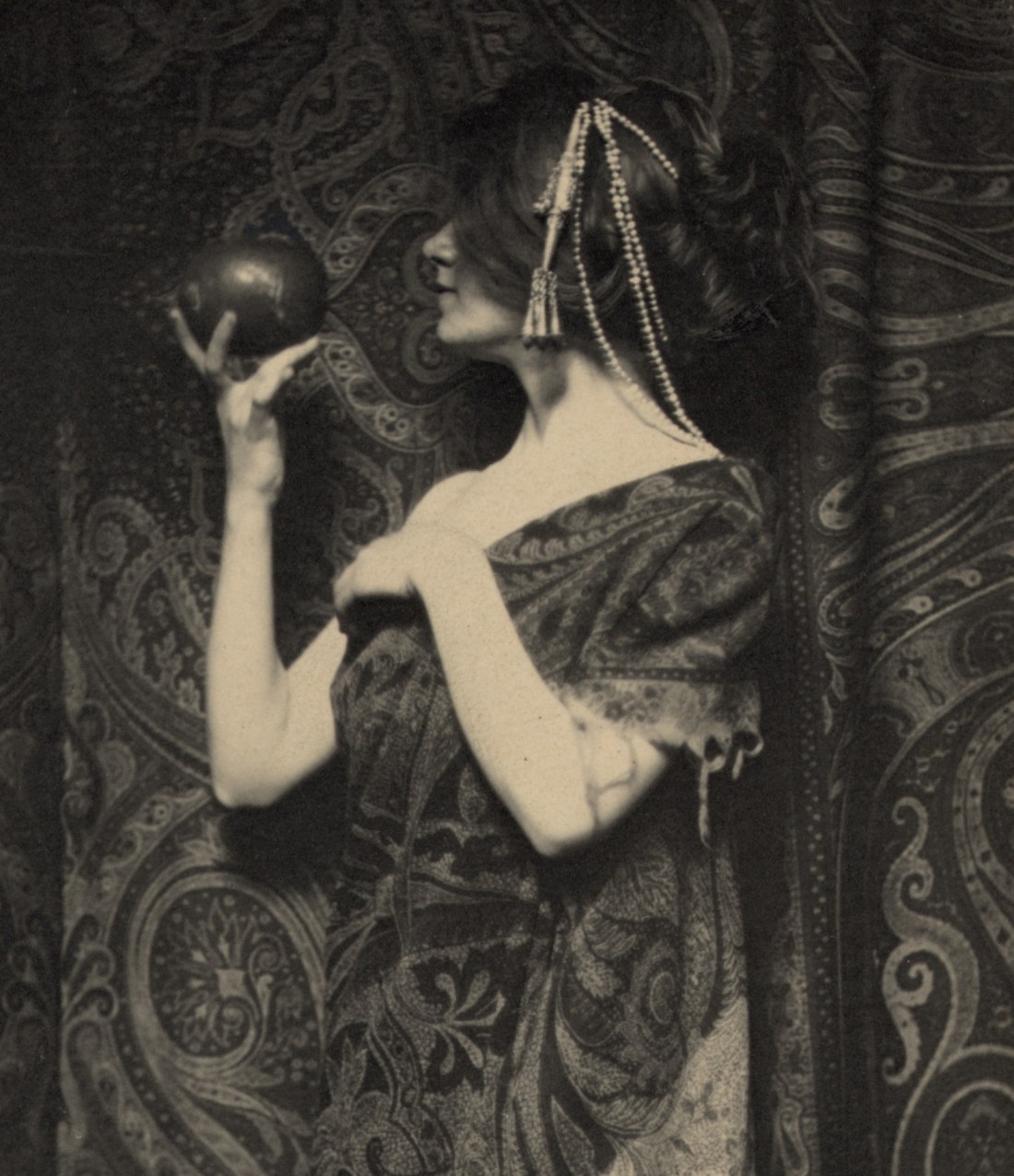

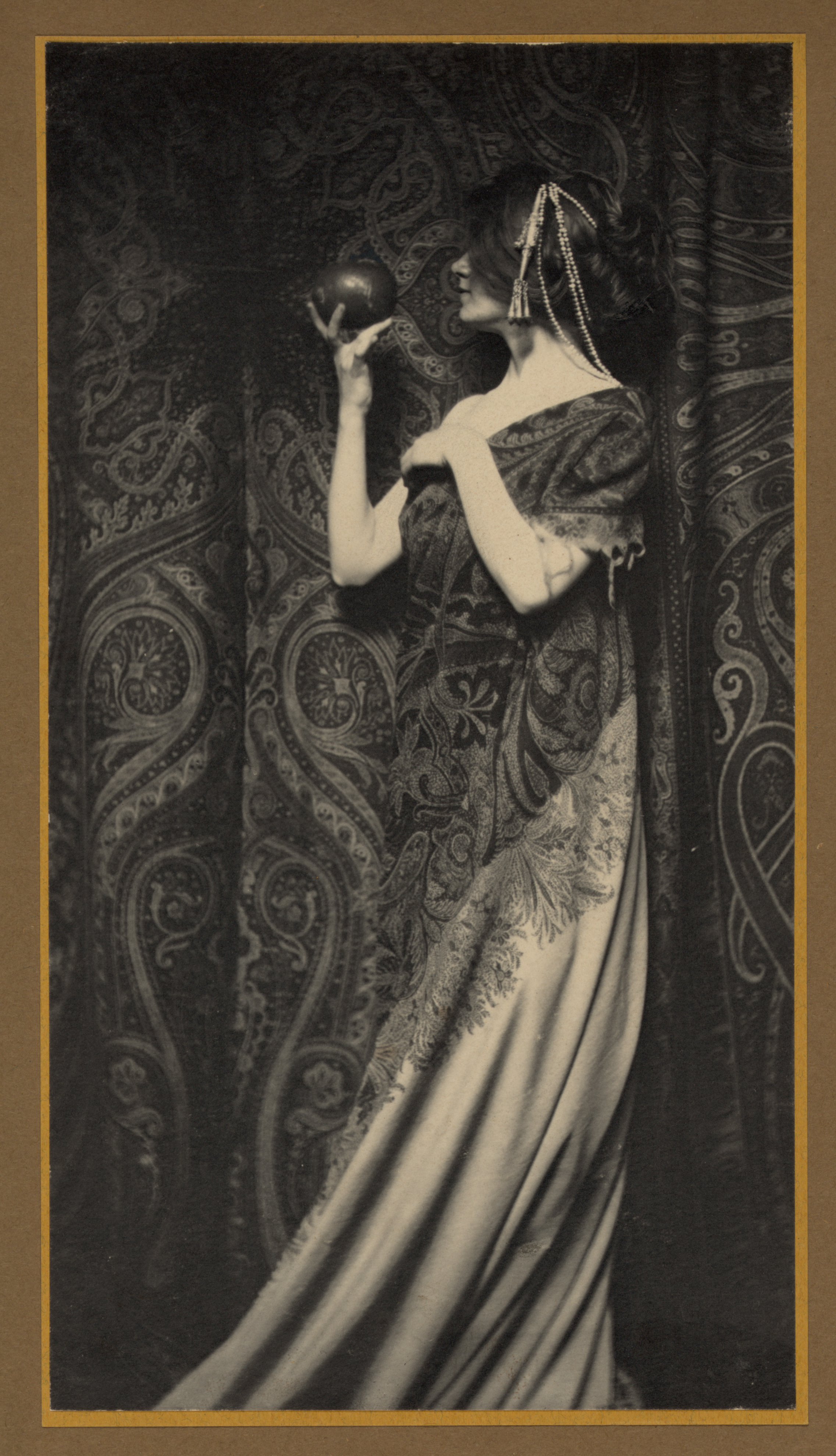
The Odor of Pomegranates is more than simply a portrait, the image represents Ben-Yusuf’s effort to use photography to explore a larger theme: in this case, the seductiveness and potential danger of something desirous.
Ben-Yusuf’s artistic explorations within the tradition of portraiture continued alongside her commercial work. One of the prints she felt was more successful was The Odor, a work that she exhibited on at least half a dozen occasions in the years immediately after its completion in 1899. No other photograph by her was displayed or reproduced as often. This portrait shows an unidentified young woman holding a pomegranate only inches before her face. The subject is dressed in an ornately decorated garment and stands erect in profile against a similarly patterned fabric that serves as the backdrop for the photograph. A string of pearls is interwoven in her hair. As the photographer and critic Joseph Keiley observed in his review of this “especially striking” image, “the figure was posed against a darker piece of heavy oriental drapery, figured with curved lines that resembled writhing serpents, and into which the draped figure almost melted.” Others, including the photographer Alvin Langdon Coburn, also commented on Ben-Yusuf’s effort to meld the her subject into the folds of the backdrop. The effect of this compositional strategy is a radical flattening of the picture plane so that the figure appears like a mythological personage carved on to a frieze. Capturing likeness is not the goal of the composition; instead, Ben-Yusuf is more concerned with the larger creative possibilities of photography. (…)
Ben-Yusuf was closely allied with those [photographers] who saw photography as a medium of artistic expression. To her and other like-minded practitioners, much could be learned from the world of the fine arts and literature, and this new class of photographers went to great lengths to create prints that incorporated this lessons. As the scholar Naomi Rosenblum has shown, The Odor of Pomegranates owes much stylistically to such works as John White Alexander’s painting, Isabella and the Pot of Basil [image below]. Ben-Yusuf admired Alexander, and two years later completed a series of portraits of the artist. In its subject matter, its composition, and its presentation, Ben-Yusuf’s image reveals the influence of the late nineteenth-century avant-garde. (…)
In The Odor of Pomegranates, Ben-Yusuf herself experiments with creating a photographic portrait that is as much about Classical mythology as it is about modern life. The pomegranate that the woman holds before her provides a key to unlocking the work’s larger symbolism. An odorless fruit, the pomegranate has long been a popular subject for artists and poets, many of whom have seen it as a symbol of the Resurrection. In Greek mythology, it figures prominently in the story of Persephone, the beautiful daughter of Zeus and Demeter, whose eating of a pomegranate given to her by Hades bound her for part of the year in the underworld over which he reigned. During those months, Demeter -the goddess of harvest- refused to allow anything to grow, and thus winter began. Ben-Yusuf depicts her Persephone-like figure observing closely -even contemplating- the fruit before her. Its “odor” relates not to its smell, but rather the tantalizing expectation that precedes the act of consuming the pomegranate.
Ben-Yusuf’s The Odor of Pomegranates is a departure from the professional photography that typically occupied her. Not concerned with capturing a sitter’s individuality, she explores in this portrait a more universal theme: the seductiveness and potential danger of something desirable. (…)
Although the long hair of Ben-Yusuf’s subject hides her eyes, it appears that this woman stares out at the pomegranate she holds as if pondering whether to act. Her other arm rises upward in a gesture that suggests a certain hesitation. The Odor of Pomegranates captures the tense moment of decision.
Quoted from: Goodyear, Frank H., III: Zaida Ben-Yusuf : New York portrait photographer. London : Merrell (2008) Published in association with the National Portrait Gallery, Smithsonian Institution, Washington, D.C. The book is available at internet archive
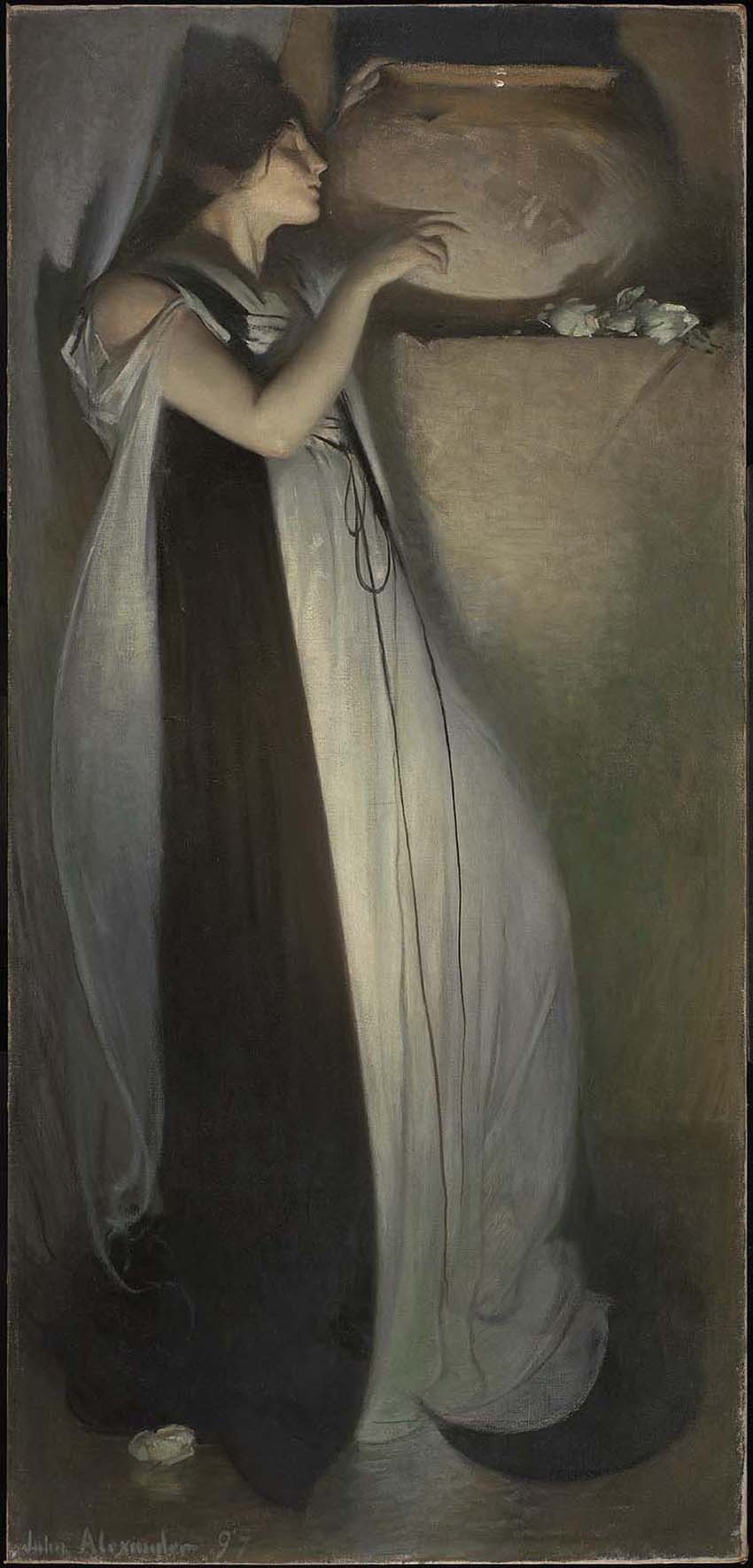
Isabella, or The Pot of Basil was a poem written in 1820 by the English poet John Keats, who borrowed his narrative from the Italian Renaissance poet Giovanni Boccaccio. Isabella was a Florentine merchant’s beautiful daughter whose ambitious brothers disapproved of her romance with the handsome but humbly born Lorenzo, their father’s business manager. The brothers murdered Lorenzo and told their sister that he had traveled abroad. The distraught Isabella began to decline, wasting away from grief and sadness. She saw the crime in a dream and then went to find her lover’s body in the forest. Taking Lorenzo’s head, she bathed it with her tears and finally hid it in a pot in which she planted sweet basil, a plant associated with lovers.
Alexander used theatrical effects to render this grim scene, isolating Isabella in a shallow niche and lighting her from below, as if she were an actor on a stage illuminated only with footlights. This eerie light, the cold monochromatic palette, and the sensuous curves of Isabella’s gown all draw the viewer’s eye to the loving attention Isabella gives the pot, which she gently caresses. Isabella seems lost in an erotic spectral trance, oblivious to the world and to observers. With his strange subject, Alexander created an extraordinary and mysterious image of love gone awry.
quoted from MFA and the text was adapted from Elliot Bostwick Davis et al., American Painting

Thomas Longworth-Cooper :: Anita Heyworth and Madge Bateman in ‘The Legend of Daphne and Apollo’, a dance arranged by Madge Atkinson, ca. 1931-1933 / source: dance archives
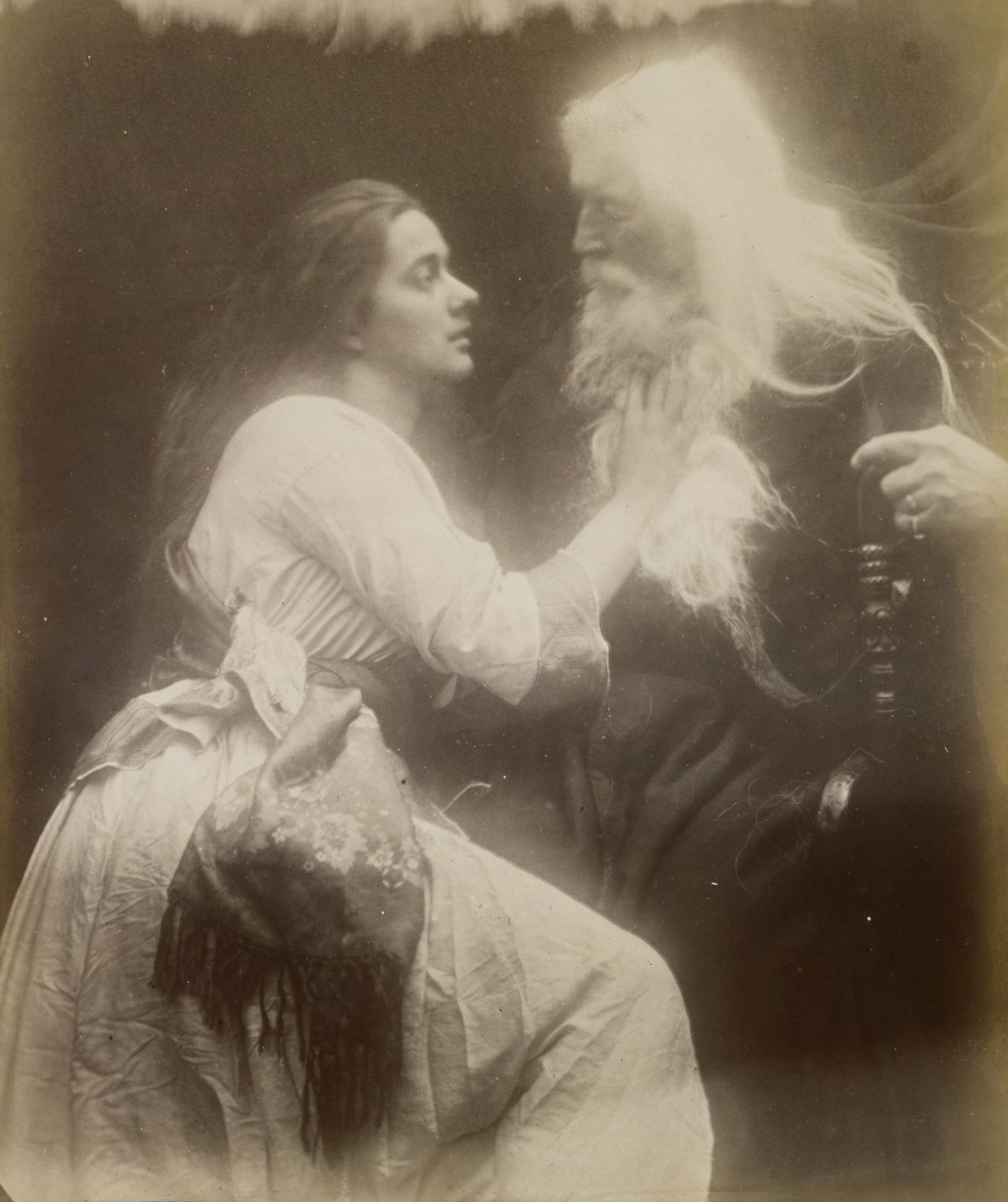
Julia Margaret Cameron ::
Vivien and Merlin, UK, 1874 / src: Harvard Art Museums
‘Vivien and Merlin’ was originally created at the poet Alfred Tennyson’s request, to illustrate a new edition of his Idylls of the King, a retelling of the legend of King Arthur. Cameron went on to produce a two-volume set of original prints, including this scene in which Vivien seduces Merlin in an attempt to charm him into revealing the secrets of his power. [quoted from source]
more [+] by this photographer


 un regard oblique