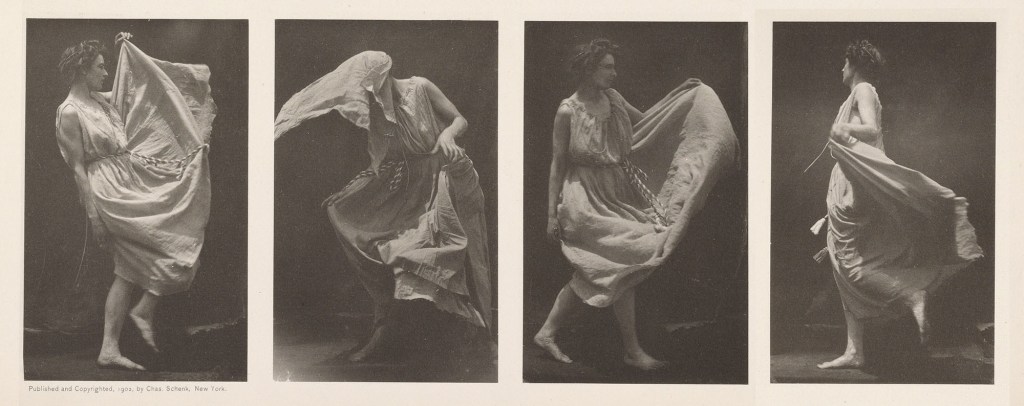
Charles Schenk (American, active New York 1898-1905) ~ Schenk-Draperies, New York, United States; 1902; Collotype. | Getty MuseumCharles Schenk :: Dance studies, plate 12, circa 1910. Gelatin silver print from collotype negative. | src Freeman’s auction
Charles Schenk was active in New York from 1898 to 1905. He produced a series of motion studies of women dancing with drapery as well as a collection of multi-plate prints detailing women’s hands at work. His works are in the collections of the Getty Museum, MoMA and the Rijksmuseum.
Charles Schenk (American, active New York 1898-1905) ~ Schenk-Draperies, New York, United States; 1902; Collotype. Eight images of a woman dancing in a simple dress with a rope belt. Full plate. | Getty MuseumCharles Schenk (American, active New York 1898-1905) ~ Schenk-Draperies, New York, United States; 1902; Collotype. Charles Schenk (American, active New York 1898-1905) ~ Schenk-Draperies, New York, United States; 1902; Collotype. | Getty Museum
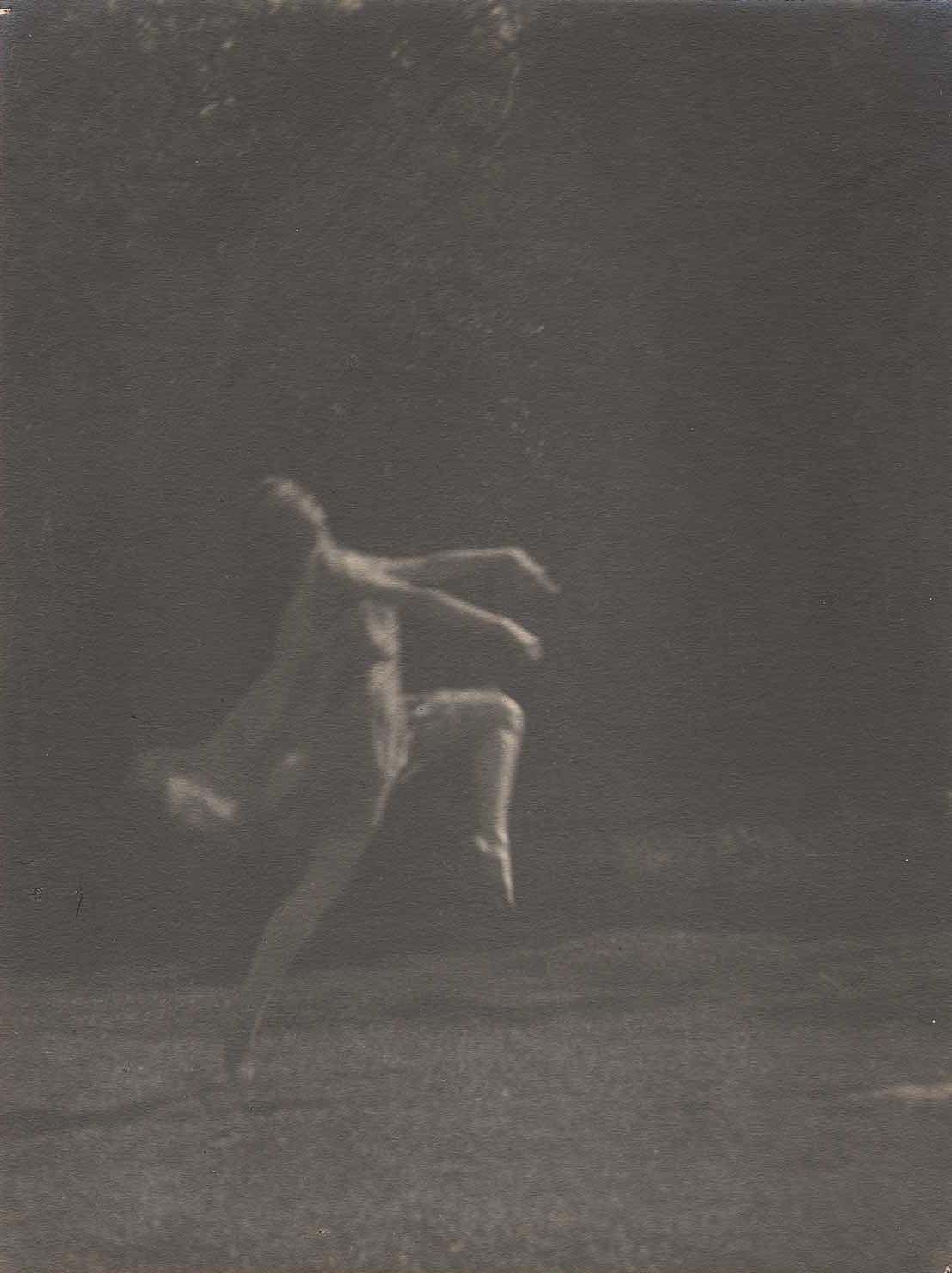
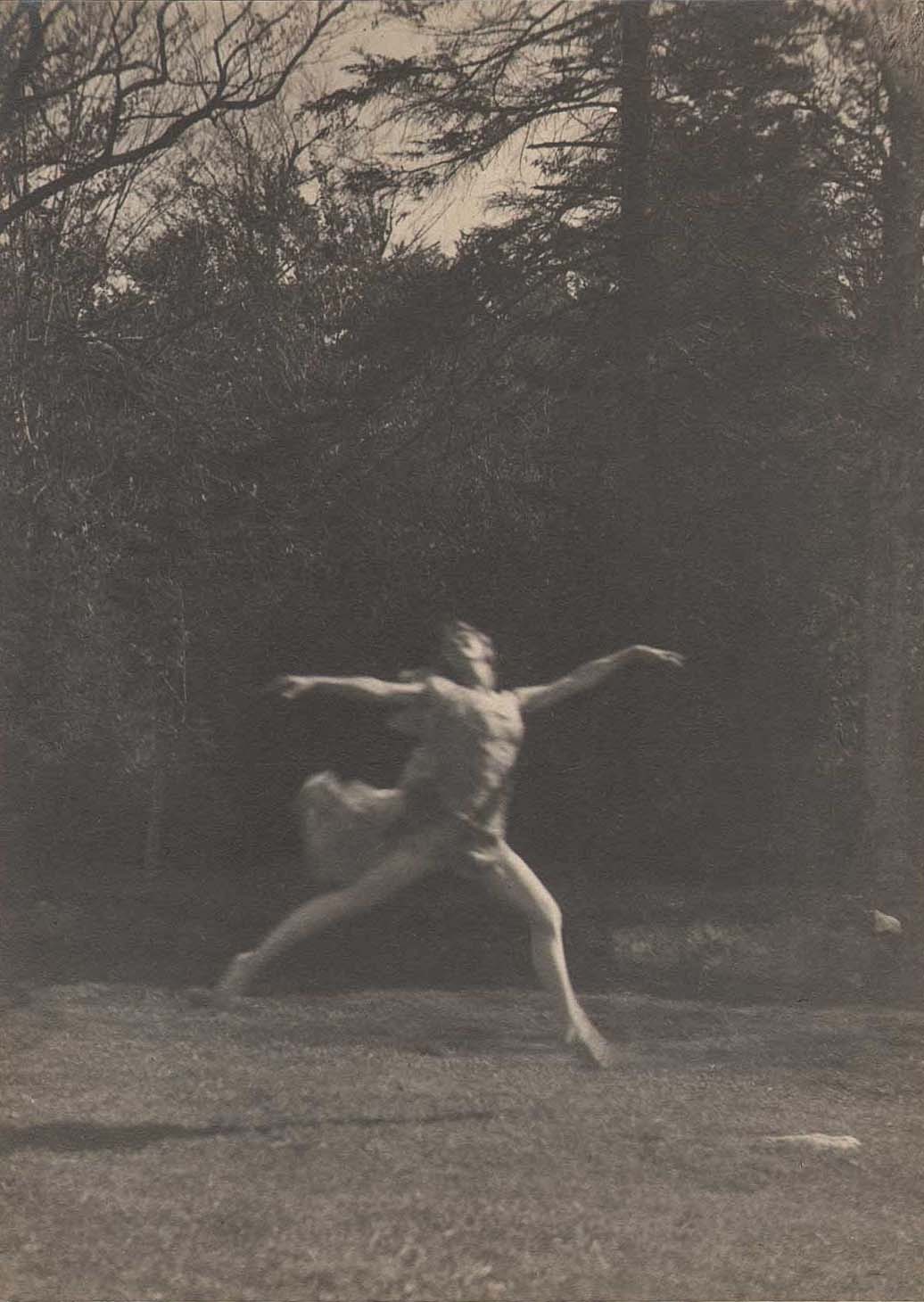
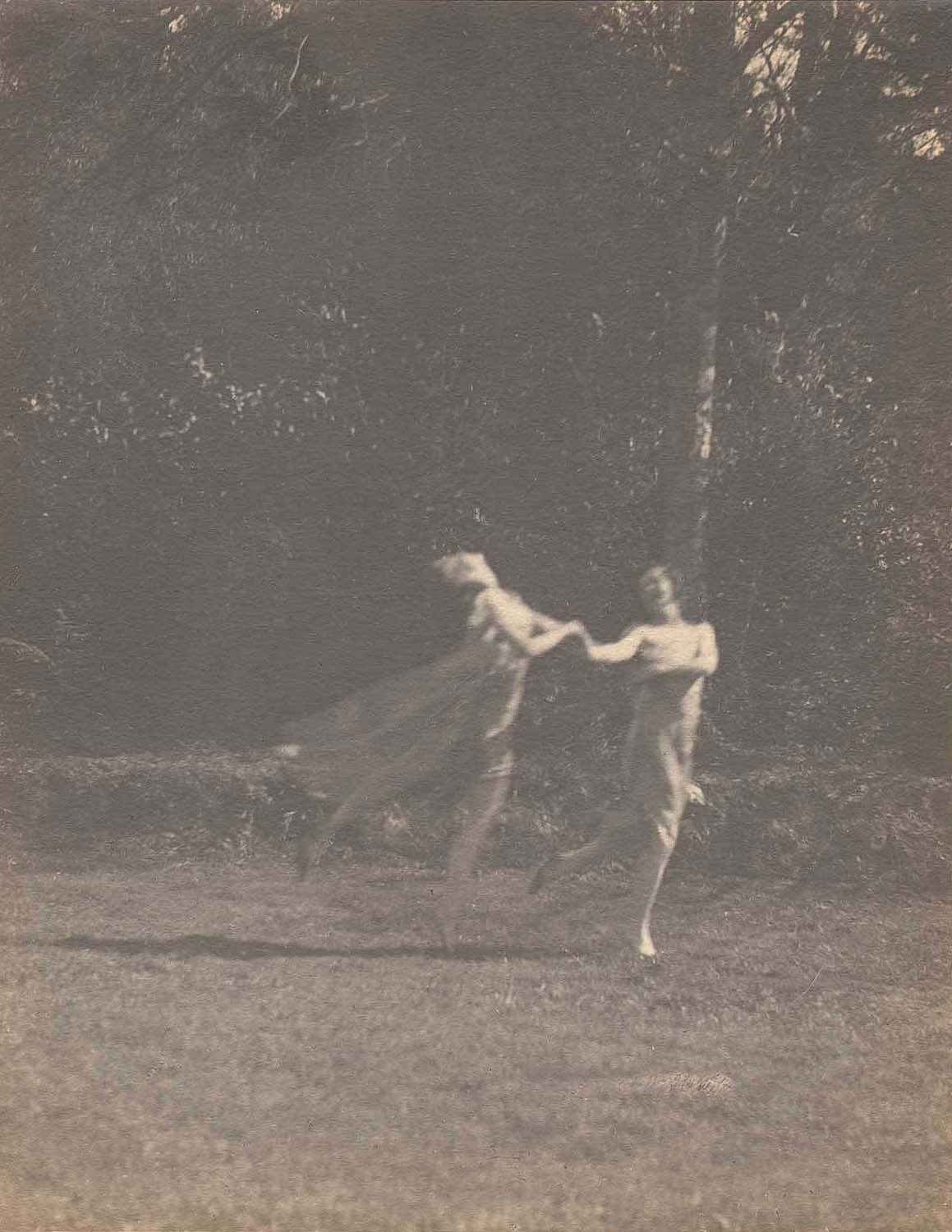
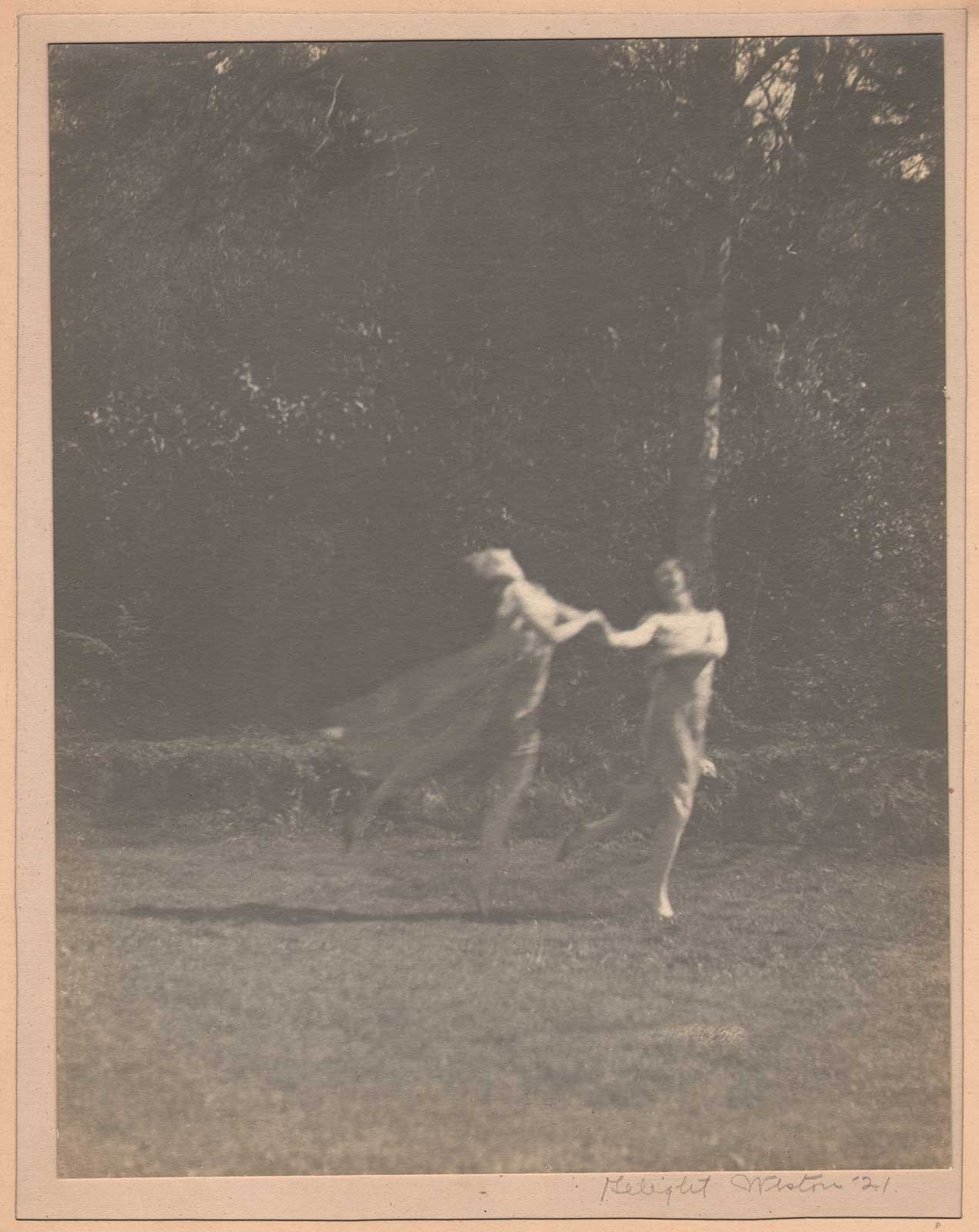
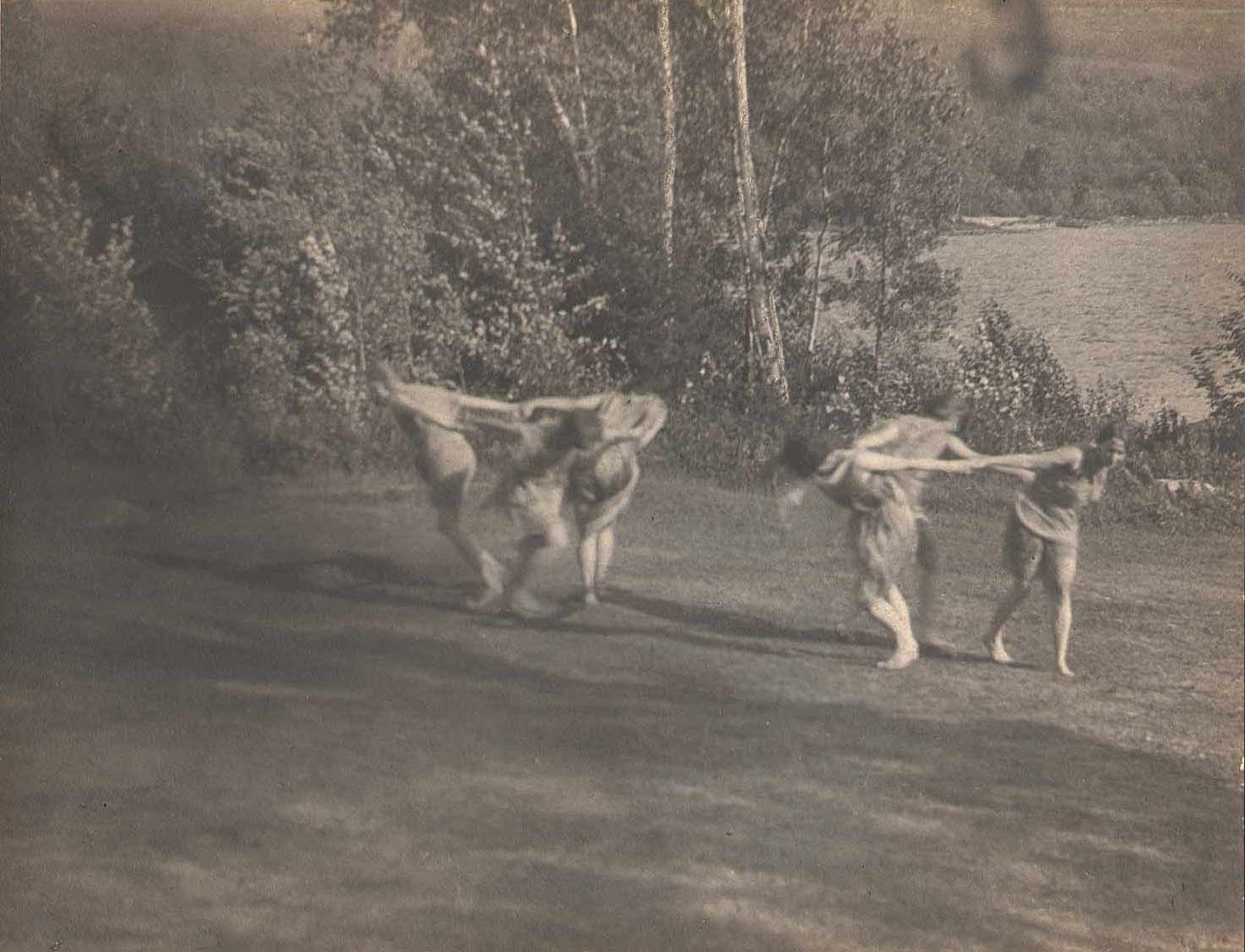
These pictorial studies of a female dancer leaping are believed to have been taken at the former Ruth Doing Camp for Rhythmics in New York state’s Adirondack mountains. In the 1920’s and 30’s, photographer Delight Weston lived with camp founders Ruth Doing (1881-1966) and Gail Gardner (1878-1949) in New York City, along with other women artists, in a building at 139 W. 56th St. near Carnegie Hall.
Established in 1916, the summer camp was first located on the shores of Upper Chateaugay lake near Lyon Mountain until 1925, when it moved to Upper St. Regis Lake in Paul Smiths, New York. Renamed the Gardner-Doing Camp after this time, it was coeducational: besides regular summer camp activities, it specialized in the “rhythmic” style of dancing popularized by famed dancer Isadora Duncan, whom Ruth Doing was a former student of. Doing’s life partner, Michigan native Gail Gardner, had earlier made a name for herself as an accomplished and world-traveling opera singer. [quoted from Photoseed]
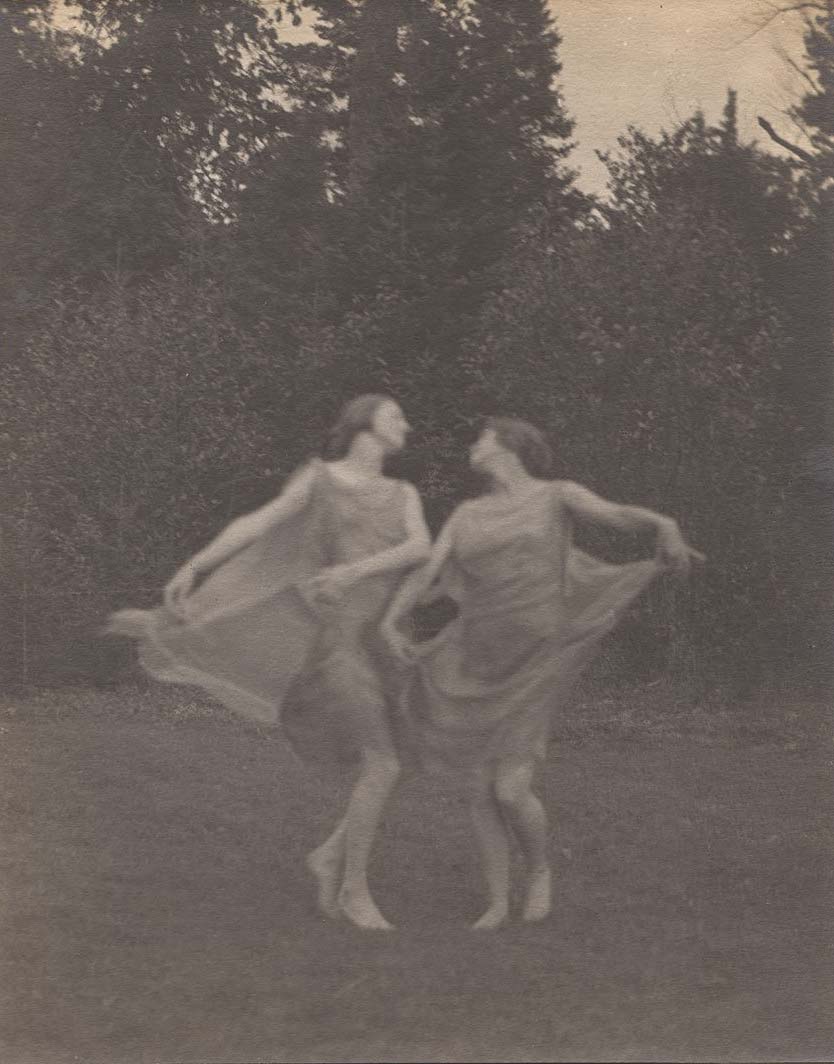
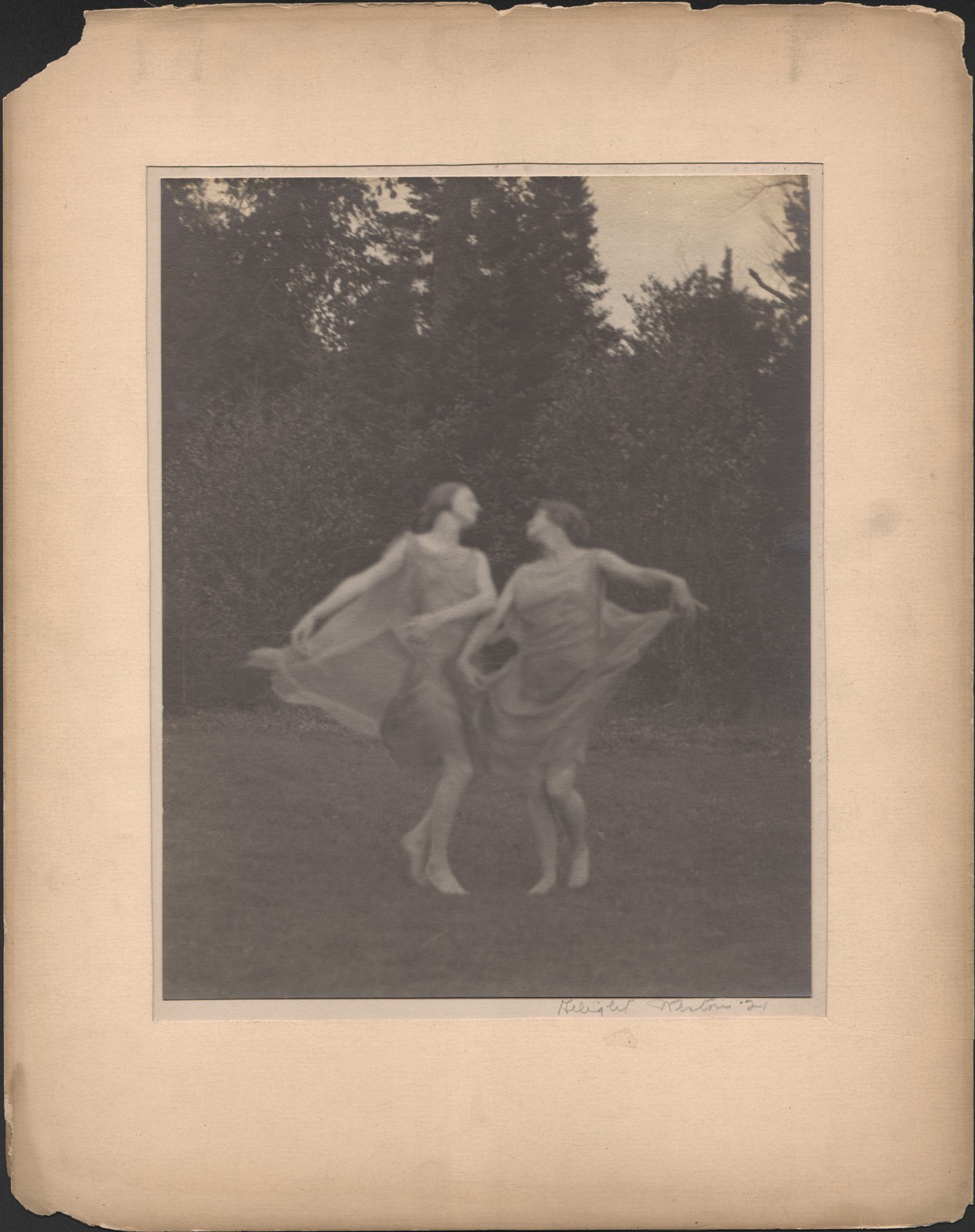
These pictorial studies of two female dancers in motion are believed to have been taken at the former Ruth Doing Camp for Rhythmics in New York state’s Adirondack mountains. In the 1920’s and 30’s, photographer Delight Weston lived with camp founders Ruth Doing (1881-1966) and Gail Gardner (1878-1949) in New York City, along with other women artists, in a building at 139 W. 56th St. near Carnegie Hall.
Established in 1916, the summer camp was first located on the shores of Upper Chateaugay lake near Lyon Mountain until 1925, when it moved to Upper St. Regis Lake in Paul Smiths, New York. Renamed the Gardner-Doing Camp after this time, it was coeducational: besides regular summer camp activities, it specialized in the “rhythmic” style of dancing popularized by famed dancer Isadora Duncan, whom Ruth Doing was a former student of. Doing’s life partner, Michigan native Gail Gardner, had earlier made a name for herself as an accomplished and world-traveling opera singer. [quoted from Photoseed]
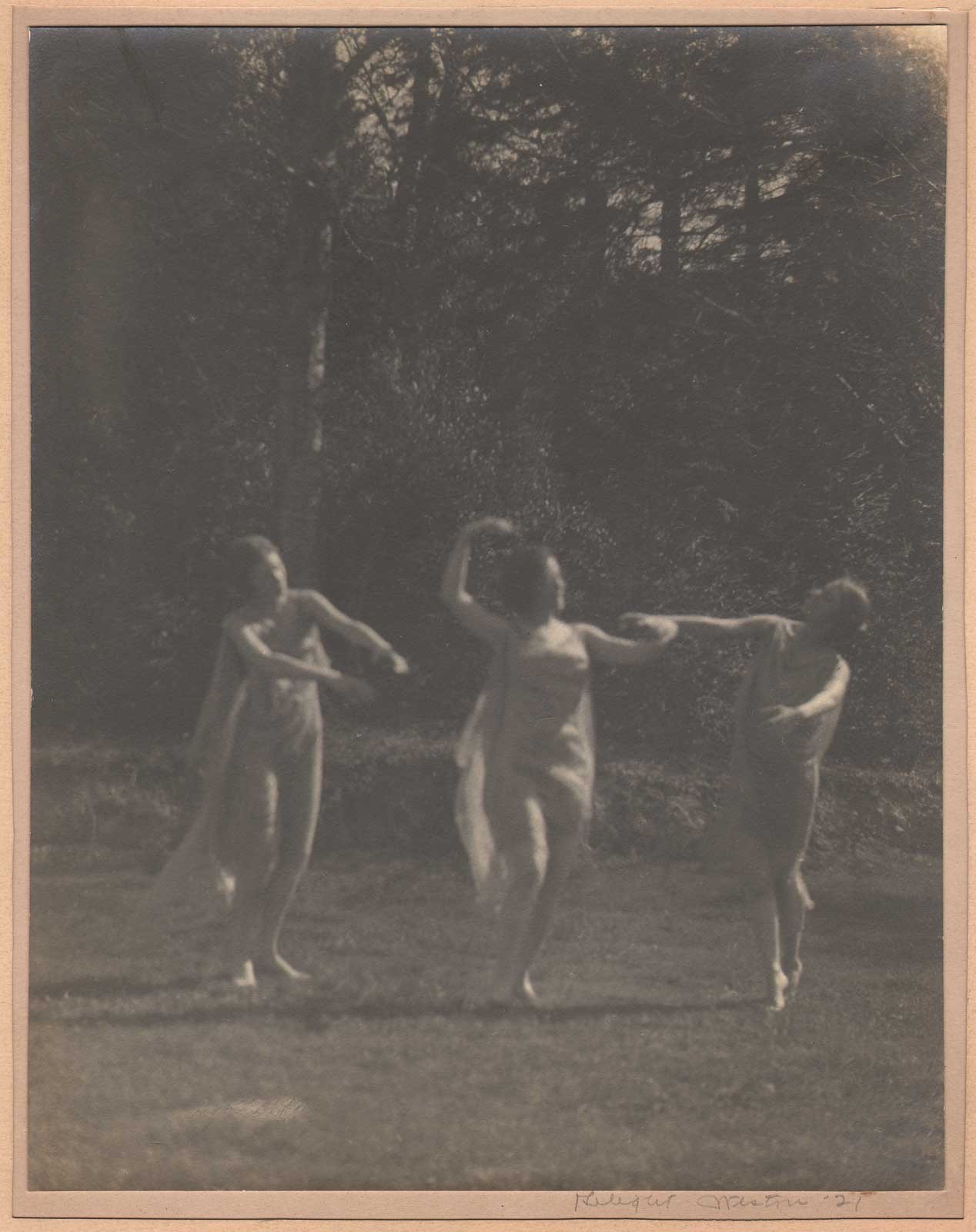
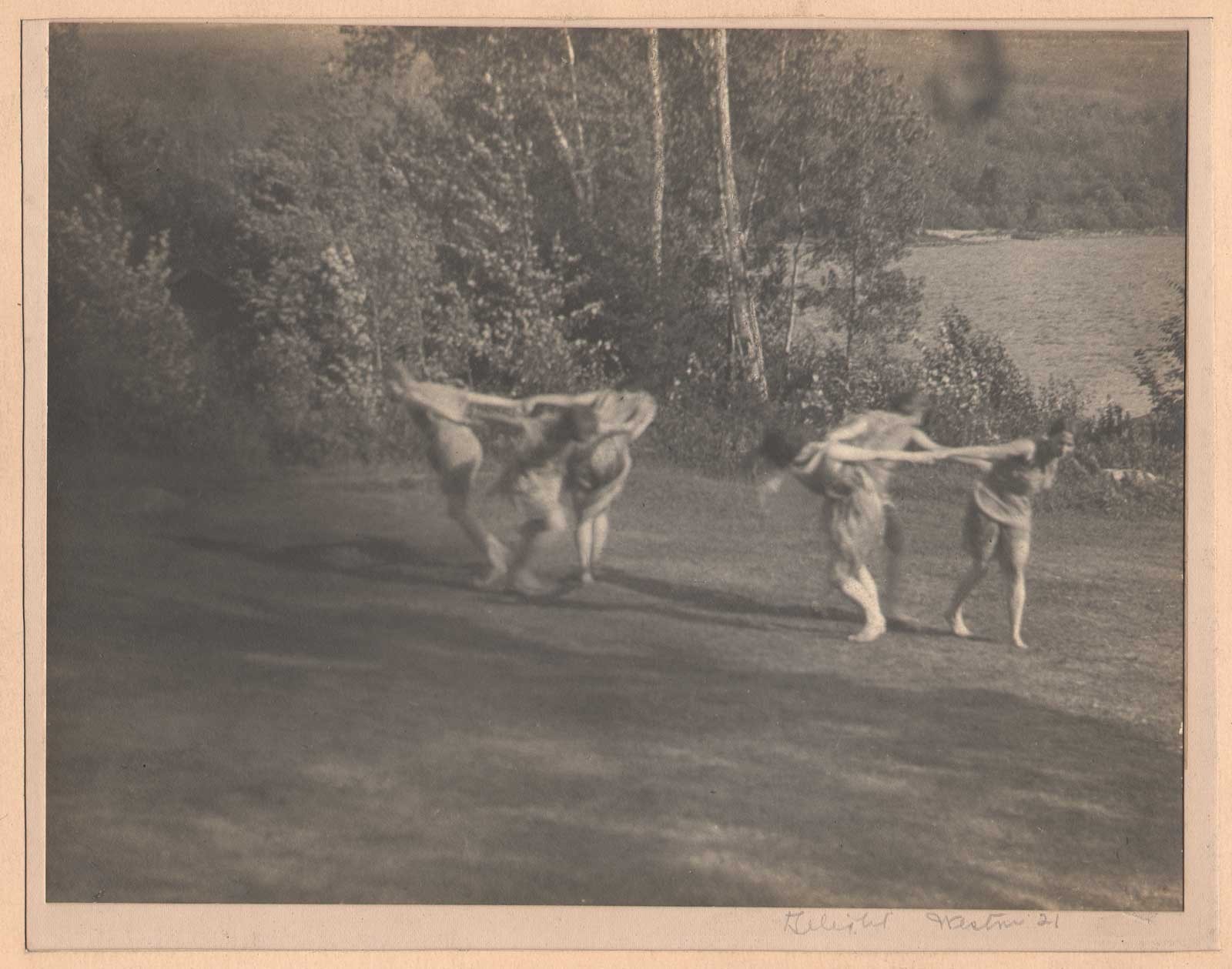
These pictorial studies of three female dancers in motion is believed to have been taken at the former Ruth Doing Camp for Rhythmics in New York state’s Adirondack mountains. In the 1920’s and 30’s, photographer Delight Weston lived with camp founders Ruth Doing (1881-1966) and Gail Gardner (1878-1949) in New York City, along with other women artists, in a building at 139 W. 56th St. near Carnegie Hall.
Established in 1916, the summer camp was first located on the shores of Upper Chateaugay lake near Lyon Mountain until 1925, (1.) when it moved to Upper St. Regis Lake in Paul Smiths, New York. (2.) Renamed the Gardner-Doing Camp after this time, it was coeducational: besides regular summer camp activities, it specialized in the “rhythmic” style of dancing popularized by famed dancer Isadora Duncan, whom Ruth Doing was a former student of. Doing’s life partner, Michigan native Gail Gardner, had earlier made a name for herself as an accomplished and world-traveling opera singer.
Another important artistic connection with this photograph is to notable American wood sculptor Wharton Esherick. (1887-1970) Beginning in 1920, he and his family spent their summers at this camp, with dance studies similar to this example- possibly by Delight Weston- contained in a family album along with Esherick’s many quick-sketch drawings: evidence that are known to have aided, complemented and influenced his emerging artistic style:
The Ruth Doing School of Rhythmics was a dance camp run by Ruth Doing, a former dancer and student of Isadora Duncan, with her business and life partner Gail Gardner in the Adirondack Mountains of New York. The Esherick family spent their summers there starting in 1920. In the fall of 1923 Ruth Doing taught dance classes in Philadelphia, assisted by Letty Esherick, Wharton’s wife. Watching and drawing the dancers and their movements heavily influenced Wharton Esherick’s artistic style; his drawings and designs became more free and flowing. At the camp Wharton also was introduced to Austrian philosopher Rudolph Steiner’s “organic functionalist” design theory, which impacted his style. (3.)
Although unidentified and dated one year later, the intriguing possibility exists the dancers in this photograph may be of camp co-founder Ruth Doing and or Doris Canfield (1895-1993) in motion, with surviving plaster sculptures by Wharton Esherick done in 1920 on display in his namesake museum:
Two early plaster sculptures, which now sit in Esherick’s bedroom, depict dancers from the camp, one of Ruth Doing, the other of dancer and actress Doris Canfield. Both done in 1920, these are very academic for Esherick, though the essential design elements (like the spiral) would show up again and again in Esherick’s work in progressively bolder and more modern designs. (4.)
In addition to these sculptures, sketches of dancing figures done as quick studies on paper by Esherick are in the museum’s collection:
As a regular visitor to the Gardner Doing Dance Camp, Esherick observed dancers like Canfield exploring eurythmy, Rhythmic dance, and other modern dance forms. His wife Letty also danced, sometimes holding classes at their home in Paoli. At times, Esherick joined in with the dance. Otherwise, he was sketching away, attempting to capture bodies in motion. (5.)
1. Source: blog post: Early Rhythms: Wharton Esherick and the Gardner Doing Dance Camp (JUNE 26, 2017). At the Wharton Esherick Museum online resource. A surviving brochure held by the museum printed in 1923 puts an emphasis on the dancing curriculum and is titled “The Ruth Doing Camp for Rhythmics”. This is believed to be the first name for the camp until 1925 when it moved to Lake Regis and was renamed the Gardner-Doing Camp.
2. The Gardner-Doing camp operated in the summer months until 1946, when it was sold and renamed Camp Regis. Today it is known as Camp Regis-Applejack.
3. Source: Finding Aid: NOTABLE FRIENDS AND ASSOCIATIONS: “Wharton had close relationships with several well known people, including actresses, authors, photographers, and others. Many commissioned works from him.” : Wharton Esherick family papers 1895-1996 [bulk 1920-1970] (Philadelphia Area Archives Research Portal (PAARP) Several similar dance photographs by an unknown artist in the Esherick Family Collection were published in the volume: Wharton Esherick and the Birth of the American Modern. (2010) see “Dance Sketches”, p. 96.
4. Source: ibid: see note #1. Another interesting fact is that the summer camps co-founder, Gail Gardner, was Doris Canfield’s aunt. Doris Canfield’s mother Belle Nye had inherited a fortune after gaining a divorce when her first husband Charles Canfield, a western Michigan lumber baron, deserted her in 1905. See: “Belle Nye, the former Mrs. Canfield” February 11, 2016 in the Manistee News Advocate. Doris Canfield, (1895-1993) was employed as a teacher in the Bronxville, N.Y. school system from 1935-1970 where she taught physical education with an emphasis on Rhythmics.
Delight Weston :: Two groups of three dancers: Rhythmic Study, 1921. Bromide print. | src PhotoseedDelight Weston :: Two groups of three dancers: Rhythmic Study, 1921. Bromide print. | src Photoseed
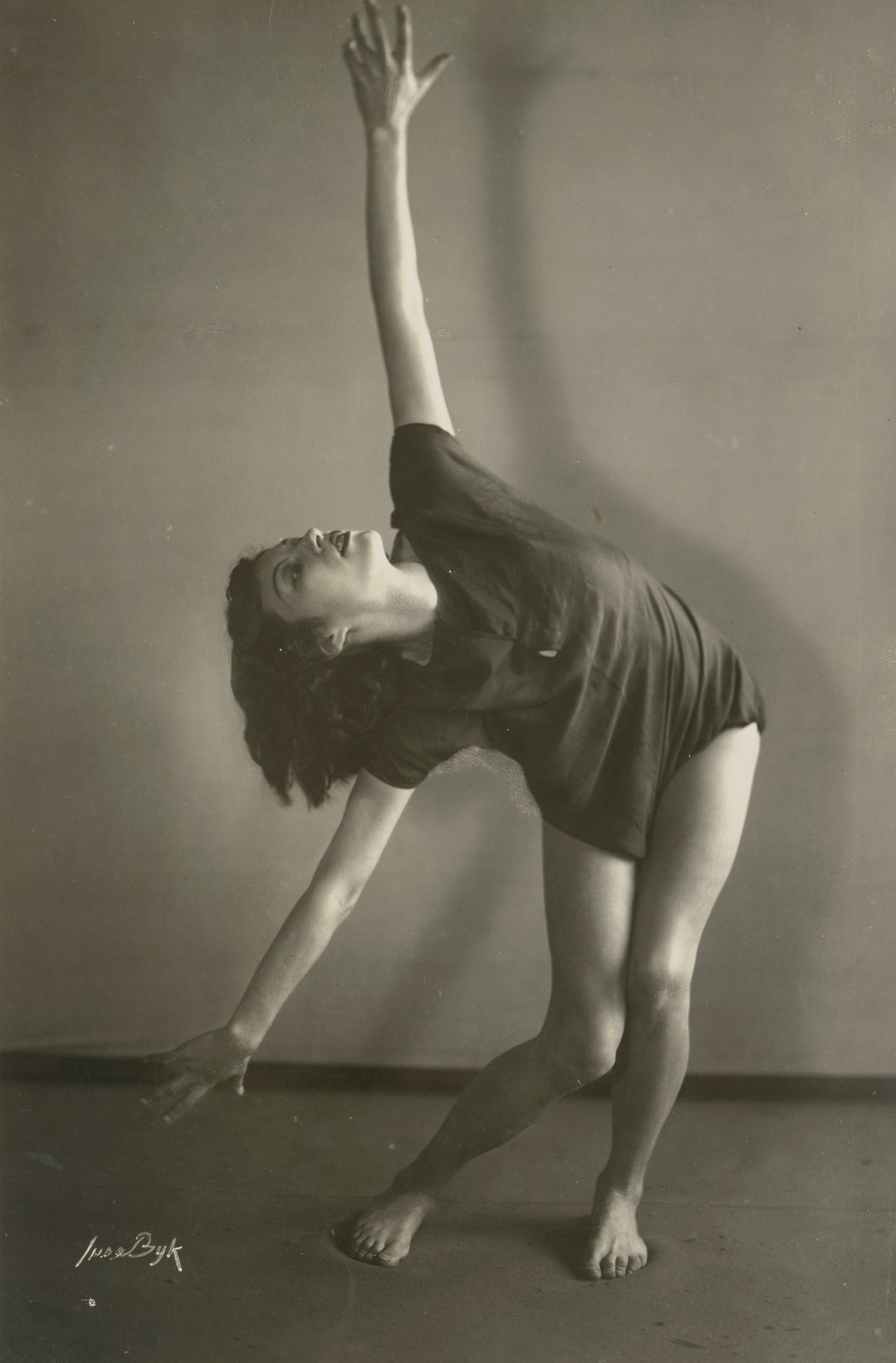
“Vera Skoronel hatte ein System entworfen, um dem freien Tanz ein festes Gerüst zu geben: da kurbelten, kreisten, wirbelten wir die Gliedmaßen ungeachtet der normalen Körpergesetze wild durcheinander; bekämpften Schwerkraft und Gleichgewicht, warfen unzählige Sprünge in die Luft oder stießen sie in die Erde; zwangen Muskeln, sich in anderen Dimensionen zu bewegen. […] Erst wenn der Körper frei ist von jeglichen Hemmungen, zeigt sich der beseelte Ausdruck im Tanz.” Mit diesen Worten beschrieb die Skoronel-Schülerin Ilse Meuthner den Eindruck, den ihre Lehrerin in den 1920er-Jahren auf sie machte. Das atemberaubende Tanzgeschehen, das vor einhundert Jahren in Berlin stattfand, ist Thema unserer aktuellen Ausstellung ‚Der absolute Tanz. Tänzerinnen der Weimarer Republik.‘
“Vera Skoronel designed a system to give free dance a solid framework: we cranked, gyrated, whirled our limbs wildly, regardless of the normal laws of the body; we fought gravity and balance, threw countless jumps in the air or pushed them into the ground; forced muscles to move in other dimensions. […] Only when the body is free of any inhibitions does the soulful expression appear in the dance.” With these words, the Skoronel student Ilse Meuthner described the impression her teacher made on her in the 1920s. The breathtaking dance that took place in Berlin a hundred years ago is the subject of our current exhibition ‘Absolute Dance. Dancers of the Weimar Republic.’
Mit expressiven Bewegungen, extravaganten Erscheinungsbildern und expliziten Vorstellungen von der eigenen Rolle in der Welt sprengten Tänzerinnen wie Vera Skoronel, Claire Bauroff, Tatjana Barbakoff und Anita Berber die Konventionen und Klischees ihrer Zeit. Es waren die Weimarer Jahre, ein Gefühl von Aufbruch lag in der Luft. Am 30. November 1918, also heute vor 102 Jahren, war das Frauenwahlrecht in Kraft getreten, bald darauf wurden erstmals weibliche Sportlerinnen zur Olympiade zugelassen. Während immer mehr Bürgerinnen von den Möglichkeiten Gebrauch machten, die vorangegangenen Generationen von Frauen verwehrt geblieben waren, wurden vor allem die Tänzerinnen dieser Ära zu Ikonen eines modernen Körper- und Selbstbewusstseins, das neben der Gesellschaft im Großen und Ganzen auch die bildende Kunst prägen sollte. Im Berlin der 1920er-Jahre belebte das neue Lebensgefühl auch die fruchtbare Verbindung von Tanz und Skulptur, welche auch Kolbe so wichtig war. Unsere neue Ausstellung „Der absolute Tanz – Tänzerinnen der Weimarer Republik“, die im Februar beginnt, spürt den radikalen Neuerungen und symbiotischen Wechselwirkungen nach, denen wir so vieles verdanken.
With expressive movements, extravagant appearances and explicit ideas of their own role in the world, dancers such as Vera Skoronel, Claire Bauroff, Tatjana Barbakoff and Anita Berber broke the conventions and clichés of their time. It was the Weimar years, and a sense of breakthrough was in the air. On November 30, 1918, 102 years ago today, women’s suffrage came into force, and soon afterwards female athletes were admitted to the Olympics for the first time. While more and more women made use of the opportunities that previous generations of women had been denied, the dancers of this era in particular became icons of a modern body and self-confidence that was to shape society as a whole as well as the fine arts. In Berlin in the 1920s, the new attitude towards life also enlivened the fruitful connection between dance and sculpture, which was also so important to Kolbe. Our new exhibition “Absolute Dance – Dancers of the Weimar Republic”, which begins in February, traces the radical innovations and symbiotic interactions to which we owe so much.
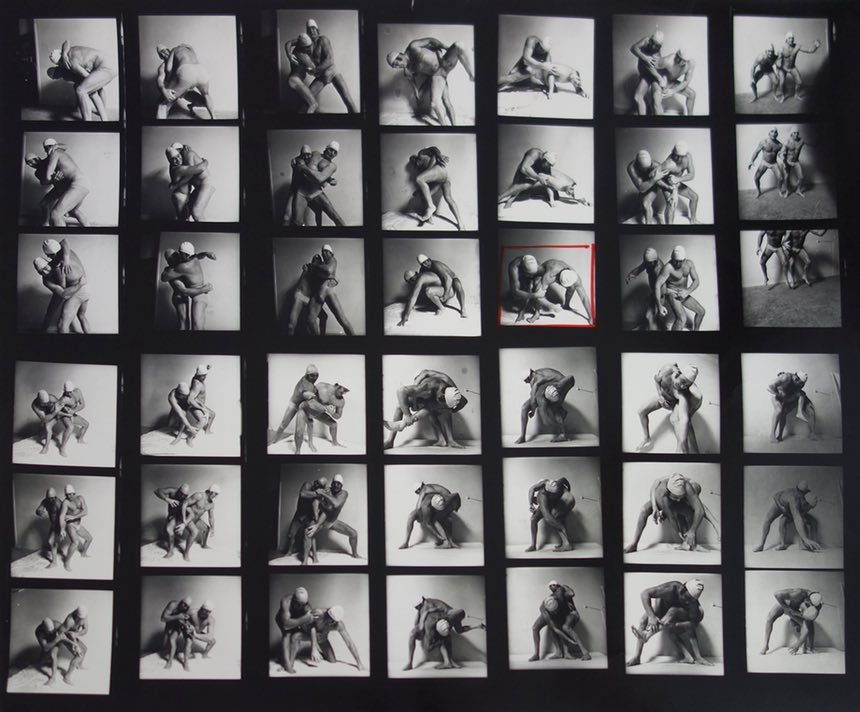
Francis Bacon :: Enlarged contact sheet of two men wrestling, New York, from the studio of Francis Bacon, circa 1975.
From: ‘The Image as Question: An Exhibition of Evidential Photography’ at Michael Hoppen Gallery / src: theGuardian
“An enlarged contact sheet of two men wrestling in swimming trunks and caps, originally taken by Francis Bacon in New York in 1975, nestled for years in a bin bag in the attic of a Mr Robertson
from Surrey, who turned out to be the artist’s electrician. (Other bin
bags given to him for safekeeping included personal diaries, cashed
cheques, letters and holidays snaps.) The photographs highlighted in red
were used by Bacon as models for painting particular body parts in
motion. They echo another exhibit, a 17-frame series of a nude man
walking by Etienne Jules-Marey, whose motion studies preceded those of
the better-known Eadweard Muybridge.” (quoted from source)













 un regard oblique