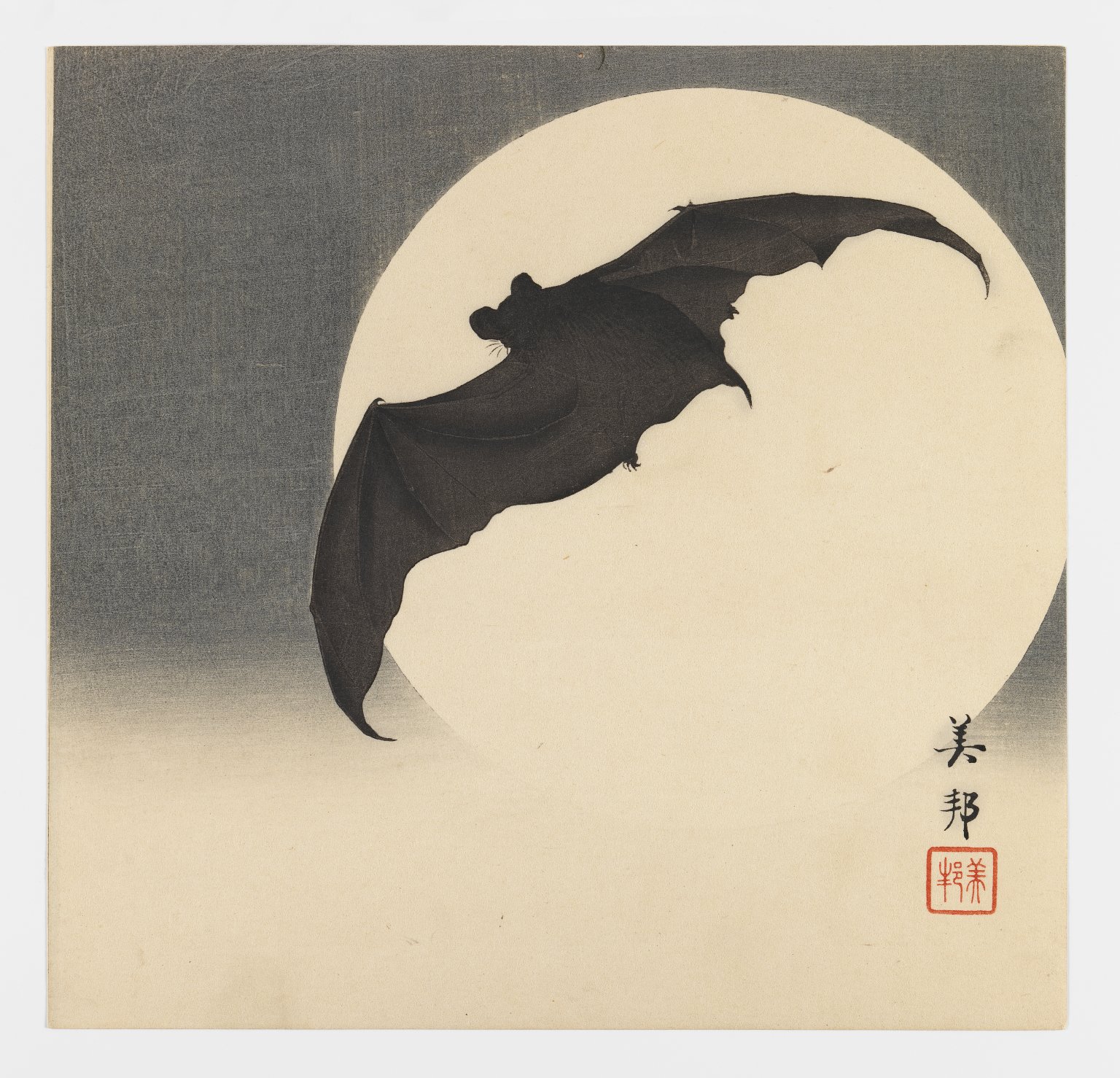

Bihō Takahashi / Nomura Yoshikuni 野村美邦 / Hirose Yoshikuni
Sealed: Yoshikuni (美邦). Signed: Yoshikuni (美邦). / Meiji Period

images that haunt us
Bihō Takahashi / Nomura Yoshikuni 野村美邦 / Hirose Yoshikuni
Sealed: Yoshikuni (美邦). Signed: Yoshikuni (美邦). / Meiji Period
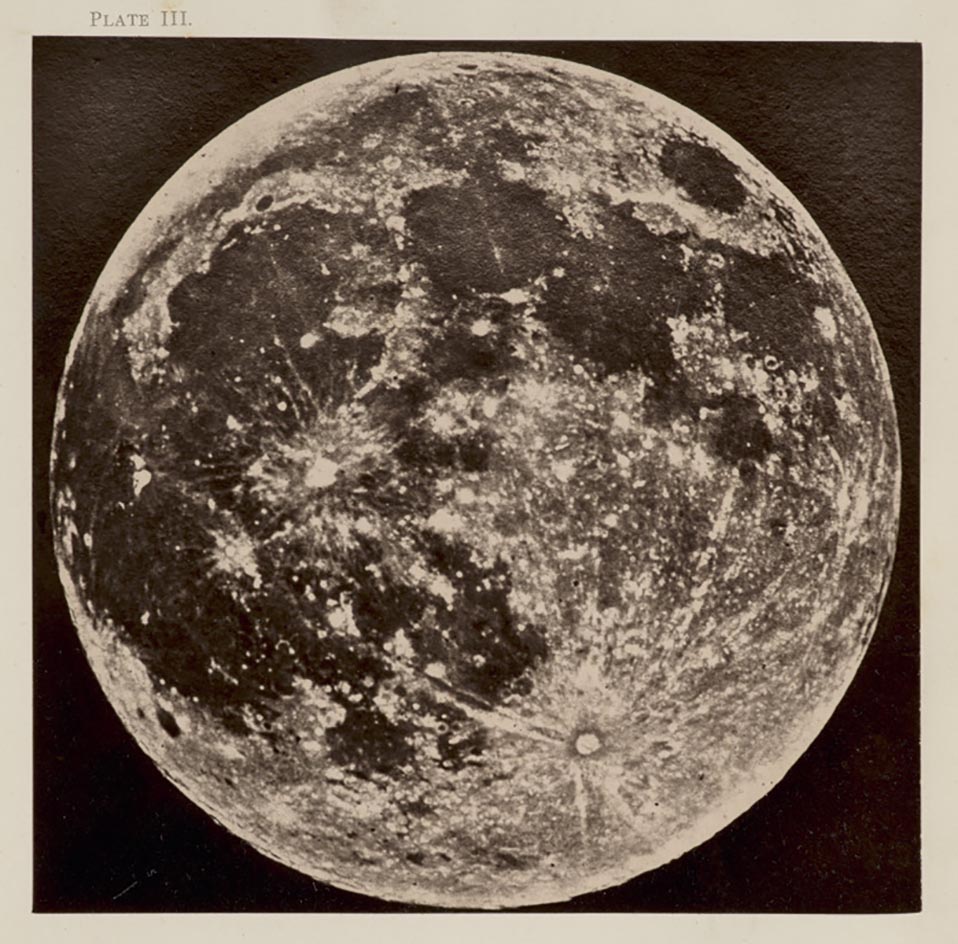
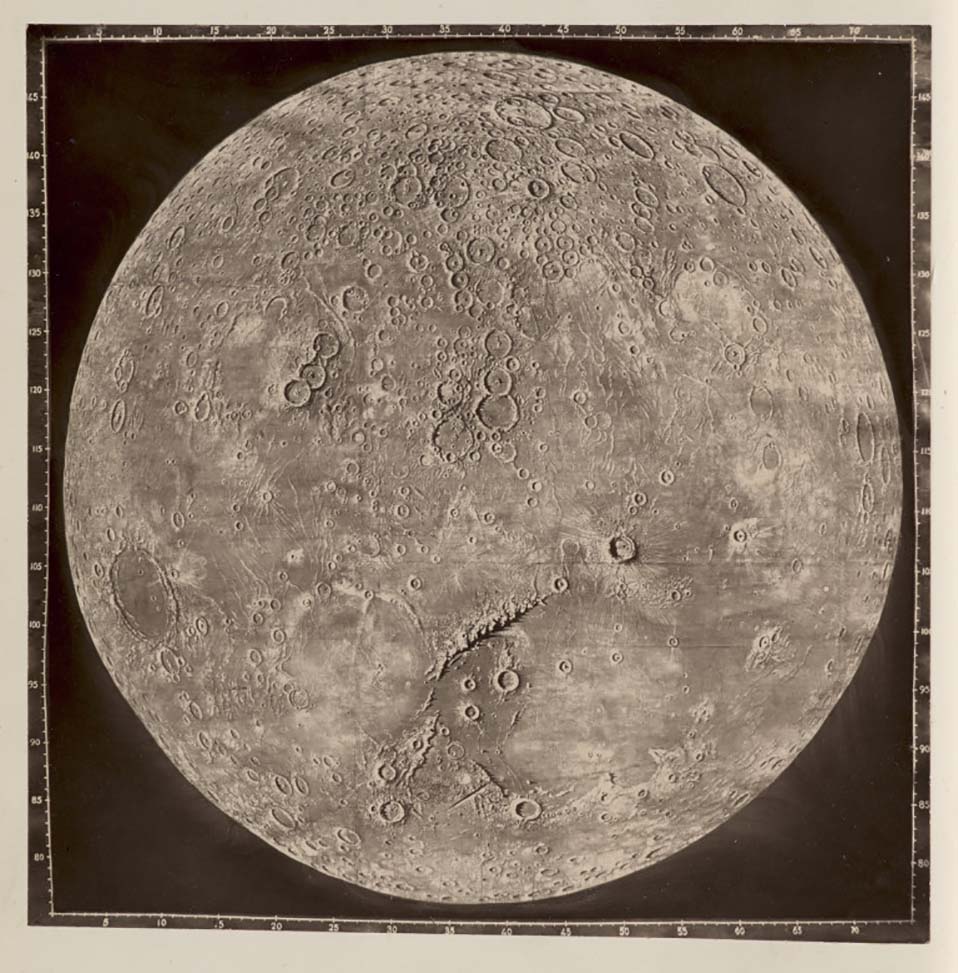
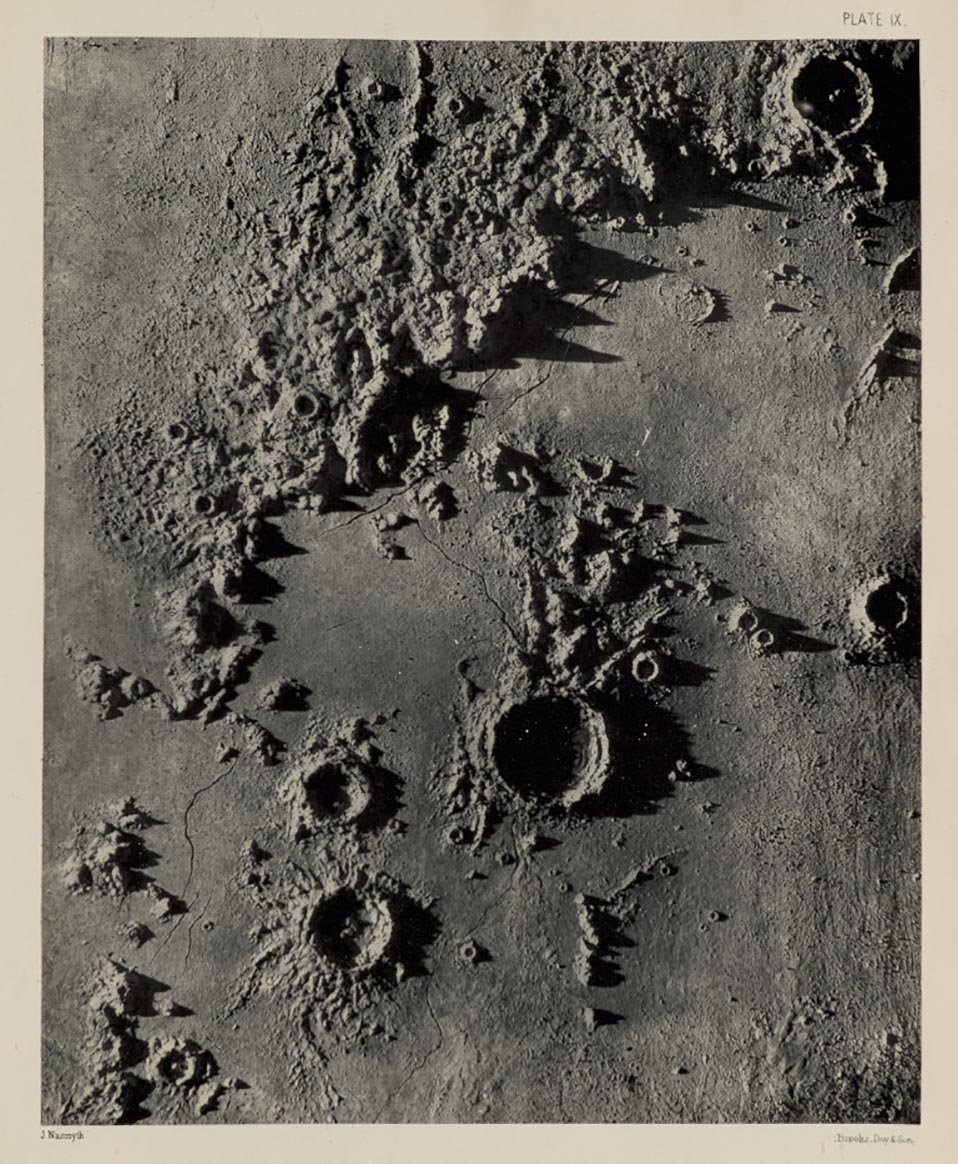
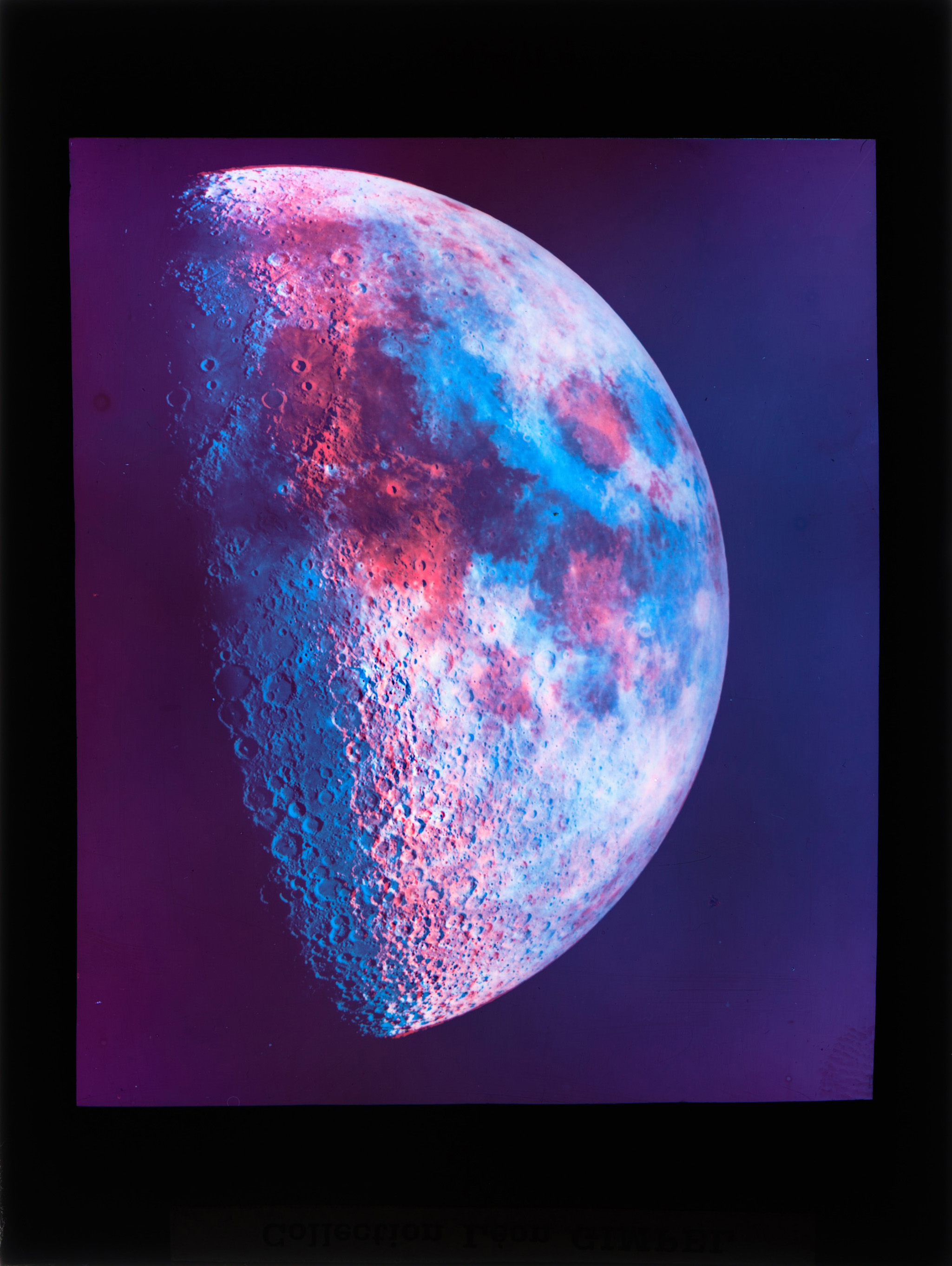
The Moon; Considered as a Planet, a World, and a Satellite (1873). With 46 text illustrations, and 25 plates on 24 leaves, comprising 12 mounted Woodburytypes of lunar models, 6 photogravures, 4 autotypes, 2 lithographs, and one chromolithograph. First edition of the classic and influential text on lunar geology by James Nasmyth (1808-1890) and James Carpenter. It was thanks to Nasmyth’s superior talent for visual communication that this book held the misconception that the lunar craters were volcanic for almost 100 years. It was not until 1969, when the Apollo 11 space mission brought back geological samples from the moon, that the impact theory gained credibility and the volcanic hypothesis was finally abandoned. – The book was one of the first to be illustrated with photomechanical prints, praised by a contemporary reviewer as one of the “truest and most striking representations of natural objects”, although the illustrations are not actual photographs of the Moon. The book is the result of decades of studies Nasmyth, a retired industrial engineer and amateur astronomer, made of the moon with a large telescope of his own design. He made numerous studies and maps of the moon, recording its topographical features with extraordinary clarity and precision. Nasmyth and Carpenter pointed the camera not at the lunar surface itself, but at a series of hand-made plaster models based on these drawings. It was already possible to photograph the Moon, but the highly magnified views they sought could only be achieved using plaster models photographed outdoors in glaring light, both to replicate the oblique angle of the sun’s rays on the lunar surface and to reveal the subtle topographical variations of the model’s surface. – Nasmyth’s first drawings of the moon were made as early as 1842 and were first exhibited in Edinburgh in 1850. The first public presentation of photographs of Nasmyth’s models took place at the Manchester Photographic Society exhibition in 1856. – This edition contains seven different prints by six printers, including two different variants of the Woodburytype. [quoted from Jeschke van Vliet]
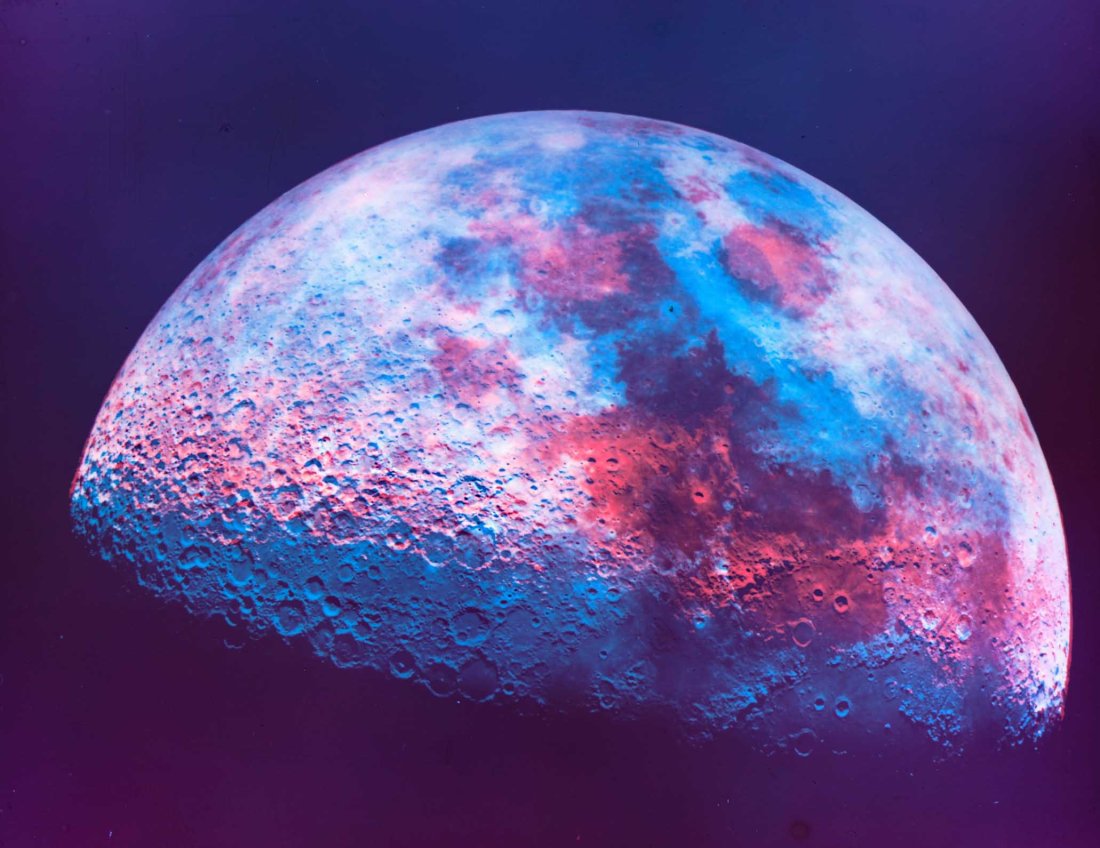
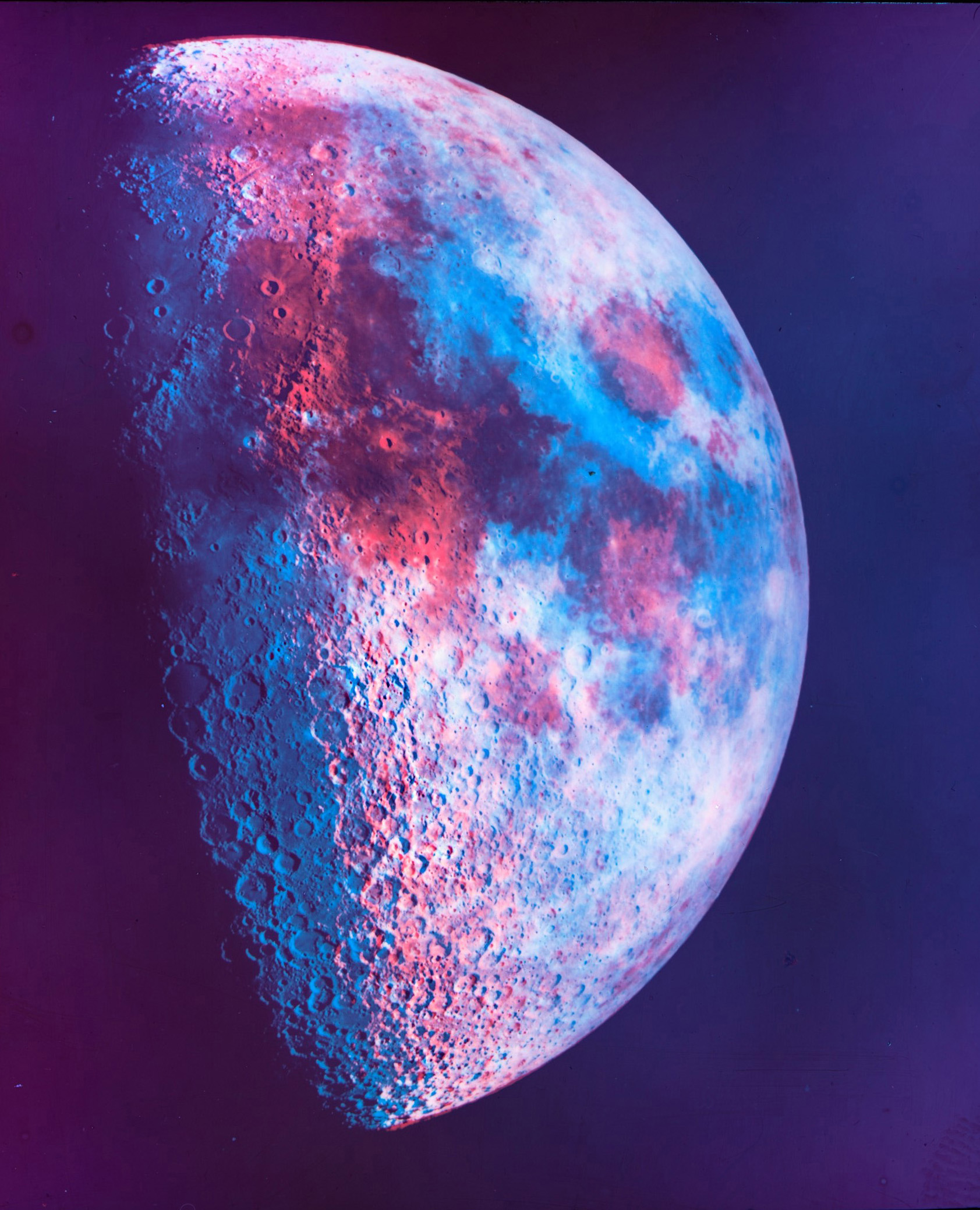
There are many different ways of creating and viewing stereoscopic 3D images but they all rely on independently presenting different images to the left and right eye.
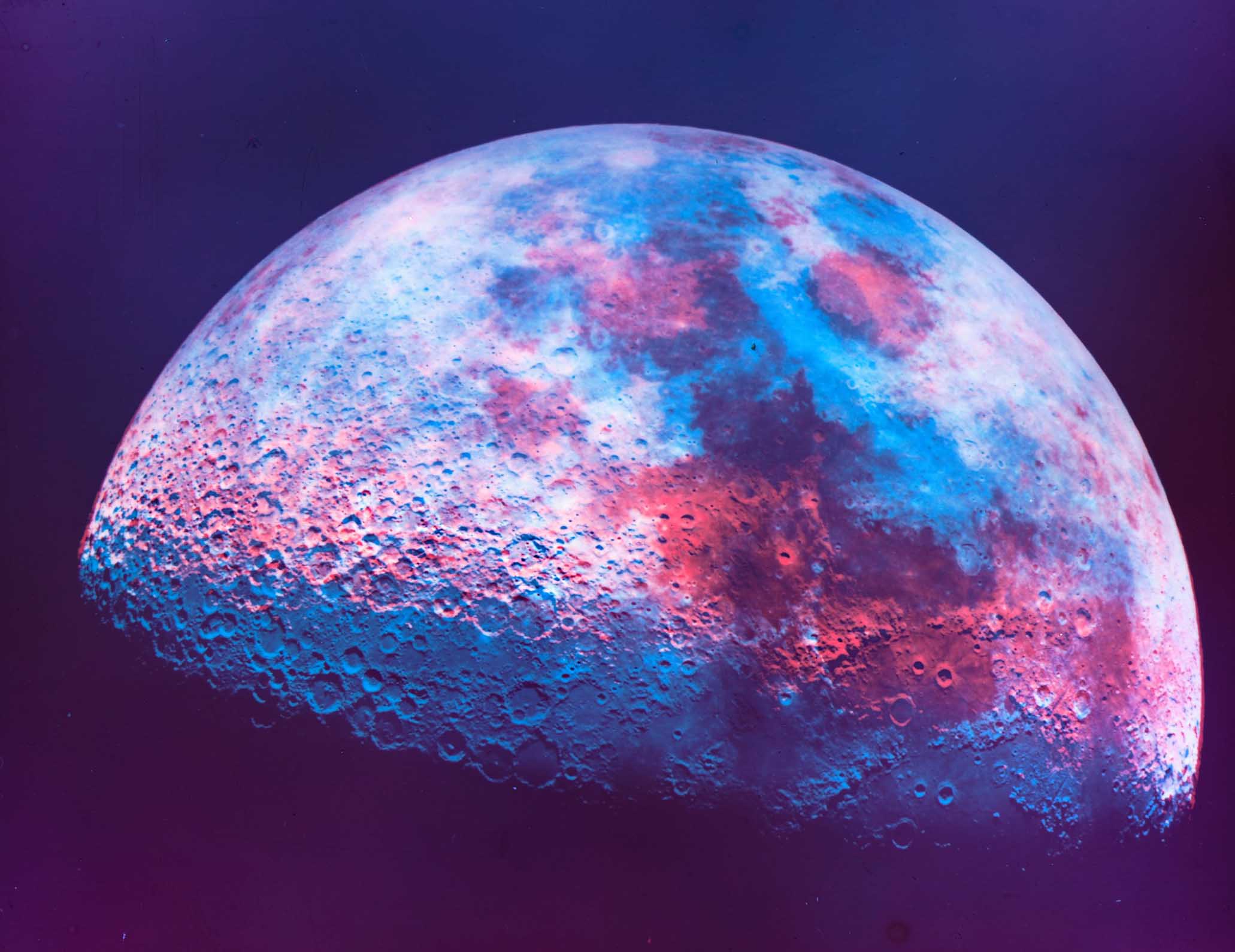
Anaglyphs are a straightforward way of presenting stereo pair images is the stereoscopic 3D effect achieved by means of encoding each eye’s image using filters of different (usually chromatically opposite) colors, typically red and cyan. Anaglyph 3D images contain two differently filtered colored images, one for each eye. When viewed through the “color-coded” “anaglyph glasses”, each of the two images reaches the eye it’s intended for, revealing an integrated stereoscopic image. The visual cortex of the brain fuses this into the perception of a three-dimensional scene or composition.
There are three types of anaglyph glasses in common use: red-blue, red-cyan, and red-green.
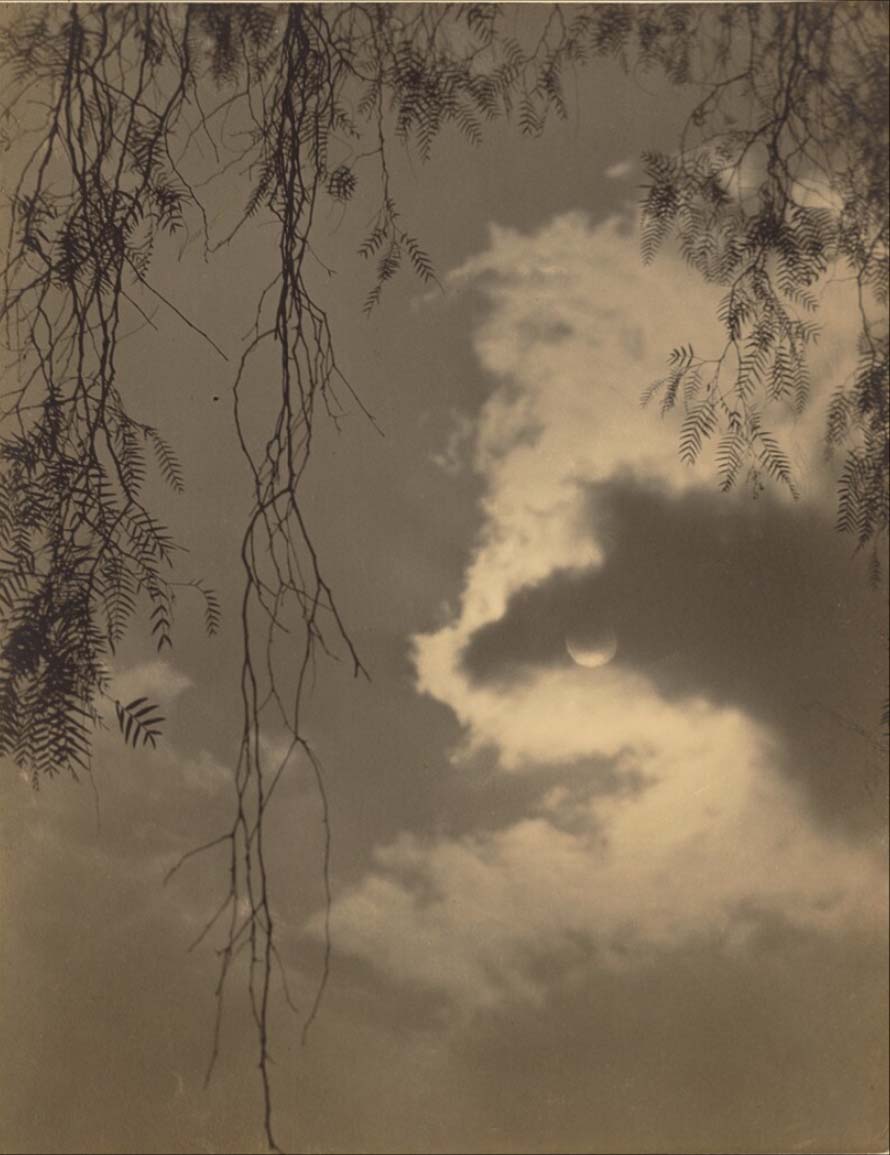
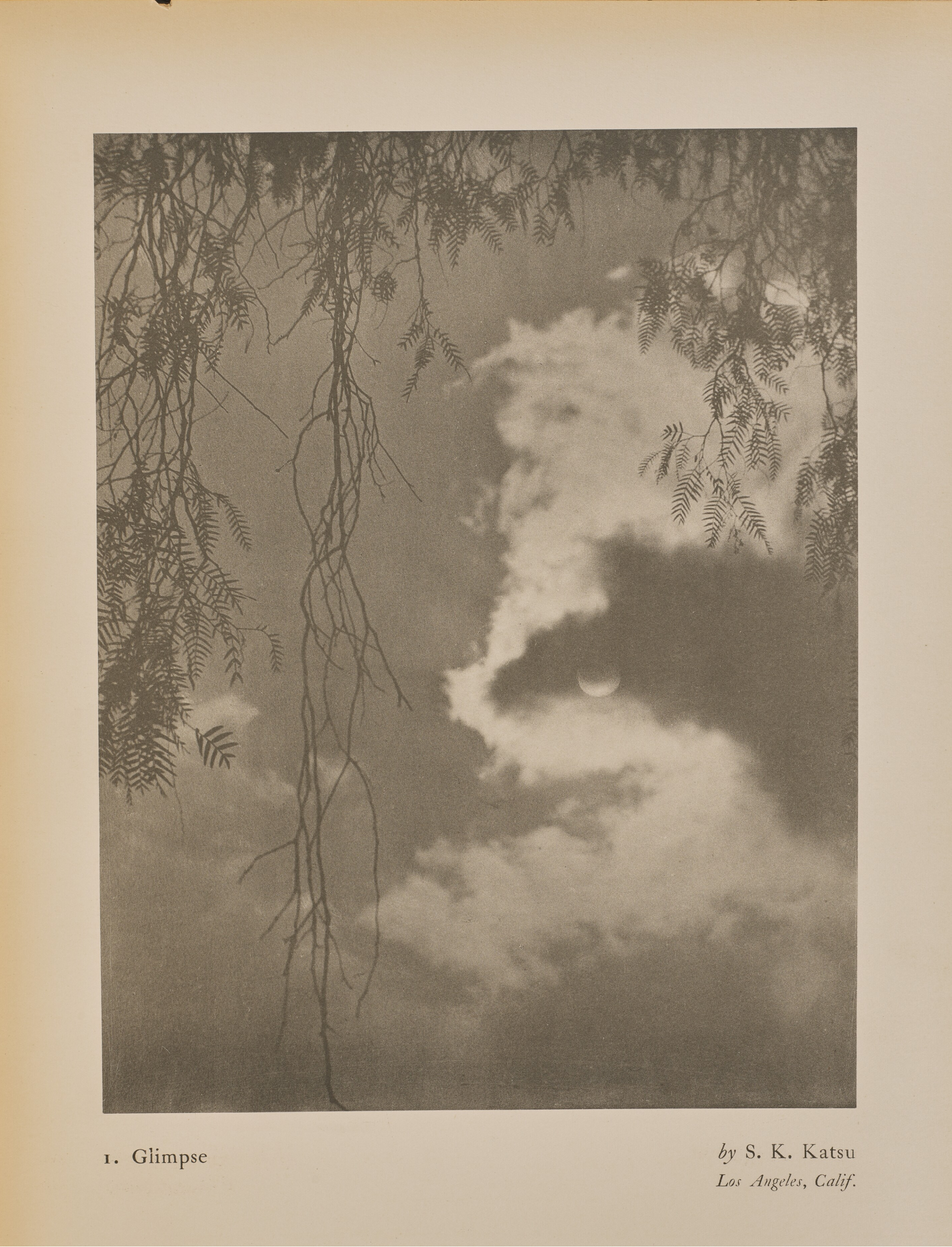
![Seizo K. Katsu :: Glimpse [The moon seen behind clouds. Bare vines and fern leaves hang in the foreground from the top of the image before a cloudy sky.], negative 1925; print 1926. Collotype. | The J. Paul Getty Museum](https://unregardoblique.com/wp-content/uploads/2022/11/seizo-k.-katsu-japanese-american-active-1925-1930-grimpse-1925-1926.jpg)

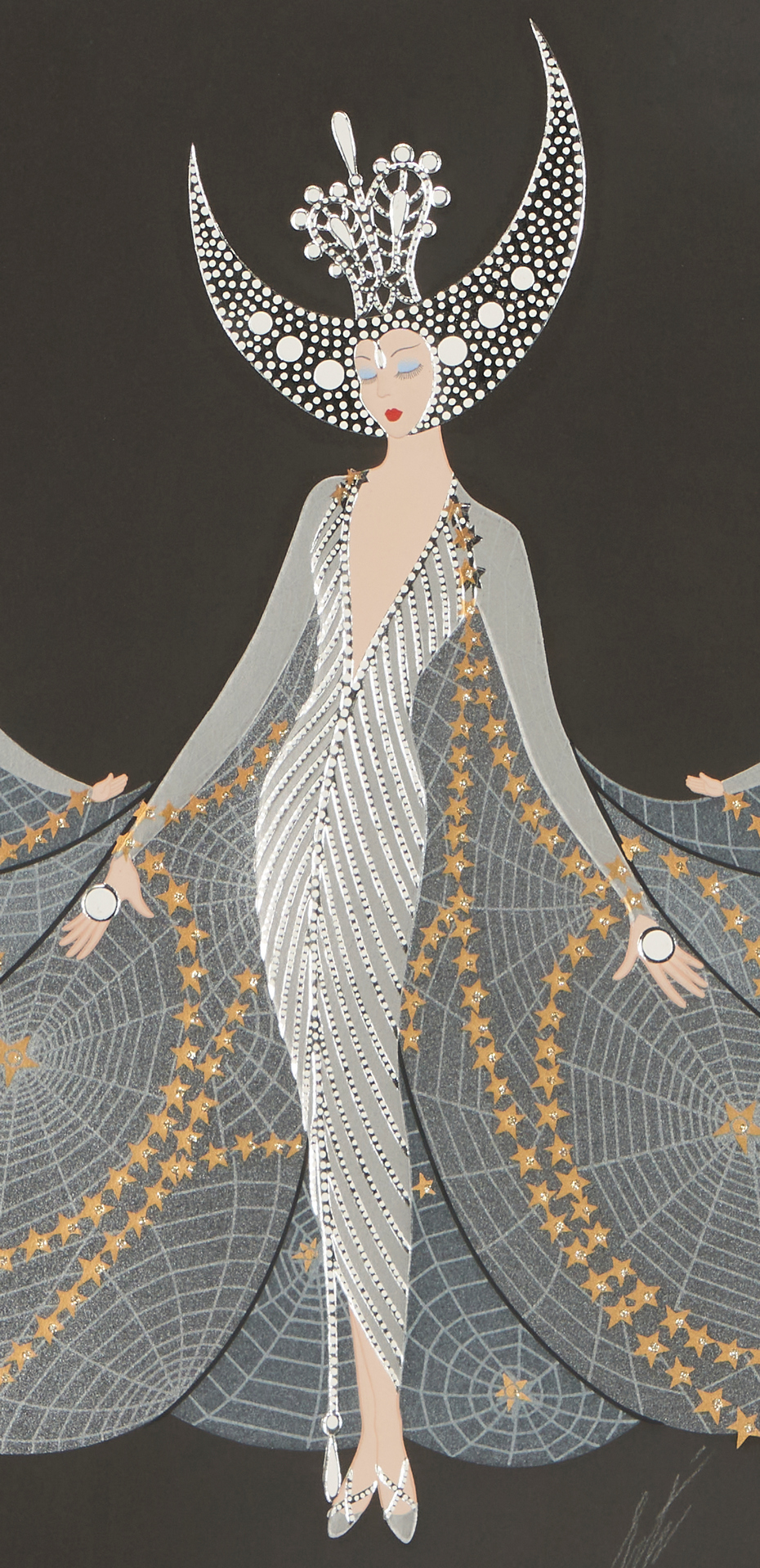

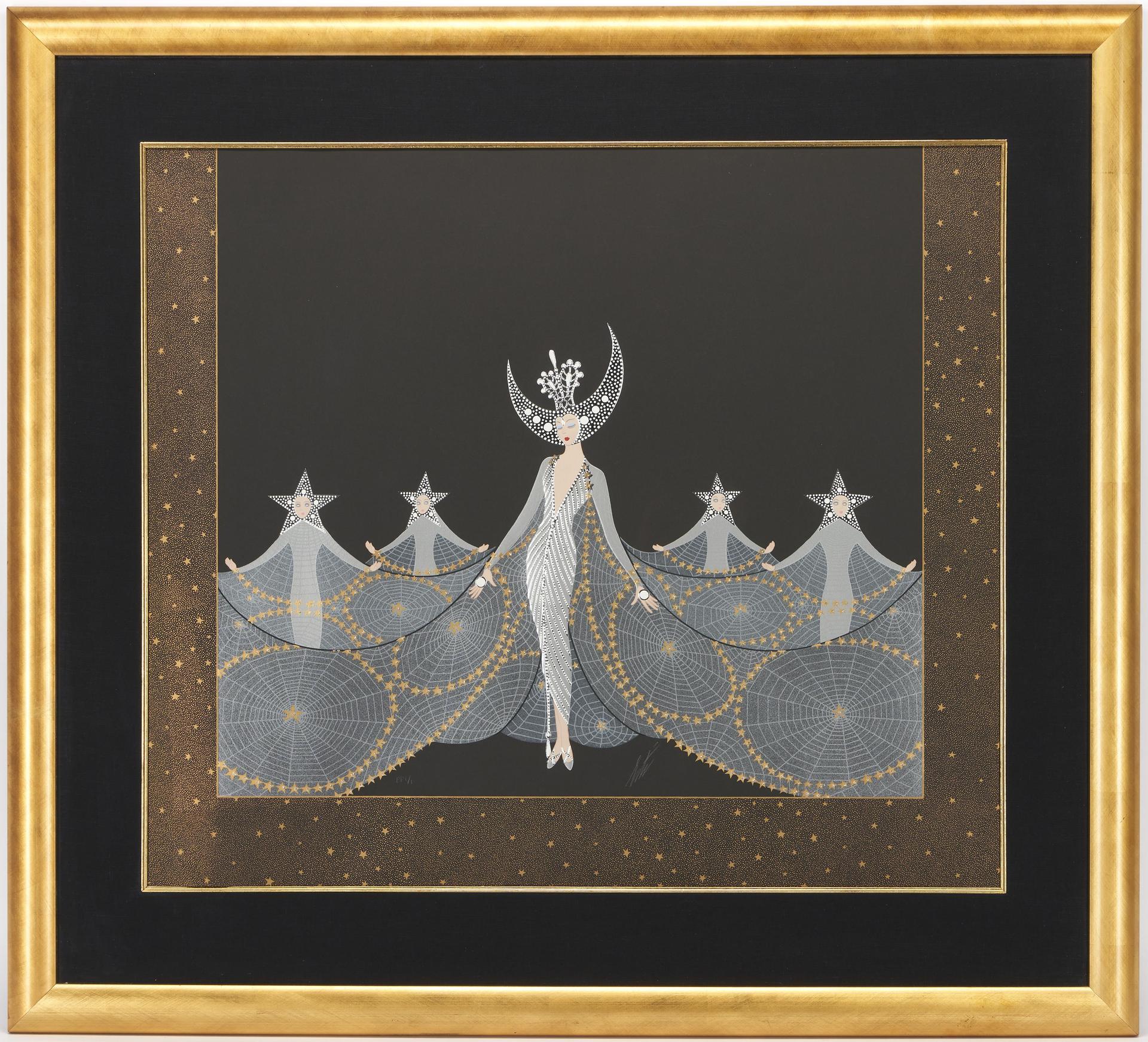
This publisher’s proof depicts the Queen of the Night from “The Magic Flute” opera by Wolfgang Amadeus Mozart, with four attendants holding the hem of her elaborate gown against a black background, surrounded on the left, bottom, and right edges by a gold star border. Numbered, in chalk, lower left, signed “Erté”, in chalk, lower right. Merrill Chase, Chicago, IL, gallery label, en verso. Housed under glass in a giltwood frame with a black linen liner with a giltwood fillet. Property of Milligan University, Milligan, Tennessee. source: Case Antique / Case Auctions




 un regard oblique