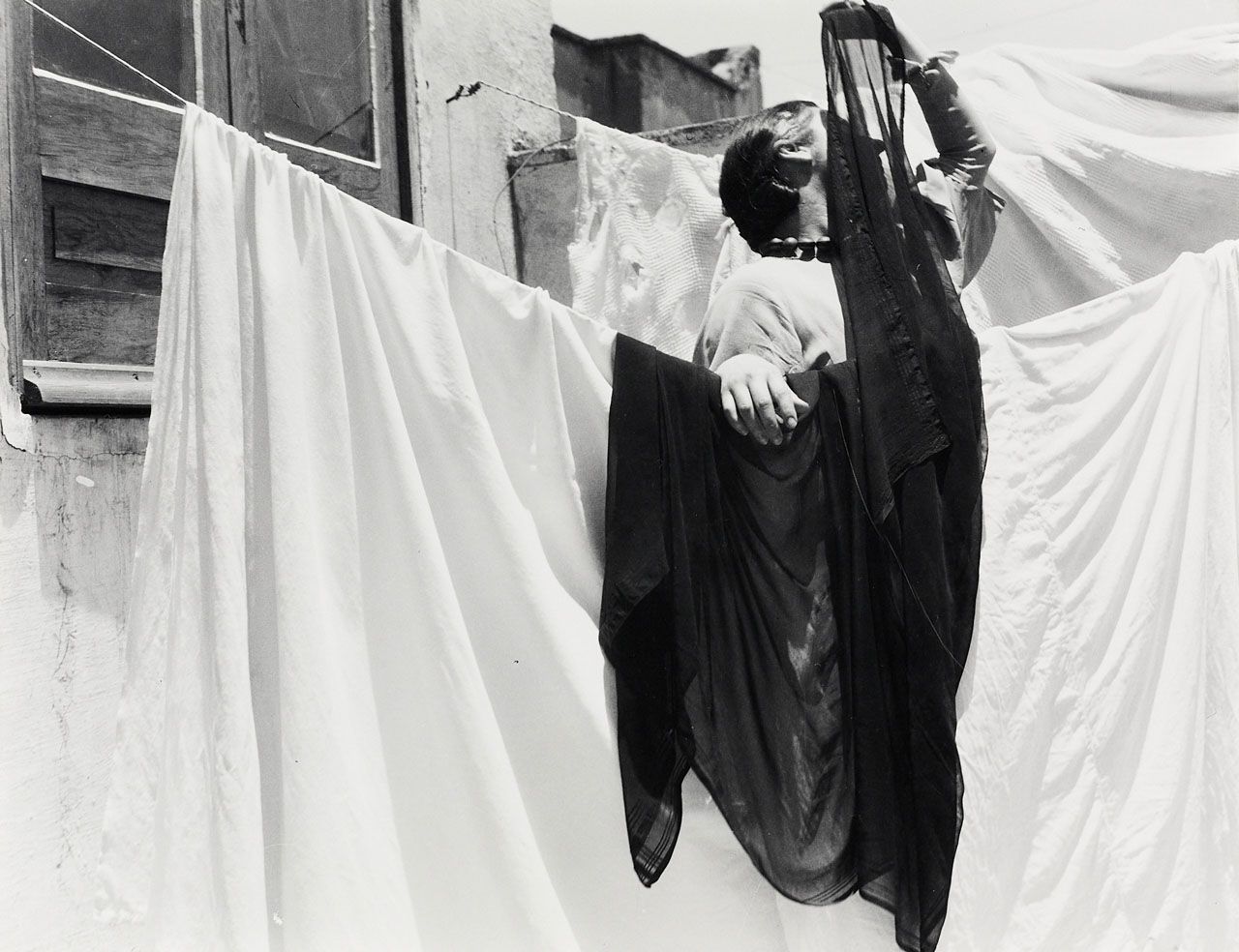
Manuel Álvarez Bravo (1902-2002) ~ El eclipse, 1933 | src Christie’sManuel Álvarez Bravo (1902-2002) ~ El eclipse (The Eclipse), 1933 | src Leitz
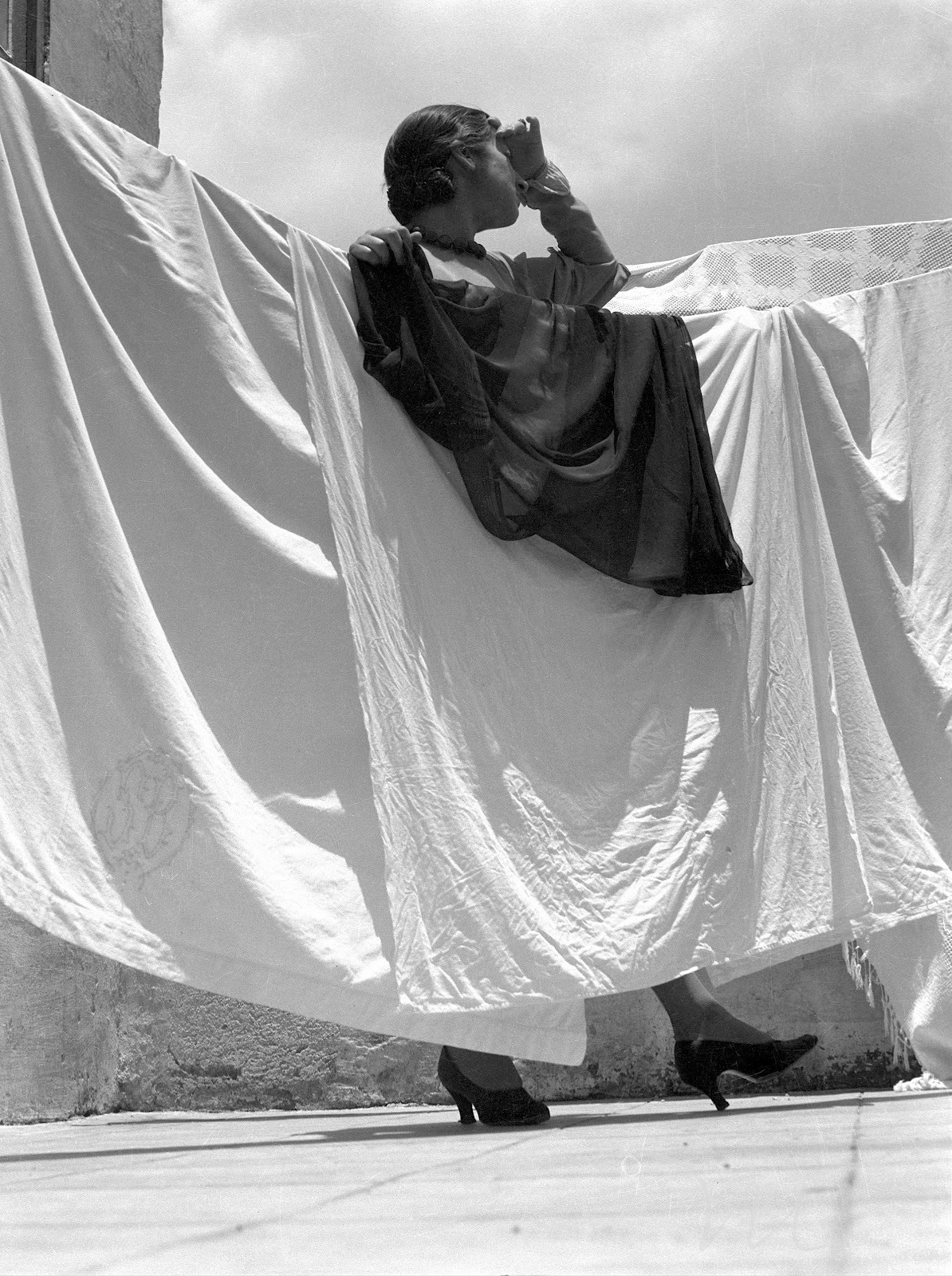
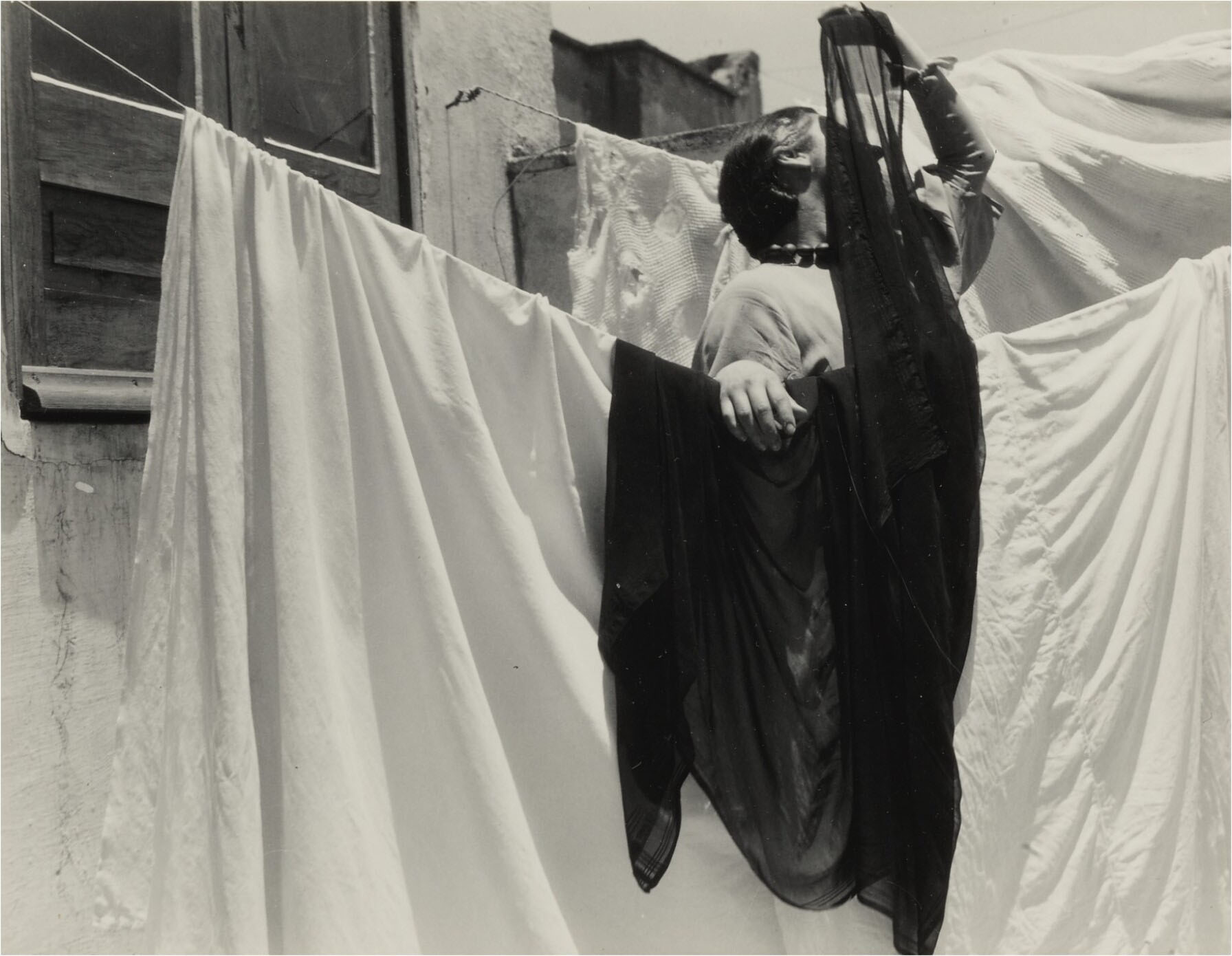
In El eclipse (1933), Álvarez Bravo achieved a dynamic geometry of crisscrossing diagonals. Standing on a shallow corner of a rooftop, a woman is partially concealed by sheets bleaching in the sun and by her dark rebozo, which she presumably holds in front of her face to look at an eclipse. His carefully composed images reveal his modern sense of aesthetics. | text Blanton Museum of Art Collections
Manuel Álvarez Bravo (1902-2002) ~ El eclipse / Sábanas (Sheets), 1933 | src Nelson-Atkins museum & Manuel Alvarez BravoManuel Álvarez Bravo (1902-2002) ~ El eclipse (The Eclipse), 1933. From ‘Fifteen Photographs by Manuel Álvarez Bravo’ (The Double Elephant Press Ltd., NY, 1974 | src Sotheby’s
mulating the pose of a Flamenco dancer, this woman dramatically turns her head sideways and upwards, while extending one arm high up in the air. Holding a black, sheer cloth over her face and shielding her eyes from the strong Mexican sun, she enacts Manuel Alvarez Bravo’s conception of an eclipse. At the same time, light bounces off the hanging white sheets, saturating the off-center areas of the photograph.
Alvarez Bravo made many images of linens and clotheslines, exploring the interplay between draped fabric and angular architecture. Here, the addition of a figure, seemingly engaged in a performance, adds mystery and animation to an otherwise formal study. | text: Getty museum
Manuel Álvarez Bravo (1902-2002) ~ El eclipse / Sábanas (Sheets), 1933. From Fifteen Photographs by Manuel Álvarez Bravo, 1974 Manuel Álvarez Bravo (1902-2002) ~ El eclipse / Sábanas (Sheets), 1933 | src MoMA
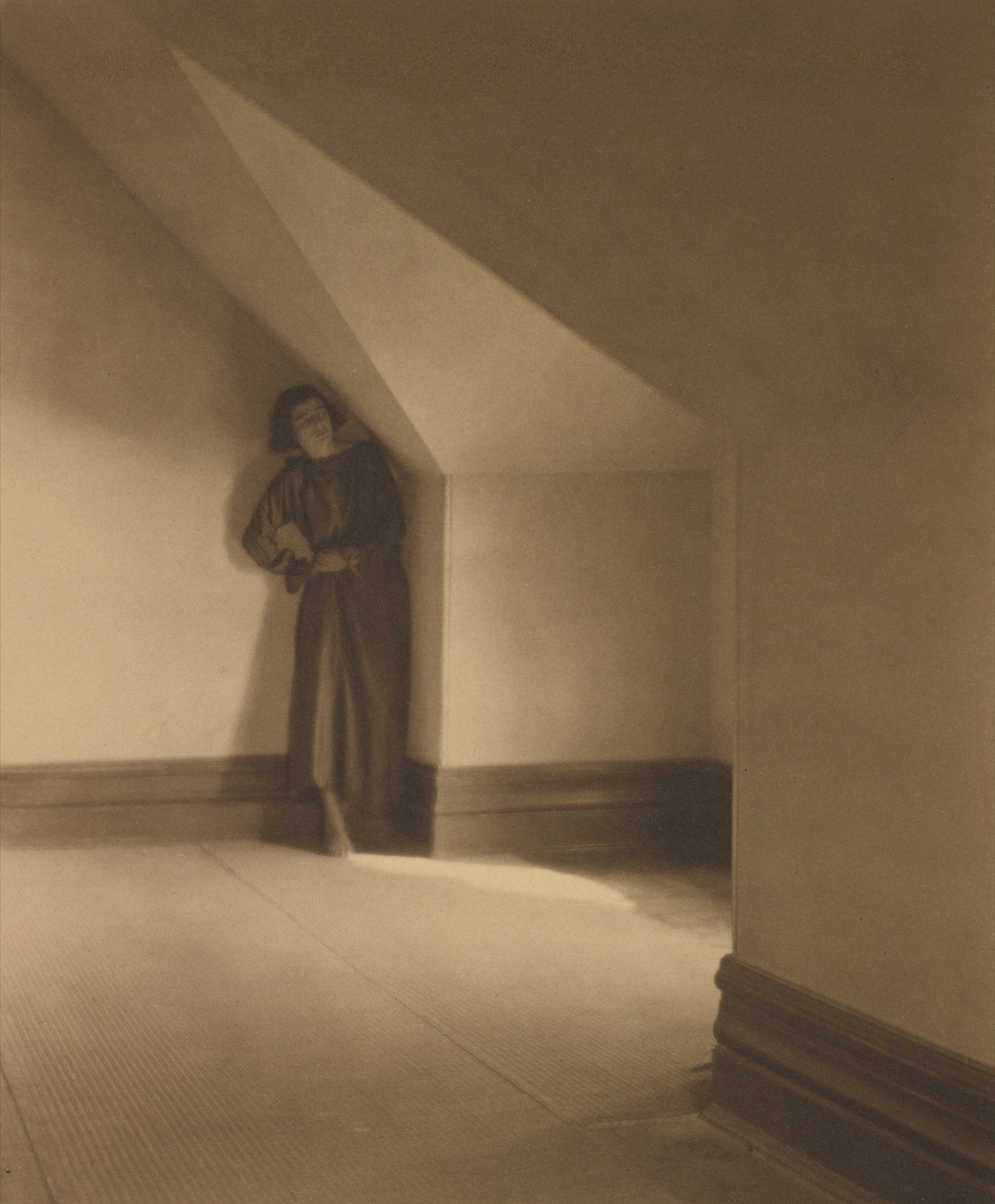
Edward H. Weston (1886 – 1958) ~ Betty Katz in her attic (seated, smoking), Los Angeles, 1920. Palladium print | src Getty museum
This particular photograph is part portrait and part compositional experiment with Weston’s growing interest in the formal concerns of Modernism. Katz is shown sitting in a niche where a network of large intersecting planes made up of the attic’s floor, walls, and dormers and articulated in varying shades by light entering from an unseen window on the right.
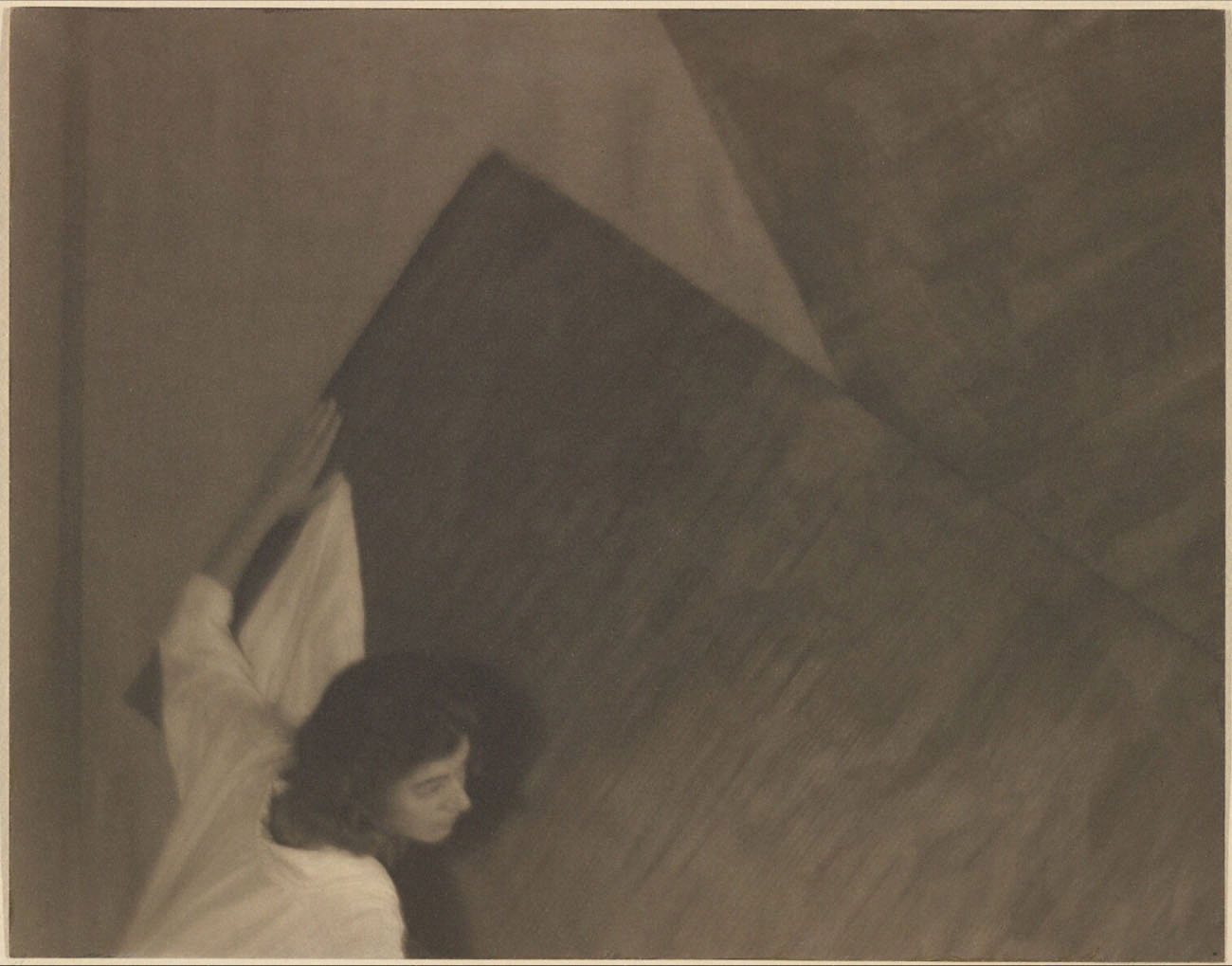
Edward H. Weston (1886 – 1958) ~ Betty Katz in her attic, Los Angeles, 1920. Palladium print | src Getty museum
This particular photograph is Pictorialist in its soft focus and compositional arrangement. However, it is also Modernist in its self-conscious use of space and form as subjects of the photograph. Weston subordinated Katz’s figure to the graphic abstraction of the large rectangles that she appears to hold up. The print’s muted tones flatten the image’s depth, reducing the room to a two-dimensional space.
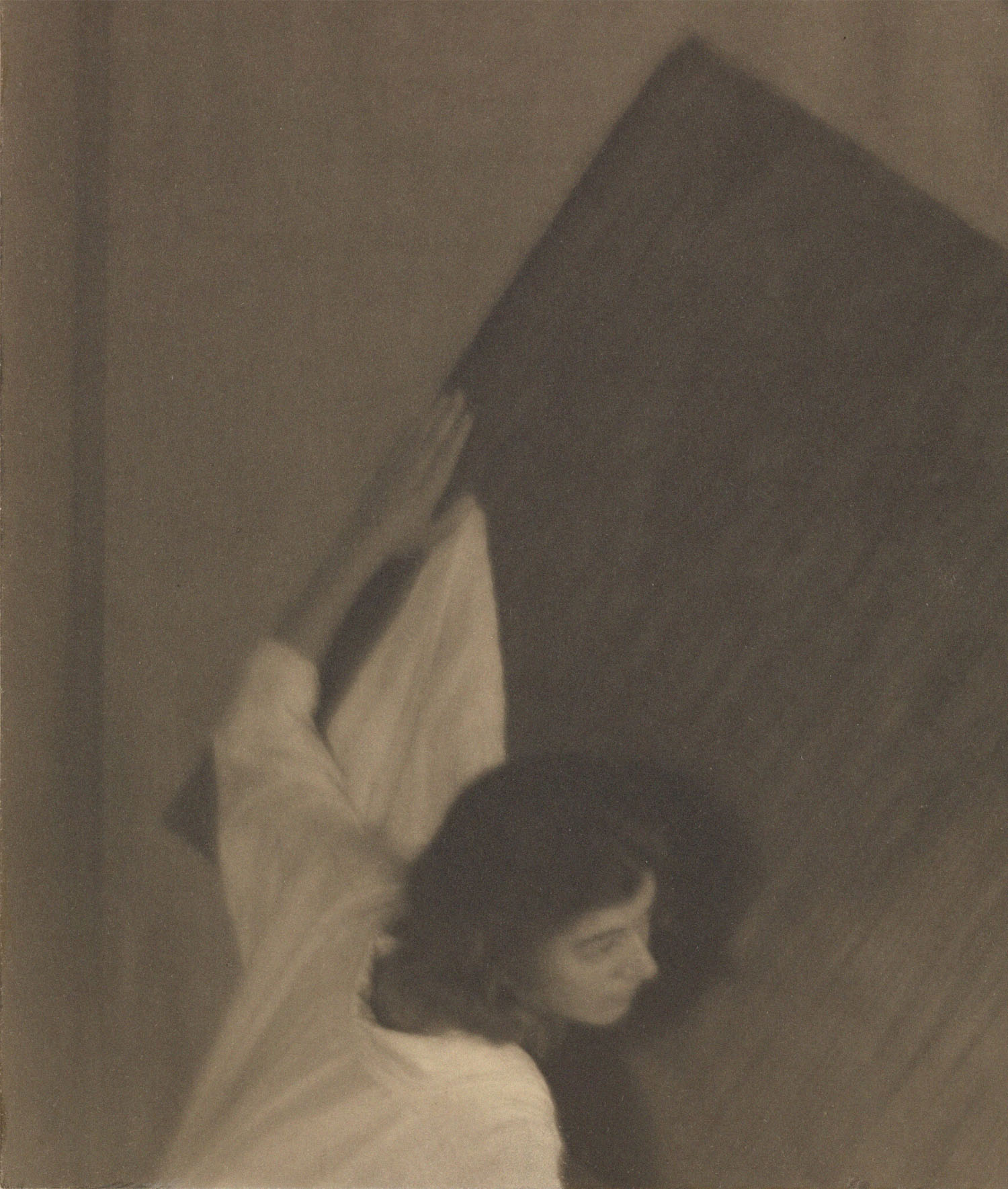
Edward H. Weston (1886 – 1958) ~ Betty Katz in her attic, Los Angeles, 1920. Palladium print (detail)
A critic for Pictorial Photography, wrote about this image: “Queerness for its own sake must have obsessed Edward Weston when he recorded the stiff and angular lines in Betty in Her Attic . . . , although there is no denying the truth and beauty of tones of the floors and walls. But the position of the girl!—is there not a touch of cussedness in that?”
Edward H. Weston (1886 – 1958) ~ Betty Katz in Her Attic, Los Angeles, 1920. Palladium print | src Getty museum
This particular photograph is part portrait and part compositional experiment with Weston’s growing interest in the formal concerns of Modernism. Katz is shown tucked into a network of large intersecting planes made up of the attic’s floor, walls, and dormers and articulated in varying shades by light entering from an unseen window on the left.
Edward H. Weston (1886 – 1958) ~ Betty Katz in Her Attic, Los Angeles, 1920 | src Getty museum
This particular photograph is part portrait and part compositional experiment with Weston’s growing interest in the formal concerns of Modernism. Katz is shown tucked into a network of large intersecting planes made up of the attic’s floor, walls, and dormers and articulated in varying shades by light entering from an unseen window on the right.
Edward H. Weston (1886 – 1958) ~ Attic, Glendale, California, 1921. Platinum print | src George Eastman Museum
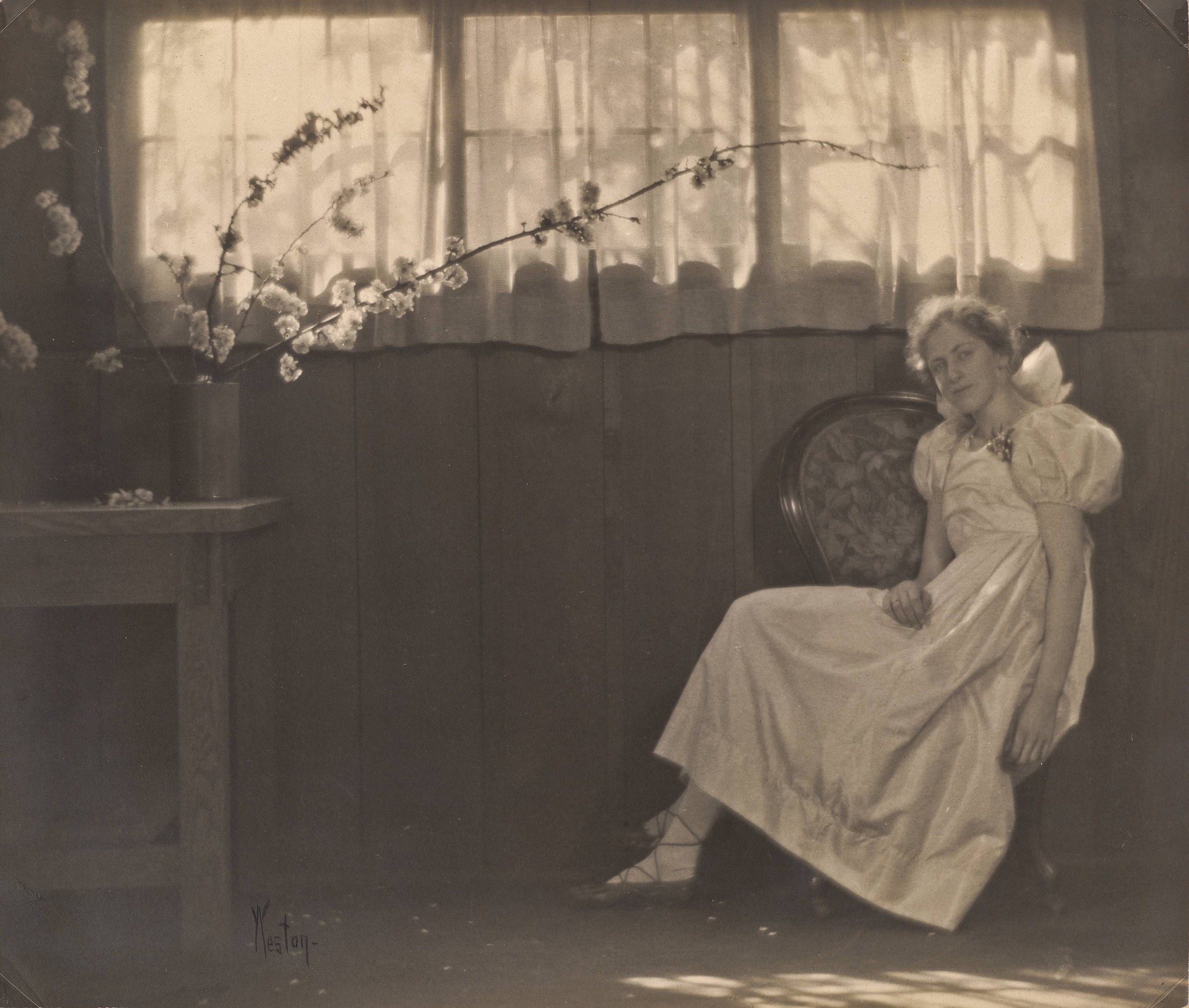
In 1920 Edward Weston began a creative series of pictures made in his friends’ attics. Reactions to these images were mixed. Imogen Cunningham (1883-1976), one of Weston’s friends and fellow photographers, wrote glowingly of one in a letter addressed to him, “It has Paul Strand’s eccentric efforts, so far as I have seen them, put entirely to shame, because it is more than eccentric. It has all the cubistically inclined photographers laid low. It is a most pleasing thing for the mind to dwell on, the mind I say and mean, not the emotions or fancies. It is literal in a most beautiful and intellectual way.”
The woman pictured is Betty Katz (later Brandner, 1895-1982), who was introduced to Weston by his colleague Margrethe Mather (1886-1952). Weston and Katz engaged in a brief affair in October 1920, when he made several other images of her in her attic and out on a balcony.
Text adapted from Brett Abbott. Edward Weston, In Focus: Photographs from the J. Paul Getty Museum [All quotes from this post retrieved from Getty museum]
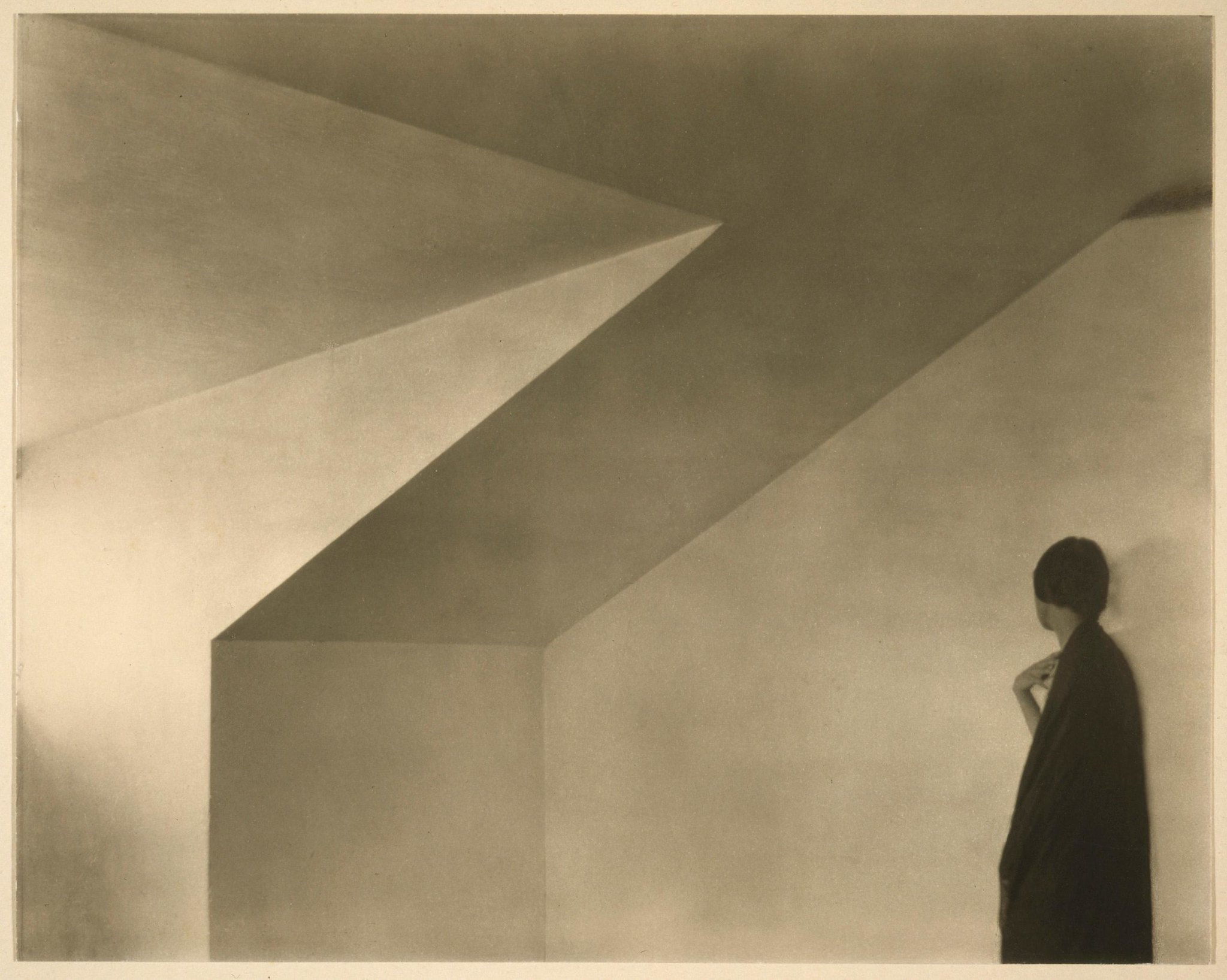
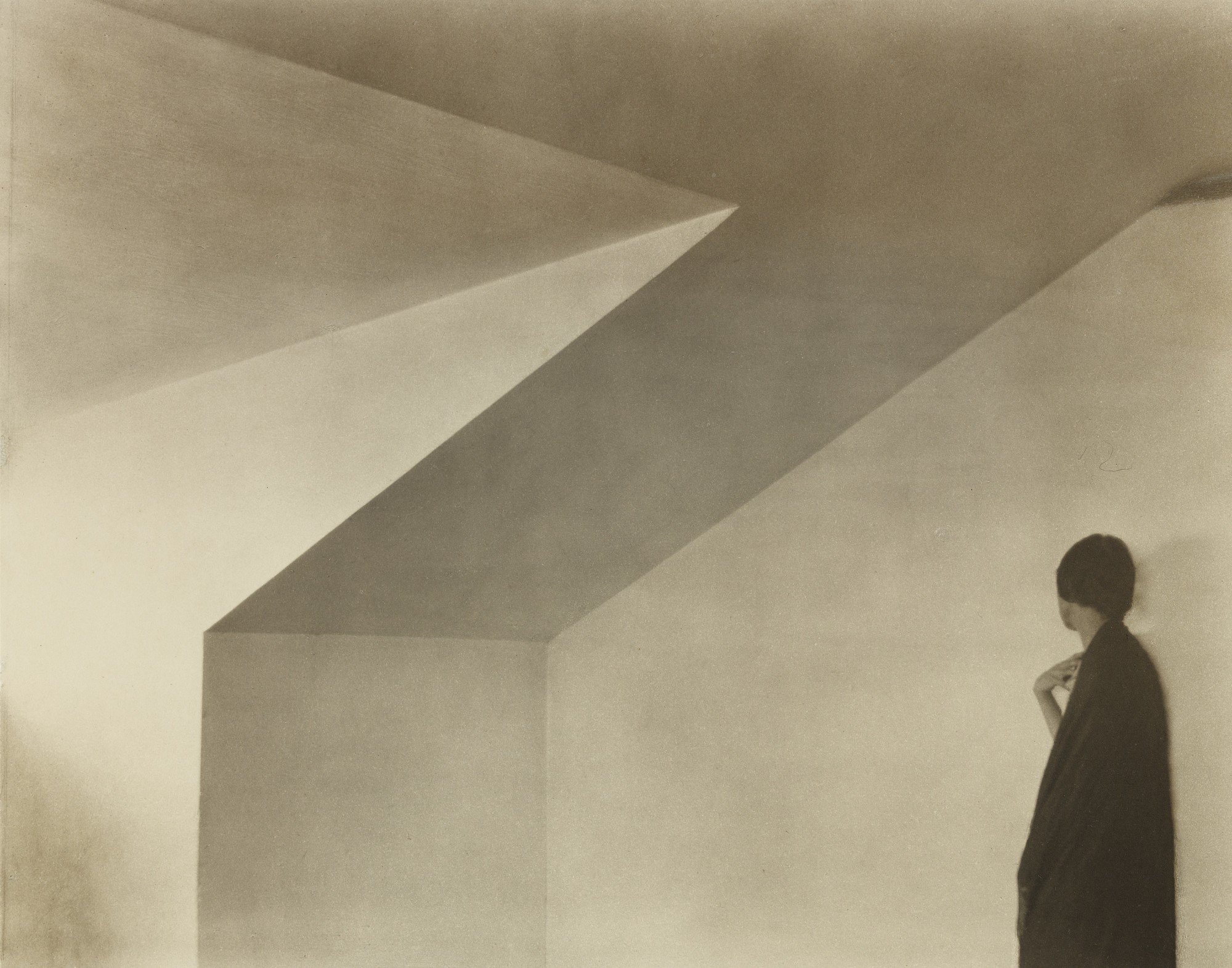
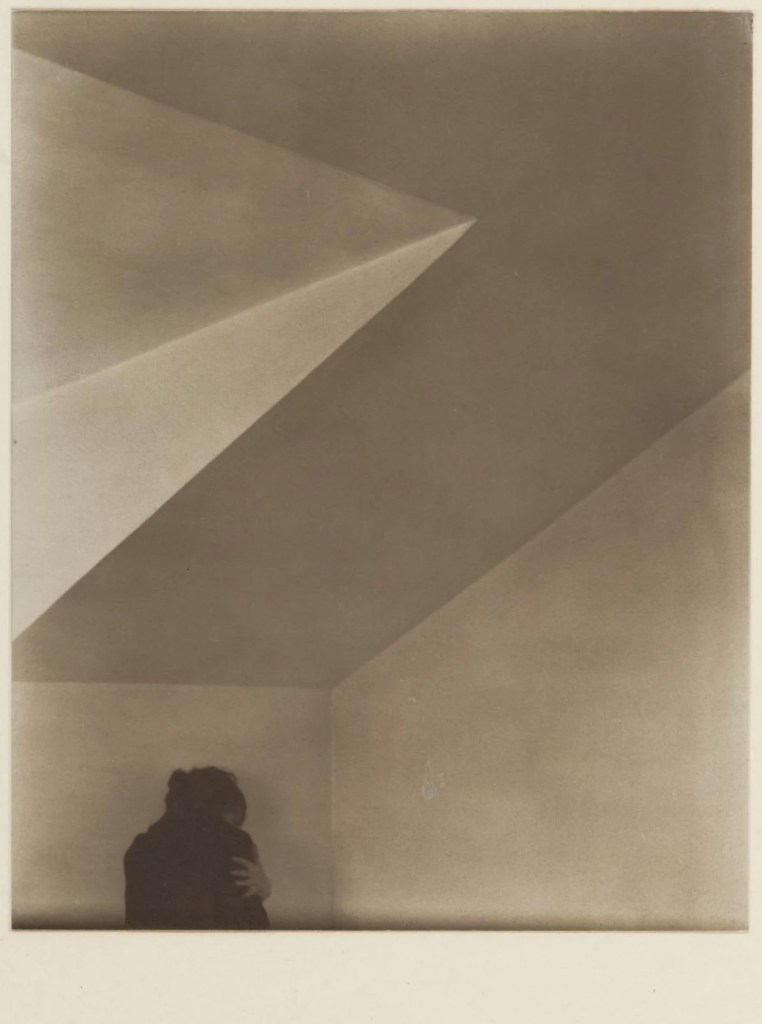
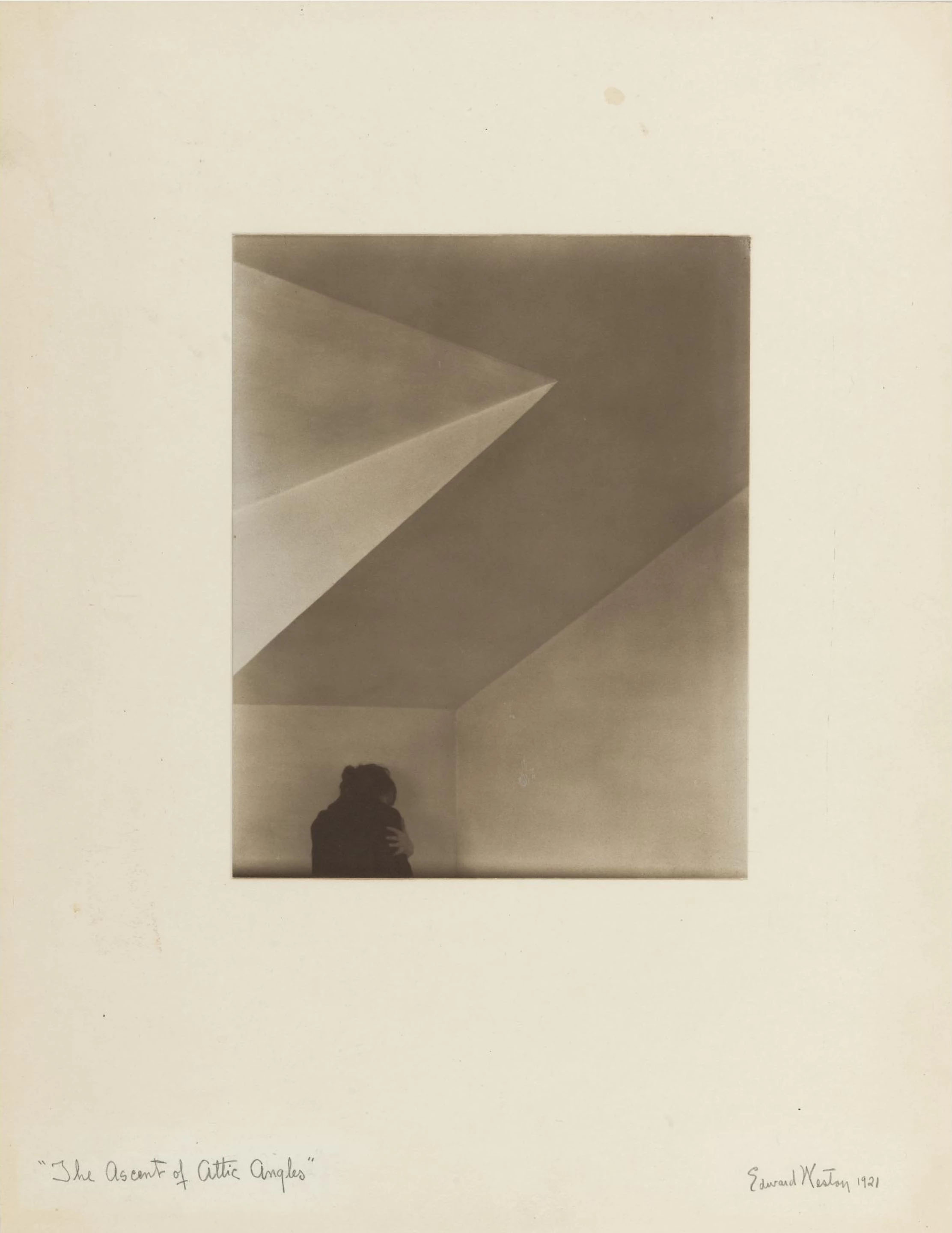
Edward H. Weston (1886 – 1958) ~ Attic [Betty Katz (?)], 1921. Palladium print. Thomas Walther Collection | src MoMAEdward H. Weston (1886 – 1958) ~ The Ascent of Attic Angles, 1921. Platinum print | src Sotheby’s also, NMAH Smithsonian institutionEdward H. Weston (1886 – 1958) ~ The Ascent of Attic Angles, 1921. Platinum print, tipped to a large tan mount | src Sotheby’s
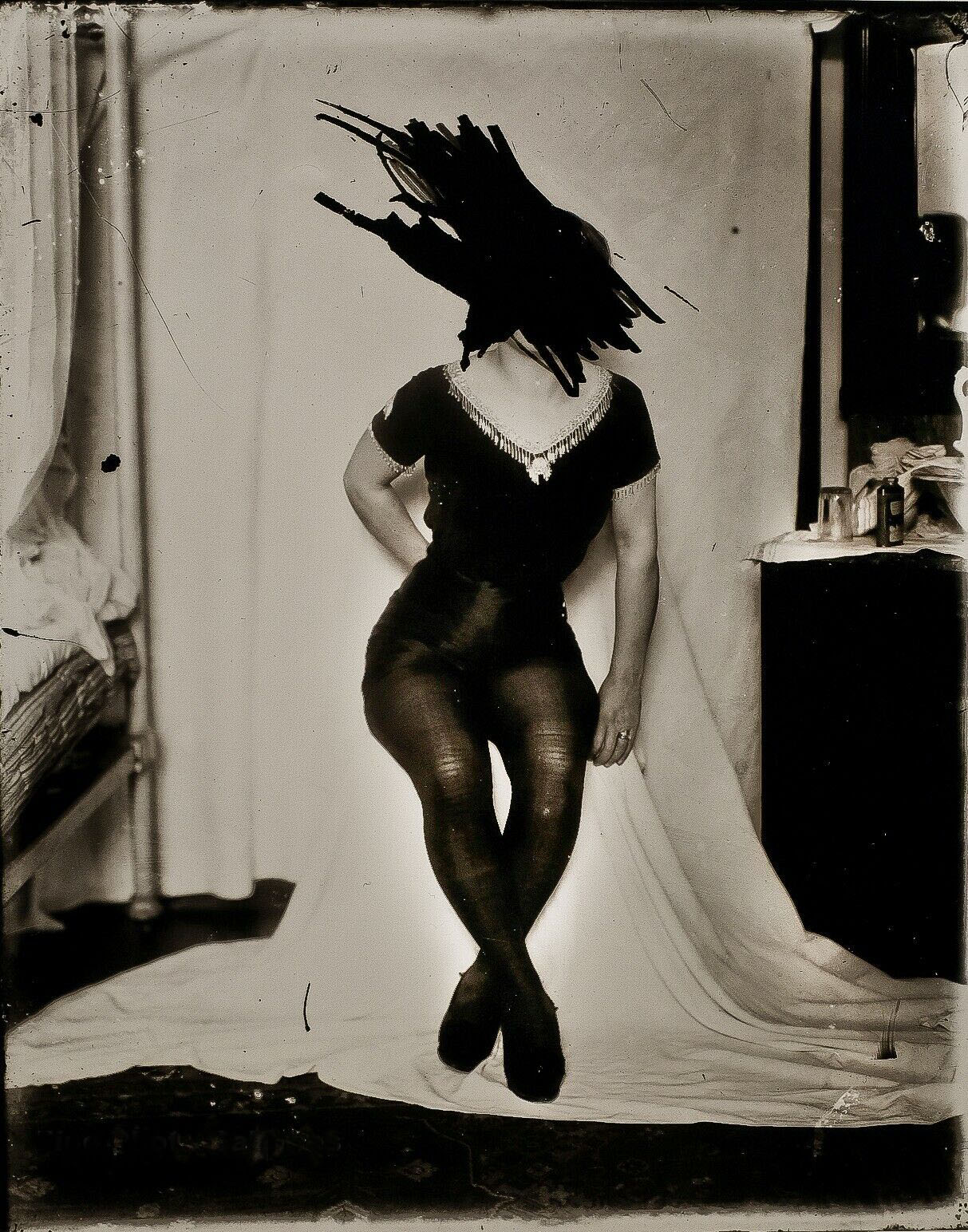
Ernest Joseph Bellocq (1873-1949) ~ from: Storyville Portraits, ca. 1912 | src eBayErnest Joseph Bellocq (1873-1949) ~ Sans titre. From: Storyville Portraits, 1911-1913 | src Deborah Bell & Centre Pompidou
A lifelong resident of New Orleans, Ernest J. Bellocq was a commercial photographer who undertook a personal quest to photograph the prostitutes of Storyville, the city’s red-light district. In these frank and intimate photographs, women are not portrayed as prey to the camera’s gaze, but rather seem to participate willingly and confidently in the photographic act. Rumored to be eccentric and reserved, Bellocq told only a handful of acquaintances about these portraits, which primarily date from 1912 (the negatives were later discovered and printed by photographer Lee Friedlander). | text source: AIC
Ernest Joseph Bellocq (1873-1949) ~ ‘Storyville Portraits’, ca. 1912 | src the photographers’ gallery
The glass plate negatives were not discovered until after his death in 1949, which is why so many of the images are cracked, scratched, and damaged. It is said that some of the damages were deliberately inflicted by Bellocq while the emulsion was still wet, in order to protect the identity of the sex workers.
Extracted from: Storyville portraits : photographs from the New Orleans red-light district, circa 1912 (1970) | src MoMA catalogueStoryville portraits : photographs from the New Orleans red-light district, circa 1912 (1970) | src MoMA catalogue 2678Storyville portraits : photographs from the New Orleans red-light district, circa 1912 (1970) | src MoMA catalogue 2678
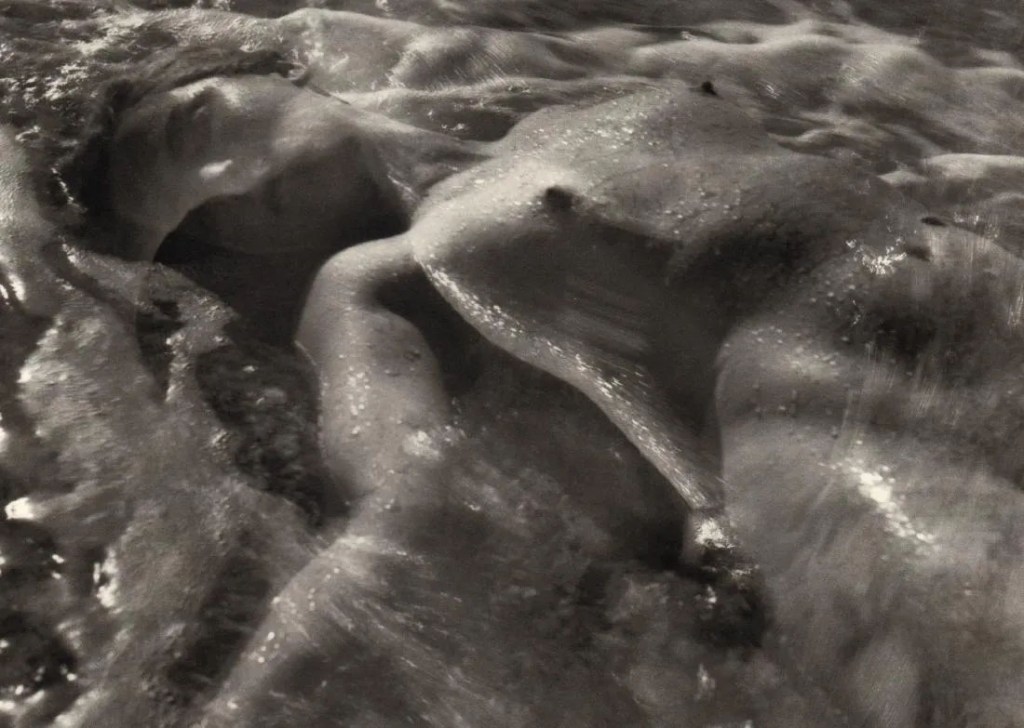
Ruth Bernhard :: In the Waves, 1945; printed ca. 1982. | src SF · MoMARuth Bernhard :: .In the Wave, 1945. Duotone Photoengraving printed in 1986. | src liveauctioneers





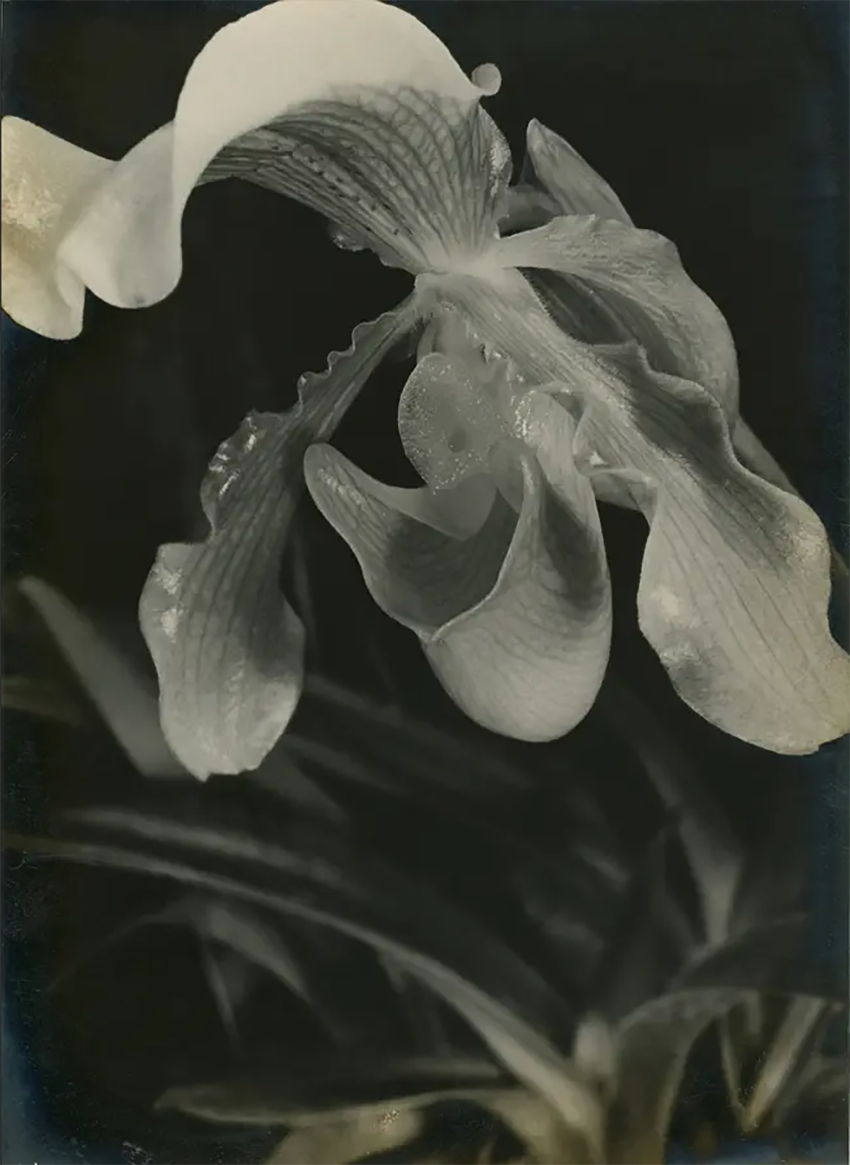
![Aenne Biermann :: Orchid, ca. 1930. Gelatin silver print. [Detail] From : Aenne Biermann : Up Close and Personal at Tel Aviv Museum of Art](https://unregardoblique.com/wp-content/uploads/2023/01/aenne-biermann_orchid-ca.-1930-detail-tel-aviv-museum.jpg)






 un regard oblique