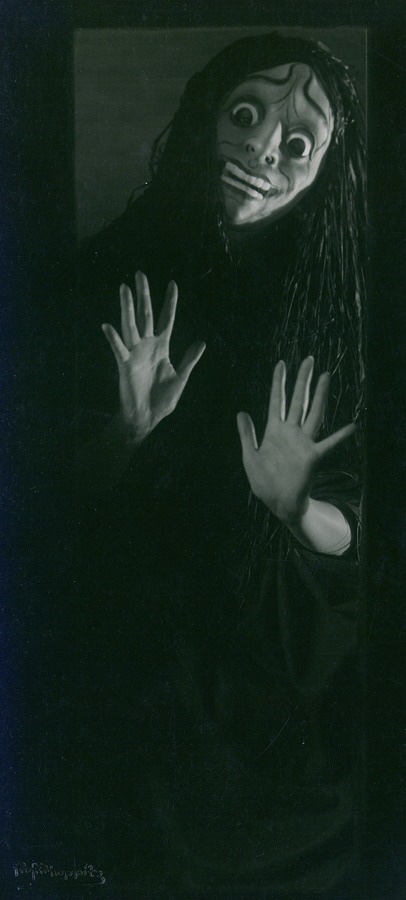
Mary Wigman in Maskentanz

«Mary Wigman in ihrem neuen Maskentanz, einer stark bewegten Gruppenszene, in der die Gespenster des Schalachtfeldes lebendig weden» | UHU 1926

Mary Wigman in her new masked dance, a highly moving group scene in which the ghosts of the battlefield come to life. Uncredited photographer. Published in UHU magazine, Heft 8, May 1926 | src UHU ~ Illustrierte Presse
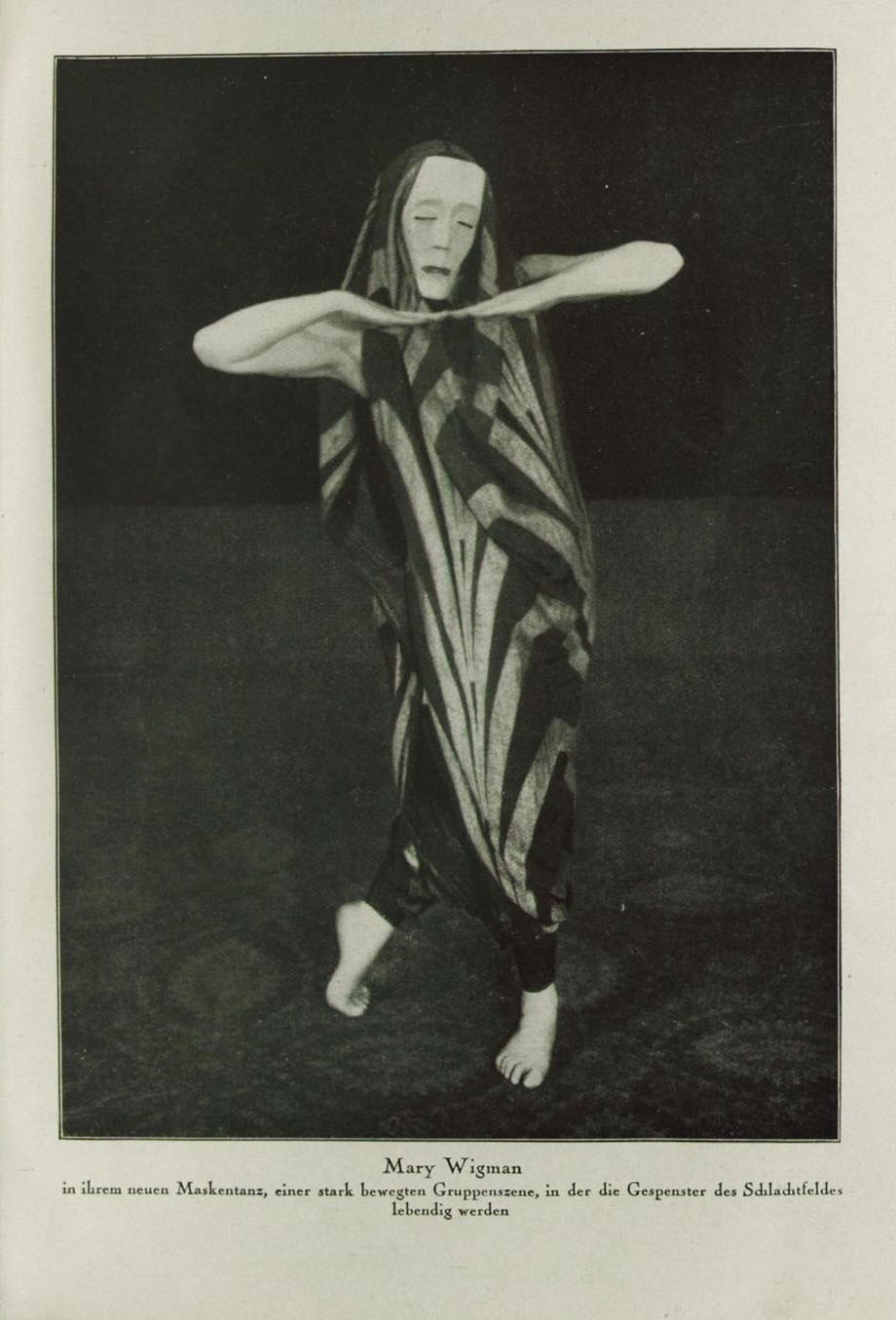
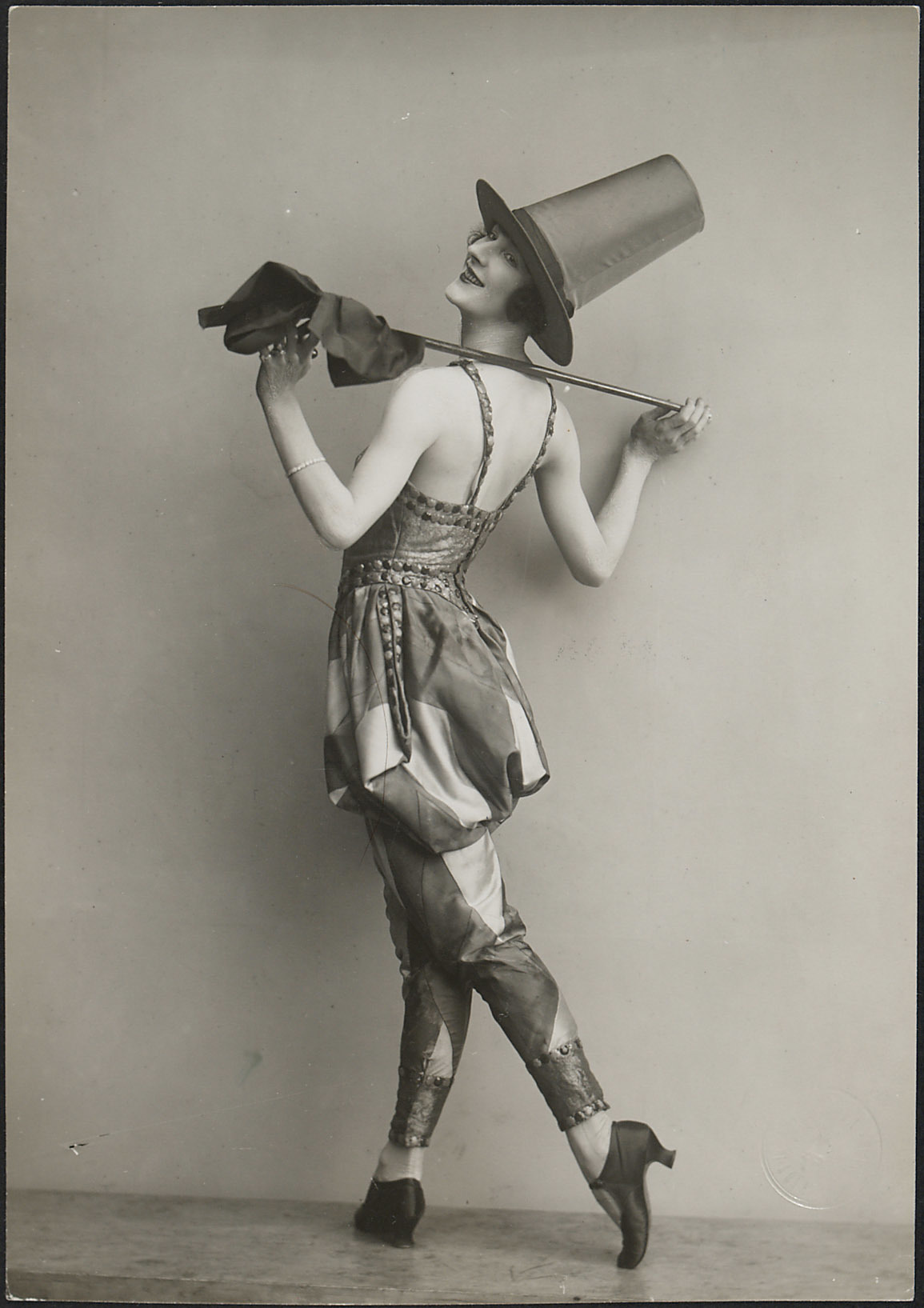
«Mary Wigman in her new masked dance, a highly moving group scene in which the ghosts of the battlefield come to life» | UHU 1926

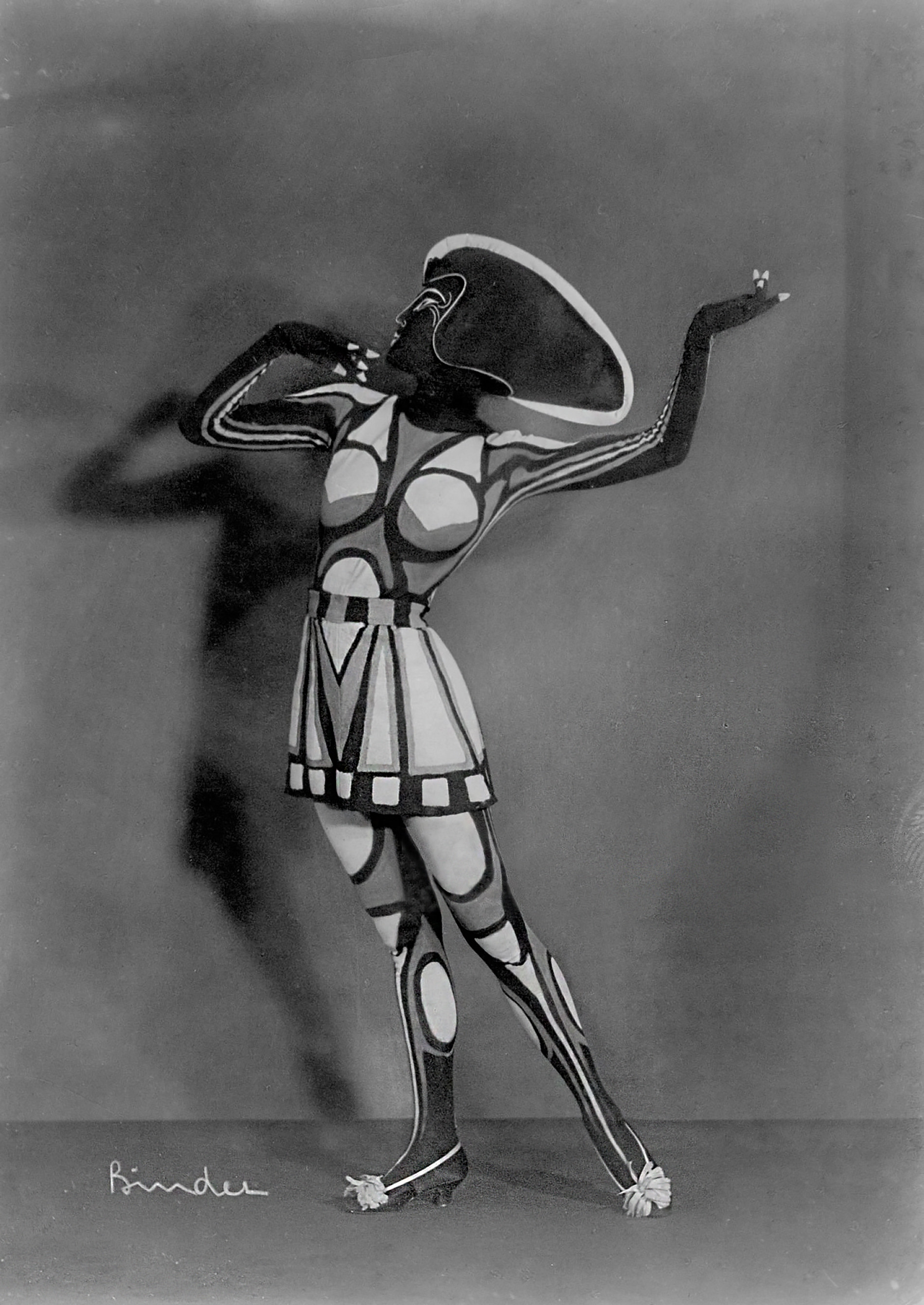
Dancer Nina Payne, 1920s

Atelier Willinger :: Bewegungsstudie der Tänzerin Nina Payne, 1920s. | src Theatermuseum, Wien
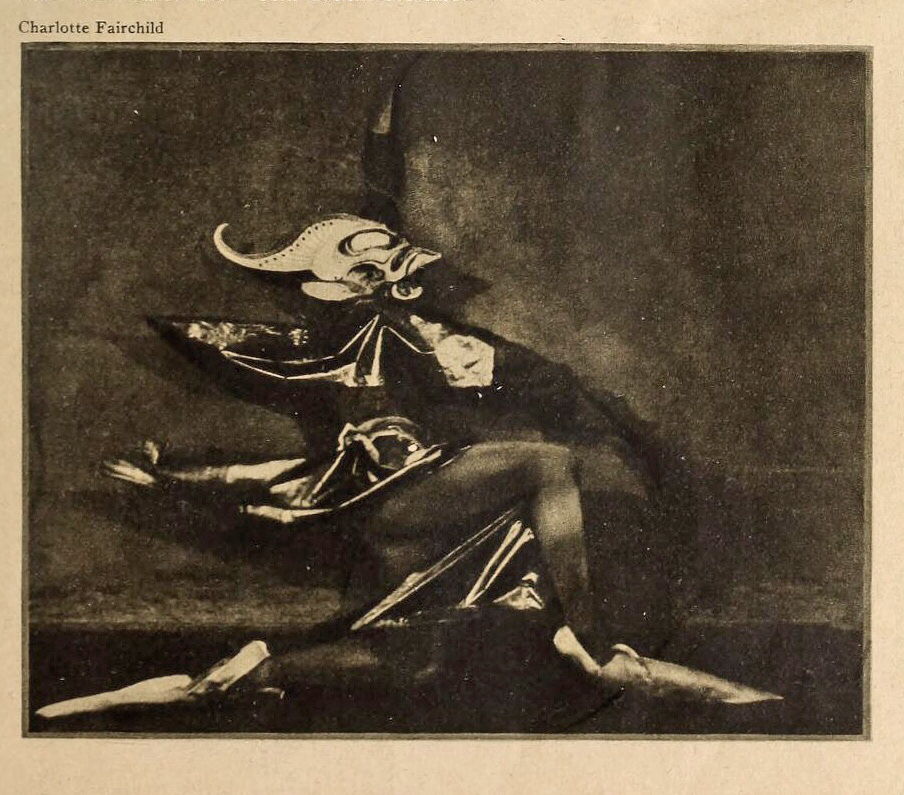
Alexander Binder :: Dancer Nina Payne with a dance mask and costume in the Nelson revue "Confetti"; Nelson Theater Berlin, ca. 1925
Atelier Binder – Alexander Binder :: Dancer Nina Payne with a dance mask and costume in the Nelson revue “Confetti”; Nelson Theater Berlin, ca. 1925 | src Getty Images

Hedy Pfundmayr als Elektra

Rudolf Koppitz :: Dancer Hedy Pfundmayr with Elektra mask by Richard Teschner, 1930. Photoinstitut Bonartes via LL/51115
Rudolf Koppitz :: Hedy Pfundmayr mit Elektra-Maske von Richard Teschner, um 1930. Silbergelatineabzug
| src Bild-Akademie

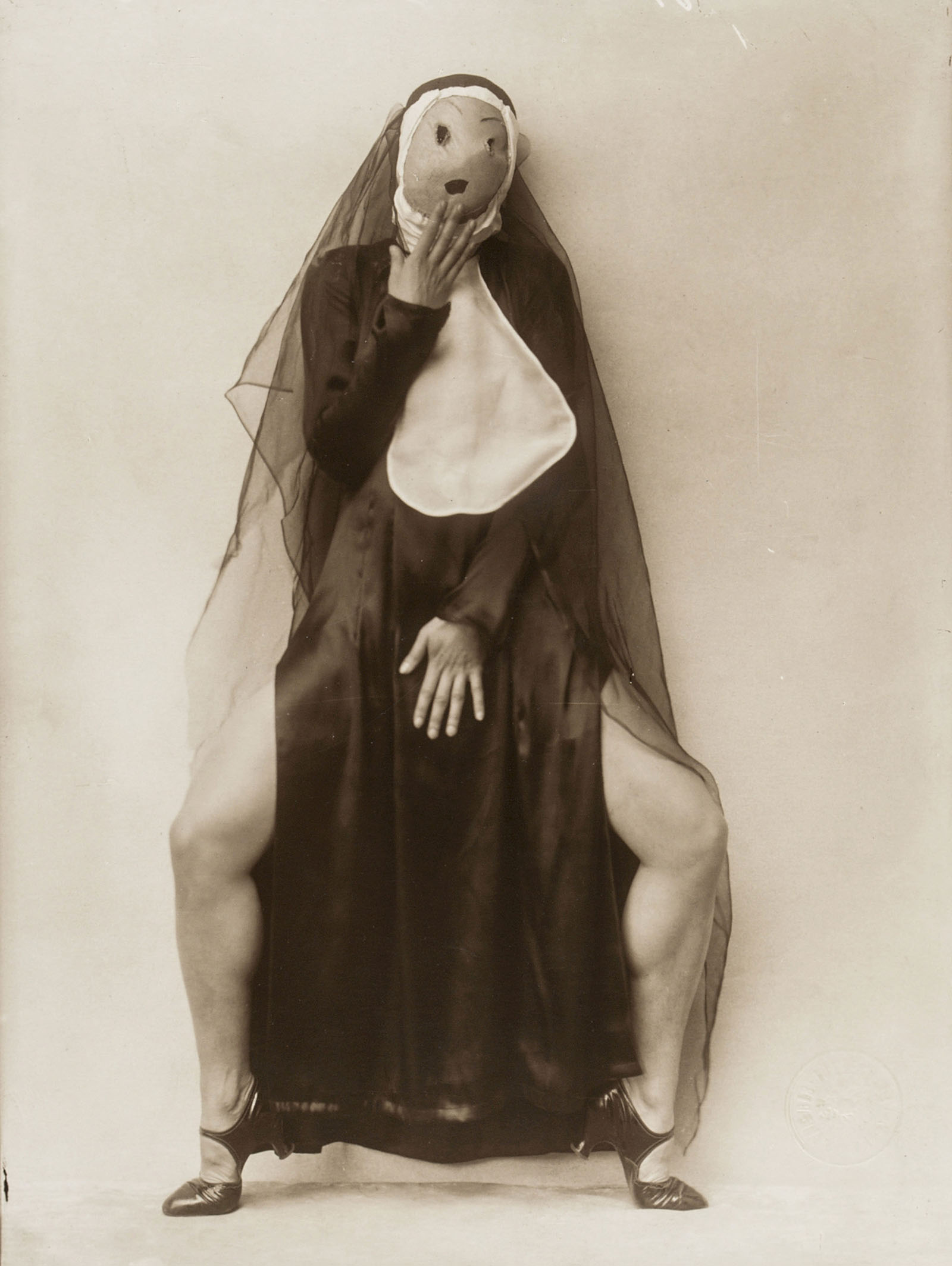
Mura Ziperowitsch, 1920s

Mura Ziperowitsch, Wien, 1920er Jahre, Foto Anonym, O. J. (Anonymous photographer) | src Alles tanzt Ausstellung @ Theatermuseum © KHM-Museumsverband

Role models. Many female dancers dealt with given role structures and criticized gender specific role attributions. The nun is seen as embodiment of a nonsexual woman who dedicates her life to God. Hence the play with the nun’s costume is a game with female physicality and sexuality. Here we meet Mura Ziperowitsch, who by wearing a nun similar costume refers to the female corporality.

source Vienna Pride at Kunsthistorisches Museum Wien
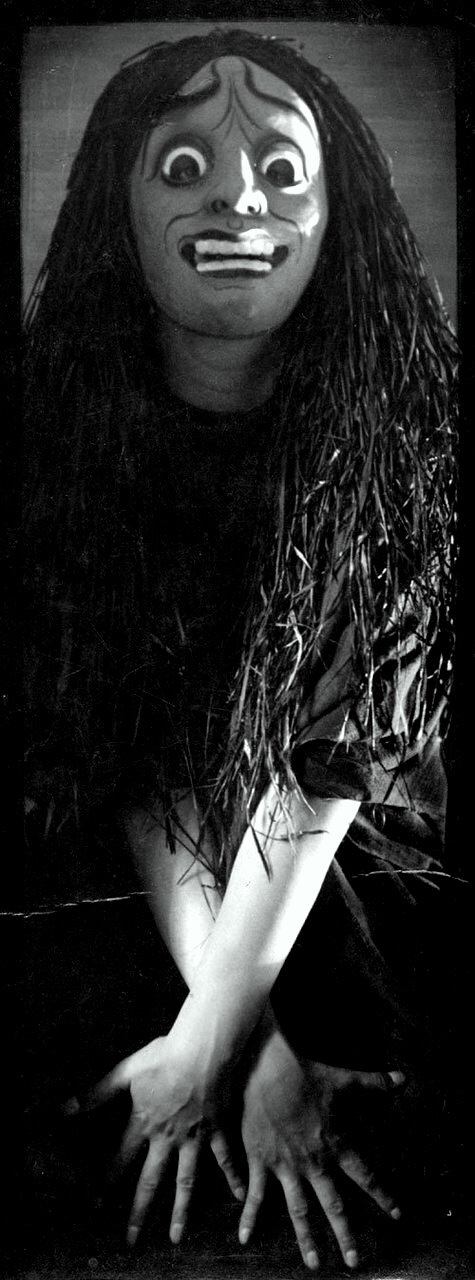
Maskentanz mit Elektra Maske

Rudolf Koppitz :: Dancer Hedy Pfundmayr with Elektra mask by Richard Teschner, 1930. Photoinstitut Bonartes via LL/51115
Rudolf Koppitz :: Hedy Pfundmayr in Maskentanz (Mask dance), ca. 1929

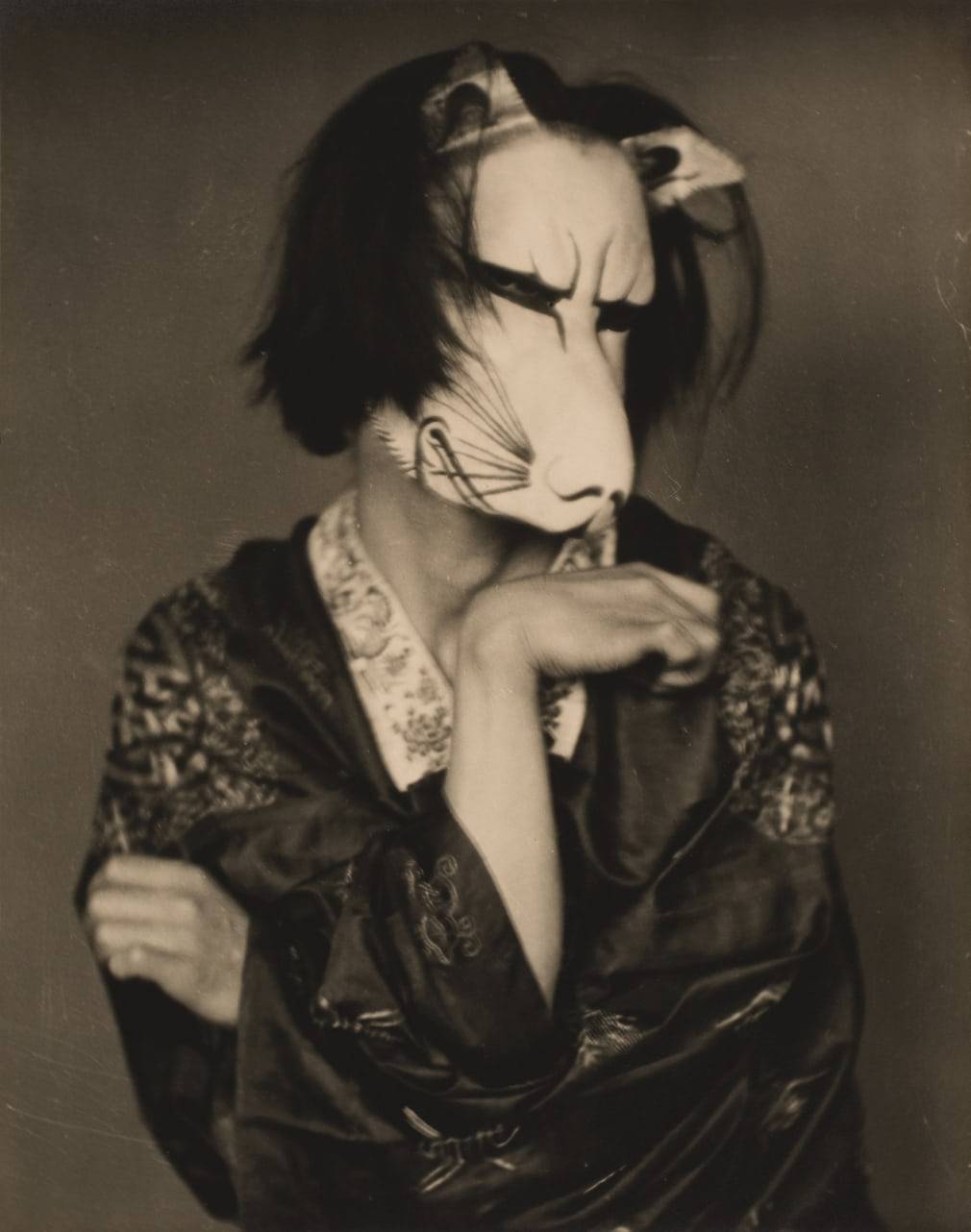
Michio Ito by A. L. Coburn

Alvin Langdon Coburn ~ Japanese dancer Michio Ito wearing fox mask designed by Edmund Dulac, 1915 | src The Guardian


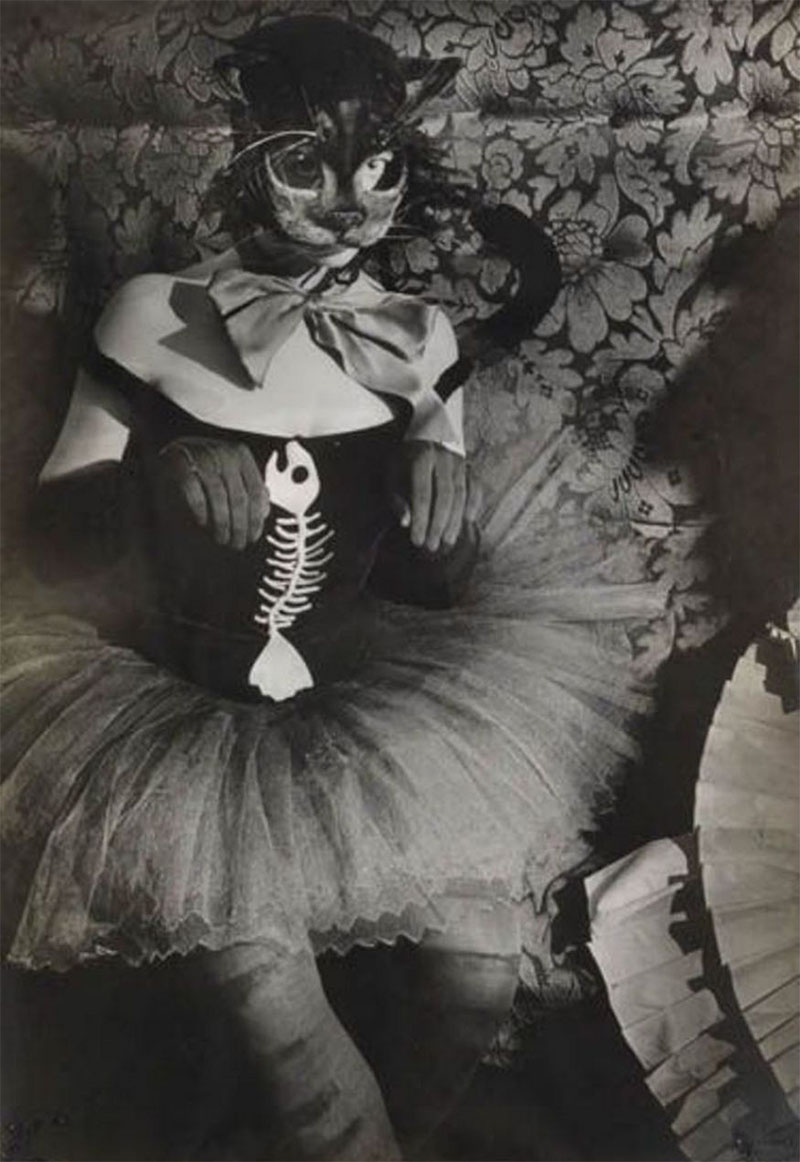
Cat masks by Leonor Fini

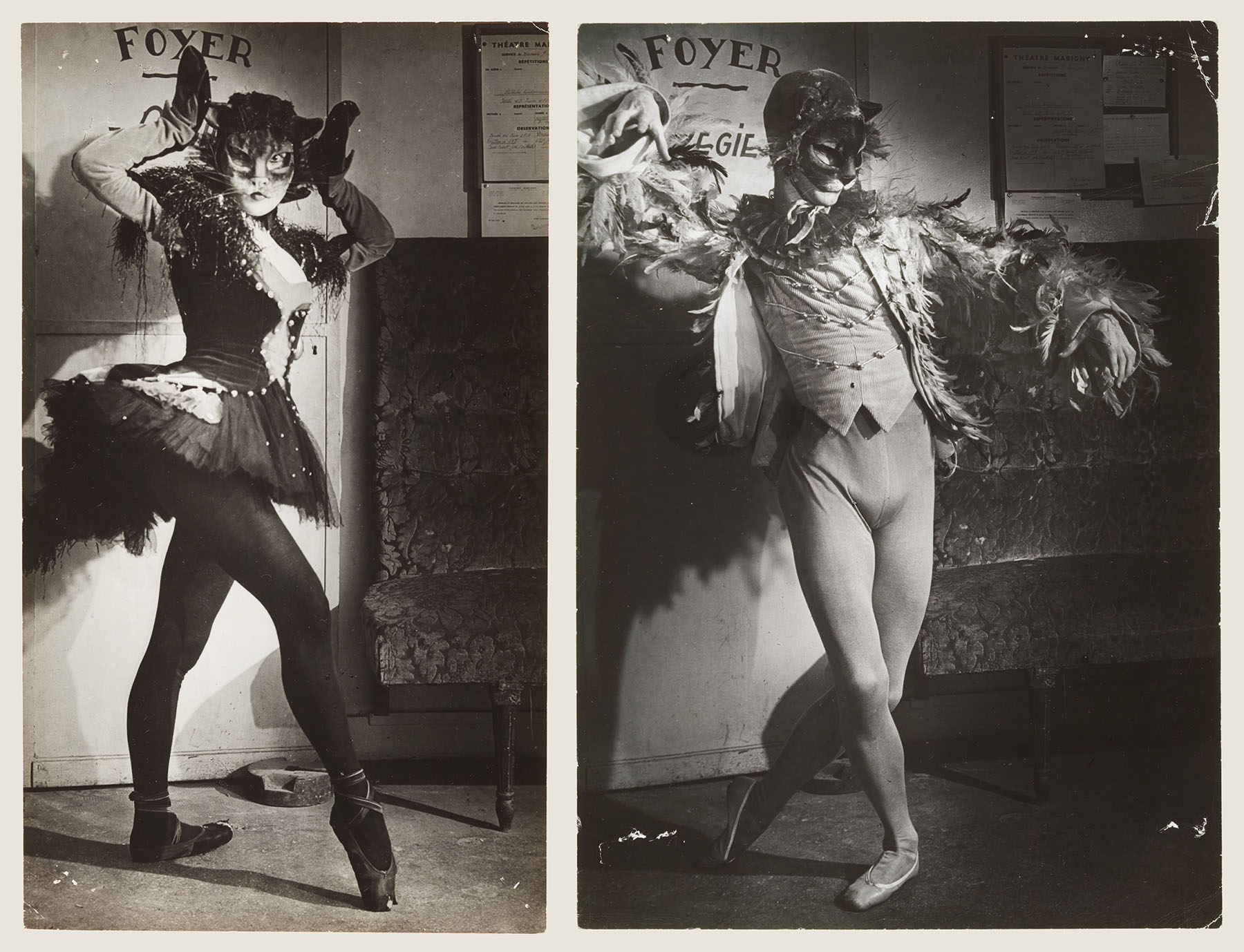
Brassaï (1899-1984) ~ Ballet de Paris, 1949. Ferrotyped gelatin silver print | src Christie’s
Brassaï (Gyula Halász) (1899-1984) ~ Untitled [woman with cat mask by Leonor Fini], Paris, 1930s | src stephen ellcock
Brassaï (1899-1984) ~ Ballet de Paris, 1949. Brassaï (1899-1984) ~ Ballet de Paris, 1949. Ferrotyped gelatin silver prints | src Christie’s

Les Demoiselles de la Nuit

Ballet in one act with choreography by Roland Petit, libretto by Jean Anouilh, music by Jean Françaix, and scenery & costume design (including the ballet’s fantastic cat masks) by Leonor Fini. It premiered on 22 May 1948 by Ballets de Paris at the Théâtre Marigny (Paris), with Fonteyn, Petit, and Hamilton. It tells the story of a musician who falls in love with his beautiful cat Agathe, who has assumed semi-human form. Agathe tries to be faithful to her human lover but is lured away by the sound of tomcats and the call of freedom. She leaps off the rooftops and the musician falls to his death as he tries to grab hold of her. She falls after him and they are united in death. | src The Oxford Dictionary of Dance
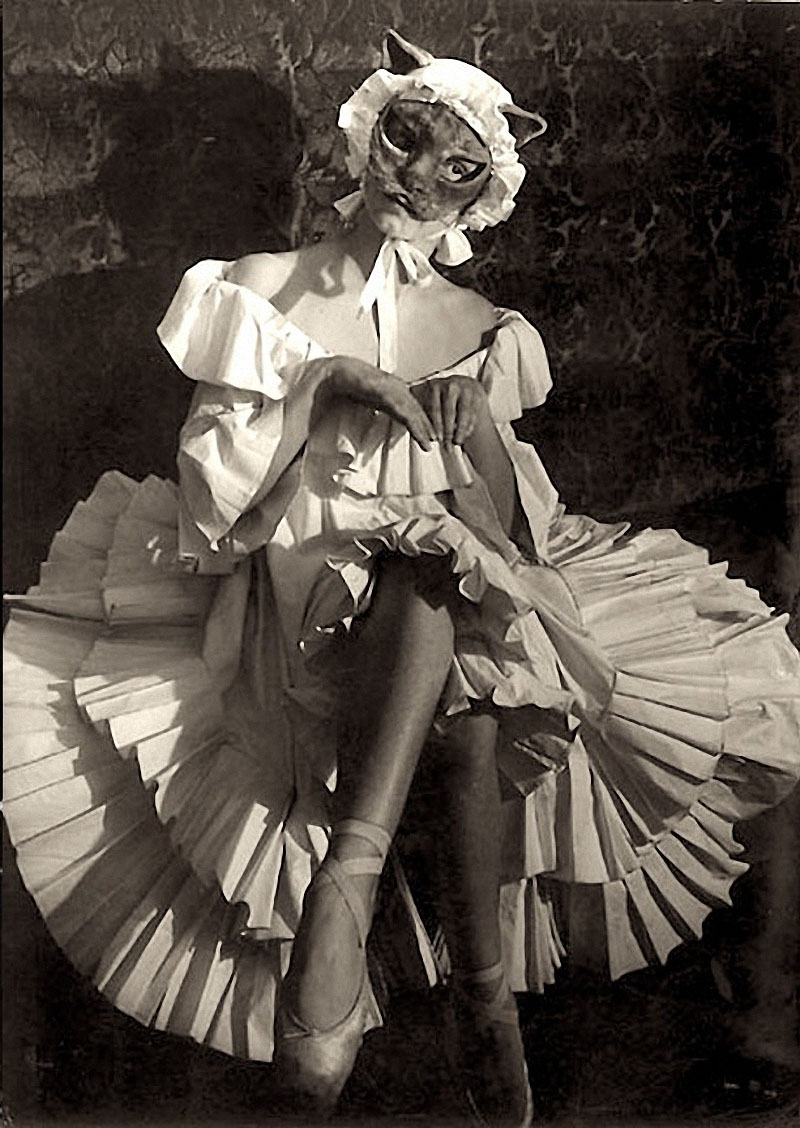
Brassaï (1899-1984) ~ Dancer wearing a cat costume designed by Leonor Fini for Les Demoiselles de la Nuit, 1948 | src ODLP ~ l’œil de la photographie