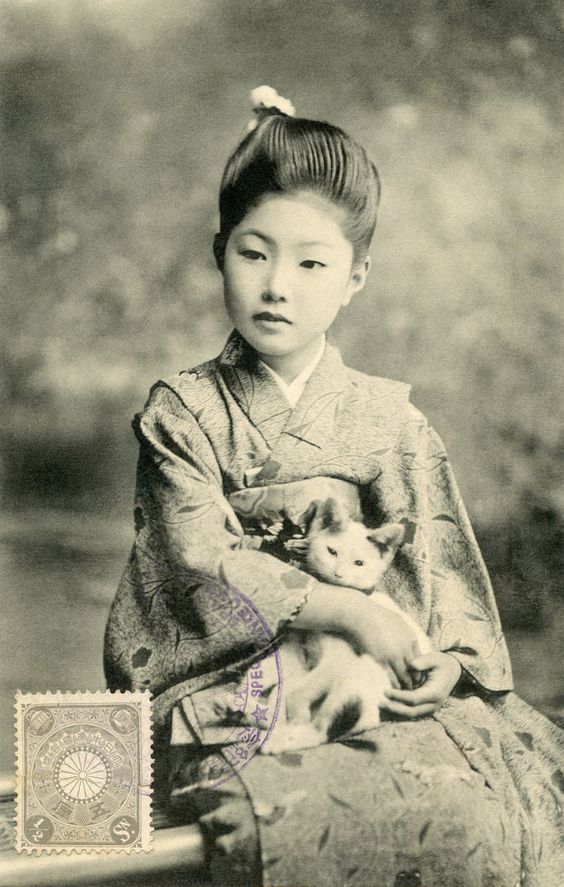
Bijin with a Kitten, 1907 / source and high resolution: Blue Ruin
images that haunt us
Bijin with a Kitten, 1907 / source and high resolution: Blue Ruin
 https://embedr.flickr.com/assets/client-code.js
Three Maiko, 1928. Three maiko (apprentice geisha), Takewaka on the left, Tomeko in the centre and Satogiku on the right. / src: Blue Ruin
 https://embedr.flickr.com/assets/client-code.js
Geiko Tomeko, sometime around the 1930′s / source: Blue Ruin
 https://embedr.flickr.com/assets/client-code.js
Maiko Momotaro – Sakkou Hairstyle, 1920′s
“Originally believed to be worn by married women of the merchant class during the late Edo period (1603-1868), starting in the Meiji era (1868-1912) the sakkou was the hairstyle worn by apprentice geisha in the weeks leading up to their debut as full-fledged geisha.“
(Voyages en Photographie) / src: Blue Ruin

Swallows in Flight Obi. This postcard dates to around the 1920′s or 1930′s. In Japan, the swallow is a traditional symbolic image for meekness, gentleness, sweetness and grace. It is also an emblem of spring. / via
firsttimeuser / src: Flickr
 https://embedr.flickr.com/assets/client-code.js
Four Maiko Girls, 1930′s, From left to right: Mameraku, [unknown], Tamiko, Satochiyo.
I think that their obi-age (the fabric strip above their sashes) is particularly lovely. src: Blue Ruin

Maiko Hatsuko with Camera, 1920 / source: retro-vintage-photography
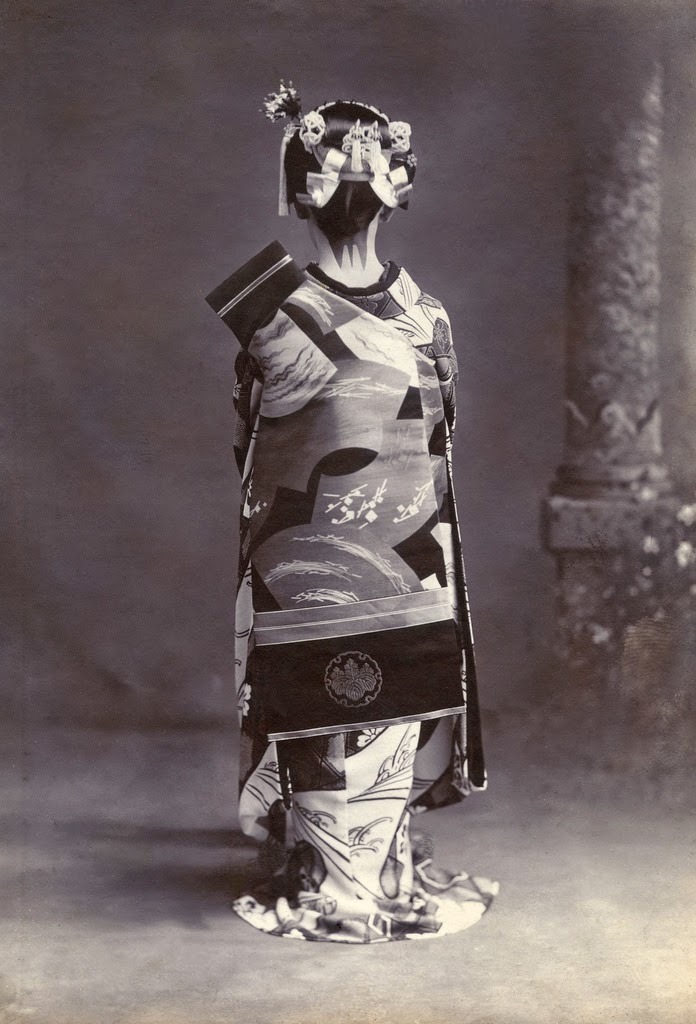
An Osaka Maiko in Ceremonial Dress, 1910′s / src: retro-vintage-photography

Maiko (apprentice Geisha) from Kyoto wearing their distinctive Darari Obi (dangling obi) and Hikizuri Kimono, which have full hems that trail after the wearer, 1931
(source: Nationaal Archief / Het Leven magazine)
 un regard oblique