images that haunt us
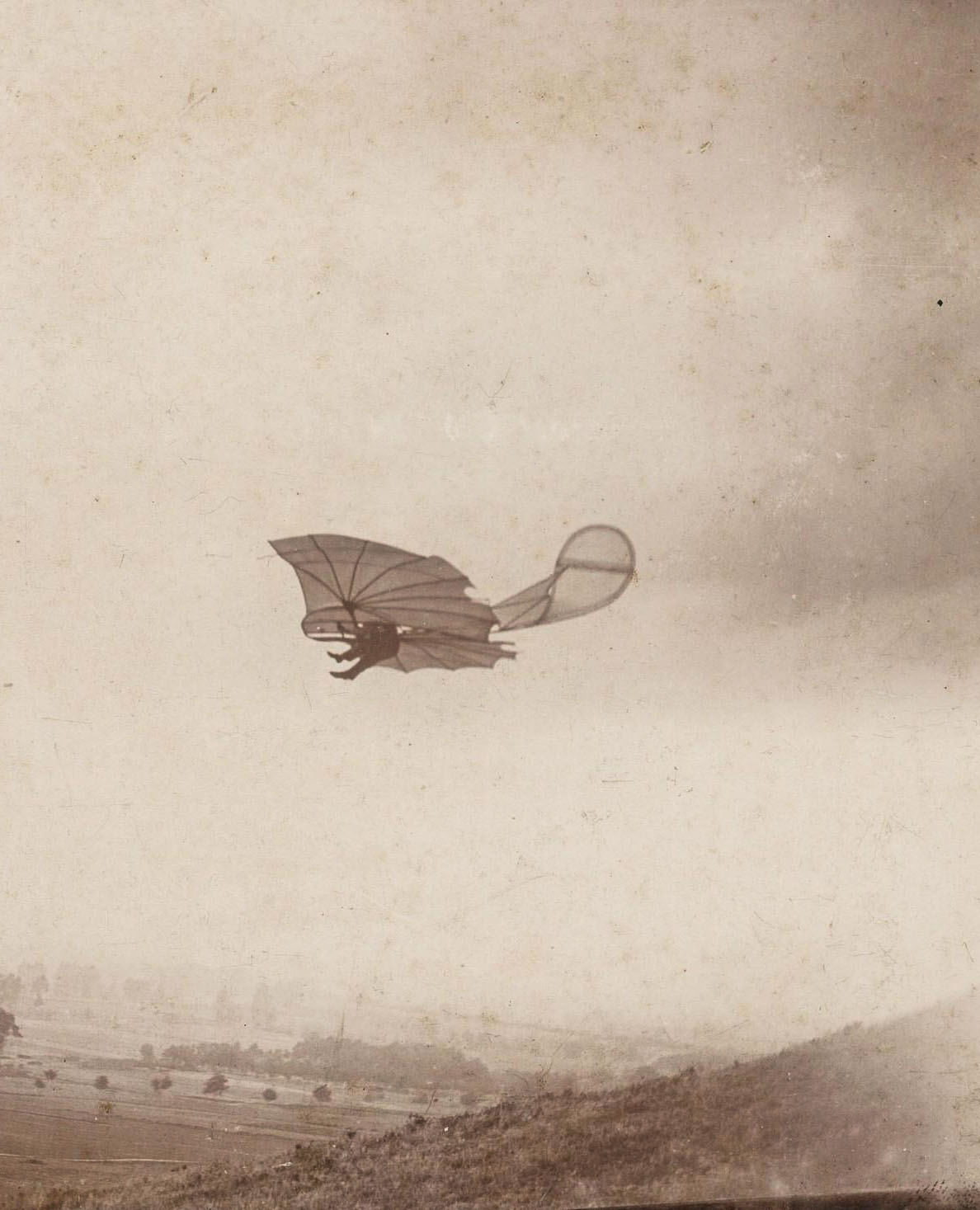
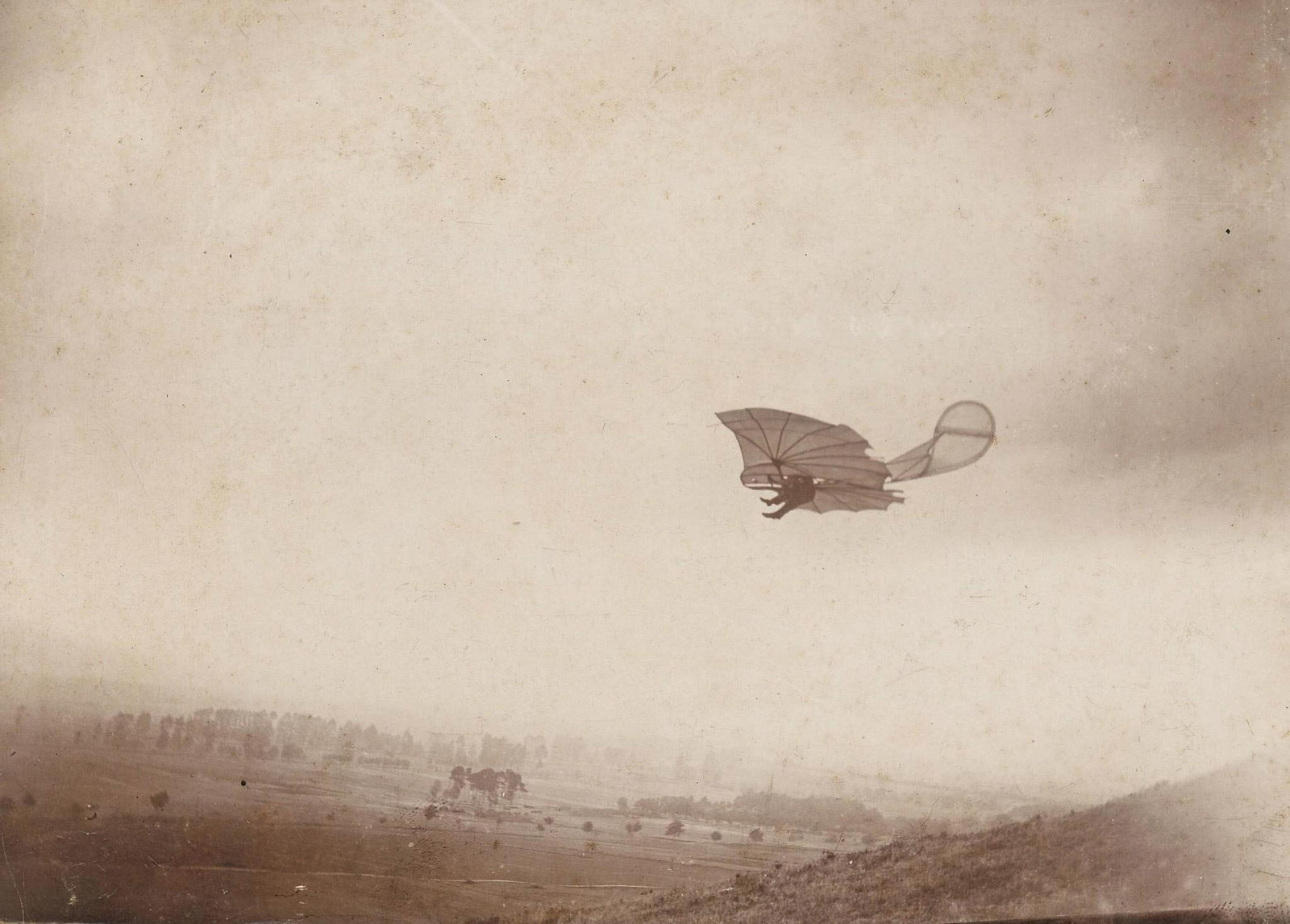
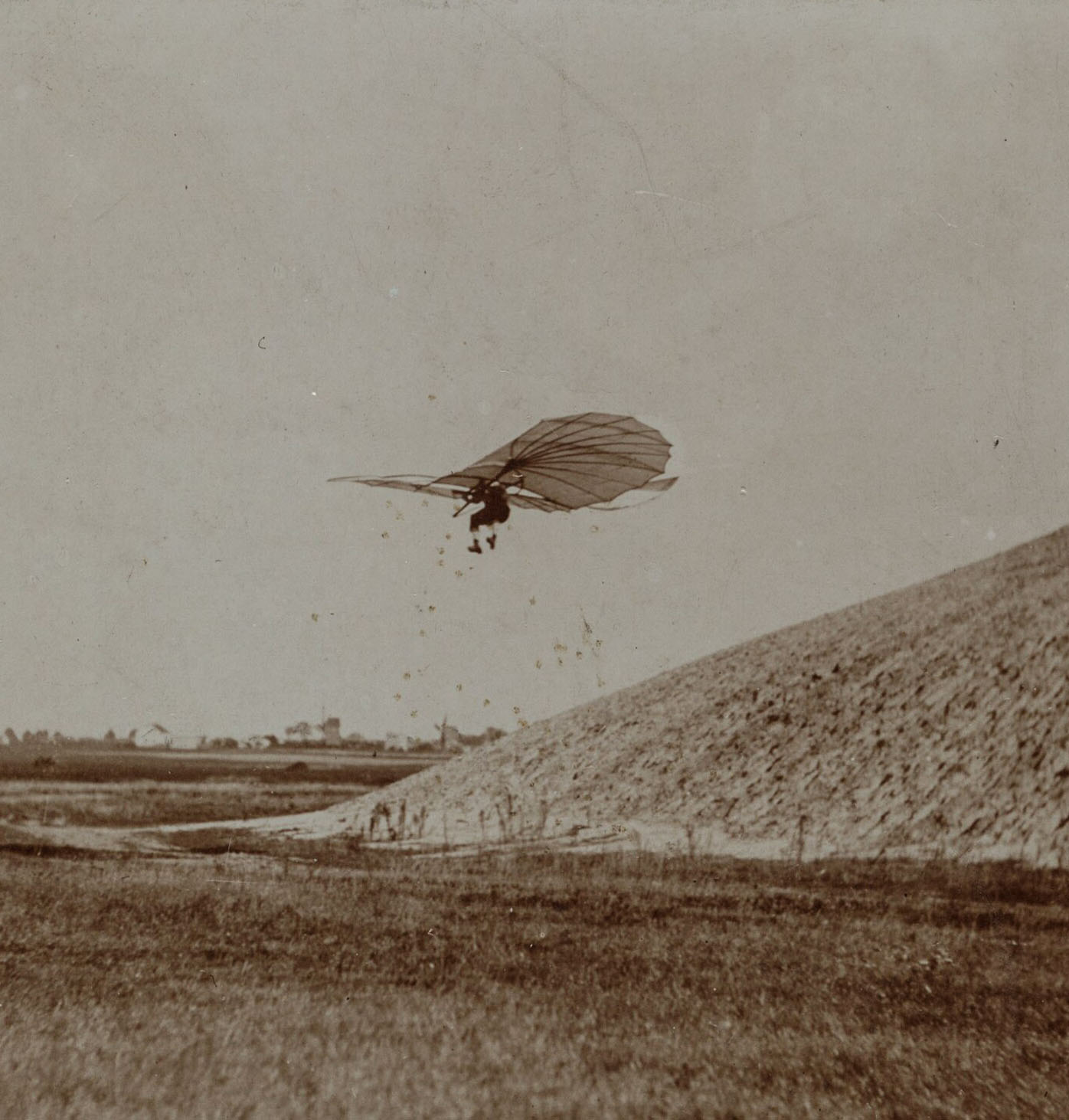
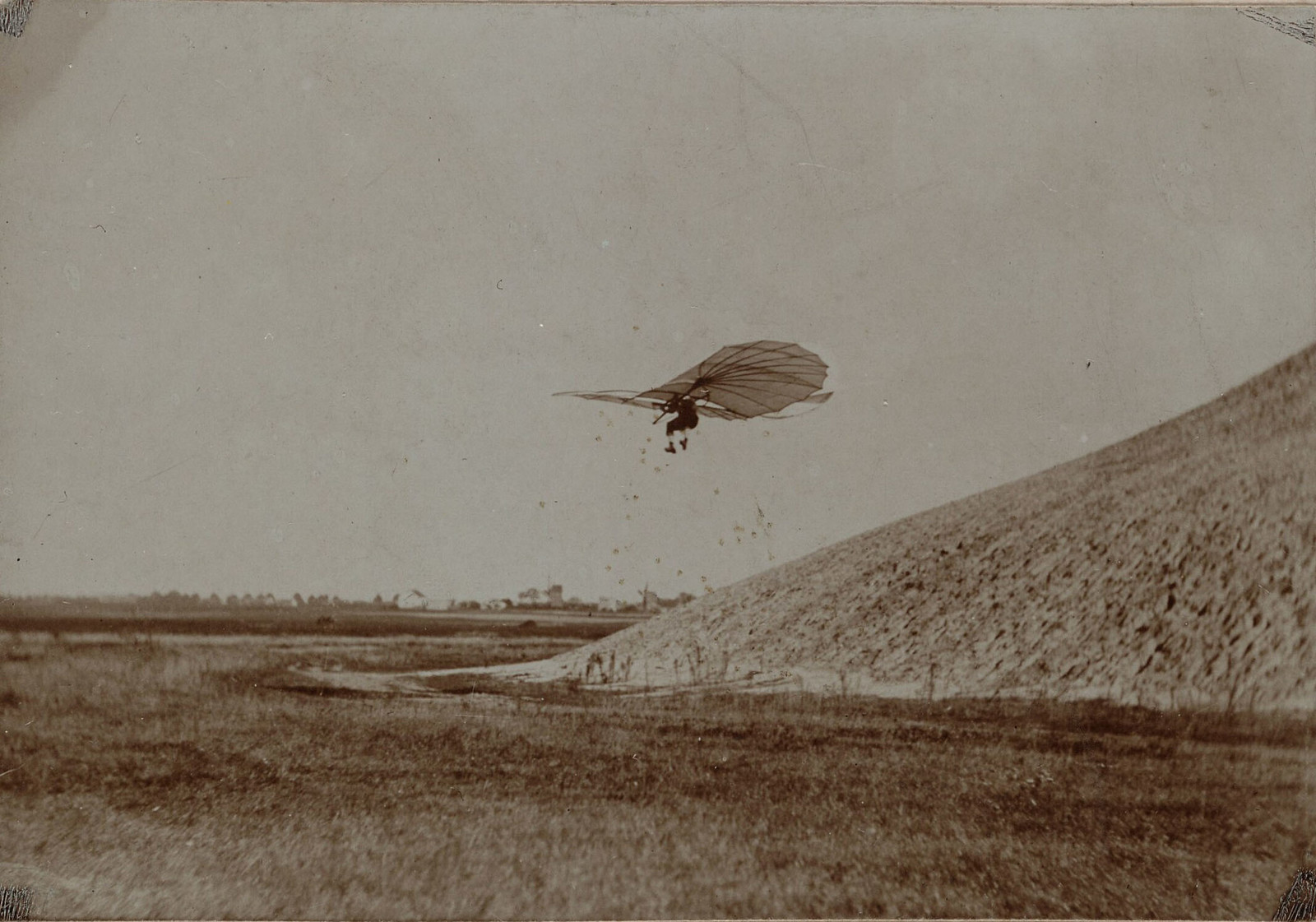
Alex Krajewski (Court photographer of Prince Aribert von Anhalt, active in Berlin, 1890s). Otto Lilienthal flying one of his gliding planes near Berlin, Rhinower Berge, Germany, 1893. Vintage collodion paper print. Mounted to original ornamental board
The evolution of photography and aviation shares interesting similarities. In 1884, Ottomar Anschütz began capturing images of storks in flight, marking the first momentary snapshots in the history of photography. By 1890, he developed the “Tachyscope,” displaying sequential images of people and animals in motion, which gained popularity at the 1893 Chicago World’s Fair, highlighting advancements in transportation and industry through widely distributed photographs. In 1891, Otto Lilienthal initiated his flight experiments, lasting five years until his unfortunate death in 1896, due to a flight accident. During this period, photographers such as Ottomar Anschütz, Carl Kassner, Richard Neuhauss, and Alex Krajewski documented Lilienthal’s flights near Berlin. These images often circulated as photo postcards and served as crucial documentation for Lilienthal. Unfortunately, the glass negatives of Lilienthal’s photographs, archived in the Deutsches Museum in Munich, were destroyed during WWII. This particular image, part of a series by Alex Krajewski capturing Lilienthal’s flights in the Rhinow Hills near Berlin, is exceptionally rare, with only eight images from this series preserved in the photo archives of the Otto Lilienthal Museum in Anklam. (source: Bassenge Auktion 123)




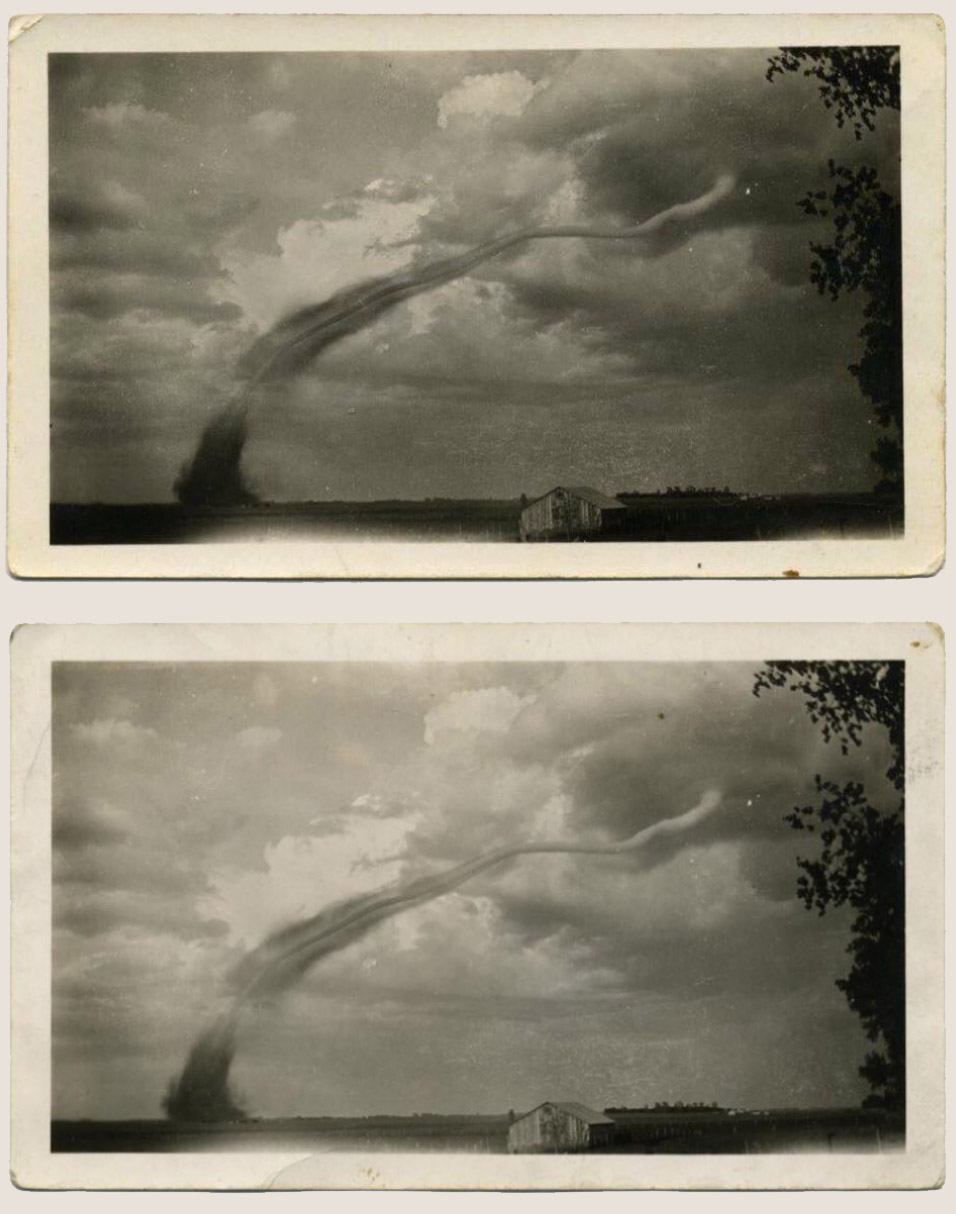
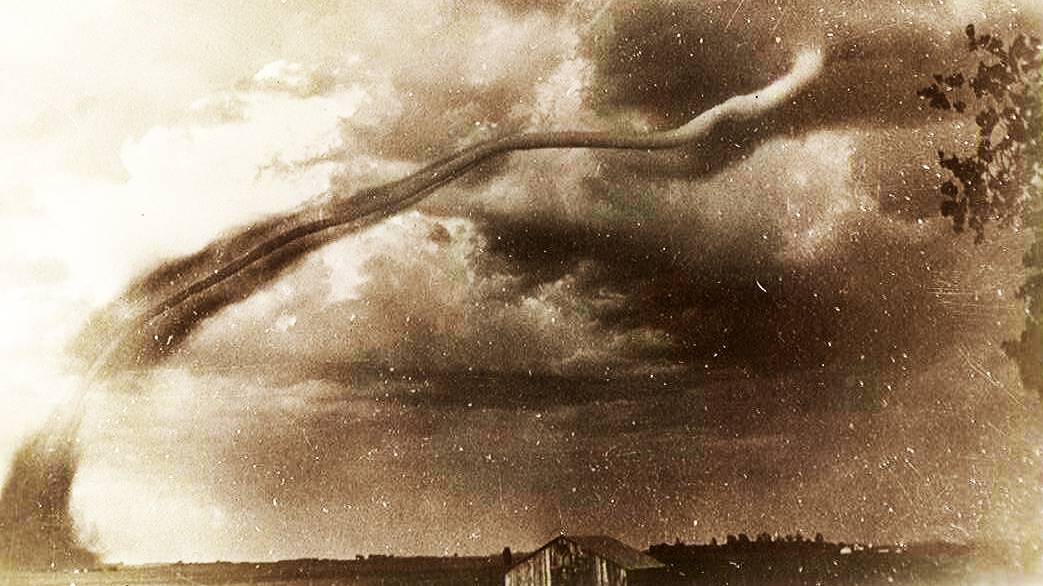
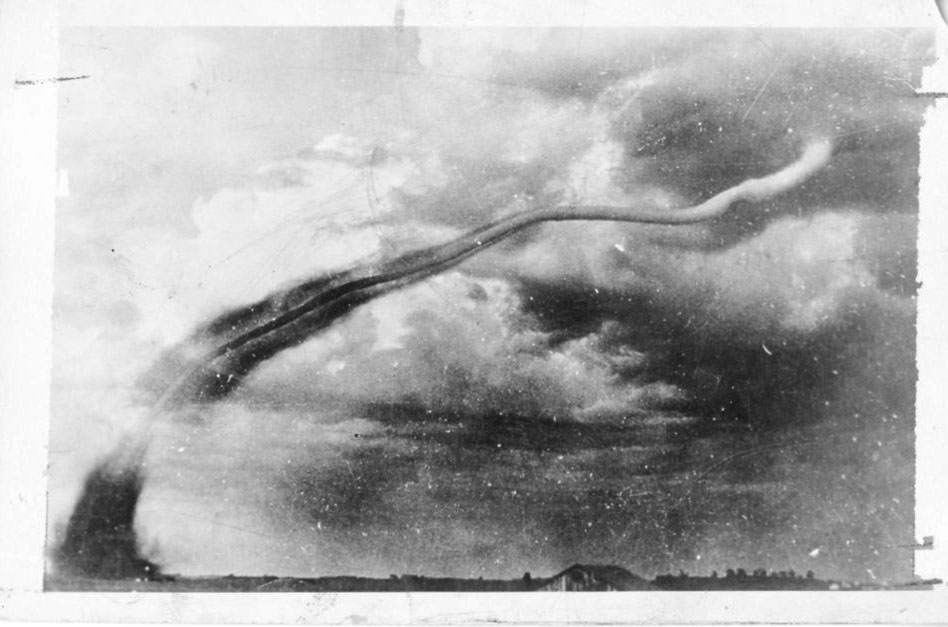
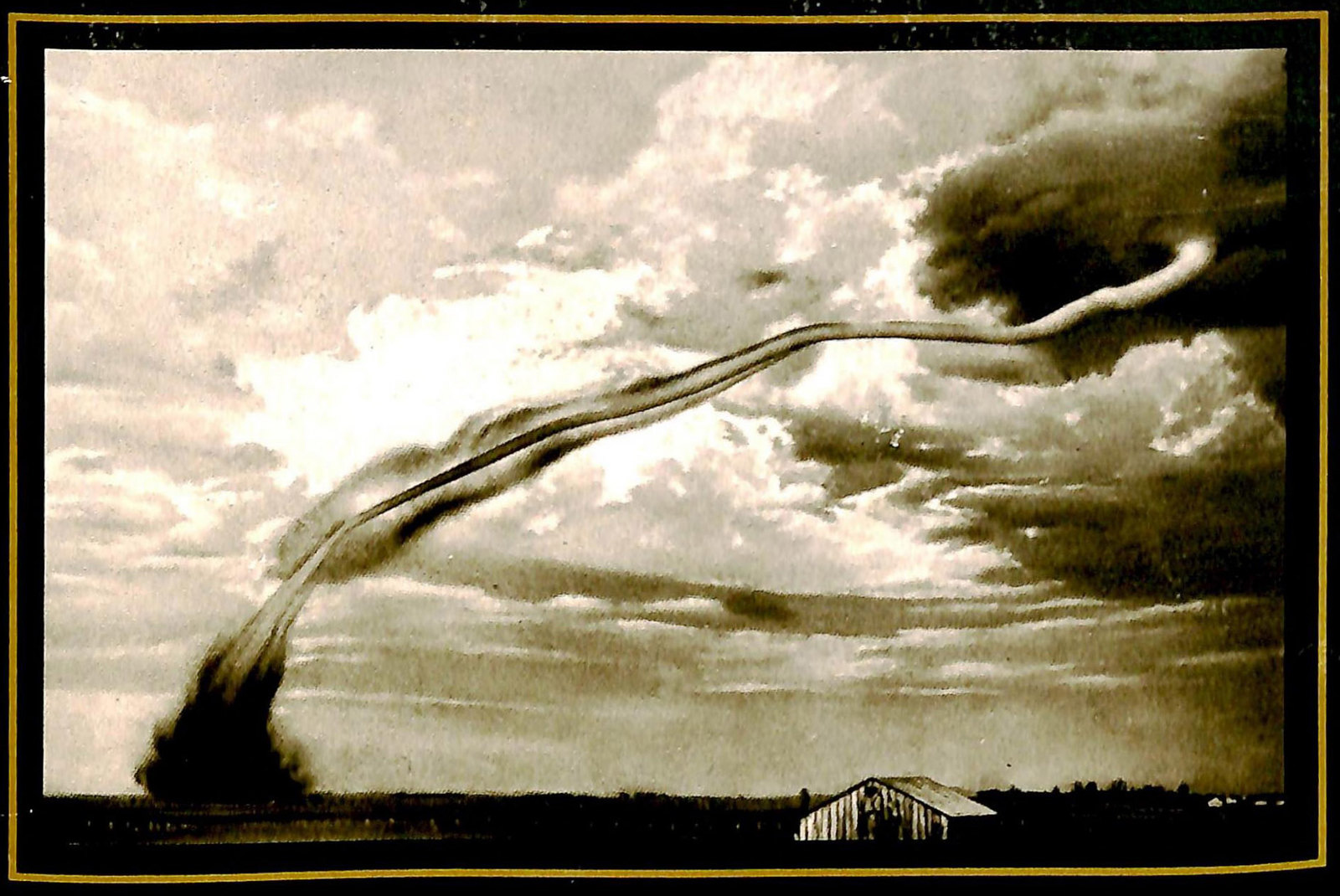
Two theories: the second tornado snapshot (on the bottom) had a Canedy’s Camera Shop 1927 date stamp on the verso. Canedy’s was in South Dakota and sold local souvenir snapshots (Bad Lands, Black Hills, etc…) between the 1920s – 1940s. It is also probable that when 15-year old Lucille Handberg took this photo her neighbor, who was an engineer, recognized its importance and sent copies to scientists around the country and these could be two of those. text adapted from source : Billy Parrot
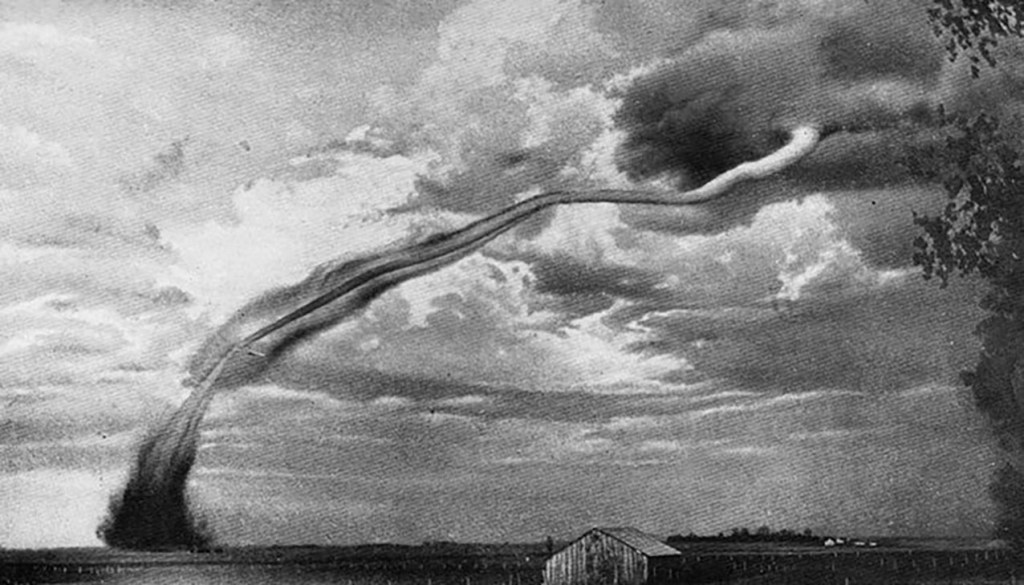
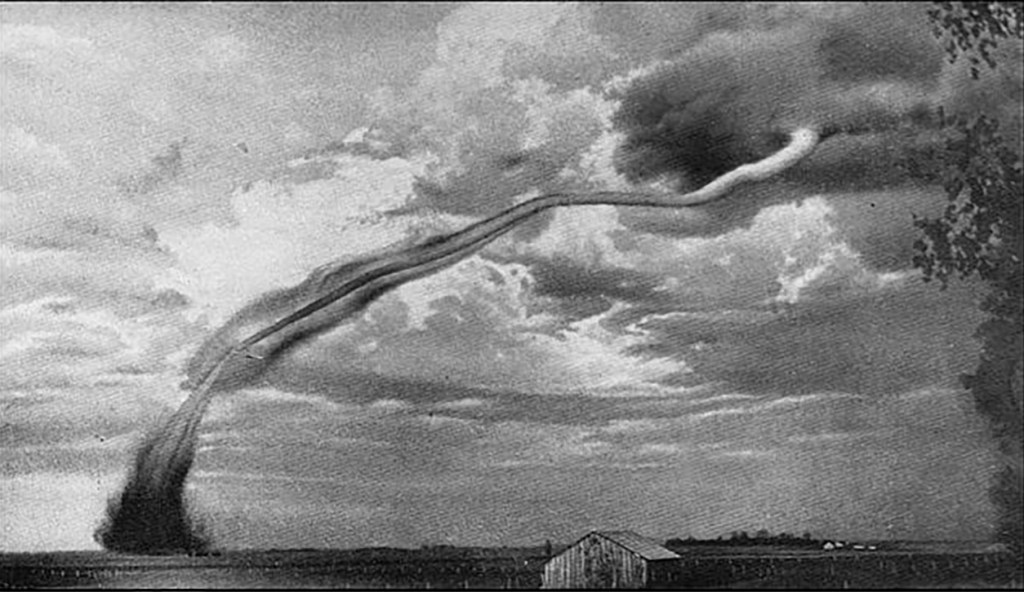
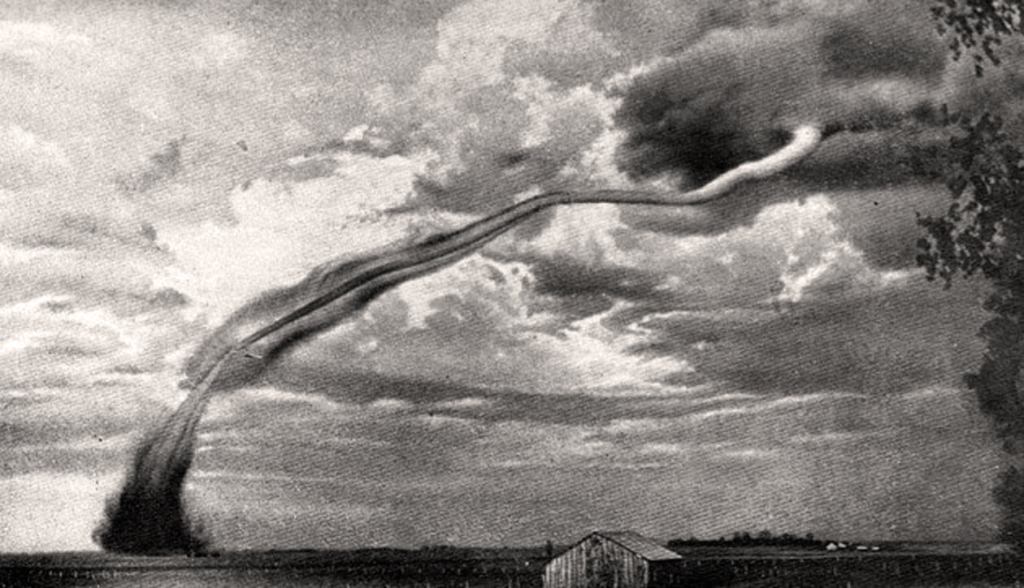
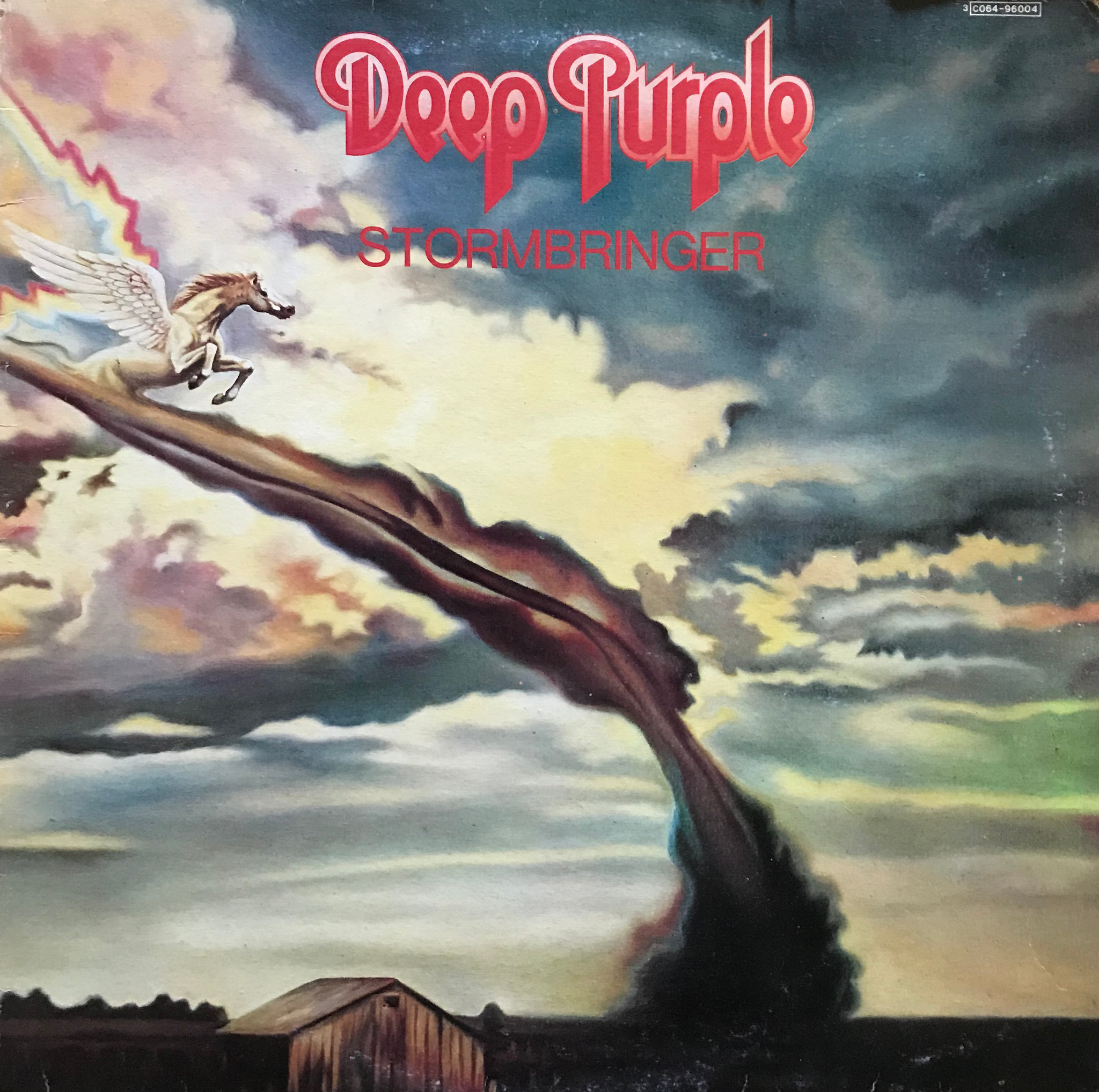
The images above this line are most probably scanned from newspapers of the time, we were not able to find the original source. The second image is from The Gallery of Natural Phenomena, where you can read more about the circumstances in which the photo was shot. [x]
Only the image below can be reached on the Library of Congress.
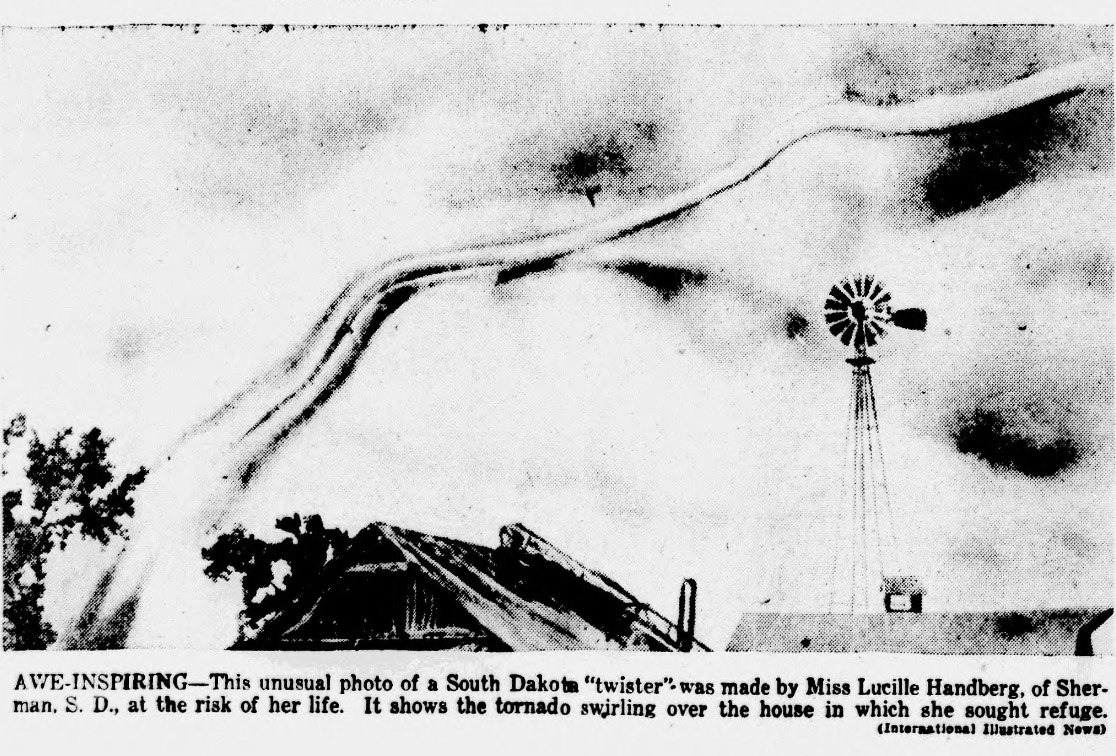
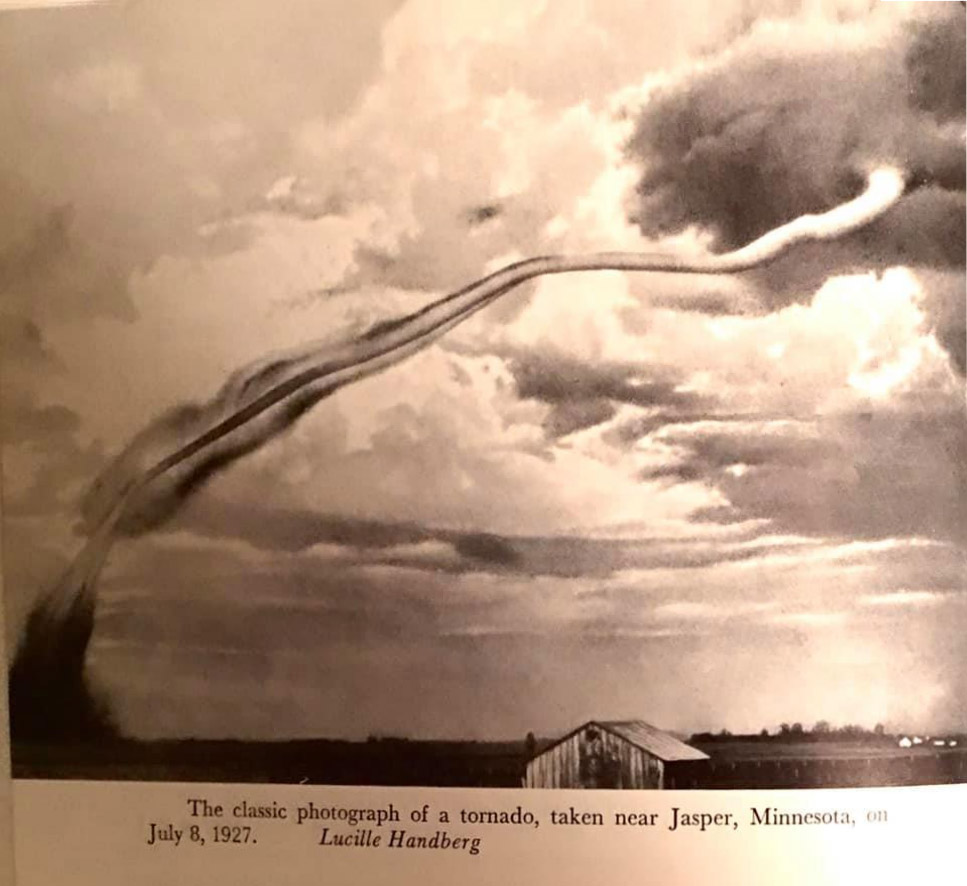
Controversy arises : Jasper tornado of 1927 is, according to South Dakota Public Broadcasting (based on information from Siouxland Heritage Museums), the Sioux Falls tornado of 1932…
… view two images below.





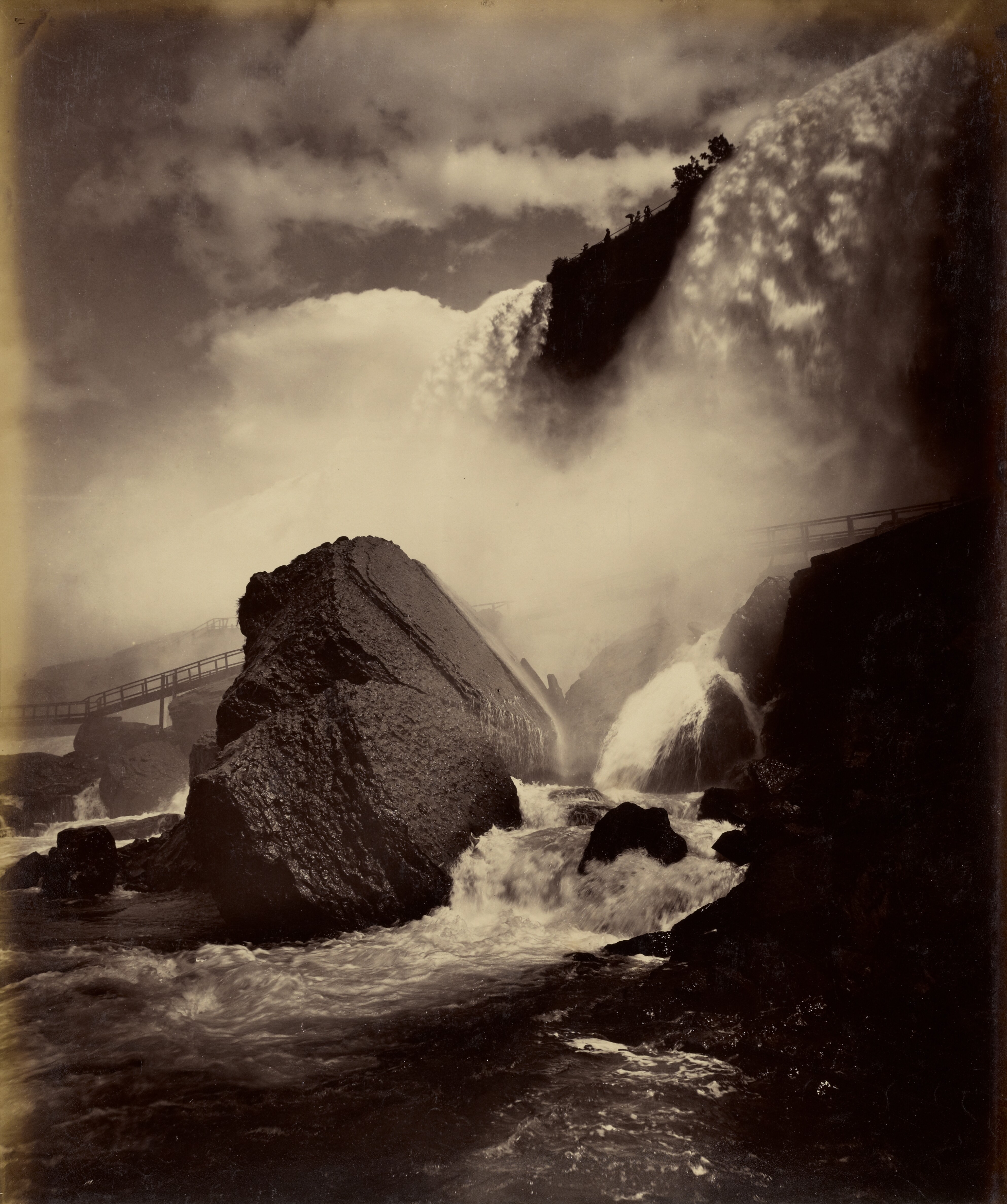
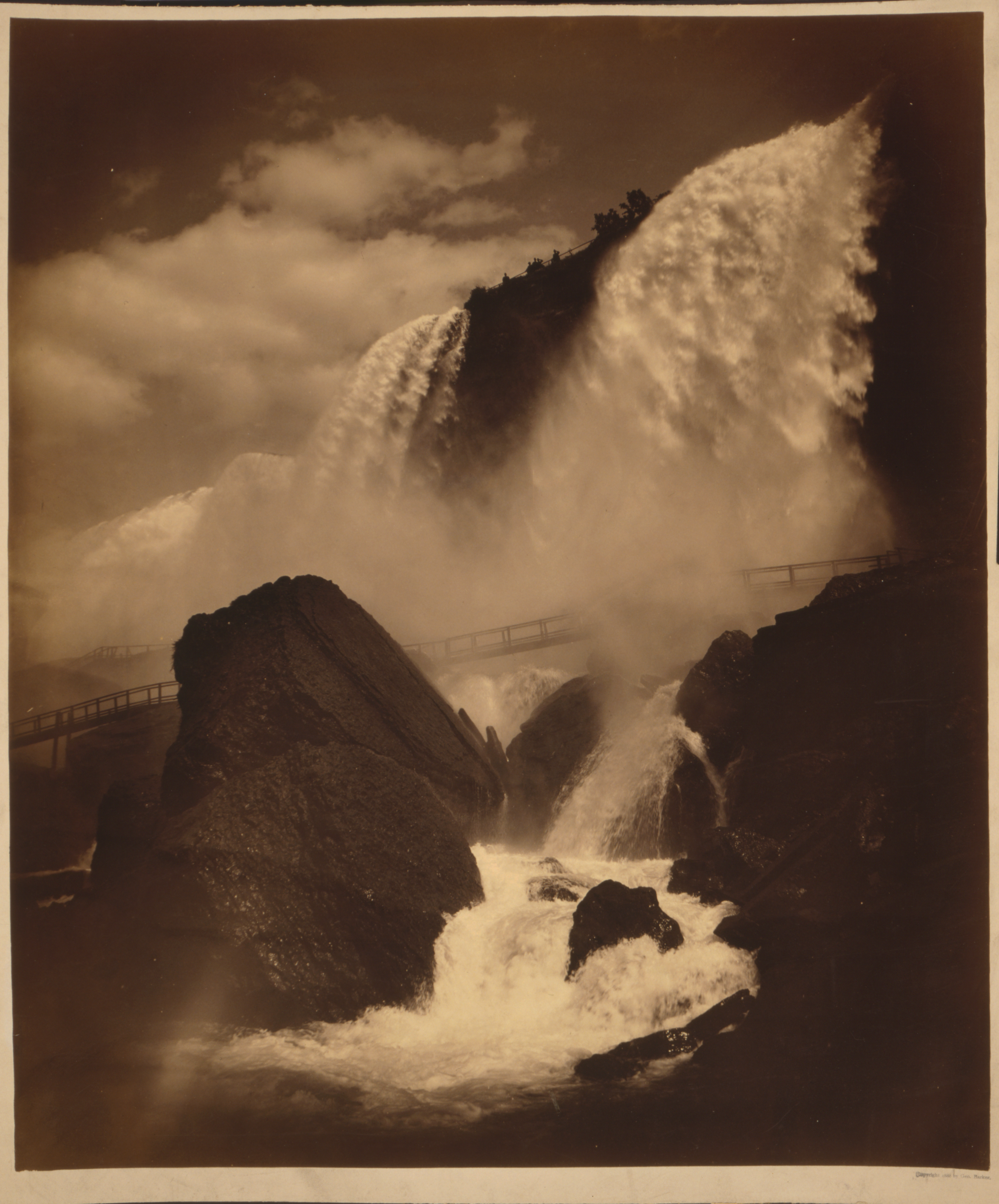
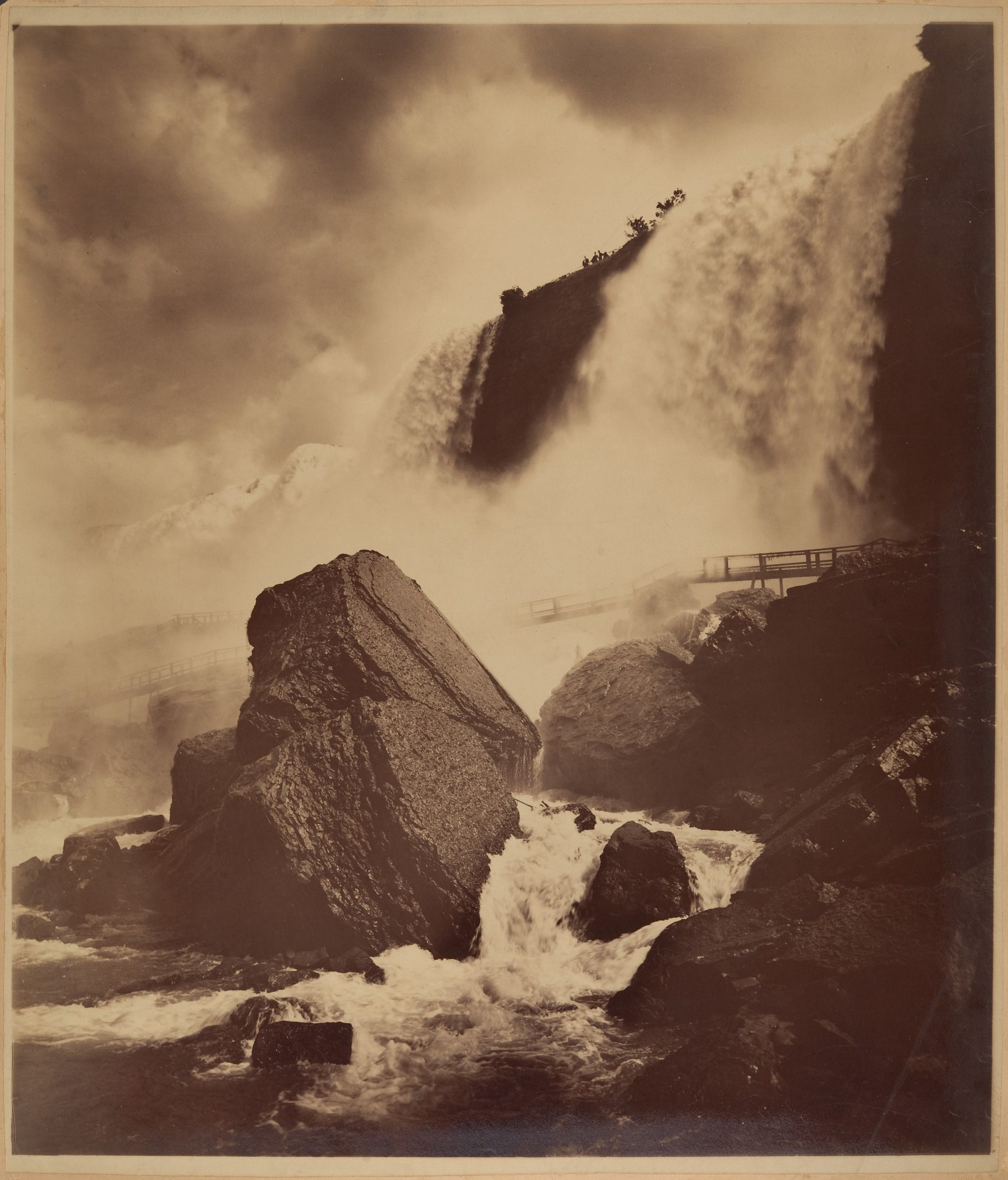
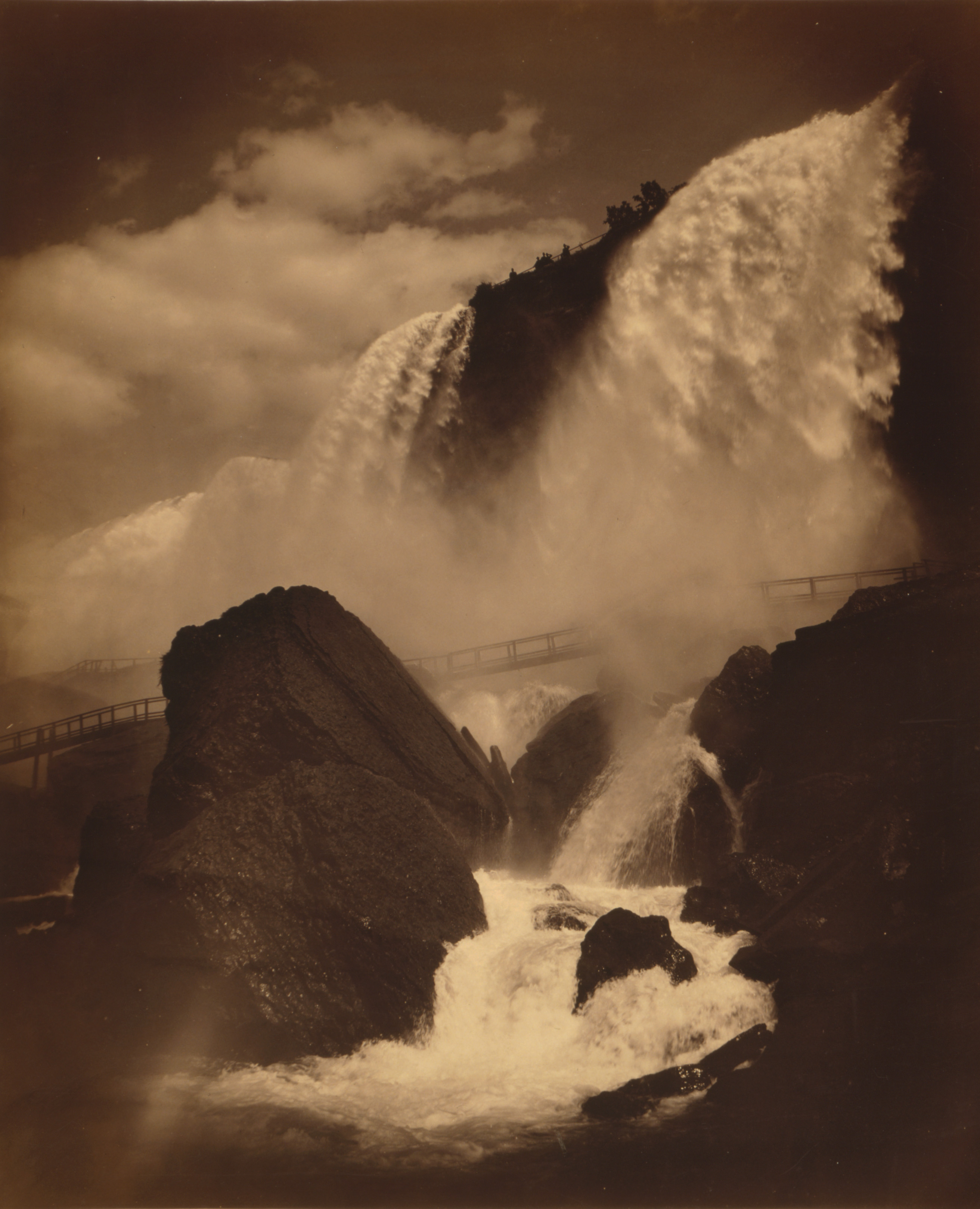
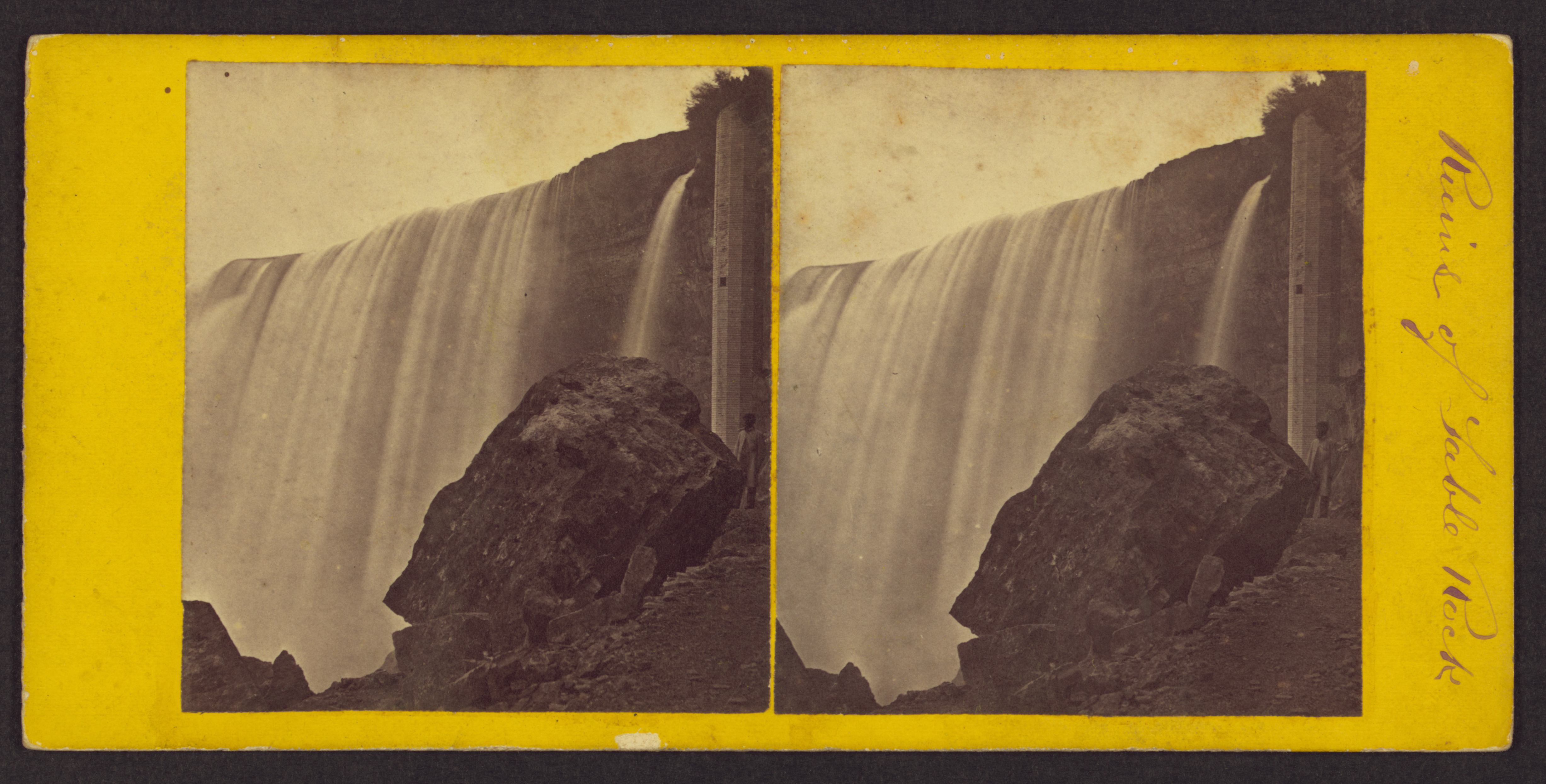
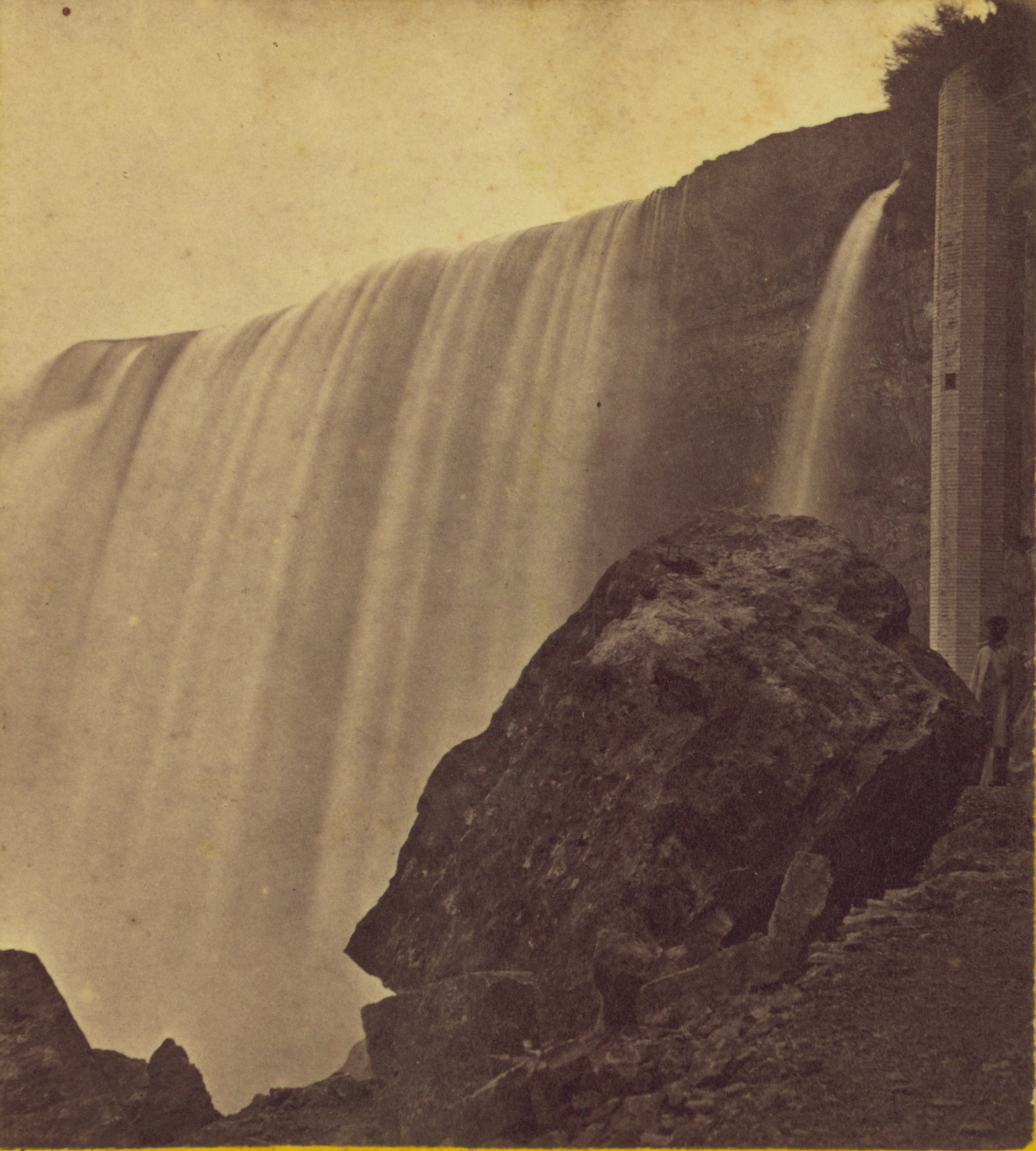
This Image is hosted in four American museums; three of them (Library of Congress, Getty Museum and The Metropolitan Museum of Art) acknowledge the authorship to George Barker. According to The Nelson-Atkins Museum of Art [x] this photograph is Nielson’s. In their website there is a mention to the photographer’s logo on back: “H.F. Nielson, Manuf. of all kinds of / Paper & Glass Views / Niagara Falls.”
Though the commercial market for large-scale landscape views was limited in the late 19th century, a small group of talented and savvy photographers found a lucrative niche in this genre. Herman F. Nielson, who lived most of his life in Niagara, New York, specialized in majestic tourist views of Niagara Falls. Here, Nielson depicts the American Falls (Luna Falls and Bridal Veil Falls) and the Rock of Ages. This view, or a slight variant, was reproduced in a popular guidebook at the time.
“New View Manufactory,” Niagara Falls Gazette 30:16 (October 10, 1883): n.p.
quoted from The Nelson-Atkins Museum of Art [x]


 un regard oblique