Berg and Hoeg · herstory in a box

Marie Hoeg casually posing in her woolen underwear. Photo: Berg & Hoeg ca. 1895-1903. Glass plate negative
Marie Hoeg casually posing in her woolen underwear (back). Photo: Berg & Hoeg ca. 1895-1903
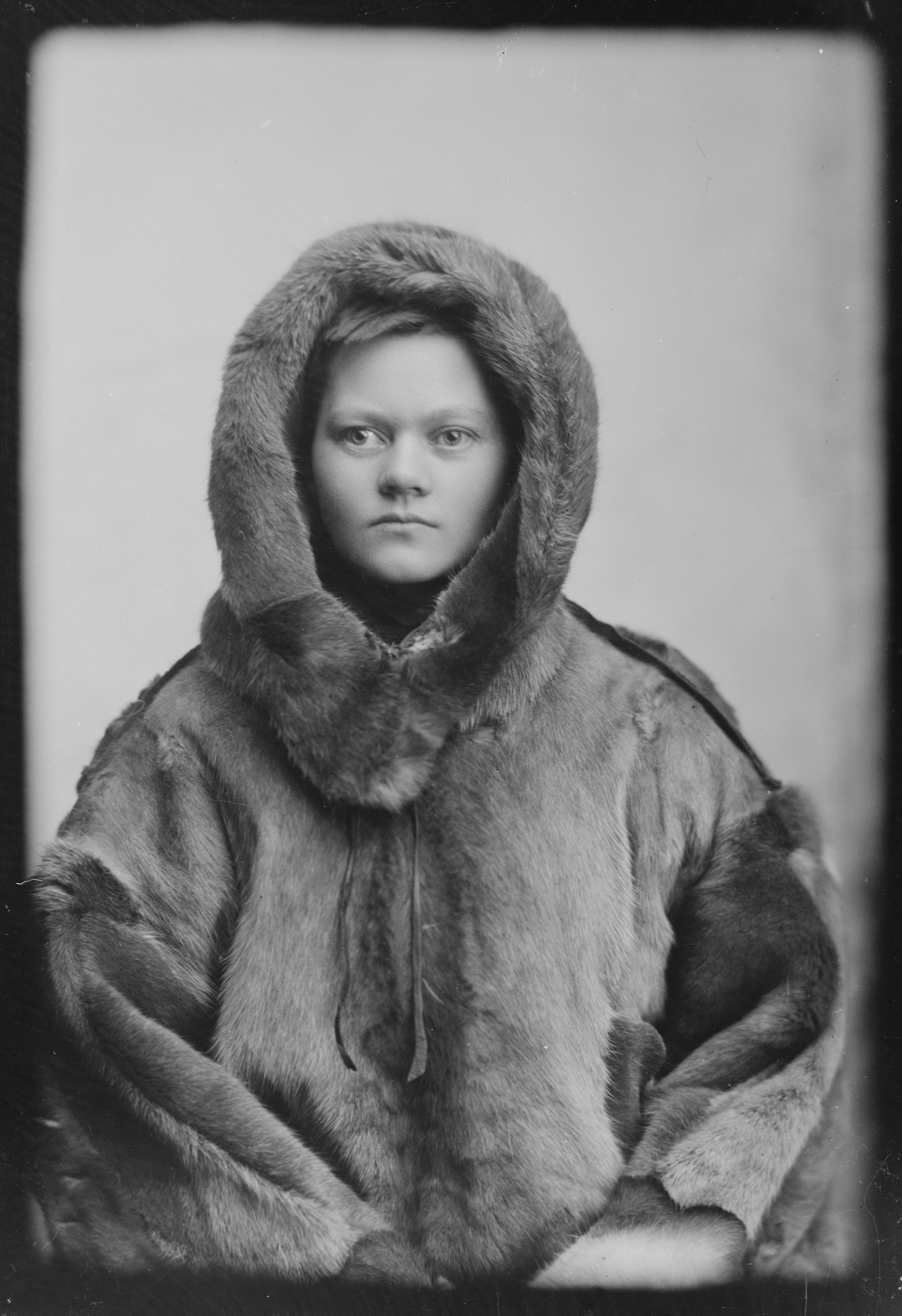
Marie Høeg posing as an Arctic explorer (Portrett av Marie Høeg i selskinnspels med hette). Photo: Berg & Hoeg ca. 1895-1903
Marie Hoeg as a young soldier with a sword (Marie Høeg i undertøy, som soldat med sverd). Photo: Berg & Hoeg ca. 1895-1903
Marie Høeg stuper kråke. Photo: Berg & Hoeg ca. 1895-1903 | src The Preus museum collection on Flickr
Med hendene på ryggen (Som soldat uten sverd)Photo: Berg & Hoeg ca. 1895-1903
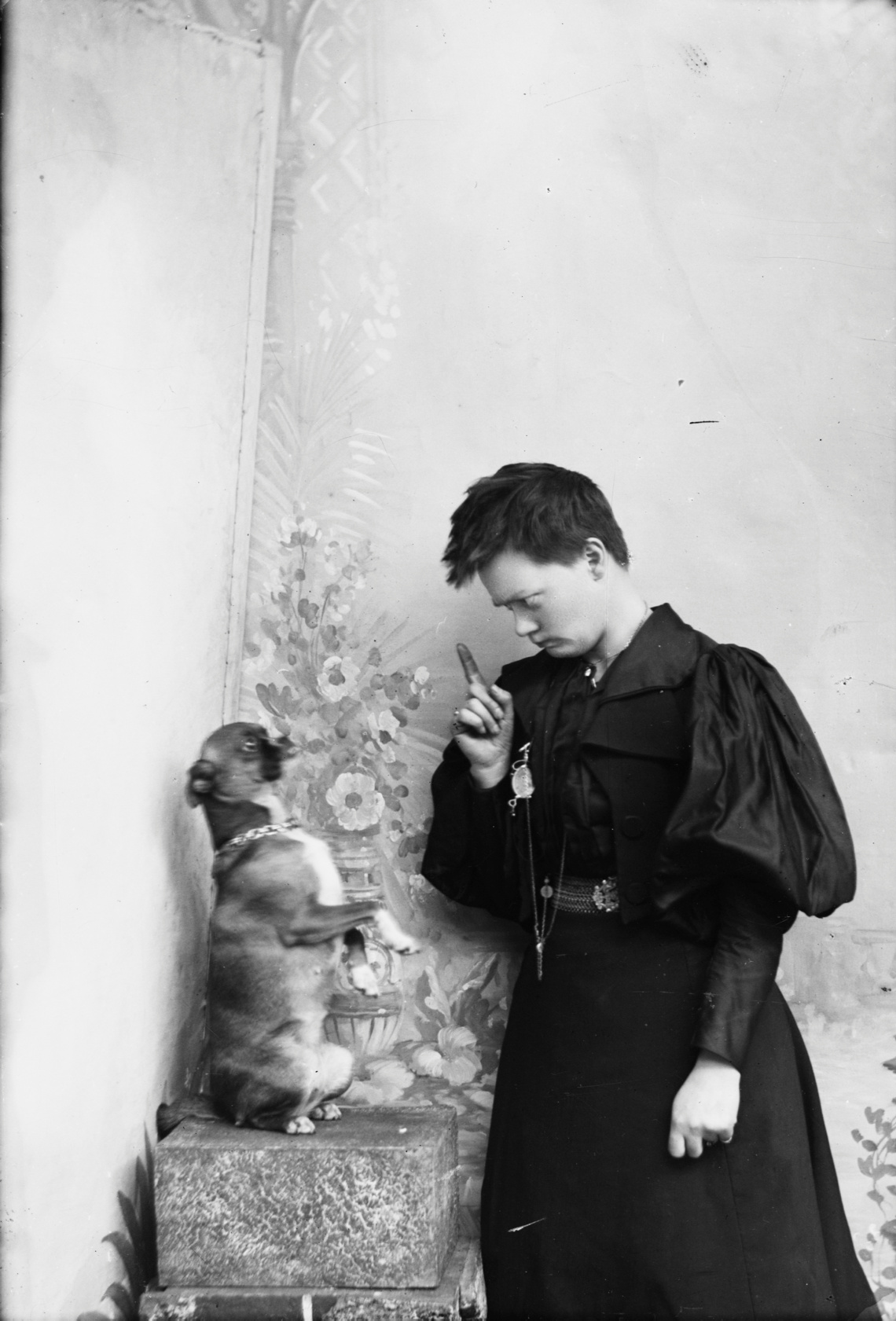
Marie Hoeg scolds the dog Tuss. Photo: Berg & Hoeg ca. 1895-1903. Glass plate negative
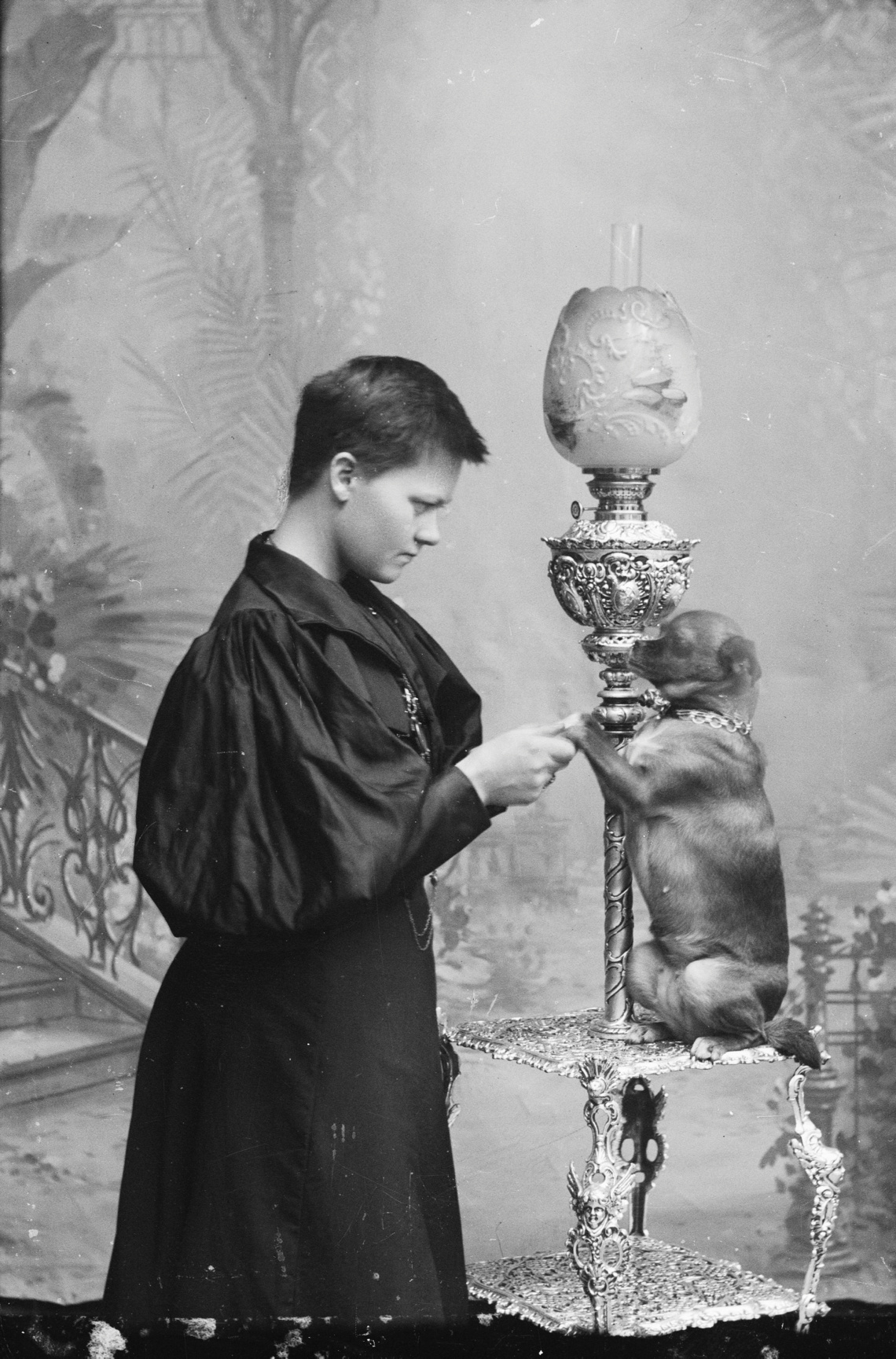
Marie Høeg greeting her dog Tuss (Marie Høeg hilser på hunden Tuss). Photo: Berg & Hoeg ca. 1895-1903. Glass plate negative
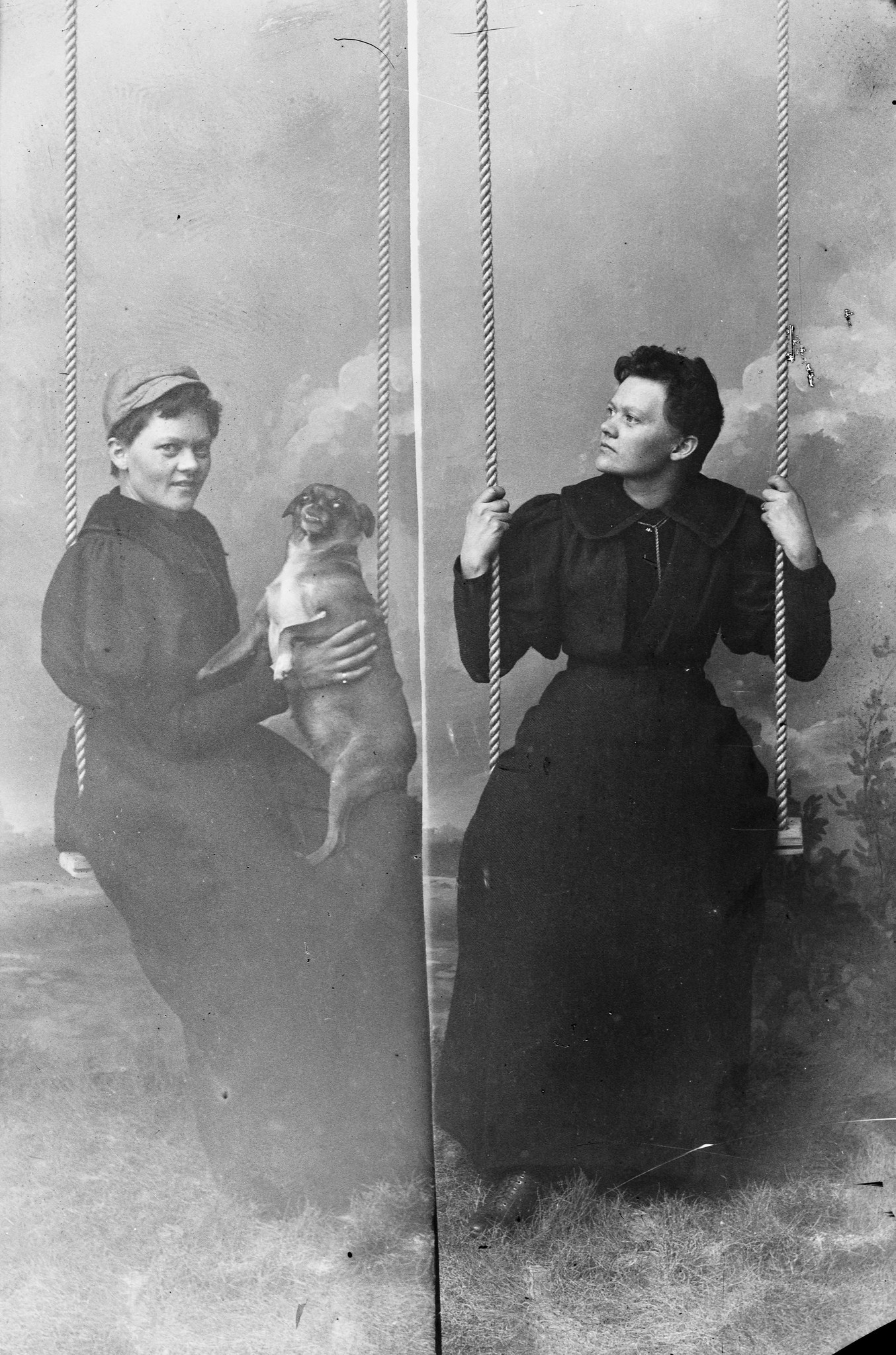
Composite photograph, Marie Høeg sitting on a swing (with Tuss. the dog). Two motives put together on one glass plate

In a box marked “private”, an amazing collection of glass plates were found 30 years ago, amongst the remnants of the two portrait photographers Marie Høeg (1866-1949) and Bolette Berg (1872-1944).

In 1895, they established the Berg & Høeg photography studio in Horten, Norway, where they took portraits and views of Horten and surroundings and lived on the proceeds from sales. At that time, photography was seen as a decent and acceptable profession for women, as it was a profession that demanded a certain amount of aesthetic sense – as part of the female nature.

Horten was a naval base with the main shipyard for the Norwegian navy and had a strong flow of people who needed photographs for celebration and recollection. Perhaps that is how the two photographers understood by the very process of portraiture how important it is to stage oneself and to what a large degree that contributes to how we are perceived.

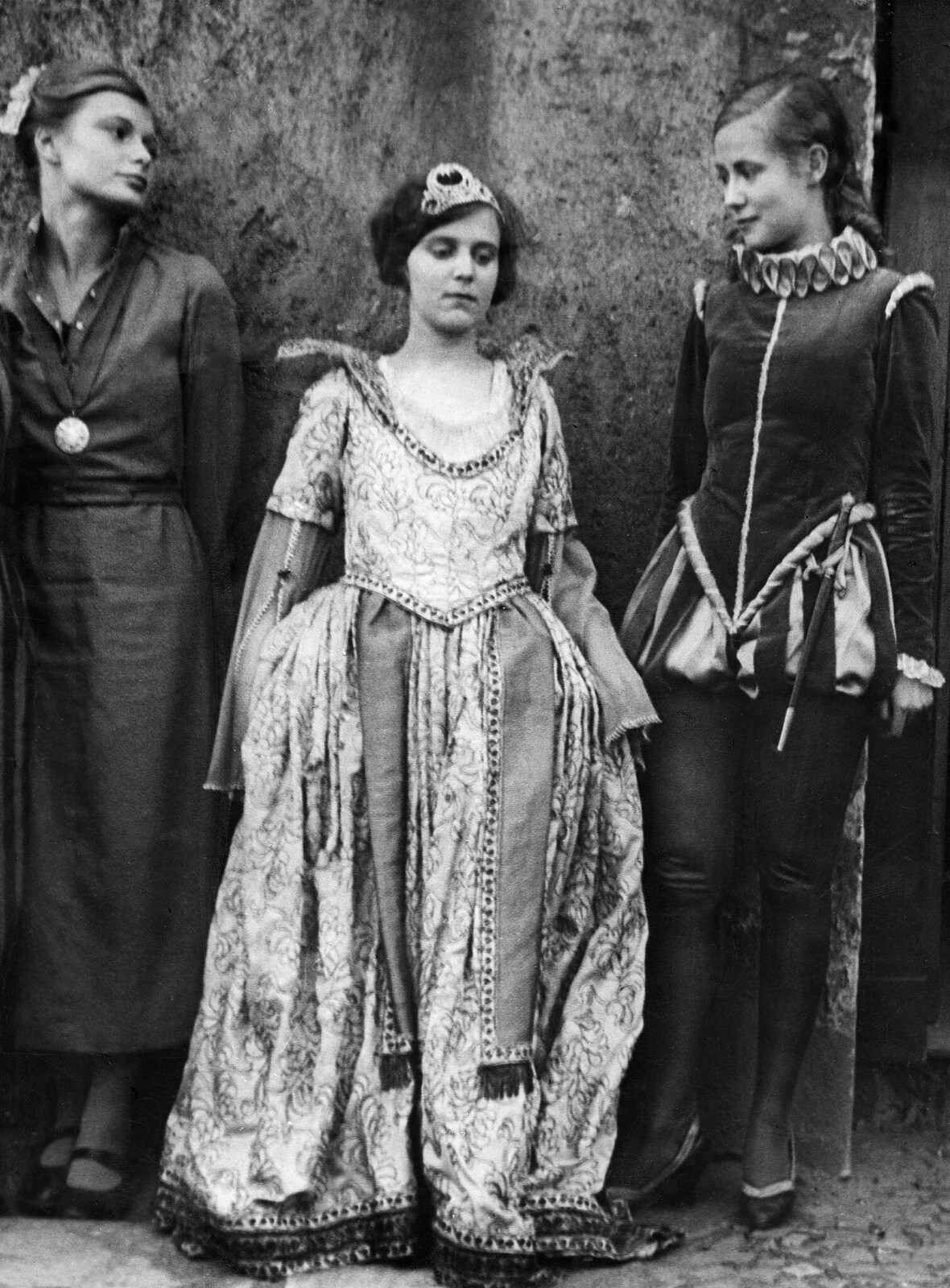
The Preus museum collection has 440 glass negatives from Berg & Høeg. Among the cartons in the 1980s were discovered some on which had been written “private.” It is not unusual that photographers also have private photographs in their archives. But these were not ordinary keepsake pictures. They indicate that the two photographers, especially Marie Høeg, experimented with various gender roles.

Imagine the fun they must have had, cross-dressing and playing! At the same time, the images are deeply serious, as they reflect upon the expectations and attitudes towards women, and their lack of rights and freedom. We know that Høeg was the extrovert and started groups to fight for women’s rights. Bolette Berg was less in the public view. However, she must have been back of the camera in many of these photographs, which have attracted international notice.

We find several such boundary-breaking photographic projects in Europe and America around 1900. They correspond with women’s battle for full civil rights and the right to define their own identity. So these photographs are a part of an international history – or herstory – that has meaning and recognition value for all women, including now.
All images are digital reproductions of the original glass plates. Some of the plates have cracks and damages, left visible in the reproductions.

All images and text retrieved from The Preus museum on Flickr
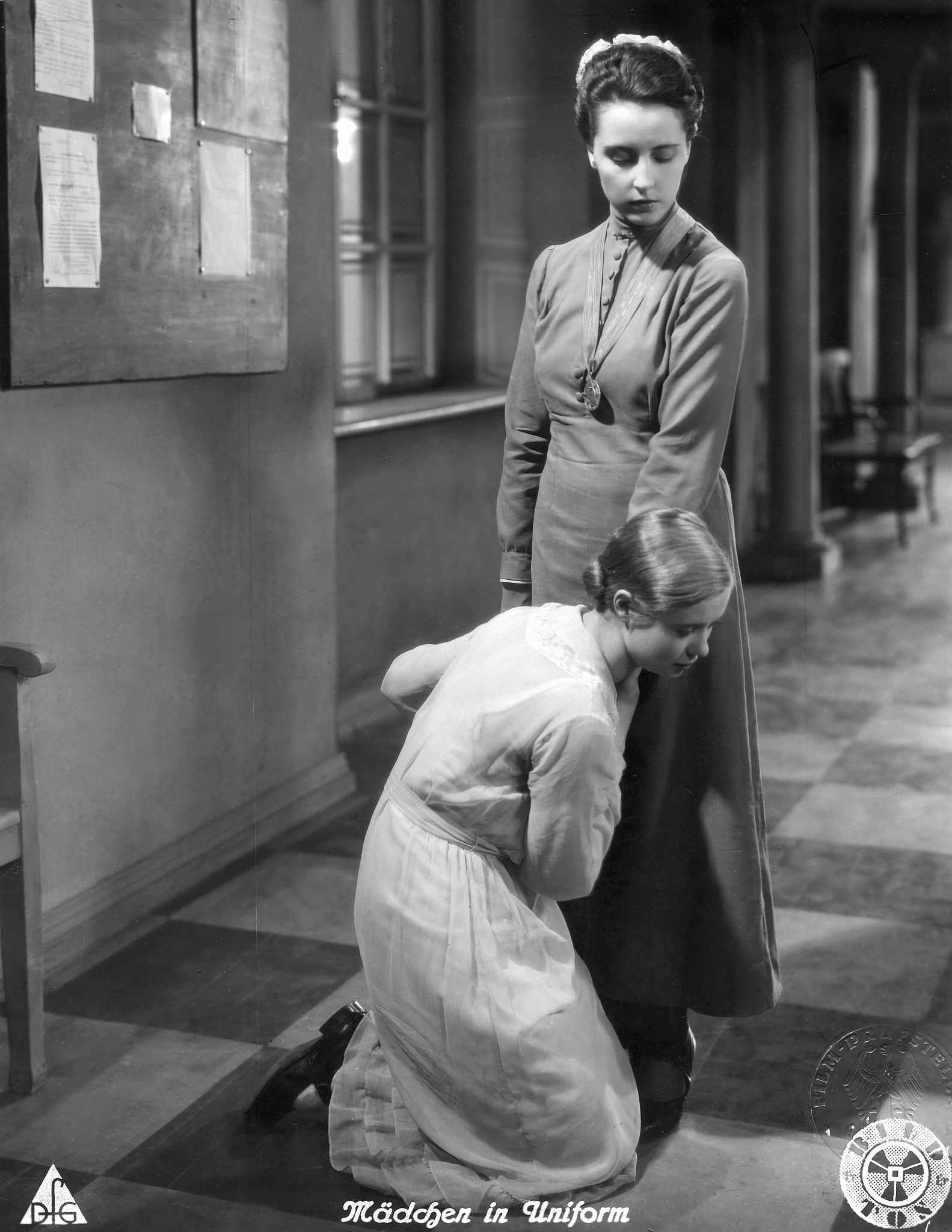
Mädchen in Uniform · 1958

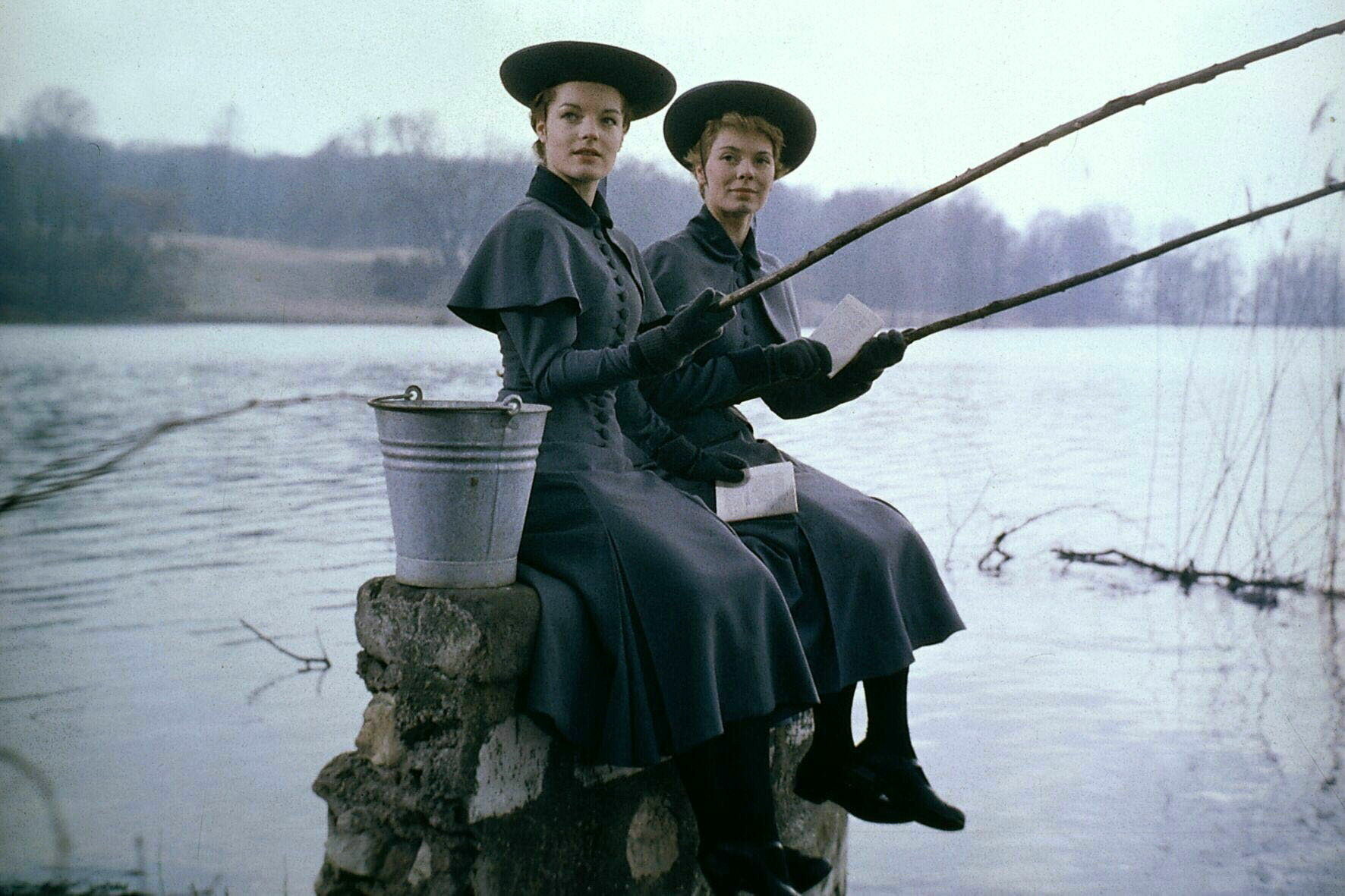
Manuela von Meinhardis (Romy Schneider) genießt die Ruhe beim Angeln mit ihrer Klassenkameradin Johanna (Paulette Dubost). Ein seltener Spaß abseits vom strengen Mädchenstift (1958) | src getty images

Manuela von Meinhardis (Romy Schneider) enjoys the peace and quietness while fishing with her classmate Johanna (Paulette Dubost). A rare fun away from the strict girls’ school. Scene from Mädchen in Uniform, directed by Geza von Radvanyi (Germany / France, 1958). Produced by: Central Cinema Company Film (CCC)

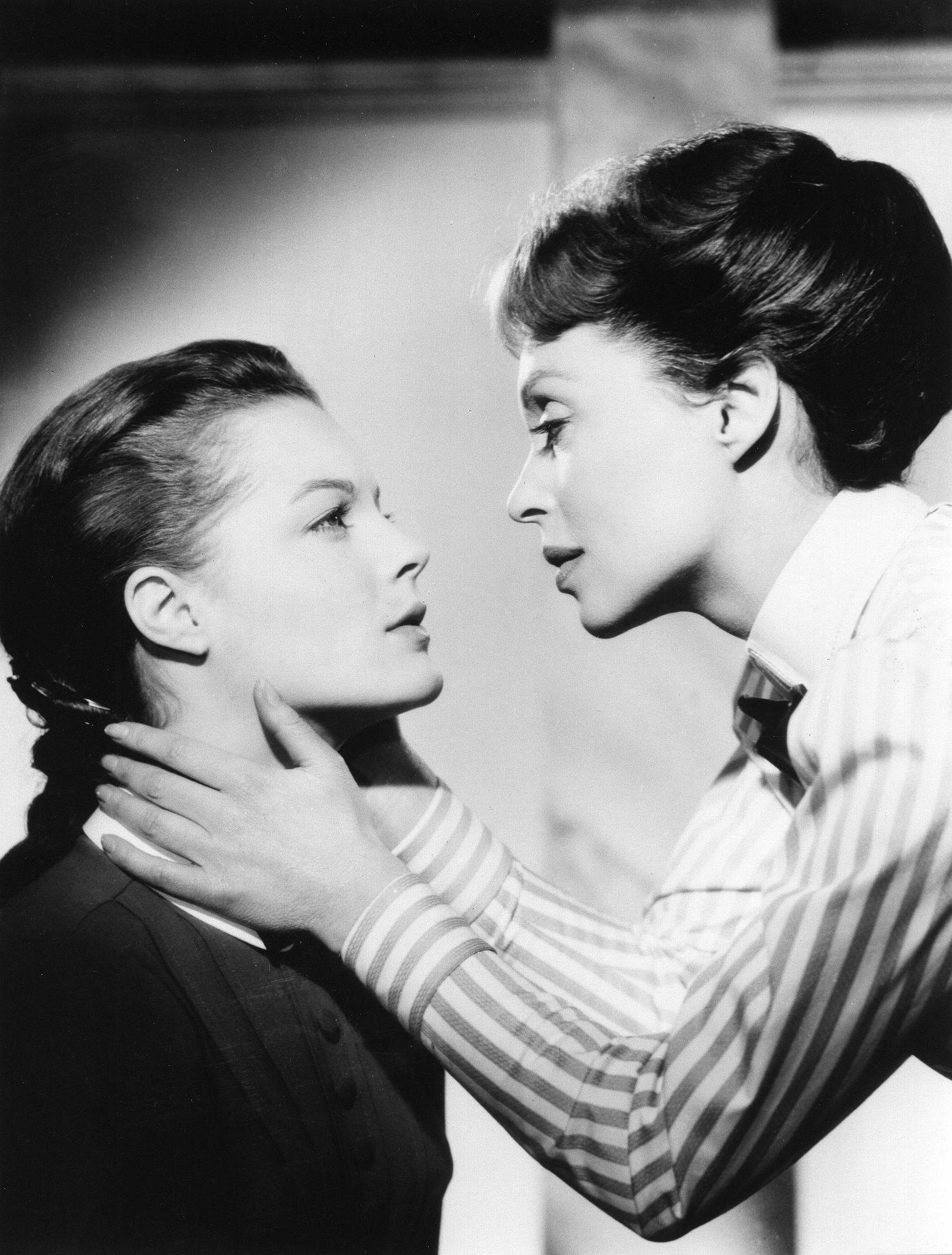
Romy Schneider with Lilly Palmer. Scene from the movie ‘Mädchen in Uniform’; directed by Geza von Radvanyi (Germany / France, 1958). Produced by Central Cinema Company Film | src getty images

Gluck · Hannah Gluckstein

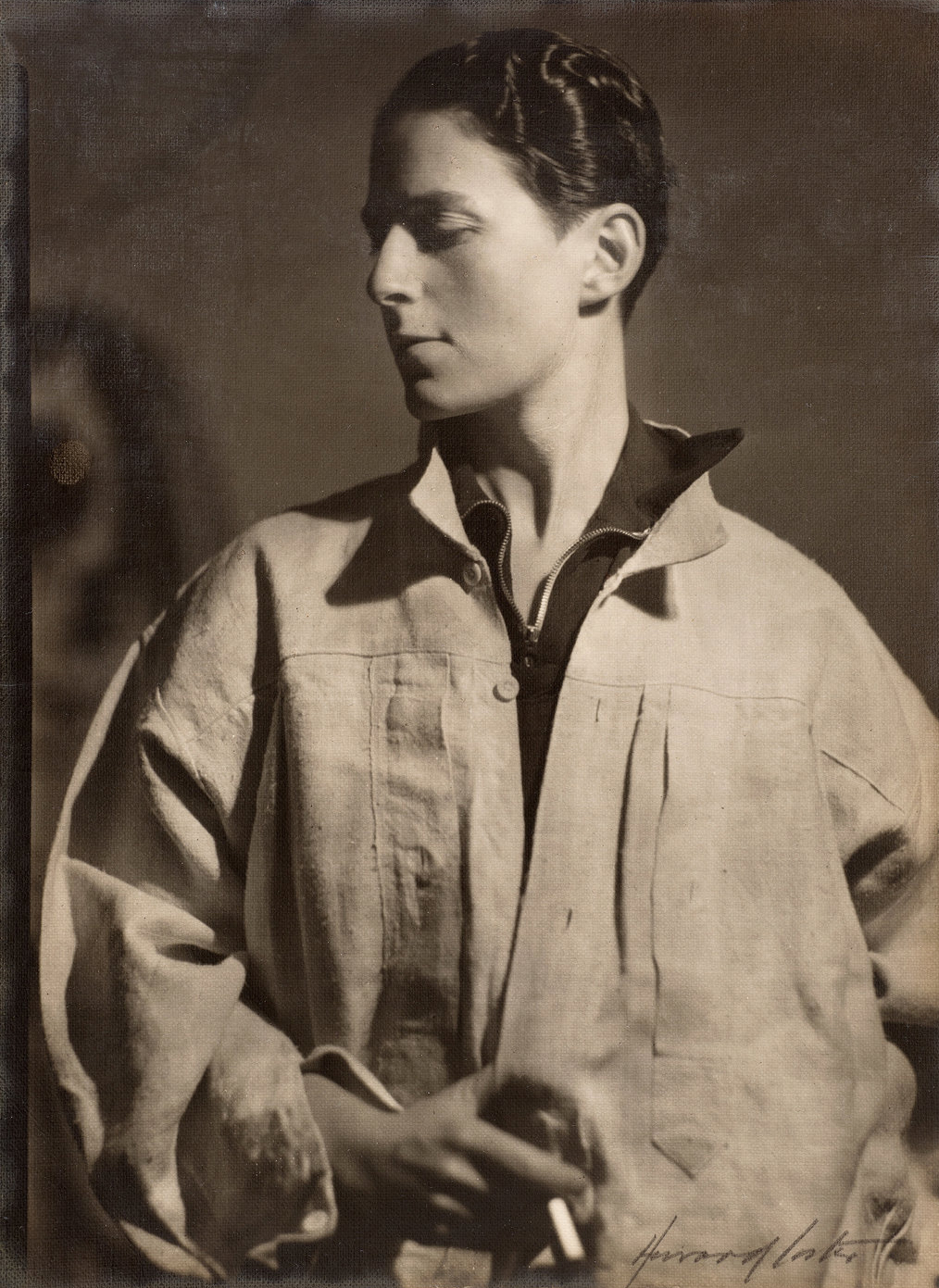
Howard Coster ~ Gluck [Hannah Gluckstein (1895–1978)], ca. 1932 © Fine Arts Society | src BBC ~ A Queer Eye
Gluck (Hannah Gluckstein) (1895-1978) by unknown. From : Gluck : Art and Identity | src NYT
Romaine Brooks ~ Peter (A Young English Girl), 1923-1924, oil on canvas SAAM-1970.70_2

Peter depicts British painter Hannah Gluckstein, heir to a catering empire who adopted the genderless professional name Gluck in the early 1920s. By the time Brooks met her at one of Natalie Barney’s literary salons, Gluckstein had begun using the name Peyter (Peter) Gluck. She unapologetically wore men’s suits and fedoras, clearly asserting the association between androgyny and lesbian identity. Brooks’s carefully nuanced palette and quiet, empty space produced an image of refined and austere modernity. ~ The Art of Romaine Brooks, 2016

Quoted from : Smithsonian American Art Museum (x)

Photo of Gluck by Howard Coster, 1932. Courtesy of The Fine Art Society | src Gluck: Art and Identity Review

Romaine Brooks · Portraits

Beatrice Romaine Goddard (1874-1970), known as Romaine Brooks ~ Au bord de la mer (At the seaside), 1914. Oil on canvas. | Franco-American museum of the Blérancourt castle via wikimedia commons
Beatrice Romaine Goddard (1874-1970), known as Romaine Brooks ~ Au bord de la mer (Autoportrait), 1914. Oil on canvas.
Romaine Brooks ~ Peter (A Young English Girl), 1923-1924, oil on canvas SAAM-1970.70_2

Peter depicts British painter Hannah Gluckstein, heir to a catering empire who adopted the genderless professional name Gluck in the early 1920s. By the time Brooks met her at one of Natalie Barney’s literary salons, Gluckstein had begun using the name Peyter (Peter) Gluck. She unapologetically wore men’s suits and fedoras, clearly asserting the association between androgyny and lesbian identity. Brooks’s carefully nuanced palette and quiet, empty space produced an image of refined and austere modernity. ~ The Art of Romaine Brooks, 2016

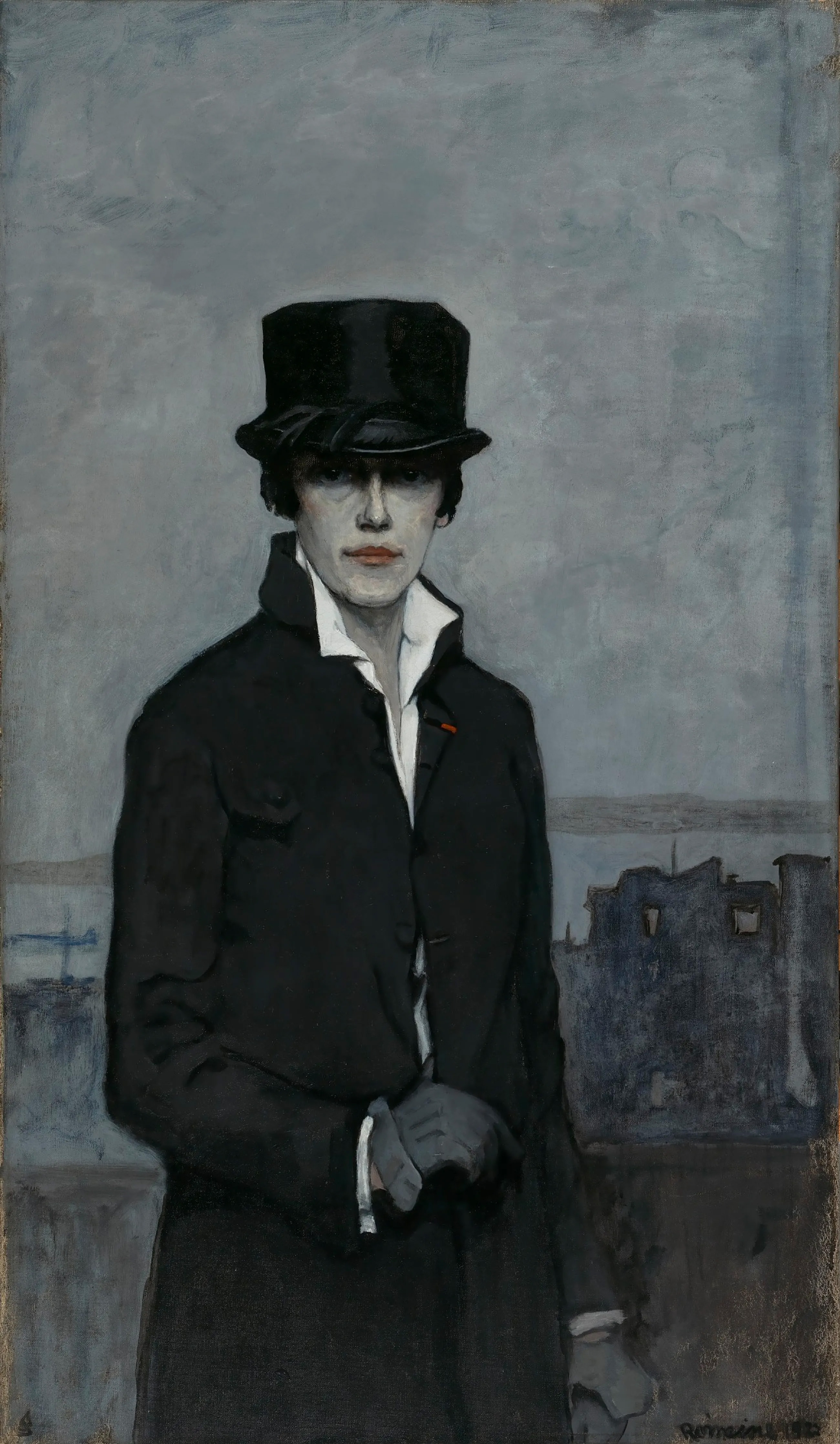
Romaine Brooks (1874-1970) ~ Self-Portrait, 1923. Oil on canvas. Smithsonian American Art Museum

With this self-portrait, Brooks envisioned her modernity as an artist and a person. The modulated shades of gray, stylized forms, and psychological gravity exemplify her deep commitment to aesthetic principles. The shaded, direct gaze conveys a commanding and confident presence, an attitude more typically associated with her male counterparts. The riding hat and coat and masculine tailoring recall conventions of aristocratic portraiture while also evoking a chic androgyny associated with the post–World War I “new woman.” Brooks’s fashion choices also enabled upper-class lesbians to identify and acknowledge one another. ~ The Art of Romaine Brooks, 2016

Romaine Brooks ~ Una, Lady Troubridge, 1924, oil on canvas SAAM-1966.49.6_2

Una Troubridge was a British aristocrat, literary translator, and the lover of Radclyffe Hall, author of the 1928 pathbreaking lesbian novel, The Well of Loneliness. Troubridge appears with a sense of formality and importance typical of upper-class portraiture, but with the sitter’s prized dachshunds in place of the traditional hunting dog. Troubridge’s impeccably tailored clothing, cravat, and bobbed hair convey the fashionable and daring androgyny associated with the so-called new woman. Her monocle suggested multiple symbolic associations to contemporary British audiences: it alluded to Troubridge’s upper-class status, her Englishness, her sense of rebellion, and possibly her lesbian identity. ~ The Art of Romaine Brooks, 2016

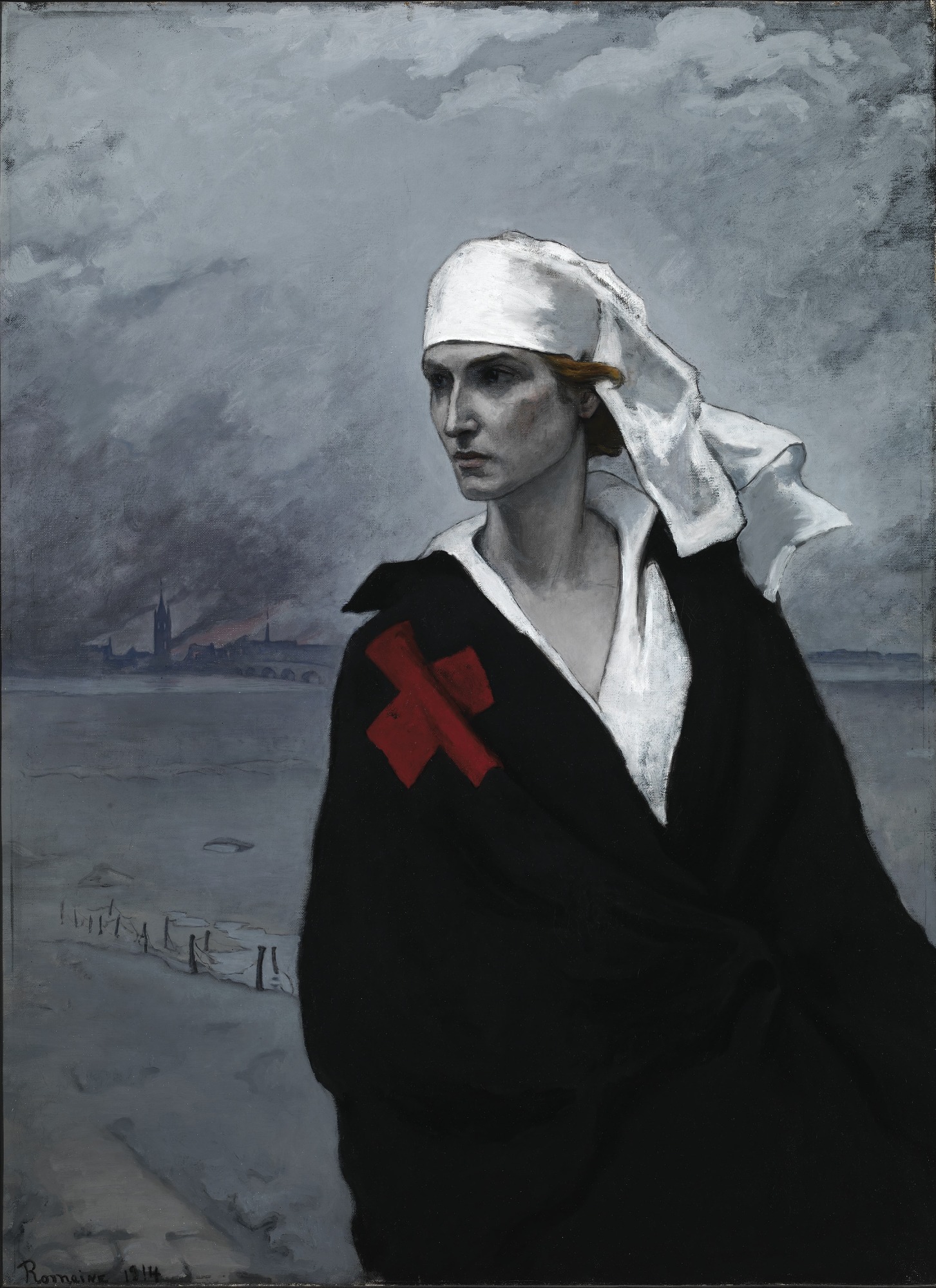
Romaine Brooks ~ La France Croisée, 1914, oil on canvas SAAM-1970.69_2

In La France Croisée, Brooks voiced her opposition to World War I and raised money for the Red Cross and French relief organizations. Ida Rubinstein was the model for this heroic figure posed in a nurse’s uniform, with cross emblazoned against her dark cloak, against a windswept landscape outside the burning city of Ypres. This symbolic portrait of a valiant France was exhibited in 1915 at the Bernheim Gallery in Paris, along with four accompanying sonnets written by Gabriele D’Annunzio. The gallery offered reproductions for sale as a benefit to the Red Cross. For her contributions to the war effort, the French government awarded Brooks the Cross of the Legion of Honor in 1920. This award is visible as the bright red spot on Brooks’s lapel in her 1923 Self-Portrait. ~ The Art of Romaine Brooks, 2016

Romaine Brooks ~ Ida Rubinstein, 1917, oil on canvas, Smithsonian American Art Museum

Brooks met Russian dancer and arts patron Ida Rubinstein in Paris after Rubinstein’s first performance as the title character in Gabriele D’Annunzio’s play The Martyrdom of St. Sebastian. Rubinstein was already well known for her refined beauty and expressive gestures; she secured her reputation as a daring performer by starring as the male saint in this boundary-pushing show that combined religious history, androgyny, and erotic narrative. Brooks found her ideal — and her artistic inspiration — in the tall, lithe, sensuous Rubinstein, who modeled for many sketches, paintings, and photographs Brooks produced during their relationship, from 1911 to 1914. In her autobiographical manuscript, “No Pleasant Memories,” Brooks said the inspiration for this portrait came as the two women walked through the Bois de Boulogne on a cold winter morning. ~ The Art of Romaine Brooks, 2016

All quotations and images (except n. 1 & 2) are from the Smithsonian American Art Museum (x)

Justema by Mather, ca. 1923

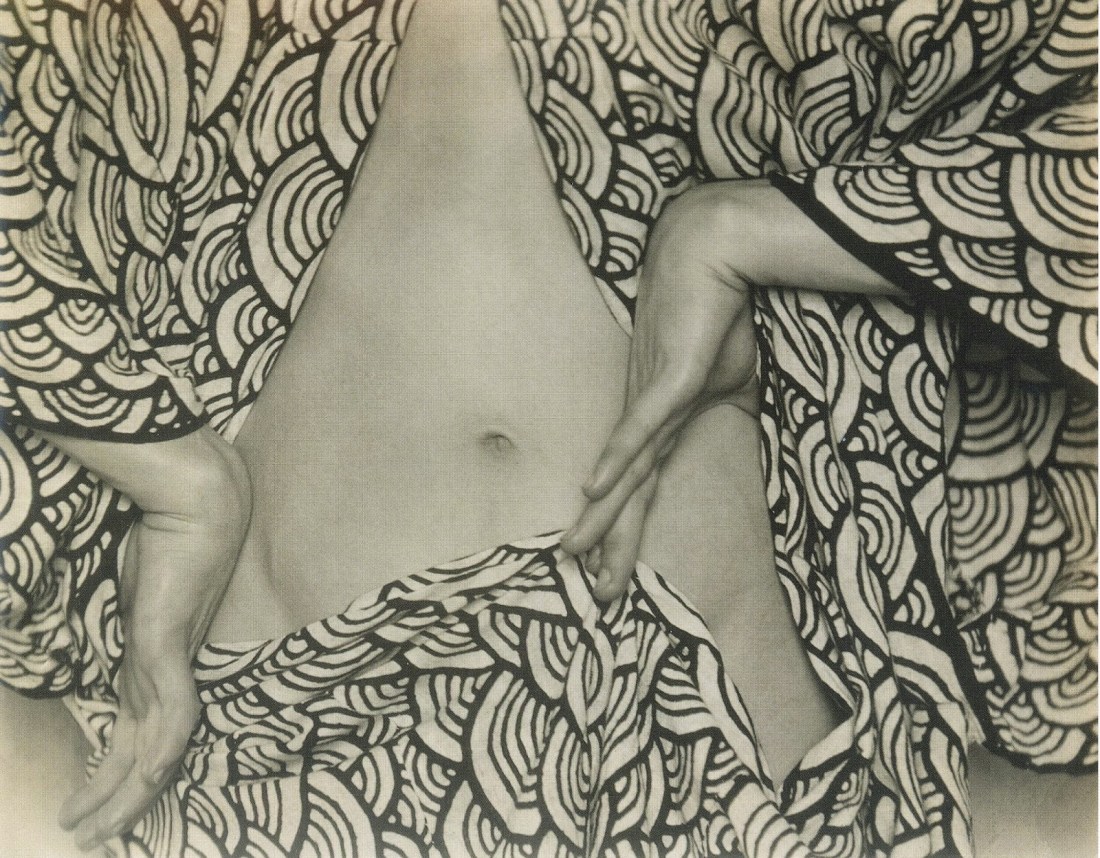
Margrethe Mather :: Semi-nude [Billy Justema Wearing a Kimono], ca. 1923. Center for Creative Photography. University of Arizona, Tucson
Margrethe Mather :: Semi-nude [Billy Justema wearing a Kimono]; ca. 1923. Center for Creative Photography. University of Arizona, Tucson

When Margrethe Mather (1885 or 1886-1952) met Billy Justema in 1922, she was 36 and he was 17. Through spending time with him, Mather found a way out of her grief over the unexpected suicide of her close friend Florence Deshon. Through their relationship, Justema searched for a state of mind that would allow him to define both his artistic path and his sexuality. Mather photographed him as an enigma, as he was at the time to himself, in the process creating a portfolio to rival that of Alfred Stieglitz’s images of Georgia O’Keeffe. I could point out the sure compositional structure that informs Billy Justema in a Kimono (above), the curves and angles that form a harmonious whole, all things typical of Mather’s work. [quoted from The Blue Lantern on blogspot]

Mädchen in Uniform · 1931

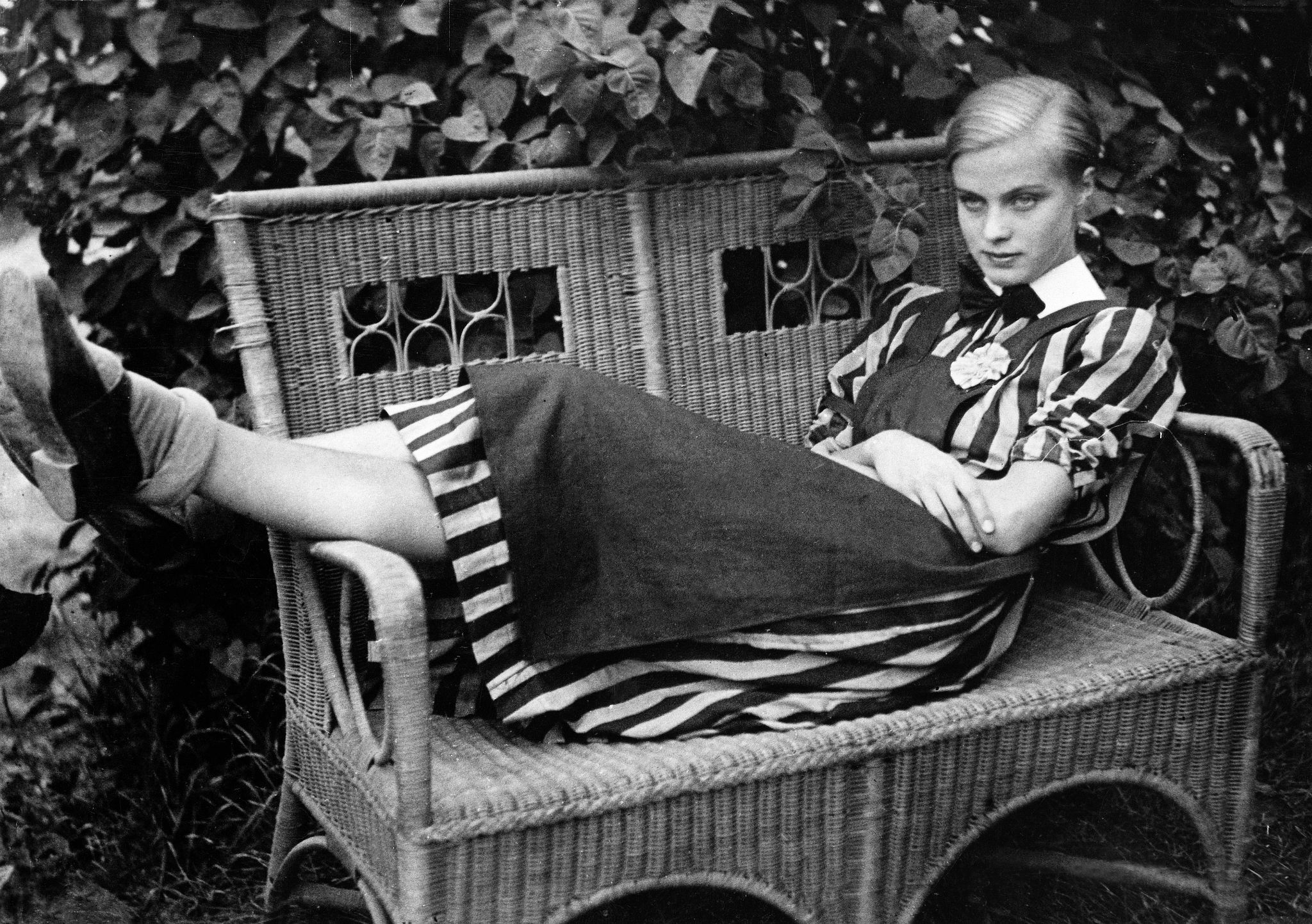
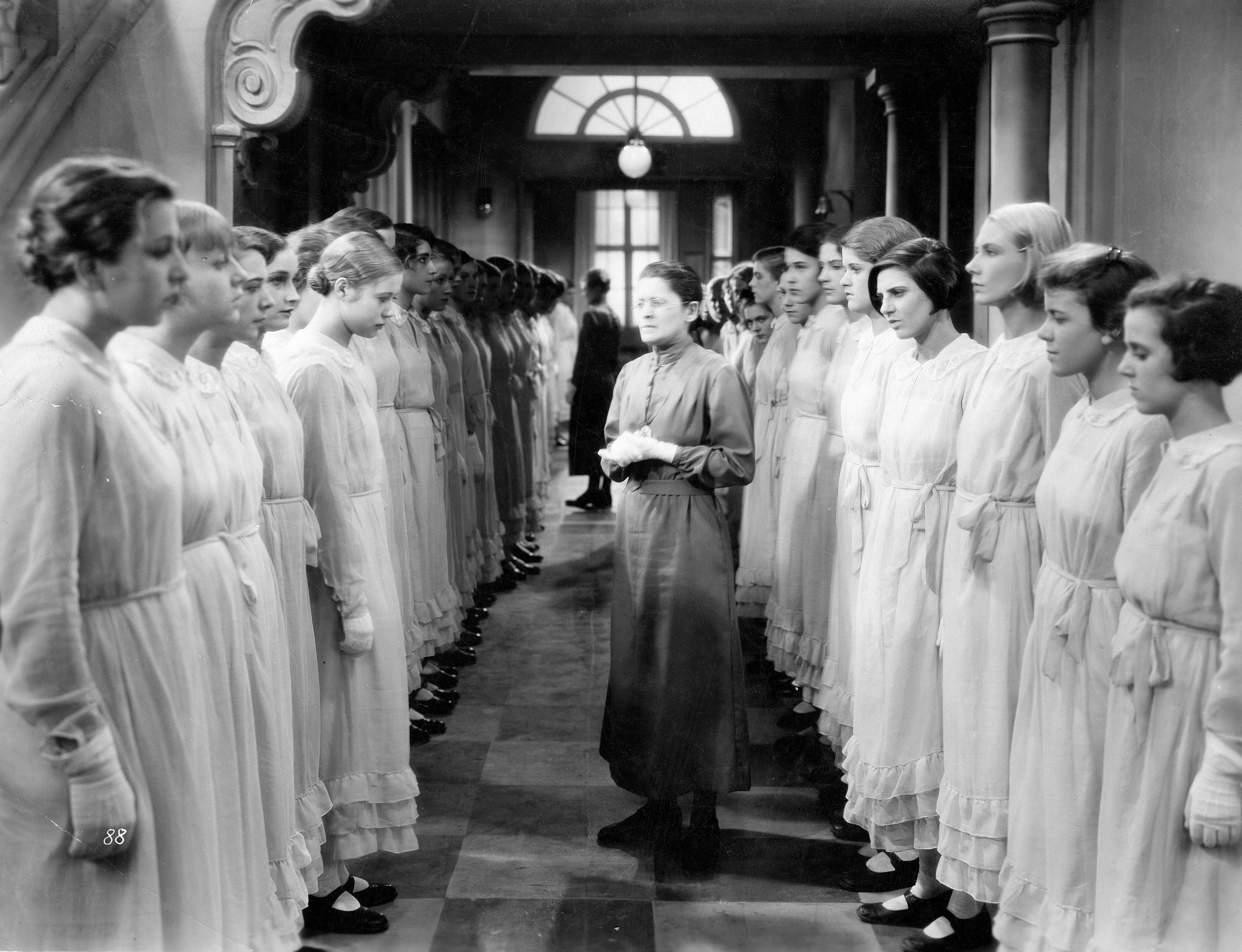
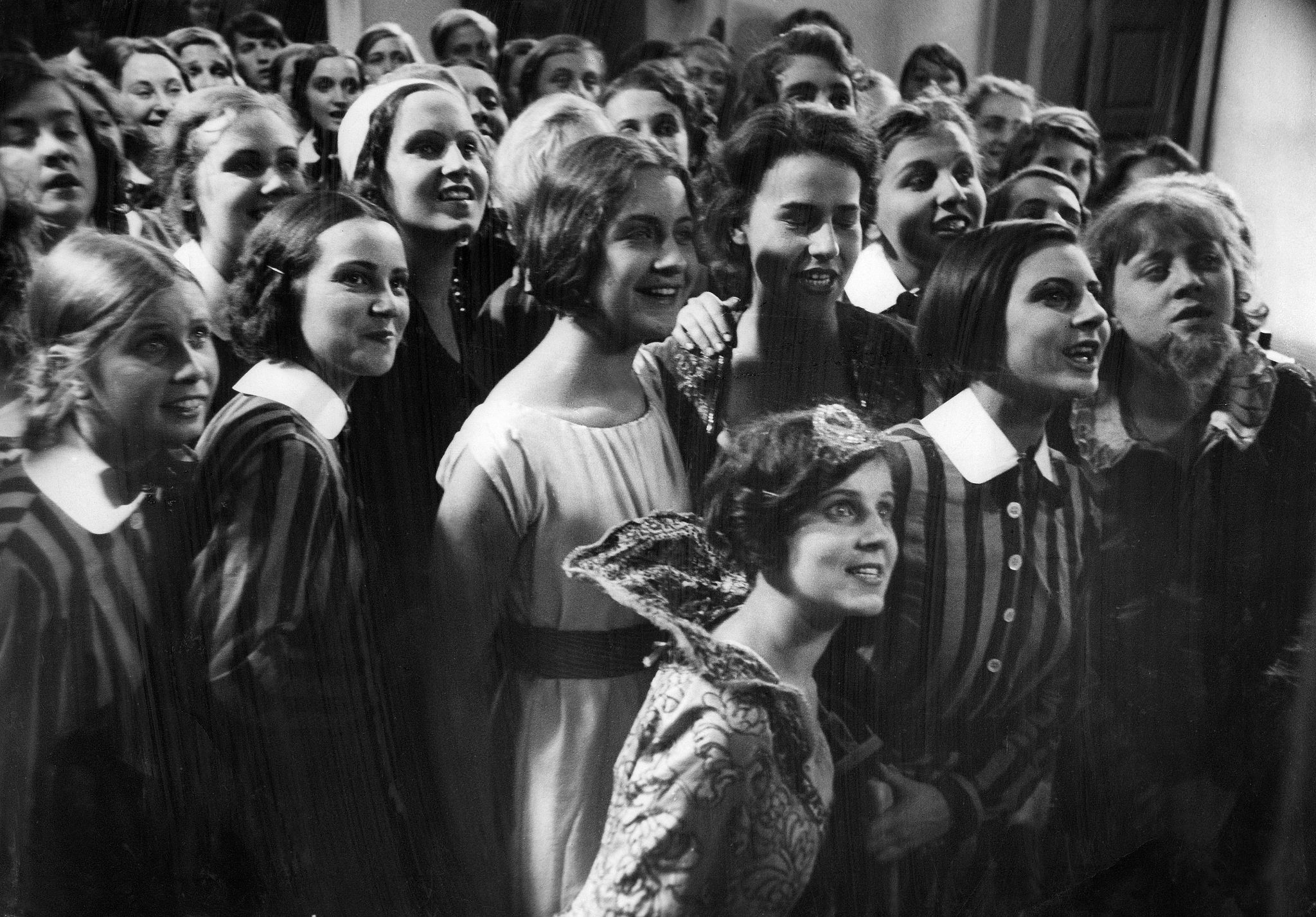
Umbo · Otto Umbehr ~ Scene from the movie Mädchen in Uniform (Film directed by Leontine Sagan and Carl Froelich, Germany, 1931) with Lore Schuetzendorf. Published by UHU 12/1931. | src getty images
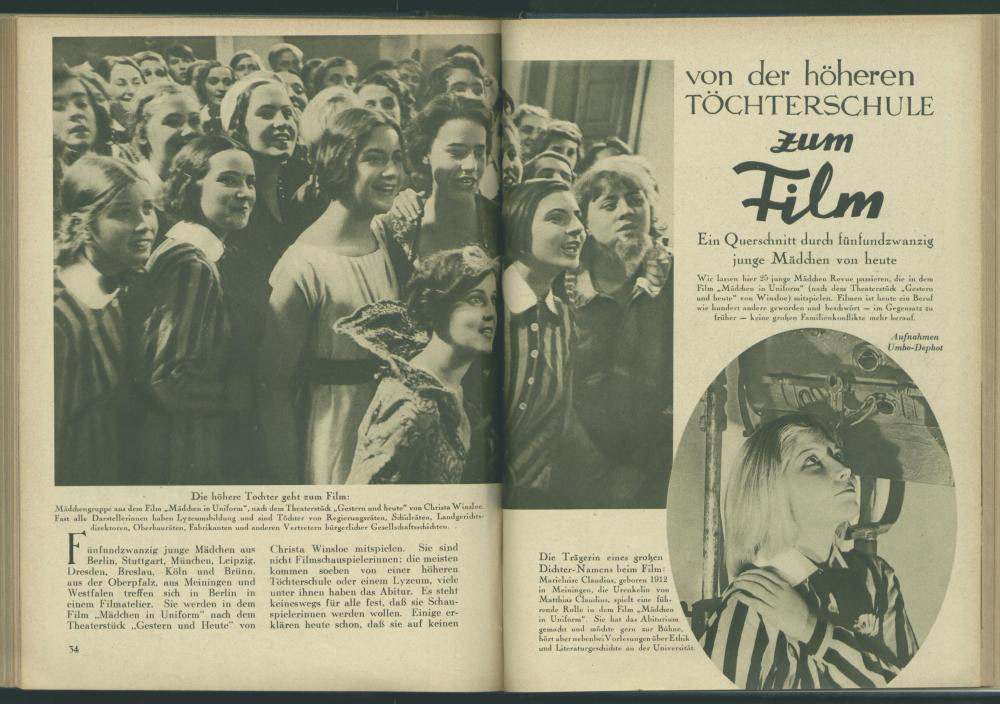
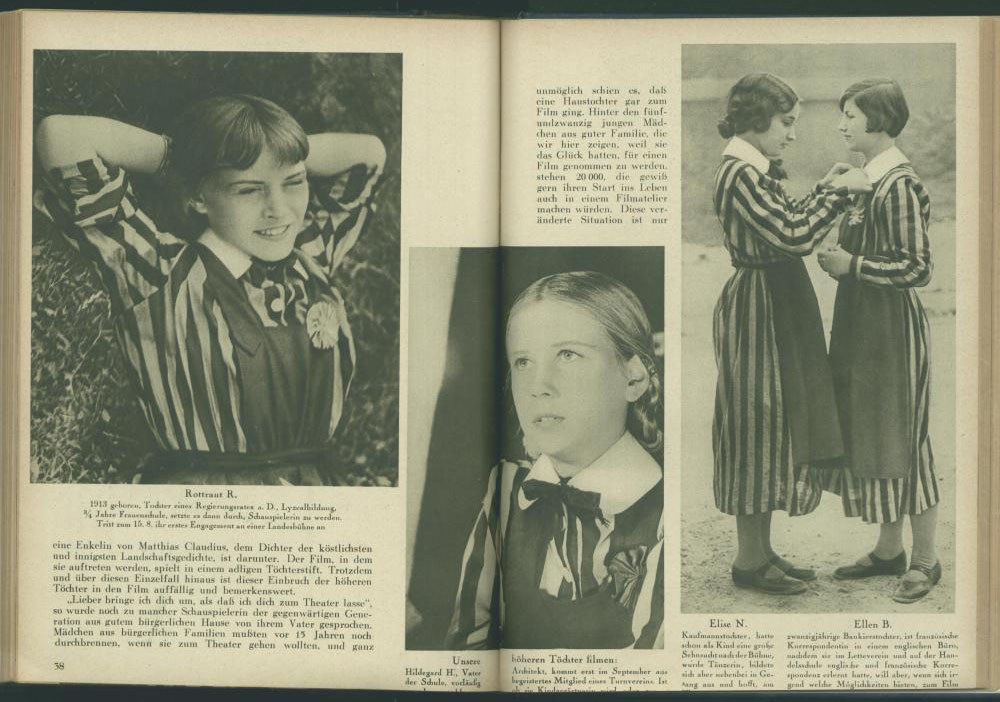
Von der höheren Töchterschule zum Film. Uhu, Band 7, Heft 12, September 1931
Hedy Schlichter (1898-1984) as Hedwig, in a scene from Mädchen in Uniform (Germany, 1931). Published in Uhu 12/1931
Umbo · Otto Umbehr ~ Scene from the movie Mädchen in Uniform (Germany, Leontine Sagan / Carl Frölich, 1931). Published by UHU 12/1931. | src getty images
Von der höheren Töchterschule zum Film. Uhu, Band 7, Heft 12, September 1931
Annemarie von Rochhausen in ‘Mädchen in Uniform’ (1931). Photo: Umbo. Published in Uhu 12/1931 | src getty images
Lore Schuetzendorf in Mädchen in Uniform (Germany, Leontine Sagan, Carl Froelich, 1931). Stamped: Trude Geiringer / Dora Horovitz / Wien. From the Taussig film stills collection
Umbo · Otto Umbehr ~ Scene from the movie Mädchen in Uniform (Germany, Leontine Sagan / Carl Frölich, 1931). Published by UHU 12/1931. | src getty images
Ein Querschnitt durch fünfundzwanzig junge Mädchen von heute. Uhu, Band 7, Heft 12, September 1931
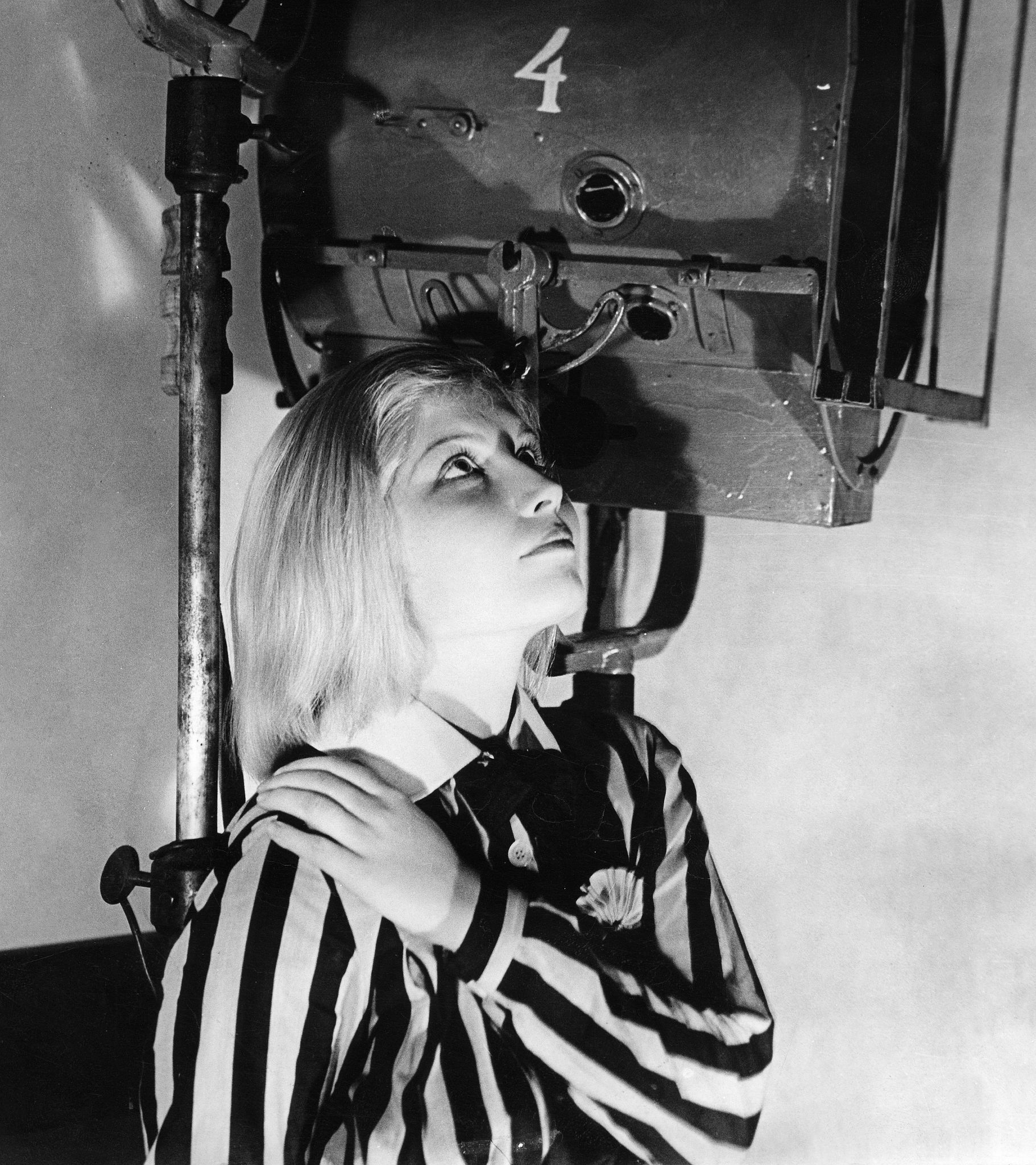
Marieluise Claudius during shootings of the movie Mädchen in Uniform (Germany, 1931). Published in Uhu 12/1931
Umbo · Otto Umbehr ~ Scene from the movie Mädchen in Uniform (Germany, Leontine Sagan / Carl Frölich, 1931). Published by UHU 12/1931. | src getty images
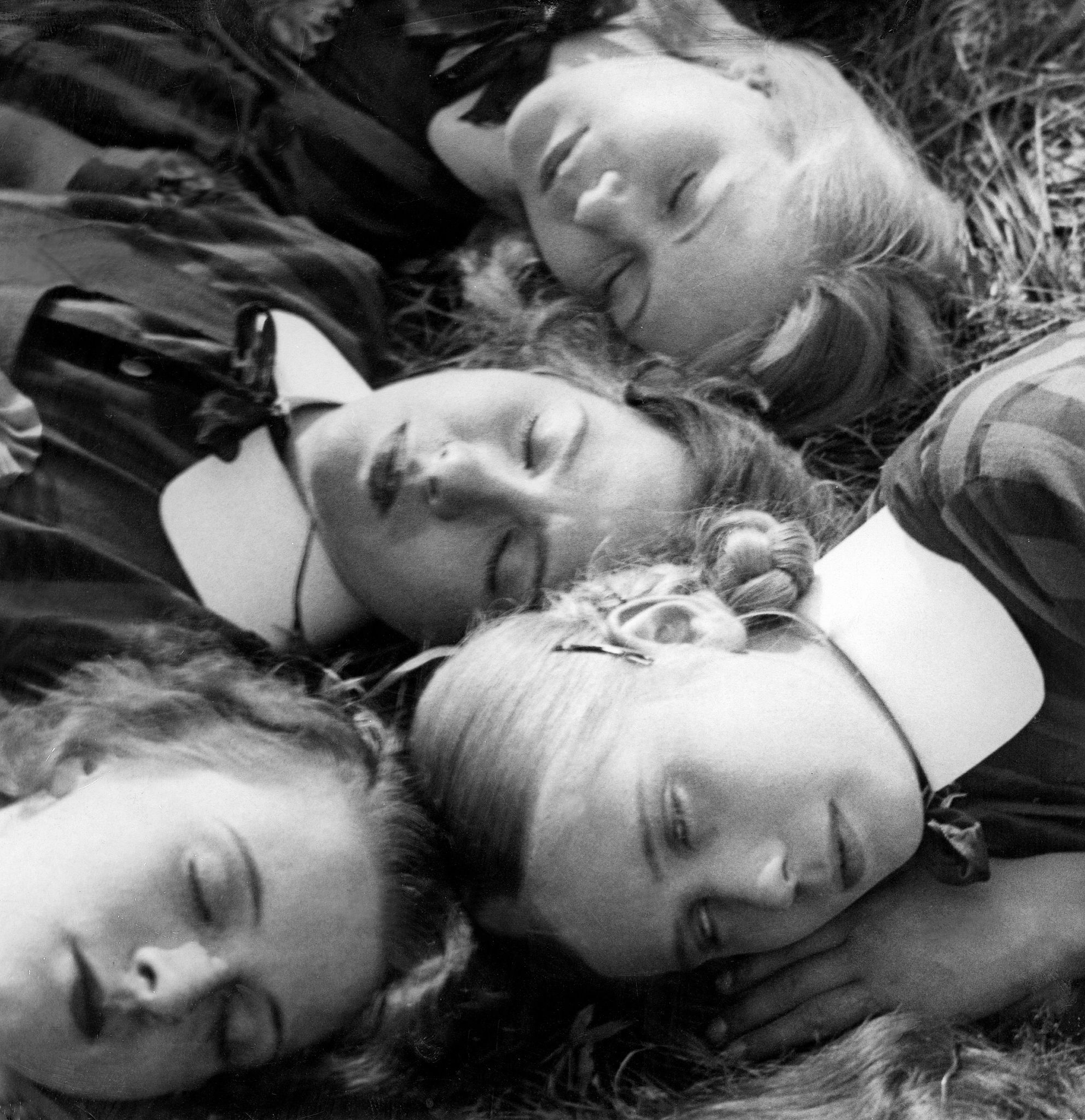
Heads of four girls lying on the grass. Scene from the movie ‘Mädchen in Uniform’. Published in Uhu 12/1931. Photo: Umbo
Von der höheren Töchterschule zum Film. Uhu, Band 7, Heft 12, September 1931
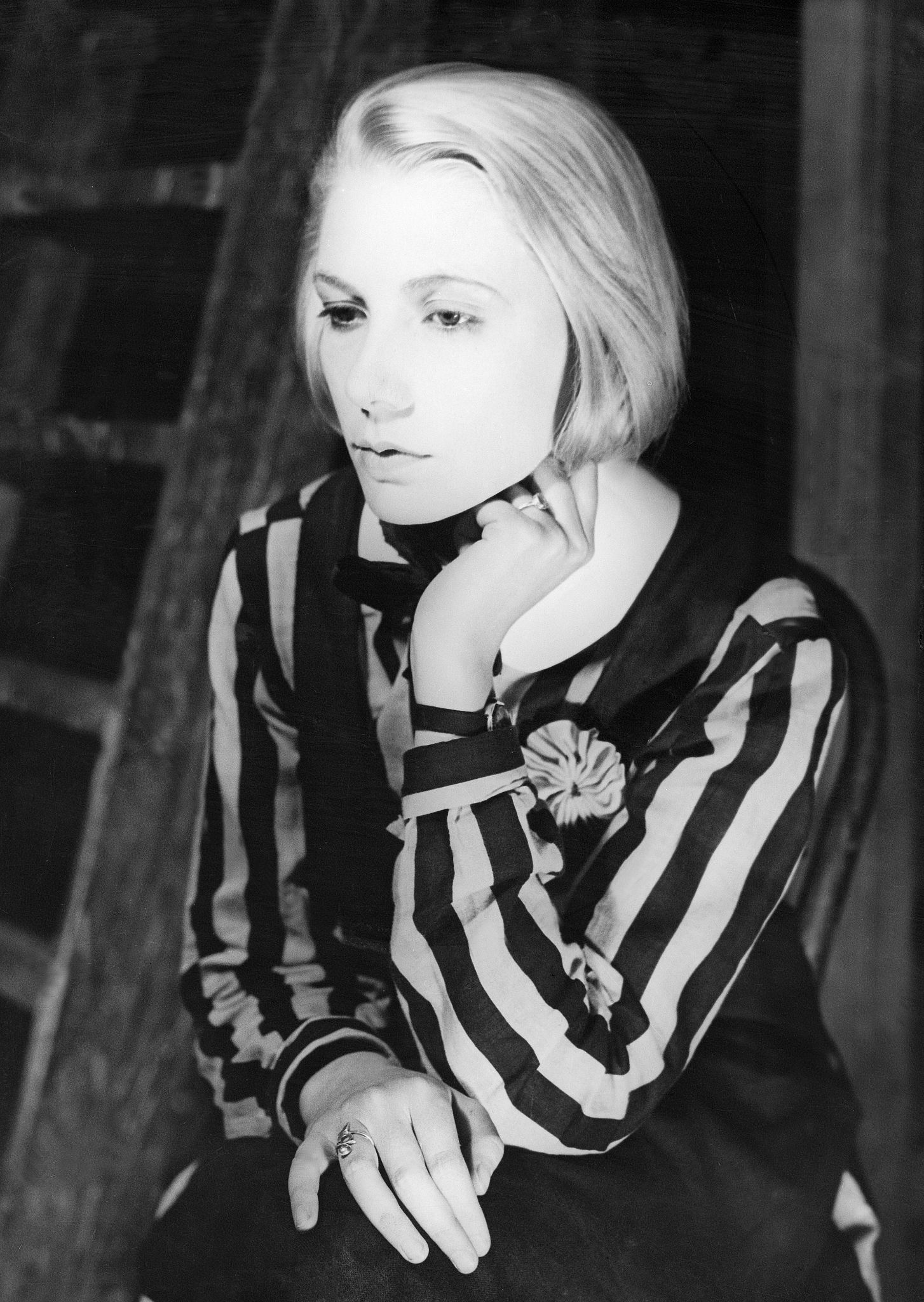
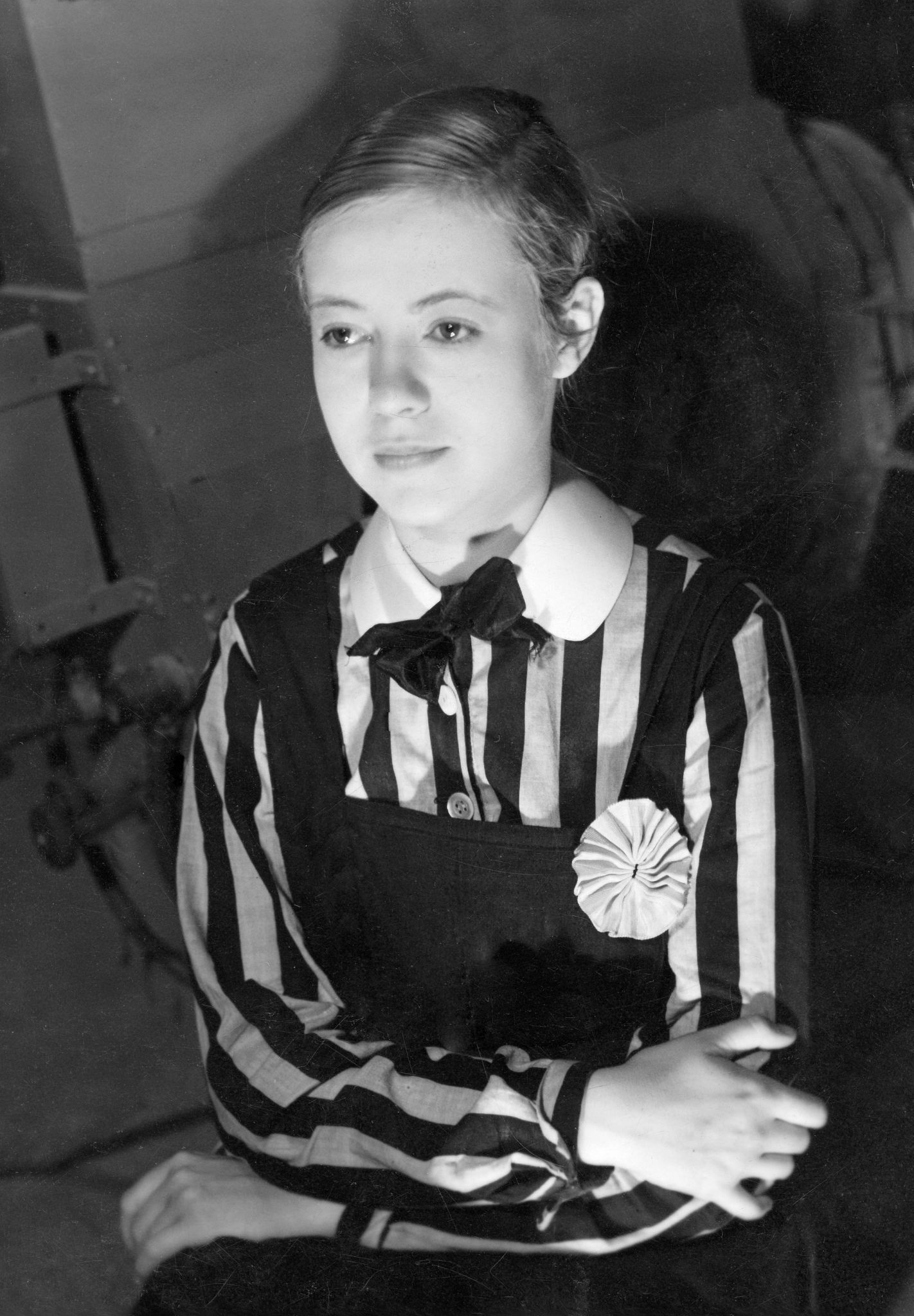
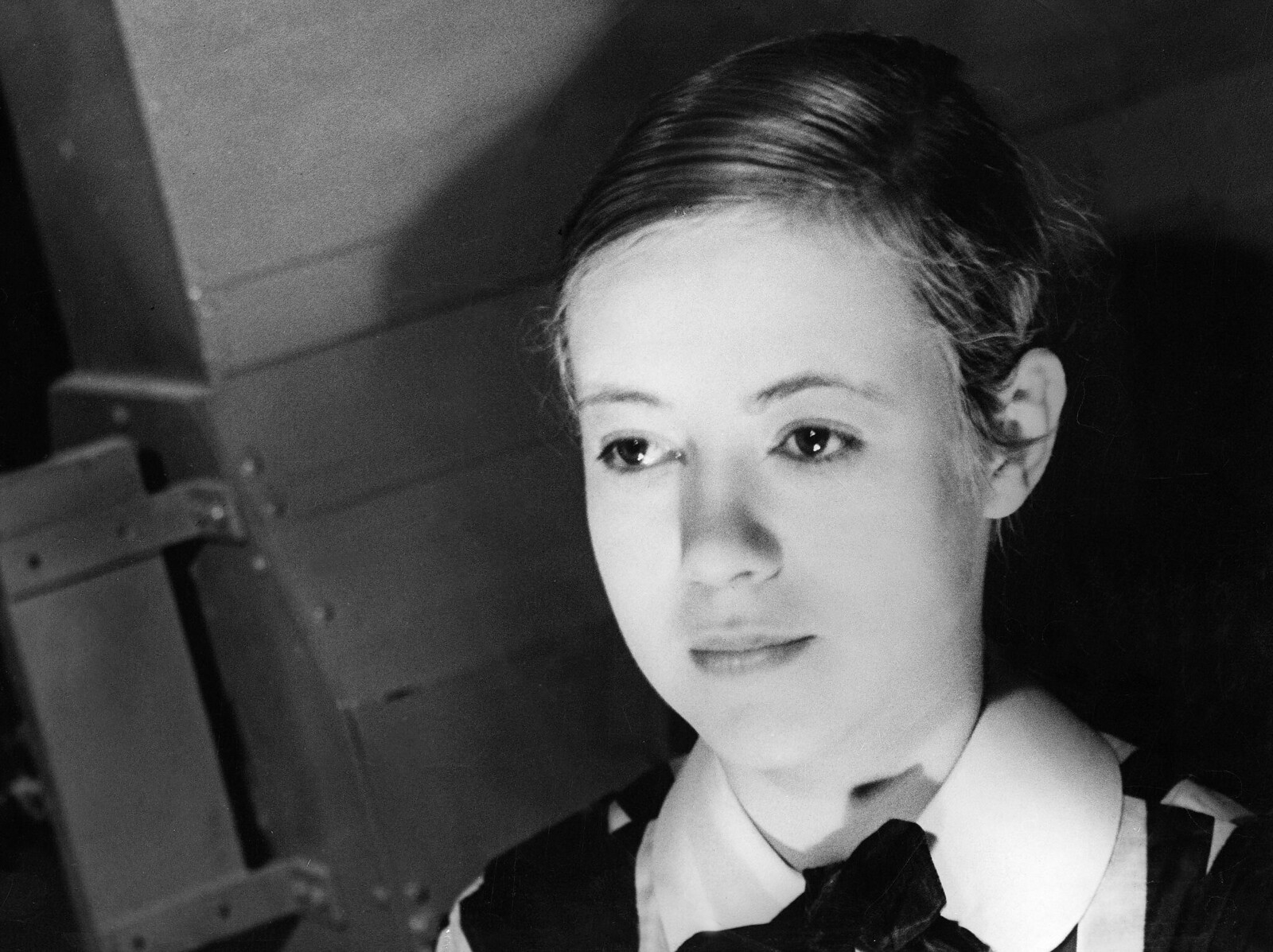
Scene from the movie ‘Mädchen in Uniform’ (1931) with Hertha Thiele. Photo: Umbo. Published in Uhu 12/1931 | src getty images
Scene from the movie ‘Mädchen in Uniform’ (1931) with Dorothea Wieck (center). Photo: Umbo | src getty images
Hertha Thiele in a scene from the movie ‘Mädchen in Uniform’ (1931). Photo: Umbo (Otto Umbehr). Published in Uhu 12/1931
Ilse Winter in a scene from Mädchen in Uniform (Germany, 1931). Published in Uhu 12/1931 | src getty images
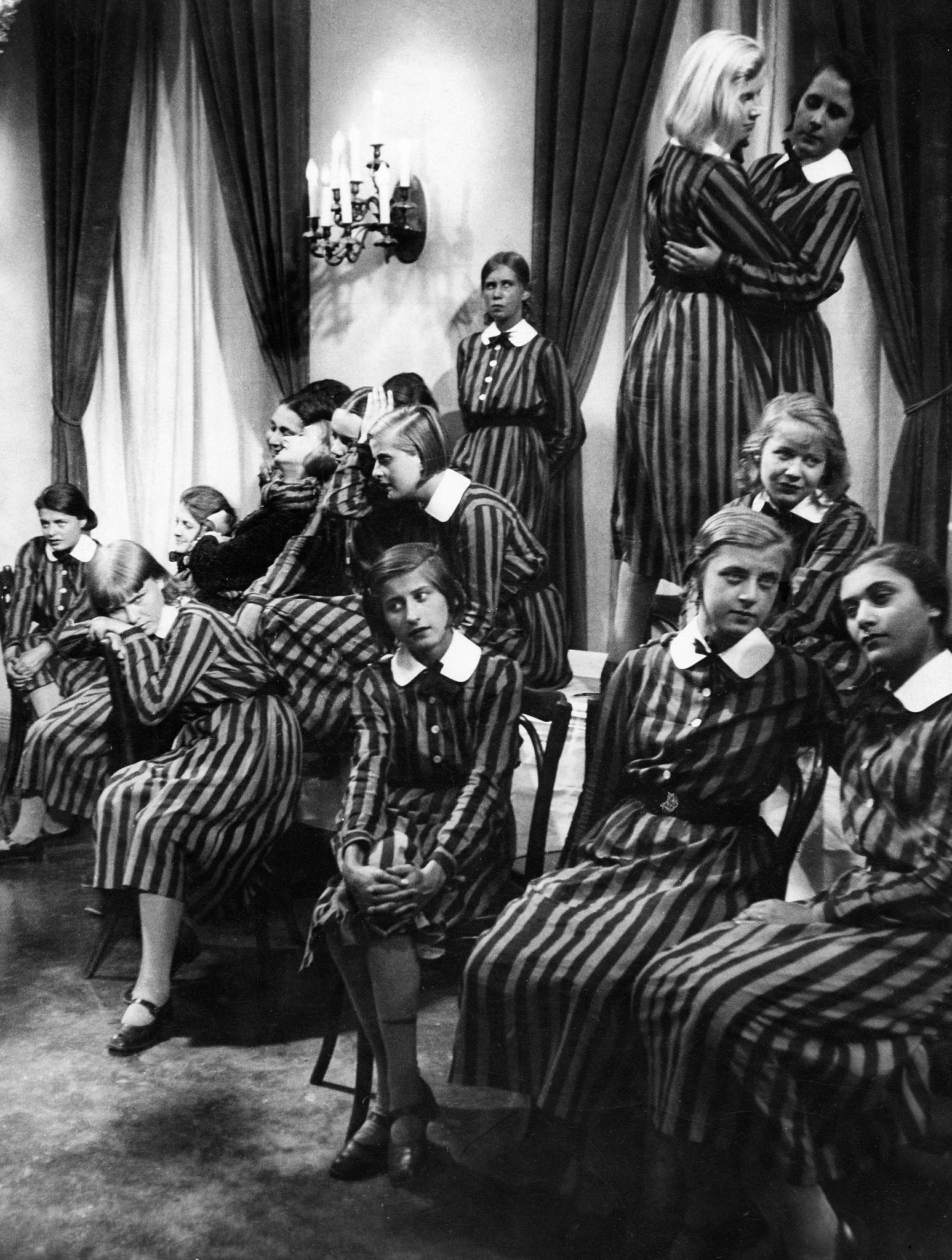
Preparing shootings of the movie Mädchen in Uniform (Germany, 1931). Published in Uhu 12/1931
Ethel Reschke and Dora Thalmer in the film Mädchen in Uniform (Germany, 1931). Published in Uhu 12/1931
Von der höheren Töchterschule zum Film. Uhu, Band 7, Heft 12, September 1931
Hertha Thiele and Eva Pirk in a scene of the movie Mädchen in Uniform (Germany, 1931). Published in Uhu 12/1931
Scene from the movie ‘Mädchen in Uniform’ (1931) with Hertha Thiele. Production still (?) | src getty images

Standing Female Nudes, ca. 1850

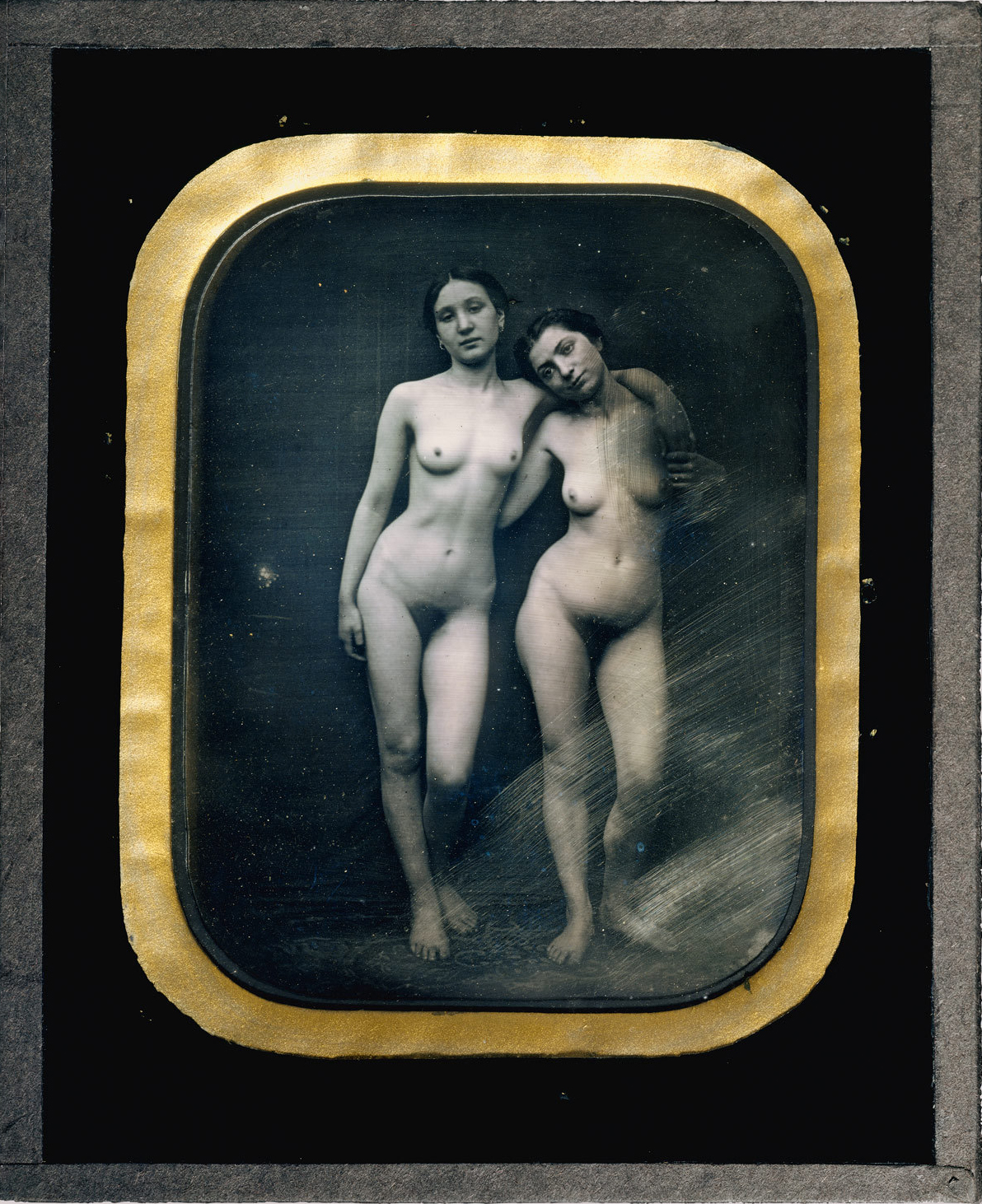
Félix-Jacques-Antoine Moulin :: Two Standing Female Nudes, ca. 1850. Daguerreotype. | src The Rubel Collection (at The Met)
Félix-Jacques-Antoine Moulin ~ Two Standing Female Nudes, ca. 1850. Daguerreotype. | src The Rubel Collection (at The Met)

Although Moulin was sentenced in 1851 to a month in jail for producing images that, according to court papers, were “so obscene that even to pronounce the titles . . . would be to commit an indecency,” this daguerreotype seems more allied to art than to erotica. Instead of the boudoir props and provocative poses typical of hand-colored pornographic daguerreotypes, Moulin depicted these two young women utterly at ease, as unselfconscious in their nudity as Botticelli’s Venus. [quoted from The Met]

Félix-Jacques Moulin ~ Two Standing Female Nudes, ca. 1850. Daguerreotype