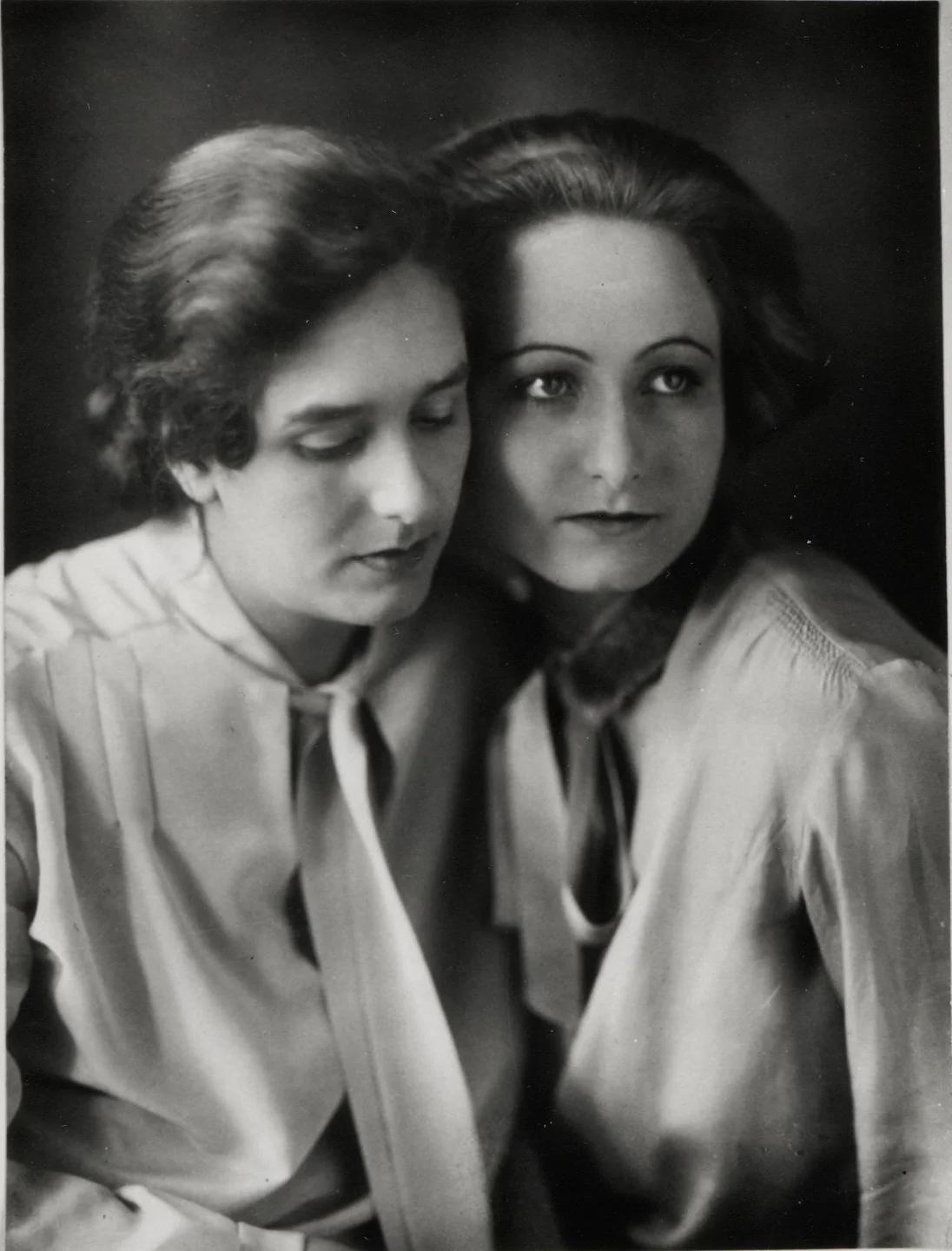
Romaine Brooks · Portraits

Beatrice Romaine Goddard (1874-1970), known as Romaine Brooks ~ Au bord de la mer (At the seaside), 1914. Oil on canvas. | Franco-American museum of the Blérancourt castle via wikimedia commons
Beatrice Romaine Goddard (1874-1970), known as Romaine Brooks ~ Au bord de la mer (Autoportrait), 1914. Oil on canvas.
Romaine Brooks ~ Peter (A Young English Girl), 1923-1924, oil on canvas SAAM-1970.70_2

Peter depicts British painter Hannah Gluckstein, heir to a catering empire who adopted the genderless professional name Gluck in the early 1920s. By the time Brooks met her at one of Natalie Barney’s literary salons, Gluckstein had begun using the name Peyter (Peter) Gluck. She unapologetically wore men’s suits and fedoras, clearly asserting the association between androgyny and lesbian identity. Brooks’s carefully nuanced palette and quiet, empty space produced an image of refined and austere modernity. ~ The Art of Romaine Brooks, 2016
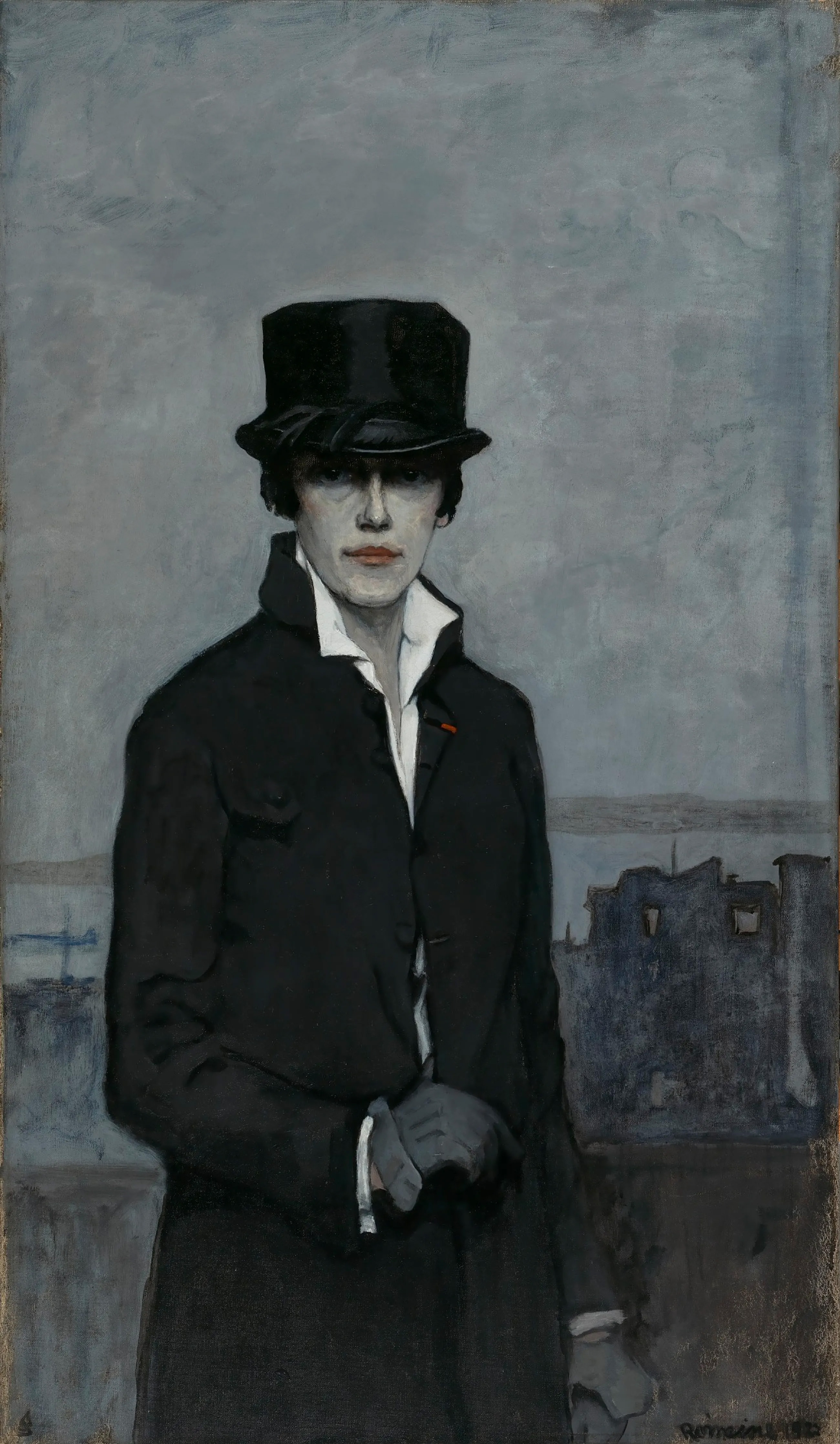
Romaine Brooks (1874-1970) ~ Self-Portrait, 1923. Oil on canvas. Smithsonian American Art Museum

With this self-portrait, Brooks envisioned her modernity as an artist and a person. The modulated shades of gray, stylized forms, and psychological gravity exemplify her deep commitment to aesthetic principles. The shaded, direct gaze conveys a commanding and confident presence, an attitude more typically associated with her male counterparts. The riding hat and coat and masculine tailoring recall conventions of aristocratic portraiture while also evoking a chic androgyny associated with the post–World War I “new woman.” Brooks’s fashion choices also enabled upper-class lesbians to identify and acknowledge one another. ~ The Art of Romaine Brooks, 2016

Romaine Brooks ~ Una, Lady Troubridge, 1924, oil on canvas SAAM-1966.49.6_2

Una Troubridge was a British aristocrat, literary translator, and the lover of Radclyffe Hall, author of the 1928 pathbreaking lesbian novel, The Well of Loneliness. Troubridge appears with a sense of formality and importance typical of upper-class portraiture, but with the sitter’s prized dachshunds in place of the traditional hunting dog. Troubridge’s impeccably tailored clothing, cravat, and bobbed hair convey the fashionable and daring androgyny associated with the so-called new woman. Her monocle suggested multiple symbolic associations to contemporary British audiences: it alluded to Troubridge’s upper-class status, her Englishness, her sense of rebellion, and possibly her lesbian identity. ~ The Art of Romaine Brooks, 2016
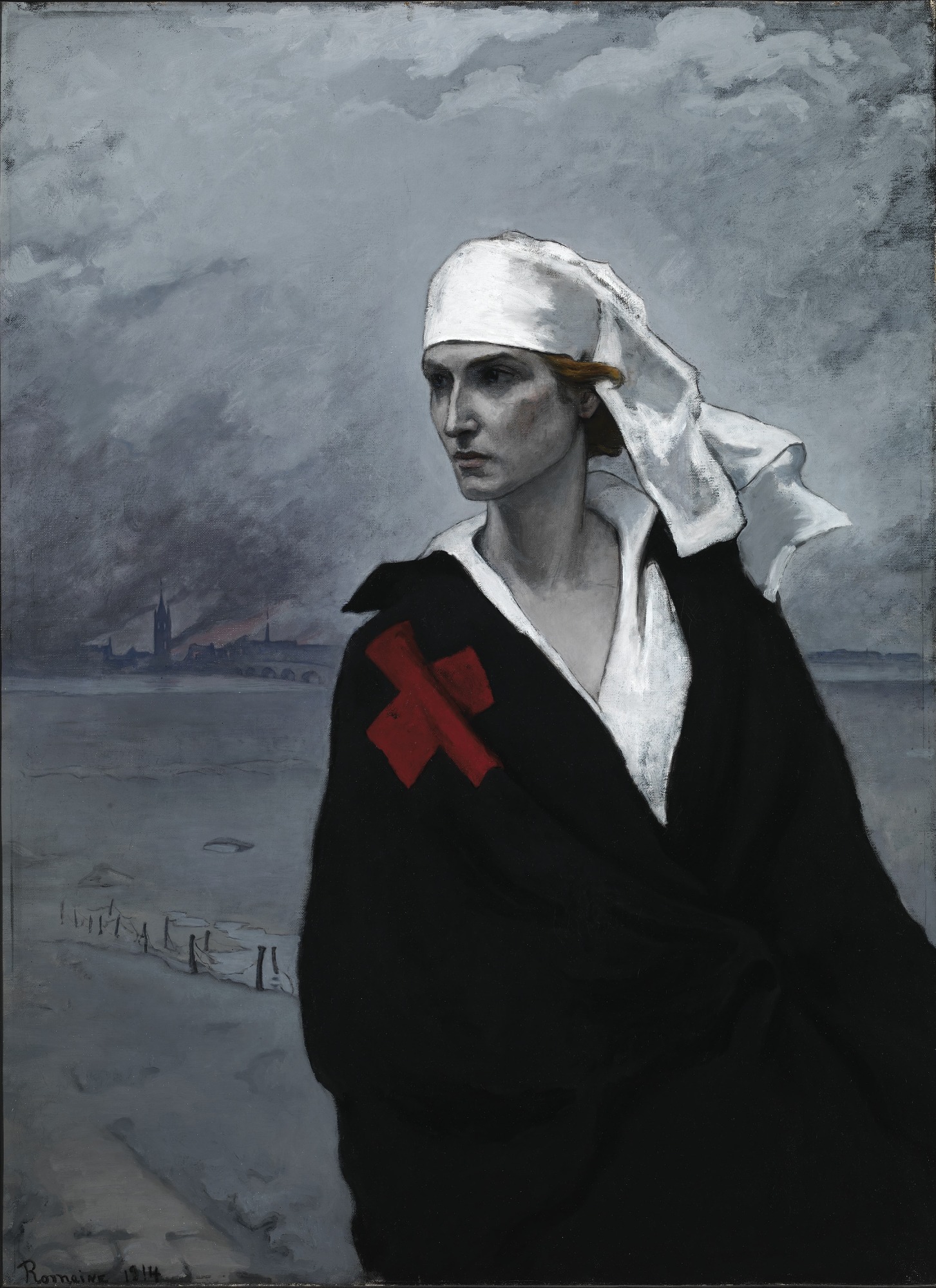
Romaine Brooks ~ La France Croisée, 1914, oil on canvas SAAM-1970.69_2

In La France Croisée, Brooks voiced her opposition to World War I and raised money for the Red Cross and French relief organizations. Ida Rubinstein was the model for this heroic figure posed in a nurse’s uniform, with cross emblazoned against her dark cloak, against a windswept landscape outside the burning city of Ypres. This symbolic portrait of a valiant France was exhibited in 1915 at the Bernheim Gallery in Paris, along with four accompanying sonnets written by Gabriele D’Annunzio. The gallery offered reproductions for sale as a benefit to the Red Cross. For her contributions to the war effort, the French government awarded Brooks the Cross of the Legion of Honor in 1920. This award is visible as the bright red spot on Brooks’s lapel in her 1923 Self-Portrait. ~ The Art of Romaine Brooks, 2016

Romaine Brooks ~ Ida Rubinstein, 1917, oil on canvas, Smithsonian American Art Museum

Brooks met Russian dancer and arts patron Ida Rubinstein in Paris after Rubinstein’s first performance as the title character in Gabriele D’Annunzio’s play The Martyrdom of St. Sebastian. Rubinstein was already well known for her refined beauty and expressive gestures; she secured her reputation as a daring performer by starring as the male saint in this boundary-pushing show that combined religious history, androgyny, and erotic narrative. Brooks found her ideal — and her artistic inspiration — in the tall, lithe, sensuous Rubinstein, who modeled for many sketches, paintings, and photographs Brooks produced during their relationship, from 1911 to 1914. In her autobiographical manuscript, “No Pleasant Memories,” Brooks said the inspiration for this portrait came as the two women walked through the Bois de Boulogne on a cold winter morning. ~ The Art of Romaine Brooks, 2016

All quotations and images (except n. 1 & 2) are from the Smithsonian American Art Museum (x)
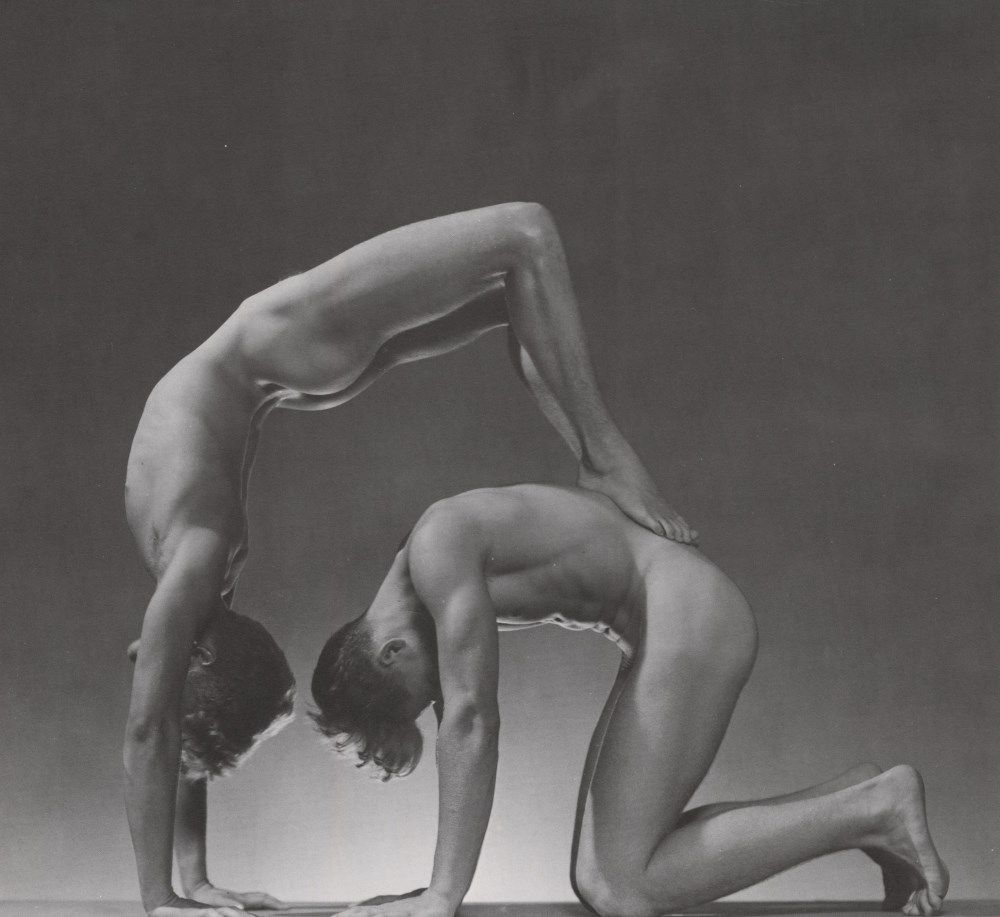
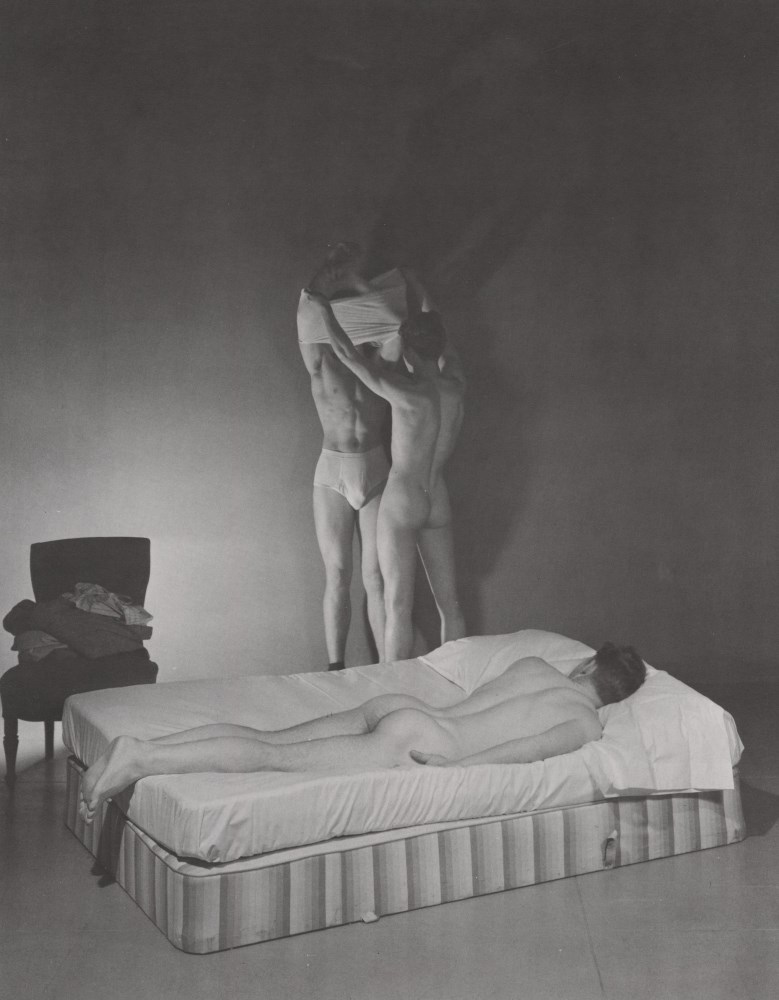
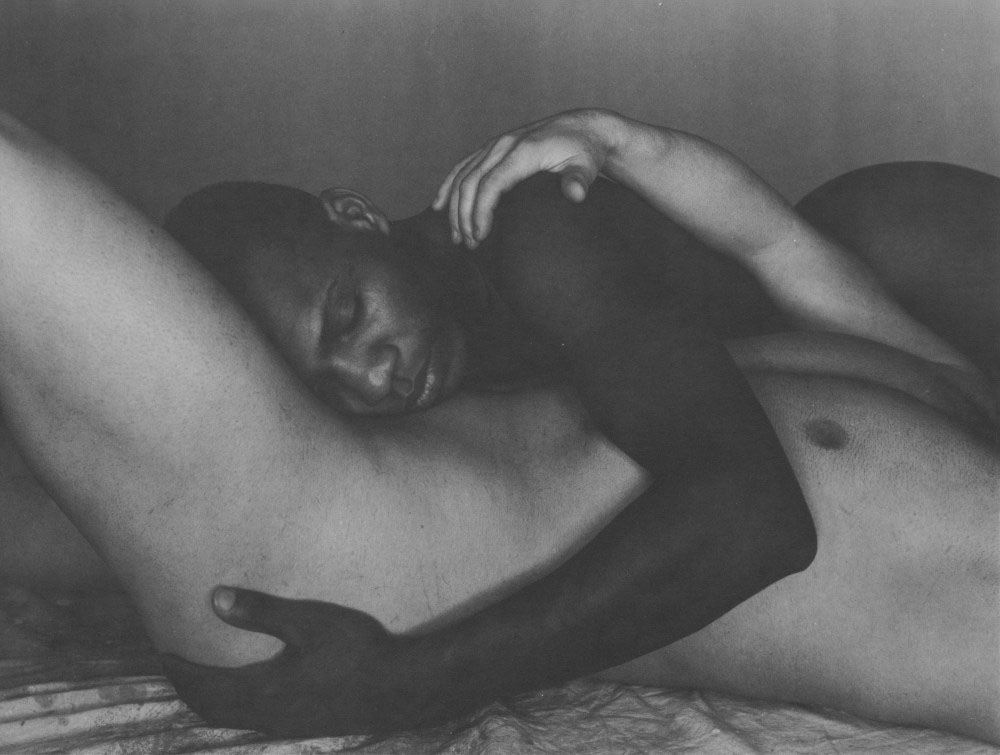
Nudes by George Platt Lynes

George Platt Lynes (American, 1907-1955) :: Acrobatics, 1941. Photogravure. Stanford Auctioneers / nudes
George Platt Lynes (American, 1907-1955) :: Acrobatics, 1941. Photogravure. Stanford Auctioneers
George Platt Lynes (American, 1907-1955) :: Underwear, 1942. Stanford Auctioneers / nudes
George Platt Lynes (American, 1907-1955) :: Underwear, 1942. Stanford Auctioneers
George Platt Lynes (American, 1907-1955) :: Black and White, 1952. Photogravure. Stanford Auctioneers

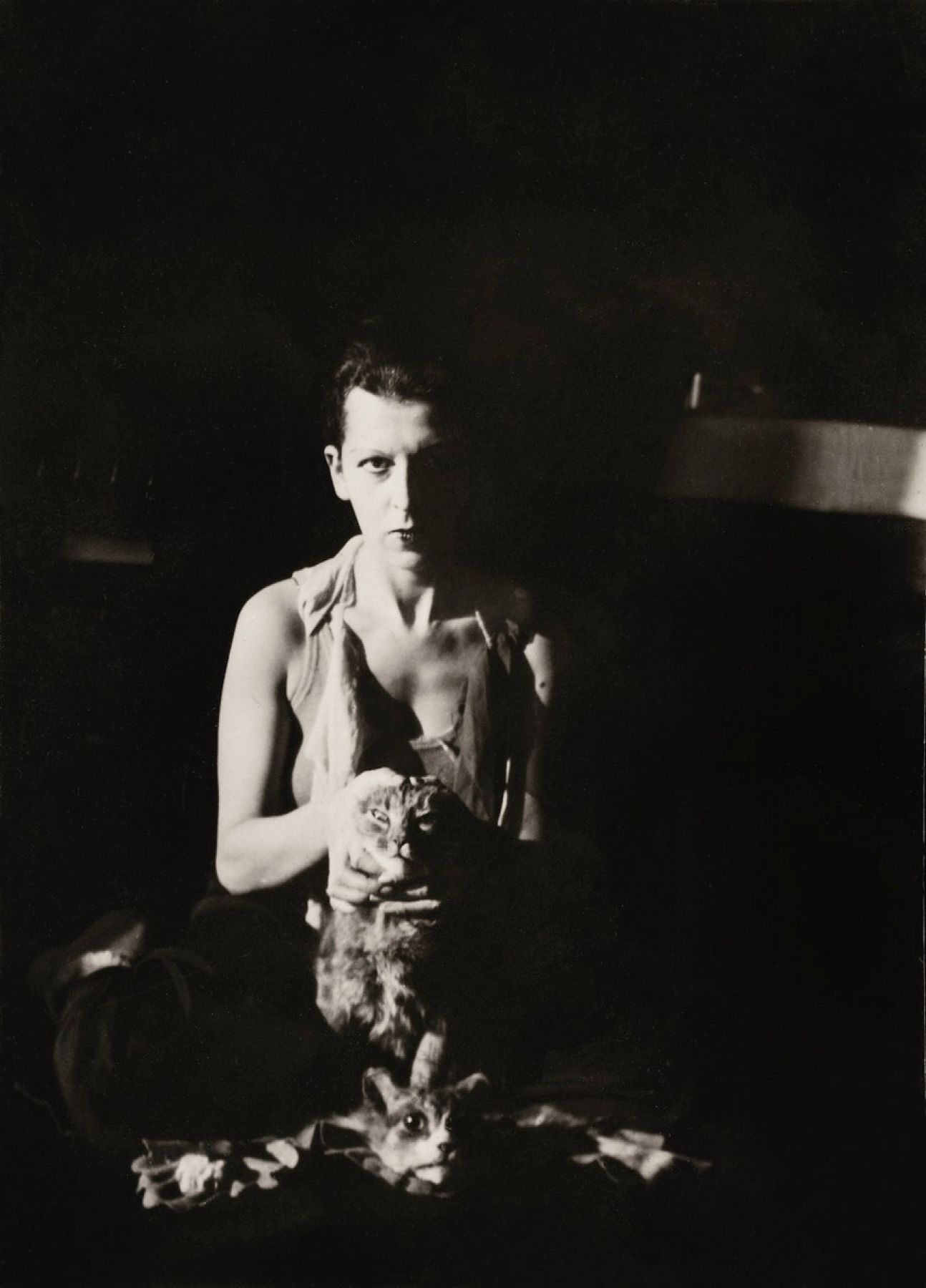
Cahun · selfportraits with cat

selfportrait with cat, lucy schwob, marcel moore
Claude Cahun & Marcel Moore :: Lucie and kid, Nantes, vers 1926. Tirage argentique. | src Christie's
Claude Cahun & Marcel Moore :: Lucie and Kid, Nantes, vers 1926. Tirage argentique. | src Christie’s, also MAM

“Lucy and Kid”. Nantes, ca.1926. Original silver print. This piece seems to close the series of “self-portraits with a glass globe” (1926), which initiates complex manipulations, technical processes that Claude Cahun (along with Marcel Moore) will later use for photomontages (1929-1939). Note the disturbing position of the suspended cat, held above the void against a background reminiscent of the decor of an expressionist film.

Claude Cahun & Marcel Moore :: Autoportrait au Chat, ca. 1927. Tirage argentique sépia. | src Musée d'art de Nantes
Claude Cahun & Marcel Moore :: Autoportrait au Chat, ca. 1927. Tirage argentique sépia. | src Musée d’art de Nantes

Justema by Mather, ca. 1923

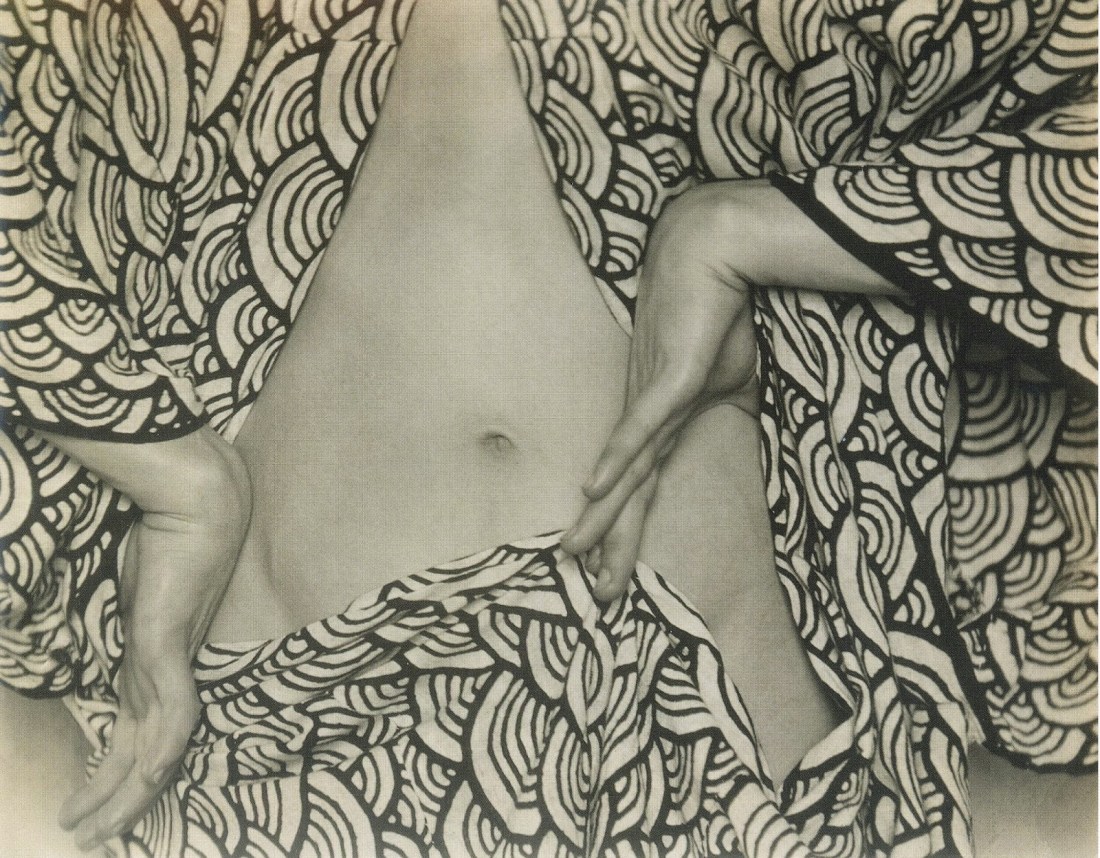
Margrethe Mather :: Semi-nude [Billy Justema Wearing a Kimono], ca. 1923. Center for Creative Photography. University of Arizona, Tucson
Margrethe Mather :: Semi-nude [Billy Justema wearing a Kimono]; ca. 1923. Center for Creative Photography. University of Arizona, Tucson

When Margrethe Mather (1885 or 1886-1952) met Billy Justema in 1922, she was 36 and he was 17. Through spending time with him, Mather found a way out of her grief over the unexpected suicide of her close friend Florence Deshon. Through their relationship, Justema searched for a state of mind that would allow him to define both his artistic path and his sexuality. Mather photographed him as an enigma, as he was at the time to himself, in the process creating a portfolio to rival that of Alfred Stieglitz’s images of Georgia O’Keeffe. I could point out the sure compositional structure that informs Billy Justema in a Kimono (above), the curves and angles that form a harmonious whole, all things typical of Mather’s work. [quoted from The Blue Lantern on blogspot]

Anita Berber as a poetess

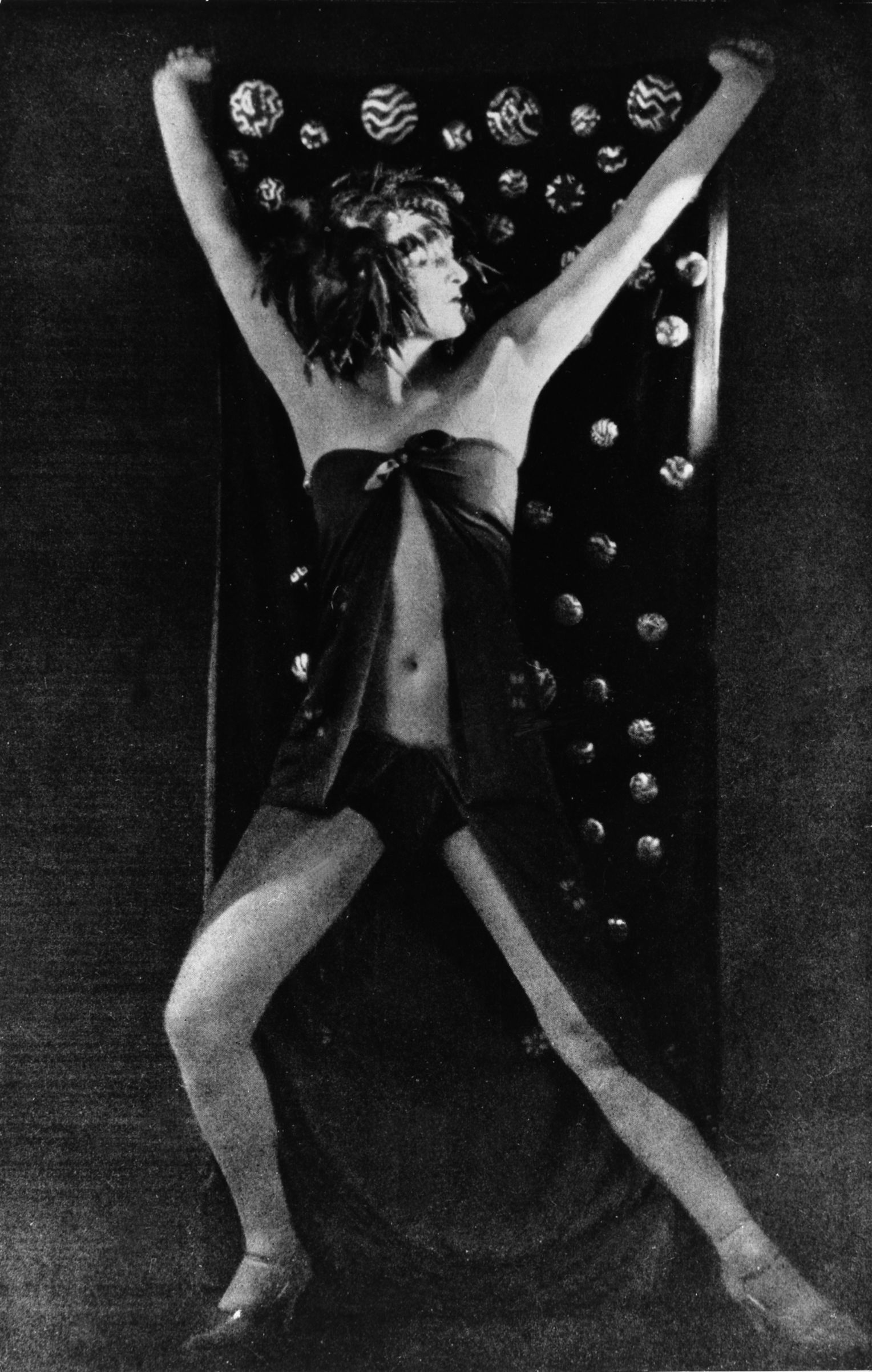
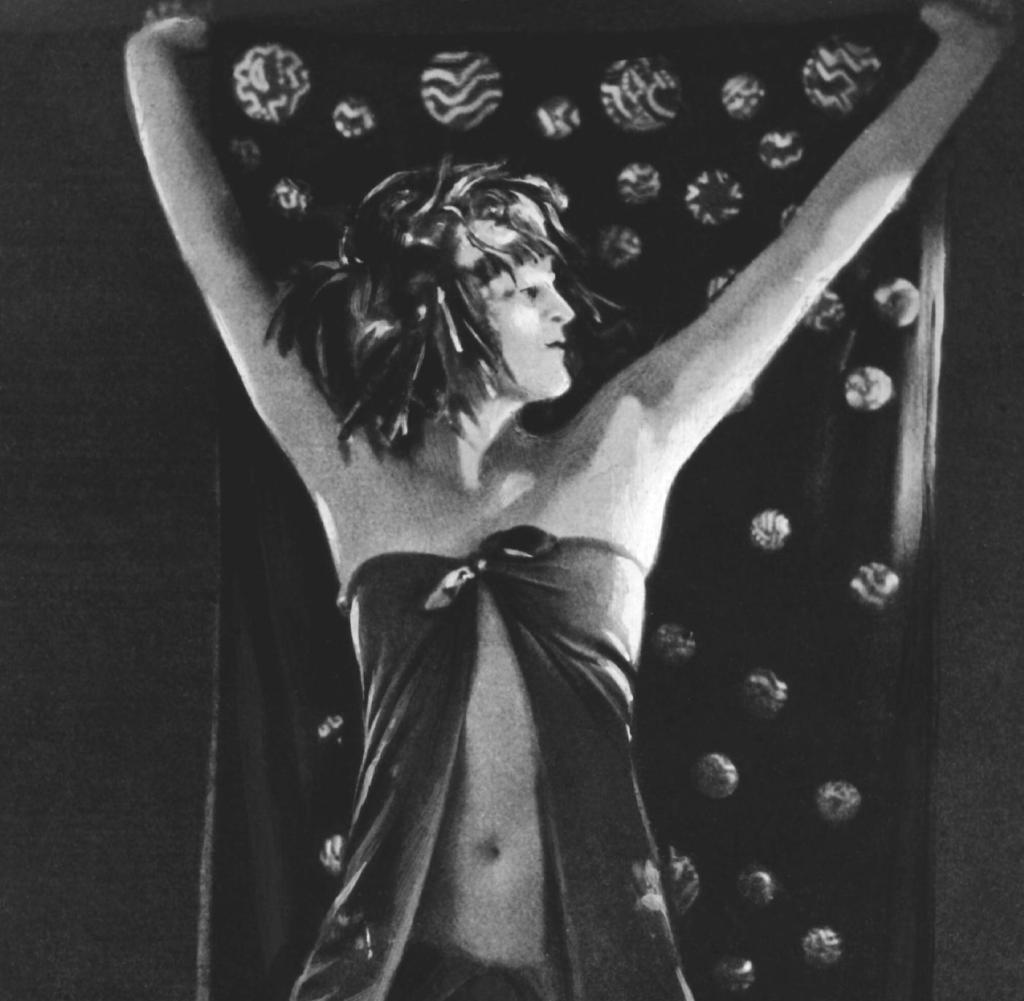
Tänzerin und Schauspielerin Anita Berber, Rollenporträt, undtiert. (Photo © Ullstein Bild | src Getty Images
Tänzerin und Schauspielerin Anita Berber, Rollenporträt, undtiert. | src Welt.de

Anita Berber Dichterin: Die offen bisexuelle Anita Berber tanzte und provozierte nicht nur, sondern betätigte sich auch als Lyrikerin. In ihrem Gedicht “Orchideen” etwa heißt es: “Ich küsste und kostete jede bis zum Schluss / Alle alle starben an meinen roten Lippen / An meinen Händen / An meiner Geschlechtslosigkeit / Die doch alle Geschlechter in sich hat / Ich bin blass wie Mondsilber.”

Anita Berber as a poetess: The openly bisexual Anita Berber not only danced and provoked, but also was as a poet. In her poem “Orchids”, for example, it says: “I kissed and tasted each one to the end / All died on my red lips / On my hands / On my genderlessness / Which has all genders in it / I am pale as moon silver.”

quoted from Der Spiegel: Anita Berber – die Hohepriesterin des Lasters

The Devil, self-portrait, 1929

autoportrait, selfportrait, role portrait, 1920s
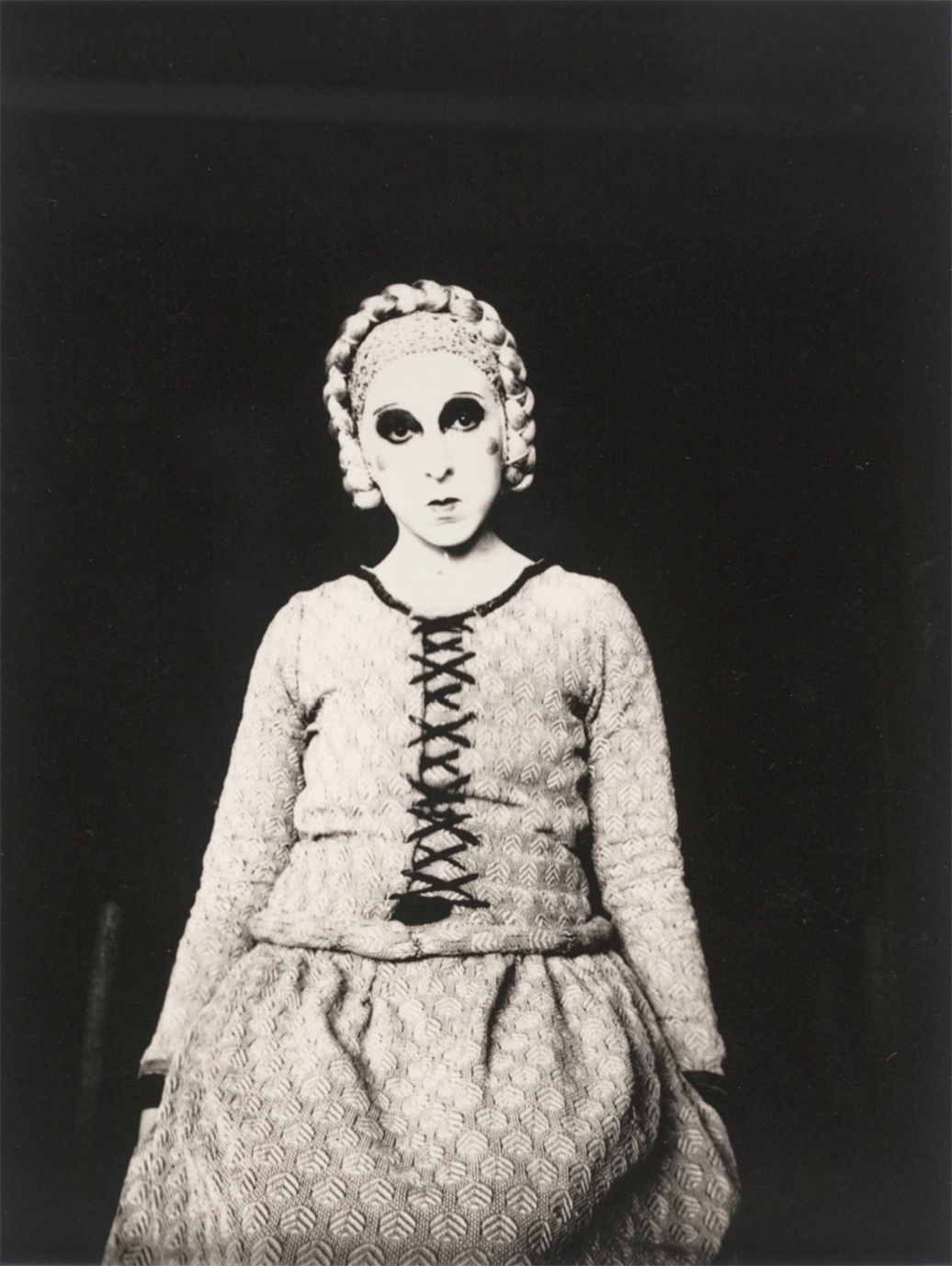
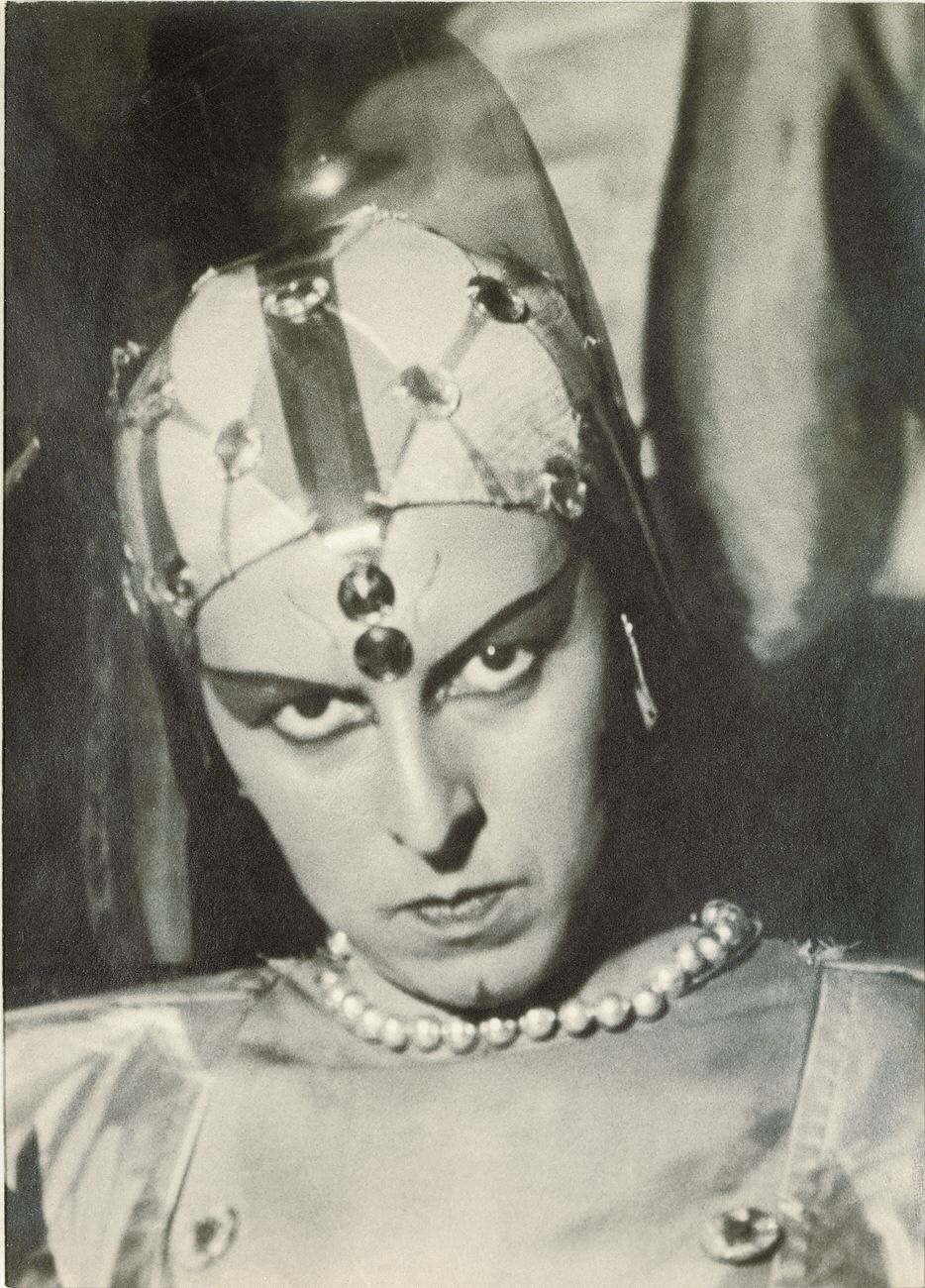
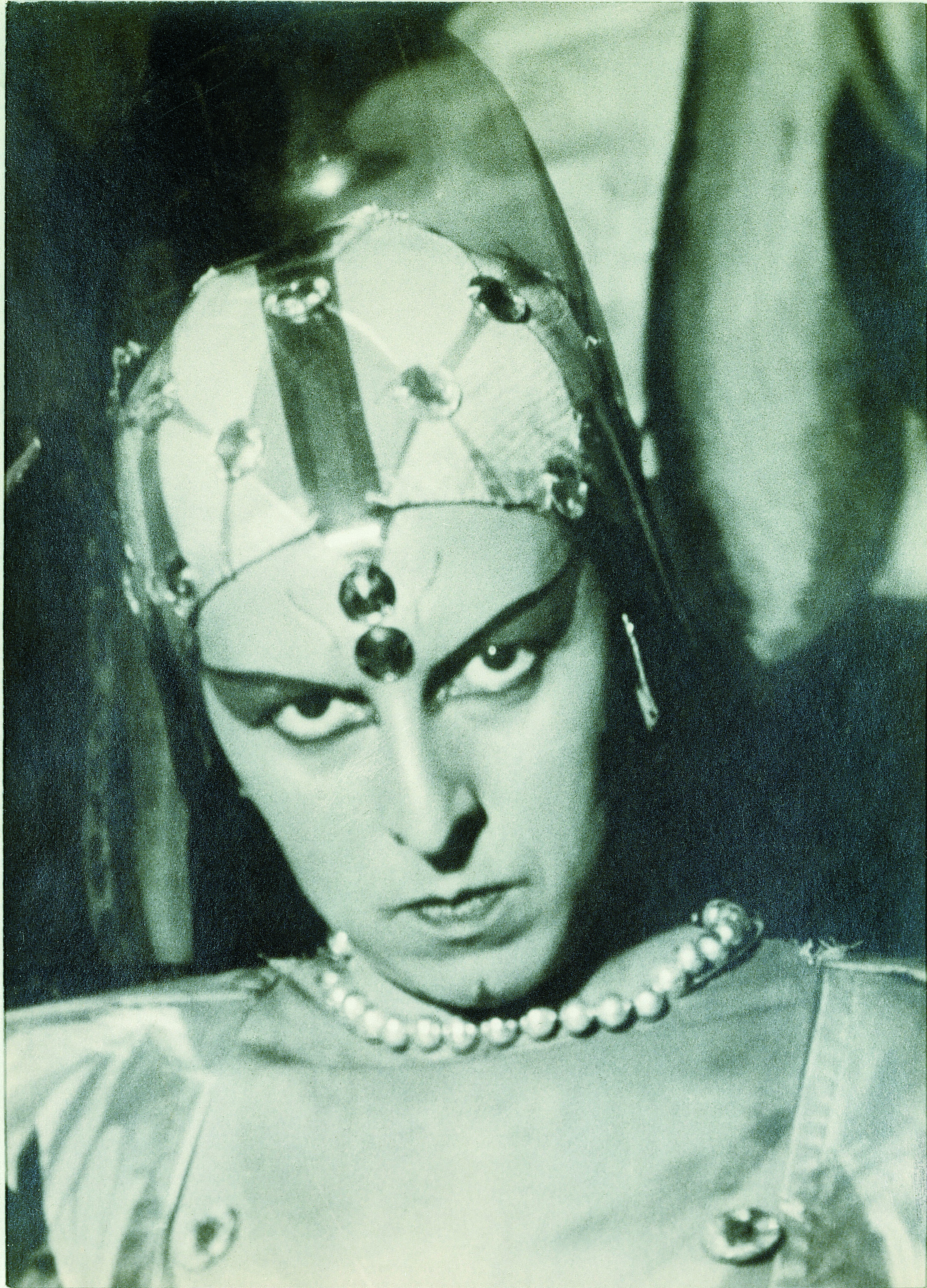
Claude Cahun :: Self-portrait (The Devil), 1929 [ in Le Mystère d’Adam] | src Hauser & Wirth via ocula
Claude Cahun :: Self-portrait (The Devil), 1929 [in The Mystery of Adam]. | src Hauser & Wirth via ocula

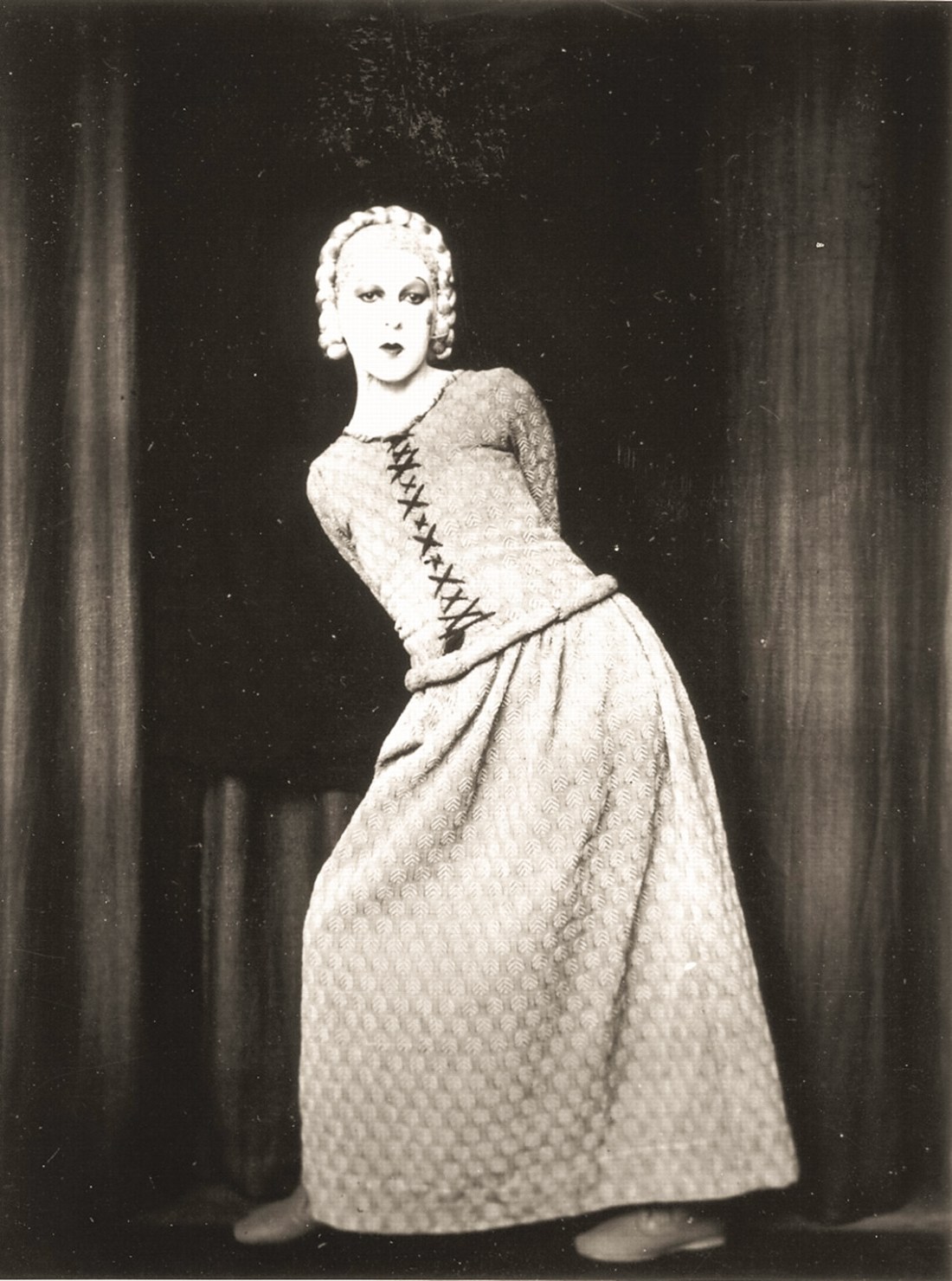
Claude Cahun was a French photographer and writer known for her surrealist self-portraits. Her performative photographic practice explores themes of identity, gender nonconformity, and self-image. Cahun’s art prefigured the radical feminist photography of artists such as Cindy Sherman, Nan Goldin, and Yasumasa Morimura.

Persistently aiming to undermine authority and actively disavow social and cultural norms, Cahun was highly politicised, both in her art and her everyday life and was active as a resistance worker and propagandist during World War II.

Despite not receiving recognition during her lifetime, Cahun’s artwork has been exhibited widely at major galleries around the world including The Museum of Modern Art and The Metropolitan Museum of Modern Art in New York.

Early Years

Cahun was born in Nantes, France in 1894 to a prominent Jewish family. As a teenager, Cahun experimented with photography and recorded her first self-portrait in 1912. After moving to Paris to study at the Sorbonne University, Cahun immersed herself in the surrealist art scene. She began working alongside artists and intellectuals like Man Ray, André Breton, and Georges Bataille.

In the early 1920s, Cahun—born Lucy Renée Mathilde Schwob—decided to change her name to Claude Cahun. Traditionally in France, the adopted name ‘Claude’ can refer to either a woman or a man, making it gender-neutral.

Although never identifying as openly gay, Cahun’s forward thinking approach to gender-fluidity shaped her artistic practice and has established her as an important figure among artists and members of the LGBTQ community. As she wrote in her surrealist memoir Disavowals in 1930, ‘Masculine? Feminine? It depends on the situation. Neuter is the only gender that always suits me.’

Cahun often collaborated with fellow artist and lifelong romantic partner Suzanne Malherbe, who adopted the pseudonym Marcel Moore. The two artists worked together to create multidisciplinary art including collages and sculptures. Cahun and Moore also published various written works including articles and novels.

Self-Portraits (1925-1930)

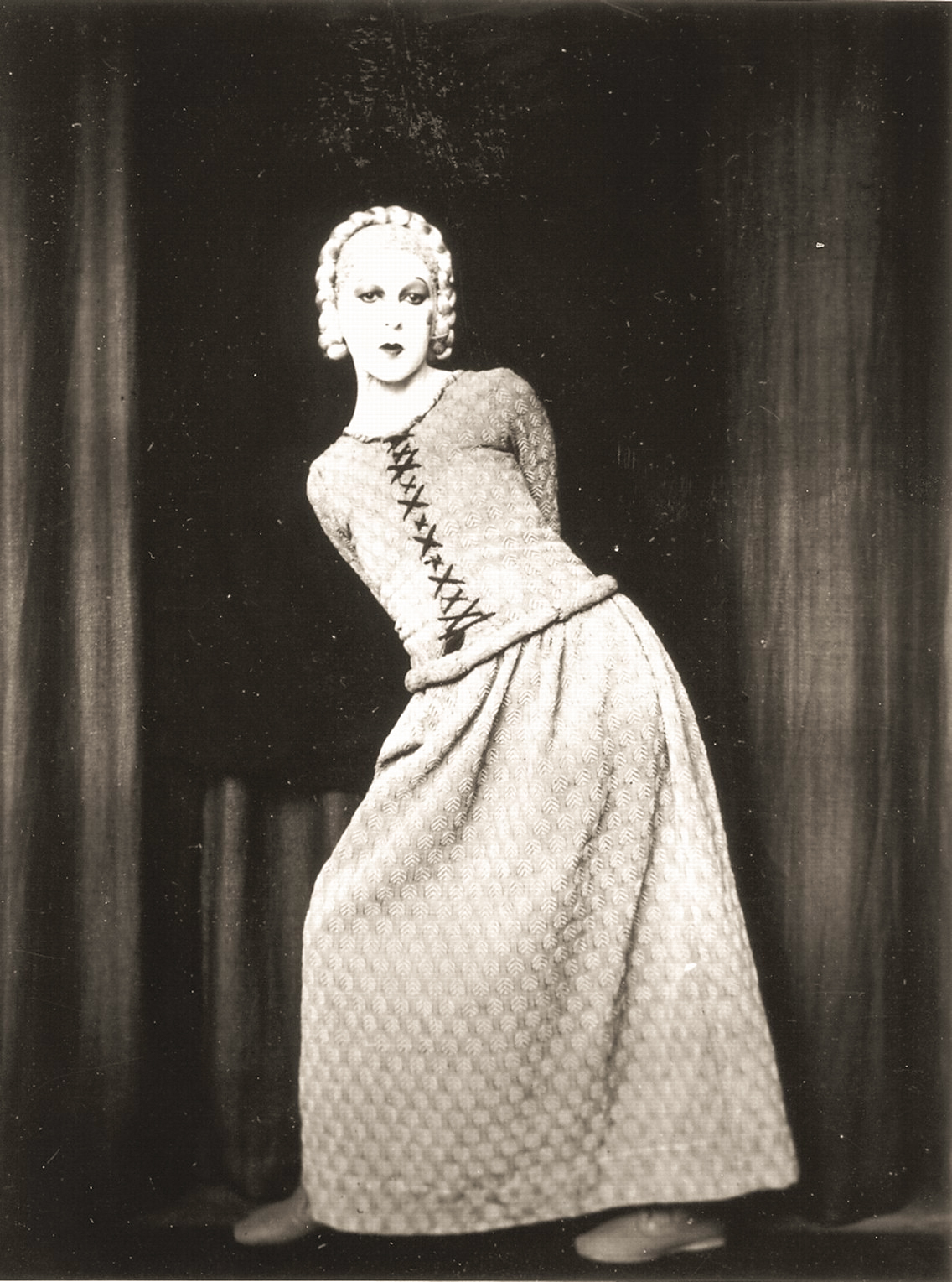
Claude Cahun is best known for her portraits capturing the self in a plethora of shifting personalities. Cahun used her photos as a device to present her own image and the overworked characteristics of feminine and masculine identity.

Her self-portraits capture posed performances where Cahun would dress as a man or woman under various guises. She fashioned her hair short, long, or completely shaved, and wore playful makeup that disguised her as anything from dandy to doll, body-builder to vampire.

Her performative portraits feature various surrealist aesthetics. From her expressions and poses, to her backgrounds and use of specific props, Cahun encapsulates the vibrancy of surrealism during its height in the 1920s. Her photographs were strikingly different to her male contemporaries because they focused on self-image as the subject and object of the work.

quoted from Ocula Limited

Claude Cahun - Marcel Moore :: Untitled [Claude Cahun in Le Mystère d'Adam (The Mystery of Adam)], 1929. Detail. | src SF·MoMA
Claude Cahun – Marcel Moore :: Untitled [Claude Cahun in Le Mystère d’Adam (The Mystery of Adam)], 1929. | src SF·MoMA

I am in training don’t kiss me

claude cahun, marcel moore
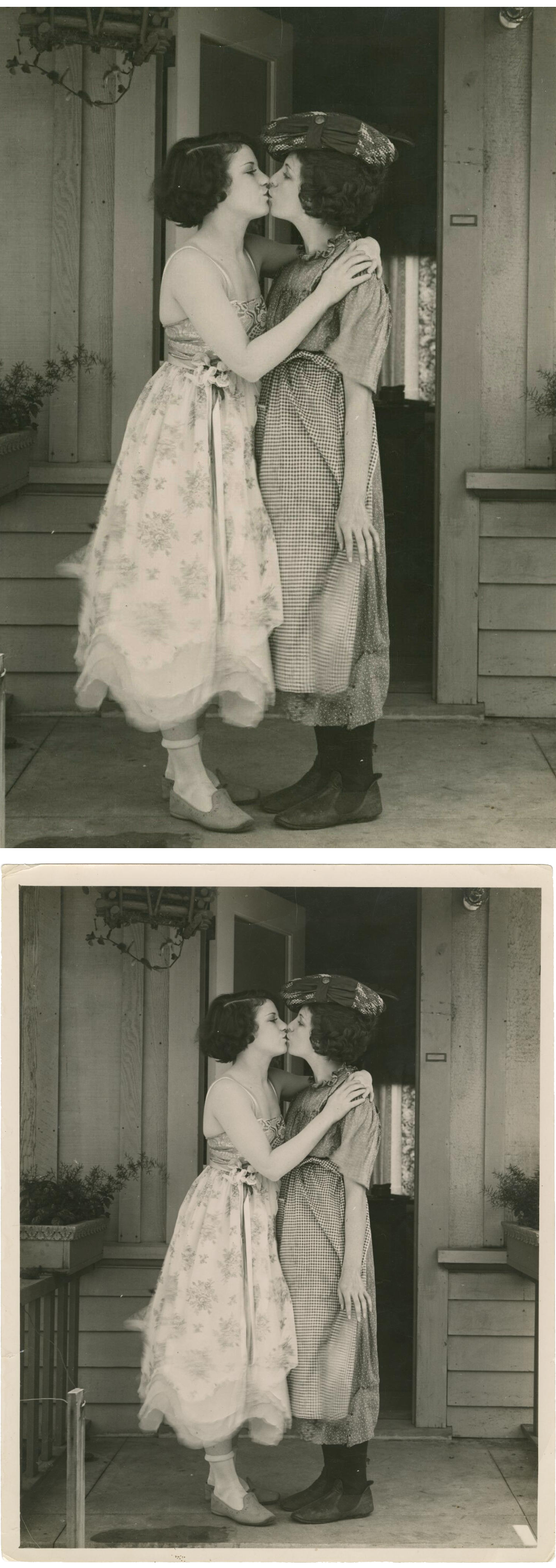
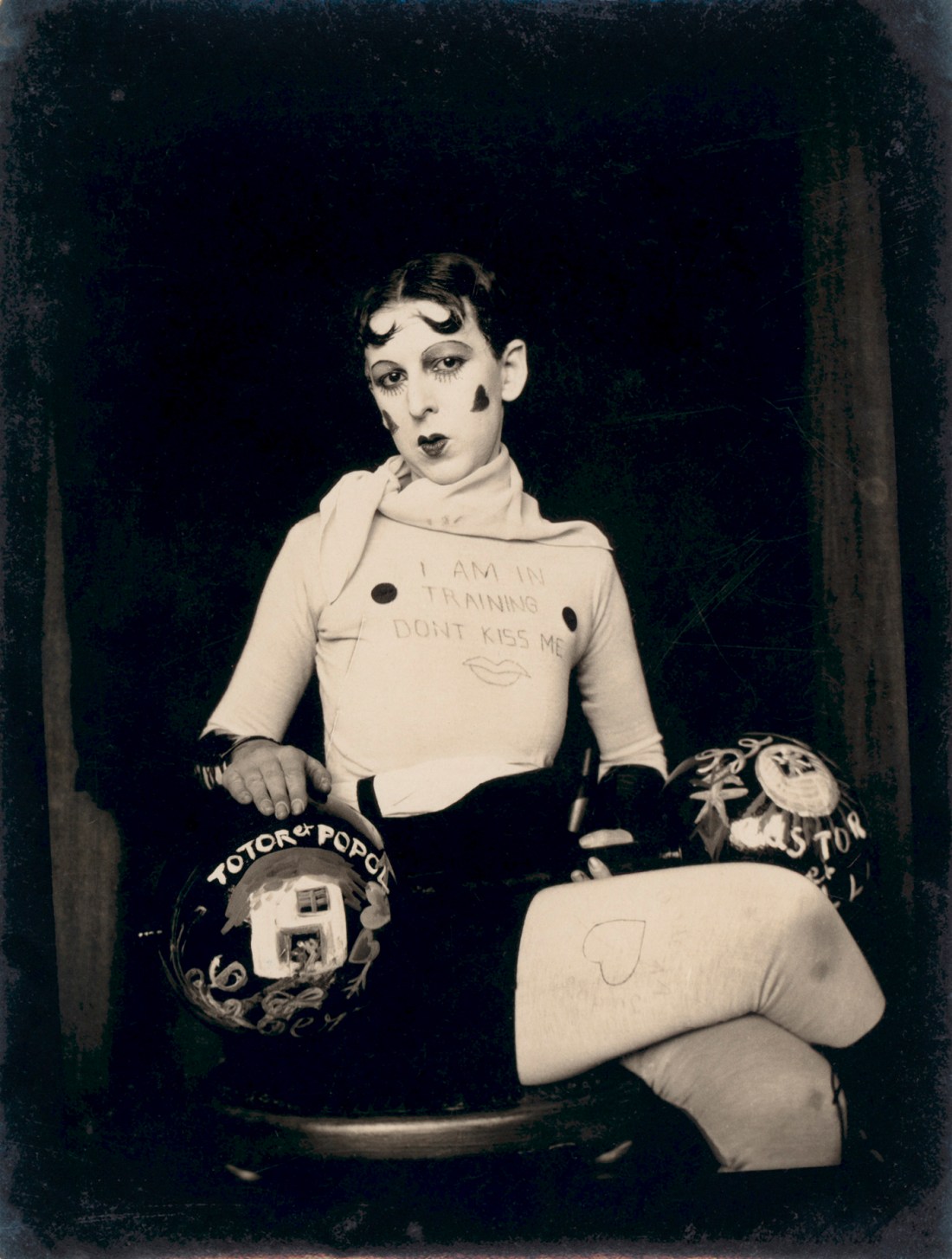
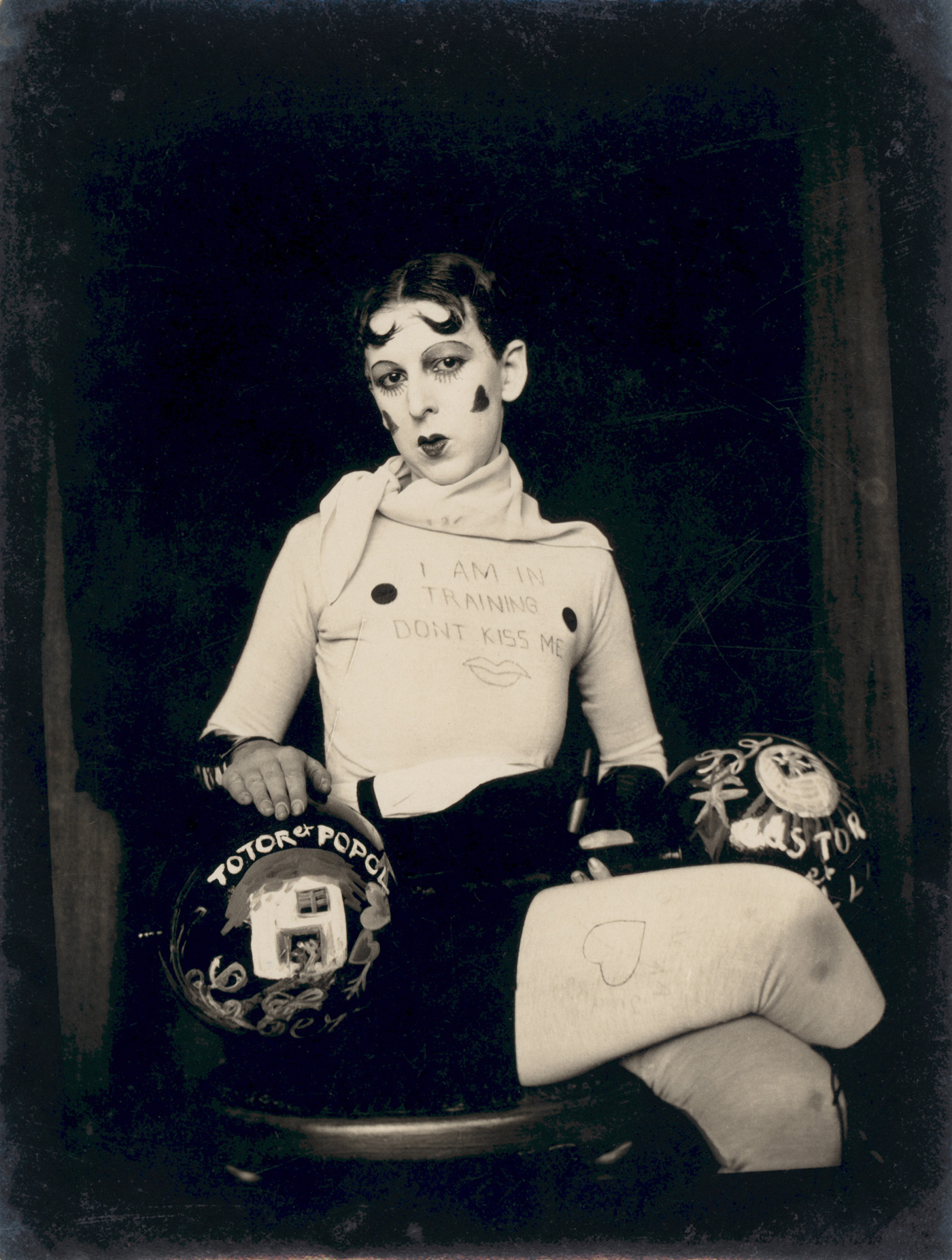
Claude Cahun and Marcel Moore  :: Untitled. "I am in training don't kiss me", 1927-1929. | src SF • MoMA
Claude Cahun and Marcel Moore :: Untitled. “I am in training don’t kiss me”, 1927-1929. | src SF • MoMA

“Les autoportraits ont beaucoup contribué à la reconnaissance puis à l’engouement posthumes dont l’œuvre de Claude Cahun [et marcel Moore] fut l’objet. Dans un décor généralement réduit au minimum (un fond de mur, de tissu, un coin de jardin, l’angle d’une porte), avec peu d’accessoire, mais choisis pour leur qualité symbolique (…), Claude Cahun va multiplier les poses, les travestissements, les rôles, les mises à nu, pour aboutir à une sorte de chorégraphie immobile de mouvement sériel, où transparaît  son attention pour la danse, la danse qui semble combiner et sublimer tous les genres. Elle ne se borne pas à questionner une identité problématique, elle la force, elle la produit. L’appareil photographique est véritablement placé dans la position d’un « miroir magique », que l’on scrute et interpelle, d’un instrument qui, paradoxalement, doit induire une transformation.”

(Catalogue exposition Claude Cahun, Jeu de Paume, Paris, Hazan, 2011, p. 64)

Claude Cahun and Marcel Moore :: Untitled. "I am in training don't kiss me", ca. 1927. | src Jersey Heritage Collection
Claude Cahun and Marcel Moore :: Untitled. “I am in training don’t kiss me”, ca. 1927. | src Jersey Heritage Collection

“The Self-portraits have contributed a great deal to the recognition and then to the posthumous enthusiasm for Claude Cahun’s [and Marcel Moore’s] work. In a decor generally kept to a minimum (a wall background, fabric, a corner of the garden, the angle of a door), with few accessories, chosen for their symbolic quality (…), Claude Cahun will multiply the poses, the disguises, the roles, the stripping, to end up with a kind of motionless choreography of serial movements, where the emphasis on dance shines through, the dance that seems to combine and sublimate all genres. They do not limit themselves to questioning a problematic identity, they force it, they produce it. The camera is truly placed in the position of a « miroir magique », which one scrutinizes and questions, an instrument which, paradoxically, must induce a transformation.” (*)

(Catalogue of the exposition Claude Cahun at Jeu de Paume, Paris, Hazan, 2011, p. 64)

(*) The modification of pronouns is completely our choice

Claude Cahun et Marcel Moore :: Autoportrait, vers 1927. Tirage argentique d'époque. Monté sous passe-partout. | src Sotheby’s
Claude Cahun et Marcel Moore :: Autoportrait, vers 1927. Tirage argentique d’époque. Monté sous passe-partout. | src Sotheby’s