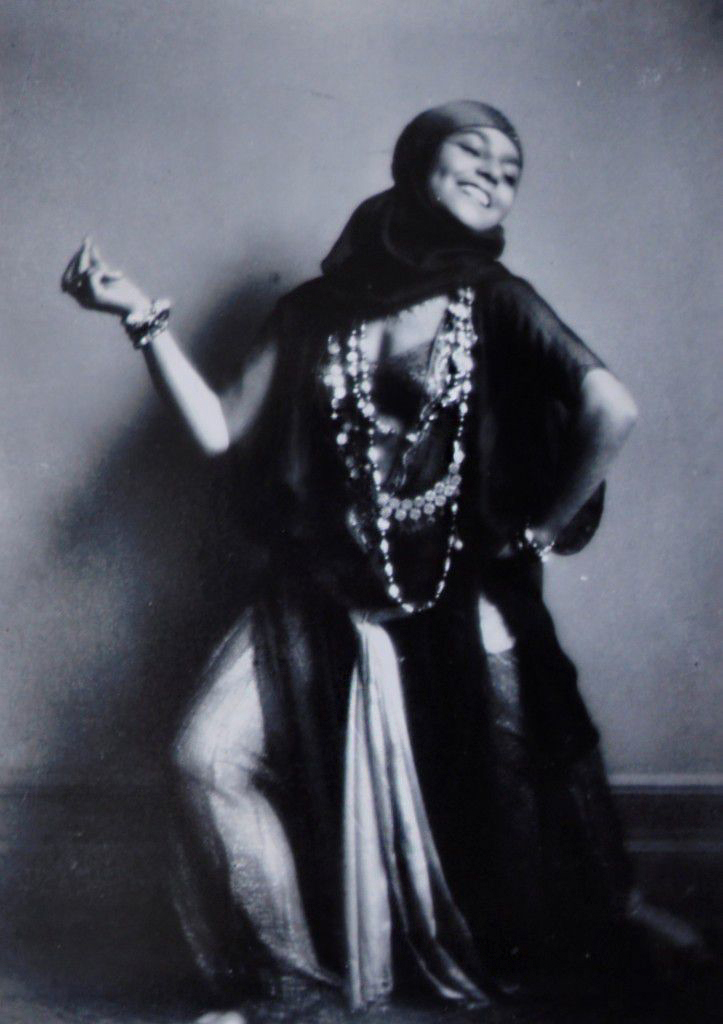
Roshanara by Hori · 1921-1922

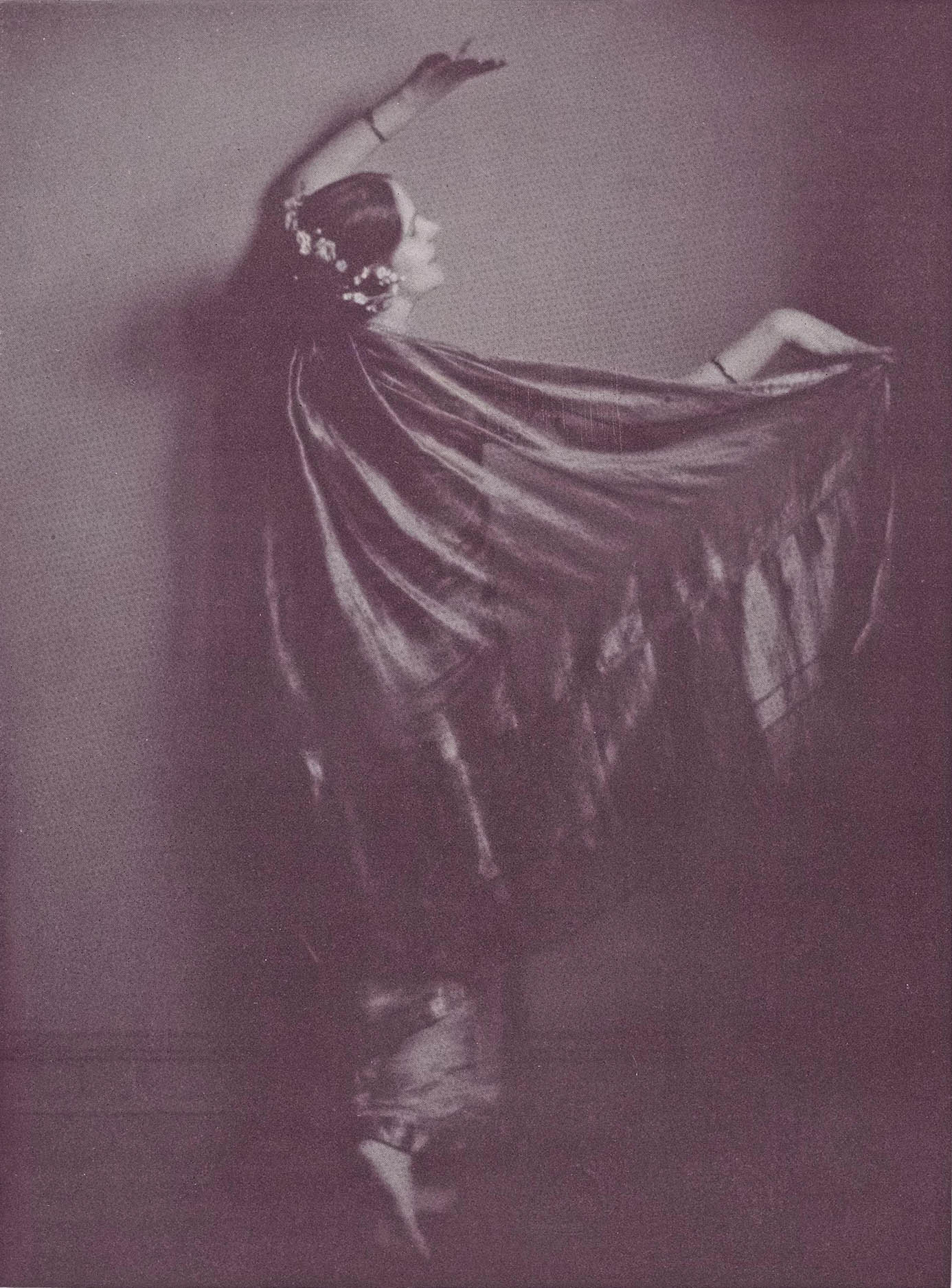
Ichiro E. Hori ~ Roshanara. Shadowland magazine, October 1921 | src internet archive

Caption reads : Roshanara / The gifted British dancer whose work vibrates with the mysticism and color of India and Burma

Ichiro E. Hori ~ Roshanara. Shadowland magazine, October 1921 | Full Page
Ichiro E. Hori ~ Roshanara. A new camera study. Shadowland magazine, January 1922 | src internet archive

Caption reads : Roshanara / A new camera study of the brilliant young interpreter of native Burmese and Indian dances

Ichiro E. Hori ~ Roshanara. Shadowland magazine, January 1922. Full page | src internet archive

Takka-Takka, 1926

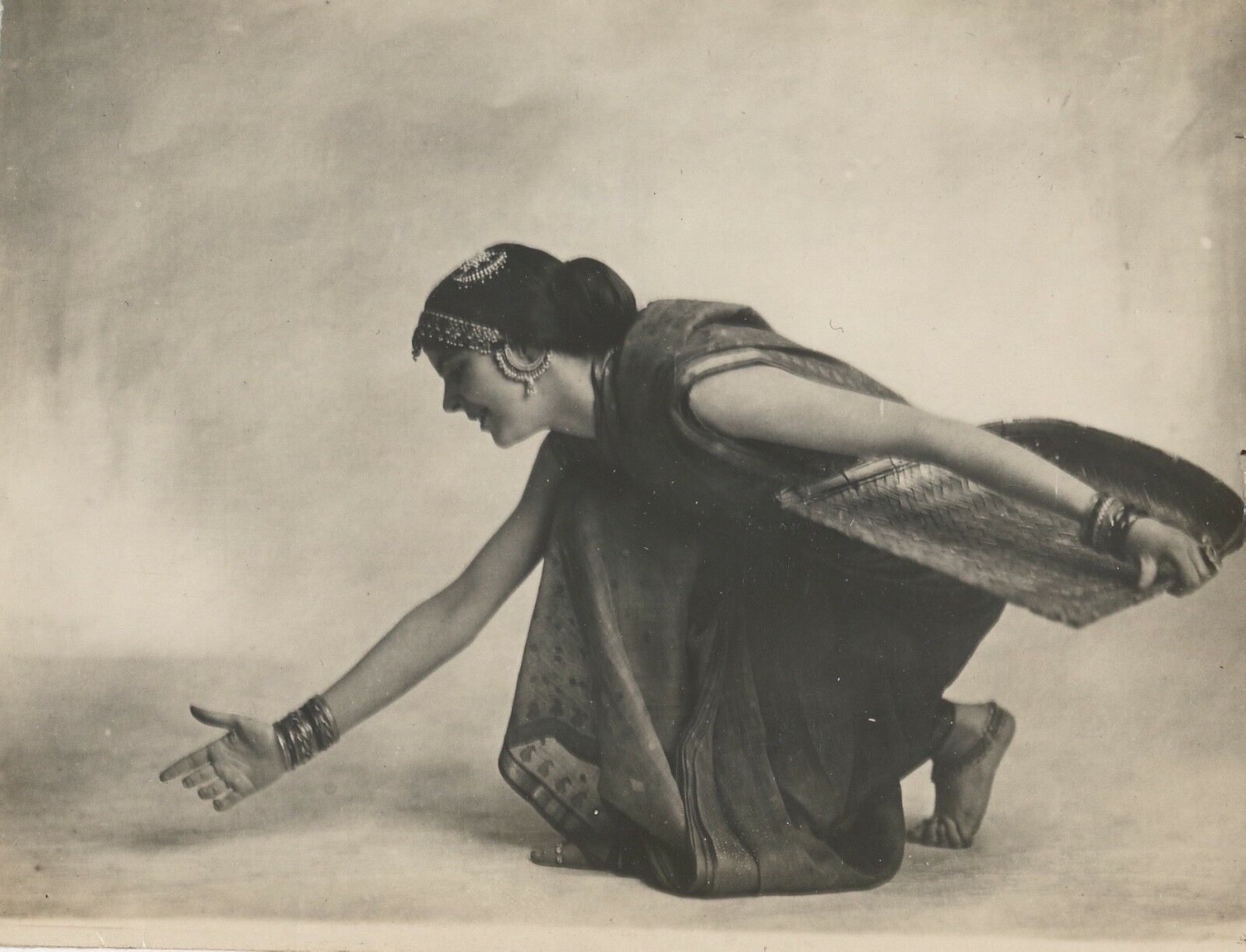
The British Indian dancer Takka-Takka, who learned her sacred dances in the beautiful temples of Delhi. Now she dances in the cabaret theaters of Berlin, Germany, 1926. Edited photo w/ retouching. (Fotograaf onbekend) | src Fotocollectie Het Leven

Roshanara in Berlin ca. 1910

Charles Trampus ~ La Roshanowa, célèbre danseuse Hindoue (sic), Berlin, vers 1910. © Ch. Trampus (caption on verso) | src eBay

Roshanara by Genthe, 1917

Arnold Genthe (1869-1942) ~ Olive Craddock (1894-1926), aka Roshanara, 23 March 1917. Glass negative (detail)
Arnold Genthe ~ Olive Craddock (1894-1926), aka Roshanara, 23 March 1917. Glass negative | src Library of Congress

Roshanara (1913) by Bassano

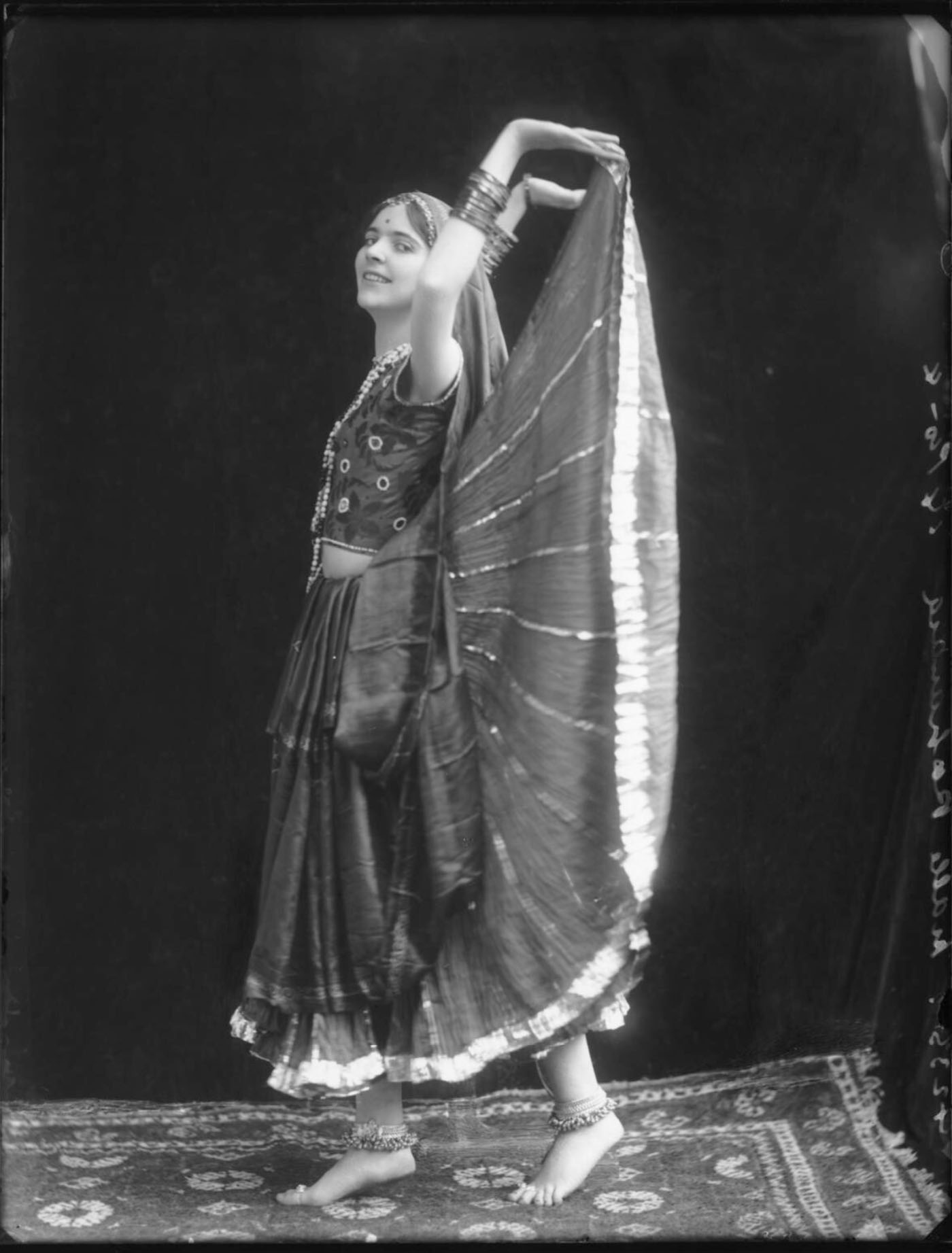
Bassano Ltd. ~ Roshanara (Olive Craddock), 1913. Whole-plate glass negative | src NPG

Olive Craddock, an Anglo-Indian born in 1892 in Kolkata, was known for taking the ‘central-Indian’ and ‘oriental’ style of dancing across the world. Born to a British mother and Anglo-Indian father, she was only 17-years-old when she left for Britain to dance professionally. Along with Ruth St. Denis, Craddock is credited for incorporating the ‘Indian dance’ in the world of Western theater.

In 1926, the reviewer Alma Talley wrote in The Dance magazine: ‘Roshanara has brought to the Western World the spirit of Central India as no one else has ever been able to bring… India’s dances were a part of her soul. She devoted her life to perfecting them, as an artist in water colours gives years of study to making his art as nearly perfect as perfection is humanly possible.’ Craddock adopted the name ‘Roshanara’ in 1909, as she left India, after the Mughal princess and Shahjahan’s daughter, which meant ‘Light-Adorning’. This would go on to be her stage name. In 1911, Craddock (now Roshanara) studied under Carmen Tórtola Valencia, the Spanish dancer and choreographer. She also danced with American actress and dancer Loïe Fuller’s company and shortly after, performed in the play Kismet directed by Australian actor and writer Oscar Asche at the Garrick Theater in London. She also starred five times as Zobeide in Schéhérazade for the Ballets Russes at Covent Garden, London.

Bassano Ltd. ~ Roshanara (Olive Craddock), 1913. Whole-plate glass negative | src NPG

Ratan Devi and Roshanara, 1917

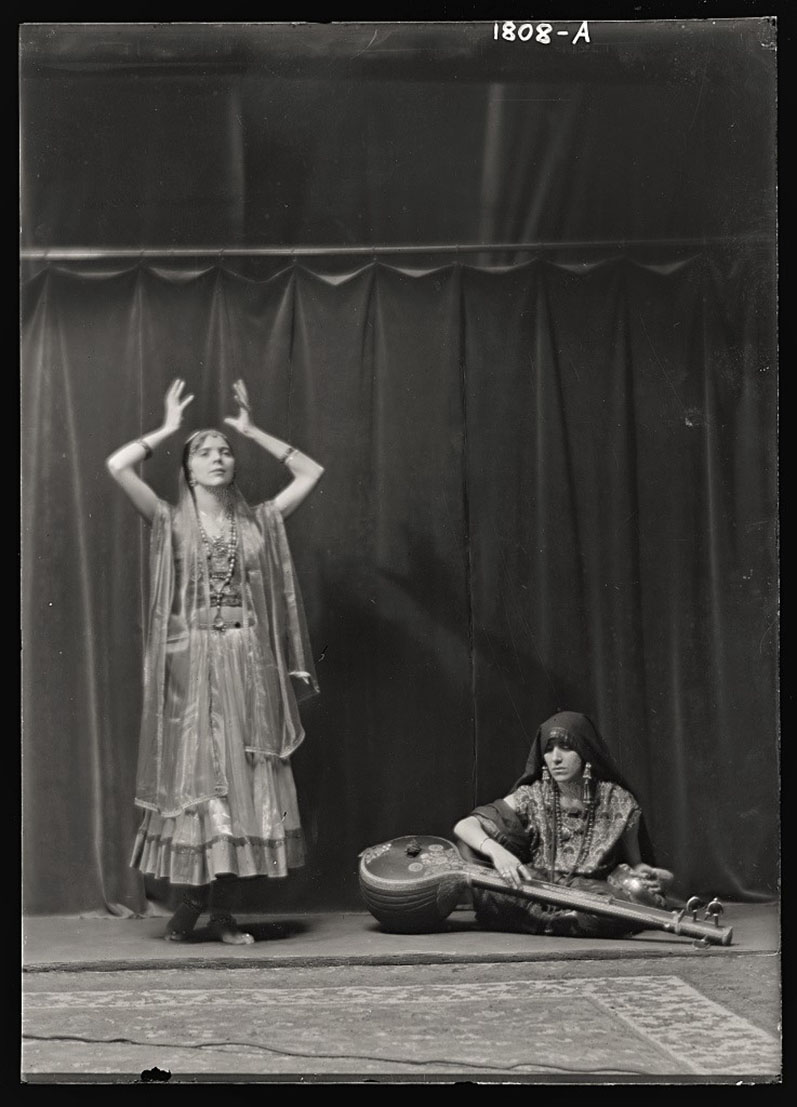
Arnold Genthe ~ Ratan Devi and Roshanara, March 23, 1917. Glass negatives | src Library of Congress via Flickr
Arnold Genthe ~ Ratan Devi and Roshanara (portrait photograph), March 23, 1917. Glass negative | src Library of Congress

Indian dancer Nyota Inyoka

Archives photographiques de la danseuse indienne Nyota Inyoka (1896-1971) des années 1920. | Photographic archives of Indian dancer Nyota Inyoka (1896-1971) from the 1920s. | src interencheres

Nyota Inyoka (1896-1971)

Archives photographiques de la danseuse indienne Nyota Inyoka (1896-1971) des années 1920. | Photographic archives of Indian dancer Nyota Inyoka (1896-1971) from the 1920s. | src interencheres