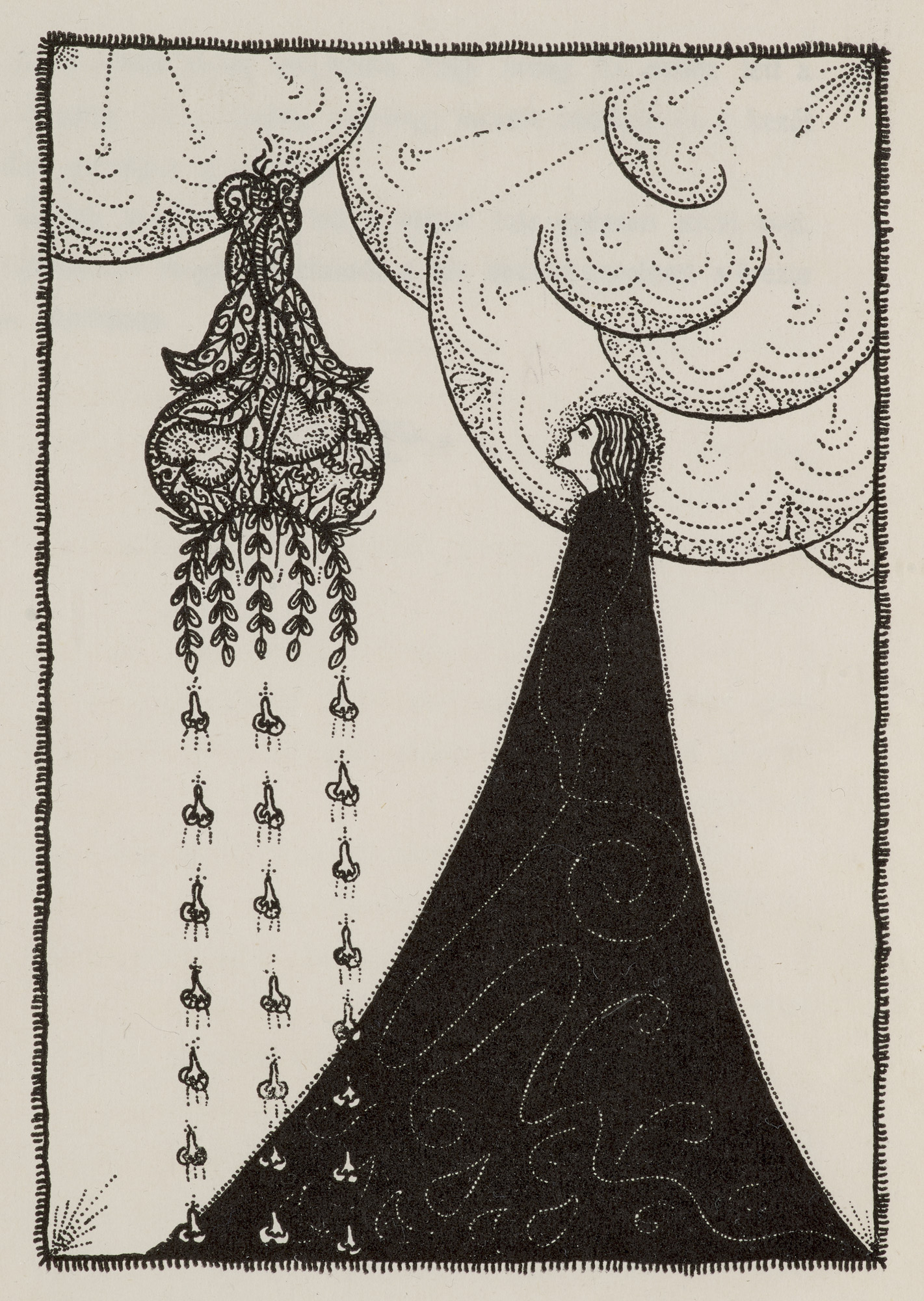
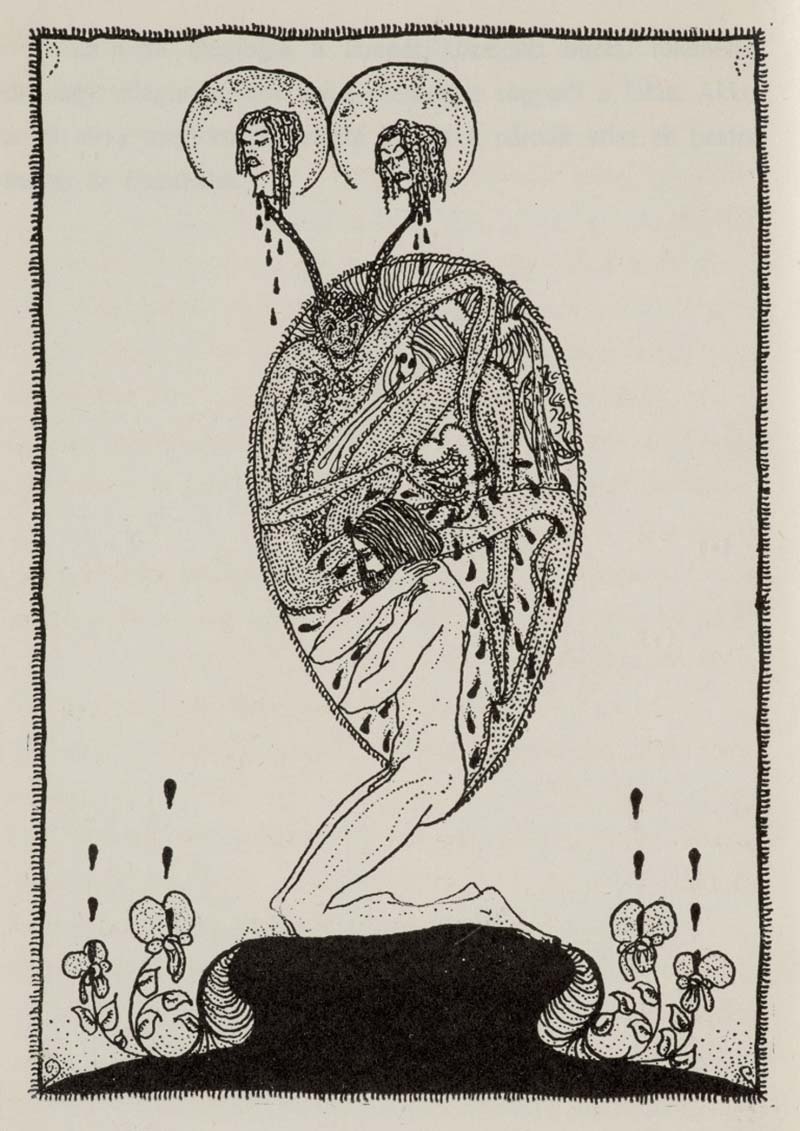
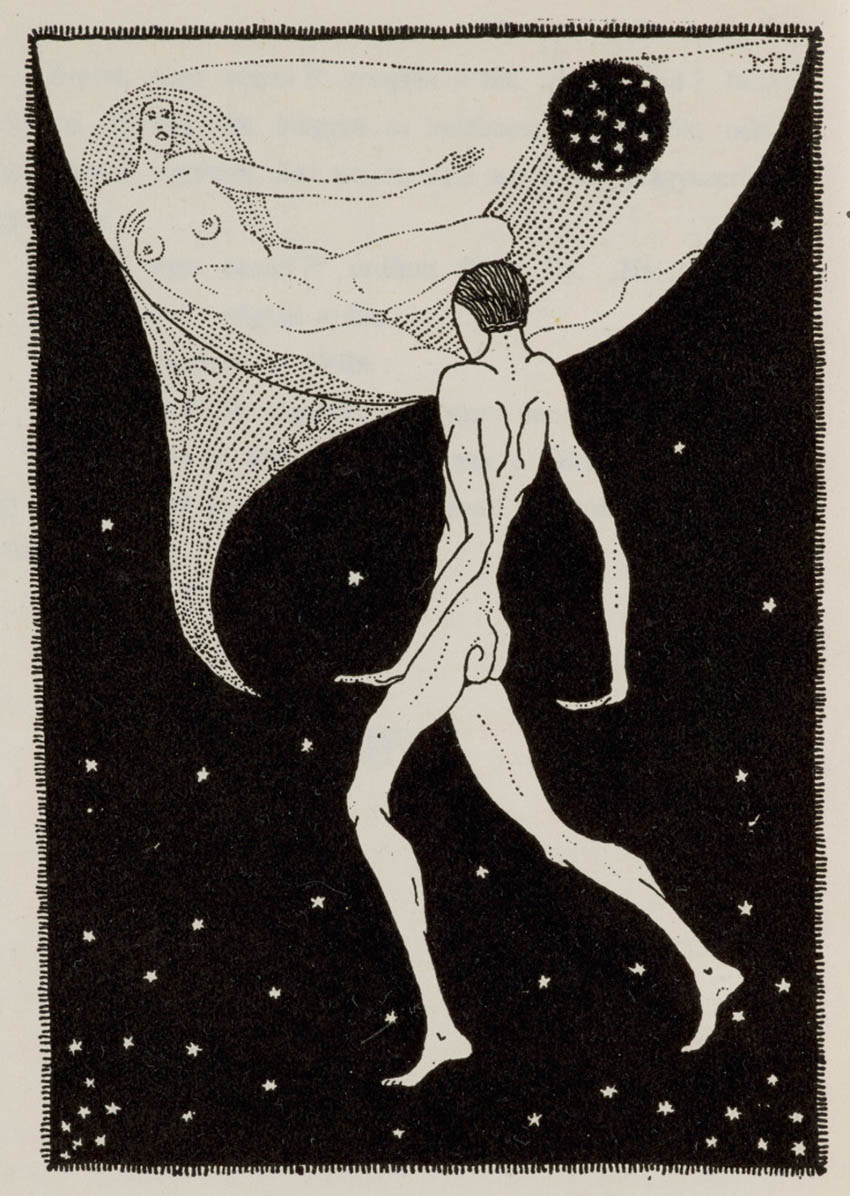
Aranyfüst. Illustrations and book decoration by Ladislas Medgyes. Budapest, Ráth Mór, 1913. | src Jeschke van VlietAranyfüst. Illustrationen sowie Buchschmuck von Ladislas Medgyes. Budapest, Ráth Mór, 1913. | src Jeschke van VlietAranyfüst. Illustrations and book decoration by Ladislas Medgyes. Budapest, Ráth Mór, 1913. | src Jeschke van Vliet
One of the most beautiful Hungarian Art Nouveau books. It contains twenty short stories by Ladislas Medgyes, the Hungarian avant-garde graphic artist and stage designer. His first exhibitions were held in the gallery of the most important Hungarian avant-garde magazine “MA”, which also published his works in print. From the 1920s he lived in Paris, where he founded his school (École Medgyes pour la Technique du Théâtre) of stage design together with the Hungarian architect Erno Goldfinger. He worked as an interior designer all over Europe and in the USA. (quoted from Jeschke Van Vliet)
Ágnes Kalmár Kövesházi in The Breathing Dance [Lélegzőtáncban] (costume: Elsa Kalmár Kövesházi), Cikk-Cakk evenings, 1928, MTA BTK Institute of Art History | src Artmagazin
Breathing exercises played an important role in the Hungarian dance school. Air and breathing exercises also played a big role in Agnes Kövesházi’s life. Since she had lung disease, the regular practice healed the dancer’s body and soul. It is likely that this disease was also the inspiration for her choreography Breathing Dance [Lélegzőtáncban].
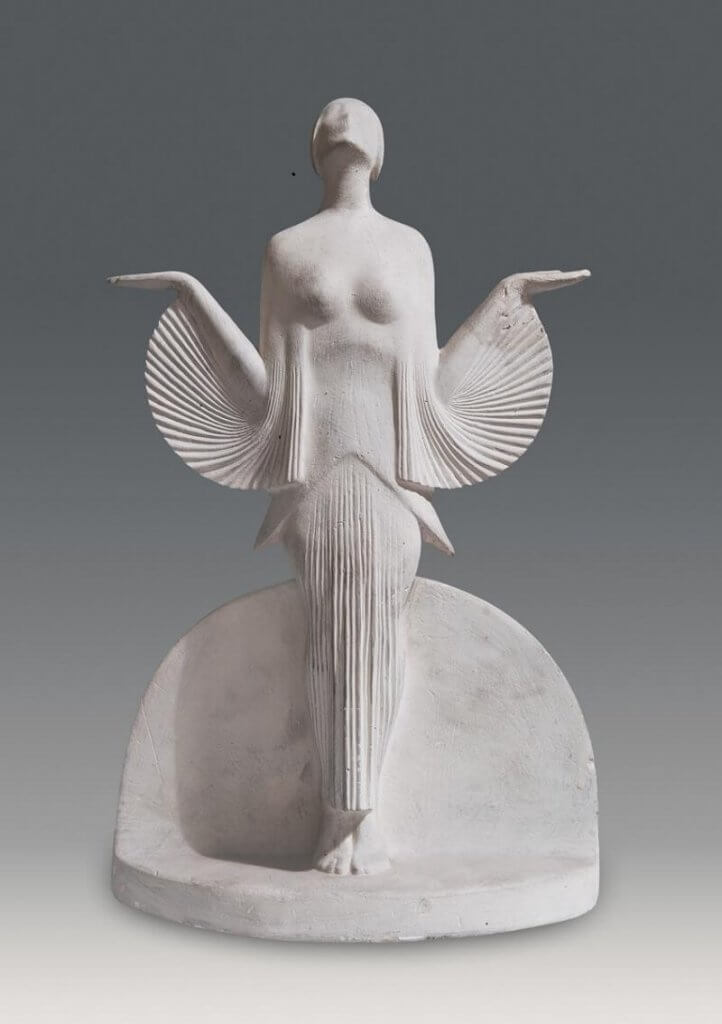
Around 1928, Elsa Kalmár Kövesházi made a plaster sculpture entitled “Breathing Dance” (image below). The sculpture was inspired by Ágnes Kövesházi, the sculptor’s daughter. In the 1920s, Agnes was the leading dancer of Alice Madzar’s artists movement and co-creator Ödön Palasofszky’s Quintessential Theatre. Her own dance composition, which ran under the same name, was the inspiration for her mother’s work. The photograph of Ágnes Kövesházi, in a position corresponding to the sculpture work of “Breathing Dance”, was also left for posterity. Her dress is the same fan-like as the sculpture. The costume was also made by Elsa Kalmár Kövesházi.
According to the idea of Elza Kalmár Kövesházi, a costume should start from the character of the movement, amplifying its characteristics: her richly pleated costume, which visually emphasizes the movement of the body, conveys every breath of the dancer. She immortalized her daughter’s solo piece together with other choreographies of the Hungarian Artists Group (Csitsibua, Bilincsek) in sculpture, creating exceptionally beautiful art deco sculptures.




 un regard oblique