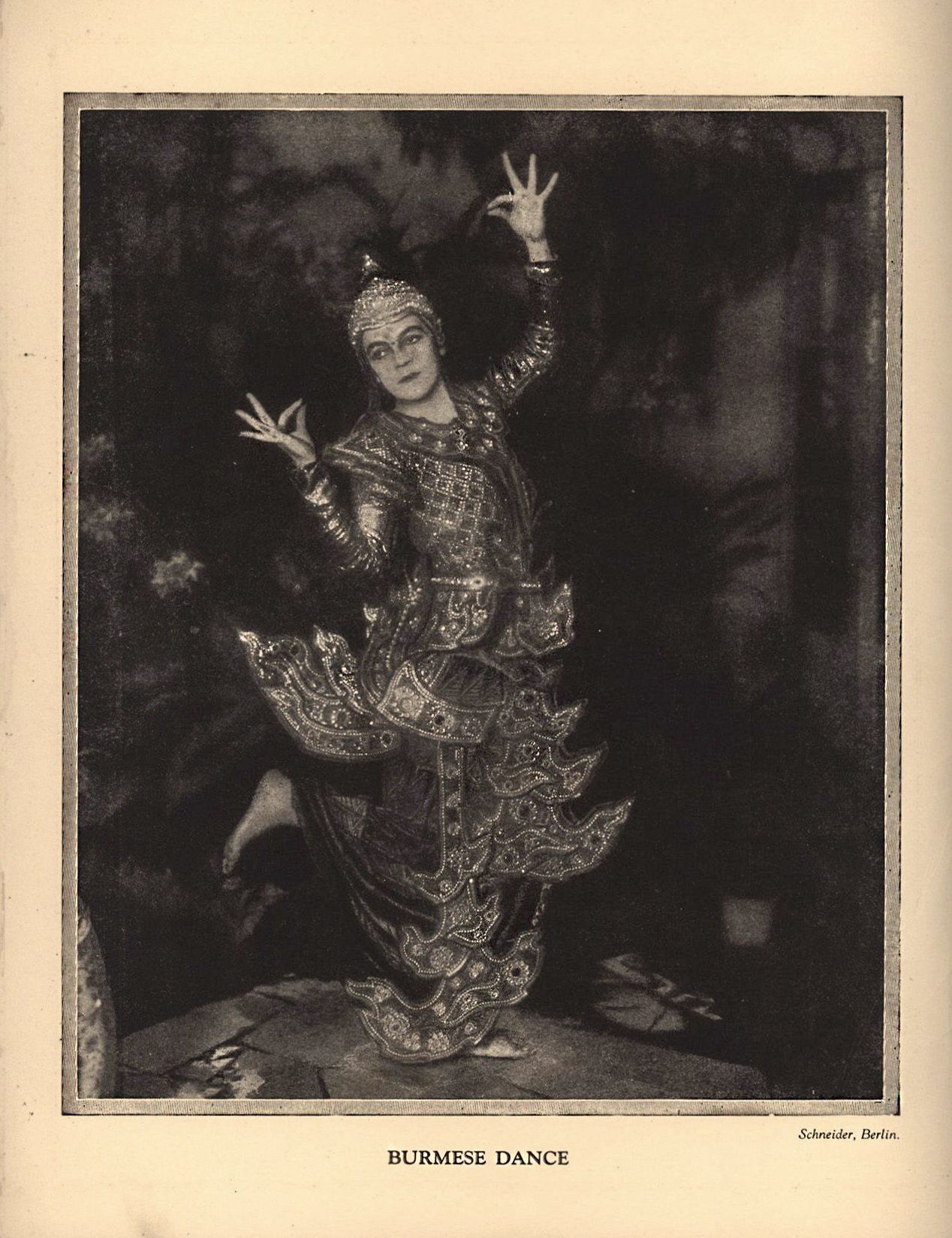
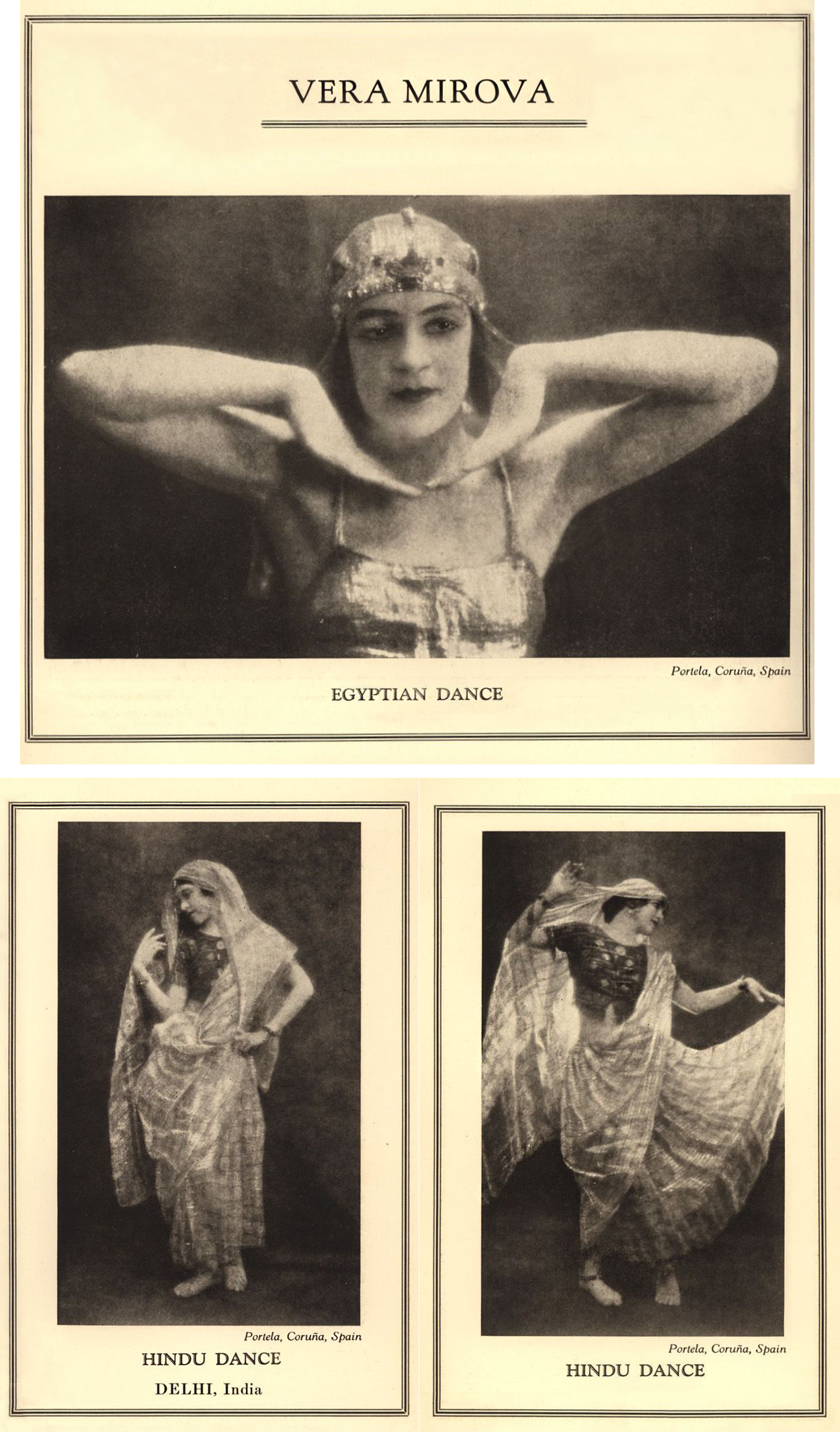
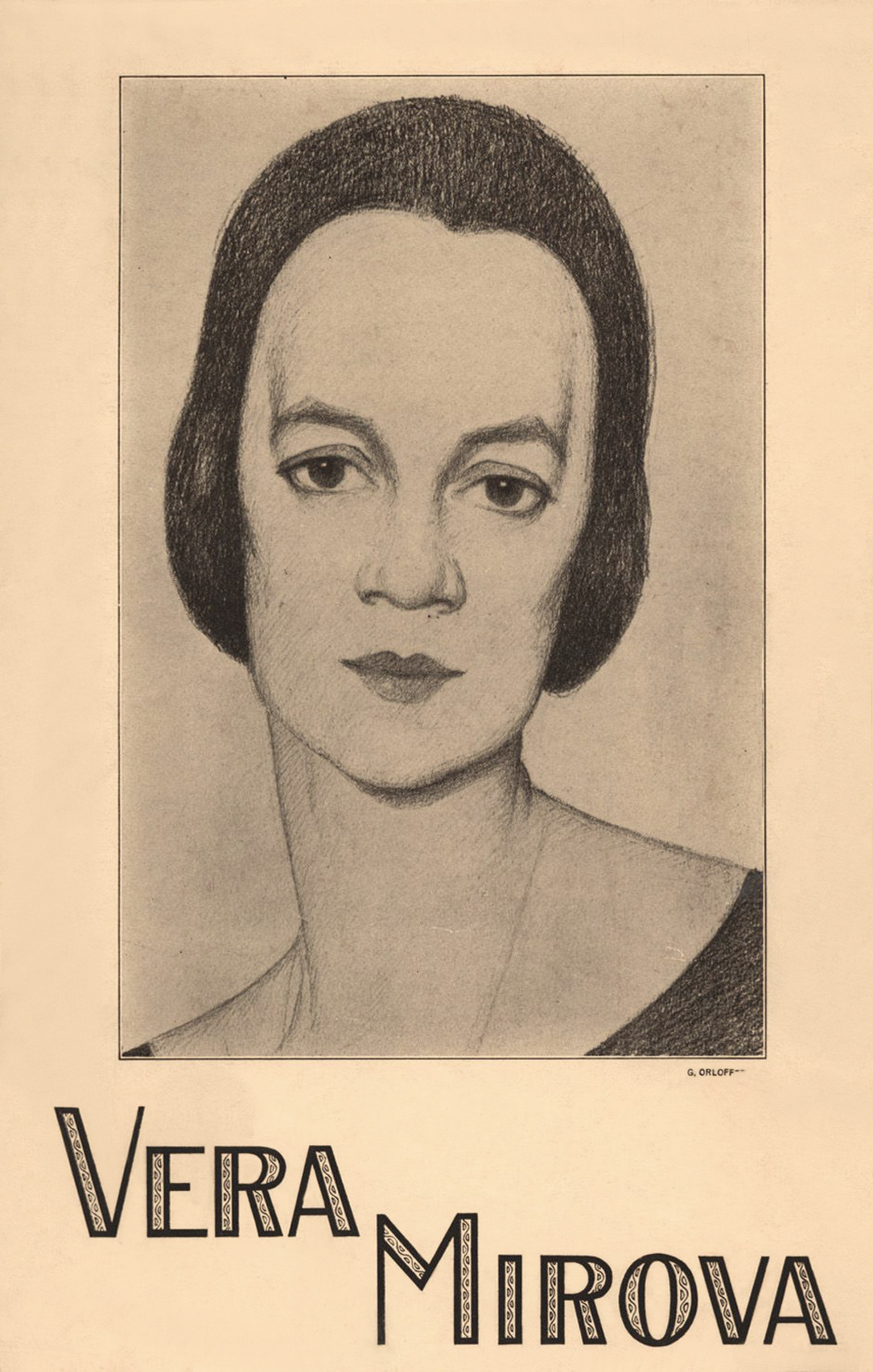
Vera Mirova brochure, page 9. Phot. Schneider, Berlin. The Javanese Lotus dance, part of the Groedo sacred dance. | src Iowa University LibrariesVera Mirova brochure, page 2. Phot. Schneider, Berlin. The Burmese or Burman dance from Bali. | src Iowa University LibrariesVera Mirova brochure, pages 6 to 8. Phot. Portela, Spain. Egyptian and Hindu dance. | src Iowa University LibrariesVera Mirova brochure, page 1. (G. Orloff). Portrait. Front cover of the dossier. | src Iowa University Libraries
“The Caterpillar Dance” Helene Shelda a young Russian dancer who was inspired by the Hindus in British India, achieves great success in Paris, 1931. Original caption: Balletstukken op naam. “De Rupsdans” Helene Shelda een jonge Russische danseres die werd gëinspireerd door de Hindoe’s in Brits-Indië, oogst grote successen in Parijs, Frankrijk 1931. | src Het Geheugen – Fotocollectie Het Leven
Le Dieu bleu :: Légende hindoue en 1 acte, chorégraphie de Michel Fokine. Paris : Théâtre du Châtelet, 13-05-1912. Photographe présumé: Waléry (1866-1935).



 un regard oblique