
C.C. Pierce :: Young Girls of the Hopi Nation, All Wearing the Squash Blossom Hairstyle Indicating Their Unmarried Status, Shonguapavi, Arizona, 1900 / via
related post, here
images that haunt us
C.C. Pierce :: Young Girls of the Hopi Nation, All Wearing the Squash Blossom Hairstyle Indicating Their Unmarried Status, Shonguapavi, Arizona, 1900 / via
related post, here

Girl reading, sitting on wooden box in the yard. Unknown date or photographer. / source: lostfunzones.tumblr.com
 https://embedr.flickr.com/assets/client-code.js
Kyuzo Okamoto :: Geiko Yachiyo with an Insect Cage, vintage postcard, 1910
Insects as pets. Yachiyo was a famous Osaka geiko (geisha), known for her elegance and her lovely personality. People were said to weep with joy at the sight of her dancing. She joined the flower and willow world at the age of thirteen, left to marry at the age of twenty-nine. / source: Blue Ruin
 https://embedr.flickr.com/assets/client-code.js
Kichiya-musubi, 1905
A Geisha dressed in the Genroku style, fashionable among Tokyo Geisha around 1905-1908. She is showing her obi, tied in the Kichiya-musubi style, a knot named after Kamimura Kichiya (or Uemura Kichiya I) who was a popular Kabuki Actor during the Genroku period (1680′s).
The Kichiya-musubi was in fact a particularly famous and popular knot, mentioned specifically in a number of poems. The knot is a relatively simple one, but with small lead weights hidden in the obi, weighing down the ends of the bow, so they drooped “like the ears of a … Chinese lion-dog.” / src: Blue Ruin
 https://embedr.flickr.com/assets/client-code.js
Geiko Tomigiku reading a Newspaper, 1921. The supremely stylish Tomigiku, dated 28/12/1921 on the reverse./ source: Blue Ruin
 https://embedr.flickr.com/assets/client-code.js
Maiko Momotaro – Sakkou Hairstyle, 1920′s
“Originally believed to be worn by married women of the merchant class during the late Edo period (1603-1868), starting in the Meiji era (1868-1912) the sakkou was the hairstyle worn by apprentice geisha in the weeks leading up to their debut as full-fledged geisha.“
(Voyages en Photographie) / src: Blue Ruin

Frank Eugene :: Reclining Female Nude in Landscape, possibly made in Germany, ca. 1904.
Attributed to Frank Eugene, German (born United States), 1865 – 1936. Gelatin silver print. / source: Philadelphia Museum of Art

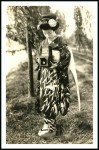
Maiko Hatsuko with Camera, 1920 / source: retro-vintage-photography
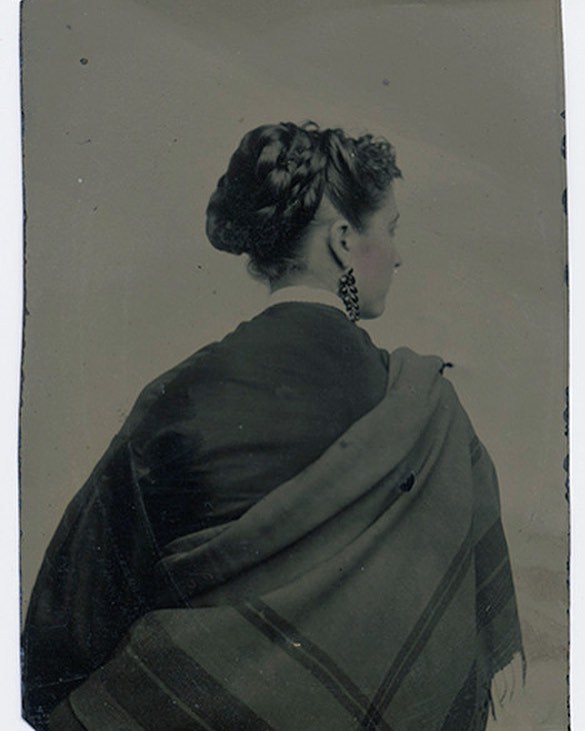
Woman with shawl, back to camera. Tinted. Tintype. / src: foundphotographs.com

 un regard oblique